


Product Monograph - Tezspire
Recent Major Label Changes
| 2026-02 |
|---|---|
| 2026-02 |
| 2026-02 |
| 2026-02 |
Table of Contents
Certain sections or subsections that are not applicable at the time of the preparation of the most recent authorized product monograph are not listed.
Recent Major Label Changes ..................................................................................................... 2
Table of Contents ....................................................................................................................... 2
Part 1: Health Professional Information ................................................................................... 4
- 1.
Indications .......................................................................................................................... 4
1.1. Pediatrics ................................................................................................................ 4
1.2. Geriatrics ................................................................................................................. 4
- 2. Contraindications ............................................................................................................... 4
- 4.
Dosage and Administration .............................................................................................. 4
4.1. Dosing Considerations ............................................................................................ 4
4.2. Recommended Dose and Dosage Adjustment ....................................................... 4
4.4. Administration ......................................................................................................... 5
4.5. Missed Dose ........................................................................................................... 6
- 5. Overdose ............................................................................................................................. 6
- 6. Dosage Forms, Strengths, Composition, and Packaging .............................................. 6
- 7.
Warnings and Precautions ................................................................................................ 7
General ............................................................................................................................. 7
Cardiovascular .................................................................................................................. 7
Immune ............................................................................................................................. 8
Reproductive Health: Female and Male Potential ............................................................. 8
Sensitivity/Resistance ....................................................................................................... 8
7.1. Special Populations ................................................................................................ 8
7.1.1. Pregnancy ...................................................................................................... 8
7.1.2. Breastfeeding ................................................................................................. 8
7.1.3. Pediatrics ....................................................................................................... 9
7.1.4. Geriatrics ........................................................................................................ 9
- 8.
Adverse Reactions ............................................................................................................. 9
8.1. Adverse Reaction Overview .................................................................................... 9
8.2. Clinical Trial Adverse Reactions ............................................................................. 9
8.2.1. Clinical Trial Adverse Reactions – Pediatrics ............................................... 12
8.3. Less Common Clinical Trial Adverse Reactions ................................................... 12
8.5. Post-Market Adverse Reactions ........................................................................... 12
- 9.
Drug Interactions ............................................................................................................. 12
9.3. Drug-Behavioural Interactions .............................................................................. 12
9.4. Drug-Drug Interactions .......................................................................................... 12
9.5. Drug-Food Interactions ......................................................................................... 12
9.6. Drug-Herb Interactions .......................................................................................... 12
9.7. Drug-Laboratory Test Interactions ........................................................................ 12
- 10.
Clinical Pharmacology ..................................................................................................... 13
10.1. Mechanism of Action ............................................................................................. 13
10.2. Pharmacodynamics .............................................................................................. 13
10.3. Pharmacokinetics .................................................................................................. 13
10.4. Immunogenicity ..................................................................................................... 15
- 11. Storage, Stability, and Disposal ..................................................................................... 15
- 12. Special Handling Instructions ......................................................................................... 15
Part 2: Scientific Information ................................................................................................... 16
- 13. Pharmaceutical Information ............................................................................................ 16
- 14.
Clinical Trials .................................................................................................................... 16
14.1. Clinical Trials by Indication ................................................................................... 16
Asthma ............................................................................................................................ 16
Chronic Rhinosinusitis with Nasal Polyps (CRSwNP) ..................................................... 23
- 15. Microbiology ..................................................................................................................... 27
- 16. Non-Clinical Toxicology .................................................................................................. 27
Patient Medication Information ............................................................................................... 29
INSTRUCTIONS FOR USE – PRE-FILLED SYRINGE .............................................................. 34
INSTRUCTIONS FOR USE – PRE-FILLED PEN....................................................................... 40
Part 1: Health Professional Information
1. Indications
Asthma
TEZSPIRE (tezepelumab injection) is indicated as an add-on maintenance treatment in adults and adolescents 12 years and older with severe asthma.
TEZSPIRE is not indicated for relief of acute bronchospasm or status asthmaticus (7. Warnings and Precautions).
Chronic rhinosinusitis with nasal polyps (CRSwNP)
TEZSPIRE is indicated as an add-on maintenance treatment with intranasal corticosteroids in adult patients with severe CRSwNP inadequately controlled by systemic corticosteroids and/or surgery.
1.1. Pediatrics
Pediatrics (<12 years of age): The safety and efficacy of TEZSPIRE in children under 12 years old for the treatment of asthma have not been established.
Pediatrics (<18 years of age): The safety and efficacy of TEZSPIRE in children under 18 years of age for the treatment of CRSwNP have not been established.
1.2. Geriatrics
Geriatrics (≥65 years of age): Of the 665 patients with asthma treated with TEZSPIRE in clinical trials (PATHWAY and NAVIGATOR) for severe asthma, 119 patients (18%) were ≥ 65 years of age. While the data was limited, no overall differences in safety or efficacy of TEZSPIRE have been observed between patients ≥ 65 years of age compared with younger patients. Sensitivity of some older individuals cannot be excluded (see 7.1.4. Geriatrics).
Of the 203 patients with CRSwNP exposed to TEZSPIRE in the placebo-controlled clinical study of 52 weeks duration (WAYPOINT), a total of 29 patients (14%) were ≥ 65 years of age.
2. Contraindications
TEZSPIRE (tezepelumab injection) is contraindicated in patients who are hypersensitive to this drug or to any ingredient in the formulation, including any non-medicinal ingredient, or component of the container. For a complete listing, see 6. Dosage Forms, Strengths, Composition, and Packaging.
4. Dosage and Administration
4.1. Dosing Considerations
TEZSPIRE (tezepelumab injection) is administered as a subcutaneous (SC) injection.
A patient may self-inject TEZSPIRE or the patient’s caregiver may administer TEZSPIRE after training in subcutaneous injection technique. Provide proper training to patients and/or caregivers on the preparation and administration of TEZSPIRE prior to use according to the “INSTRUCTIONS FOR USE – PRE-FILLED SYRINGE”.
4.2. Recommended Dose and Dosage Adjustment
Asthma
Adults and adolescents (aged 12 years and older)
The recommended dose is 210 mg of TEZSPIRE by subcutaneous injection every 4 weeks (Q4W).
Pediatrics (<12 years of age): The safety and efficacy of TEZSPIRE in children under 12 years of age for the treatment of asthma have not been established.
CRSwNP
Adults (aged 18 years and older)
The recommended dose is 210 mg of TEZSPIRE by subcutaneous injection every 4 weeks.
Pediatrics (<18 years of age): The safety and efficacy of TEZSPIRE in children under 18 years of age for the treatment of CRSwNP have not been established.
Geriatrics (≥65 years of age): No dose adjustment is required for elderly patients ≥ 65 years of age based on population-PK modeling (see Special populations and conditions).
Renal impairment: No dose adjustment is required for patients with renal impairment based on population-PK modeling (see Special populations and conditions).
Hepatic impairment: No dose adjustment is required for patients with hepatic impairment based on population-PK modeling (see Special populations and conditions).
4.4. Administration
TEZSPIRE is administered as a subcutaneous injection.
A patient may self-inject TEZSPIRE or the patient’s caregiver may administer TEZSPIRE after training in subcutaneous injection technique. Provide proper training to patients and/or caregivers on the preparation and administration of TEZSPIRE prior to use according to the “INSTRUCTIONS FOR USE”.
TEZSPIRE should be injected into the thigh or abdomen, except for the 5 cm (2 inches) around the navel. If a health professional or caregiver administers the injection, the upper arm can also be used. A patient should not self-inject in the arm. TEZSPIRE should not be injected into areas where the skin is tender, bruised, erythematous, or hardened. It is recommended to rotate the injection site with each injection.
Instructions for Preparation and Use
Pre-filled Syringe and Pre-filled Pen
TEZSPIRE is for single use only.
TEZSPIRE solution for subcutaneous injection is supplied in a sterile, pre-filled syringe or sterile, pre-filled pen for individual use. Do not shake. Do not freeze. Protect from light.
Prior to administration, remove carton from refrigerator and allow TEZSPIRE to reach room temperature. This generally takes 60 minutes.
TEZSPIRE may be kept at room temperature (20°C to 25°C) for a maximum of 30 days. Do not put back in the refrigerator once TEZSPIRE has reached room temperature. After removal from the refrigerator, TEZSPIRE must be used within 30 days or discarded.
Visually inspect TEZSPIRE for particulate matter and discolouration prior to administration. TEZSPIRE is clear to opalescent, colourless to light yellow. Do not use TEZSPIRE if liquid is cloudy, discoloured, or if it contains large particles or foreign particulate matter.
Additional information and instructions for the preparation and administration of TEZSPIRE using the pre-filled syringe or pre-filled pen are given in the package leaflet and relevant “INSTRUCTIONS FOR USE”.
Any unused medicinal product or waste material should be disposed of in accordance with local requirements.
4.5. Missed Dose
If a dose is missed, administer the dose as soon as possible. Thereafter, the patient can resume dosing on the usual day of administration. If the next dose is already due, then administer as planned.
5. Overdose
Tezepelumab doses of up to 280 mg SC every 2 weeks (Q2W) and doses of up to 700 mg intravenously (IV) Q4W have been administered clinically without evidence of dose-related toxicities.
There is no specific treatment for an overdose with tezepelumab. If overdose occurs, the patient should be treated supportively with appropriate monitoring as necessary.
For the most recent information in the management of a suspected drug overdose, contact your regional poison control centre or Health Canada’s toll-free number, 1-844 POISON-X (1-844-764-7669).
- 6. Dosage Forms, Strengths, Composition, and Packaging
To help ensure the traceability of biologic products, including biosimilars, health professionals should recognise the importance of recording both the brand name and the non-proprietary (active ingredient) name as well as other product-specific identifiers such as the Drug Identification Number (DIN) and the batch/lot number of the product supplied.
Table 1 – Dosage Forms, Strengths and Composition
Dosage Form Description
TEZSPIRE (tezepelumab injection) is a sterile, preservative-free solution intended for subcutaneous injection.
| Route of Administration | Dosage Form / Strength/Composition | Non-medicinal Ingredients |
| Subcutaneous use | Solution / 110 mg/mL in a:
or
| Glacial acetic acid, L-proline, Polysorbate 80, Sodium hydroxide, Water for injection |
Packaging
Pre-filled syringe
TEZSPIRE is available in a pack containing 1 single-use, sterile, pre-filled syringe. Each single-use, pre-filled syringe contains a solution of 210 mg tezepelumab in 1.91 mL (110 mg/mL) in a pre-filled syringe subassembly consisting of a siliconized Type I glass syringe barrel with a plunger-stopper and a 27-gauge 12.7 mm (½-inch) stainless steel special thin-wall needle covered with a needle cover. The pre-filled syringe subassembly is assembled with a needle guard and an extended finger flange. The needle cover is not made with natural rubber latex.
Pre-filled pen
TEZSPIRE is available in a pack containing 1 single-use, sterile, pre-filled pen. Each single-use, pre-filled pen contains a solution of 210 mg tezepelumab in 1.91 mL (110 mg/mL) in a pre-filled syringe subassembly consisting of a siliconized Type I glass syringe barrel with a plunger-stopper and a 27-gauge 12.7 mm (½-inch) stainless steel special thin-wall needle covered with a needle cover. The pre-filled pen consists of the pre-filled syringe subassembly and handheld, mechanical (spring-based) injection device. The needle cover is not made with natural rubber latex.
7. Warnings and Precautions
General
Acute Asthma Symptoms or Deteriorating Disease
TEZSPIRE (tezepelumab injection) should not be used to treat acute symptoms or asthma exacerbations. Do not use TEZSPIRE to treat acute bronchospasm or status asthmaticus.
Patients should be instructed to seek medical advice if their asthma remains uncontrolled or worsens after initiation of treatment.
Reduction of Corticosteroid Dosage
Abrupt discontinuation of corticosteroids after initiation of TEZSPIRE therapy is not recommended. Reduction in corticosteroid dose may be associated with systemic withdrawal symptoms and/or unmask conditions previously suppressed by systemic corticosteroid therapy. Reduction in corticosteroid doses, if appropriate, should be gradual and performed under the supervision of a physician.
Cardiovascular
Serious Cardiac Events
In a long-term severe asthma clinical trial, a numerical imbalance in serious cardiac adverse events has been observed in patients treated with TEZSPIRE compared to placebo. All patients who experienced a serious cardiac adverse event had an existing cardiovascular disorder or at least one cardiovascular risk factor at baseline. No causal relationship between TEZSPIRE and these events has been established (see 8.2. Clinical Trial Adverse Reactions).
Additional caution may be warranted in patients aged ≥65 years with cardiovascular co-morbidities, as a higher incidence of serious cardiac events was observed in this subgroup.
Patients should be advised of signs or symptoms suggestive of a cardiac event (for example, chest pain, dyspnea, malaise, feeling lightheaded or faint) and to seek immediate medical attention if such symptoms occur.
Immune
Infections
Blocking thymic stromal lymphopoietin (TSLP) may increase the risk of serious infections.
Patients with pre-existing serious infections should be treated before initiating therapy with TEZSPIRE. If patients develop a serious infection while receiving TEZSPIRE treatment and do not respond to treatment, therapy with TEZSPIRE should be discontinued until the serious infection resolves.
Parasitic (Helminth) Infection
Thymic stromal lymphopoietin (TSLP) may be involved in the immunological response to some helminth infections. Patients with known helminth infections were excluded from participation in clinical trials. It is unknown if TEZSPIRE may influence a patient’s response against helminth infections.
Treat patients with pre-existing helminth infections before initiating therapy with TEZSPIRE. If patients become infected while receiving treatment with TEZSPIRE and do not respond to anti-helminth treatment, discontinue treatment with TEZSPIRE until infection resolves.
Reproductive Health: Female and Male Potential
Fertility
No data are available on the effect of TEZSPIRE on human fertility.
Sensitivity/Resistance
Hypersensitivity reactions: Hypersensitivity reactions (e.g., anaphylaxis, rash) may occur following administration of TEZSPIRE (see 8. Adverse Reactions). These reactions may occur within hours of administration, but in some instances have a delayed onset (i.e., days).
In the event of a hypersensitivity reaction, appropriate treatment as clinically indicated should be initiated and an individualized decision on whether to continue or discontinue treatment with TEZSPIRE should be made.
7.1. Special Populations
7.1.1. Pregnancy
No studies have been conducted with TEZSPIRE in pregnant women and relevant data from clinical use are very limited. As a precautionary measure, it is preferable to avoid the use of TEZSPIRE during pregnancy.
Human IgG antibodies, such as tezepelumab, are transported across the placenta barrier; therefore, TEZSPIRE may be transmitted from the mother to the developing fetus. In addition, tezepelumab was detected in monkey infant serum following in utero exposure, indicating transport across the placenta (see 16. Non-Clinical Toxicology).
7.1.2. Breastfeeding
There is no information regarding the presence of tezepelumab in human milk, the effects of tezepelumab on the breast-fed infant, or the effects of tezepelumab on milk production. However, tezepelumab is a human monoclonal antibody immunoglobulin G2λ (IgG2λ), and immunoglobulin G (IgG) is present in human milk in small amounts. Animal data demonstrated that tezepelumab was present in the milk of cynomolgus monkeys postpartum following dosing during pregnancy (see 16. Non-Clinical Toxicology).
7.1.3. Pediatrics
Pediatrics (< 12 years of age): The safety and efficacy of TEZSPIRE in children under 12 years of age for the treatment of asthma have not been established.
The safety and efficacy of TEZSPIRE in children under 18 years of age for the treatment of CRSwNP have not been established.
7.1.4. Geriatrics
Geriatrics (≥65 years of age): Of the 665 patients with asthma treated with TEZSPIRE in clinical trials (PATHWAY and NAVIGATOR) for severe asthma, 119 patients (18%) were ≥ 65 years of age. While the data was limited, no overall differences in safety or efficacy of TEZSPIRE have been observed between patients ≥ 65 years of age and younger patients. Sensitivity of some older individuals cannot be excluded.
Of the 203 patients with CRSwNP exposed to TEZSPIRE in the placebo-controlled clinical study of 52 weeks duration (WAYPOINT), a total of 29 patients (14%) were ≥ 65 years of age.
Based on population pharmacokinetic analysis, there was no clinically meaningful difference in the pharmacokinetics of tezepelumab between patients ≥ 65 years of age compared with younger patients.
8. Adverse Reactions
8.1. Adverse Reaction Overview
Asthma
In clinical studies in patients with severe asthma, the most commonly reported adverse reactions during treatment were arthralgia and pharyngitis.
Chronic rhinosinusitis with nasal polyps (CRSwNP)
In a clinical study in patients with CRSwNP, the most commonly reported adverse reaction during treatment was pharyngitis.
8.2. Clinical Trial Adverse Reactions
Clinical trials are conducted under very specific conditions. The adverse reaction rates observed in the clinical trials; therefore, may not reflect the rates observed in practice and should not be compared to the rates in the clinical trials of another drug. Adverse reaction information from clinical trials may be useful in identifying and approximating rates of adverse drug reactions in real-world use.
Asthma
The safety of TEZSPIRE was based on the pooled safety population from PATHWAY and NAVIGATOR, which consists of 665 adult and pediatric patients 12 years of age and older with severe asthma who received at least one dose of TEZSPIRE 210 mg subcutaneously once every 4 weeks. The two placebo-controlled clinical trials were of 52 weeks duration. In addition, a similar safety profile was seen in a trial that enrolled 150 adult patients with severe asthma who required treatment with daily oral corticosteroids (i.e., SOURCE).
Adverse reactions that occurred at an incidence greater than or equal to 1% and more common than in the placebo group from the pooled safety population are shown in Table 2.
Table 2 – Adverse Reactions with TEZSPIRE with Incidence Greater than or Equal to 1% and More Common than Placebo in Patients with Severe Asthma (PATHWAY and NAVIGATOR)
| System organ class/preferred term | Tezepelumab N=665 n (%) | Placebo N=669 n (%) |
|---|---|---|
| General disorders and administration site conditions | ||
| Injection site reaction | 25 (3.8) | 21 (3.1) |
| Infections and infestations | ||
| Pharyngitis* | 27 (4.1) | 18 (2.7) |
| Musculoskeletal and connective tissue disorders | ||
| Arthralgia | 25 (3.8) | 16 (2.4) |
| Skin and subcutaneous tissue disorders | ||
| Rash† | 10 (1.5) | 8 (1.2) |
| Nervous system disorders | ||
| Headache | 9 (1.4) | 5 (0.7) |
* Pharyngitis (including Pharyngitis, Pharyngitis bacterial, Pharyngitis streptococcal and Viral pharyngitis)
† Rash (including Rash, Rash pruritic, Rash erythematous, Rash maculo-papular, Rash macular)
Injection site reactions
In the asthma pooled safety population, injection site reactions (e.g., injection site erythema, injection site swelling, injection site pain) occurred at a rate of 3.8% in patients treated with tezepelumab 210 mg SC Q4W compared with 3.1% in patients treated with placebo.
CRSwNP
The safety profile for a total of 203 patients with CRSwNP who received TEZSPIRE during the randomized, placebo-controlled, multicentre trial of 52 weeks duration (WAYPOINT), was generally similar with the established safety profile of TEZSPIRE. The incidence of adverse reactions was similar to those reported in asthma. Adverse reactions that occurred at an incidence greater than or equal to 2% and more common than in the placebo group from the safety population are shown in Table 3.
Table 3 Adverse Reactions with TEZSPIRE with Incidence Greater than or Equal to 2% and More Common than Placebo in Patients with CRSwNP (WAYPOINT)
| System organ class/preferred term | Tezepelumab N=203 n (%) | Placebo N=205 n (%) |
|---|---|---|
| General disorders and administration site conditions | ||
| Injection site reaction† | 9 (4.4) | 5 (2.4) |
| Infections and infestations | ||
| Pharyngitis* | 11 (5.4) | 1 (0.5) |
| Musculoskeletal and connective tissue disorders | ||
| Arthralgia | 7 (3.4) | 3 (1.5) |
| Skin and subcutaneous tissue disorders | ||
| Rash# | 4 (2.0) | 2 (1.0) |
† Injection site reactions (e.g., Injection site pain, Injection site erythema, Injection site pruritus and Injection site swelling)
* Pharyngitis (including Pharyngitis, Pharyngitis bacterial, Pharyngitis streptococcal and Viral pharyngitis)
# Rash (including Rash, Rash pruritic, Rash erythematous, Rash maculo-papular, Rash macular)
Infections
In the WAYPOINT study, serious infections occurred at a rate of 2.5% in patients treated with TEZSPIRE compared with 2.0% in placebo, including one case of pulmonary tuberculosis possibly related to TEZSPIRE.
Serious cardiac events
In a long-term extension trial in patients with severe asthma, 839 patients from NAVIGATOR and SOURCE were treated with TEZSPIRE 210 mg SC Q4W for up to 104 weeks. A numerical imbalance in cardiac disorder SOC SAEs was observed with more events in patients treated with TEZSPIRE vs placebo (exposure-adjusted incidence rates (EAIR) per 100 patient years were 1.30 [95% CI: 0.77, 2.06] versus 0.23 [95% CI: 0.03, 0.83] respectively). The rate of adjudicated major adverse cardiovascular events (MACE) observed were 0.65 for TEZSPIRE (per 100 patient years) vs 0.46 for placebo (per 100 patient years) with an incidence rate difference per 100 patient years of 0.19 (95% CI: -0.58, 0.85).
In the WAYPOINT study evaluating patients with CRSwNP, serious cardiac events occurred in 2 patients treated with TEZSPIRE compared with 3 patients treated with placebo (EAIR 1.0 versus 1.7). Among the subgroup aged ≥65 years with cardiovascular co-morbidities, a numerical imbalance in serious cardiac adverse events was observed with TEZSPIRE (2 patients; EAIR 7.0) compared with placebo (1 patient; EAIR 3.9)
Serious cardiac events included cardiac arrhythmias, coronary artery disease, heart failures, myocardial infarction, and myocardial disorders. Most affected patients had pre-existing cardiovascular conditions or risk factors such as advanced age. While no causal relationship has been established, an imbalance remains between TEZSPIRE and placebo. The safety profile during the long-term extension trial was generally similar to the known safety profile of TEZSPIRE.
8.2.1. Clinical Trial Adverse Reactions – Pediatrics
The safety profile in adolescents with severe, uncontrolled asthma over 52 weeks in NAVIGATOR (n=82) was generally similar to the overall study population.
8.3. Less Common Clinical Trial Adverse Reactions
Adverse reactions (investigator assessed causality) reported in < 1% of asthma patients on TEZSPIRE 210 mg SC Q4W treatment not previously listed are summarized below:
General Disorders and Administration Site Conditions: Fatigue
8.5. Post-Market Adverse Reactions
The following adverse reactions have been identified during post approval use of TEZSPIRE. It is generally not possible to reliably determine the frequency because such reactions have been reported spontaneously from a population of uncertain size. The frequency of these adverse reactions is therefore ‘not known’ (cannot be estimated from available data).
Immune system disorders: Anaphylaxis
9. Drug Interactions
9.3. Drug-Behavioural Interactions
Interactions with behaviour have not been established.
9.4. Drug-Drug Interactions
No formal drug interaction studies have been performed.
Based on the population pharmacokinetic analysis, commonly co-administered asthma medications (including leukotriene receptor antagonists, theophylline/aminophylline, and oral corticosteroids (OCS)) had no clinically meaningful effect on tezepelumab clearance.
Drug-Vaccine Interactions
In a randomized, double blind, parallel group study of 70 patients between 12 and 21 years of age with moderate to severe asthma, tezepelumab treatment did not appear to affect the humoral antibody responses induced by seasonal quadrivalent influenza vaccination.
The use of live attenuated vaccines should be avoided in patients receiving TEZSPIRE (tezepelumab injection).
9.5. Drug-Food Interactions
Interactions with food have not been established.
9.6. Drug-Herb Interactions
Interactions with herbal products have not been established.
9.7. Drug-Laboratory Test Interactions
Interactions with laboratory tests have not been established.
10. Clinical Pharmacology
10.1. Mechanism of Action
Tezepelumab is an anti-TSLP, human monoclonal antibody (IgG2λ) that binds to human TSLP. This binding prevents the interaction of TSLP with the heterodimeric TSLP receptor, thereby inhibiting the biological activity of TSLP. TSLP is a cytokine mainly derived from epithelial cells and occupies an upstream position at the top of the inflammatory cascade.
Airway and mucosal inflammation are an important components of the pathogenesis of asthma and CRSwNP. Multiple cell types (e.g., mast cells, eosinophils, neutrophils, macrophages, lymphocytes, ILC2 cells) and mediators (e.g., histamine, eicosanoids, leukotrienes, cytokines) are involved in airway and mucosal inflammation. Increased levels of TSLP mRNA and protein are found in the airways of patients with asthma as well as in nasal polyp tissue. Blocking TSLP with tezepelumab reduces a broad spectrum of downstream biomarkers and cytokines associated with inflammation (e.g., blood eosinophils, immunoglobulin E (IgE), fractional exhaled nitric oxide (FeNO), interleukin 5 (IL-5), and interleukin 13 (IL-13)); however, the mechanism of tezepelumab action in asthma and CRSwNP has not been definitively established.
10.2. Pharmacodynamics
In a Phase 3 asthma exacerbation trial (NAVIGATOR), administration of tezepelumab 210 mg SC Q4W (n=528) reduced inflammatory biomarkers and cytokines from baseline compared with placebo (n=531) with an onset of effect by 2 weeks and sustained reduction to 52 weeks for blood eosinophil counts, FeNO, serum IL- 5 concentration, and serum IL-13 concentration. Tezepelumab caused a progressive reduction in serum total IgE concentration, with levels continuing to decrease throughout 52 weeks of treatment. Similar effects were seen in PATHWAY.
In the CRSwNP WAYPOINT trial, administration of tezepelumab 210 mg SC Q4W (n=203) resulted in reduction of inflammatory biomarkers (blood eosinophils, FeNO [in participants with co-morbid asthma] and serum IgE) which were consistent with reductions observed in the NAVIGATOR trial.
10.3. Pharmacokinetics
The pharmacokinetics of tezepelumab is similar in patients with asthma and CRSwNP.
The pharmacokinetics of tezepelumab were dose-proportional following SC administration over a dose range of 2.1 mg to 420 mg.
Table 4 – Pharmacokinetic parameters for tezepelumab
| Parameter | AUC0-4wks,ss (µg*day/mL)a | Cmax (µg/mL)a | tmax (day)b | Vc (L)c | Vp (L)c | CL (L/day)c | t1/2 (days)c |
|---|---|---|---|---|---|---|---|
| Mean | 901 | 40.9 | 3-10 | 3.9 | 2.2 | 0.17 | 26 |
a Simulated tezepelumab exposures in the Phase 3 asthma study NAVIGATOR. Mean values of the area under the curve (AUC0-4 wks, ss) at steady state over 4 weeks and the maximum concentration at steady state (Cmax) following SC administration of tezepelumab 210 mg Q4W to asthma patients above 12 years with a median body weight of 76 kg.
b Time to maximum observed serum concentration, tmax, reported as a range of medians from observed data in Phase 1 studies following single SC dose administration
c Pharmacokinetic parameters based on population pharmacokinetic analysis for a typical individual of 70 kg (Vc, central volume of distribution, Vp, peripheral volume of distribution, CL, clearance and t1/2, elimination half-life)
Absorption: Following a single SC administration, the maximum serum concentration was reached in approximately 3 to 10 days. Based on population pharmacokinetic analysis, the estimated absolute bioavailability was approximately 77%. There was no clinically relevant difference in exposure when administered to different injection sites (abdomen, thigh, or upper arm). After repeated SC administration Q4W, serum tezepelumab concentrations approached steady state by 12 weeks.
Distribution: Based on population pharmacokinetic analysis, central and peripheral volume of distribution of tezepelumab were 3.9 L and 2.2 L, respectively, for a 70 kg individual.
Metabolism: Tezepelumab is a human monoclonal antibody that is degraded by proteolytic enzymes widely distributed in the body and not metabolized by hepatic enzymes.
Elimination: As a human monoclonal antibody, tezepelumab is eliminated by intracellular catabolism and there is no evidence of target-mediated clearance. From population pharmacokinetic analysis, the estimated clearance for tezepelumab was 0.17 L/d for a 70 kg individual. The elimination half-life was approximately 26 days.
Special populations and conditions
Based on population pharmacokinetic analysis, age, gender, race, disease severity, baseline biomarkers, concomitant asthma medications and smoking history had no clinically meaningful effects on the pharmacokinetics of tezepelumab.
- Adolescents (≥12 years of age): Based on population pharmacokinetic analysis, there was no clinically meaningful age-related difference in the pharmacokinetics of tezepelumab between adults and adolescents aged 12 to 17 years with asthma. Tezepelumab has not been studied in children under 12 years of age for the treatment of asthma or in children under 18 years of age for the treatment of CRSwNP (see 4.2. Recommended Dose and Dosage Adjustment).
- Geriatrics (≥65 years of age): Based on population pharmacokinetic analysis on a limited number of patients (n = 184 [12%]), there was no clinically meaningful difference in the pharmacokinetics of tezepelumab between patients ≥ 65 years of age and younger patients.
- Weight: Based on population pharmacokinetic analysis, higher body weight was associated with lower exposure. However, the effect of body weight on exposure had no meaningful impact on efficacy or safety and does not require dose adjustment. Body Mass Index also had no meaningful impact on efficacy or safety and does not require dose adjustment.
- Hepatic Insufficiency: No formal clinical studies have been conducted to investigate the effect of hepatic impairment on tezepelumab. Based on population pharmacokinetic analysis, baseline hepatic function biomarkers (ALT, AST, and bilirubin) had no effect on tezepelumab clearance.
Renal Insufficiency: No formal clinical studies have been conducted to investigate the effect of renal impairment on tezepelumab. Based on population pharmacokinetic analysis, tezepelumab clearance was similar in patients with mild renal impairment (creatinine clearance 60 to < 90 mL/min), moderate renal impairment (creatinine clearance 30 to < 60 mL/min) and those with normal renal function (creatinine clearance ≥ 90 mL/min).
- Tezepelumab has not been studied in patients with severe renal impairment (creatinine clearance < 30 mL/min) or in patients with end stage renal disease.
10.4. Immunogenicity
As with all therapeutic proteins, there is potential for immunogenicity. The detection of antibody formation is highly dependent on the sensitivity and specificity of the assay. Additionally, the observed incidence of antibody (including neutralizing antibody) positivity in an assay may be influenced by several factors, including assay methodology, sample handling, timing of sample collection, concomitant medications, and underlying disease. For these reasons, comparison of the incidence of antibodies to tezepelumab in the studies described below with the incidence of antibodies in other studies or to other products may be misleading.
In patients with asthma (NAVIGATOR), anti-drug antibodies (ADA) were detected at any time in 26 (4.9%) out of 527 patients who received tezepelumab at the recommended dosing regimen during the 52-week study period. Of these 26 patients, 10 patients (1.9% of patients treated with tezepelumab) developed treatment-emergent antibodies and 1 patient (0.2% of patients treated with tezepelumab) developed neutralizing antibodies. ADA titres were generally low and often transient. The presence of ADAs had no clinically meaningful impact on tezepelumab pharmacokinetics, pharmacodynamics, efficacy, or safety.
In patients with CRSwNP (WAYPOINT), a treatment-emergent ADA response developed in 5 (3%) out of 164 patients treated with tezepelumab 210 mg SC Q4W during the 52-week treatment period. Neutralizing antibody activity was detected in 1 of the ADA positive patients. While there was no apparent impact of ADA on pharmacokinetics, pharmacodynamics, efficacy, or safety, there were insufficient numbers of patients with treatment emergent ADA to make a formal assessment in CRSwNP.
- 11. Storage, Stability, and Disposal
Store in a refrigerator (2°C to 8°C). Store the pre-filled syringe and pre-filled pen in the original package in order to protect from light.
Do not freeze. Do not shake. Do not expose to heat.
For storage conditions after removal from the refrigerator, see 4.4. Administration.
For disposal, see 4.4. Administration.
12. Special Handling Instructions
In the absence of compatibility studies, this medicinal product must not be mixed with other medicinal products.
Part 2: Scientific Information
13. Pharmaceutical Information
Drug Substance
Non-proprietary name of the drug substance: tezepelumab
Chemical name: Anti-thymic stromal lymphopoietin monoclonal antibody
Molecular formula and molecular mass: Tezepelumab is comprised of two heavy chains and two light chains with an overall molecular weight of approximately 147 kDa.
Structural formula: Tezepelumab is a human monoclonal antibody of the immunoglobulin G2 (IgG2) subclass consisting of 2 heavy chains and 2 light chains of the lambda subclass. Tezepelumab contains a total of 36 cysteine residues involved in both intrachain and interchain disulfide bonds. Each heavy chain contains 448 amino acids with 4 intrachain disulfides. Each light chain contains 214 amino acids with 2 intrachain disulfides. Each heavy chain contains an N-linked glycan at a consensus glycosylation site on asparagine 298.
Physicochemical properties: Tezepelumab has an isoelectric point (pI) of 7.2 and an extinction coefficient (determined experimentally) of 1.7 (mg/mL)-1cm-1.
Pharmaceutical standard: Professed
Product Characteristics:
Tezepelumab is a human monoclonal immunoglobulin that specifically binds to human thymic stromal lymphopoietin and prevents its interaction with the TSLP receptor.
The drug product is supplied as a sterile, preservative-free solution that is clear to opalescent and colorless to light yellow, intended for subcutaneous injection. Each single-use, pre-filled syringe or pre-filled pen contains 210 mg drug product in 1.91 mL deliverable volume.
14. Clinical Trials
14.1. Clinical Trials by Indication
Asthma
Table 5 – Summary of Patient Demographics for Clinical Trials in Asthma
| Study # | Study design | Dosage, route of administration and duration | Study subjects (n) | Mean Age (Range) | Sex |
| Study # | Study design | Dosage, route of administration and duration | Study subjects (n) | Mean Age (Range) | Sex |
| D5180C00007 (NAVIGATOR) | Phase 3, randomized, double-blind, placebo controlled, exacerbation trial to evaluate the efficacy and safety of | TEZSPIRE 210 mg Q4W SC or placebo 52-week treatment period with 12-week safety follow-up for subjects not rolling over to | 1061* randomized 210 mg SC Q4W: 529 Placebo SC Q4W: 532 | 50 years (12-80) | 64% Female |
| tezepelumab in adults and adolescents with severe uncontrolled asthma | long-term extension | ||||
| CD-RI-MEDI9929-1146 (PATHWAY) | Phase 2 randomized, double-blind, placebo-controlled exacerbation trial to evaluate the efficacy and safety of tezepelumab in adult subjects with severe, uncontrolled asthma | TEZSPIRE SC 70 mg Q4W, 210 mg Q4W, 280 mg Q2W SC or placebo 52-week treatment period with 12-week safety follow-up | 550 randomized 280 mg SC Q2W: 137 210 mg SC Q4W: 137 70 mg SC Q4W: 138 Placebo SC Q2W: 138 | 52 years (20-75) | 66% Female |
Q2W: every 2 weeks; Q4W: every 4 weeks; SC: subcutaneous
* 1059 patients received at least one dose
The efficacy of TEZSPIRE (tezepelumab injection) was evaluated in two randomized, double-blind, parallel group, placebo-controlled clinical trials (Study CD-RI-MEDI9929-1146 (PATHWAY) and Study D5180C00007 (NAVIGATOR) of 52 weeks in duration in patients aged 12 years and older. In PATHWAY, subjects were required to have a history of 2 or more asthma exacerbations requiring oral or systemic corticosteroid treatment or 1 asthma exacerbation resulting in hospitalization in the past 12 months. In NAVIGATOR, patients were required to have a history of 2 or more asthma exacerbations requiring oral or systemic corticosteroid treatment or resulting in hospitalization in the past 12 months.
In both PATHWAY and NAVIGATOR, patients were required to have an Asthma Control Questionnaire 6 (ACQ-6) score of 1.5 or more at screening, and reduced lung function at baseline (pre-bronchodilator FEV1 below 80% predicted in adults, and below 90% predicted in adolescents). Patients were required to have been on regular treatment with medium- or high-dose inhaled corticosteroids (ICS) and at least one additional asthma controller with or without OCS. The medium ICS dose was defined as > 250 to 500 mcg fluticasone propionate or equivalent per day in PATHWAY and as 500 mcg fluticasone propionate or equivalent per day in NAVIGATOR. In both trials, patients were enrolled without requiring a minimum baseline level of blood eosinophils or other inflammatory biomarkers (e.g., FeNO or IgE). Patients continued background asthma therapy throughout the duration of the trials.
The demographics and baseline characteristics of these two trials are provided in Table 6 below.
Table 6 – Demographics and Baseline Characteristics of Asthma Trials
NAVIGATOR N=1059 | PATHWAY N=550 | |
|---|---|---|
| White (%) | 62 | 92 |
| Asian (%) | 28 | 3 |
| Never smoked (%) | 80 | 81 |
| High-dose ICS use (%) | 75 | 49 |
| OCS use (%) | 9 | 9 |
| Mean number of exacerbations in previous year (SD) | 2.8 (1.4) | 2.4 (1.2) |
| Mean duration of asthma (years) (SD) | 22 (16) | 17 (12) |
| Mean baseline % predicted FEV1 (SD) | 63 (18) | 60 (13) |
| Mean post-bronchodilator FEV1 reversibility (%) (SD) | 15 (15) | 23 (20) |
| Mean baseline blood EOS count (cells/µL) (SD) | 340 (403) | 371 (353) |
| Positive allergic status (%)* | 64 | 46 |
| Mean FeNO (ppb) (SD) | 44 (41) | 35 (39) |
| Mean ACQ-6 (SD) | 2.8 (0.8) | 2.7 (0.8) |
* Positive allergic status as defined by a positive serum IgE result specific to any perennial aeroallergen in the FEIA panel.
ACQ-6, Asthma Control Questionnaire 6; EOS, Eosinophils; FEIA, Fluorescent enzyme immunoassay; FeNO, Fractional exhaled nitric oxide; FEV1, Forced expiratory volume in one second; ICS, Inhaled corticosteroid; IgE, Immunoglobulin E; OCS, Oral corticosteroid; ppb, Parts per billion; SD, Standard deviation.
Study Results
The primary endpoint for PATHWAY (results for 210 mg SC Q4W dosing reflected below) and NAVIGATOR was the rate of clinically significant asthma exacerbations measured over 52 weeks. Clinically significant asthma exacerbations were defined as worsening of asthma requiring the use of or increase in oral or systemic corticosteroids for at least 3 days or a single depo-injection of corticosteroids, and/or emergency department visits requiring use of oral or systemic corticosteroids and/or hospitalization. Key secondary endpoints for NAVIGATOR were the change from baseline in pre-dose pre-bronchodilator FEV1, change from baseline in Standardised Asthma Quality of Life Questionnaire for ages 12 and older (AQLQ(S)+12) total score and change from baseline in Asthma Control Questionnaire 6 (ACQ-6) score at 52 weeks.
Exacerbations
In both PATHWAY and NAVIGATOR, patients receiving TEZSPIRE had statistically significant and clinically meaningful reductions in the annualized rate of asthma exacerbations compared with placebo (Table 7).
Table 7 – Rate of Clinically Significant Exacerbations Over 52 Weeks, NAVIGATOR and PATHWAY
| Trial | Treatment | Exacerbations per year | |
| Rate*** | Rate Ratio (95% CI) | ||
| Annualized Asthma Exacerbation Rate | |||
| NAVIGATOR | TEZSPIRE (N=528) | 0.93 | 0.44 (0.37, 0.53) |
| Placebo (N=531) | 2.10 | ||
| PATHWAY | TEZSPIRE (N=137) | 0.20 | 0.29 (0.16, 0.51) |
| Placebo (N=138) | 0.72 | ||
| Exacerbations requiring emergency room visit/hospitalization | |||
| NAVIGATOR | TEZSPIRE (N=528) | 0.06 | 0.21 (0.12, 0.37) |
| Placebo (N=531) | 0.28 | ||
| PATHWAY | TEZSPIRE (N=137) | 0.03 | 0.15 (0.04, 0.58) |
| Placebo (N=138) | 0.18 | ||
*** The annual asthma exacerbations and exacerbations requiring emergency room visit/hospitalization were analyzed through a negative binomial regression model, with the logarithm of time at risk included as an offset variable. In PATHWAY, treatment group, baseline blood eosinophil count (≥ or < 250 cells/uL), and baseline ICS dose level (medium or high) were included as covariates. Rates are the total number of asthma exacerbation in each group / total person-year follow-up in each group with exact Poisson confidence intervals. In NAVIGATOR, treatment, region, age group, history of exacerbations were included as covariates and estimated marginal rates are presented from the model.
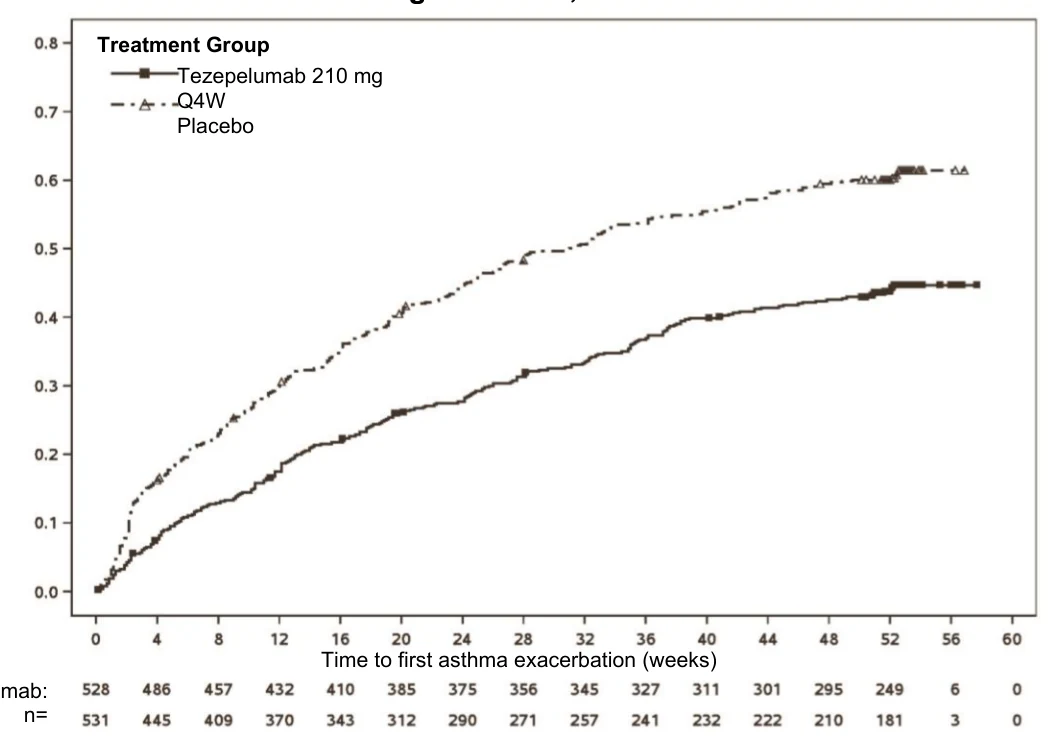
The time to first exacerbation was longer for the patients receiving TEZSPIRE compared with placebo in NAVIGATOR (Figure 1). Similar results were seen in PATHWAY.
Figure 1 Kaplan-Meier Cumulative Incidence Curves for Time to First Exacerbation Through Week 52, NAVIGATOR

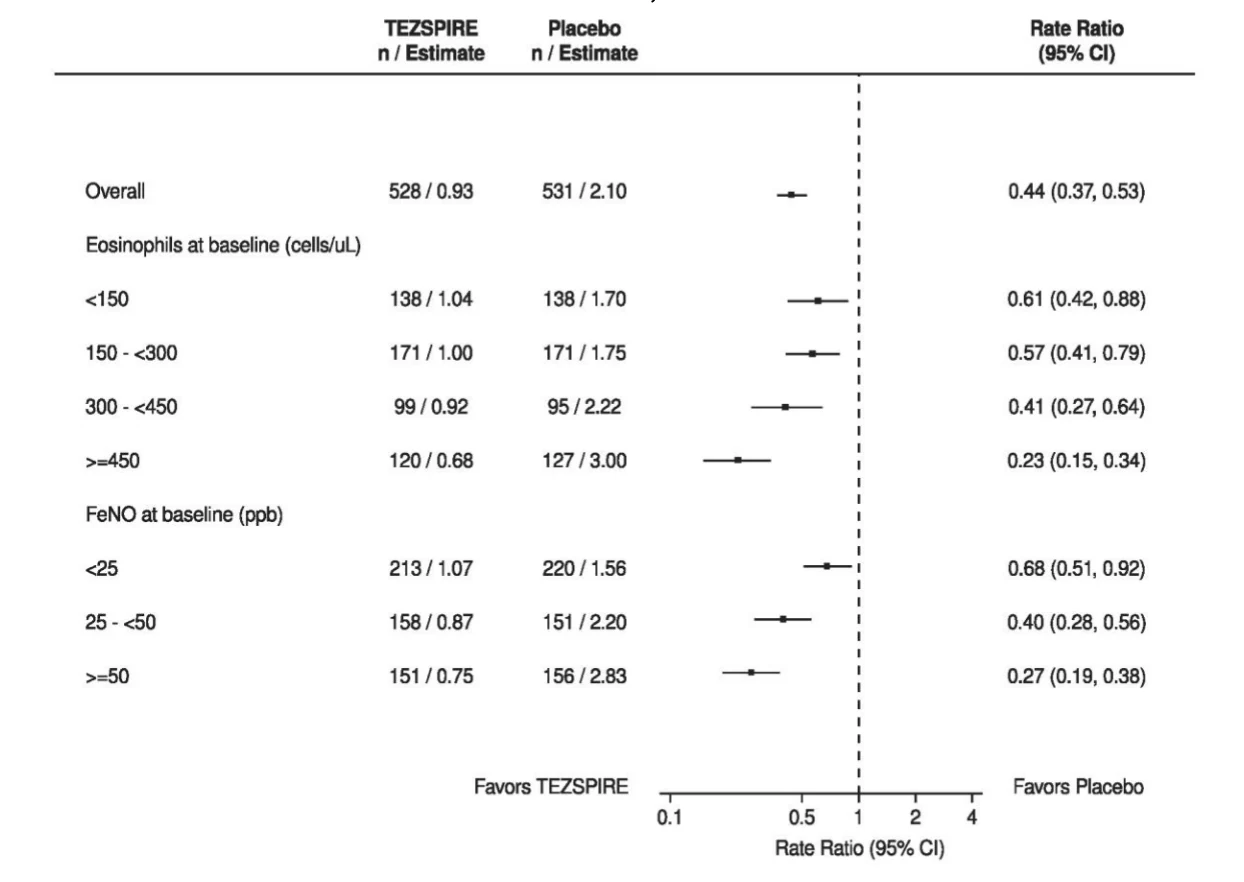
The results of an exploratory subgroup analysis from NAVIGATOR are presented in Figure 2 below. Patients receiving TEZSPIRE experienced fewer exacerbations than those receiving placebo regardless of baseline levels of blood eosinophils or FeNO. Similar results were observed in PATHWAY. In NAVIGATOR, tezepelumab reduced the rate of exacerbations in subjects with baseline blood eosinophils < 300 cells/µL by 41% (rate ratio 0.59 [95% CI 0.46, 0.75]) and in subjects with baseline blood eosinophils ≥ 300 cells/µL by 70% (rate ratio 0.30 [95% CI 0.22, 0.40]). Treatment with tezepelumab also resulted in clinically meaningful reductions in the rate of exacerbations versus placebo irrespective of allergic status (allergic/non-allergic), when assessed categorically.
Time to first asthma exacerbation (weeks)
Tezepelumab: n=
Placebo: n=
Tezepelumab 210 mg Q4W
Placebo
Treatment Group
Probabi l i ty of ev ent
Figure 2 Annualized Asthma Exacerbation Rate Ratio Over 52 Weeks Across Different Baseline Biomarkers, NAVIGATOR
Lung Function
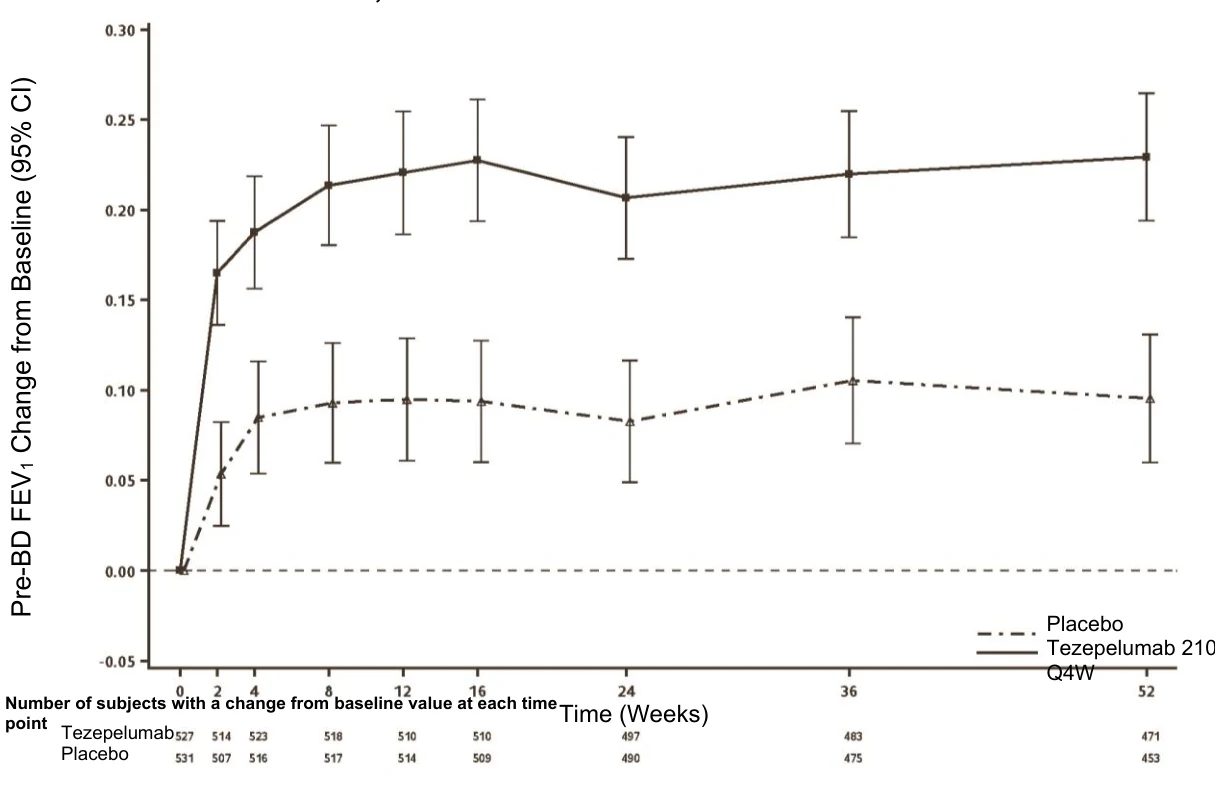
Compared with placebo, TEZSPIRE provided clinically meaningful improvements in the mean change from baseline in FEV1 in both PATHWAY and NAVIGATOR (Table 8).
Table 8 – Mean Change from Baseline in Pre-Bronchodilator FEV1 at Week 52, NAVIGATOR and PATHWAY
| Trial | Treatment | LS Mean Change from Baseline (L) | Difference from Placebo (95% CI) | ||||
|---|---|---|---|---|---|---|---|
| NAVIGATOR | TEZSPIRE (N=527*) | 0.23 | 0.13 (0.08, 0.18) | ||||
| Placebo (N=531*) | 0.10 | ||||||
| PATHWAY | TEZSPIRE (N=133*) | 0.08 | 0.13 (0.03, 0.23) | ||||
| Placebo (N=138*) | -0.06 | ||||||
* Number of patients contributing to the full analysis with at least 1 change from baseline value
Figure 3 Mean Change (95% CI) from Baseline in Pre-Bronchodilator FEV1 (L) Over Time, NAVIGATOR
Patient Reported Outcomes
In both trials, more patients treated with TEZSPIRE compared to placebo had a clinically meaningful improvement in ACQ-6 and AQLQ(S)+12. Clinically meaningful improvement (responder rate) for ACQ-6 and AQLQ(S)+12 was defined as improvement in score of 0.5 at end of trial. In NAVIGATOR, the ACQ-6 responder rate for TEZSPIRE was 86% compared with 77% for placebo and the AQLQ(S)+12 responder rate for TEZSPIRE was 78% compared with 72% for placebo. Similar findings were seen in PATHWAY.
Oral Corticosteroid Reduction
In an OCS-sparing trial, SOURCE, the effect of TEZSPIRE on reducing the use of maintenance OCS was evaluated. The mean percent reduction in daily OCS dose from baseline at week 48 in subjects receiving TEZSPIRE was 63.6% (median 100%) and placebo was 61.2% (median 75%) without losing asthma control. Reductions of 50% or higher in the OCS dose were observed in 55 (74%) patients receiving TEZSPIRE compared to the 53 (70%) patients receiving placebo.
Adolescent Population
A total of 82 adolescents aged 12 to 17 years with severe, uncontrolled asthma were enrolled in NAVIGATOR and received treatment with TEZSPIRE (n=41) or placebo (n=41). Compared with placebo, clinically meaningful improvements in annualized asthma exacerbation (rate ratio 0.70; 95% CI 0.34, 1.46) and FEV1 (LS mean change from placebo 0.17 L; 95% CI -0.01, 0.35) were observed in adolescents treated with TEZSPIRE.
Placebo
Tezepelumab 210 mg Q4W
Pre -BD FEV1 Ch ange from Baseline (95% CI)
Time (Weeks)
Number of subjects with a change from baseline value at each time point
Tezepelumab
Placebo
Chronic Rhinosinusitis with Nasal Polyps (CRSwNP)
Table 9 – Summary of Patient Demographics for Clinical Trials in CRSwNP
| Study # | Study design | Dosage, route of administration and duration | Study subjects (n) | Mean Age (Range) | Sex |
| D5242C00001 (WAYPOINT) | Phase 3, multicenter, randomized, double-blind, placebo-controlled, parallel-group study to evaluate the efficacy and safety of tezepelumab versus placebo in participants with CRSwNP | TEZSPIRE 210 mg Q4W SC or Placebo Q4W 52-week treatment period (last dose at Week 48) | 408* randomized 210 mg SC Q4W: 203 Placebo SC Q4W: 205 | 50 years (18-81) | Male: 65% Female: 35% |
Q4W: every 4 weeks; SC: subcutaneous
*408 patients received at least one dose
The efficacy of TEZSPIRE was evaluated in a randomized, double blind, parallel group, multicentre, placebo-controlled trial (WAYPOINT) of 52 weeks treatment duration conducted in 408 patients aged 18 years and older on standard of care treatment for CRSwNP. This study included patients with symptomatic CRSwNP (total nasal polyp score ≥5 and nasal congestion score ≥2) despite treatment with systemic corticosteroids within the past 12 months and/or any history of sino-nasal surgery, or with contraindications/intolerance to either.
Patients received TEZSPIRE 210 mg or placebo subcutaneously Q4W for 52 weeks in addition to intranasal corticosteroid treatment for CRSwNP. Rescue treatment with systemic corticosteroids or surgery was allowed during the trials at the investigator’s discretion per local guidelines.
The demographics and baseline characteristics are provided in Table 10 below.
Table 10 – Demographics and Baseline Characteristics (WAYPOINT)a, b, c
| N=408a | |
|---|---|
| Mean CRSwNP duration (years) (SD) | 13 (10) |
| Patients with ≥ 1 prior surgery (%) | 71 |
| Patients with systemic corticosteriod use for CRSwNP in the previous year (%) | 58 |
| Mean total NPSb (SD), range 0-8 | 6.1 (1.2) |
| Mean bi-weekly NCSb,c (SD), range 0-3 | 2.6 (0.5) |
| Mean LMK sinus CT total scoreb (SD), range 0-24 | 19 (4) |
| Mean bi-weekly loss of smellb, d (SD), range 0-3 | 2.9 (0.4) |
| Mean SNOT-22 total scoreb (SD), range 0-110 | 69 (18) |
| Mean blood eosinophils (cells/µL) (SD) | 358 (238) |
| Mean total IgE IU/mL (SD) | 176 (285) |
| Asthmae (%) | 61 |
| NSAID-ERD/AERD (%) | 17 |
| Allergic rhinitis (%) | 14 |
a Number of patients (N) =407 for mean total NPS; N=406 for mean bi-weekly NCS and mean bi-weekly loss of smell; N=404 for mean LMK sinus CT total score and mean blood eosinophils; N=389 for mean total IgE.
b Higher scores indicate greater disease severity or symptom severity.
c Evaluated as part of the Nasal Polyposis Symptom Diary (NPSD).
d Evaluated via difficulty with sense of smell score in the NPSD.
e Includes patients with asthma or AERD or NSAID-ERD. All but 3 patients with AERD or NSAID-ERD included in this subgroup also had a diagnosis of asthma reported.
AERD, Aspirin exacerbated respiratory disease; CRSwNP, Chronic rhinosinusitis with nasal polyps; CT, Computed tomography; IgE, Immunoglobulin E; IU, International units; LMK, Lund-Mackay; NCS, Nasal congestion score; NPS, Nasal polyp score; NSAID-ERD, Nonsteroidal anti-inflammatory drug exacerbated respiratory disease; SD, Standard deviation; SNOT-22, 22-item Sino-Nasal Outcome Test
The co-primary efficacy endpoints were change from baseline in total nasal polyp score (NPS) evaluated by nasal endoscopy at Week 52 as graded by independent blinded central assessors, and change from baseline in bi-weekly mean nasal congestion score (NCS) evaluated as part of the Nasal Polyposis Symptom Diary (NPSD) at Week 52. Total NPS was graded on a categorical scale with a maximum score of 8. Each nostril category was defined as follows: 0=no polyps; 1=small polyps in the middle meatus not reaching below the inferior border of the middle turbinate; 2=polyps reaching below the lower border of the middle turbinate; 3=polyps reaching the lower border of the inferior turbinate or a middle meatal polyp with a score of 2 with any additional polyp medial to the middle turbinate; 4=large polyps causing complete or near complete obstruction of the inferior nasal cavity (i.e. touching the floor of the nose). Nasal congestion was rated daily by the patients on a 0 to 3 categorical severity scale (0=none, 1=mild, 2=moderate, 3=severe). Key secondary endpoints included patient-reported loss of smell, patient-reported symptom scores (SNOT-22), time to surgery decision and/or systemic corticosteroids use for nasal polyps, and change from baseline in Lund-Mackay (LMK) score evaluated by computed tomography at Week 52.
Study Results
The efficacy findings from the WAYPOINT trial are shown in Table 11 (Table 11).
Table 11 – Results of Co-primary and Key Secondary Endpoints at Week 52 in Adults with CRSwNP (WAYPOINT)
TEZSPIRE (N=203) | Placebo (N=205) | LS mean difference vs. Placebo (95% CI) a, b | ||||||||||||||
|---|---|---|---|---|---|---|---|---|---|---|---|---|---|---|---|---|
| Baseline mean | LS mean change | Baseline mean | LS mean change | |||||||||||||
| Co-primary Endpoints | ||||||||||||||||
| NPS | 6.1 | -2.5 | 6.1 | -0.4 | -2.1 (-2.4, -1.8) | |||||||||||
| 2-week average of daily NCS | 2.6 | -1.7 | 2.6 | -0.7 | -1.0 (-1.2, -0.9) | |||||||||||
| Key Secondary Endpoints c | ||||||||||||||||
| 2-week average of daily loss of smell f | 2.9 | -1.3 | 2.8 | -0.3 | -1.0 (-1.2, -0.8) | |||||||||||
| SNOT-22 g | 68.2 | -45.0 | 69.2 | -17.6 | -27.4 (-32.5, -22.4) | |||||||||||
| Lund Mackay score (LMK) h | 18.9 | -6.3 | 18.5 | -0.6 | -5.7 (-6.4, -5.0) | |||||||||||
| Proportion of participants % e | Proportion of participants % e | Hazard ratio vs Placebo (95% CI) a, d | ||||||||||||||
| Sino-nasal surgery decisions and/or systemic corticosteroids for NP | 5.7% | 31.4% | 0.08 (0.03, 0.16) | |||||||||||||
a The tezepelumab-placebo comparison was statistically significant at the prespecified 5% level.
b LS means were estimated from an ANCOVA model including treatment group, baseline value, baseline co-morbid asthma/AERD/NSAID-ERD, prior sino-nasal surgery, and region as covariates. Missing data were imputed by multiple imputation assuming missing at random.
c Type I error controlled using truncated Holm procedure.
d Hazard ratio was estimated from a Cox Proportional Hazard model including treatment group, baseline co-morbid asthma/AERD/NSAID-ERD, prior sino-nasal surgery, and region as covariates.
e Kaplan-Meier estimates for the proportion of participants with events up to Week 52.
f The loss of smell score was based on participants’ daily rating of the severity of their worst difficulty with sense of smell over the past 24 hours using a 0 to 3 scale (0=none, 1=mild, 2=moderate, 3=severe).
g SNOT-22 score was based on participants’ rating the severity of 22 nasal and non-nasal signs and symptoms over the past 2 weeks using a 0 to 5 scale (0=no problem, 1=very mild problem, 2=mild or slight problem, 3=moderate problem, 4=severe problem, 5=problem as bad as it can be). The maximum total score was 110.
h The LMK score was based on CT image assessment by independent central readers on the 5 sinuses (maxillary, anterior ethmoid, posterior ethmoid, sphenoid and frontal) on each side using a 0 to 2 scale (0=no abnormality; 1=partial opacification, 2=total opacification), plus osteomeatal complex score (0=not occluded; 2=occluded). The maximum total score was 24.
LS mean change: Least Squares mean change from baseline
Figure 4 demonstrates the time course of improvement in the mean change from baseline in NPS.
Figure 4 LS Mean Change from Baseline in Total Nasal Polyp Score up to Week 52 in adults with CRSwNP (WAYPOINT)
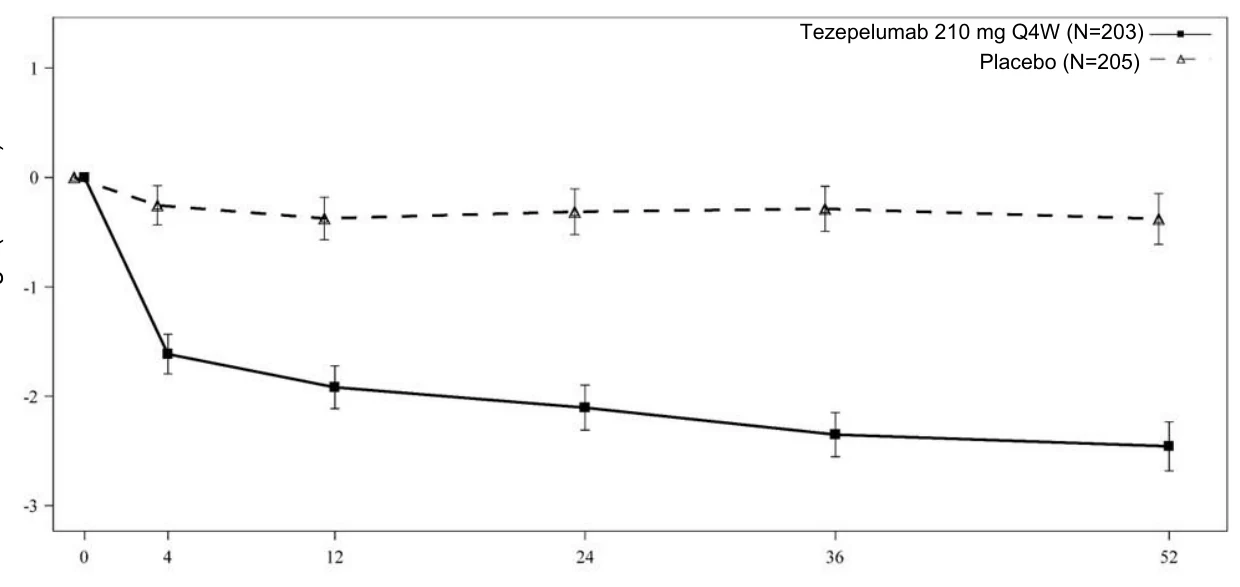
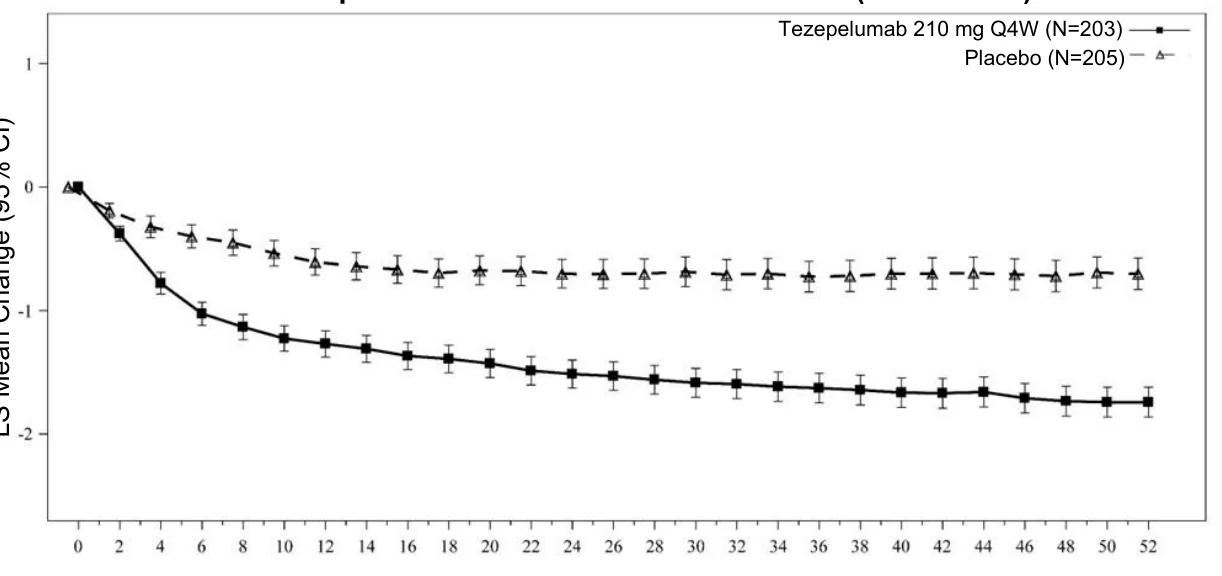
Figure 5 demonstrates the time course of improvement in the mean change from baseline in bi-weekly NCS.
Tezepelumab 210 mg Q4W (N=203)
Placebo (N=205)
Time (Weeks)
LS Mean Change (95% CI)
Figure 5 LS Mean Change from Baseline in Bi-weekly Mean Nasal Congestion Score up to Week 52 in adults with CRSwNP (WAYPOINT)
15. Microbiology
No microbiological information is required for this drug product.
16. Non-Clinical Toxicology
General Toxicology
In a 3-month repeat-dose toxicity study, male and female cynomolgus monkeys were administered tezepelumab by SC injection at doses of 0, 50, 100 or 300 mg/kg/week with some animals following on with a 5-month tezepelumab-free recovery phase. No tezepelumab-related adverse effects were observed. While a delay and/or reduction in immune reaction to an antigen challenge was observed at the 300 mg/kg/week dose level, this finding was not accompanied by changes indicative of infection and was considered non-adverse. Thus, the no-observed-adverse-effect level (NOAEL) was 300 mg/kg/week (the highest dose tested). Exposure at the NOAEL is 138-fold higher than the exposure in adult human patients and 105-fold higher than the exposure in adolescent human patients receiving 210 mg every 4 weeks, based on AUC.
Repeat-dose toxicity of tezepelumab was also evaluated in a 6-month study using the SC and intravenous (IV) routes of administration. Male and female cynomolgus monkeys were administered 0 (both IV and SC groups), 50 (both IV and SC groups), or 300 (SC only) mg/kg/week with some animals following on with a 5-month tezepelumab-free recovery phase. One female animal administered 50 mg/kg/week of tezepelumab IV was euthanized on Day 156 of the study due to poor clinical condition, which was attributed to vascular changes resulting from circulating immune complexes due to anti-drug antibodies to tezepelumab. No tezepelumab-related adverse effects were observed following SC dosing. Thus, the NOAEL following SC administration was 300 mg/kg/week (the highest dose tested). Exposure at the NOAEL for SC administration is 111-fold higher than the exposure in adult human patients and 85-fold higher than the exposure in adolescent human patients receiving 210 mg every 4 weeks, based on AUC.
Placebo (N=205)
Tezepelumab 210 mg Q4W (N=203)
)
Time (Weeks)
)
LS Mean Change (95% CI)
Genotoxicity
Tezepelumab is a monoclonal antibody, as such genotoxicity studies have not been conducted to evaluate the genotoxic potential of tezepelumab.
Carcinogenicity
Tezepelumab is a monoclonal antibody, as such carcinogenicity studies have not been conducted to evaluate the carcinogenic potential of tezepelumab.
Reproductive and Developmental Toxicology
In an enhanced prenatal and postnatal development study conducted in cynomolgus monkeys, pregnant animals were administered tezepelumab by IV injection at doses of 0 (vehicle), 50, or 300 mg/kg/week from early gestation (gestation day 20 to 22) through delivery. No adverse effects on maternal health, pregnancy outcome, embryo-fetal development, or infant growth and development up to 6.5 months of age were observed. Tezepelumab was detected in infant serum throughout the post-natal period. The infant to maternal ratios of serum tezepelumab concentrations increased with increasing time during the post-natal period, indicating slower drug clearance in infants than in maternal animals. Tezepelumab was also detected in milk at concentrations <1% of the maternal serum concentrations. Comparison of maternal and infant serum ratios suggested that the majority of tezepelumab transfer to the infant occurred in utero but transfer via milk cannot be excluded. Based on the results of this study the NOAEL for the maternal and developmental toxicity of tezepelumab is 300 mg/kg/week (the highest dose tested). Maternal exposure at the NOAEL was 168-fold higher than the exposure in human patients receiving 210 mg every 4 weeks, based on AUC.
Effects on male and female fertility have not been directly evaluated in animal studies. Examination of surrogate fertility parameters (menstrual cycle, semen analysis, organ weights, and microscopic pathology) was performed in sexually mature male and female cynomolgus monkeys as part of the 6-month repeat-dose toxicology study. There were no tezepelumab-related effects on these parameters at any dose in this study.