


Product Monograph - Narcan Nasal Spray
Recent Major Label Changes
- None at the time of the most recent authorization.
Table of Contents
Certain sections or subsections that are not applicable at the time of the preparation of the most recent authorized product monograph are not listed.
Recent Major Label Changes ................................................................................................... 2
Table of Contents ................................................................................................................... 2
Part 1: Healthcare Professional Information ........................................................................... 4
- 1.
Indications ....................................................................................................................... 4
1.1. Pediatrics .................................................................................................................. 4
1.2. Geriatrics .................................................................................................................. 4
- 2. Contraindications ............................................................................................................ 4
- 3. Serious Warnings and Precautions Box ............................................................................ 4
- 4.
Dosage and Administration ............................................................................................. 4
4.1. Dosing Considerations .............................................................................................. 4
4.2. Recommended Dose and Dosage Adjustment ......................................................... 5
4.4. Administration .......................................................................................................... 5
- 5. Overdose ......................................................................................................................... 6
- 6. Dosage Forms, Strengths, Composition, and Packaging ................................................... 6
- 7.
Warnings and Precautions ............................................................................................... 7
General ................................................................................................................................. 7
Cardiovascular ...................................................................................................................... 8
Gastrointestinal .................................................................................................................... 8
Neurologic ............................................................................................................................ 9
Perioperative Considerations ............................................................................................... 9
Psychiatric ............................................................................................................................. 9
Respiratory ........................................................................................................................... 9
7.1. Special Populations .................................................................................................. 9
7.1.1. Pregnancy ........................................................................................................ 9
7.1.2. Breastfeeding ................................................................................................ 10
7.1.3. Pediatrics ....................................................................................................... 10
7.1.4. Geriatrics ....................................................................................................... 10
- 8.
Adverse Reactions ......................................................................................................... 10
8.1. Adverse Reaction Overview .................................................................................... 10
- 9.
Drug Interactions ........................................................................................................... 11
9.1. Drug-Drug Interactions ........................................................................................... 11
9.2. Drug-Food Interactions........................................................................................... 11
9.3. Drug-Herb Interactions ........................................................................................... 11
9.4. Drug-Laboratory Test Interactions ......................................................................... 11
- 10.
Clinical Pharmacology ................................................................................................... 11
10.1. Mechanism of Action .............................................................................................. 11
10.2. Pharmacodynamics ................................................................................................ 11
10.3. Pharmacokinetics ................................................................................................... 11
- 11. Storage, Stability, and Disposal ...................................................................................... 16
Part 2: Scientific Information ................................................................................................ 17
- 13. Pharmaceutical Information .......................................................................................... 17
- 14. Clinical Trials .................................................................................................................. 18
- 16. Non-Clinical Toxicology .................................................................................................. 18
Patient Medication Information ........................................................................................... 20
Part 1: Healthcare Professional Information
1. Indications
NARCAN NASAL SPRAY (naloxone hydrochloride nasal spray) is indicated for:
- Emergency use to reverse known or suspected opioid overdose, as manifested by respiratory and/or severe central nervous system depression.
NARCAN NASAL SPRAY can be administered by a bystander (non-health care professional) before emergency medical assistance becomes available, but it is not intended to be a substitute for professional medical care. Emergency medical assistance (calling 911) should be requested immediately when an opioid overdose is suspected, before administering naloxone.
1.1. Pediatrics (<18 years of age)
Based on the limited available data, caution should be exercised in administrating NARCAN NASAL SPRAY to neonates (see 7 Warnings and Precautions, Acute Opioid Withdrawal Syndrome, and 7.1.3 Pediatrics).
1.2. Geriatrics (>65 years of age)
Evidence from clinical experience suggests that use in geriatrics is not associated with differences in response compared to the younger population (see 7.1.4 Geriatrics).
2. Contraindications
- Patients who are hypersensitive to this drug or to any ingredient in the formulation or component of the container. For a complete listing, see the 6 Dosage Forms, Strengths, Composition, and Packaging.
3. Serious Warnings and Precautions Box
- Emergency medical assistance (calling 911) should be requested immediately when an opioid overdose is suspected, before using naloxone (see 7 Warnings and Precautions, General, Rebound Opioid Toxicity).
- Individuals with a satisfactory response to an initial dose of naloxone should be kept under continued surveillance (see 7 Warnings and Precautions, General, Rebound Opioid Toxicity). Caregivers administering naloxone should be prepared to act in response to or assist the patient in cases of potential adverse reactions such as aggressive reactions, convulsions and vomiting. Special attention is warranted if naloxone is administered to a neonate or a pregnant woman (see 7 Warnings and Precautions, General, Acute Opioid Withdrawal Syndrome and 7.1 Special Populations, 7.1.1 Pregnancy, 7.1.3 Pediatrics, and 4 Dosage and Administration).
4. Dosage and Administration
4.1. Dosing Considerations
Emergency medical assistance (i.e. calling 911) should be requested immediately when an opioid overdose is suspected, before administering naloxone (see 7 Warnings and Precautions,
- General, Rebound Opioid Toxicity). NARCAN NASAL SPRAY is not a substitute for emergency medical care.
- Since the duration of action of most opioids exceeds that of naloxone, the patient should be kept under continued surveillance and repeated doses of naloxone should be administered, as necessary (see 7 Warnings and Precautions, General, Rebound Opioid Toxicity).
4.2. Recommended Dose and Dosage Adjustment
Recommended Initial Dosing
In all cases, the lowest available strength of NARCAN NASAL SPRAY should be used as the initial dose.
Dosing in Neonate Patients and pediatrics below 2 years of age
If NARCAN NASAL SPRAY is procured with the intention of use in this population, the pharmacist may suggest alternate formulations of naloxone (e.g. for intramuscular administration) which allow for smaller doses of naloxone.
Naloxone could trigger an acute opioid withdrawal syndrome in the dependent neonate which may be life-threatening if not recognized and properly treated. Naloxone should be administered to neonates only if clearly needed (see 7.1.3 Pediatrics).
Dosing in Pregnant Women
Naloxone could trigger an acute opioid withdrawal syndrome in the opioid-dependent pregnant woman, which may precipitate preterm labor or fetal distress (see 7.1.1 Pregnancy). To reduce the risk an acute opioid withdrawal syndrome in the opioid-dependent pregnant woman, the lowest available strength of NARCAN NASAL SPRAY should be used as the initial dose.
Repeat Dosing
- The requirement for repeat doses of NARCAN NASAL SPRAY depends upon the amount, type, and route of administration of the opioid being antagonized;
- If the patient does not respond within 2-3 minutes to the first dose of NARCAN NASAL SPRAY, administer an additional dose of naloxone every 2-3 minutes (if additional doses are available), using a new NARCAN NASAL SPRAY device for each dose, until the desired response is obtained. If no response is obtained after 5 doses of the 4 mg NARCAN NASAL SPRAY or 10 doses of the 2 mg NARCAN NASAL SPRAY, an opioid overdose is unlikely to be the cause of the symptoms. In these cases, additional supportive and/or resuscitative measures may be helpful while awaiting emergency medical assistance;
- Once a desired response is obtained, continue surveillance of the patient while awaiting for emergency medical assistance and administer subsequent doses as necessary if the patient relapses back into respiratory depression;
- Administer NARCAN NASAL SPRAY in alternate nostrils with each dose.
4.4. Administration
NARCAN NASAL SPRAY is for intranasal use only. No additional device assembly is required.
Because treatment of suspected opioid overdose must be performed by someone other than the patient, be sure to inform caregivers, family members, and other persons around the patient about the presence/location of NARCAN NASAL SPRAY in the home as well as the PATIENT MEDICATION
INFORMATION and Quick Start Guide.
The pharmacist (or other health care professionals providing advice to patients) should instruct the patient or caregiver to read the PATIENT MEDICATION INFORMATION and the Quick Start Guide at the time they obtain NARCAN NASAL SPRAY and to become familiar with the administration procedures. As well, the pharmacist should emphasize the following instructions to the patient or caregiver:
- Always seek emergency medical assistance (i.e. call 911), or ask someone to call for you, in the event of a suspected opioid overdose. If you encounter problems on how to administer NARCAN NASAL SPRAY or any other problem, the 911 operator will guide you.
- As soon as the 911 call is made or while someone else is calling for you, administer the lowest available strength of NARCAN NASAL SPRAY as quickly as possible because prolonged respiratory depression may result in damage to the central nervous system or death. Since the duration of action of most opioids exceeds that of naloxone hydrochloride and the suspected opioid overdose may occur outside of supervised medical settings, always keep the patient under continued surveillance until emergency personnel arrive.
Additional doses of NARCAN NASAL SPRAY, using an additional NARCAN NASAL SPRAY device, may be required until emergency medical assistance becomes available:
- If the patient responds to the first dose of NARCAN NASAL SPRAY but relapses back into respiratory depression before emergency assistance arrives, administer repeated doses of NARCAN NASAL SPRAY as necessary.
- If the patient does not respond to the first dose of NARCAN NASAL SPRAY after 2-3 minutes, administer repeated doses of naloxone as necessary.
- Do not reuse NARCAN NASAL SPRAY. Each NARCAN NASAL SPRAY device contains a single dose of naloxone and cannot be reused.
- Administer NARCAN NASAL SPRAY in alternate nostrils with each dose.
- Administer NARCAN NASAL SPRAY according to the printed instructions in the PATIENT MEDICATION INFORMATION or Quick Start Guide.
- Place the patient on their back. Prior to administration, be sure the device nozzle is inserted in either nostril of the patient, and provide support to the back of the neck to allow the head to tilt back. In young children, the nozzle may not fit in the nostril. In this case, make sure the nozzle seals the nostril before administration.
- Do not prime or test the device.
- To administer the dose press firmly on the device plunger.
- Remove the device nozzle from the nostril after use.
- Turn patient on their side as shown in the PATIENT MEDICATION INFORMATION or Quick Start Guide.
5. Overdose
In view of the indication and the broad therapeutic margin, overdose of NARCAN NASAL SPRAY is not expected.
- 6. Dosage Forms, Strengths, Composition, and Packaging
Table 1 – Dosage Forms, Strengths, and Composition
NARCAN NASAL SPRAY is supplied in:
- One carton containing 2 sprayer devices each providing a single 2 mg dose of naloxone hydrochloride in a 0.1 mL intranasal spray; or
- One carton containing 2 sprayer devices each providing a single 4 mg dose of naloxone hydrochloride in a 0.1 mL intranasal spray; or
- One carton containing 6 sprayer devices each providing a single 4 mg dose of naloxone hydrochloride in a 0.1 mL intranasal spray.
Description
NARCAN NASAL SPRAY 2 mg/0.1 mL
Each sprayer containing 0.1 mL of aqueous solution for intranasal administration contains: 2 mg naloxone hydrochloride, benzalkonium chloride (preservative), disodium ethylenediaminetetraacetate (stabilizer), sodium chloride, hydrochloric acid to adjust pH, and purified water.
NARCAN NASAL SPRAY 4 mg/0.1 mL
Each sprayer containing 0.1 mL of aqueous solution for intranasal administration contains: 4 mg naloxone hydrochloride, benzalkonium chloride (preservative), disodium ethylenediaminetetraacetate (stabilizer), sodium chloride, hydrochloric acid to adjust pH, and purified water.
Latex-Free: NARCAN NASAL SPRAY is not made with dry natural rubber.
7. Warnings and Precautions
See 3 Serious Warnings and Precautions Box.
General
In the absence of opioids, in opioid naïve people, naloxone administration shows essentially no pharmacologic activity. In opioid dependent people, naloxone may trigger an acute opioid withdrawal syndrome (see 7 Warnings and Precautions, General, Acute Opioid Withdrawal Syndrome).
The effectiveness of naloxone has not been assessed in people with intranasal conditions such as abnormal nasal anatomy, nasal symptoms (i.e., blocked and/or runny nose, nasal polyps, etc.) or in people having a product sprayed into the nasal cavity prior to naloxone administration. It is unknown if these conditions affect naloxone's effectiveness. If NARCAN NASAL SPRAY is procured with the intention of using it in people that may present these conditions, the pharmacist may suggest other route of administration (e.g. intramuscular).
Naloxone does not counteract overdoses due to: barbiturates, benzodiazepines, psychostimulants (e.g., cocaine, amphetamines, methylphenidate, etc.), alcohol, or any other non-opioid drug such as non-
| Route of Administration | Dosage Form/ Strength/Composition | Non-Medicinal Ingredients |
| Intranasal | Solution for intranasal administration 2 mg/0.1 mL (20 mg/mL) 4 mg/0.1 mL (40 mg/mL) | benzalkonium chloride disodium ethylenediaminetetraacetate sodium chloride hydrochloric acid to adjust pH purified water |
opioid tranquilizers, anesthetics or sedatives. However, mistakenly administering naloxone to a person that is unconscious because of a non-opioid overdose or for other reasons is unlikely to create more harm.
Rebound Opioid Toxicity
Rebound opioid toxicity is the re-emergence of an opioid overdose manifestation, including respiratory depression, following the temporary reversal of the opioid overdose with naloxone. The patient who has responded satisfactorily to naloxone should be kept under continued surveillance and repeated doses of naloxone should be administered as necessary until the emergency medical services take charge of the patient (see 4 Dosage and Administration). Repeated doses are often required as the duration of action of most opioids exceeds that of naloxone, and therefore, re-emergence of opioid overdose manifestation is likely.
Acute Opioid Withdrawal Syndrome
NARCAN NASAL SPRAY should be administered with caution to persons who are known or suspected to be physically dependent on opioids. In such cases, an abrupt reversal of opioid effects may precipitate an acute opioid withdrawal syndrome. The severity of such a syndrome will depend on the degree of physical dependence, the dose and potency of the opioid that induced the overdose, and the dose of naloxone administered.
The signs and symptoms of an acute opioid withdrawal syndrome include, but are not limited to: body aches, pain, fever/pyrexia, sweating/hyperhidrosis, runny nose, sneezing, piloerection, yawning, weakness, asthenia, shivering, chills, tremor/trembling, convulsions/seizures, nervousness, restlessness, irritability, aggressive behavior, diarrhea, nausea, vomiting, abdominal cramps, increased blood pressure, and tachycardia. In the dependent neonate, signs also include excessive crying as well as hyperactive reflexes and the acute withdrawal may be life-threatening if not recognized and properly treated (see 7.1.3 Pediatrics).
Emergency medical assistance (i.e. calling 911) should be requested immediately when an opioid overdose is suspected. Monitor the patient for the development of the signs and symptoms of opioid withdrawal. Caregivers administering naloxone to any patient should always be prepared for potential reactions associated with acute opioid withdrawal syndrome and to assist the patient to minimize harm when experiencing these reactions. For example, a patient should be positioned in lateral decubitus to prevent choking if vomiting occurs; sharp or dangerous objects should be moved away in case of convulsions to protect the patient from injury, but the patient should not be restrained.
Cardiovascular
Rare cases of cardiac arrest, tachycardia and ventricular fibrillation have been reported after naloxone administration. These cases may have been confounded by the effects of other drugs or other effects such as prolonged hypoxia. A direct relationship to naloxone has not been established.
Gastrointestinal
Naloxone administration could trigger gastrointestinal reactions including diarrhea, nausea, vomiting and abdominal cramps (see 7 Warnings and Precautions, General, Acute Opioid Withdrawal Syndrome). If vomiting occurs, the patient should be positioned in lateral decubitus to prevent choking.
Neurologic
Convulsions or seizures after naloxone administration have been rarely reported and the relationship between naloxone and convulsion or seizure is unclear. If convulsions or seizures occur, sharp or dangerous objects should be moved away to protect the patient from injury but the patient should not be restrained.
Perioperative Considerations
Post-Operative Consideration
Several instances of hypotension, hypertension, ventricular tachycardia and fibrillation, dyspnea, pulmonary edema and rare cases of cardiac arrest have been reported. Death, coma, and encephalopathy have been reported as sequelae of these events.
These events have primarily occurred in post-operative patients with pre-existing cardiovascular disorders and/or other drugs may have contributed to the adverse effects.
A direct relationship to naloxone has not been established.
Psychiatric
Irritability and aggressive behavior are among the manifestations of an acute opioid withdrawal syndrome, which may be precipitated when naloxone is administered to a person who is physically dependent on opioids (see 7 Warnings and Precautions, General, Acute Opioid Withdrawal Syndrome). Caregivers administering naloxone to any patient should always be prepared to manage potential aggressive reactions.
Respiratory
Naloxone is not effective against respiratory depression due to non-opioid drugs (see 7 Warnings and Precautions, General). A single dose of naloxone may not reverse respiratory depression (or reversal may be incomplete) if the opioid overdose is caused by certain partial agonist opioids such as buprenorphine and pentazocine or highly potent opioids such as fentanyl or its analogs. Additional doses of naloxone administered at close intervals may be required in such cases (see 4.2 Recommended Dose and Dosage Adjustment).
Similarly, an opioid overdose caused by very large doses of any opioid may also require administration of multiple doses of naloxone at close intervals (see 4.2 Recommended Dose and Dosage Adjustment). In addition to naloxone, other resuscitative measures such as maintenance of a free airway, artificial ventilation and cardiac massage could be executed by a bystander (non-health care professionals) if the bystander knows how to perform the maneuvers. Moreover, vasopressor agents should be employed (if available) whenever necessary if a health care professional is present.
7.1. Special Populations
7.1.1. Pregnancy
There are no adequate and well-controlled studies in pregnant women.
Reproduction studies performed in mice and rats at doses up to 12 times the human dose revealed no evidence of impaired fertility or harm to the fetus due to naloxone.
Administration of naloxone to an opioid-dependent pregnant woman may induce an acute opioid withdrawal syndrome (see 7 Warnings and Precautions, General, Acute Opioid Withdrawal Syndrome), which may precipitate preterm labor or fetal distress. Because of this risk and because animal reproduction studies are not always predictive of human response, naloxone should be used during pregnancy only if clearly needed (see 4 Dosage and Administration).
7.1.2. Breastfeeding
It is not known whether naloxone is excreted in human milk. Studies in nursing mothers have shown that naloxone does not affect prolactin or oxytocin hormone levels.
7.1.3. Pediatrics
Accidental opioid exposure is possible in the pediatric population. Naloxone administration may cause an acute opioid withdrawal syndrome which may be life threatening in opioid dependent neonates if not recognized and properly treated (see 7 Warnings and Precautions, General, Acute Opioid Withdrawal Syndrome). Clinical data is limited and naloxone should be administered to a neonate only if clearly needed (see 4 Dosage and Administration). As for any use of naloxone, emergency medical assistance (i.e. calling 911) should be requested immediately, before administering naloxone in a neonate.
7.1.4. Geriatrics
Geriatric patients have a greater frequency of decreased hepatic, renal, or cardiac function and of concomitant disease or other drug therapy. Therefore, the systemic exposure of naloxone hydrochloride can be higher in these patients.
Clinical studies of naloxone hydrochloride did not include sufficient numbers of subjects aged 65 and over to determine whether they respond differently from younger subjects. Other reported clinical experience has not identified differences in responses between the elderly and younger patients.
8. Adverse Reactions
8.1. Adverse Reaction Overview
In clinical studies, nasal edema, nasal inflammation, nasal dryness, nasal congestion, muscle spasms, musculoskeletal pain, headache, dizziness, constipation, nausea, toothache, rhinalgia, xeroderma, and blood pressure increased were reported.
Abrupt reversal of opioid effects in persons physically dependent on opioids may result in body aches, pain, fever/pyrexia, sweating/hyperhidrosis, runny nose, sneezing, piloerection, yawning, weakness, asthenia, shivering, chills, tremor/trembling, convulsions/seizures, nervousness, restlessness, irritability, aggressive behavior, diarrhea, nausea, vomiting, abdominal cramps, increased blood pressure, and tachycardia. In the neonate, it may result in excessive crying and hyperactive reflexes as well (see 7 Warnings and Precautions, General, Acute Opioid Withdrawal Syndrome).
Hypotension, hypertension, ventricular tachycardia and fibrillation, dyspnea, pulmonary edema, and cardiac arrest have been associated with the use of naloxone post-operatively. Death, coma, and encephalopathy have been reported as sequelae of these events (see 7 Warnings and Precautions, Cardiovascular, and Perioperative Considerations). Excessive doses of naloxone hydrochloride in post-operative patients have resulted in significant reversal of analgesia and have caused agitation.
Seizures have been reported to occur infrequently after the administration of naloxone; however, a causal relationship has not been established.
9. Drug Interactions
9.1. Drug-Drug Interactions
Interactions with other drug products have not been established.
9.2. Drug-Food Interactions
Interactions with foods have not been established.
9.3. Drug-Herb Interactions
Interactions with herbal products have not been established.
9.4. Drug-Laboratory Test Interactions
Interactions with laboratory tests have not been established.
10. Clinical Pharmacology
10.1. Mechanism of Action
While the mechanism of action of naloxone hydrochloride is not fully understood, the pre-ponderance of evidence suggests that naloxone antagonizes the opioid effects by competing for the same receptor sites.
10.2. Pharmacodynamics
NARCAN NASAL SPRAY prevents or reverses the effects of opioids, including respiratory depression, sedation, and hypotension. It can also reverse the psychosomimetic and dysphoric effects of agonist-antagonists such as pentazocine. NARCAN NASAL SPRAY is an essentially pure opioid antagonist, i.e., it does not possess the agonistic or morphine-like properties characteristic of other opioid antagonists; naloxone does not produce respiratory depression, psychosomimetic effects or pupillary constriction.
Naloxone has not been shown to produce tolerance or to cause physical or psychological dependence.
10.3. Pharmacokinetics
Following administration, naloxone hydrochloride is rapidly distributed in the body. Naloxone hydrochloride is metabolized in the liver, primarily by glucuronide conjugation, and is excreted in urine.
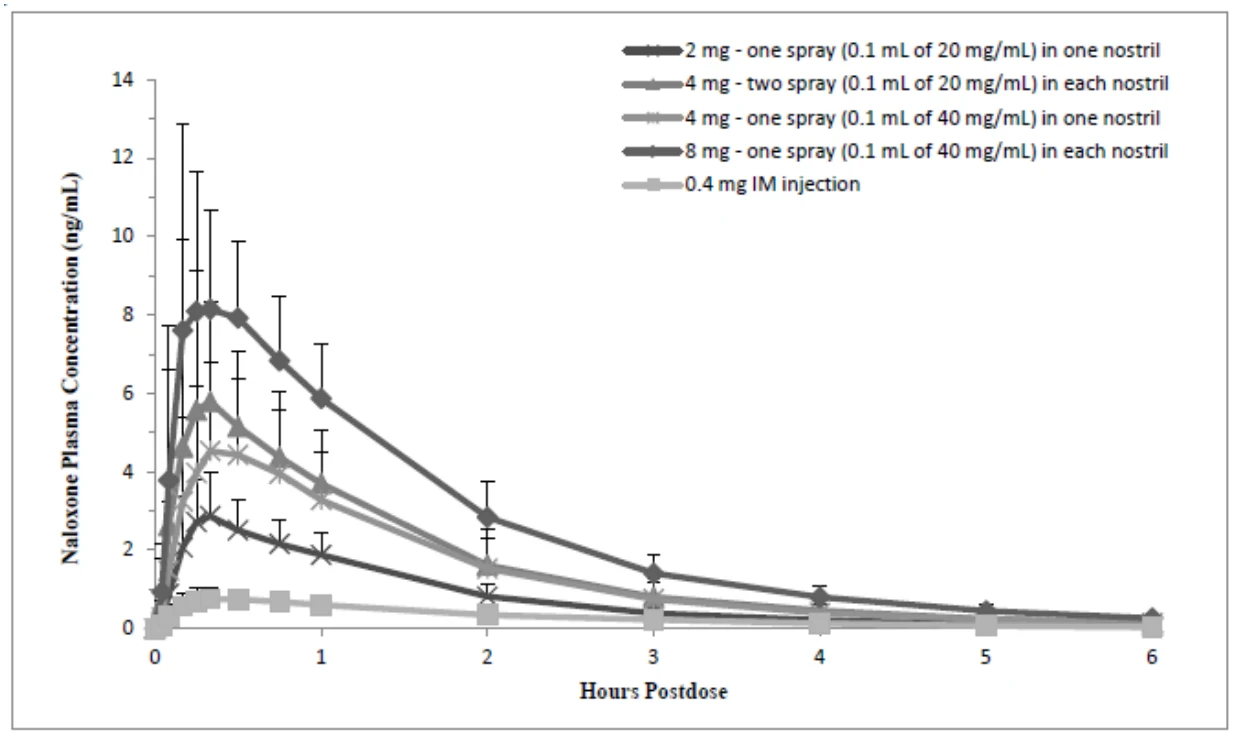
The study "Naloxone-Ph1a-002" was conducted to determine the PK of 4 different approaches to administer 3 different intranasal (IN) doses [2 mg (2 mg spray in one nostril), 4 mg (2 mg spray in each nostril), 4 mg (4 mg spray in one nostril), and 8 mg (4 mg spray in each nostril)] of naloxone compared to a 0.4 mg dose of naloxone administrated IM.
Study Demographics and Trial Design
Table 2 – Summary of Patient Demographics
| Study# | Trial design | Dosage, route of administration and duration | Study subjects (n = number) | Mean age (Range) | Gender |
|---|---|---|---|---|---|
| Ph1a-002 | Inpatient, Open- Label, Randomized, 5-Period, 5-Treatment, 5-Sequence, Crossover Study | Treatment A 2 mg - One Spray 20 mg/mLIN | n = 30 | 35.9 years (22 - 55 years) | Female = 12 Male = 18 |
Treatment B 4 mg - Two Sprays (1 per nostril) 20 mg/mLIN | |||||
Treatment C 4 mg - One Spray 40 mg/mLIN | |||||
Treatment D 8 mg - Two Sprays (1 per nostril) 40 mg/mLIN | |||||
Treatment E 0.4mgIM | |||||
Subjects in study Naloxone-Ph1a-002 were more frequently male (60.0%), and more frequently African American or Black (76.7%). Two subjects were of Hispanic ethnicity. Subjects had an average height of 173.3 cm, weight of 80.1 kg, and a mean (range) body mass index (BMI) of 26.5 (19.6 to 29.8) kg/m2.
Participants were assigned to one of 5 sequences (Table 2), with 6 participants planned in each sequence. On the day after clinic admission, participants were administered study drug in randomized order with a 4-day washout period between doses until all 5 treatments had been administered. Blood was collected for PK analysis prior to administration and up to 12 hours after each dose; ECG, vital signs, and other AE assessments were performed.
Thirty participants were randomized and received at least one dose of naloxone; 28 (93%) completed the study. One male participant was discontinued on Day 5 prior to receiving the second treatment due to a predose systolic blood pressure (BP) reading greater than 140 mmHg.
Study Results
Table 3 – Geometric Mean Pharmacokinetic Parameters (CV%) of Naloxone Following Intranasal Administration and Intramuscular Injection of Naloxone to Healthy Subjects
| Parameter | Treatment A 2 mg - One Spray 20 mg/mL IN (N = 29) | Treatment B 4 mg - Two Sprays 20 mg/mL IN (N = 29) | Treatment C 4 mg - One Spray 40 mg/mL IN (N = 29) | Treatment D 8 mg - Two Sprays 40 mg/mL IN (N = 29) | Treatment E 0.4 mg IM (N = 29) |
|---|---|---|---|---|---|
| λz (1/h) | 0.382 (34.9) | 0.310 (34.5) | 0.334 (29.5) | 0.330 (32.4) | 0.557 (25.9) |
| t½ (h) | 1.81 (34.9) | 2.23 (34.5) | 2.08 (29.5) | 2.10 (32.4) | 1.24 (25.9) |
| tmax (h)a | 0.33 (0.25, 1.00) | 0.33 (0.17,0.57) | 0.50 (0.17, 1.00) | 0.33 (0.17, 1.00) | 0.38 (0.08, 2.05) |
| Cmax(ng/mL) | 2.92 (34.3) | 6.20 (31.9) | 4.83 (43.1) | 9.70 (36.0) | 0.877 (30.5) |
| Cmax/Dose (ng/mL/mg) | 1.46 (34.3) | 1.55 (31.9) | 1.21 (43.1) | 1.21 (36.0) | 2.19 (30.5) |
| AUCo-t (h*ng/mL) | 4.51 (27.2) | 9.32 (24.0) | 7.87 (37.4) | 15.3 (23.0) | 1.72 (22.9) |
| AUCo-t/Dose (h*ng/mL/mg) | 2.25 (27.2) | 2.33 (24.0) | 1.97 (37.4) | 1.91 (23.0) | 4.29 (22.9) |
| AUCo-inf (h*ng/mL) | 4.56 (26.9) | 9.43 (24.0) | 7.95 (37.3) | 15.5 (22.7) | 1.76 (22.6) |
| AUC o-inf /Dose (h*ng/mL/mg) | 2.28 (26.9) | 2.36 (24.0) | 1.99 (37.3) | 1.93 (22.7) | 4.40 (22.6) |
AUC% Extrapolated (%) | 1.06 (56.5) | 0.935 (60.1) | 0.965 (53.5) | 0.963 (69.3) | 2.18 (57.5) |
| CL/F (L/h) | 438 (26.9) | 424 (24.0) | 503 (37.3) | 518 (22.7) | 227 (22.6) |
| Dose Normalized Relative BA (%)vs.IM | 51.9 (21.7) | 53.6 (22.5) | 46.7 (31.4)b | 43.9 (23.8) | 100 |
| Cmax/Dose Ratio (IN vs. IM)(%) | 66.6 (41.4) | 70.7 (37.7) | 56.6(47.5)b | 55.3 (41.4) | 100 |
a: Median (minimum, maximum)
b: N=28 for Relative Bioavailability (BA) and Cmax/Dose ratio of Treatment C
Figure 1 – Mean ± SD Plasma Concentration of Naloxone, (a) 0-6 h and (b) 0-1h Following Intranasal Administration and Intramuscular Injection
(a)
(b)
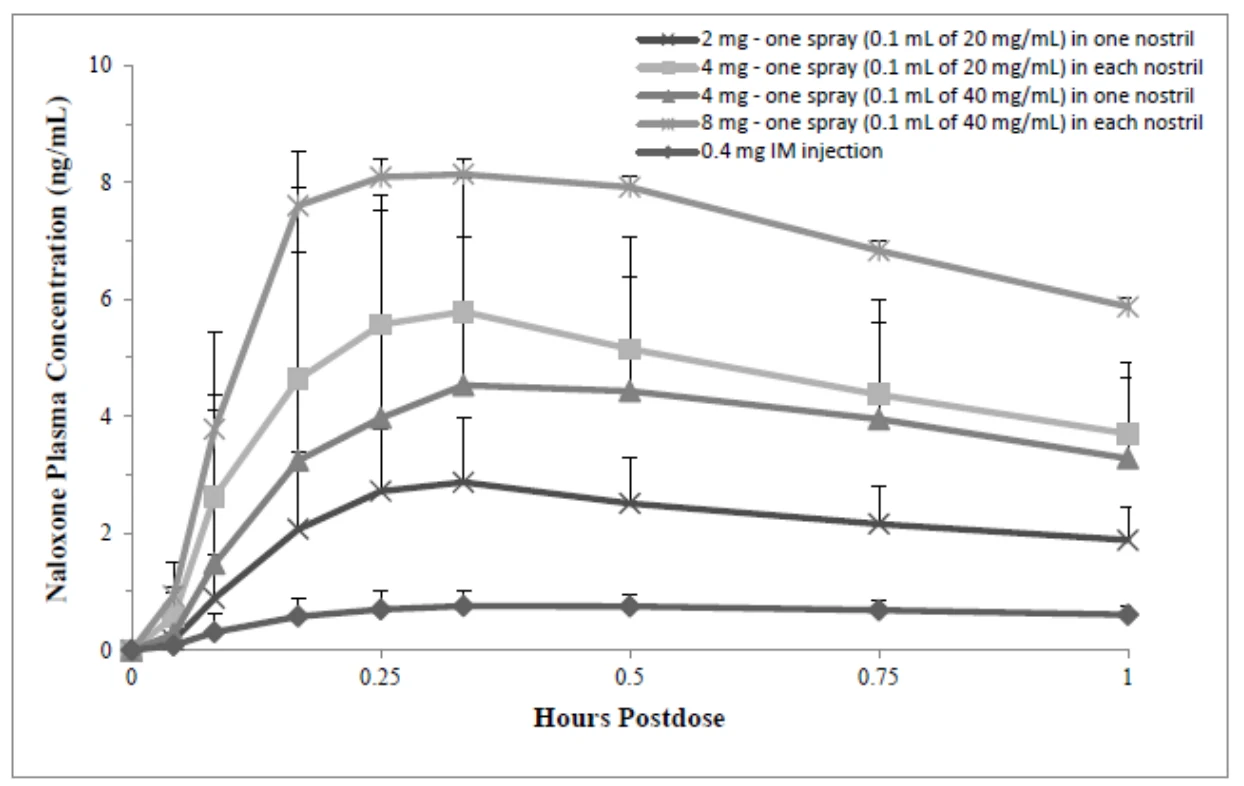
Naloxone plasma concentrations were at measurable concentrations 2.5 minutes after IN administration, the first collection time point, in all but 2 samples. The median tmax values after IN and IM dosing ranged from 20 to 30 minutes, indicating that naloxone was absorbed quickly following either route of administration.
Dose proportionality for the 4 IN doses of naloxone was assessed using the ratio of the dose- normalized geometric mean values (Rdnm) of Cmax and AUCo-inf, The Rdnm value (90% confidence interval (CI)) value for Cmax was 0.831 (0.744-0.927); for AUCo-inf, the Rdnm value was 0.847 (0.786-0.912). Both Cmax and AUCo-inf increased slightly less dose proportionally, as indicated by Rdnm values less than 1 and confidence intervals that were outside the range of 0.80-1.25.
Evaluations were also done to compare the geometric mean ratios (GMR) of the dose-normalized PK parameters for one spray versus 2 sprays of the 20 mg/mL formulation; similar comparisons were done for the 40 mg/mL formulation. The GMRs for the PK parameters were between 94% and 97% when one spray (2 mg) and 2 sprays (4 mg) were delivered using the 20 mg/mL formulation. The values of the 90% CI for both AUCo-t and AUCo-inf were within 80-125% for the GMR while the values for Cmax were 78.7 to113%. For the 40 mg/mL formulation, the GMRs and 90% CIs for all 3 PK parameters were within the 80-125% range when results using one spray (4 mg) and two sprays (8 mg) were compared.
The conclusions of the PK study were that the naloxone nasal formulation can deliver a dose of naloxone intranasally with approximately 50% the bioavailability of IM administrations. As such, a 2 mg and 4 mg intranasal dose will provide a dose similar to intramuscular doses of 1 mg and 2 mg, respectively. The tmax is approximately the same as injectable naloxone indicating that time to onset of action will be similar.
- 11. Storage, Stability, and Disposal
Store NARCAN Nasal Spray in the packaging provided. Store below 25°C. Excursions permitted up to 40°C. Do not freeze or expose to excessive heat above 40°C. Protect from light.
NARCAN Nasal Spray freezes at temperatures below -15°C. If this happens, the device will not spray. If NARCAN Nasal Spray is frozen and is needed in an emergency, do NOT wait for NARCAN Nasal Spray to thaw. Get emergency medical help right away.
However, NARCAN Nasal Spray may be thawed by allowing it to sit at room temperature for 15 minutes, and it may still be used if it has been thawed after being previously frozen.
Part 2: Scientific Information
13. Pharmaceutical Information
Drug Substance
Non-proprietary name of the drug substance(s): Naloxone hydrochloride
Chemical name: Mophinan-6-one, 4,5-epoxy-3,14-dihydroxy-17-(2-propenyl)-, hydrochloride, (5α)-, dihydrate 17- Allyl-4,5α-epoxy-3,14-dihydroxymorphinan-6-one hydrochloride dihydrate
Molecular formula and molecular mass: C19H21NO4 ·HCl ·2H2O, 399.87 g/mol
Structural formula:
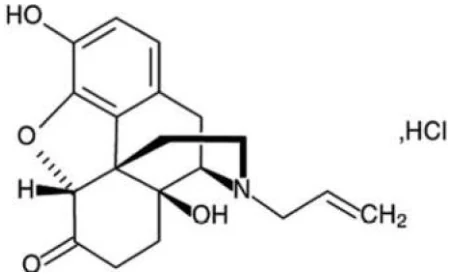
Physicochemical properties: Naloxone hydrochloride, an opioid antagonist, is a synthetic congener of oxymorphone. In structure, it differs from oxymorphone in that the methyl group on the nitrogen atom is replaced by an allyl group.
General properties of naloxone hydrochloride are outlined below:
- Appearance: Naloxone hydrochloride is a white or off-white powder.
- Solubility: Soluble in water, in dilute acids, and in strong alkali; slightly soluble in alcohol, practically insoluble in ether and in chloroform.
- Melting range: 177 °C to 180 °C Naloxone; 200 °C to 205 °C Naloxone.
- Solution pH: The pH aqueous solution is in the range 2.5 to 3.5.
- Specific rotation: -170° to -181°.
Detailed Pharmacology
On the basis of animal experiments, naloxone is a relatively specific narcotic antagonist that interacts preferentially with the mu-receptor subtypes. Naloxone is devoid of opioid agonist effects and consequently it has no abuse potential.
Very low doses of narcotic antagonists, such as naloxone, are known to elicit aversive effects in morphine-dependent animals. When the dose of naloxone is increased, a similar aversive quality is manifested in animals, which are not dependent upon opioids. Examination of the basis for the production of aversive behavior in opioid-free animals suggests that the effects of naloxone are stereospecific and may possibly involve antagonism of endogenous opioid peptides.
In addition to antagonizing the effects of opioid drugs, naloxone has been reported to influence pharmacological responses to a variety of non-opioid drugs by antagonizing the secondary effects of these agents. Some of the effects of naloxone may be unrelated to the direct occupation of opioid receptors. For example, at very high doses naloxone appears to be a gamma aminobutyric acid (GABA) antagonist and this has been implicated in the convulsant properties associated with high doses of naloxone in rats.
Further, naloxone hydrochloride reverses the effects of opioids, including respiratory depression, sedation, and hypotension. In addition, it can reverse the psychotomimetic and dysphoric effects of agonist-antagonists, such as pentazocine and does not produce respiratory depression, psychotomimetic effects, or pupillary constriction. In the absence of narcotics or agonistic effects of other narcotic antagonists it exhibits essentially no pharmacologic activity.
14. Clinical Trials
This information is not available for this drug product.
16. Non-Clinical Toxicology
Acute and Sub-acute Toxicity
Single-dose studies have been performed in mice, rats, guinea pigs, rabbits, cats, dogs, and monkeys using various routes of administration. The compound has an LD50 value ranging from 52 mg/kg IV in rabbits to over 500 mg/kg when given SC to adult rats. Newborn rats were more sensitive than adult animals with an LD50 of 260 mg/kg. In mice, the IV LD50 was 150 ± 5 mg/kg and in rats 109 ± 4 mg/kg.
Sub-acute studies (up to 30 days of treatment) have been performed in rats, monkeys, and dogs. Rats were given SC doses of naloxone in doses up to 200 mg/kg five days per week for four weeks, with convulsions at the highest dose being the only major reaction. Monkeys exhibited convulsions at 60 mg/kg given SC for 30 days. After 4 mg/kg IV for 14 days, dogs experienced hind limb weakness as the major effect.
Carcinogenicity
Naloxone was weakly positive in the Ames mutagenicity and in the in vitro human lymphocyte chromosome aberration test, but was negative in the in vitro Chinese hamster V79 cell HGPRT mutagenicity assay and in the in vivo rat bone marrow chromosome aberration study.
Long-term animal studies to evaluate the carcinogenic potential of naloxone have not been completed.
Reproductive and developmental toxicology
Naloxone hydrochloride was administered during organogenesis to mice and rats at subcutaneous doses up to 10 mg/kg/day (equivalent to 6-times and 12-times, respectively, a human dose of 8 mg (two NARCAN NASAL SPRAY devices)) (based on body surface area comparison). These studies demonstrated no embryo toxic or teratogenic effects due to naloxone hydrochloride.
Pregnant female rats were administered 2 or 10 mg/kg naloxone subcutaneously from Gestation Day 15 to Postnatal day 21. There were no adverse effects on the offspring (up to 12-times a human dose of 8 mg/day (two NARCAN NASAL SPRAY devices) based on body surface area comparison).
REFERENCES:
- 1. Chang KJ, Cuatrecasas P. Multiple opiate receptors. Enkephalins and morphine bind to receptors of different specificity. The Journal of biological chemistry. 1979;254(8):2610-8.
- 2. Kosterlitz HW, Paterson SJ, Robson LE. Characterization of the kappa-subtype of the opiate receptor in the guinea-pig brain. British journal of pharmacology. 1981;73(4):939-49.
- 3. Pearl J, Harris LS. Inhibition of writhing by narcotic antagonists. The Journal of pharmacology and experimental therapeutics. 1966;154(2):319-23.
- 4. Downs DA, Woods JH. Morphine, pentazocine and naloxone effects on responding under a multiple schedule of reinforcement in rhesus monkeys and pigeons. The Journal of pharmacology and experimental therapeutics. 1976;196(2):298-306.
- 5. Stolerman IP, Pilcher CW, D'Mello GD. Stereospecific aversive property of narcotic antagonists in morphine-free rats. Life sciences. 1978;22(19):1755-62.
- 6. Mucha RF, van der Kooy D, O'Shaughnessy M, Bucenieks P. Drug reinforcement studied by the use of place conditioning in rat. Brain research. 1982;243(1):91-105.
- 7. Mucha RF, Millan MJ, Herz A. Aversive properties of naloxone in non-dependent (naive) rats may involve blockade of central beta-endorphin. Psychopharmacology. 1985;86(3):281-5.
- 8. Dingledine R, Iversen LL, Breuker E. Naloxone as a GABA antagonist: evidence from iontophoretic, receptor binding and convulsant studies. European journal of pharmacology. 1978;47(1):19-27.
- 9. Svensson A, Berntsson A, Eirefelt M, Soderpalm B. Naloxone antagonizes GABA(A)/benzodiazepine receptor function in rat corticohippocampal synaptoneurosomes. J Neural Transm. 2000;107(3):261-70.