


Product Monograph - Norditropin Nordiflex
RECENT MAJOR LABEL CHANGES
| 1 INDICATIONS | [05/2021] |
| 4 DOSAGE AND ADMINISTRATION, 4.2 Recommended Dose and Dosage Adjustment | [05/2021] |
| 14 CLINICAL TRIALS, 14.1 Clinical Trials by indication, Clinical Trials in Children with Noonan Syndrome | [05/2021] |
| 4 DOSAGE AND ADMINISTRATION, 4.3 Administration | [TBD] |
TABLE OF CONTENTS
RECENT MAJOR LABEL CHANGES ..................................................................................... 2
TABLE OF CONTENTS .......................................................................................................... 2
PART I: HEALTH PROFESSIONAL INFORMATION............................................................... 4
1 INDICATIONS.............................................................................................................. 4
1.1 Pediatrics ........................................................................................................... 4
1.2 Geriatrics............................................................................................................ 4
2 CONTRAINDICATIONS ............................................................................................... 4
3 SERIOUS WARNINGS AND PRECAUTIONS BOX...................................................... 5
4 DOSAGE AND ADMINISTRATION .............................................................................. 5
4.1 Dosing Considerations ........................................................................................ 5
4.2 Recommended Dose and Dosage Adjustment .................................................... 6
4.4 Administration..................................................................................................... 6
4.5 Missed Dose....................................................................................................... 6
5 OVERDOSAGE ........................................................................................................... 6
6 DOSAGE FORMS, STRENGTHS, COMPOSITION AND PACKAGING ........................ 7
7 WARNINGS AND PRECAUTIONS .............................................................................. 7
7.1 Special Populations .......................................................................................... 16
7.1.1 Pregnant Women .......................................................................................... 16
7.1.2 Breast-feeding ............................................................................................... 16
7.1.3 Pediatrics ...................................................................................................... 16
7.1.4 Geriatrics ...................................................................................................... 17
8 ADVERSE REACTIONS ............................................................................................ 17
8.1 Adverse Reaction Overview .............................................................................. 17
8.2 Clinical Trial Adverse Reactions ........................................................................ 17
8.2.1 Clinical Trial Adverse Reactions - Pediatrics .................................................. 18
Clinical Trials in Pediatric Growth Hormone Deficiency (GHD) ........................18
Clinical Trials in Children Born Small for Gestational Age (SGA) .....................19
Clinical Trials in Children with Turner Syndrome (TS) .....................................21
Clinical Trials in Children with Noonan Syndrome ...........................................26
8.4 Abnormal Laboratory Findings: Hematologic, Clinical Chemistry and Other Quantitative Data ....................................................................................................... 28
8.5 Post-Market Adverse Reactions ........................................................................ 28
9 DRUG INTERACTIONS ............................................................................................. 29
9.2 Drug Interactions Overview ............................................................................... 29
9.4 Drug-Drug Interactions...................................................................................... 30
9.5 Drug-Food Interactions ..................................................................................... 30
9.6 Drug-Herb Interactions...................................................................................... 30
9.7 Drug-Laboratory Test Interactions ..................................................................... 30
10 ACTION AND CLINICAL PHARMACOLOGY ............................................................ 31
10.1 Mechanism of Action ..................................................................................... 31
10.2 Pharmacodynamics ....................................................................................... 31
10.3 Pharmacokinetics .......................................................................................... 33
11 STORAGE, STABILITY AND DISPOSAL .................................................................. 34
12 SPECIAL HANDLING INSTRUCTIONS ..................................................................... 35
PART II: SCIENTIFIC INFORMATION .................................................................................. 36
13 PHARMACEUTICAL INFORMATION ........................................................................ 36
14 CLINICAL TRIALS .................................................................................................... 37
14.1 Clinical Trials by Indication ............................................................................ 37
Clinical Trials in Pediatric Growth Hormone Deficiency (GHD) ....................... 37
Clinical Trials in Children Short for Gestational Age (SGA) ............................ 39
Clinical Trials in Children with Turner Syndrome (TS) .................................... 42
Clinical Trials in Children with Noonan Syndrome (NS) .................................. 44
16 NON-CLINICAL TOXICOLOGY ................................................................................. 45
PATIENT MEDICATION INFORMATION .............................................................................. 53
PART I: HEALTH PROFESSIONAL INFORMATION
1 INDICATIONS
Norditropin® (somatropin injection) is indicated in pediatric patients for:
- The long-term treatment of children with growth failure due to an inadequate secretion of endogenous growth hormone (Growth Hormone Deficiency). Children below the age of 3 have not been studied in the pivotal clinical studies.
- The treatment of growth disturbance (current height Standard Deviation Score (SDS) < -2) in short children born small for gestational age (SGA) with a birth weight and/or length below -2 standard deviations (SD), who failed to show catch-up growth (Height Velocity SDS < 0 during the last year) by 2 years of age or later.
- The treatment of children with short stature associated with Turner syndrome. Children below the age of 2 were not studied in the primary clinical study.
- The treatment of children with short stature associated with Noonan syndrome. Children below the age of 3 were not studied in the primary clinical study.
1.1 Pediatrics
Pediatrics (<18 years of age): Based on the data submitted and reviewed by Health Canada, the safety and efficacy of Norditropin® in pediatric patients has been established for the above indications.
1.2 Geriatrics
Geriatrics (≥ 65 years of age): No data are available to Health Canada; therefore, Health Canada has not authorized an indication for geriatric use.
2 CONTRAINDICATIONS
- Norditropin® is contraindicated in patients who are hypersensitive to this drug or to any ingredient in the formulation, including any non-medicinal ingredient, or component of the container. For a complete listing, see 6 DOSAGE FORMS, STRENGTHS, COMPOSITION AND PACKAGING .
- Growth hormone should not be initiated in patients with acute critical illness due to complications following cardiac or abdominal surgery, multiple accident traumas or to patients having acute respiratory failure. Clinical studies demonstrated that high doses of growth hormone were associated with a significantly increased morbidity and mortality in those patients [see 7 WARNINGS AND PRECAUTIONS ].
- Somatropin is contraindicated in patients with Prader-Willi syndrome who are severely obese, have a history of upper airway obstruction or sleep apnea, or have severe respiratory impairment. There have been reports of sudden death when somatropin was used in such patients. Norditropin® is not indicated for the treatment of pediatric patients who have growth failure due to genetically confirmed Prader-Willi syndrome [see 3 SERIOUS WARNINGS AND PRECAUTIONS BOX ].
Growth hormone should not be used or should be discontinued when there is any evidence of neoplastic activity. Anti-tumour therapy should be completed before growth hormone
- therapy is initiated. Discontinue growth hormone if there is any evidence of recurrent tumour growth [see 7 WARNINGS AND PRECAUTIONS, Carcinogenesis and Mutagenesis].
- Intracranial tumour must be inactive and anti-malignancy treatment must be completed with evidence of remission prior to the institution of growth hormone therapy. Patients should be examined frequently for progression or recurrence of the underlying process [see 7 WARNINGS AND PRECAUTIONS, Carcinogenesis and Mutagenesis].
- Growth hormone should not be used for growth promotion in pediatric patients with closed epiphyses. Growth hormone has no effect on cartilaginous growth areas of the long bone. Treatment of pediatric growth disorders with growth hormone should be discontinued when the patient has reached satisfactory adult height, or the epiphyses are closed [see 4.1 Dosing Considerations].
- Growth hormone should not be administered in patients with proliferative or preproliferative diabetic retinopathy.
- Treatment with Norditropin® should be discontinued at the time of renal transplantation.
3 SERIOUS WARNINGS AND PRECAUTIONS BOX
4 DOSAGE AND ADMINISTRATION
4.1 Dosing Considerations
- Therapy with Norditropin® (somatropin injection) should be supervised by a physician who is experienced in the diagnosis and management of pediatric patients with short stature associated with GHD, SGA, Turner syndrome, or Noonan syndrome.
- The patient’s medical history for hypersensitivity reactions should be carefully evaluated prior to performing the injection [see 7 WARNINGS AND PRECAUTIONS, Allergic Reactions].
- The Norditropin® dosage and administration schedule should be individualized based on the body weight and growth response of each patient.
- Generally, daily subcutaneous administration in the evening is recommended.
- Response to somatropin therapy in pediatric patients tends to decrease with time. However, in pediatric patients, the failure to increase growth rate, particularly during the first year of therapy, indicates the need for close assessment of compliance and evaluation for other causes of growth failure, such as hypothyroidism, under nutrition, advanced bone age and antibodies to recombinant human GH (rhGH).
Serious Warnings and Precautions
- Treatment with somatropin should be directed by specialists experienced in the diagnosis and management of growth disorders.
- Any transfer of growth hormone products should be made cautiously and only under medical supervision.
- There have been reports of fatalities associated with the use of growth hormone in pediatric patients with Prader-Willi syndrome who have one or more of the following risk factors: severe obesity, history of respiratory impairment or sleep apnea or unidentified [i.e., previously undiagnosed/ mildly symptomatic] respiratory infections [See 2 CONTRAINDICATIONS; 7 WARNINGS AND PRECAUTIONS, Congenital Disorders].
- Treatment with Norditropin® for short stature should be discontinued when the epiphyses are closed.
- Because oral estrogens may reduce the serum IGF-I response to somatropin treatment, girls and women receiving oral estrogen replacement may require greater somatropin dosages.
4.2 Recommended Dose and Dosage Adjustment
Pediatric Growth Hormone Deficiency (GHD):
A dosage up to 0.043 mg/kg/day is recommended.
Pediatric Patients Born Small for Gestational Age (SGA):
A dosage of up to 0.067 mg/kg/day is recommended.
Recent literature has recommended initial treatment with larger doses of somatropin (e.g., 0.067 mg/kg/day), especially in very short children (i.e. HSDS < -3), and/or older/early pubertal children, and that a reduction in dosage (e.g., gradually towards 0.033 mg/kg/day) should be considered if substantial catch-up growth is observed during the first few years of therapy. On the other hand, in younger SGA children (e.g. approximately < 4 years), who respond the best in general, with less severe short stature (i.e. baseline HSDS values between -2 and -3), consideration should be given to initiating treatment at a lower dose (e.g. 0.033 mg/kg/day), and titrating the dose as needed over time. In all children, clinicians should carefully monitor the growth response, and adjust the rhGH dose as necessary.
Pediatric Patients with Short Stature Associated with Turner Syndrome:
A dosage of 0.045 - 0.067 mg/kg/day is recommended.
Pediatric Patients with Short Stature Associated with Noonan Syndrome:
A dosage of 0.033 mg/kg/day to 0.066 mg/kg/day is recommended.
4.4 Administration
For subcutaneous injection. Injection site should be rotated each time Norditropin® is administered in order to prevent lipoatrophy.
Norditropin® FlexPro™ and Norditropin NordiFlex® are pre-filled pens designed to be used with NovoFine® or NovoFine® Plus needles (8 mm 30 G or smaller). The product is for multiple uses in one patient only. Detailed injection instructions for Norditropin® FlexPro™ and Norditropin NordiFlex® are included in the PATIENT MEDICATION INFORMATION section of the Product Monograph, and in the Norditropin® FlexPro™ and Norditropin NordiFlex® package inserts respectively. Patients should be advised to read these instructions very carefully.
4.5 Missed Dose
For patients who miss a dose, it is not recommended to double the next dose. Administer the regular dose at the next scheduled dosage time.
5 OVERDOSAGE
The maximum generally recommended dosage should not be exceeded due to the potential risk of side effects.
Short-term overdosage could lead initially to hypoglycemia and subsequently to hyperglycemia. Furthermore, overdose with somatropin is likely to cause fluid retention.
Long-term overdosage could result in signs and symptoms of gigantism and/or acromegaly consistent with the known effects of excess growth hormone.
| For management of a suspected drug overdose, contact your regional poison control centre. |
6 DOSAGE FORMS, STRENGTHS, COMPOSITION AND PACKAGING
Dosage Forms, Strengths, Composition and Packaging
Norditropin® FlexPro™ and Norditropin NordiFlex® are pre-filled pens designed to be used with NovoFine® or NovoFine® Plus needles (8 mm 30 G or smaller).
Detailed injection instructions for Norditropin® FlexPro™ and Norditropin NordiFlex® are included in the PATIENT MEDICATION INFORMATION section of the Product Monograph, and in the Norditropin® FlexPro™ and Norditropin NordiFlex® package inserts. Patients should be advised to read these instructions very carefully.
Packaging
Norditropin® FlexPro™ 5 mg / 1.5 mL, 10 mg / 1.5 mL and 15 mg / 1.5 mL pre-filled pens are individually packaged in a carton.
Norditropin NordiFlex® 5 mg / 1.5 mL, 10 mg / 1.5 mL and 15 mg / 1.5 mL pre-filled pens are individually packaged in a carton.
DESCRIPTION
Norditropin® contains somatropin, a polypeptide hormone of recombinant DNA origin. The hormone is synthesized by a special strain of E. coli bacteria that has been modified by the addition of a plasmid which carries the gene for human growth hormone. Recombinant human growth hormone (hGH) contains the identical sequence of 191 amino acids constituting the naturally occurring pituitary human growth hormone.
7 WARNINGS AND PRECAUTIONS
Please see the 3 SERIOUS WARNINGS AND PRECAUTIONS BOX.
General
- The maximum recommended daily dose should not be exceeded [see 4 DOSAGE AND ADMINISTRATION].
- It is recommended that Insulin-like Growth Factor-I (IGF-I) concentrations be monitored regularly and maintained within the normal range for age and sex [see 7 WARNINGS AND PRECAUTIONS, Monitoring and Laboratory Tests].
| Route of Administration | Dosage Form / Strength | Non-medicinal Ingredients |
| Subcutaneous | Solution in a pre-filled pen: 5 mg/1.5 mL, 10 mg/1.5 mL and 15 mg/1.5 mL | Histidine, HCl/NaOH, Mannitol, Phenol, Poloxamer 188, Water for Injection |
- A significant increase in mortality was reported among growth hormone treated patients with acute critical illnesses in intensive care units due to complications following open heart surgery or abdominal surgery, multiple accidental trauma or acute respiratory failure compared with those receiving placebo [see 2 CONTRAINDICATIONS and 8 ADVERSE REACTIONS].
- As Norditropin® is injected subcutaneously, the injection site should be rotated to minimize the risk of lipoatrophy occurring.
- To avoid transmission of disease, Norditropin® FlexPro™ and Norditropin NordiFlex® pre-filled pens should not be used by more than one person.
- For instructions on proper use of Norditropin® refer to the PATIENT MEDICATION INFORMATION section of the Product Monograph.
Growth hormone has not been shown to increase the incidence of scoliosis. Progression of scoliosis can occur in pediatric patients who experience rapid growth. Because growth hormone increases growth rate, patients with a history of scoliosis who are treated with growth hormone should be monitored for progression of scoliosis.
Concomitant glucocorticoid therapy may inhibit the response to growth hormone and should not exceed 10-15 mg hydrocortisone equivalent/m2 body surface area during growth hormone therapy.
Patients being treated with growth hormone should be informed of the potential benefits and risks associated with treatment. Patients should be instructed to contact their physician should they experience any side effects or discomfort during treatment with growth hormone (see the PATIENT MEDICATION INFORMATION section of the Product Monograph).
Acute Critical Illness
Increased mortality in patients with acute critical illness due to complications following open heart surgery, abdominal surgery or multiple accidental trauma, or those with acute respiratory failure has been reported after treatment with pharmacologic doses of somatropin (5.3 – 8 mg/day). Two placebo-controlled clinical trials in non-growth hormone deficient adult patients (n=522) with these conditions in intensive care units revealed a significant increase in mortality (41.9% vs. 19.3%) among somatropin-treated patients compared to those receiving placebo [see 2 CONTRAINDICATIONS].
The safety of continuing somatropin treatment in patients receiving replacement doses who concurrently develop these illnesses has not been established. Therefore, the potential benefit of treatment continuation with somatropin in patients experiencing acute critical illnesses should be weighed against the potential risk.
Carcinogenesis and Mutagenesis
Carcinogenicity and mutagenicity studies have not been conducted with Norditropin®.
Leukemia has been reported in a small number of growth hormone deficient patients, treated with growth hormone. Based on the current evidence, experts cannot conclude that growth hormone therapy is responsible for these occurrences. Analysis of somatropin treatment in 54,996 children monitored over a period of 20 years, revealed no increased risk of leukemia.
Neoplasms
Treatment with growth hormone may have an increased risk of developing neoplasm.
There is no evidence for increased risk of new primary cancers in patients treated with somatropin. In patients in complete remission from tumours or malignant disease, somatropin therapy has not been associated with an increased relapse rate.
Secondary Neoplasm in Survivors of Childhood Cancer
In childhood cancer survivors, an increased risk of a second neoplasm (benign and malignant) has been reported in patients treated with growth hormone. Intracranial tumours, in particular meningiomas in patients treated with radiation to the head for their first neoplasm, were the most common of the second neoplasms. However, in childhood cancer survivors, no increased risk of primary cancer recurrence has been reported in patients treated with growth hormone.
Patients who have achieved complete remission of malignant disease should be followed closely for relapse after commencement of somatropin therapy. Somatropin treatment should be interrupted in case of any development or reoccurrence of malignant disease.
New Malignancy During Treatment
Because pediatric patients with certain rare genetic causes of short stature have an increased risk of developing malignancies, thoroughly consider the risks and benefits of starting Norditropin® in these patients. If Norditropin® is initiated, carefully monitor patients for development of neoplasms.
Monitor all patients receiving Norditropin® carefully for increased growth, or potential malignant changes, of pre-existing nevi. Advise patients/caregivers to report marked changes in behavior, onset of headaches, vision disturbances and/or changes in skin pigmentation or changes in the appearance of pre-existing nevi.
Cardiovascular
Fluid retention (edema, arthralgia, carpal tunnel syndrome) may occur [see 8 ADVERSE REACTIONS, General]. Clinical manifestations of fluid retention are usually transient and dose-dependent. A dose reduction may be necessary.
Congenital Disorders
Prader-Willi Syndrome (PWS)
There have been reports of sleep apnea and fatalities after initiating therapy with growth hormone in pediatric patients with Prader-Willi syndrome who had one or more of the following risk factors:
- severe obesity,
- history of upper airway obstruction or sleep apnea, or
- unidentified (i.e., previously undiagnosed/mildly symptomatic) respiratory infection.
Male patients with one or more of these factors may be at greater risk than females.
Patients with Prader-Willi syndrome should be evaluated for signs of upper airway obstruction and sleep apnea before initiation of treatment with growth hormone.
If during treatment with growth hormone, patients show signs of upper airway obstruction (including onset of or increased snoring) and/or new onset of sleep apnea, treatment should be interrupted and the patients should be treated as indicated.
All patients with Prader-Willi syndrome treated with growth hormone should also have effective weight control and be monitored for signs of respiratory infection, which should be diagnosed as early as possible and treated aggressively. Norditropin® is not indicated for the treatment of pediatric patients who have growth failure due to genetically confirmed Prader-Willi syndrome [see 2 CONTRAINDICATIONS 2and 3 SERIOUS WARNINGS AND PRECAUTIONS BOX].
Turner Syndrome
Patients with Turner syndrome may be at increased risk for development of intracranial hypertension therefore these patients should be evaluated for signs and symptoms of intracranial hypertension and treated aggressively before initiation of treatment with growth hormone [see 7 WARNINGS AND PRECAUTIONS, Intracranial Hypertension and Monitoring and Laboratory Tests].
Patients with Turner syndrome should be evaluated carefully for otitis media and other ear disorders, since these patients have an increased risk of ear or hearing disorders. Somatropin treatment may increase the occurrence of otitis media in patients with Turner syndrome [see 7 WARNINGS AND PRECAUTIONS, Monitoring and Laboratory Tests and Clinical Trials in Children with Turner Syndrome (TS)]. In the presence of ear infection or hearing disorders, these patients should be treated as indicated.
Patients with Turner syndrome are at risk for cardiovascular disorders (e.g. stroke, aortic aneurysm/dissection, and hypertension) and these conditions should be monitored closely before and during treatment with growth hormone [see 7 WARNINGS AND PRECAUTIONS, Monitoring and Laboratory Tests].
Patients with Turner syndrome have an inherently increased risk of developing autoimmune thyroid disease. Therefore, patients should have periodic thyroid function tests and be treated as indicated [see 7 WARNINGS AND PRECAUTIONS, Endocrine and Metabolism and Monitoring and Laboratory Tests].
Note: Skeletal abnormalities including scoliosis are commonly seen in untreated Turner syndrome patients [see 7 WARNINGS AND PRECAUTIONS, General].
Dependence/Tolerance
Inappropriate use of growth hormone by individuals who do not have indications for which growth hormone is approved, may result in clinically significant negative health consequences [see 8 ADVERSE REACTIONS].
Growth hormone is not a drug of dependence.
Driving and Operating Machinery
Norditropin® does not affect the use of any machines or the ability to drive safely.
Drug Interactions
Caution is recommended when administering growth hormone with compounds that are metabolized by the CP450 or CY3A4 liver enzymes (e.g. corticosteroids, sex steroids, anticonvulsants, cyclosporine and others) [see 9 DRUG INTERACTIONS].
Careful monitoring is advisable when growth hormone is administered in combination with other drugs known to be metabolized by CP450 or CYP3A4 liver enzymes.
Concomitant glucocorticoid treatment may inhibit the growth promoting effect of growth hormone. Growth hormone deficient children with coexisting ACTH deficiency should have their glucocorticoid replacement dose carefully adjusted to avoid an inhibitory effect on growth.
High doses of androgens, estrogens or anabolic steroids can accelerate bone maturation and inhibit an increase in growth.
The physician should be consulted when using other medications in addition to growth hormone products [see 7 WARNINGS AND PRECAUTIONS, Information for Patients and PATIENT MEDICATION INFORMATION).
Endocrine and Metabolism
Treatment with somatropin may decrease insulin sensitivity, particularly at higher doses. New onset type 2 diabetes mellitus has been reported in patients taking somatropin. Previously undiagnosed impaired glucose tolerance and overt diabetes mellitus may be unmasked during somatropin treatment. Therefore, glucose levels should be monitored periodically in all patients treated with somatropin, especially in those with risk factors for diabetes mellitus, such as obesity, Turner syndrome, or a family history of diabetes mellitus. Patients with pre-existing type 1 or type 2 diabetes mellitus or impaired glucose tolerance should be monitored closely during somatropin therapy. The doses of antihyperglycemic drugs (i.e., insulin or oral/injectable agents) may require adjustment when somatropin therapy is instituted in these patients.
In patients with hypopituitarism (multiple hormone deficiencies), standard hormonal replacement therapy should be monitored closely when growth hormone therapy is administered [see 7 WARNINGS AND PRECAUTIONS, Monitoring and Laboratory Tests].
Hypothyroidism may develop during treatment with growth hormone [see 8 ADVERSE REACTIONS].
Growth hormone can affect the metabolism of thyroid hormones by increasing the extrathyroidal conversion of T4 to T3 and this lowering effect on T4 may unmask incipient central hypothyroidism in hypopituitary patients.
Thyroid function should be evaluated before starting growth hormone therapy and regularly assessed during treatment, not less frequently than annually [see 7 WARNINGS AND PRECAUTIONS, Monitoring and Laboratory Tests].
Patients with Turner syndrome have an inherently increased risk of developing autoimmune thyroid disease and primary hypothyroidism. In patients with GHD, central (secondary) hypothyroidism may first become evident or worsen during growth hormone treatment. If hypothyroidism is diagnosed in the course of growth hormone therapy, it should be corrected according to clinical practice.
Note:
- Growth hormone therapy can be followed by a transient phase of hypoglycemia, then by an increase in blood glucose levels despite high insulin concentrations. To detect insulin resistance, patients should be monitored for evidence of glucose intolerance.
Growth hormone therapy may affect the metabolism of glucocorticoids, by inhibiting the microsomal enzyme 11β-hydroxysteroid dehydrogenase type 1 (11βHSD-1) which is required for the conversion of cortisone to its active metabolite, cortisol, in hepatic and adipose tissue. Individuals with untreated growth hormone deficiency have relative increases
- in 11βHSD-1 and serum cortisol. Introduction of growth hormone therapy may result in inhibition of 11βHSD-1 and reduced serum cortisol concentrations. In consequence, previously undiagnosed central (secondary) hypoadrenalism may be unmasked and glucocorticoid replacement may be required in patients treated with growth hormones.
- Patients treated with glucocorticoid replacement for previously diagnosed hypoadrenalism may require an increase in their maintenance or stress doses following initiation of therapy; this may be especially true for patients treated with cortisone acetate and prednisone since conversion of these drugs to their biologically active metabolites is dependent on the activity of 11βHSD-1 [see 7 WARNINGS AND PRECAUTIONS, Monitoring and Laboratory Tests].
- Growth hormone also enhances the activity of CYP3A4, a cytochrome P450 enzyme involved in glucocorticoid catabolism. Therefore, growth hormone therapy may both unmask unsuspected adrenocorticotropic hormone (ACTH) deficiencies and negate low replacement glucocorticoid doses used in secondary adrenal insufficiency (AI) by decreasing the availability of cortisol. Patients starting growth hormone therapy may require adjustments in their glucocorticoid replacement doses, and stress doses.
Immune
Local Allergic Reactions
With growth hormone therapies patients may experience redness, swelling, pain, inflammation, or itching at the site of injection [see 8 ADVERSE REACTIONS]. Most of these minor reactions usually resolve in a few days to a few weeks. They may occur if the injection is not properly made (irritants in the skin cleansing agent or poor injection technique), or if the patient is allergic to the growth hormone or any excipients [see 2 CONTRAINDICATIONS].
Rarely, subcutaneous administration of growth hormone products can result in lipoatrophy (depression in the skin) or lipohypertrophy (enlargement or thickening of tissue). Patients should be advised to consult their physician if they notice any of these conditions.
Continuous rotation of the injection site within a given area may help reduce or prevent these reactions. On rare occasion, injection site reactions may require discontinuation of therapy.
Systemic Reactions
Systemic allergic reactions have rarely occurred with growth hormone therapy. These reactions may be characterized by generalized rash (with pruritus), shortness of breath, wheezing, angioneurotic edema and drop of blood pressure [see 8 ADVERSE REACTIONS]. Severe cases of generalized allergy including anaphylactic reaction may be life threatening [see 2 CONTRAINDICATIONS]. If any serious hypersensitivity or allergic reactions occur, growth hormone therapy should be discontinued immediately and appropriate therapy initiated as per general guidelines.
Antibody Production
As with all protein pharmaceuticals, a small percentage of patients may develop antibodies during treatment with growth hormone. Patients who have demonstrated an allergic reaction to other growth hormone products may demonstrate an allergic reaction to Norditropin® [see 8 ADVERSE REACTIONS].
If growth deceleration is observed that is not attributable to another cause, the physician should consider testing the patient for antibodies to growth hormone [see 7 WARNINGS AND PRECAUTIONS, Monitoring and Laboratory Tests].
Information for Patients
Patients and/or their parents should be informed about potential advantages and disadvantages of growth hormone therapy including the possible side effects. If home use is determined to be desirable by the physician, patients should also be offered instruction for use of injection devices, storage, travelling and other pertinent information (see PATIENT MEDICATION INFORMATION).
Female patients should be advised to inform their doctor if they are pregnant or are contemplating pregnancy. Careful monitoring, as well as general health is essential in pregnant patients (see 7.1 Special Populations and PATIENT MEDICATION INFORMATION).
Intracranial Hypertension (IH)
Very rare cases of benign intercranial hypertension have been reported. If appropriate, growth hormone treatment should be discontinued.
Intracranial hypertension with papilledema, visual changes, headache, nausea, and/or vomiting has been reported in a small number of patients treated with growth hormone products. Symptoms usually occurred within the first eight (8) weeks after the initiation of growth hormone therapy. In all reported cases, IH-associated signs and symptoms rapidly resolved after discontinuation of therapy or a reduction of the growth hormone dose.
Funduscopic examination of patients should be performed routinely before initiating treatment with growth hormone to exclude pre-existing papilledema, and periodically during the course of growth hormone therapy. If papilledema is observed by fundoscopy during growth hormone treatment, treatment should be stopped. Patients with Turner syndrome may be at increased risk for the development of IH [see 7 WARNINGS AND PRECAUTIONS, Congenital Disorders, Turner Syndrome and Monitoring and Laboratory Tests].
Monitoring and Laboratory Tests
In Turner syndrome and SGA children it is recommended to measure the IGF-I level before start of treatment and twice a year thereafter. If on repeated measurements IGF-I levels exceed +2 SD compared to references for age and pubertal status, consider reducing the dose to achieve an IGF-I level within the normal range.
Patients with Prader-Willi syndrome should be evaluated for signs of upper airway obstruction and sleep apnea before initiation of treatment with growth hormone. If during treatment with growth hormone patients show signs of upper airway obstruction (including onset of or increased snoring) and /or new onset of sleep apnea, treatment should be interrupted. All patients with Prader-Willi syndrome treated with growth hormone should also have effective weight control and be monitored for signs of respiratory infection, which should be diagnosed as early as possible and treated aggressively.
Patients with Turner syndrome should be evaluated carefully for otitis media and other ear disorders, since these patients have an increased risk of ear or hearing disorders. Norditropin® treatment may increase the occurrence of otitis media in patients with Turner syndrome [see Clinical Trials in Children with Turner Syndrome (TS)].
Patients with Turner syndrome are at risk for cardiovascular disorders (e.g. stroke, aortic aneurysm/dissection, and hypertension) and these conditions should be monitored closely.
Patients with Turner syndrome have an inherently increased risk of developing autoimmune thyroid disease. Therefore, patients should have periodic thyroid function tests and be treated as indicated [see 7 WARNINGS AND PRECAUTIONS, Endocrine and Metabolism].
Monitoring of growth of hands and feet is recommended in Turner syndrome patients treated with growth hormone. A dose reduction to the lower end of the dose range should be considered if increased growth is observed.
Because human growth hormone may induce a state of insulin resistance, patients should be observed for evidence of glucose intolerance. Patients with diabetes or glucose intolerance should be monitored closely during therapy with growth hormone. In Turner syndrome and SGA children it is recommended to measure fasting insulin and blood glucose before start of treatment and annually thereafter. In patients with increased risk of diabetes mellitus (e.g. familial history of diabetes, obesity, severe insulin resistance, acanthosis nigricans) oral glucose tolerance testing (OGTT) should be performed. If overt diabetes occurs, somatropin should not be administered.
Patients receiving somatropin therapy who have or are at risk for pituitary hormone deficiency(s) may be at risk for reduced serum cortisol levels and/or unmasking of central (secondary) hypoadrenalism. In addition, patients treated with glucocorticoid replacement for previously diagnosed hypoadrenalism may require an increase in their maintenance or stress doses following initiation of Norditropin® treatment. Monitor patients for reduced serum cortisol levels and/or need for glucocorticoid dose increases in those with known hypoadrenalism [see 7 WARNINGS AND PRECAUTIONS, Endocrine and Metabolism].
In patients with hypopituitarism (multiple hormonal deficiencies) standard hormonal replacement therapy should be monitored closely when growth hormone therapy is administered.
Hypothyroidism may develop during treatment with growth hormone. Inadequate treatment of hypothyroidism may prevent optimal response to growth hormone. Thyroid function should be evaluated before starting growth hormone therapy and regularly assessed during treatment and should be treated with thyroid hormone when indicated.
Serum levels of inorganic phosphorus, alkaline phosphatase, and parathyroid hormone (PTH) may increase with growth hormone therapy.
Patients on growth hormone therapy should be monitored for the emergence of any new malignancy and the treatment discontinued if a new tumour or signs of relapse are detected.
Bone age should be monitored periodically during growth hormone administration especially in patients who are pubertal and/or receiving concomitant thyroid replacement therapy. Under these circumstances, epiphyseal maturation may progress rapidly.
Patients with growth hormone deficiency secondary to an intracranial lesion should be examined frequently for progression or recurrence of the underlying disease process.
Patients with an intra or extracranial neoplasia in remission who are receiving treatment with growth hormone should be examined carefully and at regular intervals by the physician. Patients developing neoplasia should be reported to Health Canada by the treating physician.
In short children born SGA other medical reasons or treatments that could explain growth disturbance should be ruled out before starting treatment.
For SGA patients, it is recommended to measure IGF-I level before start of treatment and twice a year thereafter. If on repeated measurements IGF-I levels exceed +2 SD compared to references for age and pubertal status, the IGF-I / IGFBP-3 ratio could be taken into account to consider dose adjustment.
Experience in initiating treatment in SGA patients near onset of puberty is limited. It is therefore not recommended to initiate treatment near onset of puberty. Experience with SGA patients with Silver-Russel syndrome is limited.
Some of the height gain obtained with treating short children born SGA with somatropin may be lost if treatment is stopped before final height is reached.
In case of persistent edema or severe paresthesia the dosage should be decreased in order to avoid the development of carpal tunnel syndrome. Growth hormone deficiency in the adult is a lifelong condition and should be treated accordingly, however experience with patients over sixty years and experience with prolonged treatment is limited.
Growth hormone administration is followed by a transient phase of hypoglycemia of approximately 2 hours, then from 2-4 hours onward by an increase in blood glucose levels despite high insulin concentrations. To detect insulin resistance, patients should be monitored for evidence of glucose intolerance.
Idiopathic intracranial hypertension has been recognized as a complication (early in treatment usually) of growth hormone treatment. The diagnosis is made on the basis of clinical symptoms such as severe, persistent or recurrent headache, visual problems, nausea and/or vomiting, papilledema and temporal relationship to growth hormone. Physicians and parents should be attentive to relevant symptoms such as headache and visual problems in patients under growth hormone therapy. Fundoscopic examination should be performed routinely before initiating treatment with growth hormones to exclude pre-existent papilledema and repeated if there is any clinical suspicion. If papilledema is confirmed by fundoscopy, growth hormone treatment should be stopped. It can be restarted at a lower dose after idiopathic-intracranial hypertension has resolved which occurs rapidly when treatment is withdrawn. If growth hormone treatment is restarted, careful monitoring for symptoms of intracranial hypertension is necessary, and treatment should be discontinued if intracranial hypertension recurs. At present, there is insufficient evidence to guide clinical decision making in patients with resolved intracranial hypertension.
Legg-Calvé-Perthes disease may occur more frequently in patients with short stature.
Musculoskeletal
Increased tissue turgor (non-edematous swelling, particularly in the hands and feet) and musculoskeletal discomfort (pain, swelling and/or stiffness) may occur during treatment with growth hormone [see 8 ADVERSE REACTIONS]. These symptoms may resolve spontaneously, with analgesic therapy, or after reducing the dosage [see 4 DOSAGE AND ADMINISTRATION ].
Carpal tunnel syndrome may occur during treatment with growth hormone [see 8 ADVERSE REACTIONS]. If the symptoms of carpal tunnel syndrome do not resolve by decreasing the dosage of growth hormone, it is recommended that treatment be discontinued.
Patients with endocrine disorders, including growth hormone deficiency and Turner syndrome have a higher incidence of slipped capital femoral epiphyses. Any child with the onset of a limp or complaining of hip or knee pain during growth hormone therapy should be evaluated [see 7 WARNINGS AND PRECAUTIONS, Monitoring and Laboratory Tests].
Pancreatitis in Children
Children treated with growth hormone may have an increased risk of developing pancreatitis compared to adults. Published literature indicates that girls who have Turner syndrome generally may be at greater risk than other growth hormone-treated children. Although rare, pancreatitis should be considered in growth hormone-treated children who develop abdominal pain.
Renal / Hepatic / Biliary / Pancreatic Impairments
The safety of Norditropin® has not been established in patients with renal, hepatic, biliary or pancreatic impairments.
Growth hormone requirements may need to be adjusted in patients with renal and/or hepatic and/or biliary and/or pancreatic impairments.
Reproductive Health: Female and Male Potential
No adequate and well-controlled studies with Norditropin® in reproduction studies have been performed. For animal data, see 16 NON-CLINICAL TOXICOLOGY).
7.1 Special Populations
7.1.1 Pregnant Women
There are no adequate and well controlled studies in pregnant women. It is not known whether growth hormones can cause fetal harm when administered to a pregnant woman or can affect reproduction capacity. Therefore, Norditropin® should be used during pregnancy only if clearly indicated and under medical supervision.
For effects in animal reproductive studies see 16 NON-CLINICAL TOXICOLOGY).
Patients should inform their doctor if they are pregnant or are contemplating pregnancy.
7.1.2 Breast-feeding
It is not known whether growth hormones are excreted in human milk. There are no adequate and well-controlled studies in nursing women. Therefore, growth hormones should be used with caution in nursing women.
Due to the large molecular weight, it is unlikely that somatropin would be passed intact into the maternal milk, and absorption of intact protein from the gastrointestinal tract of the infant is also unlikely. However, secretion of breakdown products of the drug in breast milk has not been studied. Because many drugs are excreted in human milk, caution should be exercised when growth hormone is administered to a nursing mother.
7.1.3 Pediatrics
The stimulation of longitudinal growth in children can only be expected until the epiphysial discs are closed. Patients with endocrine disorders, including growth hormone deficiency, may develop slipped capital epiphyses more frequently. Any pediatric patient with onset of a limp during growth hormone therapy should be evaluated.
7.1.4 Geriatrics
Norditropin® is not indicated for use in adults. The safety and effectiveness of Norditropin® in patients aged 65 and over has not been evaluated in clinical studies.
Elderly patients may be more prone to develop adverse reactions.
Obese individuals are more likely to manifest adverse effects when treated with a weight-based regimen.
8 ADVERSE REACTIONS
8.1 Adverse Reaction Overview
The most common adverse events in the two key pediatric studies in GHD were childhood infections of mild/moderate severity normally seen in children.
The most frequent adverse events in the 2 key pediatric trials in SGA were common infections of childhood, such as bronchitis, pharyngitis, gastroenteritis, otitis media, influenza and upper respiratory tract infection.
In two clinical studies where children with Turner syndrome were treated until final height with various doses of Norditropin®, the most frequently reported adverse events were common childhood diseases including influenza-like illness, otitis media, upper respiratory tract infection, otitis externa, gastroenteritis and eczema.
In one clinical study in children with Noonan syndrome treated with Norditropin®, the most frequently observed adverse events were common childhood diseases including general infections, respiratory tract infections, gastroenteritis, otitis media, eczema and pyrexia.
General
Growth hormone deficient patients are characterized by extracellular volume deficit. When treatment with somatropin is initiated, this deficit is corrected. Fluid retention with peripheral edema may occur especially in adults. Mild arthralgia, muscle pain and paresthesia may also occur, but is usually self-limiting. The symptoms are usually transient, dose dependent and may require transient dose reduction.
Adverse reactions in children are uncommon or rare.
8.2 Clinical Trial Adverse Reactions
Because clinical trials are conducted under very specific conditions, the adverse reaction rates observed in the clinical trials may not reflect the rates observed in practice and should not be compared to the rates in the clinical trials of another drug. Adverse reaction information from clinical trials is useful for identifying drug-related adverse events and for approximating rates.
8.2.1 Clinical Trial Adverse Reactions - Pediatrics
Clinical Trials in Pediatric Growth Hormone Deficiency (GHD)
The safety population in GHD consisted of 697 children, of which 150 children were from the two key trials, and 547 children were from the supportive trials in GHD. The two key trials provided treatment up to two years with Norditropin® at doses up to 0.10 mg/kg/day. For a list of Adverse Drug Reactions refer to Table 1.
Table 1 Summary of Adverse Drug Reactions (Possibly or Probably Related) Occurring at a Frequency of ≥ 1% in Pediatric GHD Trials
| Study 1 (GHD) | Study 2 (GHD) | ||||||||||||||||||||||
|---|---|---|---|---|---|---|---|---|---|---|---|---|---|---|---|---|---|---|---|---|---|---|---|
0.025 mg/kg/da y | 0.050 mg/kg/da y | 0.100 mg/kg/da y | IGF-I dosing [-0.5 to +0.5] | IGF-I dosing [+1.5 to +2.5] | Conventional 0.040 mg/kg/day | ||||||||||||||||||
| Number of Subjects | 31 | 35 | 31 | 26 | 18 | 9 | |||||||||||||||||
| N (%) | N (%) | N (%) | N (%) | N (%) | N (%) | ||||||||||||||||||
| Adverse Reaction | 5 (16.1) | 9 (25.7) | 5 (16.1) | 12 (46.2) | 9 (50.0) | 3 (33.3) | |||||||||||||||||
Application Site Injection Site Abscess Injection Site Atrophy Injection Site Hematoma Injection Site Inflammation Injection Site Pain Injection Site Reaction | - - - 1 (3.2) - - | - - - 2 (5.7) 2 (5.7) - | - - - - - - | 1 (3.8) 1 (3.8) 3 (11.5) - 2 (7.7) 1 (3.8) | - - 3 (16.7) - 1 (5.6) - | - - 1 (11.1) - - - | |||||||||||||||||
Body As A Whole Face Edema Chest Pain Leg Pain Pain Fever | - - - 1 (3.2) - | - - - 1 (2.9) - | - - - - 1 (3.2) | 1 (3.8) - - 1 (3.8) - | 1 (5.6) 1 (5.6) 1 (5.6) - - | - - 1 (11.1) - - | |||||||||||||||||
Endocrine System Gynecomastia Hypothyroidism | 1 (3.2) 1 (3.2) | 1 (2.9) - | - - | - - | - - | - - | |||||||||||||||||
Fetal Nevus | - | - | - | - | 2 (11.1) | - | |||||||||||||||||
Gastro-Intestinal System Vomiting | - | - | - | - | 1 (5.6) | 1 (11.1) | |||||||||||||||||
Metabolic And Nutritional Periorbital Edema Cachexia Hyperglycemia | 1 (3.2) - - | - 1 (2.9) - | 1 (3.2) - - | - - - | - - 1 (5.6) | - - - | |||||||||||||||||
Musculo-Skeletal System Arthralgia Bone Disorder Skeletal Pain | - - - | 1 (2.9) - - | - 1 (3.2) - | 1 (3.8) - 1 (3.8) | - 1 (5.6) - | - - - | |||||||||||||||||
Nervous System Headache Cramps Legs Hyperkinesia Intracranial Hypertension | - - - - | - - 1 (2.9) 1 (2.9) | - - - - | 4 (15.4) 1 (3.8) - - | 3 (16.7) - - - | 1 (11.1) - - - | |||||||||||||||||
Psychiatric Nervousness | - | - | - | 1 (3.8) | - | - | |||||||||||||||||
Resistance Mechanism Viral Infection | - | - | 1 (3.2) | - | - | - | |||||||||||||||||
| Study 1 (GHD) | Study 2 (GHD) |
|---|
0.025 mg/kg/da y | 0.050 mg/kg/da y | 0.100 mg/kg/da y | IGF-I dosing [-0.5 to +0.5] | IGF-I dosing [+1.5 to +2.5] | Conventional 0.040 mg/kg/day | |
|---|---|---|---|---|---|---|
Respiratory System Pharyngitis Rhinitis | - - | - - | 1 (3.2) 1 (3.2) | - - | - - | - - |
Secondary Terms Medication Error Other Events | - - | - - | - - | 2 (7.7) 1 (3.8) | - - | - 1 (11.1) |
Skin And Appendages Skin Disorder Rash Alopecia | 1 (3.2) - - | - 1 (2.9) - | - - - | - - - | - - - | - - 1 (11.1) |
White Cell and Res. Lymphadenopathy | - | - | - | - | 1 (5.6) | - |
N: Number of subjects with an adverse reaction; %: Proportion of subjects having an adverse reaction
The overall safety profile of Norditropin® in short children with GHD was similar across trials. Norditropin® was safe and well tolerated. The most common adverse events were childhood infections of mild/moderate severity normally seen in children. The majority of adverse events were unlikely to be related to the trial drug. There were no indications of a dose relationship on adverse events in the dose range tested. Most children recovered from their adverse events.
Clinical Trials in Children Born Small for Gestational Age (SGA)
The safety population in SGA consisted of 151 children from 2 clinical trials. The first trial was a long term study in 53 non-GHD children with short stature born SGA and the second trial was conducted in 98 Japanese non-GHD children with short stature born SGA. For a list of Adverse Drug Reactions refer to Table 2.
Table 2 Summary of Adverse Drug Reactions (Possibly or Probably Related) Occurring at a Frequency of ≥ 1% in Pediatric SGA Trials
| Study 1 (Long-Term SGA) | Study 2 (Short-Term SGA) | |||||||||||||||
|---|---|---|---|---|---|---|---|---|---|---|---|---|---|---|---|---|
| 40/33* | 80/67* | Untreated Control | 33 µg/kg/day | 67 µg/kg/day | ||||||||||||
| N (%) | N (%) | N (%) | N (%) | N (%) | ||||||||||||
| Adverse Reaction | 4 (15.4) | 5 (18.5) | - | 6 (15.8) | 15 (39.5) | |||||||||||
Congenital, Familial and Genetic Multiple Epiphyseal Dysplasia | - - | - - | - - | - - | 1 (2.6) 1 (2.6) | |||||||||||
General Disorders and Administration Site Conditions Pain Application Site Papules Face Edema Injection Site Erythema Injection Site Pruritus Injection Site Sw elling Injection Site Urticaria | - - - - - - - - | 1 (3.7) 1 (3.7) - - - - - - | - - - - - - - - | 2 (5.3) - - 1 (2.6) - - 1 (2.6) - | 2 (5.3) - 1 (2.6) - 1 (2.6) 1 (2.6) - 1 (2.6) | |||||||||||
Hepatobiliary System Hepatic Function Abnormal | - - | - - | - - | - - | 1 (2.6) 1 (2.6) | |||||||||||
| Study 1 (Long-Term SGA) | Study 2 (Short-Term SGA) |
|---|
| 40/33* | 80/67* | Untreated Control | 33 µg/kg/day | 67 µg/kg/day |
|---|
| N (%) | N (%) | N (%) | N (%) | N (%) | |
|---|---|---|---|---|---|
Injury, Poisoning and Procedural Complications Joint Dislocation | - - | - - | - - | 1 (2.6) 1 (2.6) | - - |
Investigations Antibody Test Positive White Blood Cell Count Increased | - - - | - - - | - - - | - - - | 3 (7.9) 2 (5.3) 1 (2.6) |
Metabolism and Nutritional Glucose Tolerance Impaired | - - | - - | - - | - - | 2 (5.3) 2 (5.3) |
Musculoskeletal and Connective tissue Arthralgia Bone Disorder Pain in Extremity Grow ing Pains | 1 (3.8) - 1 (3.8) - - | 3 (11.1) 1 (3.7) 1 (3.7) 1 (3.7) - | - - - - - | 2 (5.3) - - 2 (5.3) - | 6 (15.8) 4 (10.5) - 1 (2.6) 1 (2.6) |
Nervous System Headache Hypoesthesia | - - - | - - - | - - - | 1 (2.6) 1 (2.6) - | 1 (2.6) - 1 (2.6) |
Reproductive System and Breast Gynecomastia | 2 (7.7) 2 (7.7) | 2 (7.4) 2 (7.4) | - - | - - | - - |
Skin and Subcutaneous Tissue Hyperhidrosis Alopecia Areata Hemorrhage Subcutaneous Pruritis Urticaria | 1 (3.8) 1 (3.8) - - - - | - - - - - - | - - - - - - | 1 (2.6) - 1 (2.6) - - - | 3 (7.9) - - 1 (2.6) 1 (2.6) 1 (2.6) |
N: Number of subjects with an adverse reaction
%: Proportion of subjects having an adverse reaction
*: When calculating the exact doses in µg/kg/day, the children received approximately 40 µg/kg/day and 80 µg/kg/day for the first two years, and hereafter the doses decreased to about 33 µg/kg/day and 67 µg/kg/day during the remainder of the trial.
Study 1 (Long Term):
The most frequent adverse events were common infections of childhood, such as bronchitis, gastroenteritis, otitis media, and upper respiratory tract infection. Other common adverse events included arthralgia, abdominal pain, influenza-like illness, pain, and headache. Adverse Drug Reactions to Norditropin® were gynecomastia, bone disorders/pain, and increased sweating. No apparent differences between dose groups were observed. A dose-dependent increase in mean IGF-I SDS within the reference range was seen with Norditropin® treatment.
Study 2 (Short Term):
The most common adverse events were common infections of childhood, such as pharyngitis, upper respiratory tract infection, bronchitis, gastroenteritis, influenza, and otitis media. Frequent Adverse Drug Reactions were arthralgia and pain in extremity. Arthralgia and impaired glucose tolerance were only reported in the 0.067 mg/kg/day group. The proportions of subjects with adverse events as well as serious adverse events were comparable among the three treatment groups, but the number of adverse events per subject tended to increase in the active treatment groups and with the higher dose.
Clinical Trials in Children with Turner Syndrome (TS)
The safety population in Turner syndrome consisted of 87 children from two clinical trials. Patients were treated to final height in both studies. A listing of Adverse Events is provided in Table 3.
Table 3 Summary of Adverse Events Occurring at a Frequency of ≥ 1% in Turner Syndrome (ITT Population)
*Study 1 (Total - Dose A, B, C) | #Study 2 (Total – Dose A, B) | |||||||
|---|---|---|---|---|---|---|---|---|
| N | % | E | N | % | E | |||
| Number of Patients | 68 | 19 | ||||||
Adverse Events
| 68 | 100.0 | 1526 | 18 | 94.7 | 103 | |
Blood and Lymphatic System Disorders Anemia Coagulopathy Lymphadenitis Lymphadenopathy Splenomegaly | 7 4 1 - 1 1 | 10.3 5.9 1.5 - 1.5 1.5 | 9 5 1 - 1 2 | 1 - - 1 - - | 5.3 - - 5.3 - - | 1 - - 1 - - |
Cardiac disorders Aortic valve stenosis Cardiac disorder Cardiac failure Cardiac valve disease Palpitations Tachycardia | 6 1 1 1 1 1 2 | 8.8 1.5 1.5 1.5 1.5 1.5 2.9 | 11 1 3 1 1 3 2 | - - - - - - - | - - - - - - - | - - - - - - - |
Congenital, Familial and Genetic Disorders Cleft lip Congenital anomaly Congenital hand malformation Congenital joint malformation Congenital musculoskeletal anomaly Epidermal nevus Pigmented nevus Pterygium colli Spine malformation | 15 1 3 1 2 2 2 1 2 6 | 22.1 1.5 4.4 1.5 2.9 2.9 2.9 1.5 2.9 8.8 | 21 1 3 1 2 2 3 1 2 6 | - - - - - - - - - - | - - - - - - - - - - | - - - - - - - - - - |
Ear and Labyrinth Disorders Ear disorder Ear pain Hearing impaired Hypoacusis Tympanic membrane perforation | 26 10 11 3 8 1 | 38.2 14.7 16.2 4.4 11.8 1.5 | 37 12 13 3 8 1 | 4 1 2 - 1 - | 21.1 5.3 10.5 - 5.3 - | 4 1 2 - 1 - |
Endocrine Disorders Hypothyroidism Thyroid disorder | 3 2 2 | 4.4 2.9 2.9 | 4 2 2 | - - - | - - - | - - - |
Eye Disorders Amblyopia Blepharitis Conjunctivitis Dacryostenosis acquired Eye disorder Eye irritation Eyelid ptosis Myopia Papilledema | 21 2 3 5 1 - 1 1 8 1 | 30.9 2.9 4.4 7.4 1.5 - 1.5 1.5 11.8 1.5 | 30 2 3 6 1 - 1 1 8 1 | 1 - - - - 1 - - - - | 5.3 - - - - 5.3 - - - - | 1 - - - - 1 - - - - |
*Study 1 (Total - Dose A, B, C) | #Study 2 (Total – Dose A, B) |
|---|
| N | % | E | N | % | E | |
|---|---|---|---|---|---|---|
Strabismus Visual acuity reduced Visual disturbance | 2 2 3 | 2.9 2.9 4.4 | 2 2 3 | - - - | - - - | - - - |
Gastrointestinal Disorders Abdominal discomfort Abdominal pain Abdominal pain low er Abdominal pain upper Abdominal symptom Aphthous stomatitis Constipation Diarrhea Dyspepsia Enteritis Gingival hyperplasia Gingivitis Hemorrhoids Irritable bow el syndrome Nausea Oral mucosal eruption Parotid gland enlargement Tooth disorder Vomiting | 26 2 9 - 1 1 2 2 8 1 1 1 1 1 1 1 1 1 2 4 | 38.2 2.9 13.2 - 1.5 1.5 2.9 2.9 11.8 1.5 1.5 1.5 1.5 1.5 1.5 1.5 1.5 1.5 2.9 5.9 | 47 2 10 - 1 1 3 3 8 1 1 1 1 1 1 1 1 1 2 8 | 3 - - 1 - - - - - - - - - - - - - - - 2 | 15.8 - - 5.3 - - - - - - - - - - - - - - - 10.5 | 3 - - 1 - - - - - - - - - - - - - - - 2 |
General Disorders and Administration Site Conditions Adverse event Chest pain Cyst Fatigue Influenza like illness Injection site hematoma Injection site reaction Malaise Edema Edema peripheral Pain Pyrexia Sw elling | 57 1 1 2 5 54 - - 2 1 6 5 1 1 | 83.8 1.5 1.5 2.9 7.4 79.4 - - 2.9 1.5 8.8 7.4 1.5 1.5 | 152 1 1 2 5 125 - - 3 1 6 5 1 2 | 14 - - - - 10 1 1 - - 2 1 1 - | 73.7 - - - - 52.6 5.3 5.3 - - 10.5 5.3 5.3 - | 18 - - - - 12 1 1 - - 2 1 1 - |
Hepatobiliary Disorders Jaundice | 1 1 | 1.5 1.5 | 1 1 | - - | - - | - - |
Immune System Disorders Hypersensitivity Seasonal allergy | 4 4 1 | 5.9 5.9 1.5 | 5 4 1 | - - - | - - - | - - - |
*Study 1 (Total - Dose A, B, C) | #Study 2 (Total – Dose A, B) |
|---|
| N | % | E | N | % | E | |
|---|---|---|---|---|---|---|
Infections and Infestations Bacterial infection Bronchitis Candidiasis Croup infectious Cystitis Dermatitis infected Erysipelas Eye infection Folliculitis Fungal infection Furuncle Gastroenteritis Herpes simplex Herpes zoster Infection Onychomycosis Otitis externa Otitis media Paronychia Pharyngitis Pneumonia Rhinitis Sinusitis Skin infection Tonsillitis Upper respiratory tract infection Urinary tract infection Vaginitis Viral infection Vulvovaginitis | 66 10 21 1 1 8 1 1 1 - 6 2 28 2 1 11 1 29 53 1 24 1 8 17 4 20 39 5 1 15 1 | 97.1 14.7 30.9 1.5 1.5 11.8 1.5 1.5 1.5 - 8.8 2.9 41.2 2.9 1.5 16.2 1.5 42.6 77.9 1.5 35.3 1.5 11.8 25.0 5.9 29.4 57.4 7.4 1.5 22.1 1.5 | 777 13 34 2 1 10 1 1 1 - 10 3 40 2 1 12 1 66 346 1 39 1 10 25 14 23 96 5 1 17 1 | 14 1 4 - - - - - - 1 - 1 4 - 1 1 - 4 9 - - - - 1 2 1 3 - - - - | 73.7 5.3 21.1 - - - - - - 5.3 - 5.3 21.1 - 5.3 5.3 - 21.1 47.4 - - - - 5.3 10.5 5.3 15.8 - - - - | 47 1 4 - - - - - - 1 - 1 4 - 1 1 - 4 16 - - - - 1 2 2 9 - - - - |
Injury, Poisoning and Procedural Complications Fracture Injury Tibia fracture | 19 5 15 1 | 27.9 7.4 22.1 1.5 | 26 5 20 1 | 3 - 3 - | 15.8 - 15.8 - | 3 - 3 - |
Investigations Bleeding time prolonged Hemoglobin decreased Weight increased | 5 1 3 1 | 7.4 1.5 4.4 1.5 | 5 1 3 1 | - - - - | - - - - | - - - - |
Metabolism and Nutrition Disorders Hypocalcemia | 1 1 | 1.5 1.5 | 1 1 | - - | - - | - - |
*Study 1 (Total - Dose A, B, C) | #Study 2 (Total – Dose A, B) |
|---|
| N | % | E | N | % | E | |
|---|---|---|---|---|---|---|
Musculoskeletal and Connective Tissue Disorders Arthralgia Arthropathy Back pain Bone development abnormal Bone disorder Epiphysiolysis Joint sw elling Myalgia Neck pain Osteoarthritis Osteoporosis Pathological fracture Scoliosis Tendon disorder Tendonitis | 34 5 1 8 7 9 1 1 2 1 1 1 1 2 4 1 | 50.0 7.4 1.5 11.8 10.3 13.2 1.5 1.5 2.9 1.5 1.5 1.5 1.5 2.9 5.9 1.5 | 58 6 1 10 15 10 1 1 2 1 2 1 1 2 4 1 | 1 - - - 1 - - - - - - - - - - - | 5.3 - - - 5.3 - - - - - - - - - - - | 1 - - - 1 - - - - - - - - - - - |
Neoplasms Benign, Malignant and Unspecified (including cysts and polyps) Cholesteatoma Hair follicle tumour benign Melanocytic nevus Neoplasm Pseudo lymphoma Skin papilloma | 8 1 1 - 2 1 4 | 11.8 1.5 1.5 - 2.9 1.5 5.9 | 11 1 2 - 2 1 5 | 3 - - 2 - - 1 | 15.8 - - 10.5 - - 5.3 | 4 - - 3 - - 1 |
Nervous System Disorders Autism Disturbance in attention Dizziness Epilepsy Headache Loss of consciousness Migraine Nystagmus Paresthesia Psychomotor hyperactivity | 27 1 1 4 1 19 1 3 1 1 1 | 39.7 1.5 1.5 5.9 1.5 27.9 1.5 4.4 1.5 1.5 1.5 | 59 1 1 4 7 38 1 3 1 1 2 | 3 - - 1 1 1 - - - - - | 15.8 - - 5.3 5.3 5.3 - - - - - | 3 - - 1 1 1 - - - - - |
Psychiatric Disorders Depression Insomnia Personality disorder Psychotic disorder Sleep disorder | 7 1 1 2 1 2 | 10.3 1.5 1.5 2.9 1.5 2.9 | 8 2 1 2 1 2 | - - - - - - | - - - - - - | - - - - - - |
Renal and Urinary Disorders Dysuria Enuresis Hypercalciuria Nocturia Renal disorder Urinary incontinence | 7 1 3 1 1 1 1 | 10.3 1.5 4.4 1.5 1.5 1.5 1.5 | 9 1 3 2 1 1 1 | - - - - - - - | - - - - - - - | - - - - - - - |
Reproductive System and Breast Disorders Breast pain Genital pruritus female Vaginal discharge Vaginal hemorrhage | 3 1 1 1 - | 4.4 1.5 1.5 1.5 - | 3 1 1 1 - | 1 - - - 1 | 5.3 - - - 5.3 | 1 - - - 1 |
*Study 1 (Total - Dose A, B, C) | #Study 2 (Total – Dose A, B) |
|---|
| N | % | E | N | % | E | |
|---|---|---|---|---|---|---|
Respiratory, thoracic and mediastinal disorders Asthma Cough Epistaxis Hyperventilation Laryngeal edema Laryngospasm Pharyngolaryngeal pain Pulmonary hypertension Rhinitis allergic | 11 1 3 4 1 2 1 2 1 1 | 16.2 1.5 4.4 5.9 1.5 2.9 1.5 2.9 1.5 1.5 | 24 1 4 9 1 3 1 2 1 2 | 3 - 2 1 - - - - - - | 15.8 - 10.5 5.3 - - - - - - | 3 - 2 1 - - - - - - |
Skin and Subcutaneous Tissue Disorders Acne Alopecia Dermatitis Dermatitis allergic Dry skin Eczema Erythema Erythema multiforme Exanthem Hyperhidrosis Keloid scar Melanosis Nail disorder Pigmentation disorder Psoriasis Rash Skin depigmentation Skin discolouration Skin disorder Skin striae Sw elling face Vitiligo | 37 1 3 3 1 - 21 1 1 2 3 3 - 1 2 1 2 2 - 5 2 1 3 | 54.4 1.5 4.4 4.4 1.5 - 30.9 1.5 1.5 2.9 4.4 4.4 - 1.5 2.9 1.5 2.9 2.9 - 7.4 2.9 1.5 4.4 | 81 1 4 3 1 - 40 1 1 2 3 4 - 1 2 1 2 2 - 6 2 2 3 | 8 - - - - 1 6 - - - - - 1 - - 2 - - 1 - - - - | 42.1 - - - - 5.3 31.6 - - - - - 5.3 - - 10.5 - - 5.3 - - - - | 13 - - - - 1 8 - - - - - 1 - - 2 - - 1 - - - - |
Surgical and Medical Procedures Adenoidectomy Adenotonsillectomy Cast removal Ear operation Ear tube insertion Ear tube removal Eye muscle operation Facial operation Gingival operation Mitral valve repair Myringoplasty Nail operation Nasal aspiration Nasal sinus drainage Orthodontic procedure Orthopedic procedure Plastic surgery Plastic surgery to the face Polypectomy Skin neoplasm excision Surgery Tendon sheath lesion excision | 46 10 6 1 3 23 3 1 3 1 1 1 1 2 1 9 1 1 1 4 7 1 1 | 67.6 14.7 8.8 1.5 4.4 33.8 4.4 1.5 4.4 1.5 1.5 1.5 1.5 2.9 1.5 13.2 1.5 1.5 1.5 5.9 10.3 1.5 1.5 | 136 11 6 1 4 57 3 1 3 1 1 1 4 2 1 11 3 1 1 5 8 1 1 | - - - - - - - - - - - - - - - - - - - - - - - | - - - - - - - - - - - - - - - - - - - - - - - | - - - - - - - - - - - - - - - - - - - - - - - |
*Study 1 (Total - Dose A, B, C) | #Study 2 (Total – Dose A, B) |
|---|
| N | % | E | N | % | E | |
|---|---|---|---|---|---|---|
Tonsillectomy Tooth extraction Tooth repair Wart excision | 4 3 1 1 | 5.9 4.4 1.5 1.5 | 4 3 1 1 | - - - - | - - - - | - - - - |
Vascular Disorders Angiopathy Aortic dissection Flushing Hypertension Lymphedema Orthostatic hypotension | 8 1 1 - 2 4 1 | 11.8 1.5 1.5 - 2.9 5.9 1.5 | 11 1 1 - 2 6 1 | 1 - - 1 - - - | 5.3 - - 5.3 - - - | 1 - - 1 - - - |
N = Number of subjects with adverse event; % = Frequency of subjects with event; E = Number of adverse events
- * Study 1: Dose A = 0.045 mg/kg/day; Dose B = 0.045 - 0.067 mg/kg/day; Dose C = 0.045 – 0.067 – 0.090 mg/kg/day
# Study 2: Dose A = 0.067 mg/kg/day at evening; Dose B = 0.022 mg/kg/day at morning and 0.045 mg/kg/day at evening (0.067 mg/kg/day)
- In two clinical studies where children with Turner syndrome were treated until final height with various doses of Norditropin®, the most frequently reported adverse events were common childhood diseases including influenza-like illness, otitis media, upper respiratory tract infection, otitis externa, gastroenteritis and eczema. Otitis media adverse events in Study 1 were most frequent in the highest dose groups (86.4% in the 0.045-0.067-0.090 mg/kg/day group vs. 78.3% in the 0.045-0.067 mg/kg/day group vs. 69.6% in the 0.045 mg/kg/day group) suggesting a possible dose-response relationship. Of note, approximately 40-50% of these otitis media adverse events were designated as “serious” [see 7 WARNINGS AND PRECAUTIONS, Congenital Disorders, Turner Syndrome].
No patients in either study developed clear-cut overt diabetes mellitus. However, in Study 1, impaired fasting glucose at Month 48 was more frequent in patients in the 0.045-0.067 mg/kg/day group (n=4/18) compared with the 0.045 mg/kg/day group (n=1/20). Transient episodes of fasting blood sugars between 5.6 and 7.0 mmol/L (100 and 126 mg/dL), and, on occasion, exceeding 7.0 mmol/L also occurred more often with larger doses of Norditropin® in both studies [see 8.4 Abnormal Laboratory Findings: Hematologic, Clinical Chemistry and Other Quantitative Data and 7 WARNINGS AND PRECAUTIONS, Endocrine and Metabolism].
Three patients withdrew from the 2 high dose groups in Study 1 because of concern about excessive growth of hands or feet. In addition, in Study 1, exacerbation of pre-existing scoliosis was designated a serious adverse reaction in two patients in the 0.045 mg/kg/day group [see 7 WARNINGS AND PRECAUTIONS, Congenital Disorders, Turner Syndrome].
Clinical Trials in Children with Noonan Syndrome
The safety population in Noonan syndrome consisted of a single clinical trial in 51 children with short stature, conducted in Japan. A listing of Adverse Drug Reactions is provided in Table 4.
Table 4 Summary of Adverse Drug Reactions (Possibly or Probably Related) Occurring at a Frequency of ≥ 1% in Noonan Syndrome
| Study 1 | ||||||||||||
|---|---|---|---|---|---|---|---|---|---|---|---|---|
| 0.033 mg/kg/day | 0.066 mg/kg/day | |||||||||||
| N (%) | E | N (%) | E | |||||||||
| Number of Subjects | 25 | 26 | ||||||||||
| Adverse Reactions | 8 (32.0) | 14 | 11 (42.3) | 12 | ||||||||
Metabolism and nutrition disorders Hyperinsulinemia Glucose tolerance impaired Insulin resistance | - - - - | - - - - | 4 (15.4) 2 (7.7) 1 (3.8) 1 (3.8) | 4 2 1 1 | ||||||||
Musculoskeletal and connective tissue disorders Arthralgia Bone development abnormal Polymyositis Scoliosis Sever's disease | 1 (4.0) - - - - 1 (4.0) | 1 - - - - 1 | 3 (11.5) 1 (3.8) - 1 (3.8) 1 (3.8) - | 3 1 - 1 1 - | ||||||||
Respiratory, thoracic and mediastinal disorders Asthma Nasal polyps Rhinorrhea Tonsillar hypertrophy | 3 (12.0) - 1 (4.0) 1 (4.0) 1 (4.0) | 3 - 1 1 1 | 1 (3.8) 1 (3.8) - - - | 1 1 - - - | ||||||||
Skin and subcutaneous tissue disorders Eczema Hemorrhage subcutaneous Urticaria | 2 (8.0) - 1 (4.0) 1 (4.0) | 2 - 1 1 | 1 (3.8) 1 (3.8) - - | 1 1 - - | ||||||||
General disorders and administration site conditions Administration site bruise Chest pain Injection site pruritus Edema peripheral | 1 (4.0) - 1 (4.0) - 1 (4.0) | 2 - 1 - 1 | 1 (3.8) 1 (3.8) - - - | 1 1 - - - | ||||||||
Congenital, familial and genetic disorders Congenital nevus | 1 (4.0) 1 (4.0) | 1 1 | - - | - - | ||||||||
Endocrine disorders Autoimmune thyroiditis | 1 (4.0) 1 (4.0) | 1 1 | - - | - - | ||||||||
Infections and infestations Skin infection Upper respiratory tract infection | 1 (4.0) 1 (4.0) - | 2 2 - | - - - | - - - | ||||||||
Nervous system disorders Headache | 1 (4.0) 1 (4.0) | 1 1 | - - | - - | ||||||||
Renal and urinary disorders Proteinuria | - - | - - | 1 (3.8) 1 (3.8) | 1 1 | ||||||||
Psychiatric disorders Depression Panic reaction Self-injurious ideation | - - - - | - - - - | - - - - | - - - - | ||||||||
Reproductive system and breast disorders Breast enlargement | - - | - - | 1 (3.8) 1 (3.8) | 1 1 | ||||||||
Vascular disorders Superficial vein prominence | 1 (4.0) 1 (4.0) | 1 1 | - - | - - | ||||||||
N = Number of subjects with adverse drug reactions; % = Frequency of subjects with adverse drug reactions; E = Number of adverse drug reactions
Study 1
The proportion of children with adverse events were similar between both dose groups. The most common adverse events were signs and symptoms generally observed in children including general infections, respiratory tract infections, otitis media, eczema and pyrexia. The majority of the adverse events were non-serious, mild or moderate in severity and assessed as unlikely related to trial product. The most common adverse drug reaction (possibly or probably related) was hyperinsulinemia (7.7%) which was in the 0.066 mg/kg/day group (Table 4).
8.4 Abnormal Laboratory Findings: Hematologic, Clinical Chemistry and Other Quantitative Data
GHD and SGA
No clinically relevant changes were observed in glucose metabolism (HbA1c, fasting glucose and insulin) during two years of Norditropin® treatment. The changes to baseline were minor for all treatment groups. There were no major differences between dose groups. There were no trends for development of diabetes and no cases of diabetes were reported.
IGF-I levels normalised during the 2-years of Norditropin® treatment. IGF-I SDS was at the lower border or below the reference population at baseline in both trials. Norditropin® treatment led to clear initial increases in IGF-I SDS within the reference range (-2 to 2). The new higher levels were maintained hereafter. The increases in IGF-I SDS were dose dependent, with the greater increases on the higher dose levels.
Turner Syndrome
In the two clinical studies, glucose metabolism was monitored and showed increased insulin AUC values during Norditropin® therapy. Although the average trend in insulin secretion probably reflects known GH antagonism of insulin action, most subjects maintained a compensatory response of insulin secretion that maintained glucose AUC levels within the normal range. There was no significant change in mean HbA1c values overall, or by treatment group [see Clinical Trials in Children with Turner Syndrome (TS) and 7 WARNINGS AND PRECAUTIONS, Endocrine and Metabolism].
Noonan Syndrome
In the clinical study, no clinically relevant changes in glucose metabolism were observed (mean HbA1c and glucose profiles).
In Study 1, increases in mean IGF-I and IGF-I SDS were observed during the treatment period, with greater increase in 0.066 mg/kg/day compared to 0.033 mg/kg/day. Estimated mean IGF-I SDS values were within the normal range in both groups after 208 weeks of treatment.
8.5 Post-Market Adverse Reactions
Because these reactions were reported voluntarily from a population of uncertain size, it is not possible to reliably estimate their frequency or establish a causal relationship to drug exposure.
Adverse events that have been observed during the post-marketing period are similar to those seen in clinical trials with Norditropin®. In addition to the above mentioned adverse drug reactions, those presented below have been spontaneously reported and are by an overall judgement considered possibly related to Norditropin® treatment.
Blood Disorders
Leukemia has been reported in a small number of GH deficient children treated with somatropin, somatrem (methionylated rhGH) and GH of pituitary origin. It is uncertain whether these cases of leukemia are related to GH therapy, the pathology of GHD itself, or other associated treatments such as radiation therapy. On the basis of current evidence, experts have not been able to conclude that GH therapy per se was responsible for these cases of leukemia. The risk for children with GHD, if any, remains to be established.
Ear Disorders: Otitis media
Endocrine Disorders: Hypothyroidism; decrease in serum thyroxin (T4) levels.
Very rare cases of decrease in serum thyroxin levels have been reported during treatment with Norditropin® [see 7 WARNINGS AND PRECAUTIONS, Endocrine and Metabolism]. Increase in blood alkaline phosphatase level may be seen during the treatment with Norditropin®.
Immune System Disorders: Generalized hypersensitivity reactions (e.g. anaphylactic reactions) have been reported in rare cases (less than 1 in 1000).
Formation of antibodies directed against somatropin has been rarely observed during Norditropin® therapy. The titres and binding capacities of these antibodies have been very low and have not interfered with the growth response to Norditropin® administration.
Investigations: Increase in blood alkaline phosphatase level.
Metabolism Disorders: Hyperglycemia.
Musculoskeletal and Connective Tissue Disorders: Slipped capital femoral epiphysis; Legg-Calvé-Perthes disease.
Nervous System Disorders: Benign intracranial hypertension.
Other: The following additional adverse reactions have been observed during the appropriate use of somatropin: headaches (children and adults), gynecomastia (children), pancreatitis (children), new onset type 2 diabetes mellitus (adults), and increase in size or number of cutaneous nevi.
9 DRUG INTERACTIONS
9.2 Drug Interactions Overview
Concomitant treatment with glucocorticoids inhibits the growth promoting effects of somatropin containing products. Patients with ACTH deficiency should have their glucocorticoid replacement therapy carefully adjusted to avoid any inhibitory effect on somatropin. If glucocorticoid replacement therapy is required, glucocorticoid dosage and compliance should be monitored carefully to avoid either adrenal insufficiency or inhibition of growth promoting effects.
In patients treated with somatropin, previously undiagnosed secondary hypoadrenalism may be unmasked requiring glucocorticoid replacement therapy. In addition, patients treated with glucocorticoid replacement therapy for previously diagnosed hypoadrenalism may require an increase in their maintenance or stress doses.
Growth hormone therapy may increase CP450 and CYP3A4 mediated antipyrine clearance in man. Limited published data in growth hormone deficient adults, suggests that somatropin administration may increase the clearance of compounds known to be metabolized by cytochrome P450 isoenzymes. The clearance of compounds metabolized by cytochrome P450 3A4 (e.g., corticosteroids, sex steroids, anticonvulsants, cyclosporine) may be especially increased resulting in lower plasma levels of these compounds. The clinical significance of this is unknown.
Careful monitoring is advisable when somatropin is administered in combination with other drugs known to be metabolized by CYP450 liver enzymes. However, formal drug interaction studies have not been conducted.
In insulin treated patients, adjustment of insulin dose may be needed after initiation of somatropin treatment [see 7 WARNINGS AND PRECAUTIONS].
9.4 Drug-Drug Interactions
Table 5 Established or Potential Drug-Drug Interactions
| Proper Name | Effect | Clinical Comment |
|---|---|---|
| Cortisone acetate/ Prednisone | Inhibition of 11ß-Hydroxysteroid Dehydrogenase Type 1 (11ßHSD-1) | May require an increase in the maintenance or stress doses of glucocorticoid; Conversion of cortisone acetate and prednisone to their biologically active metabolites is dependent on the activity of the 11βHSD-1 enzyme. |
| Glucocorticoid therapy | Attenuate the growth promoting effects of somatropin | In children with concomitant GH and glucocorticoid deficiency careful monitoring both treatments to avoid hypoadrenalism and an inhibitory effect on growth. |
| Oral estrogen | Reduce efficacy of somatropin | Women on oral estrogen replacement may require a larger dose of somatropin to achieve the defined treatment goal. |
| Insulin and/or Oral Hypoglycemic Agents | May decrease effectiveness of insulin and/or hypoglycemic agents | Dose of insulin and/or oral agent may require adjustment when somatropin therapy is initiated. |
9.5 Drug-Food Interactions
Interactions with food have not been established.
9.6 Drug-Herb Interactions
Interactions with herbal products have not been established.
9.7 Drug-Laboratory Test Interactions
Interactions with laboratory tests have not been established.
10 ACTION AND CLINICAL PHARMACOLOGY
10.1 Mechanism of Action
Somatropin (as well as endogenous GH) binds to a dimeric GH receptor in the cell membrane of target cells resulting in intracellular signal transduction and a host of pharmacodynamic effects. Some of these pharmacodynamic effects are primarily mediated by IGF-I produced in the liver and also locally (e.g., skeletal growth, protein synthesis), while others are primarily a consequence of the direct effects of somatropin (e.g., lipolysis).
10.2 Pharmacodynamics
Somatropin exerts most of its actions through insulin-like growth factor I (IGF-I), which is produced in tissues throughout the body, but predominantly by the liver. More than 90% of IGF -I is bound to binding proteins (IGFBP’s) of which IGFBP-3 is the most important. As such, the pharmacodynamics of Norditropin® (somatropin injection) was primarily evaluated on the basis of IGF-I and IGFBP-3 responses.
IGF-I levels were measured in healthy subjects following a single s.c. dose (0.085 mg/kg) of Norditropin®. The mean IGF-I concentration-time profile is presented in Figure 1. Generally, IGF-I levels increased over time following administration of the compound. The IGF-I profiles were typically sigmoidal.
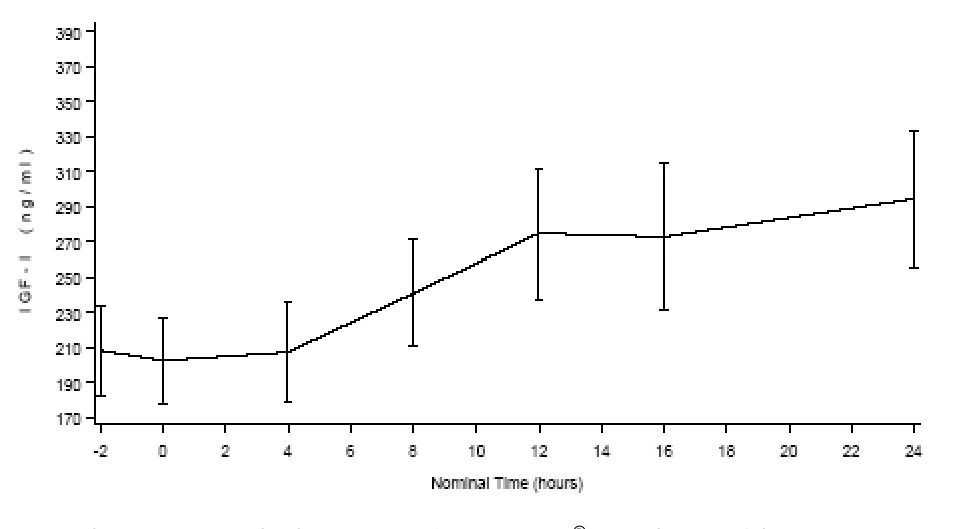
Profile presented for formulation ‘Norditropin® 5 mg/1.5 mL’ (Dose: 0.085 mg/kg.)
Figure 1 Mean IGF-I Profiles Following Single S.C. Dose of Norditropin® in Healthy Subjects
IGF-I and IGFBP-3 response was also investigated. Following single dose i.v. Norditropin® infusion in healthy subjects (0.0009-0.009 mg/kg), serum IGF-I levels showed a small but statistically significant increase from the baseline. High maximal rate of IGF-I secretion (Emax: 241 ng/mL) and low GH concentration at which half-maximal IGF-I secretion occurs (EC50: 1.9 ng/mL) indicated a high impact of hGH levels on IGF-I production rate. IGF-I levels and maximal IGF-I production rate were positively correlated to IGFBP-3 concentration.
Tissue Growth
The primary and most intensively studied action of somatropin is the stimulation of linear growth. This effect is demonstrated in children with GHD.
Skeletal Growth
The measurable increase in bone length after administration of somatropin results from its effect on the cartilaginous growth areas of long bones. Studies in vitro have shown that the incorporation of sulfate into proteoglycans is not due to a direct effect of somatropin, but rather is mediated by the somatomedins or insulin-like growth factors (IGFs). The somatomedins, among them IGF-I, are polypeptide hormones which are synthesized in the liver, kidney, and various other tissues. IGF-I levels are low in the serum of hypopituitary dwarfs and hypophysectomized humans or animals, and increase after treatment with somatropin.
Cell Growth
It has been shown that the total number of skeletal muscle cells is markedly decreased in children with short stature lacking endogenous GH compared with normal children, and that treatment with somatropin results in an increase in both the number and size of muscle cells.
Organ Growth
Somatropin influences the size of internal organs, and it also increases red cell mass.
Protein Metabolism
Linear growth is facilitated in part by increased cellular protein synthesis. This synthesis and growth are reflected by nitrogen retention which can be quantitated by observing the decline in urinary nitrogen excretion and blood urea nitrogen following the initiation of somatropin therapy.
Carbohydrate Metabolism
Hypopituitary children sometimes experience fasting hypoglycemia that may be improved by treatment with somatropin. In healthy subjects, large doses of somatropin may impair glucose tolerance. Although the precise mechanism of the diabetogenic effect of somatropin is not known, it is attributed to blocking the action of insulin rather than blocking insulin secretion.
Insulin levels in serum actually increase as somatropin levels increase. Administration of human growth hormone to normal adults and patients with growth hormone deficiency results in increases in mean serum fasting and postprandial insulin levels, although mean values remain in the normal range. In addition, mean fasting and postprandial glucose and hemoglobin A1C levels remain in the normal range.
Lipid Metabolism
Somatropin stimulates intracellular lipolysis, and administration of somatropin leads to an increase in plasma free fatty acids and triglycerides. Untreated GHD is associated with increased body fat stores, including increased abdominal visceral and subcutaneous adipose tissue. Treatment of growth hormone deficient patients with somatropin results in a general reduction of fat stores, and decreased serum levels of low density lipoprotein (LDL) cholesterol.
Mineral Metabolism
Administration of somatropin results in an increase in total body potassium and phosphorus and to a lesser extent sodium. This retention is thought to be the result of cell growth. Serum levels of phosphate increase in children with GHD after somatropin therapy due to metabolic activity associated with bone growth. Serum calcium levels are not altered. Although calcium excretion in the urine is increased, there is a simultaneous increase in calcium absorption from the intestine. Negative calcium balance, however, may occasionally occur during somatropin treatment.
Connective Tissue Metabolism
Somatropin stimulates the synthesis of chondroitin sulfate and collagen, and increases the urinary excretion of hydroxyproline.
10.3 Pharmacokinetics
Absorption and Plasma Concentrations
Subcutaneous (s.c.) administered Norditropin® exhibits “flip-flop” kinetics. That is, since the absorption process is slow relative to the elimination process, the terminal half-life after s.c. administration is related to the absorption rate.
A single s.c. injection of Norditropin® (2.5 mg/m2 (0.085 mg/kg)) to healthy subjects (with endogenous somatropin suppressed by continuous infusion of somatostatin) resulted in a maximal concentration of human growth hormone of 42-46 ng/mL. The area under the drug concentration-time curve from time zero to 24 hours was 397-408 ng/mL. The mean plasma concentration-time profile following a single s.c. dose of Norditropin® is shown in Figure 2.
A single s.c. injection of Norditropin® 5 mg (0.054-0.082 mg/kg) to 23 healthy subjects resulted in a maximal concentration of human growth hormone of 39-43 ng/mL. The area under the drug concentration-time curve from time zero to 24 hours was approximately 396-433 ng/mL.
Following a single s.c injection at dose levels ranging from 0.05 to 0.1 mg/kg, the time to reach maximum serum concentration (tmax) was 4 to 6 hours.
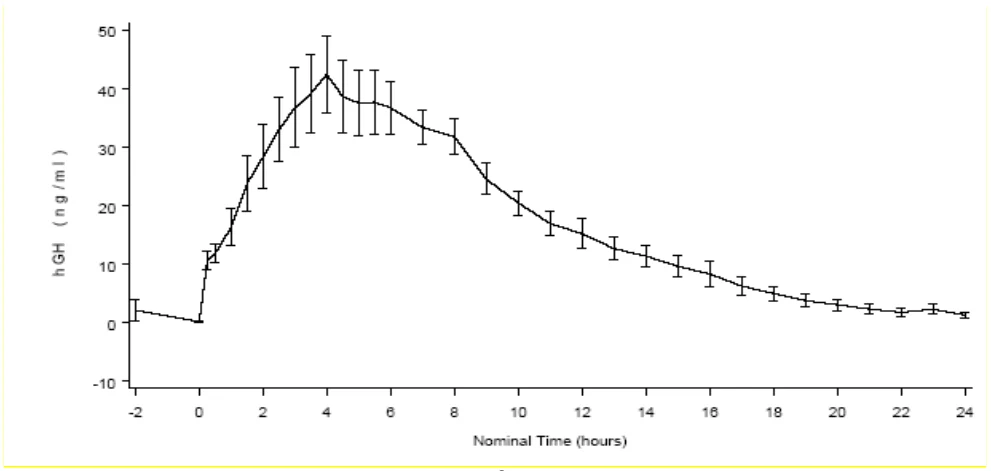
Profile presented for formulation ‘Norditropin® 5 mg/1.5 mL’ (Dose: 0.085 mg/kg.)
Figure 2 Mean hGH Profiles Following Single S.C. Dose of Norditropin® in Healthy Subjects
Distribution
The distribution following single i.v. doses (0.0009-0.009 mg/kg) of Norditropin® was investigated in healthy subjects. The volume of distribution (V) was 0.063 L/kg, which is approximately equal to the amount of blood in the human body, indicating that Norditropin® was mainly distributed in the blood.
Elimination
The terminal half-life (t½) and clearance (CL) following single i.v. doses (0.0009-0.009 mg/kg) of Norditropin® in healthy subjects was investigated. Clearance at a low dose (CL0) and maximal dose (CLmax) of Norditropin® were 3.9 and 1.2 mL/min/kg, respectively, showing that CL decreased with increasing Norditropin® doses. The t½ was 13 and 21 minutes, respectively, estimated by two different models.
The t½ following a single i.v. dose (0.05 mg/kg) in healthy subjects was estimated to 39 minutes.
The t½ following a single s.c. dose of Norditropin® in healthy subjects was calculated. The t½ following a single s.c. dose was 2.5 to 4.2 h. The substantially longer half-life with s.c. compared to i.v. administration reflects the so-called “flip-flop” kinetics of s.c. administered Norditropin®. That is, since the absorption process is slow relative to the elimination process, the terminal half-life after s.c. administration is related to the absorption rate.
Special Populations and Conditions
Pediatrics: No information is available concerning Norditropin® for this population.
Gender: Differences in PK response between genders were investigated in a clinical trial. There were no significant differences between males or females for the parameters AUC0–t,
AUC0-∞, Cmax, tmax or t½ for hGH.
Race: A study was conducted to evaluate the PK of Norditropin® in healthy Japanese subjects as compared to Caucasian subjects. A single dose (0.055–0.096 mg/kg) of Norditropin® was administered to each subject. Both the Japanese and Caucasian subjects appeared to be comparable with respect to AUC0-24h and Cmax, as well as Tmax and the half-life. No interaction between ethnic groups, dose or BMI was observed. The maximum hGH concentration was measured 4 to 6 hours after the time of the Norditropin® injection and approached zero at 24 hours. The mean t½ was 3.6 and 3.2 hours for Japanese and Caucasian subjects, respectively.
11 STORAGE, STABILITY AND DISPOSAL
Unused Norditropin® FlexPro™ and Norditropin NordiFlex® pre-filled pens must be stored in a refrigerator at 2-8°C. Do not freeze or store close to any cooling element in the refrigerator. Avoid direct light.
After the initial injection, Norditropin® FlexPro™ and Norditropin NordiFlex® pre-filled pens may be EITHER stored in the refrigerator (2-8ºC) and used within 4 weeks OR stored for up to 3 weeks at not more than 25ºC. Do not freeze or store close to any cooling element in the refrigerator. Discard unused portion.
Table 6 Storage Options
Norditropin® FlexPro™ Norditropin NordiFlex® | Before Use | In-Use (After 1st Injection) | |||||
| Storage Requirement | Storage Option 1 (Refrigeration) | Storage Option 2 (Room Temperature) | |||||
| 5 mg/1.5 mL | 2-8 ºC Until expiry date | 2-8 ºC 4 weeks | Up to 25ºC 3 weeks | ||||
| 10 mg/1.5 mL | |||||||
| 15 mg/1.5 mL | |||||||
12 SPECIAL HANDLING INSTRUCTIONS
Norditropin® FlexPro™ and Norditropin NordiFlex® should not be shaken vigorously at any time.
PART II: SCIENTIFIC INFORMATION
13 PHARMACEUTICAL INFORMATION
Drug Substance
Proper name: Norditropin®
Chemical name: somatropin
Molecular formula and molecular mass: C990H1528N262O300S7 (22,125 Da)
Structural formula:
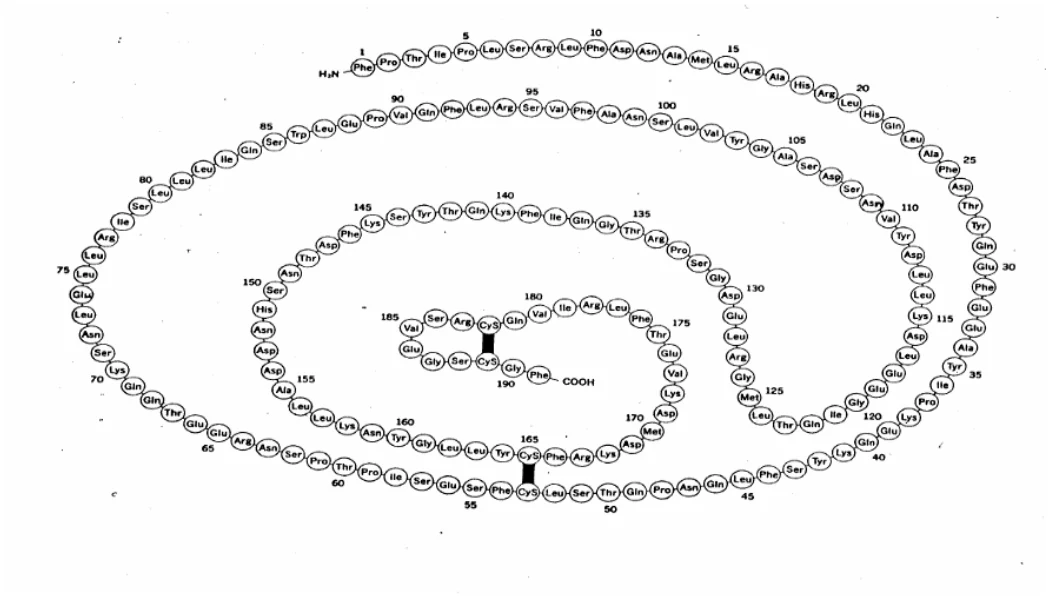
Physicochemical properties: Somatropin, produced by recombinant DNA methods, is a white, or almost white, powder. It dissolves readily in water or isotonic solutions.
Product Characteristics
Somatropin is a polypeptide hormone consisting of 191 amino acid residues and its structure is identical to that of growth hormone extracted from human pituitary glands. Somatropin is a four-helical bundle protein with an up-up down-down topology. The structure contains two disulfide bridges, Cys53-Cys165 and Cys182-CyS189.
14 CLINICAL TRIALS
14.1 Clinical Trials by Indication
Clinical Trials in Pediatric Growth Hormone Deficiency (GHD)
Trial Design and Study Demographics
Table 7 Summary of Patient Demographics for Clinical Trials in GHD
| Study # | Trial design | Dosage, route of administration and duration | Study subjects (n=number) | Mean age (Range) | Sex |
| Study 1 | Randomised, multi-centre, three arm dose response | Three dose levels (0.025, 0.05 and 0.1 mg/kg/day) Subcutaneous injection Study duration: 2 years | 97 | 7.5 (2.7) | 68% boys and 32% girls |
| Study 2 | Randomised, multi-centre, three arm dose-response | IGF-I based: IGF-SDS of either
Conventional Dose: 0.04 mg/kg/day Subcutaneous injection Study duration: 2 years | 53 | 7.0 (2.3) | 75% boys and 25% girls |
Study Results (GHD)
Study 1
The primary objective of this study was to evaluate and compare the safety and growth velocity effectiveness of graded Norditropin® dose levels after administration to growth hormone deficient children for two years. A secondary objective of this study was to determine the safety and effectiveness of chronic Norditropin® administration in patients until they reach adult height. Efficacy endpoints included: growth velocity, sitting height, bone age, BMI and weight, and growth factor panel (i.e., IGF-1, IGF-2, and IGFBP-3).
In this study, 97 short children with GHD were randomised (0.025 mg/kg: 31 children; 0.05 mg/kg: 35 children; 0.10 kg/mg: 31 children). A total of 86 children completed 2-years of the trial (0.025 mg/kg: 27 children; 0.05 mg/kg: 32 children; 0.10 kg/mg: 27 children). Up to 2 years results are presented. Mean age was 7.5 (2.7) years. More boys than girls were evaluated (68% boys and 32% girls). The children were naïve to GH therapy.
The mean baseline HSDS were -3.3, -3.1 and -2.9 in the 0.025, 0.050 and 0.10 mg/kg/day groups, respectively. The estimated mean HSDS after Norditropin® treatment were -2.39, -1.65 and -1.49 in the three dose groups, respectively. The majority of the children thus achieved a height within normal range. The estimated mean gains in HSDS over the 2-year periods were 0.81, 1.57 and 1.73 in the three dose groups, respectively. All gains in HSDS were statistically significantly different from zero (both years). Statistically significant differences in estimated mean HSDS and change in HSDS were observed between the low and the high dose groups (0.025 versus 0.05 and 0.10 mg/kg/day). There was no statistically significant difference between the two higher dose groups (0.05 and 0.10 mg/kg/day).
Study 2
The primary objective of this study was to evaluate and compare treatment outcomes with Norditropin® in children with GHD who were treated by dose titration to achieve a serum IGF-I SDS of either [-0.5 to +0.5] or [+1.5 to +2.5]. A comparison group dosed according to body weight was included. Secondary objectives for this study included: an assessment of the relationship between the administered GH dose and resultant serum IGF-I concentration; evaluation of potential gender specific differences in dose response; determination of the effect of GH dosing protocols on bone age development. The primary efficacy endpoint was the change from baseline in height SDS. The secondary endpoints included IGF-I, IGFBP3, free IGF-I, and bone age.
In Study 2, 53 children with short stature and documented GHD were randomised. The children in the IGF-I based dosing arms were treated to achieve an IGF-SDS of either [-0.5 to +0.5] (referred to as the RRC1 group) or an IGF-SDS of [+1.5 to +2.5] (referred to as the RRC2 group). The children in the conventional arm were dosed with 0.04 mg/kg/day. A total of 49 children with GHD completed the 2-year trial. Up to 2 years results are presented. Mean age was 7.0 (2.3) years. More boys than girls were included (40 boys and 13 girls). The children were naïve to GH therapy.
At the end of trial, HSDS increased as compared to baseline in all three treatment groups. The RCC2 group had the greatest increase in HSDS. The mean baseline HSDS were -2.6, -2.7 and -2.5 in the conventional, RCC1 and RCC2 groups, respectively. The estimated mean HSDS after Norditropin® treatment were -1.48, -1.23 and -0.77 in the conventional, RCC1 and RCC2 groups, respectively. The majority of the children thus achieved a height within normal range. The estimated mean gains in HSDS over the 2-year periods were 1.15, 1.39 and 1.85 in the conventional, RCC1 and RCC2 groups, respectively. All gains in HSDS were statistically significantly different from zero (both years). Statistically significant differences in estimated mean HSDS and change in HSDS were observed between the RCC1 and RCC2 dose groups and between the conventional group and the RCC2 dose group. There was no statistically significant difference between the conventional group and the RCC1 group.
Clinical Trials in Children Short for Gestational Age (SGA)
Trial Design and Study Demographics
Table 8 Summary of Patient Demographics for Clinical Trials in SGA
| Study # | Trial design | Dosage, route of administration and duration | Study subjects (n=number) | Mean age (Range) | Sex |
|---|---|---|---|---|---|
| Study 1 | Multi-centre, double-blind, randomised, two-arm trial | 40/33 or 80/67 µg/kg/day Up to 13 years Subcutaneous injection | 53 | 7.1 (2.3) | 28% girls and 72% boys |
| Study 2 | Multi-centre, randomised, double-blind, parallel-group trial investigating efficacy and safety | 33 or 67 µg/kg/day Up to 2 years Subcutaneous injection | 98 randomised 84 included in efficacy analysis | 5.3 (1.3) | 39% girls and 61% boys |
Study Results (SGA)
Study 1
The primary objective of this trial was to assess the effect of GH therapy on linear growth (height, standardised height, height velocity and final height), bone maturation, and pubertal development in short children born SGA. Secondary objectives included assessment of the additional effects of GH therapy on glucose and lipid metabolism, blood pressure, and plasma IGF-I and IGF binding protein 3 (IGFBP-3).
The pivotal study included 53 (38 male, 15 female, 38 male) non-GHD Dutch children 3-11 years of age with short stature born SGA with no catch-up growth. No catch-up growth was defined as not obtaining a height of ≥ 3rd percentile within the first 2 years of life or at a later stage. These prepubertal children needed to meet the following additional inclusion criteria: birth length, <3rd percentile for gestational age, and height velocity (cm/year) for chronological age <50th percentile. Exclusion criteria included chromosomal abnormalities, signs of a syndrome (except for Silver-Russell syndrome), serious/chronic co-morbid disease, malignancy, and previous rhGH therapy. Norditropin® was administered subcutaneously daily at bedtime at a dose of approximately 0.033 (Dose A) or 0.067 mg/kg/day (Dose B) for the entire treatment period. Final height was defined as a height velocity below 2 cm/year. Treatment with Norditropin® was continued to final height for up to 13 years. Mean duration of treatment was 9.5 years (boys) and 7.9 years 9 girls).
38 out of 53 children (72%) reached final height. Sixty-three percent (24 out of 38) of the children who reached final height were within the normal range of their healthy peers (Dutch national reference). For both doses combined, actual mean final height was 171 (SD 6.1) cm in boys and 159 (SD 4.3) cm in girls.
As seen in Table 9, for boys and girls combined, both mean final height SDS (0.033 mg/kg/day, -1.8 vs. 0.067 mg/kg/day, -1.3), and increase in height SDS from baseline to final height, (0.033 mg/kg/day, 1.4 vs. 0.067 mg/kg/day, 1.8), were significantly greater after treatment with 0.067 mg/kg/day (0.067 mg/kg/day). A similar dose response was observed for the increase in height SDS from baseline to Year 2 (Table 9).
Overall mean height velocity at baseline was 5.4 cm/y (SD 1.2; n=29). Height velocity was greatest during the first year of Nortidropin treatment and was significantly greater after treatment with 0.067 mg/kg/day (mean 11.1 cm/y [SD 1.9; n=19]) compared with 0.033 mg/kg/day (mean 9.7 cm/y [SD 1.3; n=10]).
Table 9 Results for Final Height SDS and Change from Baseline to Final Height in Height SDS Using National Standard After Long-Term Treatment of SGA Children with Norditropin®
| Raw Mean ± SD (N) | |||||||||
Dose A 0.033 mg/kg/day | Dose B 0.067 mg/kg/day | Mean | |||||||
| Baseline Height SDS | -3.2 ± 0.7 (26) | -3.2 ± 0.7 (27) | -3.2 ± 0.7 (53) | ||||||
| Adjusted least-squares mean ± standard error (N) and [95% confidence intervals] | |||||||||
| Height SDS: Change from Baseline at Year 22 | 1.4 ± 0.1 (26) [1.1, 1.6] | 1.8 ± 0.1 (26) [1.5, 2.0] | Treatment Diff = 0.4 [0.2, 0.7] p-value = 0.002 | ||||||
| Height SDS: Change from Baseline at Final Height1 | 1.4 ± 0.2 (19) [0.9, 1.8] | 1.8 ± 0.2 (19) [1.4, 2.2] | Treatment Diff = 0.5 [0.0, 0.9] p-value = 0.045 | ||||||
| Final Height SDS1 | -1.8 ± 0.2 (19) [-2.2, -1.4] | -1.3 ± 0.2 (19) [-1.7, -0.9] | |||||||
| Final Height SDS > -2 | 13/19 (68%) | 11/19 (58%) | 24/38 (63%) | ||||||
SDS: Standard deviation score.
1Adjusted (least-squares) means based on an ANCOVA model including terms for treatment, gender, age at baseline, bone age at baseline, height SDS at baseline, duration of treatment, peak GH after stimulation and baseline IGF-1.
2 Adjusted (least-squares) means based on an ANCOVA model including terms for treatment, gender, age at baseline, height SDS at baseline, and pubertal status.
Study 2
The primary objective of this trial was to evaluate the efficacy of the two dose levels of Norditropin® (0.033 mg/kg/day and 0.067 mg/kg/day) compared with untreated controls (one year) as assessed by change in HSDS from baseline to Year 1 (52-week) treatment in short children born SGA. A secondary objective was to compare the efficacy of the two dose levels as assessed by the change in HSDS after 2 years of treatment.
In this study, eighty-four (84) randomised prepubertal non-GHD, Japanese children (age 3-8) with short stature born SGA with no catch-up growth were treated for 2-years with 0.033 or 0.067 mg/kg/day of Norditropin® subcutaneously daily at bedtime or received no treatment for 1 year. Additional inclusion criteria included birth length and weight SDS ≤ -2 or < 10th percentile for gestational age, height SDS for chronological age ≤ -2 and height velocity SDS for chronological age < 0 within one year prior to Visit 1. Exclusion criteria included diabetes mellitus, history or presence of active malignancy, and serious co-morbid conditions.
As seen in Table 10, for boys and girls combined, there was a dose-dependent increase in height SDS at year 1 and year 2. The increase in height SDS from baseline to Year 2 was significantly greater after treatment with 0.067 mg/kg/day (0.8 with 0.033 mg/kg/day versus 1.4 with 0.067 mg/kg/day). In addition, the increase in height SDS at Year 1 was significantly greater in both active treatment groups compared to the untreated control group.
Table 10 Results for Change from Baseline in Height SDS at Year 1 and Year 2 Using National Standard After Short-Term Treatment of SGA Children with Norditropin®
| Raw Mean ± SD (N) | |||||||||||
| No Treatment | 0.033 mg/kg/day | 0.067 mg/kg/day | Mean | ||||||||
| Height SDS: Baseline | -2.9 ± 0.5 (15) | -3.0 ± 0.6 (35) | -2.9 ± 0.7 (34) | -2.9 ± 0.6 (84) | |||||||
| Height SDS: Year 1 | -2.8 ± 0.5 (15) | -2.4 ± 0.6 (33) | -2.0 ± 0.8 (34) | -2.3 ± 0.7 (82) | |||||||
| Height SDS: Year 2 | NA | -2.2 ± 0.7 (33) | -1.4 ± 0.7 (32) | -1.8 ± 0.8 (65) | |||||||
| Adjusted least-squares mean ± standard error (N) and [95% confidence intervals] | |||||||||||
| Height SDS: Change from Baseline at Year 11 | 0.1 ± 0.1 (15) [-0.1, 0.2] | 0.6 ± 0.1 (33) [0.5, 0.7] | 0.9 ± 0.1 (34) [0.8, 1.0] | ||||||||
0.033 vs. No Treatment: Treatment Diff = 0.5, [0.3, 0.7], p < 0.0001 0.067 vs. No Treatment: Treatment Diff = 0.8, [0.6, 1.0], p < 0.0001 0.067 vs. 0.033: Treatment Diff = 0.3, [0.2, 0.5], p-value < 0.0001 | |||||||||||
| Height SDS: Change from Baseline at Year 21 | NA | 0.8 ± 0.1 (33) [0.7, 0.9] | 1.4 ± 0.1 (32) [1.3, 1.6] | ||||||||
| 0.067 vs. 0.033: Treatment Diff = 0.6, [0.5, 0.8], p-value < 0.0001 | |||||||||||
SDS: Standard deviation score.
1Adjusted (least-squares) means based on an ANCOVA model including terms for treatment, gender, age at baseline, and height SDS at baseline. All children remained prepubertal during the study.
Clinical Trials in Children with Turner Syndrome (TS)
Trial Design and Study Demographics
Table 11 Summary of Patient Demographics for Clinical Trials in Turner Syndrome
| Study # | Trial design | Dosage, route of administration and duration | Study subjects (n=number) | Mean age | Gender |
|---|---|---|---|---|---|
| Study 1 | Prospective, randomised, parallel-group, 3-arm, open-label trial. After 4 years of Norditropin® therapy subjects received 17β-estradiol (5 to 10 μg/kg/day) in cases where there was no clinical sign of spontaneous puberty at age 12. | Dose A 0.045 mg/kg/day to FH. Dose B 0.045 mg/kg/day, 1st year. 0.067 mg/kg/day to FH. Dose C 0.045 mg/kg/day, 1st year. 0.067 mg/kg/day, 2nd year 0.090 mg/kg/day, to FH. Subcutaneous injection Treatment duration was to FH (up to 13 years) | 23 25 23 | 6.5 | Girls |
| Study 2 | Prospective, randomised, parallel-group, 2-arm, open-label, comparative trial. All received ethinyl estradiol (0.05 μg/kg/day for the first 2 years, then 0.1 μg/kg/day until FH). Subjects also received oral dydrogesterone 5 to 10 mg/day (first 14 days of the month) from 2 years onwards. | Dose A 0.067 mg/kg/day at evening Dose B 0.067 mg/kg/day: 0.022 mg morning and 0.045 mg evening Subcutaneous injection Treatment duration was to FH (up to 57 months) | 9 10 | 13.6 | Girls |
FH = Final Height
# For Study 1, 68 of 71 randomised patients were exposed to Norditropin®. Of the three patients that were randomised but never exposed: One subject emigrated and two subjects decided not to join the trial.
Study Results (Turner Syndrome)
Two randomised, parallel group, open label, multicenter studies were conducted in the Netherlands to evaluate the efficacy and safety of Norditropin® for the treatment of children with short stature associated with Turner syndrome. Patients were treated to final height in both studies [height velocity (HV) < 2 cm/year]. Changes in height were expressed as standard deviation scores (SDS) utilizing reference data for untreated Turner syndrome patients as well as the national Dutch population.
Study 1
In Study 1 (the primary study), 71 euthyroid Caucasian patients stratified based on age and baseline height SDS were randomised in a 1:1:1 ratio to three different Norditropin® treatment regimens, as indicated in Table 12. Patients also received estrogen therapy after age 12 and following four years of Norditropin® treatment if they did not have spontaneous puberty. For the 68 patients who were treated with Norditropin®, at baseline, mean age was 6.5 years, mean height SDS (National standard) was -2.7, and mean HV during the previous year was 6.5 cm/year. The mean duration of treatment for these patients was 8.4 years. Forty-three patients completed the study and 46 patients were treated to final height. Twenty-five patients discontinued Norditropin® treatment, including 17 patients who stopped treatment due to satisfaction with achieved height. Since only two thirds of randomised patients were treated to final height, the results of this study should be interpreted with caution.
Table 12 Final Height-Related Results of 46 Patients with Turner Syndrome Treated to Final Height with Norditropin® in a Randomised, Dose Escalating Study (n=71)
Dose A 0.045 mg/kg/day (n = 19) | Dose B up to 0.067 mg/kg/day (n = 15) | Dose C up to 0.090 mg/kg/day (n = 12) | |||||||
| Baseline height (cm) | 105 (12) | 108 (12.7) | 107 (11.7) | ||||||
| Final height (cm) | 157 (6.7) | 163 (6.0) | 163 (4.9) | ||||||
| Number (%) of patients reaching normal height (height SDS >-2 using National standard) | 10 (53%) | 12 (80%) | 10 (83%) | ||||||
| Height SDS (Turner standard)1 | |||||||||
| Final [95% CI] | 1.7 [1.4, 2.0] | 2.5 [2.1, 2.8] | 2.5 [2.1, 2.9] | ||||||
| Change from baseline [95% CI] | 1.5 [1.2, 1.8] | 2.2 [1.9, 2.5] | 2.2 [1.9, 2.6] | ||||||
| Height SDS (National standard)1 | |||||||||
| Final [95% CI] | -1.9 [-2.2, -1.6] | -1.2 [-1.5, -0.9] | -1.2 [-1.6, -0.8] | ||||||
| Change from baseline [95% CI] | 0.7 [0.4, 1.0] | 1.4 [1.1, 1.7] | 1.4 [1.1, 1.8] | ||||||
Values are expressed as mean (SD) unless otherwise indicated. SDS: Standard deviation score.
1Adjusted (least squares) means based on an ANCOVA model including terms for treatment, duration of treatment, age at baseline, bone age at baseline, height SDS at baseline, age at onset of puberty and mid-parental target height SDS
The mean changes from baseline to final height in height SDS (Turner standard) in Table 12 correspond to mean height gains of 9.4, 14.1 and 14.4 cm after treatment with Doses A, B and C, respectively. The mean changes from baseline to final height in height SDS (National standard) in Table 12 correspond to mean height gains of 4.5, 9.1 and 9.4 cm after treatment with Doses A, B and C, respectively. In each treatment group, peak HV was observed during treatment Year 1, and then gradually decreased each year; during Year 4, HV was less than the pre-treatment HV. However, between Year 2 and Year 6, a greater HV was observed in the two dose escalation groups compared to the 0.045 mg/kg/day group.
Study 2
In Study 2 (a supportive study), 19 euthyroid Caucasian patients (with bone age ≤13.9 years) were randomised to treatment with 0.067 mg/kg/day of Norditropin® as a single subcutaneous dose in the evening, or divided into two doses (1/3 morning and 2/3 evening). All subjects were treated with concomitant ethinyl estradiol. Overall, at baseline, mean age was 13.6 years, mean height SDS (National standard) was -3.5 and mean HV during the previous year was 4.3 cm/year. Patients were treated for a mean of 3.6 years. There was no difference between treatment groups for any linear growth variables. Data from all patients were pooled. Overall mean final height was 155 cm in the 17 children who attained final height. Mean height SDS changed from -3.5 at baseline to -2.4 at final height (National standard), and from 0.7 at baseline to 1.3 at final height (Turner standard).
Clinical Trials in Children with Noonan Syndrome (NS)
Trial Design and Study Demographics
Table 13 Summary of Patient Demographics for Clinical Trials in Noonan Syndrome
| Study # | Trial design | Dosage, route of administration and duration | Study subjects (n=number) | Mean age | Gender |
|---|---|---|---|---|---|
| Study 1 | Multi-centre, randomised, parallel-group double-blind phase 3 trial investigating efficacy and safety | 0.033 mg/kg/day 0.066 mg/kg/day Subcutaneous injection Study duration: 104 weeks | 25 26 | 6.3 | 19 girls and 32 boys |
Study 1
Study 1 was a multicentre, randomised (1:1), parallel-group double-blind trial investigating the long-term efficacy and safety of 2 doses of Norditropin® (0.033 and 0.066 mg/kg/day) in Japanese children with short stature due to Noonan syndrome. The primary efficacy endpoint for this study was the difference in the change in height SDS from baseline assessed at week 104.Inclusion criteria included height SDS <-2. Exclusion criteria included diabetes mellitus and children who received the following medications 2 years prior to screening: thyroid hormone (except replacement therapy), anti-thyroid hormone, androgen, oestrogen, progesterone, anabolic steroid, adrenocortical steroid (treatment period ≥ 13 weeks), derivative of gonadotropin releasing hormone and somatomedin C (IGF-I).
A total of 51 Japanese children aged 3 to < 11 years with short stature due to Noonan syndrome were randomized: 25 to receive Norditropin® 0.033 mg/kg/day and 26 to receive Norditropin® 0.066 mg/kg/day.
Table 14 Final Height-Related Results of 51 Patients with Noonan Syndrome Treated to with Norditropin®
NN-220 0.033 mg/kg/day (n= 25) | NN-220 0.066 mg/kg/day (n= 26) | |||
| Mean (SD) height at baseline (cm) | 100.27 (13.48) | 97.66 (12.55) | ||
| Mean (SD) height at Week 104 (cm) | 114.22 (13.00) | 115.40 (12.45) | ||
| Mean (SD) height SDS at baseline | -3.24 (0.76) | -3.25 (0.71) | ||
| Estimated mean (SE) height SDS at Week 104* | -2.41 (0.09) [95% CI: -2.59; -2.23] | -1.78 (0.09) [95% CI: -1.95; -1.60] | ||
| Estimated mean (SE) change in height SDS (National) from baseline to 104 weeks of treatment* | 0.84 (0.09) [95% CI: 0.66; 1.02] | 1.47 (0.09) [95% CI: 1.29 ; 1.64] | ||
| Estimated mean difference of treatment at 104 weeks (NN-220 0.066 mg/kg/day − NN-220 0.033 mg/kg/day)* | 0.63 [95% CI: 0.38; 0.88] (p< 0.0001) | |||
n: Number of subjects contributing to analysis, CI: Confidence interval, SD: Standard deviation, SE: Standard error of the mean.
*The response and change from baseline in the response after 104 weeks of treatment is analysed using an ANCOVA method with treatment as a fixed effect and baseline response as a covariate. Missing data is imputed using last observation carried forw ard.
The mean height velocity and height velocity SDS increased markedly from baseline during the first year of treatment with a greater increase with 0.066 mg/kg/day than with 0.033 mg/kg/day. The mean height velocity SDS was maintained above 0 in both groups after a two-year treatment and also after four years of treatment in the 0.066 mg/kg/day group. The height velocity SDS was greater with 0.066 mg/kg/day than with 0.033 mg/kg/day throughout the trial period.
16 NON-CLINICAL TOXICOLOGY
Single-Dose Toxicity
Intravenous (i.v.) and subcutaneous (s.c.) toxicity after a single dose of Norditropin® (somatropin) was assessed in four studies in mice, three studies in rats and one study in cynomolgus monkeys (see Table 15). The highest dose applied in both rats and mice was 56 mg/kg (185 IU/kg). The doses were well tolerated and resulted only in exaggerated pharmacological effects. A dose of 33 mg/kg (100 IU/kg) administered s.c. to cynomolgus monkeys was tolerated without any signs of toxicity.
Repeat-Dose Toxicity
Repeat s.c. dose toxicity studies were performed for 14 days up to 90 days in rats, and for a 28 day period in cynomolgus monkeys (see Table 16). Doses were given up to 9 mg/kg (26.9 IU/kg) in rats and approximately 5 mg/kg (15 IU/kg) in monkeys. Two rat studies specifically compared the effects of degraded versus intact biosynthetic hGH in Norditropin® for 28 and 90 days to mimic the end of shelf-life conditions.
In rats, the most prominent effects were increased body weight gain, increased organ weights and mammary gland hyperplasia. In the longer-duration studies, effects on hematology (slight decreases in RBC and hemoglobin) and slight effects on clinical chemistry (liver enzymes) were observed. However, all hematological and clinical chemistry values were not considered toxicologically significant and there were no accompanying histopathological changes.
There was no difference in the effects observed after treatment with degraded biosynthetic hGH versus intact biosynthetic hGH.
In the 4-week monkey study, the only treatment-related finding was increased secretory activity of the mammary gland in females, which was observed both clinically and histopathologically.
The observed effects in rats and monkeys were considered consistent with the pharmacological action of hGH. All repeat dose toxicity studies documented a low toxic potential for Norditropin®.
Genotoxicity
A series of genotoxicity studies comprising Ames' test, mammalian gene mutation test and mouse micronucleus test all showed the drug to be devoid of mutagenic activity (see Table 17).
Carcinogenicity
Due to the endogenous nature of the drug and the use for replacement therapy, carcinogenicity studies were not performed.
Reproductive and Developmental Toxicity
Reproduction studies were performed in rats and comprise a two-generation study (fertility/embryo-fetal toxicity/developmental), an embryo-fetal toxicity study, and a pre-post-natal study (see Table 18). The reproduction studies confirmed the pharmacological effects on body weight and the increased activity of the reproductive organs. Findings included an increased number of implantations, increased number of corpora lutea and increased pup weight. None of the studies revealed any adverse effects of the drug on reproduction.
Local Tolerance
A study in rabbits addressed the potential local irritation after i.m. injection (see Table 19). A slightly more marked irritation than that caused by physiological saline was observed. No difference between the effects seen after degraded biosynthetic hGH versus intact biosynthetic hGH was observed. The local effects observed in the repeat dose studies in rats were considered within the expected range for proteins injected subcutaneously.
Table 15 Single-Dose Toxicity Studies
| Study Type | Species / Strain | Method of Admin. | Period of Dosing | Doses (mg/kg) | Gender and No. per Group | Observed Max Non-Lethal Dose (mg/kg) | Noteworthy Findings |
|---|---|---|---|---|---|---|---|
| Single-Dose Toxicity | |||||||
| Acute toxicity in mice given forcedly degraded biosynthetic hGH by s.c. injection | Mice, NMRI | s.c. | Once | 0, 56 mg/kg | Control group: 5M + 5F Treatment group: 10M + 10F | 56 mg/kg | No clinical signs w ere observed, apart from one female lying flat on the abdomen for half an hour after the injection and hyperplasia of the uterine mucosa. |
| Acute toxicity in mice given biosynthetic hGH by s.c. injection | Mice, NMRI | s.c. | Once | 0, 92 and 185 IU/kg (0, 28 and 56 mg/kg) | Control group: 5M + 5F Treatment groups: 10M + 10F | 56 mg/kg (185 IU/kg) | No clinical signs w ere observed. Hyperplasia of the uterine mucosa w as observed at both dose levels. |
| Liquid Norditropin® 10 mg, Forcedly Degraded – s.c. single dose toxicity in mice. | Mice, NMRI | s.c. | Once | 0, 67 and 133 mg/kg | 5M + 5F | 133 mg/kg | No treatment-related findings. |
| Acute toxicity in mice given biosynthetic hGH byi.v. injection | Mice, NMRI | i.v. | Once | 0, 92 and 185 IU/kg (0, 28 and 56 mg/kg) | Control group: 5M + 5F Treatment groups: 10M + 10F | 56 mg/kg | No clinical signs w ere observed. Hyperplasia of the uterine mucosa w as observed at both dose levels. |
| Acute toxicity in rats of biosynthetic hGH, I. | Rats, Wistar (Wist/Mo) | s.c. | Once | 0, 50 and 100 IU/kg (0, 16.5 and 33 mg/kg) | Control group: 4M + 4F Treatment groups: 8M + 8F | 100 IU/kg (33 mg/kg) | Increased body w eight gain and food intake w ere observed at both dose levels, in males only. |
| Acute toxicity in rats of biosynthetic hGH, II. | Rats, Wistar (Wist/Mo) | s.c. | Once | 0, 90 and 180 IU/kg (0, 30 and 60 mg/kg) | Control group: 5M + 5F Treatment groups: 10M + 10F | 180 IU/kg (60 mg/kg) | Hyperplasia of the uterine mucosa w as observed at 180 IU/kg. |
| Acute toxicity in rats given i.v. injection of biosynthetic hGH, III. | Rats, Wistar (Wist/Mo) | i.v. | Once | 0, 92 and 185 IU/kg (0, 28 and 56 mg/kg) | Control group: 5M + 5F Treatment groups: 10M + 10F | 56 mg/kg | Superficial fast respiration w as observed in the highest dosage group immediately after the injection. Enlarged uterine lumen was observed in one female rat dosed w ith 28 mg/kg. |
| Single dose s.c. toxicity study in Cynomolgus monkeys | Cynomol. monkeys | s.c. | Once | 0, 100 IU/kg (0, 33 mg/kg) | 2 M + 2F | 100 IU/kg (33 mg/kg) | No treatment-related findings. |
Table 16 Repeat-Dose Toxicity Studies
| Study Type | Species / Strain | Method of Admin. | Period of Dosing | Doses (mg/kg) | Gender and No. per Group | NOEL (mg/kg) |
| Repeat-Dose Toxicity | ||||||
Assessment of the toxicity of biosynthetic hGH in rats after s.c. injection for 14 days. | Rats, Wistar (Wist/Mol) | s.c. | Daily for 14 days | 0, 0.4, 2.6 and 19.2 IU/kg (0, 0.1, 0.9 and 6 mg/kg) | 6 males and 6 females | 19.2 IU/kg (6 mg/kg) |
| Brief conclusion: Findings included an increase in body weight gain, food intake and food efficiency, 2.6 and 19.2 IU/kg, females only; and mammary gland hyperplasia, females only, 2.6 and 19.2 IU/kg bw /day. | ||||||
Assessment of the toxicity of biosynthetic hGH in rats after subcutaneous administration for 28 days | Rats, Wistar (Wist/Mol) | s.c. | Daily for 28 days | 0.5, 3.6 and 26.9 IU/kg (0.17, 0.72 and 9 mg/kg) | Control group: 10M + 10F Treatment groups: 10M + 10F | 15 IU/kg (5 mg/kg) |
| Brief conclusion: Findings included an increase in body weight gain and food consumption, 2 (females only) and 15 IU/kg; increased organ weights at all dose levels without corresponding histopathological changes; and glandular hyperplasia of the mammary gland in females and decidual reaction of the uterus at 2 and 15 IU/kg. | ||||||
| Norditropin® Degraded versus nondegraded. 28 Day s.c. toxicity study in the rat | Rats, Wistar (Wist/Mol) | s.c. | Daily for 28 days | 0, 2.4 and 24 IU/kg (0, 0.8 and 8 mg/kg) degraded and non-degraded | Control group: 10M + 10F Treatment groups: 10M + 10F | 24 IU/kg (8mg/kg) |
| Brief conclusion: Findings included increased body weight gain and food consumption, both sexes, all dose levels, increased organ weights at all dose levels without corresponding histopathological changes, increased extramedullary hemopoiesis in the spleen, both sexes, 24 IU/kg, lobular hyperplasia and secretory activity of the mammary glands, all dose levels, both sexes, and a disturbance/arrest in the reproductive cycling and excessive mucification of the vaginal/cervical epithelium seen in females at 8 mg/kg/day. No difference between the effects of degraded and non-degraded Norditropin® was found. | ||||||
90-day s.c. toxicity in the rat | Rats, Wistar (Wist/Mol) | s.c. | Daily for 90 days | 0, 0.5, 3.3 and 25 IU/kg (0, 0.2, 1.2 and 8 mg/kg) | Control group: 10M + 10F Treatment groups: 10M + 10F (a further 10M + 10F w ere included in the control and the high dose group as recovery animals). | 25 IU/kg (8 mg/kg) |
| Brief conclusion: Findings included increased body weight gain and increased food consumption, 3.3 and 25 IU/kg, both sexes, increased urinary excretion at week 10 of Ca and P for males at 3.3 and 25.0 IU/kg, and increased Ca excretion for females at 25.0 IU/kg, increased relative weight of adrenals, without corresponding histopathological changes (end of treatment only); extramedullary hematopoiesis, both sexes, 25 IU/kg, at the end of treatment only, mammary gland hyperplasia, both sexes, 3.3 and 25 IU/kg, which was still observed at the end of the recovery period in the 25 IU/kg group, both sexes (3.3 IU/kg group was not examined); and mucification of the vaginal epithelium at 25 IU/kg, end of the treatment period only. As expected when dosing a human peptide to rats, most animals developed anti-drug antibodies during treatment. | ||||||
Liquid Norditropin® 10 mg, degraded. Three month s.c. toxicity study in the rat | Rats, Wistar (Wist/Mol) | s.c. | Daily for 90 days | 0, 0.08, 0.8 and 8 mg/kg degraded and 8 mg/kg nondegraded | Control group: 10M + 10F Treatment groups: 10M + 10F | 25 IU/kg (8 mg/kg/day) |
| Brief conclusion: Effects of the degraded test article were comparable to those of the non-degraded test article. Findings included an increase in body w eight gain and food intake, 8.0 mg/kg, both sexes, an increase in various organ w eights, 8.0 mg/kg, w ithout corresponding histopathological changes; mammary gland hyperplasia at 8.0 mg/kg, both sexes; in addition, all females in the 8.0 mg/kg group were noted to be in the same stage of the estrous cycle (diestrous) - (only high dose group animals were examined). | ||||||
| Biosynthetic hGH 4-w eek s.c. toxicity study in cynomolgus monkey | Cynomolgus monkeys | s.c. | Daily for 28 days | 0, 0.3 and 15 IU/kg (0, 0.1 and 5 mg/kg) | Control group: 4M + 4F Treatment groups: 4M + 4F | 15 IU/kg (5 mg/kg) |
| Brief conclusion: Lactation/secretory activity in the mammary glands was observed in high-dose females. Anti-hGH antibodies were detected in 3/8 high-dose animals. | ||||||
Table 17 Genotoxicity Studies
| Study Type | Species / Strain/no. and gender | Method of Admin. | Period of Dosing/ sampling time | Doses (mg/kg) | |
| Genotoxicity | |||||
Ames Salmonella/microsome assay for bacterial mutagenicity | Salmonella typhimurium TA 98, 100, 1535 and 1537 | - | - | 8, 40, 200, 1000 and 5000 μg/plate | |
| Brief conclusion: No evidence of mutagenic potential of b-hGH w as observed in the Ames test w ith or w ithout metabolic activation. | |||||
Assessment of the activity of biosynthetic hGH (b-hGH) in the Escherichia coli reverse mutation assay for bacterial mutagenicity | Escherichia coli, WP-2, WP-2 urvA and WP-2 uvrA pKM 101 | - | - | 8, 40, 200 1000 and 5000 μg/plate | |
| Brief conclusion: No evidence of mutagenic potential of b-hGH was observed in the E. coli Reverse Mutation Assay. | |||||
In vitro mammalian gene mutation test | Human lymphoblast TK-6 | - | - | 0.05, 0.1, 0.2 and 0.4 mg/ml | |
| Brief conclusion: No evidence of mutagenic potential of b-hGH was observed in the mammalian gene mutation test. | |||||
Assessment of the activity of biosynthetic hGH (b-hGH) the micronucleus test | Mice, NMRI | 5M+5F | s.c. | Once /sampling 24, 48 or 72 hours post-dose | 33 IU/kg (100 mg/kg) |
| Brief conclusion: No evidence of genotoxic potential was observed in the mouse micronucleus test. | |||||
Table 18 Reproductive and Developmental Toxicity Studies
| Study Type | Species / Strain | Method of Admin. | Period of Dosing | Doses (mg/kg) | NOAEL (mg/kg) |
| Reproductive and Developmental Toxicity | |||||
| Tw o-generation reproduction toxicity study in the rat | Rats, Wistar (Wist/Mol) | s.c. | Only F0 females: Tw o w eeks prior to mating and through to Day 7 of gestation. F0 males w ere untreated | 0, 0.3, 1 and 3.3 IU/kg (0, 0.1, 0.33 and 1.1 mg/kg) | F0 Males: N.A. F0 Females: 0.3 IU/kg (0.1 mg/kg) F1 Litters: 3.3 IU/kg (1.1 mg/kg) |
| Brief conclusion: The test article was not found to cause adverse effects on pregnancy or on postnatal development in the rat. Findings included increased body weight gains in the treated F0 females throughout pregnancy and lactation and increased food consumption at 1.0 and 3.3 IU/kg. In mid- and high-dose F0 females, mating took place at a reduced rate, and therefore, pregnancy rate was lower at these dose levels. The total number of implantations increased at 1 and 3.3 IU/kg as did the number of corpora lutea. Number of fetuses/litter and litter size increased at 1 IU/kg w hereas increased number of early resorptions w ere seen in the 3.3 IU/kg group. F1 pup body w eights w ere increased in the 3.3 IU/kg group. The number of mating days and the pregnancy rate (F1) were comparable between the control group and treated groups. Postnatal physical and functional development (F1) was not influenced by the treatment. | |||||
| Embryofetal study in the rat | Rats, Wistar (Wist/Mol) | s.c. | Day 6-17 of gestation F0 animals only | 0, 0.3, 1 and 3.3 IU/kg (0, 0.1, 0.33 and 1.1 mg/kg) | F0 Females: 3.3 IU/kg (1.1 mg/kg) F1 Litters: 3.3 IU/kg (1.1 mg/kg) |
| Brief conclusion: The test article was not found to cause adverse effects on pregnancy, embryofetal development or postnatal development in the rat. Body w eight gain w as increased in the 1 and 3.3 IU/kg groups. There w ere no obvious adverse effects in treated groups on litter parameters (litter size, pre- and post-implantation loss, sex ratio, litter and mean fetal weight) or on embryonic and fetal development (incidences of malformation and visceral and skeletal anomalies). Placenta weight (F0-generation) of top-dose animals was higher than control level. There w as an increased incidence of w avy ribs noted at all dose levels, how ever, this is a reversible finding and is not considered adverse. A fraction of the pregnant rats were allowed to give birth and post-natal clinical signs, physical and functional development w ere evaluated in the F1 generation w ith no evidence of treatment-related effects. Fertility of F1 animals w as not affected by the maternal treatment and no treatment-related changes found at necropsy of the F1 animals used for mating | |||||
| Pre- and post-natal study in the rat | Rats, Wistar (Wist/Mol) | s.c. | Day 17 of gestation Through w eaning F0 animals only | 0, 0.3, 1 and 3.3 IU/kg (0, 0.1, 0.33 and 1.1 mg/kg) | F0 Females: 3.3 IU/kg (1.1 mg/kg) F1 Males: 3.3 IU/kg (1.1 mg/kg) F1 Females: 3.3 IU/kg (1.1 mg/kg) |
| Brief conclusion: The test article was not found to cause adverse effects on pregnancy, pre- and post-natal performance or offspring development in the rat. Body w eight gain w as increased in the 1 and 3.3 IU/kg groups. No adverse effects of treatment w ere observed in litter parameters (gestation period, litter size, litter grow th) or on progeny development. Increased bodyw eight gains w ere seen during lactation in the F1 offspring from treated dams in the 1 and 3.3 IU/kg groups. Post-natal physical and functional development was not influenced by the treatment and no abnormal clinical signs were observed from weaning and until day 20 of pregnancy. The number of pregnancy days and the pregnancy rate (F1) w ere comparable betw een the control group and groups maternally exposed. There w ere no treatment-related changes found at necropsy of the F1-generation males and females used for mating. | |||||
Table 19 Local Tolerance Studies
| Study Type | Species / Strain | Method of Admin. | Period of Dosing | Doses (mg/kg) | Gender and No. per Group |
| Local Tolerance | |||||
Single dose local tolerance in rabbits | Rabbits NZW | i.m. | Once | 1 ml/animal | Group 1: 10 males given 0.9% NaCl Group 2: 10 males given 10 mg Norditropin® Group 3: 6 males given 10 mg Norditropin® and 0.9% NaCl contralaterally. |
| Brief conclusion: Injection with Norditropin® 10 mg (1 ml) caused slight to moderate hemorrhage. Similarly, slight hemorrhage was seen after injection w ith 0.9% NaCl. Microscopically there w as no difference betw een tissue injected w ith Norditropin® 10 mg and 0.9% NaCl. No significant difference between group 1 and 2 in relation to Creatine Kinase depletion was observed. | |||||