


Product Monograph - PMS-Estradiol Valerate Inj 10mg/mL
SUMMARY PRODUCT INFORMATION
| Route of Administration | Dosage Form / Strength | Clinically Relevant Nonmedicinal Ingredients |
| Intramuscular | Injection / 10 mg/mL | Sesame Oil For a complete listing see Dosage Forms, Composition and Packaging section. |
INDICATIONS AND CLINICAL USE
pms-ESTRADIOL VALERATE INJECTION is indicated in the treatment of:
- I. amenorrhea (primary and secondary);
- II. deficiency syndromes (castration, primary ovarian failure, menopause);
- III. local manifestations of estrogen deficiency (senile vaginitis, pruritus vulvae);
- IV. (for palliation only) of inoperable progressing prostatic carcinoma in males.
When prescribing solely for the treatment of symptoms of senile vaginitis and pruritus vulvae, topical vaginal products should be considered.
pms-ESTRADIOL VALERATE INJECTION should be prescribed with an appropriate dosage of a progestin for women with intact uteri in order to prevent endometrial hyperplasia/carcinoma.
Geriatrics (> 65 years of age): See above indications.
Pediatrics (< 16 years of age): Estrogens should be used with caution in young patients in whom bone growth is not complete since estrogens can affect the bone growth plates. pms-ESTRADIOL VALERATE INJECTION is not indicated for use in children.
CONTRAINDICATIONS
Estrogens should not be administered to patients with:
- hypersensitivity to this drug or to any ingredient in the formulation or component of the container. For a complete listing, see the Dosage Forms, Composition and Packaging section of the product monograph;
- liver dysfunction or disease as long as liver function tests have failed to return to normal;
- known or suspected estrogen-dependent malignant neoplasia (e.g. endometrial cancer);
- endometrial hyperplasia;
- known, suspected, or past history of breast cancer;
- undiagnosed abnormal genital bleeding;
- known or suspected pregnancy;
- breastfeeding;
- active or past history of arterial thromboembolic disease (eg. stroke, myocardial infarction, coronary heart disease);
- classical migraine;
- active or past history of confirmed venous thromboembolism (such as deep venous thrombosis or pulmonary embolism) or active thrombophlebitis;
- partial or complete loss of vision due to ophthalmic vascular disease.
WARNINGS AND PRECAUTIONS
Serious Warnings and Precautions The Women’s Health Initiative (WHI) trial examined the health benefits and risks of oral combined estrogen plus progestin therapy (n=16,608) and oral estrogen-alone therapy (n=10,739) in postmenopausal women aged 50 to 79 years.(1-3) The estrogen plus progestin arm of the WHI trial (mean age 63.3 years) indicated an increased risk of myocardial infarction (MI), stroke, invasive breast cancer, pulmonary emboli and deep vein thrombosis in postmenopausal women receiving treatment with combined conjugated equine estrogens (CEE, 0.625 mg/day) and medroxyprogesterone acetate (MPA, 2.5 mg/day) for 5.2 years compared to those receiving placebo.(1) The estrogen-alone arm of the WHI trial (mean age 63.6 years) indicated an increased risk of stroke and deep vein thrombosis in hysterectomized women treated with CEE-alone (0.625 mg/day) for 6.8 years compared to those receiving placebo. (2) Therefore, the following should be given serious consideration at the time of prescribing:
|
General
In the absence of comparable data, the risks of HRT should be assumed to be similar for all estrogens and estrogen/progestin combinations.
Carcinogenesis and Mutagenesis
Breast cancer
Available epidemiological data indicate that the use of combined estrogen plus progestin by postmenopausal women is associated with an increased risk of invasive breast cancer.
In the estrogen plus progestin arm of the WHI trial, among 10,000 women over a one-year period there were:
- 8 more cases of invasive breast cancer (38 on combined HRT versus 30 on placebo).1
The WHI study reported that the invasive breast cancers diagnosed in the estrogen plus progestin group were similar in histology but were larger (mean [SD], 1.7 cm [1.1] vs 1.5 cm [0.9], respectively; P= 0.04) and were at a more advanced stage compared with those diagnosed in the placebo group.
The percentage of women with abnormal mammograms (recommendations for short-interval follow-up, a suspicious abnormality, or highly suggestive of malignancy) was significantly higher in the estrogen plus progestin group versus the placebo group. This difference appeared at year one and persisted in each year thereafter.3
In the estrogen-alone arm of the WHI trial, there was no statistically significant difference in the rate of invasive breast cancer in hysterectomized women treated with conjugated equine estrogens versus women treated with placebo.2
It is recommended that estrogens not be given to women with existing breast cancer or those with a previous history of the disease (see Contraindications). There is a need for caution in prescribing estrogens for women with known risk factors associated with the development of breast cancer, such as strong family history of breast cancer (first degree relative) or who present a breast condition with an increased risk (abnormal mammograms and/ or atypical hyperplasia at breast biopsy). Other known risk factors for the development of breast cancer such as nulliparity, obesity, early menarche, late age at first full term pregnancy and at menopause should also be evaluated.
It is recommended that women undergo mammography prior to the start of HRT treatment and at regular intervals during treatment, as deemed appropriate by the treating physician and according to the perceived risks for each patient.
The overall benefits and possible risks of hormone replacement therapy should be fully considered and discussed with patients. It is important that the modest increased risk of being diagnosed with breast cancer after 4 years of treatment with combined estrogen plus progestin HRT (as reported in the results of WHI-trial) be discussed with the patient and weighed against its known benefits.
Instructions for regular self-examination of the breasts should be included in this counselling.
Endometrial hyperplasia & endometrial carcinoma
Estrogen-only HRT increases the risk of endometrial hyperplasia/carcinoma if taken by women with intact uteri. Estrogen should be prescribed with an appropriate dosage of a progestin for women with intact uteri in order to prevent endometrial hyperplasia / carcinoma.
Ovarian cancer
Some recent epidemiologic studies have found that the use of hormone replacement therapy (estrogen-alone and estrogen plus progestin therapies), in particular for five or more years, has been associated with an increased risk of ovarian cancer.
Cardiovascular
The results of the Heart and Estrogen/Progestin Replacement Studies (HERS and HERS II) and the Women’s Health Initiative (WHI) trial indicate that the use of estrogen plus progestin is associated with an increased risk of coronary heart disease (CHD) in postmenopausal women.1,4,5 The results of the WHI trial indicate that the use of estrogen-alone and estrogen plus progestin is associated with an increased risk of stroke in postmenopausal women.1,2
WHI trial findings
In the combined estrogen plus progestin arm of the WHI trial, among 10,000 women over a one-year period, there were:
- 8 more cases of stroke (29 on combined HRT versus 21 on placebo)
- 7 more cases of CHD (37 on combined HRT versus 30 on placebo).1
In the estrogen-alone arm of the WHI trial of women with prior hysterectomy, among 10,000 women over a one-year period, there were:
- 12 more cases of stroke (44 on estrogen-alone therapy versus 32 on placebo)
- no statistically significant difference in the rate of CHD.2
HERS and HERS II findings
In the Heart and Estrogen/progestin Replacement Study (HERS) of postmenopausal women with documented heart disease (n=2763, average age 66.7 years), a randomized placebo-controlled clinical trial of secondary prevention of coronary heart disease (CHD), treatment with 0.625 mg/day oral conjugated equine estrogen (CEE) plus 2.5 mg medroxyprogesterone acetate (MPA) demonstrated no cardiovascular benefit. Specifically, during an average follow-up of 4.1 years, treatment with CEE plus MPA did not reduce the overall rate of CHD events in postmenopausal women with established coronary heart disease. There were more CHD events in the hormone-treated group than in the placebo group in year 1, but not during the subsequent years.4
From the original HERS trial, 2321 women consented to participate in an open label extension of HERS known as HERS II. Average follow-up in HERS II was an additional 2.7 years, for a total of 6.8 years overall. After 6.8 years, hormone therapy did not reduce the risk of cardiovascular events in women with CHD.5
Blood pressure
Women using hormone replacement therapy sometimes experience increased blood pressure. Blood pressure should be monitored with HRT use. Elevation of blood pressure in previously normotensive or hypertensive patients should be investigated and HRT may have to be discontinued.
Ear/Nose/Throat
Otosclerosis
Estrogens should be used with caution in patients with otosclerosis.
Endocrine and Metabolism
Glucose and lipid metabolism
A worsening of glucose tolerance and lipid metabolism have been observed in a significant percentage of peri- and post-menopausal patients. Therefore, diabetic patients, or those with a predisposition to diabetes, should be observed closely to detect any alterations in carbohydrate or lipid metabolism, especially in triglyceride blood levels.
Women with familial hyperlipidemias need special surveillance. Lipid-lowering measures are recommended additionally, before treatment is started.
Heme metabolism
Women with porphyria need special surveillance.
Calcium and phosphorus metabolism
Because the prolonged use of estrogens influences the metabolism of calcium and phosphorus, estrogens should be used with caution in patients with metabolic and malignant bone diseases associated with hypercalcemia and in patients with renal insufficiency.
In male patients, hypercalcemia may develop.
Hypothyroidism
Patients who require thyroid hormone replacement therapy and who are also taking estrogen should have their thyroid function monitored regularly to assure that thyroid hormone levels remain in an acceptable range (see Drug-Laboratory Test Interactions).
Genitourinary
Endometriosis
Symptoms and physical findings associated with a previous diagnosis of endometriosis may reappear or become aggravated with estrogen use.
Uterine Leiomyomata
Pre-existing uterine leiomyomata may increase in size during estrogen use. Growth, pain or tenderness of uterine leiomyomata requires discontinuation of medication and appropriate investigation.
Vaginal bleeding
Abnormal vaginal bleeding, due to its prolongation, irregularity or heaviness, occurring during therapy should prompt appropriate diagnostic measures to rule out the possibility of uterine malignancy and the treatment should be re-evaluated.
Hematologic
Venous thromboembolism
Available epidemiological data indicate that use of estrogen with or without progestin by postmenopausal women is associated with an increased risk of developing venous thromboembolism (VTE).
In the estrogen plus progestin arm of the WHI trial, among 10,000 women on combined HRT over a one-year period, there were 18 more cases of venous thromboembolism, including 8 more cases of pulmonary embolism.1
In the estrogen-alone arm of the WHI trial, among 10,000 women on estrogen therapy over a one-year period, there were 7 more cases of venous thromboembolism, although there was no statistically significant difference in the rate of pulmonary embolism.2
Generally recognized risk factors for VTE include a personal history, a family history (the occurrence of VTE in a direct relative at a relatively early age may indicate genetic predisposition) and severe obesity (body mass index > 30 kg/m2) and systemic lupus erythematosus. The risk of VTE also increases with age and smoking.
The risk of VTE may be temporarily increased with prolonged immobilization, major surgery or trauma. In women on HRT, attention should be given to prophylactic measures to prevent VTE following surgery. Also, patients with varicose veins should be closely supervised. The physician should be alert to the earliest manifestations of thrombotic disorders (thrombophlebitis, retinal thrombosis, cerebral embolism and pulmonary embolism). If these occur or are suspected, hormone therapy should be discontinued immediately, given the risks of long-term disability or fatality.
If feasible, estrogens should be discontinued at least 4 weeks before major surgery which may be associated with an increased risk of thromboembolism, or during periods of prolonged immobilization.
Hepatic/Biliary/Pancreatic
Gallbladder diseases
A 2 to 4-fold increase in the risk of gallbladder disease requiring surgery in women receiving postmenopausal estrogens has been reported.
Hepatic hemangiomas
Particular caution is indicated in women with hepatic hemangiomas, as estrogens may cause an exacerbation of this condition.
Jaundice
Caution is advised in patients with a history of liver and/or biliary disorders. If cholestatic jaundice develops during treatment, the treatment should be discontinued and appropriate investigations carried out.
Liver function tests
Liver function tests should be done periodically in subjects who are suspected of having hepatic disease. For information on endocrine and liver function tests, see the section under Monitoring and Laboratory Tests.
Immune
Angioedema
Estrogens may induce or exacerbate symptoms of angioedema, in particular in women with hereditary angioedema.
Systemic lupus erythematosus
Particular caution is indicated in women with systemic lupus erythematosus.
Neurologic
Cerebrovascular insufficiency
Patients who develop visual disturbances, classical migraine, transient aphasia, paralysis or loss of consciousness should discontinue medication.
Dementia
Available epidemiological data indicate that the use of combined estrogen plus progestin in women age 65 and over may increase the risk of developing probable dementia.
The Women’s Health Initiative Memory Study (WHIMS), a clinical substudy of the WHI, was designed to assess whether postmenopausal hormone replacement therapy (oral estrogen plus progestin or oral estrogen-alone) reduces the risk of dementia in women aged 65 and over (age range 65-79 years) and free of dementia at baseline. 6,7
In the estrogen plus progestin arm of the WHIMS (n=4532), women with intact uteri were treated with daily 0.625 mg conjugated equine estrogens (CEE) plus 2.5 mg medroxyprogesterone acetate (MPA) or placebo for an average of 4.05 years. The results, when extrapolated to 10,000 women treated over a one-year period showed:
- 23 more cases of probable dementia (45 on combined HRT versus 22 on placebo) 6
In the estrogen-alone arm of the WHIMS (n=2947), women with prior hysterectomy were treated with daily 0.625 mg CEE or placebo for an average of 5.21 years. The results, when extrapolated to 10,000 women treated over a one-year period showed:
- 12 more cases of probable dementia (37 on estrogen-alone versus 25 on placebo), although this difference did not reach statistical significance. 7
When data from the estrogen plus progestin arm of the WHIMS and the estrogen-alone arm of the WHIMS were combined, as per the original WHIMS protocol, in 10,000 women over a one-year period, there were:
- 18 more cases of probable dementia (41 on estrogen plus progestin or estrogen-alone versus 23 on placebo). 7
Epilepsy
Particular caution is indicated in women with epilepsy, as estrogens with or without progestins may cause an exacerbation of this condition.
Ophthalmologic
Visual abnormalities
If examination reveals papilledema or retinal vascular lesions, medication should be withdrawn.
Psychiatric
Discontinue the medication in patients with a history of psychiatric abnormalities if exaggeration of symptoms occurs.
Renal
Fluid retention
Estrogens may cause fluid retention.
Therefore, particular caution is indicated in cardiac, renal dysfunction, or asthma. If, in any of the above-mentioned conditions, a worsening of the underlying disease is diagnosed or suspected during treatment, the benefits and risks of treatment should be reassessed based on the individual case.
Sexual Function/Reproduction
Prolonged high doses of estrogens will inhibit anterior pituitary function. This should be borne in mind when treating patients in whom fertility is desired.
In male patients, gynecomastia (breast enlargement) or soreness of the breast, reduced potency and feminization may occur.
Special Populations
Pregnant Women: Estrogens/progestins should not be used during pregnancy (see CONTRAINDICATIONS).
Nursing Women: Estrogen may be excreted in the mother's milk and an estrogenic effect upon the nursing infant has been described Estrogen should not be used during lactation (See CONTRAINDICATIONS).
Pediatrics: Because of the effects of estrogens on epiphyseal closure, they should be used judiciously in young patients in whom bone growth is not complete. pms-ESTRADIOL VALERATE INJECTION is not indicated for use in children.
Geriatrics (> 65 years of age): Of the total number of subjects in the conjugated equine estrogens in combination with medroxyprogesterone acetate substudy of the Women’s Health Initiative study (WHI), 44% (n=7320) were 65 years and over, while 6.6% (n=1,095) were 75 and over. No significant differences in relative risks were observed between subjects 65 years and over compared to younger subjects. There was a higher relative risk of stroke and invasive breast cancer in women 75 and over compared to younger subjects.
Monitoring and Laboratory Tests
Before pms-Estradiol Valerate Injection is administered, the patient should have a complete physical examination including blood pressure determination. Breasts and pelvic organs should be appropriately examined and a Papanicolaou smear should be performed. Endometrial biopsy should be done only when indicated. Baseline tests should include mammography, measurements of blood glucose, calcium, triglycerides and cholesterol, and liver function tests. Before starting treatment pregnancy should be excluded. The first follow-up examination should be done within three to six months of initiation of treatment to assess response to treatment. Thereafter, examinations should be made at intervals of at least once a year. Appropriate investigations should be arranged at regular intervals as determined by the physician.
The importance of regular self-examination of the breasts should be discussed with the patient.
ADVERSE REACTIONS
Adverse Drug Reaction Overview
See Warnings and Precautions regarding potential induction of malignant neoplasms and adverse effects similar to those of oral contraceptives.
The following adverse reactions have been reported with estrogen/progestin combination in general:
Blood and lymphatic system disorders
Altered coagulation tests (see Warnings and Precautions, Drug-Laboratory Tests Interactions).
Cardiac disorders
Palpitations; increase in blood pressure (see Warnings and Precautions); coronary thrombosis.
Endocrine disorders
Increased blood sugar levels; decreased glucose tolerance.
Eye disorders
Neuro-ocular lesions (e.g retinal thrombosis, optic neuritis); visual disturbances; steepening of the corneal curvature; intolerance to contact lenses.
Gastrointestinal disorders
Nausea; vomiting; abdominal discomfort (cramps, pressure, pain, bloating).
General disorders and administration site conditions
Fatigue; changes in appetite; changes in body weight; change in libido.
Hepatobiliary disorders
Gallbladder disorder; asymptomatic impaired liver function; cholestatic jaundice.
Musculoskeletal and connective tissue disorders
Musculoskeletal pain including leg pain not related to thromboembolic disease (usually transient, lasting 3-6 weeks) may occur.
Nervous system disorders
Aggravation of migraine episodes; headaches; dizziness; neuritis.
Psychiatric disorders
Mental depression; nervousness; irritability.
Renal and urinary disorders
Cystitis; dysuria; sodium retention; edema.
Reproductive system and breast disorders
Breakthrough bleeding; spotting; change in menstrual flow; dysmenorrhea ; vaginal itching/discharge; dyspareunia ; endometrial hyperplasia; pre-menstrual-like syndrome; reactivation of endometriosis; changes in cervical erosion and amount of cervical secretion; breast swelling and tenderness.
Skin and subcutaneous tissue disorders
Chloasma or melasma, which may persist when drug is discontinued; erythema multiforme; erythema nodosum; haemorrhagic eruption; loss of scalp hair; hirsutism and acne.
Vascular disorders
Isolated cases of: thrombophlebitis; thromboembolic disorders.
Clinical Trial Adverse Drug Reactions
Data are not available.
Less Common Clinical Trial Adverse Drug Reactions
Data are not available.
Abnormal Hematologic and Clinical Chemistry Findings
Data are not available.
Post-Market Adverse Drug Reactions
Post-marketing and/or case reports for Estradiol include: liver function tests and leg pain.
DRUG INTERACTIONS
Overview
Estrogens may diminish the effectiveness of anticoagulant, antidiabetic and antihypertensive agents.
Preparations inducing liver enzymes (e.g., barbiturates, hydantoins, carbamazepine, meprobamates, phenylbutazone or rifampicin) may interfere with the activity of orally administered estrogens.
Drug-Drug Interactions
The following section contains information on drug interactions with ethinyl estradiol-containing products (specifically, oral contraceptives) that have been reported in the public literature. It is unknown whether such interactions occur with drug products containing other types of estrogens. Therapeutic monitoring is recommended.
Interactions with ethinyl estradiol:
- 1. The metabolism of ethinyl estradiol is increased by rifampin and anticonvulsants such as phenobarbital, phenytoin and carbamazepine. Coadministration of troglitazone and certain ethinyl estradiol containing drug products (e.g., oral contraceptives containing ethinyl estradiol) reduce the plasma concentrations of ethinyl estradiol by 30 percent.
Ascorbic acid and acetaminophen may increase AUC and/or plasma concentrations of ethinyl estradiol. Coadministration of atorvastatin and certain ethinyl estradiol containing drug products (e.g., oral contraceptives containing ethinyl estradiol) increase AUC values for ethinyl estradiol by 20 percent.
Clinical pharmacokinetic studies have not demonstrated any consistent effect of antibiotics (other than rifampin) on plasma concentrations of synthetic steroids.
Interference in the metabolisum of other drugs:
- 2. Drug products containing ethinyl estradiol may inhibit the metabolism of other compounds. Increased plasma concentrations of cyclosporin, prednisolone, and theophylline have been reported with concomitant administration of certain drugs containing ethinyl estradiol (e.g., oral contraceptives containing ethinyl estradiol). In addition, these drugs containing ethinyl estradiol may induce the conjugation of other compounds.
Decreased plasma concentrations of acetaminophen and increased clearance of temazepam, salicylic acid, morphine and clofibric acid have been noted when these drugs were administered with certain ethinyl estradiol containing drug products (e.g., oral contraceptives containing ethinyl estradiol).
Drug-Herb Interactions
It was found that some herbal products (e.g St. John’s wort) which are available as over-the-counter (OTC) products might interfere with steroid metabolism and therefore alter the efficacy and safety of estrogen/progestin products.
Physicians and other health care providers should be made aware of other non-prescription products concomitantly used by the patient, including herbal and natural products, obtained from the widely spread Health Stores.
Drug-Food Interactions
CYP3A4 inhibitors such as grapefruit juice may increase plasma concentrations of estradiol and may result in side effects.
Drug-Laboratory Test Interactions
The results of certain endocrine and liver function tests may be affected by estrogen-containing products:
- increased prothrombin time and partial thromboplastin time; increased levels of fibrinogen and fibrinogen activity; increased coagulation factors VII, VIII, IX, X; increased norepinephrine_induced platelet aggregability; decreased antithrombin III.
- increased thyroxine_binding globulin (TBG), leading to increased circulating total thyroid hormone (T4) as measured by column or radioimmunoassay; T3 resin uptake is decreased, reflecting the elevated TBG; free T4 concentration is unaltered;
- other binding proteins may be elevated in serum i.e., corticosteroid binding globulin (CBG), sex-hormone binding globulin (SHBG), leading to increased circulating corticosteroids and sex steroids respectively; free or biologically active hormone concentrations are unchanged.
- impaired glucose tolerance
- increased serum triglycerides and phospholipids concentration;
The results of the above laboratory tests should not be considered reliable unless therapy has been discontinued for two to four weeks. The pathologist should be informed that the patient is receiving HRT therapy when relevant specimens are submitted.
Drug-Lifestyle Interactions
Acute Alcohol ingestion during HRT may lead to elevations in circulating estradiol levels.
DOSAGE AND ADMINISTRATION
Dosing Considerations
The lowest effective dosage should be used for the shortest period possible for the recognized indication. The requirement for estrogen therapy should be reassessed periodically.
Excluding the indication for use of pms-ESTRADIOL VALERATE INJECTION (estradiol valerate) in males with inoperable progressing prostatic carcinoma, malignancies that are hormone-sensitive should be ruled out before hormone therapy is started.
Recommended Dose and Dosage Adjustment
For Women:
CYCLIC THERAPY SCHEDULE (28-day cycle; repeated every 4 weeks)
Day 1 of each cycle: 20 mg pms-ESTRADIOL VALERATE INJECTION
2 weeks after Day 1: 5 mg pms-ESTRADIOL VALERATE INJECTION
4 weeks after Day 1: This is Day 1 of next cycle.
Monitoring
Due to its intramuscular route of administration, estradiol blood levels following administration of pms-ESTRADIOL VALERATE INJECTION may vary among patients. Therefore, it may be appropriate to measure estradiol blood levels in order to reduce the risk of endometrial complications. Estradiol blood levels should remain in the range seen in the early follicular phase of the menstrual cycle. Frequency of monitoring of estradiol blood levels should be determined by the treating physician.
Efficacy of progestin therapy in women with intact uteri should be periodically monitored by ultrasound determination of endometrial thickness. Frequency of endometrial monitoring should be determined by the treating physician.
Amenorrhea (primary and secondary):
See CYCLIC THERAPY SCHEDULE.
Start therapy after excluding diagnosis of early pregnancy or endometrial pathology on the basis of presenting symptomatology.
Repeat every 4 weeks. Stop after 4 cycles.
To determine onset of normal cyclic function, patient should be observed for 2 to 3 cycles after cessation of therapy.
Deficiency Syndroms (castration, primary ovarian failure, menopause):
See CYCLIC THERAPY SCHEDULE.
Start therapy any time. Repeat every 4 weeks. Stop after 4 cycles.
Local Manifestations of Estrogen Deficiency (senile vaginitis, pruritus vulvae):
See CYCLIC THERAPY SCHEDULE:
Start therapy any time. Repeat every 4 weeks. Stop after 4 cycles.
For Men:
(For palliation only) inoperable progressing prostatic carcinoma:
30 mg or more every 1 to 2 weeks.
Schedule and duration of treatment should be determined by the treating physician.
Close medical supervision is mandatory.
Soreness of the breast or gynecomastia may occur. Hypercalcemia may develop.
Missed Dose
If a dose of this medication has been missed, it should be taken as soon as possible. However, if it is almost time for the next dose, skip the missed dose and go back to the regular dosing schedule. Do not double doses.
Administration
In women with intact uteri, a progestin should be coadministered for a minimum of 12 to 14 days per cycle to avoid overstimulation of the endometrium and to prevent the development of endometrial hyperplasia. A progestin is not required for this purpose in hysterectomized women.
Care should be taken to inject pms-ESTRADIOL VALERATE INJECTION deeply into the upper, outer quadrant of the gluteal muscle following the usual precautions for intramuscular administration. By virtue of the low viscosity of the vehicle, pms-ESTRADIOL VALERATE INJECTION may be administered with a small gauge needle. A dry needle and syringe should be used. Use of a wet needle or syringe may cause the solution to become cloudy; however this does not affect the potency of the material.
OVERDOSAGE
Symptoms:
Numerous reports of ingestion of large doses of estrogen products and estrogen-containing oral contraceptives by young children have not revealed acute serious ill effects. Accidental overdosage may result in nausea, vomiting and abdominal cramps, headache, dizziness, breast discomfort,and general malaise. The transient hyperestrogenic effects may include severe temporary sodium and water retention, bloating or vaginal bleeding in women.
Treatment: Give symptomatic treatment.
For management of a suspected drug overdose, contact your regional Poison Control Centre.
ACTION AND CLINICAL PHARMACOLOGY
Mechanism of Action
Endogenous estrogens are largely responsible for the development and maintenance of the female reproductive system and secondary sexual characteristics. Although circulating estrogens exist in a dynamic equilibrium of metabolic interconversions, estradiol is the principal intracellular human estrogen and is substantially more potent than its metabolites, estrone and estriol, at the receptor level.
The primary source of estrogen in normally cycling adult women is the ovarian follicle, which secretes 70 to 500 micrograms of estradiol daily, depending on the phase of the menstrual cycle. After menopause, most endogenous estrogen is produced by conversion of androstenedione, secreted by the adrenal cortex, to estrone by peripheral tissues. Thus, estrone and the sulfate conjugated form, estrone sulfate, are the most abundant circulating estrogens in postmenopausal women.
Estrogens act through binding to nuclear receptors in estrogen-responsive tissues. To date, two estrogen receptors have been identified. These vary in proportion from tissue to tissue.
Circulating estrogens modulate the pituitary secretion of the gonadotropins, luteinizing hormone (LH) and follicle stimulating hormone (FSH), through a negative feedback mechanism. Estrogens act to reduce the elevated levels of these hormones seen in postmenopausal women.
Pharmacodynamics
Estrogens used in therapy are soluble in water and are well absorbed through the skin, mucous membranes, and gastrointestinal tract after release from the drug formulation.
Effects on vasomotor symptoms associated with estrogen deficiency
Hot flushes, feelings of intense heat over the upper trunk and face, with flushing of the skin and sweating occur in approximately 80% of women as a result of the decrease in ovarian hormones. These vasomotor symptoms are seen in women whether menopause is surgically induced or spontaneous. However, hot flushes may be more severe in women who undergo surgical menopause. Hot flushes can begin before the cessation of menses.
Effects on the Endometrium
The use of unopposed estrogen therapy has been associated with an increased risk of endometrial hyperplasia, a possible precursor of endometrial adenocarcinoma. (11,12)
Effect on bleeding patterns
With a continuous therapy, several bleeding patterns may occur. These may range from absence of bleeding to irregular bleeding. If bleeding occurs, it is frequently light spotting or moderate bleeding.
Pharmacokinetics
Absorption
Estrogens used in therapy are well absorbed through the skin, mucous membranes, and gastrointestinal tract. When applied for a local action, absorption is usually sufficient to cause systemic effects. When conjugated with aryl and alkyl groups for parenteral administration, the rate of absorption of oily preparations is slowed with a prolonged duration of action, such that a single intramuscular injection of estradiol valerate or estradiol cypionate is absorbed over several weeks.
Distribution
The distribution of exogenous estrogens is similar to that of endogenous estrogens. Estrogens are widely distributed in the body and are generally found in higher concentrations in the sex hormone target organs. Estrogens circulate in the blood largely bound to sex hormone binding globulin (SHBG) and albumin.
Metabolism
Exogenous estrogens are metabolized in the same manner as endogenous estrogens. Circulating estrogens exist in a dynamic equilibrium of metabolic interconversions. These transformations take place mainly in the liver. Estradiol is converted reversibly to estrone, and both can be converted to estriol, which is the major urinary metabolite. Estrogens also undergo enterohepatic recirculation via sulfate and glucuronide conjugation in the liver, biliary secretion of conjugates into the intestine, and hydrolysis in the gut followed by reabsorption. In postmenopausal women, a significant proportion of the circulating estrogens exist as sulfate conjugates, especially estrone sulfate, which serves as a circulating reservoir for the formation of more active estrogens.
When given orally, naturally occurring estrogens and their esters are extensively metabolized (first pass effect) and circulate primarily as estrone sulfate, with smaller amounts of other conjugated and unconjugated estrogenic species. This results in limited oral potency. By contrast, synthetic estrogens, such as ethinyl estradiol and the nonsteroidal estrogens, are degraded very slowly in the liver and other tissues, which results in their high intrinsic potency. Estrogen drug products administered by non-oral routes are not subject to first_pass metabolism, but also undergo significant hepatic uptake, metabolism, and enterohepatic recycling.
Excretion
Estradiol, estrone, and estriol are excreted in the urine along with glucuronide and sulfate conjugates.
Special Populations and Conditions
No pharmacokinetic studies were conducted in special populations, including patients with renal or hepatic impairment.
Estrogen Pharmacology
Endogenous estrogens are largely responsible for the development and maintenance of the female reproductive system and secondary sex characteristics. By a direct action, they cause growth and development of the uterus, fallopian tubes, and vagina. With other hormones, such as pituitary hormones and progesterone, they cause enlargement of the breasts through promotion of ductal growth, stromal development, and the accretion of fat. Estrogens are intricately involved with other hormones, especially progesterone, in the processes of the ovulatory menstrual cycle and pregnancy, and affect the release of pituitary gonadotropins. Indirectly, they also contribute to the shaping of the skeleton, maintenance of tone and elasticity through the increase of collagen production in the supportive tissues of the heart, skin and urogenital structures, changes in the epiphyses of the long bones that allow for the pubertal growth spurt and its termination, growth of axillary and pubic hair, and pigmentation of the nipples and genitals. Decline of ovarian estrogenic and progestogenic activity at the end of the menstrual cycle can result in menstruation, although the cessation of progesterone secretion is the most important factor in the mature ovulatory cycle. However, in the preovulatory or anovulatory cycle, estrogen is the primary determinant in the onset of menstruation.
Estrogen drug products act by regulating the transcription of a limited number of genes. They may act directly at the cell’s surface via non “estrogen receptor” mechanism or directly with the estrogen receptor inside the cell. Estrogens diffuse through cell membranes, distribute themselves throughout the cell, and bind to and activate the nuclear estrogen receptor, a DNA-binding protein which is found in estrogen-responsive tissues. The activated estrogen receptor binds to specific DNA sequences, or hormone-response elements, which enhance the transcription of adjacent genes and in turn lead to the observed effects. Estrogen receptors have been identified in the wall of blood vessels, in tissues of the reproductive tract, breast, pituitary, hypothalamus, liver, and bone of women.
It is necessary to protect against endometrial hyperplasia during long term therapy with estrogens in women with intact uteri. The results of clinical studies indicate that the addition of a progestin to an estrogen replacement regimen for more than 10 days per cycle reduces the incidence of endometrial hyperplasia and the attendant risk of adenocarcinoma in women with intact uteri. The addition of a progestin into an estrogen replacement regimen has not been shown to interfere with the efficacy of estrogen replacement therapy for its approved indications.
STORAGE AND STABILITY
Store the vials between 15°C and 30°C. Low temperatures may result in separation of some crystalline material, which dissolves readily on rewarming. pms-ESTRADIOL VALERATE INJECTION should not be used after the expiry date shown on the package label.
Keep this medicine out of reach of children.
DOSAGE FORMS, COMPOSITION AND PACKAGING
pms-ESTRADIOL VALERATE INJECTION contains the following medicinal ingredient: estradiol valerate.
pms-ESTRADIOL VALERATE INJECTION contains the following non-medicinal ingredients: chlorobutanol 0.5% w/v and sesame oil.
Supplied
pms-ESTRADIOL VALERATE INJECTION is supplied in vials of 10 mL.
Each mL of sterile suspension contains: estradiol valerate 10 mg in sesame oil plus 0.5% chlorobutanol as a preservative.
PART II: SCIENTIFIC INFORMATION
PHARMACEUTICAL INFORMATION
Drug Substance
Proper name: Estradiol Valerate
Chemical name: estra-1,3,5(10)-triene-3, 17-diol(17β)-, 17-pentanoate
Molecular formula: C23H32O3
Molecular mass: 356.50
Structural formula:
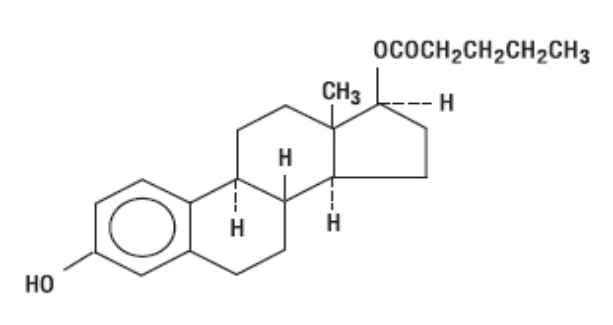
Description: Estradiol Valerate Injection, USP contains estradiol valerate, a long-acting estrogen in sterile oil solutions for intramuscular use. These solutions are clear, colourless to pale yellow.
CLINICAL TRIALS
Pivotal Clinical Trials
There are no available pivotal clinical trial data for pms-ESTRADIOL VALERATE INJECTION.
DETAILED PHARMACOLOGY
See Action and Clinical Pharmacology (Part I)
TOXICOLOGY
Preclinical safety data
The toxicity profile of estradiol has been well established in the literature. Long-term continuous administration of natural and synthetic estrogens in certain animal species increases the frequency of carcinomas of the breast, uterus, cervix vagina, testis and liver.
Most of the documented effects of exogenously administered estradiol in animal studies have been consequences of the administration of supraphysiological doses and are consistent with an exaggerated pharmacological response (most notably the promotion of tumours in oestrogen-responsive tissues). However, long-term unopposed treatment with physiological doses of estradiol may lead to hyperplastic changes in oestrogen-dependent reproductive organs like the uterus.
REFERENCES
SELECTED BIBLIOGRAPHY
- 1. Writing Group for the Women’s Health Initiative Investigators. Risks and benefits of estrogen plus progestin in healthy postmenopausal women. Principal results from the Women’s Health Initiative Randomized Controlled Trial. JAMA. 2002; 288(3):321-333.
- 2. The Women’s Health Initiative Steering Committee. Effects of conjugated equine estrogen in postmenopausal women with hysterectomy. The Women’s Health Initiative randomized controlled trial. JAMA. 2004; 291(14):1701-1712.
- 3. Chelbowski RT, Hendrix SL, Langer RD, Stefanick ML, Gass M, Lane D, et al. The Women’s Health Initiative Randomized Trial. Influence of Estrogen plus Progestin on Breast Cancer and Mammography in Healthy Postmenopausal Women. JAMA. 2003; 289(24):3243-3253.
- 4. Hulley S, Grady D, Bush T, Furberg C, Herrington D, Riggs B, et al for the Heart and Estrogen/progestin Replacement Study (HERS) Research Group. Randomized trial of estrogen plus progestin for secondary prevention of coronary heart disease in postmenopausal women. JAMA. 1998; 280(7):605-613.
- 5. Grady S, Herrington D, Bittner V, Blumenthal R, Davidson M, Hlatky M, et al for the HERS Research Group. Cardiovascular disease outcomes during 6.8 years of hormone therapy. Heart and Estrogen/progestin replacement study follow-up (HERS II). JAMA. 2002; 288(1):49-57.
- 6. Shumaker SA, Legault C, Rapp SR, Thal L, Wallace RB, Ockene JK, et al. Estrogen plus progestin and the incidence of dementia and mild cognitive impairment in postmenopausal women. The Women’s Health Initiative Memory Study: A randomized controlled trial. JAMA. 2003; 289(20):2651-2662.
- 7. Shumaker SA, Legault C, Kuller L, Rapp SR, Thal L, Lane DS, et al. Conjugated Equine Estrogens and Incidence of Probable Dementia and Mild Cognitive Impairment in Postmenopausal Women. Women’s Health Initiative Memory Study. JAMA. 2004; 291(24):2947-2958.
- 8. Anderson GL, Limacher M, Assaf AR, Bassford T, Beresford S.A.A., Black H, et al. Effects of conjugated equine estrogens in postmenopausal women with hysterectomy - The Women’s Health Initiative Randomized Controlled Trial. JAMA 2004 April 14;291(24):1701-12.
- 9. Beral V. Million W, Bull D, Green J, Reeves G (2007). Ovarian cancer end hormone replacement therapy in the Million Women Study. Lancet 69(9574); 1703-10.
- 10. Lacey JV, Brinton LA, Leitzmann MF, Mouw T, Hollenbeck A, Schatzkin, A, et al. Menopausal hormone therapy and ovarian cancer risk in the National Institutes of Health- AARP Diet and Health Study Cohort, J Natl Cancer Inst. 2006;98:1397-1405.
- 11. Morrow CP, Townsend DE. Cancer of the uterine corpus. In: Synopsis of gynecologic oncology. New York: John Wiley and Sons, 2nd ed.; 1981. p. 133-185.
- 12. Kurman RJ, Kaminsk PF, Norris HJ. The behavior of endometrial hyperplasia: A long-term study of "untreated" hyperplasia in 170 patients. Cancer. 1985;56:403-12.
- 13.
José Remohi, M.D.; Adela Vidal, M.D.; Antonio Pellicer, M.D. Oocyte donation in low responders to conventional ovarian stimulation for in vitro fertilization. Instituto Valencianco de Infertilidad, and Department of Pediatrics, Obstetrics, and Gynecology, Valencia University School of Medicine, Valencia, Spain
Fertil Steril 1993;59:1208-15
- 14. Prescribing Information Delestrogen® (Estradiol Valerate Injection, USP), December 2, 2003.