


Product Monograph - PRZ-Propranolol
INDICATIONS
PRZ-PROPRANOLOL is indicated in the treatment of mild to moderate hypertension and for the prophylaxis of angina pectoris.
PRZ-PROPRANOLOL is compatible with thiazide-like diuretics and/or peripheral vasodilators. Combinations of PRZ-PROPRANOLOL with thiazide-like diuretics and/or peripheral vasodilators have been shown to be generally more effective than propranolol alone.
PRZ-PROPRANOLOL is not recommended for the emergency treatment of hypertensive crises.
Geriatrics: There is no information available for elderly patients.
Pediatrics: PRZ-PROPRANOLOL is not recommended for use in children (see WARNINGS AND PRECAUTIONS, Special Populations).
- A) CARDIAC ARRHYTHMIAS
- 1.
Supraventricular arrhythmias
- Paroxysmal atrial tachycardias, particularly those arrhythmias induced by catecholamines or digitalis or associated with Wolff-Parkinson-White syndrome (see W-P-W under WARNINGS AND PRECAUTIONS).
- Persistent sinus tachycardia which is non-compensatory and impairs the well- being of the patient.
- Tachycardias and arrhythmias due to thyrotoxicosis when causing distress or increased hazard and when immediate effect is necessary as adjunctive, short-term therapy (e.g. 2-4 weeks). May be used with, but not in place of, specific therapy (see Thyrotoxicosis under WARNINGS AND PRECAUTIONS).
- Persistent atrial extrasystoles which impair the well-being of the patient and do not respond to conventional measures.
Atrial flutter and fibrillation when ventricular rate cannot be controlled by
- contraindicated.
- 2.
Tachyarrhythmias of digitalis intoxication.
If digitalis-induced tachyarrhythmias persist following discontinuance of digitalis and correction of electrolyte abnormalities, they may be reversible with PRZ- PROPRANOLOL. Severe bradycardia may occur, (See SYMPTOMS AND TREATMENT OF OVERDOSAGE).
- B)
MIGRAINE
PRZ-PROPRANOLOL is indicated for the prophylaxis of migraine headache. It is not indicated for the treatment of acute migraine attacks.
- C)
HYPERTROPHIC SUBAORTIC STENOSIS
PRZ-PROPRANOLOL is useful in the management of hypertrophic subaortic stenosis, especially for the treatment of exertional or other stress-induced angina, palpitations, and syncope. PRZ-PROPRANOLOL may also improve exercise performance. The effectiveness of propranolol hydrochloride in this disease appears to be due to a reduction of the elevated outflow pressure gradient which is exacerbated by beta-adrenergic receptor stimulation. Clinical improvement may be temporary.
- D)
PHEOCHROMOCYTOMA
After primary treatment with an alpha-adrenergic blocking agent has been instituted, PRZ-PROPRANOLOL may be useful as adjunctive therapy if the control of tachycardia becomes necessary before or during surgery.
It is hazardous to use PRZ-PROPRANOLOL unless alpha-adrenergic blocking drugs are already in use, since this would predispose to serious blood pressure rise. Blocking only the peripheral dilator (beta) action of epinephrine leaves its constrictor (alpha) action unopposed. In the event of hemorrhage or shock, producing both beta- and alpha-blockade is contraindicated since the combination prevents the increase in heart rate and peripheral vasoconstriction needed to maintain blood pressure.
In inoperable or metastatic pheochromocytoma, PRZ-PROPRANOLOL may be useful as an adjunct to the management of symptoms due to excessive beta-adrenergic receptor stimulation.
CONTRAINDICATIONS
PRZ-PROPRANOLOL (Propranolol hydrochloride) is contraindicated in:
- 1. bronchospasm including bronchial asthma;
- 2. allergic rhinitis during the pollen season;
- 3. sinus bradycardia and greater than first degree block;
- 4. cardiogenic shock;
- 5. right ventricular failure secondary to pulmonary hypertension;
- 6. congestive heart failure (See WARNINGS AND PRECAUTIONS) unless the failure is secondary to a tachyarrhythmia treatable with PRZ-PROPRANOLOL.
- 7. patients prone to hypoglycaemia, i.e. after prolonged fasting or patients with impaired capacity to counter-regulate a possible hypoglycaemic event.
- 8.
As with other beta-blockers, PRZ-PROPRANOLOL must not be used in patients with any of the following:
- • bradycardia;
- • hypotension;
- • metabolic acidosis;
- • severe peripheral arterial circulatory disturbance;
- • sick sinus syndrome;
- • untreated pheochromocytoma;
- • uncontrolled heart failure;
- • Prinzmetal’s angina.
- •
Due to the presence of lactose in the PRZ-PROPRANOLOL tablets, use in patients with hereditary problems of galactose intolerance, glucose-galactose malabsorption or the Lapp lactase deficiency is also
- contraindicated (see WARNINGS AND PRECAUTIONS, Sensitivity/Resistance).
WARNINGS AND PRECAUTIONS
CARDIAC FAILURE
Sympathetic stimulation is a vital component supporting circulatory function in congestive heart failure; therefore, inhibition by means of beta-adrenergic blockade is a potential hazard as it may further depress myocardial contractility and precipitate cardiac failure.
PRZ-PROPRANOLOL (propranolol hydrochloride) acts selectively without abolishing the inotropic action of digitalis on the heart muscle (i.e., that of supporting the strength of myocardial contractions). In patients already receiving digitalis, the positive inotropic action of digitalis may be reduced by PRZ-PROPRANOLOL’s negative inotropic effect. The effects of PRZ-PROPRANOLOL and digitalis are additive in depressing A-V conduction.
IN PATIENTS WITHOUT A HISTORY OF CARDIAC FAILURE.
Continued depression of the myocardium over a period of time can in some patients, lead to cardiac failure. In rare instances, this has been observed during propranolol hydrochloride therapy. Therefore, at the first sign of symptoms of impending cardiac failure, patients should be fully digitalized and/or given a diuretic, and the response observed closely:
- If cardiac failure continues, despite adequate digitalization and diuretic therapy, PRZ- PROPRANOLOL should be withdrawn immediately.
- If tachyarrhythmia is being controlled, patients should be maintained on combined therapy and closely followed until threat of cardiac failure is over.
ABRUPT CESSATION OF THERAPY IN ANGINA PECTORIS
Severe exacerbation of angina and the occurrence of myocardial infarction have been reported in some patients with angina pectoris following abrupt discontinuation of propranolol hydrochloride therapy. Therefore, when discontinuation of PRZ- PROPRANOLOL is planned in patients with angina pectoris, the dosage should be gradually reduced over a period of about two weeks and the patient should be carefully observed. The same frequency of administration should be maintained. In situations of greater urgency, PRZ-PROPRANOLOL dosage should be reduced stepwise, in four days under close observation. If angina markedly worsens, or acute coronary insufficiency develops, it is recommended that treatment with PRZ-PROPRANOLOL be reinstituted promptly, at least temporarily. In addition, patients with angina pectoris should be warned against abrupt discontinuation of PRZ-PROPRANOLOL.
OCULOMUCOCUTANEOUS SYNDROME
Various skin rashes and conjunctival xerosis have been reported in patients treated with beta- blockers including propranolol hydrochloride. A severe oculomucocutaneous syndrome, whose signs include conjunctivitis sicca and psoriasiform rashes, otitis, and sclerosing serositis has occurred with the long-term use of one beta- adrenergic blocking agent. This syndrome has not been observed with PRZ-PROPRANOLOL, however, physicians should be alert to the possibility of such reactions and discontinue treatment if they occur.
IN PATIENTS WITH THYROTOXICOSIS
Possible deleterious effects from long-term use of propranolol hydrochloride have not yet been adequately appraised. Special consideration should be given to PRZ- PROPRANOLOL’s potential for aggravating congestive heart failure. PRZ- PROPRANOLOL may mask the clinical signs of developing or continuing hyperthyroidism or its complications and may give a false impression of improvement. Therefore, abrupt withdrawal of PRZ-PROPRANOLOL may be followed by an exacerbation of symptoms of hyperthyroidism, including thyroid storm. This may be another instance where PRZ- PROPRANOLOL should be withdrawn slowly by reducing dosage. Propranolol hydrochloride does not distort thyroid function tests.
IN PATIENTS WITH WOLFF-PARKINSON-WHITE SYNDROME
PRZ-PROPRANOLOL should be used with caution since several cases have been reported in which, after propranolol hydrochloride treatment, the tachycardia was replaced by a severe bradycardia requiring a demand pacemaker. In one patient, this occurred after an initial dose of 5 mg of propranolol hydrochloride.
IN PATIENTS UNDERGOING ELECTIVE OR EMERGENCY SURGERY
The management of patients with angina, being treated with beta-blockers and undergoing elective or emergency surgery, is controversial because beta-adrenergic receptor blockade impairs the ability of the heart to respond to beta-adrenergically mediated reflex stimuli, but abrupt discontinuation of therapy with PRZ-PROPRANOLOL may be followed by severe complications. (See WARNINGS AND PRECAUTIONS). Some patients receiving beta-adrenergic blocking agents have been subject to protracted severe hypotension during anesthesia. Difficulty in restarting and maintaining the heartbeat has also been reported.
For these reasons, in patients with angina undergoing elective surgery, PRZ- PROPRANOLOL should be withdrawn gradually following the recommendation given under Abrupt Cessation of Therapy. (See WARNINGS AND PRECAUTIONS). According to available evidence, all clinical and physiologic effects of beta-blockade are no longer present 48 hours after cessation of medication.
In emergency surgery, since PRZ-PROPRANOLOL is a competitive inhibitor of beta- adrenergic receptor agonists, its effects may be reversed, if necessary, by sufficient doses of such agonists as isoproterenol or levarterenol.
Anesthesia with agents which maintain cardiac contractility by virtue of their effect on catecholamine release (e.g. ether) should be avoided in patients on PRZ-PROPRANOLOL therapy.
IN PATIENTS PRONE TO NON-ALLERGIC BRONCHOSPASM
(e.g. Chronic Bronchitis, Emphysema, Bronchiectasis), PRZ-PROPRANOLOL should be administered with caution since it may block bronchodilation produced by endogenous and exogenous catecholamine stimulation of beta-adrenergic receptors.
IN PATIENTS WITH DIABETES AND IN THOSE SUBJECT TO HYPOGLYCEMIA
PRZ-PROPRANOLOL, because of its beta-adrenergic blocking activity, may block premonitory signs and symptoms (pulse rate and pressure changes) of acute hypoglycemia. This is especially important to keep in mind in patients with labile diabetes. Hypoglycemic attacks may be accompanied by a precipitous elevation of blood pressure.
USE IN PREGNANCY
The safe use of propranolol hydrochloride in pregnancy has not been established. Use of any drug in pregnancy or in women of child-bearing potential requires that the possible risk to mother and/or fetus be weighed against the expected therapeutic benefit. Perinatal complications, such as small placenta and intra-uterine growth retardation, have been reported in a few cases where the mother took propranolol hydrochloride during pregnancy. Some infants born to mothers treated with propranolol hydrochloride were reported to have hypoglycemia and/or bradycardia.
USE IN CHILDREN
While experience with propranolol hydrochloride in children under 12 is limited, the indications for which PRZ-PROPRANOLOL is recommended occur infrequently in childhood. Although reports fail to indicate that children respond in a manner different from the adult, physicians are advised to undertake treatment with caution.
Hypersensitivity, Allergic Reactions
Anaphylactic/anaphylactoid reactions have been associated with the administration of propranolol hydrochloride (see ADVERSE REACTIONS). There may be increased difficulty in treating an allergic type reaction in patients on beta- blockers. In these patients, the reaction may be more severe due to pharmacological effects of beta-blockers and problems with fluid changes. Epinephrine should be administered with caution since it may not have its usual effects in the treatment of anaphylaxis. On the one hand, larger doses of epinephrine may be needed to overcome the bronchospasm, while on the other, these doses can be associated with excessive alpha adrenergic stimulation with consequent hypertension, reflux bradycardia and heart-block and possible potentiation of bronchospasm. Alternatives to the use of large doses of epinephrine include vigorous supportive care such as fluids and the use of beta agonists including parenteral salbutamol or isoproterenol to overcome bronchospasm, and norepinephrine to overcome hypotension.
Sensitivity/Resistance
Due to the presence of lactose in the PRZ-PROPRANOLOL tablets, patients with hereditary problems of galactose intolerance, glucose-galactose malabsorption or the Lapp lactase deficiency should not take PRZ-PROPRANOLOL (see CONTRAINDICATIONS).
Some slowing of heart due to unopposed vagal activity is usual in patients receiving PRZ-PROPRANOLOL (propranolol hydrochloride), however, occasionally severe bradycardia occurs and may lead to vertigo, syncopal attacks or orthostatic hypotension. Patients, especially those with limited cardiac reserve should be monitored for signs of excessive bradycardia. Should the patient become symptomatic the dose of PRZ-PROPRANOLOL should be decreased or, if necessary, the drug should be discontinued. If it is essential to correct the bradycardia intravenous atropine or isoproterenol should be considered.
It has been reported that administration of propranolol hydrochloride to control cardiac arrhythmias in acute myocardial infarction has caused marked reduction in cardiac output. Therefore, the doses of PRZ-PROPRANOLOL should be kept to the minimum in patients with severe myocardial infarction. Prior administration of other antiarrhythmic cardiac depressant drugs, such as procainamide or quinidine may potentiate the cardiac-depressant activities of PRZ-PROPRANOLOL. Prior digitalization may be indicated and atropine should be at hand to control bradycardia.
The combination of PRZ-PROPRANOLOL with a thiazide-like diuretic and/or peripheral vasodilator produces a greater fall in blood pressure than either drug alone. This occurs regardless of which drug is administered first. The same degree of blood pressure control can be achieved by lower than usual dosages of each drug. Therefore, when using such combined therapy, careful monitoring of the dosages is required until the patient is stabilized.
Patients receiving catecholamine depletion drugs such as reserpine or guanethidine should be closely observed if PRZ-PROPRANOLOL is administered concomitantly. The added catecholamine blocking action of this drug may produce an excessive reduction of the resting sympathetic nervous activity.
In patients on long-term treatment with PRZ-PROPRANOLOL, laboratory determinations should be made at regular intervals. The drug should be used with caution in patients with impaired renal and hepatic functions.
ADVERSE REACTIONS
The most serious adverse effects that may be encountered with PRZ-PROPRANOLOL (propranolol hydrochloride) are congestive heart failure and bronchospasm (See CONTRAINDICATIONS, WARNINGS and PRECAUTIONS).
Gastrointestinal disturbances (anorexia, nausea, vomiting, diarrhea, abdominal pain) are the most common adverse effects reported. Other less frequently reported adverse effects are: (in descending order) cold extremities and exacerbation of Reynaud’s phenomenon; congestive heart failure; sleep disturbances including vivid dreams; dizziness, fatigue and bronchospasm. Reported adverse effects, according to organ systems are recorded below:
CARDIOVASCULAR
Congestive heart failure (See WARNINGS AND PRECAUTIONS); heart failure deterioration; precipitation of heart block; secondary effects of decreased cardiac output which could include: syncope, vertigo, lightheadedness, decreased renal perfusion and rarely, postural hypotension; intensification of A-V block and hypotension; severe bradycardia; claudication and cold extremities, Raynaud’s phenomenon; dyspnoea; palpitations; precordial pain.
CENTRAL NERVOUS. SYSTEM
Dizziness, lethargy, weakness, drowsiness, headache, insomnia, fatigue and/or lassitude, anorexia, anxiety, mental depression, poor concentration, reversible amnesia and catatonia, vivid dreams with or without insomnia, hallucinations, nightmares, psychoses, mood changes, confusion, paresthesia, incoordination, somnambulism.
GASTROINTESTINAL
Nausea, vomiting, epigastric distress, anorexia, bloating, mild diarrhea, constipation.
RESPIRATORY
Bronchospasm; (may occur in patients with bronchial asthma or a history of asthmatic complaints, sometimes with fatal outcome); laryngospasm and respiratory distress. (See CONTRAINDICATIONS and WARNINGS AND PRECAUTIONS).
Blood
Thrombocytopenia
DERMATOLOGIC
A few cases of erythematous rashes and increase of facial acneiform lesions have been reported; urticaria; exfoliative psoriasiform eruption; Stevens-Johnson Syndrome; toxic epidermal necrolysis, exfoliative dermatitis and erythema multiforme.
Endocrine
Hypoglycaemia in elderly patients, patients on haemodialysis, patients on concomitant antidiabetic therapy, patients with prolonged fasting and patients with chronic liver disease (see CONTRAINDICTIONS and WARNINGS AND PRECAUTIONS).
Allergic
Hypersensitivity reactions, including anaphylactic/anaphylactoid reactions. A few cases of erythematous rashes and increase of facial acneiform lesions have been reported; urticaria; exfoliative psoriasiform eruption.
OTHERS
Reduction or loss of libido; reversible alopecia and rarely: diminution and loss of hearing; tinnitus, visual disturbances; diminished vision; conjunctivitis; thrombocytopenic purpura; pharyngitis and agranulocytosis, fever combined with aching and sore throat; urinary retention associated with repeated bouts of paroxysmal tachycardia; flushing of the face.
CLINICAL LABORATORY TESTING FINDINGS
Elevated blood urea levels in patients with severe heart disease, elevated serum transaminase, alkaline phosphatase, and lactate dehydrogenase have been reported. An increase in ANA (antinuclear antibodies) has been observed, however the clinical relevance of this is not clear.
SYMPTOMS AND TREATMENT OF OVERDOSAGE
Several reports in the published literature describe cases in which propranolol hydrochloride was used as a suicide agent. In most cases, other agents, e.g. alcohol, have also been involved. One patient who was thought to have ingested 3,600 mg of propranolol hydrochloride died. Survival of patients taking higher single doses has, however, also been reported.
The common signs to be expected in overdosage are bradycardia, hypotension, bronchospasm, or acute cardiac failure. If overdosage occurs, in all cases therapy with PRZ-PROPRANOLOL should be discontinued and the patient observed closely. In addition the following therapeutic measures are suggested:
BRADYCARDIA
Administer atropine incrementally in 0.6 mg doses. If there is no response to vagal blockade, administer isoproterenol cautiously.
CARDIAC FAILURE
Digitalization and Diuretics
HYPOTENSION
Vasopressors, e.g. levarterenol or epinephrine. (See “IN PATIENTS UNDERGOING ELECTIVE OR EMERGENCY SURGERY” in WARNINGS AND PRECAUTIONS, concerning the use of epinephrine in Beta-blocked patients).
BRONCHOSPASM
Administer isoproterenol and aminophylline.
DRUG INTERACTIONS
Drug-Drug Interactions
The drug interactions discussed in this section are based on either drug interactions case reports or studies, or potential interaction due to expected magnitude and seriousness of the interaction.
Anti-arrhythmic drugs
Class I anti-arrhythmic drugs (e.g. disopyramide) and amiodarone may have a potentiating effect on atrial-conduction time and induce negative inotropic effects.
Serious Drug Interactions
Verapamil, Diltiazem: Beta-blockers combined with calcium channel blockers with negative inotropic effects (such as verapamil and diltiazem) can lead to an exaggeration of these effects, particularly in patients with impaired ventricular function and/or SA or AV conduction abnormalities. This may result in severe hypotension, bradycardia and cardiac failure. Neither the beta-blocker nor the calcium channel blocker should be administered within 48 hours of discontinuing the other.
- Other cardiac-depressant anti-arrhythmic drugs: prior administration of other antiarrhythmic drugs, such as procainamide and quinidine may potentiate the cardiac-depressant activity of propranolol hydrochloride. Prior digitalization may be indicated and atropine should be at hand to control bradycardia.
Thiazide-like diuretics and peripheral vasodilators: The combination of propranolol hydrochloride with a thiazide-like diuretic and/or a peripheral vasodilator produces a greater fall in blood pressure than either drug alone. This occurs regardless of which drug is administered first (see WARNINGS AND PRECAUTIONS, General).
Reserpine or guanethidine: Patients receiving catecholamine depleting drugs should be closely observed if administered concomitantly with PRZ-PROPRANOLOL. The added catecholamine blocking action of these drugs may produce an excessive reduction in the resting sympathetic nervous activity.
Rizatriptan: The simultaneous administration of rizatriptan and propranolol can increase the rizatriptan AUC and Cmax by approximately 70-80%. The increased rizatriptan exposure is presumed to be caused by inhibition of first-pass metabolism of rizatriptan through inhibition of monoamine oxidase-A. If both drugs are to be used, a rizatriptan dose of 5 mg has been recommended.
Digitalis glycosides: In association with beta-blockers, digitalis glycosides may increase atrioventricular conduction time.
Verapamil, Diltiazem: Beta-blockers combined with calcium channel blockers with negative inotropic effects (such as verapamil and diltiazem) can lead to an exaggeration of these effects, particularly in patients with impaired ventricular function and/or SA or AV conduction abnormalities. This may result in severe hypotension, bradycardia and cardiac failure. Neither the beta-blocker nor the calcium channel blocker should be administered within 48 hours of discontinuing the other.
Nifedipine: concomitant therapy with dihydropyridine calcium channel blockers (such as nifedipine) may increase the risk of hypotension and cardiac failure may occur in patients with latent cardiac insufficiency.
Fingolimod: Concomitant use of fingolimod with beta-blockers may potentiate bradycardic effects and is not recommended. Where such coadministration is considered necessary, appropriate monitoring at treatment initiation, i.e. at least overnight monitoring, is recommended.
Epinephrine: Concomitant use of sympathomimetic agents, such as epinephrine, may counteract the effects of beta-blockers. Caution must be exercised when administering epinephrine parenterally to patients taking beta-blockers as, in rare cases, vasoconstriction, hypertension and bradycardia may result.
Lidocaine: administration of propranolol hydrochloride during an infusion of lidocaine may increase the plasma concentration of lidocaine by approximately 30%. Patients already receiving propranolol hydrochloride tend to have higher lidocaine levels than controls. The combination should be avoided.
Cimetidine: Concomitant use of cimetidine will increase plasma levels of propranolol.
Alcohol: Concomitant use of alcohol may increase the plasma levels of propranolol.
Clonidine: Beta-blockers may exacerbate the rebound hypertension which can follow the withdrawal of clonidine. If clonidine is co-administered with a beta-blocker, the beta-blocker should be withdrawn several days before stopping clonidine administration. If replacing clonidine with beta-blocker therapy, the introduction of the beta-blocker should be delayed for several days after clonidine has been discontinued.
Ergotamine, Dihydroergotamine (and related compounds); Caution must be exercised if ergotamine, dihydroergotamine or related compounds are given in combination with propranolol hydrochloride, since vasospastic reactions have been reported in a few patients.
Ibuprofen, Indomethacin: Concomitant use of prostaglandin synthetase inhibiting drugs (e.g. ibuprofen and indomethacin) may decrease the hypotensive effects of PRZ-Propranolol.
Chlorpromazine: The concomitant use of propranolol hydrochloride and chlorpromazine may result in an increase in plasma levels of both drugs. This may lead to an enhanced antipsychotic effect of chlorpromazine and an increased antihypertensive effect of PRZ-PROPRANOLOL.
Anaesthetic agents: Use of beta-blockers with anaesthetic agents may result in attenuation of the reflex tachycardia and increase the risk of hypotension. Anaesthetic agents causing myocardial depression should be avoided and caution should be exercised when using any anaesthetic agents with PRZ-PROPRANOLOL. If anaesthesia is required, the anaesthetist should be informed that the patient has been taking PRZ-PROPRANOLOL and the choice of anaesthetic should be one with as little negative inotropic activity as possible.
Other medications: Pharmacokinetic studies have shown that several drugs may interact with propranolol due to effects on enzyme systems in the liver, which metabolizes propranolol and the following agents: quinidine, propafenone, rifampicin, theophylline, warfarin, thioridazine and dihydropyridine calcium channel blockers, such as nifedipine, nisoldipine, nicardipine, isradipine, and lacidipine. Owing to the fact that blood concentrations of either agent may be affected, dosage adjustments may be needed according to clinical judgement. (See also the section above on Nifedipine).
Drug-Food Interactions
Interactions with food have not been established.
Drug-Herb Interactions
Interactions with herbal products have not been established.
Drug-Laboratory Interactions
Propranolol hydrochloride does not interfere with thyroid function tests.
Interactions with other laboratory tests have not been established.
DOSAGE AND ADMINISTRATION
HYPERTENSION
Therapeutic, response to a given dosage varies between patients, therefore, dosage must be individually titrated and should be carefully monitored. In the treatment of hypertension PRZ-PROPRANOLOL (propranolol hydrochloride) may be started by administering the drug in two equal daily doses of 40 mg. This may be increased, if necessary, in one week, to 80 mg twice daily, before breakfast and at bedtime. If necessary, the drug may be increased to 160 mg twice daily. For most patients the dosage is within the range of 160-320 mg daily. A small number of patients may respond to 80 mg daily. Experience to date suggests that in some resistant patients increasing the dosage above 320 mg/day may have an additional effect. Doses above 320 mg/day should be given on a t.i.d. or q.i.d. regimen.
The time course of full blood pressure response is variable. The anti-hypertensive effect will usually occur within 3 to 7 days after reaching the effective dose. The maximum decrease in blood pressure may occur 2 to 4 weeks after initiation of treatment.
ANGINA PECTORIS
Dosage must be individualized. Starting with 10-20 mg three or four times daily, before meals and at bedtime, dosage should be gradually increased at 3 to 7 day intervals until optimum response is obtained. Although individual patients may respond at any dosage level, the average optimum dosage appears to be 160 mg/day. Occasionally, in resistant patients, dosage as high as 320-400 mg/day have been administered with beneficial results. If treatment is to be discontinued, reduce dosage gradually over a period of about two weeks (See WARNINGS AND PRECAUTIONS).
ARRHYTHMIAS
10 to 30 mg three or four times daily, before meals and at bedtime.
MIGRAINE
Dosage must be individualized. The initial dose is 40 mg twice daily. The dose may then be gradually increased until optimum migraine prophylaxis is achieved. The usual effective dose range is 80 to 160 mg/day.
HYPERTROPHIC SUBAORTIC STENOSIS
20 to 40 mg three or four times daily, before meals and at bedtime.
PHEOCHROMOCYTOMA
Pre-operatively - 60 mg daily, in divided doses, for three days before surgery, concomitantly with an alpha-receptor blocking agent.
Malignant cases -30 mg daily, in divided doses.
AVAILABILITY
PRZ-PROPRANOLOL TABLETS 20 mg
Blue coloured, round, biconvex tablet, debossed with 20 on one side and a breakline on the other side containing 20 mg propranolol hydrochloride.
Supplied in HDPE bottles of 100 tablets.
Medicinal ingredient: Propranolol hydrochloride
Non-medicinal ingredients: Lactose monohydrate, microcrystalline cellulose, colloidal anhydrous silica, sodium starch glycolate, magnesium stearate, and Lake Pigment HT
5516 FD&C Blue#1/Brilliant Blue FCF Aluminium Lake.
PRZ-PROPRANOLOL TABLETS 40 mg
Green coloured, round bi-convex tablet, debossed with 40 on one side and a breakline on the other side containing 40 mg propranolol hydrochloride.
Supplied in HDPE bottles of 100 tablets.
Medicinal ingredient: Propranolol hydrochloride
Non-medicinal ingredients: Lactose monohydrate, microcrystalline cellulose, colloidal anhydrous silica, sodium starch glycolate, magnesium stearate, and Lake Blend LB-
510047 Green.
PRZ-PROPRANOLOL TABLETS 80 mg
Yellow coloured, round, biconvex tablet, debossed with 80 on one side and a breakline on the other side containing 80 mg propranolol hydrochloride.
Supplied in HDPE bottles of 100 tablets.
Medicinal ingredient: Propranolol hydrochloride
Non-medicinal ingredients: Lactose monohydrate, microcrystalline cellulose, colloidal anhydrous silica, sodium starch glycolate, magnesium stearate, and Lake Blend LB-
520020 Yellow.
STORAGE CONDITIONS
Store at controlled room temperature between 15 to 30°C, protect from light and moisture.
CHEMISTRY
Propranolol Hydrochloride
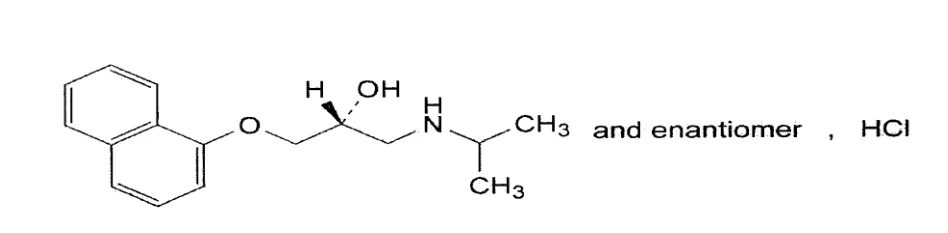
Molecular Formula: C16H22C1NO2 Molecular Weight: 295.8 g/mol
Chemical Name: (2RS)-1-[(Propan-2-yl) amino]-3-[(napthalen-1-yl) oxy]
propan-2-ol hydrochloride
Description: Propranolol hydrochloride is a white or almost white powder with a melting point of 163°C to l66°C. It is soluble in water and ethanol and practically insoluble in heptane.
.
PHARMACOKINETICS
Propranolol hydrochloride is rapidly and almost completely absorbed from the gastrointestinal tract. A large part of the absorbed drug is lost to the systemic circulation due to the first pass metabolism in the liver. After repeated administration, the first pass removal process becomes saturated and, at steady state, the plasma concentration is proportional to the dose, although there is some variation between patients as to the blood levels achieved at a given dose. In addition, correlation of plasma level to therapeutic effect varies considerably with propranolol hydrochloride as with some other beta-blockers. This lack of correlation is most marked in the treatment of angina and hypertension.
The circulating drug is more than 90% bound to serum proteins. Propranolol hydrochloride is rapidly and extensively metabolized and excreted by the kidney. Over 20 metabolites have been identified. One of these, the 4-hydroxy metabolite, found only after oral administration, has beta-adrenergic blocking properties. The biological half-life of propranolol hydrochloride (i.e. the serum concentration of the unchanged drug) is about four hours. The duration of pharmacologic effect is longer.
PHARMACOLOGY
Propranolol hydrochloride is a competitive antagonist of endogenous and exogenous sympathomimetic amines at the beta-adrenergic receptors (Betal and Beta2). Chemically it is a racemic mixture of equal amounts of levo and dextro isomers. The levo isomer is responsible for most of the beta-receptor blocking activity.
CARDIOVASCULAR EFFECTS
Intravenous administration of propranolol to cats and dogs produced a fall in heart rate by blocking endogenous sympathetic activity to the heart. In anesthetized dogs, propranolol produced dose-related decrease in heart rate, cardiac contractile force, and small depressions in blood pressure, and cardiac output. These effects have also been demonstrated in man. A reduction in oxygen consumption and increased right atrial pressure were observed in human myocardium.
Human and animal studies with propranolol have demonstrated competitive and reversible blockade of the increased heart rate and increased force of contraction produced by isoproterenol, adrenaline, noradrenaline and stellate ganglion stimulation. Propranolol reduced the pressor response of noradrenaline, potentiated that of adrenaline, but did not effect the response of phenylephrine.
Epstein and associates studied 16 human subjects under conditions of maximal and submaximal exercise. Propranolol 0.15 mg/kg intravenously, was sufficient to reduce by tenfold the sensitivity of heart rate to isoproterenol.
Blockade of beta-adrenergic receptors in the peripheral vasculature has little if any effect on circulation or blood pressure. Administered intra-arterially, propranolol causes a brief vasodilation unrelated to beta-adrenergic receptor blockade.
Amounts of propranolol which completely abolished the increase in heart rate produced by stimulation of the right stellate ganglion in anesthetized cats did not affect the bradycardia produced by vagal stimulation.
Propranolol causes no observable response when it interacts with beta-receptors in the absence of a primary agonist such as epinephrine or isoprenaline indicating a lack of intrinsic sympathomimetic activity.
Lucchesi et al (1966) demonstrated in dogs that propranolol was effective in reversing or preventing several types of experimentally-induced cardiac arrhythmias.
In animal experiments, at concentrations much higher than those necessary for complete beta-adrenergic blockade, propranolol exerts a local anesthetic effect. This has also been termed a “membrane stabilizing” or “quinidine-like” effect. This property of propranolol has been demonstrated in vitro with human myocardium only at a minimum concentration of 10 mg/L which is about 100 times greater than that required for inhibition of exercise tachycardia or suppression of ectopic beats. This is, therefore, not thought to be an important property of propranolol in the doses used in clinical practice and there are no in vivo methods for demonstrating this effect in man.
Plasma renin activity is inhibited by propranolol.
RESPIRATORY EFFECTS
Propranolol increases airway resistance by inhibiting the sympathetic innervation of the bronchi. This effect is small in most normal individuals where it can only be demonstrated by measuring forced expiry volume (FEVl). In asthmatics and patients with other bronchospastic diseases however, this effect is marked and potentially dangerous.
Injection of propranolol reduced FEVl with dyspnoea, cough and dizziness in two of eleven patients with chronic obstructive lung disease. When given the drug orally (40 mg q.i.d.) five of these eleven patients reported dyspnoea. Propranolol has been reported to potentiate bronchospasm induced by histamine, acetylcholine, methylcholine or allergen and this potentiation is greater in asthmatics than in non-asthmatic subjects.
Central Nervous System Effects
Propranolol hydrochloride readily crosses the blood/brain barrier. In some animal experiments it has been shown to display central muscle relaxant, sedative and anticonvulsant properties. To date, none of these effects can be directly attributed to blockade of beta-adrenergic receptors in the central nervous system. One publication, suggests that propranolol’s CNS activity may be attributable to a glycol metabolite.
Metabolic Activity
Propranolol hydrochloride may produce hypoglycemia but this effect appears to be rare and its mechanism is not clear. Propranolol also impairs the sympathetically mediated rebound response to hypoglycemic symptoms (See WARNINGS AND PRECAUTIONS).
Propranolol hydrochloride inhibits the rise in plasma free fatty acids induced by sympathomimetic amines. It also inhibits the lipolytic action of catecholamines in isolated adipose tissues of several animal species.
TOXICOLOGY
Acute Oral Toxicity (LD50) Mice: 620 mg/kg
Rats: 638 mg/kg
Chronic Toxicity
It has been reported that a toxicity study of 18 months duration was conducted in four groups of rats (one control and three experimental) each consisting of 25 males and 25 females. All animals received medication by tube directly into the stomach for the first six months and thereafter received the drug in the diet.
A number of animals who received the highest dose (150 mg/kg) developed bronchospasm soon after receiving the drug. A variety of pathologic lesions were observed in both the control and experimental groups. Dilatation of both ventricles was noted in a number of high dose experimental rats that died spontaneously during the early part of the experiment.
Spontaneous myocarditis consisting of minor lymphocytic infiltration was observed in both groups. Testicular atrophy and reduction or absence of corpora lutea was seen in both the control and experimental groups.
It has been reported that a one-year toxicity test was carried out in 32 dogs in both sexes, divided into four groups (control and propranolol 60, 20 and 5 mg/kg).A patchy edema and a slight increase in the size of the lymphoid follicles of the mucosa in the fundus of the stomach were seen and were attributed to mild irritation caused by prolonged dosing with high doses of propranolol.
It has been reported that the carcinogenic potential of propranolol hydrochloride was investigated in mice and rats by chronic administration of the compound in the diet for 78 weeks at varying concentrations to provide dosage levels of 10, 50 and 150 mg/kg/day.
Control groups of mice and rats were fed the same diet without compound. After 78 weeks of administration, the mice were kept alive for an additional two months and the rats for six months withdrawal period. At the termination of the experiment, gross and microscopic pathologic investigations revealed that in mice the incidence of benign and malignant neoplasms was similar in control and all treated groups. Thus, no compound-related, tumorigenic effect was observed at any dose level. Similarly, no tumorigenic effect was found in the rat. The tumor incidence was lower in female rats treated with 150 mg/kg/day propranolol than in any of the other groups. This was attributed to the markedly decreased body weight gains in this group.
It has been reported that to determine the effects of propranolol hydrochloride in rats on fertility, pregnancy, the developing fetus, and newborns up to the time of weaning, various dose levels of the drug were administered either by gastric intubation or in the feed. The drug was also fed to rabbits in their diet. In some studies in rats a non-dose related increase in resorption sites and neonatal deaths were observed. No teratogenic effects were noted in either species. Furthermore, the compound had no adverse effect on fertility, pregnancy, parturition, or lactation.
REFERENCES
- 1. Black, J.W., Duncan, W.A.M. and Shanks, R.G.: Comparison of Some Properties of Pronethalol and Propranolol. Br. J. Pharmacol. & Chemother. 25:577, 1965.
- 2. Epstein, S.E., Robinson, B.F., Kahler, R.C. and Braunwald, E.: Effects of Beta- adrenergic Blockade on the Cardiac Response to Maximal and Submaximal Exercise in Man. J. Clin. Invest. 44:1745, 1965.
- 3. Marshall, R.J., Barnes, W.E., Beane, J.E., Mallo, J.A, and Schwab, L.T.: Blockade by Propranolol of the Hemodynamic and Metabolic Responses to Infused Catecholamines. Abstr. Fed. Proc. 24:7l3 (Mar.-Apr.) Part I, 1965.
- 4. Troyer, W.G., Wallace, A.G., Lesage, M.A., Zotti, E.F. and Stead, E.A.: Electrophysiologic Effects of Adrenergic Stimulation and Blockade. Abstr. Fed. Proc. 24:713 (Mar.-Apr.) Part I, 1965.
- 5. Lucchesi, E.R., Whitsitt, L.S. and Brown N.L.: Propranolol in Experimentally Induced Cardiac Arrhythmias. Can. J. Physiol. & Pharmacol. 44:543, 1966.
- 6. Shanks, R.G.: The Effect of Propranolol on the Cardiovascular Responses to Isoprenaline, Adrenaline and Noradrenaline in the Anesthetized Dog. Br. J. Pharmacol. & Chemother. 26:322, 1966.
- 7. Shanks, R.G.: The Peripheral Vascular Effects of Propranolol and Related Compounds. Br. J. Pharmac. Chemother. 29:204, 1967.
- 8. Barrett, A.M. and Cullum, V.A.: The Biological Properties of the Optimal Isomers of Propranolol and their Effects on Cardiac Arrhythmias. Br. J. Pharm. 34:43, 1968.
- 9. Dollery, C.T., Patterson, J.W. and Conolly, M.E.: Clinical Pharmacology of Beta- receptor-blocking Drugs. Clin. Pharm. Ther. 10:765, 1969.
- 10. Tivenius, L. and Nyberg, G.: Effect of Alprenolol and Propranolol on Ventilatory Function. A Comparative Study in Patients with Chronic Obstructive Lung Disease. Pharmacologic Clinica 2:51, 1969.
- 11. Gayrard, P., Orehek, J. and Charpin, J.: Le test au Propranolol: Nouveau Test de Provaction de l'Asthme. Etude Comparative. Revue Tuberculose et de Pneumonogic. 35:5ll, 1971.
- 12. Greenblatt, D.J. and Shader, R.I.: On the Psychopharmacology of Beta-adrenergic Blockade. Current Ther. Res. 14:6l5, 1972.
- 13. Saelens, D.A., Walle, T., Privitera, P.J. et al.: Central Nervous System Effects and Metabolic Disposition of a Glycol Metabolite of Propranolol. J. Pharmacol. Exp. 188:86, 1974.
- 14. Meyler’s Side Effects of Drugs: Vol. 8, p. 443, Excerpta Medica, Amsterdam-Oxford, American Elsevier Publishing Co. Inc. New York. 1975.
- 15. Nickerson. M. and Collier, B.: Propranolol and Related Drugs. The Pharmacological Basis of Therapeutics eds. L.S. Goodman and A. Gilman. MacMillan Publishing Co. Inc. N.Y. 5th Edition, 1975.
- 16. Nies, A.S. and Shand, D.G.: Clinical Pharmacology of Propranolol Circulation. 52:6, 1975.
- 17. Conolly, M.E., Kersting, F. and Dollery, C.T.: The Clinical Pharmacology of Beta- Adrenoceptor-Blocking Drugs. Prog.Cardiovasc. Disease, Vol. XIX, No.3, 1976.
- 18. Johnsson, G. and Regardh, C.G.: Clinical Pharmacokinetics of β-adrenoreceptor Blocking Drugs. Clin. Pharmacokinet. l:233, 1976.
- 19. Shand, D.G.: Pharmacokinetics of Propranolol: A Review Postgrad. Med. J. 52 (Suppl.4):22. 1976.
- 20. Beumer, H.M.: Adverse Effects of β-adrenoreceptor Blocking Drugs on Respiration. Cardiovascular Drugs. ed. G.S. Avery, Vol. 2: β-adrenoceptor Blocking Drugs. ADIS Press, 1977, Sydney;
- 21. Gibson, D.G.: Pharmacodynamic Properties of a-adrenoreceptor Blocking Drugs in Man. Cardiovascular Drugs, ed. G.S. Avery, Vol. 2: β –adrenoceptor Blocking Drugs. ADIS Press, 1977, Sydney.
- 22. McDevitt, D.G.: The Assessment of β-adrenoceptor Blocking Drugs in Man. Br. J. Clin. Pharmac, 4:413, 1977.
- 23. Inderal Product Monograph. Ayerst Laboratories, April 1979.
- 24. PRTEVA-PROPRANOLOL (Propranolol Hydrochloride) 10, 20, 40, and 80 mg Tablets, submission control 149953, Product Monograph, Teva Canada Limited. (SEP. 19, 2011).
- 25. Product Monograph, APO-PROPRANOLOL, Propranolol Hydrochloride Tablets, 10, 20, 40, 80 and 120 mg, APO TEX INC., Date of Revision: January 29, 2021; Submission Control#: 242932
- 26. Product Monograph, INDERAL-LA, Propranolol Hydrochloride Extended-Release Capsules USP 60, 80, 120 and 160 mg, Pfizer Canada Inc., Date of Revision: May 20, 2016; Submission Control#: 190671