


Product Monograph - Renagel (Sanofi-Aventis Canada)
RECENT MAJOR LABEL CHANGES
| 4 Dosage and Administration, 4.4 Administration | 03/2024 |
|---|
TABLE OF CONTENTS
Sections or subsections that are not applicable at the time of authorization are not listed.
RECENT MAJOR LABEL CHANGES ............................................................................................ 2
TABLE OF CONTENTS .............................................................................................................. 2
PART I: HEALTH PROFESSIONAL INFORMATION ...................................................................... 4
1 INDICATIONS ............................................................................................................... 4
1.1 Pediatrics ................................................................................................................ 4
1.2 Geriatrics ................................................................................................................ 4
2 CONTRAINDICATIONS ................................................................................................. 4
3 SERIOUS WARNINGS AND PRECAUTIONS BOX ............................................................ 4
4 DOSAGE AND ADMINISTRATION ................................................................................. 4
4.1 Dosing Considerations ............................................................................................ 4
4.2 Recommended Dose and Dosage Adjustment ....................................................... 4
4.4 Administration ........................................................................................................ 5
4.5 Missed Dose ........................................................................................................... 5
5 OVERDOSAGE .............................................................................................................. 5
6 DOSAGE FORMS, STRENGTHS, COMPOSITION AND PACKAGING ................................. 6
7 WARNINGS AND PRECAUTIONS .................................................................................. 6
7.1 Special Populations................................................................................................. 7
7.1.1 Pregnant Women ............................................................................................. 7
7.1.2 Breast-feeding .................................................................................................. 7
7.1.3 Pediatrics .......................................................................................................... 7
7.1.4 Geriatrics .......................................................................................................... 8
8 ADVERSE REACTIONS .................................................................................................. 8
8.1 Adverse Reaction Overview .................................................................................... 8
8.2 Clinical Trial Adverse Reactions .............................................................................. 8
8.3 Less Common Clinical Trial Adverse Reactions ..................................................... 10
8.5 Post-Market Adverse Reactions ........................................................................... 10
9 DRUG INTERACTIONS ................................................................................................ 10
9.3 Drug-Behavioural Interactions .............................................................................. 10
9.4 Drug-Drug Interactions ......................................................................................... 10
9.5 Drug-Food Interactions ......................................................................................... 11
9.6 Drug-Herb Interactions ......................................................................................... 11
9.7 Drug-Laboratory Test Interactions ........................................................................ 11
10 CLINICAL PHARMACOLOGY ....................................................................................... 12
10.1 Mechanism of Action ...................................................................................... 12
10.3 Pharmacokinetics ........................................................................................... 12
11 STORAGE, STABILITY AND DISPOSAL ......................................................................... 12
12 SPECIAL HANDLING INSTRUCTIONS ........................................................................... 12
PART II: SCIENTIFIC INFORMATION ....................................................................................... 13
13 PHARMACEUTICAL INFORMATION ............................................................................ 13
14 CLINICAL TRIALS ........................................................................................................ 15
14.1 Clinical Trials by Indication ............................................................................. 15
15 MICROBIOLOGY ........................................................................................................ 20
16 NON-CLINICAL TOXICOLOGY ..................................................................................... 20
PATIENT MEDICATION INFORMATION .................................................................................. 22
PART I: HEALTH PROFESSIONAL INFORMATION
1 INDICATIONS
RENAGEL (sevelamer hydrochloride) is indicated for:
- the control of hyperphosphatemia in patients with end-stage renal disease (ESRD) undergoing dialysis.
1.1 Pediatrics
Pediatrics (< 18 years of age): No data are available to Health Canada; therefore, Health Canada has not authorized an indication for pediatric use.
1.2 Geriatrics
Geriatrics (≥ 65 years of age): No special considerations are needed for elderly patients.
2 CONTRAINDICATIONS
RENAGEL (sevelamer hydrochloride) is contraindicated in the following situations:
- patients with hypophosphatemia
- patients with bowel obstruction, or known active mucosal injury such as necrosis, perforation, ulcerative colitis or gastrointestinal bleeding (see 7 WARNINGS AND PRECAUTIONS section).
- patients hypersensitive to sevelamer hydrochloride or one of the other ingredients in the product.
3 SERIOUS WARNINGS AND PRECAUTIONS BOX
Serious Warnings and Precautions
| Serious cases of dysphagia, bowel obstruction, and perforation have been associated with RENAGEL use, some requiring hospitalization and surgery. |
|---|
4 DOSAGE AND ADMINISTRATION
4.1 Dosing Considerations
- When administering any other medication where a reduction in the bioavailability of that medication would have a clinically significant effect on safety or efficacy, the physician should consider monitoring blood levels or dosing that medicine apart from RENAGEL to prevent GI binding (at least one hour before or three hours after RENAGEL).
4.2 Recommended Dose and Dosage Adjustment
The recommended dosing to be used when initiating RENAGEL in patients not using another phosphate binder are outlined below:
| Starting Dose | |
| Initial Serum Phosphorus | RENAGEL Tablets 800 mg |
| > 1.8 and < 2.4 mmol/L | 3 tablets per day (2.4 grams) |
| ≥ 2.4 mmol/L | 6 tablets per day (4.8 grams) |
When switching from calcium-based phosphate binders to RENAGEL, an equivalent starting dose on a mg/weight basis of RENAGEL should be prescribed.
Dosage adjustments, when necessary, should be recommended every 1 to 3 weeks by increasing one tablet per meal (3 per day) until the target serum phosphorus levels are met.
The total daily dose should be divided according to meal portions during the day.
Average Maintenance Dose: Dosage should be adjusted based upon the target serum phosphorus levels. The dose may be increased or decreased by one tablet per meal at two-week intervals as necessary. The average final dose in the chronic phase of a 52-week Phase 3 clinical trial designed to lower serum phosphorus to 1.6 mmol/L or less was approximately 7.1 grams, (approximately nine 800 mg tablets per day equivalent to three 800 mg tablets per meal). The maximum average daily RENAGEL dose studied was 13 grams.
4.4 Administration
- The tablets should not be bitten, chewed or broken apart prior to dosing. Swallow whole.
- RENAGEL (sevelamer hydrochloride) should be taken immediately prior to or with meals, since its action is to bind ingested phosphate (see Mechanism of Action)
4.5 Missed Dose
If a dose is forgotten, it should be skipped. Double dosing is not advisable.
5 OVERDOSAGE
Since RENAGEL (sevelamer hydrochloride) is not absorbed, the risk of systemic toxicity is minimal. RENAGEL has been given to healthy volunteers at doses up to 14 grams per day for 8 days with no adverse effects. The maximum average daily dose of RENAGEL that has been given to hemodialysis patients is 13 grams.
| For management of a suspected drug overdose, contact your regional poison control centre. |
|---|
6 DOSAGE FORMS, STRENGTHS, COMPOSITION AND PACKAGING
Table 1 – Dosage Forms, Strengths, Composition and Packaging
RENAGEL (sevelamer hydrochloride) tablets are oval compressed tablets containing 800 mg of sevelamer hydrochloride. RENAGEL contains the following excipients: colloidal silicon dioxide and stearic acid. The RENAGEL tablet coating contains hypromellose and diacetylated monoglyceride. RENAGEL 800 mg Tablets are supplied as white to off-white oval tablets, engraved with “RG800” on one side. RENAGEL 800 mg Tablets are available in bottles of 180 tablets.
7 WARNINGS AND PRECAUTIONS
General
RENAGEL (sevelamer hydrochloride) tablets should be swallowed intact and should not be crushed, chewed, or broken into pieces.
Patients with renal insufficiency may develop hypocalcemia. As RENAGEL does not contain calcium, serum calcium levels should be monitored, and elemental calcium should be supplemented whenever considered necessary. In cases of hypocalcemia, patients should be given an evening calcium supplement. Approximately 1000 mg elemental calcium is recommended.
Rare serious case reports of difficulty swallowing the RENAGEL tablet have been reported. Many of these cases involved patients with contributing co-morbid conditions affecting the ability to swallow including swallowing disorders or oroesophageal abnormalities. Caution should be exercised when RENAGEL tablets are used in these patients.
Depending on dietary intake, dialysis patients may develop low vitamin A, D, E and K levels. Therefore, in patients not taking these vitamins, monitoring vitamin A, D and E levels and assessing vitamin K status through the measurement of thromboplastin time should be considered and these vitamins should be supplemented if necessary.
Caution should be exercised to avoid hypophosphatemia, a serum phosphorus of < 0.8 mmol/L (see Recommended Dose and Dosage Adjustment).
The safety and efficacy of RENAGEL in patients with renal disease who are not undergoing dialysis has not been studied.
Gastrointestinal
Cases of dysphagia and esophageal tablet retention have been reported in association with use of the tablet formulation of RENAGEL, some requiring hospitalization and intervention.
Cases of bowel obstruction (ileus, subileus) and perforation have also been reported with RENAGEL use. Constipation may be a preceding symptom.
| Route of Administration | Dosage Form / Strength/Composition | Non-medicinal Ingredients |
| Oral | Tablet / 800 mg | Colloidal silicon dioxide; diacetylated monoglyceride; Hypromellose and stearic acid. |
Patients with dysphagia, swallowing disorders, severe gastrointestinal (GI) motility disorders including severe constipation, or major GI tract surgery were not included in the RENAGEL clinical studies.
The safety and efficacy of RENAGEL in patients with dysphagia, swallowing disorders, severe GI motility disorders including severe constipation, or major GI tract surgery have not been established. Caution should be exercised when RENAGEL is used in patients with these GI disorders. These patients should be monitored carefully while being treated with RENAGEL. RENAGEL treatment should be re-evaluated in patients who develop severe constipation or other severe GI symptoms (see 8 ADVERSE REACTIONS).
Cases of serious inflammatory disorders of the gastrointestinal tract (with complications including hemorrhage, perforation, ulceration, necrosis, colitis, and colonic/cecal mass) associated with the presence of sevelamer crystals have been reported (see 8.5 Post-Market Adverse Reactions). Inflammatory disorders may resolve upon RENAGEL discontinuation. Treatment discontinuation should be considered in patients who develop severe gastrointestinal symptoms (see 2 CONTRAINDICATIONS and 8 ADVERSE REACTIONS sections).
Monitoring and Laboratory Tests
Serum phosphorus and serum calcium should be monitored every 1 to 3 weeks until the target phosphorus level is reached. The dose of RENAGEL should be adjusted based on serum phosphorus concentration and titrated to a target serum phosphorus of ≤ 1.8 mmol/L.
RENAGEL does not contain calcium or alkali supplementation; serum calcium, bicarbonate, and chloride levels should be monitored.
Monitor for reduced vitamins D, E, K and folic acid levels. In preclinical studies in rats and dogs, sevelamer hydrochloride, reduced vitamins D, E and K, and folic acid levels at doses 6-10 times the recommended human dose. In short-term clinical trials, there was no evidence of reduction of serum levels of vitamins. However, in a one-year clinical trial, 25-hydroxyvitamin D (normal range 10 to 55 ng/mL) fell from 39±22 to 34±22 ng/mL (p<0.01) with sevelamer hydrochloride treatment. Most (approximately 75%) patients in sevelamer hydrochloride clinical trials received vitamin supplements which is typical of patients on dialysis.
7.1 Special Populations
7.1.1 Pregnant Women
The safety of RENAGEL has not been established in pregnant women. In preclinical studies, there was no evidence that RENAGEL induced embryolethality, fetotoxicity or teratogenicity at the doses tested (up to 1 g/kg/day in rabbits; up to 4.5 g/kg/day in rats ,see 16 NON-CLINICAL TOXICOLOGY) . RENAGEL should only be given to pregnant women if the benefits outweigh the risks.
7.1.2 Breast-feeding
There have been no adequate, well-controlled studies in lactating, or nursing women; however, since sevelamer is not absorbed, excretion in breast milk is not expected.
7.1.3 Pediatrics
The safety and efficacy of RENAGEL has not been established in children below the age of 18 years. RENAGEL is not recommended for use in children below the age of 18 years.
The minimum age of patients treated with RENAGEL in clinical trials was 18 years old.
7.1.4 Geriatrics
No special considerations are needed for elderly patients.
8 ADVERSE REACTIONS
8.1 Adverse Reaction Overview
The most frequently occurring serious adverse event with RENAGEL use was peritonitis at 8.2%, compared to 4.3 % with calcium. Patients receiving dialysis are subject to certain risks for infection specific to the dialysis modality. Peritonitis is a known complication in patients receiving PD. Therefore, patients on PD should be closely monitored to ensure the reliable use of appropriate aseptic technique with the prompt recognition and management of any signs and symptoms associated with peritonitis.
8.2 Clinical Trial Adverse Reactions
Clinical trials are conducted under very specific conditions. The adverse reaction rates observed in the clinical trials; therefore, may not reflect the rates observed in practice and should not be compared to the rates in the clinical trials of another drug. Adverse reaction information from clinical trials may be useful in identifying and approximating rates of adverse drug reactions in real-world use.
In a combined safety database comprised of 483 patients with ESRD undergoing hemodialysis, adverse events reported at an incidence ≥10% are provided in Table 2 below. From this database, adverse events are also presented separately from a single long-term randomized clinical study for RENAGEL and calcium. The adverse events presented in the table below are not necessarily attributed to RENAGEL treatment. The incidence of these events was not dose related.
| Table 2: Adverse Events in Patients with End-Stage Renal Disease undergoing Hemodialysis | |||||||||
| Total AEs reported | 52 weeks Study of RENAGEL vs. calcium (calcium acetate and calcium carbonate) | ||||||||
System Organ Class Event | RENAGEL N = 483 % | RENAGEL N = 99 % | calcium N = 101 % | ||||||
Gastrointestinal Disorders Vomiting | 24.4 | 22.2 | 21.8 | ||||||
| Nausea | 25.3 | 20.2 | 19.8 | ||||||
| Diarrhea | 21.1 | 19.2 | 22.8 | ||||||
| Dyspepsia | 15.7 | 16.2 | 6.9 | ||||||
| Constipation | 13.3 | 8.1 | 11.9 | ||||||
General Disorders and Site Administration Disorders Dialysis Access Complication | 4.3 | 6.1 | 10.9 | ||||||
Infections and Infestations Nasopharyngitis | 13.9 | 14.1 | 7.9 | ||||||
| Bronchitis | 5.4 | 11.1 | 12.9 | ||||||
| Upper Respiratory Tract Infection | 7.0 | 5.1 | 10.9 | ||||||
Musculoskeletal, Connective Tissue and Bone Disorders Pain in Limb | 13.7 | 13.1 | 14.9 | ||||||
| Arthralgia | 11.4 | 12.1 | 17.8 | ||||||
| Back Pain | 6.0 | 4.0 | 17.8 | ||||||
Nervous System Disorders Headache | 18.4 | 9.1 | 15.8 | ||||||
| Pyrexia | 8.7 | 5.1 | 10.9 | ||||||
Respiratory, Thoracic and Mediastinal Disorders Dyspnea | 15.7 | 10.1 | 16.8 | ||||||
| Cough | 11.6 | 7.1 | 12.9 | ||||||
Skin Disorders Pruritus | 10.4 | 13.1 | 9.9 | ||||||
Vascular Disorders Hypertension | 9.3 | 10.1 | 5.9 | ||||||
In one hundred and forty-three patients with ESRD undergoing peritoneal dialysis (PD) with treatment duration of 12 weeks, adverse events reported at an incidence ≥10% are provided in Table 3 below. The adverse events presented in the table below are not necessarily attributed to RENAGEL treatment. The incidence of these events was not dose related.
| Table 3: Adverse Events in Patients with End-Stage Renal Disease Undergoing Peritoneal Dialysis | ||||
System Organ Class Event | RENAGEL (N=97) | calcium (N=46) | ||
| % | % | |||
| Gastrointestinal disorders | ||||
| Dyspepsia | 17.5 | 8.7 | ||
| Vomiting | 11.3 | 4.3 | ||
| Peritonitis | 11.3 | 4.3 | ||
8.3 Less Common Clinical Trial Adverse Reactions
The following adverse events have been observed with RENAGEL use with an incidence of <10%, but greater than calcium and without attribution to causality, including: abdominal distension, constipation, diarrhea, nausea, chest pain, fatigue, pyrexia, catheter site infection, anorexia, headache, cough and pruritis.
Some patients experienced adverse events related to hypercalcemia in the calcium group but not in the RENAGEL group.
8.5 Post-Market Adverse Reactions
During post-marketing experience with RENAGEL, the following have been reported: allergic reactions including angioedema, anaphylaxis (some fatal) and erythema, hypersensitivity vasculitis, pruritus, rash, abdominal pain and in uncommon cases, intestinal obstruction, ileus, subileus, and intestinal perforation. Cases of diverticulitis were also reported.
Cases of serious inflammatory disorders of the gastrointestinal tract (with complications including hemorrhage, perforation, ulceration, necrosis, colitis, and intestinal mass) associated with the presence of sevelamer crystals have been reported (see 2 CONTRAINDICATIONS and 7 WARNINGS AND PRECAUTIONS).
Cases of gastrointestinal mucosal necrosis, gastrointestinal bleeding, and colitis associated with the presence of sevelamer crystals have been reported. However, the causality of the sevelamer crystals in initiating such disorders has not been demonstrated (see 2 CONTRAINDICATIONS and 7 WARNINGS AND PRECAUTIONS sections).
9 DRUG INTERACTIONS
9.3 Drug-Behavioural Interactions
There have been no adequate, well-controlled studies regarding drug-lifestyle interactions.
9.4 Drug-Drug Interactions
RENAGEL (sevelamer hydrochloride) was studied in human drug-drug interaction studies with digoxin, warfarin, enalapril, metoprolol and iron. RENAGEL had no effect on the bioavailability of these medications. However, in a study of 15 healthy subjects, a co-administered single dose of 7 RENAGEL Capsules (approximately 2.8 g) decreased the bioavailability of ciprofloxacin by approximately 50%. Consequently, RENAGEL should not be taken simultaneously with ciprofloxacin.
During postmarketing experience, reduced concentrations of cyclosporin, mycophenolate mofetil and tacrolimus have been reported in transplant patients when co-administered with RENAGEL. The possibility of an interaction cannot be excluded and close monitoring of blood concentrations of cyclosporin, mycophenolate mofetil and tacrolimus or dosing these medicines apart from RENAGEL to prevent GI binding (at least one hour before or three hours after RENAGEL) should be considered during the use of any of these agents in combination with RENAGEL and after its withdrawal.
During post-marketing experience, very rare cases of increased thyroid stimulating hormone (TSH) levels have been reported in patients co-administered RENAGEL and levothyroxine. Closer monitoring of TSH levels is therefore recommended for patients receiving both medications.
During postmarketing experience, very rare cases of increased phosphate levels have been reported in patients taking proton pump inhibitors co-administered with sevelamer hydrochloride.
When administering any other medication where a reduction in the bioavailability of that medication would have a clinically significant effect on safety or efficacy, the physician should consider monitoring blood levels or dosing that medicine apart from RENAGEL (at least one hour before or three hours after RENAGEL). Patients taking anti-arrhythmic and anti-seizure medications were excluded from the clinical trials. Special precautions should be taken when prescribing RENAGEL to patients also taking these medications.
9.5 Drug-Food Interactions
There have been no adequate, well-controlled studies regarding the effect of a variety of foods on the intestinal phosphorus binding of RENAGEL. In all clinical studies patients were instructed to take sevelamer with meals.
9.6 Drug-Herb Interactions
Interactions with herbal products have not been established.
9.7 Drug-Laboratory Test Interactions
Interactions with laboratory tests have not been established.
10 CLINICAL PHARMACOLOGY
Patients with ESRD retain phosphorus and can develop hyperphosphatemia. High serum phosphorus can precipitate serum calcium resulting in ectopic calcification. When the product serum calcium and phosphorus concentrations (Ca x P) exceeds 4.4 mmol/L, there is an increased risk that ectopic calcification will occur. Hyperphosphatemia plays a role in the development of secondary hyperparathyroidism in renal insufficiency. An increase in parathyroid hormone (PTH) levels is characteristic of patients with chronic renal failure. Increased levels of PTH can lead to osteitis fibrosa. A decrease in serum phosphorus may decrease serum PTH levels.
10.1 Mechanism of Action
RENAGEL (sevelamer hydrochloride) is a nonabsorbed polymer phosphate binder. When taken with meals RENAGEL inhibits intestinal absorption of ingested phosphate.
RENAGEL binds bile acids and therefore lowers low density lipoprotein (LDL) serum cholesterol. Since RENAGEL does not contain aluminum or other metals, it does not cause aluminum or other metal intoxication.
10.3 Pharmacokinetics
A mass balance study using 14C-sevelamer hydrochloride in 16 healthy male and female volunteers showed that sevelamer hydrochloride is not systemically absorbed. No absorption studies have been performed in patients with renal disease.
11 STORAGE, STABILITY AND DISPOSAL
Store at controlled room temperature 15°C to 30°C. Protect from moisture.
12 SPECIAL HANDLING INSTRUCTIONS
None.
PART II: SCIENTIFIC INFORMATION
13 PHARMACEUTICAL INFORMATION
Proper name: Sevelamer hydrochloride (USAN)
Chemical name:
- 1. poly(allylamine-co-N,N’-diallyl-1,3-diamino-2-hydroxypropane) hydrochloride (CAS)
- 2. Oxirane, (chloromethyl)-, polymer with 2-propen-1-amine, hydrochloride (CAS)
- 3. 2-Propen-1-amine, polymer with (chloromethyl) oxirane, hydrochloride (CAS)
- 4. Allylamine polymer with 1-chloro-2,3-epoxypropane, hydrochloride (IUPAC)
Molecular formula and molecular mass:
(C3H7N•nHCl)812z(C9H18N2O•nHCl)94z where z = a large number. The equivalent molecular weight, which corresponds to 1.0 allylamine unit, 0.094 hydroxypropyl units and 0.40 HCl, is 77.1 grams/mole.
Structural formula:
NH2•nHCl NH•nHCl OH NH2•nHCl NH•nHCl c a m b
Where: a,b = number of primary amine groups a + b = 9; c = number of crosslinking groups c = 1; n = fraction of protonated amines n = 0.4; m = large number to indicate extended polymer network.
Physicochemical properties:
Description: Sevelamer hydrochloride is a cross linked poly(allylamine hydrochloride) polymer. The cross linking agent is epichlorohydrin (1-chloro,2,3-epoxypropane). A portion of the amine is present as the hydrochloride salt; the finished polymer is 40% amine hydrochloride and 60% free amine.
Physical Form: White to off-white powder.
Melting Point: Indistinct melting point. Starts to decompose at >180°C.
Solubilities: Insoluble in all tested aqueous and organic solvents.
Crystallinity: Amorphous with no crystalline structure.
pH Values: A 1% slurry in 0.01 KCl results in a pH between 7.5-8.5.
Hygroscopicity: Sevelamer hydrochloride is hygroscopic.
14 CLINICAL TRIALS
14.1 Clinical Trials by Indication
Indication: the control of hyperphosphatemia in patients with end-stage renal disease (ESRD) undergoing dialysis.
Hemodialysis Patients
The effect of RENAGEL (sevelamer hydrochloride) was investigated in three Phase 2 studies with treatment duration ranging from 2-12 weeks and two Phase 3 studies with treatment duration of 8 weeks in patients (age 18-86 years) with end-stage renal disease (ESRD) on hemodialysis for 1-20 years. Four of the five studies were open-label dose-titration studies. A total of four hundred and eight patients on hemodialysis who were hyperphosphatemic (serum phosphorus >1.76 mmol/L) following a two-week phosphate binder washout period received RENAGEL. Patients were taken off their current calcium phosphate binder for 2 weeks (first washout period), followed by a treatment period with RENAGEL, and then a final 2 week washout period. Eighty patients also received calcium in a cross-over fashion while thirty-six received RENAGEL in combination with calcium, two received only calcium in the crossover study, and 12 received placebo.
In Study 203, RENAGEL was compared to RENAGEL + evening calcium carbonate and in Study 301, RENAGEL effect was compared to calcium acetate. The results of all studies consistently show the phosphate binding effect of RENAGEL resulting in lowering of serum phosphorus levels. There were statistically significant changes in serum phosphorus (p< 0.001) from baseline for RENAGEL (ranging from -0.23 mmol/L to - 0.81 mmol/L). The starting doses varied from 1320 to 2640 mg per day and the average daily dose at the end treatment varied between 4200 and 6400 mg (anhydrous).
Active-Control, Cross-Over Study in Hemodialysis Patients
Eighty-four chronic kidney disease (CKD) patients on hemodialysis who were hyperphosphatemic (serum phosphorus > 1.9 mmol/L) following a two-week phosphate binder washout period received sevelamer and active-control for eight weeks each in random order. Treatment periods were separated by a two-week phosphate binder washout period. Patients started on treatment three times per day with meals. Over each eight-week treatment period, at three separate time points the dose of sevelamer could be titrated up 1 capsule or tablet per meal (3 per day) to control serum phosphorus, the dose of active-control could also be altered to attain phosphate control. Both treatments significantly decreased mean serum phosphorus by about 0.6 mmol/L (Table 4).
| Table 4 :Mean Serum Phosphorus (mmol/L) at Baseline and Endpoint | ||||||
| Sevelamer Hydrochloride (N=81) | Active Control (N=83) | |||||
| Baseline at End of Washout | 2.7 | 2.6 | ||||
| Endpoint | 2.1 | 1.9 | ||||
| Change from Baseline at Endpoint (95% Confidence Interval) | -0.6* (-0.8, -0.5) | -0.7* (-0.8, -0.5) | ||||
| *p<0.0001, within treatment group comparison | ||||||
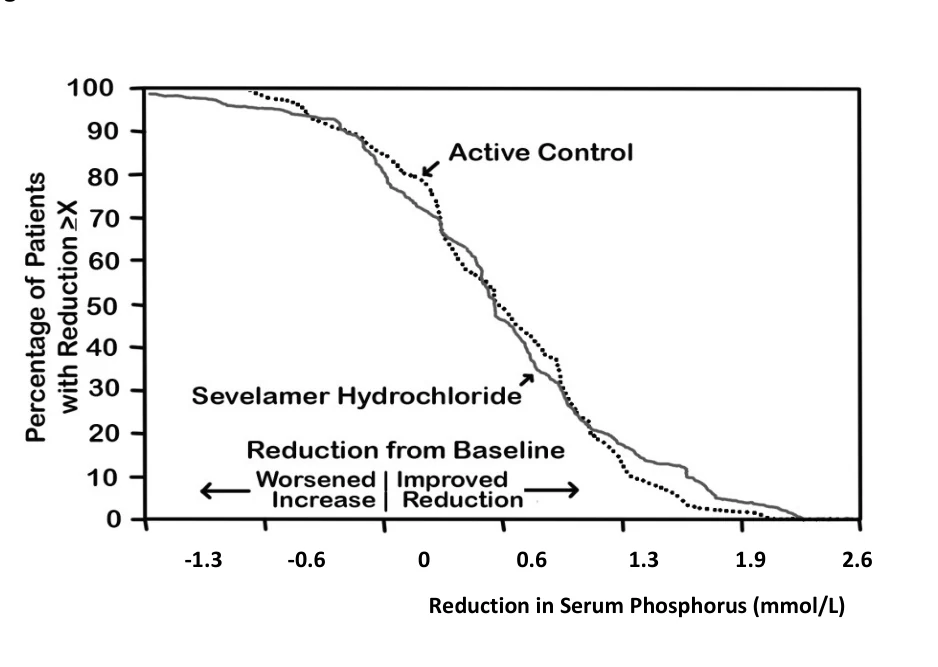
The distribution of responses is shown in Figure 1. The distributions are similar for sevelamer hydrochloride and active control. The median response is a reduction of about 0.6 mmol/L in both groups. About 50% of subjects have reductions between 0.3 and 1.0 mmol/L.
Figure 1: Percentage of patients (Y-axis) attaining a phosphorus reduction from baseline (mmol/L) at least as great as the value of the X-axis.
Average daily sevelamer hydrochloride dose at the end of treatment was 4.9 g (range of 0.0 to 12.6 g).
Active-Control, Parallel Study in Hemodialysis Patients
Two hundred CKD patients on hemodialysis who were hyperphosphatemic (serum phosphorus >1.8 mmol/L) following a two-week phosphate binder washout period were randomized to receive sevelamer hydrochloride 800 mg tablets (N=99) or an active control (N=101). The two treatments produced similar decreases in serum phosphorus. At week 52, using last-observation-carried-forward, sevelamer hydrochloride and active-control both significantly decreased mean serum phosphorus (Table 5).
| Table 5: Mean Serum Phosphorus (mmol/L) and Calcium Phosphorus Product (mmol2/L2) at Baseline and Change from Baseline to End of Treatment | ||||
Sevelamer HCl (N=94) | Active-Control (N=98) | |||
| Phosphorus Baseline | 2.4 | 2.4 | ||
| Change from Baseline at Endpoint | -0.7 | -0.6 | ||
| Ca x Phosphorus Ion Product | 5.7 | 5.5 | ||

| Baseline | ||
Change from Baseline at Endpoint | -1.6 | -1.1 |
Sixty-one percent of sevelamer hydrochloride patients and 73% of the control patients completed the full 52 weeks of treatment. Figure 2, a plot of the phosphorus change from baseline for the completers, illustrates the durability of response for patients who are able to remain on treatment.
Figure 2: Mean Phosphorus (mmol/L) Change from Baseline for Patients who Completed 52 Weeks of Treatment


- A. Phosphorus
Average daily sevelamer hydrochloride dose at the end of treatment was 6.5 g (range of 0.8 to 13 g).
The primary end points, serum phosphorus and change in serum phosphorus were statistically and clinically significantly improved with RENAGEL treatment as shown in Table 6.
Table 6: Mean Serum Phosphorus Concentrations (mmol/L) at the End of the Study Periods
| -201 | -202 | -203 | -301 | -302 | |||||||||||||||
|---|---|---|---|---|---|---|---|---|---|---|---|---|---|---|---|---|---|---|---|
| Placebo (n=12) | Renagel (n=24) | RENAGEL (n=48) | RENAGEL (n=36) | RENAGEL with calcium (n=36) | RENAGEL (n=80) | Calcium acetate (n=80) | RENAGEL (n=168) | ||||||||||||
| Baseline at End of Washout | 2.16 | 2.00 | 2.62 | 2.87 | 2.62 | 2.71 | 2.58 | 2.94 | |||||||||||
| Endpoint | 2.26 | 1.78 | 2.20 | 2.07 | 1.87 | 2.10 | 1.91 | 2.13 | |||||||||||
| Change from Baseline at Endpoint | 0.10 | -0.23 | -0.45 | -0.77 | -0.74 | -0.65 | -0.68 | -0.81 | |||||||||||
0 2 6 10 14 18 22 26 30 34 38 42 46 52 Study Week -1.6 -1.2 -0.9 -0.6 -0.3 0 0.3 0.6 |
TRT:
Sevelamer Hydrochloride
Active-Control
Phosp hor us C h ange fro m Base line
RENAGEL has been shown to be as effective as calcium carbonate and calcium acetate phosphate binders. The phosphate lowering effect was maintained in (compliant) patients over 44 weeks of treatment.
- B. Calcium
RENAGEL did not affect serum calcium levels as shown in Table 7.
Table 7: Mean Serum Calcium Concentrations (mmol/L) at Baseline and Endpoint
| -201 | -202 | -203 | -301 | -302 | |||||||||||||||||
|---|---|---|---|---|---|---|---|---|---|---|---|---|---|---|---|---|---|---|---|---|---|
| Placebo (n=12) | RENAGEL (n=24) | RENAGEL (n=48) | RENAGEL (n=36) | RENAGEL with calcium (n=36) | RENAGEL (n=80) | Calcium acetate (n=80) | RENAGEL (n=168) | ||||||||||||||
| Baseline at End of Washout | 2.40 | 2.33 | 2.33 | 2.35 | 2.35 | 2.25 | 2.27 | 2.27 | |||||||||||||
| Endpoint | 2.35 | 2.33 | 2.30 | 2.35 | 2.42 | 2.30 | 2.45 | 2.35 | |||||||||||||
| Change from Baseline at Endpoint | -0.05 | 0 | -0.03 | 0 | 0.07 | 0.5 | 0.15 | 0.07 | |||||||||||||
Withdrawal from calcium phosphate binder and subsequent treatment of the same patients with RENAGEL has lowered the incidence of hypercalcemic events (serum Ca > 2.75 mmol/L) from 22% to 5%.
- C. Calcium x Phosphorus Product
With RENAGEL treatment, mean calcium x phosphorus product declined to levels below prewashout levels. With cessation of RENAGEL treatment, calcium x phosphorus product again rose as shown in Table 8.
Table 8: Mean Calcium Phosphorus Product (mmol2/L2) at Baseline and Change from Baseline to End of Treatment
| -203 | -301 | -302 | ||||||||||
|---|---|---|---|---|---|---|---|---|---|---|---|---|
RENAGEL (n=34) | RENAGEL with calcium (n=33) | RENAGEL (n=79) | Calcium acetate (n=80) | RENAGEL (n=165) | ||||||||
| Baseline at End of Washout | 6.66 | 6.09 | 6.16 | 5.84 | 6.63 | |||||||
| Endpoint | 4.85 | 4.51 | 4.84 | 4.62 | 4.83 | |||||||
| Change from Baseline at Endpoint | -1.81 | -1.59 | -1.33 | -1.28 | -1.70 | |||||||
- D. Intact Parathyroid Hormone (iPTH)
During the first washout period, levels of serum phosphorus rose and serum calcium declined as patients were taken off their treatment with calcium based phosphate binders. High serum phosphorus and low serum calcium are stimuli for secretion of iPTH. With RENAGEL treatment, serum iPTH again declined as shown in Table 9.
Table 9: Median Serum Intact Parathyroid Hormone (pmol/L) at the End of the Study Periods
| -202 | -203 | -301 | -302 | |||
|---|---|---|---|---|---|---|
| RENAGEL (n=48) | RENAGEL (n=34) | RENAGEL with calcium (n=36) | RENAGEL (n=75) | Calcium acetate (n=75) | RENAGEL (n=168) | |
| Baseline at End of Washout | 43.45 | 31.02 | 23.87 | 33.55 | 35.31 | 34.76 |
| Endpoint | 31.90 | 21.34 | 19.25 | 28.82 | 20.24 | 24.64 |
| Change from Baseline at Endpoint | ND | -2.5 | -9.90 | -3.52 | -8.69 | -9.90 |
ND= Not done
- E. Lipid Lowering Effect of RENAGEL
Low-density lipoprotein cholesterol (LDL-C) fell with RENAGEL treatment but did not change with placebo or calcium acetate. LDL-C percentage change ranged from -15% to -31%. The changes in LDL-C are summarized in Table 10. Triglyceride and high-density lipoprotein cholesterol (HDL-C) did not change significantly. The studies carried out were not designed to study effects on lipids. In addition, it has never been demonstrated that lowering total and LDL-C lead to clinical benefits in patients with ESRD, regardless if the patients were hypercholesterolemic or dyslipidemic.
Table 10: Mean LDL (mmol/L) at Baseline and Endpoint
| -201 | -202 | -203 | -301 | -302 | |||||||||||||||
|---|---|---|---|---|---|---|---|---|---|---|---|---|---|---|---|---|---|---|---|
| Placebo (n=11) | RENAGEL (n=21) | RENAGEL (n=48) | RENAGEL (n=34) | RENAGEL with calcium (n=36) | RENAGEL (n=70) | Calcium acetate (n=70) | RENAGEL (n=168) | ||||||||||||
| Baseline at End of Washout | 2.28 | 2.23 | 2.54 | 2.82 | 2.85 | 2.67 | 2.72 | 2.64 | |||||||||||
| Endpoint | 2.62 | 1.76 | 1.89 | 1.97 | 2.10 | 1.99 | 2.62 | 1.97 | |||||||||||
| Change from Baseline at Endpoint | 0.18 | -0.47 | -0.62 | -0.91 | -0.73 | -0.65 | -0.10 | -0.67 | |||||||||||
Peritoneal Dialysis Patients
One hundred and forty-three patients on peritoneal dialysis who were hyperphosphatemic (serum phosphorus >1.76 mmol/L) following a two-week phosphate binder washout period were randomized in a single study to receive RENAGEL 800 mg tablets (N=97) or calcium acetate (N=46). There were statistically significant changes in serum phosphorus (p< 0.001) from baseline for both the RENAGEL (-0.52 mmol/L from 2.40 mmol/L) and calcium acetate ( 0.58 mmol/L from 2.34 mmol/L). The magnitude of the reduction in serum phosphate over time was similar to that seen in the hemodialysis population.
Average daily consumption at the end of treatment was 5.9 g for RENAGEL (range 0.8 to 14.3 g) and 4.3 g for calcium acetate (range 1.7 to 9.0 g). During calcium acetate treatment, 18% of patients had a serum calcium corrected for albumin ≥ 0.11 g/L at the end of the study versus 2% for RENAGEL (p=0.001).
Reductions in total and LDL-C were seen with RENAGEL, but not with calcium, in a manner consistent with that of hemodialysis patients.
Long-Term Clinical Trials in Hemodialysis Patients
Hemodialysis patients were treated in two long-term studies, one an open-label extended study of 44 weeks and the other a randomized open-label comparison with calcium-based phosphate binders in 200 patients. ESRD patients on hemodialysis who were hyperphosphatemic (serum phosphorus > 1.8 mmol/L) following a two-week phosphate binder washout period were randomized to receive RENAGEL 800 mg tablets (N=99) or calcium, either calcium acetate (N=54) or calcium carbonate (N=47). The daily doses administered were adjusted according to serum levels of phosphorus and calcium. Calcium acetate and calcium carbonate produced comparable decreases in serum phosphorus. At week 52, both RENAGEL and calcium significantly decreased mean serum phosphorus by over 0.65 mmol/L.
In the 44-week, open label extended study, there were no significant change in the levels of lipid soluble vitamins A, D, E (but not that of folic acid).
15 MICROBIOLOGY
No microbiological information is required for this drug product.
16 NON-CLINICAL TOXICOLOGY
Several in vitro assays and animal models were employed to evaluate the activity and efficacy of sevelamer. Administration of sevelamer to normal rats produced 90 and 77% increases in fecal excretion of phosphorus in the two experiments. Calcium carbonate produced a 23% increase in fecal phosphorus excretion compared to a 77% increase produced by sevelamer. Decreased urinary phosphorus, indicating decreased absorption of phosphorus was observed in a dose-dependant manner with sevelamer administration. Animals administered a 0.5% dietary mixture had a 57% decrease in total urinary phosphorus, while animals administered 1, 3 and 9% had 66, 88 and 96% decreases in total urinary phosphorus, respectively. The results from these efficacy studies demonstrate that sevelamer is capable of binding dietary phosphorus in normal animals, preventing gastrointestinal absorption of phosphorus.
Carcinogenicity: Overall, carcinogenicity studies in rats and mice provide no evidence for potential carcinogenesis of sevelamer. In mice, histological exams indicated an increase of lymphoma in the high dose females (50,000 ppm dietary level, 80 to 100 times the projected human dose) when compared to one control group, but not the other control group. The toxicological significance was considered equivocal. In male rats, treatment at the high dose of 3 g/kg/day (40 times the maximum projected human dose) was associated with proliferative findings in the transitional epithelium of the urinary tract. Urinary bladder transitional papilloma and carcinoma were also observed in the high dose males. These changes, together with inflammatory cell infiltrations, mineral deposition and hemorrhage, are judged to represent a reactive irritant inflammatory and hyperplastic response to the abnormal crystalline deposits evident in the urine as well as the systemic mineral imbalance occurring in these animals and not a carcinogenic effect of sevelamer hydrochloride.
Mutagenesis: A series of genotoxicity studies were performed to assess sevelamer’s mutagenic potential. In the Salmonella typhimurium reverse mutation assay, sevelamer produced the same mean number of revertants as the negative control in all strains tested with and without metabolic activation. Sevelamer is considered to be non-mutagenic. In the in vitro mammalian cytogenetics test, sevelamer, at 5 mg/mL, was concluded to be weakly positive for the induction of structural chromosome aberrations and negative for the induction of numerical chromosome aberrations. The weakly positive effects of sevelamer are thought to be due to sevelamer’s ability to absorb the culture medium and not the direct action of the test article. Sevelamer was tested in the in vivo mouse micronucleus assay to confirm these results. Since sevelamer is non-absorbed, it was injected intraperitoneally to maximize its potential effects. Sevelamer was administered at doses up to 5 g/kg/day for 2 consecutive days. Under the conditions of this study, sevelamer was concluded to be non-clastogenic.
Reproductive and Developmental Toxicology: Developmental and reproductive toxicity studies have been performed with sevelamer to assess teratogenic potential and effects on fertility. In the segment I study, sevelamer had no adverse effect upon male and female fertility or on early embryonic development at the highest dose tested (4.5 g/kg/day). In the segment III pre- and post-natal study, there was no evidence of maternal toxicity at any dose level. There was no effect on reproductive performance during gestation, parturition or lactation and no effect on the survival, physical development, behavior and reproductive performance of the F1 generation or on the survival and development of the F2 generation pups at doses tested (≤ 1.0 g/kg/day). In conclusion, no reproductive toxicity has been observed with sevelamer.
Special Toxicology: To assess nonclinical toxicity, sevelamer was administered orally to Sprague-Dawley rats acutely and for 1, 3, and 6 months at doses up to 10 g/kg/day, and to beagle dogs acutely and for 1, 3, and 12 months at doses up to 2 g/kg/day. In general, sevelamer caused minimal toxicity. In rats, sevelamer produced a dose-dependent decrease in fat-soluble vitamin E and decreased levels of fat-soluble vitamin D and vitamin K (measured by coagulation time) at high doses only. Potentially clinically relevant findings (anemia, focal hemorrhages, and abnormal bone growth) due to these decreased serum fat-soluble vitamin levels have only been observed in high-dose (4.5 to 10 g/kg/day) male rats. These doses are 60 to 140 times the maximum projected human dose of 75 mg/kg/day. In one study, sevelamer produced an increased incidence of submucosal edema of the stomach in female rats; the etiology of this finding is unclear. In dogs, sevelamer produced minimal signs of toxicity. Decreased red blood cell indices and decreased levels of vitamins D and E were observed in animals administered 2 g/kg/day. No overt signs of clinical toxicity and no drug-associated histopathological findings were observed at doses up to 2 g/kg/day.
In the segment II studies in rats and rabbits, there was no evidence that sevelamer directly induced embryolethality, fetotoxicity, or teratogenicity at the highest doses tested (1.0 g/kg/day in rabbits and 4.5 g/kg/day in rats). In rats, at doses of 1.5 and 4.5 g/kg/day (approximately 15 and 45 times the recommended human dose based on mg/kg), sevelamer caused reduced or irregular ossification of fetal bones, probably due to a reduced absorption of fat-soluble vitamin D. In rabbits, sevelamer slightly increased prenatal mortality due to an increased incidence of early resorptions at a dose of 1 g/kg/day (approximately 10 times the recommended human dose based on mg/kg). This was attributed to the increased requirements for vitamins and other nutrients in pregnancy.
There are no reported overdoses of sevelamer in patients. Since RENAGEL (sevelamer hydrochloride) is not absorbed, the risk of systemic toxicity is low.