


Product Monograph - Tudorza Genuair
SUMMARY PRODUCT INFORMATION
Route of
Administration
Dosage Form /
Strength
Nonmedicinal Ingredients
Oral inhalation Inhalation powder/
aclidinium bromide 400
mcg
Lactose monohydrate (which contains milk protein)
INDICATIONS AND CLINICAL USE
TUDORZA GENUAIR (aclidinium bromide) is indicated as a long-term maintenance bronchodilator treatment in patients with chronic obstructive pulmonary disease (COPD), including chronic bronchitis and emphysema.
TUDORZA GENUAIR is not indicated for the relief of an acute deterioration of COPD.
Geriatrics (≥ 70 years of age):
TUDORZA GENUAIR can be used at the recommended dose in elderly patients 70 years of age and older.
Pediatrics (< 18 years of age):
TUDORZA GENUAIR should not be used in patients under 18 years of age. The safety and effectiveness of TUDORZA GENUAIR in patients less than 18 years of age have not been established.
CONTRAINDICATIONS
Patients with hypersensitivity to aclidinium bromide or to any other component of TUDORZA GENUAIR (see the DOSAGE FORMS, COMPOSITION AND PACKAGING section of the Product Monograph).
WARNINGS AND PRECAUTIONS
General
Not for Acute Use
TUDORZA GENUAIR is a twice-daily long-term maintenance treatment and is not indicated for the initial treatment of acute episodes of bronchospasm, i.e. as a rescue therapy.
When beginning treatment with TUDORZA GENUAIR, patients who have been taking inhaled, short-acting bronchodilators on a regular basis (e.g., four times a day) should be instructed to discontinue the regular use of these drugs and use them only for symptomatic relief of acute respiratory symptoms.
When prescribing TUDORZA GENUAIR, the healthcare professional should also provide the patient with an inhaled, short-acting bronchodilator for treatment of COPD symptoms that occur acutely, despite regular twice-daily use of TUDORZA GENUAIR.
COPD Deterioration
TUDORZA GENUAIR should not be initiated in patients with acutely deteriorating COPD, which may be a life-threatening condition. The use of TUDORZA GENUAIR in this setting is inappropriate.
COPD may deteriorate acutely over a period of hours or chronically over several days or longer. If TUDORZA GENUAIR no longer controls the symptoms of bronchoconstriction, or the patient’s inhaled, short-acting beta2-agonist becomes less effective or the patient needs more inhalation of short-acting beta2-agonist than usual, these may be markers of deterioration of disease. In this setting, a re-evaluation of the patient and the COPD treatment regimen should be undertaken at once. Increasing the daily dosage of TUDORZA GENUAIR beyond the recommended dose is not appropriate in this situation.
Excessive Use
TUDORZA GENUAIR should not be used more frequently than twice daily or at higher doses than recommended. TUDORZA GENUAIR should not be administered concomitantly with other medicines containing a long-acting muscarinic antagonist, as this has not been studied, and an overdose may result.
Effects on ability to drive or use machines
No studies on the effects on the ability to drive and use machines have been performed. The occurrence of headache or blurred vision may influence the ability to drive or to use machinery.
Anticholinergic Effects
Like other anticholinergic drugs, TUDORZA GENUAIR should be used with caution in patients with narrow-angle glaucoma or urinary retention.
Worsening of Narrow-Angle Glaucoma
TUDORZA GENUAIR should be used with caution in patients with narrow-angle glaucoma. Prescribers and patients should be alert for signs and symptoms of acute narrow-angle glaucoma (e.g., eye pain or discomfort, blurred vision, visual halos or coloured images in association with red eyes from conjunctival congestion and corneal edema). Instruct patients to consult a physician immediately should any of these signs or symptoms develop. Miotic drops alone are not considered to be effective treatment.
Worsening of Urinary Retention
TUDORZA GENUAIR should be used with caution in patients with urinary retention. Prescribers and patients should be alert for signs and symptoms of prostatic hyperplasia or bladder-neck obstruction (e.g., difficulty passing urine, painful urination). Instruct patients to consult a physician immediately should any of these signs or symptoms develop.
Immediate Hypersensitivity Reactions
Immediate hypersensitivity reactions may occur after administration of TUDORZA GENUAIR. If such a reaction occurs, therapy with TUDORZA GENUAIR should be stopped at once and alternative treatments should be considered. Given the similar structural formula of atropine to aclidinium, patients with a history of hypersensitivity reactions to atropine should be closely monitored for similar hypersensitivity reactions to TUDORZA GENUAIR.
Carcinogenesis and Mutagenesis
Animal data only (See TOXICOLOGY section).
Respiratory
Paradoxical bronchospasm
As with other inhalation therapies, administration of TUDORZA GENUAIR may cause paradoxical bronchospasm. If this occurs, treatment with TUDORZA GENUAIR should be stopped and other treatments considered.
Cardiovascular Effects
Cardiovascular effects such as cardiac arrhythmias (e.g. atrial fibrillation, and tachycardia), may be seen after the administration of muscarinic receptor antagonists. Patients were excluded from clinical trials if they had a myocardial infarction during the previous 6 months, unstable angina, newly diagnosed arrhythmia within the previous 3 months, or hospitalisation within the previous 12 months for heart failure functional classes III and IV as per the “New York Heart Association” as these conditions may be affected by the anticholinergic mechanism of action. In some cases treatment may need to be discontinued.
TUDORZA GENUAIR should be used with caution in these patients.
Special Populations
Pregnant Women: There are no data available on the use of TUDORZA GENUAIR in pregnant women.
Adverse development effects were observed in rats and rabbits exposed to aclidinium bromide only at dose levels much higher than the maximum human exposure to aclidinium bromide. Because animal reproduction studies are not always predictive of human response, TUDORZA GENUAIR should only be used during pregnancy if the expected benefits outweigh the potential risks (See TOXICOLOGY).
Nursing Women: Clinical data from nursing women exposed to TUDORZA GENUAIR are not available. Animal studies have shown excretion of small amounts of aclidinium bromide and/or metabolites into milk of lactating female rats and decreased pup weights. TUDORZA GENUAIR should be used in nursing women only if the expected benefit to the woman is greater than any possible risk to the infant (See TOXICOLOGY).
Labour and Delivery: The effect of TUDORZA GENUAIR on labour and delivery is unknown. TUDORZA GENUAIR should be used during labour and delivery only if the potential benefit to the patient justifies the potential risk to the fetus.
Geriatrics (≥ 70 years of age): TUDORZA GENUAIR can be used at the recommended dose in elderly patients 70 years of age and older. No overall differences in safety or effectiveness were observed between elderly COPD patients and younger patients. Renal excretion of aclidinium bromide is very low (<0.1%) and therefore renal clearance plays a minor role in the total clearance of aclidinium bromide from plasma. Plasma concentrations of aclidinium bromide do not significantly change with advancing age of COPD patients (40-59 years vs. ≥ 70 years).
Pediatrics (< 18 years of age): TUDORZA GENUAIR should not be used in patients under 18 years of age.
ADVERSE REACTIONS
Adverse Drug Reaction Overview
Adverse reactions to TUDORZA GENUAIR are expected to be similar in nature to other muscarinic antagonists and may include cardiovascular effects (atrial arrhythmias and tachycardia), ocular disorders (e.g. blurred vision), gastrointestinal disorders (e.g. dry mouth), urinary retention and immediate hypersensitivity reactions.
The safety and tolerability of TUDORZA GENUAIR were evaluated in one 6-month and two 3 month placebo-controlled trials in patients with COPD. In these trials, 636 COPD patients were treated with TUDORZA GENUAIR at the recommended dose of 400 mcg twice daily. Of these, 367 patients were treated with TUDORZA GENUAIR for 3 months and 269 patients were treated with TUDORZA GENUAIR for 6 months. Patients with unstable cardiac disease, QT prolongation, narrow-angle glaucoma, symptomatic prostatic hyperplasia or bladder-neck obstruction were excluded from these studies.
Across studies 5.1% of patients who received placebo and 4.6% of patients who received TUDORZA GENUAIR 400 mcg discontinued prematurely due to adverse events. Pooled data from these placebo-controlled clinical trials in COPD showed that the most frequently reported adverse events with TUDORZA GENUAIR were headache (6.6%) and nasopharyngitis (5.5%), none of which were serious, and none of which lead to discontinuation. The incidence of anticholinergic undesirable effects such as dry mouth was low (0.8% in patients treated with TUDORZA GENUAIR 400 mcg twice daily versus 0.6% in placebo-treated patients).
Clinical Trial Adverse Drug Reactions
Because clinical trials are conducted under very specific conditions the adverse reaction rates observed in the clinical trials may not reflect the rates observed in practice and should not be compared to the rates in the clinical trials of another drug. Adverse drug reaction information from clinical trials is useful for identifying drug-related adverse events and for approximating rates.
Table 1 summarizes the common adverse reactions that occurred with a frequency of ≥1% in the TUDORZA GENUAIR group in the three placebo-controlled clinical trials, where the rates in the TUDORZA GENUAIR group exceeded placebo.
Table 1 Adverse Reactions (% Patients) in Placebo-Controlled Clinical Trials
Adverse Reactions Treatment
Body System
Event
TUDORZA GENUAIR
(N = 636) n (%)
Placebo (N = 640) n (%)
Gastrointestinal System
Diarrhea 17 (2.7) 9 (1.4)
Toothache 7 (1.1) 5 (0.8)
Vomiting 7 (1.1) 3 (0.5)
Infections and Infestations
Sinusitis 11 (1.7) 5 (0.8)
Rhinitis 10 (1.6) 8 (1.2)
Injury, poisoning and
procedural complications
Fall 7 (1.1) 3 (0.5)
Nervous System
Headache 42 (6.6) 32 (5.0) Table 1 Adverse Reactions (% Patients) in Placebo-Controlled Clinical Trials
Adverse Reactions Treatment
Body System
Event
Respiratory Sytem
TUDORZA GENUAIR
(N = 636)
n (%)
Placebo (N = 640) n (%)
Nasopharyngitis 35 (5.5) 25 (3.9)
Cough 19 (3.0) 14 (2.2)
Other adverse reactions that occurred in the TUDORZA GENUAIR group at a frequency of <1% include:
Cardiac disorders: cardiac failure
Eye disorders: blurred vision
Gastrointestinal disorders: abdominal discomfort, dry mouth
Infections and infestations: candidiasis, tooth abscess
Metabolism and nutrition disorders: diabetes mellitus
Musculoskeletal and connective tissue disorders: osteoarthritis
Respiratory, thoracic and mediastinal disorders: dysphonia
Long-term Safety Trials
TUDORZA GENUAIR was studied in two double-blind and one open-label long-term safety trials in patients with moderate to severe COPD, ranging from 40 to 52 weeks in duration. In these trials, 1005 patients were treated with TUDORZA GENUAIR at the recommended dose of 400 mcg twice daily. The adverse events reported in the long term safety trials were similar to those occurring in the placebo-controlled trials of 3 to 6 months.
Post-Market Adverse Drug Reactions
Because adverse events are spontaneously reported in a voluntary manner from a population of uncertain size, it is not possible to reliably estimate their frequency or establish a causal relationship to drug exposure.
In addition to adverse drug reactions reported from clinical trials, the following have been reported with TUDORZA GENUAIR in post-marketing experience:
Cardiac disorders: palpitations, tachycardia;
Gastrointestinal disorders: nausea, stomatitis;
Immune system disorders: anaphylactic reaction, angioedema, hypersensitivity reactions;
Nervous system disorders: dizziness;
Renal and urinary disorders: dysuria, urinary retention;
Respiratory, thoracic and mediastinal disorders: dyspnoea;
Skin and subcutaneous tissue disorders: pruritus, rash.
DRUG INTERACTIONS
Overview
In vitro studies suggest limited potential for CYP450-related metabolic drug interactions, thus no formal drug interaction studies have been performed with TUDORZA GENUAIR.
Inhaled aclidinium bromide has been used concomitantly with other COPD medicinal products including sympathomimetic bronchodilators, methylxanthines, and oral and inhaled steroids without clinical evidence of drug interactions.
Drug-Drug Interactions
There is a potential for an additive interaction with concomitantly used anticholinergic medications. Therefore, avoid co-administration of TUDORZA GENUAIR with other anticholinergic-containing drugs as this may lead to an increase in undesirable anticholinergic effects.
In vitro studies have shown that aclidinium bromide at the therapeutic dose is not expected to cause interactions with P-glycoprotein substrate drugs or drugs metabolised by cytochrome P450 (CYP450) enzymes and esterases.
DOSAGE AND ADMINISTRATION
Dosing Considerations
- Counseling by doctors on smoking cessation should be the first step in treating patients with COPD who smoke, independent of the clinical presentation i.e. chronic bronchitis (with or without airflow limitation) or emphysema. Cessation of smoking produces dramatic symptomatic benefits and has been shown to confer a survival advantage.
- There is no experience with TUDORZA GENUAIR in infants and children and therefore it should not be used in this age group.
Recommended Dose
The recommended dose is one inhalation of 400 mcg aclidinium bromide twice daily, once in the morning and once in the evening.
Dosing in special populations
Elderly patients: No dose adjustments are required for elderly patients. Hepatic impairment: No dose adjustments are required for patients with hepatic impairment.
Renal impairment: No dose adjustments are required for patients with renal impairment.
Pediatric patients: TUDORZA GENUAIR should not be used in patients under 18 years of age.
Administration
TUDORZA GENUAIR should be administered twice daily, once in the morning and once in the evening via oral inhalation.
To ensure proper administration of TUDORZA GENUAIR, the doctor or other qualified health care professional should teach the patient how to operate the GENUAIR inhalation device (see Part III CONSUMER INFORMATION; How to use TUDORZA GENUAIR inhaler).
Missed Dose
If a dose is missed the next dose should be taken as soon as possible. However, if it is nearly time for the next dose, the missed dose should be skipped.
OVERDOSAGE
High doses of aclidinium bromide may lead to anticholinergic signs and symptoms. However, single inhaled doses up to 6,000 mcg aclidinium bromide have been administered to healthy subjects without systemic anticholinergic adverse effects. Additionally, no clinically relevant adverse effects were observed following 7-day twice daily dosing of up to 800 mcg aclidinium bromide in healthy subjects.
ACTION AND CLINICAL PHARMACOLOGY
Mechanism of Action
Aclidinium bromide is a long-acting muscarinic receptor antagonist (LAMA, also known as an anticholinergic), administered via a new multidose dry powder inhaler, for the maintenance treatment of patients with chronic obstructive pulmonary disease (COPD). Preclinical studies have demonstrated that aclidinium bromide is a competitive muscarinic receptor antagonist. It has a similar potency at all five human muscarinic receptors M1 to M5, but kinetically, shows a preference for the M3 receptor. Aclidinium bromide has a long residence at M3 receptors and results of preclinical and early clinical studies in healthy subjects indicate that aclidinium bromide provides dose-dependent and long-lasting (longer than 24 hours) protection against bronchoconstriction.
Human airway smooth muscle contains M1, M2 and M3 receptors. M1 receptors are localized in parasympathetic ganglia in the airways facilitating neurotransmission through these ganglia. M1 receptors are weakly expressed on submucosal glands in human airways. The M2 receptors located on the smooth muscle fibers do not appear to have a direct role in contraction. Post-synaptic M3 receptors are known to mediate both contraction of smooth muscle in the respiratory tract and mucus secretion, making them a major target for symptomatic relief of COPD. Consequently, in the airways, the major action of muscarinic antagonists is bronchodilation and reduced mucus secretion via blockade of acetylcholine-induced effects in the parasympathetic nervous system.
Nonclinical in vitro and in vivo studies showed rapid, dose-dependent and long-lasting inhibition by aclidinium bromide of acetylcholine-induced bronchoconstriction due to its high affinity (Ki: 0.12 nM) and long residence time (half-life of 29 hours) on human M3 muscarinic receptors. Additionally, aclidinium bromide is rapidly hydrolyzed to two major inactive metabolites.
Pharmacodynamics
TUDORZA GENUAIR 400 mcg twice daily increased the forced expiratory volume in 1 second (FEV1) over 12 hours following morning and evening administration by 124-133 mL from baseline. The effect was evident within 30 minutes of the first dose. Maximal bronchodilation was achieved within 1-3 hours after dosing with mean peak increases in FEV1 relative to baseline of 227-268 mL at steady-state. The bronchodilator effects of TUDORZA GENUAIR were maintained over a 1-year period.
Cardiac Electrophysiology
No effects on the QTc interval, QRS duration, or heart rate were observed when aclidinium bromide (200 mcg or 800 mcg) was administered once daily for 3 days to healthy subjects (N=68/treatment) in a double-blind, placebo-controlled, randomized, parallel group thorough QT study.
In addition, no clinically significant effects of TUDORZA GENUAIR on cardiac rhythm were observed on 24 hour Holter monitoring after 3 months treatment of 336 patients (of whom 164 received TUDORZA GENUAIR 400 mcg twice daily).
Pharmacokinetics
Table 2 Summary of Aclidinium Bromide Pharmacokinetic Parameters
Cmax (pg/mL) 1 AUC(0-12) (pg*h/mL)1 t½ (h)2 Total Clearance (L/h)3
224 (94) 482 (121) 13.6 (9.11) 170 (60.5) Data presented as arithmetic Mean (SD)
1Steady state value after twice daily inhaled doses of 400 mcg in COPD patients;
2Steady state following inhaled morning dose of 400 mcg in COPD patients;
3Intravenous administration in healthy subjects.
Aclidinium bromide demonstrated kinetic linearity and a time-independent pharmacokinetic behaviour in the therapeutic range.
Because aclidinium bromide acts locally in the lungs and is quickly broken down in plasma there is no direct relationship between systemic pharmacokinetics and pharmacodynamics.
Absorption: Aclidinium bromide is rapidly absorbed from the lung, achieving maximum plasma concentrations within 5 minutes of inhalation in healthy subjects, and normally within the first 15 minutes in COPD patients. The fraction of the inhaled dose that reaches the systemic circulation as unchanged aclidinium bromide is low at less than 5% (<5%). The low absolute bioavailability is due to extensive systemic and pre-systemic hydrolysis whether deposited in the lung or swallowed.
Steady-state plasma levels were attained within seven days of twice daily dosing.
Distribution: In healthy subjects, approximately 30% of the metered dose was deposited in the lung. Most of the dose (55%) was deposited in the gastrointestinal tract.
The plasma protein binding of aclidinium bromide determined in vitro most likely corresponded to the protein binding of the metabolites due to the rapid hydrolysis of aclidinium bromide in plasma; plasma protein binding was 66%-87% for the acid metabolite and 12%-26% for the alcohol metabolite. The main plasma protein that binds aclidinium bromide is albumin.
Aclidinium bromide shows a volume of distribution of approximately 300 L following intravenous administration of 400 mcg in humans. Studies in rats have shown that aclidinium bromide is unlikely to penetrate the blood-brain barrier.
Metabolism: Aclidinium bromide is rapidly and extensively hydrolysed to its pharmacologically inactive alcohol- and acid-derivatives. The hydrolysis occurs both chemically (non-enzymatically) and enzymatically by esterases, butyrylcholinesterase being the main human esterase involved. Plasma levels of the acid metabolite are approximately 100-fold greater than those of the alcohol metabolite and the unchanged active substance following inhalation.
Metabolism via CYP450 enzymes plays a minor role in the total metabolic clearance of aclidinium bromide.
In vitro studies have shown that aclidinium bromide at the therapeutic dose or its metabolites do not inhibit or induce any of the cytochrome P450 (CYP450) enzymes and do not inhibit esterases (carboxylesterase, acetylcholinesterase and butyrylcholinesterase). In vitro studies have shown that they are not substrates or inhibitors of P-glycoprotein.
Excretion: After dry powder inhalation the estimated effective half-life is approximately 10 hours.
Total clearance was approximately 170 L/h after an intravenous dose in young healthy subjects with an inter-individual variability of 36%. Following intravenous administration of 400 mcg radiolabelled aclidinium bromide to healthy subjects, approximately 1% of the dose was excreted as unchanged aclidinium bromide in the urine. Up to 65% of the dose was eliminated as metabolites in the urine and up to 33% as metabolites in the feces.
Following inhalation of 200 mcg and 400 mcg of aclidinium bromide by healthy subjects or COPD patients, the urinary excretion of unchanged aclidinium bromide was very low at about 0.1% of the administered dose, indicating that renal clearance plays a minor role in the total clearance from plasma.
Special Populations and Conditions
Pediatrics: Pharmacokinetics in children was not investigated.
Geriatrics: The pharmacokinetic profile of aclidinium bromide and its main metabolites was assessed in 12 elderly COPD patients (aged 70 years or older) compared to a younger cohort of 12 COPD patients (aged 40-59 years) that were administered 400 mcg aclidinium bromide once daily for 3 days via inhalation. No clinically significant differences in systemic exposure (AUC and Cmax) were observed when the two groups were compared. No dosage adjustment is necessary in elderly patients.
Hepatic Insufficiency: No studies have been performed on hepatically-impaired patients. As aclidinium bromide is metabolised mainly by chemical and enzymatic cleavage in the plasma, hepatic dysfunction is very unlikely to alter its systemic exposure. No dose adjustment is required for hepatically-impaired COPD patients.
Renal Insufficiency: The impact of renal disease upon the pharmacokinetics of aclidinium bromide was studied in 18 subjects with mild, moderate or severe renal impairment. Systemic exposure (AUC and Cmax) to aclidinium bromide and its main metabolites following inhalation of single doses of 400 mcg aclidinium bromide was similar between groups. No dose adjustment and no additional monitoring are required for COPD patients with renal insufficiency.
STORAGE AND STABILITY
Store between 15 to 30°C.
TUDORZA GENUAIR should be kept protected inside the sealed bag until the administration period starts and used within 90 days of opening the bag.
Keep this medicine out of the sight and reach of children.
SPECIAL HANDLING INSTRUCTIONS
Any unused medicinal product or waste material should be disposed of in accordance with local requirements.
DOSAGE FORMS, COMPOSITION AND PACKAGING
Each TUDORZA GENUAIR dose contains 400 mcg aclidinium bromide. This corresponds to a delivered dose (the dose leaving the mouthpiece) of 375 mcg aclidinium bromide equivalent to 322 mcg aclidinium.
Each dose also contains lactose monohydrate (which contains milk protein).
TUDORZA GENUAIR is a white or almost white powder in a white inhaler with an integral dose indicator and a green dosage button.
The following pack types are available:
Carton containing 1 inhaler with 30 metered doses.
Carton containing 1 inhaler with 60 metered doses.
 PART II: SCIENTIFIC INFORMATION
PHARMACEUTICAL INFORMATION
Drug Substance
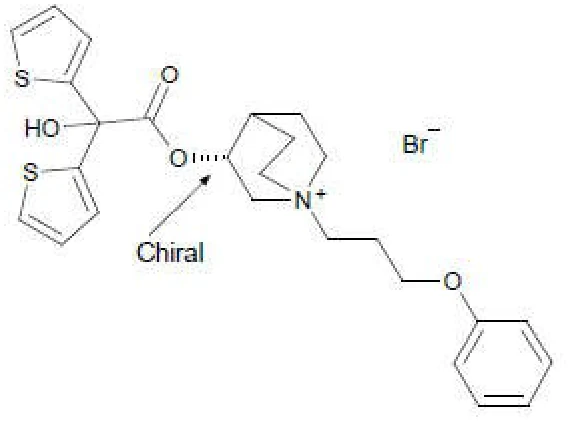
Proper Name: aclidinium bromide
Chemical Name: (3R)-3-[(hydroxy)di(thiophen-2-yl)acetyloxy]-1-
(3-phenoxypropyl)-1λ5-azabicyclo[2.2.2] octan-1-ylium bromide
Code Name:
Molecular Formula and Molecular Mass: Molecular formula: C26H30NO4S2Br
Molecular Mass: 564.56
Structural Formula:
Physicochemical Properties: White or almost white powder, with a melting point of 224-229°C.
Aclidinium bromide is sparingly soluble in methanol, very slightly soluble in water and in ethanol, and practically insoluble in acetone, ethyl acetate, tetrahydrofuran and toluene. It is very slightly soluble (< 1 mg/ml) in weak acids (0.1 M) and in buffer solutions at acid pH values. Aclidinium bromide is slightly degraded in acid solution and totally degraded in basic solution above pH 9.
0
-. o ,, ... \ <-
{\\ \ ~
~ Ohiral
Br CLINICAL TRIALS
Pivotal Clinical Trials
Study demographics and trial design
The efficacy of TUDORZA GENUAIR (aclidinium bromide) was established in three randomized, double-blind, placebo-controlled pivotal clinical trials (one of 6 months duration [Trial A] and two of 3 months duration [Trials B and C]). These studies enrolled 1933 patients aged ≥ 40 years who had a clinical diagnosis of stable moderate to severe COPD (with post-bronchodilator FEV1 of ≥ 30% to < 80% of predicted normal value) and a history of smoking of at least 10 pack-years. While baseline characteristics in Trial A and Trial B were generally well balanced between treatment groups, a significant imbalance between treatment groups in baseline characteristics was observed in Trial C. The patients in the placebo group had COPD of lesser severity than that of patients in the aclidinium bromide 400 mcg group (percentage of patients with severe COPD was 37% in the placebo group and 54% in the aclidinium bromide 400 mcg group).
Table 3 Summary of Patient Demographics for Clinical Trials in COPD
| Study # | Trial design | Dosage, route of administration and duration | Study subjects (n=number) | Mean age (Range) | Gender |
Trial A M/34273/34 | Multi-centre, placebo- controlled, randomized, double-blind, parallel group | Aclidinium bromide 400 mcg or 200 mcg twice-daily oral inhalation 6 months duration | 400 mcg n= 269 200 mcg n= 277 Placebo n= 273 | 62.4 years (41-84 years) | Male: 67.4% Female: 32.6% |
Trial B LAS-MD-33 | Multi-centre, placebo- controlled, randomized, double-blind, parallel group | Aclidinium bromide 400 mcg or 200 mcg twice-daily oral inhalation 3 months duration | 400 mcg n= 190 200 mcg n= 184 Placebo n= 185 | 64.3 years (40-89 years) | Male: 53.0% Female: 47.0% |
Trial C LAS-MD-38A | Multi-centre, placebo- controlled, randomized, double-blind, parallel group | Aclidinium bromide 400 mcg or 200 mcg twice-daily oral inhalation 3 months duration | 400 mcg n= 177 200 mcg n= 182 Placebo n= 182 | 62.8 years (40-84 years) | Male: 53.2% Female: 46.8% |
The primary endpoint in all three studies was the change from baseline in morning pre-dose (trough) FEV1 at 12 weeks compared to placebo. Other efficacy variables included: Change from baseline in peak FEV1 at the end of study, Health-related quality of life measured using the St. George’s Respiratory Questionnaire (SGRQ), Transition dyspnea index (TDI), rescue medication usage, COPD symptoms (recorded using an electronic patient diary) and FEV1 assessed at various time points over the treatment period.
Results
Inhalation of TUDORZA GENUAIR 400 mcg twice daily by patients with moderate to severe COPD resulted in a statistically significant increase in FEV1 ranging from 72 to 124 mL compared to placebo across studies (Table 4).
Table 4 Change from Baseline in Trough FEV1 (L) at 12 Weeks
| Treatment Arm | N | Baseline | Change from Baseline | Treatment Difference from Placebo | ||
| Mean (SD) | LS Mean (SE) | LS Mean | 95% CI | p-value | ||
| Trial A | ||||||
| Aclidinium bromide 400 mcg | 269 | 1.51 (0.53) | 0.058 (0.0015) | 0.105 | 0.79, 0.14 | <0.0001 |
| Placebo | 273 | 1.50 (0.49) | -0.047 (0.0015) | -- | -- | -- |
| Trial B | ||||||
| Aclidinium bromide 400 mcg | 190 | 1.35 (0.51) | 0.099 (0.015) | 0.124 | 0.08, 0.16 | <0.0001 |
| Placebo | 185 | 1.38 (0.56) | -0.025 (0.015) | -- | -- | -- |
| Trial C | ||||||
| Aclidinium bromide 400 mcg | 177 | 1.25 (0.52) | 0.064 (0.016) | 0.072 | 0.03, 0.12 | 0.001 |
| Placebo | 182 | 1.46 (0.52) | -0.008 (0.015) | -- | -- | -- |
SD=standard deviation, SE=standard error, and LS mean=least square mean. p-value, LS mean, and 95% confidence interval were obtained from an ANCOVA model with change from baseline in trough FEV1 as response, with treatment group and sex as factors and baseline trough FEV1 and age as covariates. Figure 1 Change from Baseline in Trough FEV1 (L) by Visit (Trial A)
In all trials, the mean increase in FEV1 at 30 minutes ranged from 124 mL to 133 mL relative to baseline after the first dose (Day 1). Maximal bronchodilation was achieved within 1-3 hours after dosing with mean peak increases in FEV1 relative to baseline of 230-270 mL at steady state. The lung-function effects of TUDORZA GENUAIR were evident on Day 1 and remained consistent over the 3- and 6-month periods (Figure 1).
The effects of TUDORZA GENUAIR on dyspnea and disease-specific health status were evaluated in Trial A, using the Transition Dyspnea Index (TDI), and the St. George’s Respiratory Questionnaire (SGRQ), respectively.
Following 24 weeks of treatment with TUDORZA GENUAIR, the mean change from baseline in TDI focal score was 1.9 for TUDORZA GENUAIR vs. 0.9 for placebo with a difference of 1.0 unit (95% CI: 0.43, 1.57). More patients treated with TUDORZA GENUAIR had an increase in TDI focal score greater than the minimal clinically important difference (MCID) of 1 unit compared to placebo (56.9% vs. 45.5%).
Following 24 weeks of treatment, the mean difference between TUDORZA GENUAIR and placebo regarding the SGRQ total score was -4.6 units (95% CI: -6.84, -2.42). More patients treated with TUDORZA GENUAIR had an improvement in SGRQ total score greater than the MCID of 4 units compared to placebo (57.3% vs. 41%).
Patients treated with TUDORZA GENUAIR 400 mcg twice daily required less rescue medication than patients treated with placebo.
Supporting Clinical Trials
Exercise Tolerance
A 3-week crossover, randomized, placebo-controlled exercise tolerance study was carried out in 112 COPD patients. The primary efficacy endpoint was change from baseline in endurance time (ET) during constant work rate cycle ergometry to symptom limitation at 75% of maximal work capacity after 3 weeks of treatment. The study result showed that TUDORZA GENUAIR statistically significantly improved exercise endurance time by 58.5 seconds (95%
.c 0, 10 T
Ol :::, e f-
.!:
Q) c~ = _J
Q) ~
Cf) ~ ctl>
..cw
ELL -0,05 -0 .)::
Q)
Ol
C -0, 10 -ctl .c
0
Placebo -+-TUDORZA GENUAIR 400 µg CI=9 to108; p=0.021) compared with placebo. TUDORZA GENUAIR also statistically significantly reduced lung hyperinflation at rest and showed improvements in inspiratory capacity and dyspnea during exercise (Borg scale) compared to placebo.
DETAILED PHARMACOLOGY
Aclidinium bromide is a long-acting and reversible M3 muscarinic antagonist with a rapid onset of action. The M3 receptors on airway smooth muscle cell and submucosal glands mediate the bronchoconstriction response to acetylcholine and mucus secretion, respectively, and are critical to COPD airway pathology.
Aclidinium bromide had potent affinities for all five human muscarinic receptors with affinity values of 0.09, 0.1, 0.12, 0.25 and 0.16 nM for M1, M2, M3, M4 and M5 receptors, respectively. Residence time half-life at the M3 receptor was 29.2 hours for aclidinium bromide. The M3/M2 and M3/M1 kinetic ratios were 6.3 and 4.2 for aclidinium bromide.
In in vivo studies, aclidinium bromide administered by inhalation (at 30-1000 mcg/mL) inhibited intravenous acetylcholine (Ach)-induced bronchoconstriction in anaesthetized guinea pigs with EC50 values of 140 mcg/mL, and an onset of action of 30 min. Bronchoconstriction was dose dependent at all time points studied. The duration of action in this model (time taken to reduce maximum bronchoconstriction at 1h by 50% [t½]) was 29 hr.
Aclidinium bromide showed similar long-lasting effects inhibiting the acetylcholine-induced bronchospasm up to 87%, when administered by aerosolization to beagle dogs (5 mcg/kg).
Aclidinium bromide is quickly metabolized to LAS34823 (the alcohol metabolite) and LAS34850 (the acid metabolite) by enzymatic and chemical hydrolysis. The two major metabolites are devoid of significant affinity for muscarinic receptors.
Clinical Pharmacology
24-hour Bronchodilatory Profile
The 24-hour bronchodilatory profile and night-time bronchodilatory efficacy of TUDORZA GENUAIR 400 mcg twice daily (n=171) compared to placebo (n=85) and tiotropium bromide 18 mcg once daily (n=158) was assessed in patients with moderate to severe COPD in a six week randomized, double-blind, double-dummy, placebo- and active comparator controlled, parallel group study.
After 6 weeks of treatment, aclidinium bromide 400 mcg BID showed a statistically significantly greater increase in adjusted mean change from baseline in normalised FEV1 AUC0-24 compared to placebo (p<0.0001), with an adjusted mean difference from placebo of 150 mL (95%CI =94 to 205 mL). Similarly, after 6 weeks of treatment, aclidinium bromide 400 mcg BID showed a statistically significantly greater increase in adjusted mean change from baseline in normalised FEV1 AUC12-24 compared to placebo (p<0.0001), with an adjusted mean difference from placebo of 160 mL (95% CI =103 to 217 mL).  After 6 weeks of treatment, aclidinium bromide 400 mcg BID showed greater increases compared with placebo in adjusted mean change from baseline in FEV1 (Figure 2). The improvement in lung function from baseline was maintained for 24 hours and was consistent over day 1 and Week 6.
Figure 2 Change from baseline in FEV1 parameters at Week 6 of treatment:
ITT population
Safety Pharmacology
Systemic effects, primarily due to anticholinergic pharmacology of aclidinium bromide have been shown to be very limited in a battery of safety pharmacology studies. Aclidinium bromide is devoid of any significant effects in various cardiovascular, central nervous system, respiratory, renal/urinary, gastrointestinal and immune safety models in mice, rats, guinea pigs and dogs.
The distribution data obtained from absorption, distribution, metabolism and excretion (ADME) studies using radiolabelled aclidinium bromide showed low concentrations of radioactivity in the brain indicating that neither aclidinium bromide nor its metabolites cross the blood brain barrier to a significant extent.
Preclinical studies showed that aclidinium bromide produced an increase in heart rate as the main haemodynamic effect. In inhalation studies in dogs, aclidinium bromide increased heart rate by 20%-50% and caused changes in ECG parameters (slight decreases in PQ/QT intervals and/or slightly increased P wave amplitude). The changes in heart rate and ECG parameters were observed at 2 hours after the exposure to the drug, but were usually reversed by 24 hours post-dose. Similar effects were noted in the conscious dogs when aclidinium bromide was given by different routes of administration (e.g., intravenous and subcutaneous).
0,25
0,2
0,15
0,1
0,05
--- Aclidinium 400 ug
....... Placebo
Ot:;;5??'~::::~~~~~~~~~~~S~ -0,05
-0,1
-0,15
-0,2
Pharmacodynamics
Dose-ranging Multiple-dose Trial
A randomized, double-blind, placebo-controlled, active-controlled, cross-over trial with 7-days treatment periods in 79 COPD patients demonstrated that the effect on trough FEV1 and serial FEV1 in patients treated with aclidinium bromide 100 mcg and 200 mcg twice daily was lower compared to patients treated with aclidinium bromide 400 mcg twice daily.
Figure 3 Change from Baseline in FEV1 over Time at Week 1
0.35
0.25
0.15
0.05
-0.05
-0.15
0 1 2 3 4 6 8 10 12 13 14 15 16 17 18 19 20 21 22 23 24
Time, h
TOXICOLOGY
A comprehensive programme of toxicology studies was conducted for aclidinium bromide, involving the inhalational, oral, subcutaneous and intravenous routes of administration.
Single-Dose Toxicity
Single-dose toxicity studies demonstrated LD50 values >2000 mg/kg in rodents after oral dosing. No adverse findings were observed in the single-dose inhalation toxicity study conducted in rats at up to 3.7-3.8 mg/kg. In a single-dose intravenous toxicity study, only isolated cases of ruffled fur and congested lungs were seen in rats at up to 1.2 mg/kg.
Repeat-Dose Toxicity
Repeat-dose toxicity was studied in mice, rats and dogs for 2-39 weeks, by inhalation, oral, intravenous and subcutaneous routes. Most in-life and morphological changes were attributable directly or indirectly to the anticholinergic effect of the compound. Findings in rats included mydriasis, reduced salivation leading to difficulty swallowing and sequelae including choking (and infrequent death). Histological changes associated with nasoparyngeal and respiratory irritation were observed in rats in inhalational studies. Pathological findings in the Harderian gland of rats were observed, although these findings are not directly relevant to human risk assessment since this gland is not found in humans. 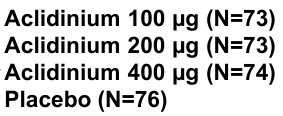

-+--o-
0
o o o o- o- ____ _
--0 In dogs, primary findings after inhalational or oral dosing included reversible cardiovascular effects. These effects included increased heart rate, restlessness, and ophthalmic changes (minor keratitis and conjunctivitis).
The no observed adverse effect levels (NOAEL) in the chronic toxicity studies in rats and dogs were approximately 7 and 8 times the Recommended Human Daily Dose (RHDD), based on the AUC of aclidinium bromide respectively.
Table 5 Sub-Chronic and Chronic Toxicity (Pivotal Studies)
| Study Type | Species | Route | Doses (mg/kg/day) | Primary Findings |
| 13-week | B6C3F1 Mouse | Inhalation | 0 (lactose), 0.20, 0.61, 2.5 | Reduced body weight gain at 2.5 mg/kg/day. NOAEL: 0.61 mg/kg/day. |
| 28-day | Sprague Dawley Rat | Inhalation | 0 (lactose), 0.16, 2.1, 4.0 | There were no deaths or clinical signs. The pathological findings in the Harderian gland (brown discoloration; acinar dilation, porphyrin deposition and hypertrophy) were not considered to be directly relevant to human risk assessment, since this gland is not present in humans. The incidences and/or severities of the nasal cavities and nasopharyngeal duct goblet cell proliferation and alveolar macrophages (without accompanying inflammation) in the lungs at all dose levels were considered to be of minimal toxicological concern. NOAEL: 0.16 mg/kg/day. |
26-week with 6-week recovery | Wistar Rat | Inhalation | 0 (air), 0 (lactose), 0.09, 0.46, 2.4 | 1, 7, and 3 rats died (low-, mid-, and high-dose groups, respectively); dosage-dependent reduction in body weight; reduced food consumption early in the study; decreased salivation and subsequent oesophageal spasms with remnants of food in larynx and oesophagus. Lungs as primary target organ (hemosiderin deposition); Harderian glands had porphyrin deposition in the mid- and high-dose groups; parotid salivary glands had moderate acinar hypertrophy (low-, mid-, and high-dose groups). NOAEL: Not established. |
| Study Type | Species | Route | Doses (mg/kg/day) | Primary Findings |
26-week with 6-week recovery | Wistar Rat (repeat study) | Inhalation | 0 (lactose), 0.01, 0.035, 0.082, 0.20 | 7 and 2 rats died in the 0.082 and 0.20 mg/kg/day groups, respectively; dosage-dependent reduction in body weight, reduced food consumption in the 0.082 and 0.20 mg/kg/day groups early in the study; decreased salivation and subsequent esophageal spasms with remnants of food in larynx and esophagus. Lungs, Harderian glands, and parotids were the primary target organs (lungs, hemosiderin deposition; Harderian glands, porphyrin deposition; and parotid salivary glands, moderate acinar hypertrophy in the 0.082 and 0.20 mg/kg/day groups) NOAEL: 0.035 mg/kg/day. |
| 4-week | Beagle Dog | Inhalation | 0 (air), 0.125, 1.0, 2.0 | Reduced food intake, decreases in body weight gain, a transient increase in the heart rate and an increase in the weight of the salivary glands were observed at dose levels of 1 and 2 mg/kg/day. These changes were not associated with any morphological effects upon histopathological examination. NOAEL: 2 mg/kg/day. |
39-week with 8-week recovery | Beagle Dog | Inhalation | 0 (lactose), 0.031, 0.225, 1.662 (up to Day 33) / 0.81 (from Day 43) | 3 males died or were sacrificed in 1.662 mg/kg/day group; the dose was then reduced to 0.81 mg/kg/day; restlessness was the main clinical sign in the high dosage group; reduced tear production and elevated heart rate was also noted in the 0.225 and 1.662/0.81 mg/kg/day groups. NOAEL: 0.225 mg/kg/day. |
NOAEL = no observed adverse effect level.
Genotoxicity
Aclidinium bromide was positive in the in vitro bacterial gene mutation assay and in the in vitro thymidine locus mouse lymphoma assay in the presence of metabolic activation. However, aclidinium bromide was negative in the in vivo mouse micronucleus assay and the in vivo/in vitro unscheduled DNA synthesis assay with rat liver.
Carcinogenicity
Two-year inhalation studies were conducted in mice and rats to assess the carcinogenic potential of aclidinium bromide. No evidence of tumorigenicity was observed in rats and mice at target aclidinium bromide doses up to 0.20 mg/kg/day and 2.4 mg/kg/day, respectively (approximately 6 and 55 times the RHDD, respectively, based on the AUC of aclidinium bromide and its metabolites).
Reproductive and Developmental Toxicity
The effects of aclidinium bromide on fertility and embryonic development to implantation, embryo-foetal development and pre- and post-natal development were studied. Aclidinium bromide impaired several fertility and reproductive performance indices (increased number of days to mate, decreased conception rate, decreased number of corpora lutea, increased pre-implantation loss with consequent decreased number of implantations and live embryos) in both male and female rats administered inhaled doses greater than or equal to 0.8 mg/kg/day (approximately 9 times the RHDD based on the AUC of aclidinium bromide and its metabolites). These adverse fertility effects were observed in the presence of paternal toxicity as evidenced by mortality and decreased body weight gain. However, there were no effects on mating index and sperm number and morphology. In the separate fertility assessments (treated males mated with untreated females; treated females mated with untreated males), no effect was observed in male and female rats at inhaled dose of 1.9 and 0.8 mg/kg/day, respectively (approximately 20 and 9 times the RHDD, respectively, based on the AUC of aclidinium bromide and its metabolites).
Table 6 Developmental, Perinatal/Postnatal, and Fertility and General
Reproductive Toxicity Studies
| Study Type | Species | Route | Doses (mg/kg/day) | Primary Findings |
Fertility and general reproductive toxicity (segment I) | Wistar Rat | Inhalation | 0 (lactose), 0.39/0.40, 0.99/0.96, 3.1/2.4 (BID) | Perinatal effects: 1 (male), 3 (all males), and 3 (2 males, 1 female) rats died (low-, mid-, and high-dose groups, respectively); body weight and food consumption values were generally reduced in all dosage groups. Fertility and reproductive effects: increased precoital time, preimplantation loss; reduced conception rate, corpora lutea, implantations and embryos. NOAEL (male fertility): 0.96 mg/kg/day (BID). NOAEL (female fertility): 0.40 mg/kg/day (BID). |
| Embryofoetal development (segment II) | Wistar Rat | Inhalation | 0 (lactose), 0.39, 0.88, 2.51 (BID) | Maternal effects: reduced food consumption in all dosage groups. Foetal effects: reduced foetal body weights in all dosage groups. NOAEL (foetal): could not be determined. NOAEL (maternal): could not be determined. No teratogenic effects were seen at dosages as high as 2.51 mg/kg/day (BID). |
| Study Type | Species | Route | Doses (mg/kg/day) | Primary Findings |
| Perinatal/postnatal toxicity study (segment III) | Wistar Rat | Inhalation | 0 (lactose), 0.018, 0.20, 1.9 | Maternal effects: dosage-dependent reductions in body weight and food consumption during gestation; food consumption was reduced in the 0.2 and 1.9 mg/kg/day groups during lactation; no effects on maternal reproductive parameters. Postnatal effects: reduced pup body weights in 0.2 and 1.9 mg/kg/day dosage groups. NOEL (Maternal and offspring): 0.018 mg/kg/day. NOEL (F1 reproductive capacity): 1.9 mg/kg/day. |
| Embryo-foetal development (segment II) | Himalayan Rabbit | Inhalation | 0 (lactose), 0.20, 0.57, 1.79 (BID) | Maternal effects: reduced body weight at 0.57 and 1.79 mg/kg/day and food consumption at all doses. Foetal effects: No treatment–related effects. NOAEL (foetal): 1.79 mg/kg/day. NOAEL (maternal): could not be determined. |
| Embryo-foetal development (segment II) | Himalayan Rabbit | Oral | 0, 150, 300, 600 | Maternal effects: 2 does in the 600 mg/kg/day group were found dead on day 19 and 21 of gestation; decreased food consumption in all dose groups but no effects on body weights or reproductive parameters. Foetal effects: dosage-dependent body weight reductions at 300 mg/kg/day and higher; no visceral or skeletal effects. NOAEL (foetal): 150 mg/kg/day. NOAEL (maternal): 150 mg/kg/day. |
BID = twice a day; F1 = offspring from the first generation; NOAEL = no observed adverse effect level.
Local Tolerance
Aclidinium bromide was not irritating to rabbit skin and reversible reddening of the conjunctivae with mydriasis was observed in rabbit eyes in in vivo local tolerance investigations. In a mouse local lymph node assay, aclidinium bromide was not a sensitizer. The sensitizing potential of aclidinium bromide was investigated in rats and guinea pigs and showed no effect.
REFERENCES
- 1. Beier J, Kirsten A, Mróz R, Segarra R, Chuecos F, Caracta C et al. Efficacy and safety of aclidinium bromide compared with placebo and tiotropium in patients with moderate-to-severe chronic obstructive pulmonary disease: Results from a 6-week, randomized, controlled phase IIIb study. COPD. 2013; 10:411-522.
- 2.
D’Urzo A, Kerwin E, Rennard S, He T, Garcia Gil E, Caracta C. One-Year Extension
Study of ACCORD COPD 1: Safety and Efficacy of Two Doses of Twice-daily Aclidinium Bromide in Patients with COPD. 2013; 10:1-11.
- 3. Jones PW, Singh D, Bateman ED, et al. Efficacy and safety of twice-daily aclidinium bromide in COPD patients: The ATTAIN study. Eur Respir J. 2012; 40(4):830-6. Epub 2012 Mar 22.
- 4. Kerwin EM, D'Urzo AD, Gelb AF et al. Efficacy and safety of a 12-week treatment with twice-daily aclidinium bromide in COPD patients (ACCORD COPD I). COPD. 2012 Apr: 9(2):90-101. Epub 2012 Feb 9.
- 5.
Rennard SL, Scanlon PD, Ferguson GT, Rekeda L, Maurer BT, Garcia Gil E, Caracta CF.
ACCORD COPD II: A randomized clinical trial to evaluate the 12-week efficacy and safety of twice-daily aclidinium bromide in chronic obstructive pulmonary disease patients. published online ahead of print October 2, 2013]. Clin Drug Investig. 2013; 33(12):893-904.