


Product Monograph - Aldurazyme
SUMMARY PRODUCT INFORMATION
| Route of Administration | Dosage Form/ Strength | Clinically Relevant Nonmedicinal Ingredients |
| Intravenous infusion | Sterile solution/ 0.58 mg/mL (100 Units/mL)1 | There are no clinically relevant nonmedicinal ingredients. Nonmedicinal ingredients: Sodium chloride, Sodium phosphate monobasic monohydrate, Sodium phosphate dibasic heptahydrate, Polysorbate 80, Water for Injection |
1Aldurazyme® is supplied as a sterile solution in clear Type I glass 5 mL vials (2.9 mg laronidase per 5 mL). The closure consists of a siliconized butyl stopper and an aluminum seal with a plastic flip-off cap.
INDICATIONS AND CLINICAL USE
Aldurazyme® (laronidase for injection) is indicated for:
- long-term enzyme replacement therapy in patients with Mucopolysaccharidosis I (MPS I; α-L-iduronidase deficiency) to treat the non-central nervous system manifestations of the disease.
Pediatrics (6 months to 18 years of age): Aldurazyme® is indicated for enzyme replacement therapy in patients with Mucopolysaccharidosis I (MPS I; α-L-iduronidase deficiency) to treat the non-central nervous system manifestations of the disease.
Geriatrics (> 65 years of age): Clinical studies of Aldurazyme® did not include patients aged 65 years and over to determine whether they respond differently from younger patients.
CONTRAINDICATIONS
Patients who are severely hypersensitive to Aldurazyme® (laronidase for injection) or to any ingredient in the formulation or component of the container (see WARNINGS AND PRECAUTIONS: General). For a complete listing of the ingredients in the formulation and components of the container, refer to the table in the SUMMARY PRODUCT INFORMATION section of the product monograph.
WARNINGS AND PRECAUTIONS
LIFE-THREATENING ANAPHYLACTIC REACTIONS HAVE BEEN OBSERVED IN SOME PATIENTS DURING ALDURAZYME® (LARONIDASE FOR INJECTION) INFUSIONS. THEREFORE, APPROPRIATE MEDICAL SUPPORT SHOULD BE IMMEDIATELY AVAILABLE DURING ALDURAZYME ADMINISTRATION AND POST-INFUSION. PATIENTS WITH COMPROMISED RESPIRATORY FUNCTION OR ACUTE RESPIRATORY DISEASE MAY BE AT RISK OF SERIOUS ACUTE EXACERBATION OF THEIR RESPIRATORY COMPROMISE DUE TO INFUSION REACTIONS, AND MAY REQUIRE WITHHOLDING ALDURAZYME, AND/OR ADDITIONAL TREATMENT AND MONITORING (see ANAPHYLAXIS AND ALLERGIC REACTIONS).
General
Anaphylaxis and Allergic Reactions
Life-threatening anaphylactic reactions have been observed in some patients during or up to 3 hours after Aldurazyme® infusions. Reactions have included: respiratory failure, respiratory distress, stridor, tachypnea, bronchospasm, airway obstruction, hypoxia, hypotension, bradycardia, and urticaria. Appropriate medical support should be immediately available when Aldurazyme is administered. If anaphylactic or other severe allergic reactions occur, immediately discontinue the infusion and initiate appropriate treatment. Interventions have included; resuscitation, mechanical ventilatory support, emergency tracheotomy, hospitalization, and treatment with inhaled beta-adrenergic agonists, epinephrine, and intravenous corticosteroids. Severe reactions have been observed up to 62 weeks after initiation of therapy. Patients with compromised respiratory function or acute respiratory disease may be at risk of serious acute exacerbation of their respiratory disease and symptoms due to infusion reactions, and may require withholding Aldurazyme, and/or additional treatment and monitoring (see BLACK BOX, GENERAL WARNINGS AND PRECAUTIONS, and ADVERSE REACTIONS).
In clinical trials and post-marketing safety experience with Aldurazyme®, approximately 1% of patients experienced severe or serious allergic reactions. In patients with MPS I, pre-existing upper airway obstruction may have contributed to the severity of some reactions. Due to the potential for severe allergic reactions, appropriate medical support should be readily available when Aldurazyme® is administered. Because of the potential for severe allergic reactions and recurrent reactions, some patients who experience initial severe reactions may require prolonged observation.
Patients with an acute illness at the time of Aldurazyme® infusion may be at greater risk for infusion-related reactions. Careful consideration should be given to the patient’s clinical status prior to administration of Aldurazyme®.
Patients should receive antipyretics and/or antihistamines prior to infusion (see ADVERSE REACTIONS). If anaphylactic or other severe allergic reactions occur, immediately discontinue the infusion of Aldurazyme® and initiate appropriate treatment. Caution should be exercised if epinephrine is being considered for use in patients with MPS I due to the increased prevalence of coronary artery disease in these patients.
If an infusion reaction occurs, regardless of pretreatment, decreasing the infusion rate, temporarily stopping the infusion, and/or administering corticosteroids, additional antipyretics and/or antihistamines may ameliorate the symptoms (see ADVERSE REACTIONS).
The risks and benefits of re-administering Aldurazyme® following an anaphylactic or severe allergic reaction should be considered. Extreme care should be exercised, with appropriate resuscitation measures available, if the decision is made to re-administer the product.
Carcinogenesis and Mutagenesis
Studies to assess the carcinogenic and mutagenic potential of Aldurazyme® have not been conducted.
Hepatic
The safety and efficacy of Aldurazyme® in patients with hepatic insufficiency have not been evaluated and no dosage regimen can be recommended in these patients.
Immune
Patients treated with Aldurazyme® may develop infusion-related allergic reactions (see GENERAL WARNINGS AND PRECAUTIONS and ADVERSE REACTIONS).
Renal
The safety and efficacy of Aldurazyme® in patients with renal insufficiency have not been evaluated and no dosage regimen can be recommended in these patients.
Special Populations
All patients should be informed that a registry for MPS I patients has been established and should be encouraged to participate in order to better understand and continue to monitor and evaluate MPS I disease and treatments. The MPS I Registry allows for the collection of data to further understand the long-term effectiveness and safety profile of Aldurazyme® treatment in this patient population. This should apply to those special populations listed below treated with Aldurazyme® (see PART III, CONSUMER INFORMATION - MPS I Registry). Information regarding the registry program may be found at www.MPSIRegistry.com or by calling (800) 745-4447.
Pregnant Women: There are no adequate and well-controlled studies in pregnant women. Reproduction studies have been performed in male and female rats at doses up to 6.2 times the human dose and have revealed no evidence of impaired fertility or harm to the fetus due to Aldurazyme®. However, because animal reproduction studies are not always predictive of human response, Aldurazyme® should be used during pregnancy only if clearly needed. (See TOXICOLOGY, Reproductive Toxicity)
Nursing Women: It is not known whether the drug is excreted in human milk. Because many drugs are excreted in human milk, caution should be exercised when Aldurazyme® is administered to a nursing woman.
Pediatrics (6 months to 18 years of age): Fifty three pediatric patients from 6 months up to 18 years of age have been treated with Aldurazyme® in clinical studies. Thirty-three (33) pediatric patients (ages 6-18 years) were to receive Aldurazyme for 182 weeks, and 28 pediatric patients completed the full 182 weeks of treatment with Aldurazyme. Twenty (20) pediatric patients, ages 6 months to 5 years, were to receive Aldurazyme for 52 weeks and 4 patients completed the full treatment with Aldurazyme, an additional 6 patients were treated for 51 weeks (see ADVERSE REACTIONS and CLINICAL TRIALS section).
Geriatrics (> 65 years of age): Clinical studies of Aldurazyme® did not include patients aged 65 years and over to determine whether they respond differently from younger patients.
Monitoring and Laboratory Tests
Evaluation of bioactivity during the clinical studies included changes in urinary glycosaminoglycan (GAG) levels, which were shown to decrease in patients treated with Aldurazyme® compared to those treated with placebo.
As seen in the clinical studies, it is expected that patients will develop antibodies to Aldurazyme®. It is strongly recommended that patients be monitored periodically for IgG antibody formation.
ADVERSE REACTIONS
Adverse Drug Reaction Overview
The most serious adverse reactions reported with Aldurazyme® (laronidase for injection) during clinical trials and the post-marketing period were anaphylactic and allergic reactions (see WARNINGS AND PRECAUTIONS: General, and ADVERSE REACTIONS: Infusion-Related Reactions and Immunogenicity).
During clinical studies, the most common adverse reactions were infusion-related reactions (IARs). Among each of the clinical studies the most common adverse reactions associated with Aldurazyme® treatment in the clinical studies were upper respiratory tract infection, rash, and injection site reaction (placebo-controlled study ALID-003-99), arthralgia and rash (open-label extension study ALID-006-01) and pyrexia and chills (open-label study ALID-014-02).
The most common adverse reactions requiring intervention were infusion-related reactions. The frequency of infusion-related reactions decreased over time with continued use of Aldurazyme®, and the majority of reactions were classified as being mild to moderate in severity. Most infusion-related reactions requiring intervention were ameliorated with slowing of the infusion rate, temporarily stopping the infusion, and/or administering additional antipyretics and/or antihistamines.
One patient experienced 2 severe IARs (anaphylaxis-induced airway obstruction that required emergent tracheotomy) during the Week 62 infusion despite negative skin testing, and withdrew from the study.
Among patients who received Aldurazyme in the placebo controlled study and continued in the extension study, nearly all of the IARs (414 of the 458 IARs, 90%) were reported in a single patient, beginning at extension study Week 13.
Clinical Trial Adverse Drug Reactions
Because clinical trials are conducted under very specific conditions the adverse reaction rates observed in the clinical trials may not reflect the rates observed in practice and should not be compared to the rates in the clinical trials of another drug. Adverse drug reaction information from clinical trials is useful for identifying drug-related adverse events and for approximating rates.
The following safety information is based on 3 clinical studies: a placebo-controlled study (ALID-003-99), open-label extension study (ALID-006-01) and an open-label study of patients under 5 years (ALID-014-02).
The data described in Table 1 reflect exposure to 0.58 mg/kg of Aldurazyme® for 26 weeks in a placebo-controlled study (ALID-003-99) in 45 patients with MPS I (N=22 Aldurazyme®, and N=23 placebo). Table 2 is the subset of the pediatric patients (6 years to 18 years of age) in ALID-003-99 (Table 1). The population in the placebo-controlled study (ALID-003-99) was evenly distributed for gender (N=23 females and 22 males) and ranged in age from 6 to 43 years. Of the 45 patients in the placebo-controlled study, 1 was clinically assessed as having the Hurler form, 37 Hurler-Scheie, and 7 Scheie. Reported adverse reactions have been classified using WHOART terminology.
Table 1: Summary of Adverse Drug Reactions Considered Possibly, Probably or Definitely Related to Treatment (≥ 5% of Patients in Either Group) that Occurred in the Total Population in the Placebo-Controlled Study ALID-003-99
WHOART Body System | WHOART Preferred Term | Treatment Group | |
|---|---|---|---|
Placebo (N=23) | Aldurazyme (N=22) | ||
| Any AE | 16 (70) | 12 (55) | |
| Body as a Whole- General Disorders | Fever | 3 (13) | 1 (5) |
| Back Pain | 1 (4) | 2 (9) | |
| Temperature Changed Sensation | 1 (4) | 1 (5) | |
| Centr & Periph Nervous System Disorders | Headache | 6(26) | 2(9) |
| Gait abnormal | 2 (9) | 0 (0) | |
| Hyperreflexia | 0 (0) | 1 (5) | |
| Migraine | 0 (0) | 1 (5) | |
| Paraesthesia | 0 (0) | 1 (5) | |
| Skin and Appendages Disorders | Rash | 2 (9) | 3 (14) |
| Alopecia | 1 (4) | 1 (5) | |
| Sweating increased | 1 (4) | 1 (5) | |
| Pruritus | 0 (0) | 1 (5) | |
| Vascular (extracardiac) Disorders | Flushing | 4 (17) | 5 (23) |
| Gastro-intestinal system disorders | Abdominal pain | 1 (4) | 1 (5) |
| Diarrhoea | 2 (9) | 0 (0) | |
| Vomiting | 1 (4) | 1 (5) | |
| Tooth discolouration | 0 (0) | 1 (5) | |
| Musculo-skeletal system | Arthropathy | 4 (17) | 2 (9) |
WHOART Body System | WHOART Preferred Term | Treatment Group | |
|---|---|---|---|
Placebo (N=23) | Aldurazyme (N=22) | ||
| disorders | Arthralgia | 1 (4) | 1 (5) |
| Liver and biliary system disorders | SGOT Increased | 1 (4) | 1 (5) |
| SGPT Increased | 1 (4) | 1(5) | |
| Bilirubinaemia | 0 (0) | 1 (5) | |
| Cardiovascular disorders, general | Hypotension | 0 (0) | 1 (5) |
| Respiratory system disorders | Coughing | 0 (0) | 1 (5) |
| Heart rate and rhythm disorders | Tachycardia | 0 (0) | 1 (5) |
| Urinary system disorders | Face Oedema | 0 (0) | 1 (5) |
| White cell and res disorders | Lymphadenopathy cervical | 0(0) | 1 (5) |
Table 2: Summary of Adverse Drug Reactions Considered Possibly, Probably or Definitely Related to Treatment (≥ 5% of Patients in Either Group) that Occurred in the Pediatric Population in Population in the Placebo-Controlled Study ALID-003-99 (Subset of the total population as noted in Table 1)
WHOART Body System | WHOART Preferred Term | Treatment Group | |
|---|---|---|---|
Placebo (N=18) | Aldurazyme (N=15) | ||
| Any AE | 12 (67) | 9 (60) | |
| Vascular (extracardiac) Disorders | Flushing | 4 (22) | 5 (33) |
| Centr & Periph Nervous System Disorders | Headache | 3 (17) | 2(13) |
| Gait abnormal | 2 (11) | 0 (0) | |
| Hyperreflexia | 0 (0) | 1 (7) | |
| Migraine | 0 (0) | 1 (7) | |
| Paraesthesia | 0 (0) | 1 (7) | |
| Skin and Appendages Disorders | Rash | 2 (11) | 2 (13) |
| Alopecia | 1 (6) | 1 (7) | |
| Sweating increased | 1 (6) | 1 (7) | |
| Body as a Whole- General Disorders | Back Pain | 1 (6) | 2 (13) |
| Temperature Changed Sensation | 1 (6) | 1 (7) | |
| Fever | 1 (6) | 0 (0) | |
| Rigors | 1 (6) | 0 (0) | |
| Liver and biliary system disorders | SGTO Increased | 1 (6) | 1 (7) |
| SGPT Increased | 1 (6) | 1(7) | |
| Bilirubinaemia | 0 (0) | 1 (7) | |
| Hepatic function abnormal | 1 (6) | 0 (0) | |
| Hepatomegaly | 1 (6) | 0 (0) | |
| Musculo-skeletal system disorders | Arthropathy | 3 (17) | 2 (13) |
| Arthralgia | 1 (6) | 0 (0) | |
| Gastro-intestinal system disorders | Vomiting | 1 (6) | 1 (7) |
| Diarrhoea | 1 (6) | 0 (0) | |
| Tooth discolouration | 0 (0) | 1 (7) | |
| Cardiovascular disorders, general | Hypertension | 1 (6) | 0 (0) |
| Hypotension | 0 (0) | 1 (7) | |
| Respiratory system disorders | Coughing | 0 (0) | 1 (7) |
| Rhinitis | 1 (6) | 0 (0) | |
| Heart rate and rhythm disorders | Tachycardia | 0 (0) | 1 (7) |
| Reproductive disorders, female | Leukorrhoea | 1 (6) | 0 (0) |
| Urinary system disorders | Face Oedema | 0 (0) | 1 (7) |
| White cell and res disorders | Lymphadenopathy cervical | 0(0) | 1 (7) |
The adverse drug reactions considered possibly, probably or definitely related to treatment that occurred with frequency <5% of patients in either treatment group based on WHOART in the placebo controlled (ALID-003-99) study are (by body system and preferred term): Body as a whole – General Disorders include fatigue, hot flushes, rigors, oedema, oedema peripheral, pain; Gastro-intestinal system disorders include nausea and flatulence; Skin and appendages disorders include psoriasis and skin disorder; Cardiovascular disorders-general include hypertension; Liver and biliary system disorders include hepatic function abnormal and hepatomegaly; Respiratory system disorders include rhinitis and respiratory disorder; Reproductive Disorders, Female include leucorrhoea.
Overall in the ALID-003-99 study, drug-related AEs (defined as those AEs judged by the Investigator to be possibly, probably, or definitely related to study drug treatment) were reported in 12 (67%) out of 18 pediatric patients (ages 6 to 18 years) in the placebo/Aldurazyme group patients, and 9 (60%) out of 15 pediatric patients in the Aldurazyme/Aldurazyme group (Refer to Table 2). Serious adverse events (regardless of relationship) were experienced by 2 (13%) out of 15 pediatric patients and included one event of constipation and one event intracranial hypertension. There were no deaths in this study.
All 45 patients continued into an open-label study of Aldurazyme® and received up to 182 weeks of additional treatment, resulting in cumulative treatment of up to 208 weeks (Table 3 and pediatric patients in Table 4). The combined treatment group included patients who initially received placebo in the placebo-controlled study followed by Aldurazyme® in the open-label extension study (Placebo/ Aldurazyme®), and those patients who received Aldurazyme® in the placebo-controlled study followed by Aldurazyme® in the open-label extension study (Aldurazyme®/ Aldurazyme®). Reported adverse reactions have been classified using WHOART terminology.
Table 3: Summary of Adverse Drug Reactions Considered Possibly, Probably or Definitely Related to Treatment (≥ 5% of Patients in Either Group) that Occurred in the Total Population in the extension studyALID-006-01
WHOART Body System | WHOART Preferred Term | Treatment Group | ||
|---|---|---|---|---|
Placebo/ Aldurazyme (N=23) | Aldurazyme/ Aldurazyme (N=22) | Total (N=45) | ||
| Any AE | 14 (61) | 15 (68) | 29(64) | |
| Body as a whole, general disorders | Fever | 1 (4) | 4 (18) | 5 (11) |
| Back pain | 2 (9) | 3 (14) | 5 (11) | |
| Temperature changed sensation | 2 (9) | 2 (9) | 4 (9) | |
| Leg pain | 2 (9) | 0 (0) | 2 (4) | |
| Fatigue | 1 (4) | 1 (5) | 2 (4) | |
| Rigors | 1 (4) | 1 (5) | 2 (4) | |
| Oedema | 0 (0) | 1 (5) | 1 (2) | |
| Oedema peripheral | 0 (0) | 1 (5) | 1 (2) | |
WHOART Body System | WHOART Preferred Term | Treatment Group | ||
|---|---|---|---|---|
Placebo/ Aldurazyme (N=23) | Aldurazyme/ Aldurazyme (N=22) | Total (N=45) | ||
| Pain | 0 (0) | 1 (5) | 1 (2) | |
| Musculo-skeletal system disorders | Arthralgia | 5 (22) | 3 (14) | 8 (18) |
| Skeletal pain | 4 (17) | 1 (5) | 5 (11) | |
| Arthropathy | 1 (4) | 3 (14) | 4 (9) | |
| Gastro-intestinal system disorders | Nausea | 4 (17) | 1 (5) | 5 (11) |
| Abdominal Pain | 1 (4) | 3 (14) | 4 (9) | |
| Vomiting | 1 (4) | 2 (9) | 3 (7) | |
| Diarrhoea | 1 (4) | 1 (5) | 2 (4) | |
| Dyspepsia | 0 (0) | 1 (5) | 1 (2) | |
| Gum hyperplasia | 0 (0) | 1 (5) | 1 (2) | |
| Mouth dry | 0 (0) | 1 (5) | 1 (2) | |
| Skin and Appendages Disorders | Rash | 4 (17) | 3 (14) | 7 (16) |
| Rash erythematous | 0 (0) | 2 (9) | 2 (4) | |
| Urticaria | 0 (0) | 2 (9) | 2 (4) | |
| Pruritus | 1 (4) | 1 (5) | 2 (4) | |
| Rash maculo-papular | 1 (4) | 1 (5) | 2 (4) | |
| Skin disorder | 1 (4) | 1 (5) | 2 (4) | |
| Fixed eruption | 0 (0) | 1 (5) | 1 (2) | |
| Centr & Periph Nervous System Disorders | Headache | 5 (22) | 1 (5) | 6 (13) |
| Gait abnormal | 1 (4) | 1 (5) | 2 (4) | |
| Dizziness | 0 (0) | 1 (5) | 1 (2) | |
| Migraine | 0 (0) | 1 (5) | 1 (2) | |
| Vascular (extracardiac) disorders | Flushing | 1 (4) | 4 (18) | 5 (11) |
| Application site disorders | Injection site reaction | 4 (17) | 2 (9) | 6 (13) |
| Cardiovascular disorders, general | Heart murmur | 1 (4) | 1 (5) | 2 (4) |
| Hypotension | 1 (4) | 1 (5) | 2 (4) | |
| Metabolic and nutritional disorders | Weight increased | 1 (4) | 1 (5) | 2 (4) |
| Hypokalamia | 0 (0) | 1 (5) | 1 (2) | |
| Hypomagnesaemia | 0 (0) | 1 (5) | 1 (2) | |
| Psychiatric disorders | Confusion | 0 (0) | 1 (5) | 1 (2) |
| Secondary terms | Extravasation | 0 (0) | 1 (5) | 1 (2) |
| Urinary system disorders | Face oedema | 0 (0) | 1 (5) | 1 (2) |
Table 4: Summary of Adverse Drug Reactions Considered Possibly, Probably or DefinitelyRelated to Treatment (≥ 5% of Patients in Either Group) that Occurred in the Pediatric Population in the extension study ALID-006-01 (Subset of the total population as noted in Table 3)
WHOART Body System | WHOART Preferred Term | Treatment Group | ||
|---|---|---|---|---|
Placebo/ Aldurazyme (N=18) | Aldurazyme/ Aldurazyme (N=15) | Total (N=33) | ||
| Any AE | 11 (61) | 11 (73) | 22 (67) | |
| Body as a whole, general disorders | Fever | 0 (0) | 4 (27) | 4 (12) |
| Back pain | 2 (11) | 3 (20) | 5 (15) | |
| Temperature changed sensation | 2 (11) | 1 (7) | 3 (9) | |
| Leg pain | 2 (11) | 0 (0) | 2 (6) | |
| Fatigue | 0 (0) | 1 (7) | 1 (3) | |
| Pain | 0 (0) | 1 (7) | 1 (3) | |
| Rigors | 0 (0) | 1 (7) | 1 (3) | |
| Anaphylactoid Reaction | 1 (6) | 0 (0) | 1 (3) | |
| Influenza like symptoms | 1 (6) | 0 (0) | 1 (3) | |
| Pallor | 1 (6) | 0 (0) | 1 (3) | |
| Musculo-skeletal system disorders | Arthralgia | 5 (28) | 2 (13) | 7 (21) |
| Skeletal pain | 3 (17) | 1 (7) | 4 (12) | |
| Arthropathy | 1 (6) | 1 (7) | 2 (6) | |
| Muscle weakness | 1 (6) | 0 (0) | 1 (3) | |
| Skin and Appendages Disorders | Rash | 3 (17) | 2 (13) | 5(15) |
| Rash maculo-papular | 1 (6) | 1 (7) | 2 (6) | |
| Rash erythematous | 0 (0) | 1 (7) | 1 (3) | |
| Urticaria | 0 (0) | 1 (7) | 1 (3) | |
| Pruritus | 1 (6) | 0 (0) | 1 (3) | |
| Skin cold clammy | 1 (6) | 0 (0) | 1 (3) | |
| Skin disorder | 1 (6) | 0 (0) | 1 (3) | |
| Gastro-intestinal system disorders | Nausea | 3 (17) | 1 (7) | 4 (12) |
| Vomiting | 1 (6) | 2 (13) | 3 (9) | |
| Abdominal pain | 1 (6) | 1 (7) | 2 (6) | |
| Mouth dry | 0 (0) | 1 (7) | 1 (3) | |
| Diarrhoea | 1 (6) | 0 (0) | 1 (3) | |
| Centr & Periph Nervous System Disorders | Headache | 4 (22) | 0 (0) | 4 (12) |
| Migraine | 0 (0) | 1 (7) | 1 (3) | |
| Dysaesthesia | 1 (6) | 0 (0) | 1 (3) | |
| Gait abnormal | 1 (6) | 0 (0) | 1 (3) | |
| Vascular (extracardiac) disorders | Flushing | 1 (6) | 3 (20) | 4 (12) |
| Vein Disorder | 1 (6) | 0 (0) | 1 (3) | |
| Cardiovascular disorders, general | Heart murmur | 1 (6) | 1 (7) | 2 (6) |
| Hypotension | 1 (6) | 1 (7) | 2 (6) | |
WHOART Body System | WHOART Preferred Term | Treatment Group | ||
|---|---|---|---|---|
Placebo/ Aldurazyme (N=18) | Aldurazyme/ Aldurazyme (N=15) | Total (N=33) | ||
| Application site disorders | Injection site reaction | 3 (17) | 0 (0) | 3 (9) |
| Metabolic and nutritional disorders | Weight increase | 1 (6) | 1 (7) | 2 (6) |
| Hypokalaemia | 0 (0) | 1 (7) | 1 (3) | |
| Hypomagnesaemia | 0 (0) | 1 (7) | 1 (3) | |
| Psychiatric disorders | Confusion | 0 (0) | 1 (7) | 1 (3) |
| Agitation | 1 (6) | 0 (0) | 1 (3) | |
| Platelet, bleeding & clotting disorders | Purpura | 1 (6) | 0 (0) | 1 (3) |
| Respiratory system disorders | Dyspnoea | 1 (6) | 0 (0) | 1 (3) |
| Hypoxia | 1 (6) | 0 (0) | 1 (3) | |
| Respiratory disorder | 1 (6) | 0 (0) | 1 (3) | |
| Secondary terms | Extravasation | 0 (0) | 1 (7) | 1 (3) |
| Urinary system disorders | Face oedema | 0 (0) | 1 (7) | 1 (3) |
The adverse drug reactions considered possibly, probably or definitely related to treatment that occurred with frequency <5% of total patients based on WHOART in the extension (ALID-006-01) study are (by body system and preferred term): Body as a whole – General Disorders include anaphylactoid reaction, influenza-like symptoms, pallor; Musculo-skeletal system disorders include muscle weakness; Gastro-intestinal system disorders include diarrhoea, dyspepsia, gum hyperplasia and mouth dry; Skin and appendages disorders include pruritus, rash erythematous, rash maculo-papular, skin disorder, urticaria, fixed eruption, skin cold clammy; Central and peripheral nervous system disorders include gait abnormal, paraesthesia, dizziness, and dysaesthesia and migraine; Vascular (extracardiac) disorders include vein disorder; Cardiovascular disorders-general include heart murmur and hypotension; Metabolic and nutritional disorders include weight increase, hypokalaemia and hypomagnesaemia; Psychiatric disorders include agitation and confusion; Respiratory system disorders include dyspnoea, hypoxia, and respiratory disorder; Platelet, bleeding and clotting disorders include purpura; Secondary terms include extravasation; Urinary system disorders include face odema.
Adverse drug reactions (judged by the Investigator to be possibly, probably, or definitely related to study drug treatment) in the extension study (ALID-006-01) were reported in 29 (64%) of 45 patients, and the frequency was similar between the 2 treatment groups [15 (68%) patients in the Aldurazyme/Aldurazyme group and 14 (61%) patients in the placebo/Aldurazyme group, refer to Table 3]. Of the related AEs that occurred on an infusion day (n = 529), the majority (98%) were also characterized as infusion-associated reactions (IARs) (n = 516).
SAEs (regardless of relationship) were experienced by 25 (56%) of 45 patients in the extension study (ALID-006-01); 14 (64%) patients in the Aldurazyme/Aldurazyme group and 11 (48%) patients in the placebo/Aldurazyme group. Among these patients, 2 (4%) in the
Aldurazyme/Aldurazyme group and 5 (11%) in the Placebo/Aldurazyme group experienced respiratory SAEs (regardless of relationship). Respiratory SAEs occurring in greater than one patient included dyspnoea (4 patients, 9%), respiratory disorder (2 patients, 4%) and sleep apnea (2 patients, 4%). One patient (2%) in the Placebo/Aldurazyme group experienced a hypersensitivity-related SAE consistent with anaphylaxis (Refer to CLINICAL TRIAL ADVERSE DRUG REACTIONS: Immunogenicity section for patient details). Three patients (7%) experienced a total of 9 drug-related SAEs, 7 of which were additionally characterised as IARs, and 2 were back pain in 1 patient and vein access in another patient.
Overall, drug-related AEs among pediatric patients ages 6 to 18 years of age in the ALID-006-01 (defined as those AEs judged by the Investigator to be possibly, probably, or definitely related to study drug treatment) were reported in 22 (67%) of 33 patients, and the frequency was similar between the 2 treatment groups [11(73%) patients in the Aldurazyme/Aldurazyme group and 11 (61%) patients in the placebo/Aldurazyme group, see Table 4]. Among the pediatric patients (age 6 years to 18 years of age) SAEs were experienced by 18 of 33 patients (55%); 9 (60%) patients in the Aldurazyme/Aldurazyme group and 9 (50%) patients in the Placebo/Aldurazyme group. The SAEs experienced by 2 or more patients in the combined group are: dypnoea (4 patients, 12%), vein disorder (4 patients, 12%), hernia NOS (3 patients, 9%), abdominal pain (2 patients, 6%), carpal tunnel syndrome (2 patients, 6%), respiratory disorder (2 patients, 6%) and tendon disorder (2 patients, 6%).There was one pediatric patient (3%) who died due to a treatment-related SAE (respiratory infection) after 112 days receiving 16 Aldurazyme infusions.
Five patients (11%), all in the placebo/Aldurazyme treatment group, discontinued from the Extension Study prior to their Week 182 evaluation. One placebo/Aldurazyme patient died at home 6 days following Aldurazyme infusion 16. This patient was a 7-year-old male diagnosed with the Hurler-Scheie form of MPS I and who had a 1-year history of central and obstructive apnea due to a narrow laryngo-pharynx, with increased CO2 levels, especially nocturnally. Following autopsy, the pathologist concluded that immediate cause of death was cardiac arrhythmia; the patient also had a mild upper respiratory tract infection. One patient was withdrawn from the trial due to treatment-related SAEs/IARs (anaphylaxis-induced airway obstruction that required emergent tracheotomy), after 704 days in the study and receiving 44 Aldurazyme infusions despite having a negative skin test (Refer to CLINICAL TRIAL ADVERSE DRUG REACTIONS: Immunogenicity section for patient details). The other 3 patients discontinued due to needle phobia, pregnancy and difficulty with scheduling.
During 182-weeks of Extension clinical Study, all patients (100%) in both treatment groups experienced at least 1 AE. Nearly all patients continued to report AEs; the frequency of reported events (regardless of severity or relationship) decreased from first 2 years (90% - 100%), the 3rd year (85% - 93%) to the fourth year (77% - 88%).
The data described in Table 5 reflect exposure to Aldurazyme® in an open-label study (ALID-014-02) of 20 patients 5 years of age or younger. Long-term safety data are not available given the 52-week duration of the study. The patients received weekly infusions of Aldurazyme® at a dose of 0.58 mg/kg for a total duration of 52 weeks, except for 4 patients who had their dose increased to 1.16 mg/kg from Week 26 onwards. Of the 20 patients, 16 were clinically assessed as having the Hurler form and 4 Hurler-Scheie. All patients were treated with antipyretics and antihistamines prior to the infusions.
Table 5 presents a summary of the adverse reactions that occurred during the open-label trial in at least 5% (1 or more) of the patients. Reported adverse reactions have been classified using MedDRA terminology.
Table 5: Summary of Adverse Events Related to Treatment in ≥ 5% Patients in Open-Label Study (ALID-014-02)
System Organ Class Preferred Term | 0.58 mg/kg N=16 n (%) | 0.58-1.16 mg/kg* N=4 n (%) | Overall N=20 n (%) | ||||||
| Any Adverse Events | 5 (31) | 3 (75) | 8 (40) | ||||||
| Cardiac disorders | 1 (6) | 1 (25) | 2 (10) | ||||||
| Tachycardia | 1 (6) | 1 (25) | 2 (10) | ||||||
| General disorders and administration site conditions | 5 (31) | 3 (75) | 8 (40) | ||||||
| Pyrexia | 4 (25) | 3 (75) | 7 (35) | ||||||
| Chills | 3 (19) | 1 (25) | 4 (20) | ||||||
| Crepitations | 0 | 1 (25) | 1 (5) | ||||||
| Investigations | 1 (6) | 1 (25) | 2 (10) | ||||||
| Blood pressure increased | 1 (6) | 1 (25) | 2 (10) | ||||||
| Oxygen saturation decreased | 1 (6) | 1 (25) | 2 (10) | ||||||
| Blood iron decreased | 0 | 1 (25) | 1 (5) | ||||||
| Heart rate increased | 1 (6) | 0 | 1 (5) | ||||||
| Nervous system disorders | 0 | 1 (25) | 1 (5) | ||||||
| Tremor | 0 | 1 (25) | 1 (5) | ||||||
| Respiratory, thoracic and mediastinal disorders | 0 | 1 (25) | 1 (5) | ||||||
| Respiratory distress | 0 | 1 (25) | 1 (5) | ||||||
| Wheezing | 0 | 1 (25) | 1 (5) | ||||||
| Skin and subcutaneous tissue disorders | 0 | 1 (25) | 1 (5) | ||||||
| Pruritus | 0 | 1 (25) | 1 (5) | ||||||
| Rash macular | 0 | 1 (25) | 1 (5) | ||||||
| Vascular disorders | 0 | 2 (50) | 2 (10) | ||||||
| Hypertension | 0 | 1 (25) | 1 (5) | ||||||
| Pallor | 0 | 1 (25) | 1 (5) | ||||||
Note: Percentages are based on the total number of patients in the dose group. Note: A patient experiencing more than 1 adverse event within a system organ class or preferred term is counted once within that system organ class or preferred term. Note: The dose from Week 26 onwards was increased to 1.16 mg/kg, if the urinary GAG level at Week 22 was > 200 μg/mg creatinine for the group of patients enrolled after 1 January 2004. *1.16 mg/kg as of Week 26 | |||||||||
Infusion-Related Reactions
Infusion-related reactions were reported in 7 of 22 patients treated with Aldurazyme® in the placebo-controlled study (ALID-003-99). Infusion-related reactions were not significantly different between the Aldurazyme® treatment group and the placebo (infusions of diluent and all nonmedicinal components of Aldurazyme®) group. The most common infusion-related reactions included flushing, fever, headache and rash. Flushing occurred in 5 patients (23%) receiving Aldurazyme®; the other reactions were less frequent. All reactions were mild to moderate in severity. Less common infusion-related reactions include cough, bronchospasm, dyspnoea, urticaria, angioedema and pruritus.
In the open-label extension study (ALID-006-01), the most common adverse reactions requiring intervention were infusion-associated reactions. During 182 weeks of Aldurazyme treatment in the Extension Study, 22 (49%) patients experienced at least one IAR: 12 (55%) Aldurazyme/Aldurazyme patients and 10 (43%) placebo/Aldurazyme patients . Of note, most of the IARs experienced in the Aldurazyme/Aldurazyme group were reported in a single patient who over the course of study treatment, experienced 80% of the total IARs.
Eighteen out of 33 pediatric patients between the ages of 6 years to 18 years (55%) experienced IARs. The reported IARs in the total paediatric population greater than or equal to five percent of patients were rash (15%), fever (12%), flushing (12%), nausea (9%), injection site reaction (9%), headache (9%), temperature changed sensation (6%), abdominal pain (6%), diarrhoea (6%), vomiting (6%), arthralgia (6%), skeletal pain (6%) and hypotension (6%).
The most common adverse events (regardless of relationship) included rhinitis (42 of 45 patients, 93%), headache (38 of 45 patients, 84%), fever (35 of 45 patients, 78%), cough (34 of 45 patients, 76%), pharyngitis (32 of 45 patients, 71%), nausea (29 of 45 patients, 64%), pain (28 of 45 patients, 62%), arthralgia (28 of 45 patients, 62%), diarrhea (24 of 45 patients, 53%), vomiting (26 of 45 patients, 58%), skeletal pain (26 of 45 patients, 58%), upper respiratory infection (24 of 45 patients, 53%), abdominal pain (24 of 45 patients, 53%), back pain (23 of 45 patients, 51%), and rash (18 of 45 patients, 40%). The most commonly reported infusion-related reactions included rash (13%), flushing (11%), fever (11%), headache (9%), abdominal pain (9%), and injection site reaction (9%). Less commonly reported infusion-related reactions included diarrhea (7%), nausea (7%), change in temperature sensation (7%), vomiting (4%), and hypotension (4%). There was one case of anaphylaxis during the open-label extension period (ALID-006-01) (see WARNINGS AND PRECAUTIONS: General and Clinical Trial Adverse Drug Reactions).
The number of patients experiencing IARs decreased over time. For the first 9 months of treatment, 20%-27% of patients experienced IARs (n= 22-62 IARs) in the Aldurazyme/Aldurazyme arm vs the Placebo/Adurazyme arm, respectively; for 9-27 months of treatment, 7%-14% of patients experienced IARs (n= 16-47 IARs); and for the next 27-42 months of treatment, 5% of patients experienced IARs (2 patients reported a total of 41-57 IARs).
In the open-label study (ALID-014-02), infusion-related reactions were reported in a total of 7 (35%) patients. The most frequently reported infusion-related reactions were pyrexia (6 patients) and chills (4 patients). The majority of infusion-related reactions were mild in severity, and could be managed with a decrease of the infusion rate, a temporary interruption of the infusion, and/or administration of antihistamine and/or antipyretic.
Immunogenicity
The data reflect the percentage of patients whose test results were considered positive for antibodies to Aldurazyme® using an enzyme-linked immunosorbent assay (ELISA) for laronidase-specific IgG binding antibodies, and are highly dependent on the sensitivity and specificity of the assay. Additionally, the observed incidence of antibodies in an assay may be influenced by several factors including sample handling, timing of sample collection, concomitant medications, and underlying disease. For these reasons, comparison of the incidence of antibodies to Aldurazyme® with the incidence of antibodies to other products may be misleading.
In the placebo-controlled study (ALID-003-99), open-label extension study (ALID-006-01), and an early open-label study (BIO7500-001), 50 of 55 patients (91%) treated with Aldurazyme® were positive for IgG antibodies to laronidase. During the double-blind and extension studies, 42 of 45 patients (93%) had IgG antibodies to Aldurazyme detected by ELISA and confirmed by RIP assay. The mean time to first detectable antibody level by ELISA was 50.6 days in the Aldurazyme/ Aldurazyme group and 39.7 days in the placebo/Aldurazyme group. Among the pediatric patients (age 6 years to less than 18 years of age), 30 of 33 patients (91%) had IgG antibodies to Aldurazyme detected by ELISA and confirmed by RIP assay. The mean time to first detectable antibody level by ELISA and confirmed by RIP assay was 46.5 days in the Aldurazyme/Aldurazyme group and 38.6 days in the placebo/Aldurazyme group.
Nine out of 45 patients (20%) in the placebo-controlled study (ALID-003-99) and open-label extension study (ALID-006-01), collectively, who experienced severe infusion-related reactions (2 patients in the placebo-controlled study, 1 patient in both the placebo-controlled and extension study and 6 patients in the extension study) were tested for Aldurazyme®-specific IgE antibodies and complement activation. Among the nine patients tested for IgE antibodies and complement activation, 6 were pediatric patients (age 6 years to less than 18 years of age). IgE testing was performed by ELISA and complement activation was measured by the Quidel Enzyme Immunoassay. A single patient in the extension study ALID-006-01 tested positive for IgE antibodies. This patient (who was in the placebo arm of study ALID-003-99 and transitioned into the ALID-006-01 study) tested positive for both Aldurazyme-specific IgE binding antibodies and complement activation. This patient experienced a severe IAR (dyspnoea) at
Week 34 and subsequently underwent skin testing. A skin puncture test, followed by an intradermal test with 0.01 cc diluted Aldurazyme (diluted 1:20 weight per volume with sterile saline) was performed approximately at Week 43. Both tests revealed no significant wheal or flare reaction indicating a negative skin test. However, the patient subsequently had a positive IgE (Weeks 37, 50, 51, and 60) and positive complement activation (Weeks 34, 49, and 57) during the Extension Study. Subsequently, the patient experienced severe IARs during the Week 62 infusion consisting of anaphylactic reaction of urticaria and airway obstruction requiring emergency tracheostomy. No further Aldurazyme infusions were given, and the patient was withdrawn from the study at Week 101. (see WARNINGS AND PRECAUTIONS: General). This patient was the only patient in the extension study to have skin testing (2% of total trial patients). This patient was also 1 of 2 patients in the extension study who tested positive for complement activation. The second patient, who tested positive for complement, tested negative for IgE antibodies at week 37 of the extension study.
Other allergic reactions were also seen in patients receiving Aldurazyme® (see ADVERSE REACTIONS: Infusion-Related Reactions).
In the extension study ALID-006-01, 45 patients had their doses delayed (defined as a dose given greater than 10 days from the previous dose), 8 patients had their doses slowed (defined as a decrease in the infusion rate of 50-99%), and 44 patients had a dose withheld (defined as a dose that was not given). Among the patients with delayed doses 23 patients had less than 5% of their doses delayed, 12 patients had 5- <10 % of their doses delayed and 10 patients had ≥10% of their doses delayed. Among the patients with slowed doses, 4 patients had a single dose slowed, 3 patients had 2 doses slowed, and 1 patient had 7 doses slowed. Among the patients with withheld doses 15 patients had less than 5% of their doses withheld, 13 patients had 5- <10 % of their doses withheld and 16 patients had ≥10% of their doses withheld.
All 20 of 20 patients (100%) treated with Aldurazyme® in the open-label study (ALID-014-02) developed IgG antibodies to laronidase. One patient who initially developed IgG antibodies to laronidase no longer had detectable IgG antibodies after a total of 12 months of Aldurazyme® treatment in the open-label study (ALID-014-02). All seropositive patients in this open-label study (ALID-014-02) were tested for in-vitro neutralizing effects on enzyme activity. One patient showed marginal to low level in-vitro neutralizing inhibitory activity, which did not appear to impact clinical efficacy and/or urinary GAG reduction. The clinical significance of antibodies to Aldurazyme® is not known, including the potential for product neutralization.
Two pediatric patients (age 6 months to 5 years of age) in the open-label study (ALID-014-02) who experienced moderate infusion related reactions were tested for IgE antibodies and complement activation; both patients were positive for complement activation and negative for IgE antibodies.
Post-Market Adverse Drug Reactions
In post-marketing experience with Aldurazyme®, severe and serious infusion-related reactions have been reported, some of which were life-threatening (see WARNINGS AND PRECAUTIONS, General). The most common adverse reactions (using MedDRA terminology) included: chills, vomiting, nausea, arthralgia, diarrhea, tachycardia, abdominal pain, blood pressure increased, and oxygen saturation decreased. Additional adverse reactions identified in the post-marketing setting also include dyspnoea, erythema, feeling hot, feeling cold, cyanosis, laryngeal oedema and paresthesia.
There have been a small number of reports of extravasation in patients treated with ALDURAZYME. There have been no reports of tissue necrosis associated with extravasation.
DRUG INTERACTIONS
Drug-Drug Interactions: Interactions with other drugs have not been established. Physician monitoring is required for patients using medicinal products that contain chloroquine or procaine due to the potential risk of interference with the intracellular uptake of laronidase.
Drug-Food Interactions: Interactions with food have not been established.
Drug-Herb Interactions: Interactions with herbal products have not been established.
Drug-Laboratory Interactions: Interactions with laboratory tests have not been established.
DOSAGE AND ADMINISTRATION
Dosing Considerations
- Aldurazyme® (laronidase for injection) treatment should be supervised by a physician experienced in the management of patients with MPS I or other inherited metabolic diseases.
- Administration of Aldurazyme® should be carried out in an appropriate clinical setting where resuscitation equipment to manage medical emergencies is readily available.
- The safety and efficacy of Aldurazyme® in patients older than 65 years have not been established and no dosage regimen can be recommended in these patients.
- The safety and efficacy of Aldurazyme® in patients with renal or hepatic insufficiency have not been evaluated and no dosage regimen can be recommended in these patients.
Recommended Dose and Dosage Adjustment
The recommended dosage regimen of Aldurazyme® is 0.58 mg/kg body weight administered once weekly as an intravenous infusion.
Pretreatment with antipyretics and/or antihistamines is recommended 60 minutes prior to the start of the infusion (see WARNINGS AND PRECAUTIONS: General).
The initial infusion rate of 10 μg/kg/hr may be incrementally increased every 15 minutes during the first hour, as tolerated, until a maximum infusion rate of 200 μg/kg/hr is reached. The maximum rate is then maintained for the remainder of the infusion (2-3 hours).
The total volume of the infusion is determined by the patient’s body weight and should be delivered over approximately 3 to 4 hours. Patients with a body weight of 20 kg or less should receive a total volume of 100 mL. Patients with a body weight of greater than 20 kg should receive a total volume of 250 mL.
The following tables provide infusion regimens and volumetric pump settings designed to administer the total volume over the recommended infusion time:
For Patients weighing 20 kg or Less
| Total Volume of Aldurazyme® Infusion = 100 mL | |
|---|---|
| 2 mL/hr x 15 minutes | Obtain vital signs, if stable then increase the rate to … |
| 4 mL/hr x 15 minutes | Obtain vital signs, if stable then increase the rate to … |
| 8 mL/hr x 15 minutes | Obtain vital signs, if stable then increase the rate to … |
| 16 mL/hr x 15 minutes | Obtain vital signs, if stable then increase the rate to … |
| 32 mL/hr x ~ 3 hours | For the remainder of the infusion |
For Patients weighing Greater than 20 kg
| Total Volume of Aldurazyme® Infusion = 250 mL | |
|---|---|
| 5 mL/hr x 15 minutes | Obtain vital signs, if stable then increase the rate to … |
| 10 mL/hr x 15 minutes | Obtain vital signs, if stable then increase the rate to … |
| 20 mL/hr x 15 minutes | Obtain vital signs, if stable then increase the rate to … |
| 40 mL/hr x 15 minutes | Obtain vital signs, if stable then increase the rate to … |
| 80 mL/hr x ~ 3 hours | For the remainder of the infusion |
Administration
Instructions for Use (With Aseptic Techniques and Sterile Preparation)
- 1.
Determine the number of vials to be diluted based on the individual patient's weight and the recommended dose of 0.58 mg/kg:
Patient's weight (kg) x 1 mL/kg of Aldurazyme® = Total # mL of Aldurazyme®
Total # mL of Aldurazyme® 5 mL per Vial = Total # of Vials
Round up to the nearest whole vial.
Remove the required number of vials from the refrigerator to allow them to reach room temperature. Do not heat or microwave the vials.
- 2. Before withdrawing the Aldurazyme® from the vial, visually inspect each vial for particulate matter and discoloration. The Aldurazyme® solution should be clear to slightly opalescent and colorless to pale yellow. A few translucent particles may be present. Do not use if the solution is discolored or if there is particulate matter in the solution.
- 3. Determine the total volume of the infusion to be used based on the patient's body weight. The total final volume should be either 100 mL (if patient weight is less than or equal to 20 kg) or 250 mL (if patient weight is greater than 20 kg) of 0.9% Sodium Chloride Injection, USP.
- 4. Withdraw and discard a volume of the 0.9% Sodium Chloride Injection, USP from the infusion bag, equal to the volume of Aldurazyme® concentrate to be added.
- 5. Slowly withdraw the calculated volume of Aldurazyme® from the appropriate number of vials using caution to avoid excessive agitation. Do not use a filter needle, as this may cause agitation. Agitation may denature Aldurazyme®, rendering it biologically inactive.
- 6. Slowly add the Aldurazyme® solution to the 0.9% Sodium Chloride Injection, USP using care to avoid agitation of the solutions. Do not use a filter needle.
- 7. Gently rotate the infusion bag to ensure proper distribution of Aldurazyme®. Do not shake the solution.
Aldurazyme® does not contain any preservatives; therefore, after dilution with saline in the infusion bags, any unused product or waste material should be discarded and disposed of in accordance with local requirements.
Aldurazyme® must not be mixed with other medicinal products in the same infusion.
The compatibility of Aldurazyme® in solution with other products has not been evaluated.
Storage and Stability
Store Aldurazyme® (laronidase for injection) under refrigeration at 2 to 8ºC (36 to 46ºF). DO NOT FREEZE OR SHAKE. DO NOT USE Aldurazyme® after the expiration date on the vial. This product contains no preservatives.
It is recommended that once Aldurazyme® is diluted, the infusion should start immediately (within 3 hours) as there is no preservative in either Aldurazyme® or in the infusion bag. Although not recommended, physicochemical stability studies have shown that the diluted solution may be stored at 2 to 8ºC for up to 36 hours if aseptic technique is used throughout the procedure.
Special Handling Instructions
Do not use the vial more than one time. Aldurazyme® should be prepared using PVC containers and administered with a PVC infusion set equipped with an in-line, low-protein binding 0.2 micrometer (μm) filter. There is no information on the compatibility of diluted Aldurazyme® with glass containers.
OVERDOSAGE
There have been no reports of overdose with Aldurazyme®.
| For management of a suspected drug overdose, contact your regional Poison Control Centre. |
|---|
ACTION AND CLINICAL PHARMACOLOGY
Mechanism of Action
Mucopolysaccharide storage disorders are caused by the deficiency of specific lysosomal enzymes required for the catabolism of glycosaminoglycans (GAGs). Mucopolysaccharidosis I (MPS I) is characterized by the deficiency of α-L-iduronidase, a lysosomal hydrolase which catalyses the hydrolysis of terminal α-L-iduronic acid residues of dermatan sulfate and heparan sulfate. Reduced or absent α-L-iduronidase activity results in the accumulation of the GAG substrates, dermatan sulfate and heparan sulfate, throughout the body and leads to widespread cellular, tissue, and organ dysfunction.
The rationale of Aldurazyme® (laronidase for injection) therapy in MPS I is to provide exogenous enzyme for uptake into lysosomes and increase the catabolism of GAG. Aldurazyme® uptake by cells into lysosomes is most likely mediated by the mannose-6-phosphate-terminated oligosaccharide chains of laronidase binding to specific mannose-6-phosphate receptors.
Pharmacodynamics
Because many proteins in the blood are restricted from entry into the central nervous system (CNS) by the blood brain barrier, effects of intravenously administered Aldurazyme® on cells within the central nervous system cannot be inferred from activity in sites outside the CNS. The ability of Aldurazyme® to cross the blood brain barrier has not been evaluated in animal models or in clinical trials.
The pharmacodynamic effect of Aldurazyme was assessed by reductions in urinary GAG levels. The responsiveness of urinary GAG to dosage alterations of Aldurazyme is unknown, and the relationship of urinary GAG to other measures of clinical response has also not been established.
Pharmacokinetics
The pharmacokinetics of laronidase were evaluated in 12 patients with MPS I who received 0.58 mg/kg of Aldurazyme® as a 4-hour infusion in the placebo-controlled study (ALID-003-99). After the 1st, 12th and 26th weekly infusions, the mean maximum plasma concentrations (Cmax) ranged from 1.2 to1.7 μg/mL for the 3 time points. The mean area under the plasma concentration-time curve (AUC) ranged from 4.5 to 6.9 μg • h/mL. The mean volume of distribution (Vz) ranged from 0.24 to 0.6 L/kg. Mean plasma clearance (CL) ranged from 1.7 to 2.7 mL/min/kg, and the mean elimination half-life (t1/2) ranged from 1.5 to 3.6 hr.
The pharmacokinetic profile in the open-label study of 20 patients aged 5 years or younger (ALID-014-02) was similar to that of older, less severely affected patients (Table 6).
Table 6: Summary of Pharmacokinetic Parameters for Aldurazyme at Weeks 1, 13,
26, and 52 (ALID-014-02)
| Parameter | Week 1 | Week 13 | Week 26 | Week 52 | ||||
| Cmax1(µg/mL) | 1.89 ± 3.88 | 0.90 ± 0.53 | 2.15 ± 2.33 | 3.13 ± 5.12 | ||||
| AUC∞1 (h.µg/mL) | 3.35 ± 3.43 | 2.43 ± 1.43 | 5.34 ± 3.94 | 5.45 ± 5.63 | ||||
| t1/2 (h) | 1.55 ± 0.52 | 0.55 ± 0.28 | 0.95 ± 0.88 | 1.15 ± 0.87 | ||||
| CL(mL/min/kg) | 5.73 ± 3.90 | 5.33 ± 2.67 | 2.97 ± 1.87 | 3.20 ± 2.02 | ||||
| Vz (L/kg) | 0.75 ± 0.50 | 0.30 ± 0.30 | 0.21 ± 0.30 | 0.25 ± 0.21 | ||||
| Vss (L/kg) | 0.89 ± 0.69 | 0.70 ± 0.40 | 0.42 ± 0.28 | 0.48 ± 0.31 | ||||
| Data are reported as mean ± standard deviation. | ||||||||
| 1 Assuming an average potency of 172.4 Units of activity/mg protein |
Pediatric pharmacokinetic data were collected from two studies, with and without HSA in the formulation, and evaluated for comparative pharmacokinetics. Study ALID-003-99 that included 7 patients aged 6-18 years old, treated with Aldurazyme HSA; and Study ALID-014-02 that included 4 patients aged 6 months - 5 years old, treated with Aldurazyme non-HSA.
Table 7: Comparative Pharmacokinetic Parameters for Aldurazyme with/without HSA at Weeks 1 and 26
| Study | Age (yr) Range | Formulations of Aldurazyme | n | Week | Cmax1 (U/ml) | AUCT1 (U*hr/ml) | AUC∞1 (U*hr/ml) |
|---|---|---|---|---|---|---|---|
| ALID-003-99 | 6-18 | with HSA | 7 | 1 | 0.18 ± 0.04 | 0.73 ± 0.14 | 0.87 ± 0.18 |
| 7 | 26 | 0.29 ± 0.11 | 1.01 ± 0.42 | 1.06 ± 0.44 | |||
| ALID-014-02 | 0.5-5 | Without HSA | 4 | 1 | 0.07 ± 0.04 | 0.20 ± 0.12 | 0.23 ± 0.13 |
| 4 | 26 | 0.19 ± 0.11 | 0.66 ± 0.50 | 0.70 ± 0.53 | |||
| Ratios | 0.5-18 | No HSA/with HSA | NA | 1 | 33.59 | 25.42 | 23.96 |
| NA | 26 | 62.77 | 58.24 | 58.87 |
NA = not applicable
Data are reported as mean ± standard deviation.
1 Assuming an average potency of 172.4 Units of activity/mg protein
Cmax, maximum observed concentration; AUCT, area under concentration versus time curve until the last time point; AUC∞, area under concentration versus time curve extrapolated to infinity.
There was a general trend for increased maximum Aldurazyme concentrations and exposures in the presence of HSA. However, the small number of subjects with pharmacokinetic data to support this analysis limits the interpretability of the above findings.
Effects of Antibodies
Most patients who received once-weekly infusions of Aldurazyme® in the placebo-controlled study (ALID-003-99) developed antibodies to laronidase by week 12. Between weeks 1 and 12, increases in plasma clearance of laronidase were observed in some patients that appeared to be proportional to the antibody titer. At week 26, plasma clearance of laronidase was comparable to that at week 1, in spite of the continued and, in some cases, increased titers of antibodies.
In the open-label study (ALID-014-02), all patients developed antibodies to laronidase by Week 12. Aldurazyme® exposure was similar across visits but variable across patients. Taking into account the small sample size and variability, the effect of antibody titers on plasma clearance, maximum plasma concentration and area under the plasma concentration-time curve in patients of 5 years of age or younger was comparable to that observed in the older, less severely affected patients in the placebo-controlled study (ALID-003-99). There was an apparent decrease in volume of distribution which resulted in a decrease in half-life with continued dosing. This appears to be related to an increase in antibody titers.
PART II: SCIENTIFIC INFORMATION
PHARMACEUTICAL INFORMATION
Drug Substance
Proper name: laronidase
Chemical name: recombinant human α-L-iduronidase (rhIDU)
Molecular formula and molecular mass: C3169H4889O884N901S12
Structural formula:
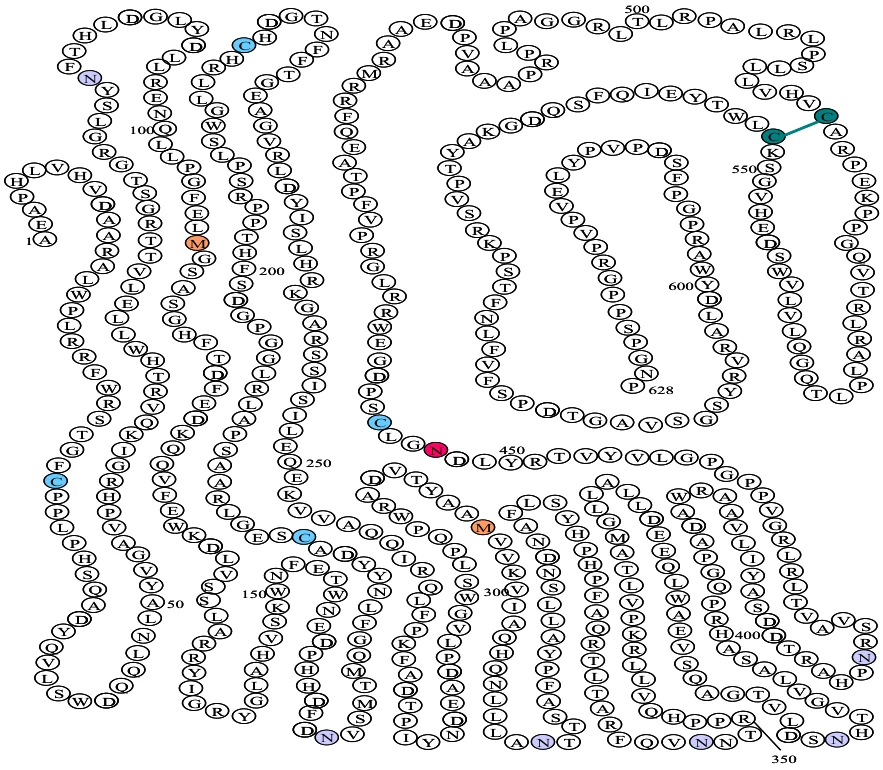
Physicochemical properties: Recombinant human α-L-iduronidase (rhIDU) is a 628 amino acid lysosomal hydrolase that cleaves iduronic acid residues from the nonreducing ends of heparan sulfate and dermatan sulfate. The enzyme is a single polypeptide chain of molecular mass 70.1 kilodaltons (from translated cDNA sequence). This is a soluble monomeric protein with an apparent molecular weight by SDS-PAGE analysis, of 83 kD. rhIDU contains six asparagine-linked glycosylation sites, two of which carry the bis mannose-6-phosphate oligomannose7 oligosaccharide that binds the target cell surface receptor.
Specific Activity: 172 U/mg
Product Characteristics
Aldurazyme®, (laronidase for injection) for intravenous infusion, is supplied as a sterile, nonpyrogenic, colorless to pale yellow, clear to slightly opalescent solution that must be diluted prior to administration in 0.9% Sodium Chloride Injection, USP. The solution in each vial contains a nominal laronidase concentration of 0.58 mg/mL and a pH of approximately 5.5. The extractable volume of 5.0 mL from each vial provides 2.9 mg laronidase, 43.9 mg sodium chloride, 63.5 mg sodium phosphate monobasic monohydrate, 10.7 mg sodium phosphate dibasic heptahydrate, and 0.05 mg polysorbate 80. Aldurazyme® does not contain preservatives; vials are for single use only.
Viral Inactivation
The viral safety of Aldurazyme® is confirmed by a combination of selection and qualification of vendors, raw material testing, cell bank characterization studies, validation of the viral removal and inactivation capacity of the rhIDU purification process, and routine in-process testing.
CLINICAL TRIALS
Study demographics and trial design
Table 8: Summary of clinical trials supporting the efficacy and safety in patients with MPS I
| Study # | Trial design | Dosage, route of administration and duration | Study subjects (n=number) | Mean age (Range) | Gender |
| ALID-003-99 | Randomized, placebo-controlled, double blind | Aldurazyme® at 0.58 mg/kg or placebo, intravenous infusion, once weekly for 26 weeks | MPS I patients (n = 45) | 15.5 years (6 to 43 years) | 22 M/ 23 F |
| ALID-006-01 | Open-Label Extension of Study ALID-003-99 | Aldurazyme® at 0.58 mg/kg or placebo, intravenous infusion, once weekly for 182 weeks | MPS I patients (n = 45) | 15.5 years (6 to 43 years) | 22 M/ 23 F |
| ALID-014-02 | Open-Label1 | Aldurazyme® at 0.58 mg/kg, intravenous infusion, once weekly for 52 weeks2 | MPS I patients (n = 20) | 2.9 years (0.5 to 5.1 years) | 12 M/ 8 F |
1 Patients were excluded from ALID-014-02 trial if: the patient was under consideration for or had undergone Hematopoietic Stem Cell Transplantation (HSCT); the patient had acute hydrocephalus at the time of enrollment; the patient had a clinically significant organic disease (with the exception of symptoms relating to MPS I) including: cardiovascular, hepatic, pulmonary, neurologic, or renal disease, other serious intercurrent illness, or extenuating circumstances that, in the opinion of the Investigator, would preclude participation in the trial or potentially decrease survival; the patient had received any investigational product within 30 days prior to trial enrollment; the patient has known severe hypersensitivity to Aldurazyme® or components of the delivery solution.
2 In 4 patients enrolled after January 1, 2004, the dose was increased from Week 26 onwards (to Week 52) to 1.16 mg/kg for a urinary GAG level at Week 22 that was > 200 μg/mg creatinine
The clinical evidence for safety and efficacy of Aldurazyme has been derived from three key studies:
ALID-003-99
Aldurazyme® was studied in a randomized, placebo-controlled clinical study (ALID-003-99) of 45 MPS I patients of whom 1 patient was clinically assessed as having the Hurler form, 37 Hurler-Scheie, and 7 Scheie. All patients had a baseline forced vital capacity (FVC) less than or equal to 77% of predicted. Patients received Aldurazyme® at 0.58 mg/kg or placebo weekly for 26 weeks. All patients were treated with antipyretics and antihistamines prior to each infusion.
This was a double-blind, multicenter, multinational study to demonstrate the safety and clinical efficacy of treatment with Aldurazyme® in MPS I patients. Within 2 weeks following a baseline evaluation phase (lasting up to 2 weeks), patients were randomized into the second phase of the study, in a double-blind manner, to either Aldurazyme® or a placebo-control group. Patients underwent primary efficacy evaluations at the site at the 4-, 8-, 12-, 16-, 20-, and 26-week time points.
The study had 2 primary efficacy objectives. Each was a comparison of the change from baseline to Week 26 between the Aldurazyme® treated group and placebo control group:
To show a statistically significant increase in the percent predicted of normal forced vital capacity (FVC); and to show a statistically significant increase in the absolute distance traveled (in meters) during the 6-minute walk test (6MWT).
ALID-006-01- The Extension Study
The Phase 3 Extension Study (ALID-006-01) was a Multicenter, Multinational, Open-Label Extension Study of the Safety and Efficacy of Aldurazyme (laronidase for injection) in Patients with Mucopolysaccharidosis I.
The objective of this extension study was to collect additional long-term efficacy and safety data on the use of Aldurazyme in patients with Mucopolysaccharidosis I (MPS I) disease who were previously treated in a placebo-controlled study (ALID-003-99). Primary efficacy was the changes over time in the percent of predicted normal FVC and in the absolute distance traveled (in meters) during the six-minute walk test (6MWT) compared with baseline (last measurement prior to randomization into the placebo-controlled study) and entry (last measurement in the placebo-controlled study prior to enrollment into the Extension Study), refer to Table 9.
All 45 patients who participated in the placebo-controlled study (ALID-003-99) elected to enroll in the extension study. Patients who received placebo during the placebo-controlled phase (referred to as the placebo/Aldurazyme group) received a total of 182 weeks of Aldurazyme (0.58 mg/kg weekly) treatment and patients who received Aldurazyme during the double-blind phase (referred to as the Aldurazyme/Aldurazyme group) received a total of 208 weeks of active treatment. All patients were treated with antipyretics and antihistamines prior to each infusion.
Eligible patients began treatment in the extension study during the 27th week following initiation of their treatment in the placebo-controlled study. Patients underwent efficacy assessments beginning at Week 12 of the extension study. Safety was monitored continuously throughout study participation. The mean age for patients at enrollment was 15.5 years, with approximately half of the patients being 12 years of age. The MPS I disease syndrome for the majority of patients (82%) was Hurler-Scheie; the distribution for Hurler syndrome and Scheie syndrome was 2% and 16%, respectively.
HSA versus non-HSA analysis was studied in the Phase 3 open-label extension study (ALID-006-01). In the placebo-controlled study and in the first 54 weeks of the Phase 3 open-label extension study, patients received Aldurazyme diluted with a 0.9% sodium chloride solution containing 0.1% Human Serum Albumin (HSA). During the extension study, HSA was removed from the Aldurazyme infusion solution at approximately week 54 of the study at European investigational sites but not all study sites, to allow for comparative safety information. An additional analysis was performed to assess if the removal of 0.1% HSA from the Aldurazyme infusion solution had an effect on the safety, immunogenicity, or efficacy (as determined by reduction in urinary glycosaminoglycan [GAG] levels) of the product in the clinical setting.
ALID-014-02
This was an open-label study (ALID-014-02) to evaluate Aldurazyme therapy in patients with MPS I who were less than 5 years of age at the time of enrollment. Twenty patients (16 Hurler patients and 4 Hurler-Scheie patients) were enrolled and analyzed. Following Baseline evaluation, patients were scheduled to receive weekly intravenous infusions of Aldurazyme at a dose of 100 U/kg (0.58 mg/kg) for 52 weeks. Patients were monitored continuously during the trial, while specific evaluations were performed at 13, 26, and 52-week time points. During the study four patients with urinary GAG levels were above 200 g/mg creatinine at Week 22 received a double weekly dose (200 U/kg) of Aldurazyme starting at the Week 26 infusion for the remainder of the study. All patients were treated with antipyretics and antihistamines prior to each infusion.
The main objectives of this open label study were to evaluate the safety and pharmacokinetics (PK) of enzyme replacement therapy with Aldurazyme in MPS I patients less than 5 years old.
Study results
The primary efficacy outcome assessments were FVC and distance walked in 6 minutes (6-minute walk test, 6MWT). After 26 weeks, patients treated with Aldurazyme® showed improvement in FVC and in 6MWT compared to placebo-treated patients (see Table 8).
Table 9: Primary Efficacy Outcomes from the Placebo-controlled study
Aldurazyme® N = 22 | Placebo N = 23 | |
|---|---|---|
| Forced Vital Capacity (percent of predicted normal) | ||
| Baseline1 (Mean ± s.d.) | 48 ± 15 | 54 ± 16 |
| Week 26 (Mean ± s.d.) | 53 ± 18 | 54 ± 14 |
| Change from baseline to week 26 (Mean ± s.d.) | 5 ± 9 | -1 ± 6 |
| Change from baseline to week 26 (median) | 3 | 0 |
| Difference between groups (mean) | 6 | |
| Difference between groups Median (95% CI) | 3 (0.9, 8.6) p=0.009* | |
| 6-Minute Walk Distance (meteres) | ||
| Baseline (Mean ± s.d.) | 319 ± 131 | 367 ± 114 |
| Week 26 (Mean ± s.d.) | 339 ± 127 | 348 ± 129 |
| Change from baseline to week 26 (Mean ± s.d.) | 20 ± 69 | -18 ± 67 |
| Change from baseline to week 26 (median) | 28 | -11 |
| Difference between groups (mean) | 38 | |
| Difference between groups Median (95% CI) | 39 (-2, 79) p=0.066* | |
*By Wilcoxon Rank Sum Test
1 Baseline- defined as the last measurement prior to randomization in the placebo-controlled study
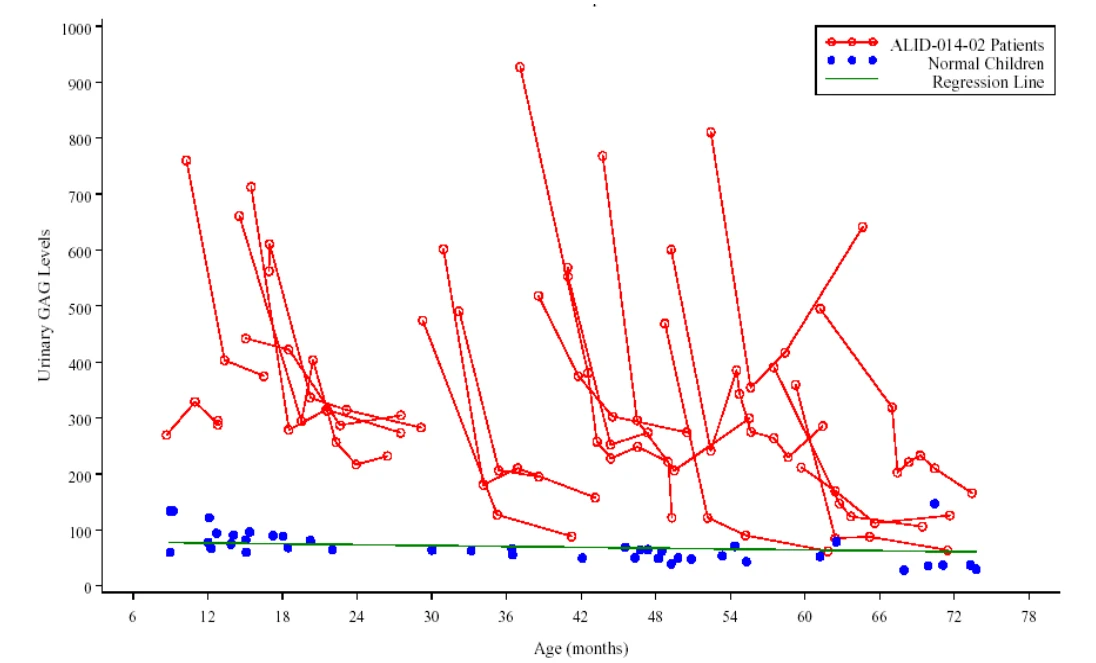
Evaluations of bioactivity were changes in liver size and urinary GAG levels. Liver size and urinary GAG levels decreased in patients treated with Aldurazyme® compared to patients treated with placebo. No subject in the group receiving Aldurazyme® reached the normal range for urinary GAG levels during this 6-month study.
All 45 patients were to receive Aldurazyme® for 182 weeks at 0.58 mg/kg weekly in an open-label extension following the placebo-controlled clinical study (ALID-006-01). Forty of 45 patients (89%) completed the study. Upon completion of the open-label extension study, patients who initially received placebo in the placebo-controlled study received Aldurazyme® for a total of 182 weeks of treatment (Placebo/Aldurazyme®), whereas patients who received Aldurazyme® in the placebo-controlled study received Aldurazyme® for a total of 208 weeks of treatment (Aldurazyme®/Aldurazyme®). Over the duration of the open-label extension study, patients in the Placebo/Aldurazyme® group demonstrated a treatment effect. Overall, the mean absolute change from baseline in 6MWT distance was maintained in the Aldurazyme/Aldurazyme group during the Extension Study and patients experienced the greatest improvement in distance walked during the first year of therapy; smaller increases and decreases were seen thereafter, indicating maintenance or stabilization of the treatment effect (refer to Table 9).
Table 10: Clinical Effects of Aldurazyme® Treatment in the Open-label Extension Study
Aldurazyme/ Aldurazyme All patients (N=22) | Aldurazyme/ Aldurazyme Pediatrics (N=15) | Placebo/ Aldurazyme All patients (N=23) | Placebo/ Aldurazyme Pediatrics (N=18) | |||||||||||||
| FVC (percent predicted normal) Mean ± SD | ||||||||||||||||
| Baseline3 | 48 ± 15 | 50 ± 14 | 54 ± 16 | 54 ± 17 | ||||||||||||
| Entry4 | 50 ± 17 | 51 ± 18 | 51 ± 13 | 51 ± 13 | ||||||||||||
| Week 182 of the extension trial | 47 ± 15 | 48 ± 15 | 48 ± 14 | 47 ± 14 | ||||||||||||
| 6MWT1 (meters) Mean ± SD | ||||||||||||||||
| Baseline3 | 319 ± 131 | 354 ± 133 | 367 ± 114 | 365 ± 124 | ||||||||||||
| Entry4 | 339 ± 127 | 379 ± 125 | 348 ± 129 | 335 ± 138 | ||||||||||||
| Week 182 of the extension trial | 358 ± 126 | 388 ± 118 | 368 ± 151 | 349 ± 154 | ||||||||||||
| %6MWT (percent predicted distance) Mean ± SD2 | ||||||||||||||||
| Baseline3 | NA5 | 52 ± 18 | NA5 | 52 ± 17 | ||||||||||||
| Entry4 | NA5 | 56 ± 19 | NA5 | 48 ± 20 | ||||||||||||
| Week 182 of the extension trial | NA5 | 55 ± 17 | NA5 | 48 ± 21 | ||||||||||||
1 6MWT (6 minutes walk test in meters adjusted to current height)
2 %6MWT (% predicted distance of 6 minutes walk test in meters adjusted to current height). Calculated according to the paper: Li et al. Am J Respir Crit Care Med Vol 176. pp 174–180, 2007.
3 Baseline- defined as the last measurement prior to randomization into the placebo-controlled study
4 Entry- defined as the last measurement in the placebo-controlled study prior to enrollment into the Extension Study
5 Not applicable because the Li paper formula is intended only for pediatrics.
Of the 26 patients with abnormal liver volumes at pre-treatment baseline in the placebo-controlled study (ALID-003-99), 22 (85%) achieved a normal liver size by the end of the open-label extension study (ALID-006-01). Urinary GAG levels (μg/mg creatinine) were also decreased (-77.0 and -66.3 % in the placebo/ Aldurazyme® and Aldurazyme®/Aldurazyme® groups, respectively) with both groups reaching low levels by the end of the study (55.3 and 59.8 µg/mg creatinine, respectively). Taken together, 15 of 45 patients (33%) reached the normal range of urinary GAG levels for age during the 182-week study period. The responsiveness of urinary GAG to dosage alterations of ALDURAZYME is unknown, and the relationship of urinary GAG to other measures of clinical response has also not been established.
An open-label, 1-year study (ALID-014-02) was conducted that mainly assessed the safety and pharmacokinetics of Aldurazyme® in 20 patients less than 5 years of age (16 patients were of the Hurler form and 4 of the Hurler-Scheie form). Other objectives were to evaluate the efficacy of Aldurazyme® by assessing changes in liver size, urinary GAG excretion, upper respiratory care requirements, sleep apnea, hearing, vision, growth velocity, electrocardiogram (ECG), echocardiogram, and the investigator’s global assessment. Long term efficacy data are not available given the 52-week duration of the study. The patients received Aldurazyme® 0.58 mg/kg weekly infusions for a total duration of 52 weeks, except for 4 patients who had their dose increased to 1.16 mg/kg from Week 26 onwards. Eighteen patients completed the study and 2 patients died as result of cardiac failure and respiratory arrest, respectively, which were unrelated to treatment but related to complications of MPS I disease.
Urinary GAG levels decreased in all patients compared to baseline. The mean percentage reduction in urinary GAG level was 61.3%. The liver volumes of all patients were classified as abnormally high at baseline. At Week 52, the liver volumes of 9 of the 18 patients who completed the study were classified as normal and the remainder had shown a decrease in liver size. Echocardiography showed the mean left ventricular mass to have decreased (of 10 patients with mild left ventricular hypertrophy at baseline, 7 patients normalised at Week 52) and mean ejection fraction had decreased but remained within normal range. Some valvular changes had occurred. Younger patients with severe MPS I and patients with intermediate severity MPS I showed growth rates (height and weight) which approached normal and improvements in mental development and adaptive behavior, whilst older children with severe MPS I did not.
Figure 1: Urinary GAG Levels (μg/mg creatinine) versus Age (ITT population)
DETAILED PHARMACOLOGY
Summary of Pharmacodynamic Studies
The pharmacodynamics of rhIDU were studied in vitro and in dogs and cats with MPS I. The in vitro studies explored the uptake of rhIDU by MPS I patient fibroblasts, its effect on GAG storage and its half-life in the cells.
Seven animal studies (six canine and one feline) were conducted to assess the potential pharmacodynamic effects of rhIDU in the treatment of MPS I. The first three studies focused on short-, medium- and long-term treatment of MPS I dogs with a low dose of 0.1 mg/kg was given 1–3 times per week or weekly. Subsequent studies explored short- and then long-term treatment of MPS I dogs with higher doses of 0.5 mg/kg/week and ultimately a dose of 2.0 mg/kg/week given as a bolus or continuous intravenous infusion. The one study in MPS I cats explored the efficacy of doses of 0.1 and 0.5 mg/kg/week. Finally, a study was conducted in normal dogs to determine whether the diluent used to prepare the rhIDU infusate affected the tolerance and immune response of the dogs to rhIDU.
Overall, the results from the six efficacy studies in MPS I dogs indicated that a dose of at least 0.5 mg/kg/week of rhIDU was necessary to obtain measurable levels of enzyme activity in all tissues examined. This resulted in decreased GAG storage in many tissues, particularly in liver, kidney and spleen. Increasing the dose to 2.0 mg/kg/week resulted in increased tissue enzyme levels for C.I. and for bolus. However, the bolus dose of 0.5 mg/kg/week was adequate to result in the highest achievable reduction of GAG in most tissues. Results from these two studies indicate that 0.5 mg/kg/week is an adequate dose for long-term therapy in MPS I dogs. The half-life of rhIDU in fibroblasts from MPS I patients in vitro was shown to be 5 days, suggesting that the once-weekly dosing regimen should be adequate to maintain tissue levels.
Thus, studies of the efficacy of rhIDU in lowering tissue GAG, together with the half-life of the enzyme in vitro, support the recommended human dose of 100 U/kg (0.58 mg/kg) given weekly.
Treatment of MPS I dogs or cats with rhIDU was well tolerated with no adverse clinical, clinical pathology or histomorphological findings with one exception. Anaphylactic reactions were observed during infusion of rhIDU in several early dog studies, as well as in the study in cats. These reactions, which could be severe, were managed successfully by stopping the infusion, administering IV fluids and, if necessary, oxygen. The probable cause of the reactions was shown to be IgG-mediated complement activation and in most subsequent studies animals were pretreated with antihistamines prior to infusions.
The anaphylactic reactions observed in the early preclinical studies were not observed with the clinical drug product in either monkeys or dogs, even without pretreatment with antihistamine drugs or in the absence of serum album in the infusate.
Summary of Pharmacokinetic Studies
In one study, a female MPS I dog received 0.1 mg/kg on three consecutive days. rhIDU exhibited a biphasic clearance pattern from the plasma with a presumed distribution phase (t1/2 α = 0.9 minutes) and a slow clearance phase (t1/2 β = 18.9 minutes). The clearance of free enzyme from the plasma was associated with uptake by peripheral leukocytes; levels peaked four hours after the dose.
In a second study, two MPS I dogs of received a weekly intravenous 9-hour bolus infusion of 2.0 mg/kg every week for 10 weeks. During week 2 of treatment, rhIDU was cleared biphasically from the plasma of the two dogs, but it was cleared monophasically during week 10 of treatment. At week 2, the initial decline in concentration was very rapid with α t½ = 0.61 and 0.94 minutes; the second, terminal phase was slower with β t ½ = 59.5 and 84.9 minutes. At week 10, the concentration declined monophasically with terminal half-lives of 66.2 and 23.8 minutes, respectively, in the two dogs. The volume of distribution, Vc, approximately 60 mL/kg, indicated that the enzyme was distributed mostly in the plasma, which has a volume of approximately 35 mL/kg. The clearance (Cl) of enzyme activity appeared to decrease considerably from week 2 to week 10, and there was a concomitant increase in the AUC. The reasons for these changes are not known.
TOXICOLOGY
Carcinogenesis
Studies to assess the carcinogenic potential of rhIDU have not been conducted. Carcinogenic potential would not be anticipated with rhIDU based on the structure of the drug substance (a recombinant human glycoprotein) and its impurity profile. The biochemical properties of α-L-iduronidase are well characterized.
Mutagenesis
Studies to assess the mutagenic potential of rhIDU have not been conducted, and there are no known interactions with DNA. Mutagenic potential would not be anticipated with Aldurazyme® based on the structure of the drug substance (a recombinant human glycoprotein), its impurity profile and the excipients in the final product (polysorbate 80, sodium phosphate, and sodium chloride).
Impairment of Fertility
No effects on mating and fertility parameters were observed in an intravenous fertility and general reproduction toxicity study of rhIDU in rats. There were no treatment-related effects on sperm parameters or findings on gross necropsy. There was no effect on litter parameters or treatment-related fetal effects. Male rats received rhIDU or vehicle from 28 days before cohabitation until sacrifice after 7 days of cohabitation. Female rats received rhIDU or vehicle from 15 days before cohabitation until the seventh day of gestation (DG 7); they were sacrificed on DG 21. In contrast to the once-per-week dosing in efficacy studies, the rats in this study received once daily IV doses of 0, 0.036, 0.36 or 3.6 mg/kg/day. Symptoms of anaphylaxis were observed at 0.36 mg/kg and 3.6 mg/kg and consequently all rhIDU-treated rats were treated thereafter with decreasing (with time) doses of diphenhydramine. There were no other treatment-related clinical signs, mortality or dose/treatment-related effects on male body weights or feed consumption. A significant decrease in body weight gain was observed in females at 3.6 mg/kg on DG 0 to 8. The NOAEL determined in this study was >3.6 mg/kg males and >0.36 mg/kg in females. The maternal NOAEL determined in this study was > 0.36 mg/kg. The developmental NOAEL for rhIDU was determined to be > 3.6 mg/kg.
Single Dose Toxicity
Acute intravenous toxicity studies of rhIDU were conducted in rats and canines. Overall, there were no treatment-related findings in the acute rat and canine toxicity studies at doses up to approximately 1.7- and 10-fold, respectively, the recommended human dose of 100 U/kg (0.58/kg).
Repeated Dose Toxicity
A repeat dose intravenous toxicity study was conducted in 32 cynomolgus monkeys. rhIDU caused no significant toxicity (ophthalmic, electrocardiographic, organ weight, or macroscopic and microscopic pathology) when administered IV weekly for 26 weeks at doses up to 16.6 mg/kg. This dose is equivalent on a surface area basis to a dose of approximately 5.5 mg/kg in humans, which is approximately 10-fold the dose administered in the Phase 1/2 and Phase 3 studies (0.58 mg/kg). All of the monkeys treated with rhIDU developed antibodies in a dose-dependent manner. Antibody levels declined in approximately half of the monkeys between Weeks 13 and 26; levels rose in the remaining animals. The change in antibody levels between Weeks 13 and 26 was not dose-dependent. Only one event consistent with a mild hypersensitivity response to administration of drug was observed in this study. Edema developed at Week 4 in one male monkey in the 16.6 mg/kg dose group.
An 8-week repeat intravenous dose study in canines was undertaken to assess the possible effects of infusate diluents on the ability of the current clinical drug product to provoke anaphylactic reactions in normal canines. None of the three different infusion formulations of rhIDU (saline, saline plus canine serum albumin, and saline with polysorbate 80) induced an anaphylactic reaction, although transient infusion-related reactions developed during the third dose (Week 3) that resolved with subsequent infusions. The status of the cardiovascular system during these events was found to be within normal limits. All canines developed IgG antibodies in this study and fixed complement during the infusions where infusion-related reactions occurred.
Reproductive Toxicity
In an intravenous fertility and general reproduction toxicity study of rhIDU in rats, there was no reproductive toxicity at doses up to 3.6 mg/kg.
In an intravenous developmental toxicity study of rhIDU in rats, no rhIDU-treatment related effects on litter parameters were observed after ten consecutive daily infusions of rhIDU (0.036, 0.36 or 3.6 mg/kg/day). Symptoms of anaphylaxis were observed at 0.36 mg/kg/day and consequently all rhIDU-treated rats were treated thereafter with IV doses of diphenhydramine, No mortality or other treatment-related clinical signs were observed. Body weight gains were significantly reduced on DG 10 to 12 and body weights were slightly reduced vs. controls on DG 7 to 18 at 0.36 and 3.6 mg/kg. At these doses, there was also a significant reduction in absolute and relative food consumption on DG 15 to 18. Body weights and food consumption were unaffected at 0.036 mg/kg dose.
REFERENCES
- 1. Belani KG, Krivit W, Carpenter BLM, Braunlin E, Buckley JJ, Liao JC et al. Children with Mucopolysaccharidosis: Perioperative Care, Morbidity, Mortality and New Findings. J Ped Surg 1993; 28(3):403-410.
- 2. Bittner V, Weiner, DH, Yusuf, S, William, JR et al. Prediction of Mortality and Morbidity with a 6-Minute Walk Test in Patients With Left Ventricular Dysfunction. JAMA 1993; 270 (14):1702-1707.
- 3. Clarke LA, Wraith JE, Beck M, Kolodny EH, Pastores GM, Muenzer J, Rapoport DM, Berger KI, Sidman M, Kakkis ED, Cox GF. Long-term efficacy and safety of laronidase in the treatment of mucopolysaccharidosis I. Pediatrics. 2009;123:229-40.
- 4. Dangel JH. Cardiovascular Changes in Children with Mucopolysaccharide Storage Diseases and Related Disorders--Clinical and Echocardiographic Findings in 64 patients. Eur J Pediatr 1998; 157(7):534-538
- 5. Guyatt GH, Sullivan MJ, Thompson PJ, Fallen EL, Pugsley SO, Taylor DW et al. The 6-Minute Walk: a New Measure of Exercise Capacity in Patients with Chronic Heart Failure. Can Med Assoc J 1985; 132(8):919-923.
- 6. Kakkis ED, McEntee MF, Schmidtchen A, Neufeld EF, Ward DA, Gompf RE et al. Long-Term and High-Dose Trials of Enzyme Replacement Therapy in the Canine Model of Mucopolysaccharidosis I. Biochem Mol Med 1996; 58(2): 156-167
- 7. Kakkis ED, Muenzer J, Tiller GE, Waber L, Belmont J, Passage M et al. Enzyme-Replacement Therapy In Mucopolysaccharidosis I. N Engl J Med 2001; 344(3):182-188
- 8. Kakkis ED, Schuchman E, He X, Wan Q, Kania S, Wiemelt S et al. Enzyme Replacement Therapy In Feline Mucopolysaccharidosis I. Mol Genet Metab 2001; 72(3): 199-208.
- 9. Leighton SE, Papsin B, Vellodi A, Dinwiddie R, Lane R. Disordered Breathing During Sleep in Patients with Mucopolysaccharidoses. Int J Pediatr Otorhinolaryngol 2001; 58(2):127-138
- 10. Li A, Yin J, Au J.T., So H.K., Wong E, Fok R.F., Ng P.C. Standard Reference for the Six-Minute-Walk Test in Healthy Children Aged 7 to 16 Years. Am J Respir Crit Care med, Vol 176. PP.174-180, 2007
- 11. Neufeld E F, Muenzer J. The Mucopolysaccharidoses. In: Scriver CR, Beaudet AL, Sly WS, Valle D, editors. The Metabolic and Molecular Bases of Inherited Disease. New York, McGraw-Hill, 2001: 3421-3452.
- 12. Roubicek M, Gehler J, Spranger J. The Clinical Spectrum of α-L-Iduronidase Deficiency. Am J Med Genet 1985; 20(3):471-481.
- 13. Scott HS, Bunge S, Gal A, Clarke LA, Morris CP, Hopwood JJ. Molecular Genetics Of Mucopolysaccharidosis Type I: Diagnostic, Clinical And Biological Implications. Hum Mutat 1995; 6:288-302.
- 14. Shull RM, Kakkis ED, McEntee MF, Kania SA, Jonas AJ, Neufeld EF. Enzyme Replacement in a Canine Model of Hurler Syndrome. Proc Natl Acad Sci USA 1994; 91:12937-12941.
- 15. Wraith JE, Clarke LA, Beck M, Kolodny EH, Pastores GM, Muenzer J, Rapoport DM, Berger KI, Swiedler S, Kakkis ED, Braakman T, Chadbourne E, Walton-Bowen K, Cox GF. Enzyme replacement therapy for mucopolysaccharidosis I: A randomized, double-blind, placebo-controlled, multinational study of recombinant human α-L-Iduronidase (Aldurazyme). J. Pediatr 2004; 144:581-588.