


Product Monograph - Strensiq
RECENT MAJOR LABEL CHANGES
| 7 Warnings and Precautions, Immune | 05/2020 |
| 14 Clinical Trials | 05/2020 |
TABLE OF CONTENTS
Sections or subsections that are not applicable at the time of authorization are not listed.
RECENT MAJOR LABEL CHANGES............................................................................................ 2
TABLE OF CONTENTS .............................................................................................................. 2
PART I: HEALTH PROFESSIONAL INFORMATION ..................................................................... 4
1 INDICATIONS .............................................................................................................. 4
1.1 Pediatrics .......................................................................................................... 4
1.2 Geriatrics........................................................................................................... 4
2 CONTRAINDICATIONS ................................................................................................. 4
4 DOSAGE AND ADMINISTRATION................................................................................. 4
4.2 Recommended Dose and Dosage Adjustment..................................................... 4
4.3 Reconstitution ................................................................................................... 4
4.4 Administration................................................................................................... 4
4.5 Missed Dose ...................................................................................................... 6
5 OVERDOSAGE ............................................................................................................. 7
6 DOSAGE FORMS, STRENGTHS, COMPOSITION AND PACKAGING ................................. 7
7 WARNINGS AND PRECAUTIONS .................................................................................. 8
7.1 Special Populations .......................................................................................... 12
7.1.1 Pregnant Women ....................................................................................... 12
7.1.2 Breast-feeding............................................................................................ 12
7.1.3 Pediatrics ................................................................................................... 12
7.1.4 Geriatrics ................................................................................................... 12
8 ADVERSE REACTIONS ................................................................................................ 12
8.1 Adverse Reaction Overview.............................................................................. 12
8.2 Clinical Trial Adverse Reactions ........................................................................ 12
8.2.1 Clinical Trial Adverse Reactions – Pediatrics ................................................ 14
8.3 Less Common Clinical Trial Adverse Reactions .................................................. 14
8.3.1 Less Common Clinical Trial Adverse Reactions – Pediatrics .......................... 14
8.4 Abnormal Laboratory Findings: Hematologic, Clinical Chemistry and Other Quantitative Data ...................................................................................................... 14
8.5 Post-Market Adverse Reactions........................................................................ 14
9 DRUG INTERACTIONS................................................................................................ 14
9.2 Drug Interactions Overview.............................................................................. 14
9.3 Drug-Behavioural Interactions.......................................................................... 14
9.4 Drug-Drug Interactions .................................................................................... 14
9.5 Drug-Food Interactions .................................................................................... 15
9.6 Drug-Herb Interactions .................................................................................... 15
9.7 Drug-Laboratory Test Interactions .................................................................... 15
10 CLINICAL PHARMACOLOGY ....................................................................................... 15
10.1 Mechanism of Action.................................................................................. 15
10.2 Pharmacodynamics .................................................................................... 15
10.3 Pharmacokinetics ....................................................................................... 15
11 STORAGE, STABILITY AND DISPOSAL ......................................................................... 17
12 SPECIAL HANDLING INSTRUCTIONS........................................................................... 17
PART II: SCIENTIFIC INFORMATION ...................................................................................... 18
13 PHARMACEUTICAL INFORMATION............................................................................ 18
14 CLINICAL TRIALS........................................................................................................ 18
14.1 Trial Design and Study Demographics ......................................................... 18
14.2 Study Results ............................................................................................. 22
16 NON-CLINICAL TOXICOLOGY ..................................................................................... 25
PATIENT MEDICATION INFORMATION ................................................................................. 27
PART I: HEALTH PROFESSIONAL INFORMATION
1 INDICATIONS
Strensiq® (asfotase alfa) is indicated for:
- Enzyme replacement therapy for patients with confirmed diagnosis of pediatric-onset hypophopatasia (HPP)
Treatment with Strensiq should be initiated by a physician with experience in the management of patients with metabolic bone disorders.
1.1 Pediatrics
Pediatrics (0-18 years of age): Based on the data submitted and reviewed by Health Canada, the safety and efficacy of Strensiq in pediatric patients has been established; therefore, Health Canada has authorized an indication for pediatric use (see Section 14 Clinical Trials).
1.2 Geriatrics
Geriatrics (>65 years of age): No data are available to Health Canada; therefore, Health Canada has not authorized an indication for geriatric use.
2 CONTRAINDICATIONS
Strensiq is contraindicated in patients who are hypersensitive to this drug or to any ingredient in the formulation, including any non-medicinal ingredient, or component of the container. For a complete listing, see Section 5 Dosage Forms, Strengths, Composition and Packaging.
4 DOSAGE AND ADMINISTRATION
4.2 Recommended Dose and Dosage Adjustment
The recommended dosage regimen of Strensiq is 2 mg/kg of body weight administered subcutaneously three times per week, or a dosage regimen of 1 mg/kg of body weight administered six times per week. The maximum volume of subcutaneous injection is 1 mL per injection.
4.3 Reconstitution
Strensiq is a ready to use, human recombinant tissue-nonspecific alkaline phosphatase-Fc-deca-aspartate fusion protein for subcutaneous administration. Therefore, Strensiq should not be reconstituted.
4.4 Administration
Strensiq should not be administered intravenously or intramuscularly.
Strensiq should be administered as subcutaneous injections. The maximum volume of medication per injection should not exceed 1 mL per single injection site. If more than 1 mL is required, multiple injections may be administered at the same time at different injection sites.
Injection sites should be rotated and carefully monitored for signs of potential reactions including lipodystrophy. Strensiq should be administered using sterile disposable syringes and injection needles. The syringes should be of small enough volume that the prescribed dose can be withdrawn from the vial with reasonable accuracy.
For administration of Strensiq, please read the following instructions carefully:
Each vial is for single use and should only be punctured once. Strensiq liquid should look clear to slightly yellow and may have a few small translucent or white particles in it. Do not use if the liquid is discoloured or contains any lumps or large particles in it and get a new vial. Any unused medicinal product or waste material should be disposed of in accordance with local requirements.
How to inject Strensiq: Wash your hands thoroughly with soap and water.
Take the unopened Strensiq vial(s) out of the refrigerator 15 to 30 minutes before injecting to allow the liquid to reach room temperature. Do not warm Strensiq in any other way (for example, do not warm it in a microwave or in hot water). Upon removal of the vial(s) from refrigeration, Strensiq should be used within 3 hours maximum (see Section 11 Storage, Stability and Disposal).
Remove the protective cap from the Strensiq vial.
Withdraw the correct dose of Strensiq into the syringe.
The use of two different gauge needles is recommended, a larger bore needle for withdrawal of the medication, and a smaller bore needle for the injection.
| Strensiq is injected under the skin (subcutaneously) of your stomach-area (abdomen), upper arms, upper legs, or buttocks. | |
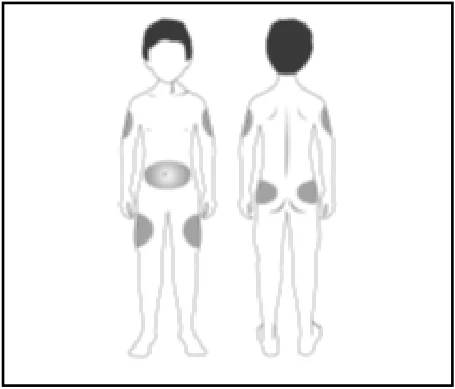 | It is important to rotate Strensiq injection sites. Do not administer injections in areas that are reddened, inflamed or swollen. Determine the injection site then, using a 60-70% alcohol-based solution (isopropyl alcohol or ethanol) on a single use or cotton-wool ball, clean the site. NOTE: Do not use any areas in which you feel lumps, firm knots, or pain. |
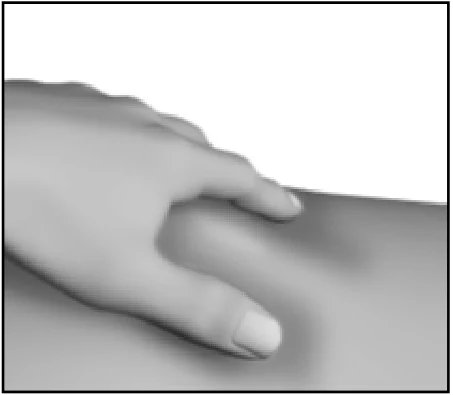
| Gently pinch the skin of the chosen injection area between your thumb and index finger. | |
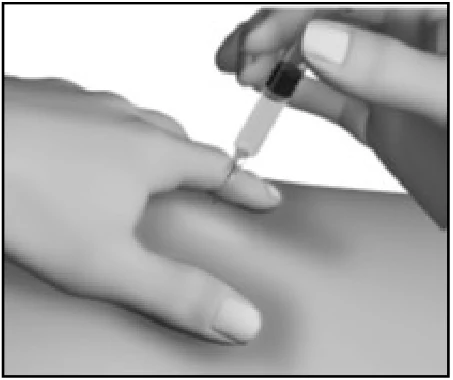
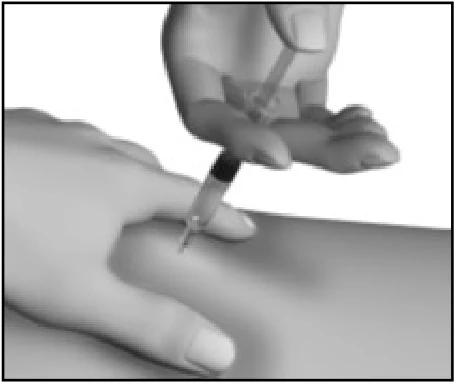
Subcutaneously administer the prescribed dose to the injection site. Holding the syringe like a pencil or a dart, insert the needle into the raised skin so it is at an angle of between 45° and 90° to the skin surface. For patients who have little subcutaneous fat or thin skin, a 45° angle may be preferable. | |
While continuing to hold the skin, push the syringe plunger to inject the medication slowly and steadily all the way until you can no longer push down on the plunger. Remove the needle, release the skin fold and gently place a piece of cotton wool or gauze over the injection site for a few seconds. This will help seal the punctured tissue and prevent any leakage. Do not rub the injection site after injection. Place bandage onto the injection site and properly dispose of the needle. |
4.5 Missed Dose
In case of a missed dose, resume the regular schedule as soon as possible. Scheduling of subsequent doses should be determined by the treating physician and the Strensiq dosing regimen (see Section 4.2 Recommended Dose and Dose Adjustment).
 | |
 | |
 |
5 OVERDOSAGE
The maximum dose of asfotase alfa used in clinical studies is 28 mg/kg/week. No dose-related toxicity or change in the safety profile has been observed in clinical studies to date; therefore, no overdose level has been determined.
| For management of a suspected drug overdose, contact your regional poison control centre. |
6 DOSAGE FORMS, STRENGTHS, COMPOSITION AND PACKAGING
Table 1: Dosage Forms, Strengths, Composition and Packaging
Strensiq is supplied as a sterile, preservative-free, non-pyrogenic, clear, slightly opalescent or opalescent, colourless to slightly yellow aqueous solution, few small translucent or white particles may be present. Each single use vial is for subcutaneous administration only.
Packaging:
Strensiq is supplied in a Type 1 glass vial with a butyl rubber stopper and an aluminum seal with a polypropylene flip-off cap.
| Pack size | Filled volume (Total volume) mL | Concentration mg/mL | Strength* mg/vial | |||
| 12 vials per carton | 0.3 (0.43) | 40 | 12 | |||
| 0.45 (0.58) | 40 | 18 | ||||
| 0.7 (0.83) | 40 | 28 | ||||
| 1.0 (1.13) | 40 | 40 | ||||
| 0.8 (0.93) | 100 | 80 | ||||
*Not all strengths may be marketed
Description
Strensiq (asfotase alfa) is a soluble glycoprotein of 726 amino acids made from the catalytic domain of human tissue non-specific alkaline phosphatase (TNSALP), the human immunoglobulin G1 Fc domain and a deca-aspartate peptide used as a bone targeting domain.
| Route of Administration | Dosage Form / Strength/Composition | Non-medicinal Ingredients |
| Subcutaneous Injection | Solution for Injection 40 mg/mL & 100 mg/mL | Dibasic sodium phosphate, heptahydrate; Monobasic sodium phosphate, monohydrate; Sodium Chloride; Water for injections |
7 WARNINGS AND PRECAUTIONS
General
Craniosynostosis
Craniosynostosis as a manifestation of hypophosphatasia is documented in published literature and occurred in 61.3% of patients between birth and 5 years of age in a natural history study of untreated infantile-onset hypophosphatasia patients. Craniosynostosis can lead to increased intracranial pressure. Periodic monitoring (including fundoscopy for signs of papilledema) and prompt intervention for increased intracranial pressure is recommended in patients with HPP below 5 years of age.
In asfotase alfa clinical studies, adverse events of craniosynostosis (associated with increase of intracranial pressure) including worsening of pre-existing craniosynostosis and occurrence of Arnold-Chiari malformation, have been reported in hypophosphatasia patients <5 years of age. There are insufficient data to establish a causal relationship between exposure to Strensiq and progression of craniosynostosis.
Ectopic Calcification
Patients with HPP are at increased risk for developing ectopic calcifications. Ophthalmology examinations and renal ultrasounds are recommended at baseline and periodically during treatment with Strensiq to monitor for signs and symptoms of ophthalmic and renal ectopic calcifications and for changes in vision or renal function.
Events of ectopic calcification, including ophthalmic (conjunctival and corneal) calcification and nephrocalcinosis, have been reported in the clinical trial experience with Strensiq. There was insufficient information to determine whether or not the reported events were consistent with the disease or due to Strensiq. No visual changes or changes in renal function were reported resulting from the occurrence of ectopic calcifications.
Hypersensitivity
Hypersensitivity reactions have been reported in patients treated with Strensiq, including signs and symptoms consistent with anaphylaxis. Symptoms included difficulty breathing, choking sensation, periorbital edema, and dizziness. The reactions have occurred within minutes after subcutaneous administration of Strensiq and can occur in patients on treatment for more than one year. Other hypersensitivity reactions included vomiting, nausea, fever, headache, flushing, irritability, chills, erythema, rash, pruritus, and oral hypoesthesia.
If a severe hypersensitivity reaction occurs, discontinue Strensiq treatment and initiate appropriate medical treatment. The current medical standards for emergency treatment should be observed. Consider the risks and benefits of re-administering Strensiq to individual patients following a severe reaction taking other factors into account that may contribute to the risk of a hypersensitivity reaction, such as concurrent infection and/ or use of antibiotics. If the decision is made to re-administer the product, the re-challenge should be made under medical supervision and consideration may be given to use of appropriate pre-medication. Patients should be monitored for recurrence of signs and symptoms of a severe hypersensitivity reaction.
Severe or potentially life-threatening hypersensitivity is a contraindication to re-challenge, if hypersensitivity is not controllable.
Infections and Infestations
In asfotase alfa clinical studies, the majority of adverse events related to infections and infestations were respiratory infections including pneumonia, upper respiratory tract infection and nasopharyngitis. They occurred primarily in patients in the infantile-onset HPP subgroup and were usually experienced by patients <2 years of age. These types of events were not unexpected, particularly in patients with more severe manifestations of HPP.
Injection Site Reactions
Administration of Strensiq may result in local injection site reactions (ISRs), (including, but not limited to, erythema, rash, discolouration, pruritus, pain, papule, nodule, atrophy), defined as any related adverse event occurring during injection or until the end of the injection day. These have been generally assessed as non-serious, mild to moderate in severity and self-limiting. In the clinical trial setting, the majority of patients who experienced an injection site reaction had the first occurrence within the first 12 weeks of treatment with asfotase alfa, and some patients continued to experience injection site reactions until 1 or more years after initiating asfotase alfa dosing. Injection sites should be rotated among different body areas to minimize these reactions. Injection sites with unresolved reactions should not be used for injections again until the reaction subsides.
Strensiq administration should be interrupted in any patient experiencing severe injection reactions and appropriate medical therapy administered.
Lipodystrophy
Localized lipodystrophy, including lipoatrophy and lipohypertrophy, has been reported at injection sites after several months in patients treated with Strensiq in clinical trials (see Section 8 Adverse Reactions). Advise patients to follow proper injection technique and to rotate injection sites (see Section 4.4 Administration).
Serum Parathyroid Hormone and Calcium
Serum parathyroid hormone concentration may increase in patients with HPP receiving Strensiq, most notably during the first 12 weeks of treatment. It is recommended that serum parathyroid hormone and calcium be monitored in patients treated with Strensiq. Supplements of calcium and oral vitamin D may be required (see Section 8.2 Clinical Trial Adverse Reactions).
Treatment Discontinuation
Possible Risk of Hypercalcemia upon Discontinuation of Strensiq
Patients with HPP are known to experience hypercalcemia as well as seizures as a result of their underlying disease. While serum calcium in patients with HPP who discontinue Strensiq has not been systemically studied, patients should be advised and monitored for the re-emergence of their HPP symptoms, including hypercalcemia, should discontinuation of therapy be necessary. Long-term interruption of Strensiq treatment in patients with perinatal/infantile-onset HPP is not recommended and may result in life-threatening hypercalcemia.
Carcinogenesis and Mutagenesis
Carcinogenesis and mutagenesis studies have not been performed. There is no evidence to suggest that the use of Strensiq is associated with carcinogenesis (see Section 16 Non-Clinical Toxicology).
Cardiovascular
The safety and efficacy of Strensiq have not been studied in patients with cardiovascular manifestations.
Dependence/Tolerance
There is no evidence to suggest that the use of Strensiq is associated with drug abuse or dependence.
Driving and Operating Machinery
Strensiq has no or negligible influence on the ability to drive and use machines.
Ear/Nose/Throat
There were no serious Ear/Nose/Throat adverse reactions.
Endocrine and Metabolism
Changes in serum calcium can occur with Strensiq use.
Gastrointestinal
Hypoesthesia oral and nausea were commonly reported adverse reactions.
Genitourinary
There were no serious genitourinary adverse reactions.
Hematologic
In clinical trials, hot flush and increased tendency to bruise were observed.
Hepatic/Biliary/Pancreatic
Hepatic function, measured as serum alanine transaminase (ALT) and serum aspartate transaminase (AST), was investigated in the population pharmacokinetic model and did not reveal an impact of hepatic function on asfotase alfa clearance.
The safety and efficacy of Strensiq was not evaluated in patients with hepatic impairment.
Immune
As with all therapeutic proteins, there is potential for immunogenicity. During clinical trials, anti-drug antibodies have been detected in patients receiving treatment with Strensiq using an electrochemiluminescent (ECL) immunoassay. Antibody positive samples were tested to determine the presence of neutralizing antibodies based on in vitro inhibition of the catalytic activity of Strensiq. Among 109 patients with hypophosphatasia (HPP) enrolled in the clinical trials and who had post-baseline antibody data available, 97/109 (89.0%) tested positive for anti-drug antibodies at some point after starting Strensiq treatment. Among those 97 patients, 55 (56.7%) also showed the presence of neutralizing antibodies at some time point post-baseline. No correlation was observed between the anti-drug antibodies titer and neutralizing antibodies (% inhibition) values. The antibody response (with or without the presence of neutralizing antibodies) was time variant in nature and is considered low based on the impact on the pharmacokinetics of asfotase alfa and the available safety and efficacy data (see Section 10.3 Pharmacokinetics).
No trends in adverse events based on antibody status were observed in clinical trials. Some patients confirmed positive for antidrug antibodies experienced injection site reactions (ISRs) and/or hypersensitivity, however there was no consistent trend in the frequency of these reactions over time noted between ADA ever positive and ADA always negative patients.
Cases from the post-approval setting suggest that development of inhibitory antibodies may be associated with a decreased clinical response.
Ophthalmologic
See Section 7 Warnings & Precautions, subsection Ectopic calcification.
Peri-Operative Considerations
There is no data on continuing or discontinuing Strensiq or adjusting dose for Peri-Operative considerations.
Psychiatric
There were no serious psychiatric adverse reactions .
Renal
The safety and efficacy of Strensiq was not evaluated in patients with renal impairment.
Reproductive Health: Female and Male Potential
- Fertility
Preclinical fertility studies were conducted and showed no evidence of effect on fertility and embryo-fetal development.
- Sexual Health
The safety of Strensiq during pregnancy and breastfeeding has not been established (see Section 7.1.1 Pregnant Women).
Respiratory, Thoracic and Mediastinal Disorders
In clinical studies, the majority of events of respiratory, thoracic and mediastinal disorders were reported in patients in the infantile-onset HPP subgroup, usually in patients <2 years of age, and often associated with events that reflected severe respiratory-associated manifestations of HPP including respiratory distress, respiratory disorders and dyspnea.
Sensitivity/Resistance
As with all infusions with biologic agents, there is a risk of injection reactions and anaphylaxis. (For information regarding allergic/injection reactions, see Section 7 Warnings & Precautions, subsection Hypersensitivity).Skin
There were no serious skin (photosensitivity, photoallergic or phototoxic) adverse reactions.
7.1 Special Populations
7.1.1 Pregnant Women
Pregnant and lactating women were excluded from the Strensiq clinical trials. During the trials, there were no reported pregnancies.
There is insufficient data from the use of asfotase alfa in pregnant women to determine if asfotase alfa exposure during pregnancy poses any risk to the mother or fetus.
Asfotase alfa is not recommended during pregnancy and in women of childbearing potential not using contraception.
7.1.2 Breast-feeding
There is insufficient information on the excretion of asfotase alfa in human milk. A risk to the newborns/infants cannot be excluded. A decision must be made whether to discontinue breast-feeding or to discontinue/abstain from asfotase alfa therapy taking into account the benefit of breast-feeding for the child and the benefit of therapy for the woman.
7.1.3 Pediatrics
The safety and efficacy of Strensiq have been studied in pediatric patients between 0-18 years of age. For further details on Patient demographics in clinical trials for hypophosphatasia, refer to Table 4 under Section 14 Clinical Trials.
7.1.4 Geriatrics
The safety and efficacy of Strensiq in patients older than 65 years have not been established.
8 ADVERSE REACTIONS
8.1 Adverse Reaction Overview
The data described below reflect exposure to Strensiq in 112 patients with perinatal/infantile- (n = 89), juvenile- (n = 22), and adult-onset (n = 1) HPP (age at enrollment from 1 day to 66.5 years) treated with Strensiq, with a treatment duration from 1 day to 391.9 weeks [7.5 years]). There were 264.35 patient years (PYs) of exposure in patients who received weekly doses ≥ 6 mg/kg (N=109/112 patients).
Overall, the most common adverse reactions reported were injection site reactions (74%). The majority of injection site reactions resolved within a week. One patient withdrew from the trial due to injection site hypersensitivity. Signs and symptoms associated with anaphylaxis have been observed in patients being treated with Strensiq (see Section 8.2 Clinical Trial Adverse Reactions).
8.2 Clinical Trial Adverse Reactions
Clinical trials are conducted under very specific conditions. The adverse reaction rates observed in the clinical trials; therefore, may not reflect the rates observed in practice and should not be compared to the rates in the clinical trials of another drug. Adverse reaction information from clinical trials may be useful in identifying and approximating rates of adverse drug reactions in real-world use.
[Include a brief description of data sources.]
Tabulated list of adverse reactions
Table 2 summarizes the adverse reactions that occurred at a rate of at least 1% in clinical trials following subcutaneous injection of Strensiq.
Table 2: Adverse Reactions Reported in at Least 1% of HPP Patients Enrolled in Strensiq Clinical Trials
MedDRA System Organ Class Adverse Reaction Category or Term | Frequency N=112 (n %) | |||
|---|---|---|---|---|
| General disorders and administration site conditions | ||||
| Injection site Reactions (ISRs)a | 83 (74%) | |||
| Immune system disorders | ||||
| Hypersensitivity reactionsb | 22 (20%) | |||
| Renal and urinary disorders | ||||
| Nephrolithiasis | 8 (7%) | |||
| Metabolism and nutrition | ||||
| Hypocalcemia | 8 (7%) | |||
| Skin and Subcutaneous Tissue Disorders | ||||
| Skin discolouration | 5 (4%) | |||
aPreferred terms considered as ISRs are presented in section below.
bPreferred terms considered as hypersensitivity reactions are presented in section below.
Description of selected adverse reactions
Injection site reactions (ISRs):
ISRs (including injection site atrophy, abscess, erythema, discoloration, pain, pruritus, macule, swelling, contusion, bruising, lipodystrophy (lipoatrophy or lipohypertrophy), induration, reaction, nodule, rash, papule, hematoma, inflammation, urticaria, calcification, warmth, hemorrhage, cellulitis, scar, mass, extravasation, exfoliation and vesicles) are the most common adverse reactions, observed in approximately 74% of the patients in the clinical studies.
Two patients experienced ISRs that led to reductions of their Strensiq dose. The frequency of ISRs was higher in patients with juvenile-onset HPP and in patients who received injections 6 times/week (compared to 3 times/week).
Hypersensitivity
Hypersensitivity reactions (including irritability, pyrexia, rash, pruritus, chills, erythema, nausea, vomiting, flushing, oral hypoesthesia, hypersensitivity, headache, tachycardia and cough) have been observed in approximately 22/112 (20%) of the patients in the clinical studies. A few case reports of signs and symptoms associated with anaphylaxis were received where the patient experienced difficulty breathing, choking sensation, periorbital edema and/or dizziness.
Immunogenicity
No trends in adverse events based on antibody status were observed in clinical trials. Some patients confirmed positive for antidrug antibodies experienced injection site reactions (ISRs) and/or hypersensitivity, however there was no consistent trend in the frequency of these reactions over time noted between ADA ever positive and ADA always negative patients.
Data from post-marketing cases suggests that the development of antibodies may affect clinical efficacy (see Section 7 Warnings & Precautions, subsection Immune).
8.2.1 Clinical Trial Adverse Reactions – Pediatrics
Refer to Table 2 above.
8.3 Less Common Clinical Trial Adverse Reactions
Adverse reactions that occurred at rates less than 1% included:
| MedDRA System Organ Class | Adverse Reaction Category or Term |
| Skin and Subcutaneous Tissue Disorders | Skin hyperpigmentation |
8.3.1 Less Common Clinical Trial Adverse Reactions – Pediatrics
8.4 Abnormal Laboratory Findings: Hematologic, Clinical Chemistry and Other Quantitative Data
Clinical Trial Findings
Apart from the laboratory abnormalities included in Section 8 Adverse Reactions, there were no abnormal hematology or clinical chemistry values considered as adverse drug reactions following Strensiq administration.
8.5 Post-Market Adverse Reactions
Cases from the post-approval setting suggest that development of inhibitory antibodies may be associated with a decreased clinical response.
9 DRUG INTERACTIONS
9.2 Drug Interactions Overview
No drug interaction studies and no in vitro metabolism studies have been performed with asfotase alfa. Based on its structure and pharmacokinetics, asfotase alfa is an unlikely candidate for cytochrome P450 mediated interactions.
9.3 Drug-Behavioural Interactions
9.4 Drug-Drug Interactions
Interactions with other drugs have not been established.
9.5 Drug-Food Interactions
Interactions with food have not been established.
9.6 Drug-Herb Interactions
Interactions with herbal products have not been established.
9.7 Drug-Laboratory Test Interactions
Alkaline Phosphatase (ALP) is used as the detection reagent in many routine laboratory assays. If asfotase alfa is present in clinical laboratory samples, aberrant values could be reported.
The treating physician should inform the testing lab that the patient is treated with medication affecting the ALP levels. Alternative assays (i.e. not utilizing an ALP-conjugated reporter system) may be considered in patients treated with Strensiq.
10 CLINICAL PHARMACOLOGY
10.1 Mechanism of Action
Asfotase alfa, a human recombinant tissue-nonspecific alkaline phosphatase-Fc-deca-aspartate fusion protein with enzymatic activity, replaces the defective TNSALP enzyme and promotes mineralisation of the skeleton in patients with hypophosphatasia.
10.2 Pharmacodynamics
Perinatal/infantile- and juvenile-onset HPP patients treated with Strensiq had reductions in plasma TNSALP substrates, PPi and pyridoxal 5'-phosphate (PLP) within 6 to 12 weeks of treatment. Bone biopsy data from patients with perinatal/infantile and juvenile HPP treated with Strensiq demonstrated decreases in osteoid volume and thickness indicating improved bone mineralization.
In adult patients with pediatric-onset HPP, the pharmacodynamics of asfotase alfa was consistent with those observed in pediatric patients with perinatal/infantile-onset or juvenile-onset HPP.
10.3 Pharmacokinetics
Based on data in 38 HPP patients, the pharmacokinetics of asfotase alfa exhibit dose proportionality across the dose range of 0.3 mg/kg to 3 mg/kg once every other day for three times a week and appear to be time-independent. Steady state exposure was achieved as early as three weeks after the administration of the first dose. The elimination half-life following subcutaneous administration was approximately 5 days. In adult patients with pediatric-onset HPP, the pharmacokinetics of asfotase alfa at doses of 0.5, 2 and 3 mg/kg administered three times per week was consistent with those observed in pediatric patients with pediatric-onset HPP, and thus supported the approved dose of 6 mg/kg per week in treating adult patients with pediatric-onset HPP.
Table 3 summarizes the pharmacokinetic parameters following multiple doses in 20 HPP patients after subcutaneous administration of STRENSIQ at 2 mg/kg three times per week in Study ENB-010-10 (age of less than or equal to 5 years) and Study ENB-006-08/ENB-008-10 (age of greater than 5 to 12 years), indicating the pharmacokinetics were similar between patients in the two age groups.
Table 3: Summary of Pharmacokinetic Parameters Following Multiple Subcutaneous Administration of Strensiq 2 mg/kg Three Times per Week
| ENB-010-10 | ENB-006-09/ENB-008-10 | |||||||||
|---|---|---|---|---|---|---|---|---|---|---|
| N | 14 | 6 | ||||||||
| Age (year) | 3.4 ± 2.1 | 8.6 ± 2.2 | ||||||||
| (0.2, 6.2) | (6.1, 12.6) | |||||||||
| Weight at baseline (kg) | 11.2 ± 5.0 | 21.2 ± 7.9 | ||||||||
| (2.9, 17.1) | (11.4, 35.4) | |||||||||
| tlast (h) | 48.1 ± 0.1 (47.9, 48.3) | 48.0 ± 0.1 (48.0, 48.1) | ||||||||
| tmax (h) | 14.9 ± 10.4 (0, 32.2) | 20.8 ± 10.0 (11.9, 32.2) | ||||||||
| Cmax (ng/mL) | 1794 ± 690 (856, 3510) | 2108 ± 788 (905, 3390) | ||||||||
| AUCt (h*ng/mL) | 66042 ± 25758 | 89877 ± 33248 | ||||||||
| (27770, 119122) | (37364, 142265) | |||||||||
| Accumulation Ratioa | 1.5 | 3.9 | ||||||||
aRatio values reflect the fold increase of AUCt from Week 1 based on mean AUCt values.
Data are presented as mean ± standard deviation (range). Study ENB-006-08/ENB-008-10 includes patients with perinatal/infantile- or juvenile-onset of disease. tlast, time of last concentration; tmax, time of maximal concentration; Cmax, maximal concentration; AUCt, area under the concentration-time curves over a dosing interval of 48 hours.
Population PK analysis of asfotase alfa concentrations supports weight-based dosing because body weight is a major covariate of asfotase alfa clearance. Based on limited clinical trial data and population pharmacokinetic model estimation, the formulation concentration had an impact on the systemic exposure of asfotase alfa in HPP patients. The higher concentration formulation (80 mg/0.8 mL vial) achieved an approximately 25% lower systemic asfotase alfa exposure (i.e., concentrations and AUC) compared to the lower concentration formulations (18 mg/0.45 mL, 28 mg/0.7 mL or 40 mg/mL vials) at the same dose of Strensiq.
Formation of anti-drug antibodies resulted in reduced systemic exposure of asfotase alfa.
Absorption
Following weekly SC administrations of Strensiq the observed median Tmax ranged from 1 to 2 days and the absolute bioavailability ranged from 45.8-98.4 %. The mean ± SD observed Cmax and AUClast were 1020 ± 326 U/L and 284926 ± 79652 U*h/L, respectively for the 2 mg/kg dose group.
Distribution:
Based on the population pharmacokinetic analysis, the estimated central and peripheral volumes of distribution, mean (95% CI), were 5.66 (2.76, 11.6) L and 44.8 (33.2, 60.5) L, respectively. These results indicated that Strensiq was initially distributed primarily in the intra-vascular space and then distributed to the extra-vascular space reflecting its ability to partition into tissues likely including skeletal tissue.
Metabolism:
In vitro or in vivo metabolism studies are not considered relevant for recombinant fusion proteins such as Strensiq since the expected metabolism pathway is the normal catabolic degradation of the drug molecule into small peptides and individual amino acid.
Elimination:
Based on the population pharmacokinetic analysis, the estimated mean clearance (95% CI) was 15.8 (13.2, 18.9) L/day. The average (± SD) elimination half-life of Strensiq was 2.28 (± 0.58) days with a range of 0.740 to 9.94 days.
11 STORAGE, STABILITY AND DISPOSAL
Strensiq vials must be stored in the original carton until the time of use under refrigerated conditions at 2-8°C and protected from light.
Out of refrigeration, the medicinal product should be kept at room temperature and administered within 3 hours.
Do not use beyond the expiration date stamped on the carton.
Each vial of Strensiq is intended for single use only and should only be punctured once. Discard any unused product. Any unused medicinal product or waste material should be disposed of in accordance with local requirements.
12 SPECIAL HANDLING INSTRUCTIONS
Use aseptic technique
DO NOT FREEZE OR SHAKE
PART II: SCIENTIFIC INFORMATION
13 PHARMACEUTICAL INFORMATION
Drug Substance
Proper name: asfotase alfa
Molecular formula and molecular mass: C7108 H11,008 N1968 O2206 S56;
Structural formula:
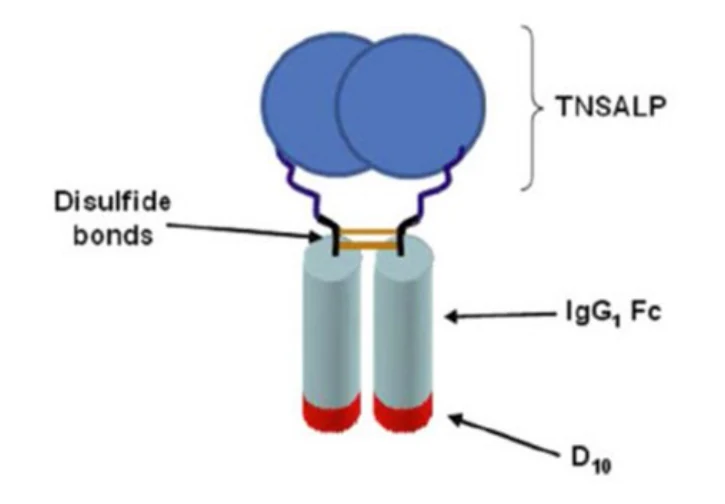
Physicochemical properties:
Asfotase alfa drug substance is formulated as a solution containing 100 mg/mL protein, 25 mM sodium phosphate and 150 mM sodium chloride.
Product Characteristics:
Strensiq (asfotase alfa) is a soluble glycoprotein of 726 amino acids made from the catalytic domain of human tissue non-specific alkaline phosphatase (TNSALP), the human immunoglobulin G1 Fc domain and a deca-aspartate peptide (D10) used as a bone targeting domain.
Viral Clearance Studies:
Three small scale viral clearance studies were performed to assess the capability of the purification process to remove or inactivate Xenotropic Murine Leukaemia Retrovirus (MLV), Pseudorabies Virus (PRV), Reovirus 3 (REO) and Mouse Minute Virus (MMV). The four viruses were chosen to encompass a broad range of physiochemical properties and range of resistance to inactivation and are commercially available at high titers and have well established detection methods. The manufacturing process demonstrates to have adequate viral clearance capacity in viral clearance studies.
14 CLINICAL TRIALS
14.1 Trial Design and Study Demographics
Table 4: Summary of patient demographics for clinical trials in Hypophosphatasia
| Study # | Study design | Dosage, route of administration and duration | Study subjects (n) | Mean age (Range) | Sex |
| ENB-002-08 | Multicenter, multinational, open-label, single group assignment, safety/efficacy [Phase 2 in infants and young children (infantile-onset)] | Single IV infusion of 2 mg/kg followed by SC injections of 1 mg/kg 3 times per week Duration of treatment: 24 weeks | 11 enrolled | 13.3 mo. (range, 0.6-36 mo.) | 4 M 7 F |
| ENB-003-08 (Exten-sion of ENB-002-08) | Multicenter, multinational, open-label, single group assignment, safety/efficacy | SC injections 3 times per week at final dose received in ENB-002-08 Planned duration of treatment: 52 weeks | 10 enrolled | 18 mo. (range, 6-41 mo.) | 4 M 6 F |
| ENB-010-10 | Open-label, multicenter, multinational, safety/efficacy, PK [Phase 2 in infants and children (infantile-onset)] | SC injections of 2 mg/kg 3 times weekly or 1 mg/kg 6 times weekly (a total of 6 mg/kg/week) Planned duration of treatment: minimum 52 weeks | 69 enrolled | 26.1 mo. (0 to 71.8 mo.) | 33 M 36 F |
| ENB-006-09 | Multicenter, multinational, open-label, dose comparison, parallel assignment, historical control, safety/ efficacy, PK, PD [Phase 2 in children and early adolescents (infantile- and juvenile-onset)] | SC injections of 2 mg/kg or 3 mg/kg 3 times per week (a total of 6 mg/kg/week or 9 mg/kg/week) Duration of treatment: 24 weeks | 13 enrolled (6 in 2 mg/kg group, 7 in 3 mg/kg group) | 105.5 mo. (range, 71-149 mo.) | 11 M 2 F |
| ENB-008-10 (Exten-sion of ENB-006-09) | Multicenter, multinational, open-label, dose comparison, parallel assignment, safety/ efficacy, PK, PD | 1 mg/kg 6 times per week or 2 mg/kg 3 times per week SC injections (a total of 6 mg/kg/week) Planned duration of treatment: 52 weeks | 12 enrolled | 111 mo. (range, 78-156 mo.) | 10 M 2 F |
| ENB-009-10 | Open-label, multicenter, multinational, dose-ranging, safety/ efficacy, PK [Phase 2 in adolescents and adults (infantile-, juvenile- and adult-onset)] | Primary treatment period 3 treatment cohorts: | ENB-009-10 | Open-label, multicenter, multinational, dose-ranging, safety/ efficacy, PK [Phase 2 in adolescents and adults (infantile-, juvenile- and adult-onset)] | Primary treatment period 3 treatment cohorts: |
Abbreviations: M = male; F = female; mo. = month; PD = pharmacodynamics; PK = pharmacokinetics; SC=subcutaneous
aFor all clinical studies except ENB-009-10, dose adjustments were allowed for lack of efficacy or safety-related concerns
Baseline characteristics of patients with pediatric-onset HPP evaluated in the clinical trials included low ALP and one or more of the following: elevated TNSALP biochemical substrates (PPi and PLP), abnormal bone structure (elevated osteoid indices, reduced bone mineral content, skeletal deformities of rickets such as bowed legs, abnormally shaped chest, below normal Z score for height), impaired physical function (gross motor delay, developmental delay, impaired walking, unusual gait, inability to perform activities of daily living), failure to thrive, bone pain, muscle pain, joint pain, muscle weakness and premature tooth loss with root intact.
At baseline, patients less than 5 years of age presented with additional morbidities including nephrocalcinosis, seizures, and respiratory compromise (including respiratory failure requiring support) and gross motor delays.
Perinatal/Infantile-Onset HPP
Trial Design and Demographics
ENB-002-08/ENB-003-08 was a 24-week prospective single-arm trial in 11 patients aged 3 weeks to 39.5 months with severe perinatal/infantile-onset HPP; 7/11 (64%) were female and 10/11 (91%) were white. Severe perinatal/infantile-onset HPP was defined as biochemical, medical history and radiographic evidence of HPP as well as the presence of any of the following: rachitic chest deformity, vitamin B6-dependent seizures, or failure to thrive. Ten of 11 patients completed the 24-week trial and continued treatment in the extension phase. Nine patients have been treated for at least 5 years (60 months) and 4 patients have been treated for more than 7 years (84 months). Patients received Strensiq at 3 mg/kg per week for the first month; subsequently, dose increases up to 9 mg/kg per week were allowed for changes in weight and/or for lack of efficacy. All 10 patients required dose increases to 6 mg/kg per week or higher; 9 patients increased between 4 and 24 weeks after starting treatment and 1 patient increased after 70 weeks due to suboptimal clinical response. One patient’s dose was decreased from 9 mg/kg per week to 6 mg/kg per week based on PK data. In the extended treatment period, the dose in one patient increased from 9 mg/kg per week to 12 mg/kg per week.
Radiographs were evaluated for severity of rickets using the 10-score Rickets Severity Scale (RSS), which assess the severity of rickets in the wrists and knees based on the degree of metaphyseal fraying and cupping and the proportion of growth plate affected. A score of 10 represents severe rickets, while a score of 0 represents an absence of rickets. At baseline, 5 patients (45.5%) required respiratory support, the mean RSS score of 8.25 was indicative of severe rickets, consistent with an underlying diagnosis of HPP. Patients also had notably low Z-scores for length/height and weight at Baseline, with mean Z-scores of -4.14 (0.00 percentile) and -3.40 (0.03 percentile), respectively. The low growth parameters are consistent with severe HPP phenotype with severe rickets and failure to thrive.
In Study ENB-002-08, most patients (9/11, 81.8%) presented with significant gross motor delays on the BSID-III (e.g., Gross Motor scaled scores of 1, which is 3 SDs below the mean [SD] for healthy age-matched peers).
Study ENB-010-10 was a prospective open-label study in 69 patients, aged 1 day to 72 months with perinatal/infantile-onset HPP; 54/69 (78%) were white. Patients received Strensiq at 6 mg/kg per week for the first 4 weeks. All patients began the study on a dose of asfotase alfa 6 mg/kg per week. The dose of asfotase alfa was increased for 11 patients during the study. Of these 11 patients, 9 patients had their doses increased specifically to improve clinical response.
Thirty-eight patients were treated for at least 2 years (24 months) and 6 patients have been treated for at least 5 years (60 months).
Approximately one third of the patients (24/69, 34.8%) were receiving respiratory support at Baseline. The mean RSS score at Baseline was 4.72, which is suggestive of moderate rickets, consistent with an underlying diagnosis of HPP. The patients also had below normal length/height for age and weight for age, consistent with another common symptom of HPP, failure to thrive. The mean Z-scores for length/height and weight at Baseline were both -3.2, which is equivalent to the 0.07 percentile. Also consistent with a diagnosis of HPP, levels of PPi and PLP, both substrates of TNSALP, were elevated. Mean Baseline levels of PPi were 6.851 μM, while normal levels range from 1.33 to 5.71 μM and mean
Baseline levels of PLP were 3143.5 ng/mL, while normal levels range from 11.76 to 68.37 ng/mL.
14.2 Study Results
Ventilation support
The natural history of untreated infant HPP patients suggests higher mortality if ventilation is required. In studies ENB-002-08/ENB-003-08 (11 patients) and ENB-010-10 (69 patients), 69 patients completed the studies, and 11 discontinued. 10 of 80 (12.5%) patients died during these studies. 29 of 80 patients required ventilation support at baseline:
Invasive Ventilation Support
16 patients required invasive ventilation support (intubation or tracheostomy) at baseline (one had a brief period of non-invasive ventilation at baseline before transfer).
- 7 patients were weaned off invasive ventilation (time on ventilation from 12 to 168 weeks), 4 patients were off any ventilation support, and 3 patients were on non-invasive ventilation support. Five out of 7 patients achieved an RGI-C score ≥2
- 5 patients continued with invasive ventilation support, 4 of them with RGI-C score <2
- 3 patients died while on ventilation support
- 1 patient withdrew consent
Non-Invasive Ventilation Support
13 patients required non-invasive ventilation support at baseline.
- 10 patients were weaned off any ventilation support (time on ventilation from 3 to 216 weeks). 9 out of 10 patients achieved an RGI-C score ≥2, only 1 with RGI-C <2.
- 2 patients required invasive ventilation support and 1 patient continued with non-invasive ventilation support, all 3 patients died and with RGI-C score <2.
Skeletal Manifestations
Radiographs from 81 out of 85 Strensiq-treated perinatal/infantile-onset HPP patients, including 77 patients in Studies ENB-002-08/ENB-003-08 and ENB-010-10, and 4 patients in Study ENB-006-09/ENB-008-10, were examined to assess HPP-related rickets using the 7-point Radiographic Global Impression of Change (RGI-C) scale. Patients with a minimum RGI-C score of +2 were defined as “responders”. Radiologic improvements could be seen by week 24; at last assessment, 63/81 [78%] treated patients were rated as RGI-C responders. The mean time interval between the baseline and last RGI-C assessment was 35.7 months (range was 2.5 months to 89.4 months).
Change in RSS scores demonstrated progressive improvements (at 24 weeks, median change in RSS score was -1.5, and at last overall assessment, the median change was -3.0).
Twenty-three perinatal/infantile-onset HPP patients experienced fractures during the course of treatment. There were insufficient data to determine the effect of Strensiq on fractures healing in those patients with fractures.
Growth
Height and weight measurements (as measured by Z-scores) were available post-treatment for 82 perinatal/infantile-onset HPP patients, including 78 patients enrolled in Studies ENB-002-08/ENB-003-08 and ENB-010-10, and 4 patients enrolled in ENB-006-09/ENB-008-10 (see Table 5).
Table 5: Perinatal/Infantile-Onset Height and Weight Measurements as Measured by Z-Score
| Height Z-score | Weight Z-score | ||||||||||||||||
|---|---|---|---|---|---|---|---|---|---|---|---|---|---|---|---|---|---|
| Baseline | Last Assessment | Baseline | Last Assessment | ||||||||||||||
| Mean | Min, Max | Mean | Min, Max | Mean | Min, Max | Mean | Min, Max | ||||||||||
Studies ENB-002-08/ENB-003-08 and ENB-010-10 (N = 78)a | -3.3 | -10.1, 0.9 | -2.9 | -12.3, 0.7 | -3.2 | -23.8, 0 | -2.3 | -19.9, 1.4 | |||||||||
| Study ENB-006-09/ENB-008-10 (N = 4)b | -2.6 | -6.6, -0.7 | -1.4 | -5.4, 0.4 | -2.5 | -8.2, -1.0 | -1.6 | -5.4, 0.6 | |||||||||
aThe mean time interval between baseline and last assessment was 33.8 months (range was 0.7 month to 89.4 months). bThe mean time interval between baseline and last assessment was 77.6 months (range was 76.6 months to 79.0 months).
Juvenile-Onset HPP
Trial Design and Demographics
ENB-006-09/ENB-008-10 was a prospective open-label 24-week trial that included 8 juvenile-onset HPP patients and 5 perinatal/infantile-onset HPP patients; 11/13 (85%) were male and 12/13 (92%) were white; on entry, patients were 6 to 12 years of age. Twelve of the 13 juvenile-onset patients entered the extension study with a planned duration of treatment of 52 weeks. At study entry, patients were assigned to receive Strensiq at 6 mg/kg per week or 9 mg/kg per week. Three patients received dose reductions during the primary treatment period, including one patient who experienced a decrease in vitamin B6 levels and 2 patients who experienced recurrent injection site reactions. During the extension phase, the dosing regimen for all patients was initially changed to 3 mg/kg per week. Dosing was subsequently increased to 6 mg/kg per week, with no patients requiring doses higher than 6 mg/kg per week.
The median age of onset of HPP symptoms was 12 months (range 1 to 22 months). Five patients had infantile-onset HPP (defined as onset of HPP signs/symptoms < 6 months) and 8 had juvenile (childhood)-onset HPP (onset of HPP signs/symptoms ≥ 6 months and < 18 years).
The majority of patients had a history of unusual gait (100%), premature tooth loss (100%), delayed walking (84.6%), knock knees (76.9%), muscle weakness (61.5%), and high phosphorous levels (53.8%). In addition, approximately half of the patients (46.2%) had a disease history that included abnormally shaped chest, bone pain (severe enough to limit activities), difficulty eating/swallowing, difficulty gaining weight, hypermobility (extremely flexible joints), joint pain, and muscle pain.
Study Results
Growth
Mean changes from baseline in both height and weight measurements (as measured by Z-scores) in 8 Strensiq-treated patients were assessed (see Table 6).
Table 6: Juvenile-Onset Height and Weight Measurements as Measured by Z-Score
| Height Z-score | Weight Z-score | |||||||||||||||
|---|---|---|---|---|---|---|---|---|---|---|---|---|---|---|---|---|
| Baseline | Last Assessment | Baseline | Last Assessment | |||||||||||||
| Mean | Min, Max | Mean | Min, Max | Mean | Min, Max | Mean | Min, Max | |||||||||
| Strensiq (N = 8)a | -1.5 | -3.8, 0 | -0.77 | -1.9, 0.3 | -1.1 | -3.5, 2.3 | 0.4 | -1.1, 2.7 | ||||||||
aThe mean time interval between baseline and last assessment was 77 months (range was 75.9 months to 78.6 months).
Skeletal Manifestations
Patients who achieved a RGI-C score of 2 or higher (corresponding to substantial healing of rickets) were classified as being responders to treatment. All 8 treated patients were rated as responders by Month 54 of treatment. The mean duration between the baseline and last RGI-C assessments for control patients was 56 months (range was 8 to 95 months). One of 8 (12.5%) patients with juvenile-onset HPP experienced new fractures during the course of treatment. There were insufficient data to assess the effect of Strensiq on fractures.
Mobility
Mobility was also assessed using the 6 Minute Walk Test (6MWT) in 7 of the 8 patients. At last assessment, all 7 patients had an improvement in distance walked of at least the minimal clinically important difference. The mean increase from baseline for distance walked is 222.4 meters (range from 81 to 297 meters).
Bone biopsy
Tetracycline for bone-labelling was administered in two 3-day courses (separated by a 14-day interval) prior to acquisition of the bone biopsy. Trans-iliac crest bone biopsies were obtained by standard procedure. Histological analysis of biopsies used Osteomeasure software (Osteometrics, USA). Nomenclature, symbols and units followed recommendations of the American Society for Bone and Mineral Research.
In the per-protocol set (excludes those patients who received oral vitamin D between baseline and week 24), 7 juvenile-onset HPP patients underwent biopsy of the trans-iliac bone crest before and after receiving asfotase alfa. The median (min, max) change from baseline to 24 weeks in osteoid thickness is -5.7 (-9.2, 7.1) µm, in osteoid volume / bone volume is -3.5 (-15.5, 14.2)%, and in mineralization lag-time is -11 (-167, 663) days.
In Adolescent and Adult Patients with HPP
Trial Design and Demographics
ENB-009-10 was an open-label study. Patients were assigned to treatment groups or to the control group for the 24-week primary treatment period. All patients received asfotase alfa treatment in the extended treatment period. Nineteen patients were enrolled in the study. At study completion, the median treatment period was 60 months (range 24 to 68 months). Four patients had perinatal/infantile-onset HPP, 14 patients had juvenile-onset HPP, and 1 patient had adult-onset HPP. Age was 13 to 66 years at inclusion and was between 17 and 72 years at study completion.
Study Results
A decrease in PPi levels towards the normal reference range was observed.
16 NON-CLINICAL TOXICOLOGY
Preclinical safety data
In nonclinical safety testing in rats, no body system-specific adverse effects were noted at any dose.
With intravenous use, dose- and time-dependent acute injection reactions that were transient and self-limiting were noted in rats at doses of 1 to 180 mg/kg.
With subcutaneous use, ectopic calcifications and injection site reactions, that were partially to completely reversible, were observed in monkey when asfotase alfa was administered daily at doses up to 10 mg/kg during 26 weeks.
Preclinical data reveal no predicted special hazard for humans based on conventional studies of safety pharmacology, repeated dose toxicity or toxicity to reproduction and development.
No animal studies have been conducted to evaluate the genotoxic and carcinogenic potential of asfotase alfa.
The general toxicology program for asfotase alfa included non-GLP maximum tolerated dose (MTD) studies, definitive toxicity (GLP) studies of varying durations, and a GLP study to compare the local irritation potential of asfotase alfa. One of the MTD studies was a single dose toxicity study in monkeys, and the other was a repeat dose toxicity study in rats. Four-week definitive toxicity studies were then conducted in rats and monkeys using the IV route of administration. Subsequently, chronic six-month monkey (SC) and rat (IV) studies were performed. Reproductive and developmental studies were done in rats and rabbits to determine potential effects on fertility, as well as embryo-fetal and prenatal/perinatal observations. Stand-alone pharmacology safety studies were conducted to assess the potential effects of asfotase alfa on central nervous system (CNS) and respiratory function in rats. A cardiovascular (CV) pharmacology safety study was conducted as part of the 6-month repeated dose primate toxicity. In general, asfotase alfa was well-tolerated. The only consistent observation was a transient injection reaction observed in rats in most studies following IV injection. Acute reactions were not completely alleviated by antihistamines or a steroid. There was no evidence of complement involvement in the development of the injection reaction. None of the clinical signs that were typical of the post-dose reaction in rat IV toxicity studies were observed in monkeys or rabbits regardless of the route of administration, or in rats given SC injections. Thus, it is unlikely that these findings are clinically relevant. An immune response to asfotase alfa was evident in several toxicology studies in rats and monkeys. No ADA-related adverse observations were noted either in the general or reproductive toxicology studies. Moreover, the presence of ADA in the toxicology studies was considered irrelevant because asfotase alfa is derived from human proteins. No other observations were made in any of the toxicology studies that would preclude the clinical use of asfotase alfa.
Given that Strensiq is derived from human proteins, and based on its therapeutic indication in a small patient population with significant mortality, studies to assess the effects of Strensiq on the mutagenic and carcinogenic potential were not performed.