


Product Monograph - Dotarem
RECENT MAJOR LABEL CHANGES
| 3 Serious Warnings and Precautions Box, Not for Intrathecal Use | 2025-10 |
|---|---|
| 7 Warnings and Precautions, Risks of Intrathecal Use | 2025-10 |
| 7 Warnings and Precautions, 7.1.1 Pregnant Women | 2023-07 |
TABLE OF CONTENTS
Sections or subsections that are not applicable at the time of authorization are not listed.
RECENT MAJOR LABEL CHANGES .......................................................................................... 2
TABLE OF CONTENTS ............................................................................................................ 2
PART I: HEALTH PROFESSIONAL INFORMATION .................................................................... 5
1 INDICATIONS ............................................................................................................. 5
1.1 Pediatrics ................................................................................................................ 5
1.2 Geriatrics ................................................................................................................ 5
2 CONTRAINDICATIONS ................................................................................................ 5
3 SERIOUS WARNINGS AND PRECAUTIONS BOX ........................................................... 6
4 DOSAGE AND ADMINISTRATION ................................................................................ 6
4.1 Dosing Considerations ........................................................................................... 6
4.2 Recommended Dose and Dosage Adjustment ...................................................... 6
4.3 Reconstitution ........................................................................................................ 7
4.4 Administration ....................................................................................................... 7
4.5 Missed Dose ........................................................................................................... 7
5 OVERDOSAGE ............................................................................................................ 8
6 DOSAGE FORMS, STRENGTHS, COMPOSITION AND PACKAGING ................................ 8
7 WARNINGS AND PRECAUTIONS ................................................................................. 9
General ............................................................................................................................... 9
Central nervous system (CNS) disorders ........................................................................... 9
Hypersensitivity ................................................................................................................. 9
Neurologic ........................................................................................................................ 10
Renal ................................................................................................................................ 10
Skin ................................................................................................................................... 12
Risks of Intrathecal Use .................................................................................................... 12
7.1 Special Populations .............................................................................................. 12
7.1.1 Pregnant Women ............................................................................................. 12
7.1.2 Breast-feeding .................................................................................................. 13
7.1.3 Pediatrics .......................................................................................................... 13
7.1.4 Geriatrics .......................................................................................................... 13
8 ADVERSE REACTIONS............................................................................................... 13
8.1 Adverse Reaction Overview ................................................................................. 13
8.2 Clinical Trial Adverse Reactions ........................................................................... 14
8.2.1 Clinical Trial Adverse Reactions – Pediatrics.................................................... 14
8.3 Less Common Clinical Trial Adverse Reactions .................................................... 16
8.3.1 Less Common Clinical Trial Adverse Reactions – Pediatrics ............................ 18
8.4 Abnormal Laboratory Findings: Hematologic, Clinical Chemistry and Other Quantitative Data ............................................................................................................. 18
8.5 Post-Market Adverse Reactions ........................................................................... 18
9 DRUG INTERACTIONS .............................................................................................. 19
9.2 Drug Interactions Overview ................................................................................. 19
9.3 Drug-Behavioural Interactions ............................................................................. 20
9.4 Drug-Drug Interactions ........................................................................................ 20
9.5 Drug-Food Interactions ........................................................................................ 20
9.6 Drug-Herb Interactions ........................................................................................ 20
9.7 Drug-Laboratory Test Interactions....................................................................... 20
10 CLINICAL PHARMACOLOGY ...................................................................................... 20
10.1 Mechanism of Action ........................................................................................... 20
10.2 Pharmacodynamics .............................................................................................. 20
10.3 Pharmacokinetics ................................................................................................. 22
11 STORAGE, STABILITY AND DISPOSAL ........................................................................ 25
12 SPECIAL HANDLING INSTRUCTIONS .......................................................................... 25
PART II: SCIENTIFIC INFORMATION ..................................................................................... 27
13 PHARMACEUTICAL INFORMATION .......................................................................... 27
14 CLINICAL TRIALS ...................................................................................................... 28
14.1 Clinical Trials by Indication....................................................................................... 28
CNS Imaging in Adult Population ..................................................................................... 28
CNS Imaging in Pediatric Patients 2-18 years old ............................................................ 30
CNS Imaging in Pediatric Patients <2 years old ............................................................... 31
15 MICROBIOLOGY ...................................................................................................... 35
16 NON-CLINICAL TOXICOLOGY .................................................................................... 35
PATIENT MEDICATION INFORMATION ................................................................................ 39
PART I: HEALTH PROFESSIONAL INFORMATION
1 INDICATIONS
DOTAREM (gadoterate meglumine injection) is a medicinal product for diagnostic use only.
DOTAREM is indicated in adults and pediatrics (from term neonates) for:
- contrast enhancement during cranial and spinal MRI investigations. See 4.2 Recommended Dose and Dosage Adjustment for specific dosage recommendations.
1.1 Pediatrics
Pediatrics (0-18 years of age):
Based on the data submitted and reviewed by Health Canada, the safety and efficacy of DOTAREM in pediatric patients has been established.
Therefore, Health Canada has authorized an indication for pediatric use. See 1 INDICATIONS.
Use of macrocyclic agents may be preferable in potentially vulnerable patients such as children.
See 8.2.1 Pediatrics, 10.3 Pharmacokinetics - Special Populations and Conditions – Pediatrics, 4 DOSAGE AND ADMINISTRATION, and 14 CLINICAL TRIALS – Cardiac Effects: QT Interval.
1.2 Geriatrics
Geriatrics (> 65 years):
No special precautions are required in elderly patients unless renal function is impaired (see 3 SERIOUS WARNINGS AND PRECAUTIONS BOX and 7 WARNINGS AND PRECAUTIONS – Renal).
2 CONTRAINDICATIONS
- Gadoterate meglumine injection is contraindicated for subarachnoid (or epidural) administration.
- Gadoterate meglumine injection is contraindicated in patients who are hypersensitive to this drug or to any ingredient in the formulation, including any non-medicinal ingredient, or component of the container. For a complete listing, see 6 DOSAGE FORMS, STRENGTHS, COMPOSITION AND PACKAGING (see 7 WARNINGS AND PRECAUTIONS – Hypersensitivity).
3 SERIOUS WARNINGS AND PRECAUTIONS BOX
Serious Warnings and Precautions
Nephrogenic systemic fibrosis (NSF)
Gadolinium-based contrast agents (GBCAs) increase the risk for NSF in patients with:
acute or chronic severe renal insufficiency (glomerular filtration rate
<30 mL/min/1.73m2).
In these patients, avoid use of GBCAs unless the diagnostic information is essential and not available with non-contrast-enhanced magnetic resonance imaging (MRI). NSF may result in fatal or debilitating systemic fibrosis affecting the skin, muscle, and internal organs. Screen all patients for renal dysfunction by obtaining a history and/or laboratory tests. When administering a GBCA, do not exceed the recommended dose (see 4.2 Recommended Dose and Dosage Adjustment) and allow a sufficient period of time for elimination of the agent from the body prior to any re-administration. (See 7 WARNINGS AND PRECAUTIONS – General, Renal and Skin, and 8.5 Post-Market Adverse Reactions.)
NOT FOR INTRATHECAL USE
Intrathecal administration of GBCAs can cause serious, life-threatening, and fatal reactions. DOTAREM is not approved for intrathecal use (see 2 CONTRAINDICATIONS; 7 WARNINGS AND PRECAUTIONS, Risks of Intrathecal Use).
4 DOSAGE AND ADMINISTRATION
4.1 Dosing Considerations
- DOTAREM is for intravenous administration only.
- Use of macrocyclic agents may be preferable in certain patients such as those for whom repeated GBCA doses may need to be considered due to individual clinical circumstances and in other potentially vulnerable patients such as children and pregnant women (See 7 WARNINGS AND PRECAUTIONS).
- Pediatrics < 2 years of age: DOTAREM should be administered intravenously with manual bolus injection at a rate of about 1-2 mL/sec followed by saline flush at the same flow rate. A patient IV line has to be established and maintained throughout the examination.
4.2 Recommended Dose and Dosage Adjustment
- For adult and pediatric patients (including term neonates), the recommended dose of DOTAREM is 0.2 mL/kg (0.1 mmol/kg) body weight administered as an intravenous bolus injection, manually or by power injector, at a flow rate of approximately 2 mL/second for adults and 1-2 mL/second for pediatric patients. Table 1 provides weight-adjusted dose volumes.
- For special populations (pediatrics, geriatrics, hepatic impairment, renal impairment), no dosage adjustment is recommended and the adult dose applies.
- The lowest effective dose should be used.
Table 1 - Volumes of DOTAREM Injection by Body Weight
| Body Weight | Volume |
| Kilograms (kg) | Milliliters (mL) |
| 2.5 | 0.5 |
| 5 | 1 |
| 10 | 2 |
| 20 | 4 |
| 30 | 6 |
| 40 | 8 |
| 50 | 10 |
| 60 | 12 |
| 70 | 14 |
| 80 | 16 |
| 90 | 18 |
| 100 | 20 |
| 110 | 22 |
| 120 | 24 |
| 130 | 26 |
| 140 | 28 |
| 150 | 30 |
To ensure complete injection of DOTAREM the injection may be followed by normal saline flush. Contrast MRI can begin immediately following DOTAREM injection.
4.3 Reconstitution
Not applicable.
4.4 Administration
Visually inspect DOTAREM for particulate matter prior to administration. Do not use the solution if particulate matter is present or if the container appears damaged. DOTAREM should be a clear, colorless to yellow solution. Do not mix with other drugs or parenteral nutrition.
DOTAREM should be drawn into the syringe and administered immediately using sterile technique. Unused portions of the drug must be discarded.
The rubber stopper should never be pierced more than once.
4.5 Missed Dose
Not applicable.
5 OVERDOSAGE
DOTAREM administered to healthy volunteers and to patients at cumulative doses up to 0.3 mmol/kg was tolerated in a manner similar to lower doses. Adverse reactions to overdosage with DOTAREM have not been reported.
Use of products of a similar class to DOTAREM has resulted in cases of acute renal failure in general in patients with pre-existing renal impairment. DOTAREM should be used with caution in patients with renal insufficiency (see 7 WARNINGS AND PRECAUTIONS – Renal and 4.2 Recommended Dose and Dosage Adjustment). In the event of inadvertent overdosage, DOTAREM can be removed from the body by hemodialysis. However, it is unknown if hemodialysis prevents NSF. (See 7 WARNINGS AND PRECAUTIONS – Renal).
There is a higher risk of overdose in children younger than 2 years of age. The recommended volumes should be strictly followed and manual injection should be used in this group of patients in order to prevent potential overdose.
For management of a suspected drug overdose, contact your regional poison control centre.
6 DOSAGE FORMS, STRENGTHS, COMPOSITION AND PACKAGING
Table 2 – Dosage Forms, Strengths, Composition and Packaging
Each mL of DOTAREM contains:
- 376.9 mg of gadoterate meglumine which corresponds to 202.5 mg of 1,4,7,10-tetraazacyclododecane-N, N’, N’’, N’’’-tetraacetic acid (DOTA), 90.62 mg of gadolinium oxide and 97.6 mg of meglumine.
- Water for injection, q.s. 1 mL.
DOTAREM has a pH of 6.5 to 8.0. No preservative is added.
DOTAREM injection is a clear, colorless to yellow solution containing 376.9 mg/mL gadoterate meglumine (equivalent to 0.5 mmol/mL). It is supplied in vials and pre-filled syringes and the contents are sterile.
For vial presentation, DOTAREM is packaged in Type II clear glass vials, closed with an
| Route of Administration | Dosage Form / Strength/Composition | Non-medicinal Ingredients |
| Intravenous | Solution / 376.9 mg/mL gadoterate meglumine, equivalent to 0.5 mmol/mL | Water for injection. |
elastomeric halobutyl rubber stopper and crimped with an aluminium cap.
The vial presentations are:
- 5 mL filled in a 10 mL vial
- 10 mL filled in a 10 mL vial
- 15 mL filled in a 20 mL vial
- 20 mL filled in a 20 mL vial
- 60 mL filled in a 60 mL vial
- 100 mL filled in a 100 mL vial
- 100 mL filled in a 125 mL vial
For the pre-filled syringe presentation, DOTAREM is packaged in Type I clear glass syringes fitted with a polymeric tip cap and a chlorobutyl plunger stopper. Plunger rod is included.
The pre-filled syringe presentations are:
- 10 mL filled in a 10 mL syringe
- 15 mL filled in a 20 mL syringe
- 20 mL filled in a 20 mL syringe
7 WARNINGS AND PRECAUTIONS
Please see 3 SERIOUS WARNINGS AND PRECAUTIONS BOX.
General
Ensure catheter and venous patency before the injection of DOTAREM. Extravasation into tissues during DOTAREM administration may result in tissue irritation.
Gadoterate meglumine must not be administered by subarachnoid (or epidural) injections.
MRI procedures which involve the use of DOTAREM should be carried out by medical staff who have the prerequisite training and a thorough knowledge of the particular procedure to be performed.
Central nervous system (CNS) disorders
Like with other gadolinium containing contrast agents special precaution is necessary in patients with a low threshold for seizures. Precautionary measures should be taken, e.g., close monitoring. All equipment and drugs necessary to counter any convulsions which may occur must be made ready for use beforehand.
Hypersensitivity
Anaphylactic and anaphylactoid reactions have been reported with DOTAREM, involving cardiovascular, respiratory, and/or cutaneous manifestations. Some patients experienced circulatory collapse and died. In most cases, initial symptoms occurred within minutes of DOTAREM administration and resolved with prompt emergency treatment.
- Before DOTAREM administration, assess all patients for any history of a reaction to contrast media, bronchial asthma and/or allergic disorders. These patients may have an increased risk for a hypersensitivity reaction to DOTAREM.
- Administer DOTAREM only in situations where trained personnel and therapies are promptly available for the treatment of hypersensitivity reactions, including personnel trained in resuscitation.
- During and following DOTAREM administration, observe patients for at least 30 minutes for signs and symptoms of hypersensitivity reactions.
Neurologic
Accumulation of Gadolinium in Brain
The current evidence suggests that gadolinium may accumulate in the brain after multiple administration of GBCAs. Increased signal intensity on non-contrast T1-weighted images of the brain has been observed after multiple administrations of GBCAs in patients with normal renal function. Gadolinium has been detected in brain tissue after multiple exposures to GBCAs, particularly in the dentate nucleus and globus pallidus. The evidence suggests that the risk of gadolinium accumulation is higher after repeat administration of linear than after repeat administration of macrocyclic agents.
The clinical significance of gadolinium accumulation in the brain is presently unknown; however, gadolinium accumulation may potentially interfere with the interpretation of MRI scans of the brain. In order to minimize potential risks associated with gadolinium accumulation in the brain, it is recommended to use the lowest effective dose and perform a careful benefit risk assessment before administering repeated doses.
Renal
Use of products of a similar class to DOTAREM has resulted in cases of acute renal failure. Among the factors that may increase the risk for NSF are repeated or higher than recommended doses of a GBCA and the degree of renal function impairment at the time of exposure.
Exposure to GBCAs increase the risk for NSF in patients with:
- chronic severe renal insufficiency (glomerular filtration rate <30 mL/min/1.73m2), or
- acute renal failure/acute kidney injury.
- Screen all patients for renal dysfunction by obtaining a history and/or laboratory tests.
- The risk, if any, for the development of NSF among patients with mild to moderate renal insufficiency or normal renal function is unknown, and the cautious utilization of the lowest possible dose of GBCA is preferable.
(See 3 SERIOUS WARNINGS AND PRECAUTIONS BOX, 7 WARNINGS AND PRECAUTIONS – Skin and 8.5 Post-Market Adverse Reactions)
In patients with severely impaired renal function, the benefits of gadoterate meglumine must be weighed carefully against the risks, since elimination will be delayed in such patients. Because gadoterate meglumine is renally excreted, a sufficient period of time for elimination of the contrast agent from the body prior to any re-administration in patients with renal impairment should be ensured. DOTAREM can be removed from the body by hemodialysis. However, it is unknown if hemodialysis prevents NSF. For patients already receiving hemodialysis at the time of DOTAREM administration, prompt initiation of hemodialysis following the administration of DOTAREM should be considered, in order to enhance the contrast agent's elimination.
Nephrogenic Systemic Fibrosis (NSF)
GBCAs increase the risk for Nephrogenic Systemic Fibrosis (NSF) in patients with acute or chronic severe renal insufficiency (glomerular filtration rate <30 mL/min/1.73m2). In these patients, avoid use of GBCAs unless the diagnostic information is essential and not available with noncontrast-enhanced magnetic resonance imaging (MRI). For patients receiving hemodialysis, healthcare professionals may consider prompt hemodialysis following GBCA administration in order to enhance the contrast agent's elimination. However, it is unknown if hemodialysis prevents NSF.
Among the factors that may increase the risk for NSF are repeated or higher than recommended doses of a GBCA and the degree of renal function impairment at the time of exposure.
NSF development is considered a potential class-related effect of all GBCAs.
Post-marketing reports have identified the development of NSF following single and multiple administrations of GBCAs. These reports have not always identified a specific agent. Where a specific agent was identified, the most commonly reported agent was gadodiamide (OMNISCAN®), followed by gadopentetate dimeglumine (MAGNEVIST®), gadoversetamide (OPTIMARK®) and gadobutrol (GADOVIST®). NSF has also developed following the sequential administration of gadodiamide with gadobenate dimeglumine (MULTIHANCE®) or gadoteridol (PROHANCE®). The number of postmarketing reports is subject to change over time and may not reflect the true proportion of cases associated with any specific GBCA.
The extent of risk for NSF following exposure to any specific GBCA is unknown and may vary among the agents. Published reports are limited and predominantly estimate NSF risks with gadodiamide. In one retrospective study of 370 patients with severe renal insufficiency who received gadodiamide, the estimated risk for development of NSF was 4%. The risk, if any, for the development of NSF among patients with mild to moderate renal insufficiency or normal renal function is unknown, and the cautious utilization of the lowest possible dose of GBCA is preferable.
NSF has not been reported in patients with a clear history of exposure to DOTAREM alone.
Screen all patients for renal dysfunction by obtaining a history and/or laboratory tests. When administering a GBCA, do not exceed the recommended dose and allow a sufficient period of time for elimination of the agent from the body prior to any re-administration. (See 10 CLINICAL PHARMACOLOGY and 4.2 Recommended Dose and Dosage Adjustment)
A skin biopsy is necessary in order to exclude the diagnosis of similarly presenting skin disorders (eg, scleromyxedema). (See 3 SERIOUS WARNINGS AND PRECAUTIONS BOX, 7 WARNINGS AND PRECAUTIONS – General, Renal and Skin and 8.5 Post-Market Adverse Reactions)
Skin
NSF was first identified in 1997 and has, so far, been observed only in patients with renal disease. This is a systemic disorder with the most prominent and visible effects on the skin. Cutaneous lesions associated with this disorder are caused by excessive fibrosis and are usually symmetrically distributed on the limbs and trunk. Involved skin becomes thickened, which may inhibit flexion and extension of joints and result in severe contractures. The fibrosis associated with NSF can extend beyond dermis and involve subcutaneous tissues, striated muscles, diaphragm, pleura, pericardium, and myocardium. NSF may be fatal. (See 3 SERIOUS WARNINGS AND PRECAUTIONS BOX, 7 WARNINGS AND PRECAUTIONS – General and Renal and 8.5 Post-Market Adverse Reactions.)
Risks of Intrathecal Use
Serious, life-threatening and fatal cases, primarily with neurological reactions (e.g., coma, encephalopathy, seizures), have been reported with off-label intrathecal use of GBCAs. DOTAREM is not approved for intrathecal use (see 2 CONTRAINDICATIONS; 3 SERIOUS WARNINGS AND PRECAUTIONS; 4.1 Dosing Considerations).
7.1 Special Populations
7.1.1 Pregnant Women
GBCAs cross the placenta and result in fetal exposure and gadolinium retention. DOTAREM should be used during pregnancy only if the benefit justifies the potential risk to the fetus. There is no conclusive evidence of the clear association between GBCAs and adverse effects in the exposed fetus. However, a retrospective cohort study, comparing pregnant women who had a GBCA MRI to pregnant women who did not have an MRI, reported a higher occurrence of stillbirths and neonatal deaths in the group receiving GBCA MRI. Limitations of this study include a lack of comparison with non-contrast MRI, lack of information about the maternal indication for MRI, and the type of GBCA used. Overall, these data preclude a reliable evaluation of the potential risk of adverse fetal outcomes with the use of GBCAs in pregnancy.
Use of macrocyclic agents may be preferable in certain patients such as those for whom repeated GBCA doses may need to be considered due to individual clinical circumstances and in other potentially vulnerable patients such as pregnant women.
There are no adequate and well-controlled studies with DOTAREM conducted in pregnant women. No effects on embryo fetal development were observed in rats or rabbits at doses up to 10 mmol/kg/day in rats or 3 mmol/kg/day in rabbits. The doses in rats and rabbits were respectively 16 and 10 times the recommended human dose based on body surface area. DOTAREM should be used during pregnancy only if the potential benefit justifies the potential risk to the fetus. (See 16 NON-CLINICAL TOXICOLOGY).
7.1.2 Breast-feeding
Transfer of DOTAREM into the milk of lactating mothers has not been investigated in humans. Limited case reports on use of GBCAs in nursing mothers indicate that 0.01 to 0.04% of the maternal gadolinium dose is excreted in human breast milk. Because many drugs are excreted in human milk, exercise caution when DOTAREM is administered to a nursing woman. Nonclinical data show that gadoterate meglumine is excreted into breast milk in very small amounts (< 0.1% of the dose intravenously administered) and absorption via the gastrointestinal tract is poor. The physician and breast-feeding mother should decide whether to continue breast-feeding or to interrupt it for 24 hours following administration of gadoterate meglumine.
7.1.3 Pediatrics
Pediatrics (0-18 years of age):
Use of macrocyclic agents may be preferable in potentially vulnerable patients such as children.
The safety and efficacy of DOTAREM at a single dose of 0.1 mmol/kg have been established in pediatric patients (including term neonates) for intravenous use in cranial and spinal MRI investigations. No dosage adjustment according to age is necessary in this population (see 4 DOSAGE AND ADMINISTRATION and 14 CLINICAL TRIALS).
7.1.4 Geriatrics
Geriatrics (> 65 years of age):
No overall differences in safety or efficacy were observed between elderly patients and younger subjects in clinical studies. In general, use of DOTAREM in elderly patients should be cautious, reflecting the greater frequency of impaired renal function and concomitant disease or other drug therapy. No age-related dosage adjustment is necessary.
8 ADVERSE REACTIONS
8.1 Adverse Reaction Overview
As with other contrast media, delayed allergoid reactions occurring hours or days after administration have been observed, though rarely. Anaphylactoid reactions may occur. Patients with a history of previous reaction to contrast media, allergic disposition or bronchial asthma suffer more frequently from hypersensitivity reactions than others (see 7 WARNINGS AND PRECAUTIONS – Hypersensitivity).
8.2 Clinical Trial Adverse Reactions
Clinical trials are conducted under very specific conditions. Therefore, the adverse reaction rates observed in the clinical trials may not reflect the rates observed in practice and should not be compared to the rates in the clinical trials of another drug. Adverse reaction information from clinical trials may be useful in identifying and approximating rates of adverse drug reactions in real-world use.
Adult population
Clinical Trials for Central Nervous System Indication
A total of 20 clinical studies were conducted primarily in adults (>18 years) for imaging CNS, evaluating the safety of DOTAREM in 1188 adult patients (51.4% male; mean ±SD age: 50.5 ±15.9 years). A total of 113 post-injection adverse events were reported for 84 patients (7.1%), mostly mild or moderate in intensity. Of these 113 adverse events, 55 reported in 43 patients (3.6%) were assessed to be related to DOTAREM. No adverse drug reaction occurred at a rate greater than 1%. The most frequent adverse reactions were nausea (0.8%), headache (0.4%) and injection site pain (0.3%).
Overall Safety profile
The data described below reflect DOTAREM exposure in 2867 patients, including 185 pediatric patients. Overall, 55% of the patients were men. In clinical trials where ethnicity was recorded the ethnic distribution was 80% Caucasian, 12% Asian, 4% Black, and 4% others. The mean age was 53 years (range from 0.1 to 97 years).
Overall, 4.0% of patients reported at least one adverse reaction, primarily occurring immediately or several days following DOTAREM administration. Most adverse reactions were mild or moderate in severity and transient in nature.
No adverse drug reaction occurred at a rate greater than 1.0%.
Table 3 lists most common adverse reactions that occurred in ≥ 0.2% patients who received DOTAREM.
Table 3 - Most Common Adverse Reactions after DOTAREM Administration in Clinical Trials
| Preferred term | N=2867 | ||
| n (%) patients | n events | ||
| Nausea | 16 (0.6%) | 16 | |
| Headache | 12 (0.4%) | 12 | |
| Injection site pain | 12 (0.4%) | 12 | |
| Injection site coldness | 6 (0.2%) | 7 | |
8.2.1 Clinical Trial Adverse Reactions – Pediatrics
During clinical trials, 185 pediatric patients (52 aged < 24 months, 33 aged 2 - 5 years, 57 aged 6 - 11 years and 43 aged 12 - 17 years) received DOTAREM. One pediatric patient below 2 years of age (1.9%) and six pediatric patients above 2 years (4.5%) reported at least one adverse reaction following DOTAREM administration. For the patient below 2 years, the adverse reaction was a rash of moderate intensity. Among patients above 2 years, the most frequently reported adverse reaction was headache (2 patients, 1.5%). Other adverse reactions reported for no more than one patient were pruritus, dizziness, nausea, vomiting, haematuria, asthenia, injection site urticaria. Most adverse events were mild in intensity and transient in nature, and all patients recovered without treatment.
All adverse events, regardless of relationship to product administration, reported in pediatric patients below 2 years of age in the clinical study DGD-44-063 are listed in table 4.
Table 4 - Adverse Events reported post DOTAREM administration in pediatric patients <2 years of age (study DGD-44-063)
| Safety Set (N=45) | |||
| Safety Set (N=45) | |||
| System Organ Class | Preferred term | n (%) subjects | n events |
| System Organ Class | Preferred term | n (%) subjects | n events |
| Blood and lymphatic system disorders | Leukopenia | 2 (4.4%) | 2 |
| Anaemia* | 1 (2.2%) | 1 | |
| Thrombocytopenia | 1 (2.2%) | 1 | |
| Gastrointestinal disorders | Abdominal pain | 1 (2.2%) | 1 |
| Diarrhoea | 1 (2.2%) | 1 | |
| Nausea | 1 (2.2%) | 1 | |
| Vomiting | 1 (2.2%) | 1 | |
| General disorders and administration site conditions | Pyrexia* | 6 (13.3%) | 6 |
| Device difficult to use | 1 (2.2%) | 1 | |
| Fatigue | 1 (2.2%) | 1 | |
| Infections and infestations | Bronchitis | 1 (2.2%) | 1 |
| Infection | 1 (2.2%) | 1 | |
| Nasopharyngitis | 1 (2.2%) | 1 | |
| Rhinitis | 1 (2.2%) | 1 | |
| Tonsillitis | 1 (2.2%) | 1 | |
| Upper respiratory tract infection* | 1 (2.2%) | 1 | |
| Urinary tract infection | 1 (2.2%) | 1 | |
| Nervous system disorders | Tremor | 1 (2.2%) | 1 |
| Respiratory, thoracic and mediastinal disorders | Cough | 1 (2.2%) | 1 |
| Skin and subcutaneous tissue disorders | Rash** | 1 (2.2%) | 1 |
* Upper respiratory tract infection, anaemia and one case of pyrexia were serious AEs
** Rash was the only event considered related to product administration (adverse reaction)
8.3 Less Common Clinical Trial Adverse Reactions
Less Common Clinical Trial Adverse Drug Reactions (<1%)
Table 5 lists all adverse events considered as drug-related.
Table 5 - All Adverse Events Considered Related to DOTAREM by the Investigator and Reported by < 1% of Patients During Clinical Trials (N=2867)
| System Organ Class | Uncommon (≥0.1% and <1%) | Rare (<0.1%) |
| System Organ Class | Uncommon (≥0.1% and <1%) | Rare (<0.1%) |
| Cardiac disorders | Palpitations | |
| Eye disorders | Eyelid oedema | |
| Gastrointestinal disorders | Nausea | Diarrhoea Abdominal pain upper Dry mouth Vomiting Abdominal pain Abdominal pain lower Oral discomfort Paraesthesia oral Salivary hypersecretion |
| General disorders and administration site conditions | Injection site pain Injection site coldness Fatigue Feeling hot Feeling cold Asthenia Injection site inflammation Pain Injection site extravasation Injection site swelling Injection site warmth | Extravasation Catheter site haemorrhage Chest pain Chills Injection site discomfort Injection site pruritus Injection site urticaria Vessel puncture site bruise |
| Immune system disorders | Hypersensitivity | |
| Infections and infestations | Influenza Nasopharyngitis | |
| Investigations | Blood creatinine increased Blood lactate dehydrogenase increased | Blood glucose decreased Blood glucose increased Blood pressure increased Blood pressure systolic increased Heart rate increased White blood cell count increased |
| Musculoskeletal and connective tissue disorders | Pain in extremity | Myalgia |
| Nervous system disorders | Headache Burning sensation Dizziness Somnolence Dysgeusia Paraesthesia | Presyncope |
| Psychiatric disorders | Anxiety Hallucination, olfactory | |
| Renal and urinary disorders | Chromaturia Haematuria Renal failure | |
| Respiratory, thoracic and mediastinal disorders | Laryngeal discomfort | Sneezing Suffocation feeling Throat tightness |
| Skin and subcutaneous tissue disorders | Rash Pruritus | Hyperhidrosis Rash erythematous |
| Vascular disorders | Hypotension Hypertension |
There were 8 deaths reported from 51 clinical studies. None of the adverse events that led to death were assessed as related to DOTAREM. A total of 19 patients (0.7%) had at least one non-fatal serious adverse event. Two serious adverse events were considered possibly related to DOTAREM: hypersensitivity (moderate intensity, resolved without treatment) and renal failure (mild intensity, resolved with sequelae).
8.3.1 Less Common Clinical Trial Adverse Reactions – Pediatrics
Not available.
8.4 Abnormal Laboratory Findings: Hematologic, Clinical Chemistry and Other Quantitative Data
Laboratory evaluations included biochemistry, hematology and urinalysis, which were performed on the patients usually pre and post-injection at various time points. No clinically significant variations or abnormal values were observed in most clinical trials. Rare clinically significant abnormal values were mostly attributable to underlying disease and occurred in isolated cases. Abnormal laboratory results considered doubtfully or possibly related to DOTAREM were uncommon (increase in blood creatinine and increase in lactate dehydrogenase) or rare (increase or decrease in blood glucose, increase in white blood cells).
In the pediatric population no substantial changes were noted from baseline to follow up.
8.5 Post-Market Adverse Reactions
Nephrogenic Systemic Fibrosis (NSF)
Postmarketing reports have identified the development of NSF following single and multiple administrations of GBCAs. These reports have not always identified a specific agent. Where a specific agent was identified, the most commonly reported agent was gadodiamide (OMNISCAN®), followed by gadopentetate dimeglumine (MAGNEVIST®); gadoversetamide (OPTIMARK®) and gadobutrol (GADOVIST®). NSF has also developed following the sequential administration of gadodiamide with gadobenate dimeglumine (MULTIHANCE®) or gadoteridol (PROHANCE®). The number of postmarketing reports is subject to change over time and may not reflect the true proportion of cases associated with any specific GBCA. The extent of risk for NSF following exposure to any specific GBCA is unknown and may vary among the agents. Published reports are limited and predominantly estimate NSF risks with gadodiamide. In one retrospective study of 370 patients with severe renal insufficiency who received gadodiamide, the estimated risk for development of NSF was 4%. The risk, if any for the development of NSF among patients with mild to moderate renal insufficiency or normal renal function is unknown, and the cautious utilization of the lowest possible dose of GBCA is preferable. (See also 3 SERIOUS WARNINGS AND PRECAUTIONS BOX and 7 WARNINGS AND PRECAUTIONS – General, Skin, and Renal.)
NSF has not been reported in patients with a clear history of exposure to DOTAREM alone.
The following additional adverse reactions have been identified during post-marketing use of DOTAREM. Because these reactions are reported voluntarily from a population of uncertain size, it is not always possible to reliably estimate their frequency or establish a causal relationship to drug exposure.
Table 6 - Adverse Reactions in the Post-marketing Experience
| System Organ Class | Adverse Reaction |
|---|---|
| Cardiac disorders | Cardiac arrest, cardio-respiratory arrest, tachycardia |
| Eye disorders | Eyelid/eye swelling, ocular hyperaemia |
| Gastrointestinal disorders | Abdominal pain, dysphagia, vomiting |
| General disorders and administration site conditions | Chest pain/discomfort, chills, face oedema, feeling hot, injection site reactions (including irritation, swelling, extravasation), malaise (including vertigo), oedema peripheral, pyrexia |
| Immune system disorders | Anaphylactic reaction*, anaphylactic shock*, anaphylactoid reaction*, hypersensitivity |
| Nervous system disorders | Convulsion, dizziness, loss of consciousness, paraesthesia, syncope, tremor |
| Renal and urinary disorders | Renal failure acute |
| Respiratory, thoracic and mediastinal disorders | Bronchospasm, cough, dysphonia, dyspnea, laryngeal oedema, nasal congestion, pharyngeal oedema, respiratory distress, sneezing, throat irritation, throat tightness |
| Skin and subcutaneous tissue disorders | Angioedema, cold sweat, erythema, hyperhidrosis, nephrogenic systemic fibrosis#, papule, pruritus, rash (erythematous, maculo-papular), swelling face, urticaria |
| Vascular disorders | Flushing, hypertension, hypotension, pallor |
* Some life-threatening and/or fatal cases of this adverse reaction have been reported.
# in patients who received other GBCAs or in situations where injections of other GBCAs could not be ruled out. No unconfounded confirmed cases of nephrogenic systemic fibrosis have been reported with DOTAREM.
Pediatrics < 2 years of age
The following reactions in population of children below 2 years of age were reported during the post-market surveillance: cases involving 2 patients were cases with erythema and urticaria, and cases involving 1 patient were: dermatitis allergic, eye swelling, heart rate decreased, extravasation, injection site induration, body temperature increased, stridor, seizure, tachycardia, and respiratory arrest. There were also 6 cases of overdose accidental or not, reported in patients below 2 years of age.
9 DRUG INTERACTIONS
9.2 Drug Interactions Overview
Drug interaction studies have not been done with DOTAREM.
9.3 Drug-Behavioural Interactions
Drug-behavioural interactions have not been established.
9.4 Drug-Drug Interactions
Interactions with drugs have not been established.
9.5 Drug-Food Interactions
Interactions with food have not been established.
9.6 Drug-Herb Interactions
Interactions with herbal products have not been established.
9.7 Drug-Laboratory Test Interactions
DOTAREM does not interfere with serum and plasma calcium measurements determined by colorimetric assays.
10 CLINICAL PHARMACOLOGY
10.1 Mechanism of Action
Gadoterate meglumine is a paramagnetic molecule that develops a magnetic moment when placed in a magnetic field. The magnetic moment enhances the relaxation rates of water protons in its vicinity, leading to an increase in signal intensity (brightness) of tissues.
In magnetic resonance imaging (MRI), visualization of normal and pathological tissue depends in part on variations in the radiofrequency signal intensity that occurs with:
- 1) differences in proton density
- 2) differences of the spin-lattice or longitudinal relaxation times (T1)
- 3) differences in the spin-spin or transverse relaxation time (T2)
When placed in a magnetic field, gadoterate meglumine shortens the T1 and T2 relaxation times in target tissues. At recommended doses, the effect is observed with greatest sensitivity in the T1-weighted sequences.
10.2 Pharmacodynamics
The paramagnetic complex gadoterate meglumine acts on the MRI signal by shortening the relaxation time of tissues, which results in increased signal intensity in T1-weighted sequences and reduced signal intensity in T2- weighted sequences. The relaxivity values for gadoterate meglumine are similar across the spectrum of magnetic field strengths used in clinical MRI (0.2-1.5 T).
Table 7 - Relaxivity at 37°C in water
| Relaxitivity | r1 (mmol-1.L.s-1) | r2 (mmol-1.L.s-1) |
| At 0.5 T | 3.6 | 4.3 |
| At 1.5 T | 3.0 | 3.5 |
The current evidence suggests that gadolinium may accumulate in the brain after repeated administration of GBCAs although the exact mechanism of gadolinium passage into the brain has not been established.
Preclinical studies
On cardiovascular and respiratory systems, several in vivo and in vitro studies were conducted:
- Studies on anaesthetized dogs (up to 1 mmol/kg) and conscious dogs (up to 5.5 mmol/kg) showed only moderate and transient effects on cardiovascular and hemodynamic parameters without influence of the injection rate (whenever tested). These effects were mostly attributable to the osmolality of the injected solution and to the high injected volume.
- No adverse effects of gadoterate meglumine were seen on the ECG in the previously mentioned studies in dogs, as well as no effects in vitro on cardiac action potential in dog Purkinje fibres (maximum concentration tested : 10 mmol/L representing about 13 times the human plasma Cmax after a 0.1 mmol/kg IV dose).
- In a sensitized model in rabbits anaesthetized with alpha-chloralose and pretreated with methoxamine, gadoterate meglumine induced non-significant increase in heart rate and decrease of arterial blood pressure (followed by a secondary increase), but did not induce any alteration of the ECG, particularly of cardiac conduction times (maximum dose tested : 4 mmol/kg).
On the renal function:
- A study in anaesthetized dog (maximum dose tested: 1 mmol/kg) showed only moderate and transient increases in renal blood flow, urine output, urea and creatinine excretion.
- In a glycerol-induced renal failure model in rats, gadoterate meglumine given at 2 mmol/kg did not impact the renal functional impairment induced by glycerol.
- In a L-Name pretreated rat sensitized model, gadoterate meglumine exhibited a better renal tolerance than gadopentetic acid used as a comparator product. Both products were injected at 2 mmol/kg.
On the central nervous system, gadoterate meglumine (given at 1 mmol/kg) showed no effect on a battery of tests in mice (spontaneous motility, barbiturate-induced hypnosis, body temperature, analgesic effect, pentylenetetrazole-induced convulsions). The only notable effect induced by gadoterate meglumine was a minor pro-convulsant effect in mice (i.v. route at high dose levels) and in rats (intracisternal route).
On other systems/functions (in vitro studies), the following observations were made (for comparison purposes, the human Cmax after a 0.1 mmol/kg dose was 0.8 mmol/L):
- Gadoterate meglumine, tested at 5, 25 and 50 mmol/L, induced a concentration-dependent decrease in haemolytic activity of the complement and of C3a production (smaller effect than with gadopentetic acid).
- There was no histamine and serotonine release from rat peritoneal mast cells exposed to gadoterate meglumine (maximum concentration tested was 150 mmol/L).
- Gadoterate meglumine (and gadopentetic acid), both tested from 10-1 to 10-8 M induced a moderate inhibition of some calcium-dependent enzyme activities (glutamate decarboxylase).
- No haemolytic effect was observed on rabbit and human blood at the maximum tested concentration of 50 mmol/L, while haemolysis and decrease in deformability of erythrocytes were observed with rat blood at high concentrations (from 125 and 50 mmol/L, respectively).
On the coagulation system, gadoterate meglumine showed a slight anticoagulant effect (from 10-2M), as well as a partial inhibition of platelet aggregation (from 50 mmol/L).
10.3 Pharmacokinetics
The pharmacokinetics of total gadolinium following an intravenously administered 0.1 mmol/kg dose of DOTAREM in normal subjects conform to a one-compartment open-model with a mean elimination half-life (reported as mean ± SD) of about 1.4 ± 0.2 h and 2.0 ± 0.7 hr in female and male subjects, respectively. Similar pharmacokinetic profile and elimination half-life values were observed after intravenous injection of 0.1 mmol/kg of DOTAREM followed 20 minutes later by a second injection of 0.2 mmol/kg (1.7 ± 0.3 h and 1.9 ± 0.2 h in female and male subjects, respectively).
Distribution:
The volume of distribution at steady state of total gadolinium in normal subjects is 179 ± 26 and 211 ± 35 mL/kg in female and male subjects respectively, roughly equivalent to that of extracellular water.
Gadoterate meglumine does not undergo protein binding in vitro. The extent of blood cell partitioning of gadoterate meglumine is not known.
Metabolism:
Gadoterate meglumine is not known to be metabolized.
Elimination
Following a 0.1 mmol/kg dose of DOTAREM, total gadolinium is excreted primarily in the urine with 72.9 ± 17.0% and 85.4 ± 9.7% (mean ± SD) eliminated within 48 hours, in female and male subjects, respectively. Similar values were achieved after a cumulative dose of 0.3 mmol/kg (0.1 + 0.2 mmol/kg, 20 minutes later), with 85.5 ± 13.2% and 92.0 ± 12.0% recovered in urine within 48 hrs in female and male subjects respectively.
In healthy subjects, the renal and total clearance rates of total gadolinium are comparable (1.27 ± 0.32 and 1.74 ± 0.12 mL/min/kg in females; and 1.40 ± 0.31 and 1.64 ± 0.35 mL/min/kg in males, respectively) indicating that the drug is primarily cleared through the kidneys. Within the studied dose range (0.1 to 0.3 mmol/kg), the kinetics of total gadolinium appear to be linear.
Special Populations and Conditions
Pediatrics: The pharmacokinetics of DOTAREM in children aged up to 23 months (inclusive), was investigated in an open label, multicenter study, using a population pharmacokinetics approach. A total of 45 subjects received a single intravenous dose of DOTAREM 0.1 mmol/kg Body Weight (BW) (0.2 mL/kg BW) at a flow rate of 1-2 mL/sec, followed by a saline flush at the same flow rate. This population included 22 male (48.9%) and 23 female subjects (51.1%): 5 subjects aged 0-1 month, 9 subjects aged 1-3 months and 31 subjects aged 3-23 months. The age ranged from less than one week to 23.8 months, with a mean (±SD) of 9.9 (±7.4) months. Subject’s body weight ranged from 3 to 15 kg, with a mean (±SD) of 8.1 (±3.1) kg. Individual level of renal maturity in the study population, as expressed by eGFR, varied between 52 and 281 mL/min/1.73 m² and 11 patients had an eGFR below 100 mL/min/1.73 m2 (range 52 to 95 mL/min/1.73 m2). Therefore, no data were collected for pediatric patients with eGFR <30 mL/min/1.73 m².
DOTAREM concentrations were best fitted using a two-compartmental model with linear elimination from the central compartment.
The median clearance adjusted to BW was estimated at 0.06 L/h/kg BW and increased with eGFR. The estimated median elimination half-life was 1.35 hr (Table 8). Overall inter-individual variability was limited, regardless of the parameters.
Table 8 - Pharmacokinetics profile of Gadoterate Meglumine Based on Final Population PK Model in pediatric Subjects Younger Than 2 Years
| Parameter | Terminal Half life (h) | Total Clearance (L/h per kg) | Distribution volume at steady state (L/kg) |
|---|---|---|---|
| Median | 1.3545 | 0.0602 | 0.0473 |
| 5th - 95 th percentile | 1.0048 - 2.1621 | 0.0409 - 0.0933 | 0.0293 - 0.1231 |
| Min -Max | 0.8859 - 3.0291 | 0.0352 -0.1019 | 0.0273 - 0.1597 |
A comparison of simulated concentrations at 10 minutes (C10), 20 minutes (C20) and 30 minutes (C30) post-injection and simulated AUC in pediatric subjects aged <2 years and in healthy adults after intravenous administration of DOTAREM at the dose 0.1 mmol/kg BW was performed (Table 9), based on final population PK model.
Table 9 - Comparison of AUC, C10, C20 and C30 between pediatric patients and adults
| Age | 0-<2 months | 2-<6 months | 6-<12 months | 12-<24 months | Adults |
|---|---|---|---|---|---|
| N subjects | 8 | 9 | 9 | 19 | 32 |
| N* | 8000 | 9000 | 9000 | 19000 | 32000 |
| C10 | 282.72 [144.19; 525.06] | 309.92 [145.15; 604.63] | 351.3 [150.24; 815.38] | 336.84 [123.28; 917.98] | 584.75 [416.78; 786.38] |
| C20 | 266.43 [135.61; 485.9] | 284.62 [133.87; 543.82] | 299.26 [136.67; 612.94] | 261.09 [108.98; 573.06] | 450.18 [333.71; 600.52] |
| C30 | 249.69 [128.13; 460.69] | 262.74 [124.2; 505.45] | 275.6 [125.19; 565.13] | 236.36 [97.498; 515.27] | 378.72 [281.33; 513.23] |
| AUC (h.µmol/L) | 1500.5 [911.45; 2434.9] | 1567.2 [961.31; 2591] | 1698.2 [1045.6; 2829.3] | 1611.8 [928.43; 2679.6] | 986.9 [744.91; 1301.8] |
Results are expressed as median [2.5th percentile; 97.5th percentile]
N*: The original dataset was used for the simulations and 1000 replicates of this dataset were obtained to determine the distribution of C10, C20, C30 and AUC
C10, C20, C30: simulated concentrations at 10, 20 and 30 minutes; AUC: Area under the curve
Pharmacokinetic behavior of DOTAREM after single intravenous injection of 0.1 mmol/kg in pediatric subjects aged less than 2 years was similar to that observed in adults with a median clearance of 0.06 versus 0.10 L/h/kg BW and T1/2 of 1.35 h versus 1.6 h. DOTAREM being extensively excreted in urine, the main factor modulating individual pharmacokinetic behavior is the renal maturity as exemplified in the population pharmacokinetic model.
- Renal Insufficiency: A single intravenous dose of 0.1 mmol/kg of DOTAREM was administered to 8 patients (5 men and 3 women) with impaired renal function (mean serum creatinine of 498 ± 98 µmol/L in the 10-30 mL/min creatinine clearance group and 192 ± 62 µmol/L in the 30-60 mL/min creatinine clearance group). Renal impairment delayed the elimination of total gadolinium. Total clearance decreased as a function of the degree of renal impairment. The distribution volume was unaffected by the severity of renal impairment (Table 10). No changes in renal function test parameters were observed after DOTAREM injection. The mean cumulative urinary excretion of total gadolinium was approximately 76.9 ± 4.5% in 48 h in patients with moderate renal impairment, 68.4 ± 3.5% in 72 h in patients with severe renal impairment and 93.3 ± 4.7% in 24 h for subjects with normal renal function.
Table 10 - Pharmacokinetic Profile of Total Gadolinium in Healthy Volunteers and Renally Impaired Patients
| Population | Elimination Half-life (h) | Plasma Clearance (L/h/kg) | Distribution Volume (L/kg) |
| Healthy volunteers | 1.6 ± 0.2 | 0.10 ± 0.01 | 0.246 ± 0.03 |
| Patients with moderate renal impairment | 5.1 ± 1.0 | 0.036 ± 0.007 | 0.236 ± 0.01 |
| Patients with severe renal impairment | 13.9 ± 1.2 | 0.012 ± 0.001 | 0.234 ± 0.01 |
Dialysability after an IV injection in 10 patients with end-stage renal failure who required hemodialysis treatment was evaluated. During the first hemodialysis, the gadolinium (Gd) serum concentration decreased over time by 88% to 93% and 97% at 0.5 hr, 1.5 hr, and 4 hrs after start of dialysis, respectively. A second and third hemodialysis session allowed to further accelerate the removal of DOTAREM from the body, with a 99.7% of Gd serum concentration decrease after the third dialysis.
11 STORAGE, STABILITY AND DISPOSAL
DOTAREM should be stored between 15°C and 30°C.
DOTAREM in pre-filled-syringes must not be frozen. Frozen syringes should be discarded.
Before use, inspect DOTAREM (vials and prefilled syringes) to ensure the solution contains no particulate matter and solids. The solution appearance should be clear, colorless to yellow solution. Do not use the solution if particulate matter is present or if the container and closure appear damaged.
For Pharmacy Bulk Package (60 mL and 100 mL vials), the content should be used within 24 hours after initial puncture. The rubber stopper should never be pierced more than once.
If not used immediately, in-use storage times and conditions are the responsibility of the user.
12 SPECIAL HANDLING INSTRUCTIONS
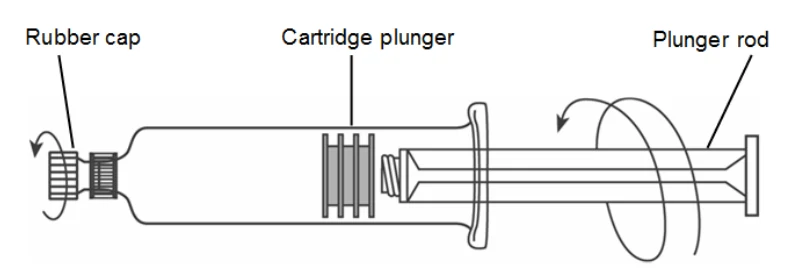
Directions for Use of the DOTAREM Injection glass pre-filled syringe:
- 1) Screw the threaded tip of the plunger rod clockwise into the cartridge plunger and push forward a few millimeters to break any friction between the cartridge plunger and syringe barrel.
- 2)
Holding the syringe vertically so the rubber cap is pointed upward, aseptically remove the rubber cap from the tip of the syringe and attach either a sterile, disposable needle or compatible needleless luer lock tubing set using a push-twist action. At this point, the tubing set is not attached to a patient’s intravenous connection.
- If using a needleless luer lock tubing set, check the connection between the syringe and the tubing as the fluid flows. Ensure that the connection is successful before administration of DOTAREM Injection.
- If using a needle, hold the syringe vertically and push plunger forward until all of the air is evacuated and fluid either appears at the tip of the needle or the tubing is filled. Following the usual venous blood aspiration procedure, complete the DOTAREM injection.
- 3) To ensure complete delivery of the contrast medium, the injection may be followed by a normal saline flush.
- 4) Properly dispose of the syringe and any other materials used.
Pharmacy Bulk Package Preparation:
- The Pharmacy Bulk Package (60 mL and 100 mL vials) is not for use in direct intravenous infusion.
- The transfer of DOTAREM from the Pharmacy Bulk Package should be performed in an aseptic work area, such as laminar flow hood and using aseptic technique and suitable transfer device. The closure shall be penetrated only one time.
- Once the container closure is punctured, the Pharmacy Bulk Package should not be removed from the aseptic work area.
- The Pharmacy bulk Package is used as a multiple dose container with an appropriate transfer device for filling empty sterile syringes.
- Each individual dose of DOTAREM should be promptly used following withdrawal from the Pharmacy Bulk Package.
- The contents of the Pharmacy Bulk Package should be used within 24 hours after initial puncture.
The peel-off tracking label on the syringes/vials should be stuck onto the patient record to enable accurate recording of the gadolinium contrast agent used. The dose used should also be recorded. If electronic patient records are used, the name of the product, the batch number and the dose should be entered into the patient record.
PART II: SCIENTIFIC INFORMATION
13 PHARMACEUTICAL INFORMATION
Drug Substance
The pharmacologically active ingredient, responsible for the diagnostic activity, is gadoteric acid. This entity is not isolable as such as it is formed in situ during the manufacturing process and is directly salified by addition of meglumine to obtain a pH of about 7, leading to the formation of the gadoterate meglumine.
Proper name: Gadoterate meglumine
Chemical name: Meglumine salt of 1,4,7,10-tetraazacyclododecane-N, N’, N’’, N’’’-tetraacetic acid, gadolinium complex
Molecular formula and molecular mass of gadoterate meglumine:
C23H42GdN5O13 and Mw = 753.86 g/mol
Structural formula of gadoterate meglumine in aqueous solution
N N N N CO2 CO2 O2C O2C NH OH OH OH OH OH 2 + ----Gd3+
Physicochemical properties:
| Parameter | Value |
|---|---|
| Density @ 20°C | 1.1753 g/cm3 |
| Viscosity @ 20°C | 3.4 mPa.s |
| Viscosity @ 37°C | 2.4 mPa.s |
| Osmolality | 1350 mOsm/kg water |
| Relaxivity r1 @ 37°C in water, 0.5 T | 3.6 mM-1.s-1 |
| Relaxivity r2 @ 37°C in water, 0.5 T | 4.3 mM-1.s-1 |
The thermodynamic stability constants for gadoterate meglumine (log Ktherm and log Kcond at pH 7.4) are 25.6 and 19.3, respectively.
14 CLINICAL TRIALS
14.1 Clinical Trials by Indication
CNS Imaging in Adult Population
The primary efficacy data are based on two pivotal Phase III studies, DGD-44-050 and DGD-44-051. In both studies, the images (pre-contrast, post-contrast and “paired pre- and post-contrast”) were interpreted by three independent off-site readers blinded to clinical information. Readers of study DGD-44-050 were different and independent from readers of study DGD-44-051.
The primary efficacy analysis compared three patient-level visualization scores (paired images) to baseline MRI (pre-contrast images) for adults who received DOTAREM. The three primary visualization components were: contrast enhancement, border delineation and internal morphology. For each of these components there was a pre-defined scoring scale.
- Study DGD-44-050 is a multicenter, randomized, double-blind, comparative study conducted to determine the safety and efficacy of DOTAREM in patients with known or suspected CNS lesions referred to CE-MRI of the CNS. In this study, 364 adult patients were randomized at a 2:1 ratio to receive either DOTAREM or gadopentetate dimeglumine, each administered at a dose of 0.1 mmol/kg. Among the patients, 38 pediatric patients aged 2-17 years were also enrolled and received DOTAREM, at the same dose of 0.1 mmol/kg. Patients first underwent a baseline (pre-contrast) MRI examination followed by the assigned GBCA administration and a post-contrast MR examination.
- Study DGD-44-051 is a blinded centralized re-read of a previously conducted study (DGD-03-044). This study is a multicenter, open label, study conducted in Europe to determine the safety and efficacy of DOTAREM in 151 patients presenting or suspected of cerebral or spinal tumors, referred to CE-MRI of the CNS. DOTAREM administration was performed in the same manner as in Study DGD-44-050.
These 2 studies included a total of 396 adult patients who received Dotarem, out of which 388 could be analysed for efficacy.
The mean age of Dotarem adult patients was similar in both studies: 53.2 years and 53.9 years (range 18 to 85 years). Study DGD-44-050 enrolled more female patients (53.5%) and racial and ethnic representations were 84% Caucasian, 11% Asian, 4% Black, and 1% other. Study DGD-44-051 enrolled more male patients (55.6%); the majority of patients were Caucasian (97%), 1% were Black and 2% of other ethnicities.
The same primary efficacy analyses using the same co-primary endpoints were applied to both studies. The study sites of both studies were instructed to consistently perform MRI examination using predefined acquisition parameters for all patients at each site.
Study results
The primary efficacy analysis compared paired (pre-+ post-contrast) images to pre-contrast images for adults who received DOTAREM for three parameters of anatomy visualization (border delineation, internal morphology and contrast enhancement).
For each of these parameters there was a pre-defined 3-point scoring scale: unevaluable (0), seen but imperfectly (1) or seen completely/perfectly (2). Lesion counting (up to five largest representative lesions per patient) was also reflected within each component of patient-level visualization score as the patient “paired” and “pre” scores were calculated as the sum of all lesion scores for “paired” and “pre” assessments, respectively. Mean scores (mean of all patients “Paired” scores and mean of all patients “Pre” scores) were computed.
The efficacy of DOTAREM was expected to be demonstrated for at least 2 out of 3 readers independently meeting a statistically significant positive difference between the mean “Paired” score and the mean “Pre” score for each co-primary endpoint.
As shown in Table 11 the evaluation of the primary endpoint demonstrated statistically significant (p<0.001) superiority of “Paired” images over “Pre-contrast” (unenhanced) images for lesion visualization for all three readers in both studies.
Table 11 - Lesion Visualization at patient Level (primary endpoint)
| Study DGD-44-050 | Study DGD-44-051 | |||||||||||
|---|---|---|---|---|---|---|---|---|---|---|---|---|
| Reader 1 | Reader 2 | Reader 3 | Reader 1 | Reader 2 | Reader 3 | |||||||
| Modality | Pre | Paired | Pre | Paired | Pre | Paired | Pre | Paired | Pre | Paired | Pre | Paired |
| Border Delineation | Border Delineation | |||||||||||
| Mean score | 1.06 | 3.30 | 1.62 | 4.49 | 1.43 | 2.54 | 0.94 | 1.98 | 1.41 | 2.18 | 0.34 | 1.62 |
| Difference* | 2.26 | 2.92 | 1.15 | 1.05 | 0.77 | 1.28 | ||||||
| Internal Morphology | Internal Morphology | |||||||||||
| Mean score | 0.97 | 3.70 | 1.76 | 4.49 | 1.45 | 2.93 | 1.09 | 2.23 | 1.34 | 2.28 | 0.67 | 2.41 |
| Difference* | 2.75 | 2.77 | 1.54 | 1.14 | 0.94 | 1.74 | ||||||
| Contrast Enhancement | Contrast Enhancement | |||||||||||
| Mean score | 0.01 | 3.11 | 0.01 | 3.73 | 0.01 | 2.95 | 0.00 | 2.06 | 0.00 | 2.11 | 0.00 | 2.21 |
| Difference* | 3.13 | 3.76 | 2.99 | 2.06 | 2.10 | 2.21 | ||||||
*Difference = Paired mean - Pre mean. All differences are statistically significant (p<0.001).
Table 12 shows the improvement in visualization endpoint: border delineation, internal morphology and contrast enhancement. The percentage of patients with improved lesion visualization for Paired images compared to Pre-contrast images ranged from 60% to 97.8% for study DGD-44-050, and 67.6% to 97.3% for study DGD-44-051.
Table 12 - Lesion visualization improvement
Better Score Endpoints | Study DGD-44-050 | Study DGD-44-051 | ||||||||
|---|---|---|---|---|---|---|---|---|---|---|
| Better score (Paired-Pre) | Better score (Paired-Pre) | |||||||||
| Reader | Reader 1 N=231 | Reader 2 N=232 | Reader 3 N=237 | Reader 1 N=149 | Reader 2 N=149 | Reader 3 N=149 | ||||
| Border Delineation N (%) | 195 (87.4%) | 215 (96.8%) | 132 (60.0%) | 114 (77.0%) | 100 (67.6%) | 114 (77.0%) | ||||
| Internal Morphology N (%) | 218 (97.8%) | 214 (96.4%) | 187 (85.0%) | 131 (88.5%) | 121 (81.8%) | 144 (97.3%) | ||||
| Contrast Enhancement N (%) | 208 (93.3%) | 216 (97.3%) | 208 (94.5%) | 143 (96.6%) | 136 (91.9%) | 139 (93.9%) | ||||
In secondary analysis, both studies showed better lesion visualization on post-contrast images in comparison to pre-contrast images. Image quality and diagnostic confidence were also superior in “paired” images compared to pre-contrast images.
Comparison of the lesion visualization parameters between “paired” and “pre-contrast” (unenhanced) images with gadopentetate dimeglumine was performed for internal validation of the outcomes with DOTAREM in study DGD44-050. The comparison did not show significant differences between the two contrast agents.
CNS Imaging in Pediatric Patients 2-18 years old
For the demonstration of efficacy in CNS imaging for pediatric patients, the efficacy co-primary endpoints in the pivotal Phase III study DGD-44-050 were also assessed in an open-label arm of 38 pediatric patients, with a reasonable representation of age groups from 2 to 17 years of age. The pediatric patients were not exposed to the comparator product. The details of the pivotal Phase III study, DGD-44-050 are presented in Table 13.
Table 13 - Overview of the pivotal study in CNS imaging in Pediatric patients
| Study # | Trial design | Dosage, route of administration and duration | Pediatric subjects | |||
| AIP | FAS | Mean (SD) age [Range] | Gender | |||
| DGD-44-050 | Open, comparative, multicenter | 0.1 mmol/kg IV single dose | 38 | 37 | 9.29 (4.49) [2.9, 17.3] | 16 M (42.1%) 22 F (57.9%) |
AIP: All included population: FAS: Full analysis set
A total of 22 female (58%) and 16 male (42%) pediatric patients, ranging in age from 2 to 17 years (mean age of 9 years), participated in the study. The majority of pediatric patients (68%) were Caucasian, 24% were Black and 8% of other ethnicity.
MRI was performed pre-contrast and then post-contrast following the administration of DOTAREM 0.2 mL/kg (0.1 mmol/kg). The images were evaluated for the same endpoints as in the adult patients.
Study results
DOTAREM-enhanced MRI improved lesion border delineation, lesion internal morphology, and lesion contrast enhancement relative to pre-contrast MRI and these results were comparable to those seen in adults.
Table 14 presents lesion visualization data for each of the 3 co-primary variables for the pediatric population enrolled in study DGD-44-050. For all 3 readers, mean scores for each endpoint were higher for “Paired” (contrast-enhanced + unenhanced images) relative to “Pre” (unenhanced) mean scores according to descriptive statistics.
Table 14 - Lesion visualization at Patient Level (primary endpoint): results of pivotal CNS study for pediatric patients
| Study DGD-44-050 | ||||||
|---|---|---|---|---|---|---|
| Readers | Reader 1 | Reader 2 | Reader 3 | |||
| Modality | Pre | Paired | Pre | Paired | Pre | Paired |
| N Patients | 31 | 32 | 34 | 35 | 33 | 36 |
| Mean (SD) score for : | ||||||
| Border delineation | 1.42 (1.09) | 2.47 (1.52) | 1.18 (1.03) | 3.51 (2.50) | 1.06 (0.66) | 1.36 (1.10) |
| Internal morphology | 1.13 (0.88) | 2.75 (1.50) | 1.41 (0.78) | 3.51 (2.48) | 1.06 (0.56) | 1.81 (1.09) |
| Contrast enhancement | 0 | 1.81 (1.09) | 0 | 2.69 (2.03) | 0 | 1.64 (1.25) |
Abbreviations: Paired = MRI scans obtained before and after DOTAREM administration; Pre = before DOTAREM administration; SD = standard deviation
CNS Imaging in Pediatric Patients <2 years old
One Phase IV, open label, multicenter study (DGD-44-063) was conducted to assess pharmacokinetics, safety and efficacy of DOTAREM in pediatric patients under 2 years of age.
Among the 45 evaluable patients, 28 patients were referred for contrast-enhanced MRI in brain (intracranial), spine and associated tissues to specifically assess DOTAREM-enhanced MRI efficacy in CNS. DOTAREM was administered at a dose of 0.1 mmol/kg body weight (0.2 mL/kg BW). MRI equipment was 1.5T for 75% and 3.0T for 25% of the subjects.
For the demonstration of efficacy, the on-site radiologist analyzed the pre- and post-contrast images to determine the number of lesions and their localization. Lesion visualization was then compared between pre-contrast images and pre + post-contrast images. Lesions (up to 5 largest) were scored using a 3-point scale for 3 co-endpoints: lesion border delineation (1 = None; 2 = Moderate; 3 = Clear and Complete), internal morphology (1= Poorly visible; 2 = Moderately visible; 3 = Sufficiently visible) and contrast enhancement (1 = None; 2 = Weak; 3 = Clear and Bright). Image quality was also categorized as poor, fair, or good according to images providing little or no information, some information or ample information, respectively, for assessing either the absence or the presence of disease.
The 28 patients evaluable for efficacy included 15 boys and 13 girls. Mean age (SD) was 8.2 months (7.2), with 5 patients aged 0-1 month, 6 patients aged 1-3 months and 17 patients aged 3-23 months.
Study results
The overall quality of images was considered “good” for 26 subjects (92.9%) and “fair” for 2 subjects (7.1%) with pre-contrast images while it was “good” for all subjects with pre + post-contrast images.
Lesions were identified in 15 subjects with pre-contrast images and in 16 subjects with pre + post-contrast images. The number of lesions detected per subject ranged from 0 to 11, with a median of 1 lesion per subject and only 2 patients with more than 3 lesions, for pre-contrast images as well as for pre + post-contrast images. The same number of lesions was detected with pre- and pre-post images for 27 subjects while for one subject, 2 lesions were only identified with pre- + post-contrast images (none identified on pre-contrast images).
Consistent with results reported for adults, lesion visualization based on 3 co-endpoints was improved whether the analysis was performed at lesion level, considering up to 5 largest lesions per patient (Table 15) or at patient level (summing the scores of up to 5 lesions for each co-endpoint of lesion visualization) (Table 16).
Table 15 - Lesion Visualization at Lesion Level (up to 5 Largest Lesions per Patient): results of pivotal CNS study for pediatric patients <2years old (DGD-44-063))
All Patients Evaluable for Efficacy N=28 | ||
All Patients Evaluable for Efficacy N=28 | ||
Pre-contrast N=28 lesions[a] | Pre + Post-contrast N=30 lesions[a] | |
Pre-contrast N=28 lesions[a] | Pre + Post-contrast N=30 lesions[a] | |
| Lesion Border Delineation Score | ||
| 1-None | 2 (7.1%) | 0 (0.0%) |
| 2-Moderate | 15 (53.6%) | 8 (26.7%) |
| 3-Clear and complete | 11 (39.3%) | 22 (73.3%) |
| Internal Morphology Score | ||
| 1-Poorly visible | 5 (17.9%) | 0 (0.0%) |
| 2-Moderately visible | 9 (32.1%) | 7 (23.3%) |
| 3-Sufficiently visible | 14 (50.0%) | 23 (76.7%) |
| Contrast Enhancement Score | ||
| 1-None | 28 (100.0%) | 3 (10.0%)[b] |
| 2-Weak | 0 (0.0%) | 4 (13.3%) |
| 3-Clear and bright | 0 (0.0%) | 23 (76.7%) |
[a] Lesions identified in pre- and post-contrast images could be different.
[b] due to the nature of lesions (cyst, post-surgery changes or hemorrhage) that do not capture contrast agent.
Table 16 - Lesion visualization at Patient Level (Sum of Scores): results of pivotal CNS study for pediatric patients <2years old (DGD-44-063)
| Sum of Scores | Pre-contrast N=28 patients | Pre + Post-contrast N=28 patients | Difference[a] N=28 patients |
| Number of Patients with Lesions Detected | N=15 | N=16 | N=15 |
| Mean (SD) score for: | |||
| Lesion Border Delineation | 4.3 (3.7) | 5.1 (4.0) | 0.7 (1.0) |
| Internal Morphology | 4.3 (3.9) | 5.2 (4.3) | 0.9 (1.6) |
| Contrast Enhancement | 1.9 (1.5) | 5.0 (4.5) | 3.1 (3.2) |
[a] Difference: Pre + Post-contrast score minus Pre-contrast score.
Abbreviations: Pre + Post contrast: MRI scans obtained before and after DOTAREM administration; Pre-contrast = before DOTAREM administration; SD = standard deviation.
Additional efficacy data on this specific population were obtained from one prospective post-marketing observational study that included 104 neonates and infants (between 3 days and 18 months) in one pediatric hospital. The administration of DOTAREM at a dose of 0.1 mmol/kg (0.2 ml/kg) in pediatric patients was performed as a bolus injection (1-2 mL/sec), reflecting current clinical practice. Exploration of CNS diseases was the main indication (81.7%). Image quality was rated as “excellent/good” for DOTAREM-enhanced MRI in 102 children (98.1%) and diagnostic contribution was assessed as optimal in 101 children (97.1%).
Cardiac Effects: QT Interval
A randomized, double blind, cross-over, placebo-controlled phase IIb study (DGD-44-039), assessed the effect of the highest cumulative dose of DOTAREM used in clinical practice on QT interval. The cumulative dose of DOTAREM (0.3 mmol/kg) was administered at 0.1 mmol/kg (0.2 mL/kg) as a bolus IV at a rate of 1 to 2 mL/sec followed by a second injection of 0.2 mmol/kg (0.4 mL/kg) 20 minutes later.
A total of 40 patients aged from 18 to 85 years, suffering from a disease for which a contrast-enhanced T 1 MRI examination could be required, were included in the study and randomized to receive DOTAREM and placebo in either sequence order (in-between wash-out of at least 2 days).
The primary criterion was defined as maximum increase from baseline of QT interval and QTc intervals according to Bazett and Fredericia's formula (QTcB and QTcF, respectively). Eleven ECGs were recorded for each patient for each period. The central tendency analysis on absolute values and change from baseline value of QT and/or QTc measured at numerous time points during the study showed no difference between active treatment and placebo. In particular, the time-matched analysis at the end of the second injection (H 21 minutes) confirmed this result. The results from the statistical analysis (Schuirmann’s test) showed no prolongation of QT or QTc intervals by more than 5 ms compared to placebo, when analyzing maximum increases. The analysis of area under curve (AUC) for both treatments confirmed the absence of QT or QTc increase with DOTAREM compared to placebo. Results of the categorical analysis (analysis of outliers) are consistent with the findings of the central analysis. No QT or QTc value above 480 ms and no QT or QTc increase above 60 ms was observed after either treatment. No increase of QT or QTcF greater than 30 ms was observed after DOTAREM administration. QT and QTc values greater than 450 ms were observed in 6 patients (3 patients presented these values under both treatments and 3 under DOTAREM only). Of these 3 patients who received DOTAREM, one 25-year-old female patient presented an isolated QT change associated with bradycardia, one 55-year-old male patient presented an isolated QTcB change associated with increase in HR from baseline and one 47-year-old female patient, who already presented QTc values above 440 ms during the placebo period, presented an isolated QT and QTc after DOTAREM. Increases of QTcB above 30 ms were observed in 7 patients, 4 with placebo and 3 with DOTAREM (the maximal increase observed with DOTAREM being +43.7 ms in the previously mentioned 55-year-old male patient). In addition, the results of the study showed that DOTAREM had no clinically significant effect on the other ECG parameters (namely, HR, PR, QRS, T and U waves). 24-Holter recordings revealed no clinically significant abnormality. Also, there was no AE that could suggest potential proarrhythmic effects of the treatment during the study. There were no clinically significant changes in any of the investigated parameters (SBP, DBP, HR and RR).
The ECG parameter analyses showed that DOTAREM does not induce any modification of ECGs and does not induce QT/QTc interval prolongation after bolus IV administration of the highest therapeutic cumulative dose of 0.3 mmol/kg.
In the study DGD-44-050, ECG recordings were assessed within 24 hours prior to the study MRI, and 30 minutes after contrast agent administration. The following parameters were assessed: HR (RR interval), PR interval, QRS duration and QT and QT Bazett and QT Fredericia. A total of five patients reported abnormality in ECG, including 2 patients showing a slight increase in QTc Bazett (QTcB) (pre-defined max. value 450 msec), but none of the patients had a QTcB greater than 460 msec or an increase in QTcB from baseline of greater than 15 msec. None of patients had an abnormal QTc Fredericia (QTcF) (pre-defined max. value 450 msec). A small and equivalent increase in mean QTc (both Fredericia and Bazett) was seen in both DOTAREM and MAGNEVIST adult patients when comparing baseline to 30 minutes post-injection, but no clinical relevance was observed.
In addition, none of these patients reported abnormal vital signs at 5 or 15 minutes post-injection, adverse events or notable changes in laboratory values following contrast agent injection.
15 MICROBIOLOGY
No microbiological information is required for this drug product.
16 NON-CLINICAL TOXICOLOGY
General Toxicology
Animal pharmacokinetics of gadoterate meglumine were studied in mice, rats, rabbits and dogs mostly after intravenous administration. Main findings from the pharmacokinetic studies conducted in those animal species with gadoterate meglumine, after single intravenous administration, were the following:
- Rapid distribution in the vascular and extracellular compartments, low concentrations of gadolinium in many organs,
- Rapid plasma clearance,
- No protein binding,
- No metabolism,
- Rapid urinary excretion,
- Very low biliary excretion (<0.2%),
- Negligible placental transfer (<0.1% at 30 min and 0.01% at 24 hrs) and milk excretion (<0.002% in 48 hrs).
When given by oral route in rats, oral absorption of gadoterate meglumine was negligible (max 1.2%).
Gadoterate meglumine is dialyzable.
The main pharmacokinetic parameters are presented in Table 17.
Table 17 - Pharmacokinetic parameters of gadoterate meglumine (IV route)
| Rat | Rabbit | Rabbit | Dog | Goat | |
| Dose (mmol/kg) | 0.1 | 0.1 | 0.5 | 0.1 | 0.086 |
| T1/2α (min) | NA | 5.3 | 6.5 | 2 | NA |
| T1/2β (min) | 18 | 38 | 58 | 68 | 50 |
| Vd (mL/kg) | 88 mL | 132 mL/kg | 191 mL/kg | 271 mL/kg | 330 mL/kg |
| ClT (mL/min/kg) | NA | NA | NA | NA | NA |
| ClR (mL/min/kg) | NA | 1.9 e | 2.4 f | 5.0 g | NA |
NA: not available T1/2α: distribution half-life T1/2β: elimination half-life
Vd: distribution volume ClT: total clearance ClR: renal clearance
Single dose toxicity
Single dose / acute toxicity of gadoterate meglumine after intravenous administration was low, whatever the species. No mortality occurred in rats and dogs at dose levels representing 24 and 40 times the intended diagnostic dose in human (0.1 mmol/kg) adjusted for body surface area, respectively. The main findings were depressive central clinical signs in rodents at the lowest doses and a dose-related vacuolated cortical tubular epithelium in kidneys, partially reversible in rats.
Repeat dose toxicity
Repeat administration of gadoterate meglumine for 4 weeks in rats (up to 8 mmol/kg/day) and dogs (up to 1.5 mmol/kg/day) did not lead to major toxicity. As for single administration, the main findings were vacuolated cortical tubular epithelium in kidneys generally associated with an increased kidney weight, these changes being partially reversible after a 4-week treatment free period. At the highest dose levels, vacuolated urothelium, hepatocytes and histiocytes were also noted at the end of the treatment period, but these lesions were totally reversible after a 4-week treatment-free period. A few haematological and biochemical parameters were slightly modified only at very high doses (4 to 8 mmol/kg/day in rats), these effects being totally reversible at the end of a 13-week treatment-free period.
Recent studies conducted in healthy rats injected repeatedly with linear or macrocyclic GBCAs demonstrated that linear agents were associated with progressive and persistent T1-weighed hyperintensity on MRI in the deep cerebellar nuclei (DCN). Signal enhancement in the globus pallidus (GP) could not be seen in the animals. No changes in signal intensities in either DCN or GP were observed for the macrocyclic GBCAs.
Quantitative results using mass spectrometry demonstrated that the total gadolinium concentrations were significantly higher with the linear GBCAs than with the macrocyclic GBCAs. These studies reported no abnormal behavioural changes suggestive of neurological toxicity.
Mutagenicity
Gadoterate meglumine did not demonstrate mutagenic potential in in vitro bacterial reverse mutation assays (Ames test) using Salmonella typhimurium, in an in vitro chromosome aberration assay in Chinese hamster ovary cells, in an in vitro gene mutation assay in Chinese hamster lung cells, nor in an in vivo mouse micronucleus assay.
Reproductive and Developmental Toxicology
No impairment of male or female fertility and reproductive performance was observed in rats after intravenous administration of gadoterate meglumine at the maximum tested dose of 10 mmol/kg/day, given during more than 9 weeks in males and more than 4 weeks in females. Sperm counts and sperm motility were not adversely affected by treatment with the drug.
Developmental toxicity studies were conducted with gadoterate meglumine in rats and rabbits. Gadoterate meglumine was administered intravenously in doses of 0, 2, 4 and 10 mmol/kg/day to female rats for 14 days before mating throughout the mating period and until gestation day (GD) 17. Pregnant rabbits were intravenously administered gadoterate meglumine at the dose levels of 0, 1, 3 and 7 mmol/kg/day from GD6 to GD19. No effects on embryo fetal development were observed in rats or rabbits at doses up to 10 mmol/kg/day in rats or 3 mmol/kg/day in rabbits. Maternal toxicity was observed in rats at 10 mmol/kg/day and in rabbits at 7 mmol/kg/day.
In the pre- and postnatal development in rats, at the dose level of 0.8 mmol/kg/day, the F1-offspring survival (viability) and mean litter size were reduced on Day 4 post-partum compared to the control animals. In the same group, the mean motor activity was slightly reduced and in Week 5 post-partum the mean body weights were reduced in rats of both genders. The no observed adverse effect level (NOAEL) is therefore considered to be 2.4 mmol/m2/day, compared to the human recommended dose of 3.7 mmol/m2 (single dose).
Special Toxicology
Local intolerance reactions, including moderate irritation associated with infiltration of inflammatory cells were observed after perivenous injection in rabbits suggesting the possibility of local irritation if the contrast medium leaks around the veins in a clinical setting
Gadoterate meglumine did not cause any active systemic anaphylactic reaction and did not induce any antigenicity in guinea pigs.
Juvenile Toxicity
Toxicity of DOTAREM was studied in neonatal and juvenile (pre- and post-weaning) rats following a single i.v. administration at 10 days of age or repeated i.v. administrations every four days from 10 days to 4 weeks of age. Dose levels were 0.6, 1.25 and 2.5 mmol/kg/day (1, 2 and 4 times the maximum human dose based on surface area). Animals were sacrificed either after the single or last treatment or after a 60 day-treatment-free period.
DOTAREM was well tolerated at all dose levels and had no effect on growth, pre-weaning development, behavior and sexual maturation. Dosages of total Gd in liver, bone, kidneys and skin showed that only traces of Gd were quantifiable almost exclusively in the kidneys (excretory organ) two months after a single or repeated administrations. By comparing organ Gd concentrations after single or repeated dosing, no accumulation of total Gd was observed in any of the assessed organs and at any dose. 2.5 mmol/kg was considered as a no adverse effect level (NOAEL).