


Product Monograph - Omniscan
RECENT MAJOR LABEL CHANGES
| 3 Serious Warnings and Precautions Box, Not for Intrathecal Use | 2025-10 |
| 7 Warnings and Precautions, Risks of Intrathecal Use | 2025-10 |
| 7 Warnings and Precautions, 7.1.1 Pregnant Women | 2023-11 |
TABLE OF CONTENTS
Sections or subsections that are not applicable at the time of authorization are not listed.
RECENT MAJOR LABEL CHANGES ........................................................................................... 2
TABLE OF CONTENTS ............................................................................................................. 2
PART I: HEALTH PROFESSIONAL INFORMATION ..................................................................... 4
1 INDICATIONS .............................................................................................................. 4
1.1 Pediatrics ................................................................................................................. 4
1.2 Geriatrics ................................................................................................................. 4
2 CONTRAINDICATIONS ................................................................................................. 4
3 SERIOUS WARNINGS AND PRECAUTIONS BOX ............................................................ 5
4 DOSAGE AND ADMINISTRATION ................................................................................. 5
4.1 Dosing Considerations ............................................................................................ 6
4.2 Recommended Dose and Dosage Adjustment ....................................................... 6
4.4 Administration ........................................................................................................ 7
5 OVERDOSAGE ............................................................................................................. 7
6 DOSAGE FORMS, STRENGTHS, COMPOSITION AND PACKAGING ................................. 7
7 WARNINGS AND PRECAUTIONS .................................................................................. 8
7.1 Special Populations ............................................................................................... 13
7.1.1 Pregnant Women .............................................................................................. 13
7.1.2 Breast-feeding ................................................................................................... 13
7.1.3 Pediatrics ........................................................................................................... 13
7.1.4 Geriatrics ........................................................................................................... 14
8 Adverse Reactions .................................................................................................... 14
8.1 Adverse Reaction Overview .................................................................................. 14
8.2 Clinical Trial Adverse Reactions ............................................................................ 14
8.2.1 Clinical Trial Adverse Reactions – Pediatrics..................................................... 16
8.5 Post-Market Adverse Reactions ............................................................................ 16
9 DRUG INTERACTIONS ............................................................................................... 17
9.2 Drug Interactions Overview .................................................................................. 17
9.4 Drug-Drug Interactions ......................................................................................... 17
9.5 Drug-Food Interactions ......................................................................................... 17
9.6 Drug-Herb Interactions ......................................................................................... 18
9.7 Drug-Laboratory Test Interactions........................................................................ 18
10 CLINICAL PHARMACOLOGY ....................................................................................... 18
10.1 Mechanism of Action ............................................................................................ 18
10.2 Pharmacodynamics ............................................................................................... 18
10.3 Pharmacokinetics .................................................................................................. 18
11 STORAGE, STABILITY AND DISPOSAL ......................................................................... 19
12 SPECIAL HANDLING INSTRUCTIONS ........................................................................... 19
PART II: SCIENTIFIC INFORMATION ...................................................................................... 20
13 PHARMACETUICAL INFORMATION ........................................................................... 20
14 CLINICAL TRIALS ....................................................................................................... 21
14.1 Clinical Trials by Indication ................................................................................... 21
15 MICROBIOLOGY ....................................................................................................... 23
16 NON-CLINICAL TOXICOLOGY ..................................................................................... 23
PATIENT MEDICATION INFORMATION ................................................................................. 26
PART I: HEALTH PROFESSIONAL INFORMATION
1 INDICATIONS
Omniscan (gadodiamide injection) is indicated for:
- contrast enhancement of magnetic resonance imaging (MRI), in adults and the pediatric population, of lesions of the central nervous system with expected abnormal vascularity or those thought to cause abnormalities in the blood-brain barrier. Omniscan has been shown to facilitate visualization of central nervous system lesions including but not limited to tumors.
- intravenous administration for use in MRI in adults to facilitate the visualization of lesions with abnormal vascularity within the thoracic, abdominal, pelvic cavities, breast, retroperitoneal space and musculoskeletal system.
- intravenous administration for use in magnetic resonance angiography (MRA) for the detection and localization of stenosis in renal arteries and aorto-iliac arteries.
1.1 Pediatrics
Pediatrics (2 to 18 years): Based on the data submitted and reviewed by Health Canada, the safety and efficacy of Omniscan in pediatric patients has been established. Therefore, Health Canada has authorized an indication for pediatric use (see 2 CONTRAINDICATIONS).
1.2 Geriatrics
Geriatrics: Evidence from clinical studies and experience suggests that use in the geriatric population is not associated with differences in safety or effectiveness.
2 CONTRAINDICATIONS
Omniscan (gadodiamide) is contraindicated in:
- chronic severe renal insufficiency where glomerular filtration rate is <30 mL/min/1.73m2
- acute kidney injury
- neonates up to 4 weeks of age due to their immature renal function
- Omniscan is contraindicated in patients who are hypersensitive to this drug or to any ingredient in the formulation, including any non-medicinal ingredient, or component of the container. For a complete listing, see 6 DOSAGE FORMS, STRENGTHS, COMPOSITION AND PACKAGING.
3 SERIOUS WARNINGS AND PRECAUTIONS BOX
Serious Warnings and Precautions
NOT FOR INTRATHECAL USE
Intrathecal administration of GBCAs can cause serious, life-threatening, and fatal reactions. Omniscan is not approved for intrathecal use (see 7 - WARNINGS AND PRECAUTIONS, Risks of Intrathecal Use).
Inadvertent intrathecal use of Omniscan (gadodiamide) has caused convulsions, coma, sensory and motor neurologic deficits.
WARNINGS: NEPHROGENIC SYSTEMIC FIBROSIS (NSF)
Gadolinium-based contrast agents (GBCAs) increase the risk for NSF in patients with renal insufficiency. Omniscan is contraindicated in:
NSF may result in fatal or debilitating systemic fibrosis affecting the skin, muscle, and internal organs. Before administering Omniscan, screen all patients for acute kidney injury and any other conditions that may reduce renal function. For patients at risk for chronically reduced renal function (e.g., age > 60 years, diabetes mellitus or chronic hypertension), estimate the GFR through laboratory testing.
In these patients, avoid use of GBCAs unless the diagnostic information is essential and not available with non-contrast enhanced magnetic resonance imaging (MRI). When administering a GBCA, do not exceed the recommended dose and allow a sufficient period of time for elimination of the agent from the body prior to any readministration (see 7 WARNINGS AND PRECAUTIONS and 8 ADVERSE REACTIONS ).
The use of Omniscan in patients with mild to moderate renal impairment (GFR ≥ 30 to < 89 mL / min / 1.73 m2) needs to be weighed against the risk of performing alternative medical imaging by health care professionals.
Omniscan should be used with caution in infants less than 1 year of age.
4 DOSAGE AND ADMINISTRATION
Omniscan (gadodiamide) injection should be drawn into the syringe and used immediately. If nondisposable equipment is used, scrupulous care should be taken to prevent residual contamination with traces of cleansing agents.
Contrast-enhanced MRI should start shortly after administration of the contrast medium. Optimal enhancement is generally observed within 45 minutes after injection of Omniscan. T1- weighted scanning sequences are particularly suitable for contrast-enhanced examinations with Omniscan. In the investigated range of field strengths, from 0.15 Tesla up to 1.5 Tesla, the relative image contrast was found to be independent of the applied field strength.
4.1 Dosing Considerations
Use of macrocyclic agents may be preferable in certain patients such as those for whom repeated GBCA doses may need to be considered due to individual clinical circumstances and in other potentially vulnerable patients such as children and pregnant women (see 7 WARNINGS AND PRECAUTIONS).
4.2 Recommended Dose and Dosage Adjustment
The recommended dose of Omniscan for imaging of the central nervous system is 0.2 mL/kg (0.1 mmol/kg) administered as a bolus intravenous injection. (See the Dosage Chart). If medically indicated, preprocedural medication (e.g., sedatives) may be administered according to the normal routine for MR examinations.
The recommended dose of Omniscan for imaging of the body is 0.6 mL/kg (0.3 mmol/kg), administered as a bolus intravenous injection (See the Dosage Chart).
The recommended dose of Omniscan for MRA is 0.2 mL/kg (0.1 mmol/kg) administered as a bolus intravenous injection at an injection rate of 1–4 mL/sec.
The lowest effective dose should be used. Calculate the dose based on the patient’s body weight, and do not exceed the recommended dose per kilogram of body weight.
DOSAGE CHART
| BODY WEIGHT | PEDIATRIC 0.1 mmol/kg | ADULT 0.1 mmol/kg 0.3 mmol/kg | ||
| kg | lb | VOLUME (mL) | VOLUME (mL) | |
| 5 | 11 | 1.0 | ||
| 10 | 22 | 2.0 | ||
| 12 | 26 | 2.4 | ||
| 14 | 31 | 2.8 | ||
| 16 | 35 | 3.2 | ||
| 18 | 40 | 3.6 | ||
| 20 | 44 | 4.0 | ||
| 22 | 48 | 4.4 | ||
| 24 | 53 | 4.8 | ||
| 26 | 57 | 5.2 | ||
| 28 | 62 | 5.6 | ||
| 30 | 66 | 6.0 | ||
| 40 | 88 | 8.0 | 8.0 | 24.0 |
| 50 | 110 | 10.0 | 10.0 | 30.0 |
| 60 | 132 | 12.0 | 12.0 | 36.0 |
| 70 | 154 | 14.0 | 14.0 | 42.0 |
| 80 | 176 | 16.0 | 16.0 | 48.0 |
| 90 | 198 | - | 18.0 | 54.0 |
| 100 | 220 | - | 20.0 | 60.0 |
| 110 | 242 | - | 22.0 | 66.0 |
| 120 | 264 | - | 24.0 | 72.0 |
| 130* | 286 | - | 26.0 | 78.0 |
* The heaviest patient in clinical studies weighed 136 kg.
To ensure complete injection of the contrast medium, the injection should be followed by a 5 mL flush of 0.9% sodium chloride. The imaging procedure should be completed within 1 hour of administration of Omniscan.
4.4 Administration
Parenteral products should be inspected visually for particulate matter and discoloration prior to administration, whenever solution and container permit. Do not use the solution if it is discolored or particulate matter is present. Any unused portion must be discarded.
5 OVERDOSAGE
Clinical consequences of overdosage have not been reported and acute symptoms of toxicity are unlikely in patients with normal renal function. Treatment is symptomatic. There is no antidote for this contrast medium. In patients with delayed elimination due to renal insufficiency and in patients who have received excessive doses, the contrast medium may theoretically be eliminated by hemodialysis. It is unknown if hemodialysis reduces the risk of NSF.
For management of a suspected drug overdose, contact your regional poison control centre.
6 DOSAGE FORMS, STRENGTHS, COMPOSITION AND PACKAGING
Table 1 – Dosage Forms, Strengths, Composition and Packaging
| Route of Administration | Dosage Form/ Strength/ Composition | Available Package Size | Non-medicinal Ingredients |
| Intravenous | Solution/287 mg/mL (0.5 mmol/mL)/ gadodiamide | 10 mL vial, box of 10 | Caldiamide sodium, hydrochloric acid and/or sodium hydroxide, water for injection. |
| 15 mL fill in 20 mL vial, box of 10 | |||
| 20 mL vial, box of 10 |
Composition
Omniscan (gadodiamide) injection is a 0.5 mol/L solution of the gadolinium complex of diethylenetriaminepentaacetic acid bismethylamide. It is a nonionic extracellular enhancing agent for magnetic resonance imaging and is provided as a sterile, clear, colorless to slightly yellow, aqueous solution. Each mL contains 287 mg gadodiamide, 12 mg caldiamide sodium and water for injection. The pH is adjusted between 5.5 and 7.0 with hydrochloric acid and/or sodium hydroxide.
Pertinent physicochemical data for Omniscan are noted below:
| PARAMETER | ||
| Osmolality (mOsm/kg water) | @ 37oC | 789 |
| Viscosity (cp) | @ 20oC @ 37oC | 2.0 1.4 |
| Density (g/cm3) | @ 20oC | 1.15 |
Omniscan has an osmolality 2.8 times that of plasma (285 mOsm/kg water) at 37oC and is hypertonic under conditions of use.
7 WARNINGS AND PRECAUTIONS
Please see 3 SERIOUS WARNINGS AND PRECAUTIONS BOX.
General
Diagnostic procedures involving the use of contrast agents should be conducted under supervision of a physician with the prerequisite training and a thorough knowledge of the procedure to be performed. Omniscan (gadodiamide) injection should be drawn into the syringe and used immediately. If nondisposable equipment is used, scrupulous care should be taken to prevent residual contamination with traces of cleansing agents.
Accumulation of Gadolinium in Brain
The current evidence suggests that gadolinium may accumulate in the brain after multiple administrations of GBCAs. Increased signal intensity on non-contrast T1 weighted images of the brain has been observed after multiple administrations of GBCAs in patients with normal renal function. Gadolinium has been detected in brain tissue after multiple exposures to GBCAs, particularly in the dentate nucleus and globus pallidus. The evidence suggests that the risk of gadolinium accumulation is higher after repeat administration of linear than after repeat administration of macrocyclic agents.
The clinical significance of gadolinium accumulation in the brain is presently unknown; however, gadolinium accumulation may potentially interfere with the interpretation of MRI scans of the brain.
In order to minimize potential risks associated with gadolinium accumulation in the brain, it is recommended to use the lowest effective dose and perform a careful benefit risk assessment before administering repeated doses.
Carcinogenesis and Mutagenesis
Refer to 16 NON-CLINICAL TOXICOLOGY.
Cardiovascular
The effect of Omniscan on QT prolongation has not been studied in a dedicated QT prolongation clinical study.
Convulsive States
While there is no evidence suggesting that Omniscan directly precipitates convulsions, the possibility that it may decrease the convulsive threshold in susceptible patients cannot be ruled out. Appropriate precautionary measures should be taken with patients predisposed to seizure.
Hypersensitivity
As with other contrast media, Omniscan can be associated with anaphylactoid/hypersensitivity or other idiosyncratic reactions, characterized by cardiovascular, respiratory or cutaneous manifestations, which can be life threatening or even fatal. Most of these reactions occur within 30 minutes of administration.
Therefore, post procedure observation of the patient is recommended for at least 30 minutes after the administration of Omniscan.
As with other contrast media, delayed reactions occurring hours or days after administration have been observed, though rarely.
The decision to use Omniscan should be made after careful evaluation of the risk-benefit ratio in patients with a history of previous reaction to other contrast media (Omniscan is contraindicated in patients who are hypersensitive to this drug (see 2 CONTRAINDICATIONS)), allergic disposition, bronchial asthma or female patients.
Patients with history of allergy, drug reactions or other hypersensitivity-like disorders should
be closely observed for several hours after drug administration.
Monitoring and Laboratory Tests
Omniscan interferes with serum calcium measurements with some colorimetric (complexometric) methods commonly used in hospitals. There is also the potential for Omniscan to interfere with serum iron, magnesium and zinc measurements resulting in asymptomatic transitory changes. The clinical significance is unknown. In patients with normal renal function, this effect lasts for 12-24 hours. In patients with decreased renal function this effect can last longer.
After patients receive Omniscan, careful attention should be used in selecting the type of method used for these measurements.
Elevation of creatine kinase has been observed in clinical trials. The source and clinical significance of this is unknown.
Nephrogenic Systemic Fibrosis (NSF)
There have been reports of nephrogenic systemic fibrosis (NSF) associated with use of Omniscan (gadodiamide) and other gadolinium containing contrast agents in patients with acute or chronic renal insufficiency of any severity. In these patients, avoid use of GBCAs unless the diagnostic information is essential and not available with non-contrast enhanced magnetic resonance imaging (MRI). For patients receiving hemodialysis, healthcare professionals may consider prompt hemodialysis following GBCA administration in order to enhance the contrast agent’s elimination. However, it is unknown if hemodialysis prevents NSF.
NSF development is considered a potential class-related effect of all GBCAs.
Post-marketing reports have identified the development of NSF following single and multiple administrations of GBCAs. These reports have not always identified a specific agent. Where a specific agent was identified, the most commonly reported agent was gadodiamide (Omniscan™), followed by gadopentetate dimeglumine (Magnevist®) and gadoversetamide (OptiMARK®). NSF has also developed following the sequential administration of gadodiamide with gadobenate dimeglumine (MultiHance®) or gadoteridol (ProHance®). The number of post-marketing reports is subject to change over time and may not reflect the true proportion of cases associated with any specific GBCA.
The extent of risk for NSF following exposure to any specific GBCA is unknown and may vary among the agents. Published reports are limited and predominantly estimate NSF risks with gadodiamide. In one retrospective study of 370 patients with severe renal insufficiency who received gadodiamide, the estimated risk for development of NSF was 4%. The risk, if any for the development of NSF among patients with mild to moderate renal insufficiency or normal renal function is unknown, and the cautious utilization of the lowest possible dose of GBCA is preferable.
Screen all patients for renal dysfunction. For patients at risk for chronically reduced renal
function (e.g., age > 60 years, diabetes mellitus or chronic hypertension), estimate the GFR through laboratory testing. When administering a GBCA, do not exceed the recommended dose and allow a sufficient period of time for elimination of the agent from the body prior to any readministration. (see 7 WARNINGS AND PRECAUTIONS).
A skin biopsy is necessary in order to exclude the diagnosis of similarly presenting skin disorders (e.g., scleromyxedema). (see 3 SERIOUS WARNINGS AND PRECAUTIONS BOX and 7 WARNINGS AND PRECAUTIONS and 8 ADVERSE REACTIONS ).
When administering a GBCA, do not exceed the recommended dose.
The safety of repeated doses has not been studied. If the physician determines sequential repeat examinations are required, a suitable interval of time between administrations should be observed to allow for clearance of the drug from the body. A period of at least 7 days should elapse if a repeat scan is considered.
Among the factors that may increase the risk for NSF are repeated or higher than recommended doses of a GBCA, and the degree of renal function impairment.
Renal
Exposure to GBCAs increases the risk for NSF in patients with:
- acute or chronic severe renal insufficiency (glomerular filtration rate <30 mL/min/1.73m2)
- Screen patients for acute kidney injury and other conditions that may reduce renal function. Features of acute kidney injury consist of rapid (over hours to days) and usually reversible decrease in kidney function, commonly in the setting of surgery, severe infection, injury or drug-induced kidney toxicity. Serum creatinine levels and estimated GFR may not reliably assess renal function in the setting of acute kidney injury. For patients at risk for chronically reduced renal function (e.g., age > 60 years, diabetes mellitus or chronic hypertension), estimate the GFR through laboratory testing.
- The risk, if any for the development of NSF among patients with mild to moderate renal insufficiency or normal renal function is unknown, and the cautious utilization of the lowest possible dose of GBCA is preferable. Omniscan should only be used after careful risk-benefit evaluation in patients with mild to moderate renal impairment (GFR ≥ 30 to < 89 mL /min/ 1.73 m2) (see 7 WARNINGS AND PRECAUTIONS).
- In patients with renal insufficiency, acute renal failure requiring dialysis or worsening renal function have occurred, mostly within 48 hours of Omniscan Injection. The risk of renal failure may increase with increasing dose of gadolinium contrast. Use the lowest necessary dose of contrast and evaluate renal function in patients with renal insufficiency. Acute renal failure was observed in < 1% of patients in Omniscan clinical studies (see 8 ADVERSE REACTIONS).
Since Omniscan is cleared from the body by glomerular filtration, caution should be exercised in patients with impaired renal function. Omniscan can be removed from circulation by hemodialysis.
Adequate time should elapse between administration of iodine containing contrast media and enhanced MRI examination, due to the possibility of inducing reversible renal failure. A single case of reversible renal failure occurred in a clinical study when a patient with previously reported normal kidney function, was administered a high dose of Omniscan within 24 hours of prior examination with an iodine containing contrast agent.
If, in the clinical judgment of the physician, sequential or repeat examinations are required, a suitable interval of time between administrations should be observed to allow for normal clearance of the drug from the body.
Risks of Intrathecal Use
Serious, life-threatening and fatal cases, primarily with neurological reactions (e.g., coma, encephalopathy, seizures), have been reported with off-label intrathecal use of GBCAs. Omniscan is not approved for intrathecal use (see 3 - SERIOUS WARNINGS AND PRECAUTIONS; 4.1 Dosing Considerations).
Sickle Cell/Hemolytic Anemia
Omniscan injection in patients with sickle cell anemia and other hemoglobinopathies has not been studied.
Patients with other hemolytic anemias have not been adequately evaluated following administration of Omniscan to exclude the possibility of increased hemolysis.
Skin
NSF was first identified in 1997 and has so far, been observed only in patients with renal disease. This is a systemic disorder with the most prominent and visible effects on the skin. Cutaneous lesions associated with this disorder are caused by excessive fibrosis and are usually symmetrically distributed on the limbs and trunk. Involved skin becomes thickened which may inhibit flexion and extension of joints and result in severe contractures. The fibrosis associated with NSF can extend beyond dermis and involve subcutaneous tissues, striated muscles, diaphragm, pleura, pericardium, and myocardium. NSF may be fatal. (see 3 SERIOUS WARNINGS AND PRECAUTIONS BOX and 7 WARNINGS AND PRECAUTIONS and 8 ADVERSE REACTIONS).
7.1 Special Populations
7.1.1 Pregnant Women
There are no adequate and well-controlled studies in pregnant women.
GBCAs cross the placenta and result in fetal exposure and gadolinium retention. Omniscan should be used during pregnancy only if the benefit justifies the potential risk to the fetus. There is no conclusive evidence of the clear association between GBCAs and adverse effects in the exposed fetus. However, a retrospective cohort study, comparing pregnant women who had a GBCA MRI to pregnant women who did not have an MRI, reported a higher occurrence of stillbirths and neonatal deaths in the group receiving GBCA MRI. Limitations of this study include a lack of comparison with non-contrast MRI, lack of information about the maternal indication for MRI, and the type of GBCA used. Overall, these data preclude a reliable evaluation of the potential risk of adverse fetal outcomes with the use of GBCAs in pregnancy.
There are no clinical data available with regard to effects on fertility.
Use of macrocyclic agents may be preferable in certain patients such as those for whom repeated GBCA doses may need to be considered due to individual clinical circumstances and in other potentially vulnerable patients such as pregnant women.
7.1.2 Breast-feeding
It is not known whether this drug is excreted in human milk. Because many drugs are excreted in human milk, caution should be exercised when Omniscan is administered to a nursing woman. If lactating patients receive Omniscan, they should stop breast feeding for 24 hours and discard the milk.
7.1.3 Pediatrics
Due to immature renal function, Omniscan should be used with caution in infants less than 1 year of age (see 3 SERIOUS WARNINGS AND PRECAUTIONS BOX).
Omniscan is contraindicated in neonates up to 4 weeks of age.
The cautious utilization of the lowest possible dose of Omniscan for children is recommended, (see 7 WARNINGS AND PRECAUTIONS).
No studies have been conducted in pediatric patients with severe renal or hepatic dysfunction; clinically unstable hypertension or uncontrolled hypertension; and in premature infants (see 8 ADVERSE REACTIONS).
A period of at least 7 days should elapse if a repeat scan is considered. (see 7 WARNINGS AND PRECAUTIONS). See 10.3 Pharmacokinetics for information on the Pharmacokinetics in adults. Gadolinium is retained in paediatric brains similar in amount and distribution to adults. Developing paediatric brains may be more susceptible to the potential effects of gadolinium exposure.
Use of macrocyclic agents may be preferable in potentially vulnerable patients such as children.
7.1.4 Geriatrics
No specific precautions other than those pertinent to MRI and Omniscan in general are applicable for elderly patients.
8 ADVERSE REACTIONS
8.1 Adverse Reaction Overview
The most frequent adverse reactions observed in adult patients during Omniscan (gadodiamide) clinical trials were nausea, headache, and dizziness with an incidence of 3% or less. This includes all reported adverse events regardless of attribution. The majority of these adverse reactions were of mild to moderate intensity.
8.2 Clinical Trial Adverse Reactions
Clinical trials are conducted under very specific conditions. Therefore, the adverse reaction rates observed in the clinical trials may not reflect the rates observed in practice and should not be compared to the rates in the clinical trials of another drug. Adverse reaction information from clinical trials may be useful in identifying and approximating rates of adverse drug reactions in real-world use.
Adults
Table 2 shows the adverse reactions that occurred in less than 1% of the adult patients during clinical trials.
Table 2 - Adverse Reactions Occurring in Less Than 1% of Patients During Clinical Trials
| MedDRA Term | |||
| Adverse Reactions Occurring in Less Than 1% of Adults | |||
| During Clinical Trials | |||
| Cardiac disorders | Cardiac failure Arrhythmia Myocardial infarction resulting in death in patients with ischemic heart disease | ||
| Ear and labyrinth disorders | Tinnitus | ||
| Eye disorders | Abnormal vision | ||
| MedDRA Term | |||
| Adverse Reactions Occurring in Less Than 1% of Adults | |||
| During Clinical Trials | |||
| Gastrointestinal disorders | Abdominal pain Diarrhea Eructation Melena Dry mouth Vomiting | ||
General disorders and administration site conditions | Asthenia Chest Pain Fatigue Feeling hot Fever Injection site reaction Malaise Pain Rigors | ||
| Immune system disorders | Anaphylactoid reactions (characterized by cardiovascular, respiratory, and cutaneous symptoms) | ||
| Infections and infestations | Rhinitis | ||
| Metabolism and nutrition disorders | Anorexia | ||
| Musculoskeletal and connective tissue disorders | Arthralgia Myalgia | ||
| Nervous system disorders | Abnormal coordination Aggravated migraine Aggravated multiple sclerosis (characterized by sensory and motor disturbances) Ataxia Convulsions (including grand mal) Paresthesia Somnolence Syncope Taste loss Taste perversion Tremor | ||
| Psychiatric disorders | Anxiety Personality disorder | ||
| Renal and urinary disorders | Acute reversible renal failure In patients with renal insufficiency: acute (nonreversible) renal failure Increase in blood creatinine | ||
| MedDRA Term | |||
| Adverse Reactions Occurring in Less Than 1% of Adults | |||
| During Clinical Trials | |||
| Respiratory, thoracic, and mediastinal disorders | Dyspnea | ||
| Skin and subcutaneous tissue disorders | Pruritus Rash Erythematous rash Skin discoloration Sweating increased Urticaria | ||
| Vascular disorders | Deep thrombophlebitis Hot flushes Flushing Vasodilatation | ||
8.2.1 Clinical Trial Adverse Reactions – Pediatrics
Three adverse events occurred in 3 of 91 (3%) patients during Omniscan clinical trials in pediatric patients. This includes all adverse events regardless of attribution.
General disorders and administration site conditions: Fever.
Hepatobiliary disorders: Abnormal hepatic function.
Skin and subcutaneous tissue disorders: Rash.
The fever and rash were of mild intensity and the abnormal hepatic function was of severe intensity (although of uncertain relationship to administration of Omniscan).
8.5 Post-Market Adverse Reactions
Post-marketing reports have identified the development of NSF following single and multiple administrations of GBCAs. These reports have not always identified a specific agent. Where a specific agent was identified, the most commonly reported agent was gadodiamide (OmniscanTM), followed by gadopentetate dimeglumine (Magnevist®) and gadoversetamide (OptiMARK®). NSF has also developed following the sequential administration of gadodiamide with gadobenate dimeglumine (Multihance®) or gadoteridol (ProHance®). The number of post-marketing reports is subject to change over time and may not reflect the true proportion of cases associated with any specific GBCA. The extent of risk for NSF following exposure to any specific GBCA is unknown and may vary among the agents. Published reports are limited and predominantly estimate NSF risks with gadodiamide. In one retrospective study of 370 patients with severe renal insufficiency who received gadodiamide, the estimated risk for development of NSF was 4%. The risk, if any for the development of NSF among patients with
mild to moderate renal insufficiency or normal renal function is unknown, and the cautious utilization of the lowest possible dose of GBCA is preferable.
There are rare reports of pathologic skin changes including gadolinium associated plaques in patients with normal renal function.
Postmarketing reports of adverse events involving multiple organ systems in patients with normal renal function have been received. A causal link to gadolinium retention has not been established. These events include fatigue, asthenia, pain syndromes, and heterogeneous clusters of symptoms in the neurological, cutaneous, and musculoskeletal systems. While clinical consequences of gadolinium retention have not been established in patients with normal renal function, certain patients might be at higher risk. These include patients requiring multiple lifetime doses, pregnant and paediatric patients (see 3 SERIOUS WARNINGS AND PRECAUTIONS BOX and 7 WARNINGS AND PRECAUTIONS).
Body as a Whole-General Disorders: Hypersensitivity, injection site pain, shivering, anaphylactic / anaphylactoid shock.
Cardiovascular Disorders: tachycardia.
Central and Peripheral Nervous System Disorders: transient parosmia.
Respiratory System Disorders: coughing, bronchospasm, respiratory distress, throat irritation, sneezing.
Skin and Appendage Disorders: Nephrogenic systemic fibrosis (NSF), face oedema, angioedema, skin plaque*
* Cases of gadolinium associated skin plaques with demonstrated sclerotic bodies on histology have been reported with gadodiamide in patients who do not otherwise have symptoms or signs of nephrogenic systemic fibrosis
9 DRUG INTERACTIONS
9.2 Drug Interactions Overview
Administration of iodine-containing contrast agents was restricted to 24 hours pre-injection and 24 hours post Omniscan injection. Similarly, administration of other gadolinium-based contrast agents was restricted to 24 hours pre-injection and 24 hours post Omniscan injection. Therefore, safety data of administration of Omniscan in conjunction with iodine-containing contrast agents or other gadolinium-based contrast agents are not available.
9.4 Drug-Drug Interactions
Interactions with other drugs have not been established.
9.5 Drug-Food Interactions
Interactions with food have not been established.
9.6 Drug-Herb Interactions
Interactions with herbal products have not been established.
9.7 Drug-Laboratory Test Interactions
Interactions with laboratory tests have not been established.
10 CLINICAL PHARMACOLOGY
10.1 Mechanism of Action
Omniscan (gadodiamide) injection was developed as a contrast agent for diagnostic use in magnetic resonance imaging (MRI). Gadodiamide is a paramagnetic agent with unpaired electron spins which generate a local magnetic field. As water protons move through this local magnetic field, the changes in magnetic field experienced by the protons reorient them with the main magnetic field more quickly than in the absence of a paramagnetic agent.
In magnetic resonance imaging, visualization of normal and pathological brain and spinal tissue depends in part on variations in the radiofrequency signal intensity. These variations occur due to: changes in proton density; alteration of the spin-lattice or longitudinal relaxation time (T1); and variation of the spin-spin or transverse relaxation time (T2).
By increasing the relaxation rate, Omniscan decreases both the T1 and T2 relaxation times in tissues where it is distributed. At clinical doses, the effect is primarily on the T1 relaxation time, and produces an increase in signal intensity.
The current evidence suggests that gadolinium may accumulate in the brain after repeated administrations of GBCAs although the exact mechanism of gadolinium passage into the brain has not been established. [Lack of enhancement need not indicate absence of pathology since some types of low grade malignancies or inactive MS-plaques fail to enhance; it can be used for differential diagnosis between different pathologies.] Disruption of the blood-brain barrier or abnormal vascularity allows accumulation of Omniscan in lesions such as neoplasms, abscesses and subacute infarcts. The extended time for Omniscan to be accumulated in the lesions is unknown.
10.2 Pharmacodynamics
Secondary Pharmacodynamics
There were no clinically significant deviations from preinjection values in hemodynamic, blood and urine laboratory parameters following intravenous injection of gadodiamide in healthy volunteers. However, a minimal transient increase in serum iron levels 8 to 48 hours after gadodiamide injection was observed.
10.3 Pharmacokinetics
Distribution
The pharmacokinetics of intravenously administered Omniscan in normal subjects conforms to an open, two-compartment model with mean distribution and elimination half-lives (reported as mean ± SD) of 3.7 ± 2.7 minutes and 77.8 ± 16 minutes, respectively.
Elimination
Gadodiamide is eliminated primarily in the urine with 95.4 ± 5.5% (mean ± SD) of the administered dose eliminated by 24 hours. There is no detectable biotransformation or decomposition of gadodiamide. The renal and plasma clearance rates of gadodiamide are nearly identical (1.7 and 1.8 mL/min/kg, respectively), and are similar to that of substances excreted primarily by glomerular filtration. The volume of distribution of gadodiamide (200 ± 61 mL/kg) is equivalent to that of extracellular water. No protein binding has been observed.
Plasma clearance and elimination half-life were independent of dose after injection of 0.1 and 0.3 mmol/kg. No metabolites have been detected.
Following GBCA administration, trace amounts of gadolinium is present for months or years in brain, bone, skin, and other organs.
11 STORAGE, STABILITY AND DISPOSAL
All solutions are sterilized by autoclaving and contain no preservatives. Unused portions must be discarded. Protect from light. Do not freeze. If inadvertently frozen, do not use Omniscan solutions, as freezing could cause small cracks in the vials which would compromise the sterility of the product.
Omniscan should be stored at controlled room temperature 15°C - 30°C.
12 SPECIAL HANDLING INSTRUCTIONS
Not Applicable.
PART II: SCIENTIFIC INFORMATION
13 PHARMACETUICAL INFORMATION
Drug Substance
Proper name: gadodiamide
Chemical name: Aqua[5,8-bis(carboxymethyl)-11-[2-(methylamino)-2-oxoethyl] -3-oxo-2,5,8,11-tetraazatridecan-13-oato(3-)- N5,N8,N11,O3,O5,O8,O11,O13]gadolinium hydrate
Molecular formula: C16H28GdN5O9•xH2O, where x is the number of adsorbed water molecules (the molecular formula includes one water molecule coordinated to gadolinium), or C16H26GdN5O8 (anhydrous, no adsorbed or coordinated water).
Molecular mass: 573.66 (anhydrous, no adsorbed or coordinated water)
Structural formula:
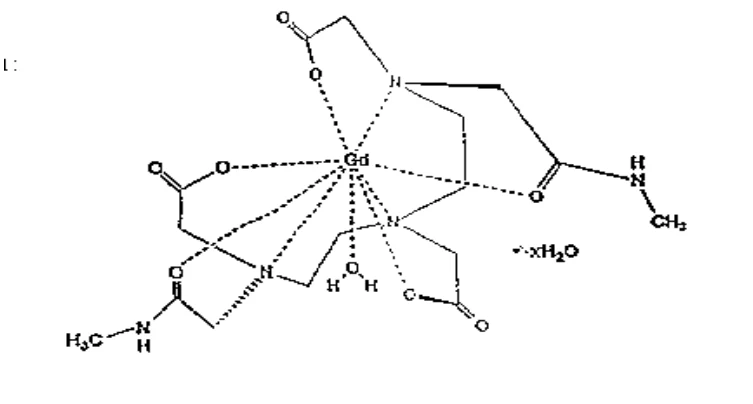
Physicochemical properties: Gadodiamide is a crystalline solid, appearing as a fine white powder.
Product Characteristics
Solubility: Gadodiamide is freely soluble in water and methanol, soluble in ethanol and slightly soluble in acetone and chloroform.
pKa: The two most basic groups of the DPTA-BMA ligand have pKa values of 9.37 and 4.38. The third amine of the ligand has a pKa of 3.31 and the carboxylates all have pKa values below
- 2. The gadolinium ion interferes with the measurement of pKa values in gadodiamide.
Partition co-efficient: The log of P, the partition co-efficient, between butanol and water is -2.13
Melting Point: Gadodiamide has no discrete melting point. It loses water of hydration below 200 degrees C and shows decomposition at 300 degrees C and above. Melting point behaviour,
thermogravimetric analysis and differential scanning calorimetry failed to disclose the presence of polymorphic forms.
Dissociation Constant: The metal-ligand thermodynamic stability constant was determined by competitive titration procedures, with log K equal to 16.85.
14 CLINICAL TRIALS
14.1 Clinical Trials by Indication
Table 3 - Summary of patient demographics for clinical trials in MRA Angiography
| Study # | Study design | Dosage, route of | Study | Mean age (Range) | Sex | ||||
| administration | subjects | ||||||||
| and duration | (n) | ||||||||
SOV301 and SOV302 | Phase 3, multicentre, open label | Single dose (0.1 mmol/kg) via intravenous bolus injection | 794 | 64 years (17 to 94 years) | Male and Female | ||||
Omniscan was evaluated in two controlled clinical trials enrolling a total of 794 patients who were referred for diagnosis of suspected stenosis of the renal or aorto-iliac arteries. These patients (496 men and 298 women) had a mean age of 64 years (range 17 to 94 years). Patients received one dose of Omniscan (0.1 mmol/kg, administered as a single bolus at an injection rate of 1–4 mL/sec via power injector) for the detection of stenoses in the renal arteries or aorto-iliac arteries.
Study Results
The MRA images were evaluated blindly (3 readers) and the results compared to intra arterial digital subtraction angiography (IA DSA), which served as standard of truth, and unenhanced (time-of-flight, TOF) MRA. Omniscan-enhanced MRA was shown to be superior to unenhanced MRA and showed comparable results to the standard of truth with sensitivity and specificity values of 86–90% and 85–90%, respectively, for the renal arteries and of 82–90% and 89–96%, respectively, for the aorto-iliac arteries.
However, no conclusions were reached for three of the seven segments (infra-renal aorta; right and left common iliac arteries; right and left external iliac arteries; and right and left common femoral arteries) of the aorto-iliac arteries as the number of subjects with a stenosis in these segments was too small; these were the infra-renal aorta and the left and right common femoral arteries.
In the detection of stenoses in the renal arteries and the aorto-iliac arteries, sensitivity, specificity and accuracy values for Omniscan-enhanced (3D CE) MRA and unenhanced (2D TOF) MRA relative to IA DSA are presented below. The respective differences between Omniscan-enhanced MRA and unenhanced MRA will also be presented. It should be noted that 3D CE
MRA can lead to overestimation of stenosis.
Renal Arteries
Reader
3D CE MRA 2D TOF MRA Difference CE – TOF
% 95% CI* % 95% CI* % 95% CI§
Sensitivity
Reader A 87.4 80.3 83.9 66.3 -6.9 -25.8
Reader B 90.3 83.7 79.8 69.6 12.0 2.2
Reader C 85.7 78.8 70.6 60.7 16.3 5.9
Majority Decision 89.1 82.3 78.3 66.7 9.8 -1.9
Specificity
Reader A 87.0 80.8 56.9 44.0 34.5 22.0
Reader B 89.5 83.9 79.7 72.0 9.0 2.6
Reader C 85.1 79.3 74.3 66.9 8.4 1.7
Majority Decision 88.9 83.2 78.6 70.6 8.5 3.0
Accuracy
Reader A 87.2 82.7 65.6 55.2 20.2 8.9
Reader B 89.8 85.8 79.7 73.8 10.2 4.7
Reader C 85.4 81.1 72.9 67.1 11.3 5.6
Majority Decision 89.0 84.9 78.5 72.2 9.0 3.5
NOTE: Sensitivity, specificity and accuracy were calculated for all subjects with evaluable images for a specific modality, following the judgement of the respective reader. Calculation of sensitivity, specificity and accuracy was based on subject level. All efficacy values were calculated based on the standard of truth (IA DSA). Differences between 3D CE MRA and 2D TOF MRA were calculated for those patients who had both 3D CE MRA and 2D TOF MRA results available. The efficacy results in the table are for the main haemodynamically relevant stenosis.
%=degree of sensitivity, specificity or accuracy; 95% CI*=lower limit of the two-sided exact 95% confidence interval; 95% CI§=asymptotic lower confidence limit.
Aorto-iliac Arteries
Reader
3D CE MRA 2D TOF MRA Difference CE – TOF
% 95% CI* % 95% CI* % 95% CI§
Sensitivity
Reader A 83.4 78.1 77.9 71.6 6.8 1.0
Reader B 81.3 75.9 76.3 70.5 4.9 -1.1
Reader C 89.8 85.2 81.3 75.9 8.7 3.5
Majority Decision 86.4 81.5 80.3 74.6 6.5 1.0
Specificity
Reader A 94.9 93.7 95.8 94.6 -1.1 -2.4
Reader B 96.3 95.3 89.9 88.4 6.1 4.6
Reader C 89.3 87.7 84.0 82.2 4.7 2.7
Majority Decision 95.2 94.1 92.5 91.1 2.1 0.7
Accuracy Reader A 84.8 80.4 82.1 77.1 4.0 -1.0
Reader B 83.5 79.1 78.1 73.1 5.4 0.3
Reader C 86.1 81.9 79.8 75.0 6.3 1.6
Majority Decision 86.8 82.6 81.1 76.3 6.3 1.6
NOTE: Sensitivity, specificity and accuracy were calculated for all subjects with evaluable images (sensitivity and accuracy) or segments (specificity) for a specific modality, following the judgement of the respective reader. All efficacy values were calculated based on the standard of truth (IA DSA). Calculation of sensitivity and accuracy was based on a subject level, whereas calculation of specificity was based on all segments combined. Differences between 3D CE MRA and 2D TOF MRA were calculated for those patients who had both 3D CE MRA and 2D TOF MRA results available. The efficacy results in the table are for the main haemodynamically relevant stenosis.
%=degree of sensitivity, specificity or accuracy; 95% CI*=lower limit of the two-sided exact 95% confidence interval; 95% CI§= lower limit of the asymptotic 95% confidence interval.
No conclusions were reached for three of the seven segments of the aorto-iliac arteries as the number of subjects with a stenosis in these segments was too small; these were the infra-renal aorta and the left and right common femoral arteries.
15 MICROBIOLOGY
No microbiological information is required for this drug product.
16 NON-CLINICAL TOXICOLOGY
General Toxicology:
Acute Toxicity
| Species (sex, number of animals per group) | Route | Dose | Results | |
| mg/kg | mmol/kg | |||
| Mouse (M 5, F 5) | IV infusion | 2870 | 5.0 | No deaths or signs of toxicity. Minimum lethal dose > 2870 mg/kg (5 mmol/kg) |
| Mouse (M 4, F 4) | IV inj. | 5740 11480 17220 22960 28700 | 10 20 30 40 50 | LD50 = 19746 mg/kg (34.4 mmol/kg) Male LD50 = 38.1 mmol/kg Female LD50 = 28.0 mmol/kg |
Rat (M 5, F 5) | IV infusion | 2870 | 5.0 | No deaths or signs of toxicity. Minimum lethal dose > 2870 mg/kg (5 mmol/kg) |
Rat (M 10, F 0) | IV inj. | 229.6 5740 11480 | 0.4 10 20 | One animal died during dosing. The cause of death is not known. The animal was replaced and there were no deaths or signs of morbidity other than a slight decrease in activity in the ten animals dosed at 20 mmol/kg. Dose-related, partially reversible cortical tubule cell vacuolation was observed. |
Subacute Toxicity
Species (sex, number of animals per group) | Number of dosings (control) | Route | Dose | Results | |
| mg/kg | mmol/kg | ||||
Rat (M 3, F 3) | 3 per week for 3 weeks (saline)**** | IV inj. | 57.4 574 1722 2870 4305 | 0.1 1.0 3.0 5.0 7.5 | Renal tubular epithelial vacuolation; dose-related in incidence and severity. |
| Monkey (M 3, F 3)***** | 10 doses over 22 days (saline) | IV inj. | 57.4 2870 | 0.1 5.0 | Moderate vacuolation in proximal tubular cell cytoplasm and increased absolute and relative kidney weights at 5.0 mmol/kg. |
| Rat (M 5) | Daily dosing for 14 days (saline) | IV inj. | 0.1 0.125 0.25 0.5 1.0 Magnevist® 1.0 | Following 14 consecutive injections, blood appeared in urinary sediments microscopically with positive urinary occult blood for 0.1-1.0 mmol/kg dosing. Histopathologically, cystitis was observed at > 0.1 mmol/kg, and dose related cytoplasmic vacuolation of renal tubular epithelium was seen. These changes were not seen for Magnevist®. | |
| Rabbit (M 3) | Daily dosing for 14 days (saline) | IV inj. | 0.05 0.1 0.5 | Unlike the rat, no occult blood was observed. No clinico-pathological evidence to suggest cystitis was seen. Histopathological findings were stomach edema, testicular tubular degeneration and skin calcinosis all considered to be due to zinc deficiency. No kidney cytoplasmic vacuolation was observed. These results suggest a species-difference between rats and rabbits with regard to cystitis induction. | |
| Monkey (M 3, F 3) | Daily dosing for 28-30 days (saline) | IV | 0.05 0.25 1.25 | Renal tubular epithelial changes were noted at the 1.25 mmol/kg/day dose. Serum chemistry revealed a dose related reduction in zinc and phosphate levels. Bone marrow myelograms showed a myeloid left shift in the 1.25 mmol group, corresponding to decreases in group mean myeloblast, neutrophilic myelocyte and neutrophilic polymorph values and an increase in group mean intermediate normoblast values. 0.05 and 0.25 mmol/kg groups also showed reduced mean myeloblast and neutrophilic myelocyte values. Most animal values, however, were within the control ranges. The toxicological significance of these changes is uncertain. | |
**** Two/sex/group killed on Day 22; one/sex/group killed on Day 29 after 7-day recovery period. ***** One female less than 2.5 years of age.
Carcinogenicity:
No long-term animal studies have been performed to evaluate the carcinogenic potential of gadodiamide.
Gadodiamide did not demonstrate mutagenic potential in three in vitro tests (the Ames test, the CHO/HGPRT forward mutation assay and the Chromosomal Aberration Frequency assay in CHO cells) or in an in vivo mouse micronucleus test.
Reproductive and Developmental Toxicology:
Omniscan had no effects on fertility or reproductive performance in rats or in teratology studies in rats and rabbits at doses that did not cause maternal toxicity (1.0 mmol/kg).
GBCAs administered to pregnant mice (2 mmol/kg daily on gestational days 16 through 19) result in measurable gadolinium concentrations in the pups in bone, brain, kidney, liver, blood, muscle, and spleen at one month postnatal age.
Teratology studies showed no effects on the fetuses of rats given doses of up to 1.0 mmol/kg/day. In rabbits intravenous administration of 1.0 mmol/kg of gadodiamide injection during the period of major organogenesis (Days 6 through 18 of pregnancy), demonstrated a no-effect level in terms of embryo/fetal toxicity and teratogenicity.
Gadodiamide injection had no effects on fertility and reproductive performance in rats.
Special Toxicology
Irritancy Studies
Gadodiamide injection was found to be non-irritating following intravenous, and intraarterial administration in rabbits, and paravenous, intramuscular and subcutaneous administration in dogs. Dermal and eye application in rabbits also resulted in a non-irritating effect.
Recent studies conducted in healthy rats injected repeatedly with linear or macrocyclic GBCAs demonstrated that linear agents were associated with progressive and persistent T1-weighted hyperintensity on MRI in the deep cerebellar nuclei (DCN). Signal enhancement in the globus pallidus (GP) could not be seen in the animals. No changes in signal intensities in either DCN or GP were observed for the macrocyclic GBCAs.
Quantitative results using mass spectrometry demonstrated that the total gadolinium concentrations were significantly higher with the linear GBCAs than with the macrocyclic GBCAs. These studies reported no abnormal behavioural changes suggestive of neurological toxicity.