


Product Monograph - Primovist
Recent Major Label Changes
| 3 Serious Warnings and Precautions Box, NOT FOR INTRATHECAL USE | 2025-04 |
|---|---|
| 7 Warnings and Precautions, 7.1.1 Pregnancy | 2024-05 |
| 4 Dosage and Administration, 4.1 Dosing Considerations | 2025-04 |
| 7 Warnings and Precautions, Risks of Intrathecal Use | 2025-04 |
Table of Contents
Certain sections (as indicated in section 2.1. of the PM Guidance) or subsections that are not applicable at the time of the preparation of the most recent authorized product monograph are not listed.
Recent Major Label Changes ............................................................................................... 2
Table of Contents................................................................................................................ 2
Part 1: Healthcare Professional Information........................................................................ 4
1 Indications ....................................................................................................................... 4
1.1 Pediatrics .................................................................................................................... 4
1.2 Geriatrics..................................................................................................................... 4
2 Contraindications ............................................................................................................. 4
3 Serious Warnings and Precautions Box............................................................................. 4
4 Dosage and Administration .............................................................................................. 5
4.1 Dosing Considerations ................................................................................................. 5
4.2 Recommended Dose and Dosage Adjustment .............................................................. 5
4.4 Administration............................................................................................................. 6
4.5 Missed Dose ................................................................................................................ 7
5 Overdose ......................................................................................................................... 7
6 Dosage Forms, Strengths, Composition, and Packaging .................................................... 7
7 Warnings and Precautions................................................................................................ 7
7.1 Special Populations.................................................................................................... 10
7.1.1 Pregnancy ............................................................................................................ 10
7.1.2 Breastfeeding ....................................................................................................... 11
7.1.3 Pediatrics ............................................................................................................. 11
7.1.4 Geriatrics.............................................................................................................. 11
7.1.5 Hepatic Insufficiency............................................................................................. 11
7.1.6 Renal Insufficiency................................................................................................ 11
8 Adverse Reactions ......................................................................................................... 12
8.1 Adverse Reaction Overview ....................................................................................... 12
8.2 Clinical Trial Adverse Reactions .................................................................................. 12
8.3 Less Common Clinical Trial Adverse Reactions ............................................................ 12
8.4 Abnormal Laboratory Findings: Hematologic, Clinical Chemistry and Other Quantitative Data ...................................................................................................................... 13
8.5 Post-Market Adverse Reactions.................................................................................. 14
9 Drug Interactions ........................................................................................................... 14
9.2 Drug Interactions Overview........................................................................................ 14
9.3 Drug-Behaviour Interactions ...................................................................................... 15
9.4 Drug-Drug Interactions .............................................................................................. 15
9.5 Drug-Food Interactions .............................................................................................. 15
9.6 Drug-Herb Interactions .............................................................................................. 15
9.7 Drug-Laboratory Test Interactions.............................................................................. 15
10 Clinical Pharmacology .................................................................................................. 15
10.1 Mechanism of Action ............................................................................................... 15
10.2 Pharmacodynamics.................................................................................................. 16
10.3 Pharmacokinetics .................................................................................................... 16
11 Storage, Stability, and Disposal .................................................................................... 18
12 Special Handling Instructions ....................................................................................... 19
Part 2: Scientific Information ............................................................................................ 20
13 Pharmaceutical Information ......................................................................................... 20
14 Clinical Trials ............................................................................................................... 20
14.1 Clinical Trials by Indication ....................................................................................... 20
15 Microbiology ............................................................................................................... 23
16 Non-Clinical Toxicology ............................................................................................... 23
Patient Medication Information........................................................................................ 26
Part 1: Healthcare Professional Information
1 Indications
PRIMOVIST (gadoxetate disodium injection) is a gadolinium-based contrast agent indicated for:
- intravenous use in T1-weighted magnetic resonance imaging (MRI) of the liver to detect and characterize lesions in adults with known or suspected focal liver disease.
1.1 Pediatrics
Pediatrics (< 18 years of age): No data are available to Health Canada; therefore, Health Canada has not authorized an indication for pediatric use.
1.2 Geriatrics
Geriatrics (65 years of age and over): No overall differences in safety or effectiveness were observed between these subjects and younger subjects, and other reported clinical experience has not identified differences in responses between the elderly and younger patients.
However, the elderly may be at particular risk of Nephrogenic Systemic Fibrosis (NSF) due to impaired ability of their kidneys to clear gadolinium from the body (See 3 Serious Warnings and Precautions Box and 7 Warnings and Precautions - General).
2 Contraindications
- Gadoxetate disodium is contraindicated in patients who are hypersensitive to this drug or to any ingredient in the formulation, including any non-medicinal ingredient, or component of the container. For a complete listing, see 6 Dosage Forms, Strengths, Composition, and Packaging section.
3 Serious Warnings and Precautions Box
Nephrogenic Systemic Fibrosis (NSF) Gadolinium-based contrast agents (GBCAs) increase the risk for NSF in patients with:
In these patients, avoid use of GBCAs unless the diagnostic information is essential and not available with noncontrast-enhanced magnetic resonance imaging (MRI). NSF may result in fatal or debilitating systemic fibrosis affecting the skin, muscle, and internal organs. Screen all patients for renal dysfunction by obtaining a history and/or laboratory tests. When administering a GBCA, do not exceed the recommended dose (see 4 Dosage and Administration) and allow a sufficient period of time for elimination of the agent from the body prior to any readministration. (See 7 Warnings and Precautions - General, Skin, Renal; and 8.5 Post-Market Adverse Reactions.) NOT FOR INTRATHECAL USE Intrathecal administration of GBCAs can cause serious, life-threatening, and fatal reactions. PRIMOVIST is not approved for intrathecal use (see 7 Warnings and Precautions - Risks of Intrathecal Use). |
4 Dosage and Administration
4.1 Dosing Considerations
- PRIMOVIST is for intravenous administration.
- The lowest effective dose should be used.
- After the administration, the patient should be kept under observation for at least 30 minutes, since experience with contrast media shows that the majority of all undesirable effects occur within this time.
PRIMOVIST is not recommended for use in children below 18 years of age due to a lack of data on safety and efficacy.
4.2 Recommended Dose and Dosage Adjustment
- The recommended dose of PRIMOVIST is 0.1 mL/kg body weight (equivalent to 0.025 mmol/kg body weight).
- The safety of repeated doses has not been thoroughly studied in humans. The need and appropriateness of sequential repeat examinations are at the discretion of the physician. Caution is warranted to ensure a suitable interval of time between administrations is observed to allow for normal clearance of the PRIMOVIST from the body.
Imaging
Liver lesions are detected and characterized with pre-contrast MR images and PRIMOVIST MR images obtained during dynamic and hepatocyte imaging phases. During the dynamic imaging phases, use the temporal enhancement and washout pattern of intravascular PRIMOVIST to assess lesions.
Further assess lesions during a hepatocyte imaging phase based upon the pattern of PRIMOVIST accumulation within hepatocytes. The enhancement of liver parenchyma during this phase assists in the identification of the number, segmental distribution, visualization, and delineation of liver lesions, thus improving lesion detection.
Perform a pre-contrast MRI, inject PRIMOVIST and begin dynamic imaging approximately 15 to 25 seconds after completion of the injection. Dynamic imaging consists of the arterial, the portovenous (approximately 60 seconds post injection), and the blood equilibrium (approximately 120 seconds) phases. Begin the hepatocyte-phase imaging at approximately 20 minutes post injection. The diagnostic and technical efficacy results of two clinical studies suggest a minimal improvement at 20 minutes post injection over those at 10 minutes post injection. Hepatocyte phase imaging may be performed up to 120 minutes post injection. Elevated intrinsic levels of bilirubin, (>3 mg/dL), or ferritin can reduce the hepatic contrast effect of PRIMOVIST. Perform MR imaging no later than 60 minutes following PRIMOVIST administration to patients with elevated bilirubin or ferritin levels, or in patients requiring hemodialysis (see 7.1 Special Populations and 9 Drug Interactions).
Lesions with no or minimal hepatocyte function (cysts, metastases, and the majority of hepatocellular carcinomas) generally will not accumulate PRIMOVIST. Well-differentiated hepatocellular carcinoma may contain functioning hepatocytes and can show some enhancement in the hepatocyte imaging phase. Additional clinical information is therefore needed to support a diagnosis of hepatocellular carcinoma.
Pediatrics
Health Canada has not authorized an indication for pediatric use.
Geriatrics (65 years of age and over)
No dosage adjustment is necessary. In clinical studies, no overall differences in safety or efficacy were observed between elderly (aged 65 years and over) and younger patients, and other reported clinical experience has not identified differences between the elderly and younger patients.
PRIMOVIST should be used cautiously in the elderly, due to a greater frequency of decreased hepatic, renal, and/or cardiac function, and of concomitant disease or other drug therapies (see 7.1.4 Geriatrics, and 10 Clinical Pharmacology - Special Populations and Conditions).
Patients with hepatic impairment
No dosage adjustment is necessary. In clinical studies, no overall differences in safety or efficacy were observed between patients with and without hepatic impairment, and other reported clinical experience has not identified differences in patients with hepatic impairment and healthy subjects. In patients with abnormally high (>3 mg/dL) serum bilirubin, reduced hepatic contrast was observed. If PRIMOVIST is used in these patients, complete MR imaging no later than 60 minutes after PRIMOVIST administration (10 Clinical Pharmacology).
Severe hepatic insufficiency may impair PRIMOVIST imaging performance (see 7.1.5 Hepatic Insufficiency, and 10 Clinical Pharmacology - Special Populations and Conditions).
Patients with renal impairment
PRIMOVIST should be used only after careful benefit-risk assessment in patients with severe renal insufficiency (glomerular filtration rate <30 mL/min/1.73 m2) or acute renal failure / acute kidney injury (see 7 Warnings and Precautions - Skin, Nephrogenic Systemic Fibrosis (NSF) and 7 Warnings and Precautions - Renal).
In clinical studies, no overall differences in safety or efficacy were observed between patients with mild-to-moderate renal insufficiency and patients with normal renal function (see 10 Clinical Pharmacology - Special Populations and Conditions). The elimination of gadoxetate disodium is prolonged in renally-impaired patients. To ensure diagnostically useful images, no dosage adjustment is recommended. In patients with end-stage renal failure, hepatic contrast was reduced and was attributed to elevated serum ferritin levels. If PRIMOVIST is used in these patients, complete MR imaging no later than 60 minutes after PRIMOVIST administration (10 Clinical Pharmacology).
The risk, if any, for the development of NSF among patients with mild to moderate renal insufficiency or normal renal function is unknown, and the cautious utilization of the lowest possible dose of GBCA is preferable.
4.4 Administration
PRIMOVIST is a ready-to-use solution. Visually inspect PRIMOVIST for particulate matter and discoloration prior to administration. Do not use the solution if it is discolored or if particulate matter is present. Do not used if the PRIMOVIST container is defective. PRIMOVIST should not be mixed with other drugs. PRIMOVIST is intended for single use and should be used immediately after opening.
Vials containing PRIMOVIST are not intended for the withdrawal of multiple doses. The rubber stopper should never be pierced more than once. Administer PRIMOVIST undiluted as an intravenous bolus injection at a flow rate of approximately 2 mL/second through a large-bore needle or indwelling catheter. Flush the intravenous cannula with physiological saline solution after the injection. Discard any unused portion of a PRIMOVIST vial.
4.5 Missed Dose
Not applicable.
5 Overdose
The maximum dose studied in MR imaging was 0.4 mL/kg (0.1 mmol/kg) body weight and was tolerated in a manner similar to lower doses. In a limited number of patients, a dose of 2.0 mL/kg (500 µmol/kg) body weight was tested in clinical trials; more frequent occurrences of adverse events but no new adverse events were found in these patients. There have been no cases of overdose reported in clinical use. Therefore, the signs and symptoms of overdosage have not been characterized.
In view of the low volume (max. 10 mL) and the extremely low gastrointestinal absorption rate of PRIMOVIST, and based on acute toxicity data, intoxication due to inadvertent oral ingestion of the contrast medium is extremely improbable.
In case of inadvertent overdosage in patients with severely impaired renal and/or hepatic function, PRIMOVIST can be removed by hemodialysis.
| For the most recent information in the management of a suspected drug overdose, contact your regional poison control centre or Health Canada's toll-free number, 1-844 POISON-X (1-844-764-7669). |
6 Dosage Forms, Strengths, Composition, and Packaging
Table 1: Dosage Forms, Strengths, and Composition
PRIMOVIST is provided as a sterile, nonpyrogenic, clear, colorless to pale yellow aqueous solution containing 181.43 mg/mL (0.25 mmol/mL) of gadoxetate disodium, caloxetate trisodium, trometamol, and water for injection. Sodium hydroxide and/or hydrochloric acid are added to adjust pH. No preservative is added.
PRIMOVIST is supplied in 6-mL single-use vials containing 5 mL of solution, and in 10-mL single-use vials containing 7.5 mL and 10 mL of solution.
7 Warnings and Precautions
See 3 Serious Warnings and Precautions Box.
General
MRI procedures which involve the use of gadoxetate disodium should be carried out by physicians who have the prerequisite training and a thorough knowledge of the particular procedure to be performed.
| Route of Administration | Dosage Form/ Strength/Composition | Non-Medicinal Ingredients |
|---|---|---|
| intravenous | Solution / 181.43 mg/mL gadoxetate disodium injection (0.25 mmol/mL) | caloxetate trisodium, hydrochloric acid, sodium hydroxide, trometamol, water for injection |
The usual safety rules for magnetic resonance imaging must be observed, eg, exclusion of cardiac pacemakers and ferromagnetic implants.
Intramuscular administration must be strictly avoided, because it may cause local intolerance reactions including focal necrosis (see 16 Non-Clinical Toxicology - Special Toxicology).
Severe renal or hepatic failure may impair PRIMOVIST imaging performance. In patients with end-stage renal failure, hepatic contrast was reduced and was attributed to elevated serum ferritin levels. In patients with abnormally high (>3 mg/dL) serum bilirubin, reduced hepatic contrast was observed. If PRIMOVIST is used in these patients, complete Magnetic Resonance (MR) imaging no later than 60 minutes after PRIMOVIST administration period.
Prior to administration of PRIMOVIST, it is recommended that all patients are screened for renal dysfunction by obtaining medical history and/or laboratory tests.
Accumulation of Gadolinium in the Brain
The current evidence suggests that gadolinium may accumulate in the brain after multiple administrations of GBCAs. Increased signal intensity on non-contrast T1-weighted images of the brain has been observed after multiple administrations of GBCAs in patients with normal renal function. Gadolinium has been detected in brain tissue after multiple exposures to GBCAs, particularly in the dentate nucleus and globus pallidus. The evidence suggests that the risk of gadolinium accumulation is higher after repeat administration of linear than after repeat administration of macrocyclic agents.
PRIMOVIST is a liver-specific agent that has a unique dual-elimination pathway and is used at only 25% of the dose compared to multi-purpose linear agents, which results in significantly lower plasma concentrations of gadolinium and a reduced systemic burden compared to other linear GBCAs.
The clinical significance of gadolinium accumulation in the brain is presently unknown; however, gadolinium accumulation may potentially interfere with the interpretation of MRI scans in the brain. In order to minimize potential risks associated with gadolinium accumulation in the brain, it is recommended to use the lowest effective dose and perform a careful benefit risk assessment before administering repeated doses.
Risks of Intrathecal Use
Serious, life-threatening and fatal cases, primarily with neurological reactions (e.g. coma, encephalopathy, seizures), have been reported with off-label intrathecal use of GBCAs. PRIMOVIST is not approved for intrathecal use (see 3 Serious Warnings and Precautions Box and 4.1 Dosing Considerations).
Cardiovascular
Caution should be exercised when PRIMOVIST is administered to patients with severe cardiovascular problems because only limited data are available so far. (See 14 Clinical Trials - Cardiac Effects and 16 Non-Clinical Toxicology - Acute Toxicity.)
Immune
Hypersensitivity Reactions
As with other intravenous contrast agents, anaphylactoid and anaphylactic reactions with cardiovascular, respiratory, and cutaneous manifestations, ranging from mild to severe reactions, including shock have occurred very rarely following PRIMOVIST administration (see 8 Adverse Reactions).
- Before PRIMOVIST administration, assess all patients for any history of a reaction to contrast media, a history of bronchial asthma, and/or a history of allergic disorders. These patients may have an increased risk for a hypersensitivity reaction to PRIMOVIST.
- Administer PRIMOVIST only in situations where trained personnel and therapies are promptly available for the treatment of hypersensitivity reactions, including personnel trained in resuscitation.
Most hypersensitivity reactions to PRIMOVIST have occurred within half an hour after administration. Delayed reactions (hours up to several days) may occur. Observe patients for signs and symptoms of hypersensitivity reactions during and following PRIMOVIST administration for at least 30 minutes and longer if clinically required.
Treat these reactions with standard medications for hypersensitivity reactions.
Patients taking beta blockers who experience such reactions may be resistant to treatment with beta agonists.
Renal
Exposure to GBCAs increase the risk for NSF in patients with:
- chronic severe renal insufficiency (glomerular filtration rate <30 mL/min/1.73 m2), or
- acute renal failure / acute kidney injury
Screen all patients for renal dysfunction by obtaining a history and/or laboratory tests.
The risk, if any, for the development of NSF among patients with mild to moderate renal insufficiency or normal renal function is unknown, and the cautious utilization of the lowest possible dose of GBCA is preferable.
There is a possibility that NSF may occur with PRIMOVIST. Therefore, PRIMOVIST should only be used in these patients after careful risk/benefit assessment.
(See 3 Serious Warnings and Precautions Box and 7 Warnings and Precautions - Skin; and 8.5 Post-Market Adverse Reactions sections.)
For patients receiving hemodialysis, healthcare professionals may consider prompt hemodialysis following GBCA administration in order to enhance the contrast agent's elimination (see 10 Clinical Pharmacology - Special Populations and Conditions, Renal Insufficiency). There is no evidence to support the initiation of hemodialysis for the prevention or treatment of NSF.
Skin
NSF (Nephrogenic Systemic Fibrosis) was first identified in 1997 and has so far, been observed only in patients with renal disease. This is a systemic disorder with the most prominent and visible effects on the skin. Cutaneous lesions associated with this disorder are caused by excessive fibrosis and are usually symmetrically distributed on the limbs and trunk. Involved skin becomes thickened which may inhibit flexion and extension of joints and result in severe contractures. The fibrosis associated with NSF can extend beyond dermis and involve subcutaneous tissues, striated muscles, diaphragm, pleura, pericardium, and myocardium. NSF may be fatal. (See 3 Serious Warnings and Precautions Box, 7 Warnings and Precautions - General and Renal; and 8.5 Post-Market Adverse Reactions.)
Nephrogenic Systemic Fibrosis (NSF)
Gadolinium-based contrast agents (GBCAs) increase the risk for NSF in patients with chronic severe renal insufficiency (glomerular filtration rate <30 mL/min/1.73 m2), and in patients with acute renal failure / acute kidney injury. In these patients, avoid use of GBCAs unless the diagnostic information is essential and not available with noncontrast-enhanced magnetic resonance imaging (MRI). For patients receiving hemodialysis, healthcare professionals may consider prompt hemodialysis following GBCA administration in order to enhance the contrast agent's elimination. There is no evidence to support the initiation of hemodialysis for the prevention or treatment of NSF.
Among the factors that may increase the risk for NSF are repeated or higher than recommended doses of a GBCA and the degree of renal function impairment at the time of exposure.
NSF development is considered a potential class-related effect of all GBCAs.
Postmarketing reports have identified the development of NSF following single and multiple administrations of GBCAs. These reports have not always identified a specific agent. Where a specific agent was identified, the most commonly reported agent was gadodiamide (OMNISCAN®), followed by gadopentetate dimeglumine (MAGNEVIST®) and gadoversetamide (OPTIMARK®). NSF has also developed following the sequential administration of gadodiamide with gadobenate dimeglumine (MULTIHANCE®) or gadoteridol (PROHANCE®). The number of postmarketing reports is subject to change over time and may not reflect the true proportion of cases associated with any specific GBCA.
The extent of risk for NSF following exposure to any specific GBCA is unknown and may vary among the agents. Published reports are limited and predominantly estimate NSF risks with gadodiamide. In one retrospective study of 370 patients with severe renal insufficiency who received gadodiamide, the estimated risk for development of NSF was 4%. The risk, if any, for the development of NSF among patients with mild to moderate renal insufficiency or normal renal function is unknown, and the cautious utilization of the lowest possible dose of GBCA is preferable.
Screen all patients for renal dysfunction by obtaining a history and/or laboratory tests. When administering a GBCA, do not exceed the recommended dose and allow a sufficient period of time for elimination of the agent from the body prior to any readministration. (See 10 Clinical Pharmacology and 4 Dosage and Administration).
A skin biopsy is necessary in order to exclude the diagnosis of similarly presenting skin disorders (eg, scleromyxedema). (See 3 Serious Warnings and Precautions Box, 7 Warnings and Precautions - Renal and Skin; and 8.5 Post-Market Adverse Reactions).
7.1 Special Populations
7.1.1 Pregnancy
For gadoxetate disodium, no clinical study data on exposed pregnancies are available. PRIMOVIST should be used during pregnancy only if the benefit justifies the potential risk to the fetus.
Traces of GBCAs can cross the placenta barrier and result in fetal exposure and may be detected in organs and tissues for an extended period of time. Animal studies at clinically relevant doses have not shown reproductive toxicity after repeated administration. (see 16 Non-Clinical Toxicology - Reproductive and Developmental Toxicology).
The potential risks of an abnormal pregnancy outcome are unknown, as adequate and well controlled clinical studies with PRIMOVIST were not conducted in pregnant women. A retrospective cohort study, comparing pregnant women who had a GBCA MRI to pregnant women who did not have an MRI, reported a higher occurrence of stillbirths and neonatal deaths in the group receiving GBCA MRI. However, no increased risk of congenital anomalies was observed. Limitations of this study include a lack of comparison with non-contrast MRI, lack of information about the maternal indication for MRI, and the type of GBCA used. These limitations were further addressed in another retrospective cohort study that found no increased risk for fetal or neonatal death or Neonatal Intensive Care Unit (NICU) admission when comparing pregnancies exposed to GBCA MRI and non-contrast MRI. The potential risk for humans is unknown, however, the accumulation of gadolinium in human tissue is a possibility.
7.1.2 Breastfeeding
It is unknown whether gadoxetate disodium is excreted in human milk. There is evidence from non-clinical data in rats that suggests gadoxetate disodium is excreted into breast milk in very small amounts (less than 0.5% of the dose intravenously administered dose (0.1 mmol/kg) of radioactively labelled gadoxetate was recovered from stomach milk of neonates) and the absorption via the gastrointestinal tract is poor (about 0.4% of the dose orally administered was excreted in the urine). PRIMOVIST should only be used in nursing women after a clear benefit-to-risk analysis. The continuation or suspension (eg, for 24 hours) of breast feeding is at the discretion of the patient in consultation with the physician.
7.1.3 Pediatrics
Pediatrics (< 18 years of age): The safety and effectiveness of PRIMOVIST have not been established in pediatric patients.
7.1.4 Geriatrics
Geriatrics (65 years of age and over): In clinical studies of PRIMOVIST, 37% of the patients were 65 years of age and over, while 7% were 75 years of age and over. No overall differences in safety or effectiveness were observed between these subjects and younger subjects, and other reported clinical experience has not identified differences in responses between the elderly and younger patients.
However, the elderly may be at particular risk of NSF due to impaired ability of their kidneys to clear gadolinium from the body (See 3 Serious Warnings and Precautions Box, 7 Warnings and Precautions - General).
7.1.5 Hepatic Insufficiency
Severe hepatic impairment may impair PRIMOVIST imaging performance. In patients with abnormally high (>3 mg/dL) serum bilirubin, reduced hepatic contrast was observed. If PRIMOVIST is used in these patients, complete MR imaging no later than 60 minutes after PRIMOVIST administration (see 7 Warnings and Precautions - General and 10 Clinical Pharmacology).
7.1.6 Renal Insufficiency
Severe renal failure may impair PRIMOVIST imaging performance (see 3 Serious Warnings and Precautions Box). In patients with end-stage renal failure, hepatic contrast was reduced and was attributed to elevated serum ferritin levels. If PRIMOVIST is used in these patients, complete MR imaging no later than 60 minutes after PRIMOVIST administration (see 7 Warnings and Precautions - General and 10 Clinical Pharmacology).
8 Adverse Reactions
8.1 Adverse Reaction Overview
Most adverse drug reactions reported with PRIMOVIST were of mild to moderate severity, and did not require a discontinuation of the procedure. The most frequently reported adverse reactions in clinical trials were headache (0.6%; mild), nausea (0.7%; usually occurring just after injection and resolving quickly), and feeling hot (0.7%: usually occurring during injection).
8.2 Clinical Trial Adverse Reactions
Clinical trials are conducted under very specific conditions. Therefore, the frequencies of adverse reactions observed in the clinical trials may not reflect frequencies observed in clinical practice and should not be compared to frequencies reported in clinical trials of another drug.
PRIMOVIST was studied for use in MRI in phase II and phase III studies in 1755 patients. The average age was 58 years (range from 19 to 84 years). The dose of PRIMOVIST administered ranged from 0.003 to 0.1 mmol/kg body weight for most patients (1728 patients; 98.4%), with the majority (1347 patients; 76.8%) receiving the recommended dose of 0.025 mmol/kg body weight. Higher doses (0.2 – 0.5 mmol/kg body weight) were used in only a very few patients (27 patients; 1.5%). The ethnic distribution was 72% Caucasian, 12% Asian, 3% Hispanic, 2% Black, and 0.6% patients of other ethnic groups.
The clinical trials were predominantly of intrapatient-controlled design with nonactive comparators (precontrast MRI and contrast-enhanced CT).
A total of 76 patients (4.3%) had adverse drug reactions. The follow-up period for most subjects extended over 24 hours after PRIMOVIST administration. Most of the adverse drug reactions were of mild to moderate severity.
No individual adverse drug reaction reached a frequency greater than 1%.
8.3 Less Common Clinical Trial Adverse Reactions
Table 2 lists all adverse drug reactions observed in <1% of patients.
The table below reports adverse reactions by MedDRA system organ classes (MedDRA SOCs).
Table 2: Adverse Drug Reactions Reported by < 1% of Patients During Clinical Trials (N=1755) Supporting Marketing Authorization
| System Organ Class | Uncommon (0.1% and < 1%) | Rare (< 0.1%) |
|---|---|---|
| General disorders and administration site conditions | chest pain, feeling hot, injection site reaction a | chills, discomfort, fatigue, feeling abnormal, malaise |
| Cardiac disorders | bundle branch block, palpitation | |
| Gastrointestinal disorders | nausea, vomiting | dry mouth, oral discomfort, salivary hypersecretion |
| Musculoskeletal and connective tissue disorders | back pain | |
| Nervous system disorders | dizziness, dysgeusia, headache, paresthesia, parosmia | akathisia, vertigo, tremor |
| Respiratory, thoracic and mediastinal disorders | respiratory disorder (dyspnea, respiratory distress) | |
| Skin and subcutaneous tissue disorders | rash, pruritusb | hyperhidrosis, rash maculopapular |
| Vascular disorders | blood pressure increased, flushing |
- a Injection site reactions (various kinds) comprise the following terms: injection site extravasation, injection site burning, injection site coldness, injection site irritation, injection site pain
- b Pruritus (eye pruritus, generalized pruritus)
The most appropriate MedDRA term is used to describe a certain reaction and its synonyms and related conditions. ADR term representation is based on MedDRA version 14.1. Adverse drug reactions are classified according to their frequencies.
As with other contrast agents, in very rare cases, anaphylactoid reactions ranging to life-threatening shock may occur (see 7 Warnings and Precautions - Hypersensitivity Reactions).
8.4 Abnormal Laboratory Findings: Hematologic, Clinical Chemistry and Other Quantitative Data
Clinical Trial Findings
Elevation of serum iron values and serum bilirubin laboratory values were reported in less than 1% of patients after administration of PRIMOVIST. The values did not exceed more than 2 to 3 times the baseline values and returned to baseline within 1 to 4 days without other signs or symptoms of other abnormalities. All clinically significant changes in laboratory values observed during clinical trials with PRIMOVIST (0.025mmol/kg bw) have been summarized in Table 3 below.
Table 3: Treatment-Emergent Laboratory Abnormalities in Clinical Trials with PRIMOVIST
| Laboratory Parameter | Number of Patients with Changes | Magnitude of Change From Baseline Values |
|---|---|---|
| Alpha-amylase increased | 2 | 1 time |
| Bilirubin increaseda | 10 | Up to 3 times |
| Gamma GT increased | 1 | 1 time |
| Inorganic phosphate decreased | 1 | 10% below the lower limit of the normal range |
| Potassium decreased | 2 | 10% below the lower limit of the normal range |
| Serum iron increased | 3 | Up to 3 times |
| Sodium decreased | 1 | 3% below the lower limit of the normal range |
| Laboratory Parameter | Number of Patients with Changes | Magnitude of Change From Baseline Values |
|---|---|---|
| Total protein decreased | 1 | 10% below the lower limit of the normal range |
| Decreased white blood cell countb | 1 | 20% below the lower limit of the normal range |
- a 2 of the 10 reports were observed in a post-authorization, phase III, clinical trial
- b 1 report was observed in a post-authorization, phase III, clinical trial
8.5 Post-Market Adverse Reactions
In general, following single and multiple administrations of gadolinium-based contrast agents (GBCAs), postmarketing reports have identified the development of NSF. These reports have not always identified a specific agent. Where a specific agent was identified, the most commonly reported agent was gadodiamide (OMNISCAN®), followed by gadopentetate dimeglumine (MAGNEVIST®) and gadoversetamide (OPTIMARK®). NSF has also developed following the sequential administration of gadodiamide with gadobenate dimeglumine (MULTIHANCE®) or gadoteridol (PROHANCE®). The number of postmarketing reports is subject to change over time and may not reflect the true proportion of cases associated with any specific GBCA. The extent of risk for NSF following exposure to any specific GBCA is unknown and may vary among the agents. Published reports are limited and predominantly estimate NSF risks with gadodiamide. In one retrospective study of 370 patients with severe renal insufficiency who received gadodiamide, the estimated risk for development of NSF was 4%. The risk, if any, for the development of NSF among patients with mild to moderate renal insufficiency or normal renal function is unknown, and the cautious utilization of the lowest possible dose of GBCA is preferable (see also 3 Serious Warnings and Precautions Box, 7 Warnings and Precautions - General, Skin and Renal).
The following additional adverse drug reactions, listed according to body system, have been reported during the postmarketing use of PRIMOVIST:
Cardiac disorders: tachycardia
Immune system disorders: hypersensitivity/anaphylactoid reaction (eg, shock, hypotension, pharyngolaryngeal edema, urticaria, face edema, rhinitis, conjunctivitis, abdominal pain, hypoesthesia, sneezing, cough, pallor)
Nervous system disorders: restlessness
Life threatening and/or fatal cases of the following adverse drug reactions have been reported during postmarketing use of PRIMOVIST:
Immune system disorders: anaphylactoid shock
Respiratory, thoracic and mediastinal disorders: dyspnea
9 Drug Interactions
9.2 Drug Interactions Overview
Elevated levels of bilirubin (>3 mg/dL) or ferritin can reduce the hepatic contrast effect of PRIMOVIST. If PRIMOVIST is used in these patients, complete the magnetic resonance imaging no later than 60 minutes after PRIMOVIST administration.
9.3 Drug-Behaviour Interactions
Not available at the time of initial authorization.
9.4 Drug-Drug Interactions
Animal studies demonstrated that compounds belonging to the class of anionic medicinal products, (eg, rifampicin), block the hepatic uptake of PRIMOVIST, thus reducing the hepatic contrast effect. In this case, the expected benefit of an injection of PRIMOVIST might be limited.
Interactions with other medications are not known from animal studies.
An interaction study in healthy subjects demonstrated that the co-administration of the OATP inhibitor erythromycin did not influence efficacy and pharmacokinetics of PRIMOVIST. No further clinical interaction studies with other medicinal products have been performed.
9.5 Drug-Food Interactions
Interactions with food have not been studied.
9.6 Drug-Herb Interactions
Interactions with herbal medicines have not been studied.
9.7 Drug-Laboratory Test Interactions
Serum iron determination using complexometric methods (eg, Ferrocine complexation method) may result in falsely high and low values for up to 24 hours after the examination with PRIMOVIST because of the caloxetate trisodium excipients.
10 Clinical Pharmacology
10.1 Mechanism of Action
Gadoxetate disodium (Gd-EOB-DTPA) is a paramagnetic compound and develops a magnetic moment when placed in a magnetic field. The relatively large magnetic moment produced by gadoxetate disodium results in a local magnetic field, yielding enhanced relaxation rates (shortening of relaxation times) of water protons in the vicinity of the paramagnetic agent, which leads to an increase in signal intensity (brightening) of blood and tissue.
In MRI, visualization of normal and pathological tissue depends in part on variations in the radiofrequency signal intensity that occur with 1) differences in proton density; 2) differences of the spin-lattice or longitudinal relaxation times (T1); and 3) differences in the spin-spin or transverse relaxation time (T2). When placed in a magnetic field, gadoxetate disodium decreases the T1 and T2 relaxation time in target tissue. At the recommended dose, the effect is observed with greatest sensitivity in T1-weighted MR sequences.
The current evidence suggests that gadolinium may accumulate in the brain after repeated administrations of GBCAs although the exact mechanism of gadolinium passage into the brain has not been established.
10.2 Pharmacodynamics
EOB-DTPA forms a stable complex with the paramagnetic gadolinium ion with a high thermodynamic stability of log KGdL = 23.46, and high stability in human serum, determined in vitro at pH 7.4 and 37°C (initial Gd3+ release rate: 0.07% per day and a total release of 1.1% Gd3+ after 15 days).
Gadoxetate disodium is a highly water-soluble, hydrophilic, linear ionic compound with a lipophilic moiety, the ethoxybenzyl group (EOB).
Gadoxetate disodium shows a weak (<10%), transient protein binding and the relaxivity in plasma is about 6.9 L/mmol/sec at pH 7, 37°C and 1.5 Tesla; 6.2 L/mmol/sec at pH 7, 37°C and 3.0 Tesla. The relaxivity in blood is about 7.3 L/mmol/sec at pH 7, 37°C and 1.5 T. The relaxivity displays only slight dependency on the strength of the magnetic field.
Gadoxetate disodium is selectively taken up by hepatocytes resulting in increased signal intensity in liver tissue. PRIMOVIST exhibits a biphasic mode of action: first, distribution in the extracellular space after bolus injection and subsequently, selective uptake by hepatocytes (and biliary excretion) due to the lipophilic (EOB) moiety.
Detailed Pharmacology – Pharmacodynamics
Gadoxetate disodium decreases the T1 relaxation time of hydrogen protons (of water molecules) and thus results in a significant increase of signal intensity in T1-weighted imaging sequences. Gd-EOB-DTPA enters the hepatocytes via membrane-bound carriers belonging to the group of organic anion transporting polypeptides, OATP1. The energy-dependent canalicular multispecific organic anion transporter (cMOAT) mediates the sequestration of PRIMOVIST into the bile. At the 0.025 mmol/kg body weight dose, an early contrast enhancement due to the presence of gadoxetate disodium in the vascular space is observed. Subsequent hepatocellular uptake leads to a parenchymal enhancement in delayed images several minutes after injection. Lesions with no or minimal hepatocyte function (cysts, metastases, most hepatocellular carcinomas, etc) will not accumulate gadoxetate disodium. Finally, as the agent is excreted into the biliary system, enhancement of the intra- and extrahepatic bile ducts are seen with negligible contrast enhancement within the major hepatic vessels. Thus, based on the pharmacokinetic characteristics of gadoxetate disodium, three phases of contrast enhancement can be anticipated, with some overlap occurring between phases.
In two clinical pharmacology studies, MR signal enhancement was measured as a function of time after administration of gadoxetate disodium. The % MR signal enhancement relative to predose baseline value was the pharmacodynamic measure. Standard T1-weighted pulse sequences were used. Signal intensity increased in a dose-dependent fashion from 0.01 mmol/kg body weight to 0.05 mmol/kg body weight. No increase was noted from 0.05 to 0.1 mmol/kg body weight. The highest dose of the contrast agent produced susceptibility effects in the liver during prolonged imaging phase and was therefore regarded as an overdose for imaging studies. Prolonged signal enhancement of the liver was present for more than 2 hours after administration of the contrast agent for all doses.
10.3 Pharmacokinetics
Absorption and Distribution
After intravenous administration, the plasma concentration time profile of gadoxetate disodium is characterized by a bi-exponential decline. The total distribution volume of gadoxetate disodium at steady state is about 0.21 L/kg (extracellular space); plasma protein binding is less than 10%. Gadoxetate disodium does not pass the intact blood-brain barrier and diffuses through the placental barrier as demonstrated in rats.
In lactating rats, less than 0.5% of the intravenously administered dose (0.1 mmol/kg) of radioactively labeled gadoxetate was recovered from stomach milk of neonates.
Metabolism
Gadoxetate disodium is not metabolized.
Elimination
Gadoxetate disodium is equally eliminated via the renal (approximately 50%) and hepatobiliary (approximately 50%) routes. The mean terminal elimination half-life of gadoxetate disodium (0.01 to 0.1 mmol/kg) has been observed in healthy volunteers of 22 to 39 years of age to be 55 to 57 minutes. Clearance appeared to decrease slightly with increasing age. The pharmacokinetics are dose-linear up to a dose of 0.4 mL/kg (0.1 mmol/kg), which is 4 times the recommended dose.
The total serum clearance (Cltot) was 250 mL/min, whereas the renal clearance (Clr) corresponds to about 120 mL/min, a value similar to the glomerular filtration rate in healthy subjects.
Hemodialysis can increase the clearance of gadoxetate disodium. In a study with end-stage renal failure patients, about 30% of the administered dose of gadoxetate disodium was recovered during a single 3 hour dialysis session started 1 hour post injection (N = 2 patients). Gadoxetate disodium was almost completely eliminated via dialysis and biliary excretion within 6 days. Plasma concentrations of gadoxetate disodium were measurable up to 72 hours post-dose in these patients. There is no evidence to support the initiation of the hemodialysis for the prevention or treatment of NSF.
Special Populations and Conditions
- Hepatic Insufficiency: In patients with mild or moderate hepatic impairment, a slight to moderate increase in plasma AUC, half-life and urinary excretion, as well as decrease in hepatobiliary excretion was observed in comparison to healthy subjects with normal liver function. In patients with severe hepatic impairment, especially in patients with abnormally high (>3 mg/dL) serum bilirubin levels, the AUC was increased up to 60% and the elimination half-life was increased up to 49%. The hepatobiliary excretion substantially decreased to about 5% of the administered dose and reduced hepatic contrast signal was observed.
- Renal Insufficiency: In patients with moderate renal impairment, a moderate increase in AUC and terminal half-life was observed in comparison to healthy volunteers with normal renal function. In patients with end-stage renal failure, the terminal half-life was prolonged about 12-fold and the AUC was increased about 6-fold. In these patients, a reduced hepatic contrast signal was observed.
Detailed Pharmacology – Pharmacokinetics
After rapid bolus injection (dose, 0.01 – 0.1 mmol /kg body weight), the rapid removal of gadoxetate disodium from the circulation was attributed to rapid renal elimination and uptake by the liver. The AUC (0-4 h) accounted for about 90% of the AUC (0-infinity). Although the hepatic uptake and disposition of gadoxetate disodium is known to be an active carrier mediated process, the mean terminal half-life (range, 1.1 – 1.6 h), and the total clearance (range, 224 – 272 mL/min) and dose-independent fecal and urinary excretion (50 : 50 proportion) over the dose range 0.01 – 0.1 mmol /kg body weight indicated that for up to 4-fold higher dose than the suggested clinical dose, the disposition processes are not saturated.
Rapid and efficient urinary excretion (eg, 75%, 90%, 95%, and 99% of the total urinary excretion in 0-2 h, 0-4 h, 0-6 h, and 0-12 h, respectively) and dose-independent renal clearance by glomerular filtration over the dose range 20-fold higher than the suggested clinical dose were indicative of the governing role of renal elimination in the pharmacokinetics of gadoxetate disodium.
Decrease in fecal excretion as the dose was increased (about 47, 37, 34, and 27% at, respectively, 0.025, 0.2, 0.35, and 0.5 mmol /kg body weight dose) was indicative of a saturation of hepatic disposition at higher (>0.2 mmol /kg body weight) doses.
Total clearance decreased from about 242 to 224 mL/min at dose range 0.025 to 0.1 mmol /kg body weight dose to 195 and 175 mL/min at, respectively, 0.35 to 0.5 mmol /kg body weight doses.
The terminal half-life increased at >0.2 mmol /kg body weight dose (1.41- 1.65 hours at 0.025 – 0.1 mmol /kg body weight dose to 1.86; 2.14 and 3.12 hours at 0.2, 0.35, and 0.5 mmol /kg body weight doses).
Chromatographic investigation of serum, urine and feces showed that gadoxetate disodium did not undergo measurable biotransformation, and the chiral configuration remained unchanged during its disposition.
Special Populations
Renal Insufficiency
In a clinical pharmacology study in a group of patients with moderate renal impairment, a moderate increase in AUC and terminal half-life was observed in comparison to healthy volunteers with normal renal function. Hepatic contrast did not differ among the groups.
In a study of patients with end-stage renal failure, the terminal half-life was prolonged about 12-fold and the AUC was increased about 6-fold. Hepatic contrast was markedly reduced in these patients, which was attributed to significantly elevated serum ferritin levels. Approximately 30% of the circulating dose was removed by dialysis in a single 3-hour dialysis session, which started one hour after a PRIMOVIST dose.
Hepatic Insufficiency
In a clinical pharmacology study in groups of patients with mild (Child-Pugh A) or moderate (Child-Pugh B) hepatic impairment, a slight to moderate increase in plasma AUC, half-life and urinary excretion, as well as decrease in hepatobiliary excretion were observed in comparison to healthy subjects with normal liver function. Hepatic contrast signal did not differ among the groups.
In patients with severe hepatic impairment (Child-Pugh C), especially in patients with abnormally high (>3 mg/dL) serum bilirubin levels, the AUC was increased up to 60% and the elimination half-life was increased up to 49%. The hepatobiliary excretion substantially decreased to about 5% of the administered dose, and reduced hepatic contrast signal was observed.
In clinical studies, 489 patients had a diagnosis of liver cirrhosis (Child-Pugh category A, n=270; category B, n=98; category C, n=24; unknown category, n=97). No difference in diagnostic performance and safety was observed among these patients.
11 Storage, Stability, and Disposal
PRIMOVIST is chemically and physically stable. PRIMOVIST should be used immediately after opening.
PRIMOVIST should be stored at temperatures between 15°C to 30°C.
12 Special Handling Instructions
PRIMOVIST is intended for single use and should be used immediately after opening.
Vials containing PRIMOVIST are not intended for the withdrawal of multiple doses. The rubber stopper should never be pierced more than once.
Discard any unused portion of a PRIMOVIST vial.
For more information, see 4.1 Dosing Considerations and 4.4 Administration.
Part 2: Scientific Information
13 Pharmaceutical Information
Drug Substance
Proper name: gadoxetate disodium (USAN)
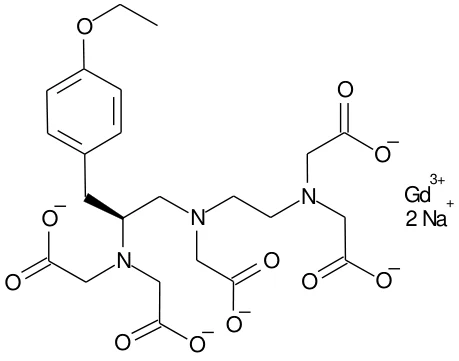
Chemical name: disodium [SA-8-11252634-(S)]- [N-[2-[bis[(carboxy-.kappa.O)methyl]amino-.kappa.N]-3-(4-ethoxyphenyl)propyl]-N-[2-[bis[(carboxy-.kappa.O)methyl]amino-.kappa.N]ethyl]glycinato(5-)-.kappa.N,.kappa.O]-gadolinate(2-) (CAS Index Name)
Molecular formula and molecular weight: C23H28N3O11·GdNa2 725.72
Structural formula:
Physical form: white to off white powder
Solubility: very soluble in water
pH in water: 7.0
Osmolality at 37°C (Osm/kg H2O): 0.688
Viscosity at 37°C (cP): 1.19
Density at 37°C (g/mL): 1.0881
14 Clinical Trials
14.1 Clinical Trials by Indication
MRI of the Liver
A total of 797 patients with suspected or known focal liver lesions were enrolled in four controlled phase III trials, of which 621 patients received PRIMOVIST (gadoxetate disodium injection) at the 0.025 mmol/kg dose and were evaluated for efficacy. Of the 621 patients, 334 (54%) were men and 287 (46%) were women; the mean age was 57 years (range 19 to 84 years). The ethnic representation was 556 (90%) Caucasian, 22 (4%) Black, 21 (3%) Hispanic, 15 (2%) Asian, and 7 (1%) of other ethnic groups.
The trials were prospectively designed to determine:
- the sensitivity of liver lesion detection of PRIMOVIST-enhanced MRI (combined pre- and postcontrast images) compared to precontrast MRI (two controlled trials). The standard of reference was a combination of pathology from resected liver specimens and intraoperative ultrasonography to obtain information about the whole liver. A tracking procedure was
- procedure.
- the proportion of correctly characterized liver lesions (correct liver lesion type) with PRIMOVIST-enhanced MRI (combined pre- and postcontrast images) compared to precontrast MRI (two controlled trials). The SOR included various prospectively defined procedures, eg, histopathology for malignant lesions, certain imaging procedures for certain benign lesions.
After enrollment, patients underwent both the predefined SOR procedure and the liver MRI, which included the unenhanced MRI followed by the 0.025 mmol/kg PRIMOVIST-enhanced MRI with dynamic phase and hepatocyte phase (20 min. after injection) imaging. In each trial, unenhanced and PRIMOVIST-enhanced liver MR images were evaluated by the clinical investigators and independently by three blinded radiologists not previously involved in any of the trials in a systematic, randomized, paired and unpaired fashion. For the detection studies, another independent radiologist performed the lesion tracking procedure. Only lesions detected at the identical location in a liver segment in the SOR and the MRI were judged to be correctly detected and constituted the basis for the sensitivity analysis.
In all four trials, PRIMOVIST (combined pre- and postcontrast image set) led to a significant improvement in diagnostic efficacy compared to unenhanced MRI. Table 4 shows a significant improvement in lesion detection for all readers in both studies when evaluating combined pre- and postcontrast MRI images versus unenhanced MRI images.
With respect to the characterization studies (Table 5), viewing combined pre- and postcontrast MRI scans led to a significant improvement in the proportion of correctly characterized lesions for two of three blinded readers in each study. All differences for the Average Reader (mean of all 3 blinded readers) were significant. Types of lesions characterized included metastases, hemangiomas, focal nodular hyperplasia (FNH), liver cysts and hepatocellular carcinoma (HCC).
Table 4: Sensitivity in Liver Lesion Detection for Studies 96129 and 97160
Study 96129 n = 302 lesion in 129 patients | Study 97160 n = 316 lesions in 126 patients | |||||||||||
|---|---|---|---|---|---|---|---|---|---|---|---|---|
| Diagnostic Procedure | Reader | Sensitivity (%) | 95% CI | Sensitivity (%) | 95% CI | |||||||
| Precontrast MRI | Average Reader | 66.6 | (61.1, 72.0) | 61.4 | (54.4, 68.4) | |||||||
| Precontrast MRI | Reader 1 | 71.2 | (65.5, 76.9) | 63.3 | (55.7, 70.9) | |||||||
| Precontrast MRI | Reader 2 | 65.2 | (59.1, 71.4) | 61.7 | (54.7, 68.7) | |||||||
| Precontrast MRI | Reader 3 | 63.3 | (57.0, 69.5) | 59.2 | (51.6, 66.7) | |||||||
| Combined pre- and postcontrast MRI | Average Reader | 71.2 | (66.0, 76.4) | 69.2 | (63.6, 74.8) | |||||||
| Combined pre- and postcontrast MRI | Reader 1 | 76.2 | (70.4, 81.9) | 71.5 | (64.8, 78.2) | |||||||
| Combined pre- and postcontrast MRI | Reader 2 | 69.5 | (63.8, 75.3) | 68.0 | (62.0, 74.1) | |||||||
| Combined pre- and postcontrast MRI | Reader 3 | 67.9 | (62.1, 73.7) | 68.0 | (61.7, 74.4) | |||||||
| Difference between combined pre- and postcontrast MRI vs precontrast MRIa | Average Reader | 4.6* | (2.1, 7.2) | 7.8* | (3.5, 12.2) | |||||||
| Difference between combined pre- and postcontrast MRI vs precontrast MRI | Reader 1 | 5.0* | (1.3, 8.6) | 8.2* | (3.6, 12.8) | |||||||
| Difference between combined pre- and postcontrast MRI vs precontrast MRI | Reader 2 | 4.3* | (0.6, 8.0) | 6.3* | (0.3, 12.3) | |||||||
| Difference between combined pre- and postcontrast MRI vs precontrast MRI | Reader 3 | 4.6* | (0.6, 8.7) | 8.9* | (3.1, 14.7) | |||||||
Note: The three blinded readers for each study are unique for that study.
- a Discrepancies between absolute difference and presented values are due to rounding
- *
Statistically significant improvement in lesion detection for combined images (p < 0.05)
Table 5: Proportion of Correctly Characterized Lesions with Respect to the SOR for Studies 012387 and 014763
Study 012387 n = 182b | Study 014763 n = 177c | |||||||||||||||
|---|---|---|---|---|---|---|---|---|---|---|---|---|---|---|---|---|
| Diagnostic Procedure | Reader | Proportion Correct (%) | 95% CI | Proportion Correct (%) | 95% CI | |||||||||||
| Precontrast MRI | Average Reader | 54.3 | (48.1, 60.5) | 57.3 | (50.6, 63.9) | |||||||||||
| Precontrast MRI | Reader 1 | 51.4 | (43.1, 59.6) | 59.5 | (51.4, 67.6) | |||||||||||
| Precontrast MRI | Reader 2 | 59.1 | (51.6, 66.6) | 64.3 | (56.7, 71.9) | |||||||||||
| Precontrast MRI | Reader 3 | 52.5 | (45.8, 59.2) | 48.0 | (39.2, 56.7) | |||||||||||
| Combined pre- and postcontrast MRI | Average Reader | 66.9 | (61.7, 72.1) | 67.8 | (62.0, 73.6) | |||||||||||
| Combined pre- and postcontrast MRI | Reader 1 | 67.2 | (60.4, 74.0) | 60.6 | (52.6, 68.6) | |||||||||||
| Combined pre- and postcontrast MRI | Reader 2 | 76.1 | (69.8, 82.4) | 75.8 | (69.3, 82.3) | |||||||||||
| Combined pre- and postcontrast MRI | Reader 3 | 57.5 | (50.5, 64.6) | 66.9 | (59.3, 74.6) | |||||||||||
| Difference between combined pre- and postcontrast MRI vs precontrast MRIa | Average Reader | 12.6* | (7.4, 17.8) | 10.5* | (5.0, 16.0) | |||||||||||
| Difference between combined pre- and postcontrast MRI vs precontrast MRI | Reader 1 | 15.8* | (7.1, 24.6) | 1.1 | (-7.3, 9.6) | |||||||||||
| Difference between combined pre- and postcontrast MRI vs precontrast MRI | Reader 2 | 17.0* | (9.5, 24.5) | 11.5* | (4.9, 18.2) | |||||||||||
| Difference between combined pre- and postcontrast MRI vs precontrast MRI | Reader 3 | 5.0 | (-1.8, 11.8) | 19.0* | (10.7, 27.3) | |||||||||||
Note: The three blinded readers for each study are unique for that study.
- a Discrepancies between absolute difference and presented values are due to rounding
- b n = total number of patients. Total number of lesions = 259
- c n = total number of patients. Total number of lesions = 269
- * Statistically significant improvement for combined images (p < 0.05)
Additional Clinical Trials
A post-authorization, multicentre, open-label phase III clinical study was conducted to explore the efficacy and safety of PRIMOVIST as a contrast agent for enhanced MRI of focal liver lesions in Chinese patients (N = 234). All treated patients were Asian, with a mean age of 50.2 ± 11.78 years (range: 19 to 79 years). Approximately a third of the patients were female. PRIMOVIST (0.25 mol/L) was demonstrated to be efficacious for liver-specific MRI in Chinese patients. No specific risk for Chinese patients with regard to the clinical usage of the drug product in liver MRI was observed. A total of 20/234 patients in the safety analysis set (8.5%) reported at least 1 AE, resulting in a total of 24 AEs. A total of 5 AEs in 5 (2.1%) of the 234 patients were reported to be possibly or probably related to study drug, including nausea (N = 2), blood bilirubin increased (N = 2), and white blood cell count decreased (N = 1) (see 8 Adverse Reactions).
Cardiac Effects
In clinical trials, a small increase (3.8 ms) in the average change from baseline in QTcF was observed at 30 min following PRIMOVIST administration and an increase of 2.3 ms at 2 to 4 hours post administration; no increase was observed at 24 and 72 hours. A QTcF change of 30 to 60 ms was observed in 14/453 (3.1%) patients at 30 min following PRIMOVIST administration. At this time point, 1/453 (0.2%) patients experienced a QTcF increase of >60 ms. These QTcF changes were not associated with arrhythmias or cardiac safety findings related to affected repolarization.
Table 6: Number of Patients with QTcF Increase at Any Time Point Postinjection
| Baseline | Precontrast MRI | 30 m p.i. | 2-4 h p.i. | 20-28 h p.i. | 68-76 h p.i. | |
|---|---|---|---|---|---|---|
| QTcF value at any time point post injection (p.i.) | ||||||
| QTcF >450 ms | 4 | 10 | 12 | 10 | 9 | 10 |
| QTcF >480 ms | -- | 1 | -- | 1 | 2 | 1 |
| QTcF >500 ms | -- | -- | -- | -- | -- | -- |
| QTcF increase >30 ms from mean of baseline and precontrast to any time point p.i. | ||||||
| QTcF >30 ms | -- | -- | 14 | 17 | 8 | 16 |
| QTcF increase >60 ms from mean of baseline and precontrast to any time point p.i. | ||||||
| QTcF >60 ms | -- | -- | 1 | 1 | 1 | -- |
Note: QTcF = QT corrected according to Fridericia’s formula; p.i. = postinjection
15 Microbiology
No microbiological information is required for this drug product.
16 Non-Clinical Toxicology
General Toxicology
Toxicology data reveal no special hazard for humans based on conventional studies of systemic toxicity, genotoxicity, reproductive toxicity, and contact-sensitizing potential.
Recent studies conducted in healthy rats injected repeatedly with linear or macrocyclic GBCAs demonstrated that linear agents were associated with progressive and persistent T1-weighted hyperintensity on MRI in the deep cerebellar nuclei (DCN). Signal enhancement in the globus pallidus (GP) could not be seen in animals. No changes in signal intensities in either DCN or GP were observed for the macrocyclic GBCAs.
Quantitative results using mass spectrometry demonstrated that the total gadolinium concentrations were significantly higher with the linear GBCAs than with the macrocyclic GBCAs. These studies reported no abnormal behavioural changes suggestive of neurological toxicity.
Acute Toxicity
Acute toxicity studies were performed with gadoxetate disodium (0.5 mmol/mL) by intravenous administration in mice, rats (adult and juvenile) and dogs, as well as by intragastric administration in mice and rats.
After a single intravenous administration, gadoxetate disodium was tolerated without lethality up to doses of 7.5 mmol/kg (mice), 10 mmol/kg (rats), 5 mmol/kg (weaned rats) and 3 mmol/kg (dogs). Mortality was observed from the doses of 10.0 mmol/kg (mice), 12.5 mmol/kg (rats) and 7.5 mmol/kg (weaned rats).
Maximum applicable doses and volumes were tested to study the acute toxicity after intragastric administration of gadoxetate disodium (0.5 mmol/mL) in mice and rats; it was tolerated without lethality in the maximum applicable doses of 25 mmol/kg (50 mL/kg in mice) and 20 mmol/kg (40 mL/kg in rats).
In telemetered conscious dogs, a small and transient QT prolongation was observed at the highest dose tested of 0.5 mmol/kg, which represents 20 times the human dose. At high concentrations, Gd-EOB-
DTPA blocked the HERG channel and prolonged the action potential duration in isolated guinea pig papillary muscles. This indicates a possibility that PRIMOVIST might induce QT prolongation when overdosed.
Based on the results of acute toxicity studies in animals, there is no risk of acute intoxication when using PRIMOVIST.
Repeated-Dose Toxicity
Repeated-dose toxicity studies with single daily administration over a period of 4 weeks were conducted with gadoxetate disodium in two formulations: 0.5 mmol/mL and 0.25 mmol/mL, in rats and dogs. In the studies performed with 0.25 mmol/mL gadoxetate disodium, animals were treated 7 times a week (a total of 28 to 31 administrations) with 0.2, 0.6, and 2 mmol/kg in rats and 0.1, 0.3, and 1.0 mmol/kg in dogs. In the studies performed with 0.5 mmol/mL gadoxetate disodium, animals were treated 5 times a week (a total of 16 to 18 administrations) with doses of 0.1, 0.5, and 1.0 mmol/kg in both species. Both rat studies included a treatment-free recovery period (9 to 12 weeks) after the last treatment in order to investigate the reversibility of possible adverse effects.
In general, gadoxetate disodium was well tolerated in both species without organ toxic effects in any of the dose groups. Adverse effects of gadoxetate disodium were observed from the middle doses of 0.5 mmol/kg onwards in rats and 0.3 mmol/kg in dogs. These effects consisted of minor changes in hematological parameters (decrease in hemoglobin and hematocrit, increase in platelet count) in rats which showed reversibility at the end of the recovery period. In dogs, early signs of general toxicity such as decrease in food consumption and body weight gain were observed. These effects do not raise concerns against the intended single diagnostic use of gadoxetate disodium in humans since the doses of 0.5 and 0.3 mmol/kg administered daily over a period of 4 weeks exceed approximately 20 and 12 times, respectively, the envisaged diagnostic single dose of 0.025 mmol/kg on the basis of body weight.
Another finding in the repeated-dose toxicity studies was a vacuolation of renal tubular cells in both rat studies using both the 0.25 mmol/mL gadoxetate disodium formulation and the 0.5 mmol/mL gadoxetate disodium formulation, from a dose of 0.5 mmol/kg onwards and in individual dogs (2 of 3 male and 1 of 3 female) treated with 0.25 mmol/mL gadoxetate disodium at the high dose of 1.0 mmol/kg. However, the vacuolation of the renal tubular cells did not cause any impairment of kidney function and is therefore considered as a storage phenomenon (due to reabsorption of gadoxetate disodium after glomerular filtration) rather than an adverse effect. Furthermore, an almost complete reversibility of the effect could be shown in the rat studies.
In summary, the results of the repeated-dose toxicity studies with daily intravenous administration showed no findings which oppose the diagnostic administration of PRIMOVIST to humans.
Carcinogenicity
No long-term animal studies have been performed to evaluate carcinogenic potential of PRIMOVIST (gadoxetate disodium injection).
Genotoxicity
Studies into genotoxic effects (gene, chromosomal, and genome mutation tests) with PRIMOVIST in vivo and in vitro indicated no mutagenic potential. Studies for the evaluation of the tumorigenic potential of PRIMOVIST were not performed. This was not considered necessary since PRIMOVIST showed no genotoxic properties and no toxic effect on fast growing tissues, and since PRIMOVIST will usually be administered only once to an individual patient for diagnostic purposes.
Reproductive and Developmental Toxicology
Animal reproductive and developmental toxicity studies were done in rats and rabbits. Gadoxetate disodium was not teratogenic in rabbits and rats even when given repeatedly during organogenesis at maximum tested dose levels of 25.9 to 32.4 times (based on body surface area) or 80 to 200 times (based on body weight) the human dose.
However, in a rabbit embryotoxicity study, an increased number of postimplantational losses and an increased abortion rate were observed after repeated administration of 2.0 mmol/kg of gadoxetate disodium representing 25.9 times (based on body surface area [mmol/m2]) or approximately 80 times (based on body weight [mmol/kg]) the recommended single diagnostic dose in humans. This occurred without evidence of maternal toxicity. Moreover, an increase in preimplantation loss was noted at 32 times the human dose (mmol/m2 basis) in rats, however, it is unclear if this event may be due to gadoxetate disodium.
Because pregnant animals received repeated daily doses of PRIMOVIST, their overall exposure was significantly higher than that achieved with the standard single dose administered to humans. PRIMOVIST had no effect on fertility and general reproductive performance of male and female rats at doses 6.5 times (based on body surface area) or 40 times (based on body weight) the human single dose.
Special Toxicology
Local tolerance studies with PRIMOVIST indicated good local tolerability after intravascular (intravenous, intraarterial, and paravenous administration). However, intramuscular administration caused local intolerance reactions, including interstitial hemorrhage, edema, and focal muscle fiber necrosis and must therefore be strictly avoided in humans (see 7 Warnings and Precautions - General).
Studies into antigenic and contact-sensitizing effects gave no indication of a sensitizing potential of PRIMOVIST.
Detailed Pharmacology - Animal Pharmacology
Pharmacodynamics
The in vivo efficacy of gadoxetate disodium in the demarcation of neoplasm in the liver was investigated by performing MR imaging prior and after single IV injection of gadoxetate disodium at various dose levels in rats (0.01, 0.02, 0.03, and 0.06 mmol Gd/kg). Images were obtained before and 1 to 30 min after application of the contrast agent in a 2 Tesla animal imager using a T1-weighted spin-echo sequence (TR = 400 msec, TE = 15 msec). The lowest dose tested (0.01 mmol Gd/kg) exhibited an increase of the contrast between tumor and liver parenchyma. The contrast increased further with increasing dose, reaching a maximum at 0.03 to 0.06 mmol Gd/kg.
Studies in a special rat strain (TR– rats) with a mutated canalicular transport gene demonstrated that gadoxetate disodium is transported into the bile via a special carrier. The sequestration into the bile is mediated by the energy-dependent canalicular multispecific organic anion transporter (cMOAT). Investigations in rats, dogs, and frog oocytes suggested that the agent enters the hepatocyte via a membrane-bound carrier belonging to the group of organic anion transporting polypeptides. The involvement of these transporters is supported by the finding that rifamycines inhibit the transport of gadoxetate disodium into the hepatocytes. These antibiotics are known to specifically block these transporters.