


Product Monograph - Optimark
SUMMARY PRODUCT INFORMATION
| Route of Administration | Dosage Form / Strength | Clinically Relevant Non-medicinal Ingredients |
| Intravenous injection | Solution containing 330.9 mg/mL of Gadoversetamide | 25.4 mg/mL of Versetamide For a complete listing see Dosage Forms, Composition and Packaging section. |
INDICATIONS AND CLINICAL USE
Optimark is indicated for:
Adults
Optimark is indicated for use with magnetic resonance imaging (MRI) in adults to provide contrast enhancement in those intracranial lesions with abnormal vascularity or those thought to cause abnormalities in the blood-brain barrier. Optimark has been shown to facilitate visualization of intracranial lesions including but not limited to tumors.
Optimark is also indicated for use with MRI in adults to provide contrast enhancement and facilitate visualization of lesions of the spine and associated tissues.
Optimark is also indicated for use with MRI in adults to provide contrast enhancement and facilitate visualization of lesions in the liver.
Geriatrics (> 65 years of age):
There was no effect of age in adult patients on the kinetics or elimination of Optimark.
(See CONTRAINDICATIONS, WARNINGS AND PRECAUTIONS - Serious Warnings and Precautions; General; Renal; and Skin sections) .
Pediatrics (0 - 18 years of age)
The safety and effectiveness of Optimark in pediatric patients has not been established. Pediatric patients may be particularly vulnerable to adverse GBCA reactions due to renal immaturity and/or unrecognized renal insufficiency.
Optimark is contraindicated in neonates up to 4 weeks of age due to their immature renal function (see CONTRAINDICATIONS, WARNINGS AND PRECAUTIONS – Special Populations; Pediatrics (0 – 18 years), and ACTION AND CLINICAL PHARMACOLOGY – Special Populations and Conditions; Pediatrics sections).
CONTRAINDICATIONS
Gadolinium-based contrast agents (GBCAs) increase risk for Nephrogenic Systemic Fibrosis (NSF) in patients with renal insufficiency. Optimark is contraindicated in:
- chronic severe kidney insufficiency where glomerular filtration rate is < 30 mL/min/1.73m2
- acute kidney injury/acute renal insufficiency
- neonates up to 4 weeks of age due to their immature renal function.
- known allergic or hypersensitivity reactions to gadolinium, versetamide or any of the inert ingredients in the formulation, or any component of the container. For a complete listing, see the DOSAGE FORMS, COMPOSITION AND PACKAGING section of the product monograph.
WARNINGS AND PRECAUTIONS
WARNING: NEPHROGENIC SYSTEMIC FIBROSIS Gadolinium-based contrast agents (GBCAs) increase the risk for Nephrogenic Systemic Fibrosis (NSF) in patients with renal insufficiency. In these patients, avoid use of GBCAs unless the diagnostic information is essential and not available with non-contrast enhanced magnetic resonance imaging (MRI). NSF may result in fatal or debilitating systemic fibrosis affecting the skin, muscle, and internal organs. Optimark is contraindicated in:
The use of Optimark in patients with mild to moderate renal impairment (GFR ≥ 30 to < 89 mL/min/1.73 m2) needs to be weighed against the risk of performing alternative medical imaging by healthcare professionals. Before administering Optimark, screen patients for acute kidney injury and any other conditions that may reduce renal function. For patients at risk for chronically reduced renal function (e.g., age > 60 years, diabetes mellitus or chronic hypertension), estimate the GFR through laboratory testing. In patients with chronically reduced renal function, acute kidney injury requiring dialysis |
has occurred with the use of GBCAs. The risk of acute kidney injury may increase with an increased dose of the contrast agent. Administer the LOWEST dose possible for adequate imaging. When administering Optimark, do not exceed the recommended dose and allow a sufficient period of time for elimination of the agent from the body prior to any re-administration (see WARNINGS AND PRECAUTIONS – General; Renal; Skin; and ADVERSE REACTIONS – Post-marketing Experience). |
Serious Warnings and Precautions
|
General
Diagnostic procedures involving the use of MRI contrast agents should be conducted under supervision of a physician with the prerequisite training and a thorough knowledge of the procedure to be performed. Appropriate facilities should be available for coping with any complications of the procedure, as well as for emergency treatment of severe reactions to the contrast itself.
Patients should remain under observation for at least one hour after Optimark administration.
Repeat procedures: The safety of repeated doses has not been studied. If the physician determines sequential repeat examinations are required, a suitable interval of time between administrations should be observed to allow for normal clearance of the drug from the body. A period of at least 7 days should elapse if a repeat scan is considered.
Accumulation of Gadolinium in Brain
The current evidence suggests that gadolinium may accumulate in the brain after multiple administration of GBCAs. Increased signal intensity on non-contrast T1-weighted images of the brain has been observed after multiple administrations of GBCAs in patients with normal renal function. Gadolinium has been detected in brain tissue after multiple exposures to GBCAs, particularly in the dentate nucleus and globus pallidus. The evidence suggests that the risk of gadolinium accumulation is higher after repeat administration of linear than after repeat administration of macrocyclic agents.
The clinical significance of gadolinium accumulation in the brain is presently unknown; however, gadolinium accumulation may potentially interfere with the interpretation of MRI scans of the brain. In order to minimize potential risks associated with gadolinium accumulation in the brain, it is recommended to use the lowest effective dose and perform a careful benefit risk assessment before administering repeated doses.
Nephrogenic Systemic Fibrosis (NSF)
Gadolinium-based contrast agents (GBCAs) increase the risk for Nephrogenic Systemic Fibrosis (NSF) in patients with acute or chronic renal insufficiency of any severity. In these patients, avoid use of GBCAs unless the diagnostic information is essential and not available with non-contrast-enhanced magnetic resonance imaging (MRI). NSF may result in fatal or debilitating systemic fibrosis affecting the skin, muscle, and internal organs.
Among the factors that may increase the risk for NSF are repeated or higher than recommended doses of a GBCA and the degree of renal function impairment at the time of exposure.
NSF development is considered a potential class-related effect of all GBCAs.
Post-marketing reports have identified the development of NSF following single and multiple administrations of GBCAs. These reports have not always identified a specific agent. Where a specific agent was identified, the most commonly reported agent was gadodiamide (Omniscan®), followed by gadopentetate dimeglumine (Magnevist®) and Gadoversetamide (Optimark). NSF has also developed following the sequential administration of gadodiamide with gadobenate dimeglumine (MultiHance®) or gadoteridol (ProHance®). The number of post-marketing reports is subject to change over time and may not reflect the true proportion of cases associated with any specific GBCA.
The extent of risk for NSF following exposure to any specific GBCA is unknown and may vary among the agents. Published reports are limited and predominantly estimate NSF risks with gadodiamide. In one retrospective study of 370 patients with 370 patients with severe renal insufficiency who received gadodiamide, the estimated risk for development of NSF was 4% (J Am Soc Nephrol 2006;17:2359). The risk, if any for the development of NSF among patients with mild to moderate renal insufficiency or normal renal function is unknown, and the cautious utilization of the lowest possible dose of GBCA is preferable.
Screen all patients for acute kidney injury, renal dysfunction and other conditions that may reduce renal function. Features of acute kidney injury consist of rapid (over hours to days) and usually reversible decrease in kidney function, commonly in the setting of surgery, severe infection, injury or drug-induced kidney toxicity. Serum creatinine levels and estimated GFR may not reliably assess renal function in the setting of acute kidney injury.
For patients at risk for chronically reduced renal function (e.g., age > 60 years, diabetes mellitus or chronic hypertension), estimate the GFR through laboratory testing.
In patients with chronically reduced renal function, acute kidney injury requiring dialysis has occurred with the use of GBCAs. The risk of acute kidney injury may increase with an increased dose of the contrast agent. Administer the LOWEST dose possible for adequate imaging.
When administering a GBCA, do not exceed the recommended dose and allow a sufficient period of time for elimination of the agent from the body prior to any re-administration (see
WARNINGS AND PRECAUTIONS, DETAILED PHARMACOLOGY and DOSAGE AND ADMINISTRATION sections).
A skin biopsy is necessary in order to exclude the diagnosis of similarly presenting skin disorders (e.g. scleromyxedema); (see WARNINGS AND PRECAUTIONS - Serious Warnings and Precautions; Renal; Skin; and ADVERSE REACTIONS - Post-marketing Experience sections).
Carcinogenesis and Mutagenesis
See TOXICOLOGY section.
Cardiovascular
The most prevalent extreme cardiac event prior to and after the administration of Optimark was a prolonged PR interval (> 200 msec). After the injection of Optimark, the frequency of prolonged PR intervals showed no dose-response relationship to the amount of contrast administered.
Optimark may be associated with QT/QTc interval prolongation (see CLINICAL TRIALS). Many drugs that cause QT/QTc prolongation are suspected to increase the risk of a rare polymorphic ventricular tachyarrhythmia known as torsade de pointes. Torsade de pointes may be asymptomatic or experienced by the patient as dizziness, palpitations, syncope or seizures. If sustained, torsade de pointes can progress to ventricular fibrillation and sudden cardiac death. The risk of torsade de pointes during treatment with a QT/QTc prolonging drug is increased in patients who are female or elderly (≥ 65 years).
Particular care should be exercised when administering Optimark in patients who are at an increased risk of experiencing torsade de pointes. Risk factors for torsade de pointes include, but are not limited to, the following:
- Female
- age (≥ 65 years)
- presence of genetic variants affecting cardiac ion channels or regulatory proteins, especially congenital long QT syndrome (eg. Romano-Ward syndrome, Jervell and Lange-Nielsen syndrome, Anderson syndrome)
- family history of sudden cardiac death at < 50 years
- cardiac disease (eg. myocardial ischemia or infarction, congestive heart failure, left ventricular hypertrophy, cardiomyopathy)
- demonstrated history of arrhythmias (especially ventricular arrhythmias, atrial fibrillation, or recent conversion from atrial fibrillation.
- bradycardia (< 50 beats per minute)
- acute neurological events (e.g. intracranial or subarachnoid hemorrhage, stroke, intracranial trauma)
- electrolyte disturbances (e.g. hypokalemia, hypomagnesia, hypocalcemia)
- nutritional deficits (e.g. eating disorders, extreme diets)
- diabetes mellitus
- autonomic neuropathy
- hepatic or renal function, if relevant to the elimination of the drug
(See also DRUG INTERACTIONS - Drug-Drug Interactions section.)
Physicians who prescribe drugs that prolong the QT/QTc interval should counsel their patients concerning the nature and implications of the EKG changes, underlying diseases and disorders that are considered to represent risk factors, demonstrated and predicted drug-drug interactions, symptoms of arrhythmias, risk management strategies, and other information relative to the use of the drug.
See also ADVERSE REACTIONS section.
Dependence/Tolerance
The safety of repeated doses has not been studied.
Ear/Nose/Throat
See Table 1 and ADVERSE REACTIONS section.
Endocrine and Metabolism
Genetic polymorphism with this product has not been studied.
Gastrointestinal
See Table 1 and ADVERSE REACTIONS section.
Genitourinary
See ADVERSE REACTIONS section.
Hematologic
Deoxygenated sickle erythrocytes have been shown in vitro studies to align perpendicular to a magnetic field which may result in vaso-occlusive complications in vivo. The enhancement of magnetic moment by Gadoversetamide may possible potentiate sickle erythrocyte alignment. Gadoversetamide in patient with sickle cell anemia and other hemoglobinopathies has not been studied.
Patients with other hemolytic anemias have not been adequately evaluated following administration of Gadoversetamide to exclude the possibility of increased hemolysis.
See Table 2 for abnormal hematologic and clinical chemistry findings.
Hepatic/Biliary/Pancreatic
An alternate route of excretion frequently observed in patients with severe renal impairment receiving iodinated contrast media is the hepatobiliary enteric pathway. This has not been demonstrated with Gadoversetamide in humans but the existence of this pathway has been demonstrated in animals. Gadoversetamide has been shown to be removed from the body by hemodialysis.
Immune
See WARNINGS AND PRECAUTIONS section.
Neurologic
See Table 1 and ADVERSE REACTIONS section.
Ophthalmologic
No data available.
Peri-Operative Considerations
No data available.
Psychiatric
No data available.
Renal
Since Gadoversetamide is cleared from the body by glomerular filtration, caution should be exercised in patients with impaired renal function. Dose adjustments in renal impairment have not been studied.
- Optimark is contraindicated for use in patients with acute or chronic severe kidney insufficiency (glomerular filtration rate < 30 mL/min/1.73m2).
- Evaluate all patients for renal dysfunction prior to administration of Optimark. For patients at risk for chronically reduced renal function (e.g., age > 60 years, diabetes mellitus or chronic hypertension) estimate the GFR through laboratory testing.
- The risk, if any for the development of NSF among patients with mild to moderate renal insufficiency or normal renal function is unknown, and the cautious utilization of the lowest possible dose of GBCA is preferable. Optimark should only be used after careful risk-benefit evaluation in patients with mild to moderate renal impairment (GFR ≥ 30 to < 89 mL/min/1.73m2).
- In patients with chronically reduced renal function, acute kidney injury requiring dialysis has occurred with the use of GBCAs. The risk of acute kidney injury may increase with an increased dose of the contrast agent. Administer the LOWEST dose possible for adequate imaging.
(See CONTRAINDICATIONS, WARNINGS AND PRECAUTIONS - Serious Warnings and Precautions; Nephrogenic Systemic Fibrosis (NSF); Skin; and ADVERSE REACTIONS - Post-marketing Experience sections).
Respiratory
See Table 1 and ADVERSE REACTIONS section.
Sensitivity/Resistance
No data available.
Sexual Function/Reproduction
See TOXICOLOGY section.
Skin
See ADVERSE REACTIONS section.
NSF was first identified in 1997 and has so far, been observed only in patients with renal disease. This is a systemic disorder with the most prominent and visible effects on the skin. Cutaneous lesions associated with this disorder are caused by excessive fibrosis and are usually symmetrically distributed on the limbs and trunk. Involved skin becomes thickened which may inhibit flexion and extension of joints and result in severe contractures. The fibrosis associated with NSF can extend beyond dermis and involve subcutaneous tissues, striated muscles, diaphragm, pleura, pericardium, and myocardium. NSF may be fatal (see WARNINGS AND PRECAUTIONS - Serious Warnings and Precautions; General; Renal; and ADVERSE REACTIONS - Post-marketing Experience sections).
Special Populations
Pregnant Women: Optimark was shown to cause a slight growth retardation in offspring of rats that received doses of 0.5 mmol/kg/day (1980 mg/m2) (0.8 times the clinical dose of 2442 mg/m2, 5 times the recommended human dose of 0.1 mmol/kg) for 5 weeks. Gadoversetamide has been shown to cause a slight increase in visceral abnormalities in the offspring of rabbits at doses of 0.4 and 1.6 mmol/kg/day (2904 and 11616 mg/m2) for 12 days (1.2 and 4.8 times the clinical dose of 2442 mg/m2; 4 and 16 times the recommended human dose of 0.1 mmol/kg). The incidence of these abnormalities was comparable to that of historical control levels.
There are no adequate and well-controlled studies in pregnant women. Gadoversetamide should be used during pregnancy only if the potential benefit justifies the potential risk to the fetus.
Nursing Women: 153Gd-labelled Gadoversetamide was administered intravenously to lactating rats at a dose of 0.1 mmol/kg. A low but measurable lacteal transfer occurred in rats in a 24-hour period. The concentrations of radioactivity contained in the milk were low and decreased over time. It is not known whether this drug is excreted in human milk. Because many drugs are excreted in human milk, caution should be exercised when Optimark is administered to a nursing woman and it is recommended to discontinue breastfeeding for a period of 24 hours after Optimark administration.
(See WARNINGS AND PRECAUTIONS - Serious Warnings and Precautions; General; Renal; and Skin sections).
Pediatrics (0 – 18 years of age): The safety and effectiveness of Optimark in pediatric patients has not been established. Pediatric patients may be particularly vulnerable to adverse GBCA reactions due to renal immaturity and/or unrecognized renal insufficiency.
Optimark is contraindicated in neonates up to 4 weeks of age due to their immature renal function (see INDICATIONS AND CLINICAL USE; Pediatrics (0 – 18 years), CONTRAINDICATIONS, and WARNINGS AND PRECAUTIONS sections).
Monitoring and Laboratory Tests
Blood pressure, laboratory or other tests are required to monitor response to therapy and possible adverse reactions. Please refer to WARNINGS AND PRECAUTIONS section above.
ADVERSE REACTIONS
Adverse Drug Reaction Overview (from Clinical Trials)
Because clinical trials are conducted under very specific conditions, the adverse drug reaction rates observed in the clinical trials may not reflect the rates observed in practice and should not be compared to the rates in the clinical trials of another drug. Adverse drug reaction information from clinical trials is useful for identifying drug-related adverse events and for approximating rates.
In clinical trials, a total of 2038 doses were administered. The Phase 2 studies were designed as pseudo cross over studies in which patients received two separate and different doses of Optimark (see CLINICAL TRIALS). All safety data is presented by dose, therefore these patients are counted twice, resulting in 2038 subjects and patients studied; 1663 subjects and patients received Optimark (all doses combined), 329 patients received Magnevist®, and 46 subjects received placebo (saline). Of the 1663 subjects and patients who received Optimark, 841 (52%) were men and 822 (48%) were women with a mean age of 49 years (range 12-85 years). In this population, there were 1407 (85%) white, 145 (9%) black, 37 (2%) Asian, and 74 (4%) subjects and patients of other racial groups.
In the clinical trials there were 8 serious adverse events and 1 death. All serious adverse events were unrelated to Optimark. The one death occurred in a patient with advanced multisystem disease (end-stage AIDS) and was attributed to the underlying disorders and not Optimark.
For all Optimark subjects/patients, regardless of dose (dose range 0.1 to 0.7 mmol/kg), 510 of 1663 patients (30.7%) reported a total of 997 adverse events; 114 (34.7%) of the 329 patients dosed with Magnevist® reported a total of 215 adverse events and 22 (47.8%) of the 46 subjects reported a total of 81 adverse events.
The most commonly noted adverse experiences were headache (8.4%), taste perversion (4.4%), dizziness (3.1%), nausea (3.0%), vasodilation (2.3%) and paresthesia (2.1%). All adverse events reported in 1% or greater of all patients are listed in Table 1.
Of the subjects and patients who experienced adverse events, 95.8% of the adverse events were of mild or moderate intensity after dosing with Optimark (all doses combined). The listings below include all adverse events that occurred following the administration of Optimark, regardless of their attributibility to the drug or to the procedure.
In Phase 3 pivotal clinical studies, the principal investigators considered that 5.6% of all adverse events were considered to be related to the administration of Gadoversetamide.
There was no demographic association in the reporting of adverse events.
| Table 1 - Summary of Adverse Events Experience by ≥ 1% of Patients by Dose and Treatment Group n(%) | ||||||||||
| Body System or Event Type | Optimark
(n=1663)1 | Optimark All doses (n=1663)1 | Magnevist®
| |||||||
| Number of Patients with one or more adverse events | 281 (29.3) | 510 (30.7) | 114 (34.7) | |||||||
| Total number of adverse events | 199 (20.8) | 997 | 215 | |||||||
| Patients with any injection associated with discomfort | 199 (20.8) | 382 (23.0) | 75 (22.8) | |||||||
| Body as a whole | 141 (14.7) | 217 (13.0) | 63 (19.1) | |||||||
| Headache | 81 (8.4) | 124 (7.5) | 31 (9.4) | |||||||
| Pain Abdomen | 17 (1.8) | 24 (1.4) | 4 (1.2) | |||||||
| Asthenia | 13 (1.4) | 20 (1.2) | 8 (2.4) | |||||||
| Injection site reaction | 16 (1.0) | 20 (1.2) | 10 (3.0) | |||||||
| Pain back | 9 (0.9) | 16 (1.0) | 3 (0.9) | |||||||
| Pain | 8 (0.8) | 13 (0.8) | 13 (3.6) | |||||||
| Cardiovascular | 38 (4.0) | 109 (6.6) | 10 (3.0) | |||||||
| Vasodilation | 22 (2.3) | 90 (5.4) | 6 (1.8) | |||||||
| Digestive | 58 (6.0) | 106 (6.4) | 20 (6.1) | |||||||
| Nausea | 29 (3.0) | 43 (2.6) | 8 (2.4) | |||||||
| Diarrhea | 12 (1.3) | 29 (1.7) | 3 (0.9) | |||||||
| Dyspepsia | 7 (0.7) | 16 (1.0) | 2 (0.6) | |||||||
| Hemic and Lymphatic |
| 13 (0.8) | 5 (1.5) | |||||||
| Ecchymosis | 5 (0.5) | 11 (0.7) | 5 (1.5) | |||||||
| Musculoskeletal | 14 (1.5) | 19 (1.1) | 3 (0.9) | |||||||
| Nervous | 66 (6.9) | 114 (6.9) | 20 (6.1) | |||||||
| Dizziness | 30 (3.1) | 50 (3.0) | 7 (2.1) | |||||||
| Paresthesia | 20 (2.1) | 30 (1.8) | 7 (2.1) | |||||||
| Respiratory | 29 (3.0) | 47 (2.8) | 10 (3.0) | |||||||
| Rhinitis | 16 (1.7) | 20 (1.2) | 4 (1.2) | |||||||
| Skin and Appendages | 20 (2.1) | 39 (2.3) | 13 (4.0) | |||||||
| Rash | 6 (0.6) | 15 (0.9) | 7 (2.1) | |||||||
| Special Senses | 53 (5.5) | 111 (6.7) | 20 (6.1) | |||||||
| Taste perversion | 42 (4.4) | 95 (5.7) | 16 (4.9) | |||||||
| 1Optimark doses of 0.1, 0.2, 0.3, 0.4, 0.5 and 0.7 mmol/kg were evaluated in 18 clinical studies. | ||||||||||
Less Common Clinical Trial Adverse Drug Reactions (< 1%)
Body as a Whole: abdomen enlarge, allergic reaction, edema face, edema injection site, fever, flu syndrome, accidental injury, inflammation injection site, lab test abnormality, malaise, mucous membrane discharge, neck rigidity, chest pain, neck pain, pain pelvic
Cardiovascular: arrhythmia, hemorrhage, hypertension, hypotension, pallor, palpitation, peripheral vascular disease, syncope, tachycardia, thrombophlebitis, vasospasm
Digestive: anorexia, increased appetite, constipation, bloody diarrhea, dry mouth, dysphagia, eructation, flatulence, gastrointestinal perforation, hemorrhage - ulcer stomach liver tenderness, increased salivation, melena, tenesmus, rectal disorder, thirst, tongue disorder, vomit
Hemic and Lymphatic: lymphoadenopathy, thrombocytopenia
Metabolic and Nutritional: increased creatinine, edema, hypercalcemia, hyperglycemia, hypoglycemia, hyponatremia
Musculoskeletal: arthralgia, arthrosis, leg cramps, myalgia, myasthenia, spasm
Nervous System: agitation, amnesia, anxiety, confusion, convulsion, depersonalization, diplopia, dystonia, emotional liability, hallucinations, hypertonia, hypesthesia, insomnia, meningitis, nervousness, decreased reflexes, increased reflexes, sleep disorder, somnolence, tremor, vertigo
Respiratory System: asthma, bronchiectasis, cough, dyspnea, epistaxis, hemoptysis, laryngismus, pharyngitis, pneumonia, sinusitis, voice alteration
Skin and Appendages: application site reaction, erythema multiforme, hair disorder, herpes simplex, pruritus, rash macular-papular and vesicullous bullous, skin dry, increased sweating, urticarial
Special Senses: amblyopia, conjunctivitis, hyperacusis, ear pain, eye pain, parosmia, tinnitus
Urogenital: dysmenorrhea, dysuria, vaginal hemorrhage, urinary tract infection, metrorrhagia, oliguria, breast pain, urine abnormality, urine frequency
Hypocalcemia (occurred in the clinical trial): the causality has not been established
Clinical Laboratory Evaluations
The following table presents a descriptive summary of the changes from baseline for chemistry and haematology that are statistically significant from baseline.
Table 2 - Significant Changes (± SD) from Baseline for Laboratory Parameters for Patients Dosed with 0.1 mmol/kg Optimark or Magnevist® in Pivotal Phase 3 Studies by Time Period and Treatment
| Optimark | Magnevist® | |||||||
| Parameter | N | Mean Change from Baseline (SD)* | N | Mean Change from Baseline (SD)* | ||||
| 2 hours post-dosing | ||||||||
| Alkaline phosphatase | 455 | -5.52 (18.1) | ||||||
| Glucose | 455 | 46.66 (112.9) | 323 | 62.66 (106.7) | ||||
| Iron | 319 | 9.49 (20.5) | ||||||
| Iron saturation | 425 | -6.92 (19.4) | 299 | 13.17 (25.4) | ||||
| TIBC | 450 | 13.54 (16.7) | ||||||
| Monocytes | 425 | -8.85 (33.4) | 303 | -9.28 (35.7) | ||||
| WBC | 306 | 5.34 (21.2) | ||||||
| 24 hours post-dosing | ||||||||
| AST (SGOT) | 321 | -8.31 (43.1) | ||||||
| Ferritin | 318 | 5.68 (35.5) | ||||||
| Glucose | 453 | 15.38 (96.3) | 322 | 22.91 (100.0) | ||||
| LDH | 451 | -7.08 (44.1) | 321 | -8.93 (35.6) | ||||
| 72 hours post-dosing | ||||||||
| Glucose | 439 | 16.12 (100.2) | 313 | 26.68 (105.3) |
| LDH | 437 | -8.22 (44.0) | 312 | -7.68 (44.6) |
*Note: Mean change from baseline = (post-contrast standardized value – baseline standardized value); empty cells = change not significant | ||||
The urinalysis parameters that were measured in all treated study participants in the Phase III trials are: pH, specific gravity, creatinine clearance, urine iron and urine zinc. No significant changes in the mean values for the urinalysis parameters occurred during the 72 hours of patient evaluation after injection and were comparable in all groups.
Post-marketing Experience
The following adverse reactions have been identified during post-approval use of Optimark. Because these reactions are reported voluntarily from a population of uncertain size, it is not always possible to reliably estimate their frequency or establish a causal relationship to Optimark.
Nervous System Disorders: Seizure
Respiratory, Thoracic, and Mediastinal Disorders: Bronchospasm, laryngeal/pharyngeal edema
Skin and Subcutaneous Tissue Disorders: Nephrogenic Systemic Fibrosis (NSF)
Post-marketing reports have identified the development of NSF following single and multiple administrations of GBCAs. These reports have not always identified a specific agent. Where a specific agent was identified, the most commonly reported agent was gadodiamide (Omniscan®), followed by gadopentetate dimeglumine (Magnevist®) and Gadoversetamide (Optimark). NSF has also developed following the sequential administration of gadodiamide with gadobenate dimeglumine (MultiHance®) or gadoteridol (ProHance®). The number of post-marketing reports is subject to change over time and may not reflect the true proportion of cases associated with any specific GBCA.
The extent of risk for NSF following exposure to any specific GBCA is unknown and may vary among the agents. Published reports are limited and predominantly estimate NSF risks with gadodiamide. In one retrospective study of 370 patients with 370 patients with severe renal insufficiency who received gadodiamide, the estimated risk for development of NSF was 4% (J Am Soc Nephrol 2006;17:2359). The risk, if any for the development of NSF among patients with mild to moderate renal insufficiency or normal renal function is unknown, and the cautious utilization of the lowest possible dose of GBCA is preferable.
(See CONTRAINDICATIONS, WARNINGS AND PRECAUTIONS - Serious Warnings and Precautions; General; Renal; and Skin sections).
DRUG INTERACTIONS
Drug-Drug Interactions
Drug interactions with other contrast agents, other drugs were not studied. Pharmacokinetic studies were performed with non-fasted volunteers or patients.
Pharmacokinetic studies between Optimark and other drugs that prolong the QT interval have not been performed. An interaction between these drugs and Optimark cannot be excluded. Drugs that have been associated with QT/QTc prolongation and/or torsade de pointes include, but are not limited to, the examples in the following list. Chemical/pharmacological classes are listed if some, though not necessarily all, class members have been implicated in QT/QTc prolongation and/or torsade de pointes:
- Class IA antiarrhythmics (e.g. quinidine, procainamide, dispyramide)
- Class III antiarrhythmics (e.g. amiodarone, sotalol, ibutilide)
- Class IC antiarrhythmics (e.g. flecanide, propafenone)
- antipsychotics (e.g.chlorpromazine, pimozide, haloperidol, droperidol)
- tricyclic/tetracyclic antidepressants (e.g. amitripyline, imipramine, maprotiline)
- fluoxetine
- venlafaxine
- methadone
- macrolide antibiotics and analogues (e.g. erythromycin, clarithromycin, telithromycin)
- fluoroquinolone antibiotics (e.g. moxifloxacin, gatifloxacin)
- pentamide
- antimalarials (e.g. halofantrine, quinine)
- azole antifungals (e.g. ketoconazole, fluconazole, voriconazole)
- domperidone
- 5-HT3 antagonists (e.g. dolasetron, ondansetron)
- Tacrolimus
Optimark should be used with caution with drugs that can disrupt electrolyte levels, including, but not limited to, the following:
- loop, thiazide, and related diuretics
- amphotericin B
- high dose corticosteroids
The above lists of potentially interacting drugs are not comprehensive. Current scientific literature should be consulted for newly approved drugs that prolong the QT/QTc interval or cause electrolyte disturbances, as well for older drugs for which these effects have recently been established.
Drug-Food Interactions
Not applicable for this product.
Drug-Herb Interactions
Not applicable for this product.
Drug-Laboratory Interactions
Transient changes in serum iron, calcium, copper and zinc parameters have been observed. The clinical significance is unknown. Optimark has been shown to cause colorimetric interference with the determination of calcium that results in an apparent decrease in serum concentrations.
Drug-Lifestyle Interactions
Not applicable for this product.
DOSAGE AND ADMINISTRATION
(Please see STORAGE AND STABILITY and DOSAGE FORMS, COMPOSITION AND PACKAGING sections).
Dosing Considerations
| Table 3 - Dosage Chart for Optimark | ||
| Body Weight | 0.1 mmol/kg (0.2 mL/kg) | |
| kg | lb | |
| 40 | 88 | 8.0 mL |
| 50 | 110 | 10.0 mL |
| 60 | 132 | 12.0 mL |
| 70 | 154 | 14.0 mL |
| 80 | 176 | 16.0 mL |
| 90 | 198 | 18.0 mL |
| 100 | 220 | 20.0 mL |
| 110 | 242 | 22.0 mL |
| 120 | 264 | 24.0 mL |
| 130 | 286 | 26.0 mL |
| 140 | 308 | 28.0 mL |
| 150 | 330 | 30.0 mL |
Concurrent medications should not be physically mixed with contrast agents because of the potential for chemical incompatibility.
Parenteral products should be inspected visually for particulate matter and discoloration prior to administration. Do not use the solution if it is discolored or particulate matter is present.
The lowest effective dose should be used.
Recommended Dose and Dosage Adjustment
Optimark should be administered as a bolus peripheral intravenous injection at a dose of 0.2 mL (0.1 mmol/kg), and at a rate of 1 - 2 mL/sec., delivered by manual or by power injector.
Optimark should be drawn into the syringe and administered using sterile technique. If non-disposable equipment is used, scrupulous care should be taken to prevent residual contamination with traces of cleansing agents. To ensure complete injection of the contrast medium the injection should be followed by a 5 mL normal saline flush. Unused portions of the drug must be discarded.
The imaging procedure should be completed within 1 hour of the injection of Optimark.
The safety of repeat doses has not been studied (see ACTION AND CLINICAL PHARMACOLOGY - Pharmacodynamics and CLINICAL TRIALS sections).
Missed Dose
Not applicable for this product.
Administration
According to the patient weight, the solution of Optimark may be taken from one vial or from one prefill syringe and the solution delivered intravenously by manual or power injector.
Oral solutions: Not applicable
Parenteral products: Direct intravenous injection
| Vial Size | Volume of Diluent | Available Volume | Nominal Concentration 330.9 mg / mL of Gadoversetamide |
5 to 20 ml vial or 50 mL | N/A | According to patient weight. | Manual injection. |
| 10 – 30 mL prefill syringe | N/A | According to patient weight. | Injection with manual or power injector. |
OVERDOSAGE
Clinical consequences of overdosage with Optimark have not been reported. Treatment of an overdose is directed toward the support of all vital functions and prompt institution of symptomatic therapy.
Optimark has been shown to be dialyzable in a clinical study. Gadoversetamide does not undergo protein binding in vitro.
It is unknown if hemodialysis reduces the risk of NSF.
ACTION AND CLINICAL PHARMACOLOGY
Mechanism of Action
Optimark contains Gadoversetamide, a complex formed between a chelating agent (Versetamide) and a paramagnetic ion, gadolinium (III). Gadoversetamide is a paramagnetic agent, which develops a magnetic moment when placed in a magnetic field. The relatively large magnetic moment can enhance the relaxation rates of water protons in its vicinity, leading to an increase in signal intensity (brightness) of tissues.
Gadoversetamide conforms to a two-compartment model as the mean of all distribution and elimination half-lives, reported as the mean ± SD is 13.3 ± 6.8 and 103 ± 19.5 minutes. Gadoversetamide does not undergo metabolic degradation. It is eliminated by the kidneys by glomerular filtration. The kinetics of Gadoversetamide appears to be linear; protein binding appears to be absent. In pregnant rats, only minimal levels of radioactivity were detected in the placenta and the fetus.
Pharmacodynamics
In magnetic resonance imaging (MRI), visualization of normal and pathological brain, spinal and hepatic tissue depends in part on variations in the radiofrequency signal intensity that occurs with: 1) changes in proton density; 2) alterations of the spin-lattice or longitudinal relaxation time (T1); and 3) variation of the spin-spin or transverse relaxation time (T2). When placed in a magnetic field, Gadoversetamide decreases T1 and T2 relaxation times in tissues where it accumulates. At usual doses the effect is primarily on T1 relaxation time, and produces an increase in signal intensity (brightness).
The current evidence suggests that gadolinium may accumulate in the brain after repeated administration of GBCAs although the exact mechanism of gadolinium passage into the brain has not been established.
A dose-related increase in T1-signal intensity was seen in both CNS and liver studies.
Pharmacokinetics
Summary of Optimark (Gadoversetamide) Pharmacokinetic Parameters in Study 1177-01 and 433 (Tables 4 and 5)
Table 4 - Recalculated Non-compartmental PK Parameters – Study 1177-01 (Japan)
| Subject | Dose (mmol/kg) | Kel (1/hr) | T1/2 (hr) | AUC (μg Gd hr/mL) | CTT (mL/hr/kg) | VDSS (mL/kg) |
| A | 0.05 | 0.575 | 1.20 | 63.4 | 123.9 | 193.6 |
| B | 0.05 | 0.470 | 1.47 | 79.8 | 98.6 | 182.2 |
| D | 0.05 | 0.500 | 1.26 | 68.9 | 114.1 | 177.9 |
| E | 0.05 | 0.544 | 1.27 | 70.8 | 111.0 | 174.5 |
| Mean | 0.05 | 0.522 | 1.30 | 70.7 | 111.9 | 182.1 |
| SD | 0.046 | 0.12 | 6.8 | 10.4 | 8.3 | |
| A | 0.1 | 0.437 | 1.59 | 162.0 | 97.0 | 183.7 |
| C | 0.1 | 0.551 | 1.26 | 132.0 | 119.1 | 182.4 |
| D | 0.1 | 0.455 | 1.52 | 136.1 | 115.5 | 208.2 |
| E | 0.1 | 0.468 | 1.48 | 137.4 | 114.4 | 210.0 |
| Mean | 0.1 | 0.478 | 1.46 | 141.9 | 111.5 | 196.1 |
| SD | 0.050 | 0.14 | 13.6 | 9.9 | 15.1 | |
| A | 0.3 | 0.430 | 1.61 | 483.2 | 97.6 | 195.8 |
| B | 0.3 | 0.521 | 1.33 | 443.9 | 106.3 | 172.4 |
| C | 0.3 | 0.433 | 1.60 | 420.7 | 112.1 | 226.4 |
| E | 0.3 | 0.460 | 1.51 | 476.7 | 98.7 | 177.8 |
| Mean | 0.3 | 0.461 | 1.51 | 456 | 103.7 | 193.1 |
| SD | 0.042 | 0.13 | 29.2 | 6.8 | 24.3 | |
| B | 0.5 | 0.429 | 1.62 | 1079 | 72.9 | 147.7 |
| C | 0.5 | 0.445 | 1.56 | 902.7 | 87.1 | 170.0 |
| D | 0.5 | 0.475 | 1.46 | 1051 | 74.8 | 139.1 |
| E | 0.5 | 0.451 | 1.54 | 1217 | 63.0 | 118.6 |
| Mean | 0.5 | 0.450 | 1.55 | 1062 | 74.5 | 143.9 |
| SD | 0.019 | 0.07 | 129 | 10 | 21.3 | |
| (Parameters estimated in WinNonlin 1.1 – Model 201) | ||||||
Table 5 - Recalculated Non-compartmental PK Parameters – Study 433 (USA)
| Subject | Dose (mmol/kg) | Kel (1/hr) | T1/2 (hr) | AUC (μg Gd hr/mL) | CTT (mL/hr/kg) | VDSS (mL/kg) | |||||||
| 104 | 0.1 | 0.430 | 1.61 | 166.7 | 94.2 | 184.4 | |||||||
| 106 | 0.1 | 0.604 | 1.15 | 156.6 | 100.0 | 173.2 | |||||||
| 107 | 0.1 | 0.481 | 1.44 | 151.0 | 104.1 | 205.2 | |||||||
| 108 | 0.1 | 0.402 | 1.72 | 186.1 | 84.5 | 178.1 | |||||||
| Mean | 0.1 | 0.479 | 1.48 | 165 | 95.7 | 185.2 | |||||||
| SD | 0.089 | 0.25 | 15.4 | 8.5 | 14.1 | ||||||||
| 122 | 0.7 | 0.426 | 1.63 | 1177 | 93.5 | 213.7 | |||||||
| 123 | 0.7 | 0.519 | 1.34 | 1108 | 99.3 | 184.5 | |||||||
| 125 | 0.7 | 0.478 | 1.45 | 934 | 117.8 | 215.2 | |||||||
| 126 | 0.7 | 0.438 | 1.58 | 1174 | 93.7 | 182.6 | |||||||
| Mean | 0.7 | 0.465 | 1.5 | 1098 | 101.1 | 199.0 | |||||||
| SD | 0.042 | 0.13 | 114 | 11 | 17.9 | ||||||||
| (Parameters estimated in WinNonlin 1.1 – Model 201) | |||||||||||||
Absorption: In all groups, Gadoversetamide was observed to distribute rapidly into the extracellular fluid volume following an intravenous bolus dose. The pharmacokinetics of intravenously administered Gadoversetamide in normal subjects conforms to a two-compartment open-model.
Distribution: Gadoversetamide does not undergo protein binding in vitro. In pregnant rats who received 153Gd-labelled Gadoversetamide, minimal levels of radioactivity were detected in the placenta and fetus. The volume of distribution at steady state of Gadoversetamide in normal subjects is 162 ± 25 mL/kg, roughly equivalent to that of extracellular water (see WARNINGS AND PRECAUTIONS – Special Populations, Pregnant Women).
Metabolism: There is no detectable biotransformation or decomposition of Gadoversetamide.
Excretion: Gadoversetamide injection (0.1 mmol/kg) is eliminated primarily in the urine with 95.5 ± 17.4% (mean ± SD) of the administered dose eliminated by 24 hours. The renal and plasma clearance rates of Gadoversetamide are essentially identical (69 ± 15.4 and 72 ± 16.3 mL/hr/kg, respectively) in normal subjects indicating that the drug is essentially cleared through the kidneys via glomerular filtration. There was no systematic difference in any of the kinetic parameters as a function of dose level (0.1 to 0.7 mmol/kg). Therefore, within this dose range the kinetics of Gadoversetamide appear to be linear. The mean terminal elimination half-life in normal subjects was 1.73 hrs.
Gadoversetamide is removed from the body by hemodialysis. Approximately 98% of the administered dose (0.1 mmol/kg) was cleared from the circulation over the three dialysis sessions.
The mean dialysis clearance of Gadoversetamide was 93.2 ± 17.1 mL/min., or 48% of the creatinine clearance (194 ± 18.6 mL/min.), using a high flux PMMA membrane. See Table 6.
| Table 6 - Elimination Profiles of Normal, Renally Impaired and Hepatically Impaired Men and Women (mean ± SD) | ||
| Population | Elimination T1/2 (hours) | |
| Men | Women | |
| Healthy Volunteers | 1.73 ± 0.31 | 1.73 ± 0.40 |
| Normal Patients | 1.90 ± 0.50 | 1.88 ± 0.47 |
| Renally Impaired | 8.74 ± 5.14 | 6.91 ± 2.46 |
| Hepatically Impaired | 2.09 ± 0.03 | 2.35 ± 1.09 |
Special Populations and Conditions
Pediatrics: The safety and effectiveness of Optimark in pediatric patients has not been established. Pediatric patients may be particularly vulnerable to adverse GBCA reactions due to renal immaturity and/or unrecognized renal insufficiency.
Optimark is contraindicated in neonates up to 4 weeks of age due to their immature renal function (see INDICATIONS AND CLINICAL USE - Pediatrics (0 – 18 years),
CONTRAINDICATIONS, and WARNINGS AND PRECAUTIONS – Special Populations; Pediatrics (0 – 18 years) sections).
Geriatrics: Safety and pharmacokinetics in patients more than 76 years of age have not been established.
Gender: There were no statistically significant differences in the elimination half-lives between men or women who were either healthy or who had renal or hepatic impairment (see Table 4).
Race: Pharmacokinetic differences due to race after intravenous Optimark were not studied.
Hepatic Insufficiency: A single intravenous dose of 0.1 mmol/kg of Optimark was administered to 5 subjects with impaired hepatic function (3 men and 2 women). Two patients had concurrent renal impairment. There was no difference in the plasma kinetics (see Table 4), when compared to normal subjects for patients with hepatic impairment (see DETAILED PHARMACOLOGY).
Renal Insufficiency: A single intravenous dose of 0.1 mmol/kg of Optimark was administered to 28 subjects with impaired renal function (17 men and 11 women). Sixteen patients had concurrent CNS or liver pathology. Renal impairment was demonstrated to delay the elimination of Optimark (see Table 4). The mean cumulative urinary excretion of Optimark™ at 72 hours was approximately 93.5% for renal impaired patients and 95.8% for subjects with normal renal function (see DETAILED PHARMACOLOGY).
Genetic Polymorphism: Special studies on genetic polymorphism have not been done.
STORAGE AND STABILITY
Optimark should be stored at controlled room temperature, 20°C to 25°C and protected from light and freezing. Its shelf life is 2 years.
SPECIAL HANDLING INSTRUCTIONS
Shipped product must be kept in controlled temperature between 20°C to 25°C and protected from freezing.
DOSAGE FORMS, COMPOSITION AND PACKAGING
Optimark is provided as a sterile, nonpyrogenic, clear, colourless to pale yellow, aqueous solution of Gadoversetamide. No preservative is added. Each mL of Optimark contains 330.9 mg of Gadoversetamide, 25.4 mg of Versetamide, 3.7 mg calcium hydroxide, 0.74 mg calcium chloride dihydrate, and water for injection. Sodium hydroxide and hydrochloric acid may be added for pH adjustment.
Glass Vials
Optimark is a clear, colourless to slightly yellow solution containing 330.9 mg/mL of Gadoversetamide. Optimark is supplied in 10 mL vials containing 5 mL or 10 mL of solution and is also provided in 20 mL vials containing 15 mL or 20 mL of solution.
Each single dose vial is rubber stoppered with an aluminum seal and the contents are sterile. Vials are contained in shipping cartons with the following configurations:
20 mL in glass vials
Pharmacy Bulk Package: 50 mL Vial
For Multiple Dispensing
This Pharmacy Bulk Package is not for direct infusion. This Pharmacy Bulk Package is intended for multiple dispensing for intravenous use only, it must be spiked only once.
Directions for Use
Use proper aseptic techniques when handling injection device for maintenance of sterility during multiple dispensing contrast agent at room temperature.
The availability of the Pharmacy Bulk Package is restricted to hospitals with a recognized intravenous admixture program for multiple dispensing.
Once the bottle has been penetrated, withdrawal of contents should be completed without delay. Discard the container no later than four (4) hours after initial entry.
PART II: SCIENTIFIC INFORMATION
PHARMACEUTICAL INFORMATION
Drug Substance
Proper name: Gadoversetamide
Chemical name: [8,11-bis(carboxymethyl)-14-[2[(2-methoxyethyl)
amino]-2-oxoethyl]-6-oxo-2-oxa-5,8,11,14-tetra azahexadecan-16-oato(3-)]gadolinium
Molecular formula and molecular mass: 661.77 g/mol (molecular mass)
Structural formula:
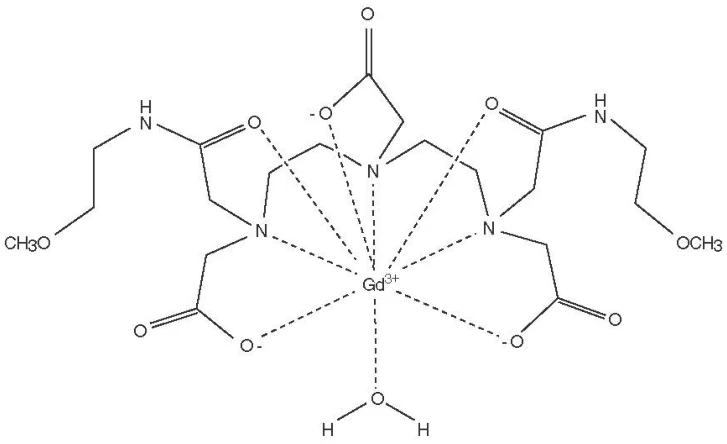
Physicochemical properties:
Empirical Formula: C20H34N5010Gd
Physical Form: 5.5 to 7.5
(pH)
Description:
Optimark is the formulation of a nonionic gadolinium chelate of diethylenetriamine pentaacetic acid bismethoxyethylamide (Gadoversetamide), and is an injectable extracellular enhancing agent for magnetic resonance imaging (MRI). Optimark is to be administered by intravenous injection.
| Table 7 - Physicochemical Data | |
| Osmolality (mOsmol/kg water)@ 37°C | 1110 |
| Viscosity (cP) | |
| @ 20°C | 3.1 |
| @ 37°C | 2.0 |
| Density (g/mL) @ 25°C | 1.160 |
Optimark has an osmolality approximately 3.9 times that of plasma (285 mOsm/kg water) and is hypertonic under conditions of use.
CLINICAL TRIALS
The safety and efficacy of Optimark™ was examined in 18 clinical studies.
A total of 1684 subjects and patients were examined, with 1309 subjects and patients receiving Optimark (680 men and 629 women, mean age 49 years, age range 12 to 85 years, 84% white, 9% black, 2% Asian, and 4% of other races). However, the Phase 2 program was designed as pseudo cross over studies, patients in these studies received two separate and different doses of Optimark. Therefore, in the entire clinical program, 1309 subjects or patients received a total of 1663 injections. All safety data are presented by dose, therefore 354 patients are counted twice, raising the number of exposed patients to 2038 overall, and 729 in the Phase 2 studies.
A total of 959 subjects and patients received the intended clinical dose of 0.1 mmol/kg Optimark.
Study demographics and trial design
Of these, 790 patients were enrolled in four comparative Phase 3 pivotal studies that were designed and analyzed to demonstrate the safety and equivalence of 0.1 mmol/kg Optimark and 0.1 mmol/kg Magnevist® for use during CNS and hepatic magnetic resonance imaging (MRI). In these comparative studies, 461 adult patients received Optimark and 329 patients received Magnevist®. For the OPTIMARK treatment group, 252 (55%) patients were men and 209 (45%) were women; 83% white, 9% black, 3% Asian and 5% other races.
Table 8 - Summary of patient demographics for clinical trials in specific indication
| OPTIMARK (Gadoversetamide injection) Clinical Studies | |||||||||
Study Number/ Phase | Study Design | Objective | Test Agents | Study Population | Number Exposed | ||||
| Phase 3 Comparative Pivotal Trials | Total: 790 Male: 417 (53%) Female: 373 (47%) | ||||||||
488/ Phase 3 Pivotal | Randomized, double-blind, multi-center, parallel-group, single-dose, comparing OPTIMARK and Magnevist® | Safety, tolerance, and efficacy. | OPTIMARK 0.1 mmol/kg Magnevist® 0.1 mmol/kg | Adults with suspected CNS pathology. | Total: 201 Male: 121 (60%) Female: 80 (40%) Age: Mean: 45.08 STD: 14.14 Weight: 77.40 ± 17.46 Race: W: 84% B: 18% | ||||
525/ Phase 3 Pivotal | Randomized, double-blind, multi-center, parallel-group, single-dose, comparing OPTIMARK and Magnevist® | Safety, tolerance, and efficacy. | OPTIMARK 0.1 mmol/kg Magnevist® 0.1 mmol/kg | Adults with suspected CNS pathology. | Total: 194 Male: 101 (52%) Female: 93 (48%) Age: Mean: 44.82 STD: 15.13 Weight: 76.68 ± 15.37 Race: W: 87% B: 15% | ||||
490/ Phase 3 Pivotal | Randomized, double-blind, multi-center, parallel-group, single-dose, comparing OPTIMARK and Magnevist® | Safety, tolerance, and efficacy. | OPTIMARK 0.1 mmol/kg Magnevist® 0.1 mmol/kg | Adults with suspected liver pathology. | Total: 193 Male: 102 (53%) Female: 91 (47%) Age: Mean: 54.71 STD: 12.36 Weight: 76.59 ± 17.10 Race: W: 81% B: 13% | ||||
526/ Phase 3 Pivotal | Randomized, double-blind, multi-center, parallel-group, single-dose, comparing OPTIMARK and Magnevist® | Safety, tolerance, and efficacy. | OPTIMARK 0.1 mmol/kg Magnevist® 0.1 mmol/kg | Adults with suspected liver pathology. | Total: 202 Male: 93 (46%) Female: 109 (54%) Age: Mean: 55.66 STD: 14.58 Weight: 73.27 ± 16.63 Race: W: 74% B: 12% | ||||
Pre-contrast and pre- plus post-contrast images were examined and evaluated for confidence in the diagnosis(es), level of conspicuity of all lesions, and the ability to delineate lesion borders from parenchyma/structures. Blinded review of pre- and pre- plus post-contrast images revealed statistically significant increases for confidence in the diagnosis(es), level of conspicuity of all lesions, and the ability to delineate lesion borders from parenchyma/structures. In addition, the results for Optimark were shown to be equivalent to Magnevist® (see Table 9).
Table 9 - Results of study #488 in specific indication
| Primary Efficacy for Prinicpal Investigators – Confidence Intervals and p-values | ||||||||||||
| Parameter | Degrees of Freedom | Mean Difference | Standard Error | Lower Confidence Limit | Upper Confidence Limit | t-value | p-value | |||||
| Confidence in Diagnosis | ||||||||||||
| Optimark | 128 | 2.132 | 0.106 | 21.196 | <0.001 | |||||||
| Magnevist® | 64 | 1.877 | 0.117 | 13.247 | <0.001 | |||||||
| Difference* | 192 | -0.255 | 0.174 | -0.542 | 0.032 | |||||||
| Conspicuity | ||||||||||||
| Optimark | 128 | 1.481 | 0.097 | 15.316 | <0.001 | |||||||
| Magnevist® | 64 | 1.769 | 0.136 | 12.991 | <0.001 | |||||||
| Difference* | 192 | 0.289 | 0.167 | 0.013 | 0.565 | |||||||
| Border Delineation | ||||||||||||
| Optimark | 128 | 1.791 | 0.153 | 11.703 | <0.001 | |||||||
| Magnevist® | 64 | 1.877 | 0.216 | 8.707 | <0.001 | |||||||
| Difference* | 192 | 0.086 | 0.264 | -0.351 | 0.523 | |||||||
| * Magnevist® score minus Optimark score Shading = not applicable | ||||||||||||
The safety and pharmacokinetics of a single dose of 0.1 mmol/kg Optimark was studied in 54 patients (27 males and 27 females); 13 patients with renal impairment, 12 patients each with CNS or liver pathology, 8 patients without CNS or liver pathology, 7 patients with CNS pathology and renal impairment; and 2 patients with liver pathology and renal impairment.
There were no clinically significant differences in safety observations (adverse events, tolerance, ECGs, laboratory parameters, physical examinations, or vital signs) between the risk subgroups, and only renal impairment was observed to have an effect on drug elimination.
In another study, a single intravenous dose of 0.1 mmol/kg of Optimark was administered to 8 adult subjects (7 males, 1 female) maintained on chronic hemodialysis and was found to be well-tolerated and dialyzable.
Approximately 98% of the administered dose of 0.1 mmol/kg of Optimark was removed from the body over three consecutive hemodialysis sessions. In clinical trials, doses up to 0.7 mmol/kg were safely administered.
The highest dose any individual patient received was 118 mL at a dose of 0.5 mmol/kg.
Effect on QTc Interval
Study 774
A Double-Masked, Randomized, Multicenter, Phase 2 Dose Ranging Study to Evaluate the Safety and Efficacy of Optimark.
The most common AE was QT/QTc prolongation (14/28 events).
There was a statistically significant change (Fridericia’s correction) at 1hour post dose (p < 0.05) in the 0.05 mmol/kg and the 0.2 mmol/kg dose group; at 2 hours in the 0.1 mmol/kg, 0.2 mmol/kg and 0.3 mmol/kg dose groups. No statistically significant changes were seen at 24 hours post dose.
Table 10 - Study 774: Mean (90% CI) Change from Baseline for QTc Intervals (msec)
(Fridericia’s Correction)
| Treatment | 0.05 mmol/kg | 0.1 mmol/kg | 0.2 mmol/kg | 0.3 mmol/kg |
| Pre-dose | 403.2 | 401.0 | 397.1 | 401.5 |
| 1 hour | 4.06 * (1.54, 6.58) | 2.53 (-0.21, 5.27) | 2.90 * (0.21, 5.59) | 1.12 (-3.02, 5.26) |
| 2 hour | 0.82 (-2.29, 3.93) | 3.09 * (0.21, 5.97) | 5.25 * (2.20, 8.30) | 4.52 * (0.91, 8.13) |
| 24 hour | -2.21 (-4.88, 0.46) | 1.31 (-1.81, 4.43) | 1.53 (-1.29, 4.35) | -0.59 (-4.42, 3.24) |
* Denotes a statistically significant (P < 0.05) change from baseline
Four patients in total had QTc increases of 60 msec. There were 4, 7, 11, 8 in the respective dose groups who had increases of 31 – 60 msec (see Table 11).
Table 11 - Number of Patients with Post dose ECG Intervals that Fall into Specified Ranges
| Optimark | ||||||||||||||||
| Treatment | 0.05 mmol/kg | 0.1 mmol/kg | 0.2 mmol/kg | 0.3 mmol/kg | ||||||||||||
| Increase in QTc Interval (msec) | ||||||||||||||||
| <1 msec | 109 | 81 | 101 | 91 | ||||||||||||
| 1-5 msec | 35 | 24 | 21 | 25 | ||||||||||||
| 6-10 msec | 25 | 28 | 19 | 16 | ||||||||||||
| 11-15 msec | 21 | 20 | 21 | 19 | ||||||||||||
| 16-20 msec | 10 | 14 | 16 | 12 | ||||||||||||
| 21-25 msec | 10 | 7 | 8 | 7 | ||||||||||||
| 26-30 msec | 4 | 10 | 5 | 8 | ||||||||||||
| 31-60 msec | 4 | 7 | 11 | 8 | ||||||||||||
| >60 msec | 2 | 2 | ||||||||||||||
| Total Observations | 220 | 191 | 202 | 188 | ||||||||||||
Eighteen patients had a QTc of > 450 msec prior to the study drug and at the 2 hour point, 27 patients had a QTc > 450 msec. The number returned to the baseline number at 24 hours. This number did not appear to be dose dependent.
Study 775
A Double-Masked, Randomized, Multicenter, Phase 2 Dose Ranging Study to Evaluate the Safety and Efficacy of Optimark.
The most common AE was QT prolongation (11 patients).
There was a statistically significant change (Fridericia’s correction) at 1hour post dose (p < 0.05) in the 0.05 mmol/kg,the 0.2 mmol/kg and 0.3 mmol/kg dose group; at 2 hours in the 0.2 mmol/kg dose groups. No statistically significant changes were seen at 24 hours post dose.
Table 12 - Study 775: Mean (90% CI) Change from Baseline for QTc Intervals (msec)
(Fridericia’s Correction)
| Treatment | 0.05 mmol/kg | 0.1 mmol/kg | 0.2 mmol/kg | 0.3 mmol/kg |
| Pre-dose | 408.7 | 404.9 | 396.6 | 400.5 |
| 1 hour | 3.30 * (0.26, 6.34) | 2.75 (-0.11, 5.61) | 7.09 * (4.51, 9.68) | 6.21 * (3.25, 9.17) |
| 2 hour | 1.91 (-0.86, 4.68) | 2.48 (-1.09, 6.05) | 7.72 * (5.02, 10.42) | 3.47 (0.20, 6.74) |
| 24 hour | 0.10 (-2.86, 3.06) | 0.58 (-2.59, 3.75) | 1.01 (-2.19, 4.21) | 1.91 (-1.36, 5.18) |
* Denotes a statistically significant (P<0.05) change from baseline
Table 13 - Number of Patients with Post dose ECG Intervals that
Fall into Specified Ranges
| Optimark | ||||||||||||||||
| Treatment | 0.05 mmol/kg | 0.1 mmol/kg | 0.2 mmol/kg | 0.3 mmol/kg | ||||||||||||
| Increase in QTc Interval (msec) | ||||||||||||||||
| <1 msec | 110 | 104 | 71 | 92 | ||||||||||||
| 1-5 msec | 31 | 24 | 29 | 23 | ||||||||||||
| 6-10 msec | 22 | 26 | 29 | 15 | ||||||||||||
| 11-15 msec | 20 | 17 | 23 | 14 | ||||||||||||
| 16-20 msec | 13 | 12 | 13 | 15 | ||||||||||||
| 21-25 msec | 10 | 10 | 12 | 7 | ||||||||||||
| 26-30 msec | 9 | 7 | 6 | 9 | ||||||||||||
| 31-60 msec | 10 | 8 | 10 | 14 | ||||||||||||
| >60 msec | 1 | 1 | 1 | 1 | ||||||||||||
| Total Observations | 226 | 209 | 194 | 200 | ||||||||||||
Four patients had an increase of QTc > 60 msec and 42 patients had an increase from 31 - 60 mseconds.
Patients with the duration of QTc interval > 450 msec were 8 patients prior to injection and 12, 14 and 12 patients at the 1, 2, and 24 hour mark post injection, respectively.
DETAILED PHARMACOLOGY
Pharmacodydnamics
Non-clinical: In vitro and In vivo
The nonclinical data demonstrate that Optimark has identical relaxation properties, bio-distribution, and signal enhancement in animal models which is similar to other gadolinium-based MRI agents.
Pharmacokinetics
Non-clinical: In vitro and In vivo
Human blood compatibility and plasma protein binding were assessed in 4 non-clinical studies. These studies demonstrate that Optimark is compatible with human blood and does not bind to human plasma proteins to any detectable extent.
Clinical: In vivo
A placebo controlled, double-blind, ascending dose (0.1, 0.3, 0.5 and 0.7 mmol/kg) Phase 1 study (433) was conducted in 20 healthy male volunteers. Serum and urine concentrations were used to estimate pharmacokinetic parameters and total recovery (%) of the gadolinium dose. The pharmacokinetic parameters of Optimark demonstrated linearity across the dose range tested and were consistent with values reported for other gadolinium contrast agents. Total clearance of Optimark did not vary with dose and was not significantly different from renal drug clearance or creatinine clearance. The apparent volume of distribution for Optimark was consistent with the volume of extracellular water. The total 72-hour recovery of the administered dose was greater than 90% and consistent with values reported for similar gadolinium agents. Serum and urine samples analyzed by HPLC showed no evidence of metabolic transformation.
A second Phase I, open-label, single dose, multicenter study (538) evaluated pharmacokinetics and elimination of Optimark in six groups of patients with different combinations of CNS, liver or renal disease all receiving 0.1 mmol/kg of Optimark. Pharmacokinetic parameters were calculated from plasma and urine concentrations of gadoversetamide. The apparent elimination half-life of Optimark was significantly longer (8 hours) in renally impaired patients compared to patients with normal renal function (including CNS and liver patients) and normal subjects (2 hours). The relationship between total clearance of Optimark and baseline creatinine clearance indicated that the degree of renal impairment alone determined the magnitude of increased exposure to Optimark. Decreases in renal function did not affect the volume of distribution of Optimark. Analytical analysis of the urine showed that gadoversetamide was excreted as the intact complex indicating the absence of Optimark metabolism.
The only other pathology which might be reasonable hypothesized to have any effect on the disposition was liver insufficiency because of a small secondary route of elimination (hepatobiliary) has been observed in animal studies. For the patients with decreased liver function, no effect on pharmacokinetic parameters was seen.
A multi-center, double-blind, randomized, parallel-group (0.1, 0.3, 0.5 mmol/kg) study (489) evaluated the dose related effects of Optimark in patients with existing CNS or liver pathology, with or without renal insufficiency. Serum and urine samples were collected and measured for gadolinium content. Non-compartmental pharmacokinetic parameters were calculated from these data. The pharmacokinetic analysis showed that the exposure to Optimark (AUC) was proportional to the dose; the elimination half-life, clearance and volume of distribution were dose independent. In patients with normal renal function with CNS or liver disease neither sex and age nor pathology had an effect on the pharmacokinetics of Optimark. In subjects with renal impairment the degree of exposure, elimination half-life and clearance were dependent on the degree of renal impairment. Patients with moderate to severe renal impairment showed an approximately 2 – 4 fold (based on AUC) increase in exposure as compared to patients without renal disease.
A single center study (543) was carried out to evaluate the pharmacokinetic behavior of Optimark in renally compromised patients requiring hemodialysis. Blood and dialysate were collected during regular dialysis sessions after Optimark (0.1 mmol/kg) administration and analyzed for gadolinium content. These data were used to evaluate the elimination of Optimark. The dialysis half-life of Optimark was 1.7 hours with an estimated recovery in the dialysate of approximately 48% the creatinine clearance. At the end of the 5-day period about 98% of the Optimark was cleared from the plasma with about 70% recovered in the dialysis fluid demonstrating that Optimark can be efficiently removed by extracorporeal hemodialysis.
Optimark is eliminated primarily in the urine at a rate consistent with glomerular filtration. Renal function significantly affects the rate of Optimark elimination such that the more severe the renal impairment, the longer the elimination half-life and the greater the amount of systemic exposure. Data from these studies show that although poor renal function may delay the elimination of Optimark from the body, no clinical consequences result from the prolonged exposure.
The pharmacokinetic studies demonstrate that Optimark distributes quickly into the extracellular space and has bio-distribution and elimination characteristics similar to other extracellular MRI contrast agents. After intravenous administration, these contrast agents equilibrate rapidly within the extracellular fluid/space and are eliminated primarily by glomerular filtration.
MICROBIOLOGY
There was no special microbiology studies done except on the finished product at the time of the release.
TOXICOLOGY
Recent studies conducted in healthy rats injected repeatedly with linear macrocyclic GBCAs demonstrated that linear agents were associated with progressive and persistent T1-weighed hyperintensity on MRI in the deep cerebellar nuclei (DCN). Signal enhancement in the globus pallidus (GP)_ could not be seen in the animals. No changes in signal intensities in either DCN or GP were observed for the macrocyclic GBCAs.
Quantitative results using mass spectrometry demonstrated that the total gadolinium concentrations were significantly higher with the linear GBCAs than with the macrocyclic GBCAs. These studies reported no abnormal behavioural changes suggestive of neurological toxicity.
The non-clinical studies in acute, subacute or in special related studies, indicate that Gadoversetamide has a very good safety profile at doses which significantly exceed the intended clinical dose.
The acute toxicity of Gadoversetamide was evaluated in mice, rats and dogs. The LD50 value in mice was 28 mmol/kg; the maximum non-lethal dose of Gadoversetamide in mice was 14 mmol/kg, and the no-observable-effect-level (NOEL) in dogs was 3 mmol/kg.
The CNS toxicity of Gadoversetamide, used to enhance CNS lesions which disrupt the blood-brain barrier (BBB), was evaluated in rats by direct injection into the cerebrospinal fluid at the cisterna magna. The estimated combined median lethal intracisternal dose (LD50) was 166 mol/kg (0.166 mmol/kg) which is comparable to that of Omniscan® (147 mol/kg) and substantially greater than that of ProHance® (27 mol/kg), commercially available nonionic extracellular MRI contrast agents.
The subacute toxicity of Gadoversetamide was evaluated in rats and in dogs in a 28 day study with a 4-week and an 8-week recovery period for rats and an 8-week recovery period for dogs. These studies used an early formulation of Gadoversetamide designated MP-1177/10T.
Micro-vacuolation of the proximal convoluted tubules of the kidneys of rats and dogs was observed in high dose animals at the completion of dosing. This change was not associated with any signs of renal dysfunction and was not seen following recovery. This is considered a benign histological finding consistent with the findings of studies with other MRI contrast media.
Microscopic examination of the testes and epididymides of male rats in the high dose group at the end of the dosing period showed degeneration of the testicular germinal epithelium with the presence of spermatid giant cells and markedly reduced sperm content in the epididymides. Similar testicular alterations were also observed in a multiple-dose (3 weeks, 3 times per week) intravenous toxicity study of Omniscan7, an approved agent, in rats.
In a reproductive toxicity study in rats, a loss of germinal epithelium was observed in male rats receiving a dose of 2.0 mmol/kg/day (7920 mg/m2) of Gadoversetamide (3.2 times the clinical dose of 2442 mg/m2 based on body surface area, 20 times the recommended human dose of
0.1 mmol/kg) for approximately 50 days. There was irreversible loss of germinal epithelium in the majority of seminiferous tubules after 8 or 19 weeks of recovery. There was, however, some evidence of recovery of spermatogenesis in the remaining tubules.
Gadoversetamide was shown to cause a slight growth retardation in offspring of rats that received doses of 0.5 mmol/kg/day (1980 mg/m2) (0.8 times the clinical dose of 2442 mg/m2, 5 times the recommended human dose of 0.1 mmol/kg) for 5 weeks. Gadoversetamide has been shown to cause a slight increase in visceral abnormalities in the offspring of rabbits at doses of 0.4 and 1.6 mmol/kg/day (2904 and 11616 mg/m2) for 12 days (1.2 and 4.8 times the clinical dose of 2442 mg/m2; 4 and 16 times the recommended human dose of 0.1 mmol/kg). The incidence of these abnormalities was comparable to that of historical control levels.
153Gd-labeled Gadoversetamide was administered intravenously to lactating rats at a dose of 0.1 mmol/kg. A low but measurable lacteal transfer occurred in rats in a 24-hour period. The concentrations of radioactivity contained in the milk were low and decreased over time.
The results of both in vivo and in vitro studies have clearly demonstrated that Gadoversetamide does not bind to proteins in human, dog, or rat plasma and is compatible with the erythrocyte and plasma components of human blood.
In anephric rats, greater than 12% of the dose was associated with liver and gastrointestinal tract compared to less that 2.5% of the dose in normal rats indicating that the hepatobiliary system is available as a secondary route of elimination.
CARCINOGENESIS, MUTAGENESIS, IMPAIRMENT OF FERTILITY
Long-term animal studies have not been performed to evaluate the carcinogenic potential of Gadoversetamide. The results of the following genotoxicity assays were negative: Salmonella/E.coli reverse mutation (Ames) assay, mouse lymphoma mutagenesis assay, CHO chromosome aberration assay, and the in vivo mammalian micronucleus assay.
In a reproductive toxicity study in rats, a loss of germinal epithelium was observed in male rats receiving a dose of 2.0 mmol/kg/day (7920 mg/m2) of Gadoversetamide (3.2 times the clinical dose of 2442 mg/m2 based on body surface area, 20 times the recommended human dose of 0.1 mmol/kg) for approximately 50 days. There was irreversible loss of germinal epithelium in the majority of seminiferous tubules after 8 or 19 weeks of recovery. There was, however, some evidence of recovery of spermatogenesis in the remaining tubules.
REFERENCES
- 1. Choyke PL, Girton ME, Vaughan EM, Frank JA, Austin HA III. Clearance of Gadolinium Chelates by Hemodialysis: An In Vitro Study. JMRI 1995; 4:470-472.
- 2. Edelman RR, Wentz KU, Mattle HP. Intracerebral Arteriovenous Malformations: Evaluation with Selective MR Angiography and Venography. Radiology 1989;173: 831-837.
- 3. Hertz SM, Baum RA, Owen RS, Holland GA, Logan DR, Carpenter JP. Comparison of Magnetic Resonance Angiography and Contrast Arteriography in Peripheral Arterial Stenosis. The American Journal of Surgery. 1993;166:112-116.
- 4. Marckmann P, Skov L, Rossen K, Dupont A, Damholt MB, Heaf JG, Thomsen HS. Nephrogenic systemic fibrosis: suspected causative role of gadodiamide used for contrast-enhanced magnetic resonance imaging. J Am Soc Nephrol, 2006 Sep:17(9):2359-62.
- 5. Niendorf HP, Laniado M, Semmler W, Schörner W, Flex R. Dose Administration of Gadolinium-DTPA in MR Imaging of Intracranial Tumors. AJNR. 1987;8:803-815.
- 6. Rubin DL, Desser TS, Semelka R, Brown J, Kristy RM, Pierro JA. A Multicenter, Randomized, Double-Blind Study to Evaluate the Safety, Tolerability and Efficacy of Optimark (Gadoversetamide Injection) Compared with Magnevist (Gadopentetate Dimeglumine) in Patients with Liver Pathology: Results of a Phase III Clinical Trial. Journal of Magnetic Resonance Imaging 1999;9:240-250.
- 7. Ruggieri PM, Masaryke TJ. Time-of-Flight MRA Boost Value of Head Exam. Magnetic Resonance. 1991;1:18-26.
- 8. Swan SK, Baker JF, Free R, Tucher RM, Barron B, Barr R, Seltzer S, Gazelle GS. Pharmacokinetics, Safety, and Tolerability of Gadoversetamide Injection (Optimark) in subjects with Central Nervous System or Liver Pathology and Varying Degrees of Renal Function. J. of Magnetic Resonance Imaging 1999;9:317-321.