


Product Monograph - Vueway
Recent Major Label Changes
Not applicable
Table of Contents
Certain sections or subsections that are not applicable at the time of the preparation of the most recent authorized product monograph are not listed.
Recent Major Label Changes ................................................................................................... 2
Table of Contents ................................................................................................................... 2
Part 1: Healthcare Professional Information ........................................................................... 5
- 1.
Indications ....................................................................................................................... 5
1.1. Pediatrics .................................................................................................................. 5
1.2. Geriatrics .................................................................................................................. 5
- 2. Contraindications ............................................................................................................ 5
- 3. Serious Warnings and Precautions Box ............................................................................ 5
- 4.
Dosage and Administration ............................................................................................. 6
4.1. Dosing Considerations .............................................................................................. 6
4.2. Recommended Dose and Dosage Adjustment ......................................................... 6
4.4. Administration .......................................................................................................... 7
4.5. Missed Dose ............................................................................................................. 7
- 5. Overdose ......................................................................................................................... 7
- 6. Dosage Forms, Strengths, Composition, and Packaging ................................................... 8
- 7.
Warnings and Precautions ............................................................................................... 8
General ................................................................................................................................. 8
Carcinogenesis and Genotoxicity .......................................................................................... 9
Cardiovascular ...................................................................................................................... 9
Neurological ......................................................................................................................... 9
Renal ..................................................................................................................................... 9
Reproductive Health ........................................................................................................... 10
Risks of Intrathecal Use ...................................................................................................... 10
Sensitivity/Resistance ......................................................................................................... 10
Skin ..................................................................................................................................... 11
7.1. Special Populations ................................................................................................ 11
7.1.1. Pregnancy ...................................................................................................... 11
7.1.2. Breastfeeding ................................................................................................ 11
7.1.3. Pediatrics ....................................................................................................... 12
7.1.4. Geriatrics ....................................................................................................... 12
- 8.
Adverse Reactions ......................................................................................................... 12
8.1. Adverse Reaction Overview .................................................................................... 12
8.2. Clinical Trial Adverse Reactions .............................................................................. 12
8.2.1. Clinical Trial Adverse Reactions – Pediatrics .................................................. 13
8.3. Less Common Clinical Trial Adverse Reactions ....................................................... 13
8.3.1. Less Common Clinical Trial Adverse Reactions – Pediatrics ........................... 14
8.4. Abnormal Laboratory Findings: Hematologic, Clinical Chemistry, and Other Quantitative Data ............................................................................................................... 14
8.5. Post-Market Adverse Reactions ............................................................................. 14
- 9.
Drug Interactions ........................................................................................................... 15
9.2. Drug Interactions Overview .................................................................................... 15
9.3. Drug-Behaviour Interactions .................................................................................. 15
9.4. Drug-Drug Interactions ........................................................................................... 15
9.5. Drug-Food Interactions........................................................................................... 15
9.6. Drug-Herb Interactions ........................................................................................... 15
9.7. Drug-Laboratory Test Interactions ......................................................................... 16
- 10.
Clinical Pharmacology ................................................................................................... 16
10.1. Mechanism of Action .............................................................................................. 16
10.2. Pharmacodynamics ................................................................................................ 16
10.3. Pharmacokinetics ................................................................................................... 16
- 11. Storage, Stability, and Disposal ...................................................................................... 18
- 12. Special Handling Instructions ......................................................................................... 18
Part 2: Scientific Information ................................................................................................ 19
- 13. Pharmaceutical Information .......................................................................................... 19
- 14.
Clinical Trials .................................................................................................................. 19
14.1. Clinical Trials by Indication ..................................................................................... 19
- 15. Microbiology ................................................................................................................. 24
- 16. Non-Clinical Toxicology .................................................................................................. 24
Patient Medication Information ........................................................................................... 26
Part 1: Healthcare Professional Information
1. Indications
VUEWAY® (gadopiclenol) is indicated in:
adults and children aged 2 years and older for contrast enhanced Magnetic Resonance Imaging (MRI) to detect and visualize lesions with disruption of the blood-brain-barrier (BBB) and/or abnormal vascularity in:
- the Central Nervous System (CNS), i.e., brain, spine and surrounding tissues,
- the Body (head and neck, thorax including breast, abdomen including liver and kidneys, pelvis including prostate, and musculo-skeletal system).
1.1. Pediatrics
Pediatrics (2 to 18 years of age): Based on the data submitted and reviewed by Health Canada, the safety and efficacy of VUEWAY in pediatric patients has been established. Therefore, Health Canada has authorized an indication for pediatric use (see 7.1.3 Pediatrics).
Pediatrics (< 2 years of age): The safety and effectiveness of VUEWAY have not been established in pediatric patients younger than 2 years of age.
1.2. Geriatrics
Geriatrics (> 65 years of age): No overall differences in safety or effectiveness were observed between these subjects and younger subjects. (see 7.1.4 Geriatrics)
2. Contraindications
- VUEWAY is contraindicated in patients who are hypersensitive to this drug or to any ingredient in the formulation, including any non-medicinal ingredient, or component of the container. For a complete listing, see 6 Dosage Forms, Strengths, Composition, and Packaging.
3. Serious Warnings and Precautions Box
Nephrogenic Systemic Fibrosis
Gadolinium-based contrast agents (GBCAs) increase the risk for NSF in patients with:
- chronic severe renal impairment (glomerular filtration rate <30 mL/min/1.73m2), or
- acute renal failure / acute kidney injury
In these patients, avoid use of GBCAs unless the diagnostic information is essential and not available with non-contrast enhanced MRI. NSF may result in fatal or debilitating systemic fibrosis affecting the skin, muscle, and internal organs.
Screen all patients for renal dysfunction by obtaining a history and/or laboratory tests. When administering a GBCA, do not exceed the recommended dose (see 4.2 Recommended Dose and Dosage Adjustment) and allow a sufficient period of time for elimination of the agent from the body prior to any readministration. (See 7 Warning and Precautions, Renal, and Skin)
Not for Intrathecal Use
Intrathecal administration of GBCAs can cause serious, life-threatening, and fatal reactions. VUEWAY is not approved for intrathecal use (see 7 Warnings nd Precautions, Risks of Intrathecal Use).
4. Dosage and Administration
4.1. Dosing Considerations
- VUEWAY is for intravenous use only
- The elimination of VUEWAY is prolonged in patients with renal impairment. However, to ensure diagnostically useful images, no dosage adjustment is recommended. VUEWAY should be used with caution in patients with renal impairment (see 3 Serious Warnings and Precautions Box, and 7 Warnings and Precautions - General and 7 Warnings and Precautions – Renal).
- Use of macrocyclic agents may be preferable in certain patients such as those for whom repeated GBCA doses may need to be considered due to individual clinical circumstances and in other potentially vulnerable patients such as children and pregnant women (See 7 Warnings and Precautions).
4.2. Recommended Dose and Dosage Adjustment
- The recommended dose of VUEWAY for adult and pediatric patients aged 2 years and older is 0.1 mL/kg body weight (equivalent to 0.05 mmol/kg) administered intravenously as a bolus manually or by compatible power injector, at a flow rate of approximately 2 mL/second for adults and 1-2 mL/second for pediatric patients.
The dose should be calculated based on the patient’s body weight and should not exceed the recommended dose per kilogram of body weight (see Table 1).
Table 1 – Volumes of VUEWAY Injection by Body Weight
| Body Weight (kg) | Volume (mL) |
|---|---|
| 10 | 1 |
| 20 | 2 |
| 30 | 3 |
| 40 | 4 |
| 50 | 5 |
| 60 | 6 |
| 70 | 7 |
| 80 | 8 |
| 90 | 9 |
| 100 | 10 |
| 110 | 11 |
| 120 | 12 |
| 130 | 13 |
| 140 | 14 |
| 150 | 15 |
Pediatrics (2 to 18 years of age):
The recommended dose of VUEWAY for pediatric patients aged 2 years and older is 0.1 mL/kg body weight (equivalent to 0.05 mmol/kg) administered intravenously as a bolus for all indications. Due to small administration volumes in pediatric patients, VUEWAY administration should be followed by a normal saline flush to ensure complete delivery of the contrast agent.
The safety and effectiveness of VUEWAY have not been assessed in pediatric patients younger than 2 years of age.
Geriatrics (> 65 years of age):
No dosage adjustment is required for geriatric patients or for patients with hepatic or renal impairment. The recommended dose of VUEWAY is 0.1 mL/kg body weight (corresponding to 0.05 mmol/kg), administered intravenously as a bolus.
4.4. Administration
- Use aseptic technique for all handling and administration of VUEWAY.
- Visually inspect VUEWAY for particulate matter and discoloration prior to administration. Do not use the solution if any particulate matter is present or the solution is discolored.
- If solidification occurs in the vial because of exposure to the cold, bring the vial of VUEWAY to room temperature before use and inspect that the solution is clear, colorless to yellow without any particulate matter and discoloration.
- Do not mix with other medications because of the potential for chemical incompatibility.
- Prime intravenous line before use.
- Ensure catheter and venous patency before the injection.
- Do not pierce the rubber stopper more than once.
- Aseptically draw up VUEWAY into a disposable syringe and use immediately.
- Administer VUEWAY as an intravenous bolus injection, manually or by compatible power injector.
- Flush the intravenous line with 0.9% Sodium Chloride Injection, USP after the administration of VUEWAY.
- Contrast MRI can begin immediately following the injection of VUEWAY.
- VUEWAY is supplied in single dose vials and pharmacy bulk vials. Pharmacy vials are designed for multiple dispensing. Discard any unused portion no later than 24 hours after initial puncture.
4.5. Missed Dose
Not Applicable.
5. Overdose
Among subjects who received a single 0.3 mmol/kg intravenous dose of gadopiclenol (6 times the recommended dose of VUEWAY), headache and nausea were the most frequently reported adverse reactions. VUEWAY was tolerated in a manner similar to lower doses. Gadopiclenol can be removed from the body by hemodialysis (see 10.3 Pharmacokinetics).
For the most recent information in the management of a suspected drug overdose, contact your regional poison control centre or Health Canada’s toll-free number, 1-844 POISON-X (1-844-764-7669).
- 6. Dosage Forms, Strengths, Composition, and Packaging
Table 2 – Dosage Forms, Strengths, and Composition
Description
VUEWAY is a sterile, nonpyrogenic, clear, colorless to yellow aqueous solution. VUEWAY is available in single-dose Type I clear glass vials of 3 mL, 7.5 mL, 10 mL and 15 mL, and multiple doses pharmacy bulk glass vials of 30 mL, 50 mL and 100 mL, closed with chlorobutyl elastomeric stopper, sealed with an aluminum crimp-on seal (see 4.4 Administration).
7. Warnings and Precautions
Please see 3 Serious Warnings and Precautions Box.
General
Procedures which involve the use of VUEWAY should be carried out by medical staff who have the prerequisite training and a thorough knowledge of the particular procedure to be performed.
Accumulation of Gadolinium in the Brain
The current evidence suggests that gadolinium may accumulate in the brain after multiple administration of GBCAs. Increased signal intensity on non-contrast T1-weighted images of the brain has been observed after multiple administrations of GBCAs in patients with normal renal function. Gadolinium has been detected in brain tissue after multiple exposures to GBCAs, particularly in the dentate nucleus and globus pallidus. The evidence suggests that the risk of gadolinium accumulation is higher after repeat administration of linear than after repeat administration of macrocyclic agents. VUEWAY is a macrocyclic agent.
The clinical significance of gadolinium accumulation in the brain is presently unknown; however, gadolinium accumulation may potentially interfere with the interpretation of MRI scans of the brain. In order to minimize potential risks associated with gadolinium accumulation in the brain, it is recommended to use the lowest effective dose and perform a careful benefit risk assessment before administering repeated doses.
Extravasation and Injection Site Reactions
Injection site reactions such as injection site pain have been reported in the clinical studies with
| Route of Administration | Dosage Form/ Strength/Composition | Non-Medicinal Ingredients |
| Intravenous use | Solution 485.1 mg/mL (0.5 mmol/mL) gadopiclenol | Hydrochloric acid and/or sodium hydroxide, tetraxetan, trometamol, and water for injection |
VUEWAY (see 8 Adverse Reactions). Extravasation during VUEWAY administration may result in tissue irritation (see 16 Non-Clinical Toxicology). Ensure catheter and venous patency before the injection of VUEWAY.
Carcinogenesis and Genotoxicity
No carcinogenicity studies of gadopiclenol were performed.
Cardiovascular
Gadopiclenol does not prolong the QT interval to any clinically relevant extent (see 10.2 Pharmacodynamics).
Neurological
- Seizures
Seizures have been reported in post-marketing experience with VUEWAY. Although a causal relationship has not been definitively established, patients with a history of seizure disorders may be at increased risk.
Appropriate caution should be exercised in patients with a known or suspected predisposition to seizures. Facilities administering VUEWAY should be equipped with appropriate emergency equipment, convulsion treatments, and personnel trained in the management of seizures. Patients should be monitored during and following administration in accordance with institutional practice.
Renal
Screen all patients for renal dysfunction by obtaining a history and/or laboratory tests. When administering a GBCA, do not exceed the recommended dose and allow a sufficient period of time for elimination of the agent from the body prior to any readministration. (See 10 Clinical Pharmacology and 4.2 Recommended Dose and Dosage Adjustment).
The elimination of VUEWAY is prolonged in patients with renal impairment. However, to ensure diagnostically useful images, no dosage adjustment is recommended. VUEWAY should be used with caution in patients with renal impairment (see 3 Serious Warnings and Precautions Box, and 7 Warnings and Precautions - General, 7 Warnings and Precautions – Renal) and 10 Clinical Pharmacology).
- Nephrogenic Systemic Fibrosis
GBCAs increase the risk for nephrogenic systemic fibrosis (NSF) in patients with:
- chronic severe renal impairment (glomerular filtration rate <30 mL/min/1.73m2), or
- acute renal failure / acute kidney injury.
In these patients, avoid use of GBCAs unless the diagnostic information is essential and not available with un-enhanced MRI. For patients receiving hemodialysis, healthcare professionals may consider prompt hemodialysis following GBCA administration in order to enhance the contrast agent's elimination. However, it is unknown if hemodialysis prevents NSF.
Among the factors that may increase the risk for NSF are repeated or higher than recommended doses of a GBCA and the degree of renal function impairment at the time of exposure.
NSF development is considered a potential class-related effect of all GBCAs.
Postmarketing reports have identified the development of NSF following single and multiple administrations of GBCAs. These reports have not always identified a specific agent. Where a specific agent was identified, the most commonly reported agent was gadodiamide (OMNISCAN®), followed by gadopentetate dimeglumine (MAGNEVIST®) and gadoversetamide (OPTIMARK®). The number of postmarketing reports is subject to change over time and may not reflect the true proportion of cases associated with any specific GBCA.
The extent of risk for NSF following exposure to any specific GBCA is unknown and may vary among the agents. Published reports are limited and predominantly estimate NSF risks with gadodiamide. In one retrospective study of 370 patients with severe renal impairment who received gadodiamide, the estimated risk for development of NSF was 4%. The risk, if any, for the development of NSF among patients with mild to moderate renal impairment or normal renal function is unknown, and the cautious utilization of the lowest possible dose of GBCA is preferable.
- Acute Kidney Injury
In patients with chronically reduced renal function, acute kidney injury requiring dialysis has occurred with the use of GBCAs. The risk of acute kidney injury may increase with increasing dose of the contrast agent. Do not exceed the recommended dose.
Reproductive Health
- Fertility
Gadopiclenol had no effect on fertility and general reproductive performance of male and female rats. (see 16 Non-Clinical Toxicology).
Risks of Intrathecal Use
Serious, life-threatening and fatal cases, primarily with neurological reactions (e.g., coma, encephalopathy, seizures), have been reported with off-label intrathecal use of GBCAs. VUEWAY is not approved for intrathecal use (see 3 Serious Warnings and Precautions and 4.1 Dosing Considerations).
Sensitivity/Resistance
With GBCAs, serious hypersensitivity reactions have occurred with various degrees of severity up to anaphylactic shock and death and involved one or more body system, mostly respiratory, cardiovascular, and/or mucocutaneous systems. In most cases, initial symptoms occurred within minutes of GBCA administration and resolved with prompt emergency treatment.
- Before VUEWAY administration, assess all patients for any history of a reaction to contrast media, bronchial asthma and/or allergic disorders. These patients may have an increased risk for a hypersensitivity reaction to VUEWAY.
- VUEWAY is contraindicated in patients with history of hypersensitivity reactions to VUEWAY (see 2 Contraindications).
- Administer VUEWAY only in situations where trained personnel and therapies are promptly available for the treatment of hypersensitivity reactions, including personnel trained in resuscitation.
- During and following VUEWAY administration, observe patients for signs and symptoms of hypersensitivity reactions.
Skin
NSF was first identified in 1997 and has, so far, been observed only in patients with renal disease. This is a systemic disorder with the most prominent and visible effects on the skin. Cutaneous lesions associated with this disorder are caused by excessive fibrosis and are usually symmetrically distributed on the limbs and trunk. Involved skin becomes thickened, which may inhibit flexion and extension of joints and result in severe contractures. The fibrosis associated with NSF can extend beyond dermis and involve subcutaneous tissues, striated muscles, diaphragm, pleura, pericardium, and myocardium. NSF may be fatal. (See 3 Serious Warnings and Precautions Box, and 7 Warnings and Precautions – Renal).
7.1. Special Populations
7.1.1. Pregnancy
The safety of VUEWAY during pregnancy has not been established.
VUEWAY should be used during pregnancy only if the potential benefit justifies the potential risk to the fetus. Use of macrocyclic agents may be preferable in certain patients such as those for whom repeated GBCA doses may need to be considered due to individual clinical circumstances and in other potentially vulnerable patients such as pregnant women.
In animal reproduction studies, there were no adverse developmental effects observed in rats or rabbits with intravenous administration of VUEWAY during organogenesis (see 16 Non-Clinical Toxicology).
There are no available data on VUEWAY use in pregnant women to evaluate for a drug-associated risk of major birth defects, miscarriage or other adverse maternal or fetal outcomes. GBCAs cross the human placenta and result in fetal exposure and gadolinium retention. The available human data on GBCA exposure during pregnancy and adverse fetal outcomes are limited and inconclusive.
Contrast enhancement is visualized in the placenta and fetal tissues after maternal GBCA administration.
Cohort studies and case reports on exposure to GBCAs during pregnancy have not reported a clear association between GBCAs and adverse effects in the exposed neonates. However, a retrospective cohort study comparing pregnant women who had a GBCA MRI to pregnant women who did not have an MRI reported a higher occurrence of stillbirths and neonatal deaths in the group receiving GBCA MRI. Limitations of this study include a lack of comparison with non- contrast MRI and lack of information about the maternal indication for MRI. These limitations were further addressed in another retrospective cohort study that found no increased risk for fetal or neonatal death or Neonatal Intensive Care Unit (NICU) admission when comparing pregnancies exposed to GBCA MRI and non-contrast MRI. Overall, these data preclude a reliable evaluation of the potential risk of adverse fetal outcomes with the use of GBCAs in pregnancy.
7.1.2. Breastfeeding
It is unknown whether VUEWAY is excreted in human breast milk. However, gadopiclenol is present in rat milk. Published lactation data on other GBCAs indicate that 0.01% to 0.04% of the maternal gadolinium dose is excreted in breast milk. The effect of gadolinium on the infant even in small amount is currently unknown. Continuing or discontinuing breast feeding for a period of 24 hours after administration of VUEWAY, should be at the discretion of the healthcare practitioner and breastfeeding patient.
7.1.3. Pediatrics
Pediatrics (2 to 18 years of age): Based on the data submitted and reviewed by Health Canada, no differences in pharmacokinetics, safety, and effectiveness were observed between adult and pediatric patients. (see 1.1 Pediatrics, 8.2.1 Clinical Trial Adverse Reactions - Pediatrics, and 14 Clinical Trials).
Pediatrics (< 2 years of age): No data are available to Health Canada; therefore, Health Canada has not authorized an indication for pediatric patients younger than 2 years of age.
7.1.4. Geriatrics
Of the total number of VUEWAY-treated patients in clinical studies, 270 (26%) patients were 65 years of age and over, while 62 (6%) patients were 75 years of age and over. No overall differences in safety or efficacy were observed between these subjects and younger subjects.
This drug is known to be predominantly excreted by the kidney, and the risk of adverse reactions to this drug may be greater in patients with impaired renal function. Because elderly patients are more likely to have decreased renal function, it is advisable to monitor renal function in these patients.
No age-related dosage adjustment is necessary.
8. Adverse Reactions
8.1. Adverse Reaction Overview
Patients with a history of previous reaction to contrast media, allergic disposition or bronchial asthma suffer more frequently from hypersensitivity reactions than others. As with other contrast media, delayed allergic or other idiosyncratic reactions occurring hours or days after administration have been observed, though rarely. Anaphylactoid reactions may occur (see 7 Warnings and Precautions - Sensitivity/Resistance).
8.2. Clinical Trial Adverse Reactions
Clinical trials are conducted under very specific conditions. The adverse reaction rates observed in the clinical trials may not reflect the rates observed in practice and should not be compared to the rates in the clinical trials of another drug. Adverse reaction information from clinical trials may be useful in identifying and approximating rates of adverse drug reactions in real-world use.
The safety of VUEWAY was evaluated in 1047 patients who received VUEWAY at doses ranging from 0.025 mmol/kg (one half the recommended dose) to 0.3 mmol/kg (six times the recommended dose). A total of 708 patients received the recommended dose of 0.05 mmol/kg.
Overall, approximately 4.7% of subjects receiving the dose of 0.05 mmol/kg reported one or more adverse reactions. Most adverse reactions were mild to moderate in intensity.
Table 3 lists adverse reactions that occurred in > 0.2% of patients who received 0.05 mmol/kg VUEWAY.
Table 3 – Adverse Reactions Reported in > 0.2% of Patients Receiving VUEWAY in Clinical Trials
| System organ class/preferred term | Gadopiclenol 0.05 mmol/kg (n=708) (%) |
|---|---|
| Gastrointestinal disorders | |
| Nausea | 0.4 |
| Nervous system disorders | |
| Headache | 0.7 |
| Dizziness | 0.3 |
| Skin and subcutaneous tissue disorders | |
| Injection site pain | 0.7 |
| Injection site warmth | 0.4 |
| Injection site coldness | 0.3 |
| Localized swelling | 0.3 |
Adverse reactions most often observed were short-lasting headache (0.7%), injection site reactions including pain (0.7%), sensation of warmth (0.4%) and coldness (0.3%), swelling (0.3%), nausea (0.4%) and dizziness (0.3%). Most adverse reactions were mild or moderate in intensity.
Increased blood creatinine considered to be a serious adverse reaction of mild intensity that led to study discontinuation was reported in one patient with mild renal impairment who received 0.1 mmol/kg of VUEWAY. Although the increase was more than 25%, the serum creatinine remained within normal limits, and the patient did not experience any clinical symptoms.
Abnormal QT interval at ECG examination considered to be a non-serious adverse reaction of mild intensity that led to study discontinuation was reported in one patient who received 0.2 mmol/kg of VUEWAY.
8.2.1. Clinical Trial Adverse Reactions – Pediatrics
One study with a single dose of VUEWAY (0.05 mmol/kg) was conducted in 80 pediatric patients aged 2 years to 17 years, including 60 patients who underwent a CNS MRI and 20 patients who underwent a body MRI. A total of 31 Treatment Emergent Adverse Events (TEAEs) occurred during and/or after gadopiclenol administration for 14 patients (17.5%). Twelve TEAEs were reported in the CNS cohort and 2 in the Body cohort. Twenty of these events were mild and 9 were moderate in intensity. Twenty-nine of these events were judged as unrelated to gadopiclenol administration. One adverse reaction (maculo-papular rash of moderate severity) in one patient (1.3%) was reported in the CNS cohort.
8.3. Less Common Clinical Trial Adverse Reactions
Adverse reactions that occurred with a frequency ≤ 0.2% in patients who received 0.05 mmol/kg VUEWAY are listed below:
Eye Disorders: Swelling of eyelid.
Gastrointestinal Disorders: Diarrhoea; Vomiting; Oral paresthesia.
General Disorders and Administration Site Conditions: Feeling hot; Swelling; Injection site paresthesia;
Pyrexia.
Investigations: Electrocardiogram QT prolonged; Body temperature increased.
Metabolism and Nutrition Disorders: Decreased appetite.
Nervous System Disorders: Dysgeusia.
Skin and Subcutaneous Tissues Disorders: Allergic dermatitis; Erythema; Maculo-papular rash; Pruritus.
Renal and Urinary Disorders: Renal failure
8.3.1. Less Common Clinical Trial Adverse Reactions – Pediatrics
See 8.2.1 Clinical Trial Adverse Reactions - Pediatrics.
8.4. Abnormal Laboratory Findings: Hematologic, Clinical Chemistry, and Other Quantitative Data
Clinical Trial Findings
Blood creatinine increase of 25% or more (from 58 µmol/L to 107 µmol/L) considered to be related to the intravenous injection of 0.05 mmol/kg gadopiclenol was reported in one patient, a 61-year-old male with metastatic lung disease, chronic obstructive pulmonary disorder and hypertension, 3 days after administration which returned to limits (67 µmol/L) within 24 hours. The increased and returned values were within normal range (61.9 to 114.9 µmol/L). The event was non-serious, of mild intensity and did not require any corrective treatment.
Increase in Cystatin C (from 1.01 mg/L to 1.33 mg/L) considered to be related to the intravenous injection of 0.05 mmol/kg gadopiclenol was reported for one adult patient 22 hours after administration. The event was non-serious, of mild intensity and returned to normal limits (0.96 mg/L; range: 0.49-1.19 mg/L) within 5 days without any corrective treatment.
8.5. Post-Market Adverse Reactions
Nephrogenic Systemic Fibrosis (NSF)
Post-marketing reports have identified the development of NSF following single and multiple administrations of GBCAs. These reports have not always identified a specific agent. Where a specific agent was identified, the most commonly reported agent was gadodiamide (Omniscan®), followed by gadopentetate dimeglumine (Magnevist®) and gadoversetamide (OptiMARK®).
The number of post-marketing reports is subject to change over time and may not reflect the true proportion of cases associated with any specific GBCA. The extent of risk for NSF following exposure to any specific GBCA is unknown and may vary among the agents. Published reports are limited and predominantly estimate NSF risks with gadodiamide. In one retrospective study of 370 patients with severe renal impairment who received gadodiamide, the estimated risk for development of NSF was 4%. The risk, if any for the development of NSF among patients with mild to moderate renal impairment or normal renal function is unknown, and the cautious utilization of the lowest possible dose of GBCA is preferable (See 3 Serious Warnings and Precautions Box).
Additional Adverse Reactions
- Adult subjects
In the below table the other drug-related adverse events reported spontaneously from the post marketing surveillance of gadopiclenol have been listed. They are labeled according to body system.
Table 4 – Adverse Events Reported from Post Marketing Experience
| System Organ Class | Frequency: Adverse Reaction |
| Gastrointestinal disorders | Uncommon: Abdominal pain |
| General disorders and administration site conditions | Common: Injection site reaction Uncommon: Fatigue, injection site coldness, injection site oedema, injection site haematoma, injection site erythema |
| Immune system disorders | Uncommon: Hypersensitivity, dermatitis allergic, periorbital oedema |
| Nervous system disorders | Common: Headache |
| Respiratory, thoracic and mediastinal disorders | Uncommon: Dyspnoea, throat tightness, throat irritation, dysphonia |
| Skin and subcutaneous tissue disorders | Uncommon: Rash |
| Vascular disorders | Uncommon: Flushing |
| The most appropriate MedDRA (version 28.1) term is used | |
The majority of these events were non-serious, transient, and spontaneously resolved without residual effects.
- Pediatric subjects (2 to 18 years of age)
The adverse reactions observed during post-marketing surveillance indicate that gadopiclenol safety profile is similar in children and adults.
9. Drug Interactions
9.2. Drug Interactions Overview
No drug interaction studies have been conducted with VUEWAY.
9.3. Drug-Behaviour Interactions
Interactions with behaviour have not been established.
9.4. Drug-Drug Interactions
Interactions with specific drugs have not been established.
9.5. Drug-Food Interactions
Interactions with food have not been established.
9.6. Drug-Herb Interactions
Interactions with herbal products have not been established.
9.7. Drug-Laboratory Test Interactions
Interactions with laboratory tests have not been established.
10. Clinical Pharmacology
10.1. Mechanism of Action
Gadopiclenol is a paramagnetic molecule (macrocyclic non-ionic complex of gadolinium) that develops a magnetic moment when placed in a magnetic field. The magnetic moment alters the relaxation rates of water protons in its vicinity in the body, leading to an increase in signal intensity (brightness) of tissues.
10.2. Pharmacodynamics
In MRI, visualization of normal and pathological tissue depends in part on variations in the radiofrequency signal intensity that occur with:
- differences in proton density
- differences of the spin-lattice or longitudinal relaxation times (T1)
- differences in the spin-spin or transverse relaxation time (T2).
When placed in a magnetic field (patient in MRI machine), gadopiclenol shortens the T1 and T2 relaxation times in targeted tissues. The extent to which a contrast agent can affect the relaxation rate of tissue water (1/T1 or 1/T2) is termed relaxivity (r1 or r2).
The relaxivity of GBCAs is presented in Table 5.
Table 5 – Relaxivity (r1) of GBCAs in Human Plasma/Serum at 1.5 T and 37°C
| Gadolinium-Chelate | r1 (L.mmol-1.s-1) |
|---|---|
| Gadobenic acid | 6.3 |
| Gadobutrol | 5.2 |
| Gadodiamide | 4.3 |
| Gadopentetic acid | 4.1 |
| Gadopiclenol | 12.8 |
| Gadoteric acid | 3.6 |
| Gadoteridol | 4.1 |
| Gadoxetic acid | 6.9 |
Cardiac Electrophysiology
At 6 times the recommended dosage in adult patients, gadopiclenol does not prolong the QT interval to any clinically relevant extent.
10.3. Pharmacokinetics
The Cmax and AUCinf of gadopiclenol increased proportionally over a dosage range from 0.025 mmol/kg to 0.3 mmol/kg (0.5 times to 6 times the recommended dosage). At the recommended dose, the mean (CV%) Cmax and AUCinf were 525 (13%) µg/mL and 569 (18%) µg·h/mL, respectively.
Distribution:
After intravenous administration of VUEWAY, gadopiclenol is distributed in the extracellular fluids. The mean (CV%) volume of distribution of gadopiclenol at steady state is 13 (13%) L.
Protein binding of gadopiclenol is ≤ 1.8% at clinically relevant concentrations, based on in-vitro studies.
Metabolism:
Gadopiclenol is not metabolized.
Elimination
Gadopiclenol is eliminated rapidly in unchanged form through the kidneys by glomerular filtration. After a dose of 0.05 and 0.1 mmol/kg body weight (equivalent respectively to 0.1 to 0.2 mL/kg body weight), the mean plasma elimination half-life (t1/2) in healthy volunteers with a normal renal function was 1.5 and 1.7 hour, respectively, and the clearance was 100 ± 10 mL/min and 96 ± 12 mL/min, respectively. Urinary excretion is the major route of elimination of gadopiclenol, with approximately 98 % of the dose excreted in urine after 48 hours regardless of the dose administered.
Special populations and conditions
- Pediatrics
The pharmacokinetics of gadopiclenol for pediatric patients (2 to 17 years of age) were within range to those of adults (> 18 years of age) (see 4 Dosage and Administration).
The pharmacokinetic parameters (median [range]) of gadopiclenol in pediatric patients are presented in Table 6.
Table 6 – Pharmacokinetic Parameters (Median [Range])a According to Age Classes
| 2-6 years | 7-11 years | 12-17 years | >18 years | |
|---|---|---|---|---|
| CL (L/h/kg) b | 0.12 [0.05; 0.28] | 0.10 [0.04; 0.24] | 0.08 [0.04; 0.20] | 0.08 [0.05; 0.14] |
| t1/2 (h) b | 1.29 [0.69; 3.38] | 1.48 [0.83; 3.20] | 1.77 [1.00; 3.57] | 1.82 [0.93; 3.68] |
| AUCinf (µg*h/mL) c | 403 [169; 964] | 478 [183; 1077] | 582 [267; 1291] | 590 [353; 937] |
| C10 (µg/mL) c | 303 [167; 544] | 328 [174; 612] | 350 [174; 607] | 363 [180; 710] |
| C20 (µg/mL) c | 236 [136; 387] | 260 [151; 401] | 286 [155; 441] | 296 [166; 485] |
| C30 (µg/mL) c | 189 [103; 300] | 212 [100; 320] | 238 [139; 355] | 244 [151; 356] |
a At the recommended dosage
b Derived PK parameters based on final population PK model
c Simulated PK parameters based on final population PK model
- Sex
No clinically significant differences in the pharmacokinetics of gadopiclenol were observed based on sex.
- Renal Impairment
The pharmacokinetic parameters (mean (%CV)) of gadopiclenol in patients with renal impairment are presented in Table 7.
Table 7 – Effect of Renal Impairment on the Pharmacokinetics of Gadopiclenol a,b,c
Normal (eGFR ≥ 90 mL/min) | Mild (eGFR 60 to < 90 mL/min) | Moderate (eGFR 30 to < 60 mL/min) | Severe (eGFR 15 to < 30 mL/min) | |
|---|---|---|---|---|
| AUCinf (µg*h/mL) | 1113 (24%) | 1711 (31%) | 2759 (28%) | 9671 (18%) |
| CLr (mL/min) | 96 (10%) | 76 (23%) | 44 (25%) | 14 (26%) |
| t1/2 (h) | 1.9 (39%) | 3.3 (60%) | 3.8 (17%) | 11.7 (23%) |
a Following administration of a single gadopiclenol 0.1 mmol/kg dose (2 times the recommended dosage).
b eGFR: estimate of GFR based on an estimation equation and expressed in mL/min. To convert mL/min/1.73 m2 to mL/min, multiply by the individual’s BSA and divide by 1.73.
c CV%: Coefficient of variation (%).
The mean area under the plasma concentration versus time curve extrapolated to infinity in subjects with mild, moderate and severe renal impairment was 1711, 2759 and 9671 µg*h/mL, i.e., about 54%, 148% and 769% (about 1,5; 2,5 and 8,7 folds) higher, respectively, than that in subjects with normal renal function.
The elimination half-life was also increasing with the degree of renal impairment (mean t1/2 of 1.9 h, 3.3 h, 3.8 h and 11.7 h in healthy subjects and subjects with mild, moderate and severe renal impairment, respectively).
The mean renal clearance of gadopiclenol in subjects with mild, moderate, and severe renal impairment was 76, 44, and 14 mL/min, corresponding to proportionally lower values to the degree of renal impairment than that of healthy subjects.
In patients with mild or moderate renal impairment injected with 0.2 ml/kg (corresponding to 0.1 mmol/kg) i.e., twice the approved dose, more than 90% of the administered VUEWAY was recovered in urine within 48 hours. In patients with severely impaired renal function about 84% of the administered VUEWAY was recovered in urine within 5 days.
In patients with eGFR < 15 mL/min injected with 0.2 ml/kg (corresponding to 0.1 mmol/kg) i.e., twice the approved dose, hemodialysis effectively removed gadopiclenol from plasma as the percentage of decrease in blood concentrations was 95 to 98% at the end of the first hemodialysis session and 100% after the third hemodialysis session (see 7 Warnings and Precautions, Renal).
Urinary excretion appeared to be delayed with the progression of renal impairment.
- 11. Storage, Stability, and Disposal
Store VUEWAY at room temperature, between 15°C and 30°C. Discard any unused portion immediately after use for single-use vials. For pharmacy bulk vials, discard any unused portion no later than 24 hours after initial puncture.
12. Special Handling Instructions
None
Part 2: Scientific Information
13. Pharmaceutical Information
Drug Substance
Non-proprietary name of the drug substance(s): Gadopiclenol
Chemical name: rac-[(2R,2'Ξ,2''Ξ)-2,2',2''-(3,6,9-triaza-κ3N3,N6,N9-1(2,6)- pyridina-κN1-cyclodecaphane-3,6,9-triyl)tris(5-{[(2Ξ)-2,3-dihydroxypropyl]amino}-5-oxopentanoato- κ3O1,O1',O1'')(3−)]gadolinium
Molecular formula and molecular mass: C35H54GdN7O15, 970.11 g/mol
Structural formula:
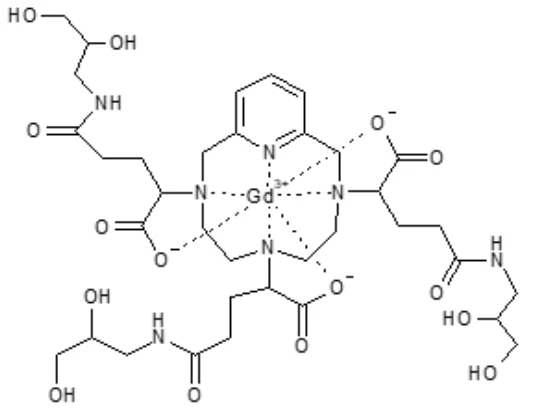
Physicochemical properties:
Appearance: White to off white powder.
Solubility: Gadopiclenol is very soluble in water and methanol, and it is practically insoluble in ethanol, isopropanol, and acetonitrile.
Polymorphism: Gadopiclenol is an amorphous powder.
14. Clinical Trials
14.1. Clinical Trials by Indication
Enhanced Magnetic Resonance Imaging (MRI) to Improve Detection and Visualization of Lesions In Central Nervous System and Body
The safety and effectiveness of VUEWAY for lesion visualization were evaluated in two prospective, double blind, randomized, crossover clinical studies. Study 1 (PICTURE) was performed in adults with known or highly suspected CNS lesions with focal areas of disruption of the blood-brain barrier. Only 2.1 % of patients underwent MRI of the spine while the remaining 97.9% underwent brain MRI. A total of 91.6% of the patients had neoplastic disease including primary tumors which comprised intra-axial gliomas (24.6%), extra-axial tumors [meningiomas (29.7%), schwannomas (10.9%) and pituitary adenomas (1.3%)] and brain metastases (18%). Study 2 (PROMISE) was performed in adults with suspected enhancing abnormalities in at least one body region among the head and neck, thorax, abdomen, pelvis, and musculoskeletal system. A total of 7.2% of the patients contributed with images of the head & neck, 37.2% with images of the abdomen (55.9% liver, 13.4% pancreas and 7.5% kidneys), 20.4% with images of the male and female pelvis (17.6% prostate), 28.8% with images of the thorax (97.2% breast) and 6.4% with images of the musculoskeletal system. About 66% of the patients presented with neoplasms (benign, malignant and unspecified (including cysts and polyps), the most frequent being metastasis to liver (9.4% - 9.5%), and breast cancer (8.6% - 9.2%). The other most frequent diseases according to preferred terms were breast mass (8.8% - 9.0%) and hepatic lesions (4.0% - 4.7%). In each study, patients received both VUEWAY 0.05 mmol/kg and Gadobutrol 0.1 mmol/kg (as an active comparator) in random order separated by 2 days to 14 days. Magnetic resonance imaging was performed before and after administration of each contrast agent.
Pre-contrast and paired (consisting of both pre-contrast and post-contrast images for the same drug) image sets were independently evaluated by three central readers who were blinded to identity of the contrast agent. Readers scored up to three lesions per patient for border delineation, internal morphology, and contrast enhancement, each on a scale from 1 to 4. These assessments constituted the three co-primary endpoints for lesion visualization. The total number of lesions was also reported. An additional independent central reader performed lesion tracking to allow matching of lesions between pre-contrast and paired images. The efficacy of gadopiclenol was assessed in both studies based on two primary objectives, i.e., the superiority of paired images (pre-and post-contrast images) compared to pre-contrast images alone and the non-inferiority of the MRI exam with gadopiclenol compared to the MRI exam with another macrocyclic gadolinium agent.
The analysis compared the patient-level average score for matching lesions for each visualization endpoint across different image sets and MRI examinations.
Study 1 included 256 patients with known or highly suspected CNS lesion(s). Among the enrolled patients, 239 had assessable pre-contrast and paired images with at least one matching lesion for at least one reader. These patients had a mean age of 57 years (range: 18 years to 84 years), 52% were female, and 83% were White.
Table 8 – Summary of Patient Demographics for Clinical Trials in Enhanced MRI to Improve Visualization and Detection of Lesion in Central Nervous System and Body
| Study # | Study design | Dosage, route of administration and duration | Study subjects (n) | Age (range) | Sex |
| Study # | Study design | Dosage, route of administration and duration | Study subjects (n) | Age (range) | Sex |
| Study 1 (PICTURE) | Prospective, double blind, randomized, crossover study in patients with known or highly suspected CNS lesions | Gadopiclenol IV injection 0.05 mmol/kg Gadobutrol IV injection 0.1 mmol/kg Single dose of each contrast agent (2 MRIs) | 256 | 57 years (18-84) | Male (48%) and Female (52%) |
| Study 2 (PROMISE) | Prospective, double blind, randomized, crossover study in patients with suspected enhancing abnormalities in at least one body region among the head and neck, thorax, abdomen, pelvis, and | Gadopiclenol IV injection 0.05 mmol/kg Gadobutrol IV injection 0.1 mmol/kg Single administration | 304 | 57 years (21-86) | Male (41%) and Female (59%) |
| musculoskeletal system. | |||||
Study 2 included 304 patients presenting with known or suspected enhancing abnormality(ies) and/or lesion(s) in at least one body region among head & neck, thorax (including breast), abdomen (including liver, pancreas and kidney), pelvis (including uterus, ovary and prostate) and musculoskeletal (including extremities). Among the enrolled patients, 278 had assessable pre-contrast and paired images with at least one matching lesion for at least one reader. These patients had a mean age of 57 years (range: 21 to 86 years), 59% female patients, and 70.5% were White.
All three blinded readers’ evaluations of paired pre-contrast plus post-contrast images and pre- contrast images alone for all lesion visualization criteria, the pre-specified co-primary efficacy endpoints, are presented in Table 9. The superiority of paired image sets with gadopiclenol over pre-contrast images alone for lesion visualization was demonstrated (Table 9). The difference in mean of scores for each visualization co-primary endpoint was significantly different from zero with a type 1 error set at 0.025 in favor of paired images compared to pre-contrast images (p<0.0001).
Table 9 – Patient-Level CNS Lesion Visualization Scores by Reader, Paired vs. Pre-contrast in Patients Receiving Gadopiclenol 0.05 mmol/kg Intravenously
| n | LS Mean (SE) | 95% CI Difference | ||||
|---|---|---|---|---|---|---|
| Paired | Pre- contrast | Difference* | ||||
| Border delineation | ||||||
| Reader 1 | 227 | 3.90 (0.02) | 2.08 (0.02) | 1.82 (0.03) | (1.76, 1.88) | |
| Reader 2 | 229 | 3.64 (0.04) | 1.74 (0.04) | 1.90 (0.05) | (1.81, 2.00) | |
| Reader 3 | 202 | 3.97 (0.03) | 2.61 (0.03) | 1.36 (0.04) | (1.29, 1.44) | |
| Internal morphology | ||||||
| Reader 1 | 227 | 3.92 (0.03) | 1.66 (0.03) | 2.26 (0.03) | (2.20, 2.33) | |
| Reader 2 | 229 | 3.65 (0.03) | 1.88 (0.03) | 1.77 (0.04) | (1.69, 1.85) | |
| Reader 3 | 202 | 3.97 (0.04) | 2.01 (0.04) | 1.96 (0.05) | (1.85, 2.06) | |
| Degree of contrast enhancement | ||||||
| Reader 1 | 227 | 3.77 (0.03) | 1.00 (0.03) | 2.77 (0.04) | (2.69, 2.85) | |
| Reader 2 | 229 | 3.58 (0.03) | 1.00 (0.03) | 2.58 (0.05) | (2.49, 2.67) | |
| Reader 3 | 202 | 3.90 (0.02) | 1.00 (0.02) | 2.90 (0.03) | (2.84, 2.95) | |
LS: Least Squares; SE: Standard Error; CI: Confidence Interval.
Only matching lesions are considered. The mixed models based on the full analysis set (N=239) include lesion visualization factor as dependent variable, MRI modality (Pre-contrast and Paired MRI) as fixed factors, and patient as a random factor.
*p<0.0001 for all rows
The non-inferiority of gadopiclenol at 0.05 mmol/kg to gadobutrol at 0.1 mmol/kg for lesion visualization was also demonstrated (Table 10). The difference in mean of scores for each visualization co-primary endpoint was close to 0 in all cases, with a lower limit of the 95% CI of the difference not lower than -0.06, that is largely above the non-inferiority margin of -0.35 (p<0.0001). These results were confirmed in all supportive and sensitivity analyses. Assessments of lesion visualization criteria by the blinded readers at lesion level showed similar results to those obtained at patient level.
Table 10 – Lesion-Level CNS Paired Lesion Visualization Scores by Reader, in Patients Receiving Gadopiclenol 0.05 mmol/kg Intravenously versus Gadobutrol 0.1 mmol/kg Intravenously
| n | LS Mean (SE) | 95% CI difference | ||||||
|---|---|---|---|---|---|---|---|---|
| Gadopiclenol | Gadobutrol | Difference * | ||||||
| Border delineation | ||||||||
| Reader 1 | 227 | 3.91 (0.02) | 3.93 (0.02) | -0.02 (0.02) | (-0.06, 0.02) | |||
| Reader 2 | 231 | 3.64 (0.04) | 3.60 (0.04) | 0.03 (0.04) | (-0.04, 0.11) | |||
| Reader 3 | 220 | 3.97 (0.01) | 3.95 (0.01) | 0.02 (0.02) | (-0.01, 0.05) | |||
| Internal morphology | ||||||||
| Reader 1 | 227 | 3.93 (0.02) | 3.93 (0.02) | -0.01 (0.02) | (-0.04, 0.03) | |||
| Reader 2 | 231 | 3.64 (0.04) | 3.62 (0.04) | 0.02 (0.03) | (-0.05, 0.09) | |||
| Reader 3 | 220 | 3.97 (0.02) | 3.92 (0.02) | 0.05 (0.02) | (0.01, 0.08) | |||
| Degree of contrast enhancement | ||||||||
| Reader 1 | 227 | 3.78 (0.04) | 3.77 (0.04) | 0.01 (0.03) | (-0.04, 0.07) | |||
| Reader 2 | 231 | 3.57 (0.04) | 3.52 (0.04) | 0.05 (0.04) | (-0.03, 0.12) | |||
| Reader 3 | 220 | 3.89 (0.03) | 3.81 (0.03) | 0.09 (0.03) | (0.03, 0.15) | |||
LS: Least Squares; SE: Standard Error; CI: Confidence Interval.
Only matching lesions are considered. The mixed models based on the per protocol set (N=236) include lesion visualization factor as dependent variable, contrast agent and period as fixed factors, and patient as a random factor.
*p<0.0001 for all rows
The addition of contrast injection could change the treatment plan in 23.3% of the patients for gadopiclenol-enhanced MRI exams.
Three readers assessed images of the head and neck, three other readers assessed images of the musculoskeletal system, and another three readers assessed other areas collectively referred to as the body (thorax including breast, abdomen, and pelvis). Lesion visualization scores by reader in each anatomic region at patient-level as supportive analyses are summarized in Table 11. The superiority of paired image sets with gadopiclenol over pre-contrast images alone for lesion visualization was demonstrated (Table 11) in all body areas. The difference in mean of scores each lesion visualization co-primary endpoint was significantly different from zero with a type 1 error set at 0.025 in favor of paired images compared to pre-contrast images (p<0.0001).
Table 11 – Patient-Level Body Lesion Visualization Scores by Reader, Paired vs. Pre-contrast in Patients Receiving Gadopiclenol 0.05 mmol/kg Intravenously
| n | LS Mean (SE) | 95% CI Difference | ||||||||
|---|---|---|---|---|---|---|---|---|---|---|
| n | LS Mean (SE) | 95% CI Difference | ||||||||
| Paired | Pre- contrast | Difference* | ||||||||
| Paired | Pre- contrast | Difference* | ||||||||
| Border delineation | ||||||||||
| Reader 1 | 251 | 3.79 (0.03) | 2.26 (0.03) | 1.53 (0.04) | (1.46, 1.60) | |||||
| Reader 2 | 230 | 3.48 (0.06) | 3.01 (0.06) | 0.47 (0.06) | (0.36,0.58) | |||||
| Reader 3 | 262 | 3.49 (0.03) | 1.78 (0.03) | 1.71 (0.04) | (1.65, 1.78) | |||||
| Internal morphology | ||||||||||
| Reader 1 | 251 | 3.80 (0.02) | 1.99 (0.02) | 1.81 (0.03) | (1.76; 1.87) | |||||
| Reader 2 | 230 | 3.75 (0.05) | 3.22 (0.05) | 0.53 (0.06) | (0.42; 0.64) | |||||
| Reader 3 | 262 | 3.72 (0.03) | 1.69 (0.03) | 2.03 (0.04) | (1.95; 2.11) | |||||
| Degree of contrast enhancement | ||||||||||
| Reader 1 | 251 | 3.64 (0.03) | 1.00 (0.03) | 2.64 (0.04) | (2.56; 2.72) | |||||
| Reader 2 | 230 | 2.82 (0.05) | 1.00 (0.03) | 1.82 (0.07) | (1.68; 1.96) | |||||
| Reader 3 | 262 | 3.33 (0.03) | 1.00 (0.03) | 2.33 (0.04) | (2.26; 2.41) | |||||
LS: Least Squares; SE: Standard Error; CI: Confidence Interval.
Only matching lesions are considered. The mixed models based on the full analysis set (N=278) include lesion visualization factor as a dependent variable, patient as a random factor, and MRI modality (Pre- contrast and Paired MRI), body regions, and MRI body regions as fixed factors.
*p<0.0001 for all rows
The non-inferiority of gadopiclenol at 0.05 mmol/kg to gadobutrol at 0.1 mmol/kg for lesion visualization was also demonstrated (Table 12). The lower limit of the 95% CI of the difference was not lower than -0.10, that is largely above the non-inferiority margin of -0.35 (p<0.0001). These results were confirmed in all supportive and sensitivity analyses. Assessments of lesion visualization criteria by the blinded readers at lesion level showed similar results to those obtained at patient level.
Table 12 – Lesion-Level Body Paired Lesion Visualization Scores by Reader, in Patients Receiving Gadopiclenol 0.05 mmol/kg Intravenously versus Gadobutrol 0.1 mmol/kg Intravenously
| n | LS Mean (SE) | 95% CI difference | |||||||
|---|---|---|---|---|---|---|---|---|---|
| Gadopiclenol | Gadobutrol | Difference * | |||||||
| Border delineation | |||||||||
| Reader 1 | 240 | 3.82 (0.02) | 3.81 (0.02) | 0.00 (0.03) | (-0.05, 0.05) | ||||
| Reader 2 | 223 | 3.56 (0.05) | 3.53 (0.05) | 0.02 (0.04) | (-0.05, 0.10) | ||||
| Reader 3 | 243 | 3.53 (0.03) | 3.57 (0.03) | -0.04 (0.03) | (-0.10, 0.01) | ||||
| Internal morphology | |||||||||
| Reader 1 | 240 | 3.83 (0.02) | 3.83 (0.02) | -0.00 (0.03) | (-0.06, 0.05) | ||||
| Reader 2 | 223 | 3.75 (0.04) | 3.75 (0.04) | -0.00 (0.04) | (-0.07, 0.07) | ||||
| Reader 3 | 243 | 3.74 (0.03) | 3.77 (0.03) | -0.03 (0.02) | (-0.08, 0.02) | ||||
| Degree of contrast enhancement | |||||||||
| Reader 1 | 240 | 3.69 (0.04) | 3.68 (0.04) | 0.01 (0.04) | (-0.06, 0.09) | ||||
| Reader 2 | 223 | 2.88 (0.07) | 2.86 (0.07) | 0.03 (0.05) | (-0.07, 0.12) | ||||
| Reader 3 | 243 | 3.35 (0.04) | 3.37 (0.04) | -0.02 (0.03) | (-0.08, 0.04) | ||||
LS: Least Squares; SE: Standard Error; CI: Confidence Interval.
Only matching lesions are considered. The mixed models based on the per protocol set (N=260)
include lesion visualization factor as dependent variable, contrast agent and period as fixed factors, and patient as a random factor.
*p<0.0001 for all rows
The addition of contrast injection could change the treatment plan in 30.1% of the patients for gadopiclenol-enhanced MRI exams.
15. Microbiology
No microbiological information is required for this drug product.
16. Non-Clinical Toxicology
General toxicology: In single-dose studies by intravenous slow bolus of gadopiclenol, the NOAEL in rat and dog was 10 and 4 mmol/kg respectively (representing a margin of exposure of 59 and 25 per AUC). The key findings in rat were reversible dose-related tubular cell vacuolation in the renal cortex, and kidney weight increase. The key finding in dog was reversible dose-related minimal to mild vacuolation of the tubular epithelium of the kidney.
In subacute toxicology studies by once-daily intravenous infusion of gadopiclenol for 28 days, the NOAEL in rat and dog was 2.5 and 4 mmol/kg/day respectively (representing a margin of exposure of 9 and 32 per AUC). The key findings in rat were swelling of the nose and limbs, mild to severe partly reversible dose-related tubular cell vacuolations in the renal cortex and urinary bladder, dose-related partly reversible increase in kidney weight, and non-reversible minimal to moderate infiltrates of macrophages with vacuolated cytoplasm in mesenteric lymph nodes. The key findings in dog were reversible mild to marked dose-related epithelial cell vacuolation of the cortical and medullary kidney tubules, and reversible increase in kidney weight.
Genotoxicity: Gadopiclenol did not demonstrate mutagenic potential in in vitro bacterial reverse mutation assays (Ames test), in an in vitro chromosome aberration assay in Chinese hamster ovary cells nor in an in vivo rat micronucleus assay.
Carcinogenicity: No carcinogenicity studies of gadopiclenol were performed.
Reproductive and developmental toxicology: A study was performed to investigate the potential effects of daily IV administrations of gadopiclenol on fertility in adult male and female rats, and on early embryonic development. Gadopiclenol, at dose levels of 2.5, 5 and 10 mmol/kg/day, was administered to all rats (22 rats/sex/dose) once daily via IV injection. Gadopiclenol had no effect on fertility and general reproductive performance of male and female rats. The NOAEL was 10 mmol/kg/day in both male and female rats (representing a margin of exposure of 62 and 63 per AUC in male and female respectively).
In a study investigating the potential effects of daily IV administration of 1.0, 2.5, and 5.0 mmol/kg/day gadopiclenol on the embryo-fetal development in rabbits, the maternal and embryonic NOAEL was 2.5 mmol/kg/day (representing a margin of exposure of 24 per AUC). In a study investigating the potential effects of repeat-dose IV administration of 2.5, 5.0, and 10 mmol/kg/day gadopiclenol on the embryo-fetal development of rat, the maternal NOAEL was 5 mmol/kg/day (representing a margin of exposure of 26 per AUC) and the embryonic NOAEL was 10 mmol/kg/day.
In a study investigating the potential effects of repeat-dose IV administration of 2.5, 5.0, and 10 mmol/kg gadopiclenol on the pre- and post-natal development of rat, the maternal NOAEL was 2.5 mmol/kg/day (representing a margin of exposure of 9 per AUC) and the post-natal NOAEL was 10 mmol/kg/day. Gadolinium was quantified in all tissues from almost all pups. The greater to lesser exposed tissues in pups were: kidney, femur, skin/liver, brain/cerebellum, plasma.
Juvenile toxicity: In juvenile rat IV infused with 0.6, 1.25, 2.5 mmol/kg gadopiclenol at 4-day interval from PND 10 to PND 30, the NOAEL was 2.5 mmol/kg (representing a margin of exposure of 8 per AUC).
Special toxicology: Local tolerance studies performed with perivenous injection (0.25 mmol) to NZW rabbits produced moderate local reactions, including erythema and edema, with associated histological changes in the dermis and epidermis. These findings indicate a potential for local irritation if the contrast medium leaks around the veins in a clinical setting (see 7 Warnings and Precautions, General).
Three studies (non-GLP compliant) were performed to investigate the long-term tissue accumulation and retention of gadolinium by gadopiclenol administration.
T1 signal hyperintensity in brain deep cerebellar nuclei was not observed in rats receiving 20 successive IV administration of 0.6 mmol/kg/occasion gadopiclenol. An enhancement of the choroid plexus and 4th ventricle was observed with a peak at the end of the treatment period and gradually returned to the baseline after a 4-week washout period.
In rats injected with gadopiclenol (2.4 mmol/kg) once weekly for 5 weeks, gadolinium tissue retention at month 12 decreased by ≥ 98% in the kidneys, ≥ 94% in liver, ≥ 84% in muscle, and ≥ 74% in the brain compared to gadolinium tissue levels at month 1. In the diaphysis of these rats, gadolinium content increased by up to 29% whereas gadolinium content decreased in the bone marrow, epiphysis and skull by ≥ 7% at month 12 compared to month 1. Histological lesions of the glomerular tuff, the Bowman capsule and tubular activation have been observed and a contribution of gadopiclenol cannot be excluded.
In PND 10 rat infused with a single IV bolus of gadopiclenol (0.6, 1.25, 2.5 mmol/kg) followed by a 9-week recovery, measurable gadolinium levels were highest in the kidney, followed by femur, brain, and cerebellum. After 9 weeks, ≥ 96.5% of gadolinium had been eliminated from all evaluated tissues in both sexes at all dose levels. In rat infused IV with repeat-dose of gadopiclenol at 4-day interval from PND 10 to PND 30 followed by a 9-week recovery, gadolinium concentrations were highest in kidney, followed by femur, brain/cerebellum, liver, and skin. Tissue gadolinium levels in the kidney and femur were statistically significant higher after repeated dosing compared with single-dose animals at all dose levels.
Repeated administrations of gadopiclenol resulted in reversible dose-dependent cortical tubular vacuolation in the kidney of male and female rats. A reversible decrease in ferritin serum levels was observed in repeat-dose of gadopiclenol at 1.25 and 2.5 mmol/kg, in male and female rats at the 1.25 and 2.5 mmol/kg repeat‑dose levels in both sexes.
No pathological NSF-like skin lesions were observed with gadopiclenol administration (2.5 mmol/kg/day for 5 consecutive days) in rat models of renal impairment.