


Product Monograph - Hepcludex
Recent Major Label Changes
| 3 Serious Warnings and Precautions Box | [2026-05] |
|---|---|
| 4 Dosage and Administration, 4.4 Administration | [2026-05] |
| 7 Warnings and Precautions | [2026-05] |
Table of Contents
Sections or subsections that are not applicable at the time of authorization are not listed.
Recent Major Label Changes ....................................................................................................2
Table of Contents .......................................................................................................................2
Part 1: Healthcare Professional Information ...........................................................................4
1 Indications ......................................................................................................................4
1.1 Pediatrics ..............................................................................................................4
1.2 Geriatrics ..............................................................................................................4
2 Contraindications ...........................................................................................................4
3 Serious Warnings and Precautions Box ......................................................................4
4 Dosage and Administration ..........................................................................................4
4.1 Dosing Considerations .........................................................................................4
4.2 Recommended Dose and Dosage Adjustment ....................................................5
4.3 Reconstitution .......................................................................................................5
4.4 Administration .......................................................................................................6
4.5 Missed Dose .........................................................................................................6
5 Overdose .........................................................................................................................6
6 Dosage Forms, Strengths, Composition, and Packaging ..........................................6
7 Warnings and Precautions ............................................................................................7
General ............................................................................................................................7
Driving and Operating Machinery .....................................................................................7
Exacerbation of Hepatitis After Discontinuation of Treatment ..........................................7
HDV and HBV Genotype ..................................................................................................7
7.1 Special Populations ..............................................................................................8
7.1.1 Pregnancy ........................................................................................................8
HEPCLUDEX (bulevirtide)
7.1.2 Breastfeeding ...................................................................................................8
7.1.3 Pediatrics ..........................................................................................................8
7.1.4 Geriatrics ..........................................................................................................8
8 Adverse Reactions .........................................................................................................8
8.1 Adverse Reaction Overview .................................................................................8
8.2 Clinical Trial Adverse Reactions ...........................................................................9
8.3 Less Common Clinical Trial Adverse Reactions .................................................10
8.4 Abnormal Laboratory Findings: Hematologic, Clinical Chemistry, and Other Quantitative Data ...........................................................................................................10
8.5 Post-Market Adverse Reactions .........................................................................10
9 Drug Interactions .........................................................................................................10
9.1 Drug Interactions Overview ................................................................................10
9.4 Drug-Drug Interactions .......................................................................................11
9.5 Drug-Food Interactions .......................................................................................11
9.6 Drug-Herb Interactions .......................................................................................11
9.7 Drug-Laboratory Test Interactions ......................................................................11
10 Clinical Pharmacology .................................................................................................12
10.1 Mechanism of Action ..........................................................................................12
10.2 Pharmacodynamics ............................................................................................12
10.3 Pharmacokinetics ...............................................................................................12
10.4 Immunogenicity ..................................................................................................13
11 Storage, Stability, and Disposal .................................................................................13
Part 2: Scientific Information ..................................................................................................15
13 Pharmaceutical Information ........................................................................................15
14 Clinical Trials ................................................................................................................16
14.1 Clinical Trials by Indication .................................................................................16
15 Microbiology .................................................................................................................19
16 Non-Clinical Toxicology ..............................................................................................19
Patient Medication Information ..............................................................................................21
Instructions for Use: Step-by-step injection guide for patients / caregivers .....................26
HEPCLUDEX (bulevirtide)
Part 1: Healthcare Professional Information
1 Indications
HEPCLUDEX (bulevirtide) is indicated for the treatment of chronic hepatitis delta virus (HDV) infection in adults with compensated liver disease.
1.1 Pediatrics
Pediatrics (< 18 years): No data are available to Health Canada; therefore, Health Canada has not authorized an indication for pediatric use.
1.2 Geriatrics
Geriatrics: Clinical studies of HEPCLUDEX did not include any patients aged 65 or over to determine whether they respond differently from younger patients.
2 Contraindications
HEPCLUDEX is contraindicated in patients who are hypersensitive to this drug or to any ingredient in the formulation, including any non-medicinal ingredient, or component of the container. For a complete listing, see 6 Dosage Forms, Strengths, Composition, and Packaging.
3 Serious Warnings and Precautions Box
4 Dosage and Administration
4.1 Dosing Considerations
Healthcare professionals should train patients or caregivers in the proper technique for reconstituting HEPCLUDEX with Sterile Water for Injection and self-administering subcutaneous injections using a syringe. Parenteral drug products should be inspected visually for particulate matter and discoloration prior to administration.
Instruct the patient or caregiver to read the Instructions For Use (contained within the Patient Medication Information) at the time they receive a prescription for HEPCLUDEX and as needed for ongoing administration of HEPCLUDEX. Emphasize the following instructions to the patient or caregiver:
- HEPCLUDEX must be stored in the refrigerator prior to preparation and administration.
- HEPCLUDEX needs to be reconstituted with Sterile Water for Injection prior to
Exacerbation of Hepatitis After Discontinuation of Treatment
- Severe acute exacerbations of HDV and hepatitis B virus (HBV) infection may occur after HEPCLUDEX is discontinued, especially in patients with cirrhosis, who may be at increased risk of more severe flares or progression to hepatic decompensation. Monitor hepatic function closely with both clinical and laboratory follow-up for at least six months in patients who discontinue HEPCLUDEX. In certain circumstances, resumption of antiviral therapy may be warranted (see 7 Warnings and Precautions).
HEPCLUDEX (bulevirtide)
- administration.
- The Sterile Water for Injection, syringe, and needles for preparation and injection are provided separately from HEPCLUDEX; all materials should be stored out of the reach of children.
- HEPCLUDEX must be administered by subcutaneous injection. Do not administer by any other route (see 4.3 Reconstitution and 4.4 Administration).
4.2 Recommended Dose and Dosage Adjustment
The recommended dosage in adults is HEPCLUDEX 2 mg once daily administered by subcutaneous injection.
The optimal treatment duration is unknown. Treatment should be continued as long as associated with clinical benefit.
In all patients, manage the underlying HBV infection simultaneously as clinically appropriate. HBV-DNA levels should be closely monitored during treatment with HEPCLUDEX.
Pediatrics
The safety and efficacy of HEPCLUDEX in patients younger than 18 years of age have not been evaluated. Health Canada has not authorized an indication for pediatric use.
Geriatrics
No data are available on which to make a dose recommendation for patients over the age of 65 years.
Renal Impairment
No studies that evaluate the safety and efficacy of HEPCLUDEX in patients with renal impairment have been conducted. Based on limited clinical data and population pharmacokinetics (PK) analysis, no dosage adjustment of HEPCLUDEX is required in patients with mild renal impairment (creatinine clearance [CrCl] ≥ 60 and < 90 mL/min). No data are available on which to make a dose recommendation for patients with CrCl < 60 mL/min. Administration of HEPCLUDEX is associated with elevations in blood bile acids, which may be enhanced in patients with renal impairment due to renal elimination of bile acids. Monitoring of patients with renal impairment while receiving HEPCLUDEX is recommended.
Hepatic Impairment
No dosage adjustment of HEPCLUDEX is required in patients with mild hepatic impairment (Child-Pugh A). No studies that evaluate the safety and efficacy of HEPCLUDEX in patients with Child-Pugh B or C hepatic impairment or patients with decompensated liver disease have been conducted and therefore no data are available on which to make dosing recommendations for these patients.
4.3 Reconstitution
Emphasize the following instructions to the patient or caregiver:
Reconstitution Instructions
- Aseptically reconstitute HEPCLUDEX lyophilized powder by adding 1 mL of Sterile Water for Injection to the HEPCLUDEX vial. The resulting concentration will be 2 mg/mL.
- Carefully swirl or roll the vial between the hands to dissolve the powder. Complete
HEPCLUDEX (bulevirtide)
- dissolution might take up to 3 minutes.
- Completely dissolved HEPCLUDEX should be clear without foam. If the HEPCLUDEX solution appears foamy, allow more time for the powder to dissolve.
- If there are bubbles in the solution, gently tap the vial until they disappear.
- If there are particles in the solution once the powder is (completely) dissolved (after approximately 5 minutes), do not use that vial of solution.
- Use reconstituted product immediately. Do not refrigerate.
4.4 Administration
Emphasize the following instructions to the patient or caregiver:
Administration Instructions
- Administer by subcutaneous injection into the upper thigh, lower abdomen, or back of the upper arm (only if administered by a caregiver).
- Change the injection site frequently to minimize potential injection site reactions.
IMPORTANT:
- Remind patients that it is important they do not reuse the vials, syringe, needles, or any remaining Sterile Water for Injection. HEPCLUDEX and auxiliary supplies are for Single Use Only. Throw away (dispose of) all components after use, including unused Sterile Water for Injection.
4.5 Missed Dose
If a dose is missed, that dose should be taken as soon as possible on that day. However, if it is almost time for the next dose, skip the missed dose and go back to the regular dosing schedule. Do not double doses.
5 Overdose
There are no data on human overdose with HEPCLUDEX. If overdose occurs, the patient must be monitored for evidence of toxicity and given standard supportive treatment as necessary.
For the most recent information in the management of a suspected drug overdose, contact your regional poison control centre or Health Canada’s toll-free number, 1-844 POISON-X (1-844-764-7669).
6 Dosage Forms, Strengths, Composition, and Packaging
Table 1. Dosage Forms, Strengths, and Composition
| Route of Administration | Dosage Form / Strength/Composition | Non-medicinal Ingredients |
| Subcutaneous Injection | Powder for solution, 2 mg/vial (2 mg/mL when reconstituted) | Mannitol, sodium carbonate anhydrous, sodium hydrogen carbonate, and may include hydrochloric acid and/or sodium hydroxide for pH adjustment |
HEPCLUDEX (bulevirtide)
Each 2 mg single-dose vial contains a sterile, preservative-free lyophilized powder that is to be reconstituted with 1 mL of Sterile Water for Injection. The powder is white to off-white. Following reconstitution, each vial contains bulevirtide acetate equivalent to 2 mg bulevirtide with a pH of approximately 9.0 and osmolality of approximately 300 mOsm/kg.
Packaged in a Type 1 clear glass vial, an elastomeric closure, and an aluminum overseal with a flip-off cap.
7 Warnings and Precautions
See 3 Serious Warnings and Precautions Box.
General
Treatment with HEPCLUDEX should be initiated and monitored by a physician experienced in the management of viral hepatitis.
Healthcare professionals should train patients or caregivers in the proper technique for reconstituting or administering HEPCLUDEX (see 4.1 Dosing Considerations, 4.3 Reconstitution and 4.4 Administration).
Co-infection with Human Immunodeficiency Virus (HIV) and Hepatitis C Virus (HCV)
No data are available from HCV co-infected patients. Limited data are available from HIV co-infected patients.
Driving and Operating Machinery
No studies on the effects of HEPCLUDEX on the ability to drive and use machines have been performed. Inform patients that dizziness has been reported during treatment with HEPCLUDEX.
Exacerbation of Hepatitis After Discontinuation of Treatment
Severe acute exacerbations of HDV and HBV infection may occur after HEPCLUDEX is discontinued, especially in patients with cirrhosis, who may be at increased risk of more severe flares (ALT levels > 5 or 10 times the upper limit of normal) or progression to hepatic decompensation, based on clinical trial and postmarketing data. In case of treatment discontinuation, careful monitoring of hepatic function with both clinical and laboratory follow-up should be performed for at least six months after discontinuation, including monitoring transaminase levels, as well as HBV DNA and HDV RNA viral load. In certain circumstances, resumption of antiviral therapy may be warranted.
HDV and HBV Genotype
The predominant HBV/HDV genotype isolated from patients with chronic HDV infection in clinical studies was HBV-D/HDV-1, found in 84.6% of patients. Clinical data for rarer HBV and HDV genotypes is limited. Therefore, it is uncertain whether HBV or HDV genotype affects clinical response to HEPCLUDEX.
HEPCLUDEX (bulevirtide)
7.1 Special Populations
7.1.1 Pregnancy
There are no adequate and well-controlled studies with HEPCLUDEX in pregnant women. HEPCLUDEX should be used during pregnancy only if the potential benefit justifies the potential risk to the fetus. In non-clinical reproductive toxicity studies, bulevirtide demonstrated no adverse effect on embryofetal development when administered to pregnant rats and rabbits at systemic exposures (AUC) 12- and 124-fold relative to exposure in humans at the recommended human dose.
7.1.2 Breastfeeding
It is unknown whether HEPCLUDEX is secreted in human milk. Measurements of bulevirtide in the plasma of pups or in the milk of nursing animals were not performed in the non-clinical pre- and post-natal developmental rat studies. However, due to its high protein binding, liver tropism, and high specificity for the sodium taurocholate co-transporting polypeptide (NTCP), bulevirtide is not likely to be secreted in milk.
7.1.3 Pediatrics
No data are available to Health Canada; therefore, Health Canada has not authorized an indication for pediatric use.
7.1.4 Geriatrics
Clinical studies of HEPCLUDEX did not include any patients aged 65 or over to determine whether they respond differently from younger patients.
8 Adverse Reactions
8.1 Adverse Reaction Overview
The safety of HEPCLUDEX for the treatment of chronic HDV infection in adult patients with compensated liver disease was primarily evaluated in a randomized, open-label Phase 3 trial (MYR301) which enrolled 49 patients in the HEPCLUDEX 2 mg arm and 51 patients in a delayed treatment (control) arm. The safety profile is further supplemented by three Phase 2 studies (MYR202, MYR203, and MYR204) which collectively enrolled 382 patients with chronic HDV infection. Across these studies, 43 patients received HEPCLUDEX 2 mg as a HDV monotherapy, and 65 patients received HEPCLUDEX 2 mg with pegylated interferon α-2a (Peg-IFNα).
In the Study MYR301 Week 48 analysis, 2 of 49 patients (4.1%) in the HEPCLUDEX 2 mg treatment group experienced serious adverse events (SAEs), compared to 1 of 51 patients (2.0%) in the control group; none of the SAEs were considered related to HEPCLUDEX. The most common AEs observed in greater than 10% of patients and at a higher frequency in the HEPCLUDEX 2 mg treatment group versus control at Week 48 were: headache, fatigue, pruritis, eosinophilia, and injection site reactions. Through Week 48, no AEs led to premature discontinuation of HEPCLUDEX or death.
HEPCLUDEX (bulevirtide)
8.2 Clinical Trial Adverse Reactions
Clinical trials are conducted under very specific conditions. The adverse reaction rates observed in the clinical trials, therefore, may not reflect the rates observed in practice and should not be compared to the rates in the clinical trials of another drug. Adverse reaction information from clinical trials may be useful in identifying and approximating rates of adverse drug reactions in real-world use.
Table 2 describes the adverse reactions (all grades) that were reported in ≥ 3% of patients treated with HEPCLUDEX 2 mg in Study MYR301, and at a higher frequency in the HEPCLUDEX 2 mg group versus control; frequencies are based on adverse events observed by Week 48.
Table 2. Adverse Reactions (All Grades) Reported in ≥ 3%a of Patients With Chronic Hepatitis Delta (CHD) and Compensated Liver Disease in Study MYR301 (Week 48 Analysis)
| Delayed Treatment (Control)b (N=51) | HEPCLUDEX 2 mg (N=49) | |||||
|---|---|---|---|---|---|---|
| Gastrointestinal disorders | ||||||
| Nausea | 2 (3.9%) | 3 (6.1%) | ||||
| General disorders and administration site conditions | ||||||
| Injection site reactionsc | 0% | 9 (18.4%) | ||||
| Fatigue | 1 (2.0%) | 5 (10.2%) | ||||
| Nervous system disorders | ||||||
| Headache | 0% | 9 (18.4%) | ||||
| Dizziness | 0% | 2 (4.1%) | ||||
| Skin and subcutaneous tissue disorders | ||||||
| Pruritus | 0% | 6 (12.2%) | ||||
- a. Frequencies of adverse reactions are based on all treatment-emergent adverse events regardless of causality
- b. Patients who received delayed treatment in Study MYR301.
- c. Grouped term including injection site reaction, injection site erythema, injection site pain, injection site pruritus, injection site rash, injection site hematoma, and injection site swelling.
The safety profile of HEPCLUDEX 2 mg in Phase 2 Study MYR202 and Phase 2 Study MYR203, where 28 and 15 participants received HEPCLUDEX 2 mg for 24 weeks and 48 weeks, respectively, was generally consistent with that observed in Study MYR301 through Week 48.
In Study MYR301, the safety profile of HEPCLUDEX 2 mg when administered through up to 144 weeks of treatment was consistent with that observed in the Week 48 analysis.
Across Phase 2 studies MYR203 and MYR204, after 65 patients received HEPCLUDEX 2 mg in combination with Peg-IFNα for 48 weeks, the most common adverse events reported (≥ 10%) in participants receiving HEPCLUDEX 2 mg + Peg-IFNα included cytopenias (leukopenia, thrombocytopenia, neutropenia, lymphopenia, neutrophil count decreased, white blood cell count decreased, platelet count decreased), bile acids increased, influenza-like illness, alanine aminotransferase (ALT) increased, aspartate aminotransferase increased,
HEPCLUDEX (bulevirtide)
pyrexia, asthenia, and injection site reactions, in line with the safety profile of the individual components (HEPCLUDEX 2 mg and Peg-IFNα).
8.3 Less Common Clinical Trial Adverse Reactions
No additional adverse reactions have been identified for HEPCLUDEX.
8.4 Abnormal Laboratory Findings: Hematologic, Clinical Chemistry, and Other Quantitative Data
Clinical Trial Findings
Eosinophil Count Increased
Increases in eosinophil counts were commonly observed in patients receiving HEPCLUDEX 2 mg; there were no associated clinical sequelae, hepatic adverse reactions, or significant liver-related laboratory abnormalities. For participants who experienced treatment-emergent adverse events of eosinophilia, peak post-baseline absolute eosinophil counts ranged from 0.91 x 10⁹/L to 1.53 x 10⁹/L; all were Grade 1.
Total Bile Salts Increased
Asymptomatic bile salt elevations, associated with the mechanism of action of HEPCLUDEX, were very commonly observed in clinical studies of HEPCLUDEX 2 mg; the bile salt elevations resolved upon discontinuation of HEPCLUDEX. Median (Q1, Q3) change from baseline in bile salt concentrations at Week 48 was +5.5 μmol/L (–3.5, 16.5 μmol/L) and Week 144 was +2.7 μmol/L (–3.8, 12.0 μmol/L).
8.5 Post-Market Adverse Reactions
In addition to adverse reactions from clinical studies, the following adverse reactions were identified during post-approval use of HEPCLUDEX. Because these reactions were reported voluntarily from a population of unknown size, estimates of frequency cannot be made.
IMMUNE SYSTEM DISORDERS
Hypersensitivity, including anaphylactic reaction
9 Drug Interactions
9.1 Drug Interactions Overview
Bulevirtide acts as an inhibitor of NTCP. In vitro, it has been shown that certain medicinal products can inhibit bulevirtide target NTCP. The co-administration of such medicinal products (e.g. sulfasalazine, irbesartan, ezetimibe, ritonavir, simvastatin and cyclosporin A) is not recommended.
As a precautionary measure, close clinical monitoring is warranted when NTCP substrates are co-administered with bulevirtide. When possible, co-administration of these substrates should be avoided.
In a clinical PK drug interaction study in healthy volunteers, there was no significant effect of bulevirtide on the PK of TDF, a potential concomitant medication for the treatment of HBV infection.
HEPCLUDEX (bulevirtide)
In clinical PK drug interaction studies in healthy volunteers, there was no impact of bulevirtide alone on the PK of the CYP3A4 substrate midazolam. However, an approximate 40% increase in midazolam exposure was observed when administered in combination with bulevirtide and tenofovir which was not observed upon administration of tenofovir alone. As a precautionary measure, close clinical monitoring is warranted when bulevirtide is co-administered with tenofovir and narrow-therapeutic-index drugs which are sensitive CYP3A4 substrates (e.g. cyclosporine, carbamazepine, sirolimus, and tacrolimus).
In a clinical PK drug interaction study in healthy volunteers, there was minimal impact of bulevirtide on the PK of the OATP1B1/3 and NTCP substrate pravastatin, or of pravastatin on the PK of bulevirtide.
9.4 Drug-Drug Interactions
In vitro studies have shown that no clinically relevant interactions are expected for the most common efflux transporters (MDR1, BCRP, BSEP, MATE1, and MATE2K) and uptake transporters (OATP2B1, OAT1, OAT3, OCT1, and OCT2). In vitro bulevirtide inhibited the organic anion transporting polypeptides, OATP1B1 and OATP1B3, with IC50 values of 0.5 and 8.7 μM, respectively. In clinical studies, at the recommended 2 mg dose of bulevirtide, maximum plasma concentrations at steady state were up to 26 nM, and thus no clinically relevant interaction is expected with OATP1B1 and OATPB1B3.
In vitro studies have shown that bulevirtide does not inhibit CYP1A2, CYP2A6, CYP2B6, CYP2C9, CYP2C19, CYP2D6, and CYP3A4. No in vitro induction of CYP1A2, CYP2B6, or CYP3A4 by bulevirtide was observed.
Bulevirtide administered at 10 mg once daily (administered as two consecutive 5 mg doses) to 12 healthy volunteers did not impact the PK of TDF in a dedicated drug interaction study.
Bulevirtide administered at 5 mg twice daily to 19 healthy volunteers did not impact the PK of the CYP3A4 probe substrate midazolam. Bulevirtide administered at 10 mg once daily (administered as two consecutive 5 mg injections) in combination with once daily tenofovir (245 mg) to 12 healthy volunteers, increased midazolam AUC2-4 exposure by approximately 40% when compared to midazolam alone.
Bulevirtide administered at 5 mg twice daily to 19 healthy volunteers resulted in a 32% increase in the Cmax and AUC of the OATP1B1/3 and NTCP substrate pravastatin administered in single doses of 40 mg in a dedicated clinical drug interaction study. This drug interaction is not considered clinically meaningful.
9.5 Drug-Food Interactions
Interactions with food have not been established.
9.6 Drug-Herb Interactions
Interactions with herbal products have not been established.
9.7 Drug-Laboratory Test Interactions
Interactions with laboratory tests have not been established.
HEPCLUDEX (bulevirtide)
10 Clinical Pharmacology
10.1 Mechanism of Action
Bulevirtide is a 47-amino acid, N-terminally myristoylated, HBV-L-protein derived, synthesized lipopeptide that acts as a potent, selective entry inhibitor of HDV. Bulevirtide blocks the entry of HBV and HDV into hepatocytes by binding to and inactivating the essential HBV and HDV entry receptor NTCP.
10.2 Pharmacodynamics
Effects on Electrocardiogram
Current non-clinical and clinical data do not suggest a risk of QT prolongation, but QT prolongation has not been fully evaluated in humans.
10.3 Pharmacokinetics
The PK properties of bulevirtide were characterized after intravenous and subcutaneous administration. The exposure of bulevirtide increased in a more than proportional manner with increasing doses (dose range: 300 mcg to 20 mg intravenous; 800 mcg to 10 mg subcutaneous). Following 14 days of dosing, accumulation ratios for the recommended 2 mg dose for Cmax and AUC0-24h were approximately 2-fold. The steady state PK parameters of bulevirtide in Study MYR301 (based on population PK/pharmacodynamics (PD) analysis) are provided in Table 3.
Table 3. Steady State PK Parameters of Bulevirtide Following Subcutaneous Administration of HEPCLUDEX 2 mg in HDV-Infected Adultsa
| Parameterb | Geometric Mean (90% confidence Interval) |
|---|---|
| Cmax (ng/mL) | 22.1 (19.2 – 25.5) Min: 5.13; Max: 78.2 |
| AUC0-24h (h●ng/mL) | 180 (162 –201) Min: 67.4; Max: 507 |
a. From Population PK/PD analysis simulations to generate exposure estimates of MYR301 study patients, N=49
Absorption
After subcutaneous injection, maximum plasma concentrations were reached between 0.5 and 3 hours.
The absolute bioavailability of bulevirtide after subcutaneous injection of HEPCLUDEX 2 mg has not been estimated. Absolute bioavailability following subcutaneous injection of 5 mg and 10 mg bulevirtide is estimated to be 48% and 57%, respectively.
Distribution:
In vitro protein binding is high with > 99% of bulevirtide bound to plasma proteins. Following multiple dosing with HEPCLUDEX 2 mg subcutaneous injection, the mean apparent volume of distribution was estimated to be 133 L in Study MYR203.
Metabolism:
No biotransformation study was performed for bulevirtide. Bulevirtide is a linear peptide
HEPCLUDEX (bulevirtide)
consisting of L-amino acids, and it is expected to be catabolized by peptidases to amino acids. No active metabolites are expected.
Elimination
No bulevirtide excretion into urine was detected in healthy volunteers. Following multiple dosing with HEPCLUDEX 2 mg subcutaneous injection, total mean apparent systemic clearance of bulevirtide was estimated at 12.8 L/h in Study MYR203. After reaching peak concentrations, plasma levels declined with t1/2 of 3-7 hours.
Special Populations and Conditions
- Age, Sex, and Race: Based on population PK/PD modeling, age, sex, or race did not have a clinically relevant impact on the systemic exposure of bulevirtide. This analysis was conducted in patients aged 18-65 of which 67% were male, 89% were White, and 8.9% were Asian.
- Geriatrics: The PK of bulevirtide have not been evaluated in the elderly (65 years of age and older).
- Hepatic Insufficiency: There is no clinically relevant impact of mild hepatic impairment (Child-Pugh A) on bulevirtide PK. The PK of bulevirtide have not been evaluated in patients with moderate and severe hepatic impairment (Child-Pugh B and C, respectively).
- Renal Insufficiency: There is no clinically meaningful impact of mild renal impairment (CrCl ≥ 60 and < 90 mL/min at baseline) on bulevirtide PK based on population PK/PD modeling. The PK of bulevirtide have not been evaluated in patients with moderate and severe renal impairment (CrCl < 60 mL/min), or in patients with end-stage renal disease, including those on dialysis. As bulevirtide is > 99 % protein bound, dialysis is not expected to alter exposures of bulevirtide.
10.4 Immunogenicity
All therapeutic peptides, including HEPCLUDEX, have the potential to induce antidrug antibodies (ADA). The detection of antibody formation is highly dependent on the sensitivity and specificity of the assay. Additionally, the observed incidence of antibody positivity in an assay may be influenced by several factors, including assay methodology, sampling handling, timing of sample collection, concomitant medication, and underlying disease. For these reasons, comparison of incidence of ADA across studies or to other products may be misleading. In HEPCLUDEX clinical studies, incidence of ADA was measured using an enzyme-linked immunosorbent assay (ELISA). In Studies MYR203 and MYR301, a total of 64 patients who were treated with HEPCLUDEX 2 mg monotherapy for 48 weeks were eligible for assessment of ADA prevalence; 18 of these patients (28.1%) were positive for ADA prevalence, of which 3 patients (4.7%) were positive for ADA at baseline. Based on clinical results and PK analysis, no relationship could be identified between presence of ADA and bulevirtide PK. There is no evidence that the PK of bulevirtide, or safety or effectiveness of HEPCLUDEX were altered in these patients.
11 Storage, Stability, and Disposal
In order to protect from light, keep the vials in the outer carton. Before reconstitution, the product should be stored in a refrigerator (2°C-8°C).
After reconstitution, chemical and physical in-use stability has been demonstrated for 2 hours
HEPCLUDEX (bulevirtide)
at room temperature (up to 25°C). From a microbiological point of view, it is recommended that the product should be used immediately.
Any unused medicinal product or waste material should be disposed of in accordance with local requirements.
HEPCLUDEX (bulevirtide)
Part 2: Scientific Information
13 Pharmaceutical Information
Drug Substance
Proper Name: bulevirtide acetate (INNM)
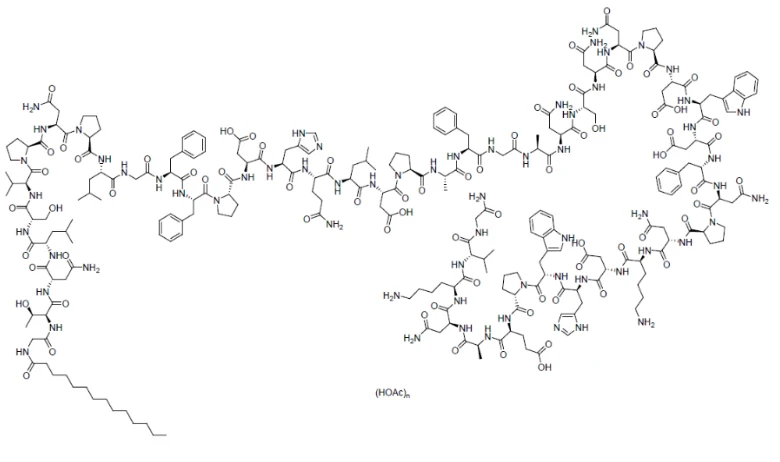
Chemical name: N-Tetradecanoylglycyl-L-threonyl-L-asparaginyl-L-leucyl-L-seryl-L-valyl-L-prolyl-L-asparaginyl-L-prolyl-L-leucyl-glycyl-L-phenylalanyl-L-phenylalanyl-L-prolyl-L-aspartyl-L-histidyl-L-glutaminyl-L-leucyl-L-aspartyl-L-prolyl-L-alanyl-L-phenylalanyl-glycyl-L-alanyl-L-asparaginyl-L-seryl-L-asparaginyl-L-asparaginyl-L-prolyl-L-aspartyl-L-tryptophanyl-L-aspartyl-L-phenylalanyl-L-asparaginyl-L-prolyl-L-asparaginyl-L-lysyl-L-aspartyl-L-histidyl-L-tryptophanyl-L-prolyl-L-glutamyl-L-alanyl-L-asparaginyl-L-lysyl-L-valylglycinamide, acetate salt
Empirical formula: C248H355N65O72 (net, acetate excluded)
Formula weight: 5398.9 g/mol (average mass, net peptide, acetate excluded)
Structural formula:
Physicochemical properties: Description: Bulevirtide acetate is a white to off-white powder.
Solubility: The solubility of bulevirtide acetate in 50% v/v acetic acid in water is 1 mg/mL.
HEPCLUDEX (bulevirtide)
14 Clinical Trials
14.1 Clinical Trials by Indication
Patients with Chronic Hepatitis Delta (CHD) and Compensated Liver Disease
Pivotal Study (MYR301 Study)
The efficacy of HEPCLUDEX 2 mg for CHD in patients with compensated liver disease was primarily evaluated in a Phase 3, randomized, open-label, multicentre, parallel-group trial, MYR301. In Study MYR301, 100 of 150 patients with CHD were randomized to receive immediate treatment with once daily HEPCLUDEX 2 mg (N=49) or to have treatment (10 mg/day) delayed for 48 weeks (N=51). Randomization was stratified by the presence or absence of compensated cirrhosis. The proportion of patients achieving combined response at Week 48 was the primary endpoint. Combined response was defined as undetectable HDV RNA or decrease in HDV RNA by ≥ 2 log10 IU/mL from baseline and ALT normalization. The key secondary endpoint was the proportion of patients with undetectable HDV RNA at Week 48.
Patients were included if they met the following criteria: CHD (≥ 6 months prior to screening) and positive polymerase chain reaction results for serum/plasma HDV RNA, with or without liver cirrhosis; elevated ALT (> 1 to < 10 × ULN); Child-Pugh score of ≤ 7 points; serum albumin > 28 g/L; creatinine clearance ≥ 60 mL/min (Cockcroft-Gault formula); and total bilirubin < 34.2 μmol/L at screening. Patients with current or previous (within the past 2 years) decompensated liver disease were excluded. Patients with controlled HIV coinfection were allowed. All 100 patients had hepatitis delta genotype 1.
Baseline characteristics were balanced among the immediate and control groups. During the study (through Week 48), 63% of these patients, received concomitant therapy according to the standard care for their underlying HBV infection: the most common concomitant medications were TDF-containing or tenofovir alafenamide-containing products (49%) and entecavir (14%).
The summary of trial design and demographics and baseline characteristics of patients in MYR301 are provided in Table 4 and Table 5.
Table 4. Summary of Patient Demographics for Clinical Trials in MYR301
| Study # | Study design | Dosage, route of administration and duration | Study subjects (n) | Mean age (Range) | Sex | ||||
|---|---|---|---|---|---|---|---|---|---|
| MYR301 | Phase 3, Randomized, open-label, multicentre, parallel-group trial | Delayed Treatment for 48 weeks followed by HEPCLUDEX 10 mg/day subcutaneously for 96 weeks (follow-up 96 weeks) | 51 | 41 years (range: 27 to 61) | 26 males, 25 females | ||||
| HEPCLUDEX 2 mg/day subcutaneously for 144 weeks (follow-up 96 weeks) | 49 | 44 years (range: 19 to 62) | 30 males, 19 females | ||||||
HEPCLUDEX (bulevirtide)
Table 5. Summary of Demographics and Baseline Characteristics in Study MYR301
Delayed Treatment (Control) (N=51) | HEPCLUDEX 2 mg (N=49) | ||||||||
| Demographic Characteristics | |||||||||
| Race | |||||||||
| Asian | 11 (21.6%) | 8 (16.3%) | |||||||
| Black or African American | 0 | 0 | |||||||
| White | 40 (78.4%) | 41 (83.7%) | |||||||
| Body Mass Index (kg/m2) | |||||||||
| Mean (SD) | 25.26 (3.863) | 24.40 (3.086) | |||||||
| Baseline Disease Characteristics | |||||||||
| Previous IFN therapy | |||||||||
| No | 22 (43.1%) | 23 (46.9%) | |||||||
| Yes | 29 (56.9%) | 26 (53.1%) | |||||||
| Cirrhosis status at randomization | |||||||||
| Presence | 24 (47.1%) | 23 (46.9%) | |||||||
| Absence | 27 (52.9%) | 26 (53.1%) | |||||||
| ALT (U/L) | |||||||||
| Mean (SD) | 102 (61.9) | 108 (62.5) | |||||||
| HDV RNA (log10 IU/mL) | |||||||||
| Mean (SD) | 5.08 (1.358) | 5.10 (1.194) | |||||||
| HBV DNA (log10 IU/mL) | |||||||||
| Mean (SD) | 0.89 (0.989) | 1.30 (1.292) | |||||||
Body mass index (kg/m2) = [Weight (kg)/Height (cm)2] X 10,000
Baseline value was the last available value collected on or prior to first dose of HEPCLUDEX for the HEPCLUDEX 2 mg treatment group, and the last available value collected prior to or at randomization for the control group.
HEPCLUDEX (bulevirtide)
Table 6 presents the virologic and biochemical outcomes for Study MYR301 at Week 48.
Table 6. Study MYR301: HDV RNA (Virologic) and ALT (Biochemical) Outcomes at Week 48 in Patients with CHD and Compensated Liver Disease (Full Analysis Set)
| Week 48a | |||||||
|---|---|---|---|---|---|---|---|
Delayed Treatment (Control) (N=51)d | HEPCLUDEX 2 mg (N=49) | Difference between HEPCLUDEX 2 mg vs. Control | |||||
| Combined Responseb (95% CI) | 2% (0.0% to 10.4%) | 45%c (30.7% to 59.8%) | 43% 96% CI: (27.0% to 58.5%) P-value: <0.0001 | ||||
| ALT normalizationbe (95% CI) | 12% (4.4% to 23.9%) | 51% (36.3% to 65.6%) | -- | ||||
| Undetectable HDV RNA (95% CI)e | 0% (0.0% to 7.0%) | 12% (4.6% to 24.8%) | -- | ||||
ALT=Alanine aminotransferase; CI=Confidence Interval
a. For missing values, the last observation carrying forward (LOCF) was used if COVID-19 related; otherwise, missing = failure.
b. Combined response was defined as undetectable HDV RNA or decrease in HDV RNA by ≥ 2 log10 IU/mL from baseline and alanine aminotransferase (ALT) normalization. Undetectable is defined as < lower limit of quantification LLOQ (target not detected). Normalization is defined as an ALT value within the normal range: Russian sites, ≤ 31 U/L for females and ≤ 41 U/L for males; all other sites, ≤ 34 U/L for females and ≤ 49 U/L for males.
c. Combined response at Week 48 was consistent across all predefined subgroups with HEPCLUDEX 2 mg, including age (≥45 years vs. <45 years), baseline ALT (1.5 x ULN vs. ≤1.5 x ULN), cirrhosis status at baseline (presence vs. absence). The same was true for viral response and ALT normalization separately.
d. Patients who received delayed treatment in Study MYR301 (HEPCLUDEX 10 mg after 48 weeks).
e. No pre-specified analyses were planned to compare HEPCLUDEX 2 mg to control for the secondary endpoints of undetectable HDV RNA and ALT normalization.
At Week 48, 73.5% (95% CI: 58.9% to 85.1%) of the patients in the HEPCLUDEX 2 mg treatment group (N=49) had virologic response (≥ 2 log10 IU/mL decline in HDV RNA from baseline or undetectable HDV RNA), compared with 3.9% (95% CI: 0.5% to 13.5%) in the control group (N=51). Patients in the HEPCLUDEX 2 mg treatment group also had a decrease in liver stiffness from baseline, with a -3.06 kPA least squares (LS) mean (95% CI: −4.7 to −1.5), compared with 0.87 kPA LS (95% CI: −0.8 to 2.5) in the control group.
For the primary endpoint of combined response as well as for endpoints of undetectable HDV RNA, virologic response, ALT normalization, and change from baseline in liver stiffness, patients in the HEPCLUDEX 2 mg treatment group demonstrated improvements compared with control at Week 48 and continued to improve through Week 144.
Supportive Phase 2 Study (Study MYR203)
Study MYR203 was a Phase 2, randomized, open-label, multicentre, parallel-group trial in which 15 of 90 patients with CHD were randomized to receive once daily HEPCLUDEX 2 mg for 48 weeks with planned follow-up 24 weeks after end of treatment at Week 72. There were 11 males and 4 females, and patients had a mean age (range) or 42 (26 to 62) years. At Week 48, 53% of patients achieved a combined response (when analysed post hoc); 13% achieved
HEPCLUDEX (bulevirtide)
undetectable HDV RNA (defined in this study as HDV RNA value below lower level of detection [<10 IU/mL]).
15 Microbiology
Antiviral Activity in Cell Culture
Bulevirtide inhibited HDV infection in all the combinations of HBV and HDV genotypes tested in vitro in a primary human hepatocytes infection assay. The mean bulevirtide EC50 values ranged from 0.21 to 0.68 nM for HDV carrying envelopes across HBV genotype (GT) A-H. For 137 clinical isolates, bulevirtide had mean EC50 values of 0.40 nM, 0.45 nM, and 0.70 nM against HDV-1 (n=131), HDV-5 (n=5), and HDV-6 (n=1), respectively. The mean EC50 values were 0.58 nM, 0.38 nM, and 0.45 nM against HDV clinical isolates carrying the envelopes from HBV GTA (n=10), GTD (n=122), and GTE (n=5), respectively.
Resistance
In clinical studies, patients who experienced virological breakthrough (increase in HDV RNA of ≥ 1 log10 IU/mL from nadir at 2 consecutive timepoints or 2 or more consecutive HDV RNA values>lower limit of quantification [>LLOQ] if previously HDV RNA was <LLOQ at 2 or more consecutive time points) or HDV RNA decline < 1 log10 IU/mL met the criteria for resistance analysis. In Study MYR301, in the HEPCLUDEX 2 mg group, at Week 24, 7 patients experienced either virological breakthrough (N=1) or HDV RNA decline < 1 log10 IU/mL (N=6);at Week 48, 11 patients experienced either virological breakthrough (N=7) or HDV RNA decline < 1 log10 IU/mL (N=4); and, at Week 144 (end of treatment), 11 patients experienced either virological breakthrough (N=10) or HDV RNA decline < 1 log10 IU/ml (N=1). In Phase 2 Studies MYR202 and MYR204, in the HEPCLUDEX 2 mg with or without peg-IFNα groups, 15 patients experienced either virological breakthrough (N=11) or HDV RNA decline < 1 log10 IU/ml (N=4) at end of treatment (Week 24 for MYR202; Week 96 for MYR204).
Where sequencing of clinical isolates from the resistance population was successful, amino acid substitutions in the HBV bulevirtide sequence or HDV HDAg sequence were not associated with reduced susceptibility to HEPCLUDEX. All substitutions tested remained susceptible to bulevirtide in vitro. Four single nucleotide polymorphisms in the NTCP sequence were observed in the resistance analysis population but none were associated with reduced susceptibility to HEPCLUDEX. Therefore, no resistance to HEPCLUDEX was observed.
16 Non-Clinical Toxicology
General toxicology
No special hazard was revealed based on studies of single dose toxicity and repeated dose toxicity.
Genotoxicity
No studies have been performed to evaluate the genotoxic potential of bulevirtide due to the nature and mechanism of action of the product.
Carcinogenicity
No studies have been performed to evaluate the carcinogenic potential of bulevirtide due to the nature and mechanism of action of the product.
HEPCLUDEX (bulevirtide)
Reproductive and Developmental Toxicology
No special hazard was revealed based on studies of reproduction and development.