


Product Monograph - Sunlenca
RECENT MAJOR LABEL CHANGES
| 4 Dosage and Administration | 08/2026 |
|---|---|
| 7 Warnings and Precautions | 02/2025 |
TABLE OF CONTENTS
Certain sections or subsections that are not applicable at the time of the preparation of the most recent authorized product monograph are not listed.
RECENT MAJOR LABEL CHANGES ...................................................................................... 2
Part 1: Healthcare Professional Information ......................................................................... 4
1 Indications ................................................................................................................... 4
1.1 Pediatrics ........................................................................................................... 4
1.2 Geriatrics ........................................................................................................... 4
2 Contraindications ........................................................................................................ 4
4 Dosage and Administration ........................................................................................ 4
4.1 Dosing Considerations ....................................................................................... 4
4.2 Recommended Dose and Dosage Adjustment ................................................... 4
4.4 Administration .................................................................................................... 6
4.5 Missed Dose ...................................................................................................... 8
5 Overdosage.................................................................................................................. 9
6 Dosage Forms, Strengths, Composition and Packaging .......................................... 9
7 Warnings and Precautions ....................................................................................... 10
7.1 Special Populations ......................................................................................... 11
7.1.1 Pregnant Women ......................................................................................... 11
7.1.2 Breast-feeding .............................................................................................. 12
7.1.3 Pediatrics ..................................................................................................... 12
7.1.4 Geriatrics ..................................................................................................... 12
8 Adverse Reactions .................................................................................................... 12
8.1 Adverse Reaction Overview ............................................................................. 12
8.2 Clinical Trial Adverse Reactions ....................................................................... 13
8.3 Less Common Clinical Trial Adverse Reactions ............................................... 14
8.4 Abnormal Laboratory Findings: Hematologic, Clinical Chemistry and Other Quantitative Data ......................................................................................................... 14
9 Drug Interactions ....................................................................................................... 14
9.2 Drug Interactions Overview .............................................................................. 14
9.4 Drug-Drug Interactions ..................................................................................... 15
9.5 Drug-Food Interactions .................................................................................... 20
9.6 Drug-Herb Interactions ..................................................................................... 20
9.7 Drug-Laboratory Test Interactions .................................................................... 20
10 Clinical Pharmacology .............................................................................................. 20
10.1 Mechanism of Action ........................................................................................ 20
10.2 Pharmacodynamics ......................................................................................... 20
10.3 Pharmacokinetics ............................................................................................. 20
11 Storage, Stability and Disposal ................................................................................ 23
Part 2 : Scientific Information .............................................................................................. 24
13 Pharmaceutical Information ..................................................................................... 24
14 Clinical Trials ............................................................................................................. 24
14.1 Clinical Trials by Indication ............................................................................... 24
HIV-1 Infection in Adults with Multi-Class Resistance HIV-1 Infection .......................... 24
15 Microbiology .............................................................................................................. 30
16 Non-Clinical Toxicology ............................................................................................ 31
Patient Medication Information ............................................................................................ 33
Part 1: Healthcare Professional Information
1 Indications
SUNLENCA (lenacapavir), in combination with other antiretroviral(s), is indicated for the treatment of human immunodeficiency virus type 1 (HIV-1) infection in heavily treatment experienced adults with multidrug resistant HIV-1 infection failing their current antiretroviral regimen due to resistance, intolerance or safety considerations.
1.1 Pediatrics
Pediatrics (< 18 years of age): Based on the data submitted and reviewed by Health Canada, the safety and efficacy of SUNLENCA in pediatric patients has not been established; therefore, Health Canada has not authorized an indication for pediatric use (see 4.2 Recommended Dose and Dosage Adjustment and 7.1.3 Pediatrics)
1.2 Geriatrics
Clinical studies of SUNLENCA did not include sufficient numbers of patients aged 65 and over to determine whether they respond differently from adult patients < 65 years of age.
2 Contraindications
Concomitant administration with the following is contraindicated due to decreased lenacapavir plasma concentrations, which may result in the loss of therapeutic effect and development of resistance to SUNLENCA, see 9 Drug Interactions.
- anticonvulsants: carbamazepine, phenytoin
- antimycobacterials: rifampin, rifapentine
- St. John’s wort
- SUNLENCA is contraindicated in patients who are hypersensitive to this drug or to any ingredient in the formulation, including any non-medicinal ingredient, or component of the container. For a complete listing, see 6 Dosage Forms, Strengths, Composition and Packaging.
4 Dosage and Administration
4.1 Dosing Considerations
- Initiation of treatment requires SUNLENCA injection to be given with SUNLENCA tablets.
- Prior to starting SUNLENCA, health professionals should counsel patients about the importance of adherence to scheduled dosing visits to help maintain viral suppression, reduce the risk of viral rebound and potential development of resistance with missed doses (see 7 Warnings and Precautions).
4.2 Recommended Dose and Dosage Adjustment
The recommended SUNLENCA treatment regimen in adults consists of an initiation dosing period (oral tablets and subcutaneous injections) and twice yearly (once every 6-months) maintenance dosing (subcutaneous injections). SUNLENCA oral tablets may be taken with or without food.
- Initiation: On treatment Day 1 and Day 2, the recommended dose of SUNLENCA is 600 mg per day (2 x 300 mg tablets) taken orally. On treatment Day 8, the recommended dose is 300 mg taken orally. Then, on treatment Day 15, the recommended dose is 927 mg (2 x 1.5 mL injections) administered by subcutaneous injection.
- Maintenance: The recommended dose is 927 mg (2 x 1.5 mL injections) of SUNLENCA administered by subcutaneous injection every 6 months (26 weeks) from the date of last injection (+/- 2 weeks) (see Table 1).
Table 1. Recommended Treatment Regimen for SUNLENCA Initiation and Maintenance
| Treatment Time | ||||||
|---|---|---|---|---|---|---|
| Dosage of SUNLENCA: Initiation | ||||||
| Day 1 | 600 mg orally (2 x 300 mg tablets) | |||||
| Day 2 | 600 mg orally (2 x 300 mg tablets) | |||||
| Day 8 | 300 mg orally (1 x 300 mg tablet) | |||||
| Day 15 | 927 mg by subcutaneous injection (2 x 1.5 mL injections)a | |||||
| Dosage of SUNLENCA: Maintenance | ||||||
Every 6 Months (26 weeks)b +/-2 weeks | 927 mg by subcutaneous injection (2 x 1.5 mL injections)a | |||||
a. Two injections, each at a separate site in the abdomen
b. From the date of last injection.
If a patient vomits within 3 hours after taking SUNLENCA tablets, the patient should take an extra oral dose, and the scheduled dosing regimen should continue. If a patient vomits more than 3 hours after taking SUNLENCA tablets, the patient should not take an extra oral dose of SUNLENCA tablets, and the scheduled dosing regimen should continue.
Pediatrics (< 18 years of age)
The safety and efficacy of SUNLENCA have not been established in pediatric patients less than 18 years of age (see 1.1 Pediatrics).
Geriatrics (> 65 years of age)
No dose adjustment of SUNLENCA is required for elderly patients. Clinical studies of SUNLENCA did not include sufficient numbers of patients aged 65 years and older to determine whether they respond differently from adult patients < 65 years of age.
Renal Impairment
No dose adjustment of SUNLENCA is required in patients with mild, moderate, or severe renal impairment (CrCl ≥15 mL/min). SUNLENCA has not been studied in patients with end stage renal disease (ESRD), therefore it should be administered with caution in these patients.
Hepatic Impairment
No dose adjustment of SUNLENCA is required in patients with mild or moderate hepatic impairment (Child-Pugh Class A or B). SUNLENCA has not been studied in patients with severe hepatic impairment (Child-Pugh Class C), therefore it should be administered with caution in these patients.
4.4 Administration
SUNLENCA injection is only for subcutaneous administration into the abdomen by a health professional. Do NOT administer intradermally (see 7 WARNINGS AND PRECAUTIONS).
Use aseptic technique. No reconstitution of the injectable solution is required prior to administration. Visually inspect the solution in the vials for particulate matter and discoloration prior to administration. SUNLENCA injection is yellow to brown solution. Do not use SUNLENCA injection if the solution is discolored or if it contains particulate matter. Once the solution is withdrawn from the vials, the subcutaneous injections should be administered as soon as possible (see 11 Storage, Stability and Disposal).
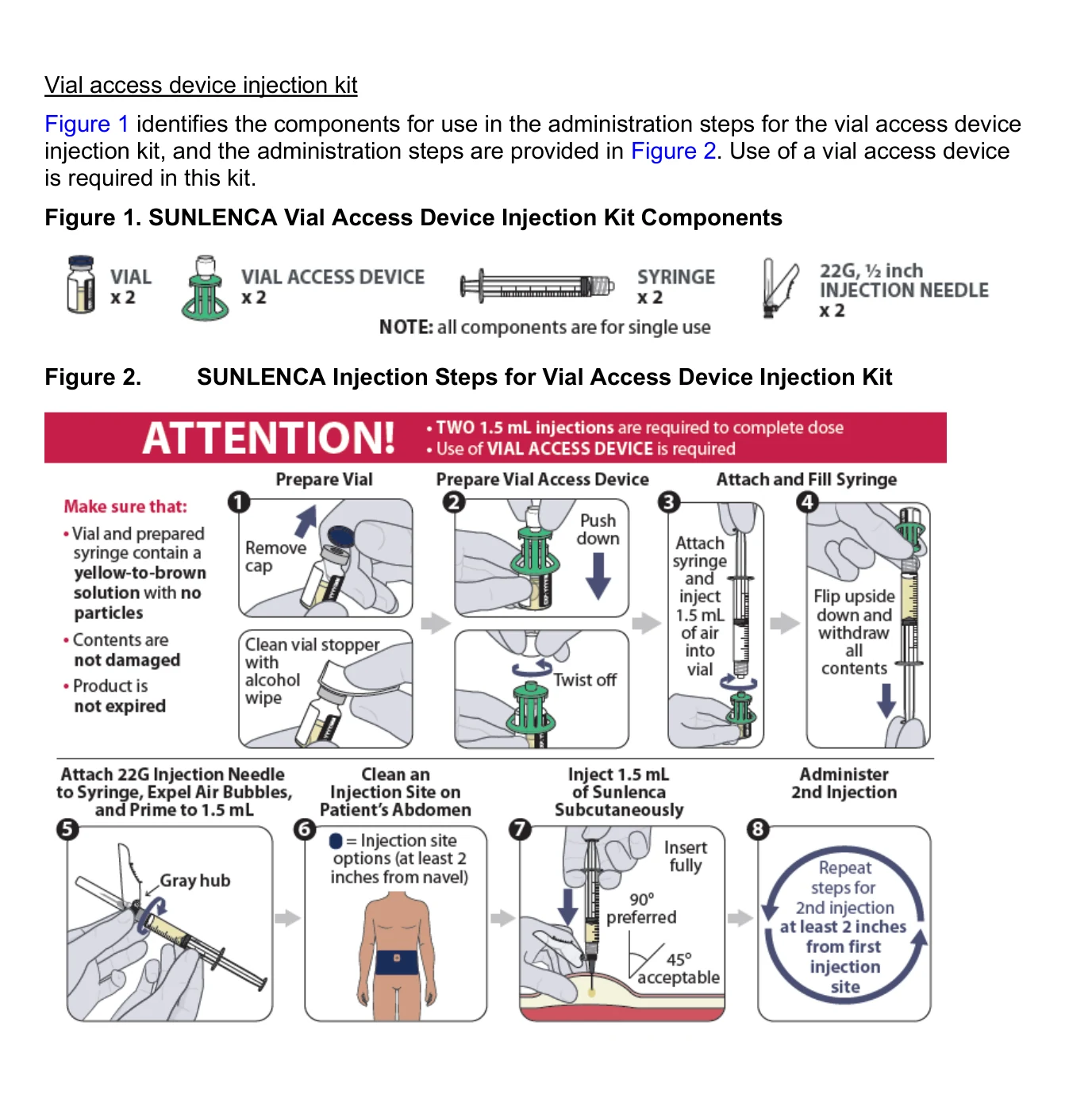
There are two available injection kits, which differ only in how SUNLENCA injection is prepared (the components and associated method for withdrawal of the solution from the vials). Refer to the figures below for the relevant injection kit.
The injection kit components are for single use only. Two 1.5 mL injections are required for a complete dose.
Vial access device injection kit
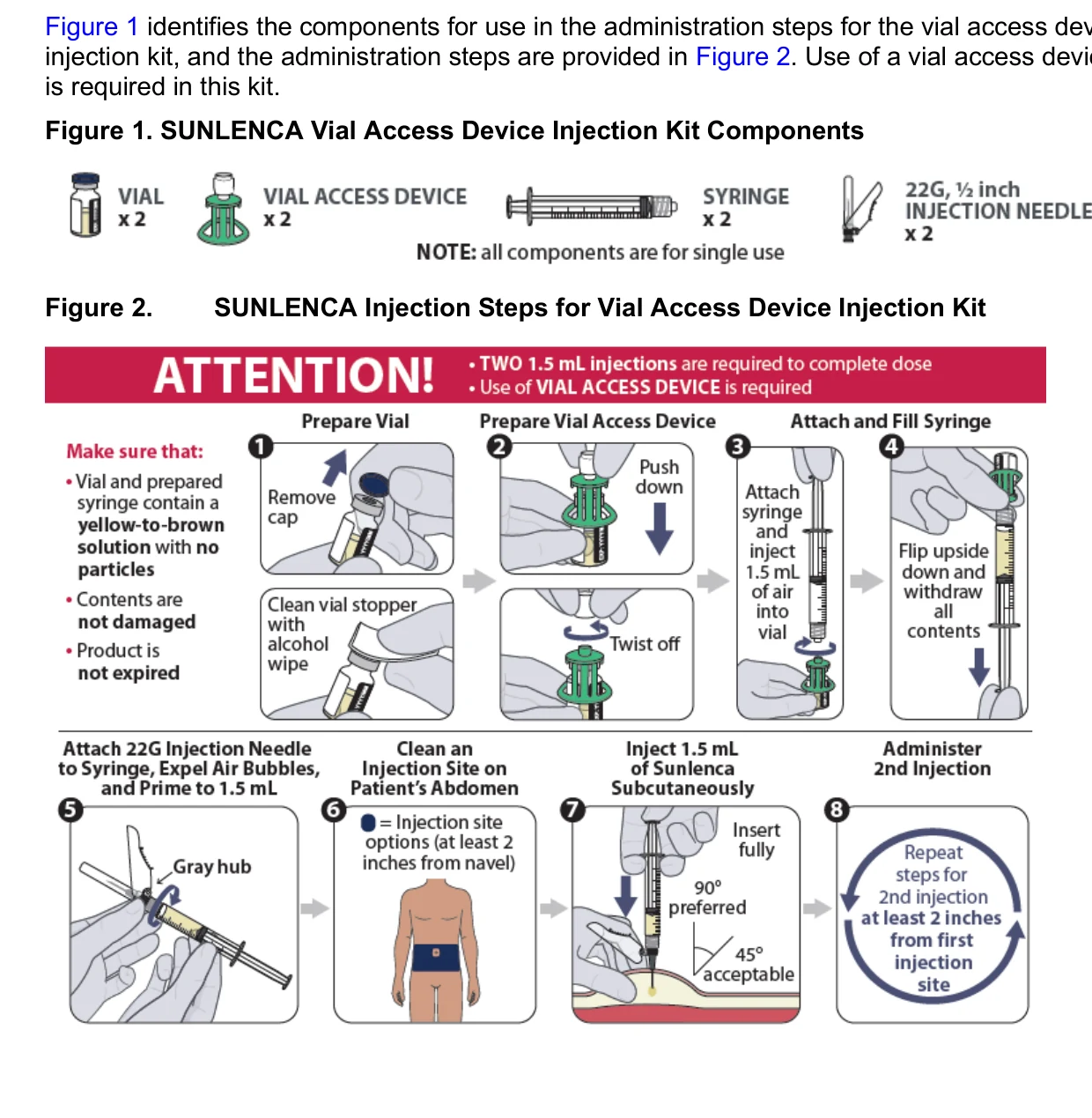
Figure 1 identifies the components for use in the administration steps for the vial access device injection kit, and the administration steps are provided in Figure 2. Use of a vial access device is required in this kit.
Figure 1. SUNLENCA Vial Access Device Injection Kit Components
Figure 2. SUNLENCA Injection Steps for Vial Access Device Injection Kit
Withdrawal safety needle injection kit
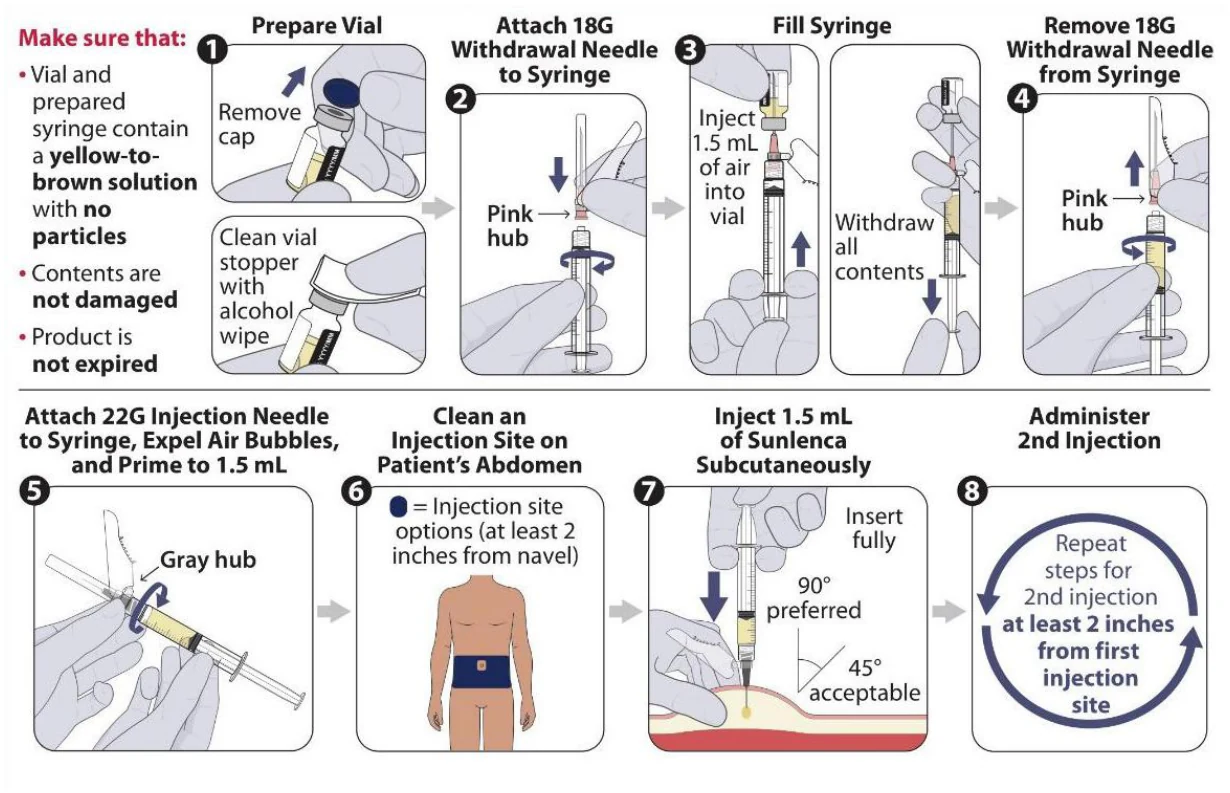
Figure 3 identifies the components for use in the administration steps for the withdrawal safety needle injection kit, and the administration steps are provided in Figure 4. The 18-gauge needle is for withdrawal only in this kit.
Figure 3. SUNLENCA Withdrawal Safety Needle Injection Kit Components

Figure 4. SUNLENCA Injection Steps for Withdrawal Safety Needle Injection Kit
4.5 Missed Dose
During the maintenance period, if more than 28 weeks (i.e., 26 weeks + 2 weeks window) have elapsed since the last injection and if clinically appropriate to continue SUNLENCA treatment, restart the initiation dosage regimen from Day 1 (see Table 1).
If a patient misses the first oral dose on the scheduled date (i.e., Day 1), the entire dosing regimen shifts by the number of days delayed. Recommendations for missed Day 2 and Day 8 oral tablet doses are provided in Table 2.
Table 2. Recommendations for Missed Day 2 and Day 8 Oral Doses
| Days Elapsed Since Missed Dose | Recommendations | |||
|---|---|---|---|---|
| If the Day 2 (600 mg) oral dose is missed by: | ||||
| less than 6 days | Take 600 mg as soon as possible, and 300 mg on Day 8. | |||
| 6 days or more | Take 600 mg as soon as possible, and 300 mg on Day 15. | |||
| If the Day 8 (300 mg) oral dose is missed by: | ||||
| less than 6 days | Take 300 mg soon as possible. | |||
| 6 days or more | Take 300 mg on Day 15. | |||
Regardless of when the Day 2 or Day 8 oral dose is being taken, subcutaneous injection should be administered on Day 15 as described in Table 1.
5 Overdosage
If overdose occurs, the patient must be monitored for evidence of toxicity. Treatment of overdose with SUNLENCA consists of general supportive measures including monitoring of vital signs as well as observation of the clinical status of the patient. As lenacapavir is highly protein bound, it is unlikely to be significantly removed by dialysis.
| For the most recent information in the management of a suspected drug overdose, contact your regional poison control centre or Health Canada's toll-free number, 1-844 POISON-X (1-844-764-7669). |
|---|
6 Dosage Forms, Strengths, Composition and Packaging
Table 3. Dosage Forms, Strengths, Composition and Packaging
SUNLENCA injection is a sterile, preservative-free, clear, yellow to brown solution with no visible particles.
SUNLENCA injection is packaged in one of two different injection kits containing the following:
| Route of Administration | Dosage Form / Strength/Composition | Non-medicinal Ingredients |
| Subcutaneous Injection | Each single-dose vial contains 463.5 mg/1.5 mL (309 mg/mL) of lenacapavir (as lenacapavir sodium). | Polyethylene Glycol 300, Water for Injection |
| Oral | Each tablet contains 300 mg of lenacapavir (as lenacapavir sodium). | Copovidone, Croscarmellose Sodium, Iron Oxide Black, Iron Oxide Red, Iron Oxide Yellow, Magnesium Stearate, Mannitol, Microcrystalline Cellulose, Poloxamer 407, Polyethylene Glycol, Polyvinyl Alcohol, Talc, Titanium Dioxide. |
Vial access device injection kit:
- 2 single-use clear glass vials of SUNLENCA, each containing sufficient volume to allow withdrawal of 1.5 mL/463.5 mg (309 mg/mL) of lenacapavir. Vials are sealed with an elastomeric closure and aluminum overseal with flip-off cap;
- 2 vial access devices, 2 disposable syringes, and 2 injection safety needles for subcutaneous injection (22-gauge, ½ inch).
Withdrawal safety needle injection kit:
- 2 single-use clear glass vials of SUNLENCA, each containing sufficient volume to allow withdrawal of 1.5 mL/463.5 mg (309 mg/mL) of lenacapavir. Vials are sealed with an elastomeric closure and aluminum overseal with flip-off cap;
- 2 disposable syringes, 2 withdrawal safety needles (18-gauge, 1½ inch]), and 2 injection safety needles for subcutaneous injection (22-gauge, ½ inch).
SUNLENCA tablets are beige, capsule-shaped, film-coated tablets, debossed with ‘GSI’ on one side of the tablet and ‘62L’ on the other side of the tablet.
SUNLENCA tablets are packaged in a blister pack containing:
- 5 tablets of SUNLENCA, each containing 300 mg of lenacapavir, in a clear blister film sealed to a foil lidding material. The blister card, which is fitted between child-resistant sealed paperboard cards, is packaged with silica gel desiccant in a sealed flexible laminated pouch.
7 Warnings and Precautions
General
Patients with low CD4 count receiving SUNLENCA or any other antiretroviral therapy may still develop opportunistic infections and other complications of HIV infection. Therefore, patients should remain under close clinical observation by a health professional experienced in the treatment of these associated HIV diseases.
Immune
Immune Reconstitution Inflammatory Syndrome
Immune reconstitution syndrome has been reported in patients treated with combination antiretroviral therapy. During the initial phase of combination antiretroviral treatment, patients whose immune system responds may develop an inflammatory response to indolent or residual opportunistic infections [such as Mycobacterium avium infection, cytomegalovirus, Pneumocystis jirovecii pneumonia (PCP), or tuberculosis], which may necessitate further evaluation and treatment.
Autoimmune disorders (such as Graves’ disease, polymyositis, Guillain-Barré syndrome, and autoimmune hepatitis) have also been reported to occur in the setting of immune reconstitution; however, the reported time to onset is more variable, and these events can occur many months after initiation of treatment.
Reproductive Health: Female and Male Potential
Fertility
There are no data on the effects of SUNLENCA on human male or female fertility.
There were no effects on fertility, mating performance or early embryonic development when lenacapavir was administered to rats at systemic exposures (AUC) up to 8 times the exposure to humans at the recommended human dose of lenacapavir.
Risk of Adverse Reactions or Loss of Virologic Response Due to Drug Interactions
The concomitant use of SUNLENCA and certain other drugs may result in known or potentially significant drug interactions, some of which may increase a risk of adverse reactions due to increased lenacapavir exposure or lead to loss of therapeutic effect of SUNLENCA and possible development of resistance due to reduced exposure of lenacapavir. Consider the potential for drug interactions prior to and during therapy with SUNLENCA, review concomitant medications during therapy with SUNLENCA, and monitor for the adverse reactions associated with the concomitant drugs (see 2 Contraindications and 9 Drug Interactions).
Risk of Resistance Due to Treatment Discontinuation
It is important to counsel patients regarding the required 6-monthly injection maintenance dosing schedule because non-adherence to scheduled dosing visits could lead to loss of virologic response and the development of resistance.
If SUNLENCA is discontinued, to minimize the risk of developing viral resistance it is essential to adopt an alternative, fully suppressive antiretroviral regimen where possible, no later than 28 weeks after the final injection of SUNLENCA.
Use of Other Drugs After Discontinuation of SUNLENCA
Due to the long-acting characteristics of lenacapavir, if SUNLENCA is discontinued, residual concentrations of lenacapavir may remain in the systemic circulation of patients for prolonged periods. These concentrations may affect the exposures of other drugs (ie, sensitive CYP3A substrates) that are initiated within 9 months after the last subcutaneous dose of SUNLENCA. These concentrations are not expected to affect the exposures of other antiretroviral agents that are initiated after discontinuation of SUNLENCA (see 9.4 Drug-Drug Interactions).
Skin
Injection Site Reactions with Improper Administration
Improper administration (intradermal injection) has been associated with serious injection site reactions, including necrosis and ulcer. Ensure SUNLENCA is administered subcutaneously (see 4 DOSAGE AND ADMINISTRATION).
7.1 Special Populations
7.1.1 Pregnant Women
There are no adequate and well-controlled studies of SUNLENCA in pregnant women. SUNLENCA should be used during pregnancy only if the potential benefit justifies the potential risk to the fetus.
In rats and rabbits, embryofetal development was not affected at exposures up to 21 and 172 times the human exposure, respectively, at the recommended human dose (RHD). In rats, pre- and postnatal development was not affected at exposures up to 7 times the human exposure at the RHD.
Transfer of lenacapavir from maternal to neonatal rats was observed in a prenatal and postnatal development study, but it is not known whether the transport occurred via the placenta or the milk; therefore, the potential for lenacapavir to pass into the placenta in humans is not known.
Antiretroviral Pregnancy Registry: To monitor maternal-fetal outcomes of pregnant women exposed to ART (antiretroviral therapy), including SUNLENCA, an Antiretroviral Pregnancy Registry has been established. Health professionals are encouraged to register patients:
http://www.apregistry.com
Telephone: (800) 258-4263
Fax: (800) 800-1052
7.1.2 Breast-feeding
After administration to rats during pregnancy, lenacapavir was detected at low levels in the plasma of nursing rat pups (post-natal day 10), without effects on these nursing pups. It is not known if lenacapavir is secreted in human milk.
7.1.3 Pediatrics
Safety and effectiveness of SUNLENCA in pediatric patients less than 18 years of age has not been established.
7.1.4 Geriatrics
Clinical studies of SUNLENCA did not include sufficient numbers of patients aged 65 years and older to determine whether they respond differently from adult patients < 65 years of age.
8 Adverse Reactions
8.1 Adverse Reaction Overview
The following adverse drug reactions are discussed in Warnings and Precautions:
- Immune Reconstitution Inflammatory Syndrome (see 7 Warnings and Precautions)
The overall safety population reflects exposure to SUNLENCA in 229 participants with HIV. The primary safety analysis is based on the pivotal study (GS-US-200-4625 [CAPELLA]; N=72), which was conducted in heavily treatment experienced adult participants with HIV who received SUNLENCA in a Phase 2/3 trial through Week 26 (median duration on study of 32 weeks) and Week 52 (median duration on study of 54 weeks) (see 14 Clinical Trials ). Supportive data was provided in treatment-naïve adult patients with HIV who received SUNLENCA in a Phase 2 trial (GS-US-200-4334 [CALIBRATE]; N=157) through Week 28 (median duration of exposure of 43 weeks) and Week 54 (median duration on study of 66 weeks).
In CAPELLA, a treatment-emergent adverse event (TEAE) was reported in 93% of participants. Excluding injection site reactions (ISR), the most common TEAEs reported in ≥5% of participants were diarrhea, nausea, COVID-19, abdominal distension, constipation, cough, arthralgia, back pain, headache, pyrexia, urinary tract infection, rash, dizziness, fatigue, oral candidiasis and vomiting. The majority of these events were Grade 1 or Grade 2 and resolved without discontinuation or interruption of study medication. Adverse events considered to be related to the study drug by the study investigator occurred in 66.7%, 48 participants.
Overall, 16 participants (22.2%) had Grade 3 or higher AEs. Grade ≥ 3 TEAEs reported in ≥ 2 participants were injection site erythema (5.6%, 4 participants), injection site participants, injection site pain, and injection site swelling (2.8%, 2 participants each). Four participants experienced Grade 3 or higher AEs that were considered related to study drug by the study investigator: rash and abdominal abscess, injection site swelling and injection site erythema, injection site pain, and immune reconstitution inflammatory syndrome (1 participant each). Serious adverse events occurred in 8 participants (11.1%). None were considered related to the study drug. One participants (1.4%) discontinued study drug due to an AE of an ISR beyond Week 52.
8.2 Clinical Trial Adverse Reactions
Clinical trials are conducted under very specific conditions. Therefore, the frequencies of adverse reactions observed in the clinical trials may not reflect frequencies observed in clinical practice and should not be compared to frequencies reported in clinical trials of another drug.
The most common adverse reactions (all Grades) reported in at least 3% of participants in CAPELLA were nausea and injection site reactions. Table 4 displays the frequency of adverse reactions (all Grades) ≥3% in the SUNLENCA group.
Table 4. Adverse Reactions (All Grades) Reported in ≥3%a of Heavily Treatment Experienced Adults with HIV-1 Receiving SUNLENCA in CAPELLA (Week 26 and 52 Analysis)
| Week 26 | Week 52 |
|---|
Adverse Reactions
SUNLENCA + Background Regimen (N=72) | SUNLENCA + Background Regimen (N=72) | |
GASTROINTESTINAL DISORDERS Nausea | 4% | 4% |
GENERAL DISORDERS AND ADMINISTRATION SITE CONDITIONS Injection Site Reactions | 56% | 63%b |
a. Frequencies of adverse reactions are based on all treatment-emergent adverse events attributed to study drug by the investigator, based on all participants (cohorts 1 and 2) in CAPELLA.
b. Includes injection site swelling, erythema, pain, nodule, induration, pruritus, discomfort, mass, extravasation, hematoma, edema and ulcer. Median (Q1, Q3) duration of injection site reactions (ISR) was 8 (3, 67) days. Of the 45 participants who experienced a study drug related ISR, majority [67% (30/45)] had Grade 1 ISRs.
Most (97%) of the adverse events associated with SUNLENCA were mild or moderate in severity. No participants who received SUNLENCA in CAPELLA experienced serious adverse events related to study drug.
8.3 Less Common Clinical Trial Adverse Reactions
Adverse reactions occurring in 2 or more participants administered SUNLENCA beyond those included in Table 4 are presented below.
Gastrointestinal disorders: diarrhea, vomiting
Musculoskeletal and connective tissue disorders: myalgia
Nervous system disorders: headache, somnolence
Skin and subcutaneous tissue disorders: rash
8.4 Abnormal Laboratory Findings: Hematologic, Clinical Chemistry and Other Quantitative Data
Clinical Trial Findings
The frequency of selected laboratory abnormalities (Grades 3 to 4) occurring in at least 3% of participants in CAPELLA are presented in Table 5. A causal association between SUNLENCA and these laboratory abnormalities has not been established.
Table 5. Selected Laboratory Abnormalities (Grades 3 to 4) Reported in ≥3% of Participants Receiving SUNLENCA in CAPELLA (Week 26 and Week 52 Analysis)
| Week 26 | Week 52 | |
|---|---|---|
| Laboratory Parameter Abnormality | SUNLENCA + Background Regimen (N=72)a | SUNLENCA + Background Regimen (N=72)a |
| Creatinine (>1.8 x ULN or ≥1.5 x baseline) | 8% | 13% |
| Hyperglycemia (fasting) (>13.9 mmol/L) | 5% | 6% |
| Glycosuria (>2+) | 6% | 6% |
ULN = upper limit of normal
a. Frequencies are based on treatment-emergent laboratory abnormalities in all participants (cohorts 1 and 2) in CAPELLA. Percentages were calculated based on the number of participants with post-baseline toxicity grades for each laboratory parameter (n=72 for all parameters except hyperglycemia fasting n=55).
9 Drug Interactions
9.2 Drug Interactions Overview
Concomitant administration of SUNLENCA is contraindicated in combination with strong cytochrome P450 (CYP3A) inducers as significant decreases in lenacapavir plasma concentrations may occur which may result in loss of virologic response (see 2 Contraindications).
Drugs that are strong inhibitors of CYP3A, P-gp, and UGT1A1 together (i.e., all 3 pathways), such as atazanavir/cobicistat, may significantly increase plasma concentrations of SUNLENCA.
Lenacapavir is a moderate inhibitor of CYP3A and a P-gp inhibitor. Caution is advised if SUNLENCA is co-administered with a sensitive CYP3A and/or P-gp substrate with a narrow therapeutic index. Lenacapavir is not a clinically meaningful inhibitor BCRP and does not inhibit
OATP.
Consider the potential for drug interactions prior to and during therapy with SUNLENCA, review concomitant medications during therapy with SUNLENCA, and monitor for the adverse reactions associated with concomitant drugs (see 7 Warnings and Precautions).
9.4 Drug-Drug Interactions
Drug interaction information for SUNLENCA with potential concomitant drugs is summarized in Table 6. The drug interactions described are based on the results of the studies conducted with SUNLENCA or are potential drug interactions that may occur with SUNLENCA.
Table 6. Established and Other Potentially Significanta Drug Interactions
| Proper/Common name | Effect on Concentrationb | Clinical comment |
| Proper/Common name | Effect on Concentrationb | Clinical comment |
| Proper/Common name | Effect on Concentrationb | Clinical comment |
Antiarrhythmics digoxin | ↑ digoxin | Caution is warranted and serum digoxin concentrations should be monitored. The dose of digoxin may need to be reduced when co-administered with SUNLENCA. |
Anticoagulants Direct Oral Anticoagulants (DOACs) rivaroxaban betrixaban dabigatran edoxaban | ↑ DOAC | Due to potential bleeding risk, dose adjustment of DOAC may be required. Monitor DOAC levels when co-administered with SUNLENCA. Refer to the DOAC Product Monograph(s) for concomitant administration with moderate CYP3A inhibitors and/or P-gp inhibitors. |
Anticonvulsants carbamazepine oxcarbazepine phenobarbital phenytoin | ↓ lenacapavir | Concomitant administration of carbamazepine, oxcarbazepine, phenobarbital, or phenytoin may decrease lenacapavir plasma concentrations, which may result in loss of therapeutic effect and development of resistance. Concomitant administration of SUNLENCA with carbamazepine and phenytoin is contraindicated. Concomitant administration of SUNLENCA with oxcarbazepine and phenobarbital is not recommended. Alternative anticonvulsants should be considered. |
Antiretroviral Agents atazanavir/cobicistatc efavirenzc nevirapine tipranavir/ritonavir | ↑ lenacapavir (atazanavir/cobicistat) ↓ lenacapavir (efavirenz, nevirapine, tipranavir/ritonavir) | Concomitant administration of atazanavir/cobicistat significantly increases lenacapavir plasma concentrations. Concomitant administration of efavirenz, nevirapine, or tipranavir/ritonavir may decrease lenacapavir plasma concentrations, which may result in loss of therapeutic effect and development of resistance. Concomitant administration with atazanavir/cobicistat or with efavirenz, nevirapine, tipranavir/ritonavir is not recommended. |
Antimycobacterials rifabutin rifampinc rifapentine | ↓ lenacapavir | Concomitant administration of rifabutin, rifampin and rifapentine may decrease lenacapavir plasma concentrations, which may result in loss of therapeutic effect and development of resistance. Concomitant administration of SUNLENCA with rifampin or rifapentine is contraindicated. Concomitant administration of SUNLENCA with rifabutin is not recommended. |
Corticosteroids (systemic) cortisone/hydrocortisone dexamethasone | ↑ corticosteroids (systemic) ↓ lenacapavir (dexamethasone) | Concomitant administration of corticosteroids whose exposures are significantly increased by CYP3A inhibitors can increase the risk for Cushing's syndrome and adrenal suppression. Initiate with the lowest starting dose and titrate carefully while monitoring for safety. Concomitant administration of systemic dexamethasone may decrease lenacapavir plasma concentrations, which may result in loss of therapeutic effect and development of resistance. Caution is warranted when systemic dexamethasone is concomitantly administered with SUNLENCA, particularly for long-term use. Alternative corticosteroids should be considered. |
Ergot derivatives dihydroergotamine ergotamine methylergonovine | ↑ dihydroergotamine ↑ ergotamine ↑ methylergonovine | Concomitant administration of SUNLENCA with dihydroergotamine, ergotamine or methylergonovine is not recommended. |
HMG-CoA Reductase Inhibitors lovastatin simvastatin | ↑ lovastatin ↑ simvastatin | Initiate lovastatin and simvastatin with the lowest starting dose and titrate carefully while monitoring for safety (e.g., myopathy). |
Phosphodiesterase-5 (PDE-5) sildenafil tadalafil vardenafil | ↑ PDE5 inhibitors | Concomitant administration of SUNLENCA with tadalafil for the treatment of pulmonary arterial hypertension is not recommended. For the treatment of erectile dysfunction, it is recommended that a starting dose of sildenafil no more than 25 mg; vardenafil no more than 5 mg in 24 hours; or tadalafil no more than 10 mg in 72 hours (for use as needed) or no more than 2.5 mg (for once daily use) be concomitantly administered with SUNLENCA. |
Sedatives/Hypnotics midazolam (oral)c triazolam | ↑ midazolam (oral) ↑ triazolam | Caution is warranted when midazolam or triazolam is concomitantly administered with SUNLENCA. |
a. This table is not all inclusive.
b. ↑ = increase, ↓ = decrease
c. Indicates that a drug-drug interaction study was conducted.
Drug Interaction Studies
The effects of coadministered drugs on the exposure of lenacapavir are shown in
Table 7. The effects of lenacapavir on the exposure of coadministered drugs are shown in Table 8.
Table 7. Drug Interactions: Changes in Pharmacokinetic Parameters for Lenacapavira in the Presence of the Co-administered Drugb
| Coadministered Drug | Dose of Coadministered Drug (mg) | N | Mean Ratio of Lenacapavir Pharmacokinetic Parameters (90% CI)c; No effect = 1.00 | |
|---|---|---|---|---|
| Cmax | AUC | |||
| Cobicistatd (fed) | 150 once daily | 29 | 2.10 (1.62, 2.72)e | 2.28 (1.75, 2.96)e |
| Darunavir/cobicistatf (fed) | 800/150 once daily | 29 | 2.30 (1.79, 2.95)e | 1.94 (1.50, 2.52)e |
| Voriconazoleg (fasted) | 400 twice daily, 200 twice dailyh | 25 | 1.09 (0.81, 1.47) | 1.41 (1.10, 1.81) |
| Atazanavir/cobicistati (fed) | 300/150 once daily | 21 | 6.60 (4.99, 8.73) | 4.21 (3.19, 5.57) |
| Rifampinj (fasted) | 600 once daily | 25 | 0.45 (0.34, 0.60) | 0.16 (0.12, 0.20) |
| Efavirenzk (fasted) | 600 once daily | 18 | 0.64 (0.45, 0.92) | 0.44 (0.32, 0.59) |
| Famotidine (2 hours before, fasted) | 40 once daily | 25 | 1.01 (0.75, 1.34) | 1.28 (1.00, 1.63) |
a. Single dose of lenacapavir 300 mg administered orally
b. All interaction studies conducted in healthy volunteers.
c. All No Effect Boundaries are 50% – 200% except where indicated.
d. Evaluated as a strong inhibitor of CYP3A and an inhibitor of P-gp.
e. No Effect Boundary of 70% – 143%
f. Evaluated as a strong inhibitor of CYP3A, and an inhibitor and inducer of P-gp.
g. Evaluated as a strong inhibitor of CYP3A.
h. 400 mg loading dose twice daily for a day, followed by 200 mg maintenance dose twice daily i. Evaluated as a strong inhibitor of CYP3A, and an inhibitor UGT1A1 and P-gp.
j. Evaluated as a strong inducer of CYP3A, and an inducer of P-gp and UGT.
k. Evaluated as a moderate inducer of CYP3A and an inducer of P-gp.
Table 8. Drug Interactions: Changes in Pharmacokinetic Parameters for Co-administered Drugsa in the Presence of Lenacapavirb
| Coadministered Drug | Dose of Coadministered Drug (mg) | N | Mean Ratio of Coadministered Drug Pharmacokinetic Parameters (90% CI)c; No effect = 1.00 | |
|---|---|---|---|---|
| Cmax | AUC | |||
| Tenofovir aladenamided (fed) | 25 single dose | 28 | 1.24 (0.98, 1.58) | 1.32 (1.09, 1.59) |
| Tenofovire | 1.23 (1.05, 1.44) | 1.47 (1.27, 1.71) | ||
| Pitavastatinf (simultaneous administration, fed) | 2 single dose | 30 | 1.00 (0.84, 1.19) | 1.11 (1.00, 1.25) |
| Pitavastatinf (3 days after lenacapavir, fed) | 2 single dose | 28 | 0.85 (0.69, 1.05) | 0.96 (0.87, 1.07) |
| Rosuvastating (fed) | 5 single dose | 30 | 1.57 (1.38, 1.80) | 1.31 (1.19, 1.43) |
| Midazolamh (simultaneous administration, fed) | 2.5 single dose | 28 | 1.94 (1.81, 2.08) | 3.59 (3.30, 3.91) |
| 1-hydroxymidazolami | 0.54 (0.50, 0.59) | 0.76 (0.72, 0.80) | ||
| Midazolamh (1 day after lenacapavir, fed) | 2.5 single dose | 28 | 2.16 (2.02, 2.30) | 4.08 (3.77, 4.41) |
| 1-hydroxymidazolami | 0.52 (0.48, 0.57) | 0.84 (0.80, 0.88) | ||
a. All interaction studies conducted in healthy volunteers.
b. Following 600 mg twice daily for 2 days, single 600 mg doses of lenacapavir were administered with each coadministered drug, resulting in lenacapavir exposures similar to or higher than those at the recommended dosage regimen.
c. All No Effect Boundaries are 70% - 143%.
d. Evaluated as a P-gp substrate
e. Tenofovir alafenamide is converted to tenofovir in vivo.
f. Evaluated as an OATP substrate.
g. Evaluated as a BCRP substrate.
h. Evaluated as a CYP3A substrate
i. Major active metabolite of midazolam.
Drugs without clinically signification interactions with SUNLENCA
Based on drug interaction studies conducted with SUNLENCA or potential drug interactions that may occur with SUNLENCA, no clinically significant drug interactions have been observed or are expected with: atorvastatin, darunavir/cobicistat, cobicistat, famotidine, gender-affirming hormones, itraconazole, ketoconazole, oral contraceptives, pitavastatin, ritonavir, rosuvastatin, tenofovir alafenamide, and voriconazole.
9.5 Drug-Food Interactions
SUNLENCA tablets can be administered without regard to food (see 10 Clinical Pharmacology, 10.3 Pharmacokinetics).
9.6 Drug-Herb Interactions
Concomitant administration of St. John’s wort may decrease lenacapavir plasma concentrations, which may result in loss of therapeutic effect and development of resistance. Concomitant administration of SUNLENCA with St. John’s wort is contraindicated.
9.7 Drug-Laboratory Test Interactions
Interactions with laboratory tests have not been established.
10 Clinical Pharmacology
10.1 Mechanism of Action
Lenacapavir is a multistage, selective inhibitor of HIV-1 capsid function that directly binds to the interface between capsid protein (CA) subunits. Lenacapavir inhibits HIV-1 replication by interfering with multiple, essential steps of the viral lifecycle. Lenacapavir inhibits HIV-1 capsid function by directly binding to the interface between capsid protein (CA) subunits and interfering with multiple stages of the viral lifecycle, including:
- 1. capsid-mediated nuclear uptake of HIV-1 proviral DNA (by blocking nuclear import proteins binding to capsid),
- 2. virus assembly and release (by binding to and destabilizing capsid precursor proteins [interfering with Gag/Gag-Pol functioning, reducing production of CA subunits]), and
- 3. capsid core formation (by disrupting the rate of capsid subunit association, leading to dysfunctional malformed capsids).
10.2 Pharmacodynamics
Effects on Electrocardiogram
In a parallel-design thorough QT/QTc study, lenacapavir had no clinically relevant effect on the QTcF interval. At supratherapeutic exposures of lenacapavir (9-fold higher than the therapeutic exposure of SUNLENCA), the predicted mean (upper 90% confidence interval) increase in QTcF interval was 2.6 (4.8) msec, and there was no association (p=0.36) between observed lenacapavir plasma concentrations and change in QTcF.
10.3 Pharmacokinetics
The pharmacokinetic (PK) properties of SUNLENCA are provided in Table 9. The simulated population pharmacokinetic parameters of SUNLENCA after oral and subcutaneous administration in heavily treatment experienced participants with HIV-1 are provided in Table 10.
Table 9. Pharmacokinetic Properties of Lenacapavir
| Oral | Subcutaneous | ||||||||||||||
|---|---|---|---|---|---|---|---|---|---|---|---|---|---|---|---|
| Absorption | |||||||||||||||
| % Absolute bioavailability | 6 to 10 | 100a | |||||||||||||
| Tmaxb | 4 hours | 77 to 84 daysc | |||||||||||||
| Effect of low-fat meal (relative to fasting)d | AUCinf ratio | 98.6 (58.2,167.2) | - | ||||||||||||
| Cmax ratio | 115.8 (55.4, 242.1) | - | |||||||||||||
| Effect of high-fat meal (relative to fasting)e | AUCinf ratio | 115.2 (72.0, 184.5) | - | ||||||||||||
| Cmax ratio | 145.2 (77.9, 270.5) | - | |||||||||||||
| Distribution | |||||||||||||||
| % bound to human plasma proteins | >98.5 | ||||||||||||||
| Blood-to-plasma ratio | 0.5 to 0.7f | ||||||||||||||
| Steady State Volume of Distribution (L) | 976 | ||||||||||||||
| Elimination | |||||||||||||||
| Clearance (mean apparent clearance, L/h) | 3.62 | ||||||||||||||
| t1/2 | 10 to 12 days | 8 to 12 weeks | |||||||||||||
| Metabolism | |||||||||||||||
| Metabolic pathway(s) | CYP3A (minor), UGT1A1 (minor) | ||||||||||||||
| Excretion | |||||||||||||||
| Routes of elimination | Excretion into bile, Intestinal secretion by Pgp, Metabolismg | ||||||||||||||
| % of dose excreted in urineh | <1 | ||||||||||||||
| % of dose excreted in fecesh | 76 | ||||||||||||||
| % of dose of unchanged drugh | in plasma | 69 | |||||||||||||
| in feces | 33 | ||||||||||||||
a. Values reflect absolute bioavailability following subcutaneous administration of the 927 mg dose.
b. Values reflect administration of lenacapavir with or without food.
c. Due to slow release from the site of injection, the absorption profile of subcutaneously administered lenacapavir is complex.
d. Values refer to geometric mean ratio [low-fat meal/ fasting] of PK parameters and (90% confidence interval). Low fat meal is approximately 400 kcal, 25% fat.
e. Values refer to geometric mean ratio [high-fat meal/ fasting] of PK parameters and (90% confidence interval). High fat meal is approximately 1000 kcal, 50% fat.
f. Values reflect the blood-to-plasma ratio of lenacapavir following a singly dose intraveneous administration of [14C] lenacapavir through 336 hours postdose.
g. Metabolized via oxidation, N-deaklylation, hydrogenation, amide hydrolysis, glucuronidation, hexose conjugation, pentose conjugation, and gluthathione conjugation; primarily via CYP3A and UGT1A1 and no single circulating metabolite accounted for >10% of plasma drug-related exposure.
h. Dosing in mass balance studies: single dose intravenous administration of [14C] lenacapavir to subjects without HIV-1 infection.
Table 10. Pharmacokinetic Parameters of Lenacapavir Following Oral and Subcutaneous Administration
Parameter Mean (%CV)a | Days 1 and 2: 600 mg (oral), Day 8: 300 mg (oral), Day 15: 927 mg (SC) | ||||||||
|---|---|---|---|---|---|---|---|---|---|
| Days 1-15 | Day 15 – end of Month 6 | Steady State | |||||||
Cmax (ng/mL) | 69.6 (56) | 87 (71.8) | 97.2 (70.3) | ||||||
AUCtau (h●ng/mL) | 15,600 (52.9) | 250,000 (66.6) | 3,000,000 (68.5) | ||||||
Ctrough (ng/mL) | 35.9 (56.8) | 32.7 (88) | 36.2 (90.6) | ||||||
CV = Coefficient of Variation; SC = subcutaneous
a. Simulated exposures utilizing population PK analysis.
Lenacapavir exposures (AUCtau, Cmax and Ctrough) were 28.5% to 84.1% higher in HIV-1 infected, heavily treatment experienced participants as compared to participants without HIV-1 infection based on population PK analysis.
Absorption
Oral Administration
Lenacapavir is rapidly absorbed following oral administration with peak plasma concentrations occurring 4 hours after administration of SUNLENCA. Absolute bioavailability following oral administration of lenacapavir is low (approximately 6–10%). Lenacapavir is a substrate of P-gp.
Lenacapavir AUC, Cmax and Tmax were comparable following administration of a low fat (~400 kcal, 25% fat) or high fat (~1000 kcal, 50% fat) meal relative to fasted conditions. Oral lenacapavir can be administered without regard to food.
Subcutaneous Administration
Lenacapavir is completely absorbed following subcutaneous administration. Due to its long-acting properties, the absorption profile of subcutaneously administered lenacapavir is complex with peak plasma concentrations occurring 77 to 84 days postdose.
Distribution:
The steady state volume of distribution was 976 liters in heavily treatment experienced participants with HIV-1 infection based on population pharmacokinetic analysis.
Lenacapavir is highly bound to plasma proteins (> 98.5%).
Metabolism:
Following a single intravenous dose of radiolabeled-lenacapavir to healthy subjects, 76% of the total radioactivity was recovered from feces and < 1% from urine. Unchanged lenacapavir was the predominant moiety in plasma (69%) and feces (33%). Metabolism played a lesser role in lenacapavir elimination. Lenacapavir was metabolized via oxidation, N-dealkylation, hydrogenation, amide hydrolysis, glucuronidation, hexose conjugation, pentose conjugation, and glutathione conjugation; primarily via CYP3A and UGT1A1. No single circulating metabolite accounted for > 10% of plasma drug-related exposure.
Elimination
The median half-life following oral and subcutaneous administration ranged from 10 to 12 days, and 8 to 12 weeks, respectively. Lenacapavir clearance was 3.62 L/h in heavily treatment experienced participants with HIV-1 infection based on population pharmacokinetic analysis.
Linearity/Non-Linearity
The single dose pharmacokinetics of lenacapavir after oral administration are non-linear and less than dose proportional over the dose range of 50 to 1800 mg.
The single dose pharmacokinetics of lenacapavir after subcutaneous injection (309 mg/mL) are dose proportional over the dose range of 309 to 927 mg.
Special Populations and Conditions
- Age, Gender and Race: Population PK analyses using data from adult trials did not identify any clinically relevant differences in the exposure of lenacapavir due to age, gender, race/ethnicity or weight, however the number of participants ≥ 65 years old was limited (n=5).
- Hepatic Insufficiency: The pharmacokinetics of a single 300 mg oral dose of lenacapavir were evaluated in a dedicated study in subjects with moderate hepatic impairment (Child-Pugh Class B). Total and unbound mean lenacapavir exposures were 1.47- to 2.84-fold and 2.61- to 5.03-fold higher for AUCinf and Cmax, respectively in participants with moderate hepatic impairment (Child-Pugh B) compared to subjects with normal hepatic function. The observed increased lenacapavir exposures were not considered clinically relevant. The pharmacokinetics of lenacapavir have not been studied in participants with severe hepatic impairment (Child-Pugh C).
- Renal Insufficiency: The pharmacokinetics of a single 300 mg oral dose of lenacapavir were evaluated in a dedicated study in subjects with severe renal impairment (estimated creatinine clearance ≥ 15 and < 30 mL/minute). Lenacapavir exposures were increased (1.84-fold and 2.62-fold for AUCinf and Cmax, respectively) in subjects with severe renal impairment compared to subjects with normal renal function; however, the increase was not considered clinically relevant. The pharmacokinetics of lenacapavir have not been studied in participants with end-stage renal disease, including those on dialysis.
- Hepatitis B or Hepatitis C Co-infection: SUNLENCA has not been studied in patients with active hepatitis C or untreated hepatitis B co-infection. There are limited data for the use of SUNLENCA in participants with hepatitis B and/or hepatitis C co-infection.
11 Storage, Stability and Disposal
SUNLENCA injection: Store in the original package. Store below 30 °C. Keep the vials in the original carton until just prior to preparation of the injections in order to protect them from light. Once the solution has been drawn into the syringes, the injections should be administered as soon as possible.
SUNLENCA tablets: Store in the original package. Store below 30 °C. Protect from light.
Part 2 : Scientific Information
13 Pharmaceutical Information
Drug Substance
Common Name: lenacapavir sodium (USAN)
Chemical name: Sodium (4-chloro-7-(2-((S)-1-(2-((3bS,4aR)-5,5-difluoro-3-(trifluoromethyl)-3b,4,4a,5-tetrahydro-1H-cyclopropa[3,4]cyclopenta[1,2-c]pyrazol-1-yl)acetamido)-2-(3,5-difluorophenyl)ethyl)-6-(3-methyl-3-(methylsulfonyl)but-1-yn-1-yl)pyridin-3-yl)-1-(2,2,2-trifluoroethyl)-1H-indazol-3-yl)(methylsulfonyl)amide.
Empirical formula: C39H31ClF10N7NaO5S2
C39H32CIF10N7O5S2 (lenacapavir free acid)
Molecular Weight: 990.3
968.3 (lenacapavir free acid)
Structural formula:
Physicochemical properties:
Description: Lenacapavir sodium is a light yellow to yellow solid.
Solubility: The solubility is 0.11 μg/mL and 0.31 μg/mL in 20°C water at pH 1.8 and pH 6.9, respectively. The partition coefficient (log P) is 5.1 and the pKa is 6.8.
14 Clinical Trials
14.1 Clinical Trials by Indication
HIV-1 Infection in Adults with Multi-Class Resistance HIV-1 Infection
The efficacy and safety of SUNLENCA in people living with HIV-1 infection who are heavily treatment experienced, and with multidrug resistant HIV-1, GS-US-200-4625 (CAPELLA), is based on a partially randomized, double blind, short-term functional monotherapy phase with a placebo comparator, followed by a single-arm, open label assessment of safety and efficacy at 26 and 52 weeks.
CAPELLA was conducted in 72 heavily treatment-experienced adults with multiclass resistant HIV-1. Participants were required to be failing their current regimen, have documented resistance to at least two antiretroviral medications from each of at least 3 of the 4 main classes of antiretroviral medications (nucleoside reverse transcriptase inhibitors [NRTI], non-nucleoside reverse transcriptase inhibitors [NNRTI], protease inhibitors [PI] and integrase strand-transfer inhibitors [INSTI]), and ≤ 2 fully active antiretroviral medications from the 4 classes of antiretroviral medications remaining at baseline due to resistance, intolerability, drug access, contraindication, or other safety concerns.
The trial was composed of two cohorts. Participants were enrolled into the randomized cohort (Cohort 1) if they had a < 0.5 log10 HIV-1 RNA decline at the cohort selection visit compared to the screening visit. Participants were enrolled into the non-randomized cohort (Cohort 2) if they had a ≥ 0.5 log10 HIV-1 RNA decline at the cohort selection visit compared to the screening visit or after Cohort 1 reached its planned sample size.
Table 11. CAPELLA Trial Design
| Trial Design | Dosage and Route of Administration | Study Arms (n) |
|---|---|---|
| Partially randomized, placebo-controlled, double-blind, multicenter study | 14-day functional monotherapy period (Day 1 to 14): SUNLENCA + failing regimen Or Placebo + failing regimen Day 15 onwards: Change to SUNLENCA + OBR Or Initiate SUNLENCA + OBR | Cohort 1 [randomized cohort] (N=36) SUNLENCA (n=24) Placebo (n=12) |
| SUNLENCA + OBR | Cohort 2 [non-randomized cohort] (N=36) |
OBR: optimized background regimen
Cohort 1 (N=36, randomized): In the 14-day functional monotherapy period, participants in cohort 1 were randomized in a 2:1 ratio in a blinded fashion, to receive either SUNLENCA or placebo, while continuing their failing regimen. This period was to establish the virologic activity of SUNLENCA. After the functional monotherapy period, participants who had received SUNLENCA continued on SUNLENCA along with an optimized background regimen (OBR); participants who had received placebo during this period initiated SUNLENCA along with an OBR. There was no comparator after the functional monotherapy period.
Cohort 2 (N=36, non-randomized): Participants in cohort 2 initiated SUNLENCA and an OBR on Day 1.
The demographics and baseline characteristics of participants in CAPELLA are provided in Table 12.
Table 12. Summary of Demographics and Baseline Characteristics in CAPELLA
| Cohort 1 | Cohort 2 (N = 36) | Total (N = 72) | |||||||||||||||||||||
|---|---|---|---|---|---|---|---|---|---|---|---|---|---|---|---|---|---|---|---|---|---|---|---|
| Cohort 1 | Cohort 2 (N = 36) | Total (N = 72) | |||||||||||||||||||||
SUNLENCA (N = 24) | Placebo (N = 12) | Total (N = 36) | |||||||||||||||||||||
SUNLENCA (N = 24) | Placebo (N = 12) | Total (N = 36) | |||||||||||||||||||||
| Demographic Characteristics | |||||||||||||||||||||||
| Age (years) | |||||||||||||||||||||||
| Mean (SD) | 54 (11.3) | 49 (10.9) | 52 (11.2) | 48 (13.7) | 50 (12.6) | ||||||||||||||||||
| Sex | |||||||||||||||||||||||
| Male | 17 (70.8%) | 9 (75.0%) | 26 (72.2%) | 28 (77.8%) | 54 (75.0%) | ||||||||||||||||||
| Female | 7 (29.2%) | 3 (25.0%) | 10 (27.8%) | 8 (22.2%) | 18 (25.0%) | ||||||||||||||||||
| Race | |||||||||||||||||||||||
| White | 12 (50.0%) | 4 (36.4%) | 16 (45.7%) | 13 (36.1%) | 29 (40.8%) | ||||||||||||||||||
| 10 (41.7%) | 6 (54.5%) | 16 (45.7%) | 11 (30.6%) | 27 (38.0%) | |||||||||||||||||||
| Asian | 2 (8.3%) | 1 (9.1%) | 3 (8.6%) | 12 (33.3%) | 15 (21.2%) | ||||||||||||||||||
| Ethnicity | |||||||||||||||||||||||
| Hispanic or Latino | 6 (25.0%) | 4 (36.4%) | 10 (28.6%) | 5 (13.9%) | 15 (21.2%) | ||||||||||||||||||
| Not Hispanic or Latino | 18 (75.0%) | 7 (63.3%) | 25 (71.4%) | 31 (86.1%) | 56 (78.9%) | ||||||||||||||||||
| Body Mass Index (kg/m2) | |||||||||||||||||||||||
| Mean (SD) | 26.0 (5.38) | 24.8 (4.58) | 25.6 (5.09) | 26.5 (5.76) | 26.1 (5.42) | ||||||||||||||||||
| Median | 24.7 | 24.3 | 24.7 | 25.6 | 25.0 | ||||||||||||||||||
| Baseline Disease Characteristics | |||||||||||||||||||||||
| HIV-1 RNA (log10 copies/mL) | |||||||||||||||||||||||
| Mean (SD) | 3.97 (0.922) | 4.87 (0.393) | 4.27 (0.890) | 4.06 (1.164) | 4.17 (1.034) | ||||||||||||||||||
| Median | 4.19 | 4.93 | 4.50 | 4.49 | 4.49 | ||||||||||||||||||
| HIV-1 RNA Categories (copies/mL) | |||||||||||||||||||||||
| ≤ 100,000 | 23 (95.8%) | 6 (50.0%) | 29 (80.6%) | 29 (80.6%) | 58 (80.6%) | ||||||||||||||||||
| > 100,000 | 1 (4.2%) | 6 (50.0%) | 7 (19.4%) | 7 (19.4%) | 14 (19.4%) | ||||||||||||||||||
| CD4 Cell Count (cells/µL) | |||||||||||||||||||||||
| Mean (SD) | 199 (166.1) | 85 (62.9) | 161 (149.5) | 258 (273.4) | 210 (224.2) | ||||||||||||||||||
| CD4 Cell Count Categories (cells/µL) | |||||||||||||||||||||||
| < 50 | 3 (12.5%) | 4 (33.3%) | 7 (19.4%) | 9 (25.0%) | 16 (22.2%) | ||||||||||||||||||
| ≥ 50 to < 200 | 13 (54.2%) | 7 (58.3%) | 20 (55.6%) | 10 (27.8%) | 30 (41.7%) | ||||||||||||||||||
| ≥ 200 to < 350 | 6 (25.0%) | 1 (8.3%) | 7 (19.4%) | 8 (22.2%) | 15 (20.8%) | ||||||||||||||||||
| ≥ 350 | 2 (8.4%) | 0 (0.0%) | 2 (5.6%) | 9 (25%) | 11 (15.2%) | ||||||||||||||||||
| CD4 Percentage (%) | |||||||||||||||||||||||
| Mean (SD) | 10.8 (7.77) | 5.9 (4.12) | 9.2 (7.11) | 11.5 (8.62) | 10.3 (7.93) | ||||||||||||||||||
| Number of Prior ARV Medications | |||||||||||||||||||||||
| Mean (SD) | 11 (6.2) | 10 (6.0) | 11 (6.1) | 13 (5.6) | 12 (5.9) | ||||||||||||||||||
| Known Resistance to ≥ 2 Drugs in Class | |||||||||||||||||||||||
| NRTI | 23 (95.8%) | 12 (100.0%) | 35 (97.2%) | 36 (100.0%) | 71 (98.6%) | ||||||||||||||||||
| NNRTI | 22 (91.7%) | 12 (100.0%) | 34 (94.4%) | 36 (100.0%) | 70 (97.2%) | ||||||||||||||||||
| PI | 20 (83.3%) | 8 (66.7%) | 28 (77.8%) | 30 (83.3%) | 58 (80.6%) | ||||||||||||||||||
| INSTI | 20 (83.3%) | 7 (58.3%) | 27 (75.0%) | 23 (63.9%) | 50 (69.4%) | ||||||||||||||||||
| Number of Fully Active ARV Agents from Failing Regimen | |||||||||||||||||||||||
| 0 | 12 (50%) | 7 (58%) | 19 (53%) | 11 (31%) | 30 (42%) | ||||||||||||||||||
| 1 | 7 (29%) | 4 (33%) | 11 (31%) | 15 (42%) | 26 (36%) | ||||||||||||||||||
| ≥ 2 | 5 (21%) | 1 (8%) | 6 (17%)a | 10 (28%)a | 16 (22%) | ||||||||||||||||||
a. 6% of participants received fostemsavir, which was an investigational agent at the start of the CAPELLA trial.
The primary efficacy endpoint was the proportion of participants in cohort 1 achieving ≥ 0.5 log10 copies/mL reduction from baseline in HIV-1 RNA at the end of the functional monotherapy period (Day 15). The results of the primary endpoint analysis demonstrated the superiority of SUNLENCA compared with placebo, as shown in Table 13.
Table 13. Proportion of Participants Achieving a ≥0.5 log10 Decrease in Viral Load (Cohort 1) at the end of the Functional Monotherapy Period (Day 15)
SUNLENCA (N = 24) | Placebo (N=12) | |||
|---|---|---|---|---|
| Proportion of Participants Achieving a ≥ 0.5 log10 Decrease in Viral Load | 87.5% | 16.7% | ||
| Treatment Difference (95% CI); p-value | 70.8% (34.9% to 90.0%); p < 0.0001 | |||
At the end of the Functional Monotherapy Period, mean (SD) changes from baseline in HIV-1 RNA were statistically significantly greater for participants who received SUNLENCA than those who received placebo, as follows: SUNLENCA −1.93 (0.893) log10 copies/mL; placebo −0.29 (0.614) log10 copies/mL (adjusted difference in LSM by baseline log10 HIV-1 RNA: −2.17; 95% CI: −2.74, −1.59; P < 0.0001).
The results at Week 26 (for Cohorts 1 and 2) and Week 52 (for Cohort 1) are provided in Table 14 and Table 15.The follow-up analysis of Cohort 2 at the Week 52 time-point is not yet complete.
Table 14. Virologic Outcomes (HIV-1 RNA < 50 copies/mL and < 200 copies/mL) at Week 26a and Week 52b with SUNLENCA plus OBR in the CAPELLA trial (Cohorts 1 and 2)
| Cohort 1 | Cohort 2 | |||||||||||
|---|---|---|---|---|---|---|---|---|---|---|---|---|
SUNLENCA plus OBR at Week 26 (N=36) | SUNLENCA plus OBR at Week 52 (N=36) | SUNLENCA plus OBR at Week 26 (N=36)c | ||||||||||
| Virologic Suppression | ||||||||||||
| HIV-1 RNA < 50 copies/mL | 81% | 83% | 81% | |||||||||
| HIV-1 RNA < 200 copies/mL | 89% | 86% | 86% | |||||||||
| HIV-1 RNA ≥ 50 copies/md | 19% | 14% | 17% | |||||||||
| HIV-1 RNA ≥ 200 copies/md | 11% | 11% | 11% | |||||||||
| No virologic data in Week 26 or Week 52 Window | 0 | 3% | 3% | |||||||||
| Discontinued Study Drug Due to AE or Deathe | 0 | 0 | 3% | |||||||||
| Discontinued Study Drug Due to Other Reasonsf and Last Available HIV-1 RNA < 50 copies/mL or < 200 copies/mL | 0 | 3% | 0 | |||||||||
| Missing Data During Window but on Study Drug | 0 | 0 | 0 | |||||||||
a. Week 26 window was between Days 184 and 232 (inclusive).
b. Week 52 window was between Days 324 and 414 (inclusive).
c. The follow-up analysis of Cohort 2 at the Week 52 time-point is not yet complete.
d. Includes participants who had ≥ 50 copies/mL or ≥ 200 copies/mL, respectively, in the Week 26 or Week 52 window; participants who discontinued early due to lack or loss of efficacy; participants who discontinued for reasons other than an adverse event (AE), death or lack or loss of efficacy and at the time of discontinuation had a viral value of ≥ 50 copies/mL or ≥ 200 copies/mL, respectively.
e. Includes participants who discontinued due to AE or death at any time point from Day 1 through the time window if this resulted in no virologic data on treatment during the specified window.
f. Includes participants who discontinued for reasons other than an AE, death or lack or loss of efficacy, e.g., withdrew consent, loss to follow-up, etc.
Table 15. Virologic Outcomes (HIV-1 RNA < 50 copies/mL) by Baseline Covariates at Week 26a and Week 52b with SUNLENCA plus OBR in the CAPELLA trial (Cohorts 1 and 2)
| Cohort 1 | Cohort 2 | ||||||||||
|---|---|---|---|---|---|---|---|---|---|---|---|
SUNLENCA plus OBR at Week 26 (N=36) | SUNLENCA plus OBR at Week 52 (N=36) | SUNLENCA plus OBR at Week 26 (N=36)c | |||||||||
| Age (Years) | |||||||||||
| < 50 | 100% (9/9) | 89% (8/9) | 79% (15/19) | ||||||||
| ≥ 50 | 74% (20/27) | 81% (22/27) | 82% (14/17) | ||||||||
| Gender | |||||||||||
| Male | 77% (20/26) | 77% (20/26) | 79% (22/28) | ||||||||
| Female | 90% (9/10) | 100% (10/10) | 88% (7/8) | ||||||||
| Race | |||||||||||
| 81% (13/16) | 75% (12/16) | 73% (8/11) | |||||||||
| Non-Black | 84% (16/19) | 89% (17/19) | 84% (21/25) | ||||||||
| Baseline plasma viral load (copies/mL) | |||||||||||
| ≤ 100,000 | 86% (25/29) | 86% (25/29) | 83% (24/29) | ||||||||
| > 100,000 | 57% (4/7) | 71% (5/7) | 71% (5/7) | ||||||||
| Baseline CD4+ (cells/mm3) | |||||||||||
| < 200 | 78% (21/27) | 78% (21/27) | 84% (16/19) | ||||||||
| ≥ 200 | 89% (8/9) | 100% (9/9) | 76% (13/17) | ||||||||
| Number of fully active ARV agents in the OBR | |||||||||||
| 0 | 67% (4/6) | 67% (4/6) | 83% (5/6) | ||||||||
| 1 | 86% (12/14) | 79% (11/14) | 92% (12/13) | ||||||||
| ≥ 2 | 81% (13/16) | 94% (15/16) | 71% (12/17) | ||||||||
| Baseline INSTI resistance profile | |||||||||||
| With INSTI resistance | 85% (23/27) | 81% (22/27) | 83% (19/23) | ||||||||
| Without INSTI resistance | 63% (5/8) | 88% (7/8) | 75% (9/12) | ||||||||
| Use of DTG and/or DRV in the OBR | |||||||||||
| With DTG and DRV | 83% (10/12) | 83% (10/12) | 67% (8/12) | ||||||||
| With DTG, without DRV | 83% (5/6) | 83% (5/6) | 83% (5/6) | ||||||||
| Without DTG, with DRV | 78% (7/9) | 89% (8/9) | 91% (10/11) | ||||||||
| Without DTG or DRV | 78% (7/9) | 78% (7/9) | 86% (6/7) | ||||||||
ARV = antiretroviral; DRV=darunavir; DTG=dolutegravir; INSTI = integrase strand-transfer inhibitor; OBR = optimized background regimen
a. Week 26 window was between Days 184 and 232 (inclusive).
b. Week 52 window was between Days 324 and 414 (inclusive).
c. The follow-up analysis of Cohort 2 at the Week 52 time-point is not yet complete.
In Cohort 1, there were clinically meaningful increases in CD4+ cell count from baseline to Week 26 (mean change: 81 cells/mm3 [range: -101-522]) and Week 52 (mean change: 83 cells/mm3 [range: -194 to 467]). The mean (SD) change from baseline in HIV-1 RNA at Week 26 and Week 52 was −2.58 (1.040) log10 copies/mL and −2.57 (1.009) log10 copies/mL, respectively.
Overall, virologic outcomes were maintained up to Week 52.
In Cohort 2, at Weeks 26, HIV-1 RNA <50 copies/mL and <200 copies/mL were achieved in 81% (29/36) and 86% (31/36) of participants, respectively. The mean change from baseline in CD4+ cell count was 98 cells/mm3 (range -103 to 459). The mean (SD) change from baseline HIV-1 RNA at Week 26 was -2.47 (1.333) log10 copies/mL.
15 Microbiology
Antiviral Activity in Cell Culture
The antiviral activity of lenacapavir against laboratory and clinical isolates of HIV-1 was assessed in lymphoblastoid cell lines, PBMCs, primary monocyte/macrophage cells, and CD4+ T-lymphocytes. The EC50 and selectivity (CC50/EC50) values ranged from 0.03 to 0.19 nm and 140,000 to >1,670,000, respectively, for wild-type HIV-1 virus. The protein-adjusted EC95 for lenacapavir was 4 nM (3.87 ng per mL) in the MT-4 T-cell line for wild-type HIV-1 virus.
In a study of lenacapavir in combination with representatives from the main classes of antiretroviral agents (NRTIs, NNRTIs, INSTIs, and PIs), synergistic antiviral effects were observed. No antagonism was observed for these combinations.
Lenacapavir displayed antiviral activity in cell culture against all HIV-1 groups (M, N, O), including subtypes A, A1, AE, AG, B, BF, C, D, E, F, G, H (EC50 ranging from 0.02 – 0.16 nM).
Lenacapavir was 15- to 25-fold less active against HIV-2 isolates relative to HIV-1.
Resistance
In Cell Culture
HIV-1 variants with reduced susceptibility to lenacapavir have been selected in cell culture. In vitro resistance selections with lenacapavir identified 7 mutations in CA: L56I, M66I, Q67H, K70N, N74D/S, and T107N singly or in dual combination. Phenotypic susceptibility to lenacapavir was reduced 4- to >3,226-fold, relative to wild-type virus. The T107N and Q67H capsid variants conferred low level resistance to lenacapavir (4- to 6.3-fold), K70N, N74D and the double mutant Q67H+N74S conferred moderate lenacapavir resistance (22- to 32-fold), and L56I and M66I, as well as four additional double mutant viruses (M66I+Q67H, Q67H+N74D, Q67H+T107N, N74D+T107N), all conferred high level lenacapavir resistance (58- to >3,226-fold). HIV-1 variants with >10-fold reduction in susceptibility to lenacapavir compared to wild-type virus displayed diminished replication capacity in primary human CD4+ T lymphocytes and macrophages (0.03 – 28% and 1.9 – 72% of wild-type virus, respectively).
In Heavily Treatment Experienced Participants
In CAPELLA, 29% (21/72) of participants met the criteria for resistance analyses through Week 52 (HIV-1 RNA ≥50 copies/mL at confirmed virologic failure [suboptimal virologic response at Week 4, virologic rebound, or viremia at last visit]) and were analyzed for SUNLENCA- associated mutation emergence. SUNLENCA-associated capsid mutations were found in 11.1% (n=8) of these participants. The M66I CA mutation was observed in 8.3 % (n=6) of participants, alone or in combination with other SUNLENCA-associated capsid mutations including N74D, Q67Q/H/K/N, K70K/N/R/S, T107T/C, and T107A. One participant had a K70H CA mutation emerging along with T107T/N, and one participant had emergence of both Q67H and K70R in CA.
Phenotypic analyses indicated that the M66I and K70H mutations were associated with an average decrease in SUNLENCA susceptibility of 234-fold and 265-fold, respectively, when compared to wild-type. The Q67H + K70R CA resistance pattern was associated with a 15-fold decrease in SUNLENCA susceptibility compared to wild-type.
Cross Resistance
The in vitro antiviral activity of lenacapavir was determined against a broad spectrum of HIV-1 site-directed mutants and patient-derived HIV-1 isolates with resistance to the 4 main classes of antiretroviral agents (NRTIs, NNRTIs, INSTIs and PIs; n=58), as well as to viruses resistant to maturation inhibitors (n=24), and to viruses resistant to the entry inhibitors (EI) class (fostemsavir, ibalizumab, maraviroc, and enfuvirtide; n=42). These data indicated that lenacapavir remained fully active against all variants tested, thereby demonstrating a non- overlapping resistance profile to the antiretroviral agent classes noted above. In addition, the antiviral activity of lenacapavir in patient isolates was unaffected by the presence of naturally occurring Gag polymorphisms.
16 Non-Clinical Toxicology
General Toxicology: No clinically relevant systemic adverse effects were observed after repeat-dose subcutaneous toxicity studies that provided exposure for at least 26 weeks in rats and 39 weeks in dogs or in toxicity studies after daily oral dosing to rats and dogs for 28 days. Expected local granulomatous inflammation was observed at the injection sites due to depot formation.
Genotoxicity: Lenacapavir was not mutagenic or clastogenic in conventional genotoxicity assays.
Carcinogenicity: Lenacapavir was not carcinogenic in a 6-month rasH2 transgenic mouse study at doses of up to approximately 60 times the exposure in humans at the recommended human dose. In a 2-year rat carcinogenicity study, there were lenacapavir-treatment induced subcutaneous primary sarcomas associated with fibrosis and inflammation present at the injection sites in animals administered 927 mg/kg/dose once every 13 weeks. Ten percent (11/110) of the animals manifested sarcomas at the high dose where each animal had up to 16 injection sites – corresponding to an incidence of <1% total injection sites across animals at the high dose. Drug concentrations in the injection depot sites are difficult to determine but systemically, the 927 mg/kg dose corresponds to 44 times the exposure in humans at the RHD. At the no-observed-adverse-effect level (NOAEL), the 309 mg/kg/dose corresponds to 25 times the exposure in humans at the RHD. Rats are prone to sarcoma formation at the subcutaneous injection site, but a clinical relevance cannot be excluded considering the long duration of the drug depot in humans. There were no neoplasms associated with systemic exposure to lenacapavir at any dose.