


Product Monograph - Pheburane
SUMMARY PRODUCT INFORMATION
Route of Administration | Dosage Form / Strength | Clinically Relevant Nonmedicinal Ingredients |
| Oral | Coated granules / 483 mg sodium phenylbutyrate /g | Sucrose For a complete listing see DOSAGE FORMS, COMPOSITION AND PACKAGING. |
INDICATIONS AND CLINICAL USE
Pheburane® (sodium phenylbutyrate) is indicated as adjunctive therapy in the chronic management of urea cycle disorders, involving deficiencies of carbamylphosphate synthetase, ornithine transcarbamylase or argininosuccinate synthetase. Pheburane should be used with dietary protein restriction and, in some cases, dietary supplements (e.g., essential amino acids, arginine, citrulline, and protein-free calorie supplements).
Pheburane is indicated in patients with neonatal-onset presentation (complete enzyme deficiencies, presenting within the first 28 days of life). It is also indicated in patients with late-onset disease (partial enzyme deficiencies, presenting after the first month of life) who have a history of hyperammonemic encephalopathy.
Geriatrics (> 65 years of age)
Pheburane has not been studied in the geriatric population.
CONTRAINDICATIONS
- Hypersensitivity to sodium phenylbutyrate or to any ingredient in the formulation (for a complete listing, see the DOSAGE FORMS, COMPOSITION AND PACKAGING section of the Product Monograph);
- Pregnancy;
- Breastfeeding.
WARNINGS AND PRECAUTIONS
General
Episodes of acute hyperammonemic encephalopathy may occur in patients even when they are on Pheburane therapy.
Pheburane is not recommended for the management of acute hyperammonemia, which is a life-threatening medical emergency that requires more rapidly acting interventions to reduce plasma ammonia levels.
Sodium content
Pheburane contains 124 mg (5.4 mmol) of sodium per gram of sodium phenylbutyrate, corresponding to 2.5 g (108 mmol) of sodium per 20 g of sodium phenylbutyrate (the maximum daily dose). Pheburane should be used with extreme caution, if at all, in patients with congestive heart failure or severe renal insufficiency, and with care in patients on a controlled sodium diet or in clinical conditions where there is sodium retention with edema.
Serum potassium levels
Serum potassium should be monitored during therapy since renal excretion of phenylacetylglutamine may induce urinary loss of potassium.
Sucrose content
Pheburane contains 768 mg of sucrose for each gram of sodium phenylbutyrate, corresponding to 15.4 g of sucrose in the maximum daily dose of 20 g of sodium phenylbutyrate. This should be considered in patients with diabetes mellitus. Patients with rare hereditary problems of fructose intolerance, glucose-galactose malabsorption or sucrase-isomaltase insufficiency should not take Pheburane.
Hepatic
Since sodium phenylbutyrate is metabolized in the liver and kidneys, Pheburane should be used with caution in patients with hepatic insufficiency (see WARNINGS AND PRECAUTIONS, Monitoring and Laboratory Tests).
Renal
Sodium phenylbutyrate is metabolized in the liver and kidneys to phenylacetylglutamine, which is primarily excreted by the kidneys. Pheburane should therefore be used with caution in patients with renal insufficiency (see WARNINGS AND PRECAUTIONS, Monitoring and Laboratory Tests).
Neurologic
The major metabolite of sodium phenylbutyrate, phenylacetate, is associated with neurotoxicity. In a study of cancer patients administered phenylacetate intravenously, signs and symptoms of neurotoxicity were seen at plasma concentrations ≥ 3.5 mmol/l, including somnolence, fatigue, light headedness, headache, dysgeusia, hypoacusis, disorientation, impaired memory, and exacerbation of pre-existing neuropathy. The adverse events were reversible upon discontinuation.
If symptoms of vomiting, nausea, headache, somnolence, confusion, or sleepiness are present in the absence of high ammonia levels or other intercurrent illnesses, consider reducing the dose of Pheburane, and assessment of plasma phenylacetate level may be useful (see WARNINGS AND PRECAUTIONS, Monitoring and Laboratory Tests).
Sexual Function/Reproduction
The effect of sodium phenylbutyrate on fertility in humans is unknown. Amenorrhea/menstrual dysfunction was common in menstruating women administered sodium phenylbutyrate (see ADVERSE REACTIONS).
Special Populations
Pregnant Women: The safety of this medicinal product for use in human pregnancy has not been established. Animal studies have shown adverse effects on the fetus (see TOXICOLOGY, Reproduction). Because the significance of these data in pregnant women is not known, the use of Pheburane is contraindicated during pregnancy (see CONTRAINDICATIONS). Effective contraceptive measures must be taken by women of child-bearing potential.
Nursing Women: It is not known if phenylacetate is secreted in human milk, therefore the use of Pheburane is contraindicated during breastfeeding (see CONTRAINDICATIONS).
Geriatrics (> 65 years of age): Pheburane has not been studied in the geriatric population.
Monitoring and Laboratory Tests
Plasma levels of ammonia, arginine, essential amino acids (especially branched chain amino acids), carnitine and serum proteins should be maintained within normal limits. A fasting plasma ammonia level of less than half the age-adjusted upper limit of normal (ULN) has been used as a therapeutic target, and plasma glutamine should be maintained at levels less than 1,000 μmol/L. Urinalysis, blood chemistry profiles, and hematologic tests should be monitored routinely.
Serum drug levels of phenylbutyrate and its metabolites, phenylacetate and phenylglutamine, may be monitored periodically. In particular, plasma phenylacetate levels may be useful to guide dosing if symptoms of vomiting, nausea, headache, somnolence, confusion, or sleepiness are present in the absence of high ammonia or intercurrent illness.
ADVERSE REACTIONS
Adverse Drug Reaction Overview
The most common clinical adverse event reported was amenorrhea/menstrual dysfunction (irregular menstrual cycles), which occurred in 23% of menstruating female patients. Decreased appetite occurred in 4% of patients. Body odor (probably caused by the metabolite, phenylacetate) and bad taste or taste aversion were each reported in 3% of patients.
Clinical Trial Adverse Drug Reactions
Because clinical trials are conducted under very specific conditions the adverse reaction rates observed in the clinical trials may not reflect the rates observed in practice and should not be compared to the rates in the clinical trials of another drug. Adverse drug reaction information from clinical trials is useful for identifying drug-related adverse events and for approximating rates.
Clinical adverse events were assessed in 183 urea cycle disorder patients treated with sodium phenylbutyrate in a long term Phase 3 clinical trial. Adverse events (clinical and laboratory) were not collected systematically, but were obtained from patient-visit reports by the co-investigators. Assessment of causality of adverse events was challenging in this population since the events may have resulted from either the underlying disease, the patient’s restricted diet, intercurrent illness, or sodium phenylbutyrate. Furthermore, the rates may be under-estimated because they were reported primarily by a parent or guardian and not the patient.
All adverse reactions are listed in Table 1 below by system organ class and by frequency. Frequency is defined as very common (≥1/10), common (≥1/100 to <1/10), uncommon (≥1/1,000 to <1/100), rare (≥1/10,000 to <1/1,000), very rare (<1/10,000), not known (cannot be estimated from the available data). Within each frequency grouping, adverse reactions are presented in order of decreasing seriousness.
Table 1 – Summary of adverse drug reactions reported in clinical trials with sodium phenylbutyrate.
| System Organ Class | Frequency | Adverse reaction |
| Blood and lymphatic system disorders | Common | anemia, thrombocytopenia, leukopenia, leukocytosis, thrombocytosis |
| Uncommon | aplastic anemia, ecchymosis | |
| Metabolism and nutrition disorders | Common | metabolic acidosis, alkalosis, decreased appetite |
| Psychiatric disorders | Common | depression, irritability |
| Nervous system disorders | Common | syncope, headache |
| Cardiac disorders | Common | edema |
| Uncommon | arrhythmia | |
| Gastrointestinal disorders | Common | abdominal pain, vomiting, nausea, constipation, dysgeusia |
| Uncommon | pancreatitis, peptic ulcer, rectal hemorrhage, gastritis | |
| Skin and subcutaneous tissue disorders | Common | rash, abnormal skin odor |
| Renal and urinary disorders | Common | renal tubular acidosis |
| Reproductive system and breast disorders | Very common | amenorrhea, irregular menstruation |
| Investigations | Common | Decreased blood potassium, albumin, total protein and phosphate. Increased blood alkaline phosphatase, transaminases, bilirubin, uric acid, chloride, phosphate and sodium. Increased weight |
DRUG INTERACTIONS
Drug-Drug Interactions
No formal clinical drug-drug interaction studies have been performed with Pheburane. The drugs listed in Table 2 are based on potential pharmacologic interactions which may affect plasma ammonia levels.
Table 2- Potential Drug-Drug Interactions
| Drug Proper Name | Reference | Clinical Comment |
| Probenecid | Theoretical | May inhibit renal excretion of sodium phenylbutyrate and phenylacetylglutamine. |
| Haloperidol | Case study | May induce hyperammonemia. |
Valproate (or) Carbamazepine (or) Phenobarbital (or) Topiramate | Case study | May induce hyperammonemia. |
| Corticosteroids | Theoretical | May cause the breakdown of body protein and thus increase plasma ammonia levels. |
More frequent monitoring of plasma ammonia levels is advised if the above-mentioned medicinal products must be used.
Drug-Food Interactions
Interactions with food have not been established.
Drug-Herb Interactions
Interactions with herbal products have not been established.
Drug-Laboratory Interactions
Interactions with laboratory tests have not been established.
Drug-Lifestyle Interactions
Effects on Ability to Drive and Use Machines
The effects of Pheburane on the ability to drive and operate machines have not been established.
DOSAGE AND ADMINISTRATION
Dosing Considerations
Pheburane treatment should be supervised by a health professional experienced in the treatment of urea cycle disorders.
The daily dose should be individually adjusted according to the patient’s protein tolerance and the daily dietary protein intake needed to promote growth and development.
Recommended Dose and Dosage Adjustment
Each gram of Pheburane granules contains 483 mg of sodium phenylbutyrate.
The usual total daily dose of sodium phenylbutyrate is:
- 450 - 600 mg/kg/day in neonates, infants and children weighing less than 20 kg;
- 9.9 - 13.0 g/m2/day in children weighing more than 20 kg, adolescents and adults.
The safety and efficacy of doses in excess of 20 g of sodium phenylbutyrate per day have not been established.
Recommended doses for oral administration of Pheburane granules are shown in Table 3 and Table 4. The amount of Pheburane granules required is reflected directly as sodium phenylbutyrate when the dose is measured using the calibrated spoon.
Table 3- Recommended doses of Pheburane granules, expressed in mg of sodium phenylbutyrate, for oral dosing in neonates, infants and children weighing less than 20 kg
| Weight (kg) | Dosing interval | |
| Minimum dose (mg sodium phenylbutyrate) per day | Maximum dose (mg sodium phenylbutyrate) per day | |
| 3 | 1350 | 1800 |
| 4 | 1800 | 2400 |
| 5 | 2250 | 3000 |
| 7.5 | 3375 | 4500 |
| 10 | 4500 | 6000 |
| 15 | 6750 | 9000 |
| 20 | 9000 | 12000 |
Table 4- Recommended doses of Pheburane granules (expressed in grams of sodium phenylbutyrate) for oral dosing in children weighing more than 20 kg, adolescents and adults
| Body Surface Area (m²) | Dosing interval | |
| Minimum dose (g sodium phenylbutyrate) per day | Maximum dose (g sodium phenylbutyrate) per day | |
| 0.8 | 7.9 | 10.4 |
| 1.05 | 10.4 | 13.7 |
| 1.27 | 12.6 | 16.5 |
| 1.48 | 14.7 | 19.2 |
| 1.66 | 16.4 | 20.0* |
| 1.84 | 18.2 | 20.0* |
| 1.97 | 19.5 | 20.0* |
*The safety and efficacy of doses in excess of 20 g of sodium phenylbutyrate per day have not been established.
Recommended doses for administration of Pheburane solution through nasogastric or gastrostomy tube are shown in Table 5 and Table 6.
Table 5- Recommended doses of Pheburane solution (50 mg/ml of sodium phenylbutyrate) prepared for administration by nasogastric or gastrostomy tube in neonates, infants and children weighing less than 20 kg
| Weight (kg) | Dosing interval | |
| Minimum dose (ml) per day | Maximum dose (ml) per day | |
| 3 | 27.0 | 36.0 |
| 4 | 36.0 | 48.0 |
| 5 | 45.0 | 60.0 |
| 7.5 | 67.5 | 90.0 |
| 10 | 90.0 | 120.0 |
| 15 | 135.0 | 180.0 |
| 20 | 180.0 | 240.0 |
Table 6- Recommended doses of Pheburane solution (50 mg/ml of sodium phenylbutyrate) prepared for administration by nasogastric or gastrostomy tube in children weighing more than 20 kg, adolescents and adults
| Body Surface Area (m²) | Dosing interval | |
| Minimum dose (ml) per day | Maximum dose (ml) per day | |
| 0.8 | 158.4 | 208.0 |
| 1.05 | 207.9 | 273.0 |
| 1.27 | 251.5 | 330.2 |
| 1.48 | 293.0 | 384.8 |
| 1.66 | 328.7 | 400.0* |
| 1.84 | 364.3 | 400.0* |
| 1.97 | 390.1 | 400.0* |
* The safety and efficacy of doses in excess of 20 g of sodium phenylbutyrate per day have not been established.
Therapeutic monitoring
Pheburane dosage should be adjusted according to the results of monitoring of plasma levels of ammonia, glutamine, serum protein and amino acids, and, where indicated, levels of phenylbutyrate and its metabolites (see WARNINGS AND PRECAUTIONS, Monitoring and Laboratory Tests).
Nutritional management
Pheburane must be combined with dietary protein restriction and, in some cases, essential amino acid and carnitine supplementation.
Citrulline or arginine supplementation is required for patients diagnosed with the neonatal-onset form of carbamyl phosphate synthetase or ornithine transcarbamylase deficiency, at a dose of 0.17 g/kg/day or 3.8 g/m2/day.
Arginine supplementation is required for patients diagnosed with deficiency of argininosuccinate synthetase, at a dose of 0.4 - 0.7 g/kg/day or 8.8 - 15.4 g/m2/day.
If caloric supplementation is indicated, a protein-free product is recommended.
Missed Dose
In the event a dose is missed, the dose should be taken as soon as possible, with the next meal. There should be at least 3 hours between two doses. The dose should not be doubled to make up for the missed doses.
Administration
Pheburane should be administered orally. For patients unable to take the product orally, a solution of Pheburane may be administered by nasogastric or gastrostomy tube (see Administration by nasogastric or gastrostomy tube).
Oral administration
The total daily dose of Pheburane should be divided into equal amounts and given with each meal or feeding (e.g. 4-6 times per day in small children). The granules can be directly swallowed with a drink (water, fruit juices, protein-free infant formulas) or sprinkled onto a spoonful of solid food (mashed potatoes or apple sauce); in this case, it is important that the Pheburane and food is taken immediately in order to preserve the taste-masking.
A calibrated dosing spoon directly measuring Pheburane granules as sodium phenylbutyrate is provided. The spoon dispenses up to 3 g of sodium phenylbutyrate, in increments of 0.25 g. Only use the dosing spoon provided with the medicine to measure out the dose. Refer to Table 7 and picture below for examples on how to use the calibrated dosing spoon.
Table 7- How to use the calibrated dosing spoon*
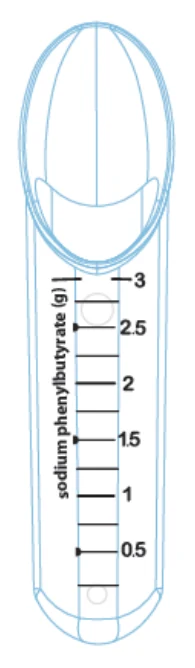
* If more than 3 grams are necessary at once, repeat these instructions to obtain the
prescribed dose of sodium phenylbutyrate.
Administration by nasogastric or gastrostomy tube
- Weigh 51.75 g of Pheburane;
- Fill a 500 ml volumetric flask with about 400 ml of purified water; add a stir bar and start mixing on a magnetic stirrer;
- Slowly pour Pheburane through a funnel into the volumetric flask;
- Maintain constant vigorous (approximately 350 rpm) stirring for 60 minutes;
- Remove the stir bar and make up to the 500 ml mark with purified water;
- Stopper the flask and turn once to mix;
- Filter the solution through a stainless steel sieve (250 µm). After filtering, undissolvable components of the granules will remain on the sieve and can be discarded. The solution should be a cloudy white color.
- Store in a sealed glass bottle. Protect from light with aluminum foil. Store in a refrigerator between 2°C to 8°C.
- Take the glass bottle from the refrigerator at least one (1) hour before use and shake vigorously prior to administration.
Prescribed quantity of sodium phenylbutyrate per dose (g) | How to use the calibrated dosing spoon |
| 0.25 g | Pour the granules directly into the spoon up until the first (1st) black line, from the bottom of the scale, representing 0.25 g of sodium phenylbutyrate |
| 0.5 g | Pour the granules directly into the spoon up until the second (2nd) black line, representing 0.5 g of sodium phenylbutyrate |
| 1 g | Pour the granules directly into the spoon up until the fourth (4th) black line, representing 1 g of sodium phenylbutyrate |
| 1.5 g | Pour the granules directly into the spoon up until the sixth (6th) black line, representing 1.5 g of sodium phenylbutyrate |
| 2 g | Pour the granules directly into the spoon up until the eighth (8th) black line, representing 2 g of sodium phenylbutyrate |
| 3 g | Pour the granules directly into the spoon up until the twelfth (12th) black line, representing 3 g of sodium phenylbutyrate |
The appropriate volume of solution must be measured and administered with the use of a syringe directly through the nasogastric or gastrostomy tube and rinsed with water to clear the nasogastric or gastrostomy tube.
The solution of Pheburane should be used within 7 days when stored between 2°C to 8°C and protected from light.
OVERDOSAGE
For management of a suspected drug overdose, contact your regional Poison Control Centre.
In the event of an overdose, treatment with Pheburane should be discontinued and supportive measures instituted. Hemodialysis or peritoneal dialysis may be beneficial.
One case of overdose occurred in a 5-month old infant with an accidental single dose of 10 g (1370 mg/kg). The patient developed diarrhea, irritability and metabolic acidosis with hypokalaemia. The patient recovered within 48 hours after symptomatic treatment.
ACTION AND CLINICAL PHARMACOLOGY
Mechanism of Action
Sodium phenylbutyrate is a pro-drug and is rapidly metabolised to phenylacetate. Phenylacetate is a metabolically active compound that conjugates with glutamine via acetylation to form phenylacetylglutamine, which is then excreted by the kidneys. On a molar basis, phenylacetylglutamine is comparable to urea (each containing 2 moles of nitrogen) and therefore provides an alternate vehicle for waste nitrogen excretion.
Pharmacodynamics
Based on studies of phenylacetylglutamine excretion in patients with urea cycle disorders, it is estimated that, for each gram of sodium phenylbutyrate administered, between 0.12 and 0.15 g of phenylacetylglutamine nitrogen are produced. As a consequence, sodium phenylbutyrate reduces elevated plasma ammonia and glutamine levels in patients with urea cycle disorders.
Previously, neonatal-onset urea cycle disorders were almost universally fatal during the first year of life. However, with use of alternative waste nitrogen excretion pathways (sodium phenylbutyrate, sodium benzoate and sodium phenylacetate), hemodialysis, dietary protein restriction, and essential amino acid supplementation (when indicated), the survival rate in newborns diagnosed within the first month after birth increased to almost 80%, with most deaths occurring as a result of an acute hyperammonemic crisis. Patients with neonatal-onset disease had a high incidence of mental retardation.
In patients diagnosed during gestation and treated prior to any episode of hyperammonemic encephalopathy, survival was 100%, however many patients subsequently demonstrated cognitive impairment or other neurologic deficits.
In late-onset deficiency patients who recovered from hyperammonemic encephalopathy and were then treated chronically with sodium phenylbutyrate and dietary protein restriction, the survival rate was 98%. The majority of the patients who were tested had an IQ in the average to low average/borderline mentally retarded range, although their cognitive performance remained relatively stable during therapy. Reversal of pre-existing neurologic impairment is not likely to occur with phenylbutyrate treatment, and neurologic deterioration may continue in some patients.
Pheburane may be required life-long unless orthotopic liver transplantation is elected.
Pharmacokinetics
Following oral administration, sodium phenylbutyrate is metabolized by β-oxidation in the liver into phenylacetate, which is rapidly converted to its coenzyme A ester, phenylacetyl-coenzyme A. The later compound is conjugated with glutamine to form phenylacetylglutamine in the liver and kidney. Phenylacetate is also hydrolysed by esterases in liver and blood.
Plasma and urine concentrations of phenylbutyrate and its metabolites have been obtained from fasting normal adults who received a single dose of 5 g of sodium phenylbutyrate and from patients with urea cycle disorders, hemoglobinopathies and cirrhosis receiving single and repeated oral doses up to 20 g/day (uncontrolled studies). The disposition of phenylbutyrate and its metabolites has also been studied in cancer patients following intravenous infusion of sodium phenylbutyrate (up to 2 g/m²) or phenylacetate.
Table 8- Summary of Pheburane’s Pharmacokinetic Parameters in healthy volunteers
Maximum Observed Concentration (Cmax) (μg/ml) | Half-life (t1/2) (h) | Area Under the Curve (AUC0-inf) (μg.h/mL) | Volume of distribution (Vd) (L/kg) | |
| Single dose (5 g) mean | 212.5 | 0.39 | 448.2 | 0.34 |
Absorption: Phenylbutyrate is rapidly absorbed under fasting conditions. After a single oral dose of 5 g of sodium phenylbutyrate, in the form of granules, measurable plasma levels of phenylbutyrate were detected 15 minutes after dosing. The mean time to peak concentration was 1 hour and the mean peak concentration 195 μg/ml. The elimination half-life was estimated to be 0.8 hours.
The effect of food on absorption is unknown.
Distribution: The volume of distribution of phenylbutyrate is 0.2 L/kg.
Metabolism: After a single dose of 5 g of sodium phenylbutyrate, in the form of granules, measurable plasma levels of phenylacetate and phenylacetylglutamine were detected 30 and 60 minutes respectively after dosing. The mean time to peak concentration was 3.55 and 3.23 hours, respectively, and the mean peak concentration was 45.3 and 62.8 μg/ml, respectively. The elimination half-life was estimated to be 1.3 and 2.4 hours, respectively.
Studies with high intravenous doses of phenylacetate showed non-linear pharmacokinetics characterised by saturable metabolism to phenylacetylglutamine. Repeated dosing with phenylacetate showed evidence of an induction of clearance.
In the majority of patients with urea cycle disorders or hemoglobinopathies receiving various doses of phenylbutyrate (300 - 650 mg/kg/day up to 20 g/day) no plasma level of phenylacetate could be detected after overnight fasting. In patients with impaired hepatic function the conversion of phenylacetate to phenylacetylglutamine may be relatively slower.
Excretion: Approximately 80 - 100% of the medicinal product is excreted by the kidneys within 24 hours as the conjugated product, phenylacetylglutamine.
Special Populations and Conditions
Geriatrics (≥ 65 years of age): Pheburane has not been studied in the geriatric population.
Gender: In healthy volunteers, gender differences were found in the pharmacokinetic parameters of phenylbutyrate and phenylacetate (AUC and Cmax about 30 - 50% greater in females), but not phenylacetylglutamine. This may be due to the lipophilicity of sodium phenylbutyrate and consequent differences in volume of distribution.
Hepatic Insufficiency: Three cirrhotic patients (out of 6) who received repeated oral administration of sodium phenylbutyrate (20 g/day in three doses) showed sustained plasma levels of phenylacetate on the third day that were five times higher than those achieved after the first dose. Use Pheburane with caution in patients with hepatic impairment (see WARNINGS AND PRECAUTIONS)
Renal Insufficiency: Use Pheburane with caution in patients with renal impairment (see WARNINGS AND PRECAUTIONS).
Race and Genetic Polymorphism: Influence of race and genetic polymorphism on the pharmacokinetics of Pheburane has not been studied.
STORAGE AND STABILITY
Pheburane granules:
Store at room temperature (15 to 30°C).
After the first opening, Pheburane should be used within 45 days.
Pheburane solution for nasogastric or gastrostomy administration:
Store between 2°C to 8°C.
Protect from light.
After preparation, Pheburane solution (50 mg/ml of sodium phenylbutyrate) should be used within 7 days.
SPECIAL HANDLING INSTRUCTIONS
No special handling instructions are required.
DOSAGE FORMS, COMPOSITION AND PACKAGING
Pheburane consists of white to off-white tasteless coated granules and is available in a child-resistant high-density polyethylene (HDPE) bottle with a desiccant in the cap.
Each bottle contains 174 g of granules and each gram of granules contains 483 mg of sodium phenylbutyrate for a total of 84 g of sodium phenylbutyrate per bottle.
Nonmedicinal ingredients include: ethylcellulose, hydroxypropylmethylcellulose, macrogol, maize starch, povidone and sucrose.
A calibrated measuring spoon is provided in the packaging.
PART II: SCIENTIFIC INFORMATION
PHARMACEUTICAL INFORMATION
Drug Substance
Proper name: Sodium phenylbutyrate
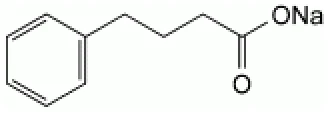
Chemical name: Sodium 4-phenylbutanoate
Molecular formula: C10H11NaO2
Molecular mass: 186.2
Structural formula:
Physicochemical properties: Appearance: white or yellowish-white powder. Solubility: freely soluble in water and in methanol, practically insoluble in methylene chloride.
CLINICAL TRIALS
The efficacy of sodium phenylbutyrate in the treatment of urea cycle disorders was evaluated in an open label, single arm, multicentre Phase 3 study of patients with deficiencies of carbamyl phosphate synthetase (CPS), ornithine transcarbamylase (OTC) or argininosuccinate synthetase (ASS). Efficacy results were evaluable for 183 patients enrolled across the United States and Canada over a period of more than 10 years. Efficacy criteria included survival, incidence of hyperammonemic episodes, cognitive development, growth, and plasma ammonia and glutamine levels.
Historically, urea cycle disorders with a neonatal-onset were almost universally fatal within the first year after birth, despite treatment with peritoneal dialysis and essential amino acids, or their nitrogen-free analogs. However, with hemodialysis, use of alternative waste nitrogen excretion pathways (sodium phenylbutyrate, sodium benzoate, and sodium phenylacetate), dietary protein restriction, and, in some cases, essential amino acid supplementation, the survival rate in newborns diagnosed after birth but within the first month of life was almost 80%. Most deaths occurred during an episode of acute hyperammonemic encephalopathy. Patients with neonatal-onset disease had a high incidence of mental retardation. Those who had
IQ tests administered had an incidence of mental retardation as follows: ornithine transcarbamylase deficiency, 100% (14/14 patients tested); argininosuccinic acid synthetase deficiency, 88% (15/17 patients tested); and carbamylphosphate synthetase deficiency, 57% (4/7 patients tested). Retardation was severe in the majority of the retarded patients.
In patients diagnosed during gestation and treated prior to any episode of hyperammonemic encephalopathy, survival was 100%, but even in these patients, most subsequently demonstrated cognitive impairment or other neurologic deficits.
Amongst late-onset deficiency patients, including females heterozygous for ornithine transcarbamylase deficiency, those who recovered from an episode of hyperammonemic encephalopathy and were then treated chronically with sodium phenylbutyrate and dietary protein restriction, the survival rate was 98%. The two deaths in this group of patients occurred during episodes of hyperammonemic encephalopathy. However, compliance with the prescribed therapeutic regimen was not well documented, precluding evaluation of the potential for sodium phenylbutyrate and dietary protein restriction to prevent mental deterioration and recurrence of hyperammonemic encephalopathy with optimal adherence. The majority of patients tested (30/46 or 65%) had IQ’s in the average to low average/borderline mentally retarded range. Reversal of pre-existing neurologic impairment is considered unlikely to occur with treatment, and neurologic deterioration may continue in some patients, although cognitive performance remained relatively stable during phenylbutyrate therapy.
Even on therapy, acute hyperammonemic encephalopathy recurred in the majority of patients for whom the drug was indicated.
DETAILED PHARMACOLOGY
Pharmacodynamics
Sodium phenylbutyrate is a pro-drug and is rapidly metabolised to phenylacetate. Phenylacetate is a metabolically active compound that conjugates with glutamine via acetylation to form phenylacetylglutamine which is then excreted by the kidneys. On a molar basis, phenylacetylglutamine is comparable to urea (each containing 2 moles of nitrogen) and therefore provides an alternate vehicle for waste nitrogen excretion. ,
Based on studies of phenylacetylglutamine excretion in patients with urea cycle disorders it is possible to estimate that, for each gram of sodium phenylbutyrate administered, between 0.12 and 0.15 g of phenylacetylglutamine nitrogen are produced. As a consequence, sodium phenylbutyrate reduces elevated plasma ammonia and glutamine levels in patients with urea cycle disorders.
Pharmacokinetics
The pharmacokinetic properties of phenylbutyrate have been examined in healthy volunteers as well as patients with urea cycle disorders, hemoglobinopathies, cancer, cystic fibrosis and cirrhosis.
Healthy volunteers
Oral administration of doses between 2.5 g and 5 g of phenylbutyrate resulted in peak plasma phenylbutyrate concentrations after 1 hour ranging between 1000 and 1300 µmol/L, with higher levels in females than in males (see ACTION AND CLINICAL PHARMACOLOGY, Special Populations and Conditions, Gender). Elimination half-life was approximately 0.8h, and the metabolites phenylacetate and phenylacetylglutamine appear after 3-4 hours. Other metabolites have been identified.
Patients with UCD
In 10 patients (2 CPS-I, 6 OTC, 2 ASS; 7 males, 3 females; 1-13 years) receiving 306-650 mg/kg/d sodium phenylbutyrate in repeated doses administered at 4 to 5-hour intervals, a regular succession of peaks and troughs (with no detectable levels of phenylbutyrate, and sustained levels of phenylacetate and phenylacetylglutamine) were observed. Overnight fasting plasma levels of phenylacetate and phenylbutyrate were below the limits of detection, and phenylacetylglutamine below 500 µmol/L.
A study was conducted in 10 adult patients (8 OTC, 1 ASS, 1 HHH; 4 males, 6 females; mean age of 37 and range 21–73 years) on maintenance treatment with sodium phenylbutyrate. The drug had been prescribed for an average (SD) of 9 (8) years at 191 (44.6) mg/kg/day, equivalent to 7.54 (1.65) g/m2 (range: 4.47-9.10 g/m2, two subjects were taking 20 g/day). At steady state (SS) after 7 days of TID dosing, systemic exposure (AUC0-24) was 739, 596 and 1133 μg•h/mL for phenylbutyrate, phenylacetate and phenylacetylglutamine, respectively. Urinary phenylacetylglutamine accounted for ~54% of phenylbutyrate administered and other metabolites for less than 1%.
TOXICOLOGY
Single-dose toxicity
No single-dose toxicity studies have been performed for sodium phenylbutyrate. However, in a genotoxicity study (micronucleus test), rats received a single oral dose of sodium phenylbutyrate (878, 1568 or 2800 mg/kg) and deaths were observed at both of the higher doses: 7/10 at 2800 mg/kg and 2/10 at 1568 mg/kg.
Repeated-dose toxicity
No repeat-dose toxicity studies have been performed for sodium phenylbutyrate.
Parenteral administration of phenylacetate in young rats had harmful effects on brain development. When high doses of phenylacetate (190 - 474 mg/kg), the active metabolite of phenylbutyrate, were given subcutaneously to rat pups, decreased proliferation and increased
loss of neurons were observed, as well as a reduction in central nervous system CNS myelin. Cerebral synapse maturation was retarded and the number of functioning nerve terminals in the cerebrum was reduced, which resulted in impaired brain growth.
Carcinogenicity
The carcinogenic potential of sodium phenylbutyrate has not been studied.
Mutagenesis
Sodium phenylbutyrate was negative in 2 mutagenicity tests: the Ames test and the micronucleus test. Sodium phenylbutyrate did not induce mutagenic effects in the Ames test, with or without metabolic activation. In the micronucleus test sodium phenylbutyrate did not produce clastogenic effects in rats treated at toxic or non-toxic doses, examined 24 and 48 hours after oral administration of single doses of 878 to 2800 mg/kg.
Reproduction
Dedicated fertility studies have not been conducted with sodium phenylbutyrate. However, animal studies have shown reproductive toxicity of sodium phenylbutyrate, i.e. effects on the development of the embryo or the fetus. Prenatal exposure of rat pups to phenylacetate (the active metabolite of phenylbutyrate) produced lesions in cortical pyramidal cells; dendritic spines were longer and thinner than normal and reduced in number.
REFERENCES
- 1. Loo Y.H., Rabe E., Potempska A., Wang P., Fersko R. and Wisniewki H.M.: Experimental maternal phenylketonuria: an examination of two animal models. Dev. Neurosci., 1983, 6:227-34
- 2.
The American Society of Health-System Pharmacists: AHFS Drug Information 2011, Ed.
ASHP, 2011; 2758-9.
- 3. Collins AF, Pearson HA, Giardina P, et al.: Oral sodium phenylbutyrate therapy in homozygous beta thalassemia: a clinical trial. Blood 1995; 85(1): 43-9
- 4.
EMEA 2005– Scientific Discussion – Ammonaps:
http://www.ema.europa.eu/docs/en_GB/document_library/EPAR_Scientific_Discussion/hu
- 5. Fulton T.R., Triano T., Rabe A., Loo Y.H.: Phenylacetate and the enduring behavioral deficit in experimental phenylketonuria. Life Sci., 1980, 27:1271-81
- 6. Robain O., Wen G.Y., Wisniewki H.M., Shek J., Loo Y.H.: Purkinje cell dendritic development in experimental phenylketonuria: a quantitative analysis. Acta Neuropath., 1981, 53:107-12
- 7. Robain O., Wisniewki H.M., Loo Y.H., Wen G.Y.: Experimental phenylketonuria: effect of phenylacetate intoxication on number of synapses in the cerebellar cortex of the rat. Acta Neuropath., 1983, 61:313-5
- 8. Oorschot D.E., Jones D.J.: a quantitative ultrastructural study of the effects of phenylacetate on synaptic organization in the developing rat cerebral cortex. Dev. Neurosci., 1984,6:45-57
- 9. Maestri NE: Prospective treatment of urea cycle disorders. J Pediatr 1991(119); 6: 923
- 10.
Maestri NE, Clissold DB, Brusilow SW: Long-term survival of patients with
argininosuccinate synthetase deficiency. J Pediatr 1995 127 (6); 929-35
- 11. Maestri NE, Brusilow SW, Clissold DB, et al.; Long-term treatment of girls with ornithine transcarbamylase deficiency; N Engl J Med; 1996; 335; 12; 855-9
- 12. Häberle J et al.: Suggested guidelines for the diagnosis and management of urea cycle disorders. Orphanet Journal of Rare Diseases 2012; 7(32):1-30
- 13.
Ammonaps 940 mg/g granules Summary of Product Characteristics, published on the
European Medicines Agency website, last updated December 7, 2011
- 14. Batshaw ML, Macarthur RB, Tuchman M: Alternative pathway therapy for urea cycle disorders: Twenty years later; J Pediatr 2001 (138); 1 Pt 2: S46-S55
- 15. Brusilow SW: Phenylacetylglutamine may replace urea as a vehicle for waste nitrogen excretion Pediatr Res 1991; 29 (2) 147-50
- 16. Shih VE: Hereditary urea-cycle disorders. In: “Griseolia A, Baguena R, Mayor F, eds. The urea cycle”. New York: John Wiley, 1976: 367-414
- 17. Piscitelli SC, Thibault A, Figg WD, et al.: Disposition of phenylbutyrate and its metabolites, phenylacetate and phenylacetylglutamine. J Clin Pharmacol 1995; 35(4): 368-73
- 18. Carducci MA, Gilbert J, Bowling MK, et al.: A Phase I clinical and pharmacological evaluation of sodium phenylbutyrate on an 120-h infusion schedule. Clin Cancer Res 2001; 7(10): 3047-55
- 19. Gore SD, Baylin S, Sugar E, Carraway H, et al.: Combined DNA methyltransferase and histone deacetylase inhibition in the treatment of myeloid neoplasms. Cancer Res. 2006; 66(12): 6361-9
- 20. Lin J, Gilbert J, Rudek MA, Zwiebel JA, et al.: A phase I dose-finding study of 5-azacytidine in combination with sodium phenylbutyrate in patients with refractory solid tumors. Clin Cancer Res 2009; 15(19): 6241-9
- 21. Dover GJ, Brusilow S, Charache S: Induction of Fetal Hemoglobin Production in Subjects with Sickle Cell Anemia by Oral Sodium Phenylbutyrate. Blood 1994; 84 (1): 339-43
- 22. McGuire BM, Zupanets IA, Lowe ME, Xiao X, et al.: Pharmacology and safety of glycerol phenylbutyrate in healthy adults and adults with cirrhosis. Hepatology 2010; 51(6): 2077-85
- 23.
Kasumov T, Brunengraber LL, Comte B et al.: New secondary metabolites of
phenylbutyrate in humans and rats. Drug Metab Dispos 2004; 32(1): 10-9
- 24.
Brusilow SW, Maestri NE: Urea cycle disorders: diagnosis, pathophysiology, and therapy.
Adv Pediatr 1996; 43: 127-70
- 25.
Feillet F, Leonard JV: Alternative pathway therapy for urea cycle disorders; J Inherit Metab
Dis 1998; 21 (Suppl 1): 101-11
- 26. Lee B, Rhead W, Diaz GA, Scharschmidt BF, et al.: Phase 2 comparison of a novel ammonia scavenging agent with sodium phenylbutyrate in patients with urea cycle disorders: safety, pharmacokinetics and ammonia control. Mol Genet Metab 2010; 100(3): 221-8
- 27.
Gilbert J, Baker SD, Bowling MK, Grochow L, Figg WD, Zabelina Y, Donehower RC,
Carducci MA. A phase I dose escalation and bioavailability study of oral sodium phenylbutyrate in patients with refractory solid tumor malignancies. Clin Cancer Res. 2001 Aug;7(8):2292-300
- 28.
Ram Z., Samid D., Wallbridge S., Oshiro E.M., Viola J.J., TaoCheng J.H., Shack S.,
Thibault A., Myers C.E., Oldfield E.H.: Growth inhibition, tumor maturation, and extended survival in experimental brain tumours in rats treated with phenylacetate. Cancer Research, 1994, 54:2923-7
- 29. Gore SD, Samid D, Weng LJ. Impact of the putative differentiating agents sodium phenylbutyrate and sodium phenylacetate on proliferation, differentiation, and apoptosis of primary neoplastic myeloid cells. Clin Cancer Res. 1997 Oct;3(10):1755-62
- 30.
Iannitti T., Palmieri B.:Clinical and experimental applications of sodium phenylbutyrate.
Drugs R.D. 2011; 11(3):227-49
- 31. Kennedy C, Byth K, Clarke CL, deFazio A. Cell proliferation in the normal mouse mammary gland and inhibition by phenylbutyrate. Mol Cancer Ther. 2002 Oct;1(12):1025-33