


Product Monograph - Sephience
Recent Major Label Changes
None at the time of the most recent authorization.
Table of Contents
Certain sections or subsections that are not applicable at the time of the preparation of the most recent authorized product monograph are not listed.
Recent Major Label Changes .................................................................................................. 2
Table of Contents ................................................................................................................. 2
Part 1: Healthcare Professional Information........................................................................... 4
- 1.
Indications...................................................................................................................... 4
1.1. Pediatrics ..................................................................................................................... 4
1.2. Geriatrics ..................................................................................................................... 4
- 2. Contraindications ........................................................................................................... 4
- 4.
Dosage and Administration ............................................................................................. 4
4.1. Dosing Considerations ................................................................................................ 4
4.2. Recommended Dose and Dosage Adjustment ........................................................... 5
4.3. Reconstitution ............................................................................................................. 5
4.4. Administration ............................................................................................................ 6
4.5. Missed Dose ................................................................................................................ 8
- 5. Overdose ........................................................................................................................ 8
- 6. Dosage Forms, Strengths, Composition, and Packaging ................................................... 8
- 7.
Warnings and Precautions .............................................................................................. 9
General .................................................................................................................................... 9
Carcinogenesis and Genotoxicity ............................................................................................ 9
Dependence, Tolerance and/or Abuse Liability ...................................................................... 9
Driving and Operating Machinery ........................................................................................... 9
Endocrine and Metabolism ................................................................................................... 10
Hematologic .......................................................................................................................... 10
Hepatic/Biliary/Pancreatic .................................................................................................... 10
Monitoring and Laboratory Tests .......................................................................................... 10
Neurologic ............................................................................................................................. 10
Renal ...................................................................................................................................... 10
Reproductive Health .............................................................................................................. 11
7.1. Special Populations ................................................................................................... 11
7.1.1. Pregnancy .......................................................................................................... 11
7.1.2. Breastfeeding .................................................................................................... 11
7.1.3. Pediatrics ........................................................................................................... 11
7.1.4. Geriatrics ........................................................................................................... 11
- 8.
Adverse Reactions ........................................................................................................ 11
8.1. Adverse Reaction Overview ...................................................................................... 11
8.2. Clinical Trial Adverse Reactions ................................................................................ 12
8.2.1. Clinical Trial Adverse Reactions – Pediatrics..................................................... 13
8.3. Less Common Clinical Trial Adverse Reactions ......................................................... 13
- 9.
Drug Interactions .......................................................................................................... 13
9.2. Drug Interactions Overview ...................................................................................... 13
9.3. Drug-Behaviour Interactions ..................................................................................... 13
9.4. Drug-Drug Interactions ............................................................................................. 13
9.5. Drug-Food Interactions ............................................................................................. 15
9.6. Drug-Herb Interactions ............................................................................................. 15
9.7. Drug-Laboratory Test Interactions............................................................................ 15
- 10.
Clinical Pharmacology ................................................................................................... 15
10.1. Mechanism of Action ................................................................................................ 15
10.2. Pharmacodynamics ................................................................................................... 15
10.3. Pharmacokinetics ...................................................................................................... 15
- 11. Storage, Stability, and Disposal ..................................................................................... 18
Part 2: Scientific Information ............................................................................................... 19
- 13. Pharmaceutical Information ......................................................................................... 19
- 14.
Clinical Trials ................................................................................................................ 19
14.1. Clinical Trials by Indication ....................................................................................... 19
- 16. Non-Clinical Toxicology ................................................................................................. 24
Patient Medication Information .......................................................................................... 25
Part 1: Healthcare Professional Information
1. Indications
SEPHIENCE™ (sepiapterin for oral suspension) is indicated for the treatment of hyperphenylalaninemia (HPA) in adult and pediatric patients 1 month of age and older with sepiapterin-responsive phenylketonuria (PKU). SEPHIENCE is indicated in conjunction with a phenylalanine (Phe)-restricted diet. (See 4.1 Dosing Considerations).
1.1. Pediatrics
Pediatrics (<18 years of age): Based on the data submitted and reviewed by Health Canada, the safety and efficacy of SEPHIENCE in pediatric patients aged 1 month and older have been established. Safety and efficacy have not been established in patients < 1 month of age. (See 7.1.3 Pediatrics, 10.3 Pharmacokinetics, Table 7 and 14 Clinical Trials).
1.2. Geriatrics
Geriatrics (≥65 years of age): The safety and efficacy of SEPHIENCE in patients 65 years of age and older have not been established. Clinical studies of SEPHIENCE did not include patients 65 years of age and older to determine if they respond differently from younger adult patients. Caution should be exercised when prescribing in patients 65 years of age and older.
2. Contraindications
SEPHIENCE is contraindicated in patients who are hypersensitive to this drug or to any ingredient in the formulation, including any non-medicinal ingredient, or component of the container (see 6 Dosage Forms, Strengths, Composition and Packaging).
4. Dosage and Administration
4.1. Dosing Considerations
Treatment with SEPHIENCE should be directed by a healthcare provider experienced in the treatment of PKU. Baseline blood Phe concentration should be obtained before initiating treatment (see 7 Monitoring and Laboratory Tests).
SEPHIENCE Responsiveness Test: Response to treatment with SEPHIENCE should be assessed during an evaluation period of 14 consecutive days during which dietary protein and phenylalanine intake must be held constant. Discontinue SEPHIENCE in patients whose blood Phe levels do not decrease after 14 consecutive days of treatment at the maximum daily dose (see 4.2 Evaluation Period).
Controlled efficacy and safety data supported use in patients who were deemed responsive after receiving sepiapterin for 14 days.
Biochemical response to SEPHIENCE treatment cannot reliably be pre-determined by laboratory testing (i.e. molecular testing).
Dietary Control: Patients with PKU who are treated with SEPHIENCE should be on a Phe-restricted diet as directed by their healthcare provider based on assessment of blood Phe concentration. Patients should undergo regular assessments, including Phe intake, by their healthcare provider (see 7 Monitoring and Laboratory Tests).
4.2. Recommended Dose and Dosage Adjustment
The recommended starting dosage of SEPHIENCE, to be administered orally once daily, is based on age and body weight (Table 1). The maximum recommended dose is 60 mg/kg/day. Blood Phe levels should be monitored regularly during treatment, particularly in pediatric patients. If necessary, adjust the daily dose of SEPHIENCE within the range of 7.5 mg/kg to 60 mg/kg and/or dietary protein and Phe intake to ensure adequate blood Phe level control (see 7 Monitoring and Laboratory Tests and 7 Hypophenylalaninemia).
Table 1: Recommended Starting Dose of SEPHIENCEa Based on Patient’s Age and Body Weight
| Age | Recommended Dose of SEPHIENCE per dayb |
|---|---|
| <6 months | 7.5 mg/kg/day |
| 6 to <12 months | 15 mg/kg/day |
| 12 months to <2 years | 30 mg/kg/day |
| ≥2 years | 60 mg/kg/dayc |
a For calculated daily doses less than 1,000 mg, the final concentration of prepared SEPHIENCE liquid mixture is 25 mg/mL (see 4.4 Administration)
b 60 mg/kg is the maximum daily dose for all patients
c 60 mg/kg dose is the recommended starting dose and maximum dose for patients aged ≥2 years
Evaluation Period:
Dosage Titration in Patients Less than 2 Years of Age: After initiating treatment at the starting dosage by age (Table 1), check blood Phe levels to determine response to treatment within 2 consecutive weeks. If blood Phe does not decrease, SEPHIENCE dosage may be titrated incrementally (as per dose increments in Table 1) based on blood Phe levels up to a maximum daily dosage of 60 mg/kg. During the evaluation period, existing dietary protein and Phe intake should not be modified and patients should be closely monitored for safety.
Discontinuation for Lack of Biochemical Response: Discontinue SEPHIENCE in patients whose blood Phe does not decrease after 2 consecutive weeks of treatment at the maximum daily dosage of 60 mg/kg.
4.3. Reconstitution
For patients < 6 months of age, SEPHIENCE oral powder should only be mixed in water. Do not mix with soft foods, such as apple sauce or strawberry jam, or with apple juice.
For patients ≥6 months to < 2 years of age, SEPHIENCE oral powder should be mixed in water or apple juice.
For patients ≥ 2 years of age SEPHIENCE oral powder should be mixed in water, apple juice, or a small amount of soft food (such as apple sauce or strawberry jam).
The powder should be mixed well for at least 30 seconds with water or apple juice and for at least 60 seconds with soft food. Once mixed, the dose should be administered immediately (see 4.4. Administration).
If not administered immediately, the liquid or soft food mixtures can be administered within 6 hours when stored at controlled room temperature between 20°C to 25°C or within 24 hours when stored in the refrigerator (2°C to 8°C). Before administration, the liquid or soft food mixture should be stirred once again for at least 30 seconds and 60 seconds, respectively (see 11 Storage, Stability and Disposal).
4.4. Administration
SEPHIENCE oral powder is available in individual sachets of 250 mg or 1000 mg.
SEPHIENCE should be administered orally once a day with food using mg/kg/day dosing.
An accurate measuring device (e.g., oral dosing syringe or medicine cup) with suitable graduations should be used to ensure administration of the appropriate volume of liquid mixture.
Doses Less Than 1,000 mg (administration based on 25 mg/mL concentration)
- Determine the required number of SEPHIENCE sachets and the required volume of water or apple juice to achieve a concentration of 25 mg/mL mixture (see Table 2).
Table 2: Number of SEPHIENCE Sachets and Volume to Prepare a SEPHIENCE Mixture of 25 mg/mL for Doses Less than 1,000 mg
| Daily Dose (mg) | Number of 1,000 mg sachetsa | Number of 250 mg sachetsa | Volume of water or apple juice (mL)b |
|---|---|---|---|
| 250 mg or less | 0 | 1 | 9 mL |
| 251 mg to 500 mg | 0 | 2 | 18 mL |
| 501 mg to 750 mg | 0 | 3 | 27 mL |
| 751 mg to 999 mg | 1 | 0 | 36 mL |
Legend: mg = milligrams; mL = milliliters
a For calculated daily doses less than 1,000 mg, round the dose up to the nearest 250 mg to determine the number of SEPHIENCE sachets and prepare each 250 mg sachet with 9 mL of water or apple juice.
b Patients younger than 6 months of age should only use water to mix with SEPHIENCE.
Calculate the prescribed dose volume to the nearest 0.2 mL.
- Divide the calculated daily dose (mg) by the final concentration (25 mg/mL) of SEPHIENCE liquid mixture for doses less than 1,000 mg.
- Prescribed dose volume (mL) = SEPHIENCE calculated dose (mg) 25 mg/mL
Prepare a liquid mixture.
- Open and empty the entire content of each SEPHIENCE sachet into an appropriate-size container and mix with the required volume of water or apple juice as per Table 2.
- Stir the contents for 30 seconds or more until the mixture is uniformly mixed.
- Using a graduated oral dosing syringe, draw up the prescribed dose volume to the nearest 0.2 mL from the mixture.
Administer the prescribed dose volume (mL).
- Administer immediately.
- If particles are remaining in the syringe, draw up additional water or apple juice and administer the contents immediately. Repeat if particles still remain.
- Discard unused portion of SEPHIENCE mixture remaining in the container.
- Consume additional food after administration of the prescribed dose volume.
Doses 1,000 mg or Greater (whole sachet administration)
- Determine the required number of SEPHIENCE sachets and the required volume of water, apple juice, strawberry jam, or applesauce (see Table 3).
Table 3: Number of SEPHIENCE Sachets and Volume to Prepare a SEPHIENCE Mixture for Doses of 1,000 mg or Greater
| Daily Dose (mg) | Number of 1,000 mg sachetsa | Number of 250 mg sachetsa | Volume of water, apple juice, strawberry jam, or applesauceb | ||||
|---|---|---|---|---|---|---|---|
| 1,000 mg to 1,124 mg | 1 | 0 | 2 Tbsp or 30 mL | ||||
| 1,125 mg to 1,374 mg | 1 | 1 | 4 Tbsp or 60 mL | ||||
| 1,375 mg to 1,624 mg | 1 | 2 | |||||
| 1,625 mg to 1,874 mg | 1 | 3 | |||||
| 1,875 mg to 2,124 mg | 2 | 0 | |||||
| 2,125 mg to 2,374 mg | 2 | 1 | 6 Tbsp or 90 mL | ||||
| 2,375 mg to 2,624 mg | 2 | 2 | |||||
| 2,625 mg to 2,874 mg | 2 | 3 | |||||
| 2,875 mg to 3,124 mg | 3 | 0 | |||||
| 3,125 mg to 3,374 mg | 3 | 1 | 8 Tbsp or 120 mL | ||||
| 3,375 mg to 3,624 mg | 3 | 2 | |||||
| 3,625 mg to 3,874 mg | 3 | 3 | |||||
| 3,875 mg to 4,124 mg | 4 | 0 | |||||
| 4,125 mg to 4,374 mg | 4 | 1 | 10 Tbsp or 150 mL | ||||
| 4,375 mg to 4,624 mg | 4 | 2 | |||||
| 4,625 mg to 4,874 mg | 4 | 3 | |||||
| 4,875 mg to 5,124 mg | 5 | 0 | |||||
| 5,125 mg to 5,374 mg | 5 | 1 | 12 Tbsp or 180 mL | ||||
| 5,375 mg to 5,624 mg | 5 | 2 | |||||
| 5,625 mg to 5,874 mg | 5 | 3 | |||||
| 5,875 mg to 6,124 mg | 6 | 0 | |||||
Legend: mg = milligrams; mL = milliliters; Tbsp = tablespoons
a For calculated daily doses 1,000 mg or greater, round the dose to the nearest 250 mg to determine the number of SEPHIENCE sachets required.
b For each 1,000 mg sachet, add 2 Tbsp (30 mL) of water, apple juice, strawberry jam, or applesauce, and then add an additional quantity of 2 Tbsp (30 mL) for up to three 250 mg sachet(s) and then mix.
Prepare a liquid or soft food mixture.
- Open and empty the entire content of each SEPHIENCE sachet into a container.
- Mix with the required amount of water, apple juice, strawberry jam, or applesauce per Table 3.
- Stir the contents for 30 seconds or more when mixing SEPHIENCE with water or apple juice or 60 seconds or more when mixing SEPHIENCE with strawberry jam or applesauce until the mixture is uniform.
Administer the dose.
- Consume the entire mixture immediately.
- If particles are remaining in the container, add additional water or juice to the container and administer the contents immediately. Repeat if particles still remain.
- Consume additional food after administration of the entire mixture.
4.5. Missed Dose
A missed dose should be taken as soon as possible but 2 doses should not be administered on the same day. The normal dosing schedule should be resumed the following day.
5. Overdose
The acute effects of overdose have not been evaluated.
No specific antidote is available for overdose with SEPHIENCE. Treatment of overdose with SEPHIENCE consists of general supportive measures including monitoring of vital signs and observation of the clinical status of the patient.
For the most recent information in the management of a suspected drug overdose, contact your regional poison control centre or Health Canada’s toll-free number, 1-844 POISON-X (1-844-764-7669).
- 6. Dosage Forms, Strengths, Composition, and Packaging
Table 4: Dosage Forms, Strengths, Composition, and Packaging
| Route of Administration | Dosage Form/ Strength/Composition | Non-medicinal Ingredients |
| Oral use | Powder, 250 mg and 1000 mg | Colloidal silicon dioxide, Croscarmellose sodium, Isomalt, Magnesium stearate, Mannitol, Microcrystalline cellulose, Sucralose, Xanthan gum |
Description
SEPHIENCE oral powder is an immediate-release solid dosage form (yellow to orange powder) available in 250 mg and 1000 mg strengths.
SEPHIENCE oral powder is supplied in single-use, heat-sealed laminated aluminum foil sachet. The sachet foil is a multilayered structure composed of polyethylene terephthalate, white extruded polyethylene (polyester/foil bond), aluminum foil (moisture barrier), heat-seal ionomeric resin (adhesive).
Each carton contains 30 unit-dose sachets.
7. Warnings and Precautions
General
Dietary Intake
Patients treated with SEPHIENCE should undergo regular clinical assessments of blood Phe levels by their healthcare provider to determine appropriate dietary Phe intake (see 4.1 Dietary Control and 7 Monitoring and Laboratory Tests).
Hypophenylalaninemia (low blood Phe levels)
In clinical trials, some patients experienced hypophenylalaninemia (blood Phe levels below level of quantification or <35 μmol/L), including in pediatric patients with multiple low blood Phe levels. Prolonged exposure to low blood Phe concentration has been associated with catabolism and endogenous protein breakdown, which can result in adverse developmental outcomes and impaired neurodevelopmental outcome.
Monitor blood Phe levels during treatment and if needed, modify the dosage of SEPHIENCE and/or dietary protein and Phe intake to ensure adequate blood Phe level control. Frequent blood Phe monitoring is recommended, especially in pediatric patients (see 4.2. Recommended Dose and Dosage Adjustment and 7 Monitoring and Laboratory Tests).
Fructose Intolerance
Patients with rare hereditary problems of fructose intolerance should not take this medicine due to the isomalt content.
Long-term safety data Long-term safety data in patients with PKU are limited, especially in pediatric patients < 2 years of age (see 8 Adverse Reactions).
Carcinogenesis and Genotoxicity
Based on the non-clinical data, sepiapterin is not genotoxic and no evidence of carcinogenic effects was observed in mice (see 16 Non-Clinical Toxicology).
Dependence, Tolerance and/or Abuse Liability
The mechanism of action does not indicate that SEPHIENCE has abuse potential. No central nervous system (CNS)- or abuse-related effects were observed at or above therapeutic exposures to sepiapterin.
The mode of action does not indicate that SEPHIENCE has abuse potential or would evoke a withdrawal and rebound effect.
Driving and Operating Machinery
It is not anticipated that SEPHIENCE would affect the ability to drive or operate machinery or cause impairment of mental ability.
Endocrine and Metabolism
Monitor patients when co-administering SEPHIENCE and medications known to be inhibitors of Dihydrofolate Reductase (DHFR). Co-administering SEPHIENCE with inhibitors of DHFR (i.e., trimethoprim, methotrexate, pemetrexed, pralatrexate, and trimetrexate) may require more frequent monitoring of blood Phe levels because these drugs may inhibit the enzymatic conversion of sepiapterin to BH4 by inhibiting the enzyme DHFR (see 9.4. Drug-Drug Interactions).
Hematologic
Increased Bleeding: SEPHIENCE may increase the risk of bleeding. Bleeding events, including superficial hematomas, prolonged bleeding, epistaxis and heavy menstrual bleeding have occurred in patients treated with SEPHIENCE. One patient with non-traumatic superficial hematomas and prolonged bleeding was rechallenged at a lower dose of SEPHIENCE with recurrence of symptoms, which led to treatment discontinuation. The patient experienced symptoms 15 days after initial exposure and two days after rechallenge. The patient had normal blood counts and coagulation studies at the time of the bleeding. Inform patients about the risk of bleeding associated with SEPHIENCE and have patients follow up with their healthcare provider should such a bleeding event occur. Consider SEPHIENCE treatment interruption/ discontinuation in patients with active bleeding (see 8 Adverse Reactions).
Hepatic/Biliary/Pancreatic
The safety and efficacy of SEPHIENCE in patients with hepatic impairment have not been established.
Monitoring and Laboratory Tests
Patients treated with SEPHIENCE should have baseline and frequent on-treatment measurements of blood Phe concentration. Dietary protein and Phe intake should be carefully monitored by the healthcare provider to ensure maintenance of blood Phe levels within the desirable range.
Neurologic
Interaction with Levodopa: In a 10-year post-marketing safety surveillance program for a non-PKU indication using another drug that is a phenylalanine hydroxylase (PAH) activator, 3 patients with underlying neurological disorders experienced seizures, exacerbation of seizures, over-stimulation, and irritability during co-administration with levodopa. Monitor patients who are receiving levodopa for changes in neurological status during treatment with SEPHIENCE (see 9 Drug Interactions).
Renal
The safety and efficacy of SEPHIENCE in patients with renal impairment have not been established.
Reproductive Health
- Fertility
There are no human data on the effect of sepiapterin on fertility. Reproductive toxicity data revealed no effect on fertility and reproductive function of male and female rats (see 16 Non-Clinical Toxicology).
7.1. Special Populations
7.1.1. Pregnancy
There are no adequate and well-controlled studies with SEPHIENCE in pregnancy. In embryo-fetal development studies, oral administration of sepiapterin to pregnant rats and rabbits during organogenesis resulted in no adverse developmental effects, at BH4 exposure levels up to 7- and 4-fold the human exposure at the maximum recommended human dose (MRHD) of 60 mg/kg/day, respectively (see 16 Non-Clinical Toxicology). Caution should be exercised when prescribing in pregnancy.
7.1.2. Breastfeeding
There are insufficient data to assess the excretion of sepiapterin in human milk, or the risk of adverse events in the breastfed infant. It is unknown if sepiapterin is excreted in human milk. Caution should be exercised because many drugs can be excreted in human milk.
7.1.3. Pediatrics
Pediatrics (<18 years): Safety and efficacy of SEPHIENCE in pediatric patients aged 1 month and older have been established. Safety and efficacy have not been established in patients less than 1 month of age (see 10.3 Pharmacokinetics, Table 7 and 14 Clinical Trials).
Some pediatric patients experienced hypophenylalaninemia, including multiple low blood Phe levels. Frequent monitoring is recommended to assess blood Phe levels and dietary protein and Phe intake (see 7 Hypophenylalaninemia and 7 Monitoring and Laboratory Tests).
7.1.4. Geriatrics
Geriatrics (≥65 years): The safety and efficacy of SEPHIENCE in patients 65 years of age and older have not been established. Clinical studies of SEPHIENCE did not include patients 65 years of age and older to determine if they respond differently from younger adult patients. Caution should be exercised when prescribing in patients 65 years of age and older.
8. Adverse Reactions
8.1. Adverse Reaction Overview
The safety profile for SEPHIENCE is based on clinical trials in the PKU population, which involved both pediatric and adult patients who received SEPHIENCE at doses ranging from 7.5 to 60 mg/kg/day. In these studies, the age of the patients ranged from 2 months to 61 years. The most frequently reported (≥2%) treatment-related adverse reactions for SEPHIENCE (pooled across Studies PKU-003 and PKU-004) were diarrhea, headache, feces discoloured, vomiting, nausea, upper abdominal pain, and fatigue. Cases of hypophenylaninemia were observed more frequently in children than adults (see 7 Hypophenylalaninemia).
Five patients discontinued treatment due to adverse reactions, including: anxiety, vomiting, constipation, nausea, headache and hemorrhagic diathesis.
8.2. Clinical Trial Adverse Reactions
Clinical trials are conducted under very specific conditions. The adverse reaction rates observed in the clinical trials, therefore, may not reflect the rates observed in practice and should not be compared to the rates in the clinical trials of another drug.
The safety profile for SEPHIENCE is based on clinical trials in patients with PKU. These data included 222 patients who were exposed to sepiapterin for oral suspension up to 60 mg/kg/day of which: 15 (6.8%) were < 2 years old, 25 (11.3%) were 2 to < 6 years old, 46 (20.7%) were 6 to < 12 years old, 55 (24.8%) were 12 to < 18 years old, and 81 (36.5%) were ≥ 18 years old, and the median duration of treatment (in weeks) was 34.3.
Table 5 below lists adverse reactions that were reported in ≥2% of SEPHIENCE-treated patients at a frequency greater than that of placebo group in Part 2 of Study PKU-003.
Table 5: Adverse Reactions for SEPHIENCE in Patients With PKU That Occurred in ≥2% of Sepiapterin for Oral Suspension-Treated Patients and More Frequently Than in Placebo (Study PKU-003, Part 2, 6 Week Exposure)
| MeDRA SOC | Adverse Reaction (Preferred Term) | SEPHIENCE N=56 n (%) | Placebo N=54 n (%) | ||
|---|---|---|---|---|---|
| Gastrointestinal disorders | Diarrhea | 4 (7.1) | 1 (1.9) | ||
| Abdominal paina | 3 (5.4) | 1 (1.9) | |||
| Feces discoloured | 2 (3.6) | 0 | |||
| Nervous system disorders | Headache | 4 (7.1) | 1 (1.9) | ||
| Infections and infestations | Upper respiratory tract infection | 3 (5.4) | 1 (1.9) | ||
| Influenza | 2 (3.6) | 1 (1.9) | |||
| Oropharyngeal pain | 2 (3.6) | 1 (1.9) | |||
| Metabolism and Nutrition Disorders | Hypophenylalaninemia | 2 (3.6) | 0 | ||
Legend: PKU = phenylketonuria; SOC = System Organ Class
a Includes Abdominal pain, Abdominal pain upper, and Abdominal discomfort.
Long-term safety data are limited.
8.2.1. Clinical Trial Adverse Reactions – Pediatrics
Long-term safety data are limited, especially for patients aged 2 years and younger.
A limited number of patients < 2 years of age (N=15) were included in the Phase 3 clinical studies of SEPHIENCE. Adverse reactions were similar across adult and pediatric populations except for hypophenylalaninemia, which occurred more frequently in pediatric patients including some patients with multiple low blood Phe levels (see 7 Hypophenylalaninenemia and 1.1 Pediatrics).
8.3. Less Common Clinical Trial Adverse Reactions
Blood and lymphatic system disorders: Hemorrhagic diathesis
Reproductive system and breast disorders: Heavy menstrual bleeding
9. Drug Interactions
9.2. Drug Interactions Overview
In vitro studies indicate that sepiapterin and BH4 are unlikely to be perpetrators of CYP450-mediated metabolism.
In vitro, sepiapterin did not inhibit CYP1A2, CYP2B6, CYP2C8, CYP2C9, CYP2C19, CYP2D6, or CYP3A4 or induce CYP1A2, CY2B6, or CYP3A4.
Concomitant administration of drugs known to inhibit folate synthesis DHFR (i.e., trimethoprim, methotrexate, pemetrexed, pralatrexate, and trimetrexate) may interfere with sepiapterin and BH4 metabolism. Caution is recommended when using such medicinal products while taking SEPHIENCE (see 7 Endocrine and Metabolism).
The potential for drug interactions in the presence of sepiapterin reductase (SR) has not been investigated clinically. Caution should be exercised when SEPHIENCE is co-administered with SR inhibitors, such as sulfasalazine or sulfamethoxazole.
9.3. Drug-Behaviour Interactions
Drug-behavioral interactions have not been established.
9.4. Drug-Drug Interactions
Effect of co-administered drugs on SEPHIENCE
The drugs listed in Table 6 are based on either drug interaction case reports or studies or potential interactions due to the expected magnitude and seriousness of the interaction.
Table 6: Established or Potential Drug-Drug Interactions
| Co-administered Drug | Source of Evidence | Effect | Clinical Comment |
| Drugs known to inhibit folate synthesis DHFR (i.e., trimethoprim, methotrexate, pemetrexed, pralatrexate, and | T | These drugs may inhibit the enzymatic conversion of sepiapterin to BH4 by inhibiting the enzyme DHFR. | Caution should be exercised when SEPHIENCE is co-administered with DHFR inhibitors (see 7 Endocrine and Metabolism). More |
| trimetrexate) | frequent monitoring of blood Phe levels is recommended. | ||
| SR inhibitors (i.e., sulfasalazine or sulfamethoxazole) | T | These drugs may inhibit the enzymatic conversion of sepiapterin to BH4 by inhibiting the enzyme SR. | Caution should be exercised when SEPHIENCE is co-administered with SR inhibitors. More frequent monitoring of blood Phe levels is recommended. |
| Drugs that cause vasodilation, including those administered topically, by affecting nitric oxide (NO) metabolism or action including classical NO donors (e.g. glyceryl trinitrate (GTN), isosorbide dinitrate (ISDN), sodium nitroprusside (SNP), molsidomin), PDE5 inhibitors (sildenafil, vardenafil, or tadalafil) and minoxidil | T | Hypotension | Caution is recommended during concomitant use of SEPHIENCE with all medicinal products that cause vasodilation. Monitor blood pressure when administering SEPHIENCE with drugs that affect nitric oxide mediated vasorelaxation (e.g. PDE-5 inhibitors). The combined use of these medications has not been evaluated in humans. |
| Levodopa | T | Convulsions, exacerbation of convulsions, increased excitability and irritability | Caution should be used with the administration of SEPHIENCE to patients who are receiving levodopa (see 7 Neurologic). |
Legend: BH4= tetrahydrobiopterin; DHFR = dihydrofolate reductase; SR = sepiapterin reductase T = Theoretical
BCRP inhibitor: Co-administration of curcumin (2 g, single dose, oral), a BCRP inhibitor with sepiapterin for oral suspension (20 mg/kg, single dose, oral), increased the exposure and maximal concentrations of BH4 by approximately 20.0% and 24.0%, based on AUC0-inf and Cmax, respectively and not considered clinically significant.
Effect of SEPHIENCE on co-administered drugs
BCRP substrate:
Co-administration of sepiapterin (60 mg/kg, single dose, oral) with rosuvastatin (10 mg, single dose, oral), a BCRP substrate, increased the exposures and maximal concentrations of rosuvastatin by approximately 1.2% and 13.0%, based on AUC0-inf and Cmax, respectively and not considered clinically significant.
9.5. Drug-Food Interactions
Sepiapterin is recommended to be taken with food (see 4.4 Administration and 10.3 Pharmacokinetics).
9.6. Drug-Herb Interactions
Interactions with herbal products have not been established.
9.7. Drug-Laboratory Test Interactions
Interactions with laboratory tests have not been established.
10. Clinical Pharmacology
10.1. Mechanism of Action
Sepiapterin is a precursor of the enzymatic co-factor BH4 which activates the phenylalanine hydroxylase (PAH) enzyme.
10.2. Pharmacodynamics
Phenylalanine is a pharmacodynamic biomarker of clinical outcomes in the development of treatments for PKU. Blood Phe concentration was a surrogate primary clinical efficacy endpoint in the pivotal, randomized, controlled, Phase 3 study (PTC923-MD-003-PKU). Data showed that sepiapterin administration was associated with a significant reduction in blood Phe concentration (see 14 Clinical Trials).
Cardiac Electrophysiology
A randomized, partially-blinded, placebo- and positive-controlled, crossover ECG assessment study was performed in 31 healthy adult subjects. They were administered a single oral dose of sepiapterin 60 mg/kg (therapeutic), sepiapterin 120 mg/kg mg (2 times the maximum recommended dose, supratherapeutic), moxifloxacin 400 mg, and placebo. At the therapeutic 60 mg/kg dose, QTc shortening was observed with a maximum mean difference from placebo of -3.2 (90% CI -5.42, -0.94) ms at 6 hr post-dosing. At the supratherapeutic 120 mg/kg dose, QTc shortening was observed with a maximum mean difference from placebo of -2.3 (90% CI -4.50, -0.06) ms at 5 hours post dosing.
10.3. Pharmacokinetics
Following oral administration, sepiapterin is quickly absorbed, and the peak plasma concentrations occur in approximately 1 to 3 hours and decline to below limit of quantitation rapidly (generally by 12 hours). High variability was observed in the plasma concentrations of sepiapterin. No accumulation of sepiapterin was observed following repeated dosing.
Plasma sepiapterin is metabolized extensively to form the pharmacologically active metabolite BH4 and peak BH4 concentrations are achieved in approximately 4 hours after oral administration of sepiapterin. The apparent terminal half-life for BH4 is approximately 5 hours. There is no accumulation of BH4 following repeated daily doses of sepiapterin up to 60 mg/kg for 7 days. Plasma sepiapterin concentrations and exposures were generally less than 2% of BH4 Cmax and AUC0-24h. The pharmacokinetics (AUC0-24h and Cmax) of BH4 are lower by 14.1% and 39.6% in PKU patients compared to healthy volunteers at the 60 mg/kg/day dose administered with a low-fat low-calorie diet.
Table 7: Summary of sepiapterin and BH4 pharmacokinetic parameters in PKU patients following oral administration of SEPHIENCE with food*
| Clinical dose of Sepiapterin | 7.5 mg/kg/ day | 15 mg/kg/ day | 30 mg/kg /day | 60 mg/kg /day | 60 mg/kg /day | 60 mg/kg /day | 60 mg/kg /day | ||||||||||||||
|---|---|---|---|---|---|---|---|---|---|---|---|---|---|---|---|---|---|---|---|---|---|
| PK Parameter | 0 to <6 Months (N=3) | ≥6 Months to <12 Months (N=1) | ≥1 Year to <2 Years (N=6) | ≥2 to <6 Years (N=18) | ≥6 Years to <12 Years (N=32) | ≥12 Years to <18 Years (N=40) | ≥18 Years (N=60) | Combin ed Age <2 Years (N=10) | Combin ed Age ≥2 Years (N=150) | ||||||||||||
| Sepiapterin | |||||||||||||||||||||
| Cmax (ng/mL) [n] | 1.21 [1] |
| 8.47 (7.26) [2] | 1.55 (0.276) [3] | 3.47 (3.39) [4] | 3.21 (2.40) [6] | 2.53 (1.15) [19] | 6.05 (6.63) [3] | 2.68 (1.76) [32] | ||||||||||||
| Tmax (h) [n] | 3.92 [1] |
| 2.00 (2.00, 2.00) [2] | 1.08 (0.500 , 2.00) [3] | 1.53 (1.00, 4.00) [4] | 1.50 (0.500 , 3.82) [6] | 1.98 (0.500 , 6.00) [19] | 2.00 (2.00, 3.92) [3] | 1.98 (0.500, 6.00) [32] | ||||||||||||
| AUC0-24h (h•ng/mL) [n] |
|
|
| 6.03 (4.55) [2] | 21.8 (29.8) [4] | 14.4 (8.49) [6] | 16.7 (14.5) [17] |
| 16.2 (15.6) [29] | ||||||||||||
| BH4 | |||||||||||||||||||||
| Cmax (ng/mL) [n] | 207 [1] | 248 [1] | 205 (69.2) [5] | 309 (200) [5] | 421 (159) [4] | 372 (255) [6} | 468 (182) [20] | 211 (58.8) [7] | 423 (197) [35] | ||||||||||||
| Tmax (h) [n] | 3.92 [1] | 6.17 [1] | 4.02 (2.00, 6.00) [5] | 3.97 (2.00, 4.00) [5] | 4.00 (3.88, 4.00) [4] | 3.00 (1.87, 4.02) [6] | 4.00 (2.00, 6.00) [20] | 4.02 (2.00, 6.17) [7] | 4.00 (1.87, 6.00) [35] | ||||||||||||
| AUC0-24h (h•ng/mL) [n] |
| 2410 [1] | 1780 (552) [4] | 2880 (1620) [5] | 3650 (1410) [4] | 3030 (2180) [6] | 3850 (1790) [20] | 1900 (557) [5] | 3550 (1770) [35] | ||||||||||||
| AUC0-inf (h•ng/mL) [n] |
|
| 2360 [1] | 3400 (2100) [3] | 4300 (1190) [3] | 4060 (2270) [4] | 3780 (1240) [13] | 2360 [1] | 3850 (1460) [23] | ||||||||||||
| T1/2 (h) [n] |
|
| 3.36 [1] | 4.35 (0.861) [3] | 4.00 (0.759) [3] | 5.10 (0.187) [4] | 5.49 (1.04) [13] | 3.36 [1] | 5.08 (1.02) [23] | ||||||||||||
Abbreviations: AUC0-24h, area under the concentration-time curve from time zero to 24 hours postpose; AUC0-inf, area under the concentration-time curve from time zero extrapolated to infinity; BH4, tetrahydrobiopterin; Cmax, maximum observed concentration; max, maximum; min, minimum; SD, standard deviation; T1/2, apparent elimination half-life; Tmax, time to maximum observed concentration
Note: Values are presented as arithmetic mean (SD) except for Tmax, which is shown as median (min, max). Square brackets denote n.
*Limitations of sepiapterin PK data include high variability in sepiapterin plasma concentration estimation and correction factor to account for endogenous sepiapterin was not applied.
Absorption
Following oral administration of sepiapterin to healthy subjects, both BH4 Cmax and AUC0-last increased approximately dose proportionally in the dose range 5 to 20 mg/kg; however, in the dose range 20 to 60 mg/kg, both BH4 Cmax and AUC0-last increased less than dose proportionally.
Effect of Food
When sepiapterin doses of 20 mg/kg and 60 mg/kg were administered with a low-fat, low-calorie meal, BH4 exposures were 1.69- and 1.72-fold higher for Cmax and 1.64- and 1.76-fold higher for AUC0-24h compared to administration under fasted conditions. When sepiapterin doses of 20 mg/kg and 60 mg/kg were administered with a high-fat, high-calorie meal, BH4 exposures were 2.28- and 2.23-fold higher for Cmax and 2.57- and 2.91-fold higher for AUC0-24h compared to administration under fasted conditions.
Distribution
Binding of sepiapterin or BH4 to plasma protein is low, and the majority of sepiapterin and BH4 in plasma are free to exert pharmacological effects. The plasma protein binding of sepiapterin was 15.4% and BH4 was 41.3% based on in vitro protein binding studies.
BH4 apparent volume of distribution is 143 (66) L/kg in adult patients with PKU. In healthy subjects, elevated BH4 concentration was observed in the cerebrospinal fluid following repeated sepiapterin oral administration of 60 mg/kg for 7 days.
Metabolism
Sepiapterin is metabolized by SR/carbonyl reductase and DHFR in a 2-step unidirectional process to form BH4. The metabolism of BH4 is presumed to follow the same pathway as endogenous BH4 entering the regeneration cycle, oxidized to 4α-hydroxy-tetrahydrobiopterin during the aromatic amino acid hydroxylation, and regenerated to form BH4 by pterin-4α-carbinolamine dehydratase and dihydropteridine reductase.
Extensive metabolism of sepiapterin was observed in humans following a single oral dose of 14C-sepiapterin. The major metabolic pathway involved oxidation/dehydrogenation, reduction/oxidation, oxidative deamination, dehydration, side chain cleavage, methylation, etc., alone or in combination.
Elimination
Following a single oral dose of 14C-sepiapterin 4000 mg to adult healthy subjects, a mean of 6.71% dosed radioactivity was recovered in urine and 26.18% in feces, with the combined total recovery of 32.88% by 240 hours. The majority of that radioactivity was recovered within the first 48 hours post dose (28.17%). The total renal clearance of radioactivity derived from 14C-sepiapterin was 1.536 L/h (25.6 mL/min). Formation of volatile metabolites from sepiapterin in the gastrointestinal tract was confirmed in an in vitro study using human intestinal microbiota. Sepiapterin was a minor component in urine and was one of the prominent radioactive components in feces.
Special Populations and Conditions
- Age: PKU patients aged 2 months and older were included in the Phase 3 clinical studies. Following the administration of the recommended starting doses, younger patients exhibited lower exposure to BH4 compared to older patients (see Table 7 and 7.1.3 Pediatrics).
- Sex: There were no apparent effects of gender on BH4 plasma exposure.
Race and Ethnicity: Higher exposures to BH4 were observed for Asian subjects. In the Japanese
- ethno-bridging study, 10% to 24% higher AUC0-last and 14% to 29% higher Cmax of BH4 were observed in Japanese compared to non-Japanese subjects at sepiapterin dose range of 20 to 60 mg/kg. These changes are not clinically significant.
- Pregnancy and Breast-feeding: Sepiapterin has not been studied in pregnancy or breast-feeding. It is not known whether sepiapterin is excreted in human milk. Caution should be exercised when prescribing in pregnancy. Caution should be exercised when using sepiapterin during breast-feeding (see 7.1.1 Pregnancy and 7.1.2 Breastfeeding).
- Hepatic Insufficiency: The pharmacokinetics and safety of sepiapterin have not been studied in patients with hepatic impairment (see 7 Hepatic/Biliary/Pancreatic).
- Renal Insufficiency: The pharmacokinetics and safety of sepiapterin have not been studied in patients with renal impairment (see 7 Renal).
- Storage, Stability, and Disposal
Store at room temperature (15°C to 25°C).
Keep out of reach and sight of children.
Shelf-life after preparation
Each prepared dose is best administered immediately after preparation.
If the SEPHIENCE liquid or soft food mixture is not administered immediately, cover and store the mixture at controlled room temperature between 20°C to 25°C for up to 6 hours or refrigerate between 2°C to 8°C for up to 24 hours.
If the liquid or soft food mixture is stored, stir for at least 30 or 60 seconds, respectively, prior to administration of the prescribed dose.
Discard unused SEPHIENCE mixture after 6 hours at controlled room temperature or after 24 hours if refrigerated.
Part 2: Scientific Information
13. Pharmaceutical Information
Drug Substance
Non-proprietary name of the drug substance: sepiapterin
Chemical name: (S)-2-Amino-6-(2-hydroxypropanoyl)-7,8-dihydropteridin-4(3H)-one
Molecular formula and molecular mass: C9H11N5O3; 237.22
Structural formula:
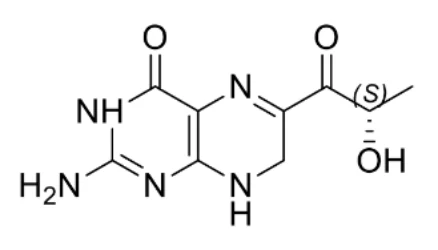
Physicochemical properties: Sepiapterin is a yellow to orange crystalline free base powder. It melts at 223.3°C. Sepiapterin is moderately hygroscopic. At 25°C, a reversible water uptake from 4% to 11% (hysteresis) was observed between 40% and 70% relative humidity (RH). No substantial additional water uptake was observed at 25°C when the RH was increased from 80% to 90%. Sepiapterin is freely soluble in water, methanol, and other organic solvents; soluble in dimethyl acetamide; and sparingly soluble in dimethyl sulfoxide and N-methylpyrolidone. The commercial drug substance is crystalline polymorph Form F, and chirality is (1S)-enantiomer (with one stereogenic center).
14. Clinical Trials
14.1. Clinical Trials by Indication
Treatment of hyperphenylalaninemia (HPA) in patients with phenylketonuria (PKU).
Trial Design and Study Demographics
The efficacy of SEPHIENCE (sepiapterin) was evaluated in two clinical studies in patients with PKU.
Study PKU-003
Study PKU-003 was a two-part, global, double-blind, randomized, placebo-controlled study of 157 patients with PKU, most of whom were on a phe-restricted diet.
Part 1 of the study tested for responsiveness to SEPHIENCE, with 14 days of open-label treatment with SEPHIENCE followed by a minimum of 14 days of SEPHIENCE washout. Patients ≥2 years of age who experienced a ≥15% reduction in blood phenylalanine (Phe) levels were classified as responsive and continued into Part 2 (N=110). In Part 1, 66% of PKU patients showed a biochemical response to SEPHIENCE with a ≥30% reduction in blood Phe level. After the washout period from Part 1, patients were randomized equally (1:1) to either SEPHIENCE, 20 mg/kg daily for Weeks 1 and 2, 40 mg/kg daily for Weeks 3 and 4, 60 mg/kg daily for Weeks 5 and 6 (N=56), or Placebo (N=54) for 6 weeks. The primary efficacy was assessed by the mean change in blood Phe level from baseline to Weeks 5 and 6 in the SEPHIENCE-treated group as compared to the mean change in the placebo group in patients who demonstrated a ≥30% reduction in blood Phe levels during Part 1.
The majority of patients (61.7%) who participated only in Part 1 (assessment of SEPHIENCE responsiveness) were <18 years old. A total of 3 patients (6.4%) were ≥1 year to <2 years old, 23.4% were ≥6 years to <12 years old, and 21.3% were ≥12 years to <18 years old.
Similarly, the majority (65.5%) of patients in Part 2 were <18 years old. There were 10 patients (9.1%), 29 patients (26.4%), and 33 patients (30.0%) who were ≥2 to <6 years old, ≥6 to <12 years old, and ≥12 to <18 years old, respectively. Patients were distributed relatively evenly between the SEPHIENCE and placebo treatment arms across all age groups.
Patients were predominantly White (91.8%). Over half (65.5%) of the 110 patients in Part 2 had PKU diagnosed at birth, and the majority (82.7%) had “biochemically defined” non-classical PKU.
In Part 2, demographics were comparable between patients randomized to the SEPHIENCE and placebo treatment arms.
Study PKU-004
Study PKU-004 is an ongoing, Phase 3, multicenter, open-label study to assess the safety and dietary Phe tolerance during long-term treatment with SEPHIENCE in patients with PKU.
Eligible feeder participants originally included patients aged <2 years who were SEPHIENCE-responsive in Part 1 of Study PKU-003 and patients ≥2 years old who completed Part 2 of Study PKU-003. Eligible non-feeder-controlled patients included those who have not completed a feeder study and have blood Phe concentrations <360 μmol/L at study entry. Eligible non-feeder-uncontrolled patients included those who have not completed a feeder study and have blood Phe concentrations ≥360 μmol/L at study entry.
As of the data cutoff date, a total of 169 patients, including 65 adult and 104 pediatric patients (median age: 14 years, range 2 months to 55 years) were treated with SEPHIENCE. Five patients 2 to < 6 months of age received SEPHIENCE 7.5 mg/kg, 9 patients 12 months to < 2 years of age received SEPHIENCE 30 mg/kg, and 95 patients 2 to < 18 years of age and 60 patients ≥18 years of age received SEPHIENCE 60 mg/kg.
A total of 129 patients have completed 6 months of treatment, while 95 patients have completed 12 months of treatment.
With the exception of the inclusion of the SEPHIENCE-responsive patients <2 years from Part 1 of Study PKU-003, demographics and baseline characteristics were comparable with the pivotal study.
A summary of the study design and patient demographics for the 2 studies are provided in Table 8.
Table 8: Summary of Patient Demographics for Clinical Trials in PKU Patients
| Study # | Study Design | Dosage, Route of Administrationa and Duration | Study Subjects (n) | Mean Age (Range) | Sex |
Study PKU-003 | Phase 3, multicenter, 2-part, double-blind, placebo-controlled, randomized Part 1: 14-day open label SEPHIENCE assessment of responsiveness Part 2: Randomization (1:1) to either 6 weeks’ SEPHIENCE or placebo (stratification based on baseline blood Phe and % reduction in blood Phe) | Part 1: SEPHIENCE
Part 2: SEPHIENCE
Matched dose equivalent placebo | Part 1: N=156 (Subjects in Part 1 only: N=47) Part 2: N=110 (56 in SEPHIENCE arm and 54 in placebo arm) | Part 1: N=47 18.4 years (1-61 years) Part 2: SEPHIENC E, N=56 16.5 years (2-47 years) Placebo, N=54 18.4 years (4-54 years) | Part 1: Male: 28 (59.6%) Female: 19 (40.4%) Part 2: Male: 57 (51.8%) Female: 53 (48.2%) |
Study PKU-004 | Phase 3: open-label, safety, efficacy, quality of life | 7.5, 15, 30, 60 mg/kg for a minimum of 1 year | N=169b (~200 planned) Overall enrollment:
| 17.1 years (0.2-55 years) | Male: 85 (50.3%) Female: 84 (49.7%) |
Legend: Phe = phenylalanine; PKU = phenylketonuria
a Across all PKU studies, SEPHIENCE was orally administered once daily with food.
b As of 02 September 2024 data cutoff date.
Study Results
Study PKU-003
In Study PKU-003, the primary endpoint of mean change in blood Phe level from baseline to Weeks 5 and 6 was statistically significant for SEPHIENCE versus placebo in the primary analysis population (p<0.0001) (Table 9Table 9 10).
Table 9 10: Mean Change in Blood Phe Levels From Baseline to Week 5 and Week 6 in Part 2 (Primary Analysis Set With Phe Reduction From Baseline ≥30% During Part 1), Study PKU-003
SEPHIENCE (N=49) | Placebo (N=49) | Difference SEPHIENCE vs Placebo | p value | |||||||||
|---|---|---|---|---|---|---|---|---|---|---|---|---|
| Baselinea | ||||||||||||
| N | 49 | 49 | ||||||||||
| Mean (SD) (μmol/L) | 646.1 (253.0) | 654.0 (261.5) | ||||||||||
| Weeks 5 and 6b | ||||||||||||
| N | 49 | 49 | ||||||||||
| Mean (SD) (μmol/L) | 236.0 (174.9) | 637.9 (259.9) | ||||||||||
| Mean change from baseline (μmol/L) | -410.1 (204.4) | -16.2 (198.6) | ||||||||||
| Mean change from baseline (%) | -62.8% | 1.4% | ||||||||||
| LS mean estimate for the mean change from baseline | ||||||||||||
| LS mean (SE) | -415.8 (24.1) | -19.9 (24.2) | -395.9 (33.8) | <0.0001 | ||||||||
| 95% CI | (-463.5, -368.0) | (-68.0, 28.2) | (-463.1, -328.7) | |||||||||
Legend: CI = confidence interval; LS = least squares; MMRM = mixed model for repeated measures; N =number of patients; Phe = phenylalanine; SD = standard deviation, SE = standard error
a Baseline is the average of Day -1 and Day 1 blood Phe levels in Part 2.
b Blood Phe concentrations were based on average values during Weeks 5 and 6.
LS means, SEs, CIs, and p values are based on MMRM on change from baseline in blood Phe with treatment, baseline Phe stratum (<600 or ≥600 μmol/L), visit and treatment-by-visit interaction; baseline blood Phe as fixed effects; and a random participant effect with an unstructured covariance matrix.
Of the 35 patients with classical PKU enrolled in Study PKU-003, 16 (45.7%) were determined to have responded to SEPHIENCE (≥30% reduction in baseline blood Phe levels). An exploratory analysis in this subgroup of patients, showed a mean decrease of 69% in blood Phe from baseline to Week 6 in patients taking SEPHIENCE (N=6), compared to a mean increase of 3.5% in patients taking placebo (N=9).
Study PKU-004
In the open-label Study PKU-004, supportive efficacy data were provided that suggested in some patients who were carefully monitored and well-controlled within target blood Phe levels (≤360 µmol/L), daily SEPHIENCE administration allowed for an increase in mean daily Phe consumption up to the recommended daily allowance by age and weight.
Across PKU-003 and PKU-004, of the 203 patients ≥2 years of age, (65%) achieved a ≥30% decrease in blood Phe from baseline at Weeks 1 and 2. Of the 12 patients under the age of 2 years with at least 1 post-baseline efficacy measurement, 8 patients (67%) achieved a ≥30% decrease in blood Phe from baseline at Weeks 1 and 2. The baseline Phe level in patients less than 2 years of age was 362 µmol/L and the mean absolute change in Phe from baseline to Weeks 1 and 2 in this age group was -127.9 µmol/L (standard deviation 277.8 µmol/L). The mean (SD) percentage of patients <2 years and ≥ 2 years of age who maintained target blood Phe concentration (defined as <360 µmol/L) at any given 2-week interval during Study PKU-004 was 84.2% (19.6) and 74.3% (24.8), respectively.
16. Non-Clinical Toxicology
General Toxicology
In repeat-dose studies, sepiapterin was administered via oral gavage in rats for 26 weeks at doses up to 200 mg/kg/day. Adverse effects were observed in both sexes at doses ≥100 mg/kg/day, such as renal toxicity, including renal tubular degeneration, interstitial inflammation, and fibrosis as a result of crystal deposition in the papillary collecting tubules. These findings were partially reversible and occurred at doses ≥ 100 mg/kg/day corresponding to 3-fold the BH4 human exposure levels (AUC0-24h) at the MRHD. The no observed effect level (NOEL) was 30 mg/kg/day.
Sepiapterin was also administered via oral gavage in marmoset monkeys for 9 months at doses up to 300 mg/kg/day. No renal toxicity was observed at the NOAEL of 300 mg/kg/day corresponding to 5-fold the BH4 human exposure levels (AUC0-24h) at the MRHD.
Carcinogenicity
In a 6-month carcinogenicity study in transgenic CByB6F1-Tg (HRAS)2Jic hemizygous mice, sepiapterin did not increase the incidence of tumors in males at dose levels up to 300 mg/kg/day and in females up to 1000 mg/kg/day corresponding, respectively, to 9- and 12-fold the BH4 human exposure (AUC0-24h) levels at the MRHD.
Genotoxicity
Sepiapterin was not mutagenic with or without metabolic activation in the Ames assay in five bacteria strains. Sepiapterin was clastogenic in the in vitro chromosomal aberration assay in cultured human lymphocytes without metabolic activation but not with metabolic activation. Sepiapterin was not mutagenic or clastogenic in the in vivo (micronucleus and the comet) assays in rats treated with oral doses up to 2000 mg/kg.
Reproductive and Developmental Toxicology
In a fertility and early embryonic development (FEED) study in rats, sepiapterin was given prior to and throughout mating in male and female rats and continuing to gestation day (GD) 7 in females at dose levels of 30, 100, and 300 mg/kg/day via oral gavage. No effect on fertility and reproductive function of male and female rats was observed at doses up to 300 mg/kg/day.
In the pre- and post-natal development (PPND) study in rats, sepiapterin was administered at dose levels of 30, 100, and 300 mg/kg/day via oral gavage once daily to pregnant rats from GD 6 to lactation day 20. Sepiapterin did not induce effects on maternal reproductive function or on developmental and reproductive parameters of male and female offsprings at doses up to 300 mg/kg/day.
In embryo-fetal development (EFD) studies, sepiapterin was administered at dose levels of 100, 300, and 1,000 mg/kg/day via oral gavage to pregnant rats during the period of organogenesis from GD 7 to GD 17 and to pregnant rabbits from GD 7 to GD 19. There were no maternal or embryo-fetal developmental toxicities at doses up to 1,000 mg/kg/day for pregnant rats and rabbits corresponding, respectively, to 7- and 4-fold the BH4 human exposure levels (AUC0-24h) at the MRHD.
Juvenile Toxicity
In a 10-week juvenile toxicity (postnatal day [PND]4 through PND70) study, sepiapterin was administered via oral gavage in rats at doses of 0, 5/30, 10/100, and 30/300 mg/kg/day. No sepiapterin-related effects were observed at the NOAEL of 30/300 mg/kg/day corresponding to 3-fold the BH4 human exposure levels (AUC0-24h) at the MRHD.