


Product Monograph - Reddy-Sapropterin
RECENT MAJOR LABEL CHANGES
Not Applicable
TABLE OF CONTENTS
Sections or subsections that are not applicable at the time of authorization are not listed.
RECENT MAJOR LABEL CHANGES ...................................................................................... 2
TABLE OF CONTENTS ............................................................................................................ 4
PART I: HEALTH PROFESSIONAL INFORMATION .............................................................. 4
1 INDICATIONS ........................................................................................................................ 4
1.1 Pediatrics............................................................................................................................. 4
1.2 Geriatrics ............................................................................................................................. 4
2 CONTRAINDICATIONS ......................................................................................................... 4
4 DOSAGE AND ADMINISTRATION ....................................................................................... 4
4.1 Dosing Considerations ........................................................................................................ 4
4.2 Recommended Dose and Dosage Adjustment .................................................................... 5
4.3 Reconstitution ...................................................................................................................... 6
4.4 Administration ...................................................................................................................... 6
4.5 Missed Dose ........................................................................................................................ 8
5 OVERDOSAGE ...................................................................................................................... 8
6 DOSAGE FORMS, STRENGTHS, COMPOSITION AND PACKAGING ............................... 9
7 WARNINGS AND PRECAUTIONS ........................................................................................ 9
7.1 Special Populations ........................................................................................................... 13
7.1.1 Pregnant Women ............................................................................................................ 13
7.1.2 Breast-feeding ................................................................................................................ 13
7.1.3 Pediatrics ......................................................................................................................... 14
7.1.4 Geriatrics ........................................................................................................................ 14
8 ADVERSE REACTIONS ...................................................................................................... 14
8.1 Adverse Reaction Overview .............................................................................................. 14
8.2 Clinical Trial Adverse Reactions ......................................................................................... 15
8.2.1 Clinical Trial Adverse Reactions - Pediatrics .................................................................. 16
8.3 Less Common Clinical Trial Adverse Reactions ................................................................ 17
8.3.1 Less Common Clinical Trial Adverse Reactions – Pediatrics ............................................ 19
8.4 Abnormal Laboratory Findings: Hematologic, Clinical Chemistry and Other Quantitative Data Clinical Trial Findings ...................................................................................................... 19
8.5 Post-Market Adverse Reactions .......................................................................................... 20
9 DRUG INTERACTIONS ....................................................................................................... 21
9.2 Drug Interactions Overview .................................................................................................. 21
9.3 Drug-Behavioural Interactions .............................................................................................. 22
9.4 Drug-Drug Interactions ...................................................................................................... 22
9.5 Drug-Food Interactions ...................................................................................................... 23
9.6 Drug-Herb Interactions ...................................................................................................... 23
9.7 Drug-Laboratory Test Interactions ..................................................................................... 23
10 CLINICAL PHARMACOLOGY .......................................................................................... 23
10.1 Mechanism of Action ....................................................................................................... 23
10.2 Pharmacodynamics ......................................................................................................... 23
10.3 Pharmacokinetics ............................................................................................................. 24
11 STORAGE, STABILITY AND DISPOSAL ......................................................................... 26
12 SPECIAL HANDLING INSTRUCTIONS ............................................................................ 26
PART II: SCIENTIFIC INFORMATION ................................................................................... 27
13 PHARMACEUTICAL INFORMATION ............................................................................... 27
14 CLINICAL TRIALS ............................................................................................................. 28
14.1 Trial Design and Study Demographics ............................................................................ 28
14.2 Study Results .................................................................................................................. 29
15 MICROBIOLOGY ............................................................................................................... 33
16 NON-CLINICAL TOXICOLOGY ......................................................................................... 33
17 SUPPORTING PRODUCT MONOGRAPHS ...................................................................... 34
PATIENT MEDICATION INFORMATION ............................................................................... 35
PART I: HEALTH PROFESSIONAL INFORMATION
1 INDICATIONS
Reddy-Sapropterin (sapropterin dihydrochloride powder for oral solution) is indicated in conjunction with a phenylalanine (Phe)-restricted diet for:
- the reduction of blood Phe levels in patients with hyperphenylalaninemia (HPA) due to tetrahydrobiopterin-(BH4)-responsive Phenylketonuria (PKU).
1.1 Pediatrics
Pediatrics (ages 1 month to 16 years): Based on the data submitted and reviewed by Health Canada, the safety and efficacy of sapropterin dihydrochloride in pediatric patients has been established. Therefore, Health Canada has authorized an indication for pediatric use in patients older than 1 month. Pediatric patients with PKU, ages 1 month to 16 years, have been treated with sapropterin dihydrochloride in clinical studies [see 14.2 Study Results].
Pediatrics (less than 1 month of age): The efficacy and safety of sapropterin dihydrochloride have not been established in infants less than 1 month of age; therefore, Health Canada has not authorized an indication for sapropterin dihydrochloride use in this population.
1.2 Geriatrics
Geriatrics: No data are available to Health Canada; therefore, Health Canada has not authorized an indication for geriatric use. Clinical studies of sapropterin dihydrochloride in patients with PKU did not include patients over 50 years of age. It is not known whether older patients respond differently to sapropterin dihydrochloride than younger patients.
2 CONTRAINDICATIONS
- Patients who are hypersensitive to this drug or to any ingredient in the formulation, including any non-medicinal ingredient, or component of the container. For a complete listing, see 6 DOSAGE FORMS, STRENGTHS, COMPOSITION AND PACKAGING.
4 DOSAGE AND ADMINISTRATION
4.1 Dosing Considerations
- Treatment with Reddy-Sapropterin must be initiated and supervised by physicians experienced in the treatment and management of PKU. Patients treated with Reddy-Sapropterin must continue a restricted Phe diet.
Response to treatment cannot be accurately pre-determined by laboratory testing alone (e.g. molecular testing), and can only be determined by a therapeutic trial of sapropterin dihydrochloride (biochemical response evaluation period of up to one month). The existing dietary protein and phenylalanine intake should be maintained at a constant level and should not be modified during this evaluation period. Response to
- treatment is determined by a decrease in blood Phe following treatment with Reddy-Sapropterin. A satisfactory response is defined as a ≥30 percent reduction in blood Phe levels or attainment of the therapeutic blood Phe goals defined for an individual patient by the treating physician.
4.2 Recommended Dose and Dosage Adjustment
- The recommended starting dose of Reddy-Sapropterin is 10 mg/kg taken once daily.
- Response to sapropterin dihydrochloride is determined by change in blood Phe following treatment with Reddy-Sapropterin at 10 mg/kg/day for a period of up to 1 month. Blood Phe levels should be checked after 1 week of Reddy-Sapropterin treatment and periodically for up to a month. If blood Phe does not decrease from baseline at 10 mg/kg/day, the dose may be increased weekly to a maximum of 20 mg/kg/day, with frequent monitoring of blood Phe levels over a 1-month period. Patients whose blood Phe does not decrease after 1 month of administration of Reddy-Sapropterin at 20 mg/kg/day are considered non-responders, and Reddy-Sapropterin should be discontinued in these patients.
- Once responsiveness to Reddy-Sapropterin has been established, the dosage may be adjusted within the range of 5 to 20 mg/kg/day according to response to therapy. Doses of sapropterin dihydrochloride above 20 mg/kg/day have not been evaluated for efficacy and safety in clinical trials.
- Periodic blood Phe monitoring is recommended to assess blood Phe control, especially in pediatric patients [see 7. WARNINGS AND PRECAUTIONS].
- Treatment with Reddy-Sapropterin may decrease blood Phe levels below the desired therapeutic level. Adjustment of the Reddy-Sapropterin dose or modification of dietary Phe intake may be required to achieve and maintain blood Phe levels within the desired therapeutic range.
- If inadequate control of blood Phe levels is observed during treatment with Reddy-Sapropterin, the patient’s adherence to the prescribed treatment and diet should be reviewed before considering an adjustment of the Reddy-Sapropterin dose.
- Discontinuation of treatment should only be done under the supervision of the treating physician. Following Reddy-Sapropterin discontinuation, more frequent monitoring may be required, as blood Phe levels may increase. Dietary modification may be necessary to maintain blood Phe levels within the desired therapeutic range.
- As recommended for clinical management of PKU, blood Phe and tyrosine levels in patients receiving Reddy-Sapropterin should be tested one or two weeks after each dose adjustment and monitored frequently thereafter under the direction of the treating physician, particularly in pediatric patients. Patients treated with Reddy-Sapropterin must continue a restricted Phe diet and undergo regular clinical assessment (such as monitoring of blood Phe and tyrosine levels, nutrient intake, and psychomotor development).
4.3 Reconstitution
Oral Solutions:
Reddy-Sapropterin powder for oral solution can be reconstituted by mixing with up to 240 mL of water or apple juice, with smaller volumes used in young pediatric patients. The concentration of the solution will vary depending on the required dose and the volume of diluent used. The solution should be used within 15 minutes of preparation [see 4.4 Administration].
4.4 Administration
Reddy-Sapropterin should be administered orally with a meal to increase absorption, and preferably at the same time each day. When Reddy-Sapropterin is taken with a high fat, high calorie meal, the absorption of the drug increases by 30 – 80% [see 10.3 Pharmacokinetics].
Adults and Children Weighing >20 kg
The calculated daily dose of Reddy-Sapropterin based on body weight should be rounded to the nearest multiple of 100. For instance, a calculated dose of 401 to 450 mg should be rounded down to 400 mg corresponding to 4 sachets of 100 mg each. A calculated dose of 451 mg to 499 mg should be rounded up to 500 mg corresponding to one sachet of 500 mg.
If the patient is taking Reddy-Sapropterin powder, the contents of the calculated number of sachets should be placed in 120 mL to 240 mL (4 to 8 oz) of water or apple juice and stirred until dissolved. If the powder does not dissolve completely in 120 mL, increase the volume of diluent up to 240 mL. Reddy-Sapropterin powder for oral solution may also be mixed in a small amount of soft foods such as apple sauce or pudding and consumed within 15 minutes of mixing. The powder should dissolve completely.
Children Weighing ≤20 kg
For children one month of age and older weighing up to 20 kg, the appropriate number of sachets (use 100 mg strength only) can be dissolved in water or apple juice based on the dosing information provided in Tables 1 and 2. A portion of this solution corresponding to the required dose may then be administered orally via an oral dosing syringe. Table 1 provides dosing information at the recommended starting dose of 10 mg/kg per day. Refer to Table 2 for dosing information at 20 mg/kg per day if dosage adjustment is needed. The solution should be consumed within 15 minutes of dissolution.
Table 1: 10 mg/kg per day Dosing Table for Children Weighing up to 20 kg
| Weight (kg) | Dose (mg/kg/day) | Total dose (mg/day) | Volume of dissolution (mL)‡ | Number of sachets to be dissolved (100 mg strength only)* | Volume of solution to be administered (mL) |
|---|---|---|---|---|---|
| 3 | 10 | 30 | 20 | 1 | 6 |
| 3.5 | 10 | 35 | 20 | 1 | 7 |
| 4 | 10 | 40 | 20 | 1 | 8 |
| 4.5 | 10 | 45 | 20 | 1 | 9 |
| 5 | 10 | 50 | 20 | 1 | 10 |
| 5.5 | 10 | 55 | 20 | 1 | 11 |
| 6 | 10 | 60 | 20 | 1 | 12 |
| 6.5 | 10 | 65 | 20 | 1 | 13 |
| 7 | 10 | 70 | 20 | 1 | 14 |
| 7.5 | 10 | 75 | 20 | 1 | 15 |
| 8 | 10 | 80 | 20 | 1 | 16 |
| 8.5 | 10 | 85 | 20 | 1 | 17 |
| 9 | 10 | 90 | 20 | 1 | 18 |
| 9.5 | 10 | 95 | 20 | 1 | 19 |
| 10 | 10 | 100 | 20 | 1 | 20 |
| 11 | 10 | 110 | 40 | 2 | 22 |
| 12 | 10 | 120 | 40 | 2 | 24 |
| 13 | 10 | 130 | 40 | 2 | 26 |
| 14 | 10 | 140 | 40 | 2 | 28 |
| 15 | 10 | 150 | 40 | 2 | 30 |
| 16 | 10 | 160 | 40 | 2 | 32 |
| 17 | 10 | 170 | 40 | 2 | 34 |
| 18 | 10 | 180 | 40 | 2 | 36 |
| 19 | 10 | 190 | 40 | 2 | 38 |
| 20 | 10 | 200 | 40 | 2 | 40 |
*Starting dose for infants is 10 mg/kg per day. Dosing information for 20 mg/kg per day is provided in Table 2.
‡Volume of water or apple juice to dissolve Reddy-Sapropterin powder. After the volume to be administered is drawn, the remaining mixture should be discarded and the solution should not be used beyond 15 minutes.
Table 2: 20 mg/kg per day Dosing Table for Children Weighing up to 20 kg
| Weight (kg) | Dose (mg/kg/day) | Total dose (mg/day) | Volume of dissolution (mL)† | Number of sachets to be dissolved (100 mg strength only) | Volume of solution to be administered (mL) |
|---|---|---|---|---|---|
| 3 | 20 | 60 | 20 | 1 | 12 |
| 3.5 | 20 | 70 | 20 | 1 | 14 |
| 4 | 20 | 80 | 20 | 1 | 16 |
| 4.5 | 20 | 90 | 20 | 1 | 18 |
| 5 | 20 | 100 | 20 | 1 | 20 |
| Weight (kg) | Dose (mg/kg/day) | Total dose (mg/day) | Volume of dissolution (mL)† | Number of sachets to be dissolved (100 mg strength only) | Volume of solution to be administered (mL) |
|---|---|---|---|---|---|
| 5.5 | 20 | 110 | 40 | 2 | 22 |
| 6 | 20 | 120 | 40 | 2 | 24 |
| 6.5 | 20 | 130 | 40 | 2 | 26 |
| 7 | 20 | 140 | 40 | 2 | 28 |
| 7.5 | 20 | 150 | 40 | 2 | 30 |
| 8 | 20 | 160 | 40 | 2 | 32 |
| 8.5 | 20 | 170 | 40 | 2 | 34 |
| 9 | 20 | 180 | 40 | 2 | 36 |
| 9.5 | 20 | 190 | 40 | 2 | 38 |
| 10 | 20 | 200 | 40 | 2 | 40 |
| 11 | 20 | 220 | 60 | 3 | 44 |
| 12 | 20 | 240 | 60 | 3 | 48 |
| 13 | 20 | 260 | 60 | 3 | 52 |
| 14 | 20 | 280 | 60 | 3 | 56 |
| 15 | 20 | 300 | 60 | 3 | 60 |
| 16 | 20 | 320 | 80 | 4 | 64 |
| 17 | 20 | 340 | 80 | 4 | 68 |
| 18 | 20 | 360 | 80 | 4 | 72 |
| 19 | 20 | 380 | 80 | 4 | 76 |
| 20 | 20 | 400 | 80 | 4 | 80 |
† Volume of water or apple juice to dissolve Reddy-Sapropterin powder. After the volume to be administered is drawn, the remaining mixture should be discarded and the solution should not be used beyond 15 minutes.
4.5 Missed Dose
A missed dose should be taken as soon as possible, but 2 doses should not be taken on the same day.
5 OVERDOSAGE
Two unintentional overdoses with sapropterin dihydrochloride have been reported. In one case, an adult subject participating in a 26-week study received a single dose of 4500 mg (36 mg/kg) sapropterin dihydrochloride instead of 2600 mg (20 mg/kg) in Week 16 of the study. The subject reported mild headache and mild dizziness after taking the dose; both symptoms resolved within one hour with no treatment intervention. Results from liver function laboratory tests obtained immediately following the event were within normal limits. The subject suspended therapy for 24 hours and then restarted sapropterin dihydrochloride with no reports of abnormal signs or symptoms. In post-marketing, one pediatric patient received sapropterin dihydrochloride doses of 45 mg/kg per day instead of 20 mg/kg per day. The patient reported hyperactivity that began at an unspecified time after overdose and resolved after the sapropterin dihydrochloride dose was reduced to 20 mg/kg per day. Patients should be advised to notify their physicians in cases of overdose.
Upper abdominal pain has also been reported after the administration of sapropterin dihydrochloride above the recommended maximum dose of 20 mg/kg/day.
In a clinical study to evaluate the effects of sapropterin dihydrochloride on cardiac repolarization, a single supratherapeutic dose of 100 mg/kg (5 times the maximum recommended dose) was administered to 54 healthy adults. No serious adverse reactions were reported during the study. The only adverse reactions reported in more than 1 subject who received the supra-therapeutic dose were upper abdominal pain (6%) and dizziness (4%). A dose-dependent shortening of the QT interval was observed.
Treatment of overdose should be directed to symptoms.
For management of a suspected drug overdose, contact your regional poison control centre.
6 DOSAGE FORMS, STRENGTHS, COMPOSITION AND PACKAGING
Table 3: Dosage Forms, Strengths, Composition and Packaging
| Route of Administration | Dosage Form / Strength / Composition | All Non-medicinal Ingredients |
|---|---|---|
| oral | powder for oral solution 100 mg, 500 mg | ascorbic acid, mannitol, potassium citrate and sucralose. |
Reddy-Sapropterin (sapropterin dihydrochloride powder for oral solution) is available as a unit dose sachet containing 100 mg of sapropterin dihydrochloride (equivalent to 76.8 mg of sapropterin base) and as a unit dose sachet containing 500 mg of sapropterin dihydrochloride (equivalent to 384 mg of sapropterin base). The powder is off-white.
Reddy-Sapropterin (sapropterin dihydrochloride powder for oral solution) is supplied in 30 unit dose sachets in carton.
7 WARNINGS AND PRECAUTIONS
General
Monitor Blood Phe Levels During Treatment
Treatment with Reddy-Sapropterin should be directed by physicians knowledgeable in the management of PKU. Prolonged elevations in blood Phe levels in patients with PKU can result in severe neurologic damage, including severe mental retardation, microcephaly, delayed speech, seizures, and behavioural abnormalities. This may occur even if patients are taking Reddy-Sapropterin but not adequately controlling their blood Phe levels within the recommended target range. Conversely, prolonged levels of blood Phe that are too low have been associated with catabolism and protein breakdown. Active management of dietary Phe and overall protein intake while taking Reddy-Sapropterin is required to ensure adequate control of blood Phe and tyrosine levels and nutritional balance.
Monitor blood Phe levels during treatment to ensure adequate blood Phe level control. Frequent blood monitoring is recommended in the pediatric population.
Consultation with a physician is recommended during illness as blood phenylalanine levels may increase.
Treat All Patients With a Phe-restricted Diet
All patients with PKU who are being treated with Reddy-Sapropterin should also be treated with a Phe-restricted diet. The initiation of Reddy-Sapropterin therapy does not eliminate the need for appropriate monitoring by trained professionals to assure that blood Phe control is maintained in the context of ongoing dietary management.
Hypophenylalaninemia
In clinical trials, some patients have experienced low blood Phe levels. Children, younger than 7 years, including infants less than one year of age who were treated with sapropterin dihydrochloride at doses of 10 mg/kg/day to 20 mg/kg/day had higher rates of low blood Phe levels compared with older children [see 7.1 Special Populations].
Prolonged exposure to low blood phenylalanine and tyrosine levels during infancy has been associated with impaired neurodevelopmental outcome.
Identify Non-Responders to Reddy-Sapropterin Treatment
Not all patients with PKU respond to treatment with sapropterin dihydrochloride (show biochemical response as determined by reduction in blood Phe). In two clinical trials at a dose of 20 mg/kg per day, 56% to 66% of pediatric PKU patients responded to treatment with sapropterin dihydrochloride. In one clinical trial at a dose of 10 mg/kg per day, 20% of adult and pediatric PKU patients responded to treatment with sapropterin dihydrochloride [see 14.2 Study Results]. Response to treatment cannot be pre-determined by laboratory testing (e.g. molecular testing), and should only be determined by a therapeutic trial (evaluation) of sapropterin dihydrochloride [see 4.2 Recommended Dose and Dosage Adjustment].
Cardiovascular
Use with Drugs Known to Affect Nitric Oxide-Mediated Vasorelaxation
BH4 is a cofactor for nitric oxide synthetase. Both sapropterin dihydrochloride and phosphodiesterase type 5 (PDE-5) inhibitors may induce vasorelaxation, and the additive effect of sapropterin and PDE-5 inhibitor co-administration could lead to a reduction in blood pressure; however, the combined use of these medications has not been evaluated in humans.
Caution and monitoring of blood pressure is advised when administering Reddy-Sapropterin with all medicinal products that cause vasodilation, including those administered topically, by affecting nitric oxide (NO) metabolism or action including classical NO donors (e.g. glyceryl trinitrate (GTN), isosorbide dinitrate (ISDN), sodium nitroprusside (SNP), molsidomin, PDE-5 inhibitors, and minoxidil.
Endocrine and Metabolism
Use with Medications Known to Inhibit Folate Metabolism
Drugs known to affect folate metabolism (e.g. methotrexate; trimethoprim) and their derivatives should be used with caution while taking Reddy-Sapropterin because these drugs can decrease BH4 levels by inhibiting the enzyme dihydropteridine reductase (DHPR). Although concomitant administration of inhibitors of dihydrofolate reductase has not been studied, such medicinal products may interfere with BH4 metabolism. More frequent monitoring of blood Phe levels may be required when administering Reddy-Sapropterin with drugs known to inhibit folate metabolism.
Gastrointestinal
Gastritis and Esophagitis
Gastritis and esophagitis were reported as serious adverse reactions [see 8.5 Post-Market Adverse Reactions]. If left untreated, these gastrointestinal adverse reactions could lead to severe complications including esophageal stricture, esophageal ulcer, gastric ulcer, and bleeding, and such complications have been reported in patients receiving sapropterin dihydrochloride. Monitor patients for signs and symptoms of these conditions.
Hepatic/Biliary/Pancreatic
Use with Caution in Patients with Hepatic Impairment
Patients with liver impairment have not been evaluated in clinical trials with sapropterin dihydrochloride. Patients who have liver impairment should be carefully monitored when receiving Reddy-Sapropterin because hepatic damage has been associated with impaired Phe metabolism.
Immune
Hypersensitivity Reactions Including Anaphylaxis
Reddy-Sapropterin is contraindicated in patients with a history of anaphylaxis to sapropterin dihydrochloride [see 2. CONTRAINDICATIONS]. Hypersensitivity reactions, including anaphylaxis and rash, have occurred [see 8.5 Post-Market Adverse Reactions]. Signs of anaphylaxis include wheezing, dyspnea, coughing, hypotension, flushing, nausea, and rash. Discontinue treatment with Reddy-Sapropterin in patients who experience anaphylaxis and initiate appropriate medical treatment. Continue dietary Phe restrictions in patients who experience anaphylaxis.
Monitoring and Laboratory Tests
Patients being treated with Reddy-Sapropterin should have frequent blood Phe level measurements and dietary guidance from a dietitian to ensure maintenance of blood Phe levels in the desirable range.
Neurologic
Use with Caution When Co-administering Reddy-Sapropterin and Levodopa
Caution should be used with the administration of Reddy-Sapropterin to patients who are receiving levodopa. In a 10 year post-marketing safety surveillance program for a non-PKU indication using another formulation of the same active ingredient (sapropterin), 3 patients with underlying neurologic disorders experienced seizures, exacerbation of seizures, over-stimulation, or irritability during co-administration of levodopa and sapropterin. Monitor for change in neurologic status.
Hyperactivity
In the post-marketing safety surveillance program for PKU, some patients experienced hyperactivity with administration of sapropterin dihydrochloride. Monitor patients for hyperactivity [see 5. OVERDOSAGE].
Seizures
Caution is advised when Reddy-Sapropterin is used in patients with predisposition to seizures. Events of seizure and exacerbation of seizure have been reported in such patients.
Renal
Patients with renal impairment have not been evaluated in clinical trials. Patients who have renal impairment should be carefully monitored when receiving Reddy-Sapropterin.
Reproductive Health: Female and Male Potential
- Fertility
Sapropterin dihydrochloride was found to have no effect on fertility of male and female rats at oral doses up to 400 mg/kg/day (about 3 times the human clinical dose of 20 mg/kg, based on body surface area) [See 16. NON-CLINICAL TOXICOLOGY].
- Teratogenic Risk
Reproductive developmental studies have been conducted in rats and rabbits at doses up to 400 mg/kg/day and 600 mg/kg/day, respectively (about 3 times in rats and 10 times in rabbits the human clinical dose of 20 mg/kg/day, based on body surface area). No evidence of teratogenic effects has been observed in either species. In rabbits, there was a non-statistically significant increase in the incidence of holoprosencephaly at the 600 mg/kg/day dose. Placental migration of sapropterin dihydrochloride to the fetuses was not seen in rats dosed orally at 10 mg/kg/day during pregnancy [See 16. NON-CLINICAL TOXICOLOGY].
7.1 Special Populations
7.1.1 Pregnant Women
In rabbits, there was a non-statistically significant increase in the incidence of holoprosencephaly at the 600 mg/kg/day dose [see 16. NON-CLINICAL TOXICOLOGY].
There are no adequate and well-controlled studies in pregnant women. Because animal reproduction studies are not always predictive of human response, this drug should be used during pregnancy only if the expected benefits outweigh the risks. Elevated Phe levels in pregnant women are teratogenic and can cause significant congenital brain and cardiac damage in babies of PKU-affected mothers, known as Maternal PKU Syndrome. Available data from the Maternal Phenylketonuria Collaborative Study on 468 pregnancies and 331 live births in PKU- affected women demonstrated that uncontrolled Phe levels (above 600 mcmol/L) are associated with a very high incidence of facial dysmorphism, as well as neurological, cardiac, and growth abnormalities in babies of PKU-affected mothers. Good dietary control of Phe levels during pregnancy is essential to reduce the incidence of Phe-induced teratogenic effects.
Maternal blood Phe levels must therefore be strictly controlled before and during pregnancy. If maternal Phe levels are not strictly controlled before and during pregnancy, this could be harmful to the mother and the foetus. Physician-supervised restriction of dietary Phe intake prior to and throughout pregnancy is the first choice of treatment in this patient group.
The use of Reddy-Sapropterin should be considered only if strict dietary management does not adequately reduce blood Phe levels. Caution must be exercised when prescribing Reddy-Sapropterin to pregnant women.
Labor and Delivery: The effects of sapropterin dihydrochloride on labor and delivery have not been studied. Reddy-Sapropterin use during labor and delivery is not recommended.
7.1.2 Breast-feeding
Sapropterin dihydrochloride is excreted in the milk of intravenously, but not orally, treated lactating rats. It is not known whether sapropterin is excreted in human breast milk. Because of the potential for serious adverse reactions in nursing infants from sapropterin and because of the potential for tumorigenicity shown for sapropterin in the rat carcinogenicity study, Reddy-Sapropterin should not be used during breast-feeding.
7.1.3 Pediatrics
Pediatric patients with PKU, ages one month to 16 years, have been treated with sapropterin dihydrochloride in clinical studies [see 14.2 Study Results]. The efficacy and safety of sapropterin dihydrochloride have not been established in infants less than 1 month of age.
Children younger than 7 years including infants less than one year of age treated with sapropterin dihydrochloride are at increased risk for low levels of blood Phe compared with older children [see 8. ADVERSE REACTIONS]. Frequent blood monitoring is recommended in the pediatric population to ensure adequate blood Phe level control [see 7. WARNINGS AND PRECAUTIONS].
7.1.4 Geriatrics
Clinical studies of sapropterin dihydrochloride in patients with PKU did not include patients aged 50 years and older. It is not known whether these patients respond differently to sapropterin dihydrochloride than younger patients.
8 ADVERSE REACTIONS
8.1 Adverse Reaction Overview
Adverse Drug Reaction Overview
The safety of sapropterin dihydrochloride was evaluated in 7 clinical studies in patients with PKU (aged 1 month to 50 years).
In clinical trials (PKU-001, PKU-003, PKU-004, PKU-006), 579 PKU patients received sapropterin dihydrochloride at doses ranging from 5 to 20 mg/kg/day for lengths of treatment ranging from 1 to 30 weeks. Patients were aged 4 to 49 years old. The patient population was nearly evenly distributed in gender, and approximately 95% of patients were Caucasian. No deaths were reported. Over half of the sapropterin dihydrochloride treated patients (310; 54%) reported at least one adverse event (AE). 5 patients (1%) reported the following serious adverse events (SAEs) (regardless of relationship to treatment): appendicitis, urinary tract infection, gastroesophageal reflux disease, spinal cord injury, tibia fracture, streptococcal infection, and testicular carcinoma. The most commonly reported AEs (in ≥ 2% of the sapropterin dihydrochloride-treated patients) were: headache (13%), diarrhoea (6%), abdominal pain (6%), upper respiratory tract infection (5%), pharyngolaryngeal pain (5%), vomiting (4%), and nausea (4%). No sapropterin dihydrochloride-treated patients discontinued treatment due to an AE during the clinical trials.
In an open-label study (SPARK, n=56) in children aged 2 months to less than 4 years at enrollment who were treated with sapropterin dihydrochloride 10 mg/kg/day to 20 mg/kg/day for 26 weeks, the following SAEs were reported in sapropterin dihydrochloride-treated patients: gastroenteritis, rash, overdose, and stomatitis. Approximately 30% of the 27 sapropterin dihydrochloride-treated pediatric patients experienced adverse reactions and the most commonly reported ADRs were “amino acid decreased” (hypophenylalaninemia), vomiting, and rhinitis. Low blood Phe levels were also reported in an additional open-label study (PKU-015) in children aged 1 month to less than 7 years at screening treated with sapropterin dihydrochloride 20 mg/kg/day for up to 6 months [see 8.2 Clinical Trial Adverse Reactions].
8.2 Clinical Trial Adverse Reactions
Clinical trials are conducted under very specific conditions. The adverse reaction rates observed in the clinical trials, therefore, may not reflect the rates observed in practice and should not be compared to the rates in the clinical trials of another drug. Adverse reaction information from clinical trials may be useful in identifying and approximating rates of adverse drug reactions in real-world use.
In two double-blind, placebo-controlled trials (PKU-003 and PKU-006), 74 patients were treated with sapropterin dihydrochloride while 59 patients were treated with placebo. The data described below reflect exposure of 74 PKU patients to sapropterin dihydrochloride at doses of 10 to 20 mg/kg/day for 6 to 10 weeks. The overall incidence of adverse events in patients receiving sapropterin dihydrochloride (64%) was similar to that reported with patients receiving placebo (71%).
Table 4 enumerates treatment-emergent adverse events that occurred in more than 1 patient (≥2%) treated with sapropterin dihydrochloride in the double-blind, placebo-controlled clinical studies described above.
Table 4: Summary of Adverse Events by Preferred Term Occurring in ≥ 2% of Sapropterin Dihydrochloride Treated Patients in Controlled Clinical Studies with Sapropterin Dihydrochloride (PKU-003 and PKU-006)
| MedDRA Preferred Term | Placebo (n=59) | Sapropterin Dihydrochloride (n=74) |
| No. of Patients Reporting at Least One AE | 42 (71.2%) | 47 (63.5%) |
| Headache | 8 (13.6%) | 11 (14.9%) |
| Upper respiratory tract infection | 14 (23.7%) | 9 (12.2%) |
| Rhinorrhoea | 0 | 8 (10.8%) |
| Pharyngolaryngeal pain | 1 (1.7%) | 7 (9.5%) |
| Diarrhoea | 3 (5.1%) | 6 (8.1%) |
| Vomiting | 4 (6.8%) | 6 (8.1%) |
| Cough | 3 (5.1%) | 5 (6.8%) |
| Pyrexia | 4 (6.8%) | 5 (6.8%) |
| Abdominal pain | 5 (8.5%) | 4 (5.4%) |
| Contusion | 1 (1.7%) | 4 (5.4%) |
| Rash | 4 (6.8%) | 4 (5.4%) |
| Nasal congestion | 0 | 3 (4.1%) |
| Back pain | 3 (5.1%) | 2 (2.7%) |
| Decreased appetite | 0 | 2 (2.7%) |
| Erythema | 0 | 2 (2.7%) |
| Excoriation | 0 | 2 (2.7%) |
| Fatigue | 3 (5.1%) | 2 (2.7%) |
| Infection | 0 | 2 (2.7%) |
| MedDRA Preferred Term | Placebo (n=59) | Sapropterin Dihydrochloride (n=74) |
| Lymphadenopathy | 0 | 2 (2.7%) |
| Otitis externa | 0 | 2 (2.7%) |
| Pharyngitis | 1 (1.7%) | 2 (2.7%) |
| Streptococcal infection | 3 (5.1%) | 2 (2.7%) |
| Toothache | 0 | 2 (2.7%) |
| Urinary tract infection | 0 | 2 (2.7%) |
In open-label, uncontrolled clinical trials (PKU-001 and PKU-004) in which all patients received sapropterin dihydrochloride at doses of 5 to 20 mg/kg/day, AEs were similar in type and frequency to those reported in the double-blind, placebo-controlled clinical trials.
In an additional open-label extension study (PKU-008), 111 PKU patients were treated with sapropterin dihydrochloride within a range of 5 mg/kg/day to 20 mg/kg/day to control blood Phe concentrations for an additional 18 months beyond their exposure in previous clinical studies. No deaths were reported. Four patients reported SAEs (3 unrelated and 1 possibly related case of gastroesophageal reflux disease). Two patients withdrew from the study due to an AE (difficulty concentrating and intermittent diarrhoea). Clinical laboratory results, vital sign measurements, and physical examinations did not reveal any clinically significant AE signals resulting from sapropterin dihydrochloride treatment. No new safety signals were seen in this extension study.
8.2.1 Clinical Trial Adverse Reactions - Pediatrics
Two additional studies in children aged 1 month to 6 years were conducted. SPARK (n=56) was an open-label, controlled study in which 27 pediatric patients (2 months to <4 years of age) with PKU received sapropterin dihydrochloride 10 mg/kg/day or 20 mg/kg/day in addition to a Phe-restricted diet for 26 weeks. PKU-015 (n=65) was an open-label uncontrolled study in which 65 pediatric patients (1 month to less than 7 years of age at screening) received sapropterin dihydrochloride 20 mg/kg per day in addition to a Phe-restricted diet for up to 6 months.
In the SPARK study, hypophenylalaninaemia (also termed “amino acid level decreased”) was experienced by 37% of patients in the sapropterin dihydrochloride plus Phe-restricted diet group versus 33.0% in the Phe-restricted diet alone group. In the PKU-015 study, 87.7% of patients treated with sapropterin dihydrochloride had blood Phe levels below 120 mcmol/L at some point during the study, with the highest rates in those less than 1 year of age in the first 4 weeks of treatment [see 14.2 Study Results].
In the SPARK study, patients who were less than 12 months old and treated with sapropterin dihydrochloride had a greater mean decrease in platelet levels from baseline to Week 26 compared with patients treated with Phe-restricted diet alone. No adverse events related to a decrease in platelet counts were observed in the study. The clinical significance of these findings is not known.
Both the SPARK and PKU-015 studies continued into long-term extension phases. In the SPARK extension study, 51 patients were treated for up to 3 years and the safety population included all 51 patients. The PKU-015 extension study had a duration of up to 7 years and enrolled 65 patients. All 65 patients were included in the safety population. The type and incidence rate of ADRs reported in these extension studies were similar to those reported during the short-term studies (26 weeks for SPARK and up to 6 months for PKU-015).
Adverse events reported in the SPARK and PKU-015 extension studies were similar in type and frequency to those observed in other clinical trials, with the exception of the following adverse events considered to be related to sapropterin dihydrochloride by the investigator (ADRs) that are not listed elsewhere under Clinical Trial Adverse Drug Reactions:
ADRs occurring at ≥2%
Gastrointestinal Disorders: abdominal discomfort, mouth ulceration
Infections and Infestations: rhinitis, gastroenteritis
Investigations: blood alkaline phosphatase increased, amino acid level decreased
Respiratory, Thoracic and Mediastinal Disorders: dysphonia
8.3 Less Common Clinical Trial Adverse Reactions
The treatment-emergent adverse events that occurred in >1% to <2% of patients and in ≤1% of patients in the clinical trials described above (Studies PKU-001, PKU-003, PKU-004, PKU-006, and PKU-008) are presented below.
Adverse events occurring at >1% to<2%
Gastrointestinal Disorders: flatulence, frequent bowel movements
Metabolism and Nutrition Disorders: decreased appetite
Nervous System Disorders: dizziness, hyperreflexia
Adverse events occurring at ≤ 1%
Blood and Lymphatic System: lymphadenopathy, neutropenia
Cardiac Disorders: cardiac murmur, heart rate increased
Congenital, Familial and Genetic Disorders: ichthyosis
Eye Disorders: eye pain, lacrimation increased
Gastrointestinal Disorders: abdominal distension, abdominal pain lower, abdominal pain upper, abdominal tenderness, abnormal faeces, constipation, dry mouth, dyspepsia, gingival bleeding, gingival pain, haematochezia, haemorrhoids, retching, stomach discomfort, tongue spasm, gastroesophageal reflux disease (GERD), epigastric ulcer
General Disorders and Administration Site Conditions: asthenia, chest discomfort, chills, energy increased, feeling hot, influenza like illness, irritability, malaise, oedema peripheral, pyrexia, suprapubic pain, thirst
Infections and Infestations: ear infection, eye infection, herpes zoster, hordeolum, influenza, lower respiratory tract infection, nasopharyngitis, pharyngitis, sinusitis, streptococcal infection, tooth abscess, upper respiratory tract infection, urinary tract infection
Injury, Poisoning and Procedural Complications: contusion, excoriation
Investigations: alanine aminotransferase increased, aspartate aminotransferase increased, blood amino acid level increased, blood bilirubin increased, blood cholesterol increased, blood lactate dehydrogenase increased, blood uric acid increased, eosinophil count increased, gamma- glutamyltransferase increased, glucose urine present, neutrophil count decreased, platelet count decreased, protein urine present, urine colour abnormal, white blood cell count decreased
Metabolism and Nutrition Disorders: anorexia, polydipsia
Musculoskeletal and Connective Tissue Disorders: arthralgia, back pain, muscle fatigue, myalgia, neck pain, pain in jaw
Nervous System Disorders: cluster headache, disturbance in attention, dysgeusia, dysgraphia, hypersomnia, lethargy, migraine, psychomotor hyperactivity, sinus headache, somnolence, syncope, tremor, convulsions
Psychiatric Disorders: agitation, confusional state, distractibility, emotional disorder, insomnia, libido increased, mood altered, panic attack, paranoia, sleep disorder
Renal and Urinary Disorders: micturition urgency, pollakiuria, polyuria, nephrolithiasis
Reproductive System and Breast Disorders: menstrual disorder, vaginal haemorrhage
Respiratory, Thoracic and Mediastinal Disorders: asthma, cough, epistaxis, nasal congestion, respiratory tract congestion, rhinorrhoea, sneezing, throat irritation
Skin and Subcutaneous Tissue Disorders: dermal cyst, dermatitis allergic, dry skin, erythema, erythema multiforme, rash, rash erythematous, rash maculo-papular, rash pruritic, skin odour abnormal
Vascular Disorders: hot flush, peripheral coldness
8.3.1 Less Common Clinical Trial Adverse Reactions – Pediatrics
The treatment-emergent adverse drug reactions that occurred in >1% to <2% of patients in the SPARK and PKU-015 extension studies that are not listed elsewhere under Clinical Trial Adverse Drug Reactions are listed below:
ADRs occurring at >1% to<2%
Eye Disorders: vision blurred
Investigations: blood calcium decreased, carbon dioxide decreased
Metabolism and Nutrition Disorders: hyponatremia
Psychiatric Disorders: anger, vomiting psychogenic
Renal and Urinary Disorders: enuresis
Skin and Subcutaneous Tissue Disorders: hair colour changes
8.4 Abnormal Laboratory Findings: Hematologic, Clinical Chemistry and Other Quantitative Data Clinical Trial Findings
Table 5: Clinically Significant Abnormal Changes in Hematological Test Findings
Reported in Sapropterin Dihydrochloride-Treated Patients (PKU-001, PKU-003, PKU-004 and PKU-006)
| Controlled Studies | All Sapropterin Dihydrochloride-Treated (n=579) | ||||||||
Parameter Notable Criteria (Reference Ranges) | Placebo (n=59) | Sapropterin Dihydrochloride (n=74) | |||||||
| No. of Patients with Lab Test Done | 59 | 74 | 578 | ||||||
| Hematocrit | |||||||||
> 20% increase from baseline and ≥ 1.3 x ULN (34.9 ~ 44.5%) | - | - | 1 (0.2%) | ||||||
| Leukocytes | |||||||||
> 30% decrease from baseline and ≤ 0.6 x LLN (3.4 ~ 10.5 x 10⁹/L) | - | - | 1 (0.2%) | ||||||
> 25% increase from baseline and > 1.5 x ULN (3.4 ~ 10.5 x 10⁹/L) | - | - | 1 (0.2%) | ||||||
| Eosinophils (%) | |||||||||
> 100% increase from baseline and > 3 x ULN (1 ~ 4%) | - | - | 1 (0.2%) | ||||||
| Lymphocytes (%) | |||||||||
> 10% decrease from baseline and < 0.2 x LLN (17 ~ 42%) | - | - | 1 (0.2%) | ||||||
| Neutrophils (count) | |||||||||
> 5% decrease from baseline and < 0.5 x LLN (1.5 ~ 8 x 10⁹/L) | 2 (3.4%) | 2 (2.7%) | 2 (0.3%) | ||||||
| Controlled Studies | All Sapropterin Dihydrochloride-Treated (n=579) | |||||||
Parameter Notable Criteria (Reference Ranges) | Placebo (n=59) | Sapropterin Dihydrochloride (n=74) | ||||||
| > 1.6 x ULN (1.5 ~ 8 x 10⁹/L) | - | - | 8 (1.4%) | |||||
| Platelets | ||||||||
Any decrease from baseline and < 0.6 x LLN (150 ~ 450 x 109/L) | - | - | 4 (0.7%) | |||||
≥ 100% increase from baseline and > 2 x ULN (150 ~ 450 x 109/L) | 1 (1.7%) | - | - | |||||
LLN= Lower limit of normal, ULN= Upper limit of normal
Table 6: Clinically Significant Abnormal Changes in Chemistry Test Findings Reported in Sapropterin Dihydrochloride-Treated Patients (PKU-001, PKU-003, PKU-004 and PKU-006)
| Controlled Studies | All Sapropterin Dihydrochloride-Treated (n=579) | |||||||||
Parameter Notable Criteria (Reference Ranges) | Placebo (n=59) | Sapropterin Dihydrochloride (n=74) | ||||||||
| No. of Patients with Lab Test Done | 59 | 74 | 578 | |||||||
| Alkaline phosphatase | ||||||||||
Any decrease from baseline and < 0.4 x LLN (138 ~ 511 U/L) | - | - | 1 (0.2%) | |||||||
| ALT | ||||||||||
> 20% increase from baseline and > 3 x ULN (0 ~ 45 U/L) | - | - | 6 (1.0%) | |||||||
| AST | ||||||||||
> 50% increase from baseline and > 2 x ULN (0 ~ 40 U/L) | 1 (1.7%) | - | 3 (0.5%) | |||||||
| GGT | ||||||||||
> 10% increase from baseline and > 3 x ULN (6 ~ 37 U/L) | - | 1 (1.4%) | 3 (0.5%) | |||||||
| Glucose | ||||||||||
| < 0.5 x LLN (70 ~ 100 mg/dL) | - | - | 1 (0.2%) | |||||||
| LDH | ||||||||||
| < 0.1 x LLN (145 ~ 345 U/L) | - | - | 1 (0.2%) | |||||||
| Potassium | ||||||||||
| > 1.2 x ULN (3.6 ~ 5 mmol/L) | - | 1 (1.4%) | 3 (0.5%) | |||||||
| Total Bilirubin | ||||||||||
> 5% increase from baseline and > 2.5 x ULN (0.1 ~ 1 mg/dL) | - | - | 2 (0.3%) | |||||||
| Total Cholesterol | ||||||||||
> 10% increase from baseline and > 1.25 x ULN (0 ~ 239 mg/dL) | - | - | 2 (0.3%) | |||||||
LLN= Lower limit of normal, ULN= Upper limit of normal
8.5 Post-Market Adverse Reactions
The following adverse reactions have been identified during post-approval use of sapropterin dihydrochloride. Because these reactions are reported voluntarily from a population of uncertain size, it is not always possible to reliably estimate their frequency or establish causal relationship to drug exposure.
Eye disorders: eyelid oedema
Gastrointestinal disorders: abdominal pain, dyspepsia, epigastric ulcer, gastritis, GERD, nausea, esophageal pain, esophageal disorder, esophagitis, retching, vomiting
General disorders and administration site conditions: oedema peripheral
Immune system disorders: anaphylaxis, hypersensitivity
Infections and infestations: pharyngitis
Nervous System Disorders: convulsions, hyperactivity [see 5. OVERDOSAGE]
Respiratory, thoracic and mediastinal disorders: cough, dyspnoea, oropharyngeal pain, throat tightness
Renal: nephrolithiasis
Skin and subcutaneous tissue disorders: rash, urticaria
Vascular disorders: pallor
9 DRUG INTERACTIONS
9.2 Drug Interactions Overview
Clinical Study
In healthy adult subjects, administration of a single dose of sapropterin dihydrochloride dissolved in water at the maximum therapeutic dose of 20 mg/kg had no effect on the pharmacokinetics of a single 0.5 mg dose of digoxin (P-gp substrate) administered concomitantly. The pharmacokinetics of digoxin were not evaluated when sapropterin dihydrochloride was administered as a tablet, which is known to increase the Cmax.
In Vitro
The potential for sapropterin dihydrochloride to induce or inhibit cytochrome P450 enzymes was evaluated in in vitro studies which showed sapropterin dihydrochloride did not inhibit CYP 1A2, 2B6, 2C8, 2C9, 2C19, 2D6, or 3A4/5, nor induce CYP 1A2, 2B6, or 3A4/5. Sapropterin dihydrochloride did not inhibit OAT1, OAT3, OCT2, MATE1, and MATE2-K transporters. The potential for sapropterin dihydrochloride to inhibit OATP1B1 and OATP1B3 has not been adequately studied.
In vitro, sapropterin dihydrochloride inhibits P-gp and breast cancer resistance protein (BCRP). A higher intestinal concentration of sapropterin dihydrochloride is needed to inhibit BCRP than P-gp, as the inhibitory potency for BCRP (IC50=267 mcM) is lower than that for P-gp (IC50=158 mcM) in vitro. The potential for a clinically significant increase in systemic exposure of BCRP substrates by sapropterin dihydrochloride is undetermined.
9.3 Drug-Behavioural Interactions
Interactions based on individual behavioural risks have not been established.
9.4 Drug-Drug Interactions
The drugs listed in this table are based on either drug interaction case reports or studies, or potential interactions due to the expected magnitude and seriousness of the interaction.
Table 7: Potential or Established Drug-Drug Interactions
| Co-administered Drug | Reference | Effect | Clinical comment |
| Drugs that cause vasodilation, including those administered topically, by affecting nitric oxide (NO) metabolism or action including classical NO donors (e.g. GTN, ISDN, SNP, molsidomin), PDE-5 inhibitors (sildenafil, vardenafil, or tadalafil) and minoxidil | T | Hypotension | Caution is recommended during concomitant use of Reddy-Sapropterin with all medicinal products that cause vasodilation. Monitor blood pressure when administering Reddy-Sapropterin with drugs that affect nitric oxide mediated vasorelaxation (e.g. PDE-5 inhibitors). The combined use of these medications has not been evaluated in humans [see 7 WARNINGS AND PRECAUTIONS]. |
Drugs known to affect folate metabolism (e.g. methotrexate; trimethoprim) and their derivatives | T | Decrease of BH4 levels by inhibiting DHPR | Caution should be used with the administration of Reddy-Sapropterin to patients who are receiving drugs that are known to affect folate metabolism [see 7 WARNINGS AND PRECAUTIONS]. |
| Levodopa | C | Convulsions, exacerbation of convulsions, over- stimulation, or irritability | Caution should be used with the administration of Reddy-Sapropterin to patients who are receiving levodopa [see 7 WARNINGS AND PRECAUTIONS]. |
Drugs that are substrates for BCRP (e.g. Rosuvastatin) | In vitro study | Co-administration of Reddy-Sapropterin may increase systemic exposure to drugs that are substrates for BCRP | Caution should be used with the administration of Reddy-Sapropterin to patients who are concomitantly receiving BCRP substrates. |
Legend: C = Case Study; CT = Clinical Trial; T = Theoretical
9.5 Drug-Food Interactions
Interactions with food have not been established
9.6 Drug-Herb Interactions
Interactions with herbal products have not been established.
9.7 Drug-Laboratory Test Interactions
Interactions with laboratory tests have not been established
10 CLINICAL PHARMACOLOGY
10.1 Mechanism of Action
Sapropterin dihydrochloride is a synthetic formulation of BH4, the cofactor for the enzyme phenylalanine hydroxylase (PAH). PAH hydroxylates Phe through an oxidative reaction to form tyrosine. In patients with PKU, PAH activity is absent or deficient. Treatment with BH4 can activate residual PAH enzyme, improve the oxidative metabolism of Phe, and decrease Phe levels in some patients.
10.2 Pharmacodynamics
In PKU patients who are responsive to BH4 treatment, blood Phe levels decrease within
24 hours after a single administration of sapropterin dihydrochloride, although maximal effect on Phe level may take a month or longer, depending on the patient. A single daily dose of sapropterin dihydrochloride is adequate to maintain stable blood Phe levels over a 24-hour period. Twelve BH4 responsive patients reduced their blood Phe levels within the range of 516 to 986 mcmol/L (mean 747 ± 152.6 mcmol/L), and maintained their blood Phe levels over a 24-hour period following a daily morning dose of 10 mg/kg/day. The blood Phe level remained stable during a 24-hour observation period. No substantial increases in blood Phe levels were observed following food intake throughout the 24-hour period.
Effects of Sapropterin Dihydrochloride on the QTc interval
A randomized, placebo- and active-controlled, 4-period crossover ECG assessment study was performed in 56 healthy adult subjects. The subjects received single 20 mg/kg and 100 mg/kg oral doses of sapropterin. At the therapeutic 20 mg/kg dose, sapropterin was associated with statistically significant QTc (QT/RR0.37) shortening at 3 and 6 hours post-dosing, with a maximum mean difference from placebo of -2.6 (90% CI -4.6, -0.6) ms at 3 hr post-dosing. At the supratherapeutic 100 mg/kg dose, statistically significant QTc shortening was observed from 2 to 6 hours, inclusive, and at 10 hr with a maximum mean difference from placebo of -8.2 (90% CI - 10.4, -6.0) ms at 4.5 hr post-dosing.
At the therapeutic 20 mg/kg dose, sapropterin had no effect on heart rate. At the supratherapeutic 100 mg/kg dose, heart rate was significantly increased from 3 to 4.5 hr post-dosing, with a maximum mean difference from placebo of 4.0 (90% CI 2.8, 5.2) bpm at 3.5 hr post-dosing. The clinical relevance of the data has not been established.
10.3 Pharmacokinetics
Table 8: Summary of Sapropterin Dihydrochloride Pharmacokinetic Parameters in healthy subjects when administered under fed conditions either dissolved in water or swallowed intact
| Cmax (ng/mL) | t½ (hr) | Tmax (hr) (range) | AUC0-t | |
Study PKU-005 100 mg Tablet orally 10 mg/kg Fed condition Dissolved in water | 99.4 ± 38.8 | 2.97 ± 0.84 | 5 (3-6) | 557 ± 169 |
Study PKU-009 100 mg Tablet orally 10 mg/kg Fed condition Tablet swallowed intact | 121 ± 33.6 | 4.28 ± 2.79 | 4.0 (1-5) | 709 ± 221 |
Study PKU-013 100 mg Tablet orally Fed condition Tablet swallowed intact | 105 ± 32.1 | 2.80 ± 1.05 | 4.5 (2-5) | 752 ± 307 |
Absorption:
Studies in healthy volunteers have shown comparable absorption of sapropterin dihydrochloride when tablets are dissolved in water or orange juice and taken under fasted conditions. Administration of dissolved tablets after a high-fat/high-calorie meal resulted in mean increases in Cmax of 84% and AUC of 87% (dissolved in water). However, there was extensive variability in individual subject values for Cmax and AUC across the different modes of administration and meal conditions. In the clinical trials of sapropterin dihydrochloride, drug was administered in the morning as a dissolved tablet without regard to meals. There was little evidence to suggest drug accumulation at the highest daily dose (20 mg/kg).
Study PKU-013, in healthy adults treated with 10 mg/kg of sapropterin dihydrochloride, demonstrated that absorption via intact tablet administration was 40% greater than via dissolved tablet administration under fasted conditions based on AUC0-t. The administration of intact tablets under fed conditions resulted in an approximately 43% increase in the extent of absorption compared to fasted conditions based on AUC0-t.
Absolute bioavailability or bioavailability for humans after oral administration is not known.
Population pharmacokinetic analyses of sapropterin including patients from 1 month to 49 years of age showed that body weight is the only covariate substantially affecting clearance or distribution volume, thereby supporting weight-based dosing (see Table 9). Pharmacokinetics in patients < 1 month and > 49 years of age have not been studied.
Table 9: Apparent Plasma Clearance by Age
| Parameter | 0 to <1 yr* (N=10) | 1 to <6 yr* (N=57) | 6 to <12 yr† (N=23) | 12 to <18 yr† (N=24) | ≥18 yr† (N=42) |
|---|---|---|---|---|---|
CL/F (L/hr/kg) Mean ± SD (Median) | 81.5 ± 92.4 (53.6) | 50.7 ± 20.1 (48.4) | 51.7 ± 21.9 (47.4) | 39.2 ± 9.3 (38.3) | 37.9 ± 20.2 (31.8) |
*Evaluated at 20 mg/kg per day dose
†Evaluated at 5, 10, or 20 mg/kg per day doses
Distribution:
In human plasma (in vitro), the protein-binding rate remained constant (22%–34%) within the concentration range of endogenous levels (approximately 3-10 ng/mL). However, when the level exceeded 50 ng/mL, the plasma protein-binding rate decreased to 10% or lower.
Metabolism:
Sapropterin is a synthetic form of tetrahydrobiopterin (BH4) and is expected to be metabolized and recycled by the same endogenous enzymes. In vivo endogenous BH4 is converted to quinoid dihydrobiopterin and is metabolized to dihydrobiopterin and biopterin. The enzymes dihydrofolate reductase and dihydropteridine reductase are responsible for the metabolism and recycling of BH4.
Elimination:
The mean elimination half-life in PKU patients was approximately 6.7 hours (range 3.9 to 17 hr), comparable with values seen in healthy subjects (range 3.0 to 5.3 hr).
There was little evidence to suggest drug accumulation at the highest daily dose (20 mg/kg).
Special Populations and Conditions
- Sex: The pharmacokinetics of sapropterin dihydrochloride were not affected by sex
- Genetic Polymorphism: The influence of genetic polymorphism on the pharmacokinetics of sapropterin dihydrochloride has not been studied.
- Ethnic Origin: The pharmacokinetics of sapropterin dihydrochloride were not affected by ethnic origin.
- Hepatic Insufficiency: Patients with liver impairment have not been evaluated in clinical trials with sapropterin dihydrochloride. Monitor liver function tests in patients with liver impairment who are receiving sapropterin dihydrochloride because hepatic damage has been associated with impaired Phe metabolism [see 7. WARNINGS AND PRECAUTIONS].
- Renal Insufficiency: Patients with renal impairment have not been evaluated in clinical trials. Monitor patients who have renal impairment carefully when they are receiving sapropterin dihydrochloride [see 7. WARNINGS AND PRECAUTIONS].
11 STORAGE, STABILITY AND DISPOSAL
Powder for Oral Solution:
Store at 15°C-30°C [See USP Controlled Room Temperature]. Protect from moisture.
12 SPECIAL HANDLING INSTRUCTIONS
No special handling is required.
PART II: SCIENTIFIC INFORMATION
13 PHARMACEUTICAL INFORMATION
Drug Substance
Proper name: sapropterin dihydrochloride
Chemical name: (6R)-2-amino-6-[(1R,2S)-1,2-dihydroxypropyl] 5,6,7,8-tetrahydro-4(1H)- pteridinone Dihydrochloride
Molecular formula and molecular mass: C9H15N5O3·2HCl, 314.17 g / mol
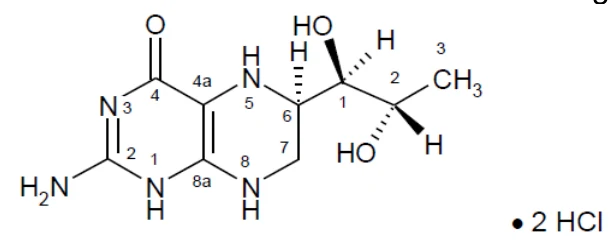
Structural formula:
Physicochemical properties: Sapropterin dihydrochloride, the active pharmaceutical ingredient in Reddy-Sapropterin (sapropterin dihydrochloride powder for oral solution), is a synthetic preparation of the dihydrochloride salt of naturally occurring tetrahydrobiopterin (BH4). Sapropterin dihydrochloride is a white to off-white crystalline powder. Sapropterin dihydrochloride is soluble in mixture of alcohol-water, DMSO, DMF and water, slightly soluble in ethanol. It melts (with decomposition) at 231-241 °C. Several polymorphic forms have been identified; however, the drug substance is manufactured as a single, stable anhydrous polymorph.
Product Characteristics:
6R-BH4 (tetrahydrobiopterin) is the naturally occurring pteridine, 6R-L-erythro-5,6,7,8 tetrahydrobiopterin (6R-THBP) that is only biochemically active in the enantiomeric R form.
6R-BH4 is an endogenous cofactor for a variety of enzymes, including phenylalanine-4 hydroxylase (PAH). BH4 enhances the function of the mutated PAH enzyme, promoting oxidation of phenylalanine (Phe) to tyrosine, thus lowering blood Phe levels.
Sapropterin dihydrochloride is a synthetic formulation of 6R-BH4, developed as an oral treatment for patients with HPA resulting from PKU. Like naturally occurring BH4, formulations of sapropterin have been shown to enable endogenous PAH and to partially restore oxidative metabolism of Phe, resulting in decreased blood Phe levels in PKU patients.
14 CLINICAL TRIALS
14.1 Trial Design and Study Demographics
Table 10: Summary of Patient Demographics and Trial Design in Controlled PKU Studies
| Study # | Trial design | Dosage, route of administration and duration | Study subjects (n=number) | Mean age (Range) | Gender |
| PKU-003 | Multicenter, Multinational, Randomized, Double-blind, Placebo- controlled | Sapropterin dihydrochloride at 10 mg/kg or placebo, orally, once daily for 6 weeks | PKU patients (n = 88) 41 on sapropterin dihydorhcloride 47 on placebo | 20 years (8 to 49 years) | 51 M/37 F |
| PKU-006 | Multicenter, Randomized, Double-blind, Placebo- controlled | Sapropterin dihydrochloride at 20 mg/kg or placebo, orally, once daily for 10 weeks | PKU patients (n = 45) 33 on sapropterin dihydrochloride 12 on placebo | 8 years (4 to 12 years) | 26 M/19 F |
Table 11: Summary of Patient Demographics and Trial Design in Open-label PKU Studies
| Study # | Trial design | Dosage, route of administration and duration | Study subjects (n=number) | Mean age (Range) | Gender |
| PKU-001 | Multicenter, Open-label | Sapropterin dihydrochloride at 10 mg/kg, orally, once daily for 8 days | PKU patients (n = 489) | 22 years (8 to 48 years) | 235 M/ 254 F |
| PKU-004 | Multicenter, Open-label | Sapropterin dihydrochloride at 5, 10 or 20 mg/kg, orally, once daily for 22 weeks | PKU patients (n = 80) | 20 years (8 to 49 years) | 47 M/33 F |
| PKU-008 | Multicenter, Open-label, Extension study | Sapropterin dihydrochloride within a range of 5 to 20 mg/kg (starting at last prescribed dose in PKU-004 and at 20 mg/kg from PKU-006), orally, once daily for 3 years, or until sapropterin dihydrochloride was commercially available | PKU patients (n = 111) | 16 years (4 to 50 years) | 67 M/44 F |
| SPARK | Multicenter, Open-label, randomized, controlled | Sapropterin dihydrochloride 10 mg/kg/day to 20 mg/kg/day orally for | PKU patients (n=56) | 21 months (2 months to <4 years) | 30 M/26 F |
| Study # | Trial design | Dosage, route of administration and duration | Study subjects (n=number) | Mean age (Range) | Gender | |||
| 26 weeks | ||||||||
SPARK Extension Period | Multicenter, Open-label, extension study | Sapropterin dihydrochloride 10 mg/kg/day to 20 mg/kg/day orally for 3 years | PKU patients (n=51) | 20 months (2 months to < 4 years) | 29 M/22 F | |||
PKU-015 substudy | Multicenter, Open-label, uncontrolled | Sapropterin dihydrochloride 20 mg/kg orally once daily for 6 months. | PKU patients (n=65) | 3.11 years (1 month to <7 years at screening) | 25 M/40 F | |||
PKU-015 Extension Period | Multicenter, Open-label, uncontrolled | Sapropterin dihydrochloride 20 mg/kg orally once daily for up to 7 years | PKU patients (n=65) | 3.11 years (1 month to < 7 years at screening) | 25 M/40 F | |||
The study population ranged in age from 1 month to 50 years and included approximately equal numbers of male and female patients.
14.2 Study Results
Study Results in Controlled and Open-label PKU Studies
The efficacy and safety of sapropterin dihydrochoride were evaluated in 6 clinical studies in patients with PKU (Studies PKU-001, PKU-003, PKU-004, PKU-006, SPARK, and PKU-015).
PKU-001 was a multicenter, open-label, uncontrolled clinical trial of 489 patients with PKU, ages 8 to 48 years (mean 22 years), who had baseline blood Phe levels ≥ 450 mcmol/L and who were not on Phe-restricted diets. All patients received treatment with sapropterin dihydrochoride 10 mg/kg/day for 8 days. For the purposes of this study, response to sapropterin dihydrochoride treatment was defined as a ≥ 30% decrease in blood Phe from baseline. At Day 8, 96 patients (20%) were identified as responders.
PKU-003 was a multicenter, double-blind, placebo-controlled study of 88 patients with PKU who responded to sapropterin dihydrochoride in the PKU-001 study. After a washout period from PKU-001, patients were randomized equally to either sapropterin dihydrochoride 10 mg/kg/day (N=41) or placebo (N=47) for 6 weeks. Efficacy was assessed by the mean change in blood Phe level from baseline to Week 6 in the sapropterin dihydrochoride-treated group as compared to the mean change in the placebo group.
The results showed that at baseline, the mean (±SD) blood Phe level was 843 (±300) mcmol/L in the sapropterin dihydrochoride-treated group and 888 (±323) mcmol/L in the placebo group. At Week 6, the sapropterin dihydrochoride-treated group had a mean (±SD) blood Phe level of 607 (±377) mcmol/L, and the placebo group had a mean blood Phe level of 891 (±348) mcmol/L. At Week 6, the sapropterin dihydrochoride- and placebo-treated groups had mean changes in blood Phe level of –239 and 6 mcmol/L, respectively (mean percent changes of –29% (±32) and 3% (±33), respectively). The difference between the groups was statistically significant (p < 0.001) (Table 12).
Table 12: PKU-003 Blood Phe Results
Sapropterin Dihydrochloride (N=41) | Placebo (N=47) | |||||
Baseline Blood Phe Level1 (mcmol/L) | ||||||
| Mean (±SD) | 843 (±300) | 888 (±323) | ||||
| Percentiles (25th, 75th) | 620, 990 | 618, 1141 | ||||
Week 6 Blood Phe Level (mcmol/L) | ||||||
| Mean (±SD) | 607 (±377) | 891 (±348) | ||||
| Percentiles (25th, 75th) | 307, 812 | 619, 1143 | ||||
Mean Change in Blood Phe From Baseline to Week 6 (mcmol/L) | ||||||
| Adjusted Mean (±SE)2 | -239 (±38) | 6 (±36) | ||||
| Percentiles (25th, 75th) | -397, -92 | -96, 93 | ||||
| Mean Percent Change in Blood Phe From Baseline to Week 6 | ||||||
| Mean (±SD) |
| 3 (±33) | ||||
| Percentiles (25th, 75th) | -61, -11 | -13, 12 | ||||
1The mean baseline levels shown in this table represent the mean of 3 pretreatment levels (Wk -2, Wk-1, and Wk 0). Treatment with sapropterin dihydrochloride or placebo started at Wk 0.
2p-value < 0.001, adjusted mean and standard error from an ANCOVA model with change in blood Phe Level from baseline to Week 6 as the response variable, and both treatment group and baseline blood Phe level as covariates.
Change in blood Phe was noted in the sapropterin dihydrochloride-treated group at Week 1 and was sustained through Week 6 (Figure 1).
Figure 1: Mean Blood Phenylalanine (Phe) Level Over Time1
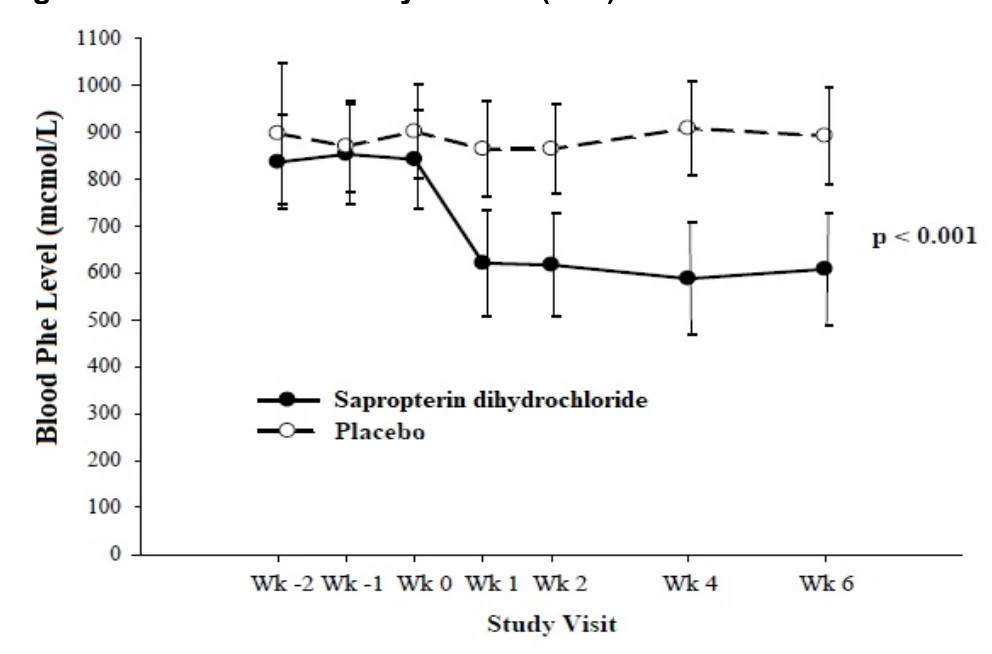
1Error bars indicate 95% confidence interval.
Note: Patients began Sapropterin dihydrochloride or Placebo at Week 0.
PKU-004 was a two-part, multicenter, open-label, extension study of 80 patients with PKU who responded to sapropterin dihydrochloride treatment in study PKU-001 and completed participation in study PKU-003. In part 1, patients underwent 6 weeks of forced dose-titration with 3 consecutive 2-week courses of sapropterin dihydrochloride at doses of 5, then 20, and then 10 mg/kg/day. Blood Phe level was monitored after 2 weeks of treatment at each dose level. At baseline, mean (±SD) blood Phe was 844 (±398) mcmol/L. Results at the end of treatment with 5, 10, and 20 mg/kg/day are presented in Table 13.
Table 13: PKU-004 Blood Phe Results From Forced Dose-Titration
Sapropterin dihydrochloride Dose Level (mg/kg/day) | No. of Patients | Mean (±SD) Blood Phe Level (mcmol/L) | Mean Changes (±SD) in Blood Phe Level From Week 0 (mcmol/L) |
Baseline (No Treatment) | 80 | 844 (±398) | — |
| 5 | 80 | 744 (±384) | -100 (±295) |
| 10 | 80 | 640 (±382) | -204 (±303) |
| 20 | 80 | 581 (±399) | -263 (±318) |
In part 2, patients were assigned a fixed dose of sapropterin dihydrochloride for 12 weeks based on their response to the 3 doses given in Part 1. Of the 80 patients in Part 2, 6 (8%) patients received 5 mg/kg/day, 37 (46%) patients received 10 mg/kg/day, and 37 (46%) patients received 20 mg/kg/day. Mean changes (±SD) in blood Phe levels from baseline to Week 22 were -172 (± 391) mcmol/L, -176 (± 259) mcmol/L and -209 (± 437) mcmol/L, respectively.
PKU-006 was a multicenter study of 90 children with PKU, ages 4 to 12 years, who were on Phe-restricted diets and who had blood Phe levels ≤ 480 mcmol/L at screening. All patients were treated with open-label sapropterin dihydrochloride 20 mg/kg/day for 8 days in part 1 of the study. Response to sapropterin dihydrochloride was defined as a ≥30% decrease in blood Phe from baseline at Day 8 and a Phe level ≤ 300 mcmol/L. At Day 8, 50 patients (56%) were considered responders to sapropterin dihydrochloride. In part 2 of the study, 45 of these PKU children, who responded to sapropterin dihydrochloride in part 1 of the study, were randomized 3:1 to treatment with sapropterin dihydrochloride 20 mg/kg/day (n=33) or placebo (n=12) for ten weeks. After 3 weeks of treatment, blood Phe levels were significantly reduced in the sapropterin dihydrochloride group with a mean ± SD decrease from baseline in blood Phe level of 148 ±
134.2 mcmol/L (p<0.001).
PKU-008 was a multicenter, open-label extension study of 111 patients with PKU who participated in PKU-004 or PKU-006. Doses in this study ranged between 5 and 20 mg/kg/day. The mean ± SD exposure to sapropterin for the entire study population was 659 ± 221 days (maximum 953) and 799 + 237 days (maximum 1151) including the previous studies.
Pediatric Population
The safety, efficacy, and population pharmacokinetics of sapropterin dihydrochloride in pediatric patients 1 month to < 7 years of age were studied in two open-label studies.
The first study, SPARK (n=56), was a multicenter, open-label, randomized, controlled study in children aged 2 months to < 4 years old with a confirmed diagnosis of BH4-responsive PKU (defined as having responded to a BH4 test with at least a 30% reduction in Phe levels). Patients were randomized 1:1 to receive either 10 mg/kg/day sapropterin dihydrochloride plus a Phe-restricted diet (n=27), or Phe- restricted diet alone (n=29) over a 26-week study period.
It was intended that all patients would maintain blood Phe levels within a range of
≥120 to <360 mcmol/L through monitored dietary intake during the 26-week study period. If after approximately 4 weeks, a patient’s dietary Phe tolerance had not increased by >20% versus baseline, the sapropterin dihydrochloride dose was increased in a single step to 20 mg/kg/day. At the end of the 26-week study period, 25 of 27 subjects in the sapropterin dihydrochloride arm were prescribed 10 mg/kg/day and 2 subjects were prescribed 20 mg/kg/day.
The results of this study demonstrated that daily dosing with 10 mg/kg/day or 20 mg/kg/day of sapropterin dihydrochloride plus a Phe-restricted diet led to statistically significant improvements in dietary Phe tolerance compared with dietary Phe restriction alone, while maintaining blood Phe levels within the target range (≥ 120 to < 360 mcmol/L). The adjusted mean dietary Phe tolerance in the sapropterin dihydrochloride plus Phe-restricted diet group was 80.6 mg/kg/day and was statistically significantly greater (p < 0.001) than the adjusted mean dietary Phe tolerance in the Phe-restricted diet-alone group (50.1 mg/kg/day). In the clinical trial extension period, patients maintained dietary Phe tolerance while on sapropterin dihydrochloride treatment in conjunction with a Phe-restricted diet, demonstrating sustained benefit over 3.5 years.
The second study, PKU-015, was an open label, single arm, uncontrolled, multicenter trial in pediatric patients with PKU, aged 1 month to less than 7 years at study entry who had Phe levels greater than or equal to 360 mcmol/L at screening. Part 1 of the study (4 weeks, n=95) was to determine whether subjects were responsive to oral sapropterin dihydrochloride dosed at 20 mg/kg/day (defined as a 30% average reduction in blood Phe concentration during the first 4 weeks). During part 1, sapropterin dihydrochloride dose and dietary Phe intake were to remain constant although if blood Phe dropped below 120 mcmol/L, Phe supplement could be gradually added to avoid unstable blood Phe swings. In part 1, 63 of 95 subjects (66.3%) were sapropterin dihydrochloride responders as defined above. Sapropterin dihydrochloride-responsive subjects in part 1 who met criteria on age-appropriate cognitive measures could continue to part 2 of the study. Part 2 of the study (up to 7 years of follow-up) evaluated neurocognitive function with age-appropriate measures, and monitored long-term safety in patients responsive to sapropterin dihydrochloride. Patients with pre-existing neurocognitive damage (IQ <80) were excluded from the study. Ninety-five patients were enrolled into part 1, and 65 patients were enrolled into part 2, of whom 49 (75%) patients completed the study with 27 (42%) patients providing Full Scale IQ (FSIQ) data at year 7.
Mean Indices of Dietary Control were maintained between 133 mcmol/L and 375 mcmol/L blood Phe for all age groups at all time points. At baseline, mean Bayley-III score (102.3, SD=9.1, n=26), WPPSI-III score (98.8-100.4, SD=14.0-15.4, n=59) and WISC-IV score (113, SD=9.8, n=4) were within the average range for the normative population.
Among 62 patients with a minimum of two FSIQ assessments, the 95% lower limit confidence interval of the mean change over an average 2-year period was -1.6 points, within the clinically expected variation of ±5 points. No additional adverse reactions were identified with long-term use of sapropterin dihydrochloride for a mean duration of 6.5 years in children less than 7 years of age at study entry.
In PKU-015, a 6-month sub-study that included only sapropterin dihydrochloride responders who met criteria on age- appropriate cognitive measures was concurrently conducted with Part 1 and Part 2, to evaluate safety and tolerability. The 6-month sub-study included 57 per protocol sapropterin dihydrochloride responders plus 8 additional subjects who were considered responders despite not strictly adhering to entry criteria (n=65). During this phase, sapropterin dihydrochloride dose could be reduced if the subject did not tolerate 20 mg/kg/day. As well, if blood Phe rose above 240 mcmol/L, Phe intake could have been gradually reduced. In the 6-month sub-study, the effectiveness of sapropterin dihydrochloride alone on reduction of blood Phe levels could not be determined due to concurrent changes in dietary Phe intake. See 8.2 Clinical Trial Adverse Reactions for safety results of this PKU-015 sub-study.
15 MICROBIOLOGY
No microbiological information is required for this drug product.
16 NON-CLINICAL TOXICOLOGY
Carcinogenicity: No evidence of carcinogenic effects was observed in mice treated orally with sapropterin dihydrochloride at doses up to 250 mg/kg/day (about the same as the human clinical dose of 20 mg/kg/day, based on body surface area) for 78 weeks; however, the treatment duration of 78 weeks is considered inadequate for a carcinogenicity study. In the 2-year rat carcinogenicity study, at oral doses of sapropterin dihydrochloride of 250 mg/kg/day (about 2 times the human clinical dose of 20 mg/kg/day, based on body surface area) there was a statistically significant increase in the incidence of benign pheochromocytomas in male rats as compared to vehicle-treated rats. A retrospective analysis of the incidence of benign pheochromocytoma in vehicle-treated animals from the same testing facility showed that the incidence observed with sapropterin dihydrochloride in the study was not different than the historical incidence of these tumors in rats treated with vehicle.
Genotoxicity: Sapropterin dihydrochloride was noted to be weakly positive in the Ames test at concentrations of 625 mcg to 5,000 mcg /plate. Sapropterin dihydrochloride was positive for producing chromosomal aberrations in Chinese Hamster Lung (with and without metabolic activation) and Chinese Hamster Ovary cells (with metabolic activation), but was negative for chromosomal aberrations in human peripheral blood lymphocytes. Sapropterin dihydrochloride was not mutagenic when assessed in in vivo mouse micronucleus tests at doses up to 2000 mg/kg/day.
Reproductive and Developmental Toxicology: Sapropterin dihydrochloride was found to have no effect on fertility of male and female rats at oral doses up to 400 mg/kg/day (about 3 times the human clinical dose of 20 mg/kg, based on body surface area).
Reproductive developmental studies have been conducted in rats and rabbits at doses up to 400 mg/kg/day and 600 mg/kg/day, respectively (about 3 times in rats and 10 times in rabbits the human clinical dose of 20 mg/kg/day, based on body surface area). No evidence of teratogenic effects has been observed in either species. In rabbits, there was a non-statistically significant increase in the incidence of holoprosencephaly at the 600 mg/kg/day dose. Placental migration of sapropterin dihydrochloride to the fetuses was not seen in rats dosed orally at 10 mg/kg/day during pregnancy.
17 SUPPORTING PRODUCT MONOGRAPHS
- 1. PrKUVAN® sapropterin dihydrochloride, tablets 100 mg, and powder for oral solution 100 mg and 500 mg, submission control 259723, Product Monograph, BioMarin International Limited. (July 05, 2022)