


Product Monograph - Opfolda
RECENT MAJOR LABEL CHANGES
| None at the time of the most recent authorization. |
|---|
TABLE OF CONTENTS
Sections or subsections that are not applicable at the time of authorization are not listed.
RECENT MAJOR LABEL CHANGES ............................................................................................. 2
TABLE OF CONTENTS ............................................................................................................... 2
PART I: HEALTH PROFESSIONAL INFORMATION ....................................................................... 4
1 INDICATIONS ................................................................................................................ 4
1.1 Pediatrics ............................................................................................................... 4
1.2 Geriatrics ............................................................................................................... 4
2 CONTRAINDICATIONS .................................................................................................. 4
4 DOSAGE AND ADMINISTRATION .................................................................................. 4
4.1 Dosing Considerations ........................................................................................... 4
4.2 Recommended Dose and Dosage Adjustment ...................................................... 5
4.4 Administration ....................................................................................................... 6
4.5 Missed Dose .......................................................................................................... 6
5 OVERDOSAGE ............................................................................................................... 7
6 DOSAGE FORMS, STRENGTHS, COMPOSITION AND PACKAGING .................................. 7
7 WARNINGS AND PRECAUTIONS ................................................................................... 7
7.1 Special Populations ................................................................................................ 8
7.1.1 Pregnancy ......................................................................................................... 8
7.1.2 Breast-feeding ................................................................................................... 8
7.1.3 Pediatrics ........................................................................................................... 9
7.1.4 Geriatrics ........................................................................................................... 9
8 ADVERSE REACTIONS ................................................................................................... 9
8.1 Adverse Reaction Overview ................................................................................... 9
8.2 Clinical Trial Adverse Reactions ............................................................................. 9
8.3 Less Common Clinical Trial Adverse Reactions ................................................... 11
8.4 Abnormal Laboratory Findings: Hematologic, Clinical Chemistry and Other Quantitative Data ............................................................................................................ 11
8.5 Post-Market Adverse Reactions .......................................................................... 11
9 DRUG INTERACTIONS ................................................................................................. 12
9.2 Drug Interactions Overview ................................................................................. 12
9.3 Drug-Behaviour Interactions ............................................................................... 12
9.4 Drug-Drug Interactions ........................................................................................ 12
9.5 Drug-Food Interactions ........................................................................................ 12
9.6 Drug-Herb Interactions ........................................................................................ 12
9.7 Drug-Laboratory Test Interactions ....................................................................... 12
10 CLINICAL PHARMACOLOGY ........................................................................................ 12
10.1 Mechanism of Action ........................................................................................... 12
10.2 Pharmacodynamics ............................................................................................. 13
10.3 Pharmacokinetics ................................................................................................ 13
11 STORAGE, STABILITY AND DISPOSAL .......................................................................... 14
PART II: SCIENTIFIC INFORMATION ........................................................................................ 15
13 PHARMACEUTICAL INFORMATION ............................................................................. 15
14 CLINICAL TRIALS ......................................................................................................... 15
14.1 Clinical Trials by Indication .................................................................................. 15
15 MICROBIOLOGY ......................................................................................................... 17
16 NON-CLINICAL TOXICOLOGY ...................................................................................... 18
PATIENT MEDICATION INFORMATION ................................................................................... 22
PART I: HEALTH PROFESSIONAL INFORMATION
1 INDICATIONS
OPFOLDA (miglustat capsules) is an enzyme stabilizer indicated in combination with POMBILITI (cipaglucosidase alfa) for the treatment of adult patients with late-onset Pompe disease (acid α-glucosidase [GAA] deficiency) weighing ≥40 kg.
OPFOLDA must be used in combination with cipaglucosidase alfa. Consult the Product Monograph of POMBILITI (cipaglucosidase alfa) for detailed information.
1.1 Pediatrics
Pediatrics (<18 years of age): No data are available to Health Canada; therefore, Health Canada has not authorized an indication for pediatric use.
1.2 Geriatrics
Geriatrics (≥65 years of age): Limited evidence from clinical studies suggests that use of OPFOLDA in combination with cipaglucosidase alfa in the geriatric population is not associated with differences in safety or effectiveness (see 4.2 Recommended Dose and Dosage Adjustment, 7.1.4 Geriatrics, and 10.3 Pharmacokinetics).
2 CONTRAINDICATIONS
OPFOLDA in combination with cipaglucosidase alfa is contraindicated in:
- Patients who are hypersensitive to miglustat or to any ingredient in the formulation, including any non-medicinal ingredient, or component of the container. For a complete listing, see 6 DOSAGE FORMS, STRENGTHS, COMPOSITION AND PACKAGING.
- Women who are or may become pregnant. If OPFOLDA in combination with cipaglucosidase alfa is administered to women of reproductive potential, they should be informed of the potential hazard to the fetus (see 7.1.1 Pregnancy).
Patients with a contraindication to cipaglucosidase alfa including:
- patients with a history of life-threatening hypersensitivity or infusion-associated reactions (IARs) (e.g., anaphylaxis and severe cutaneous reactions) to cipaglucosidase alfa, or to any ingredient in the formulation, including any non-medicinal ingredient, or component of the container when rechallenge was unsuccessful. Refer to the Product Monograph of POMBILITI (cipaglucosidase alfa) for detailed information.
4 DOSAGE AND ADMINISTRATION
4.1 Dosing Considerations
- OPFOLDA must be used in combination with cipaglucosidase alfa. Refer to the Product Monograph of POMBILITI (cipaglucosidase alfa) before taking OPFOLDA.
- Verify the pregnancy status of female patients of reproductive potential prior to initiating OPFOLDA in combination with cipaglucosidase alfa (see 2 CONTRAINDICATIONS and 7.1.1 Pregnancy).
Patient response to treatment should be routinely evaluated based on a comprehensive evaluation
- the case of an insufficient response or intolerable safety risks, discontinuation of OPFOLDA in combination with cipaglucosidase alfa treatment should be considered. Both medicinal products should either be continued or discontinued.
Patients with renal impairment
- The safety and efficacy of OPFOLDA in combination with cipaglucosidase alfa therapy have not been evaluated in patients with renal impairment.
- Plasma concentrations and exposure of miglustat increased in patients with renal impairment (see 10.3 Pharmacokinetics), based on modeling. Reduce the OPFOLDA dosage in patients with moderate (CLcr 30 to 59 mL/minute) or severe (CLcr 15 to 29 mL/minute) renal impairment (see 4.2 Recommended Dose and Dosage Adjustment).
4.2 Recommended Dose and Dosage Adjustment
OPFOLDA must be used in combination with cipaglucosidase alfa. The recommended dosage of cipaglucosidase alfa is 20 mg/kg body weight administered every other week as an intravenous infusion. Refer to the Product Monograph of POMBILITI (cipaglucosidase alfa) for detailed information on dosage and administration recommendations for cipaglucosidase alfa.
The recommended dose of OPFOLDA is based on body weight and is to be taken orally every other week in adults aged 18 years and older:
- For patients weighing ≥50 kg, the recommended dose is 260 mg (4 capsules of 65 mg).
- For patients weighing ≥40 kg to <50 kg, the recommended dose is 195 mg (3 capsules of 65 mg).
OPFOLDA should be taken approximately 1 hour but no more than 3 hours before the start of the cipaglucosidase alfa infusion (see Figure 1).
Figure 1 - Dose Timeline
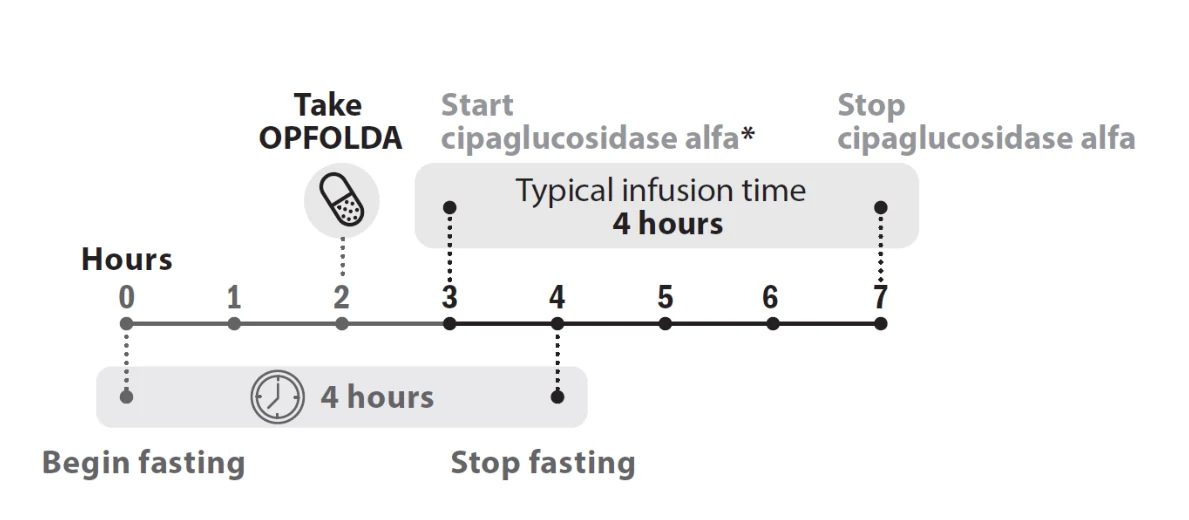
* In the event of cipaglucosidase alfa infusion delay, the start of infusion should not exceed 3 hours from taking OPFOLDA.
Patients with renal impairment
The safety and efficacy of OPFOLDA in combination with cipaglucosidase alfa therapy have not been evaluated in patients with renal impairment.
For patients with mild renal impairment (CLcr 60-89 mL/minute), the recommended OPFOLDA dosage is the same as for patients with normal renal function. The recommended dosage of OPFOLDA in patients with moderate or severe renal impairment is shown in Table 1 (see 10.3 Pharmacokinetics).
Table 1 - Recommended OPFOLDA Dosage* in Patients with Moderate or Severe Renal Impairment
| Patient Weight | Moderate Renal Impairment# (Clcr 30-59 mL/minute) | Severe Renal Impairment# (Clcr 15-29 mL/minute) |
|---|---|---|
| For patients weighing ≥50 kg | 195 mg (3 capsules of 65 mg) | 195 mg (3 capsules of 65 mg) |
| For patients weighing ≥40 kg to <50 kg | 130 mg (2 capsules of 65 mg) | 130 mg (2 capsules of 65 mg) |
* Based on modeling.
# Renal function classified by CLcr (creatinine clearance) based on the Cockcroft-Gault equation.
Geriatric use (≥65 years)
No dose adjustment is required in patients ≥65 years of age (see 7.1.4 Geriatrics and 10.3 Pharmacokinetics).
Pediatric use (<18 years)
Health Canada has not authorized an indication for pediatric use (see 1 INDICATIONS).
4.4 Administration
OPFOLDA is for oral use and should be taken on an empty stomach. The patient must fast 2 hours before and 2 hours after taking OPFOLDA (see Figure 1).
Swallow the OPFOLDA capsules whole only with unsweetened beverages, including water, tea and/or coffee with no cream, sugar, or sweeteners. Do not consume other beverages or food during the 4-hour fasting period (see Figure 1). Two hours after taking OPFOLDA, the patient can resume normal eating and drinking.
Cipaglucosidase alfa (20 mg/kg body weight) is to be administered by intravenous infusion and should start 1 hour after taking OPFOLDA. Refer to the Product Monograph of POMBILITI (cipaglucosidase alfa) for detailed information on the administration of cipaglucosidase alfa.
4.5 Missed Dose
If the OPFOLDA dosage is missed, do not start the cipaglucosidase alfa infusion alone, and re-start the treatment of these 2 medicines immediately as soon as possible, as detailed in Figure 1. If cipaglucosidase alfa infusion is missed or delayed greater than 3 hours since taking OPFOLDA, cipaglucosidase alfa should not be administered and treatment of these 2 medicines should be rescheduled at least 24 hours after OPFOLDA was last taken. If OPFOLDA and cipaglucosidase alfa are both missed, re-start treatment as soon as possible as detailed in Figure 1.
5 OVERDOSAGE
There is no experience with overdose of OPFOLDA and/or cipaglucosidase alfa.
In the event of an overdose, supportive medical care should be administered immediately including consulting with a healthcare professional and close observation of the clinical status of the patient.
| For the most recent information in the management of a suspected drug overdose, contact your regional poison control centre or Health Canada's toll-free number, 1-844 POISON-X (1-844-764-7669). |
|---|
6 DOSAGE FORMS, STRENGTHS, COMPOSITION AND PACKAGING
Table 2 - Dosage Forms, Strengths, Composition and Packaging
Each capsule contains 65 mg of miglustat. It is a hard gelatin capsule with a gray opaque cap and a white opaque body, size 2 (6.4 x 18.00 mm). Each capsule is printed with “AT2221” in black ink on the body.
OPFOLDA hard capsules are supplied in a 40 cc HDPE bottle (4 count and 24 count) with a 33 mm white polypropylene child resistant closure with induction seal.
7 WARNINGS AND PRECAUTIONS
General
OPFOLDA must be administered in combination with cipaglucosidase alfa. Refer to the Product Monograph of POMBILITI (cipaglucosidase alfa) for a detailed description of additional risks for cipaglucosidase alfa including, but not limited to, severe hypersensitivity reactions, infusion-associated reactions, immune complex-related reactions, and risk of acute cardiorespiratory failure in susceptible patients.
Carcinogenesis and Genotoxicity
Evidence of carcinogenicity and genotoxicity with OPFOLDA is limited to non-clinical findings (see 16 NON-CLINICAL TOXICOLOGY).
Driving and Operating Machinery
No studies on the effects on the ability to drive or to use machinery have been performed with OPFOLDA in combination with cipaglucosidase alfa. Since dizziness, hypotension, and somnolence have been reported as adverse reactions, OPFOLDA in combination with cipaglucosidase alfa may have minor
| Route of Administration | Dosage Form / Strength/Composition | Non-medicinal Ingredients |
| Oral | capsule, 65 mg miglustat | black iron oxide, colloidal silicon dioxide, gelatin, magnesium stearate, microcrystalline cellulose, pharmaceutical ink, pregelatinized starch (maize), sucralose, titanium dioxide |
influence on the ability to drive and use machines. Caution is required when driving or operating a vehicle or potentially dangerous machinery.
Reproductive Health
Advise women of childbearing potential to use effective contraception during treatment and for 4 weeks after the last dose of OPFOLDA in combination with cipaglucosidase alfa (see 16 NON-CLINICAL TOXICOLOGY). Based on findings from animal reproduction studies, OPFOLDA in combination with cipaglucosidase alfa may cause embryo-fetal harm when administered to a pregnant female and is contraindicated in women of childbearing potential not using reliable contraception (see 2 CONTRAINDICATIONS, 7.1.1 Pregnancy, and 16 NON-CLINICAL TOXICOLOGY).
Fertility
There are no clinical data on the effects of OPFOLDA in combination with cipaglucosidase alfa therapy on fertility.
An increase in pre-implantation loss was noted with miglustat in combination with cipaglucosidase alfa, and with miglustat alone in reproductive and developmental toxicity studies in male rats mated with untreated females and in females mated with untreated males (see 16 NON-CLINICAL TOXICOLOGY). Based on pre--implantation loss observed in female and male rats, OPFOLDA in combination with cipaglucosidase alfa may impair human female and male fertility.
Teratogenic Risk
Based on findings from animal reproduction studies, OPFOLDA in combination with cipaglucosidase alfa may cause embryo-fetal harm when administered to a pregnant female and is contraindicated during pregnancy (see 2 CONTRAINDICATIONS, 7.1.1 Pregnancy, and 16 NON-CLINICAL TOXICOLOGY). In a rabbit embryo-fetal development study, great vessel and cardiac malformations were increased in offspring of pregnant rabbits treated with oral miglustat in combination with cipaglucosidase alfa at 3-fold and 16-fold, respectively, the maximum recommended human dose (MRHD) based on plasma AUC exposure (see 16 NON-CLINICAL TOXICOLOGY).
7.1 Special Populations
7.1.1 Pregnancy
OPFOLDA in combination with cipaglucosidase alfa is contraindicated during pregnancy based on findings from animal studies and due to its unknown potential risk in humans (see 2 CONTRAINDICATIONS). There are no available human data on OPFOLDA in combination with cipaglucosidase alfa use in pregnant women. Cipaglucosidase alfa in combination with miglustat as well as with miglustat alone have shown reproductive and developmental toxicity in animal studies (i.e., rat and rabbit), including pre‑implantation loss, and clusters of great vessel and cardiac malformations in offspring (see 16 NON-CLINICAL TOXICOLOGY).
7.1.2 Breast-feeding
There are no data on the presence of OPFOLDA alone or in combination with cipaglucosidase alfa in human breast milk, the effects on the breastfed infant, or the effects on milk production. Available pharmacodynamic/toxicological data in animals have shown secretion of miglustat in milk (see 16 NON-CLINICAL TOXICOLOGY). Because of a risk to the breast-feeding new-borns/infants that cannot be excluded, advise women that breast-feeding is not recommended while on treatment with OPFOLDA in combination with cipaglucosidase alfa.
7.1.3 Pediatrics
Pediatrics (<18 years): No data are available to Health Canada; therefore, Health Canada has not authorized an indication for pediatric use.
7.1.4 Geriatrics
There is limited clinical data with OPFOLDA in combination with cipaglucosidase alfa in elderly patients. Limited data suggests that use of OPFOLDA in combination with cipaglucosidase alfa in the geriatric population is not associated with differences in safety or effectiveness. As clinical trials of OPFOLDA in combination with cipaglucosidase alfa did not include sufficient numbers of patients ≥65 years of age treated with OPFOLDA in combination with cipaglucosidase alfa, no definitive conclusions can be drawn to determine whether they respond differently from younger adult patients. Of the total number of patients treated with OPFOLDA in combination with cipaglucosidase alfa in clinical trials for late-onset Pompe disease (LOPD), 17 (11%) subjects were 65 to 74 years of age, and none were 75 years of age and older.
8 ADVERSE REACTIONS
8.1 Adverse Reaction Overview
The most common adverse reactions (≥5%) reported in OPFOLDA in combination with cipaglucosidase alfa treated subjects in all 3 studies were headache, diarrhoea, fatigue, nausea, abdominal pain, pyrexia, and chills.
The most commonly reported adverse reaction only attributable to miglustat 65 mg was constipation (1.3%).
Reported serious adverse reactions in all 3 studies were urticaria (2.0%), anaphylaxis (1.3%), chills (0.7%), cough (0.7%), flushing (0.7%), pyrexia (0.7%), presyncope (0.7%), dyspnoea (0.7%), pharyngeal oedema (0.7%), wheezing (0.7%), and hypotension (0.7%).
8.2 Clinical Trial Adverse Reactions
Clinical trials are conducted under very specific conditions. Therefore, the frequencies of adverse reactions observed in the clinical trial may not reflect frequencies observed in clinical practice and should not be compared to frequencies reported in the clinical trials of another drug.
The pooled safety analysis from 3 clinical trials included 151 adult patients with LOPD treated with OPFOLDA in combination with cipaglucosidase alfa including:
- 85 patients in the randomized, double-blind, active-controlled trial in adults
- 37 patients in the open-label extension trial where patients switched from an approved alglucosidase alfa product to OPFOLDA in combination with cipaglucosidase alfa
- 29 patients in an open-label trial
The assessment of adverse reactions was informed by subjects treated with OPFOLDA in combination with cipaglucosidase alfa across 3 clinical trials. The total mean duration of exposure was 28.0 months.
Phase 3 clinical trial (PROPEL) included 123 adult patients with LOPD who were randomized to receive treatment with OPFOLDA in combination with cipaglucosidase alfa or alglucosidase alfa in combination with placebo. Adverse reactions from the Phase 3 clinical trial (PROPEL) are listed by MedDRA system organ class in Table 3.
Table 3 - Summary of Adverse Reactions Reported in ≥2% of Patients in Phase 3 Clinical Trial (PROPEL)
OPFOLDA in Combination with Cipaglucosidase alfa N = 85 n (%) | Alglucosidase alfa in Combination with Placebo N = 38 n (%) | |
Cardiac disorders Tachycardia‡4 | 2 (2.4%) | 0 |
Gastrointestinal disorders Abdominal distension Abdominal pain‡1 Diarrhoea Nausea | 3 (3.5%) 2 (2.4%) 5 (5.9%) 2 (2.4%)** | 2 (5.3%)** 4 (10.5%) 2 (5.3%)** 5 (13.2%) |
General disorders and administration site conditions Chills Pyrexia | 2 (2.4%)* 3 (3.5%) | 0 1 (2.6%)* |
Musculoskeletal and connective tissue disorders Muscle spasms | 2 (2.4%) | 0 |
Nervous system disorders Dizziness Dysgeusia Headache‡5 | 4 (4.7%)* 2 (2.4%) 7 (8.2%) | 2 (5.3%)* 0 3 (7.9%) |
Respiratory, thoracic and mediastinal disorders Dyspnoea | 3 (3.5%) | 0 |
Skin and subcutaneous tissue disorder Pruritus Rash‡2 Urticaria‡3 | 2 (2.4%)* 3 (3.5%)* 2 (2.4%)* | 2 (5.3%) 0 0 |
Vascular disorders Flushing | 2 (2.4%)* | 0 |
* Related to cipaglucosidase alfa/alglucosidase alfa only
** Related to OPFOLDA/placebo only
‡ Adverse reactions that are medically related were grouped to a single preferred term.
1 Abdominal pain, abdominal pain upper, and abdominal pain lower are grouped under abdominal pain.
2 Rash, rash erythematous, and rash macular are grouped under rash.
3 Urticaria, mechanical urticaria, and urticaria rash are grouped under urticaria.
4 Tachycardia and sinus tachycardia are grouped under tachycardia.
5 Headache, migraine, and migraine with aura are grouped under headache.
8.3 Less Common Clinical Trial Adverse Reactions
Adverse reactions from the clinical trials reported in less than 2% of patients from pooled analysis of 3 clinical trials were:
Gastrointestinal disorders: abdominal discomfort†, constipation†, dyspepsia*, oesophageal pain*, oesophageal spasm, oral discomfort*, oral pain, swollen tongue*
General disorders and administration site conditions: asthenia, chest discomfort*, facial pain, feeling jittery†, infusion site pain*, infusion site swelling*, malaise*, non-cardiac chest pain, pain*, peripheral swelling, swelling face*
Immune system disorders: anaphylactic reaction‡2, hypersensitivity
Injury, poisoning and procedural complications: skin abrasion*
Investigations: body temperature fluctuation*, lymphocyte count decreased, platelet count decreased†
Musculoskeletal and connective tissue disorders: arthralgia, flank pain, muscle fatigue, muscular weakness, musculoskeletal stiffness
Nervous system disorders: balance disorder, burning sensation*, dysgesusia, migraine‡1, paraesthesia, presyncope*
Respiratory, thoracic and mediastinal disorders: asthma, cough*, oropharyngeal discomfort*, pharyngeal oedema*, wheezing*
Skin and subcutaneous tissue disorder: skin discolouration, skin oedema*
Vascular disorders: hypotension, pallor
* Related to cipaglucosidase alfa only; † Related to miglustat only; ‡ Adverse reactions that are medically related were grouped to a single preferred term; 1 Migraine and migraine with aura are grouped under migraine; 2 Anaphylactic reaction, Anaphylaxis are grouped under Anaphylactic reaction. Anaphylactoid reaction is manually coded to Anaphylaxis.
8.4 Abnormal Laboratory Findings: Hematologic, Clinical Chemistry and Other Quantitative Data
There were no clinically significant abnormal laboratory findings with OPFOLDA in combination with cipaglucosidase alfa in the clinical studies.
8.5 Post-Market Adverse Reactions
No new safety findings which alter the safety profile of OPFOLDA in combination with cipaglucosidase alfa have been observed post-marketing.
9 DRUG INTERACTIONS
9.2 Drug Interactions Overview
No interaction studies have been performed using OPFOLDA or with OPFOLDA in combination with cipaglucosidase alfa.
9.3 Drug-Behaviour Interactions
The interaction of OPFOLDA or OPFOLDA in combination with cipaglucosidase alfa with individual behavioural risks (e.g. cigarette smoking, cannabis use, and/or alcohol consumption) has not been studied.
9.4 Drug-Drug Interactions
In Vitro Studies Cytochrome P450 (CYP) Enzymes: Miglustat is not a known substrate or inhibitor of CYP1A2, CYP2A6, CYP2C9, CYP2C19, CYP2D6, CYP2E1, CYP3A4, or CYP4A11.
Transporter Systems: Miglustat is a substrate of P-gp, OCT1, and OCT2 but not a substrate of OAT1, OAT3, OATP1B1, OATP1B3, MATE1, MATE2-K, BCRP, or BSEP. Miglustat is an inhibitor of MATE1, but is not an inhibitor of OAT1, OAT3, OCT1, OCT2, OATP1B1, OATP1B3, MATE2-K, P-gp, BCRP, or BSEP.
No clinical drug interaction studies have been performed with OPFOLDA.
9.5 Drug-Food Interactions
A significant food effect was observed. Co-administration of miglustat with food resulted in delayed absorption by approximately 2 hours and decreased Cmax by 36% in healthy subjects. Patients should fast for 2 hours before and for 2 hours after taking OPFOLDA (see 4.4 Administration).
9.6 Drug-Herb Interactions
Interactions with herbal products have not been established.
9.7 Drug-Laboratory Test Interactions
Interactions with laboratory tests have not been established.
10 CLINICAL PHARMACOLOGY
10.1 Mechanism of Action
Pompe disease (acid maltase deficiency, glycogen storage disease type II [GSD II], glycogenosis type II) is a rare metabolic myopathy caused by a deficiency of acid alpha-glucosidase (GAA) enzyme that degrades glycogen in the lysosome. GAA deficiency leads to progressive accumulation of intra lysosomal glycogen, defective autophagy, and disruption of cellular function, primarily in cells of smooth, cardiac, and skeletal muscle.
Miglustat binds with, stabilizes, and reduces inactivation of cipaglucosidase alfa in the blood after infusion. The bound miglustat is dissociated from cipaglucosidase alfa after it is internalized and transported into lysosomes. Miglustat alone has no pharmacological activity in cleaving glycogen.
10.2 Pharmacodynamics
In the Phase 3 trial, PROPEL, subjects treated with miglustat in combination with 20 mg/kg cipaglucosidase alfa (n = 84) showed a mean reduction of -31.5% (95% CI: -38.3%, -24.8%) in urinary glucose tetrasaccharide (Hex-4) after 52 weeks. The exposure-response relationship and time course of pharmacodynamic response for the safety and effectiveness of OPFOLDA have not been fully characterized.
10.3 Pharmacokinetics
Miglustat demonstrates dose proportional pharmacokinetics over a wide dose range of 50 mg to 1120 mg single dose. Miglustat maximum concentration (Cmax) and area under the plasma concentration-time curve (AUC) increases proportionally over a dosage range from 130 mg to 260 mg (0.5 to 1 time the approved recommended dosage of 260 mg in patients weighing ≥50 kg). At the recommended OPFOLDA clinical dose of 260 mg, the mean Cmax was approximately 3000 ng/mL and the mean AUC0–∞ was approximately 25000 ng*h/mL.
Table 4 - Summary of Miglustat Pharmacokinetic Parameters in LOPD Patients at Clinical Dose
| Cohort | Cmaxa (ng/mL) | Tmaxb (h) | t½c (h) | AUC0-∞a (ng*h/mL) | CLTc (L/h) | Vdc (L) | |
| Miglustat 260 mg | 1 | 3089 (28.8) | 3.00 (0.92 - 4.05) | 5.97 (18.1) | 24938 (30.6) | 10.8 (18.1) | 93.9 (35.2) |
| Miglustat 260 mg | 3 | 3000 (17.5) | 2.60 (2.00 - 3.00) | 5.77 (17.8) | 25735 (16.5) | 10.2 (15.1) | 86.3 (28.4) |
Abbreviations: AUC0–∞ = area under the curve from 0 to infinity; CLT = total clearance following intravenous administration; Cmax = maximum observed plasma concentration; t½ = half-life; Tmax = time to reach the maximum observed concentration; Vd = terminal phase volume of distribution following oral administration
Note: Cohort 1: ambulatory ERT-experienced adults with LOPD; Cohort 3: ambulatory ERT-naïve adults with LOPD a Geometric mean (CV%)
b Median (Min - Max)
c Arithmetic mean (CV%)
Absorption
The rate of absorption (tmax) of miglustat was approximately 2 to 3 hours.
Effect of food
A significant food effect was observed and resulted in a decreased Cmax by 36% and delayed absorption by approximately 2 hours (see 4.4 Administration).
Metabolism
Miglustat is largely unmetabolised with <5% of a radiolabeled dose recovered as glucuronides.
Distribution
The apparent volume of distribution of miglustat was approximately 94 L in adult patients with LOPD.
Elimination
The apparent clearance of miglustat was approximately 10 L/hr. The terminal elimination half-life was approximately 6 hours. The major route of excretion of miglustat is renal.
Special Populations and Conditions
No clinically significant differences in the pharmacokinetics of miglustat were observed based on age (18 to 74 years) and sex.
Based on pooled population pharmacokinetic analysis, sex, age (18 to 74 years), ERT history and race/ethnicity did not have clinically meaningful effect on the exposure to miglustat in combination with cipaglucosidase alfa.
- Pediatrics: No data are available to Health Canada; therefore, Health Canada has not authorized an indication for pediatric use.
- Geriatrics: Based on the limited experience with the use of miglustat in combination with cipaglucosidase alfa therapy in patients above the age of 65 years old and a pooled population pharmacokinetic analysis, no dose adjustment is recommended in elderly patients.
- Sex: Based on a pooled population pharmacokinetic analysis, sex did not have a clinically meaningful effect on miglustat in combination with cipaglucosidase alfa exposures.
- Hepatic Insufficiency: The effect of hepatic impairment on the pharmacokinetics of miglustat is unknown. The pharmacokinetics of miglustat in combination with cipaglucosidase alfa therapy have not been evaluated in patients with hepatic impairment.
- Renal Insufficiency: The AUC0-24hr of miglustat increased by 21%, 32%, and 41% in patients with mild (CLcr 60 to 89 mL/minute, estimated by Cockcroft-Gault), moderate (CLcr 30 to 59 mL/minute), and severe (CLcr 15 to 29 mL/minute) renal impairment, respectively, compared to patients with normal renal function based on modeling. Dosage reduction of OPFOLDA is recommended in patients with moderate and severe renal impairment (see 4 DOSAGE AND ADMINISTRATION). The effect of end stage renal disease on the pharmacokinetics of miglustat is unknown.
11 STORAGE, STABILITY AND DISPOSAL
Store at room temperature (15°C to 25°C).
Do not use if inner seal is missing or broken.
Keep out of reach and sight of children.
Any unused medicinal product or waste material should be disposed of in accordance with local requirements.
PART II: SCIENTIFIC INFORMATION
13 PHARMACEUTICAL INFORMATION
Drug Substance
Proper/Common name: miglustat
Chemical name: 1,5-(butylimino)-1,5-dideoxy-D-glucitol
Molecular formula and molecular mass: C10H21NO4 and 219.28 g/mol
Structural formula:
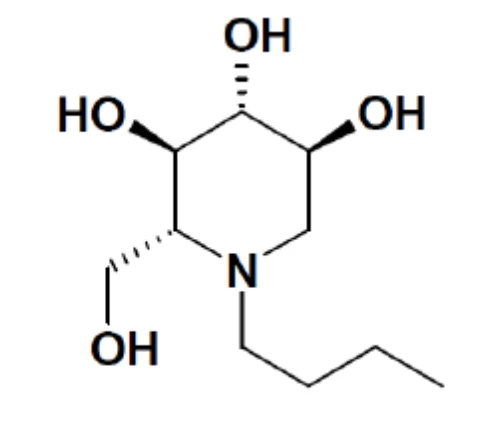
Physicochemical properties: Miglustat is a white to off-white crystalline solid (powder). It is highly soluble in water (>1000 mg/mL as a free base).
14 CLINICAL TRIALS
14.1 Clinical Trials by Indication
Table 5 - Summary of Patient Demographics for Clinical Trials in Late-onset Pompe Disease
| Study # | Study design | Dosage, route of administration and duration | Study subjects (n) | Mean age (Range) | Sex |
| ATB200-03 (PROPEL) | Multicenter, double-blind, randomized, active-controlled | 20 mg/kg cipaglucosidase alfa IV + 195/260 mg miglustat oral capsules every other week Or 20 mg/kg alglucosidase alfa IV + placebo oral capsules every other week Duration: 52 weeks | 123* | 46.8 years (19 to 74 years) | Male: 56 Female: 67 |
* The Intent-to-Treat (ITT) population comprised 123 subjects. The efficacy population, excluding one outlier, consisted of 122 subjects. IV: intravenous
A 52-week Phase 3 randomized, double-blind, active-controlled, international, multi-center clinical trial was conducted in adult subjects (≥18 years) diagnosed with late-onset Pompe disease and weighing ≥40 kg. Subjects were randomized 2:1 to receive OPFOLDA in combination with cipaglucosidase alfa or alglucosidase alfa plus placebo every other week for 52 weeks. The efficacy population included a total of 122 subjects of which 95 (78%) had received prior ERT with alglucosidase alfa (ERT-experienced) and 27 (22%) had never received ERT (ERT-naïve).
Demographics, baseline 6-minute walk distance (6MWD), and sitting percent predicted forced vital capacity (FVC) were representative of the population and generally similar in the 2 treatment arms. More than two thirds (67%) of ERT-experienced subjects had been on ERT treatment for more than 5 years prior to entering the PROPEL study (mean of 7.4 years).
Efficacy endpoints included assessment of motor function and pulmonary function.
Motor Function
6-Minute Walk Distance (6MWD) at 52 weeks
The efficacy results of 6MWD are summarized in Table 6.
ERT-experienced Vs. ERT-naïve patients:
The ERT-experienced subjects treated with OPFOLDA in combination with cipaglucosidase alfa (n = 65) had a mean improvement in walk distance from baseline to Week 52 of 16.5 meters as compared to a mean of 0.6 meters for alglucosidase alfa plus placebo (n = 30), indicating a OPFOLDA in combination with cipaglucosidase alfa treatment effect of 16.1 meters (95% CI: -0.1, 32.3).
The ERT-naïve subjects treated with OPFOLDA in combination with cipaglucosidase alfa (n = 20) had a mean improvement in walk distance from baseline to Week 52 of 33.4 meters as compared to 38.3 meters for alglucosidase alfa plus placebo (n = 7), indicating a OPFOLDA in combination with cipaglucosidase alfa treatment effect of -4.9 meters (95% CI: -45.4, 35.6).
Pulmonary Function
Sitting percent predicted Forced Vital Capacity (FVC) at 52 weeks
The efficacy results of FVC are summarized in Table 6.
ERT-experienced Vs. ERT-naïve patients:
The ERT-experienced subjects treated with OPFOLDA in combination with cipaglucosidase alfa (n = 64) showed a mean change in FVC from baseline to Week 52 of -0.6% as compared with subjects treated with alglucosidase alfa and placebo of -3.5% (n = 30), indicating a OPFOLDA in combination with cipaglucosidase alfa treatment effect of 2.9% (95% CI: 0.5%, 5.3%).
The ERT-naïve subjects treated with OPFOLDA in combination with cipaglucosidase alfa (n = 20) showed a mean change in FVC from baseline to Week 52 of -5.2% as compared with subjects treated with alglucosidase alfa and placebo (n = 7) of -2.5%, indicating a OPFOLDA in combination with cipaglucosidase alfa treatment effect of -2.7% (95% CI: -9.1%, 3.9%).
Table 6 - Results of Key Endpoints at Duration 52 weeks in All Subjects from PROPEL Study*
Cipaglucosidase alfa-OPFOLDA (N = 85) | Alglucosidase alfa-placebo (N = 37) | |||||||
|---|---|---|---|---|---|---|---|---|
| Primary endpoint | ||||||||
| 6MWD | ||||||||
Baseline n Mean (SD) Median | n = 85 357.9 (111.8) 359.5 | n = 37 351.0 (121.3) 365.5 | ||||||
Change from baseline at Week 52 n Mean (SD) (95% CI) Median | n = 85 20.5 (41.3) (11.6, 29.4) 12.7 | n = 37 7.7 (40.0) (-5.6, 21.1) 1.4 | ||||||
Change to Week 52 Diff. in LS means (SE) (95% CI) | 13.1a (7.4) (-1.5, 27.7) | |||||||
| Key Secondary endpoint | ||||||||
| Sitting Percent Predicted FVC | ||||||||
Baseline n Mean (SD) Median | n = 85 70.7 (19.6) 70.0 | n = 37 69.7 (21.5) 71.0 | ||||||
Change from baseline at Week 52 n Mean (SD) (95% CI) Median | n = 84 -1.5 (6.0) (-2.8, -0.2) -2.2 | n=37 -3.7 (4.4) (-5.1, -2.2) -3.6 | ||||||
Change to Week 52 Diff. in LS means (SE) (95% CI) | 2.1b (1.1) (0.0, 4.3) | |||||||
Abbreviations: CI: confidence interval; Diff.: difference; LS: least square; SD: standard deviation; SE: standard error
* The value of one subject was an outlier and was excluded from the analysis.
a Missing values at Week 52 were imputed using the data from the control group. The treatment difference of the mean was estimated by non-parametric analysis of covariance which included treatment, gender, ERT status, baseline 6MWD, age, weight, and height in the model.
b Missing values at Week 52 were imputed using the data from the control group. The treatment difference of the mean was estimated by analysis of covariance which included treatment, gender, ERT status, baseline FVC, age, weight, and height in the model.
15 MICROBIOLOGY
No microbiological information is required for this drug product.
16 NON-CLINICAL TOXICOLOGY
General Toxicology:
Animal toxicology findings of OPFOLDA are based, in part, from studies from another miglustat product. In studies conducted for this other miglustat product, the following effects were noted following daily administration.
The main effects common to all species tested (mouse, rat, rabbit, dog and monkey) were weight decreases in body weight gain and food consumption, accompanied by diarrhea, and, at higher doses, damage to the gastrointestinal mucosa (erosions and ulceration). Further, effects seen in animals at doses that result in exposure levels moderately higher than the clinical exposure level were changes in lymphoid organs in all species tested, transaminase changes, vacuolation of thyroid and pancreas, cataracts, nephropathy, and myocardial changes in rats. These findings were considered to be secondary to deterioration of study animals and are not relevant for human risk assessment. Findings in dogs included tremor and absent corneal reflexes at 105 mg/kg/day (6 times the human therapeutic systemic exposure at 200 mg t.i.d., based on body surface area comparisons mg/m2) after a 4-week oral gavage toxicity study using doses of 35, 70, 105, and 140 mg/kg/day.
Cataracts were observed in rats at ≥420mg/kg/day (2 times the human therapeutic systemic exposure at 200 mg t.i.d., based on AUC) in a 52-week oral gavage toxicity study using doses of 180, 420, 840, and 1680 mg/kg/day.
Gastrointestinal (GI) necrosis, inflammation, and hemorrhage were observed in dogs at ≥85 mg/kg/day (5 times the human therapeutic systemic exposure at 200 mg t.i.d. based on body surface area comparisons, mg/m2) after a 2-week oral (capsule) toxicity study using doses of 85, 165, 495, and 825 mg/kg/day. Similar GI toxicity occurred in rats at 1200 mg/kg/day (4 times the human therapeutic systemic exposure at 200 mg t.i.d., based on AUC) in a 26-week oral gavage toxicity study using doses of 300, 600, and 1200 mg/kg/day. In monkeys, similar GI toxicity occurred at ≥750 mg/kg/day (3 times the human therapeutic systemic exposure at 200 mg t.i.d., based on AUC) following a 52-week oral gavage toxicity study using doses of 750 and 2000 mg/kg/day. In a 13-week repeat-dose toxicity study in cynomolgus monkeys, males and females were administered cipaglucosidase alfa intravenously both with and without orally administered miglustat, once every other week for 13 weeks (7 doses). Dose groups consisted of combination doses (50 mg/kg cipaglucosidase alfa with 25 mg/kg miglustat or 100 mg/kg cipaglucosidase alfa with 175 mg/kg miglustat), or 100 mg/kg cipaglucosidase alfa or 175 mg/kg miglustat administered alone. There were no changes attributable to cipaglucosidase alfa or miglustat or to their co-administration. The NOAEL for miglustat in this study with or without cipaglucosidase alfa co-administration was 175 mg/kg/dose, the highest dosage tested. At this dose level, the mean sex-averaged AUC0-t levels were 204000 ng·h/mL, for miglustat alone, and 216000 ng·h/mL, when administered in combination with 100 mg/kg cipaglucosidase alfa. The corresponding margin of exposures (MOEs) were 10-fold and 11-fold human exposure at the maximum recommended human dose (MRHD), respectively, based on the mean gender sex-averaged AUC0-t.
Carcinogenicity:
The carcinogenicity of OPFOLDA is based on studies from another miglustat product. Below are findings from the carcinogenicity studies with the other miglustat product.
Administration of miglustat to male and female Sprague Dawley rats for 100 weeks at dose levels of 30, 60 and 180 mg/kg/day resulted in an increased incidence of testicular interstitial cell (Leydig cell) hyperplasia and interstitial cell adenomas in male rats at all dose levels. NOAEL was not established, and the effect was not dose dependent. Mechanistic studies revealed that decreased prolactin production may contribute to Leydig cell hyperplasia and adenomas in the rat. This is a rat-specific mechanism, which is considered to be of low relevance for humans. There were no significant increases in tumors in female rats or in male rats at other sites. Interstitial cell adenomas in rats with non-genotoxic compounds are generally considered to be of low relevance to humans.
Administration of miglustat to 300 male and female CD1 mice by oral gavage at dose levels of 210, 420 and 840/500 mg/kg/day (dose reduction after half a year) for 2 years resulted in an increased incidence of inflammatory, hyperplastic and, occasionally, neoplastic lesions in the large intestine in both sexes. Neoplasms were found in 0/50, 0/49, 1/50, 2/50 and 3/50 males and 0/50, 0/49, 0/49, 1/50 and 2/49 females treated at 0, 0, 210, 420 and 840/500 mg/kg/day, respectively. Trend tests were significant for males and females (males: p=0.005, females: p=0.017) whereas group-wise comparisons revealed a significant increase in incidence for males at the top dose of 840/500 mg/kg/day, only (p=0.007). Since intestinal effects were observed after oral but not intravenous administration of miglustat, the local exposure (in mg/kg/day) is considered to be relevant rather than the systemic exposure. The doses in this study corresponded to 49, 98 and 196/116 times the recommended human dose at 100 mg three times a day. Carcinomas in the large intestine occurred occasionally at all doses with a statistically significant increase in the high dose group. The relevance of these findings to humans cannot be excluded. There was no drug-related increase in tumor incidence in any other organ.
Genotoxicity:
The genotoxicity of OPFOLDA is based on studies from another miglustat product. Below are findings from the genotoxicity studies with the other miglustat product.
Miglustat was not mutagenic or clastogenic in a battery of in vitro and in vivo assays including the bacterial reverse mutation (Ames), chromosomal aberration (in human lymphocytes), gene mutation in mammalian cells (Chinese hamster ovary), and mouse micronucleus assays.
Reproductive and Developmental Toxicology:
In a segment I fertility and early embryonic development study in female rats were administered 70, 150 or 400 mg/kg body weight (bw) cipaglucosidase alfa by intravenous injection, 60 mg/kg bw oral miglustat, or 400 mg/kg bw cipaglucosidase alfa in combination with miglustat (60 mg/kg bw) every other day for 14 days prior to mating with un-dosed males and continuing through gestation day 7 (GD 7). Male rats were administered 70, 150 or 400 mg/kg bw cipaglucosidase alfa by intravenous injection, 60 mg/kg bw oral miglustat, or 400 mg/kg bw cipaglucosidase alfa in combination with miglustat (60 mg/kg bw) every other day for 6 weeks beginning 28 days prior to mating with un-dosed females. Fertility indices were not affected in males or females. Pre-implantation loss was observed in the female fertility component of the study in both miglustat alone and the combination treatment group. Whether this pre-implantation loss in female rats would be reversible if treatment were discontinued prior to cohabitation is unknown. Pre-implantation loss in naïve females, mated with treated males was observed in the combination group. However, lower pre-implantation loss was observed in naïve females mated with treated males during the 2-week recovery period. There was no effect of cipaglucosidase alfa in combination with miglustat therapy or cipaglucosidase alfa alone on spermatogenesis. A NOAEL for developmental toxicity was not identified for the combination dose. Observed pre-implantation loss occurred at the LOAEL of 400 mg/kg bw cipaglucosidase with 60 mg/kg bw miglustat with systemic exposure approximately 27-fold (cipaglucosidase alfa AUC) and 4-fold (miglustat AUC) that of human exposure at the MRHD of 20 mg/kg bw cipaglucosidase alfa with 260 mg miglustat for female rats on GD 7 respectively, based on AUC-24h of 38050 µg·h/mL for cipaglucosidase alfa and 87600 ng·h/mL for miglustat with the combined dose.
The impact of OPFOLDA on fertility is based, in part, on studies from another miglustat product. Below are findings from the fertility studies with the other miglustat product.
Fertility studies conducted with another miglustat product showed that male rats, given 20 mg/kg/day miglustat (exposure less than that expected for the MRHD of miglustat 260 mg, based on BSA comparisons, mg/m2) by oral gavage, 14 days prior to mating, had decreased spermatogenesis with altered sperm morphology and motility and decreased fertility. Decreased spermatogenesis was reversible following 6 weeks of miglustat withdrawal in this study. A higher dose of 60 mg/kg/day (approximately 2 times the MRHD of miglustat, based on BSA comparisons, mg/m2) resulted in seminiferous tubule and testicular atrophy/degeneration. Female rats were given oral miglustat gavage doses of 20, 60, and 180 mg/kg/day beginning 15 days prior to mating, during mating and to the expected completion of organogenesis on day 17 of pregnancy. Effects observed at 180 mg/kg/day (approximately 6 times the MRHD of miglustat, based on BSA comparisons) included reduced body weight gain from Day 12 of pregnancy, increased early embryonic death and increased post-implantation losses resulting in reduced numbers of live foetuses per female. In addition, foetal weight was reduced at 180 mg/kg/day. Also, the extent of post-implantation losses at 60 mg/kg/day were slightly elevated resulting in slightly reduced number of live foetuses per female. There were no effects of treatment apparent at 20 mg/kg/day.
In a segment II embryo-fetal development study, pregnant rats were administered 70, 150 or 400 mg/kg bw cipaglucosidase alfa by intravenous injection, 60 mg/kg bw oral miglustat, or 400 mg/kg bw cipaglucosidase in combination with miglustat (60 mg/kg bw) every other day during gestation from GD 6 to GD 18. No adverse findings were observed in pregnant rats or their offspring when cipaglucosidase was administered alone or in combination with miglustat. Systemic exposure at the NOAEL of 400 mg/kg bw cipaglucosidase alfa with 60 mg/kg bw miglustat is 20-fold and 4-fold that of humans at the MRHD (20 mg/kg bw cipaglucosidase alfa with 260 mg miglustat), based on AUC0-24h of 28850 µg·h/mL and 84300 ng·h/mL, for cipaglucosidase alfa and miglustat, respectively, with the combined dose.
In an embryo-fetal development study in rabbits, pregnant animals were administered 30, 70 or 175 mg/kg bw cipaglucosidase alfa by intravenous injection, 25 mg/kg bw oral miglustat, or 150 mg/kg bw cipaglucosidase in combination with miglustat (25 mg/kg bw) every other day during gestation from GD 7 to GD 19. Adverse effects occurred at the LOAEL combination dose (175 mg/kg cipaglucosidase alfa with 25 mg/kg oral miglustat) including decreased maternal food consumption, body weight gains and an increase in cardiovascular malformations (e.g., atretic pulmonary trunk, ventricular septum defect, and dilated aortic arch) in offspring. A NOAEL could not be established for the combination group since only one combination dose was tested. These findings occurred at 16-fold and 3-fold the exposure at MRHD of cipaglucosidase alfa and miglustat (20 mg/kg bw cipaglucosidase with 260 mg miglustat), respectively, based on AUC0-24h of 22550 µg·h/mL and 66100 ng·h/mL, for cipaglucosidase alfa and miglustat, respectively, with the combined dose. It is not possible to exclude that the embryo-fetal adverse effects observed in the rabbits could have occurred following a single exposure to the combination.
In a segment III pre- and post-natal development study in rats, pregnant animals were administered 70, 150 or 400 mg/kg bw cipaglucosidase alfa by intravenous injection, 60 mg/kg bw oral miglustat, or 400 mg/kg bw cipaglucosidase in combination with miglustat (60 mg/kg bw) every other day during gestation from GD 6 to GD 20 and from lactation day (LD) 1 to LD 19. Increased maternal and pup mortality was observed at the combination dose. A NOAEL could not be established for the combination group since only one combination dose was tested. Evaluation of milk in rats from the combination treatment group on LD 13 showed secretion of miglustat and excretion of cipaglucosidase alfa in rat milk. Milk to plasma ratios were 1.72 for miglustat and 0.038 for cipaglucosidase alfa.