


Product Monograph - Xermelo
RECENT MAJOR LABEL CHANGES
| 4 Dosage and Administration, 4.2 Recommended Dose and Dosage Adjustment | 01/2022 |
| 7 Warnings and Precautions | 01/2022 |
TABLE OF CONTENTS
RECENT MAJOR LABEL CHANGES .................................................................................. 2
TABLE OF CONTENTS .......................................................................................................... 2
PART I: HEALTH PROFESSIONAL INFORMATION ......................................................... 4
1 INDICATIONS ............................................................................................................... 4
1.1 Pediatrics ............................................................................................................. 4 1.2 Geriatrics .............................................................................................................. 4
2 CONTRAINDICATIONS .............................................................................................. 4
4 DOSAGE AND ADMINISTRATION ........................................................................... 4
4.1 Dosing Considerations ........................................................................................ 4 4.2 Recommended Dose and Dosage Adjustment ................................................ 4 4.4 Administration ...................................................................................................... 5 4.5 Missed Dose ........................................................................................................ 5
5 OVERDOSAGE ............................................................................................................ 5
6 DOSAGE FORMS, STRENGTHS, COMPOSITION AND PACKAGING ............... 5
7 WARNINGS AND PRECAUTIONS ............................................................................ 6
7.1 Special Populations............................................................................................. 7 7.1.1 Pregnant Women ............................................................................................ 7 7.1.2 Breast-feeding ................................................................................................. 7 7.1.3 Pediatrics ......................................................................................................... 7 7.1.4 Geriatrics ......................................................................................................... 7
8 ADVERSE REACTIONS .............................................................................................. 7
8.1 Adverse Reaction Overview ............................................................................... 7 8.2 Clinical Trial Adverse Reactions ........................................................................ 8 8.3 Less Common Clinical Trial Adverse Reactions (<2%) (not included above) 10
8.5 Post-Market Adverse Reactions ...................................................................... 10
9 DRUG INTERACTIONS ............................................................................................. 10
9.2 Drug Interactions Overview .............................................................................. 10 9.4 Drug-Drug Interactions ..................................................................................... 11 9.5 Drug-Food Interactions ..................................................................................... 12 9.6 Drug-Herb Interactions ..................................................................................... 12 9.7 Drug-Laboratory Test Interactions ................................................................... 12 10 CLINICAL PHARMACOLOGY ................................................................................. 12
10.1 Mechanism of Action ..................................................................................... 12 10.2 Pharmacodynamics ....................................................................................... 12 10.3 Pharmacokinetics .......................................................................................... 13
11 STORAGE, STABILITY AND DISPOSAL ............................................................... 16
12 SPECIAL HANDLING INSTRUCTIONS .................................................................. 16
PART II: SCIENTIFIC INFORMATION ................................................................................ 17
13 PHARMACEUTICAL INFORMATION ..................................................................... 17
14 CLINICAL TRIALS ..................................................................................................... 18
14.1 Trial Design and Study Demographics ........................................................ 18 14.2 Study Results ................................................................................................. 19
16 NON-CLINICAL TOXICOLOGY ............................................................................... 22
PATIENT MEDICATION INFORMATION ........................................................................... 24
PART I: HEALTH PROFESSIONAL INFORMATION
1 INDICATIONS
XERMELO (telotristat ethyl) is indicated for the treatment of refractory carcinoid syndrome diarrhea, in combination with somatostatin analogue (SSA) therapy, in patients inadequately controlled by SSA therapy alone.
1.1 Pediatrics
Pediatrics (<18 years of age): No data are available to Health Canada; therefore, Health Canada has not authorized an indication for pediatric use.
1.2 Geriatrics
Geriatrics (>65 years of age): Evidence from clinical studies suggests that use in the geriatric population is associated with no differences in safety or effectiveness, but greater sensitivity of some older individuals cannot be ruled out.
2 CONTRAINDICATIONS
XERMELO is contraindicated in patients who are hypersensitive to this drug or to any ingredient in the formulation, including any non-medicinal ingredient, or component of the container. For a complete listing, see DOSAGE FORMS, STRENGTHS, COMPOSITION AND PACKAGING.
4 DOSAGE AND ADMINISTRATION
4.1 Dosing Considerations
Available data suggest that clinical response is usually achieved within 12 weeks of treatment. After 12 weeks of treatment with XERMELO, patients should be reassessed to determine the appropriateness of ongoing treatment with XERMELO.
Concomitant use with Short-acting Octreotide
When short-acting octreotide is used in combination with XERMELO, administer short-acting octreotide at least 30 minutes after administering XERMELO (see DRUG INTERACTIONS).
4.2 Recommended Dose and Dosage Adjustment
The recommended dose of XERMELO is 250 mg three times a day (tid), taken orally.
Renal impairment
No change in dosage is required in patients with mild, moderate or severe renal impairment; who are not requiring dialysis (see ACTION AND CLINICAL PHARMACOLOGY). As a precautionary measure, it is recommended that patients with severe renal impairment will be monitored for signs of reduced tolerability.
The use of XERMELO is not recommended in patients with end-stage renal disease requiring dialysis (eGFR < 15 mL/min).
Hepatic impairment
In patients with mild hepatic impairment (Child Pugh score A), the recommended dose of XERMELO is 250 mg twice daily, based on tolerability. In patients with moderate hepatic impairment (Child Pugh score B), the recommended dose of XERMELO is 250 mg once daily, based on tolerability.
The use of XERMELO is not recommended in patients with severe hepatic impairment (Child Pugh score C) (see ACTION AND CLINICAL PHARMACOLOGY).
Elderly patients (65 years of age and above)
No dosage adjustments are required in elderly patients, but greater sensitivity of some older individuals cannot be ruled out (see ACTION AND CLINICAL PHARMACOLOGY).
Pediatrics
Health Canada has not authorized an indication for pediatric use.
4.4 Administration
Take XERMELO with food (see ACTION AND CLINICAL PHARMACOLOGY, Pharmacokinetics, Food Effect).
4.5 Missed Dose
If a dose is missed, take the next dose at the regular time. Do not take 2 doses at the same time to make up for a missed dose.
5 OVERDOSAGE
Symptoms
There is limited clinical experience with XERMELO overdose in humans. Gastro-intestinal disorders including nausea, diarrhea, abdominal pain and vomiting have been reported in healthy subjects taking a single dose of telotristat ethyl 1,500 mg in a Phase 1 study.
Management of overdose
Treatment of an overdose should include general symptomatic management.
For management of a suspected drug overdose, contact your regional poison control centre.
6 DOSAGE FORMS, STRENGTHS, COMPOSITION AND PACKAGING
Table 1 Dosage Forms, Strengths, Composition and Packaging.
| Route of Administration | Dosage Form / Strength/Composition | Non-medicinal Ingredients |
XERMELO telotristat ethyl 250 mg film-coated tablets are supplied in blister packs packaged in cartons of 90 tablets.
XERMELO tablets are white to off-white film-coated oval tablets with ‘T-E’ debossed on one side and ‘250’ debossed on the other side.
7 WARNINGS AND PRECAUTIONS
Driving and Operating Machinery
Due caution should be exercised when driving or operating a vehicle or potentially dangerous machinery. Fatigue may occur following administration of XERMELO.
Gastrointestinal
Constipation and Intestinal Obstruction
XERMELO reduces bowel movement (BM) frequency. Constipation, in some cases severe, has been reported in patients using a higher dose, i.e., telotristat ethyl 500 mg tid (see ADVERSE REACTIONS, Gastrointestinal Disorders). Patients should be monitored for signs and symptoms of constipation. If constipation develops, the use of XERMELO and other concomitant therapies affecting bowel motility should be re-evaluated.
Cases of intestinal obstruction have been reported during post-approval use of XERMELO (see ADVERSE REACTIONS, Post-Market Adverse Reactions). In the majority of cases where time to onset was reported, intestinal obstruction occurred within 3 months. Patients with known or suspected gastrointestinal obstruction (e.g., constipation, bowel obstruction, strictures) or any diseases/conditions that affect bowel transit (e.g., ileus of any type) may also be at higher risk of intestinal obstruction. If intestinal obstruction develops, dose reduction, interruption, or discontinuation of XERMELO should be considered.
Hepatic/Biliary/Pancreatic
Hepatic Enzyme Elevations
Elevations in hepatic enzymes were observed in clinical studies (see ADVERSE REACTIONS, Hepatic Enzyme Elevations). Laboratory monitoring of hepatic enzymes prior to and during XERMELO therapy is recommended as clinically indicated. In patients with hepatic impairment, continuous monitoring for adverse events related to worsening of liver function is recommended.
Patients who develop symptoms suggestive of hepatic dysfunction should have liver enzymes checked and XERMELO should be discontinued if liver injury is suspected. Therapy with XERMELO should not be resumed unless liver injury can be explained by another cause.
Psychiatric
Depressive Disorders
Depression, depressed mood and decreased interest have been reported in clinical studies and post-marketing experience in some patients treated with XERMELO, especially at higher doses,
| Oral | tablet 250 mg | Tablet core: Croscarmellose sodium, Hydroxypropylcellulose, Lactose anhydrous, Magnesium stearate, Silica, colloidal anhydrous Film-coating: Macrogol 3350, Polyvinyl alcohol - partially hydrolysed, Talc, Titanium dioxide |
i.e., telotristat ethyl 500 mg tid (see ADVERSE REACTIONS, Depression). Patients should be advised to report any symptoms of depression, depressed mood and decreased interest to their physicians.
Reproductive Health
Fertility
No studies on the effect of Xermelo on human fertility have been conducted.
7.1 Special Populations
7.1.1 Pregnant Women
Women of childbearing potential
Women of childbearing potential should be advised to use adequate contraception during treatment with XERMELO.
Pregnancy
XERMELO is not recommended during pregnancy and in women of childbearing potential not using contraception. Animal studies have shown developmental toxicity (see NON-CLINICAL TOXICOLOGY). There are no data for the use of XERMELO in pregnant women.
7.1.2 Breast-feeding
Patients should not breast-feed during XERMELO treatment, since it is unknown whether telotristat ethyl and its metabolite are excreted in human breast milk. A risk to newborns/infants cannot be excluded.
7.1.3 Pediatrics
Pediatrics (<18 years of age): No data are available to Health Canada; therefore, Health Canada has not authorized an indication for pediatric use.
7.1.4 Geriatrics
No dosage adjustments are required in elderly patients, but greater sensitivity of some older individuals cannot be ruled out (see ACTION AND CLINICAL PHARMACOLOGY).
8 ADVERSE REACTIONS
8.1 Adverse Reaction Overview
The overall safety of XERMELO was evaluated in 239 patients, of whom 131 patients were exposed to XERMELO for at least 48 weeks (mean duration of treatment 67 weeks), and 83% of these patients were exposed to XERMELO for at least 72 weeks (mean duration of treatment 107 weeks). Most of these patients were exposed to a higher dose of XERMELO than currently recommended, i.e., telotristat ethyl 500 mg tid.
The placebo-controlled safety dataset was derived from two 12-week placebo-controlled, double-blind studies, that included Study LX-301, the pivotal registration study, and Study LX-303, a supportive clinical study. Safety was assessed using the incidence of treatment-emergent adverse events in both studies. This dataset includes 211 patients with carcinoid syndrome, with 70 patients treated with XERMELO 250 mg tid, 70 patients with telotristat ethyl 500 mg tid, and 71 with placebo.
The most frequently reported adverse events (AEs) in the placebo-controlled dataset were gastrointestinal disorders, including nausea and abdominal pain.
In the placebo-controlled safety dataset, 16 (22.9%) patients in the XERMELO 250 mg tid group, nine (12.9%) patients from the telotristat ethyl 500 mg tid group, and 12 (16.9%) patients in the placebo group, discontinued study treatment due to AEs. The AEs leading to discontinuation were most frequently related to gastrointestinal or liver disorders for patients treated with XERMELO. Gastrointestinal disorders accounted for discontinuation in 10.0% of patients treated with XERMELO 250 mg tid over 12 weeks, 7.1% in those treated with telotristat ethyl 500 mg tid, and 7.0% with placebo, of which, 5.7%, 2.9%, and 2.8%, were due to abdominal pain, respectively. GGT elevations accounted for 2.9%, 1.4%, and 0% of patient discontinuations, respectively.
Serious adverse events (SAE) were reported in 8 (11.4%) patients treated with XERMELO 250 mg tid, 11 (15.7%) patients with telotristat ethyl 500 mg tid, and 12 (16.9%) patients with placebo.
8.2 Clinical Trial Adverse Reactions
Because clinical trials are conducted under very specific conditions, the adverse reaction rates observed in the clinical trials may not reflect the rates observed in practice and should not be compared to the rates in the clinical trials of another drug. Adverse reaction information from clinical trials is useful for identifying drug-related adverse events and for approximating rates.
Adverse Events in Two 12-week Controlled Studies
In two 12-week, double-blind, placebo-controlled studies, 70 patients with carcinoid syndrome received XERMELO 250 mg tid in combination with SSA therapy. Approximately 25% of patients reported receiving one or more concomitant medications to treat depression, anxiety and/or insomnia. Other frequently reported concomitant medications were antidiarrheals and analgesics. The mean age was 63 years, 57% were older than 65 years, 50% were male, and 94% white. The mean body mass index was 24.87 kg/m2.
AEs for the 12-week placebo-controlled studies, occurring in ≥ 5% of patients in the XERMELO 250 mg tid group and at an incidence greater than in the placebo group, are shown in Table 2, by system organ class.
Table 2 Adverse Events Reported in ≥5% of XERMELO Treated Patients and at an
Incidence Greater than Placebo
XERMELO 250 mg tid N = 70 n (%) | Placebo N = 71 n (%) |
Gastrointestinal Disorders Nausea Abdominal Pain Abdominal Pain Upper Constipation Abdominal Distension Flatulence | 9 (12.9) 13 (18.6) 4 (5.7) 4 (5.7) 5 (7.1) 4 (5.7) | 9 (12.7) 12 (16.9) 3 (4.2) 3 (4.2) 3 (4.2) 1 (1.4) |
General Disorders and Administration Site Conditions Fatigue Pyrexia Edema Peripheral | 7 (10.0) 6 (8.6) 5 (7.1) | 6 (8.5) 2 (2.8) 1 (1.4) |
Nervous System Disorders Headache | 5 (7.1) | 3 (4.2) |
Investigations Increased gamma-glutamyl transferase (GGT) | 5 (7.1) | 0 |
Vascular Disorders Flushing | 6 (8.6) | 4 (5.6) |
Renal and Urinary Disorders Urinary Tract Infection | 5 (7.1) | 2 (2.8) |
Description of Selected Adverse Events
Hepatic Enzyme Elevations: Elevations in ALT >3 × upper limit of normal (ULN) or ALP > 2 x ULN have been reported in patients receiving therapy with XERMELO, with most cases being reported at a higher dose of XERMELO than recommended for treatment, i.e., telotristat ethyl 500 mg tid (see WARNINGS AND PRECAUTIONS, Hepatic/Biliary/Pancreatic). These have generally not been associated with concomitant elevations in total serum bilirubin. The increases were largely reversible on dose interruption or reduction, or recovered while maintaining treatment at the same dose.
In the placebo-controlled safety dataset of patients with carcinoid syndrome, elevations of ALT were reported as an AE in 2.9% of patients treated with XERMELO 250 mg tid, 4.3% of patients treated with telotristat ethyl 500 mg tid, and 0% of patients treated with placebo. Elevations of AST were reported in 1.4%, 2.9%, and 0% of patients in the XERMELO 250 mg tid, telotristat ethyl 500 mg tid, and placebo groups, respectively. GGT elevations as an AE occurred in 7.1%, 7.1%, and 0% of patients in the same groups, respectively. Alkaline phosphatase (ALP) increases were reported only in the telotristat ethyl 500 mg tid group in 4.3% of patients, and not in the XERMELO 250 mg tid or placebo groups.
Gastrointestinal Disorders: Constipation was reported in 5.7% of patients (4/70) in the XERMELO 250 mg group, 7.1% (5/70) in the telotristat ethyl 500 mg tid group, and in 4.2% of patients (3/71) in the placebo group. Constipation as a serious adverse event (SAE) was observed in 3 patients out of 239 patients treated at a higher dose than currently recommended, i.e., with telotristat ethyl 500 mg tid, in the overall safety population (see WARNINGS AND PRECAUTIONS, Gastrointestinal).
Depression: In the placebo-controlled safety dataset, depression was reported as an adverse event in 2.9% of patients treated with XERMELO 250 mg tid, 11.4% treated with telotristat ethyl 500 mg tid, and in 4.2% treated with placebo (see WARNINGS AND PRECAUTIONS, Psychiatric).
8.3 Less Common Clinical Trial Adverse Reactions (<2%) (not included above)
Cardiac disorders: palpitations
Gastrointestinal disorders: dry mouth, gingival bleeding, intestinal obstruction General disorders and
administration site conditions: mucosal inflammation, peripheral edema Investigations: liver function test abnormal, increased blood cholesterol, increased hepatic enzyme Metabolic and nutrition disorders: decreased appetite, hyperglycemia
Nervous system disorders: tremor
Respiratory, thoracic and
mediastinal disorders: oropharyngeal pain
Skin and subcutaneous tissue
disorders: alopecia, night sweats, maculopapular rash
8.5 Post-Market Adverse Reactions
Gastrointestinal Disorders: Intestinal obstruction has been reported with post-marketing use of XERMELO. If intestinal obstruction develops, dose reduction, interruption, or discontinuation of XERMELO should be considered.
Neurological Disorders: Dizziness has been reported with post-marketing use of XERMELO.
9 DRUG INTERACTIONS
9.2 Drug Interactions Overview
In vitro Assessment of Drug Interactions
In vitro data suggest that telotristat ethyl and telotristat are not substrates for CYP enzymes.
CYP3A4 substrates and inducers: In vitro, telotristat ethyl inhibits CYP 3A4 suggesting a potential interaction with CYP 3A4 substrates. Telotristat ethyl and telotristat were not shown to be inducers of CYP 3A4 based on in vitro findings. The potential of telotristat ethyl as an inducer of CYP 3A4 was not assessed at concentrations expected in the intestines, due to its low solubility in vitro.
CYP 2B6 substrates: In vitro, telotristat ethyl treatment resulted in concentration dependent increase in CYP 2B6 mRNA levels suggesting possible CYP 2B6 induction. Concomitant use of XERMELO may decrease the efficacy of drugs that are CYP 2B6 substrates (e.g. valproic acid, bupropion, sertraline) by decreasing their systemic exposure. Monitoring for suboptimal efficacy is recommended.
P-glycoprotein (P-gp) and Multi-Resistance Protein 2 (MRP-2) transporters: Telotristat ethyl and telotristat are not substrates of the transporters, P-gp and MRP-2. In vitro, telotristat ethyl inhibited P-gp and BCRP, but telotristat did not, at the clinically relevant concentrations. In vivo drug interaction potential via inhibition of BCRP is low based on in vitro studies and in vivo findings. Based on in vitro studies, in vivo drug interaction potential via inhibition of organic cation transporter 1 (OCT1), OCT2, organic anion transporter 1 (OAT1), OAT3, organic anion transporting polypeptide 1B1 (OATP1B1), OATP1B3, or bile salt export pump (BSEP) transporters by telotristat ethyl and telotristat is low at the recommended dosage. Telotristat ethyl inhibited MRP2-mediated transport (98% inhibition).
9.4 Drug-Drug Interactions
CYP 3A4 Substrates
Concomitant use of XERMELO may decrease the efficacy of drugs that are CYP 3A4 substrates (e.g., midazolam, everolimus, sunitinib, simvastatin, ethinyloestradiol, amlodipine, cyclosporine) by decreasing their systemic exposure. Monitor for suboptimal efficacy and consider increasing the dose of concomitant CYP 3A4 substrates, if necessary.
Following administration of multiple doses of telotristat ethyl, the systemic exposure to concomitant midazolam was significantly decreased. When 3 mg midazolam was co-administered orally after 5-day treatment with telotristat ethyl 500 mg tid (twice the recommended dosage), the mean Cmax, and AUC0-inf for midazolam were decreased by 25%, and 48%, respectively, compared to administration of midazolam alone. The mean Cmax, and AUC0-inf for the active metabolite, 1’-hydroxymidazolam, were also decreased by 34%, and 48%, respectively.
Short-acting Octreotide
A study examining the effect of short-acting octreotide (3 doses of 200 micrograms injected subcutaneously 8 hours apart) on the single dose pharmacokinetics of telotristat ethyl 500 mg in healthy volunteers showed an 86% and 81% decrease in geometric mean Cmax and AUC0-last of telotristat ethyl. The geometric mean Cmax and AUC0-last of telotristat were 79% and 68% lower, respectively. If treatment with short-acting octreotide is needed in combination with XERMELO, administer short-acting octreotide at least 30 minutes after administration of XERMELO (see DOSAGE AND ADMINISTRATION).
Reduced exposures to telotristat ethyl and telotristat were not observed in a 12-week double-blind, placebo-controlled, randomised, multicentre clinical studies in adult patients with carcinoid syndrome on long-acting SSA therapy given single doses of XERMELO or multiple doses of telotristat ethyl 500 mg tid.
Fexofenadine (sensitive P-gp substrate and MRP-2 substrate)
The Cmax and AUC of fexofenadine (a P-gp and MRP-2 substrate) increased by 16% when a single dose of fexofenadine 180 mg was co-administered orally with multiple doses of telotristat ethyl 500 mg tid (twice the recommended dose) for 5 days. These changes in exposures and maximal concentrations are not considered clinically significant. Clinically meaningful interactions with P-gp and MRP-2 substrates are unlikely.
Acid Reducers
Concomitant use of telotristat etiprate with acid-reducers (omeprazole and famotidine) showed that the AUC of telotristat ethyl was increased 2-3 times, while the AUC of the active metabolite (telotristat) was not changed. Since telotristat ethyl is rapidly converted to its active metabolite, which is >25 times more active than telotristat ethyl, no dose adjustments are required when using XERMELO with acid reducers.
Carboxylesterase 2 (CES2)
In vitro, telotristat ethyl inhibited CES2 with an IC50 of approximately 0.56 µM. In phase 3 clinical trials, telotristat was routinely combined with loperamide with no evidence of safety concerns. Concomitant use of XERMELO may change the exposure of medicinal products that are CES2 substrates (e.g prasugrel, irinotecan, capecitabine and flutamide). If co-administration is unavoidable, monitor for suboptimal efficacy and safety events.
9.5 Drug-Food Interactions
XERMELO is recommended to be administered with food (see ACTION AND CLINICAL PHARMACOLOGY, Pharmacokinetics, Food Effect).
9.6 Drug-Herb Interactions
Interactions with herbal products have not been established.
9.7 Drug-Laboratory Test Interactions
Interactions with laboratory tests have not been established.
10 CLINICAL PHARMACOLOGY
10.1 Mechanism of Action
Both the prodrug (telotristat ethyl) and its active metabolite (telotristat) are inhibitors of L-tryptophan hydroxylase (TPH1 and TPH2), the rate limiting step in serotonin biosynthesis. In vitro inhibitory potency of telotristat towards tryptophan hydroxylase is about 29 times higher than that of telotristat ethyl. Serotonin plays a critical role in regulating several major physiological processes, including secretion, motility, inflammation, and sensation of the gastro-intestinal tract, and is over-secreted in patients with carcinoid syndrome. Serotonin is converted to 5-hydroxyindoleacetic acid (5-HIAA) which is excreted in the urine. Through inhibition of peripheral TPH1, XERMELO reduces the production of serotonin which can be measured by u5-HIAA levels.
10.2 Pharmacodynamics
In healthy subjects, telotristat ethyl 500 mg tid (twice the recommended dose) for 14 days decreased whole blood serotonin and 24-hour u5-HIAA from baseline. A decrease in 24-hour u5-HIAA was observed as early as after 5 days of treatment.
In two clinical studies in patients with well-differentiated metastatic neuroendocrine tumours having carcinoid syndrome, 24-hour u5-HIAA was decreased from baseline following 6 and 12 weeks of treatment with XERMELO 250 mg tid.
Cardiac Electrophysiology
A thorough QT study was conducted, that was a randomized, double-blind, placebo- and positive-controlled crossover study evaluating the effects of a single dose of 1500 mg (as free base) telotristat etiprate on ECG intervals in healthy subjects (N=47). No clinically meaningful effects on the QTcF interval, the QRS duration, the PR interval, or heart rate were observed.
10.3 Pharmacokinetics
After oral administration, telotristat etiprate is rapidly hydrolysed to telotristat ethyl and hippuric acid. Telotristat ethyl then metabolized via carboxylesterases to its active and major metabolite telotristat prior to reaching the systemic circulation.
The pharmacokinetics of telotristat ethyl and telotristat have been characterized in healthy volunteers and patients with carcinoid syndrome.
Absorption: After oral administration of XERMELO 250 mg tablet, single dose to healthy volunteers, telotristat ethyl was rapidly absorbed, and metabolized to its active metabolite telotristat. Peak plasma levels of telotristat ethyl were achieved in 0.50 to 2.00 hours, and those of telotristat in 1.00 to 4.00 hours and thereafter declined in a biphasic manner with a relatively fast terminal phase for telotristat ethyl (1.15 h), and longer terminal elimination for telotristat (3.90 h). After oral administration of telotristat ethyl 500 mg tid for 14 days in healthy volunteers, steady state mean plasma AUC0-6 and Cmax were 3255 ng.hr/mL and 1028 ng/mL, respectively for telotristat and AUC0-6 and Cmax were 15.06 ng.hr/mL and 4.89 ng/mL, respectively for telotristat ethyl (Table 3). Peak plasma concentration and AUC of telotristat ethyl and telotristat appeared to be dose proportional following administration of a single dose of telotristat ethyl in the range of 100 mg to 1000 mg under fasted conditions.
The AUC0-6, Cmax and tmax of telotristat ethyl after single dose administration of 250 mg telotristat ethyl (administered as telotristat etiprate) in carcinoid patients are 15.3 ng.hr/mL, 3.97 ng/mL and 1.07 hours. The AUC0-6, Cmax and tmax of telotristat after single dose administration of 250 mg of telotristat ethyl in carcinoid patients are 1423 ng.hr/mL, 523 ng/mL and 2 hours. In patients treated with XERMELO 250 mg tid, a slight accumulation of telotristat levels was observed with a median accumulation ratio based on AUC0-4h of 1.55, with a high inter-subject variability.
The pharmacokinetics of telotristat ethyl and telotristat following administration of multiple doses of telotristat ethyl 500 mg tid (twice the recommended clinical dose) with meal in patients with carcinoid syndrome on long-acting SSA therapy is noted below in Table 3.
Table 3 Summary of Telotristat Ethyl and Telotristat Mean Pharmacokinetic Parameters in
Healthy Subjects and Carcinoid Patients on Background SSA Therapy at Steady-State at a Dose of Telotristat Ethyl 500 mg TID (twice the recommended clinical dose)
| N | Cmax (SD) (ng/mL) | t1/2 (SD) (h) | AUC0-6 (SD) (ng.h/mL) | Cl/F (SD) (L/h) | tmax (SD) (h) | ||
| Healthy Volunteersa | |||||||
| Telotristat ethyl | 6 | 4.89 (1.43) | 2.97 (1.39) | 15.06 (4.03) | 2.67(0.82) | 1.50 (0.75 to 4.00) | |
| Telotristat | 6 | 1028 (344) | 11.7 (1.74) | 3255 (1030) | 152 (45.7) | 4.00 (2.00 to 4.00) | |
| Carcinoid Patientsb | |||||||
| Telotristat ethyl | 26 | 7.25 (5.41) | - | 22.9 (12.5)c | 1.04 (0.00 to 2.08) | ||
| Telotristat | 26 | 924 (484) | - | 3006 (1785)d | 2.00 (0.717 to 4.00) | ||
a From Study LX102, steady-state conditions on Day 14
b From Study LX301, steady-state conditions at Week 24
c n=13
d n=22
Food Effect
In a food effect study, administration of a single dose of telotristat ethyl 500 mg (twice the recommended dose) with a high-fat meal resulted in higher exposure to both telotristat ethyl (Cmax, AUC0-tlast, and AUC0-∞ being 112%, 272%, and 264% higher, respectively compared with the fasted state and telotristat Cmax, AUC0-tlast, and AUC0-∞, 47%, 32%, and 33% higher, respectively compared with the fasted state). XERMELO is recommended to be taken with food (see DOSAGE AND ADMINISTRATION).
Distribution: Both telotristat ethyl and telotristat are > 99% bound to human plasma proteins. From the population modeling, the apparent total volume of distribution for telotristat in patients with carcinoid syndrome was estimated at 348.7 L, suggesting tissue distribution.
Metabolism: After oral administration, telotristat ethyl undergoes hydrolysis via carboxylesterases to its active and major metabolite telotristat. Telotristat is further metabolized. The only metabolite of telotristat representing consistently > 10% of total plasma drug-related material was its oxidative decarboxylated deaminated metabolite, LP-951757. Systemic exposure to LP-951757 was about 35% of the systemic exposure to telotristat in the mass balance study. LP-951757 was pharmacologically inactive at TPH1 in vitro.
Elimination: Following a single 500 mg oral dose of 14C-telotristat ethyl, approximately 93.2% of the dose was recovered over 240 hours. The majority was eliminated in the feces (92.8%).
Telotristat ethyl and telotristat have a low renal elimination following oral administration (less than 1% of the dose recovered from the urine).
Following a single oral 250 mg dose of telotristat ethyl to heathy volunteers, urine concentrations of telotristat ethyl were close to or below the limit of quantification (<0.1 ng/mL). The renal clearance of telotristat was 0.126 L/h.
Special Populations and Conditions
Pediatrics: No data are available to Health Canada; therefore, Health Canada has not authorized an indication for pediatric use.
Geriatrics: Population pharmacokinetics analysis indicated that age (18 to 83 years) had no significant effect on the pharmacokinetics of telotristat. The median dose normalised (to 250 mg tid) AUC0-24,ss for patients >65 years were 10.56% lower, compared to patients <65 years. Evidence from clinical studies suggests that use in the geriatric population is associated with no differences in safety or effectiveness.
Hepatic Insufficiency: In a hepatic impairment study conducted at a single dose of 500 mg telotristat ethyl, exposures to telotristat ethyl and telotristat (based on AUC0-last) were higher in patients with mild hepatic impairment (2.3- and 2.4-fold, respectively) and in patients with moderate hepatic impairment (3.2- and 3.5-fold, respectively) compared with healthy subjects. Dosing adjustment of telotristat ethyl is recommended in mild and moderate hepatic impairment (respectively Child Pugh score A and B).
In a study in subjects with severe hepatic impairment, at a single dose of 250 mg, exposure to telotristat ethyl (AUCt and Cmax) was increased 317.0% and 529.5%, respectively, and to telotristat (AUCt, AUCinf, and Cmax) 497%, 500%, and 217%, respectively, for subjects with severe hepatic impairment compared to subjects with normal hepatic function. In addition, the half-life of telotristat was increased (the mean half-life was 16.0 hours in subjects with severe hepatic impairment compared to 5.47 hours in healthy subjects). Based on these findings, the use of XERMELO is not recommended in patients with severe hepatic impairment (Child Pugh score C) (see DOSAGE AND ADMINISTRATION).
Renal Insufficiency: A study was conducted to investigate the impact of renal impairment on the pharmacokinetics of a single dose of telotristat ethyl 250 mg. Eight subjects with moderate to severe renal impairment not requiring dialysis [eGFR ≤ 33 mL/min at screening and ≤40 mL/min at the day prior to dosing] and eight healthy to mildly impaired subjects [eGFR ≥88 mL/min at screening and ≥83 mL/min at the day prior to dosing] were included.
In the subjects with moderate to severe renal impairment, an increase (1.3-fold) in peak exposure Cmax of telotristat ethyl and an increase (<1.52-fold) in plasma exposure (AUC) and Cmax of its active metabolite telotristat was observed compared to healthy to mildly impaired subjects.
Administration of a single dose of 250 mg was well tolerated in subjects with moderate to severe renal impairment.
Overall, moderate to severe renal impairment did not result in a clinically meaningful change in the PK profile or safety of telotristat ethyl and its metabolite telotristat. Therefore, dose adjustment does not appear necessary in patients with mild, moderate or severe renal impairment; who are not requiring dialysis. Given the high variability observed, it is recommended as a precautionary measure that patients with severe renal impairment will be monitored for signs of reduced tolerability.
The efficacy and safety in patients with end-stage renal disease who require dialysis (eGFR < 15 mL/min/1.73 m² requiring dialysis) has not been established. (see DOSAGE AND ADMINISTRATION).
Sex: Population pharmacokinetic analysis indicated that sex does not affect the pharmacokinetics of telotristat to a clinically significant extent. At steady-state, following multiple dose administration of telotristat ethyl 500 mg tid, mean Cmax and AUC0-6 values at week 24 were 15 % and 29 % higher in female respectively, with no apparent difference in corresponding median.
Race: Population pharmacokinetic analysis showed that there was no difference in exposure between Caucasian and African-American subjects. The median dose normalised AUC0-24,ss for healthy African-American subjects was 3.13% lower compared to Caucasian subjects.
Obesity: Population pharmacokinetic analysis indicated that BMI does not affect the pharmacokinetics of telotristat to a clinically significant extent. The median dose normalized AUC0-24,ss for patients between 40-62.5 kg was 10.16 % lower compared to patients with a body weight of 71.2-78.7 kg. The median dose normalized AUC0-24,ss for patients between 87-114.7 kg was 0.78% lower compared to patients with a body weight of 71.2-78.7 kg.
Genetic polymorphism: The influence of genetic polymorphism on the pharmacokinetics of telotristat ethyl and telotristat has not been evaluated.
11 STORAGE, STABILITY AND DISPOSAL
Store XERMELO at room temperature (15°C to 30°C).
Keep out of sight and reach of children.
12 SPECIAL HANDLING INSTRUCTIONS
None.
PART II: SCIENTIFIC INFORMATION
13 PHARMACEUTICAL INFORMATION
Drug Substance
Proper name: telotristat ethyl
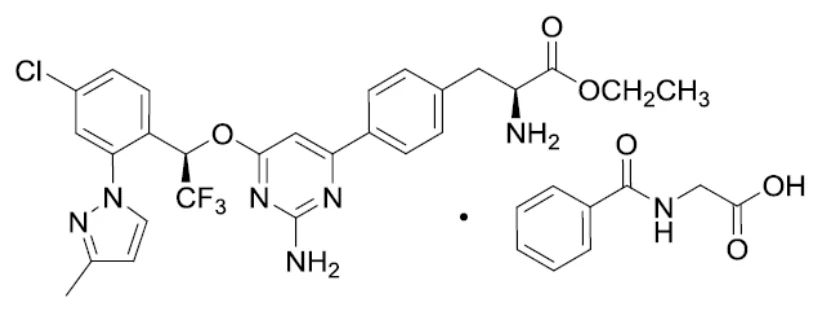
Chemical name: XERMELO tablets contain telotristat ethyl, as telotristat etiprate. Telotristat etiprate is the hippuric acid salt form of telotristat ethyl (the free base).
The chemical name for telotristat etiprate is: [(1S)-1-[[4-[2-amino-6-[(1R)-1-[4-chloro-2-(3-methylpyrazol-1-yl) phenyl]-2,2,2-trifluoro-ethoxy] pyrimidin-4-yl]phenyl]methyl]-2-ethoxy-2-oxo-ethyl]ammonium; 2-benzamidoacetate (IUPAC Name).
Molecular formula and molecular mass:
telotristat etiprate: C27H26ClF3N6O3•C9H9NO3 molecular mass: 754.2 g/mol telotristat ethyl: C27H26ClF3N6O3 molecular mass: 575.0 g/mol
Structural formula:
Physicochemical properties:
Physical Description: Telotristat etiprate is a non-hygroscopic white to off-white crystalline powder.
Solubility (250C): <1.1 mg/mL in water
pH 1 (0.1N HCL): solubility >71 mg/mL pH 3 phosphate buffer: solubility is 0.30 mg/mL pH 5 to 9: solubility is negligible
pH 11 (0.001N NaOH): Drug substance hydrolyses
Polymorphic form: Form 1
pKa: pKa 1 = 3.4 (pyrimidine; measured)
pKa 2 = 6.7 (amine, measured)
Partition coefficient: log P = 5.1
Melting Point: 145.50C and 168.80C [Differential Scanning Calorimetry (DSC)]
onset temperatures
14 CLINICAL TRIALS
14.1 Trial Design and Study Demographics
Two clinical studies, conducted to evaluate the effects of XERMELO in patients with carcinoid syndrome associated with metastatic neuroendocrine tumours, are summarised in Table 4, below.
Table 4 Summary of XERMELO Clinical Trials in the Treatment of Carcinoid Syndrome
| Study | Trial design | Dosage, route of administration and duration | Study subjects (n) |
LX-301 (TELESTAR) | A phase 3, randomized placebo-controlled parallel-group, multicentre, double-blind study in patients with CS not adequately controlled by a SSA; 12-week double blind treatment, with a 36-week open-label extension (OLE) evaluating telotristat ethyl 500 mg tid. | XERMELO (250 mg) TID, oral telotristat ethyl (500 mg) TID, oral placebo TID, oral telotristat ethyl (500 mg) TID, oral (OLE) | N=45 N=46 N=45 N=115 |
LX-303 (TELECAST) | A phase 3, randomized placebo-controlled parallel-group, multicentre, double-blind study in patients with CS;12-week double blind treatment, with a 36-week OLE evaluating telotristat ethyl 500 mg tid. | XERMELO (250 mg) TID, oral telotristat ethyl (500 mg) TID, oral placebo TID, oral telotristat ethyl (500 mg) TID, oral (OLE) | N=25 N=25 N=26 N=67 |
The efficacy and safety of XERMELO for the treatment of carcinoid syndrome in patients with metastatic neuroendocrine tumours who were receiving SSA therapy was established in a 12-week double-blind, placebo-controlled, randomized, multicentre phase 3 study in adult patients (TELESTAR) which included a 36-week extension during which all patients were treated with open-label telotristat ethyl at 500 mg tid.
A total of 136 patients in the TELESTAR study, with overall mean age of 63.5 years (range: 37-88 years), 52% male, and 90% Caucasian, were randomized 1:1:1 to receive treatment with XERMELO 250 mg or telotristat ethyl 500 mg or placebo three times daily. All patients had well-differentiated metastatic neuroendocrine tumours with carcinoid syndrome. They were on SSA therapy and had ≥ 4 bowel movements (BM) per day.
The study was comprised of a 12-week double-blind treatment (DBT) period, in which patients initially received placebo (n=45), or XERMELO 250 mg (n=45) three times daily for one week, or a higher dose (telotristat ethyl 500 mg; n=46). During the study, patients were allowed to use rescue medication, i.e., short-acting SSA therapy, and anti-diarrheals for symptomatic relief, but were required to be on a stable dose of long-acting SSA therapy for the duration of the DBT period. XERMELO was taken not more than 15 minutes before, or 1 hour after, food.
14.2 Study Results
TELESTAR Study
The primary efficacy endpoint was the change in the mean number of BM per day from baseline, averaged over the 12-week double-blind treatment period. Secondary endpoints included changes from baseline in u5-HIAA at Week 12, daily number of flushing episodes averaged over the 12-week double-blind treatment period, and abdominal pain averaged over the 12-week double-blind treatment period.
The efficacy of XERMELO was demonstrated by significantly greater reductions of BM frequency averaged over 12 weeks for both doses of telotristat ethyl studied, compared to placebo (p<0.001). BM frequency was noted to be comparable between XERMELO 250 mg tid and telotristat ethyl 500 mg tid groups. Statistically significant differences were also seen with XERMELO 250 mg tid in reductions in BM frequency at Week 12, in percentage of patients with durable response (Table 5), and in reductions in u5-HIAA excretion over 24 hours at Week 12, compared to placebo.
Table 5 BM response in the TELESTAR Study
Parameter XERMELO 250 mg tid Placebo BMs/day At
Baseline
Number of Patients 45 45 Baseline Mean (SD) 6.1 (2.07) 5.2 (1.35)
Primary Endpoint:
Change From
Baseline In
BMs/day
Averaged Over 12
Weeks
Number of Patients 45 45
Change Averaged over 12 Weeks:
Mean (SD) ˗1.4 (1.37) ˗0.6 (0.83)
Difference in Arithmetic Means vs
Placebo (95% CL)
˗0.8
(˗1.28, ˗0.34) ---
Estimate of Treatment Difference
(97.5% CL)a
˗0.8b
(˗1.26, ˗0.29) ---
Change From
Baseline In
BMs/day At
Week 12
Number of Patients 36 35
Change at Week 12: Mean (SD) ˗1.7 (1.71) ˗0.9 (1.23)
Difference in Arithmetic Means vs
Placebo (95% CL)
˗0.8
(˗1.55, ˗0.13) ---
Estimate of Treatment Difference
(95% CL)a
˗0.7c
(˗1.40, ˗0.05) --- Parameter XERMELO 250 mg tid Placebo
Percentage Of
Patients With
Durable
Response*
Number of Patients 45 45
Responder, n (%) 20 (44.4) 9 (20.0)
Odds Ratiod
(95.0% CL)
3.5e
(1.33, 9.16) ---
CL=confidence limit; tid=three times a day; SD=standard deviation.
a. Statistical tests used a blocked 2-sample Wilcoxon Rank Sum statistic (van Elteren test) stratified by the u5-HIAA stratification at randomization. CLs were based on the Hodges-Lehmann estimator of the median paired difference. b. p<0.001
c. p=0.07
d. Statistical test, odds ratio, and 95% CL were based on a logistic regression model with responder as the dependent variable, treatment group and u5-HIAA stratification at randomization as fixed effects, and Baseline mean number of BMs (counts/day) as a covariate.
e. p=0.011
* Patients with durable response were defined as responders with ≥30% reduction in number of BM/day for ≥50% of the time during the 12-week double-blind treatment period of the study.
The reductions in urinary 5-HIAA (u5-HIAA) values from baseline were statistically significant at Week 12 for XERMELO 250 mg tid compared to placebo. The u5-HIAA excretion at baseline was 92.6 mg/24hrs for XERMELO 250 mg tid treated patients and 81.0 mg/24 hrs for placebo-treated patients. The percent change from baseline in u5-HIAA excretion at Week 12 was a reduction of 42.3% in XERMELO 250 mg tid treated patients, and an increase of 14.4% in placebo-treated patients, for a significant treatment-related reduction of 56.7% in favour of XERMELO 250 mg tid.
The weekly efficacy results in BM frequency for the 250 mg XERMELO dosage, compared to placebo, are shown in Figure 1.
Figure 1 Mean change from baseline in bowel movements by study week in TELESTAR during the double-blind treatment period (Intent-to-Treat Population)
0 1 2 3 4 5 6 7 8 9 10 11 12
Study week -2.50
-2.25
-2.00
-1.75
-1.50
-1.25
-1.00
-0.75
-0.50
-0.25
0.00
Telotristat Ethyl 250mg
Placebo
Figure 1 - Mean Change from Baseline in Bowel Movements by Study Week during the Double-blind
Treatment Period, Intent-to-Treat Population
Note: This figure plots the arithmetic mean and 95% confidence limits (CL) (based on normal approximation) of the change from Baseline in the number of daily bowel movements (counts/day) averaged at each week.
The proportion of patients reporting reductions from baseline in daily BM frequency, averaged over the 12-week DBT period, were:
- Patients with a mean reduction of at least 1 BM/day: XERMELO 250 mg (66.7%), and placebo (31.1%);
- Patients with a mean reduction of at least 1.5 BM/day: XERMELO 250 mg (46.7%), and placebo (20.0%); and
- Patients with a mean reduction of at least 2 BM/day: XERMELO 250 mg (33.3%), and placebo (4.4%).
The mean values for cutaneous flushing at baseline were 2.8/day in the XERMELO 250 mg group and 1.8/day for the placebo group, respectively. There was no significant difference between treatment groups for the endpoint of flushing.
At the conclusion of the 12-week DBT period, 115 patients (85.2%) entered the 36-week open-label extension period, where all patients were titrated to receive a higher dose of telotristat ethyl, i.e., 500 mg tid. Mean absolute reductions of approximately 2 BM per day from study entry, and reductions in urinary and plasma 5-HIAA levels, were maintained throughout the open-label extension period.
TELECAST Study
In this study of similar design to the TELESTAR study, a total of 76 patients were evaluated for efficacy. Overall mean age was 63 years (range: 35-84 years), 55% were male, and 97% were Caucasian. All patients had well-differentiated metastatic neuroendocrine tumours with carcinoid syndrome. Most patients (92.1%) had fewer than 4 BM/day, and all except nine (9) were treated with SSA therapy. During the study, patients were allowed to use rescue medication, i.e., short-acting SSA therapy, and anti-diarrheals for symptomatic relief.
The primary endpoint was the change in u5-HIAA at Week 12 from baseline. The mean u5-HIAA excretion at baseline was 69.1 mg/24 hours in the XERMELO 250 mg group (n=17), and 84.8 mg/24 hours in the placebo group (n=22). The percent change from baseline in u5-HIAA excretion at Week 12 was -33.2% in the XERMELO 250 mg group, compared to +97.7% in the placebo group and the estimated treatment difference was -54.0% (95% CL: -85.0, -25.1; p<0.001).
The mean number of BM/day at baseline was 2.5 and 2.2 in the XERMELO 250 mg tid (n=25) and placebo (n=25) groups, respectively. The observed change from baseline in BM/day, averaged over 12 weeks, was -0.5 and +0.1 BM/day in the XERMELO 250 mg and placebo groups, respectively. There were 10/25 patients (40%) with durable response in the XERMELO 250 mg group, compared to no patients (0%) in the placebo group (p=0.001). Durable response is defined in Table 5 above.
TELEPATH Study
The long-term safety and tolerability of XERMELO was evaluated in a phase 3, non-randomized, multicentre, open-label, long-term extension study. Patients having participated in any XERMELO phase 2 or phase 3 carcinoid syndrome studies were eligible to enter the study at the same dose level and regimen as identified in their original study, for at least 84 weeks of treatment. No new significant safety signals were identified.
16 NON-CLINICAL TOXICOLOGY
Repeat dose toxicity
In a 26-week repeat-dose toxicity study in rats, telotristat etiprate was administered at 50, 200 and 500 mg/kg/day once daily. At 200 and 500 mg/kg/day, degeneration/necrosis in the non-glandular and/or glandular portions of the stomach and/or increased protein droplets in the glandular portions were observed. Following a 4-week recovery period, microscopic changes in the gastrointestinal tract were no longer detectable. The relevance of the gastrointestinal findings to humans is not known. The No-Observed Adverse Effect Level (NOAEL) was considered to be 50 mg/kg/day, which is approximately 0.4 times human exposure (based on bound + unbound AUC0-24 ) at the Maximum Recommended Human Dose (MRHD) of 750 mg/day for the active metabolite LP-778902.
In a 39-week repeat-dose toxicity study in dogs, telotristat etiprate was administered at 75, 150 and 300 mg/kg/day once daily. Clinical signs were limited to an increase in the frequency of liquid feces at all doses. This finding was not considered adverse. The NOAEL was considered to be 300 mg/kg/day, which is approximately 20 times human exposure (based on bound + unbound AUC0-24) at the MRHD of 750 mg/day for the active metabolite LP-778902.
Carcinogenicity
In a 26-week study in transgenic (Tg.rasH2) mice, telotristat etiprate was administered at 30, 100 and 300 mg/kg/day once daily. An increased incidence of neoplastic lesions was not observed. The NOEL for tumourigenic effects was considered to be 300 mg/kg/day, which is approximately 10-15x human exposure (based on bound + unbound AUC0-24 total) at the MRHD of 750 mg/day for the active metabolite LP-778902.
In a 104-week study in rats, telotristat etiprate did not increase the incidence of tumours at doses corresponding to an exposure of approximately 2-4.5x the human exposure to the active metabolite at the MRHD.
Genotoxicity
Telotristat etiprate was negative in the in vitro Ames test, the in vitro chromosomal aberration test using Chinese hamster ovary cells, and the in vivo rat micronucleus test. The active metabolite, telotristat, was also evaluated the in vitro Ames test and the in vitro chromosomal aberration test using Chinese hamster ovary cells, and the results were negative.
Reproductive and Developmental Toxicity
In a fertility and early embryonic development study in rats, telotristat etiprate was administered at 100, 200 and 500 mg/kg/day once daily. There were no adverse effects on male and female fertility and the NOAEL was considered to be 500 mg/kg/day for parental toxicity, and embryo/fetal viability, which is approximately 2-3x human exposure (based on bound + unbound AUC0-24) at the MRHD of 750 mg/day for the active metabolite LP-778902.
In an embryo-fetal development study in rats, telotristat etiprate was administered at 250, 500 and 750 mg/kg/day once daily from Gestation Day 7 through to 17. Maternal toxicity (mortality, impaired bodyweight gain, and decreased food consumption) was noted at 750 mg/kg/day. No adverse effects on embryo-fetal development, including teratogenicity, were noted. The NOAEL was considered to be 500 mg/kg/day for maternal toxicity and ≥ 750 mg/kg/day for embryo-fetal development which is, respectively, approximately 4x and 7x human exposure (based on bound + unbound AUC0-24 total) at the MRHD of 750 mg/day for the active metabolite LP-778902.
In an embryo-fetal development study in rabbits, telotristat etiprate was administered at 125, 250 and 500 mg/kg/day once daily from Gestation Day 7 through to 19. Maternal toxicity (mortality, impaired body weight gain, decreased food consumption) was noted at 250 and 500 mg/kg/day. Maternal toxicity was associated with post-implantation loss at the same dose levels and decreased fetal weight at 500 mg/kg/day. Teratogenicity was not observed. The NOAEL for maternal toxicity and embryo-fetal development was considered to be 125 mg/kg/day, which is approximately 4x human exposure (based on bound + unbound AUC0-24 total) at the MRHD of 750 mg/day for the active metabolite LP-778902.
In a pre- and post-natal develop study in rats, telotristat etiprate was administered at 100, 200 and 500 mg/kg/day once daily from Gestation Day 6 to Lactation Day 20. Maternal toxicity was not observed. In pups born to dams dosed at 500 mg/kg/day, an increased incidence of mortality was observed from post-natal days 0-4. In surviving offspring, no other abnormalities were detected with respect to growth, development, learning and memory, or reproductive performance. The NOAEL was considered to be 500 mg/kg/day for maternal toxicity and 200 mg/kg/day for surviving offspring which is, respectively, approximately 4x and 2x human exposure (based on bound + unbound AUC0-24 total) at the MRHD of 750 mg/day for the active metabolite LP-778902.