


Product Monograph - Nitisinone Tablets
RECENT MAJOR LABEL CHANGES
Not applicable.
TABLE OF CONTENTS
Sections or subsections that are not applicable at the time of authorization are not listed.
PART I: HEALTH PROFESSIONAL INFORMATION ..................................................................... 4
1 INDICATIONS .............................................................................................................. 4
1.1 Pediatrics .......................................................................................................... 4
1.2 Geriatrics .......................................................................................................... 4
2 CONTRAINDICATIONS ................................................................................................. 4
4 DOSAGE AND ADMINISTRATION................................................................................. 4
4.1 Dosing Considerations ....................................................................................... 4
4.2 Recommended Dose and Dosage Adjustment .................................................... 5
4.3 Reconstitution ................................................................................................... 5
4.4 Administration .................................................................................................. 6
4.5 Missed Dose ...................................................................................................... 7
5 OVERDOSAGE ............................................................................................................. 7
6 DOSAGE FORMS, STRENGTHS, COMPOSITION AND PACKAGING ................................. 8
7 WARNINGS AND PRECAUTIONS .................................................................................. 8
7.1 Special Populations.......................................................................................... 10
7.1.1 Pregnant Women ................................................................................. 10
7.1.2 Breast-feeding...................................................................................... 11
7.1.3 Pediatrics ............................................................................................. 11
7.1.4 Geriatrics ............................................................................................. 11
8 ADVERSE REACTIONS ................................................................................................ 11
8.1 Adverse Reaction Overview ............................................................................. 11
8.2 Clinical Trial Adverse Reactions ........................................................................ 11
8.2.1 Clinical Trial Adverse Reactions – Pediatrics .......................................... 13
8.3 Less Common Clinical Trial Adverse Reactions .................................................. 13
8.3.1 Less Common Clinical Trial Adverse Reactions – Pediatrics .................... 14
8.4 Abnormal Laboratory Findings: Hematologic, Clinical Chemistry and Other Quantitative Data ............................................................................................ 14
8.5 Post-Market Adverse Reactions ....................................................................... 14
9 DRUG INTERACTIONS................................................................................................ 14
9.2 Drug Interactions Overview ............................................................................. 14
9.3 Drug-Behavioural Interactions ......................................................................... 15
9.4 Drug-Drug Interactions .................................................................................... 15
9.5 Drug-Food Interactions .................................................................................... 15
9.6 Drug-Herb Interactions .................................................................................... 15
9.7 Drug-Laboratory Test Interactions.................................................................... 15
10 CLINICAL PHARMACOLOGY ....................................................................................... 15
10.1 Mechanism of Action.................................................................................. 15
10.2 Pharmacodynamics .................................................................................... 15
10.3 Pharmacokinetics ....................................................................................... 16
11 STORAGE, STABILITY AND DISPOSAL ......................................................................... 17
12 SPECIAL HANDLING INSTRUCTIONS........................................................................... 17
PART II: SCIENTIFIC INFORMATION ...................................................................................... 18
13 PHARMACEUTICAL INFORMATION............................................................................ 18
14 CLINICAL TRIALS........................................................................................................ 18
14.1 Clinical Trials by Indication.......................................................................... 18
The treatment of hereditary tyrosinemia type 1 (HT-1) in combination with dietary restriction of tyrosine and phenylalanine.............................................. 18
14.2 Comparative Bioavailability Studies ............................................................ 19
15 MICROBIOLOGY ........................................................................................................ 19
16 NON-CLINICAL TOXICOLOGY ..................................................................................... 19
PATIENT MEDICATION INFORMATION ................................................................................. 21
PART I: HEALTH PROFESSIONAL INFORMATION
1 INDICATIONS
NITISINONE TABLETS (nitisinone tablets) are indicated for:
- The treatment of hereditary tyrosinemia type 1 (HT-1) in combination with dietary restriction of tyrosine and phenylalanine.
Treatment with NITISINONE TABLETS should be initiated and supervised by a physician experienced in the treatment of HT-1.
1.1 Pediatrics
Pediatrics (<18 years of age): Clinical trials of nitisinone were conducted in patients with HT-1 ranging in age from birth to 21 years of age (see 14 CLINICAL TRIALS). Plasma and urine succinylacetone levels should be monitored in pediatric patients to ensure control (see 4.1 Dosing Considerations and Monitoring and Laboratory Tests). Consultation with a dietician experienced in managing children with inborn errors of metabolism is recommended (see 7.1.3 Pediatrics).
1.2 Geriatrics
Geriatrics (>65 years of age): Clinical studies of nitisinone did not include any subjects aged 65 and over. Caution is advised for dose selection in this geriatric population (see 7.1.4 Geriatrics).
2 CONTRAINDICATIONS
- Nitisinone is contraindicated in patients who are hypersensitive to this drug or to any ingredient in the formulation, including any non-medicinal ingredient, or component of the container. For a complete listing, see 6 DOSAGE FORMS, STRENGTHS, COMPOSITION AND PACKAGING.
- Nitisinone is contraindicated in breast-feeding women (see 7.1.2 Breast-feeding).
4 DOSAGE AND ADMINISTRATION
4.1 Dosing Considerations
- Treatment of HT-1 with NITISINONE TABLETS should be initiated as early as possible in an effort to increase overall survival and avoid complications such as liver failure, liver cancer, and renal disease.
- Dietary intake of tyrosine and phenylalanine must be restricted during therapy with NITISINONE TABLETS. It is recommended that a dietician skilled in managing patients with inborn errors of metabolism be consulted to design a low-protein diet restricted in tyrosine and phenylalanine.
- Elevated tyrosine levels should not be reduced by decreasing the dose, as this may result in deterioration of the patient’s clinical condition (see Endocrine and Metabolism). In HT-1 patients receiving NITISINONE TABLETS, plasma tyrosine levels should be monitored regularly and maintained below 500 μmol/L. If the plasma tyrosine level exceeds 500 μmol/L, a more restricted tyrosine and phenylalanine diet should be implemented (see Monitoring and Laboratory Tests).
- Plasma and/or urine succinylacetone levels should be monitored and the dosage of NITISINONE TABLETS titrated as necessary (see 4.2 Recommended Dose and Dosage Adjustment). During therapy initiation or if there is a deterioration in the patient’s condition, it may be necessary to monitor more closely all available biochemical parameters (see Monitoring and Laboratory Tests).
- Liver status should be assessed regularly through liver function tests, including serum alpha-fetoprotein levels, and liver imaging, as necessary (see Monitoring and Laboratory Tests). Increases in serum alpha-fetoprotein concentration may be a sign of inadequate treatment. Patients with increasing alpha-fetoprotein levels or signs of nodules in the liver should always be evaluated for hepatic malignancy (see Hepatic/Biliary/Pancreatic).
- Dose-adjustment may be needed when nitisinone is co-administered with inhibitors or inducers of CYP3A4 (e.g. ketoconazole or rifampin, respectively) (see 9.2 Drug Interactions Overview).
4.2 Recommended Dose and Dosage Adjustment
The recommended initial dose of NITISINONE TABLETS in the pediatric and adult population is 1 mg/kg body weight/day divided in 2 doses administered orally. The dose of nitisinone should be adjusted individually.
In patients whose plasma and urine succinylacetone (SA) are still detectable one month after starting treatment with NITISINONE TABLETS, the NITISINONE TABLETS dose should be increased to 1.5 mg/kg/day. A maximum dosage of 2 mg/kg/day may be needed, based on the evaluation of all biochemical parameters. If the biochemical response is satisfactory, the dosage of NITISINONE TABLETS should be adjusted only according to body weight gain.
In addition to plasma and urine succinylacetone, during the initiation of therapy or if there is a deterioration in the patient’s condition, it may be necessary to follow more closely all available biochemical parameters, including urine 5-aminolevulinate (ALA) and erythrocyte porphobilinogen (PBG)-synthase activity (see Monitoring and Laboratory Tests).
4.3 Reconstitution
Not applicable.
4.4 Administration
NITISINONE TABLETS may be taken with or without food.
For infants, tablets can be disintegrated in water using an oral syringe. Do not administer the suspension using a baby bottle.
Additionally, tablets may be crushed between two spoons and mixed with applesauce for administration. Discard any mixture that has not been given within 2 hours.
Preparation and Administration of NITISINONE TABLETS with Water in an Oral Syringe:
- A 5-mL oral syringe with a cap will be provided by a pharmacist.
- Follow the instructions below for one or two intact tablets, depending on the number of tablets needed to achieve the patient’s individual dosage.
- Do not prepare more than two tablets at once within the same oral syringe.
- If patient’s dosage requires more than two tablets, follow the steps below using multiple oral syringes to achieve the required dose.
One Tablet
- 1. Remove the plunger from the 5-mL oral syringe and insert a single, intact tablet.
- 2. Replace the plunger and draw up 2.6 mL of room temperature water.
- 3. Cap the oral syringe and leave the oral syringe for at least 60 minutes.
- 4. After 60 minutes, turn the oral syringe up and down for at least 30 seconds to suspend the material.
- 5. Inspect the syringe to ensure the tablet has disintegrated prior to administration to the patient. Administer immediately. However, do not administer unless the tablet has fully disintegrated.
- 6. If the tablet is not fully disintegrated, leave the oral syringe for an additional 10 minutes. Before administration of the suspension to the patient, turn the oral syringe up and down for 30 seconds to re-suspend the particles. Inspect the syringe again to ensure the tablet has disintegrated prior to administration to the patient. Do not administer unless the tablet has fully disintegrated.
- 7. Administer immediately. However, if this is not possible, the suspension can be stored at room temperature in the capped oral syringe, protected from direct sunlight for up to 24 hours after adding water to the tablets. Discard after 24 hours.
- 8. Uncap the oral syringe and administer the suspension into the patient's mouth. To facilitate full administration, avoid depressing the plunger to the end of the oral syringe and leave a gap between the plunger and the oral syringe.
- 9. Rinse the oral syringe by drawing up 2 mL of water. Cap the oral syringe and shake well for 10 seconds to suspend any remaining particles.
- 10. Uncap the oral syringe and administer the suspension into the patient’s mouth, this time fully depressing the plunger. If particles are still present in the syringe, repeat steps 9-10.
Two Tablets
- 1. Remove the plunger from the 5-mL oral syringe and insert two intact tablets.
- 2. Replace the plunger and draw up 5 mL of room temperature water.
- 3. Cap the oral syringe and leave it for at least 60 minutes.
- 4. After 60 minutes, turn the oral syringe up and down for at least 30 seconds to suspend the material.
- 5. Inspect the syringe to ensure the tablets have disintegrated prior to administration to the patient. Administer immediately. However, do not administer unless the tablets has fully disintegrated.
- 6. If the tablet is not fully disintegrated, leave the oral syringe for an additional 10 minutes. Before administration of the suspension to the patient, turn the oral syringe up and down for 30 seconds to re-suspend the particles. Inspect the syringe again to ensure the tablet has disintegrated prior to administration to the patient. Do not administer unless the tablet has fully disintegrated.
- 7. Administer immediately. However, if this is not possible, the suspension can be stored at room temperature in the capped oral syringe, protected from direct sunlight for up to 24 hours after adding water to the tablets. Discard after 24 hours.
- 8. Uncap the oral syringe and administer the suspension into the patient's mouth. To facilitate full administration, avoid depressing the plunger to the end of the oral syringe and leave a gap between the plunger and the oral syringe.
- 9. Rinse the oral syringe by drawing up 2 mL of water. Cap the oral syringe and shake well for 10 seconds to suspend any remaining particles.
- 10. Uncap the oral syringe and administer the suspension into the patient’s mouth, this time fully depressing the plunger and ensuring the syringe is empty. If particles are still present in the syringe, repeat steps 9-10.
4.5 Missed Dose
If a dose of NITISINONE TABLETS is missed, patients should be instructed not to take a double dose to make up for missed doses but to take the next dose on time.
5 OVERDOSAGE
Accidental ingestion of nitisinone by individuals eating normal diets not restricted in tyrosine and phenylalanine will result in elevated tyrosine levels. Elevated tyrosine levels have been associated with toxicity to eyes, skin, and the nervous system (see 7 WARNINGS AND PRECAUTIONS). Restriction of tyrosine and phenylalanine in the diet should limit toxicity associated with this type of tyrosinemia. No information about specific treatment of overdose is available.
| For management of a suspected drug overdose, contact your regional poison control centre. |
6 DOSAGE FORMS, STRENGTHS, COMPOSITION AND PACKAGING
Table 1 – Dosage Forms, Strengths, Composition and Packaging
NITISINONE TABLETS are white to beige, round, flat tablets, which may display light yellow to brown speckles marked with the “strength” on one side and “L” on the other side. Each tablet contains 2, 5 or 10 mg nitisinone. NITISINONE TABLETS are packed in High-density polyethylene (HDPE) square bottles with a child-resistant tamper-evident Polypropylene (PP) screw cap. Each bottle contains 60 tablets.
The appearance of NITISINONE TABLETS is described below:
2 mg tablet: From white to beige, round, flat tablets, which may display light yellow to brown speckles marked “2” on one side and “L” on the other side
5 mg tablet: From white to beige, round, flat tablets, which may display light yellow to brown speckles marked “5” on one side and “L” on the other side
10 mg tablet: From white to beige, round, flat tablets, which may display light yellow to brown speckles marked “10” on one side and “L” on the other side
7 WARNINGS AND PRECAUTIONS
Endocrine and Metabolism
Elevated plasma tyrosine levels
Treatment with NITISINONE TABLETS may cause an increase in plasma tyrosine levels in patients with HT-1. Patients must maintain concomitant reduction in dietary tyrosine and phenylalanine while on NITISINONE TABLETS treatment. Plasma tyrosine levels should be maintained below 500 μmol/L, since levels greater than 500 μmol/L may increase the risk of ocular signs and symptoms.
In patients with HT-1 treated with NITISINONE TABLETS who develop elevated plasma tyrosine levels, dietary tyrosine and phenylalanine intake should be promptly reassessed. Elevated tyrosine levels should not be reduced by decreasing the dose of NITISINONE TABLETS, as this may result in deterioration of the patient’s clinical condition.
| Route of Administration | Dosage Form / Strength/Composition | Non-medicinal Ingredients |
| Oral | Tablet 2 mg, 5 mg, 10 mg | Glyceryl dibehenate, lactose monohydrate |
Hematologic
Leukopenia and thrombocytopenia
Leukopenia and thrombocytopenia were commonly reported (incident rate of 3% each) during treatment with nitisinone (see 8.2 Clinical Trial Adverse Reactions). Thrombocytopenia with platelet counts of 30,000/μL or lower was reported in three patients (1.4%). In two patients (1%), platelet count returned to normal 2 weeks to 5 months after nitisinone treatment was discontinued. Platelet and white blood cell counts should be monitored regularly during therapy with NITISINONE TABLETS (see Monitoring and Laboratory Tests).
Hepatic/Biliary/Pancreatic
Liver status should be assessed regularly through liver function tests, including serum alpha-fetoprotein levels, and liver imaging, as necessary (see Monitoring and Laboratory Tests). Increases in serum alpha-fetoprotein concentration may be a sign of inadequate treatment. Patients with increasing alpha-fetoprotein levels or signs of nodules in the liver should always be evaluated for hepatic malignancy.
Patients with HT-1 are at increased risk of developing porphyric crises, hepatic neoplasms, and liver failure requiring liver transplantation. These serious complications of HT-1 were commonly reported (incidence rates were 13%, 7%, 5%, 3%, and 1% for liver transplantation, liver failure, malignant hepatic neoplasms, benign hepatic neoplasms, and porphyria, respectively) in patients treated with nitisinone for a median of 22 months during the clinical trial (see 8.2 Clinical Trial Adverse Reactions).
Monitoring and Laboratory Tests
Succinylacetone, 5-ALA, and erythrocyte PBG-synthase
Monitor plasma and/or urine succinylacetone levels, and titrate the dosage of NITISINONE TABLETS as necessary (see 4 DOSAGE AND ADMINISTRATION). Consider also monitoring urine 5-aminolevulinate (ALA) and erythrocyte porphobilinogen (PBG)-synthase activity, particularly when initiating therapy or in the case of deterioration in the patient’s condition, situations when biochemical parameters should be followed more closely.
Plasma tyrosine levels
In HT-1 patients receiving NITISINONE TABLETS, plasma tyrosine levels should be monitored regularly and maintained below 500 μmol/L. If the plasma tyrosine level exceeds 500 μmol/L, a more restricted tyrosine and phenylalanine diet should be implemented.
Liver monitoring
Liver function parameters and serum alpha-fetoprotein concentrations should be monitored regularly (see Hepatic/Biliary/Pancreatic).
Platelets and white blood cells
Platelet and white blood cell counts should be monitored regularly during therapy with NITISINONE TABLETS.
Monitoring visits are recommended at least every 6 months, with shorter intervals between visits in the case of adverse events.
Neurologic
Variable degrees of intellectual disability and developmental delay have been observed in HT-1 patients treated with nitisinone. It is uncertain to what extent the observed cases are a result of the disease itself, nitisinone treatment, or other factors. In patients treated with nitisinone who exhibit a change in neurologic status, a clinical laboratory assessment including plasma tyrosine level should be performed.
Ophthalmologic
Ocular signs and symptoms including corneal ulcers, corneal opacities, keratitis, conjunctivitis, eye pain, and photophobia were commonly reported in patients treated with nitisinone. In the clinical trial, conjunctivitis, corneal opacities, keratitis, and photophobia were reported with an incidence rate of 2% each, while blepharitis and eye pain were reported with an incidence rate of 1% each. Six patients (3%) had ocular/visual symptoms that lasted 16 to 672 days (see 8.2 Clinical Trial Adverse Reactions). It is recommended that ophthalmologic assessment, including slit-lamp examination, is performed prior to initiating treatment with NITISINONE TABLETS. Patients who develop photophobia, eye pain, or signs of inflammation such as redness, swelling, or burning of the eyes during treatment with NITISINONE TABLETS should undergo slit-lamp re-examination and immediate measurement of plasma tyrosine concentration (see 8 ADVERSE REACTIONS).
Reproductive Health: Female and Male Potential
See 7.1.1 Pregnant Woman.
- Fertility
No data are available.
Skin
Pruritis, exfoliative dermatitis, and maculopapular rash were reported (incidence rate of 1% each) in patients treated with nitisinone in the clinical trial (see 8.2 Clinical Trial Adverse Reactions).
7.1 Special Populations
7.1.1 Pregnant Women
NITISINONE TABLETS should be used in pregnancy only when the benefits of continued treatment are judged to outweigh the risks.
There are no adequate and well-controlled studies with nitisinone in pregnant women. Studies in animals have shown reproductive toxicity (see 16 NON-CLINICAL TOXICOLOGY).
In several cases of women with HT-1 who became pregnant while taking nitisinone and who elected to continue nitisinone throughout pregnancy, nitisinone was found to cross the placental barrier and was measured in cord blood at levels comparable to the mother’s nitisinone blood concentration. Plasma tyrosine levels of the newborns were elevated at birth, but slowly decreased over time.
7.1.2 Breast-feeding
Because of the potential for serious adverse reactions to nitisinone in nursing infants, mothers taking NITISINONE TABLETS should not breast-feed (see 2 CONTRAINDICATIONS).
It is not known whether nitisinone is present in human milk. Data suggest that nitisinone is present in rat milk due to findings of ocular toxicity and lower body weight seen in drug naïve nursing rat pups (see 16 NON-CLINICAL TOXICOLOGY).
7.1.3 Pediatrics
Pediatrics (<18 years of age)
Patients with HT-1, aged from birth to 21.7 years, were treated with nitisinone (see 14 CLINICAL TRIALS). Plasma and urine succinylacetone levels should be monitored in pediatric patients to ensure adequate control (see 4 DOSAGE AND ADMINISTRATION). It is recommended that a dietician experienced in managing children with inborn errors of metabolism be consulted to design a low-protein diet restricted in tyrosine and phenylalanine.
7.1.4 Geriatrics
Geriatrics (>65 years of age)
Clinical studies of nitisinone did not include subjects over the age of 65 years, and no pharmacokinetic studies have been conducted in geriatric subjects. In general, dose selection for elderly patients should be cautious, reflecting the greater frequency of decreased hepatic, renal, or cardiac function, and concomitant disease or other drug therapy in this patient population.
8 ADVERSE REACTIONS
8.1 Adverse Reaction Overview
Nitisinone was studied in a single, multi-national, open-label, uncontrolled study. The most common reported adverse reactions in the trial were thrombocytopenia, leukopenia, and visual system complaints, including conjunctivitis, corneal opacity, keratitis, and photophobia. No patients discontinued treatment due to adverse drug reactions.
8.2 Clinical Trial Adverse Reactions
Clinical trials are conducted under very specific conditions. The adverse reaction rates observed in the clinical trials; therefore, may not reflect the rates observed in practice and should not be compared to the rates in the clinical trials of another drug. Adverse reaction information from clinical trials may be useful in identifying and approximating rates of adverse drug reactions in real-world use.
The main analysis of the open-label, uncontrolled study consisted of 207 patients with HT-1, ages 0 to 21.7 years at enrolment (median age 9 months), with a median treatment duration of 22.2 months. The starting dose of nitisinone was 0.6 to 1 mg/kg/day, and was increased to 2 mg/kg/day in some patients, based on weight, biochemical, and enzyme markers (see 14 CLINICAL TRIALS).
The most common adverse reactions reported in the clinical trial are summarized in Table 2.
Table 2 - Common Adverse Reactions (≥ 1%) Reported in an Open-Label, Uncontrolled Trial
| Adverse Reactions by System Organ Class (SOC) | Nitisinone n = 207 (%) |
| Blood and Lymphatic System Disorders | |
| Thrombocytopenia | 3 |
| Leukopenia | 3 |
| Granulocytopenia | 1 |
| Eye Disorders | |
| Conjunctivitis | 2 |
| Corneal opacity | 2 |
| Keratitis | 2 |
| Photophobia | 2 |
| Blepharitis | 1 |
| Eye pain | 1 |
Investigations Elevated tyrosine levels | >10 |
| Skin and Subcutaneous Tissue Disorders | |
| Pruritis | 1 |
| Exfoliative dermatitis | 1 |
| Maculopapular rash | 1 |
The most serious adverse events reported with nitisinone treatment in the main analysis were thrombocytopenia, leucopenia, porphyria, and ocular/visual complaints associated with elevated tyrosine levels (see Endocrine and Metabolism). Most patients with ocular/visual events had transient symptoms lasting less than one week, while 6 patients had symptoms lasting 16 to 672 days. Six patients had thrombocytopenia, with platelet counts of 30,000/μL or lower in 3 patients. In 4 patients with thrombocytopenia, platelet counts returned to normal without change in nitisinone dose. In 2 patients, platelet count returned to normal
2 weeks to 5 months after nitisinone treatment was discontinued. No patients developed infections or bleeding as a result of the episodes of leukopenia and thrombocytopenia.
Other serious adverse events reported during the main analysis were hepatic neoplasm, liver failure, and porphyric crises. Patients with HT-1 are at increased risk of developing porphyric crises, hepatic neoplasms, and liver failure requiring liver transplantation (see Hepatic/Biliary/Pancreatic). These complications of HT-1 were observed in patients treated with nitisinone for a median of 22 months during the clinical trial (liver transplantation 13%, liver failure 7%, malignant hepatic neoplasms 5%, benign hepatic neoplasms 3%, porphyria 1%).
8.2.1 Clinical Trial Adverse Reactions – Pediatrics
See section 8.2.
8.3 Less Common Clinical Trial Adverse Reactions
Adverse events reported in less than 1% of the patients in the open-label, uncontrolled trial, regardless of causality assessment, included:
Blood and lymphatic system disorders: Anemia
Cardiac disorders: Cyanosis
Endocrine disorders: Hypoglycemia
Eye disorders: Retinal disorders
Gastrointestinal disorders: Abdominal pain, diarrhea, enanthema, gastritis, gastroenteritis, gastrointestinal hemorrhage, melena, tooth discoloration, constipation
General disorders and administration site conditions: Death, elective transplantation
Hepatobiliary disorders: Elevated hepatic enzymes, hepatic function disorder, liver enlargement, cirrhosis, hepatomegaly
Infections and infestations: Infection, septicemia, otitis
Metabolism and nutrition disorders: Dehydration, hypoglycemia, thirst
Musculoskeletal and connective tissue disorders: Pathologic fracture
Neoplasms benign, malignant and unspecified (including cysts and polyps): Brain tumor
Nervous system disorders: Seizures, encephalopathy, headache, hyperkinesia, hypokinesia, convulsions
Psychiatric disorders: Nervousness, somnolence
Renal and urinary disorders: Hematuria
Reproductive system and breast disorders: Amenorrhea
Respiratory, thoracic and mediastinal: Bronchitis, respiratory insufficiency
8.3.1 Less Common Clinical Trial Adverse Reactions – Pediatrics
See section 8.3.
8.4 Abnormal Laboratory Findings: Hematologic, Clinical Chemistry and Other Quantitative Data
Elevations in plasma tyrosine
Elevated tyrosine levels have been associated with ocular toxicity, therefore levels should be carefully monitored and dietary restriction of tyrosine and phenylalanine adjusted as necessary (see Monitoring and Laboratory Tests).
Thrombocytopenia and leukopenia
Platelet and white blood cell counts should be monitored during therapy (see 7 WARNINGS AND PRECAUTIONS, Monitoring and Laboratory Tests).
Post-Market Findings
Not available.
8.5 Post-Market Adverse Reactions
Nervous system disorders: Cognitive dysfunction, learning difficulties
9 DRUG INTERACTIONS
9.2 Drug Interactions Overview
No formal drug-drug interaction studies have been conducted with nitisinone.
Nitisinone is a substrate of CYP3A4 in vitro, therefore dose-adjustment may be needed when nitisinone is co-administered with inhibitors (e.g. ketoconazole) or inducers (e.g. rifampin) of this enzyme. Nitisinone is not expected to inhibit CYP 1A2, 2C19, or 3A4 based on in vitro studies.
In vitro studies indicate there is potential for nitisinone to inhibit CYP2C9. Caution is recommended when NITISINONE TABLETS are co-administered with drugs that are metabolized by CYP2C9 (e.g. warfarin) and additional monitoring may be warranted because of a potential for increased systemic exposure of these CYP2C9 substrate drugs. The clinical risk is dependent upon the particular 2C9 substrate and its adverse reaction profile.
The potential for nitisinone to inhibit CYP2D6 and CYP2E1 at the recommended dosage is unknown, due to limited human data. Caution is recommended when NITISINONE TABLETS are co-administered with drugs that are metabolized by CYP2D6 and CYP2E1 due to the potential for increased systemic exposure of these drugs.
9.3 Drug-Behavioural Interactions
Not applicable.
9.4 Drug-Drug Interactions
Interactions with other drugs have not been established.
9.5 Drug-Food Interactions
NITISINONE TABLETS can be administered with or without food, without significantly affecting bioavailability.
9.6 Drug-Herb Interactions
Interactions with herbal products have not been established.
9.7 Drug-Laboratory Test Interactions
Interactions with laboratory tests have not been established.
10 CLINICAL PHARMACOLOGY
10.1 Mechanism of Action
The biochemical defect in hereditary tyrosinemia type 1 (HT-1) is a deficiency of fumarylacetoacetate hydrolase, which is the final enzyme of the tyrosine catabolic pathway. Nitisinone is a competitive inhibitor of 4-hydroxyphenylpyruvate dioxygenase, an enzyme which precedes fumarylacetoacetate hydrolase in the tyrosine catabolic pathway. By inhibiting the normal catabolism of tyrosine in patients with HT-1, nitisinone prevents the accumulation of the toxic intermediates maleylacetoacetate and fumarylacetoacetate. In patients with HT-1, these intermediates are converted to the toxic metabolites succinylacetone and succinylacetoacetate. Succinylacetone inhibits the porphyrin synthesis pathway leading to the accumulation of 5-aminolevulinate.
Nitisinone inhibits the catabolism of the amino acid tyrosine and can result in elevated plasma levels of tyrosine. Therefore, treatment with nitisinone requires restriction of the dietary intake of tyrosine and phenylalanine to prevent the toxicity associated with elevated plasma levels of tyrosine (see 7 WARNINGS AND PRECAUTIONS).
10.2 Pharmacodynamics
Pharmacodynamics data in HT-1 patients
Urine succinylacetone was measured in 186 patients, and in all patients urinary succinylacetone level decreased to less than 1 mmol/mol creatinine, with a median time to normalization of 0.3 months. Plasma succinylacetone was measured in 172 patients. In 150 patients (87%), plasma succinylacetone decreased to less than 0.1 μmol/L, with a median time to normalization of 3.9 months.
10.3 Pharmacokinetics
HT-1 patients
No pharmacokinetic studies of nitisinone have been conducted in children or HT-1 patients. Pharmacokinetic findings in HT-1 patients are available from case reports during the first 3 doses and after treatment discontinuation in seven patients, mostly children. At the start of the treatment, plasma nitisinone concentrations were similar in patients aged from < 6 months and 6-24 months, and higher in patients older than 24 months. Plasma nitisinone concentration increased over 3 years of treatment and then stabilized. The terminal half-life was found to be around 25 hours for children between 2 and 6 years old and around 21 hours for a 21 year-old patient with HT-1. The observed half-life of patients with HT-1 was shorter than the terminal half-life observed in healthy adult males (around 54 hours). The volume of distribution of the 21 year-old patient with HT-1 was lower (Vd=0.07 L/kg) than the three children aged between 2 months and 2.25 years (Vd= 0.3 L/kg).
Healthy adults
In a study in which 23 healthy adult subjects were administered a single 10 mg Nitisinone Tablet, maximum serum nitisinone concentration was reached 3 hours after dosing (Tmax). The terminal half-life (t1/2) was 63.87 hours, and maximal plasma concentration (Cmax) was 1155.58 ng/mL. The volume of distribution obtained for nitisinone was 9977.78 mL.
Table 3 displays nitisinone pharmacokinetic parameters following oral administration of a single 10 mg Nitisinone Tablet to 23 healthy adult subjects.
Table 3 - Summary of plasma NITISINONE TABLETS 10 mg Pharmacokinetic Parameters (arithmetic mean)
| Cmax (ng/mL) | t½ (h) | Tmax*(h) | AUC0-∞ (hr*ng/mL) | AUC0-72 (hr*ng/mL) | Clearance (mL/hr) | Volume of distribution (mL) | |
|---|---|---|---|---|---|---|---|
| Single dose Arithmetic mean | 1155.58 | 63.87 | 3 (2-5) | 93965.62 | 50321.77 | 113.65 | 9977.78 |
* Expressed as the median (range) only
Absorption
Nitisinone is rapidly absorbed following oral administration. The median time to maximal serum concentrations (Tmax) was about 2 to 5 hours (median 3 hours) after oral administration of NITISINONE TABLETS in 23 healthy adults.
Administration of NITISINONE TABLETS with food resulted in delayed absorption of nitisinone compared to administration fasting, with a median Tmax of 6 h (range 2.0-10.0 h) in fed conditions, compared to 3 h (range 2.0-8.0 h) in fasting conditions. No clinically significant effect of food was seen on nitisinone AUC0-72, Cmax, or t½.
Distribution
In vitro binding of nitisinone to human plasma proteins is greater than 95% at 50 micromolar concentration. Nitisinone was found to cross the placental barrier and was measured in newborn cord blood at levels comparable to the mother’s nitisinone blood concentration.
Metabolism
In vitro studies have shown that nitisinone is relatively stable in human liver microsomes with minor metabolism possibly mediated by CYP3A4. Nitisinone displayed moderate inhibiting activity on CYP2C9 (IC50=46μM), weak inhibition of CYP2D6 and CYP2E1 (IC50>100 μM for both), and did not inhibit human hepatic CYP1A2, CYP2C19, or CYP3A4 activity (see 9 DRUG INTERACTIONS).
Elimination
The terminal plasma half-life of NITISINONE TABLETS in healthy subjects was found to be 63.87 hours. The route of elimination appears to be via hydroxylation with subsequent excretion in both urine and feces.
11 STORAGE, STABILITY AND DISPOSAL
NITISINONE TABLETS should be stored in a dry place at room temperature between 15° and 30°C and kept in a safe place out of the reach and sight of children.
12 SPECIAL HANDLING INSTRUCTIONS
Not applicable.
PART II: SCIENTIFIC INFORMATION
13 PHARMACEUTICAL INFORMATION
Drug Substance
Proper name: nitisinone
Chemical name: 2-(2-nitro-4-trifluoromethylbenzoyl) cyclohexane-1,3-dione
USAN name: 1,3-Cyclohexanedione, 2-[2-nitro-4 (trifluoromethyl) benzoyl]
Molecular formula and molecular mass: C14H10NO5F3; 329.23
Structural formula:
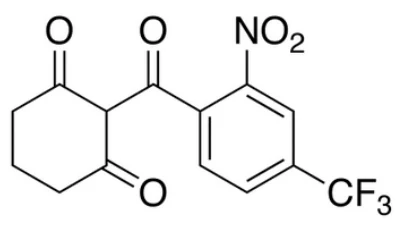
Physicochemical properties: Nitisinone occurs as white to yellowish-white, crystalline powder. It is practically insoluble in water, soluble in 2M sodium hydroxide and in methanol, and sparingly soluble in alcohol.
14 CLINICAL TRIALS
14.1 Clinical Trials by Indication
The treatment of hereditary tyrosinemia type 1 (HT-1) in combination with dietary restriction of tyrosine and phenylalanine
The efficacy and safety of nitisinone were analyzed in a multinational, uncontrolled, open-label study. The study main analysis comprised 207 patients with HT-1, ages 0 to 21.7 years at enrollment (median age 9 months), who were diagnosed with HT-1 by the presence of succinylacetone in the urine or plasma. The starting dose of nitisinone was 0.6 to 1 mg/kg/day, and the dose was increased in some patients up to 2 mg/kg/day based on weight, biochemical, and enzyme markers. Median duration of treatment was 22.2 months (range 0.1 to 80 months).
Study Results
Survival probabilities after 2 and 4 years of treatment with nitisinone are summarized in Table 4, along with historical data for HT-1 patients treated with dietary restriction alone.
Table 4 - Survival Probability, HT-1 Patients
| Study population | Patients treated with nitisinone, open-label trial | Historical controls (van Spronsen et al., 1994) | |||||||
| Survival time | 2 year | 4 year | 2 year | 4 year | |||||
| Age 0-2 months at start | 88% | 88% | 29% | 29% | |||||
| Age 0-6 months at start | 94% | 94% | 74%1 | 60%1 | |||||
| Age >6 months at start | 97% | 93% | 96% | 96% | |||||
1 Patients 2-6 months of age at start of treatment
Treatment with nitisinone was found to result in reduced risk for the development of hepatocellular carcinoma, compared to historical data on treatment with dietary restriction alone. Early initiation of treatment was associated with a further reduced risk for the development of hepatocellular carcinoma.
14.2 Comparative Bioavailability Studies
Not applicable.
15 MICROBIOLOGY
No microbiological information is required for this drug product.
16 NON-CLINICAL TOXICOLOGY
General Toxicology
Single and repeat-dose toxicity
The acute oral toxicity of nitisinone was low, with a median lethal dose in mice of 600 mg/kg for males and 800 mg/kg for females, and between 100-1000 mg/kg in rats. Limited repeat-dose studies were conducted in the mouse, rat, rabbit, dog, and monkey. In the rat and dog, ocular toxicity (keratitis, corneal inclusions) were observed at doses comparable to human exposures.
Carcinogenicity
No long-term studies in animals have been performed to evaluate the carcinogenic potential of nitisinone.
Genotoxicity
Nitisinone was not genotoxic in the Ames test and the in vivo mouse liver unscheduled DNA synthesis (UDS) test. Nitisinone was mutagenic in the mouse lymphoma cell (L5178Y / TK+/-) forward mutation test and in an in vivo mouse bone marrow micronucleus test.
Reproductive and Developmental Toxicology
In a study in rats given maternally toxic doses of 50 mg/kg/day (4 times the maximum clinical dose, based on body surface area), increased stillbirths and reduced live births, birth weights and survival after birth were observed, as well as increased rates of skeletal abnormalities.
In mice and rabbits, embryotoxicity (decreased fetal weights, increased early intra-uterine deaths and increased post-implantation loss) and fetal abnormalities (skeletal abnormalities in both species, and umbilical hernia, gastroschisis, and lung abnormalities in rabbits) were observed at oral nitisinone doses from 5 mg/kg/day (less than the maximum clinical dose, based on body surface area), following administration during organogenesis.
In mice, maternal treatment at oral doses from 5 mg/kg/day (less than the maximum clinical dose, based on body surface area) during organogenesis through weaning was associated with reduced pup survival, weight gain and developmental delays.
In rats, exposure of drug-naïve pups to nitisinone through milk from treated dams given 100 mg/kg/day orally (9 times the maximum clinical dose, based on body surface area) was associated with reduced pup weight and development of corneal opacities.