


Product Monograph - Oxlumo
RECENT MAJOR LABEL CHANGES
| 7 WARNINGS AND PRECAUTIONS, Immune | 2025-01 |
|---|
TABLE OF CONTENTS
Sections or subsections that are not applicable at the time of the preparation of the most recent authorized product monograph are not listed.
RECENT MAJOR LABEL CHANGES .......................................................................................... 2
TABLE OF CONTENTS ............................................................................................................ 2
PART 1: HEALTHCARE PROFESSIONAL INFORMATION ........................................................... 4
1 INDICATIONS ............................................................................................................. 4
1.1 Pediatrics ................................................................................................................ 4
1.2 Geriatrics ................................................................................................................ 4
2 CONTRAINDICATIONS ................................................................................................ 4
4 DOSAGE AND ADMINISTRATION ................................................................................ 4
4.1 Dosing Considerations ........................................................................................... 4
4.2 Recommended Dose and Dosage Adjustment ...................................................... 4
4.3 Reconstitution ........................................................................................................ 6
4.4 Administration ....................................................................................................... 6
4.5 Missed Dose ........................................................................................................... 6
5 OVERDOSE ................................................................................................................ 6
6 DOSAGE FORMS, STRENGTHS, COMPOSITION AND PACKAGING ................................ 7
7 WARNINGS AND PRECAUTIONS ................................................................................. 7
Immune .............................................................................................................................. 7
Renal .................................................................................................................................. 7
Reproductive Health .......................................................................................................... 8
7.1 Special Populations ................................................................................................ 8
7.1.1 Pregnancy ........................................................................................................... 8
7.1.2 Breastfeeding ..................................................................................................... 8
7.1.3 Pediatrics ............................................................................................................ 8
7.1.4 Geriatrics ............................................................................................................ 8
8 ADVERSE REACTIONS................................................................................................. 8
8.1 Adverse Reaction Overview ................................................................................... 8
8.2 Clinical Trial Adverse Reactions ............................................................................. 9
8.5 Post-Market Adverse Reactions ........................................................................... 10
9 DRUG INTERACTIONS .............................................................................................. 10
9.4 Drug-Drug Interactions ........................................................................................ 10
9.5 Drug-Food Interactions ........................................................................................ 11
9.6 Drug-Herb Interactions ........................................................................................ 11
9.7 Drug-Laboratory Test Interactions....................................................................... 11
10 CLINICAL PHARMACOLOGY ...................................................................................... 11
10.1 Mechanism of Action ........................................................................................... 11
10.2 Pharmacodynamics .............................................................................................. 11
10.3 Pharmacokinetics ................................................................................................. 12
10.4 Immunogenicity ................................................................................................... 13
11 STORAGE, STABILITY AND DISPOSAL ........................................................................ 14
PART 2: SCIENTIFIC INFORMATION ..................................................................................... 15
13 PHARMACEUTICAL INFORMATION .......................................................................... 15
14 CLINICAL TRIALS ...................................................................................................... 16
14.1 Clinical Trials by Indications ................................................................................. 16
16 NON-CLINICAL TOXICOLOGY .................................................................................... 22
PATIENT MEDICATION INFORMATION ................................................................................ 24
PART 1: HEALTHCARE PROFESSIONAL INFORMATION
1 INDICATIONS
OXLUMO (lumasiran) is indicated for the treatment of primary hyperoxaluria type 1 (PH1) to lower urinary and plasma oxalate levels in pediatric and adult patients.
1.1 Pediatrics
Pediatrics (< 18 years): Based on the data submitted and reviewed by Health Canada, the safety and efficacy of OXLUMO in pediatric patients has been established. Therefore, Health Canada has authorized an indication for pediatric use (see 4.2 Recommended Dose and Dose Adjustment, 7.1.3 Pediatrics, 10.3 Pharmacokinetics, Special Populations and Conditions, and 14 CLINICAL TRIALS).
Limited data is available for patients <2 years of age and weighing <10 kilograms (kg). The efficacy of OXLUMO in PH1 patients <6 years of age was based on a single-arm trial (see 14 CLINICAL TRIALS).
1.2 Geriatrics
Geriatrics (≥65 years): Clinical studies of OXLUMO did not include patients over the age of 65 (see 4.2 Recommended Dose and Dosage Adjustment and 10.3 Pharmacokinetics, Special Populations and Conditions).
2 CONTRAINDICATIONS
OXLUMO is contraindicated in patients who are hypersensitive to this drug or to any ingredient in the formulation, including any non-medicinal ingredient, or component of the container. For a complete listing see 6 DOSAGE FORMS, STRENGTHS, COMPOSITION AND PACKAGING.
4 DOSAGE AND ADMINISTRATION
4.1 Dosing Considerations
- OXLUMO (lumasiran) is intended for subcutaneous use and should be administered by a health professional.
- It is supplied in a single-use vial, as a ready-to-use solution that does not require additional reconstitution or dilution prior to administration.
- Once the vial is opened, use immediately.
4.2 Recommended Dose and Dosage Adjustment
The recommended dosing regimen of OXLUMO consists of loading doses (once monthly for 3 doses) followed by maintenance doses (beginning 1 month after the last loading dose) as shown in Table 1.
Dosing is based on body weight; therefore, regular weight monitoring is recommended.
Table 1 - OXLUMO Weight-Based Dosing Regimen
| Body Weight | Loading Dose | Maintenance Dose (beginning 1 month after the last loading dose) |
|---|---|---|
| Less than 10 kg | 6 mg/kg once monthly for 3 doses | 3 mg/kg once monthly, beginning 1 month after the last loading dose. |
| 10 kg to less than 20 kg | 6 mg/kg once monthly for 3 doses | 6 mg/kg once every 3 months (quarterly): give the first maintenance dose 1 month after the last loading dose and quarterly thereafter. |
| 20 kg and above | 3 mg/kg once monthly for 3 doses | 3 mg/kg once every 3 months (quarterly): give the first maintenance dose 1 month after the last loading dose and quarterly thereafter. |
The patient dose (in mg) and volume (in mL) should be calculated as follows:
Patient body weight (kg) × dose (mg/kg) = total amount (mg) of OXLUMO to be administered.
Total amount (mg) divided by concentration (189 mg/mL) = total volume of OXLUMO (mL) to be injected (see 4.4 Administration).
Use in Pediatrics
Dosing is based on body weight. No additional dose adjustments are required for pediatric patients. Limited data are available for patients <2 years of age and weighing <10 kg.
Use in Geriatrics
OXLUMO has not been studied in patients ≥65 years of age.
Renal Impairment
No dose adjustment is necessary in patients with renal impairment (eGFR <90 mL/min/1.73 m2), including end-stage renal disease or those on hemodialysis (see 10.3 Pharmacokinetics, Special Populations and Conditions).
Hepatic Impairment
No dose adjustment is necessary in patients with mild (total bilirubin > upper limit of normal [ULN] to 1.5 × ULN or aspartate aminotransferase [AST] > ULN) or moderate (total bilirubin >1.5 to 3 × ULN, any AST) hepatic impairment (see 10.3 Pharmacokinetics, Special Populations and Conditions). Limited data are available in patients with mild or moderate hepatic impairment (see 10.3 Pharmacokinetics, Special Populations and Conditions). OXLUMO has not been studied in patients with severe hepatic impairment.
4.3 Reconstitution
Reconstitution is not required.
4.4 Administration
OXLUMO is a sterile, preservative-free, clear, colorless-to-yellow solution. It is supplied in a single-use vial, as a ready-to-use solution that does not require additional reconstitution or dilution prior to administration. Inspect visually for particulate matter and discoloration. Do not use if discolored or if foreign particles are present.
Use aseptic technique.
- Calculate the required volume of OXLUMO based on the recommended weight-based dosage (see 4 DOSAGE AND ADMINISTRATION).
- Administer OXLUMO with a sterile 25- to 31-gauge needle with a 1/2- inch or 5/8-inch needle length for subcutaneous injection. For volumes less than 0.3 mL, a sterile 0.3 mL syringe is recommended.
- The maximum acceptable single injection volume is 1.5 mL. Doses requiring more than 1.5 mL should be administered as multiple injections to minimise potential injection site discomfort due to injection volume. Divide injection volumes greater than 1.5 mL equally into multiple syringes.
- Avoid having OXLUMO on the needle tip before the needle is in the subcutaneous space. Consider changing the needle prior to administration, if possible.
Administer subcutaneous injection into the abdomen, thigh, or the side or back of the upper arms. Rotate injection sites. Do not inject into scar tissue or areas that are reddened, inflamed, or swollen.
- If injecting into the abdomen, avoid the area around the navel.
- If more than one injection is needed for a single dose of OXLUMO, the injection sites should be at least 2 cm apart.
- Discard any unused portion of the drug.
Patients on Hemodialysis
Administer OXLUMO following hemodialysis if administered on dialysis days.
4.5 Missed Dose
If a dose is delayed or missed, administer OXLUMO as soon as possible. Resume prescribed monthly or quarterly dosing, from the most recently administered dose.
5 OVERDOSE
No cases of overdose with OXLUMO have been reported in clinical trials. In case of overdose, it is recommended that patients be monitored as medically indicated for any signs or symptoms of adverse effects and given appropriate treatment.
6 DOSAGE FORMS, STRENGTHS, COMPOSITION AND PACKAGING
Table 2 - Dosage Forms, Strengths, Composition and Packaging
OXLUMO is a double-stranded small interfering ribonucleic acid (siRNA), covalently linked to a ligand containing three N-acetylgalactosamine (GalNAc) residues to enable delivery of the siRNA to hepatocytes.
OXLUMO is a sterile, preservative free, clear, colorless-to-yellow solution for subcutaneous injection. OXLUMO is supplied as a 0.5 mL solution in a single-use glass vial with a fluoropolymer-coated rubber stopper and an aluminum overseal with a flip-off button.
OXLUMO is available in cartons containing one single use vial.
7 WARNINGS AND PRECAUTIONS
Immune
A few patients treated with OXLUMO have experienced mild to moderate hypersensitivity reactions, including urticaria that resolved without discontinuation (see 8.5 Post-Market Adverse Reactions). Caution should be taken, with monitoring for signs and symptoms of drug hypersensitivity reaction when OXLUMO is administered to this population.
Renal
OXLUMO causes a chronic stable increase in plasma glycolate levels (see 10.2 Pharmacokinetics). Patients with severe and/or end stage renal disease are at increased risk of metabolic acidosis. The risk of metabolic acidosis associated with exposure to prolonged higher levels of plasma glycolate in these patients is unknown. Caution should be
| For the most recent information in the management of a suspected drug overdose, contact your regional poison control centre or Health Canada’s toll-free number, 1-844 POISON-X (1-844-764-7669). |
|---|
| Route of Administration | Dosage Form/ Strength/Composition | Non-medicinal Ingredients |
| Subcutaneous injection | Sterile solution 94.5 mg lumasiran per 0.5 mL (189 mg/mL) | Water for injection, sodium hydroxide, phosphoric acid |
taken, with monitoring for signs and symptoms of metabolic acidosis when OXLUMO is administered to this population.
Reproductive Health
Fertility
There are no data on the effects of OXLUMO on human fertility. No adverse effects on male or female fertility were detected in animal studies (see 16 NON-CLINICAL TOXICOLOGY).
7.1 Special Populations
7.1.1 Pregnancy
There are no available data on the use of OXLUMO in pregnant women.
The clinical need for OXLUMO during pregnancy should be considered along with expected health benefits to the mother and any potential adverse effects on the fetus from OXLUMO or from the underlying maternal condition.
Animal studies do not indicate direct harmful effects with respect to reproductive toxicity (see 16 NON-CLINICAL TOXICOLOGY).
7.1.2 Breastfeeding
There are no data on the presence of OXLUMO in human milk, the effects on the breastfed child, or the effects on milk production. The developmental and health benefits of breastfeeding should be considered along with the mother’s clinical need for OXLUMO and any potential adverse effects on the breastfed infant from OXLUMO or from the underlying maternal condition.
7.1.3 Pediatrics
The safety and efficacy of OXLUMO have been established in pediatric patients (see 4 DOSAGE AND ADMINISTRATION, 10 CLINICAL PHARMACOLOGY, and 14 CLINICAL TRIALS). Limited data is available for patients <2 years of age and weighing <10 kg.
7.1.4 Geriatrics
OXLUMO has not been studied in patients ≥65 years of age (see 10.3 Pharmacokinetics, Special Populations and Conditions).
8 ADVERSE REACTIONS
8.1 Adverse Reaction Overview
The data reflect placebo-controlled and open-label clinical studies in 98 patients with PH1 which includes 71 pediatric patients and 15 patients on hemodialysis. Patients ranged in age from 4 months to 61 years at first dose. Three patients were <1 year of age and 4 patients were between 1 to <2 years of age. The median duration of exposure was 18.99 months (range 2.8 to 34.7 months). Overall, 92 patients were treated for at least 6 months, and 78 patients for at least 12 months and 29 patients for at least 24 months.
8.2 Clinical Trial Adverse Reactions
Clinical trials are conducted under very specific conditions. The adverse reaction rates observed in the clinical trials, therefore, may not reflect the rates observed in practice and should not be compared to the rates in the clinical trials of another drug. Adverse reaction information from clinical trials may be useful in identifying and approximating rates of adverse drug reactions in real-world use.
Placebo-controlled study
In the randomized, placebo-controlled, double-blind study (ILLUMINATE-A) in pediatric and adult patients with PH1 aged 6 to 61 years, 26 patients received OXLUMO and 13 patients received placebo. Of these, 25 patients received ≥5 months of treatment. The most common (≥20%) adverse reaction reported was injection site reaction. All adverse reactions were non-serious, and none resulted in discontinuation of treatment.
Table 3 - Adverse Reactions Reported in at Least 10% of Patients Treated with OXLUMO and that Occurred at Least 5% More Frequently than in Patients Treated with Placebo in ILLUMINATE-A during the 6-Month Double-Blind Period
| System Organ Class | Adverse reaction | OXLUMO N = 26 n (%) | Placebo N = 13 n (%) |
| Gastrointestinal disorders | Abdominal paina | 4 (15) | 1 (8) |
| General disorders and administration site conditions | Injection site reaction | 10 (38) | 0 (0) |
| a Includes abdominal pain, abdominal pain upper, abdominal pain lower, abdominal discomfort and abdominal tenderness | |||
In two single-arm studies in patients with PH1, ILLUMINATE-B (patients <6 years of age) and ILLUMINATE-C (pediatric and adult patients with severe renal impairment including end-stage renal disease and patients on hemodialysis), the OXLUMO safety profile was similar to that seen in ILLUMINATE-A.
Description of selected adverse reactions
Injection site reactions (ISRs)
In placebo-controlled and open-label clinical studies, injection site reactions were reported in 34 of 98 patients (35%) treated with OXLUMO, occurring in 8% of injections. The most commonly reported symptoms were erythema, swelling, pain, hematoma, pruritus, and discoloration. The majority of ISRs had an onset within 1 to 3 days of the injection (with onset ranging from same day of administration to 29 days after the most recent dose). ISRs have been mild, transient, and have not resulted in discontinuation of treatment.
Abdominal Pain
In placebo-controlled and open-label clinical studies, abdominal pain was reported in 16 of 98 patients (16%) treated with OXLUMO. The adverse reaction of abdominal pain included abdominal pain, abdominal pain upper, abdominal pain lower, abdominal discomfort and abdominal tenderness. Most of the adverse reactions of abdominal pain were mild in severity, transient and none led to the discontinuation of treatment.
Long-term safety
ILLUMINATE-A
The double-blind and open-label extension periods provided overall OXLUMO exposure up to 57 months in 39 patients, which equates to 165.7 patient years. The median duration of OXLUMO exposure was 55.0 months. The safety profile in the open-label extension period was generally consistent with the known safety profile of OXLUMO from the placebo-controlled double-blind period of the study.
8.5 Post-Market Adverse Reactions
Table 4 - Adverse Reactions Reported During Post Marketing use of OXLUMO
| System organ class | Adverse reaction | Frequency |
|---|---|---|
| Immune system disorders | Hypersensitivity | Not knowna |
a Events are reported from a population of uncertain size, it is not possible to reliably determine frequency from the available data.
9 DRUG INTERACTIONS
9.4 Drug-Drug Interactions
No clinical drug interaction studies have been performed. Concomitant use of pyridoxine (vitamin B6) did not influence the pharmacodynamics or pharmacokinetics of lumasiran.
Lumasiran is not metabolized by cytochrome P450 (CYP) enzymes, and its pharmacokinetics are not expected to be influenced by other medications.
In vitro studies indicate that lumasiran is not a substrate nor an inhibitor of cytochrome P450 (CYP) enzymes.
As a GalNac-siRNA, lumasiran is not expected to inhibit or induce CYP enzymes or modulate the activities of drug transporters.
9.5 Drug-Food Interactions
OXLUMO is administered as a subcutaneous injection, therefore interactions with food are not expected.
9.6 Drug-Herb Interactions
Interactions with herbal products have not been established.
9.7 Drug-Laboratory Test Interactions
Interactions with laboratory tests have not been established.
10 CLINICAL PHARMACOLOGY
10.1 Mechanism of Action
Lumasiran is a double-stranded siRNA that reduces the levels of the enzyme glycolate oxidase (GO) by targeting the hydroxyacid oxidase 1 (HAO1) messenger ribonucleic acid (mRNA) in hepatocytes through RNA interference. Decreased GO enzyme levels reduce the amount of available glyoxylate, a substrate for oxalate production. This results in reduction of urinary and plasma oxalate levels, the underlying cause of disease manifestations in patients with PH1. As the GO enzyme is upstream of the alanine:glyoxylate aminotransferase (AGT) enzyme, the deficiency of which causes PH1, the mechanism of action of lumasiran is independent of the underlying AGXT gene mutation encoding AGT. OXLUMO is not expected to be effective in primary hyperoxaluria type 2 (PH2) or type 3 (PH3) because its mechanism of action does not affect the metabolic pathways causing PH2 and PH3.
10.2 Pharmacodynamics
The pharmacodynamic effects of OXLUMO have been evaluated in adult and pediatric patients with PH1 across a range of doses and dosing frequencies. Dose-dependent reductions in urinary and plasma oxalate levels were observed, resulting in the selection of the recommended body weight-based loading and maintenance dosing regimens. With the recommended dosing regimens, rapid onset of effect was observed within two weeks after the first dose and maximal reductions in urinary and plasma oxalate were observed by the end of the loading dose phase. The maximal reductions in urinary and plasma oxalate were sustained with the maintenance dosing regimen thereafter. Consistent with lumasiran mechanism of action, suppression of GO activity led to an increase in plasma glycolate levels, indicating target engagement. Plasma glycolate levels reached a plateau at the end of the loading dose phase.
Cardiac electrophysiology
Lumasiran had no effect on the QTc interval in healthy subjects and patients with PH1 who received OXLUMO up to 6 mg/kg (n=52). A dedicated thorough QT study has not been conducted with OXLUMO.
10.3 Pharmacokinetics
The pharmacokinetic (PK) properties of OXLUMO were characterized by measuring the plasma and urine concentrations of lumasiran. Lumasiran exhibited approximately linear, time independent pharmacokinetics in plasma following single subcutaneous doses ranging from 0.3 to 6 mg/kg and multiple doses of 1 and 3 mg/kg once monthly or 3 mg/kg and 6 mg/kg quarterly. There was no accumulation of lumasiran in plasma after repeated once monthly or quarterly dosing.
Table 5 - Summary of Lumasiran Pharmacokinetic Parameters Across Studies
| Weight group | Dose | Number of patients | Cmax (ng/mL) Median (min, max) | AUC0-last (h*ng/mL) Median (min, max) | Tmax (h) Median (min, max) | T1/2 (h) Median (min, max) | CL (L/h) Median (min, max) |
| <10 kg | 6 mg/kg | 3 | 890 (678,1280) | 6270 (5920,8510) | 4.2 (2.0,8.1) | 5.5a | 5.6a |
| ≥10 kg to <20 kg | 6 mg/kg | 11 | 912 (523,1760) | 8110 (7050,13300) | 3.7 (1.9,7.8) | 4.5 (2.6,10.3)b | 9.1 (6.25,10.2)b |
| ≥20 kg | 3 mg/kg | 18 | 518 (205,2280) | 6810 (2890,10700) | 4.0 (0.5,12.0) | 4.9 (1.4,10.9)b | 18.0 (9.89,27.3)b |
a n=1 b n=9 | |||||||
Absorption: Following subcutaneous administration, lumasiran is rapidly absorbed with a median (range) time to reach maximum plasma concentration (tmax) of 4.0 (0.5 to 12.0) hours.
Distribution: The protein binding of lumasiran is moderate to high (77 to 85%) at clinically relevant concentrations. The volume of distribution of lumasiran in humans was extrapolated from intravenous preclinical data. In PK modeling, it was estimated to be 4.9 L in a typical 70 kg adult patient.
Lumasiran primarily distributes from plasma to the liver after subcutaneous dosing.
Metabolism: Lumasiran is metabolized by endo- and exonucleases to oligonucleotides of shorter lengths. In vitro studies indicate that lumasiran does not undergo metabolism by CYP450 enzymes.
Elimination: Lumasiran is primarily eliminated from plasma by hepatic uptake, with only 7 to 26% of the administered dose recovered in urine as lumasiran. The mean (%CV) terminal plasma half-life of lumasiran is 5.2 (47.0%) hours. The population estimate for apparent plasma clearance was 26.5 L/h for a typical 70 kg adult. The renal clearance of lumasiran was minor and ranged from 2.0 to 3.4 L/h.
Plasma concentrations do not reflect the extent or duration of the pharmacodynamic activity of lumasiran. Rapid and targeted uptake of lumasiran by the liver results in a rapid decline in plasma concentrations. In the liver, lumasiran exhibits a long half-life leading to maintenance of pharmacodynamic effect over the monthly or quarterly dosing interval.
Special Populations and Conditions
- Pediatrics: Data in children younger than 2 years of age and weighing <10 kg are limited. In children <20 kg, lumasiran Cmax was 2-fold higher due to the nominally higher dose of 6 mg/kg and faster absorption rate. The pharmacodynamics of lumasiran were similar in pediatric patients (aged 4 months to 17 years) and in adults, despite the transiently higher plasma concentrations in children <20 kg, due to the rapid and predominant distribution of lumasiran to the liver.
- Geriatrics: OXLUMO has not been studied in patients aged ≥65 years.
- Sex: In clinical studies, there was no difference in the plasma exposure or pharmacodynamics of lumasiran based on sex.
- Hepatic Insufficiency: Limited data in patients with mild hepatic impairment (total bilirubin > upper limit of normal [ULN] to 1.5 × ULN or aspartate aminotransferase [AST] > ULN) or moderate hepatic impairment (total bilirubin >1.5 to 3 × ULN with any AST) showed comparable plasma exposure of lumasiran and similar pharmacodynamics as patients with normal hepatic function. OXLUMO has not been studied in patients with severe hepatic impairment.
- Renal Insufficiency: Patients with mild (eGFR 60 to <90 mL/min/1.73 m2) or moderate (eGFR 30 to <60 mL/min/1.73 m2) renal impairment had comparable plasma exposure of lumasiran as patients with normal renal function (eGFR ≥90 mL/min/1.73 m2). In patients with severe renal impairment (eGFR 15 to <30 mL/min/1.73 m2), end-stage renal disease (ESRD) (eGFR <15 mL/min/1.73 m2), and patients on hemodialysis, within the same body weight category, a 1.8 to 3.6 fold higher Cmax and 1.6 to 3.1 fold higher AUC0-last was observed. These increases were transient and not considered clinically relevant as the plasma concentrations declined to below the level of detection within 24 to 48 hours, similar to patients without renal impairment. The pharmacodynamics in patients with renal impairment (eGFR <90 mL/min/1.73 m2), including ESRD (eGFR <15 mL/min/1.73 m2) or those on dialysis were similar to patients with normal renal function (eGFR ≥90 mL/min/1.73 m2).
- Body weight: The recommended dosing regimens yielded up to 2-fold higher Cmax in children <20 kg while AUC0-24 was similar across the body weights studied (6.2 to 110 kg).
10.4 Immunogenicity
Across all clinical studies in the OXLUMO development program, including patients with PH1 and healthy volunteers dosed with OXLUMO, 7 of 120 (6%) of lumasiran-treated individuals tested positive for antidrug antibodies (ADA). ADA titers were low and generally transient.
The detection of antibody formation is highly dependent on the sensitivity and specificity of the assay. Additionally, the observed incidence of antibody (including neutralizing antibody) positivity in an assay may be influenced by several factors, including assay methodology, sample handling, timing of sample collection, concomitant medications, and underlying disease. For these reasons, comparison of the incidence of antibodies in the studies described above with the incidence of antibodies in other studies or to other products may be misleading.
11 STORAGE, STABILITY AND DISPOSAL
Temperature:
Store at 2°C to 30°C.
Keep OXLUMO vial in the original carton to protect from light until ready for use.
PART 2: SCIENTIFIC INFORMATION
13 PHARMACEUTICAL INFORMATION
Drug Substance
Proper/Common name: lumasiran sodium
Molecular formula and molecular mass of lumasiran: The molecular formula of lumasiran is C530H712F10N173O320P43S6 and the molecular mass is 16,340.54 Da.
Molecular formula and molecular mass of lumasiran sodium: The molecular formula of lumasiran sodium is C530H669F10N173O320P43S6Na43 and the molecular mass is 17,285.76 Da.
Structural formula:
Physicochemical properties:
- The lumasiran sodium drug substance is a white to pale yellow powder
- The solubility of lumasiran sodium drug substance in water has been determined to be at least 387 mg/mL
- pH of a 1% solution in 50 mM KCI: 5.0 to 8.0
14 CLINICAL TRIALS
14.1 Clinical Trials by Indications
Primary Hyperoxaluria Type 1
Trial Design and Study Demographics
Table 6 - Summary of Patient Demographics for Clinical Trials in PH1
| Study | Study design | Dosage, route of administration and duration | Study subjects (n) | Median age (Range) | Sex |
| Study | Study design | Dosage, route of administration and duration | Study subjects (n) | Median age (Range) | Sex |
| ILLUMINATE-A | Phase 3, with two periods:
|
| lumasiran: 26 placebo: 13 | 14.9 (6 to 61) years | Male (66.7%) Female (33.3%) |
| ILLUMINATE-B | Phase 3, with two periods:
| Lumasiran at:
| lumasiran: 18 | 51.4 (4 to 74) months | Male (44.4%) Female (55.6%) |
| ILLUMINATE-C | Phase 3, with two periods:
| Lumasiran at:
| lumasiran: 21 | 8.0 (0 to 59) years | Male (57.1%) Female (42.9%) |
DB = double-blind; q3M = once every 3 months; qM = once monthly; qMx3 = once monthly for 3 consecutive months (i.e. Day 1, Month 1, Month 2). * Patients received loading doses of study drug qM for 3 doses (at Day 1, Month 1, and Month 2) followed by the first maintenance dose at Month 3 and then q3M. | |||||
The efficacy of OXLUMO was demonstrated in a randomized, double-blind, placebo-controlled clinical study in patients 6 years and older with PH1 (ILLUMINATE-A), in a single-arm clinical study in patients less than 6 years of age with PH1 (ILLUMINATE-B), and in a single-arm clinical study in pediatric and adult patients with PH1 who have advanced renal disease including patients on hemodialysis (ILLUMINATE-C).
ILLUMINATE-A
A total of 39 patients with PH1 were randomized 2:1 to receive subcutaneous doses of OXLUMO or placebo during the 6-month double-blind, placebo-controlled period. Patients 6 years and older with an eGFR ≥30 mL/min/1.73 m2 were enrolled and received 3 loading doses of 3 mg/kg OXLUMO or placebo administered once monthly, followed by quarterly maintenance doses of 3 mg/kg OXLUMO or placebo (see 4 DOSAGE AND ADMINISTRATION). After the 6-month double-blind treatment period, patients, including those originally assigned to placebo, entered an extension period with administration of OXLUMO for up to 54 months.
During the 6-month double-blind, placebo-controlled period, 26 patients received OXLUMO, and 13 received placebo. The median age of patients at first dose was 14.9 years (range 6.1 to 61.0 years), 66.7% were male, and 76.9% were White. The median 24-hour urinary oxalate excretion corrected for body surface area (BSA) at baseline was 1.72 mmol/24 hr/1.73 m2, the median spot urinary oxalate:creatinine ratio at baseline was 0.21 mmol/mmol, and the median plasma oxalate level at baseline was 13.1 µmol/L. Overall, 33.3% of patients had normal renal function (eGFR ≥90 mL/min/1.73 m2), 48.7% had mild renal impairment (eGFR of 60 to <90 mL/min/1.73 m2), and 18% had moderate renal impairment (eGFR of 30 to <60 mL/min/1.73 m2). The OXLUMO and placebo arms were balanced at baseline with respect to age, urinary oxalate level, and eGFR.
The primary endpoint was the percent reduction from baseline in 24-hour urinary oxalate excretion corrected for BSA averaged over Months 3 through 6.
ILLUMINATE-B
A total of 18 patients were enrolled and treated with OXLUMO in a multicenter, single-arm study in patients with PH1 (ILLUMINATE-B). The study enrolled patients less than 6 years of age with an eGFR >45 mL/min/1.73 m2 in patients 12 months of age and older, and normal serum creatinine in patients less than 12 months of age.
At first dose, 3 patients were less than 10 kg, 12 were 10 kg to less than 20 kg, and 3 were 20 kg or above. Patients <10 kg received 6 mg/kg once monthly for 3 months, followed by monthly maintenance doses of 3 mg/kg of OXLUMO, patients 10 to <20 kg received 6 mg/kg once monthly for 3 months, followed by quarterly maintenance doses of 6 mg/kg of OXLUMO, and patients ≥20 kg received 3 mg/kg once monthly for 3 months, followed by quarterly maintenance doses of 3 mg/kg of OXLUMO. The median age of patients at first dose was 51.4 months (range 4 to 74 months), 55.6% were female, and 88.9% were White. The median spot urinary oxalate:creatinine ratio at baseline was 0.47 mmol/mmol.
The primary endpoint was the percent reduction from baseline in spot urinary oxalate:creatinine ratio (averaged over Months 3 through 6).
ILLUMINATE-C
A total of 21 patients were enrolled and treated with OXLUMO in an on-going multi-center, single-arm study in patients with PH1 and advanced renal disease (eGFR ≤45 mL/min/1.73 m2 in patients 12 months of age and older and elevated serum creatinine in patients less than 12 months of age), including patients on hemodialysis. ILLUMINATE-C includes 2 cohorts: Cohort A consists of 6 patients who did not require hemodialysis at the time of study enrollment and Cohort B consists of 15 patients who were on a stable regimen of hemodialysis. Patients received the recommended dosing regimen of OXLUMO based on body weight (see 4 DOSAGE AND ADMINISTRATION).
The median age of patients at first dose was 8.9 years (range 0 to 59 years), 57.1% were male, and 76.2% were White. For Cohort A patients, the median plasma oxalate level was 57.94 µmol/L. For Cohort B patients, the median plasma oxalate level was 103.65 µmol/L at baseline.
Study Results
Table 7 - Results of studies ILLUMINATE-A, ILLUMINATE-B, and ILLUMINATE-C in PH1
| Study | Primary Endpoints | OXLUMO LS* mean % reduction (95% CI) | Placebo LS mean % reduction (95% CI) | Between-group LS mean % difference (95% CI) |
|---|---|---|---|---|
| ILLUMINATE-A | Percent reduction from baseline in 24-hour urinary oxalate excretion corrected for BSA (averaged over Months 3 through 6) | 65.4% (59.5, 71.3) | 11.8% (4.1, 19.5) | 53.5% (44.8, 62.3) p<0.0001 |
| ILLUMINATE-B | Percent reduction from baseline in spot urinary oxalate:creatinine ratio (averaged over Months 3 through 6) | 72.0% (66.4, 77.5) | NA | NA |
| ILLUMINATE-C | Percent reduction from baseline in plasma oxalate to Month 6 (averaged over Months 3 through 6) | Cohort A: 33.3% (-15.2, 81.8) Cohort B: 42.4% (34.2, 50.7) | NA | NA |
NA = not applicable * LS = least square | ||||
ILLUMINATE-A
OXLUMO was associated with a clinically meaningful least square (LS) mean percent reduction from baseline in 24-hour urinary oxalate of 65.4% (95% CI: 59.5, 71.3), compared with 11.8% (95% CI: 4.1, 19.5) in the placebo group, resulting in a statistically significant between-group LS mean difference of 53.5% (95% CI: 44.8, 62.3; p<0.0001). The reductions in urinary oxalate observed in patients treated with OXLUMO were rapid and sustained, as shown in Figure 1.
Figure 1 - ILLUMINATE-A: Percent Change from Baseline in 24-hour Urinary Oxalate Corrected for BSA by Month 6 (6-Month Double-Blind, Placebo-Controlled Period)
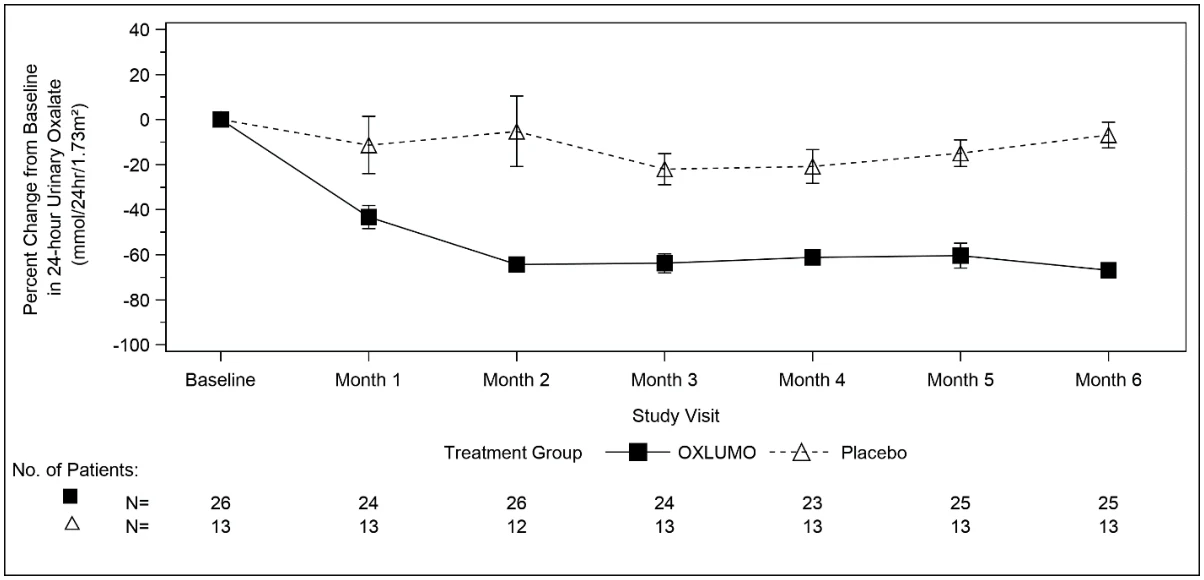
Abbreviations: BL = baseline; BSA = body surface area; M = month; SEM = standard error of mean.
Results are plotted as mean (±SEM) of percent change from baseline.
At Month 6, a higher proportion of patients treated with OXLUMO achieved normal or near-normal levels of 24-hour urinary oxalate corrected for BSA (≤1.5×ULN) compared to placebo-treated patients, as shown in Table 8. Plasma oxalate levels were reduced during the 6-month double-blind period in patients treated with OXLUMO.
Table 8 - ILLUMINATE-A: Secondary Endpoint Results Over the 6-Month Double-Blind, Placebo-Controlled Period
| Endpoints | OXLUMO (N=26) | Placebo (N=13) | Treatment Difference (95% CI) | P-value |
|---|---|---|---|---|
| Proportion of patients with 24-hour urinary oxalate levels at or below ULN‡ | 0.52 (0.31, 0.72)§ | 0 (0, 0.25)§ | 0.52 (0.23, 0.70)¶ | 0.001# |
| Proportion of patients with 24-hour urinary oxalate levels at or below 1.5×ULN‡ | 0.84 (0.64, 0.95)§ | 0 (0, 0.25)§ | 0.84 (0.55, 0.94)¶ | <0.0001# |
Abbreviations: ULN = upper limit of normal; SEM = standard error of mean. Results are based on liquid chromatography tandem mass spectrometry (LC-MS/MS) assay. ‡ ULN=0.514 mmol/24 hr/1.73 m2 for 24-hour urinary oxalate corrected for BSA. § 95% CI based on Clopper Pearson Exact confidence interval. ¶ Calculated using the Newcombe Method based on the Wilson Score. # p-value is based on Cochran-Mantel-Haenszel test stratified by baseline 24-hour urinary oxalate corrected for BSA (≤1.70 vs >1.70 mmol/24 hr/1.73 m2). | ||||
In the extension period, 78.3% (18/23) of patients in the lumasiran/lumasiran group showed near normalization (<1.5xULN) and 47.8% (11/23) achieved normalization (<ULN) of 24-hour urinary oxalate levels at Month 54.
Reduced 24-hour urinary oxalate levels corrected for BSA were maintained with continued lumasiran treatment in the open-label extension period. Mean (±SEM) percent changes from baseline of -54.0% (6.5) at Month 60/EOS and -55.6% (4.9) at Month 54 were observed in the lumasiran/lumasiran (n=19) and placebo/lumasiran (n=6) treatment groups, respectively.
Throughout the extension period, eGFR remained relatively stable in patients administered lumasiran.
ILLUMINATE-B
In the 6-month primary analysis, patients treated with OXLUMO achieved a LS mean percent reduction of 72.0% (95% CI: 66.4, 77.5) in spot urinary oxalate:creatinine ratio from baseline (averaged over Months 3 through 6), the primary endpoint. OXLUMO was associated with rapid, and sustained reductions in spot urinary oxalate:creatinine ratio (Figure 2), which were similar across all weight strata.
The percent reduction in urinary oxalate excretion was maintained with continued lumasiran treatment through month 12 and consistent with data from ILLUMINATE-A.
Figure 2 - ILLUMINATE-B: Percent Change from Baseline in Spot Urinary Oxalate:Creatinine Ratio by Month 6
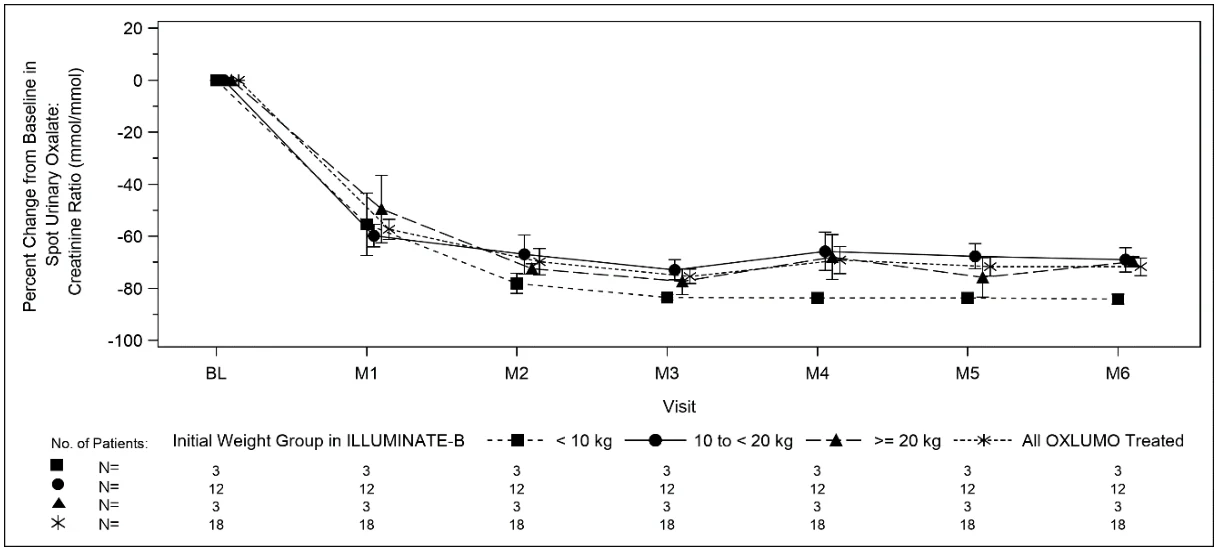
Abbreviations: BL = baseline; M = month; SEM = standard error of mean.
Results are plotted as mean (±SEM) of percent change from baseline.
At Month 6, nine of 18 patients achieved near normalization (≤1.5×ULN), including 1 patient who achieved normalization (≤ULN), in spot urinary oxalate:creatinine ratio.
From baseline to Month 6 (average from Month 3 to Month 6), an LS mean plasma oxalate reduction of 31.7% (95% CI: 23.9, 39.5) was observed. During the 6-month period eGFR remained stable.
ILLUMINATE-C
The primary endpoint of the study was the percent change in plasma oxalate from baseline to Month 6 (average from Month 3 to Month 6) for Cohort A (N=6) and the percent change in pre-dialysis plasma oxalate from baseline to Month 6 (average from Month 3 to Month 6) for Cohort B (N=15).
During the 6-month primary analysis period, patients in both cohorts had a reduction in plasma oxalate as early as Month 1. The percent reduction from baseline to Month 6 (average from Month 3 to Month 6) in plasma oxalate levels for Cohort A was an LS mean difference of 33.3% (95% CI: -15.2, 81.8) and for Cohort B the LS mean difference was 42.4% (95% CI: 34.2, 50.7).
Figure 3 - ILLUMINATE-C: Percent Change from Baseline in Plasma Oxalate at Each Visit during the Primary Analysis Period
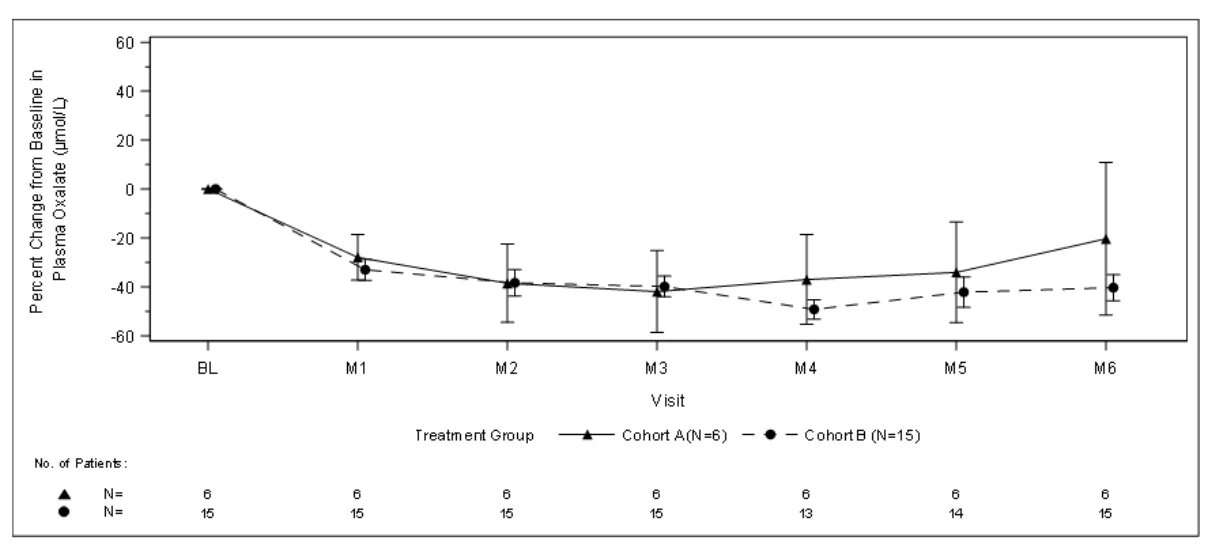
Abbreviations: BL = baseline; M = month; SEM = standard error of mean.
Results are plotted as mean (±SEM) of percent change from baseline.
For Cohort A, the baseline is defined as the mean of all plasma oxalate samples collected prior to the first dose of lumasiran; for Cohort B, the baseline is defined as the last four pre-dialysis plasma oxalate samples collected prior to the first dose of lumasiran. In Cohort B, only pre-dialysis samples are utilized.
In Cohort A the mean (SD) eGFR was 19.85 (9.6) mL/min/1.73m2 at baseline and 16.43 (9.8) mL/min/1.73 m2 at Month 6.
16 NON-CLINICAL TOXICOLOGY
General Toxicology: In repeat-dose toxicity studies, microscopic changes (e.g. hepatocellular vacuolation and karyomegaly) and decreased fibrinogen levels were observed mainly in rats at doses ≥20 mg/kg, and cholesterol levels were mildly increased at doses ≥50 mg/kg. A mild increase in alkaline phosphatase activity was observed in male rats (at 200 mg/kg) and in male monkeys (doses ≥30 mg/kg).
Carcinogenicity: Lumasiran was not carcinogenic in Sprague Dawley rats following monthly subcutaneous administration for at least 94 weeks (males), and at least 88 weeks (females) at doses of 20, 55, or 110 mg/kg (3, 9, or 18-fold the normalized maintenance MRHD, based on body surface area).
Lumasiran was not carcinogenic in transgenic Tg-rasH2 mice following monthly subcutaneous administration for 26 weeks at doses of 150, 500 or 1500 mg/kg.
Genotoxicity: Lumasiran was not genotoxic. Lumasiran was not mutagenic in an in vitro bacterial reverse mutation (Ames) assay up to 5000 µg/plate in five bacteria strains. Lumasiran was not clastogenic in an in vitro chromosomal aberration assay in cultured human peripheral blood lymphocytes at concentrations up to 500 µg/mL, nor in an in vivo micronucleus assay in rat bone marrow at doses up to 2000 mg/kg.
Reproductive and Developmental Toxicology: In embryo-fetal development studies in pregnant rats and pregnant rabbits, lumasiran was administered once daily by subcutaneous injection at doses of 3, 10, and 30 mg/kg/day during organogenesis (gestational days 6 through 17 for rats and 7 through 19 for rabbits). In both species, minimal decreases in maternal food consumption and maternal absolute body weights were observed at ≥3 mg/kg/day. Lumasiran was not detected in any fetus of either species and no effects on embryo-fetal survival or fetal body weights were observed. However, in rat fetuses, skeletal abnormalities (e.g. bipartite ossification of sternebrae and misshapen cervical arches) were observed at 30 mg/kg. In rabbit fetuses, visceral and skeletal abnormalities (e.g. detached ribs, fused mandibles) were observed at low doses 3 mg/kg and 10 mg/kg. The mechanisms behind the observed abnormalities remain unknown in both species.
In a peri- and postnatal development study, lumasiran administered subcutaneously to pregnant female rats on gestational days 7, 13, 19 and on lactation days 6, 12, and 18 through weaning at doses up to 50 mg/kg did not produce maternal toxicity or developmental effects in the offspring.
Special Toxicology: Lumasiran is not considered to have an immunostimulatory or immunotoxicity potential, based on an absence of findings in nonclinical studies. Of note, OXLUMO was detected in semen of rabbits at 3 mg/kg and 30 mg/kg. Increased atypical residual bodies (basophilic and globular bodies) were observed in the seminiferous tubules of male Tg-rasH2 mice at doses ≥500 mg/kg, however, no degenerative or atrophic changes were noted.
Juvenile Toxicity: In juvenile rats, HAO1 mRNA silencing of approximately 90% was observed on postnatal Day 33 relative to baseline, at doses ≥10 mg/kg. A minimal to mild fibrinogen concentration decrease (-13% to -40% from mean of control) in both sexes at doses ≥10 mg/kg and a minimal to moderate glucose concentration increase at doses ≥30 mg/kg were observed.