


Product Monograph - Givlaari
Recent Major Label Changes
None at time of the most recent authorization.
Table of Contents
Certain sections or subsections that are not applicable at the time of the preparation of the most recent authorized product monograph are not listed.
Recent Major Label Changes .................................................................................................. 2
None at time of the most recent authorization. ..................................................................... 2
Table of Contents................................................................................................................... 2
Part 1: Healthcare Professional Information........................................................................... 4
- 1.
Indications ...................................................................................................................... 4
1.1. Pediatrics ............................................................................................................ 4
1.2. Geriatrics............................................................................................................. 4
- 2. Contraindications ............................................................................................................ 4
- 4.
Dosage and Administration ............................................................................................. 4
4.1. Dosing Considerations ......................................................................................... 4
4.2. Recommended Dose and Dosage Adjustment....................................................... 4
4.4. Administration..................................................................................................... 5
4.5. Missed Dose ........................................................................................................ 6
- 5. Overdose ........................................................................................................................ 6
- 6. Dosage Forms, Strengths, Composition, and Packaging ................................................... 6
- 7.
Warnings and Precautions............................................................................................... 7
General ........................................................................................................................... 7
Hepatic/Biliary/Pancreatic ............................................................................................... 7
Immune .......................................................................................................................... 7
Renal............................................................................................................................... 8
Reproductive Health ........................................................................................................ 8
7.1. Special Populations .............................................................................................. 8
7.1.1. Pregnancy .................................................................................................... 8
7.1.2. Breastfeeding............................................................................................... 9
7.1.3. Pediatrics ..................................................................................................... 9
7.1.4. Geriatrics ..................................................................................................... 9
- 8.
Adverse Reactions........................................................................................................... 9
8.1. Adverse Reaction Overview.................................................................................. 9
8.2. Clinical Trial Adverse Reactions ............................................................................ 9
8.3. Less Common Clinical Trial Adverse Reactions .................................................... 11
8.5. Post-Market Adverse Reactions.......................................................................... 11
- 9.
Drug Interactions .......................................................................................................... 11
9.2. Drug Interactions Overview................................................................................ 11
9.4. Drug-Drug Interactions ...................................................................................... 11
9.5. Drug-Food Interactions ...................................................................................... 12
9.6. Drug-Herb Interactions ...................................................................................... 12
9.7. Drug-Laboratory Test Interactions ...................................................................... 12
- 10.
Clinical Pharmacology ................................................................................................... 12
10.1. Mechanism of Action ......................................................................................... 12
10.2. Pharmacodynamics............................................................................................ 13
10.3. Pharmacokinetics .............................................................................................. 13
- 11. Storage, Stability, and Disposal ..................................................................................... 16
Part 2: Scientific Information ............................................................................................... 17
- 13. Pharmaceutical Information.......................................................................................... 17
- 14.
Clinical Trials ................................................................................................................. 18
14.1. Clinical Trials by Indication ................................................................................. 18
Indication: Treatment of Acute Hepatic Porphyria (AHP) in Adults .................................. 18
- 15. Microbiology................................................................................................................. 21
- 16. Non-Clinical Toxicology ................................................................................................. 21
Patient Medication Information........................................................................................... 23
Part 1: Healthcare Professional Information
1. Indications
GIVLAARI (givosiran) is indicated for:
- the treatment of acute hepatic porphyria (AHP) in adults.
1.1. Pediatrics
Pediatrics (<18 years of age): Based on the data submitted and reviewed by Health Canada, the safety and efficacy of GIVLAARI in pediatric patients has not been established; therefore, Health Canada has not authorized an indication for pediatric use (see 7 Warnings and Precautions, 7.1 Special Populations, 4 Dosage and Administration, and 10 Clinical Pharmacology, 10.3 Pharmacokinetics, Special Populations and Conditions).
1.2. Geriatrics
Geriatrics (≥65 years of age): Clinical studies of GIVLAARI did not include sufficient numbers of patients to determine if the use in geriatric patients is associated with differences in safety or effectiveness (see 7 Warnings and Precautions, 7.1 Special Populations, 4 Dosage and Administration, and 10 Clinical Pharmacology, 10.3 Pharmacokinetics, Special Populations and Conditions).
2. Contraindications
- GIVLAARI (givosiran) is contraindicated in patients with known severe hypersensitivity (e.g., anaphylaxis) to givosiran or to any ingredient in the formulation, including any non-medicinal ingredient, or component of the container. For a complete listing, see 6 Dosage Forms, Strengths, Composition, and Packaging.
4. Dosage and Administration
4.1. Dosing Considerations
- GIVLAARI (givosiran) should be administered by a healthcare professional.
- It is supplied in a single use vial, as a ready to use solution that does not require additional reconstitution or dilution prior to administration.
- Measurement of blood homocysteine and vitamin levels prior to initiating treatment and monitoring for changes in blood homocysteine during treatment with GIVLAARI is recommended (see 7 Warnings and Precautions, Hyperhomocysteinemia).
4.2. Recommended Dose and Dosage Adjustment
- The recommended dose of GIVLAARI is 2.5 mg/kg once monthly.
- For administration by subcutaneous injection only. Dosing is based on body weight.
Dose Modification for Adverse Reactions
In patients with severe or clinically significant transaminase elevations, who have dose interruption and subsequent improvement, consider resuming initially at 1.25 mg/kg once monthly, or at 2.5 mg/kg once monthly, as clinically indicated (see 7 Warnings and Precautions, Hepatic/Biliary/Pancreatic). In patients who resume dosing at 1.25 mg/kg once monthly without recurrence of severe or clinically significant transaminase elevations, the dose may be increased to the recommended dose of 2.5 mg/kg once monthly. There are limited data on efficacy and safety of the lower dose, particularly in patients who previously experienced transaminase elevations. There are no data on sequentially increasing the 1.25 mg/kg dose to the 2.5 mg/kg dose after dose interruption due to elevations in transaminases.
For patients whose hyperhomocysteinemia persist or worsen while on supplemental vitamin therapy (see 7 Warnings and Precautions, Hyperhomocysteinemia), alternative adjunctive treatment options or suspension of treatment should be considered.
Special Populations
Hepatic impairment: No dose adjustment is necessary in patients with mild hepatic impairment (bilirubin ≤ 1× the upper limit of normal (ULN) and aspartate aminotransferase (AST) > 1×ULN, or bilirubin > 1.0 to 1.5×ULN) (see 7 Warnings and Precautions, Hepatic/Biliary/Pancreatic, and 10 Clinical Pharmacology, 10.3 Pharmacokinetics, Special Populations and Conditions). GIVLAARI has not been studied in patients with moderate or severe hepatic impairment.
Renal impairment: No dose adjustment is necessary in patients with mild, moderate or severe renal impairment ([eGFR] ≥ 15 to < 90 mL/min/1.73 m2). Limited data are available in patients with severe renal impairment ([eGFR] ≥ 15 to < 30 mL/min/1.73 m2) and therefore caution is recommended with the use of GIVLAARI in these patients. GIVLAARI has not been studied in patients with end stage renal disease (eGFR <15 mL/min/1.73 m2), or in patients on dialysis (see 7 Warnings and Precautions, Renal, and 10 Clinical Pharmacology, 10.3 Pharmacokinetics, Special Populations and Conditions).
Pediatrics (<18 years of age): Based on the data submitted and reviewed by Health Canada, the safety and efficacy of GIVLAARI in pediatric patients has not been established; Health Canada has not authorized an indication for pediatric use (see 7 Warnings and Precautions, 7.1 Special Populations, and 10 Clinical Pharmacology, 10.3 Pharmacokinetics, Special Populations and Conditions).
Geriatrics (≥65 years of age): Clinical studies of GIVLAARI did not include sufficient numbers of patients to determine if the use in geriatric patients is associated with differences in safety or effectiveness (see 7 Warnings and Precautions, 7.1 Special Populations, and 10 Clinical Pharmacology, 10.3 Pharmacokinetics, Special Populations and Conditions).
4.4. Administration
For subcutaneous administration by healthcare professionals only.
Ensure that medical support is available to manage anaphylactic reactions appropriately when administering GIVLAARI (see 7 Warnings and Precautions).
Use aseptic technique.
This medicinal product is provided as a ready-to-use solution in a single-use vial (189 mg/mL). Once the vial is opened, use immediately.
- Calculate the required volume of GIVLAARI based on the recommended weight based dosage (see 4 Dosage and Administration, 4.2 Recommended Dose and Dosage Adjustment).
- The solution should be inspected visually for clarity, particulate matter, precipitation, discoloration, and leakage prior to administration. Do not use product if solution shows haziness, particulate matter, discoloration, or leakage.
- Withdraw the indicated injection volume of GIVLAARI using a 21 gauge or larger needle. Divide doses requiring volumes greater than 1.5 mL equally into multiple syringes.
- Replace the 21 gauge or larger needle with either a 25 gauge or 27 gauge needle with 1/2-inch or 5/8-inch needle length.
- Avoid having GIVLAARI on the needle tip until the needle is in the subcutaneous space.
Administer injection into the abdomen, the back or side of the upper arms, or the thighs. Rotate injection sites.
- If injecting into the abdomen, avoid a 5 cm diameter circle around the navel.
- If more than one injection is needed for a single dose of GIVLAARI, the injection sites should be at least 2 cm apart from previous injection locations.
- An injection should never be given into scar tissue or areas that are erythematous, inflamed, or indurated.
- Discard unused portion of the drug.
- Dispose of the syringe, vial, needle and any unused needles in an approved sharps container (see 11 Storage, Stability, and Disposal).
4.5. Missed Dose
If a dose is missed, administer GIVLAARI as soon as possible. Resume dosing at monthly intervals following administration of the missed dose.
5. Overdose
No cases of overdose with GIVLAARI have been reported in clinical trials. In case of overdose, it is recommended that the patient be monitored for any signs or symptoms of adverse effects and given appropriate treatment.
| For the most recent information in the management of a suspected drug overdose, contact your regional poison control centre or Health Canada’s toll-free number, 1-844 POISON-X (1-844-764-7669). |
|---|
- 6. Dosage Forms, Strengths, Composition, and Packaging
Table 1 – Dosage Forms, Strengths, and Composition
| Route of Administration | Dosage Form/ Strength/Composition | Non-Medicinal Ingredients |
| Subcutaneous injection | Solution, 189 mg givosiran per mL | Phosphoric acid and/or Sodium hydroxide (for pH adjustment), Water for injection |
Description
GIVLAARI contains givosiran, a double-stranded small interfering ribonucleic acid (siRNA) that specifically targets 5'-aminolevulinate synthase 1 (ALAS1) messenger RNA (mRNA) covalently linked to a ligand containing three N-acetylgalactosamine (GalNAc) residues to enable delivery of the siRNA to hepatocytes.
GIVLAARI contains 200 mg givosiran sodium equivalent to 189 mg givosiran free acid in 1 mL per vial.
GIVLAARI is a sterile, preservative-free, clear, colorless-to-yellow solution for subcutaneous injection. GIVLAARI is supplied as a 1 mL solution in a single-use 2 mL Type 1 glass vial with fluoropolymer-coated rubber stopper and an aluminum flip-off cap.
GIVLAARI is available in cartons containing one single-use vial.
7. Warnings and Precautions
General
Acute hepatic porphyria (AHP) subtypes other than acute intermittent porphyria (AIP)
The efficacy and safety data in patients with AHP subtypes other than AIP [these include hereditary coproporphyria (HCP), variegate porphyria (VP) and ALA dehydratase-deficient porphyria (ADP)] are limited. This should be taken into consideration while assessing the risk/benefit in these rare subtypes of AHP.
Hepatic/Biliary/Pancreatic
Transaminase elevations have been observed in patients treated with GIVLAARI (see 8 Adverse Reactions, 8.2 Clinical Trial Adverse Reactions). In the placebo-controlled study, 7 (14.6%) patients treated with GIVLAARI and one (2.2%) patient treated with placebo had an increased alanine aminotransferase (ALT) greater than 3 times the ULN. Transaminase elevations primarily occurred between 3 to 5 months following initiation of treatment. In 5 patients treated with GIVLAARI, the transaminase elevations resolved with ongoing dosing. Per protocol, one patient with ALT more than 8 times the ULN discontinued treatment, and one patient with ALT more than 5 times the ULN interrupted treatment and resumed dosing at 1.25 mg/kg. ALT elevations resolved in both patients.
Measure liver function tests prior to initiating treatment with GIVLAARI, repeat every month during the first 6 months of treatment, and as clinically indicated thereafter. Consider interrupting or discontinuing treatment for severe or clinically significant transaminase elevations. For resumption of dosing after interruption see 4 Dosage and Administration, 4.2 Recommended Dose and Dosage Adjustment.
Immune
Anaphylactic reaction
In clinical trials, anaphylaxis occurred in one patient with a history of allergic asthma and atopy (see 8 Adverse Reactions, 8.3 Less Common Clinical Trial Adverse Reactions). Monitor for signs and symptoms of anaphylaxis. If anaphylaxis occurs, immediately discontinue administration of GIVLAARI and institute appropriate medical treatment.
Renal
Increases in serum creatinine levels and decreases in estimated glomerular filtration rate (eGFR) have been reported during treatment with GIVLAARI (see 8 Adverse Reactions, 8.2 Clinical Trial Adverse Reactions). In the placebo-controlled study, these changes were generally small (median increase in creatinine at Month 3 of 0.07 mg/dL) and resolved or stabilized by Month 6 with continued monthly treatment with 2.5 mg/kg GIVLAARI. Patients with moderate and severe renal impairment (eGFR <60 mL/min/1.73 m2) showed severe hyperhomocysteinemia upon givosiran treatment (see 7 Warnings and Precautions, Hyperhomocysteinemia). Monitor renal function during treatment with GIVLAARI as clinically indicated.
Progression of renal impairment has been observed in some patients with pre-existing renal disease. Careful monitoring of renal function during treatment is required in such cases. Caution is recommended in patients with severe renal impairment. GIVLAARI has not been studied in patients with end-stage renal disease (eGFR <15 mL/min/1.73 m2), or in patients on dialysis (see 4 Dosage and Administration).
Hyperhomocysteinemia
Hyperhomocysteinemia (greater than 15 micromol/L of homocysteine in the blood) may be observed in patients with AHP, vitamin deficiencies (vitamin B6, folic acid, vitamin B12), chronic kidney disease, mutation in the MTHFRC677T gene or an increase in plasma methionine levels.
Worsening of Hyperhomocysteinemia [from moderate (15-30 micromol/L) to intermediate (30-100 micromol/L) or severe (>100 micromol/L)] has been observed upon treatment with GIVLAARI (see 8 Adverse Reactions, 8.2 Clinical Trial Adverse Reactions).
Measurement of blood homocysteine levels prior to initiating treatment and monitoring for changes during treatment with GIVLAARI is recommended. In patients with elevated homocysteine levels, consider treatment with a supplement containing vitamin B6 as monotherapy or a multivitamin preparation.
Reproductive Health
Fertility
There are no data on the effects of GIVLAARI on human fertility. No impact on male or female fertility was detected in animal studies (see 16 Non-Clinical Toxicology).
7.1. Special Populations
7.1.1. Pregnancy
There is insufficient data with GIVLAARI use in pregnant women to evaluate a drug-associated risk of major birth defects, miscarriage, or adverse maternal or fetal outcomes.
The clinical need for GIVLAARI during pregnancy should be considered along with expected health benefits to the mother and any potential adverse effects on the fetus from GIVLAARI or from the underlying maternal condition.
Studies in animals have shown reproductive toxicity in the presence of maternal toxicity (see 16 Non-Clinical Toxicology).
7.1.2. Breastfeeding
There are no data on the presence of GIVLAARI in human milk, the effects on the breastfed child, or the effects on milk production. A risk to the newborns/infants cannot be excluded and precaution should be exercised because many drugs can be excreted in human milk.
The developmental and health benefits of breastfeeding should be considered along with the mother’s clinical need for GIVLAARI and any potential adverse effects on the breastfed infant from GIVLAARI or from the underlying maternal condition.
Available pharmacodynamic/toxicological data in animals have shown excretion of givosiran in milk.
7.1.3. Pediatrics
Pediatrics (<18 years of age): The safety and efficacy of GIVLAARI have not been studied in pediatric patients (see 4 Dosage and Administration, and 10 Clinical Pharmacology, 10.3 Pharmacokinetics, Special Populations and Conditions). No clinical data are available to Health Canada; therefore, Health Canada has not authorized an indication for pediatric use in patients <18 years of age.
7.1.4. Geriatrics
Geriatrics (≥ 65 years of age): Clinical studies of GIVLAARI did not include sufficient numbers of patients to determine if the use in geriatric patients is associated with differences in safety or effectiveness (see 4 Dosage and Administration, and 10 Clinical Pharmacology, 10.3 Pharmacokinetics, Special Populations and Conditions).
8. Adverse Reactions
8.1. Adverse Reaction Overview
In placebo-controlled and open-label clinical studies, a total of 111 patients with AHP received GIVLAARI for up to 35 months (median 11.7 months). Of these, 51 patients received 12 months or more of treatment and 12 patients were treated for 24 months or more.
8.2. Clinical Trial Adverse Reactions
Clinical trials are conducted under very specific conditions. Therefore, the frequencies of adverse reactions observed in the clinical trials may not reflect frequencies observed in clinical practice and should not be compared to frequencies reported in clinical trials of another drug.
Placebo-controlled Study
In the pivotal, placebo controlled, double blind study (ENVISION), 48 patients received 2.5 mg/kg GIVLAARI, and 46 patients received placebo, administered once monthly via subcutaneous injection for up to 6 months. The maximum dose of GIVLAARI administered in the study was 328.25 mg. The most frequently occurring (at least 20%) adverse reactions reported in patients treated with GIVLAARI were nausea (27%) and injection site reactions (25%). The only adverse reaction resulting in discontinuation of GIVLAARI was elevated transaminases (one patient, 2.1%).
Adverse reactions for GIVLAARI are defined as those adverse events occurring at least 5% more frequently in patients treated with GIVLAARI, compared with placebo. The adverse reactions are presented as MedDRA preferred terms (MedDRA version 23.1), sorted under the respective System Organ Class (SOCs) (Table 2).
Table 2 – Adverse Reactions that Occurred at Least 5% More Frequently in Patients Treated with GIVLAARI Compared to Patients Treated with Placebo in the ENVISION Study
| System organ class/preferred term | GIVLAARI n=48 n (%) | Placebo n=46 n (%) | |||
| Gastrointestinal disorders | |||||
| Nausea | 13 (27) | 5 (11) | |||
| General disorders and administration-site conditions | |||||
| Injection site reactions | 12 (25) | 0 | |||
| Fatigue | 5 (10) | 2 (4) | |||
| Hepatobiliary disorders | |||||
| Transaminase increased | 6 (13) | 1 (2) | |||
| Renal and urinary disorders | |||||
| Blood creatinine increaseda | 7 (15) | 2 (4) | |||
| Skin and subcutaneous tissue disorders | |||||
| Rashb | 8 (17) | 2 (4) | |||
aIncludes blood creatinine increased, glomerular filtration rate decreased, chronic kidney disease (decreased eGFR)
bIncludes pruritus, eczema, erythema, rash, rash pruritic, urticarial
Description of Selected Adverse Reactions
Injection site reactions
In placebo-controlled and open-label clinical studies, injection site reactions have been reported in 36% of patients and have generally been mild or moderate in severity, mostly transient, and resolved without treatment. The most commonly reported symptoms included erythema, pain, and pruritus. Injection site reactions occurred in 7.8% of injections administered and did not result in discontinuation of treatment. Three patients (2.7%) experienced single, transient, recall reactions of erythema at a prior injection site with a subsequent dose administration.
Hyperhomocysteinemia
Cases of elevated homocysteine levels including blood homocysteine increased, homocysteine abnormal, and hyperhomocysteinemia, have been reported with the use of givosiran during the clinical studies (eight patients, 7.2%). Of these, 2 of the events were reported as Serious Adverse Events of hyperhomocysteinemia and resulted in withdrawal from the study (see 7 Warnings and Precautions, Hyperhomocysteinemia).
8.3. Less Common Clinical Trial Adverse Reactions
Immune System Disorders
Adverse reactions, observed at a lower frequency, occurring in placebo controlled and open label clinical studies included hypersensitivity (one patient, 0.9%) and anaphylactic reaction (one patient, 0.9%).
Immunogenicity
In placebo controlled and open label clinical studies, 1 of 111 patients with AHP (0.9%), developed treatment emergent anti drug antibodies (ADA) during treatment with GIVLAARI. ADA titers were low and transient with no evidence of an effect on clinical efficacy, safety, pharmacokinetic, or pharmacodynamic profiles of GIVLAARI.
The detection of antibody formation is highly dependent on the sensitivity and specificity of the assay. In addition, the observed incidence of antibody (including neutralizing antibody) positivity in an assay may be influenced by several factors, including assay methodology, sample handling, timing of sample collection, concomitant medications, and underlying disease. For these reasons, comparison of the incidence of antibodies to GIVLAARI in the studies described above with the incidence of antibodies in other studies or to other products may be misleading.
8.5. Post-Market Adverse Reactions
Gastrointestinal disorders: Acute pancreatitis.
9. Drug Interactions
9.2. Drug Interactions Overview
In vitro studies indicate that givosiran does not directly inhibit or induce CYP450 enzymes. However, due to its pharmacological effects on the hepatic heme biosynthesis pathway, givosiran may reduce the activity of CYP450 enzymes in the liver.
9.4. Drug-Drug Interactions
The drugs listed in this table are based on drug interaction studies performed with GIVLAARI.
Table 3 – Established or Potential Drug-Drug Interactions with GIVLAARI
| Common name | Source of Evidence | Effect | Clinical comment |
| Common name | Source of Evidence | Effect | Clinical comment |
CYP1A2 substrates Representative examples include theophylline, tizanidine, and duloxetine | CT | Concomitant use of a single subcutaneous dose of givosiran (2.5 mg/kg) increased caffeine (two 100 mg tablets, single dose, sensitive CYP1A2 substrate) AUC by 3.1-fold and Cmax by 1.3-fold in a clinical drug interaction study. | Avoid concomitant use of GIVLAARI with CYP1A2 or CYP2D6 substrates, for which minimal concentration changes may lead to |
| serious or life-threatening toxicities. If concomitant use is unavoidable, decrease the CYP1A2 or CYP2D6 substrate dosage in accordance with approved product labeling | CYP2D6 substrates representative examples include perphenazine, venlafaxine, tolterodine, metoprolol, and tramadol | CT | Concomitant use of a single subcutaneous dose of givosiran (2.5 mg/kg) increased dextromethorphan (30 mg, single dose, sensitive CYP2D6 substrate) AUC by 2.4-fold and Cmax by 2.0-fold in a clinical drug interaction study |
CYP450 substrates (CYP2C9, CYP2C19 and CYP3A4 substrates) | CT | Concomitant use of a single subcutaneous dose of givosiran (2.5 mg/kg) increased losartan (50 mg, single dose, CYP2C9 substrate) AUC by 1.1-fold with no change in Cmax; increased omeprazole (40 mg, single dose, sensitive CYP2C19 substrate) AUC by 1.6-fold and Cmax by 1.1-fold; and increased midazolam (5 mg, single dose, sensitive CYP3A4 substrate) AUC by 1.5-fold and Cmax by 1.2-fold in a clinical drug interaction study. | These changes in exposure and maximal concentrations were not considered clinically relevant. |
Legend: CT = Clinical Trial
9.5. Drug-Food Interactions
Interactions with food have not been established.
9.6. Drug-Herb Interactions
Interactions with herbal products have not been established.
9.7. Drug-Laboratory Test Interactions
Interactions with laboratory tests have not been established.
10. Clinical Pharmacology
10.1. Mechanism of Action
Givosiran is a double-stranded small interfering RNA that causes degradation of aminolevulinate synthase 1 (ALAS1) mRNA in hepatocytes through RNA interference, reducing the elevated levels of liver ALAS1 mRNA. This leads to reduced circulating levels of neurotoxic intermediates aminolevulinic acid (ALA) and porphobilinogen (PBG), factors associated with attacks and other disease manifestations of AHP.
10.2. Pharmacodynamics
The pharmacodynamic effects of GIVLAARI were evaluated in chronic high excreter (CHE) subjects treated with 0.035 to 2.5 mg/kg single dose and in AHP patients treated with 2.5 to 5 mg/kg once monthly and 2.5 to 5 mg/kg once quarterly dose via subcutaneous injection. Dose-dependent reduction in urinary ALAS1 mRNA, ALA and PBG levels was observed over the 0.035 to 5 mg/kg dose range.
In the placebo controlled study in patients with AHP receiving GIVLAARI 2.5 mg/kg once monthly (ENVISION), median reductions from baseline in urinary ALA and PBG of 83.7% and 75.1%, respectively, were observed 14 days after the first dose. Maximal reductions in ALA and PBG levels were achieved around Month 3 (steady state) with median reductions from baseline of 93.8% for ALA and 94.5% for PBG, and were sustained with repeated once monthly dosing (Figure 1).
Figure 1 – Median Creatinine Normalized Urinary ALA and PBG (mmol/mol) in Patients with AHP over the 6 Month Double blind Period of ENVISION
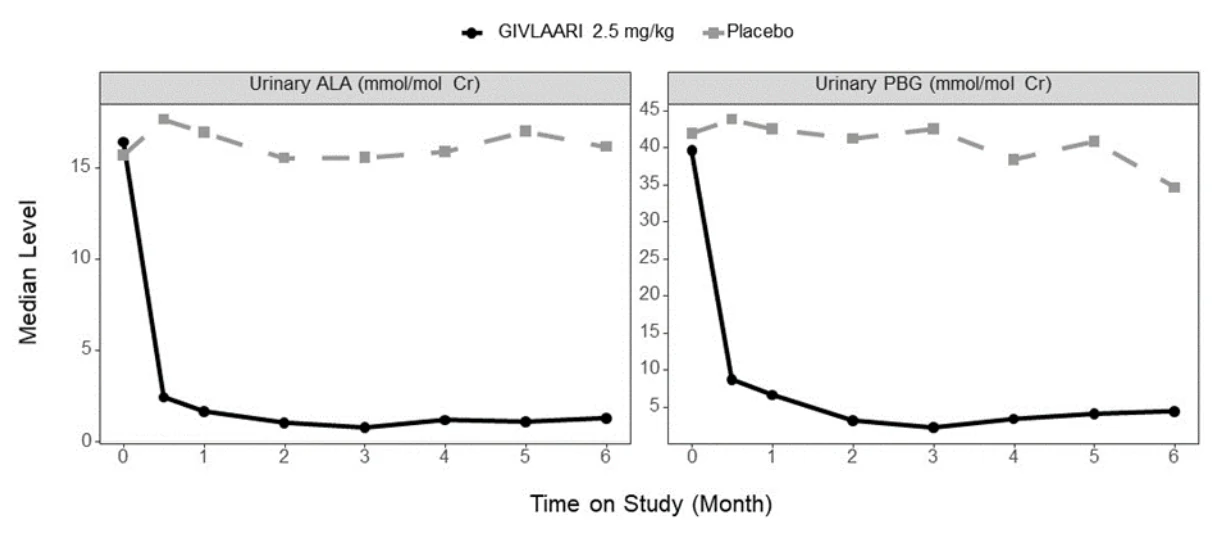
Observed data and modeling demonstrated once monthly dosing with 2.5 mg/kg of GIVLAARI resulted in a greater reduction and lesser fluctuation in ALA levels relative to dosing once every 3 months.
Cardiac Electrophysiology
The effect of GIVLAARI on the QTc interval was evaluated in a double-blind, placebo-controlled study and the open-label extension in 94 patients. No large mean increase in QTc (i.e. >20 ms) was detected at the 2.5 mg/kg once monthly dose level. A dedicated thorough QT study has not been conducted with GIVLAARI.
10.3. Pharmacokinetics
The pharmacokinetics of givosiran and its active metabolite AS(N-1)3’ givosiran were evaluated following single and multiple dosing in CHE subjects and AHP patients (Table 4). Givosiran and its active metabolite exhibited linear pharmacokinetics in plasma over the 0.35 to 2.5 mg/kg dose range. At doses greater than 2.5 mg/kg, plasma exposure and maximal concentrations of givosiran and its active metabolite increased slightly greater than dose-proportionally. Givosiran exhibited time independent pharmacokinetics with chronic dosing at the recommended dose regimen of 2.5 mg/kg once monthly.
There was no accumulation of givosiran or the active metabolite in plasma after repeated once monthly dosing.
Table 4 – Pharmacokinetic Parameters of Givosiran and its Active Metabolite at Steady State After the 2.5 mg/kg Monthly Dose of Givosiran
Cmax (ng/mL) [Mean (CV%)] | AUC24 (ng·h/mL) [Mean (CV%)] | Tmax (h) [Median (range)] | Apparent Central Volume of Distribution (Vz/F) (L) [Mean (RSE%)]a | Half-Life (h) [Mean (CV%)] | Apparent Clearance (L/h) [Mean (CV%)]a | |||
|---|---|---|---|---|---|---|---|---|
| Givosiran | 321 (51%) | 4130 (43%) | 3 (0.5-8) | 10.4 (2.3%) | 6 (46%) | 35.1 (18%) | ||
| AS(N-1)3′ Givosiran | 123 (64%) | 1930 (63%) | 7 (1.5-12) | 6 (41%) | 64.7 (33%) | |||
| a Based on population PK model estimation. | ||||||||
Absorption
Following subcutaneous administration, givosiran is rapidly absorbed with a time to maximum plasma concentration (tmax) of 0.5 to 8 hours. At the 2.5 mg/kg once monthly dose, the steady-state peak plasma concentrations of givosiran (Cmax) and area under the curve from time of dosing up to 24 hours after dosing (AUC24) were 321 ± 163 ng/mL and 4,130 ± 1,780 ng·h/mL, respectively, and corresponding values for the active metabolite were 123 ± 79.0 ng/mL and 1,930 ± 1,210 ng·h/mL, respectively.
Distribution
Givosiran is greater than 90% bound to plasma proteins over the concentration range observed in humans at the 2.5 mg/kg once monthly dose. The population estimate for the apparent central volume of distribution (Vd/F) for givosiran and for the active metabolite was 10.4 L. Givosiran and its active metabolite distribute primarily to the liver after subcutaneous dosing.
Metabolism
Givosiran is metabolized by nucleases to oligonucleotides of shorter lengths. Active metabolite AS(N-1)3′ givosiran (with equal potency as that of givosiran) was a major metabolite in plasma with 45% exposure (AUC0-24) relative to givosiran at the 2.5 mg/kg once monthly dose. In vitro studies indicate that givosiran does not undergo metabolism by CYP450 enzymes.
Elimination
Givosiran and its active metabolite are eliminated from plasma primarily by metabolism with an estimated terminal half-life of approximately 6 hours. The population estimate for apparent plasma clearance was 36.6 L/h for givosiran and 23.4 L/h for AS(N-1)3′ givosiran. After subcutaneous dosing, up to 14% and 13% of the administered givosiran dose was recovered in urine as givosiran and its active metabolite, respectively. The renal clearance ranged from 1.22 to 9.19 L/h for givosiran and 1.40 to 12.34 L/h for the active metabolite.
Pharmacokinetic/Pharmacodynamic Relationship
Plasma concentrations of givosiran are not reflective of the extent or duration of pharmacodynamic activity. Since givosiran is a liver targeted therapy, concentrations in plasma decline rapidly due to uptake by the liver. In the liver, givosiran exhibits a long half-life leading to extended duration of pharmacodynamic effect maintained over the monthly dosing interval.
Special Populations and Conditions
- Pediatrics: GIVLAARI has not been studied in children and adolescents younger than 18 years of age. Predictive pharmacokinetic and pharmacodynamic simulations were conducted assuming a body weight of 40 kg which is the median body weight for 12 year old boys and girls based on Centers for Disease Control and Prevention (CDC) growth charts and compared with adults (66 kg) for 2.5 mg/kg once monthly givosiran. The maximal predicted concentrations of givosiran in the adolescent patients (40 kg, ≥12 to <18 years old) were higher by 18% and the exposures lower by 22% as compared to adults (66 kg, >18 years) based on population pharmacokinetic analysis. The pharmacodynamics of urinary ALA levels and reduction from baseline after 2.5 mg/kg monthly doses of givosiran were predicted to be comparable between adult (>18 years) and adolescent (≥12 to <18 years old) patients with AHP, with median levels of 1.18 mmol/mol creatinine and 1.25 mmol/mol creatinine, respectively (see 7 Warnings and Precautions, 7.1 Special Populations, and 4 Dosage and Administration).
- Geriatrics: Clinical studies of GIVLAARI did not include sufficient numbers of patients to determine if the use in geriatric patients is associated with differences in safety or effectiveness. Age was not a significant covariate in the population pharmacokinetic analysis, pharmacokinetic/pharmacodynamic analysis, or the ALA Attack analysis indicating that there was no difference in the pharmacokinetics, pharmacodynamics, or efficacy of givosiran based on age in clinical studies of givosiran (see 7 Warnings and Precautions, 7.1 Special Populations, and 4 Dosage and Administration).
- Sex: There was no difference in the pharmacokinetics or pharmacodynamics of givosiran based on sex in clinical studies.
- Ethnic Origin: The exposure and maximal concentrations of givosiran in East Asian patients were higher by 34% and 22% based on population pharmacokinetic analysis and are not considered clinically relevant. Race was not identified as a statistically significant covariate in the pharmacokinetic/pharmacodynamic analysis indicating that the pharmacodynamic effect of givosiran is comparable between East Asian and non-East Asian patients, and not influenced by the difference in plasma exposures.
- Hepatic Insufficiency: Adult patients with mild hepatic impairment (bilirubin ≤1×ULN and AST >1×ULN, or bilirubin >1.0 to 1.5×ULN) had comparable plasma exposure of givosiran and its active metabolite and similar pharmacodynamics (percent reduction in urinary ALA and PBG) as patients with normal hepatic function. GIVLAARI has not been studied in patients with moderate or severe hepatic impairment (see 7 Warnings and Precautions, Hepatic/Biliary/Pancreatic, and 4 Dosage and Administration).
Renal Insufficiency: Adult patients with mild, moderate and severe renal impairment had comparable plasma exposure of givosiran and its active metabolite and similar givosiran pharmacodynamics. The exposure and maximal concentrations of givosiran in mild, moderate and severe renal impaired adults increased by <15% as compared to subjects with normal renal
- function based on population pharmacokinetic analysis. Limited data are available in patients with severe renal impairment and GIVLAARI has not been studied in patients with end-stage renal disease (eGFR <15 mL/min/1.73 m2), or patients on dialysis (see 7 Warnings and Precautions, Renal, and 4 Dosage and Administration).
- Obesity: There was no difference in the pharmacodynamics of givosiran based on body weight. The givosiran maximal plasma concentrations and exposures in 40 kg and 130 kg patients were within 22% of that observed in a typical 66 kg patient based on population pharmacokinetic analysis.
- Storage, Stability, and Disposal
Temperature
Store at 2°C to 25°C.
Keep GIVLAARI vial in the original carton to protect from light until ready for use.
Disposal
Dispose of the syringe, vial, needle and any unused needles in an approved sharps container. Any unused product should be disposed of in accordance with local requirements.
Part 2: Scientific Information
13. Pharmaceutical Information
Drug Substance
Proper name of the drug substance: givosiran sodium
Molecular formula and molecular mass of givosiran: The molecular formula of givosiran (free acid) is C524 H694 F16 N173 O316 P43 S6 with a molecular weight of 16,300.34 Da.
Molecular formula and molecular mass of givosiran sodium: The molecular formula of givosiran sodium is C524 H651 F16 N173 Na43 O316 P43 S6 with a molecular weight of 17,245.56 Da.
Structural formula of givosiran sodium:
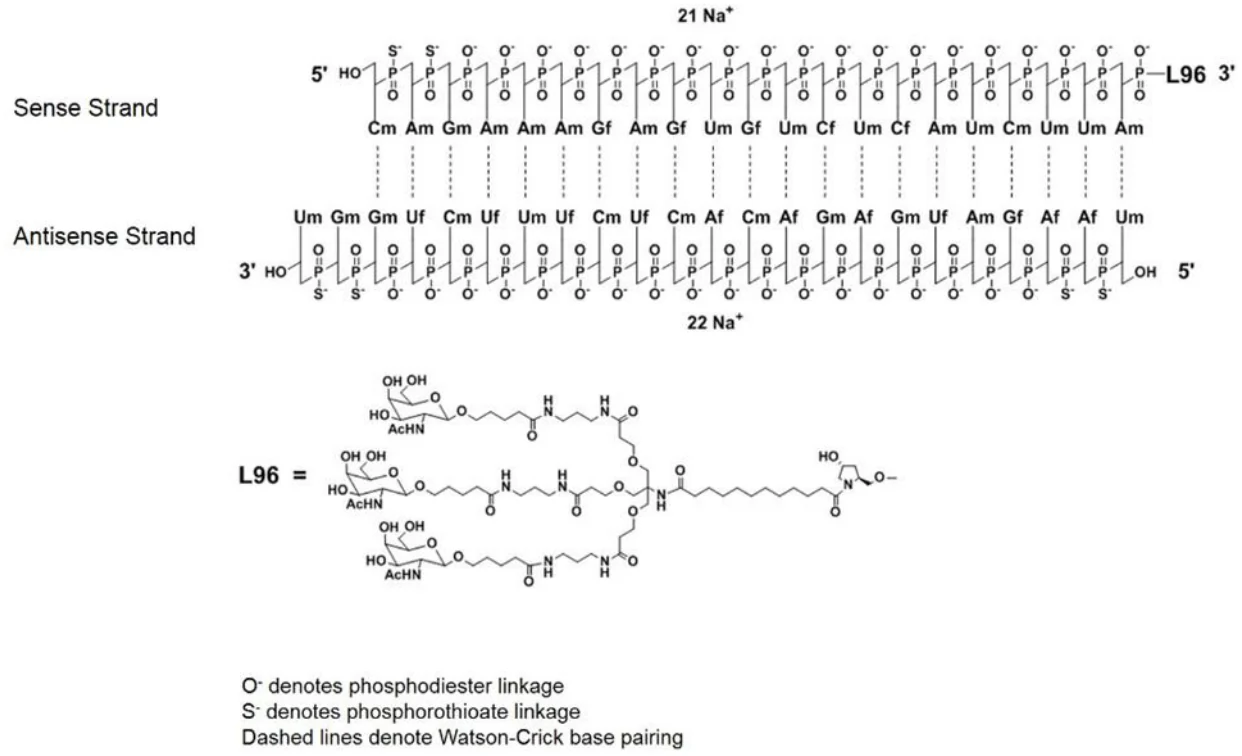
Abbreviations: Af = adenine 2'-F ribonucleoside; Cf = cytosine 2'-F ribonucleoside; Uf = uracil 2'-F ribonucleoside; Am = adenine 2'-OMe ribonucleoside; Cm = cytosine 2'-OMe ribonucleoside; Gf = guanine 2'-F ribonucleoside; Gm = guanine 2'-OMe ribonucleoside; Um = uracil 2'-OMe ribonucleoside; L96 = triantennary GalNAc (N-acetylgalactosamine)
Physicochemical properties:
- The solubility of givosiran sodium drug substance in water has been determined to be at least 357 mg/mL
- The givosiran sodium drug substance is a white to pale yellow powder
- pH of a 1% solution in 50 mM KCl: 4.4 to 7.3
14. Clinical Trials
14.1. Clinical Trials by Indication
Indication: Treatment of Acute Hepatic Porphyria (AHP) in Adults
The efficacy of GIVLAARI (givosiran) was evaluated in a randomized, double-blind, placebo-controlled, multinational study (ENVISION) and a supportive open-label study ALN-AS1-002 (Study 2).
Table 5 – Summary of Patient Demographics in ENVISION and Study 2 Trials
| Study | Study design | Dosage, route of administration and duration | Study subjects (n) | Median age (Range) | Sex |
| ENVISION | Randomized (1:1), 6-month, double blind, placebo controlled, multicenter study period | 2.5 mg/kg, via subcutaneous injection once monthly, for 6 months | givosiran: 48 placebo: 46 | 37.5 (19, 65) | Male (11%) Female (89%) |
| ALN-AS1-002 (Study 2) | Supportive open-label study | 2.5 mg/kg, via subcutaneous injection once monthly, for 12 months or more, ongoing | givosiran/ givosiran: 12 placebo/ givosiran: 4 | 39.5 (21, 60) | Male (12.5%) Female (87.5%) |
ENVISION
A total of 94 patients with AHP (89 patients with acute intermittent porphyria [AIP], 2 patients with variegate porphyria [VP], 1 patient with hereditary coproporphyria [HCP], and 2 patients with no identified mutation) were randomized 1:1 to receive once monthly subcutaneous injections of GIVLAARI 2.5 mg/kg or placebo during the 6-month double-blind period. Patients randomized to GIVLAARI included 46 patients with AIP, 1 patient with VP, and 1 patient with HCP. In this study, inclusion criteria specified a minimum of 2 porphyria attacks requiring hospitalization, urgent healthcare visit, or intravenous (IV) hemin administration at home in the 6 months prior to study entry. Hemin use during the study was permitted for the treatment for acute porphyria attacks.
The median age of patients in ENVISION was 37.5 years (range 19 to 65 years), 89.4% were female, and 77.7% were white. GIVLAARI and placebo arms were balanced with respect to historical porphyria attack rate, hemin prophylaxis prior to study entry, use of opioid medications, and patient-reported measures of chronic symptoms between attacks.
The major efficacy measure was the annualized attack rate (AAR) of composite porphyria attacks over the 6-month double-blind period and consisted of three components: attacks requiring hospitalization, urgent healthcare visit, or IV hemin administration at home. This composite efficacy measure was evaluated as the primary endpoint in patients with AIP, and as a secondary endpoint in the overall population of patients with AHP.
Treatment with GIVLAARI resulted in a significant reduction of the porphyria attack composite primary endpoint compared to placebo of 74% in patients with AIP, and a reduction of 73% in patients with AHP, compared to placebo (Table 6). Consistent results were observed for each of the 3 components of the porphyria attack composite endpoint.
The results observed over 6 months in ENVISION were maintained through Month 12, with a median AAR (Q1, Q3) of 0.0 (0.0, 3.5) observed for patients with continued dosing of GIVLAARI during the open-label extension period.
Table 6 – Annualized Rate of Porphyria Attacksa in Patients with AIP and Patients with AHP over the 6 Month Double blind Period of ENVISION
| Patients with AIP | Patients with AHP | ||||||||||||
|---|---|---|---|---|---|---|---|---|---|---|---|---|---|
| GIVLAARI (N=46) | Placebo (N=43) | GIVLAARI (N=48) | Placebo (N=46) | ||||||||||
Mean AARb (95% CI) | 3.22 (2.25, 4.59) | 12.52 (9.35,16.76) | 3.35 (2.37, 4.74) | 12.26 (9.22, 16.29) | |||||||||
Rate Ratio (95% CI) (GIVLAARI/ placebo) | 0.26 (0.16, 0.41) | 0.27 (0.17, 0.43) | |||||||||||
| p-value | <0.001 | <0.001 | |||||||||||
Median AAR (Q1, Q3) Range | 1.04 (0.00, 6.23) 0.00-23.8 | 10.68 (2.24, 26.09) 0.00-51.6 | 1.04 (0.00, 6.35) 0.00-23.8 | 10.65 (2.24, 25.93) 0.00-51.6 | |||||||||
| Number of Patients With 0 Attacks (%) | 23 (50.0) | 7 (16.3) | 24 (50.0) | 8 (17.4) | |||||||||
AAR, annualized attack rate; AIP, acute intermittent porphyria; AHP, acute hepatic porphyria; CI, confidence interval; Q1, Quartile 1; Q3, Quartile 3
a Composite includes three components: attacks requiring hospitalization, urgent health care visits, or IV hemin administration at home
b Mean AAR, rate ratios, and the corresponding 95% CIs are from the negative binomial regression model. A rate ratio <1 represents a favorable outcome for GIVLAARI.
Patients with AHP receiving GIVLAARI experienced similar reduction in porphyria attacks relative to patients with AHP receiving placebo across all pre-specified subgroups, including age, sex, race, region, baseline body mass index (BMI), prior hemin prophylaxis use, historical attack rate, prior chronic opioid use when not having attacks, and the presence of prior chronic symptoms when not having attacks.
Secondary clinical efficacy endpoints were studied in patients with AIP and are summarized in Table 7.
Table 7 – Secondary Clinical Efficacy Measures in Patients with AIP over the 6-Month Double-blind Period of ENVISION
| Endpoint | GIVLAARI (N=46) | Placebo (N=43) | Treatment Difference (95% CI) | p-value |
|---|---|---|---|---|
| Annualized days of hemin use (Mean, 95% CI)a | 6.77 (4.20, 10.92) | 29.71 (18.41, 47.94) | 0.23 (0.11, 0.45) | <0.001 |
| Urinary ALA levels at Month 6, mmol/mol Cr [Median (Q1, Q3)]b | 1.29 (0.89, 4.56) | 16.15 (7.97, 22.97) | -12.80 (-16.10, -7.81) | <0.001 |
| Urinary PBG levels at Month 6, mmol/mol Cr [Median (Q1, Q3)]b | 4.42 (1.55, 15.27) | 35.10 (25.57, 50.00) | -27.48 (-34.04, -20.99) | <0.001 |
| Daily worst pain score: AUC of change from baseline over 6 months [Median (Q1, Q3)]b, c | -11.51 (-29.18, 3.04) | 5.29 (-23.05,11.15) | -10.07 (-22.83, 0.94) | <0.05 |
| PCS of SF-12, change from baseline at Month 6 (LS mean, 95% CI)d | 5.37 (3.05, 7.69) | 1.43 (-1.00, 3.86) | 3.94 (0.59, 7.29) | <0.05 |
AIP, acute intermittent porphyria; ALA, aminolevulinic acid; AUC, area under the curve; CI, confidence interval; LS, least square; MMRM, mixed-effect model repeated measures method
a Based on a negative binomial repression model. A rate ratio <1 represents a favorable outcome for GIVLAARI.
b Median of treatment difference and CI were estimated using the Hodges-Lehmann method; p-value was based on Wilcoxon rank sum test.
c Patients provided a daily self-assessment of their worst pain based on a 0 to 10 numerical rating scale (NRS). A lower score indicates fewer symptoms.
d Analyzed using MMRM. A higher score indicates improved health-related quality of life.
GIVLAARI resulted in a reduction in hemin use, urinary ALA, urinary PBG, and pain. Patients treated with GIVLAARI had fewer days of opioid and non-opioid analgesic use than those on placebo.
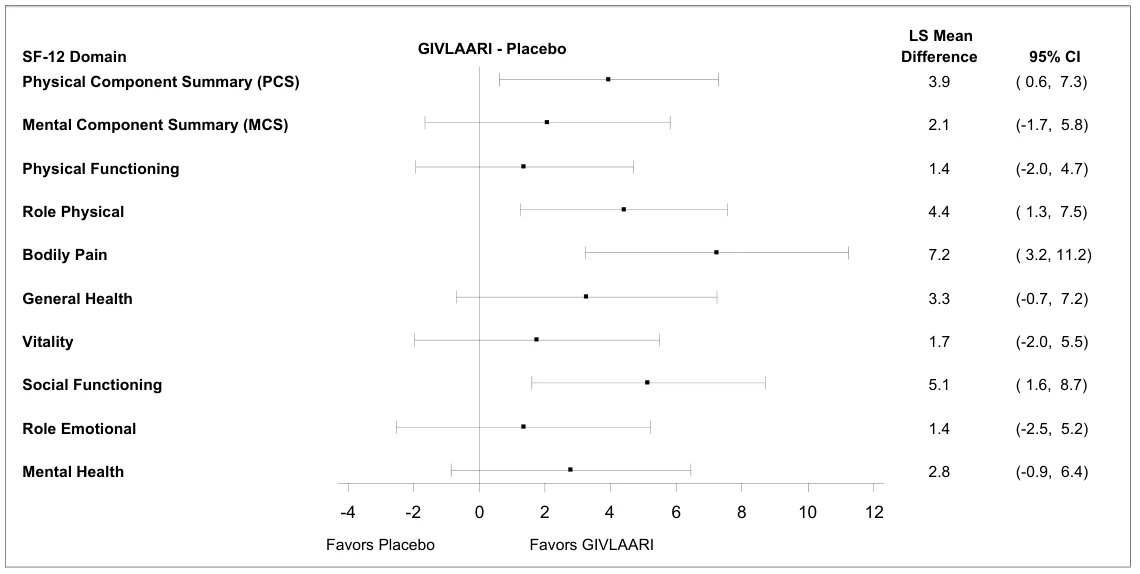
General health status was assessed by the Short Form Health Survey (SF-12). At Month 6, patients treated with GIVLAARI showed greater improvement from baseline in the SF-12 physical component summary (PCS) score compared to patients treated with placebo. At Month 6, there was consistent evidence of effect favoring GIVLAARI in bodily pain, role-physical, and social functioning domains, but not in the general health, physical functioning, role-emotional, vitality, and mental health domains (Figure 2).
Figure 2 – Change from Baseline to Month 6 in SF-12 Domain Scores in Patients with AIP
AIP, acute intermittent porphyria; CI, confidence interval; LS Mean, least square mean; MCS, mental component summary; PCS, physical component summary; SF-12, the 12-item short-form health survey version 2.
In a patient global assessment (Patient Global Impression of Change - PGIC), a larger proportion of patients with AIP treated with GIVLAARI (61.1%) than with placebo (20%) rated their overall status as “very much improved” or “much improved” since the start of the study.
ALN-AS1-002 (Study 2)
In the ongoing supportive open label study, 16 patients with AIP received long term treatment with 2.5 mg/kg of GIVLAARI once monthly (median of 15.59 months; range 2.1 to 23.1 months), with 15 patients receiving treatment for 12 months or more. Treatment with GIVLAARI demonstrated ALA and PBG reductions comparable to that seen in ENVISION. A 96.7% reduction in the mean annualized composite porphyria attack rate, and a 96.6% reduction in the mean annualized rate of hemin use relative to the pre-treatment rates, has been observed.
15. Microbiology
No microbiological information is required for this drug product.
16. Non-Clinical Toxicology
Genotoxicity
Givosiran was not genotoxic in the in vitro (bacterial reverse mutation (Ames) assay, and chromosomal aberration assay in human peripheral blood lymphocytes) and in vivo (micronucleus assay in rats) assays.
Carcinogenicity
In a 2-year rat carcinogenicity study, male and female Sprague Dawley rats were administered once monthly subcutaneous doses of givosiran at 25, 50, and 100 mg/kg for up to 85 weeks (females) or 89 weeks (males). The administration of givosiran resulted in an increased incidence of hepatocellular adenomas in males at the dose of 100 mg/kg/month (42-fold the maximum recommended human dose (MRHD), based on AUC). The relevance of observed rat neoplastic lesions for the intended patient population is uncertain.
Evaluation of givosiran in a 26-week carcinogenicity study in Tg-rasH2 mice showed no evidence of carcinogenicity at dose levels up to 1500 mg/kg/month.
Reproductive and Developmental Toxicology
Embryo fetal development studies were performed in rats and rabbits during organogenesis. In pregnant rabbits, subcutaneous administration of givosiran (0.5, 1.5, and 5 mg/kg/day or 20 mg/kg as a single administration on gestation day 7) showed marked maternal toxicity (including mean maternal body weight loss) and resulted in increased post-implantation loss as a result of increased early resorptions (starting at 1.5 mg/kg/day dose). Administration of 20 mg/kg dose of givosiran also showed an increased incidence of skeletal variations of sternebrae in comparison to the control group. The 1.5 mg/kg/day dose in rabbits is 5-fold the MRHD of 2.5 mg/kg/month normalized to account for daily dose schedule.
In a pre- and postnatal development study, givosiran administered subcutaneously to pregnant rats on gestation days 7, 13, and 19 and postnatal days 6, 12, and 18 at doses up to 30 mg/kg did not result in any effects on embryo-fetal survival or fetal body weights.
In fertility and early embryonic development studies, administration of givosiran by weekly subcutaneous doses of 0, 3, 10, and 30 mg/kg in male and female rats prior to and during mating, and continuing in females throughout organogenesis resulted in no adverse effects upon the male or female fertility endpoints evaluated.