


Product Monograph - Pindolol-5 Tab 5mg
INDICATIONS
A) Hypertension:
PINDOLOL (pindolol) is indicated in the treatment of mild to moderate hypertension.
Pindolol is usually use in combination with other drugs, particularly a thiazide diuretic.
However, it may be used alone as an initial agent in those patients in whom, in the judgment of the physician, treatment should be started with a beta blocker rather than diuretic.
The combination of PINDOLOL with a diuretic and/or peripheral vasodilator has been found to be compatible and generally more effective than pindolol alone. Limited experience with other antihypertensive agents, including methyldopa, has not shown evidence of incompatibility with PINDOLOL.
PINDOLOL is not recommended for the emergency treatment of hypertensive crises.
B) Angina Pectoris:
PINDOLOL (pindolol) is indicated for the prophylaxis of angina pectoris.
CONTRAINDICATIONS
PINDOLOL (pindolol) is contraindicated in the presence of:
- 1. Sinus bradycarida (<45-50 beats/min)
- 2. Second and third degree A-V block
- 3. Right ventricular failure secondary to pulmonary hypertension
- 4. Congestive heart failure (see Warnings)
- 5. Cardiogenic shock
- 6. Anesthesia with agents that product myocardial depression, e.g. ether
- 7. Bronchospam, including bronchial asthma or severe chronic obstructive pulmonary disease (See Precautions).
- 8. Hypersensitivity to pindolol, to any of the excipients or cross-sensitivity to other beta blockers
- 9. Prinzmetal’s angina (variant angina)
- 10. Sick sinus syndrome
- 11. Severe peripheral arterial circulatory disturbances
- 12. Untreated pheochromocytoma
WARNINGS
A) Cardiac Failure:
Special caution should be exercised when administering PINDOLOL (pindolol) to patients with a history of heart failure, sympathetic stimulation is a vital component supporting circulatory function in congestive heart failure, and inhibition with beta-blockade always carries the potential hazard of further depressing myocardial contractility and precipitating cardiac failure. Pindolol may reduce but does not abolish
the inotropic action of digitalis on the heart muscle. However, the positive inotropic action of digitalis may be reduced by the negative inotropic effect of pindolol when the two drugs are used concomitantly. The effects of beta-blockers and digitalis are additive in depressing AV conduction. In patients without a history of cardiac failure, continued depression of the myocardium over a period of time can, in some cases, lead to cardiac failure. Therefore, at the first sign or symptom of impending cardiac failure, patients should be fully digitalized and/or given diuretic and the response observed closely. If cardiac failure continues, despite adequate digitalization and diuretic therapy, pindolol should be immediately withdrawn.
B) Abrupt Cessation of Therapy with Pindolol:
Patients with angina should be warned against abrupt discontinuation of pindolol. There have been reports of severe exacerbation of angina, and of myocardial infraction or ventricular arrhythmias occurring in patients with angina pectoris, following abrupt discontinuation of pindolol is planned in patients with angina pectoris, the dosage should be gradually reduced over a period of about two weeks and the patient should be observed carefully. The same frequency of administration should be maintained. In situations of greater urgency, pindolol therapy should be discontinued stepwise and under conditions of closer observation.
If angina markedly worsens or acute coronary insufficiency develops, it is recommended that treatment with pindolol be reinstituted promptly, at least temporarily.
C) Various skin rashes and conjunctival xerosis have been reported with beta blockers, including pindolol. A severe oculo-mucocutaneous syndrome, whose signs include
conjunctivitis sicca and psoriasiform rashes, otitis, and sclerosing serositis has occurred with chronic use of one beta-adrenergic-blocking agent (practolol). This syndrome has not been observed with pindolol or any other agent. However, physicians should be alert to the possibility of such reactions and should discontinue treatment in the event that they occur. A switch to another therapeutic agent might be advisable.
D) Sinus bradycardia may occur with the use of PINDOLOL due to unopposed vagal activity remaining after blockade of beta1-adrenergic receptors. However, due to its intrinsic sympathomimetic activity (ISA), pindolol causes less bradycardia at rest than some other beta-adrenergic blocking agents. If excessive bradycardia occurs the dosage of pindolol should be reduced.
E) In patients with thyrotoxicosis, possible deleterious effects from long-term use of pindolol have not been adequately appraised. Beta blockage may mask the clinical signs of continuing hyperthyroidism or complications, and give false impression of improvement.
Therefore, abrupt withdrawal of pindolol may be followed by an exacerbation of the symptoms of hyperthyroidism, including thyroid storm.
F) Co-medication with calcium channel blockers: Owing to the danger of cardiac arrest, a calcium channel blocker of the verapamil type must not be administrated intravenously to a patient already receiving treatment with a beta-blocker.
G) Psoriasis: Since beta-blockers may aggravate psoriasis, PINDOLOL should only be prescribed after careful consideration of benefits and risks in patients with history of psoriasis.
PRECAUTIONS
A) Caution should also be exercised in patients prone to non-allergic bronchospasm (e.g.
chronic bronchitis, emphysema) since PINDOLOL (pindolol) may block bronchodilation produced by endogenous and exogenous catecholamine stimulation of beta receptors.
B) Pindolol should be administrated with caution to patients with allergic rhinitis prone to bronchospasm.
There may be increased difficulty in treating an allergic type reaction in patients on beta-blockers.
In these patients, the reaction may be more severe due to pharmacologic effects of the beta-blockers and problems with fluid changes. Epinephrine should be administered with caution since it may not have its usual effects in the treatment of anaphylaxis. On the one hand, larger doses of epinephrine may be needed to overcome the bronchospasm, while on the other these doses can be associated with excessive alpha-adrenergic stimulation with consequent hypertension, reflex bradycardia and heart block and possible potentiation of bronchospasm. Alternatives to the use of large doses of epinephrine include vigorous supportive care such as fluids and the use of beta-agontists including parenteral salbutamol or isoproterenol to overcome bronshocpasm and norepinephrine to overcome hypotension.
C) Pindolol should be administered with caution to patients subject to spontaneous hypoglycemia, or to diabetic patients (especially those with labile diabetes) who are receiving insulin or oral hypoglycemic agents. Beta-adrenergic-blockers may mask the
premonitory signs and symptoms (e.g. palpitations, tachycardia, tremor) of acute hypoglycemia whereas sweating is not inhibited. The concurrent use of beta-blockers and antidiabetic medication should always be monitored to confirm that diabetic control is well maintained.
D) Pindolol dosage should be individually adjusted when used concomitantly with other antihypertensive agents. (See Dosage and Administration).
E) Patients receiving catecholamine-depleting drugs, such as reserpine or guanethidine, should be closely monitored because the added beta-adrenergic-blocking action of pindolol may produce an excessive reduction of sympathetic activity. Pindolol should not be combined with other beta-blockers.
F) Appropriate laboratory tests should be performed at regular intervals during long-term treatment.
G) The management of patient being treated with beta blockers and undergoing elective or emergency surgery is controversial. Although beta-adrenergic-receptor-blockade impairs the ability of the heart to respond to beta-adrenergically-mediated reflex stimuli, abrupt discontinuation of therapy with pindolol may be followed by severe complications (See
Warnings).
Some patients receiving beta-adrenergic-blocking agents have been subject to protracted severe hypotension during anesthesia. Difficulty in re-starting and maintaining the heart-beat has also been reported.
For these reasons, in patients with angina undergoing elective surgery, pindolol should be withdrawn gradually following the recommendation given under Abrupt Cessation of
Therapy (See Warnings). According to available evidence, all clinical and physiologic effects of beta blockade are no longer present 48 hours after cessation medication.
In emergency surgery, since pindolol is a competitive inhibitor or beta-adrenergic-receptor agonists, its effects may be reversed if necessary, by sufficient doses of such agonists as isoproterenol or levarterenol.
H) Impaired Renal or Hepatic Function: Beta-blocking agents should be used with caution in patients with impaired hepatic or renal function. Poor renal function has only minot effects on PINDOLOL clearance, but poor hepatic function may cause blood levels of PINDOLOL to increase substantially.
In patients with severe renal impairment, further impairment of renal function has been only rarely odserved during therapy with pindolol.
I) Anaphylactic reaction: Anaphylactic reactions precipitated by other agents may be particularly severe in patients taking beta-blockers, especially non-selective beta-blockers, and may be resistant to normal doses of adrenaline. Whenever, possible, beta-blockers should be avoided in patients who are at increased risk for anaphylaxis.
J) Phaeochromocytoma: If patients with phaeochromocytoma are treated with a beta-blocker, an alpha-blocker should always be co-administered (see Contraindications).
K) Usage in Pregnancy: Since pindolol has not been studied in human pregnancy, the drug should not be given to pregnant women. The use of any drug in patients of child-bearing potential requires that the anticipated benefit be weighed against possible
hazards. Pindolol crosses the placental barrier.
L) Lactating Women: Pindolol passes in small quantities into breast milk.
M) Fertility: In rats, PINDOLOL (pindolol) did not cause any adverse effects on fertility or reproductive performance at a dose of 10 mg/kg, which is 17-times the human dose.
While effects in animals are not always predictive of human effects, at dose levels of 30 mg/kg and greater, female rats were observed to mate less frequently than untreated animals (see Toxicology).
N) Usage in Children: Since there is no experience with pindolol in the treatment of pediatric age groups, pindolol is not indicated for pediatrics.
O) Usage in Geriatric patients: No evidence exists that geriatric patients require different dosages; however these patients should be treated cautiously. An excessive decrease in blood pressure or pulse rate may reduce blood supply to vital organs to inadequate levels.
P) Because dizziness or fatigue may occur initiation of treatment with beta-adrenoreceptor blocking drugs, patients driving vehicles or operating machinery should exercise caution until they have determined their individual response to treatment.
ADVERSE REACTIONS
Cardiovascular:
Congestive heart failure (See Warnings) severe bradycardia (See Warnings) may occur.
Syncope, lightheadedness, and postural hypotension. Lengthening of PR interval, second degree AV block, palpitation, chest pains, cold extremities, Raynaud’s phenomenon,
claudication, hot flushes, very rarely arrhythmia, coronary insufficiency.
Central Nervous System:
Insomnia, nightmares, vivid dreams, fatigue, drowsiness, weakness, dizziness, vertigo, tinnitus, headache, mental depression, nervousness. Rarely have the following adverse reactions been reported: aggressiveness, motor disorders, confusion.
Gastrointestinal:
Diarrhea, constipation, flatulence, heartburn, nausea and vomiting, abdominal pain and dry mouth.
Respiratory:
Shortness of breath and/or dyspnea, wheezing, bronchospasm.
Allergic, Dermatological: (See Warnings)
Exanthema, sweating, pruritis, psoriasiform rash.
Eyes:
Itching, burning, grittiness, dryness.
Miscellaneous:
Muscle cramps, appetite stimulation, weight gain, urinary frequency.
Clinical Laboratory:
On rare occasions, changes in the following parameters were noted: elevated transaminases, alkaline phosphate, LDH, serum uric acid, reduced bilirubin.
Post- Market Adverse Drug Reactions
The following adverse drug reactions are, in most cases, mild and transient in nature and necessity for interruption of pindolol therapy is rarely observed (see WARNINGS and
PRECAUTIONS).
These adverse drug reactions (table 1) have been derived from post-marketing experience with
PINDOLOL. Because these reactions are reported voluntarily from a population of uncertain size, it is not possible to reliably estimate their frequency which is therefore categorized as not known. Adverse drug reactions are listed according to system organ classes in MedDRA. Within each system organ class, ADRs are presented in order of decreasing seriousness.
Table 1 Adverse drug reactions (frequency not known) Psychiatric disorders
Sleep disorders, depression, hallucinations
Nervous system disorders
Tremor, dizziness, headache
Cardiac disorders
Bradycardia, conduction disorder, cardiac failure
Vascular disorders
Hypotension, symptoms of peripheral vascular disorders (peripheral coldness), Raynaud’s-like symptoms
Respiratory, thoracic and mediastinal disorders
Bronchospasm, dyspnea
Gastrointestinal disorders
Gastrointestinal disorders (nausea, vomiting, abdominal pain and diarrhea) Skin and subcutaneous tissue disorders
Skin reaction, hyperhidrosis, worsening of psoriasis
Musculoskeletal and connective tissue disorders
Muscle cramps
General disorders and administration site conditions
Fatigue
DRUG INTERACTIONS
Table form preferred (see HC’s PM guidance for industry)
Table 2 – Established or Potential Drug-Drug Interactions
| Product | Ref | Effect | Clinical comment |
| Monoamine oxidase (MAO) inhibitors | C,T | Combining these medications may increase the risk of hypotension, orthostatsis, bradycardia, and heart failure due to excessive reduction of sympathetic activity. Possible significant hypertension may theoretically occur up to 14 days following discontinuation of the MAO inhibitor | Monoamine oxidase (MAO) inhibitor may potentiate the pharmacologic effects of beta-blockers, which are thought to competitively antagonize catecholamines at cardiac and other peripheral adrenergic neurons. Concurrent use with beta-blockers is not recommended. |
| Antidiabetic agents | T | Beta-blockers may interfere with the usual hemodynamic response to hyperglycaemia and produce a rise in blood pressure associcated with severe bradycardia. | Beta-blockade reduces the release of insulin in response to hyperglycemia; therefore, it may be necessary to adjust the dose of Antidiabetic drugs. Beta-blockers should be avoided in unstable diabetic patients (patients who experience wide and unpredictable fluctuations of blood glucose values and/or difficulty in stabilizing blood glucose levels) prone to episodes of hypoglycemia (see Warnings and Precautions). |
| Calcium-channel blocking agents | CT (Carru thers 1991) | Because of their potential effect on the cardiac conduction system and contractility, the i.v. route must be avoided. Oral treatment, if judged absolutely necessary, requires careful monitoring, especially when the beta-blocker is combined with a verapamil-type calcium antagonist. | Severe reduction in blood pressure and heart failure upon the concomitant administration of dihydropyridine derivatives such as nifedipine with pindolol in patients with latent cardiac insufficiency is possible. |
| Anti-adrenergic agents | T | Antihypertensive effect of alpha-adrenergic blockers such as guanethidine, betanidine, reserpine, alpha-methyldopa or clonidine may be potentiated by beta-blockers, which may lead to postural hypotension. | When therapy is discontinued in patients receiving a beta-blocker and clonidine concurrently, the beta-blockers should gradually discontinued several days before clonidine is disconcintued, in order to reduce the potential risk of a clonidine withdrawal hypertensive srisis (rebound effect). Monitoring of blood pressure is recommended during the anti-adrenergics withdrawal. |
| Non-steroidal anti-inflammatory drugs (NSAIDSs) | T | Concomitant administration of non-steroidal anti-inflammatory drugs including COX-2 inhibitors with a beta-blocker, may decrease its antihypertensive effect, possibly as a result of the inhibition of renal prostaglandin synthesis and sodium and fluid retention caused by NSAIDs. | Anti-hypertensive effects of beta-blockers may be decreased by non-steroidal anti-inflammatory drugs, which may lead to uncontrolled hypertension. Monitoring is required. |
| Phenothiazines | CT | Concurrent administration of pindolol and thioridazine is reported to result in a moderate increases in the serum levels of thioridazine and two of its metabolites, as well as higher than expected serum pindolol levels. | Concurrent use with beta-blockers with phenothiazines results in an increased plasma concentration of either drug, which may lead to hypotension, ventricular tachycardia, and pigmentary retinopathy. Monitoring is required. |
| Sympathomimetic drugs | T | Concmitant administration of sympathomimetic drugs such as adrenaline, noradrenaline, isoprenaline, ephedrine, phenylephrine phenylpropanolamine, or xanthine derivatives with a non-selective beta-blocker may enhance the pressor response resulting in severe hypertension due to antagonistic effects. | Pindolol may antagonize the effects of sympathomimetic drugs and xanthine derivatives which may lead to severe hypertension. Monitoring is required. |
| Product | Ref | Effect | Clinical comment |
| Anesthetic agents | CT | Beta-blockers and certain anaesthetics may be additive in their cardio-depressant effect and may lead to protracted severe hypotension (see Warnings and Precautions). | Anaesthetic agents causing myocardial depression, such as cyclopropane and trichloroethylene, are best be avoided. |
| Anti-arrhythmic agents | CT | Concomitant administration of beta-blockers with class I anti-arrhythmic agents such as disopyramide, tocainide, flecainide or amiodarone have a potentiating effect on atrial-conduction time and induce negative inotropic effect, which may lead to myocardial depression, cardiac failure, hypotension, bradycardia, AV block and asystole. | Although this potentiation effect is weak for pindolol, the possibility of interactions with anti-arrhythmic agents cannot be eliminated. Monitoring is required. |
| Digitalis glycosides | T | Beta-blockers and digitalis glycosides may be additive in their depressant effect on myocardial conduction, particularly through the atrioventricular node. | Concomitant administration of disgitalis glycosides may induce serious bradycardia or heart block and thus should be avoided. |
| Ergot alkaloid | T | Administration with beta-blockers may enhance the vasoconstrictive effect of ergot alkaloids. | Concomitant administration with beta-blockers with ergot alkaloid may enhance the vasoconstriction, which leads to hypertension. |
| Cimetidine | CT | Cimetidine is a moderate inhibitor of multiple cytochrome enzymes such as CYP2D6, CYP3A4, CYP2C19, CYP2E1, CYP2C9, and CYP1A2. Concomitant administration of cimetidine may inhibit the hepatic metabolism of pindolol resulting in increased plasma concentrations of pindolol, which may lead to hypotension. | Monitoring is required. |
Legend: C = Case Study; CS = Clinical Study; T = Theoretical
SYMPTOMS AND TREATMENT OF OVERDOSAGE
An overdosage of beta-blocker may lead to pronounced bradycardia, hypotension, cardiac failure, cardiogenic shock, conduction abnormalities, cardiac arrest, dyspnea, bronchospasm, vomiting, hypoglycemia, depressed levels of consciousness, generalized convulsions, coma and death. In rare circumstances, overdose of beta-blockers with intrinsic sympathomimetic activity (ISA), like PINDOLOL, may present with tachycardia and hypertension. Concomitant ingestion of alcohol, antihypertensives, antidepressants, or antiarrhythmic may aggravate the signs and symptoms of overdose.
If overdosage occurs, in all cases therapy with PINDOLOL (pindolol) should be discontinued and the patients observed closely. If required, the following therapeutic measures are suggested:
- 1. Bradycarida: atropine or another anticholinergic drug.
- 2. Heart block (second or third degree): isoproterenol or transvenous cardiac pacemaker.
- 3. Congestive heart failure: conventional therapy.
- 4. Hypotension: (depending on associated factors) epinephrine rather than isoproterenol or norepinephrine may be useful in addition to atropine and digitalis. (See PRECAUTIONS concerning the use of epinephrine.)
- 5. Bronchospasm: aminophylline or isoproterenol.
- 6. Hypoglycemia: Intravenous glucose.
It should be remembered that PINDOLOL is a competitive antagonist of isoproterenol and hence large doses of isoproterenol can be expected to reverse many of the effects of excessive doses of pindolol. However, the complications of excess isoproterenol should not be overlooked.
DOSAGE AND ADMINISTRATION
A) Hypertension:
PINDOLOL (pindolol) is usually used in conjunction with other antihypertensive agents, particularly a thiazide diuretic, but may be used alone (See Indications).
PINDOLOL should be taken with meals.
The dosage of PINDOLOL must always be adjusted to the individual requirements of the patients in accordance with the following guidelines:
PINDOLOL therapy should be initiated with doses of 5 mg in the morning with breakfast and 5 mg with the evening meal. If an adequate response is not achieved after one to two weeks, the dose should be increased to 10 mg twice a day.
If after one or two additional weeks an adequate response is not observed, dosage may be increased to 15 mg twice daily (30 mg/day).
Doses greater than 30 mg daily must be given on a t.i.d schedule.
Patients who show a satisfactory response to PINDOLOL at daily doses of 10 to 20 mg may be maintained by giving the required total dose once daily in the morning with breakfast.
The usual maintenance dose is within the range of 15 to 45 mg daily which should not be exceeded. However, during long-term therapy, some patients may be maintained on smaller doses of PINDOLOL (pindolol).
B) Angina Pectoris:
The dosage of PINDOLOL must always be adjusted to the individual requirements of the patient.
In angina, PINDOLOL should be administered on a three or four times per day dosing regimen. PINDOLOL therapy should be initiated with doses of 5 mg three times a day with meals. If after one to two weeks an adequate response is not observed, dosage may be increased. The usual maintenance dose is 15 mg up to the maximum of 40 mg per day.
Special populations:
Patients with impaired renal function/hepatic function
Patients with impaired renal or hepatic function may usually be treated with normal doses. Only in severe cases may a reduction of the daily dose be necessary (see Pharmacology –Special
Populations).
Pediatric patients
Since the efficacy and safety of PINDOLOL has not been established in children, PINDOLOL is not indicated for pediatrics.
Geriatric patients
No evidence exists that geriatric patients require different dosages; however these patients should nto be treated cautiously. (see Precautions and Pharmacology – Special Populations)
PHARMACEUTICAL INFORMATION
Trade Name: PINDOLOL
Proper Name: pindolol tablets U.S.P.
Structural Formula:
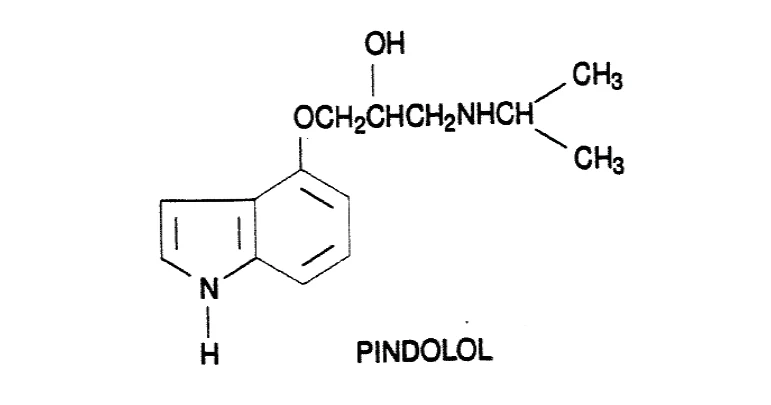
Molecular Formula: C14H20N2O2 Molecular Weight: 248.3
Chemical Name: 4- (2-hydroxy-3-isopropylaminopropoxy)-indole.
Description: PINDOLOL is the free base of pindolol. It is a white, odourless powder soluble in methanol and acetic acid.
Stability and Storage: Protect from light.
Recommendations:
AVAILABILITY
PINDOLOL Tablets:
5 mg: Round, white tablet with bevelled edges. Scored and engraved PRO over P5 on one side.
10 mg: Round, white tablet with bevelled edges. Scored and engraved PRO over P10.
PINDOLOL is available in bottles of 100 and 500, in unit dose packages of 100 (10x10), and long-term care unit dose packages (LTC Paks) of 620 (20x31) and 700 (20x35).
Non-medicinal Ingredients
Tablets 5 mg and 10 mg: Lactose Hydrous (Spray dried), Microcrystalline Cellulose (PH102), Croscarmellose Sodium and Magnesium Stearate.
PHARMACOLOGY
Effects of the Cardiovascular System:
Pindolol, in the non-anesthetized dog, produced a 70% inhibition of tachycardia and changes in blood pressure induced by isoproterenol at doses of 0.05 mg/kg i.v., and 2 mg/kg i.v.
respectively. Complete antagonism was observed following pindolol at doses of 0.1 to 5 mg/kg i.v. In the anesthetized dog, 0.2 to 2.0 mg/kg i.v. produced dose dependent decreased in blood pressure; heart rate changes were unrelated to dose and were reduced by 12% after a dose of
0.2 mg/kg i.v. and 4% after i.v. injection of 2 mg/kg.
In the anesthetized dog 0.2 to 1 mg/kg i.a. antagonized the vasodilation induced by isoproterenol, whereas transient 25 to 40% reductions in vascular resistance were observed after intra-arterial doses of 50 and 200 mg/kg. Intravenous doses of 2 mg/kg of pindolol elicited peripheral vasodilation and an associated reduction in total peripheral resistance.
In vivo, studies on the guinea pig atrium showed that pindolol produced dose dependent antagonism of epinephrine-induced positive inotropy and chronotropy.
In five healthy volunteers given a single oral dose of 10 mg of pindolol, antagonism of isoproterenol-induced tachycardia and changes in blood pressure and heart rate were observed
30 minutes after ingestion and persisted for 24 hours.
In ten hypertensive patients receiving pindolol for 16 months in divided doses of 20 to 40 mg, blood pressure reduction was associated with statistically significant reduction in forearm and total systemic vascular resistance at rest and during stress testing. Venous tone was significantly reduced during and after exercise. No significant change was reported in cardiac output following prolonged use (See Actions).
Pindolol has little membrane stabilizing activity being approximately 1/12 that of quinidine in prolonging that relative refractory period of cardiac cells in the isolated guinea pig atrium. A concentration of up to 5% pindolol was devoid of local anesthetic effects when applied to the cornea of the eye.
Pindolol possesses partial agonist (intrinsic sympathomimetic) activity. Long-lasting increases in myocardial activity manifested by positive chronotropic actions were observed following i.v.
infusions of pindolol at doses of 0.16mcg/kg to 2.5 mg/kg in the reserpinized, adrenalectomized and vagotomized cat.
Pindolol decreases the basal rate of myocardial oxygen consumption and blocks increases mediated by increased sympathetic nervous system activity.
Pindolol has antiarrhythmic activity. At doses of 8 mg/kg in the anesthetized dog, pindolol increased the dose of ouabain required to produce ventricular arrhythmia. In guinea pigs and dogs it delayed the onset of ouabain-induced ventricular arrhythmia and in the dog produced reversion to sinus rhythm.
Pindolol has been reported to reduce plasma renin activity in some patients. However, plasma renin may remain unchanged or increase following treatment. There does not appear to be any significant relationship between the antihypertensive activity of pindolol and changes in plasma renin activity.
Effects on Pulmonary Function:
In a study of 58 hypertensive patients with normal respiratory function who received oral doses of 15, 30, or 60 mg of pindolol, no significant changes were observed in forced expiratory volume (FEV), maximum voluntary ventilation rate, maximum expiratory flow rate and maximum mid-expiratory flow rate.
Decreased FEV1 has, however, been reported in other studies.
Other Effects:
Electroencephalographic changes, following oral doses of 5 and 10 mg in healthy volunteers, consisted of theta and fast beta and decreases in alpha activity. In rats given 5.2 mg/kg s.c., pindolol blocked tetrabenzine-induced ptosis but not catalepsy. In mice at doses of 1 to 30 mg/kg i.v., pindolol antagonized reserpine-induced hypothermia.
Special populations
Geriatrics
The elderly population may show higher plasma concentrations of pindolol as a combined result of a decreased metabolism of the drug in elderly population, a decreased hepatic blood flow and a decreased renal elimination.
Pregnancy
The elimination half-life of pindolol does not differ significantly between pregnant and nonpregnant patients. (see PRECAUTIONS).
Transplacental distribution of pindolol is not stereoselective. Pregnancy may alter the pharmacokinetic disposition of pindolol, suggesting an increase in the distribution volume and total clearance.
Patients with hepatic / renal impairment
Patients with impaired renal or hepatic function may usually be treated with normal doses. Only in severe cases may a reduction of the daily dose be necessary. The plasma half-life of pindolol is increased up to 11.5 hours, depending on severity, in patient with renal impairment and is increased up to 30 hours, depending on severity, in patients with liver cirrhosis.
TOXICOLOGY
- a) Acute Toxicity Studies:
| Species | Route | LD50 mg/kg |
Mouse Mouse Rat Rat Rabbit Rabbit Dog | i.v. p.o. i.v. p.o. i.v. p.o. p.o. | 29+1.2 200+22 35+1.7 260+36 10+0.9 650+102 ≥30 |
- b) Subacute:
| Species/ Strain | Strain | Sex M F | Number of Groups | Number of Animals per Group | Dose mg/kg/day | Route | Duration of Study | Toxic Effects |
| Rats | 40 40 | 4 | 10 M 10 F | 0, 16, 66, 246 | P.O. | 13 W | At 246 mg/kg there was a mortality rate of 20%. Arrest of spermatogenesis in males and hypoplastic uteri in females were observed at doses of 66 and 246 mg/kg. Doses of 16, 66 and 246 mg/kg slightly to moderately increased SGPT levels and reduced food intake, the efficiency of food utilization and organ and body weights. Treated animals had a slightly higher incidence of infection than controls. Granular inclusions in liver and adrenal cells and increased numbers of fat droplets in renal tubule cells were seen at doses of 246 mg/kg. Similar but less prominent changes were found at 66 mg/kg. There were isolated incidences of thymus involution contraction of the seminal vesicles and prostatic atrophy. Green discoloration of the urine was observed. |
- b) Subacute: (cont’d)
| Species/ Strain | Sex M F | Number of Groups | Number of Animals per Group | Dose mg/kg/day | Route | Duration of Study | Toxic Effects |
| Rats | 40 40 | 4 | 10 M 10 F | 0, 5, 25, 130 | P.O. | 26 W | At 130 mg/kg/day decreased body weight and cyanosis were observed. |
| Dogs/ Bealgle | 8 8 | 4 | 2 M 2 F | 5, 20, 80 (6 days/wk) | P.O. | 13 W | At 80 mg/kg/day convulsions, gastrointestinal disturbances, mydriasis, erythema secondary to cutaneous vasodilation were observed. Food intake and body weight were reduced. |
| Dogs/ Beagle | 12 12 | 4 | 3 M 3 F | 0, 5, 15, 45 | P.O. | 26 W | At 45 mg/kg the mortality rate was 50%. Hepatocyte swelling, and the presence of intracellular hyaline droplets and lipochrome pigment in hepatocytes and Kupffer cells were seen at 15 and 45 mg/day and a few single sporadic degenerating liver cells were observed. Green discoloration of the urine was seen at 15 and 45 mg/kg/day. 1 dog in each group given 5, 15, and 45 mg/kg/day showed transient increases in alkaline phosphatase. In the 45 mg/kg/day group convulsions, gastrointestinal disturbances, arrest of spermatogenesis, weight loss and reduce adreno-cortical lipids were observed. |
- b) Subacute: (cont’d.)
| Species/ Strain | Sex M F | Number of Groups | Number of Animals per Group | Dose mg/kg/day | Route | Duration of Study | Toxic Effects |
| Rats | 30 30 | 3 | 10 M 10 F | 0, 1, 3 | I.V. | 4 W | None |
Dog/ Beagle | 2 2 4 4 | 1 2 | 2 M/2 F 2 M/2 F | 0 1.5 | I.M. | 4 W | 1.5 mg/kg: Erythema secondary to cutaneous vasodilation |
| Rats | 5 5 10 10 | 1 1 | 5 M/5 F 10 M/10 F | 0 5 | I.M. | 4 W | -- 5 mg/kg: slight irritant effect at injection site. |
- c) Chronic Toxicity in Animals:
| Species/ Strain | Sex M F | Number of Groups | Number of Animals per Group | Dose mg/kg/day | Route | Duration of Study | Toxic Effects |
| Rats | 120 120 | 4 | 30 M 30 F | 0, 2, 14, 98 | P.O. | 2 Y | Green discoloration of the urine at 98 mg/kg. At 2, 14 and 98 mg/kg deposition of a greenish brown pigment in Kupffer cells of the liver. |
| Dogs/ Beagle | 16 16 | 4 | 4 M 4 F | 0, 2, 6, 18 | P.O. | 2 Y | Tachycardia of 1 week duration. Erythema secondary to cutaneous vasodilation which was not dose dependent. Emesis and soft stools. |
| Monkeys/ Rhesus | 9 9 | 3 | 3 M 3 F | 0, 2.5, 25 | P.O. | 1 Y | At 2.5 mg/kg heart rate was slowed 15 to 20%. Bradycardia was seen at 25 mg/kg. Green discoloration of the urine at 25 mg/kg. |
- d)
Disposition of Pigment:
Oral administration of pindolol to rates at a dose of 200 mg/kg/day for 26 weeks resulted in the deposition of a melanin-like pigment in the liver, spleen, adrenal gland and subcutaneous tissue. Partial disappearance of this pigment from Kupffer cells in the liver occurred within four weeks following discontinuation of pindolol.
In dogs oral doses of 5, 15 and 45 mg/kg/day for 26 weeks, dose related increases in hepatocyte lipid content were observed.
However, despite the pigment deposition and increased lipid content , all tests done for hepatic, splenic and adrenal function were normal. The significance of a pigment and lipid changes is unknown.
- e)
Teratology and Reproduction Studies:
- i)
Teratology
The parameters studied in the rat and rabbit teratology studies were the following: total number of pregnancies, implantations, viable fetuses, total prenatal deaths, abnormal fetuses in% of living fetuses.
Rat: Doses of 30 and 100 mg/kg were administered orally to groups of 20 pregnant rats on days 7-16 o gestation. Treatment with pindolol did not adversely affect any of the parameters studied.
Rabbit: Doses of 8, 23 and 80 mg/kg were administered orally to groups of, respectively, 13, 16 and 15 pregnant rabbits (Swiss Hare Strain) on days 6-18 of gestation. None of the parameters studied was significantly affected.
- i)
ii) Reproduction
Rat: Doses of 10, 30 and 100 mg/kg were administered orally to groups of 15 male
(Sandoz Closed Strain) and 30 female rats (Carworth Wistar CFE Strain). Males were treated for 70 days prior to and during the mating period. The females were treated for up to 15 days prior to mating, during mating, and throughout the gestation and lactation period to 21 days postpartum, with an interim sacrifice at Day 13 of gestation.
Spermatogenesis and fertility were reduced at doses of 30 but not 100 mg/kg/day.
Tubular atrophy in the testes was found in male rats treated with doses of 30 and 100 mg/kg/day.
There was significantly greater mortality in the offspring of females treated with 100 mg/kg/day in the first four-day postpartum period and in pups of females receiving 30 mg/kg/day during the 4 to 21-day postpartum interval. This increased mortality may be consequence of deficits in maternal rearing behavior, inhibition of lactation or the presence of the drug in maternal milk.
- f)
Carcinogenicity Studies:
Mouse: Pindolol was administered to 50 male and 50 female mice (Sandoz OFI Strain) at dietary levels of approximately 124 mg/kg/day for 82 weeks, with an equal number of mice serving as controls. The incidence of nodules and masses observed at necropsy were comparable in the treated and control groups. This strain of mice was previously shown to be susceptible to chemical carcinogenesis.
Rat: Pindolol was given to 50 males and 50 female rats (Sandoz OFA Strain) at a mean dose of 50 mg/kg/day for 83 weeks. A similar group of 100 rats served as a control. Mortality and incidence of tumor were comparable in the treated and untreated groups. This strain of rat was previously shown to be susceptible to chemically (2AAF) induced carcinogenesis.
BIBLIOGRAPHY
- 1. Aellig WH. B-adrenoceptor blocking activity and duration of action of pindolol and propranolol in healthy volunteers. Br J Clin Pharmacol 3: 251-257, 1976.
- 2. Aellig EH. Pindolol: a B-adrenoceptor blocking drug with partial agonist activity: clinical pharmacological considerations. Br J Clin Pharmacol 13: 187S-192S, 1982.
- 3. Andren L, Hansson L. Positive relationship between the dosage of pindolol and its antihypertensive effect. J Cardiovascular Pharmacol 4: 32-33, 1982.
- 4. Atterhog JH, Duner H, Pernow B. Experience with pindolol, a beta-receptor blocker, in the treatment of hypertension. Am J Med 60: 872-876, 1976.
- 5.
Clark BJ. Beta-adrenoceptor blocking agents: Are pharmacologic differences relevant? M
Heart J 104: 334-346, 1982.
- 6. Fanchamps A. Therapeutic trials of pindolol in hypertension: comparison and combination with other drugs. Am Heart J 104: 388-406, 1982.
- 7.
Frishman W, Kostis J, Strom J, Hossler M, Elkayam U, Goldner S, Silverman R, Davis R,
Weinstein J, Sonnenblick E. Clinical pharmacology of the new beta-adrenergic blocking drugs. Part 6. A comparison of pindolol and propranolol in treatment of patients with angina pectoris. The role of intrinsic sympathomimetic activity. Am Heart J 98: 526-535, 1979.
- 8. Gavras I, Gavras H, Tifft CP, Kershar GR, Bresnahan M. Effects of pindolol on blood pressure, plasma renin activity, and catecholamines in hypertensice patients. J Clin Pharmacol 21: 79-83, 1981.
- 9. Giudicelli JF, Schmitt H, Boissier JR. Studies on d1-4-(2-hydroxy-3-isopropylamino-propoxy)-indole (LB-46), a new potent beta-adrenergic blocking drug. J Pharmacol Exp Ther 168: 116-126, 1969.
- 10. Gonasun LM. Antihypertensive effects of pindolol. Am Heart J 104: 374-387, 1982.
- 11.
Gonasun LM, Langrall H. Adverse reactions to pindolol administration. Am Heart J 104: 482-
486, 1982.
- 12. Guerret M, Cheymol G, Aubry JP, Cheymol A, Lavene D, Kiechel JR. Estimation of the absolute oral bioavailability of pindolol by two analytical methods. Eur J Clin Pharmacol 25: 357-359, 1983.
- 13. Gugler R, Bodem G, Dengler HJ. Pharmacokinetics of B-receptor blocking agents in relation to their antihypertensive effect. Clin Sci Mol Med 51 (Suppl 3): 473-475, 1976.
- 14.
Gugler R, Herold W, Dengler HJ. Pharmacokinetics of pindolol in man. Eur J Clin Pharmacol
7: 17-24, 1974.
- 15. Harston WE, Friesinger GC. Randomized double-blind study of pindolol in patients with stable angina pectoris. Am Heart J 104: 504-511, 1982.
- 16. Johnston DL, Manyari DE, Kostuk WJ. The clinical and hemodynamic effects of propranolol, pindolol, and verapamil in the treatment of exertional angina pectoris. Can Med Assoc J 130: 1449-1455, 1984.
- 17. Kostis JB, Frishman W, Hosler MH, Thorsen NL, Gonasun L, Weinstein J. Treatment of angina pectoris with pindolol: the significane of intrinsic sympathomimetic activity of beta blockers. Am Heart J 104: 496-504, 1982.
- 18. Meier J. Pindolol: a pharmacokinetic comparison with other beta-adrenoceptor blocking agents. Acta Med Scand (Suppl 606): 65-70, 1977.
- 19. Meir J, Nuesch E. Pindolol, a B-adrenoceptor blocking agent with a negligible first-pass effect. Br J Clin Pharmacol 4: 371-372, 1977.
- 20. Ohnhaus EE, Nuesch E, Meier J, Kalberer E. Pharmacokinetics of unlabeled and 14C-labelled pindolol in uremia. Eur J Clin Pharmacol 7: 25-29, 1974.
- 21. Parker JO. Comparison of slow-release pindolol, standard pindolol, and propranolol in angina pectoris. Am J Cardiol 51: 1062-1066, 1983.
- 22. Quyyumi AA, Wright C, Mockus L, Fox KM. Effect of partial agonist activity in B-blockers in severe angina pectoris: a double blind comparison of pindolol and atenolol. Br Med J 289: 951-953, 1984.
- 23. Rosenthal J, Kaiser H, Raschig A, Welzel D. Treatment of hypertension with a beta-adrenoceptor blocker. A multicenter trial with pindolol. Br J Clin Pract 33: 165-181, 1979.
- 24. Weil C, Waite R. Haemodynamic difference in untreated hypertension and hypertension treated with various B-adrenoceptor antagonists. Br J Clin Pharmacol 13: 279S-283S, 1982.
- 25. Visken Product Monograph Sandoz Pharmaceuticals2011.
- 26. FDA Summary Basis for Approval.