


Product Monograph - Plegridy
RECENT MAJOR LABEL CHANGES
| 7.1.1 Pregnant Women | 05/2020 |
|---|
TABLE OF CONTENTS
Sections or subsections that are not applicable at the time of authorization are not listed.
RECENT MAJOR LABEL CHANGES............................................................................................ 2
TABLE OF CONTENTS .............................................................................................................. 2
PART I: HEALTH PROFESSIONAL INFORMATION ..................................................................... 4
1 INDICATIONS .............................................................................................................. 4
1.1 Pediatrics .......................................................................................................... 4
1.2 Geriatrics........................................................................................................... 4
2 CONTRAINDICATIONS ................................................................................................. 4
4 DOSAGE AND ADMINISTRATION................................................................................. 4
4.1 Dosing Considerations ....................................................................................... 4
4.2 Recommended Dose and Dosage Adjustment..................................................... 5
4.4 Administration................................................................................................... 6
4.5 Missed Dose ...................................................................................................... 6
5 OVERDOSAGE ............................................................................................................. 6
6 DOSAGE FORMS, STRENGTHS, COMPOSITION AND PACKAGING ................................. 6
7 WARNINGS AND PRECAUTIONS .................................................................................. 7
7.1 Special Populations .......................................................................................... 10
7.1.1 Pregnant Women ....................................................................................... 10
7.1.2 Breast-feeding............................................................................................ 11
7.1.3 Pediatrics ................................................................................................... 11
7.1.4 Geriatrics ................................................................................................... 11
8 ADVERSE REACTIONS ................................................................................................ 11
8.1 Adverse Reaction Overview.............................................................................. 11
8.2 Clinical Trial Adverse Reactions ........................................................................ 12
8.3 Less Common Clinical Trial Adverse Reactions .................................................. 16
8.5 Post-Market Adverse Reactions........................................................................ 18
9 DRUG INTERACTIONS................................................................................................ 18
9.2 Drug Interactions Overview.............................................................................. 18
9.4 Drug-Drug Interactions .................................................................................... 19
10 CLINICAL PHARMACOLOGY ....................................................................................... 19
10.1 Mechanism of Action.................................................................................. 19
10.2 Pharmacodynamics .................................................................................... 19
10.3 Pharmacokinetics ....................................................................................... 19
11 STORAGE, STABILITY AND DISPOSAL ......................................................................... 20
12 SPECIAL HANDLING INSTRUCTIONS........................................................................... 21
PART II: SCIENTIFIC INFORMATION ...................................................................................... 22
13 PHARMACEUTICAL INFORMATION............................................................................ 22
14 CLINICAL TRIALS........................................................................................................ 23
14.1 Trial Design and Study Demographics ......................................................... 23
14.2 Study Results ............................................................................................. 24
15 MICROBIOLOGY ........................................................................................................ 26
16 NON-CLINICAL TOXICOLOGY ..................................................................................... 26
PATIENT MEDICATION INFORMATION ................................................................................. 27
PART I: HEALTH PROFESSIONAL INFORMATION
1 INDICATIONS
PLEGRIDYTM (peginterferon beta-1a) is indicated for:
treatment of relapsing remitting multiple sclerosis (RRMS) for adult patients
- to reduce the frequency of clinical exacerbations
- to slow the progression of disability.
The safety and efficacy of PLEGRIDYTM have not been established in patients with primary and secondary progressive multiple sclerosis.
1.1 Pediatrics
Pediatrics (< 18 years of age): The safety and efficacy of PLEGRIDYTM in patients below 18 years of age has not been studied (see 7 WARNINGS AND PRECAUTIONS, Special Populations).
1.2 Geriatrics
Geriatrics (> 65 years of age): The safety and efficacy of PLEGRIDYTM in patients over the age of 65 have not been sufficiently studied due to the limited number of such patients included in clinical trials. Refer to 7 WARNINGS and PRECAUTIONS, Special population.
2 CONTRAINDICATIONS
PLEGRIDYTM (peginterferon beta-1a) is contraindicated in:
- patients with a history of hypersensitivity to natural or recombinant interferon beta or peginterferon
- patients with a history of hypersensitivity to, any other component of the formulation or the container.
- Patients with current severe depression and/or suicidal ideation (see 7 WARNINGS and PRECAUTIONS).
For a complete listing, see the 6 DOSAGE FORMS, STRENGTHS, COMPOSITION and PACKAGING section of the product monograph.
4 DOSAGE AND ADMINISTRATION
4.1 Dosing Considerations
- Intended for use under the guidance and supervision of a physician.
Patients may self-inject only:
- If their physician determines that it is appropriate.
- Appropriate medical follow-up is provided.
- After proper training in SC injection technique for either PLEGRIDYTM PS/PLEGRIDYTM PEN.
- Injection sites should be rotated. The usual sites for subcutaneous injections include thigh, abdomen, and upper arm. Avoid injection into an area of skin that is sore, red, infected or otherwise damaged.
- Before initiating a patient on PLEGRIDYTM PS/PLEGRIDYTM PEN therapy, note the Contraindications.
- Review the 7 WARNINGS AND PRECAUTIONS section and ensure appropriate monitoring of patients with depression, hepatic dysfunction, a history of seizures, cardiac disease, thyroid dysfunction, myelosuppression, and female patients of child-bearing potential.
- Patients should be advised of the side-effects of PLEGRIDYTM PS/PLEGRIDYTM PEN and instructed on the use of aseptic technique when administering PLEGRIDY PS/PLEGRIDY PEN. The Patient Medication Information should be carefully reviewed with all patients, and patients should be educated on self-care and advised to continue to refer to Part III during treatment with PLEGRIDYTM PS/PLEGRIDYTM PEN.
4.2 Recommended Dose and Dosage Adjustment
PLEGRIDYTM (peginterferon beta-1a) is administered subcutaneously using a single-use, pre-filled syringe/pen.
The recommended dosage of PLEGRIDYTM is 125 micrograms injected subcutaneously every 2 weeks.
Treatment initiation
It is generally recommended that patients start treatment with 63 micrograms at dose 1 (on day 0) increasing to 94 micrograms at dose 2 (on day 14) reaching the full dose of 125 micrograms by dose 3 (on day 28) and continuing with the full dose (125 micrograms) every 14 days (2 weeks) thereafter (Table 1).
Table 1 – Titration Schedule at Initiation
| Dose | Time* | Amount (micrograms) | Syringe/Pen Label |
|---|---|---|---|
| Dose 1 | On Day 0 | 63 | Orange |
| Dose 2 | On Day 14 | 94 | Blue |
| Dose 3 | On Day 28 | 125 (full dose) | Grey |
* Dosed once 14 days (2 weeks)
A Starter Pack is available containing the first 2 doses, 63 micrograms (dose 1, orange labeled syringe/pen) and 94 micrograms (dose 2, blue labeled syringe/pen) for day 0 and day 14 respectively. Patients should use the Administration Dose Pack containing the full dose of 125 micrograms (full dose, grey labeled syringe/pen) from day 28 onwards (dosing every 14, days).
Pediatrics
Health Canada has not authorized an indication for pediatric use.
Renal Impairment
No dosage adjustments are necessary in patients with renal impairment based on study data in mild, moderate, and severe renal impairment and end stage renal disease.
4.4 Administration
- It is recommended that a health care professional trains patients in the proper technique for self-administering subcutaneous injections using the pre-filled syringe/pen. Patients should be advised to rotate sites for subcutaneous injections. The usual sites for subcutaneous injections include thigh, abdomen, and upper arm.
Each PLEGRIDYTM pre-filled syringe/pen is provided with the needle pre-attached. Pre-filled syringes/pens are for single use only and should be discarded after use.
Dose titration at the initiation of treatment may help to ameliorate flu-like symptoms that can occur at treatment initiation with interferons. Prophylactic and concurrent use of analgesics and/or antipyretics may prevent or ameliorate flu-like symptoms sometimes experienced during interferon treatment.
4.5 Missed Dose
If a dose of PLEGRIDYTM is missed, it should be administered as soon as possible:
- If 7 days or more to the next planned dose: Patients should administer their missed dose immediately. Treatment can then continue with the next scheduled dose as planned.
- If less than 7 days to the next planned dose: Patients should begin a new 2 week dosing schedule starting from when they administer their missed dose.
A patient should not administer two doses of PLEGRIDYTM within 7 days of each other.
5 OVERDOSAGE
No case of overdose has been reported. In case of over dosage, appropriate supportive treatment should be given.
In case of overdose with PLEGRIDYTM, the patient should be advised to seek medical attention.
| For management of a suspected drug overdose, contact your regional poison control centre. |
|---|
6 DOSAGE FORMS, STRENGTHS, COMPOSITION AND PACKAGING
PLEGRIDYTM (peginterferon beta-1a) is available in the following presentations:
Table 2 – Dosage Forms, Strengths, Composition and Packaging
| Route of Administration | Dosage Form / Strength/Composition | Non-medicinal Ingredients |
| Subcutaneous | Pre-filled Syringe, 63 µg or 94 µg or 125 µg peginterferon beta-1a per 1 mL, Sterile Clear Liquid for Injection | Sodium Acetate Trihydrate USP, Ph.Eur, Glacial Acetic Acid USP, Ph.Eur, L-Arginine Hydrochloride USP, Ph.Eur, and Polysorbate 20 USP, Ph.Eur in Water for Injection, USP, Ph.Eur |
| Subcutaneous | Autoinjector Pen, 63 µg or | Sodium Acetate Trihydrate USP, Ph.Eur, Glacial |
Packaging and Pack Size(s)
Pre-filled syringe
PLEGRIDYTM (peginterferon beta-1a) is formulated as a sterile clear liquid for subcutaneous injection. Each unit of PLEGRIDY is stored in a 1mL Type I glass syringe with a latex free bromobutyl rubber stopper and thermoplastic and polypropylene rigid needle shield. A 29 gauge, 0.5 inch staked needle is pre-affixed to the syringe. A single pre-filled syringe contains 0.5mL of solution of PLEGRIDYTM containing 63 micrograms, 94, micrograms or 125 micrograms of peginterferon beta-1a.
Pre-filled pen
The single pre-filled syringe contains 0.5mL of solution of PLEGRIDYTM containing 63 micrograms, 94 micrograms, or 125 micrograms of peginterferon beta-1a. The glass syringe is contained within a single-use, disposable, injection device (pre-filled pen).
Description
The interferon beta-1a portion of PLEGRIDYTM is produced as a glycosylated protein using genetically-engineered Chinese hamster ovary cells into which the human beta interferon gene has been introduced. The amino acid sequence of the recombinant interferon beta-1a is identical to that of natural human beta interferon. The molecular mass of PLEGRIDYTM is approximately 44,000 Da, consistent with the mass of the protein (approximately 20,000 Da), the carbohydrate moiety (approximately 2,500 Da), and the attached poly(ethylene glycol). However, due to the extended and flexible nature of the attached poly(ethylene glycol) chain, the apparent mass of PLEGRIDYTM in solution is greater than 300,000 Da. The more than 10-fold increase in apparent mass of PLEGRIDYTM compared to interferon beta-1a has been shown to contribute to the reduced clearance in vivo.
PLEGRIDYTM 125 micrograms contains 125 micrograms of interferon beta-1a plus 125 micrograms of poly(ethylene glycol). Using the World Health Organization International Standard for beta interferon, PLEGRIDYTM has a specific antiviral activity of approximately 100 million International Units (MIU) per mg of protein as determined using an in vitro cytopathic effect assay. PLEGRIDYTM 125 micrograms contains approximately 12 MIU of antiviral activity.
7 WARNINGS AND PRECAUTIONS
General
PLEGRIDYTM (peginterferon beta-1a) should be used under the supervision of a physician. The first injection should be performed under the supervision of an appropriately qualified health care professional (see 4 DOSAGE AND ADMINISTRATION).
Patients should be informed of the following information:
| 94 µg or 125 µg peginterferon beta-1a per 0.5 mL, Sterile Clear Liquid for Injection | Acetic Acid USP, Ph.Eur, L-Arginine Hydrochloride USP, Ph.Eur, and Polysorbate 20 USP, Ph.Eur in Water for Injection, USP, Ph.Eur |
- The most common adverse events associated with interferon beta administration, including symptoms of the flu-like syndrome (see 8 ADVERSE REACTIONS). These symptoms tend to be most prominent at the initiation of therapy and decrease in frequency and severity with continued treatment. Dose titration at the initiation of treatment may help to ameliorate flu-like symptoms that can occur at treatment initiation with interferons. Concurrent use of analgesics and/or antipyretics may help reduce flu-like symptoms on treatment days.
- Immediately report any symptoms of depression and/or suicidal ideation.
- The risk of decreased blood counts including white blood cells and platelet counts and of the requirement for periodic laboratory testing. Patients should be advised to report immediately any clinical symptoms associated with blood cell count abnormalities and laboratory testing should be performed according to standard medical practice. Patients with myelosuppression may require more intensive monitoring of complete blood cell counts, with differential and platelet counts.
- The potential risk of liver injury with interferon beta therapy, and of the requirement for frequent laboratory testing. Patients should be informed of the symptoms of suggestive liver dysfunction, such as loss of appetite accompanied by other symptoms such as nausea, vomiting, and jaundice, and advised to consult with their physician immediately should such symptoms arise.
- To report any symptoms of thyroid dysfunction (hypo or hyperthyroidism) and thyroid function tests should be performed according to standard medical practice.
- Female patients should be advised about the abortifacient potential of PLEGRIDYTM and instructed to take adequate contraceptive measures. Patients should be advised to discuss with their health care provider the potential risks and benefits of continued treatment while attempting to conceive. It is not known if interferons alter the efficacy of hormonal contraceptives.
- When a physician determines that PLEGRIDY PS/PLEGRIDY PEN can be used outside the physician’s office, persons who will be administering PLEGRIDY PS/PLEGRIDY PEN should receive instruction in reconstitution and/or injection, including the review of the injection procedures (see PATIENT MEDICATION INFORMATION). If a patient is to self-administer, the physical ability of the patient to self-inject subcutaneously should be assessed. If home use is chosen, the first injection should be performed under the supervision of a qualified health care professional. Patients should be advised of the importance of rotating sites of injection with each dose, to minimize the likelihood of injection site reactions. A puncture-resistant container for disposal of needles, syringes and autoinjectors should be used. Patients should be instructed in the technique and importance of proper syringe, needle and autoinjector disposal and be cautioned against reuse of these items.
Thrombotic microangiopathy (TMA): Cases of thrombotic microangiopathy, manifested as thrombotic thrombocytopenic purpura (TTP) or haemolytic uraemic syndrome (HUS), including fatal cases, have been reported with interferon beta products. Events were reported at various
- time points during treatment and may occur after several weeks to several years after starting treatment with interferon beta. Early clinical features include thrombocytopenia, new onset hypertension, fever, central nervous system symptoms (e.g. confusion, paresis) and impaired renal function. If clinical features of TMA are observed, testing of blood platelet levels, serum lactate dehydrogenase (LDH), schistocytes (erythrocyte fragmentation) on a blood film with negative Coombs test and renal function is recommended. Prompt treatment of TTP/HUS is required and immediate discontinuation of treatment with PLEGRIDYTM is recommended.
Carcinogenesis and Mutagenesis
No carcinogenicity data for interferon beta-1a are available in animals or humans.
Interferon beta-1a was not mutagenic when tested in the Ames bacterial test and in an in vitro cytogenetic assay in human lymphocytes in the presence and absence of metabolic activation.
Cardiovascular
Worsening of cardiac disease has been reported in patients receiving interferon beta. Patients with pre-existing significant cardiac disease, such as congestive heart failure, coronary artery disease or arrhythmia should be monitored for worsening of their cardiac condition, particularly during initiation of treatment (see 8 ADVERSE REACTIONS).
Driving and Operating Machinery
No studies on the effects on the ability to drive and use machines have been performed.
Endocrine and Metabolism
Endocrine Disorders: hyperthyroidism
Metabolism and Nutrition Disorders: hypercholesterolaemia, vitamin B12 deficiency, vitamin D deficiency, hypernatraemia, hypoglycaemia, hypokalaemia, increased appetite, malnutrition
Hematologic
Decreased Peripheral Blood Counts:
Decreased peripheral blood counts in all cell lines, including rare pancytopenia and severe thrombocytopenia, have been reported in patients receiving interferon beta. Cytopenias, including rare severe neutropenia and thrombocytopenia, have been observed in patients treated with PLEGRIDYTM. Patients should be monitored for symptoms or signs of decreased peripheral blood counts (see 8 ADVERSE REACTIONS).
Hepatic/Biliary/Pancreatic
Severe hepatic injury, including elevated serum hepatic transaminase levels, hepatitis, and autoimmune hepatitis, and rare cases of severe hepatic failure, has been reported with interferon beta. Elevations in hepatic enzymes, noninfectious hepatitis and hepatic injury have been observed with the use of PLEGRIDYTM. Patients should be monitored for signs and symptoms of hepatic injury. (see 8 ADVERSE REACTIONS). Treatment with PLEGRIDYTM should be stopped if icterus or other clinical symptoms of hepatic dysfunction appear.
Patients with Hepatic Impairment: Caution should be used and close monitoring considered when administering PLEGRIDYTM to patients with severe hepatic impairment. Patients should be monitored for signs of hepatic injury and caution exercised when interferons are used concomitantly with other drugs associated with hepatic injury. (see 8 ADVERSE REACTIONS and 10.3 Pharmokinetics)
Immune
Patients may develop antibodies to PLEGRIDYTM. Data from patients treated up to 2 years with PLEGRIDYTM suggests that less than 1% (5/715) developed persistent-neutralising antibodies to the interferon beta-1a portion of peginterferon beta-1a. Neutralising antibodies have the potential to reduce clinical efficacy. There were 3% of patients (18/681) that developed persistent antibodies to the PEG moiety of peginterferon beta-1a.
Injection Site Reactions
Injection site reactions, including injection site necrosis, have been reported with the use of subcutaneous interferon beta. One patient treated with PLEGRIDYTM in clinical trials experienced an injection site necrosis. Whether to discontinue therapy following a single site of necrosis is dependent on the extent of necrosis (see 8 ADVERSE REACTIONS).
Monitoring and Laboratory Tests
Laboratory abnormalities are associated with the use of interferons. Complete and differential white blood cell counts, platelet counts, and blood chemistry, including liver function tests, are recommended during PLEGRIDYTM therapy. Patients with myelosuppression may require more intensive monitoring of complete blood cell counts, with differential and platelet counts.
Neurologic
Seizures:
Seizures have been associated with the use of interferon beta. Caution should be exercised when administering PLEGRIDYTM to patients with pre-existing seizure disorder (see 8 ADVERSE REACTIONS).
Psychiatric
Depression and Suicide: Depression and suicidal ideation have been reported to occur with increased frequency in patients receiving interferon beta. If a patient develops depression or other severe psychiatric symptoms, cessation of PLEGRIDYTM therapy should be considered (see 8 ADVERSE REACTIONS).
Sensitivity/Resistance
Anaphylactic and Hypersensitivity reactions
Serious hypersensitivity reactions, including cases of anaphylaxis, have been reported as a rare complication of treatment with interferon beta, including PLEGRIDYTM. Discontinue PLEGRIDYTM. Patients should be advised to discontinue PLEGRIDYTM and seek immediate medical care if they experience signs and symptoms of anaphylaxis or severe hypersensitivity. Treatment should not be restarted (see 8 ADVERSE REACTIONS).
7.1 Special Populations
7.1.1 Pregnant Women
Pregnant Women:
There are no adequate and well-controlled studies of peginterferon beta1-a in pregnant women. The administration of PLEGRIDYTM during confirmed pregnancy should be avoided, unless clearly needed.
A European registry study collected data on 948 prospective pregnancies in women with MS who were treated with one of five interferon beta medications. There were few patients (n=51) that were exposed to PLEGRIDYTM, the only pegylated form of interferon beta, in this registry. The rates of aggregated adverse pregnancy outcomes were in line with reference ranges published in the literature. It is unknown if the safety profile in pregnancy of pegylated interferon beta is different from non-pegylated formulations.
Data from a retrospective register-based study in Sweden and Finland have not indicated an increased risk of major congenital anomalies after early pregnancy exposure to drugs in the interferon beta class.
In the studies discussed above, the duration of exposure during the first trimester was uncertain since data were collected when interferon beta use was contraindicated during pregnancy, and treatment was interrupted when the pregnancy was detected and/or confirmed. Experience with exposure during the second and third trimester was too limited to determine whether exposure affects maternal or fetal health.
PLEGRIDYTM has not been tested for developmental toxicity in pregnant animals; it is not known if PLEGRIDYTM is teratogenic. Administration of PLEGRIDY to mature female rhesus monkeys resulted in menstrual irregularities accompanied by decreases in serum progesterone and 17-beta estradiol. These effects are consistent with the abortifacient effects of non-pegylated type I interferons.
The risk of spontaneous abortions in pregnant women exposed to peginterferon beta cannot be evaluated based on the currently available data.
7.1.2 Breast-feeding
Limited information available from published literature on the transfer of interferon beta-1a/peginterferon beta-1a into breast milk suggests that levels of interferon beta-1a excreted in human milk are low. A risk to the nursing infant cannot be excluded.
The benefit and potential risk of breastfeeding should be considered along with the patient’s medical need for interferon beta-1a therapy.
7.1.3 Pediatrics
Pediatrics (< 18 years of age): No data are available to Health Canada; therefore, Health Canada has not authorized an indication for pediatric use.
7.1.4 Geriatrics
Geriatrics (> 65 years of age): There were 6 (<1%) patients age 60-65, with no patients ages 65 and over in the clinical trial 105MS301 at baseline.
8 ADVERSE REACTIONS
8.1 Adverse Reaction Overview
The most common adverse drug reactions for PLEGRIDYTM 125 micrograms subcutaneously every 2 weeks were injection site erythema, influenza like illness, pyrexia, headache, myalgia, chills, injection site pain, asthenia, injection site pruritus, and arthralgia. Multiple sclerosis relapse was the most frequent serious adverse event (7% PLEGRIDYTM every 2 weeks vs. 11% placebo). The most commonly reported adverse events leading to discontinuation in patients treated with PLEGRIDYTM 125 micrograms subcutaneously every 2 weeks was influenza-like illness (<1%).
8.2 Clinical Trial Adverse Reactions
Clinical trials are conducted under very specific conditions. The adverse reaction rates observed in the clinical trials; therefore, may not reflect the rates observed in practice and should not be compared to the rates in the clinical trials of another drug. Adverse reaction information from clinical trials may be useful in identifying and approximating rates of adverse drug reactions in real-world use.
The safety of PLEGRIDYTM (peginterferon beta-1a) is based on the assessment of data from one pivotal phase III, randomized, double-blind, parallel-group clinical trial (study 105MS301). This study was composed of a 1-year placebo-controlled treatment period, followed by a second year of treatment during which all patients received PLEGRIDYTM. The first year of the study explored a single dose of PLEGRIDYTM 125 micrograms SC administered with 2 dosing frequencies (dosing every 2 or every 4 weeks) as compared to placebo. The second year of the study explored a single dose of PLEGRIDYTM 125 micrograms SC administered either every 2 weeks or every 4 weeks.
Table 3 summarizes adverse drug reactions reported from 512 patients treated with PLEGRIDYTM 125 micrograms subcutaneously every 2 weeks and 500 patients who received placebo for up to 1 year.
A total of 512 and 500 patients received PLEGRIDYTM 125 micrograms every 2 weeks or every 4 weeks, respectively, during the placebo-controlled phase of the 105MS301 study, in Year 1. In Year 2 of the 105MS301 study, the 500 patients who had received placebo during Year 1 were re-randomized to receive PLEGRIDYTM 125 micrograms every 2 weeks or every 4 weeks; patients who had received PLEGRIDYTM every 2 weeks or every 4 weeks in Year 1 continued on their randomized treatment through Year 2. Patients who enrolled in the 105MS302 extension study remained on their 105MS301 Year 2 treatment (PLEGRIDYTM every 2 weeks or every 4 weeks). In an analysis integrating interim data from the 105MS301 study and the extension study, 105MS302, a total of 1468 patients with relapsing multiple sclerosis received PLEGRIDY for up to 278 weeks (65 months), with an overall exposure equivalent to 4217 person-years. A total of 1285 patients received at least 1 year, 1124 patients received at least 2 years, 947 patients received at least 3 years, and 658 patients received at least 4 years of treatment with PLEGRIDYTM. The mean exposure to treatment in the extension study alone was 106 weeks with a range of 2-182 weeks.
The experience in Year 2 of the 105MS301 study and in the extension study 105MS302 was consistent with the experience in the 1-year placebo-controlled phase of the 105MS301 study.
The adverse reactions are presented as MedDRA preferred terms under the MedDRA system organ class (SOC) (MedDRA Version 15.0).
Table 3 – Adverse Reactions reported for PLEGRIDYTM 125 micrograms subcutaneously every 2 weeks at > 1% higher incidence than placebo
Placebo n = 500 (%) | PLEGRIDYTM n = 512 (%) | PLEGRIDYTM Frequency category* | ||||||||
Very Common (≥1/10) | Common (≥1/100 - <1/10) | |||||||||
Infections and Infestations Upper respiratory tract infection Urinary tract infection Oral Herpes Cystitis | 27 (5%) 21 (4%) 7 (1%) 2 (<1%) | 29 (6%) 28 (5%) 12 (2%) 9 (2%) | Common Common Common Common | |||||||
Psychiatric Disorders Insomnia Anxiety | 19 (4%) 12 (2%) | 28 (5%) 13 (3%) | Common Common | |||||||
Nervous System Disorders Headache Dizziness Somnolence Balance disorder Tremor Dysgeusia | 165 (33%) 31 (6%) 5 (1%) 7 (1%) 6 (1%) 0 | 244 (44%) 35 (7%) 10 (2%) 9 (2%) 9 (2%) 6 (1%) | Very Common | Common Common Common Common Common | ||||||
Gastrointestinal disorders Nausea Vomiting Abdominal Pain Toothache | 31 (6%) 11 (2%) 10 (2%) 11 (2%) | 44 (9%) 26 (5%) 16 (3%) 16 (3%) | Common Common Common Common | |||||||
Eye Disorders Visual Impairment | 5 (1%) | 9 (2%) | Common | |||||||
Vascular Disorder Hypertension | 10 (2%) | 14 (3%) | Common | |||||||
Respiratory, thoracic and mediastinal disorders Oropharyngeal disorders | 31 (6%) | 34 (7%) | Common | |||||||
Musculoskeletal and Connective Tissue Disorders Myalgia Back Pain Arthralgia Musculoskeletal stiffness Bone Pain | 30 (6%) 57 (11%) 35 (7%) 9 (2%) 1 (<1%) | 97 (19%) 61 (12%) 57 (11%) 15 (3%) 11 (2%) | Very Common Very Common Very Common | Common Common | ||||||
Placebo n = 500 (%) | PLEGRIDYTM n = 512 (%) | PLEGRIDYTM Frequency category* | ||||||
Very Common (≥1/10) | Common (≥1/100 - <1/10) | |||||||
General Disorders and Administration Site Conditions Injection site erythema Influenza like illness Pyrexia Chills Injection site pain Asthenia Injection site pruritis Hyperthermia Pain Injection site oedema Injection site warmth Injection site hematoma Feeling cold Injection site swelling Injection site inflammation Injection site rash Injection site reaction | 33 (7%) 63 (13%) 76 (15%) 23 (5%) 15 (3%) 38 (8%) 6 (1%) 6 (1%) 16 (3%) 0 0 7 (1%) 2 (<1%) 1 (<1%) 0 0 0 | 315 (62%) 239 (47%) 228 (45%) 88 (17%) 77 (15%) 68 (13%) 68 (13%) 21 (4%) 25 (5%) 15 (3%) 16 (3%) 15 (3%) 9 (2%) 9 (2%) 7 (1%) 8 (2%) 6 (1%) | Very Common Very Common Very Common Very Common Very Common Very Common Very Common | Common Common Common Common Common Common Common Common Common Common | ||||
Investigations Body temperature increased Alanine aminotransferase increased Aspartate aminotransferase increased Gamma-glutamyl-transferase increased Blood glucose increased Haemoglobin decreased | 14 (3%) 13 (3%) 8 (2%) 7 (1%) 4 (<4%) 3 (<1%) | 31 (6%) 29 (6%) 18 (4%) 15 (3%) 10 (2%) 10 (2%) | Common Common Common Common Common Common | |||||
Skin and Subcutaneous Tissue Disorder Pruritus Alopecia Erythema | 6 (1%) 6 (1%) 1 (<1%) | 19 (4%) 8 (2%) 8 (2%) | Common Common Common | |||||
* ADR frequency is based upon the following scale: Very Common (≥1/10); Common (≥1/100 - <1/10); Uncommon (≥1/1,000 - <1/100); Rare (≥1/10,000 - <1/1,000); Very Rare (<1/10,000)
Flu Like Symptoms
Influenza-like illness was experienced by 47% of patients receiving PLEGRIDYTM 125 micrograms every 2 weeks and 13% of patients receiving placebo. The incidence of flu-like symptoms (e.g. influenza-like illness, chills, hyperpyrexia, musculoskeletal pain, myalgia, pain, pyrexia) was highest during the initiation of treatment and generally decreased over the first 6 months.
Of the patients who reported flu-like symptoms 90% reported them as mild or moderate in severity. None were considered serious in nature. Less than 1% of patients who received PLEGRIDYTM during the placebo controlled phase of 105MS301 discontinued treatment due to flu-like symptoms.
Injection Site Reactions
Injection site reactions (e.g. injection site erythema, pain, pruritus, or oedema) were reported by 66% of patients who received PLEGRIDYTM 125 micrograms every 2 weeks compared to 11% of patients receiving placebo. Injection site erythema was the most commonly reported injection site reaction. Of the patients who experienced injection site reactions 95% reported them as mild or moderate in severity. One patient out of 1468 patients who received PLEGRIDYTM in clinical studies experienced an injection site necrosis which resolved with standard medical treatment.
Hepatic Transaminase Abnormalities
The incidence of hepatic transaminase increases was greater in patients receiving PLEGRIDYTM compared to placebo. The majority of enzyme elevations were <3 times the upper limit of normal (ULN). Elevations of alanine aminotransferase and aspartate aminotransferase (>5 times ULN), were reported in 1% and <1% of placebo-treated patients and 2% and <1% of patients treated with PLEGRIDYTM respectively. Elevations of serum hepatic transaminases combined with elevated bilirubin were observed in two patients who had pre-existing liver test abnormalities prior to receiving PLEGRIDYTM in the clinical trials. Both cases resolved following discontinuation of PLEGRIDYTM.
Hematological Disorders
Decreases in white blood cell counts of <3.0 x 10⁹/L were observed in 7% of patients receiving PLEGRIDYTM and in 1% receiving placebo. Mean white blood cell counts remained within normal limits in patients treated with PLEGRIDYTM. Decreases in white blood cell counts were not associated with an increased risk of infections or serious infections. The incidence of potentially clinically significant decreases in lymphocyte counts (<0.5 x 10⁹/L) (<1%), neutrophil (≤1.0 x 10⁹/L) (<1%) counts, platelet counts (≤100 x 109/L) (≤1%) was similar in PLEGRIDYTM-treated patients compared to placebo-treated patients. Two serious cases were reported in patients treated with PLEGRIDYTM: one patient (<1%) experienced severe thrombocytopenia (platelet count <10 x 109/L), another patient (<1%) experienced severe neutropenia (neutrophil count <0.5 x 10⁹/L). In both patients, cell counts recovered after discontinuation of PLEGRIDYTM. Compared to placebo, there were no significant differences observed in red blood cell counts in PLEGRIDYTM treated patients.
Hypersensitivity reactions
Hypersensitivity events were reported in 16% of patients treated with PLEGRIDYTM 125 micrograms every 2 weeks and 14% of patients who received placebo. Less than 1% of PLEGRIDYTM-treated patients experienced a serious hypersensitivity event (e.g. angioedema, urticaria) and they recovered promptly after treatment with anti-histamines and/or corticosteroids.
Depression and suicidal ideation
The overall incidence of adverse events related to depression and suicidal ideation was 8% for both PLEGRIDYTM 125 micrograms every 2 weeks and placebo groups. The incidence of serious events related to depression and suicidal ideation were similar and low (<1%) in both PLEGRIDYTM 125 micrograms every 2 weeks and placebo-treated patients.
Seizure
The incidence of seizure events was low and comparable in patients receiving PLEGRIDYTM (125 micrograms every 2 weeks) and placebo (<1% in each group).
Cardiovascular disorders
The incidence of cardiovascular events was similar between PLEGRIDYTM (125 micrograms every 2 weeks) and placebo treatment groups (7% in each group). No serious cardiovascular events were reported in patients who received PLEGRIDYTM in the 105MS301 study.
8.3 Less Common Clinical Trial Adverse Reactions
Infections and Infestations: laryngitis, conjunctivitis infective, tonsillitis, ear infection, furuncle, otitis externa, vulvovaginal candidiasis, dengue fever, fungal infection, gastric infection, pulpitis dental, salpingo-oophoritis, tooth infection, tracheitis, viral pharyngitis, abscess oral, conjunctivitis viral, cytomegalovirus infection, erysipelas, Escherichia urinary tract infection, eye infection viral, eyelid infection, folliculitis, fungal skin infection, gastrointestinal viral infection, genital candidiasis, gingival abscess, helicobacter gastritis, helicobacter infection, herpes simplex, herpes virus infection, hordeolum, incision site infection, infected bites, infection, infection parasitic, infectious mononucleosis, injection site cellulitis, mastoiditis, mumps, orchitis, otitis media acute, rash pustular, sepsis, septic shock, sinusitis bacterial, tinea cruris, tinea pedis, tonsillitis bacterial, ureaplasma infection, urosepsis, vaginitis bacterial, vulvitis, wound infection.
Neoplasms Benign Malignant and Unspecified (including cysts and polyps): benign vulval neoplasm, breast cancer, cervix carcinoma, lipoma, uterine leiomyoma, vulvovaginal human papilloma virus infection
Blood and Lymphatic System Disorders: lymphadenopathy, lymphadenitis, thrombocytopenia, thrombocytosis, febrile neutropenia, hypercoagulation, leukopenia, lymph node pain, lymphadenopathy mediastinal, lymphoid tissue hyperplasia, normochromatic normocytic anaemia, polychromasia.
Immune System Disorders: drug hypersensitivity, anaphylactic reaction, house dust allergy, hypersensitivity
Endocrine Disorders: hyperthyroidism
Metabolism and Nutrition Disorders: hypercholesterolaemia, vitamin B12 deficiency, vitamin D deficiency, hypernatraemia, hypoglycaemia, hypokalaemia, increased appetite, malnutrition
Psychiatric Disorders: nervousness, affect lability, mood altered, suicidal ideation, anxiety disorder, confusional state, panic attack, bradyphrenia, dysphoria, dyssomnia, emotional disorder, initial insomnia, mood disorder due to a general medical condition, personality disorder, TIC.
Nervous System Disorders: syncope, memory impairment, dysgeusia, hyperaesthesia, trigeminal neuralgia, ataxia, multiple sclerosis, sinus headache, monoparesis, speech disorder , carpel tunnel syndrome, convulsion, dysgraphia, loss of consciousness, allodynia, automatic nervous system imbalance, cerebellar ataxia, hypertonia, paraparesis, post-traumatic headache, radicular pain, sensory loss, cerebellar syndrome, cerebral ischaemia, cerebrovascular insufficiency, cervicogenic headache, cognitive disorder, dysstasia, formication, hemiparesis, hypogeusia, intercostal neuralgia, migraine with aura, movement disorder, neuritis, neuritis cranial, oromandibular dystonia, paresis, partial seizures, pyramidal tract syndrome, quadriparesis, vascular headache.
Eye Disorder: visual acuity reduced, diplopia, conjunctivitis, blindness unilateral, eyelid oedema, blindness transient, chalazion, conjunctival hyperaemia, eye swelling, eyelid ptosis, glaucoma, ocular hyperaemia, photophobia, scotoma, ulcerative keratitis, vitreous floaters.
Ear and Labyrinth Disorders: tinnitus
Cardiac Disorders: palpitations, angina pectoris, bundle branch block right, conduction disorder, atrioventricular block first degree, cardiovascular disorder, mitral valve prolapse, supraventricular extrasystoles, ventricular extrasystoles.
Vascular Disorders: hyperaemia, peripheral coldness, deep vein thrombosis, phlebitis, raynaud’s phenomenon, thrombophlebitis, venous thrombosis.
Respiratory, Thoracic and Mediastinal Disorders: nasal congestion, dysphonia, throat irritation, bronchospasm, diaphragmalgia, epiglottic cyst, hiccups, lung cyst, nasal septum disorder, pharyngeal hypoaesthesia, pharyngeal oedema, rales, respiratory tract congestion, rhonchi, sinus congestion, upper respiratory tract congestion, wheezing.
Gastrointestinal Disorders: flatulence, abdominal discomfort, gingivitis, dry mouth, gastrooesophageal reflux disease, haemorrhoids, hypoaethesia oral, dysphagia, gastrointestinal disorder, aphthous stomatitis, dental caries, gastric disorder, periodontitis, reflux gastritis, tongue ulceration, aerophagia, breath odour, dental necrosis, erosive duodenitis, gingival bleeding, inguinal hernia, intestinal obstruction, lumbar hernia, malabsorption, obstruction gastric, odynophagia, salivary hypersecretion, tongue disorder.
Heptobiliary disorder: hyperbilirubnaemia, acute hepatic failure, bile duct stone, biliary colic, cholelthiasis, gallbladder disorder.
Skin and Subcutaneous Tissue Disorder: erythema, urticaria, dermatitis, night sweats, skin burning sensation, pruritus generalised, skin lesion, dry skin, livedo reticularis, pityriasis rosea, psoriasis, rash generalised, rosacea, skin discolouration, alopecia areata, dermatitis atopic, hyperkeratosis, hyperkeratosis palmaris and plantaris, macule, nail discolouration, prurigo, rash macular, rash pruritic, skin chapped, skin fissures, skin ulcer.
Musculoskeletal and Connective Tissue Disorders: groin pain, mobility decreased, flank pain, intervertebral disc disorder, joint swelling, tendonitis, back disorder, chondromalacia, coccydynia, fracture pain, intervertebral disc protrusion, joint effusion, limb discomfort, myosclerosis, osteitis, pain in jaw, patallofemoral pain syndrome, periostitis, spinal deformity, tenosynovitis, trigger finger.
Renal and Urinary Disorders: dysuria, micturition urgency, bladder pain, nephrolithiasis, renal pain, renal colic, cystitis-like symptom, hydronephrosis, incontinence, micturition disorder, nocturia, renal cyst.
Pregnancy, Puerperium and Perinatal Conditions: abortion incomplete, abortion spontaneous
Reproductive System and Breast Disorders: metrorrhagia, amenorrhoea, menstrual disorder, benign prostatic hyperplasia, endometrial hyperplasia, vaginal haemorrhage, adenomyosis, bartholinitis, breast cyst, cervical dysplasia, cervical polyp, cervix erythema, dyspareunia, erectile dysfunction, genital tract inflammation, menopausal symptoms, menstruation delayed, pelvic pain, postmenopausal haemorrhage, prostatitis, testicular swelling, uterine cervical erosion, vaginal inflammation, vulvovaginal pain.
General Disorders and Administration Site Conditions: injection site rash, injection site induration, feeling of body temperature change, chest pain, discomfort, facial pain, injection site exfoliation, non-cardiac chest pain, puncture sire pain, face oedema, injection site dermatitis, injection site dryness, tenderness, chest discomfort, injection site macule, injection site urticaria, injection site vesicles, axillary pain, exercise tolerance decreased, general physical health deterioration, injection site anaesthesia, injection site discomfort, injection site extravasation, injection site hypersensitivity, injection site irritation, injection site lymphadenopathy, injection site nodule, injection site papule, injection site paraesthesia, oedema, sensation of pressure.
Investigations: haemoglobin decreased, weight decreased, haematocrit decreased, nitrite urine present, platelet count decreased, bacterial test positive, blood pressure increased, blood bilirubin increased, electrocardiogram T wave abnormal, hepatic enzyme increased, red blood cell count decreased, white blood cells urine positive, blood lactate dehydrogenase increased, blood potassium decreased, blood urine present, protein urine present, transaminases increased, blood creatinine increased, electrocardiogram abnormal, liver function test abnormal, anti-thyroid antibody positive, biopsy endometrium abnormal, blood iron decreased, blood PH increased, blood potassium increased, blood pressure decreased, blood sodium increased, crystal urine, ECG signs of ventricular hypertrophy, electrocardiogram QRS complex prolonged, electrocardiogram QT shortened, electrocardiogram ST segment abnormal, gastric PH decreased, laboratory test abnormal, red blood cell count increased, urinary sediment present, urine ketone body present, white blood cell count increased.
Injury, Poisoning and Procedural Complications: procedural pain, laceration, post-traumatic pain, animal bite, animal scratch, burns first degree, burns second degree, face injury, facial bones fracture, foreign body, foreign body in eye, hip fracture, joint dislocation, overdose, radiation skin injury, subcutaneous haematoma.
Surgical and Medical Procedures: carpal tunnel decompression, dental implantation, dental operation, osteoporosis prophylaxis, peripheral nerve decompression, ureteral catheterisation, varicose vein operation, wart excision.
Social Circumstances: menopause
8.5 Post-Market Adverse Reactions
Anaphylactic reactions: In post marketing experience, serious hypersensitivity events including cases of anaphylaxis have been reported following PLEGRIDYTM administration (see 7 WARNINGS AND PRECAUTIONS).
Hepatic injury: In post marketing experience, noninfectious hepatitis (including serious hepatitis) cases have been reported following PLEGRIDYTM administration (see 7 Warnings and Precautions).
Respiratory, Thoracic, and Mediastinal Disorders: cases of pulmonary arterial hypertension (PAH) have been reported with interferon beta products.
9 DRUG INTERACTIONS
9.2 Drug Interactions Overview
No formal drug interaction studies have been conducted with PLEGRIDYTM (peginterferon beta-1a).
Patients who experienced a relapse in the study could receive standard therapy with corticosteroids.
9.4 Drug-Drug Interactions
As with all interferon products, proper monitoring of patients is required if PLEGRIDYTM is given in combination with myelosuppressive agents.
Interactions with other drugs have not been established.
10 CLINICAL PHARMACOLOGY
10.1 Mechanism of Action
A definitive mechanism of action of PLEGRIDYTM (peginterferon beta-1a) in multiple sclerosis is not known. PLEGRIDYTM binds to the type I interferon receptor on the surface of cells and elicits a cascade of intracellular events leading to the regulation of interferon-responsive gene expression, including up-regulation of anti-inflammatory cytokines (e.g. IL-4, IL-10, IL-27), down-regulation of pro-inflammatory cytokines (e.g. IL-2, IL-12, IFN-γ, TNF-α) and inhibiting the migration of activated T cells across the blood brain barrier.
10.2 Pharmacodynamics
There are no known biochemical or physiological responses that are related directly to the clinical effect of PLEGRIDYTM. In healthy subjects, pharmacodynamic parameters, measured by neopterin and 2’,5’-OAS responses, increased with an increase in the PLEGRIDYTM dose but was less than dose-proportional. The duration of the pharmacodynamics response was sustained and prolonged for PLEGRIDYTM, with elevations detected up to 15 days, compared to 4 days for the non-pegylated interferon beta-1a. In multiple sclerosis patients, following PLEGRIDYTM treatment at Q2W, neopterin concentrations peaked at approximately 3 days post-dosing and was sustained and prolonged for and lasted 10 to14 days compared to 5 days observed for non-pegylated interferon beta-1a. The neopterin response was still observed when PLEGRIDYTM level was undetectable.
10.3 Pharmacokinetics
Following a single SC dose from 63 to 188 micrograms in healthy subjects, serum PLEGRIDYTM peak concentration (Cmax) and total exposure over time (AUC) increased in approximately dose-proportional. PLEGRIDYTM did not accumulate following multiple SC dose at every 2 weeks (Q2W) in healthy subjects. Pharmacokinetic parameters for PLEGRIDYTM, including Cmax and AUC, did not differ significantly between healthy volunteers and multiple sclerosis patients or between single-dose and multiple-dose administrations. However, the coefficient of variation (% CV) between individual patients for AUC, Cmax, and half-life was high. At Week 24 following 125 µg at Q2W, %CV of 50%, 89%, and 57% for AUCtau, Cmax, t1/2, respectively, was observed.
Absorption
In healthy subjects, Cmax was reached from 1 to 1.5 days (Tmax) post dose and then declined. Following subcutaneous administration of 125 microgram PLEGRIDYTM every two weeks in multiple sclerosis patients, the peak concentration Cmax of 280 ± 79 pg/mL was reached between 1 – 1.5 days post-dose, and the AUC over the 14 day dosing interval was 34.8 ng.hr/mL.
Distribution:
Following repeat dosing of 125 microgram doses every two weeks by subcutaneous administration in multiple sclerosis patients, PLEGRIDYTM was widely distributed with a volume of distribution of 481 ± 105 L (mean ± SE).
Metabolism:
PLEGRIDYTM is not extensively metabolized in the liver.
Elimination
Renal excretion is the major excretory elimination pathway for PLEGRIDYTM. In healthy subjects, the half-life (t1/2) was approximately 2 to 3 days (t1/2 median ranged 36 − 134 hours). The half-life (t1/2) of PLEGRIDYTM is approximately 2-fold longer than intramuscular non-pegylated interferon beta-1a in healthy volunteers. In multiple sclerosis patients, the t1/2 (mean ± SE) of PLEGRIDYTM was 78 ± 15 hours at steady state. The mean steady state clearance of PLEGRIDYTM was 4.1 ± 0.4 L/hr.
Special Populations and Conditions
- Pediatrics: The safety and efficacy of PLEGRIDYTM in patients below 18 years of age has not been studied.
- Geriatrics: The safety and efficacy of PLEGRIDYTM in patients over the age of 65 have not been adequately studied due to the limited number of such patients included in clinical trials. However, results from a population pharmacokinetic analysis suggest that age does not impact peginterferon beta-1a clearance.
- Patients with Renal Impairment: Following single subcutaneous dose of PLEGRIDYTM at 125 µg in subjects with various degrees of renal impairment, there was an increase in AUC (30-53%) and Cmax (26-42%) in subjects with mild (creatinine clearance 50 to ≤ 80 mL/minute), moderate (creatinine clearance 30 to <50 mL/minute), and severe (creatinine clearance <30 mL/minute) renal impairment, compared to subjects with normal renal function (creatinine clearance >80 mL/minute). Geometric mean apparent clearance (CL/F) decreased by 20%, 24%, 39% and the half-life was 51, 48, and 78 hours for mild, moderate, and severe renal impairment, respectively. Subjects with end stage renal disease requiring 2-3 times hemodialysis weekly showed similar AUC and Cmax as compared to subjects with normal renal function. Each hemodialysis reduced PLEGRIDY concentration by approximately 24%, suggesting that hemodialysis partially removes peginterferon beta-1a from systemic circulation.
11 STORAGE, STABILITY AND DISPOSAL
Pre-filled syringe /pre-filled pen
Store in the closed original carton to protect from light until ready for injection. Store in a refrigerator between 2°C to 8 °C. Do not freeze. Discard if frozen. The formulation is preservative-free.
When no refrigerator is available, PLEGRIDYTM (peginterferon beta-1a) may be stored protected from light between 2°C to 25°C for a maximum of 30 days in total. Once removed from the refrigerator, PLEGRIDYTM should be allowed to warm to room temperature (about 30 minutes) prior to injection. Do not use external heat sources such as hot water to warm PLEGRIDYTM.
PLEGRIDYTM can be removed from and returned to the refrigerator if necessary. The total combined time out of refrigeration should not exceed 30 days, at a temperature that does not exceed 2°C to 25°C, protected from light.
Any unused medicinal product or waste material should be disposed of in accordance with local requirements.
12 SPECIAL HANDLING INSTRUCTIONS
Instructions for Disposal
Dispose via a sharps-bin container or other hard plastic or metal sealable container. Always follow local regulations for disposal.
PART II: SCIENTIFIC INFORMATION
13 PHARMACEUTICAL INFORMATION
Drug Substance
Proper name: peginterferon beta-1a
Chemical name: peginterferon beta-1a
Glycosylated recombinant interferon beta-1a that is pegylated with a single, linear 20 kDa methoxy poly(ethyleneglycol)-O-2-methylpropionaldehyde moiety at the N-terminus.
Molecular formula and molecular mass: The molecular weight of peginterferon beta-1a DS batches manufactured with the intended commercial process range between 43.9 and 44.7 kDa.
CAS Index Number: 1211327-92-2
Structural formula:
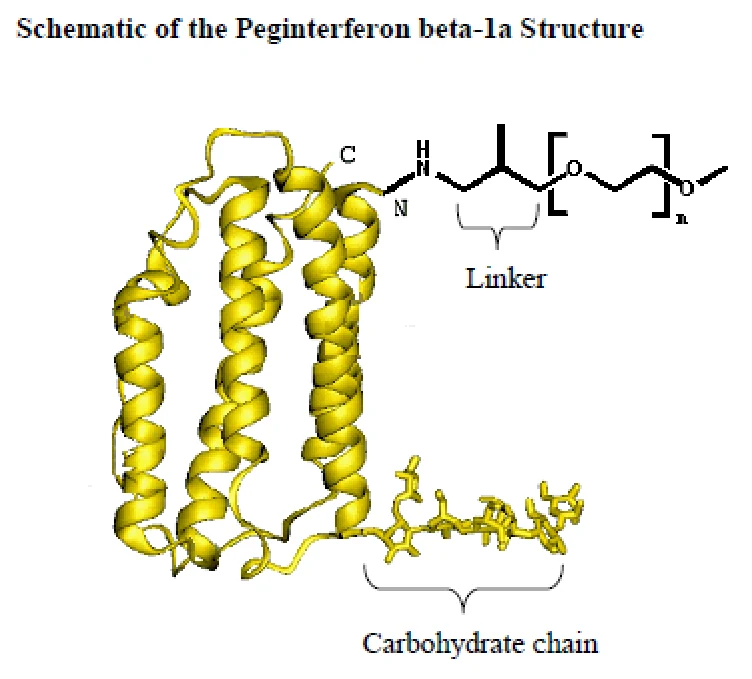
Physicochemical properties: peginterferon beta-1a drug substance is clear to slightly opalescent, colourless to slightly yellow solution containing 1.1 mg/mL peginterferon beta-1a in 20 mM sodium acetate, 150 mM arginine HCl.
14 CLINICAL TRIALS
14.1 Trial Design and Study Demographics
Table 4 - Summary of patient demographics for clinical trials in specific indication
| Study # | Study design | Dosage, route of administration and duration | Study subjects (n) | Mean age (Range) | Sex |
105MS301 (Efficacy, Safety, PK/PD) | Multicenter, Randomized, Double-Blind, Parallel-Group, Placebo-Controlled (year 1) Study to Evaluate the Efficacy and Safety of PEGylated Interferon Beta-1a (BIIB017) in Subjects with Relapsing Remitting Multiple Sclerosis | 125 micrograms PLEGRIDY injected subcutaneously every 2 or 4 weeks OR placebo; Two-year study (see additional information on study design) | Subjects with Multiple Sclerosis; n=1512 | 37 years (18-61 years) | Female: 71% |
105MS302 (Long term Safety and Efficacy) | Phase 3, multicenter, parallel group, dose frequency blinded extension | BIIB017 125 mcg SC every 2 weeks or BIIB017 125 mcg SC every 4 weeks | As of 13 March 2015: 1077 enrolled/1076 dosed; 833 completed | 38.4 years (20 to 63 years) | Female: 72% |
The efficacy and safety of PLEGRIDYTM (peginterferon beta-1a) were assessed from the randomized, double-blind, placebo-controlled phase (year 1) of a 2 year clinical study in patients with relapsing remitting multiple sclerosis (105MS301). At study entry 1512 patients were randomized and dosed to 125 micrograms PLEGRIDYTM injected subcutaneously every 2 (n=512) or 4 (n=500) weeks versus placebo (n=500). The trial compare clinical and MRI outcomes at 48 weeks. At the end of the first year, patients who received placebo were randomized to PLEGRIDYTM every 2 or every 4 weeks while the patients randomized to PLEGRIDYTM in the first year remained on their original dose assignment. Efficacy results were derived from the placebo-controlled first year of the study.
The study enrolled patients with active disease, who had experienced at least 2 relapses within the prior three years including at least 1 in the year prior to randomization and had an Expanded Disability Status Scale (EDSS) score ranging from 0 to 5. Neurological evaluations were performed at baseline, every 12 weeks and at time of suspected relapse. Brain MRI evaluations were performed at baseline, weeks 24 and 48. The primary endpoint was the annualized relapse rate (ARR) over 1 year. Secondary endpoints included the proportion of subjects relapsing, new or newly enlarging T2 hyperintense lesions and time to confirmed disability progression, defined as at least a 1 point increase from baseline EDSS ≥ 1 or 1.5 point increase for patients with baseline EDSS of 0, sustained for 12 weeks. The trial excluded patients with progressive forms of multiple sclerosis.
The mean age of the study population was 37 (18-61) years, the mean disease duration was 3.6 (0-40) years and the mean EDSS at baseline was 2.46 (0.0-5.5). The majority of the patients were female (71%). There were 171 (11%) patients ages 50 and over studied in the clinical trial 105MS301.
14.2 Study Results
105MS301, Year 1
PLEGRIDYTM every 2 weeks reduced the ARR by 36% compared to placebo (p=0.0007) at one year (Table 5). Complete results for this study are shown in Table 5 and Figure 1.
At 1 year, the estimated proportion of subjects with disability progression confirmed at 24 weeks was 4% in the PLEGRIDYTM group and 8.4% in the placebo group. The mean number of Gd enhancing lesions was 0.2 in the PLEGRIDYTM group and 1.4 in the placebo group. A treatment effect was observed as early as 6 months.
105MS301, Year 2
The adjusted annualized relapse rate over 2 years based on the ITT population (N=512) for subjects in the PLEGRIDYTM group was 0.221, and the estimated proportion of subjects with disability progression confirmed at 12 weeks was 11.2%.
Table 5 Clinical and MRI Results of 105MS301
| Endpoint | Placebo | PLEGRIDYTM 125 micrograms every 2 weeks | ||||||||
|---|---|---|---|---|---|---|---|---|---|---|
| Clinical endpoints | n=500 | n=512 | ||||||||
| Annualized relapse rate (primary endpoint) | Adjusted rate [95% CI] | 0.397 [0.328, 0.481] | 0.256 [0.206, 0.318] | |||||||
| % reduction vs placebo a+ [95%CI] | — | 36 [17, 50] (p=0.0007) | ||||||||
| Proportion of subjects relapsed | Estimated proportion | 0.291 | 0.187 | |||||||
| % risk reduction vs placebo [95%CI]b+ | — | 39 [20, 53] (p=0.0003) | ||||||||
Disability progression (12 weeks) | Estimated proportion of subjects progressed | 0.105 | 0.068 | |||||||
| % risk reduction vs placebo [95%CI]c+ | — | 38 [3, 60] (p=0.0383) | ||||||||
| MRI endpointsd | n=476 | n=457 | ||||||||
| New or newly enlarging T2 hyperintense lesions | Adjusted mean | 10.9 | 3.6 | |||||||
| % reduction vs placebo [95%CI]e+ | — | 67 [60, 73] (p<0.0001) | ||||||||
a Based on negative binomial regression, with adjustment for baseline EDSS (<4 vs. >=4), baseline relapse rate, age (<40 vs. >=40). b Based on Cox proportion hazards model, adjusted for baseline EDSS (<4 vs. >=4), age (<40 vs. >=40), baseline relapse rate, and baseline Gd enhancing lesions (presence vs. absence). c Based on Cox proportion hazards model, adjusted for baseline EDSS (<4 vs. >=4), age (<40 vs. >=40). d ITT population in which subject who had at least one post baseline MRI scan were included in the analysis of MRI endpoints. e Based on negative binomial regression, adjusted for baseline number of T2 lesion. + A sequential (closed) testing procedure was used to control the overall type I error rate due to multiple comparison. in the following order:
Annualized relapse rate, New or newly enlarge T2 hyperintense lesions, Proportion of subjects relapsed and Disability progression (12 weeks).
Figure 1 Time to First Relapse
PLEGRIDYTM (PLEGRIDYTM) 125 mcg every 2 weeks (n= 512) versus placebo (n=500) Hazard Ratio (95% CI) = 0.61 (0.47, 0.80), p=0.0003
15 MICROBIOLOGY
No microbiological information is required for this drug product.
16 NON-CLINICAL TOXICOLOGY
General Toxicology: In the 5 weeks study in rhesus monkeys, dose-dependent changes included a transient increase in body temperature and a reduction in lymphocyte counts, consistent with the known mechanism of action of interfereon beta-1a. In addition, dose-dependent increases of alanine aminotransferase and aspartate aminotransferase were observed. The weights of adrenals of females and thymus of male animals were not increased in the main study animals but were increased in animals following a 4-week recovery period.
Carcinogenicity: Peginterferon beta-1a has not been tested for carcinogenicity in animals.
Mutagenicity: Peginterferon beta-1a was not mutagenic when tested in an in vitro bacterial reverse mutation (Ames) test and was not clastogenic in an in vitro assay in human lymphocytes.
Reproductive and Developmental Toxicology:
Impairment of Fertility
The weekly subcutaneous administration of PLEGRIDYTM (peginterferon beta-1a) at 125 µg/kg/week to sexually mature female rhesus monkeys over the course of one menstrual cycle (up to 5 weeks), resulted in menstrual irregularities, anovulation, and decreased hormones (serum progesterone and 17-beta estradiol). The effects at 125 µg/kg were reversible after discontinuation of drug administration and are consistent with those observed with non-pegylated interferon beta. These effects were not seen at the lower dose of 2.5 µg/kg, which is similar to the nominal clinical dose (approximately 2 µg/kg). The validity of extrapolating nonclinical data from studies with PLEGRIDY to humans is unknown.
PLEGRIDYTM has not been tested for reproductive toxicity in pregnant animals. In monkeys administered non-pegylated interferon beta by subcutaneous injection over the course of one menstrual cycle, menstrual irregularities, anovulation, abortifacient effects and decreased serum progesterone levels were observed.
No information is available on the potential effects of peginterferon beta-1a on male fertility.
Toxicology studies in juvenile animals were not performed for peginterferon beta-1.
Teratogenicity
Peginterferon beta-1a has not been tested for reproductive toxicity in pregnant animals.