


Product Monograph - Avonex (Biogen Canada, 60 mcg, 30 mcg)
RECENT MAJOR LABEL CHANGES
| [Section number and heading], [Subsection number and heading] | [MM/YYYY] |
| [Section number and heading], [Subsection number and heading] | [MM/YYYY] |
TABLE OF CONTENTS
Sections or subsections that are not applicable at the time of authorization are not listed.
[To update, right-click anywhere in the Table of Contents and select “Update Field”, “Update entire table”, click OK.]
RECENT MAJOR LABEL CHANGES............................................................................................ 2
TABLE OF CONTENTS .............................................................................................................. 2
PART I: HEALTH PROFESSIONAL INFORMATION ..................................................................... 4
1 INDICATIONS .............................................................................................................. 4
1.1 Pediatrics .......................................................................................................... 4
1.2 Geriatrics........................................................................................................... 4
2 CONTRAINDICATIONS ................................................................................................. 4
4 DOSAGE AND ADMINISTRATION................................................................................. 5
4.1 Dosing Considerations ....................................................................................... 5
4.2 Recommended Dose and Dosage Adjustment..................................................... 5
4.4 Administration................................................................................................... 6
4.5 Missed Dose ...................................................................................................... 6
5 OVERDOSAGE ............................................................................................................. 6
6 DOSAGE FORMS, STRENGTHS, COMPOSITION AND PACKAGING ................................. 6
7 WARNINGS AND PRECAUTIONS .................................................................................. 7
7.1 Special Populations .......................................................................................... 11
7.1.1 Pregnant Women ....................................................................................... 11
7.1.2 Breast-feeding............................................................................................ 12
7.1.3 Pediatrics ................................................................................................... 12
7.1.4 Geriatrics ................................................................................................... 12
8 ADVERSE REACTIONS ................................................................................................ 13
8.1 Adverse Reaction Overview.............................................................................. 13
8.2 Clinical Trial Adverse Reactions ........................................................................ 13
8.5 Post-Market Adverse Reactions........................................................................ 16
9 DRUG INTERACTIONS................................................................................................ 17
9.2 Drug Interactions Overview.............................................................................. 17
9.4 Drug-Drug Interactions .................................................................................... 17
10 CLINICAL PHARMACOLOGY ....................................................................................... 18
10.1 Mechanism of Action.................................................................................. 18
10.3 Pharmacokinetics ....................................................................................... 18
11 STORAGE, STABILITY AND DISPOSAL ......................................................................... 19
12 SPECIAL HANDLING INSTRUCTIONS........................................................................... 19
PART II: SCIENTIFIC INFORMATION ...................................................................................... 20
13 PHARMACEUTICAL INFORMATION............................................................................ 20
14 CLINICAL TRIALS........................................................................................................ 20
14.1 Trial Design and Study Demographics ......................................................... 20
14.2 Study Results ............................................................................................. 21
15 MICROBIOLOGY ........................................................................................................ 29
16 NON-CLINICAL TOXICOLOGY ..................................................................................... 30
PATIENT MEDICATION INFORMATION ................................................................................. 31
PART I: HEALTH PROFESSIONAL INFORMATION
1 INDICATIONS
AVONEXTM Prefilled Syringe (PS) / AVONEXTM Prefilled Autoinjector (PEN) (interferon beta-1a) is indicated for:
Treatment of relapsing forms of multiple sclerosis (MS)
- To slow the progression of disability
- To decrease the frequency of clinical exacerbations
- To reduce the number and volume of active brain lesions identified on Magnetic Resonance Imaging (MRI) scans.
- A subgroup of relapsing MS includes secondary progressive MS (SPMS) patients who are still experiencing relapses, also known as relapsing progressive MS (RPMS). In a study of patients with relapsing progressive MS, AVONEXTM showed an improvement on relapse rates and MRI measures in those patients who had greater disability at baseline.
Treatment of people who have experienced a single demyelinating event, accompanied by abnormal MRI scans, with lesions typical of MS:
- To delay the onset of clinically definite MS (as determined by a second demyelinating event).
- To decrease the number and volume of active brain lesions and overall disease burden (as identified by MRI scans). Before initiating treatment with AVONEXTM PS/AVONEXTM PEN, alternate diagnoses should first be excluded.
Safety and efficacy have not been established in patients with primary progressive multiple sclerosis.
1.1 Pediatrics
Pediatrics (< 18 years of age): No data are available to Health Canada; therefore, Health Canada has not authorized an indication for pediatric use.
1.2 Geriatrics
Geriatrics (> 65 years of age): Clinical Trials of AVONEXTM (interferon beta-1a) did not include sufficient numbers of patients aged 65 years and over to determine whether they respond differently than younger patients.
2 CONTRAINDICATIONS
AVONEXTM PS/AVONEXTM PEN (interferon beta-1a) is contraindicated in patients who are hypersensitive to this drug or to any ingredient in the formulation, including any non-medicinal ingredient, or component of the container. For a complete listing, see 6 DOSAGE FORMS, STRENGTHS, COMPOSITION AND PACKAGING.
4 DOSAGE AND ADMINISTRATION
4.1 Dosing Considerations
- Intended for use under the guidance and supervision of a physician.
Patients may self-inject only:
- If their physician determines that it is appropriate.
- Appropriate medical follow-up is provided.
- After proper training in IM injection technique for either AVONEXTM PS/AVONEXTM PEN.
- Injection sites (thigh or upper arm for AVONEXTM PS, or upper, outer thigh for AVONEXTM PEN) should be rotated each week. Avoid injection into an area of skin that is sore, red, infected or otherwise damaged.
Before initiating a patient on AVONEXTM PS/AVONEXTM PEN (interferon beta-1a) therapy, note the following Contraindications:
- In patients with a known hypersensitivity to natural or recombinant interferon beta, or any other component of the formulation. Anaphylaxis has been observed with the use of AVONEXTM PS/AVONEXTM PEN.
- Review the 7 WARNINGS AND PRECAUTIONS section and ensure appropriate monitoring of patients with depression, hepatic dysfunction, a history of seizures, cardiac disease, thyroid dysfunction, myelosuppression, and female patients of child-bearing potential.
4.2 Recommended Dose and Dosage Adjustment
- 30 µg injected intramuscularly once per week.
- Patients with relapsing progressive MS or secondary progressive MS with recurrent attacks of neurological dysfunction could benefit from an increase of their dose of AVONEXTM up to 60 µg.
- For patients with relapsing MS, AVONEXTM may be started at a ¼ dose of approximately 7.5 µg and the dose may be increased by approximately 7.5 µg each week for the next three weeks until the recommended full dose of 30 µg/week is achieved (see Table 1 below).
- An AVOSTARTCLIPTM kit containing 3 titration devices can be used for titration. These devices are to be used only with AVONEXTM PS. Each AVOSTARTCLIPTM should be used only once and disposed of, along with any remaining AVONEXTM PS in the syringe.
Table 1 – Titration Schedule
| AVONEXTM Titration - Recommended Dose1 (micrograms) | |
| Week 1 | 1/4 dose (approximately 7.5 µg) |
| Week 2 | 1/2 dose (approximately 15 µg) |
| Week 3 | 3/4 dose (approximately 22.5 µg) |
| Week 4+ | Full dose (30 µg) |
1 Dosed once a week, intramuscularly.
- A reduction in severity and incidence of flu-like symptoms with dose titration was observed in healthy volunteers (see Clinical Trials), but has not been well characterized in clinical trials in patients with MS. An alternative titration schedule can be achieved by incremental ¼ dose increases every two weeks, reaching the full dose (30 µg/week) by the seventh week.
- Prior to injection and for an additional 24 hours after each injection, an antipyretic analgesic is also advised to assist in decreasing flu-like symptoms associated with AVONEXTM administration.
- Health Canada has not authorized an indication for pediatric use.
4.4 Administration
- Patients should be advised of the side-effects of AVONEXTM PS/AVONEXTM PEN and instructed on the use of aseptic technique when administering AVONEXTM PS/AVONEXTM PEN. PATIENT MEDICATION INFORMATION should be carefully reviewed with all patients, and patients should be educated on self-care and advised to continue to refer to Part III during treatment with AVONEXTM PS/AVONEXTM PEN.
- A shorter thinner needle for intramuscular injection of AVONEXTM PS may be substituted by the prescribing physician, if deemed appropriate.
4.5 Missed Dose
If a dose is missed, the next dose should be taken as soon as possible. The regular schedule should be continued the following week. Do not take AVONEXTM PS/AVONEXTM PEN on two consecutive days.
5 OVERDOSAGE
In clinical studies, overdosage was not seen using interferon beta-1a at a dose of 75 µg given subcutaneously three times a week.
| For management of a suspected drug overdose, contact your regional poison control centre. |
6 DOSAGE FORMS, STRENGTHS, COMPOSITION AND PACKAGING
AVONEXTM (interferon beta-1a) is available in the following presentations:
Table 2 – Dosage Forms, Strengths, Composition and Packaging
Packaging and Pack Size(s)
AVONEXTM PS
Available in a package containing 4 dose administration packs and a reclosable accessory pouch containing 4 alcohol wipes, 4 gauze pads and 4 adhesive bandages. Each dose administration pack
| Route of Administration | Dosage Form / Strength/Composition | Non-medicinal Ingredients |
| Intramuscular | Pre-filled Syringe, 30 µg (6.0 million IU) interferon beta-1a per 0.5 mL, Sterile Liquid for Injection | 0.79 mg sodium acetate trihydrate, USP 0.25 mg glacial acetic acid, USP 15.8 mg arginine hydrochloride, USP 0.025 mg Polysorbate 20 in 0.5 mL Water for Injection, USP at a pH of 4.8. |
| Intramuscular | Autoinjector Pen, 30 µg (6.0 million IU) interferon beta-1a per 0.5 mL, Sterile Liquid for Injection | 0.79 mg sodium acetate trihydrate, USP 0.25 mg glacial acetic acid, USP 15.8 mg arginine hydrochloride, USP 0.025 mg Polysorbate 20 in 0.5 mL Water for Injection, USP at a pH of 4.8. |
contains 1 prefilled syringe of AVONEX PS liquid and 1 needle for injection.
AVONEXTM PEN
Available in a package containing 4 dose administration packs and a reclosable accessory pouch containing 4 alcohol wipes, 4 gauze pads and 4 adhesive bandages. Each dose administration pack contains 1 prefilled autoinjector of AVONEXTM PEN, 1 needle for injection and 1 AVONEXTM PEN cover.
Description
AVONEXTM PS/AVONEXTM PEN (interferon beta-1a) are produced by recombinant DNA technology. Interferon beta-1a is a 166 amino acid glycoprotein with a predicted molecular weight of approximately 22,500 daltons. It is produced by mammalian cells (Chinese Hamster Ovary cells) into which the human interferon beta gene has been introduced. The amino acid sequence of interferon beta-1a is identical to that of natural human interferon beta.
Using the World Health Organization (WHO) natural interferon beta standard, Human Fibroblast (Gb-23-902-531), AVONEXTM PS/AVONEXTM PEN have a specific activity of approximately 200 million international units (IU) of antiviral activity per mg; 30 μg of AVONEXTM PS/AVONEXTM PEN contains 6 million IU of antiviral activity.
7 WARNINGS AND PRECAUTIONS
General
AVONEXTM PS/AVONEXTM PEN (interferon beta-1a) should be used under the supervision of a physician. The first injection should be performed under the supervision of an appropriately qualified health care professional (see 4 DOSAGE AND ADMINISTRATION).
Patients should be informed of the following information:
- The most common adverse events associated with interferon beta administration, including symptoms of the flu-like syndrome (see 8 ADVERSE REACTIONS). These symptoms tend to be most prominent at the initiation of therapy and decrease in frequency and severity with continued treatment. Gradual dose titration at the initiation of therapy has demonstrated a reduction in the severity and incidence of flu-like symptoms in healthy volunteers (see 4 DOSAGE AND ADMINISTRATION). In addition, concurrent use of analgesics and/or antipyretics may help reduce flu-like symptoms on treatment days.
- To not stop or modify their treatment unless instructed by their physician.
- To report depression or suicidal ideation.
- The risk of decreased blood counts including white blood cells and platelet counts and of the requirement for periodic laboratory testing. Patients should be advised to report immediately any clinical symptoms associated with blood cell count abnormalities and laboratory testing should be performed according to standard medical practice. Patients with myelosuppression may require more intensive monitoring of complete blood cell counts, with differential and platelet counts.
- The potential risk of liver injury with AVONEXTM PS/AVONEXTM PEN therapy, and of the requirement for frequent laboratory testing. Patients should be informed of the symptoms of suggestive liver dysfunction, such as loss of appetite accompanied by other symptoms such as nausea, vomiting, and jaundice, and advised to consult with their physician immediately should such symptoms arise.
- To report any symptoms of thyroid dysfunction (hypo or hyperthyroidism) and thyroid function tests should be performed according to standard medical practice.
- Female patients should be advised about the abortifacient potential of AVONEXTM PS/AVONEXTM PEN and instructed to take adequate contraceptive measures. Patients should be advised to discuss with their health care provider the potential risks and benefits of continued treatment while attempting to conceive. It is not known if interferons alter the efficacy of hormonal contraceptives.
- When a physician determines that AVONEXTM PS/AVONEXTM PEN can be used outside the physician’s office, persons who will be administering AVONEXTM PS/AVONEXTM PEN should receive instruction in reconstitution and/or injection, including the review of the injection procedures (see PATIENT MEDICATION INFORMATION). If a patient is to self-administer, the physical ability of the patient to self-inject intramuscularly should be assessed. If home use is chosen, the first injection should be performed under the supervision of a qualified health care professional. A puncture-resistant container for disposal of needles, syringes and autoinjectors should be used. Patients should be instructed in the technique and importance of proper syringe, needle and autoinjector disposal and be cautioned against reuse of these items.
- Patients receiving AVONEXTM 60 μg IM once a week in the relapsing MS population showed similar adverse event and tolerability patterns to the 30 μg dose. Adverse events known to be associated with interferon administration (e.g. flu syndrome, asthenia, depression, headache, myalgia, nausea, fever, diarrhea, dizziness and chills) generally occurred at similar frequencies between the two dose groups, with the exception of flu syndrome (AVONEXTM 30 μg vs AVONEXTM 60 μg: 85% vs. 92%, respectively).
Carcinogenesis and Mutagenesis
No carcinogenicity data for interferon beta-1a are available in animals or humans.
Interferon beta-1a was not mutagenic when tested in the Ames bacterial test and in an in vitro cytogenetic assay in human lymphocytes in the presence and absence of metabolic activation. These assays are designed to detect agents that interact directly with and cause damage to cellular DNA. Interferon beta-1a is a glycosylated protein that does not directly bind to DNA.
Cardiovascular
Patients with cardiac disease, such as angina, congestive heart failure, or arrhythmia, should be closely monitored for worsening of their clinical condition during initiation and continued treatment with AVONEXTM PS/AVONEXTM PEN. While AVONEXTM PS/AVONEXTM PEN does not have any known direct-acting cardiac toxicity, during the post-marketing period infrequent cases of congestive heart failure, cardiomyopathy, and cardiomyopathy with congestive heart failure have been reported in patients without known predisposition to these events or other known etiologies. In rare cases, these events have been temporally related to the administration of AVONEXTM and have recurred upon re-challenge in patients with known predisposition.
Endocrine and Metabolism
Other interferons have been noted to reduce cytochrome P-450 oxidase-mediated drug metabolism. Formal hepatic drug metabolism studies with AVONEXTM PS/AVONEXTM PEN in humans have not been conducted. Hepatic microsomes isolated from rhesus monkeys treated with AVONEXTM showed no influence of AVONEXTM on hepatic P-450 enzyme metabolism activity.
Hematologic
Decreased Peripheral Blood Counts:
Decreased peripheral blood counts in all cell lines, including very rare pancytopenia and thrombocytopenia have been reported from post-marketing experience (see 8 ADVERSE REACTIONS). Some cases of thrombocytopenia have had nadirs below 10,000/mL. Some cases reoccur with re-challenge. Patients should be monitored for signs of these disorders (see 7 WARNINGS AND PRECAUTIONS, Monitoring and Laboratory Tests).
Thrombotic microangiopathy (TMA):
Cases of thrombotic microangiopathy, manifested as thrombotic thrombocytopenic purpura (TTP) or haemolytic uraemic syndrome (HUS), including fatal cases, have been reported with interferon beta products. Events were reported at various time points during treatment and may occur after several weeks to several years after starting treatment with interferon beta. Early clinical features include thrombocytopenia, new onset hypertension, fever, central nervous system symptoms (e.g. confusion, paresis) and impaired renal function. If clinical features of TMA are observed, testing of blood platelet levels, serum lactate dehydrogenase (LDH), schistocytes (erythrocyte fragmentation) on a blood film with negative Coombs test and renal function is recommended. Prompt treatment of TTP/HUS is required and immediate discontinuation of treatment with AVONEXTM is recommended.
Hepatic/Biliary/Pancreatic
AVONEXTM PS/AVONEXTM PEN, like other interferon beta products, have the potential for causing severe liver injury (see 8 ADVERSE REACTIONS). Hepatic injury including elevated serum hepatic enzyme levels, hepatitis and autoimmune hepatitis (see 7 WARNINGS AND PRECAUTIONS, Immune), some of which have been severe, has been reported post-marketing. In some patients a recurrence of elevated serum levels of hepatic enzymes have occurred upon AVONEXTM re-challenge. In some cases, these events have occurred in the presence of other drugs that have been associated with hepatic injury. The potential of additive effects from multiple drugs or other hepatotoxic agents (e.g., alcohol) has not been determined.
Cases of hepatic failure have been reported with interferon beta-1a in post-marketing, including very rare cases with AVONEXTM.
Patients should be monitored for signs of hepatic injury (see 7 WARNINGS AND PRECAUTIONS, Monitoring and Laboratory Tests) and caution exercised when AVONEXTM PS/AVONEXTM PEN is used concomitantly with other drugs associated with hepatic injury.
Immune
As with other interferon treatment, autoimmune disorders of multiple target organs have been reported post-marketing including idiopathic thrombocytopenia, hyper and hypothyroidism, and rare cases of autoimmune hepatitis have also been reported. Patients should be monitored for signs of these disorders (see 7 WARNINGS AND PRECAUTIONS, Monitoring and Laboratory Tests) and appropriate treatment implemented when observed.
Serum neutralizing antibodies were reported to develop in only 2% to 6% of patients treated with AVONEXTM PS/AVONEXTM PEN. Although the exact clinical significance of antibodies has not been fully established, there are multiple literature reports indicating that the occurrence of neutralizing antibodies with beta interferon treatment impacts clinical efficacy, MRI measures and the induction of biological markers.
Monitoring and Laboratory Tests
Laboratory abnormalities are associated with the use of interferons. During the placebo-controlled trials in multiple sclerosis, liver function tests were performed at least every 6 months. Liver function tests including serum ALT are recommended during AVONEXTM PS/AVONEXTM PEN therapy and should be performed at baseline, monthly at months 1 through 6, and every 6 months thereafter. AVONEXTM PS/AVONEXTM PEN should be initiated with caution in patients with a history of significant liver disease, clinical evidence of active liver disease, alcohol abuse, increased serum ALT (>2.5 times ULN), and in patients receiving concomitant medications associated with hepatic injury. These patients may require more frequent monitoring of serum hepatic enzymes. Discontinuation or interruption of AVONEXTM PS/AVONEXTM PEN should be considered if ALT rises above 5 times the ULN. Treatment with AVONEXTM PS/AVONEXTM PEN should be stopped if jaundice or other clinical symptoms of liver dysfunction appear. In addition to those laboratory tests normally required for monitoring patients with MS, and in addition to liver enzyme monitoring (see 7 WARNINGS AND PRECAUTIONS, Hepatic/Biliary/Pancreas) complete blood cell counts and white blood cell differential, platelet counts, and blood chemistries are recommended during AVONEXTM PS/AVONEXTM PEN therapy (see 7 WARNINGS AND PRECAUTIONS, Hematologic and 8 ADVERSE REACTIONS). These tests should be performed at baseline, months 1, 3, 6, and every 6 months thereafter. Patients with myelosuppression may require more intensive monitoring of complete blood cell counts, with differential and platelet counts.
Patients being treated with interferon beta may occasionally develop new or worsening thyroid abnormalities. Thyroid testing should be performed at baseline and every 6 months. In case of abnormal results or in patients with a past history of thyroid dysfunction, any necessary treatment and more frequent testing should be performed as clinically indicated.
Neurologic
Seizures:
Caution should be exercised when administering AVONEXTM PS/AVONEXTM PEN to patients with pre-existing seizure disorder. In the two placebo-controlled studies of MS, four patients receiving AVONEXTM experienced seizures, while no seizures occurred in the placebo group. Of these four patients, three had no prior history of seizure. It is not known whether these events were related to the effects of MS alone, to AVONEXTM, or to a combination of both. For patients with no prior history of seizure who developed seizures during therapy with AVONEXTM PS/AVONEXTM PEN, an etiologic basis should be established and appropriate anti-convulsant therapy instituted prior to considering resumption of treatment. The effect of AVONEXTM PS/AVONEXTM PEN administration on the medical management of patients with seizure disorder is unknown.
Depression and Suicide:
AVONEXTM PS/AVONEXTM PEN should be used with caution in patients with depression. Depression and suicide have been reported to occur in patients receiving other interferon compounds. Depression and suicidal ideation are known to occur at an increased frequency in the MS population. A relationship between the occurrence of depression and/or suicidal ideation and the use of AVONEXTM PS/AVONEXTM PEN has not been established. An equal incidence of depression was seen in the placebo-treated and the patients treated with AVONEXTM in the placebo-controlled study of relapsing MS patients. In the study of patients with a single demyelinating event patients treated with AVONEXTM were more likely to experience depression than placebo-treated patients (p = 0.05). Suicidal tendency occurred in one subject treated with placebo, and there were no reports of suicide attempts. Patients treated with AVONEXTM PS/AVONEXTM PEN should be advised to report immediately any symptoms of depression and/or suicidal ideation to their prescribing physicians. If a patient develops depression, antidepressant therapy or cessation of AVONEXTM PS/AVONEXTM PEN therapy should be considered.
Reproductive health: Female and male potential
Fertility
No studies were conducted to evaluate the effects of interferon beta on fertility in normal women or women with MS. It is not known whether AVONEXTM PS/AVONEXTM PEN can affect human reproductive capacity.
Function
Menstrual irregularities were observed in monkeys administered interferon beta at a dose 100 times the recommended weekly human dose (based upon a body surface area comparison). Anovulation and decreased serum progesterone levels were also noted transiently in some animals. These effects were reversible after discontinuation of drug.
Treatment of monkeys with interferon beta at two times the recommended weekly human dose (based upon a body surface area comparison) had no effects on cycle duration or ovulation.
The accuracy of extrapolating animal doses to human doses is not known. In the placebo-controlled study, 6% of patients receiving placebo and 5% of patients receiving AVONEXTM experienced menstrual disorder. If menstrual irregularities occur in humans, it is not known how long they will persist following treatment.
Teratogenic Risk
Due to contrasting data, it is unclear whether AVONEXTM has teratogenic effects. (see 7 WARNINGS AND PRECAUTIONS, Special Populations, Pregnant Women)
Sensitivity/Resistance
Anaphylaxis has been reported as a rare complication AVONEXTM PS/AVONEXTM PEN use. Other allergic reactions have included dyspnea, orolingual edema, skin rash and urticaria (see 8 ADVERSE REACTIONS).
Skin
Injection Site reactions including necrosis
In post marketing experience, injection site reactions including abscesses, cellulitis and cases of injection site necrosis have been reported (see 8 Adverse Reactions). Some cases required treatment with hospitalization for surgical drainage and intravenous antibiotics. Patients should be advised of the importance of rotating sites of injection with each dose, to minimize the likelihood of injection site reactions including injection site necrosis. Patients should be advised not inject into an area that appears abnormal and to consult with their physician should they develop any lesions or damage at the injection site that does not go away after a few days as a decision may be required to discontinue AVONEXTM until healing has occured.
7.1 Special Populations
7.1.1 Pregnant Women
Pregnant Women:
The extent of exposure in pregnancy during clinical trials is: Limited: < 1000 pregnancies
There are no adequate and well-controlled studies of AVONEXTM PS/AVONEXTM PEN in pregnant women. The administration of AVONEXTM PS/AVONEXTM PEN during confirmed pregnancy should be avoided, unless clearly needed.
A European registry study collected data on 948 prospective pregnancies in women with MS who were treated with one of five interferon beta medications. The rates of aggregated adverse pregnancy outcomes were in line with reference ranges published in the literature.
Data from a prospective pregnancy registry that included 302 MS patients exposed to Avonex in the United States found an increased incidence of major birth defects compared to a reference population. Data from a retrospective register-based study in Sweden and Finland have not indicated an increased risk of major congenital anomalies after early pregnancy exposure to drugs in the interferon beta class. Given these contrasting data, it is unclear whether Avonex has teratogenic effects.
In each of the studies discussed above, the duration of exposure during the first trimester was uncertain since data were collected when interferon beta use was contraindicated or strongly advised against during pregnancy, and treatment was interrupted when the pregnancy was detected and/or confirmed. Experience with exposure during the second and third trimester was too limited to determine whether exposure affects maternal or fetal health.
The reproductive toxicity of AVONEXTM PS/AVONEXTM PEN has been studied in animals. In pregnant monkeys given AVONEXTM at 100 times the recommended weekly human dose (based upon body surface area comparison), no teratogenic effects on fetal development were observed. Abortifacient activity was evident following 3 to 5 doses at this level. These effects are consistent with the abortifacient effects of other type I interferons.
The risk of spontaneous abortions in pregnant women exposed to interferon beta cannot be evaluated based on the currently available data.
7.1.2 Breast-feeding
No studies have ben conducted with AVONEXTM PS/AVONEXTM PEN in lactating women. Limited information available from published literature on the transfer of interferon beta-1a into breast milk suggests that levels of interferon beta-1a excreted in human milk are low. A risk to the nursing infant cannot be excluded.
The benefit and potential risk of breastfeeding should be considered along with the patient’s medical need for interferon beta-1a therapy.
7.1.3 Pediatrics
Pediatrics (< 18 years of age): No data are available to Health Canada; therefore, Health Canada has not authorized an indication for pediatric use.
7.1.4 Geriatrics
Clinical studies with AVONEX did not include sufficient numbers of patients >65 years to determine whether they respond differently than younger patients.
8 ADVERSE REACTIONS
8.1 Adverse Reaction Overview
The five most common adverse events associated (at p < 0.075) with AVONEXTM PS/AVONEXTM PEN (interferon beta-1a) treatment were flu-like symptoms (otherwise unspecified), muscle ache, fever, chills, and asthenia. The incidence of all 5 adverse events diminished with continued treatment.
In the placebo-controlled study of patients with relapsing MS, one patient in the placebo group and no patients treated with AVONEXTM attempted suicide. The incidence of depression was equal in the two treatment groups. However, since depression and suicide have been reported with other interferon products, AVONEXTM PS/AVONEXTM PEN should be used with caution in patients with depression (see 7 WARNINGS AND PRECAUTIONS). Four patients receiving AVONEXTM experienced seizures, while no seizures occurred in the placebo group. Of these four patients, three had no prior history of seizure. It is not known whether these events were related to the effects of MS alone, to AVONEXTM, or to a combination of both (see 7 WARNINGS AND PRECAUTIONS).
In the study of patients experiencing a single demyelinating event, the most common adverse events associated with AVONEXTM (p ≤ 0.05) during the first six months of treatment were flu-like syndrome (AVONEXTM: 39%, placebo: 22%), fever (AVONEXTM: 17%, placebo: 6%) and chills (AVONEXTM: 17%, placebo: 3%). A higher proportion of patients treated with AVONEXTM (20%) experienced depression, as compared with placebo (13%) (p = 0.05) (see 7 WARNINGS AND PRECAUTIONS).
Patients receiving AVONEXTM 60 μg IM once a week in the relapsing MS population showed similar adverse event and tolerability patterns to the 30 μg dose. Adverse events known to be associated with interferon administration (e.g. flu syndrome, asthenia, depression, headache, myalgia, nausea, fever, diarrhea, dizziness and chills) generally occurred at similar frequencies between the two dose groups, with the exception of flu syndrome (AVONEXTM 30 μg vs AVONEXTM 60 μg: 85% vs. 92%, respectively).
Serious adverse events occurred in 52% of patients in the 30 μg dose group and 45% of patients in the 60 μg dose group. The incidence of serious adverse events was similar between the two treatment groups, with the exception of accidental injury, which occurred more often in the 30 μg group (30 μg vs. 60 μg: 4% vs. 1%, respectively). Overall the safety profile of AVONEXTM 60 μg appeared to be similar to that of AVONEX 30 μg in subjects with relapsing MS.
8.2 Clinical Trial Adverse Reactions
Clinical trials are conducted under very specific conditions. The adverse reaction rates observed in the clinical trials; therefore, may not reflect the rates observed in practice and should not be compared to the rates in the clinical trials of another drug. Adverse reaction information from clinical trials may be useful in identifying and approximating rates of adverse drug reactions in real-world use.
Relapsing Multiple Sclerosis: The safety data describing the use of AVONEXTM in MS patients are based on the placebo-controlled trial in which 158 patients with relapsing multiple sclerosis randomized to AVONEXTM were treated for up to 2 years (see CLINICAL TRIALS).
Single Demyelinating Event: The adverse events observed in the placebo-controlled study of patients with a single demyelinating event were similar to those observed in the placebo-controlled study of relapsing MS patients. Patients in this trial (n=193) initiated treatment with AVONEXTM while on oral prednisone, which was used to treat the initial demyelinating event.
Table 3 enumerates adverse events and selected laboratory abnormalities that occurred at an incidence of 2% or more among the 158 patients with relapsing MS treated with 30µg AVONEXTM once weekly by IM injection. Reported adverse events have been classified using standard COSTART terms. Terms so general as to be uninformative or more common in the placebo-treated patients have been excluded.
Table 3 – Adverse Events and Selected Laboratory Abnormalities in the Placebo-Controlled Study of Relapsing MS
Placebo n = 143 (%) | AVONEX n = 158 (%) | |
|---|---|---|
Body as a Whole Headache Flu-like symptoms (otherwise unspecified)* Pain Fever* Asthenia Chills* Infection Abdominal pain Chest pain Injection site reaction Malaise Injection site inflammation Hypersensitivity reaction Ovarian cyst Ecchymosis injection site | 57 40 20 13 13 7 6 6 4 1 3 0 0 0 1 | 67 61 24 23 21 21 11 9 6 4 4 3 3 3 2 |
Cardiovascular System Syncope Vasodilation | 2 1 | 4 4 |
Digestive System Nausea Diarrhea Dyspepsia Anorexia | 23 10 7 6 | 33 16 11 7 |
Hemic and Lymphatic System Anemia* Eosinophils ≥ 10% HCT (%) ≤ 32 (females) or ≤ 37 (males | 3 4 1 | 8 5 3 |
Placebo n = 143 (%) | AVONEX n = 158 (%) | |
|---|---|---|
Metabolic and Nutritional Disorders SGOT ≥ 3 x ULN | 1 | 3 |
Musculoskeletal System Muscle ache* Arthralgia | 15 5 | 34 9 |
Nervous System Sleep difficult Dizziness Muscle spasm Suicidal tendency Seizure Speech disorder Ataxia | 16 13 6 1 0 0 0 | 19 15 7 4 3 3 2 |
Respiratory System Upper respiratory tract infection Sinusitis Dyspnea | 28 17 3 | 31 18 6 |
Skin and Appendages Urticaria Alopecia Nevus Herpes zoster Herpes simplex | 2 1 0 2 1 | 5 4 3 3 2 |
Special Senses Otitis media Hearing decreased | 5 0 | 6 3 |
Urogenital Vaginitis | 2 | 4 |
* Significantly associated with AVONEX treatment (p ≤ 0.05)
Other: AVONEX has also been evaluated in 290 patients with diseases other than MS. The majority of these patients were enrolled in studies to evaluate treatment of chronic viral hepatitis B and C with AVONEX, in which the doses studied ranged from 15 µg to 75 µg, given subcutaneously (SC), 3 times a week, for up to 6 months. The incidence of common adverse events in these studies was generally seen at a frequency similar to that seen in the placebo-controlled MS study. In these non-MS studies, inflammation at the site of the SC injection was seen in 52% of treated patients. In contrast, injection site inflammation was seen in 3% of MS patients receiving AVONEXTM, 30 µg by IM injection. SC injections were also associated with the following local reactions: injection site necrosis, injection site atrophy, injection site edema, and injection site hemorrhage. None of the above was observed in the MS patients participating in the placebo-controlled study of relapsing MS.
AVONEXTM PS/AVONEXTM PEN has been shown to have comparable safety and immunogenicity profiles compared to what has been reported with the use of AVONEXTM in previous clinical trials and in clinical practice. In the safety and immunogenicity study with AVONEXTM PS/AVONEXTM PEN liquid formulation, three of the five adverse events in which the incidence was greater than 20% (flu syndrome: 134 (88%); headache: 69 (45%); asthenia: 40 (26%)), were attributable to the flu-like syndrome associated with interferon therapy. Paresthesia occurred in 33 (22%) patients, and MS exacerbation, an event inherent to the relapsing form of MS, was seen in 50 (33%) patients. Depression, which is known to be associated with MS and potentially with interferon therapy, was observed in 23 (15%) patients. There were no reported suicide attempts or suicidal tendency in this study. The incidence of depression in this study is similar to that observed in the group treated with AVONEXTM in the clinical studies (15%). Twenty-five percent of subjects (38/153) experienced an adverse event related to the injection site, the most frequent of which were injection site ecchymosis (12%) and injection site pain (11 %). These rates are similar to those seen with AVONEXTM in previous clinical studies. There were no unexpected laboratory abnormalities in this trial. Mild shifts outside of the normal range occurred with an incidence similar to that seen with AVONEXTM.
8.5 Post-Market Adverse Reactions
Anaphylaxis and other allergic reactions and decreased peripheral blood counts have been reported in patients using AVONEXTM PS /AVONEXTM PEN. Seizures, cardiovascular adverse events, and autoimmune disorders also have been reported in association with the use of AVONEXTM (see 7 WARNINGS AND PRECAUTIONS). There have been reports of drug-induced lupus erythematosus (DILE) during interferon treatment.
Other events observed during premarket and postmarket evaluation of AVONEXTM, administered either SC or IM are listed in the paragraph that follows. Because most of the events were observed in open and uncontrolled studies, or in marketed use, the role of AVONEXTM PS/AVONEXTM PEN in their causation cannot be reliably determined.
Body as a Whole: abscess, ascites, cellulitis, facial edema, hernia, injection site fibrosis, injection site hypersensitivity, injection site necrosis, injection site reaction (including pain, inflammation, and very rare cases of abscess or cellulitis) lipoma, neoplasm, photosensitivity reaction, rigors, sepsis, sinus headache, tachycardia, toothache;
Cardiovascular System: arrhythmia, arteritis, congestive heart failure, heart arrest, hemorrhage, hypotension, palpitation, pericarditis, peripheral ischemia, peripheral vascular disorder, postural hypotension, pulmonary embolus, spider angioma, tachycardia, telangiectasia, vascular disorder;
Digestive System: blood in stool, colitis, constipation, diverticulitis, dry mouth, gallbladder disorder, gastritis, gastrointestinal hemorrhage, gingivitis, gum hemorrhage, hepatitis, hepatoma, hepatomegaly, increased appetite, intestinal perforation, intestinal obstruction, liver function test abnormalities, periodontal abscess, periodontitis, proctitis, thirst, tongue disorder, vomiting;
Endocrine System: hyperthyroidism, hypothyroidism;
Hemic and Lymphatic System: coagulation time increased, ecchymosis, lymphadenopathy, petechia;
Metabolic and Nutritional Disorders: abnormal healing, dehydration, hypoglycemia, hypomagnesemia, hypokalemia;
Musculoskeletal System: arthritis, bone pain, myasthenia, osteonecrosis, synovitis;
Nervous System: abnormal gait, amnesia, anxiety, Bell's Palsy, clumsiness, confusion, depersonalization, drug dependence, emotional lability, facial paralysis, hyperesthesia, hypertonia, increased libido, neurosis, paresthesia, psychosis, transient severe weakness;
Renal: Nephrotic Syndrome: Cases of nephrotic syndrome with different underlying nephropathies including collapsing focal segmental glomerulosclerosis (FSGS), minimal change disease (MCD), membranoproliferative glomerulonephritis (MPGN) and membranous glomerulopathy (MGN) have been reported during treatment with interferon‐beta products.
Events were reported at various time points during treatment and may occur after several years of treatment with interferon‐beta. Periodic monitoring of early signs or symptoms, e.g. oedema, proteinuria and impaired renal function is recommended, especially in patients at higher risk of renal disease. Prompt treatment of nephrotic syndrome is required and discontinuation of treatment with AVONEX should be considered;
Reproductive System and Breast Disorders: metrorrhagia, menorrhagia;
Respiratory, Thoracic, and Mediastinal Disorders: emphysema, hemoptysis, hiccup, hyperventilation, laryngitis, pharyngeal edema, pneumonia; cases of pulmonary arterial hypertension (PAH) have been reported with interferon beta products;
Skin and Appendages: basal cell carcinoma, blisters, cold clammy skin, contact dermatitis, erythema, furunculosis, genital pruritus, nevus, pruritus, rash (including vesicular rash), seborrhea, skin ulcer, skin discoloration;
Special Senses: abnormal vision, conjunctivitis, earache, eye pain, labyrinthitis, vitreous floaters;
Urogenital: breast fibroadenosis, breast mass, dysuria, epididymitis, fibrocystic change of the breast, fibroids, gynecomastia, hematuria, kidney calculus, kidney pain, leukorrhea, menopause, nocturia, pelvic inflammatory disease, penis disorder, Peyronies Disease, polyuria, post menopausal hemorrhage, prostatic disorder, pyelonephritis, testis disorder, urethral pain, urinary urgency, urinary retention, urinary incontinence, vaginal hemorrhage.
9 DRUG INTERACTIONS
9.2 Drug Interactions Overview
No formal drug interaction studies have been conducted with AVONEX® PS/AVONEX® PEN (interferon beta-1a). In the placebo-controlled study, corticosteroids or ACTH were administered for treatment of exacerbations in some patients concurrently receiving AVONEXTM. In addition, some patients receiving AVONEXTM were also treated with anti-depressant therapy and/or oral contraceptive therapy. No unexpected adverse events were associated with these concomitant therapies.
9.4 Drug-Drug Interactions
As with all interferon products, proper monitoring of patients is required if AVONEXTM PS/AVONEXTM PEN is given in combination with myelosuppressive agents.
10 CLINICAL PHARMACOLOGY
10.1 Mechanism of Action
Interferons are a family of naturally occurring proteins and glycoproteins that are produced by eukaryotic cells in response to viral infection and other biological inducers. Interferon beta, one member of this family, is produced by various cell types including fibroblasts and macrophages. Natural interferon beta and interferon beta-1a are similarly glycosylated. Glycosylation of other proteins is known to affect their stability, activity, biodistribution, and half-life in blood. Glycosylation of other proteins also decreases aggregation of proteins. Protein aggregates are thought to be involved in the immunogenicity of recombinant proteins. Aggregated forms of interferon beta are known to have lower levels of specific activity than monomeric (non-aggregated) forms of interferon beta.
Interferons are cytokines that mediate antiviral, antiproliferative, and immunomodulatory activities in response to viral infection and other biological inducers. Three major interferons have been distinguished: alpha, beta, and gamma. Interferons alpha and beta form the Type I class of interferons and interferon gamma is a Type II interferon. These interferons have overlapping but clearly distinct biological activities.
Interferon beta exerts its biological effects by binding to specific receptors on the surface of human cells. This binding initiates a complex cascade of intracellular events that lead to the expression of numerous interferon-induced gene products and markers. These include 2', 5'-oligoadenylate synthetase, ß2-microglobulin, and neopterin. These products have been measured in the serum and cellular fractions of blood collected from patients treated with AVONEXTM (interferon beta-1a).
The specific interferon-induced proteins and mechanisms by which AVONEX exerts its effects in MS have not been fully defined. To understand the mechanism(s) of action of AVONEXTM, studies were conducted to determine the effect of IM injection of AVONEXTM on levels of the immunosuppressive cytokine interleukin 10 (IL-10) in serum and cerebrospinal fluid (CSF) of treated patients. IL-10, or cytokine synthesis inhibitory factor, is a potent immunosuppressor of a number of pro-inflammatory cytokines such as interferon gamma (IFN-γ), tumor necrosis factor alpha (TNF-α), interleukin 1 (IL-1), tumor necrosis factor beta (TNF-ß), and interleukin 6 (IL-6), which are secreted by T lymphocyte helper-1 (Th1) cells and macrophages. Elevated serum IL-10 levels were seen after IM injection of AVONEXTM, from 48 hours post-injection through at least 7 days. Similarly, in the Phase III study, IL-10 levels in CSF were significantly increased in patients treated with AVONEX compared to placebo. CSF IL-10 levels correlated with a favourable clinical treatment response to AVONEXTM.
Upregulation of IL-10 represents a possible mechanism of action of interferon beta in relapsing MS. IL-10 has been demonstrated to decrease relapses in acute and chronic relapsing experimental autoimmune encephalomyelitis (EAE), an animal model resembling MS. However, no relationship has been established between the absolute levels of IL-10 and the clinical outcome in MS.
10.3 Pharmacokinetics
Human Pharmacokinetics
Pharmacokinetics of interferon beta-1a in MS patients have not been evaluated. The pharmacokinetic and pharmacodynamic profiles of AVONEXTM (interferon beta-1a) in healthy subjects following doses of 30 µg through 75 µg have been investigated. Serum levels of interferon beta-1a as measured by antiviral activity are slightly above detectable limits following a 30 µg IM dose and increase with higher doses.
After an IM dose, serum levels of interferon beta-1a typically peak between 3 and 15 hours and then decline at a rate consistent with a 10-hour elimination half-life.
Biological response markers (e.g., neopterin and ß2-microglobulin) are induced by interferon beta-1a following parenteral doses of 15 µg through 75 µg in healthy subjects and treated patients. Biological response marker levels increase within 12 hours of dosing and remain elevated for at least 4 days. Peak biological response marker levels are typically observed 48 hours after dosing. The relationship of serum interferon beta-1a levels or levels of these induced biological response markers to the mechanisms by which interferon beta-1a exerts its effects in MS is unknown.
The pharmacokinetic parameters of AVONEXTM administered IM once-a-week as the standard reconstituted lyophilized formulation vs. a human serum albumin-free pre-formulated solution, were determined in a randomized, single-blind, single-dose, crossover study in healthy volunteers. In a bioequivalence comparison of liquid and lyophilized formulations, the results of the ANOVA analysis demonstrate that the liquid formulation of AVONEXTM is more bioavailable compared to the lyophilized formulation. However, this does not translate into clinical and immunological differences between the two formulations (as measured by the presence of binding and neutralizing antibodies to human interferon beta-1a). The pharmacodynamic data (serum neopterin and ß2-microglobulin) for both formulations showed that concentrations rose over the first 24 and 48 hours, respectively, and then gradually declined after 48 hours.
11 STORAGE, STABILITY AND DISPOSAL
AVONEXTM PS/AVONEXTM PEN (interferon beta-1a) should be stored in a refrigerator at 2°C to 8°C. Once removed from the refrigerator, AVONEXTM PS/AVONEXTM PEN should be allowed to warm to room temperature (approximately 30 minutes). Do not use external heat sources, such as hot water, to warm AVONEXTM PS/AVONEXTM PEN. AVONEXTM PS/AVONEXTM PEN can be stored at room temperature (between 15°C – 30°C) for up to one week. If the product has been exposed to conditions other than those recommended, DISCARD THE PRODUCT and DO NOT USE.
Additional information for AVONEXTM PS prefilled syringe and AVONEXTM PEN prefilled autoinjector:
- Do not expose to high temperatures.
- Do not freeze.
- Protect from light – store AVONEX in the outer carton.
Any unused medicinal product or waste material should be disposed of in accordance with local requirements.
12 SPECIAL HANDLING INSTRUCTIONS
Not applicable.
PART II: SCIENTIFIC INFORMATION
13 PHARMACEUTICAL INFORMATION
Drug Substance
Proper name: interferon beta-1a (USAN)
Chemical name: The amino acid structure of interferon beta-1a is as follows:
Met Ser Tyr Asn Leu Gly Phe Leu Gln 10
Arg Ser Asn Phe Gln Cys Gln Lys Leu 20
Leu Trp Gln Leu Asn Gly Arg Leu Glu Tyr 30
Cys Leu Lys Asp Arg Met Asn Phe Asp Ile 40
Pro Glu Ile Lys Gln Leu Gln Phe 50
Gln Lys Glu Asp Ala Leu Thr Ile Tyr 60
Glu Met Leu Gln Asn Ile Phe Ala Ile Phe 70
Arg Gln Asp Ser Thr Gly Trp Asn 80
Glu Thr Ile Val Glu Asn Leu Ala Asn 90
Val Tyr His Gln Ile Asn His Leu Lys Thr 100
Val Leu Glu Lys Leu Glu Lys Glu Asp 110
Phe Thr Arg Gly Lys Leu Met Ser Leu 120
His Leu Lys Arg Tyr Gly Arg Ile Leu 130
His Tyr Leu Lys Ala Lys Glu Tyr Ser His 140
Cys Ala Trp Thr Ile Val Arg Val Glu Ile 150
Leu Arg Asn Phe Tyr Phe Ile Asn Arg Leu 160
Thr Gly Tyr Leu Arg Asn
(N-linked oligosaccharides occur at Asn-80)
Molecular formula and molecular mass: Interferon beta-1a is a glycosylated polypeptide of 166 amino acids with a molecular weight of approximately 22,500 daltons.
14 CLINICAL TRIALS
14.1 Trial Design and Study Demographics
Table 4 - Summary of patient demographics for clinical trials in patients with relapsing forms of MS
| Study # | Study design | Dosage, route of administration and duration | Study subjects (n) | Mean age (Range) | Sex |
| 1 | Randomized, multicentre, double-blind, placebo-controlled study in patients with relapsing (stable or progressive) MS. Patients were entered into the trial over 2 years, received injections for 2 years, and continued to be followed until study completion. | 30µg IM AVONEXTM once weekly Placebo | 158 143 | 36.7 36.9 | Male, Female Male, Female |
By design, there was staggered enrollment into the study with termination at a fixed point, leading to variable lengths of follow-up. There were 144 patients treated with AVONEXTM (interferon beta-1a) for more than 1 year, 115 patients for more than 18 months, and 82 patients for 2 years.
All patients had a definite diagnosis of MS of at least 1-year duration and had at least 2 exacerbations in the 3 years prior to study entry (or 1 per year if the duration of disease was less than 3 years). At entry, study participants were without exacerbation during the prior 2 months and had Kurtzke Expanded Disability Status Scale (EDSS(10)) scores ranging from 1.0 to 3.5. The mean EDSS score at baseline was 2.3 for placebo-treated patients and 2.4 for patients treated with AVONEX. Patients with chronic progressive multiple sclerosis were excluded from this study.
The primary outcome assessment was time to progression in disability, measured as an increase in the EDSS of at least 1.0 point that was sustained for at least 6 months. The requirement for a sustained 6-month change was chosen because this reflects permanent disability rather than a transient effect due to an exacerbation. Studies show that of the patients who progress and are confirmed after only 3 months, 18% revert back to their baseline EDSS, whereas after 6 months only 11% revert.
Secondary outcomes included exacerbation frequency and results of magnetic resonance imaging (MRI) scans of the brain including gadolinium (Gd)-enhanced lesion number and volume and T2-weighted (proton density) lesion volume. Additional secondary endpoints included upper and lower extremity function tests.
14.2 Study Results
Time to onset of sustained progression in disability was significantly longer in patients treated with AVONEXTM than in patients receiving placebo (p = 0.02). The Kaplan-Meier plots of these data are presented in Figure 1. The Kaplan-Meier estimate of the percentage of patients progressing by the end of 2 years was 34.9% for placebo-treated patients and 21.9% for patients treated with AVONEXTM, indicating a slowing of the disease process. This represents a 37% reduction in the risk of disability progression in patients treated with AVONEXTM, compared to patients treated with placebo.
Figure 1 – Onset of Sustained Disability Progression by Time on Study (Kaplan-Meier Methodology)
Note: Disability progression represents at least a 1.0-point increase in EDSS score sustained for at least 6 months. The value p = 0.02 refers to the statistical difference between the overall distribution of the two curves, not to the difference in estimates at any given timepoint (e.g., 34.9% vs. 21.9% at Week 104).
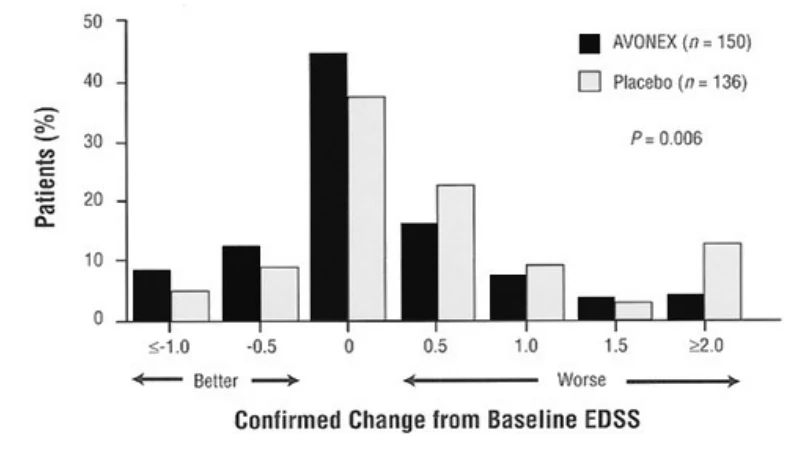
The distribution of confirmed EDSS change from study entry (baseline) to the end of the study is shown in Figure 2. There was a statistically significant difference between treatment groups in confirmed change for patients with at least 2 scheduled visits (136 placebo-treated and 150 patients treated with AVONEXTM; p = 0.006; see Table 5). Confirmed EDSS change was calculated as the difference between the EDSS score at study entry and 1 of the scores determined at the last 2 scheduled visits. Further analyses using more rigorous measures of progression of disability were performed. When the requirement for sustained EDSS change was increased from 6 months to 1 year, a significant benefit in favour of recipients of AVONEXTM persisted (p = 0.002). When treatment failure was defined as 2.0 points or greater increase in EDSS sustained for 6 months, 18.3% of placebo-treated patients worsened compared to 6.1% of patients treated with AVONEX. Additionally, significantly fewer recipients of AVONEXTM progressed to EDSS milestones of 4.0 (14% vs. 5%, p = 0.014) or 6.0 (7% vs. 1%, p = 0.028).
The rate and frequency of exacerbations were determined as secondary outcomes (see Table 5). Treatment with AVONEXTM significantly decreased the frequency of exacerbations in patients who were enrolled in the study for at least 2 years, from 0.90 in the placebo-treated group to 0.61 in the group treated with AVONEXTM (p = 0.002). This represents a 32% reduction in the annual exacerbation rate. The percent of exacerbation-free patients was 38% (p = 0.03) in the group treated with AVONEXTM.
Additionally, placebo-treated patients were twice as likely to have three or more exacerbations during the study when compared to patients treated with AVONEXTM (32% vs. 14%).
Figure 2 – Confirmed EDSS Change from Study Entry to End of Study
Gd-enhanced and T2-weighted (proton density) MRI scans of the brain were obtained in most patients at baseline and at the end of 1 and 2 years of treatment. Gd-enhancing lesions seen on brain MRI scans represent areas of breakdown of the blood brain barrier thought to be secondary to inflammation. Patients treated with AVONEXTM demonstrated significantly lower Gd-enhanced lesion number after 1 and 2 years of treatment (p ≤ 0.05; see Table 4). The mean number of Gd-enhanced lesions for patients treated with AVONEXTM was 3.2 at baseline and 0.8 at Year 2, compared to 2.3 at baseline and 1.6 at Year 2 for the placebo-treated patients. The volume of Gd-enhanced lesions was also analyzed and showed similar treatment effects (p = 0.03). Percentage change in T2-weighted lesion volume from study entry to Year 1 was significantly lower in patients treated with AVONEXTM than placebo-treated patients (p = 0.02). A significant difference in T2-weighted lesion volume change was not seen between study entry and Year 2. Treatment with AVONEXTM resulted in a significant decrease in the number of active (new and enlarging) T2 lesions over 2 years (p = 0.002).
Twenty-three of the 301 patients (8%) discontinued treatment prematurely. Of these, 1 patient treated with placebo (1%) and 6 patients treated with AVONEXTM (4%) discontinued treatment due to adverse events. Of these 23 patients, 13 remained on study and were evaluated for clinical endpoints. A summary of the effects of AVONEXTM on the primary and major secondary endpoints of this study is presented in Table 5.
Table 5 - Results of study 1 in Relapsing MS
| Primary Endpoints | AVONEXTM 30 μg | Placebo | p-value |
| Time to sustained progression in disability1 | See figure 1 n = 158 | See figure 1 n= 143 | p = 0.022 |
| Percentage of patients progressing in disability at 2 years (Kaplan-Meier estimate)a | 21.9% | 34.9% | |
| Secondary Endpoints | AVONEXTM 30 μg | Placebo | p-value |
1 Patient data included in this analysis represent variable periods of time on study.
2 Analyzed by Mantel-Cox (logrank) test.
Disability Mean confirmed change in EDSS from study entry to end of study | 0.20 n= 150 | 0.50 n= 136 | p=0.0063 |
Percentage of exacerbations for patients completing 2 years No. of exacerbations 0 1 2 3 ≥ 4 Percentage of patients exacerbation-free | n = 85 38% 31% 18% 7% 7% 38% | n = 87 26% 30% 11% 14% 18% 26% | p=0.03c p=0.104 |
MRI Number of Gd-enhanced lesions: At study entry Year 1 Year 2 | Mean Median Range 3.2 1.0 0-56 (n= 141) 1.0 0 0-28 (n = 134) 0.8 0 0-13 (n= 83) | Mean Median Range 2.3 1.0 0-23 (n= 132) 1.6 0 0-22 (n= 123) 1.6 0 0-34 (n = 82) | p= 0.02c p= 0.05c |
3 Analyzed by Mann-Whitney rank-sum test
4 Analyzed by Cochran-Haenszel test
T2 lesion volume: % change from study entry to Year 1 (median) % change from study entry to Year 2 (median) Median number of new and enlarging lesions at Year 2 | -13.1% (n=123) -13.2% (n= 81) 2.0 (n = 78) | -3.3% (n=116) -6.5% (n = 83) 3.0 (n = 80) | p= 0.02c p=0.36c p=0.0025 |
Two further analyses were carried out on a subgroup of patients that completed the two years of the pivotal study. The first was a retrospective MRI analysis to assess brain atrophy using the brain parenchymal fraction, and the second was a prospective analysis to assess cognitive dysfunction by using both a Comprehensive, and Brief Neuropsychological Battery of parameters. The purpose of these analyses was to assess the effects of AVONEXTM on brain atrophy, and cognitive dysfunction.
During the second year, the results indicated that in these cohorts of patients, there appears to be a treatment-related effect reaching statistical significance. Compared to the placebo arm, the group treated with AVONEXTM had delayed worsening in brain atrophy (n=140 (placebo: 72; AVONEXTM 68) p=0.03), Information Processing/Memory (n=137 (placebo 70; AVONEXTM 67) p=0.011), and in the paced auditory serial addition test (PASAT) (n= 148 (placebo 71; AVONEXTM 77) p=0.023). The clinical correlation and significance of these results require further assessment.
Effects in delaying onset of clinically definite MS
Patients who have experienced a single episode of optic neuritis, incomplete transverse myelitis, or brainstem/cerebellar syndrome are at high risk of developing clinically definite MS (CDMS) when there are features suggestive of multiple sclerosis on brain MRI scan. A randomized, double-blind, multicentre study was conducted to determine whether AVONEXTM, when compared to placebo, could delay the onset of CDMS (as determined by a second demyelinating event) in high risk patients. In this study, 383 patients who had recently experienced an isolated demyelinating event involving the optic nerve, spinal cord, or brainstem/cerebellum, and who had at least two subclinical multiple sclerosis-like lesions on brain MRI, received either 6 million IU (30 µg) AVONEXTM (n = 193) or placebo (n = 190) by IM injection once weekly. All patients were initially treated with corticosteroids. Patients were then enrolled into the study over a two year period and followed for up to three years or until they developed CDMS or withdrew from the study. Among subjects who completed the study without developing CDMS, the mean follow-up period was 30.9 ± 4.9 months in the group treated with AVONEXTM and 30.6 ± 5.1 months in the placebo group. Sixteen percent of subjects on AVONEXTM and 14% of subjects on placebo withdrew from the study for a reason other than the development of CDMS.
The primary outcome measure was time to development of CDMS. Secondary outcomes were brain MRI measures of the cumulative increase in new pathologic events (number of new or enlarging T2 lesions), the change in overall burden of disease (change in T2 lesion volume compared to baseline),
5 Analyzed by Wilcoxon rank-sum test
and inflammatory activity at the time of the scan (gadolinium-enhancing lesions).
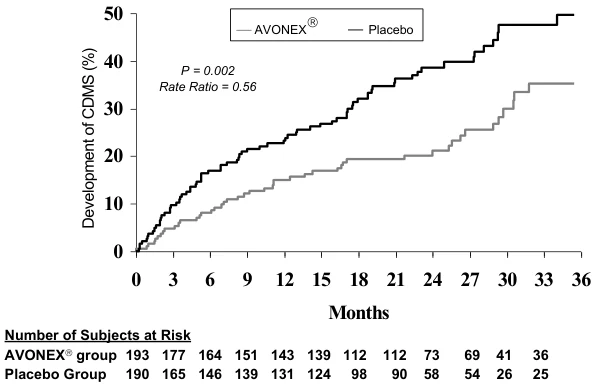
Time to development of CDMS was significantly delayed in patients treated with AVONEXTM compared to placebo (p = 0.002). The rate of developing CDMS was 44% lower in the group treated with AVONEXTM than in the placebo-treated group (rate ratio = 0.56, 95% confidence interval = 0.38 to 0.81). After adjusting for age, type of presenting event, T2 lesion volume, and the presence of Gd-enhancing lesions, the treatment effect appeared stronger (adjusted rate ratio = 0.49, 95 percent confidence interval = 0.33 to 0.73, p < 0.001). Kaplan-Meier plots of these data are presented in Figure 3.
Figure 3 – Onset of Clinically Definite MS by Time on Study (Kaplan-Meier Methodology)
The increment in brain MRI T2 lesion volume was less in the group treated with AVONEXTM than in the placebo-treated group at 6 months (p < 0.001), 12 months (p = 0.004), and 18 months (p < 0.001) (Table 5). At 6, 12, and 18 months, there were also fewer new or enlarging T2 lesions (p = 0.01, < 0.001, and <0.001 respectively) and fewer new Gd-enhancing lesions (p = 0.03, 0.02, and <0.001 respectively) in the group treated with AVONEXTM than in the placebo-treated group (Table 5). At 18 months, the group treated with AVONEXTM compared to the placebo group showed 91% (p<0.001) less increase in the median T2 lesion volume, a 58% (p < 0.001) decrease in the mean number of new or enlarging T2 lesions, and a 71% (p < 0.001) decrease in the mean number of Gd-enhancing lesions (Table 6).
44%
| Table 6 – Brain MRI Data According to Treatment Group | |||||||||||||||||||||||||||||
| 6 Months | 12 Months | 18 Months | |||||||||||||||||||||||||||
| AVONEXTM | Placebo | AVONEXTM | Placebo | AVONEXTM | Placebo | ||||||||||||||||||||||||
| n = 145 | n = 145 | n=134 | n = 120 | n = 119 | n = 109 | |||||||||||||||||||||||
| Actual Change (mm3) Median (25th%, 75th%) | -123 (-653, 254) | 40 (-175, 624) | 102 (-375, 573) | 214 (-45, 1238) | 28 (-576, 397) | 313 (5, 1140) | |||||||||||||||||||||||
| P- value* | < 0.001 | 0.004 | < 0.001 | ||||||||||||||||||||||||||
| Percentage Change Median (25th%, 75th%) | -10 (-27, 14) | 5 (-13, 23) | 9 (-22, 29) | 17 (-6, 44) | 1 (-24, 29) | 16 (0, 53) | |||||||||||||||||||||||
| P- value* | < 0.001 | 0.025 | < 0.001 | ||||||||||||||||||||||||||
| Number of New or Enlarging T2 Lesions | n = 165 | n = 152 | n=149 | n = 126 | n = 132 | n = 119 | |||||||||||||||||||||||
| 0N (%) | 82 (50) | 63 (41) | 65 (44) | 32 (25) | 62 (47) | 22 (18) | |||||||||||||||||||||||
| 1-3 | 60 (36) | 46 (30) | 56 (38) | 47 (37) | 41 (31) | 47 (40) | |||||||||||||||||||||||
| >4 | 23 (14) | 43 (28) | 28 (18) | 47 (37) | 29 (22) | 50 (42) | |||||||||||||||||||||||
| Mean (SD) | 1.51 (2.73) | 2.75 (4.31) | 2.08 (3.27) | 4.03 (4.97) | 2.13 (3.19) | 4.97 (7.71) | |||||||||||||||||||||||
| P-value* | 0.01 | < 0.001 | < 0.001 | ||||||||||||||||||||||||||
| Number of Gd-enhancing Lesions | n = 165 | n = 152 | n=147 | n = 124 | n = 134 | n = 114 | |||||||||||||||||||||||
| 0N (%) | 115 (70) | 93 (61) | 100 (68) | 71 (57) | 109 (81) | 66 (58) | |||||||||||||||||||||||
| 1 | 27 (16) | 16 (11) | 28 (19) | 20 (16) | 13 (10) | 23 (20) | |||||||||||||||||||||||
| >1 | 23 (14) | 43 (28) | 19 (13) | 33 (27) | 12 (9) | 25 (22) | |||||||||||||||||||||||
| Mean (SD) | 0.87 (2.28) | 1.49 (3.14) | 0.73 (2.01) | 1.63 (3.81) | 0.45 (1.46) | 1.36 (3.60) | |||||||||||||||||||||||
| 0.03 | 0.02 | < 0.001 |
*P value from a Mann-Whitney rank-sum test
Other Studies
Titration study: The effect of titrating AVONEXTM on the severity and incidence of flu-like symptoms was investigated in a randomized, dose-blinded study in healthy volunteers over 8 weeks. Subjects were randomized to receive 30 μg of AVONEXTM once weekly (No Titration), a titrated dose starting at ¼ of the full dose, gradually increasing in ¼ dose increments over 3 weeks (Fast Titration), or a titrated dose starting at ¼ of the full dose, gradually increasing in ¼ dose increments every two weeks over 6 weeks (Slow Titration). All subjects received 650 mg of oral acetaminophen within 1 hour, at 4 to 6 hours, 8 to 10 hours and 12 to 15 hours post-injection.
The effects of titration were observed from the first week and were sustained over the 8 weeks of the study. Results of the primary analysis of change in FLS total severity score from pre-injection to 4 to 6 hours post injection over 8 weeks are provided in Table 7 below.
Table 7 – Least Square (LS) Means of Flu-like Symptoms Score Change from Pre-injection Over 8 Weeks
| No Titration | Fast Titration (full dose at Week 4) | Slow Titration (full dose at Week 7) | |
| Number of subjects | 78 | 78 | 78 |
| 4 to 6 hours post-injection | |||
| LS means | 0.465 [0.377, 0.552] | 0.152 [0.063, 0.240] | 0.260 [0.171, 0.349] |
| Difference of LS means [95% CI]b | -0.313 [-0.437, -0.189] | -0.205 [-0.329, -0.081] |
a based on observed data.
b LS means [95% CI] from Mixed model analyzing the overall treatment difference on the repeated measures over 8 weeks. The difference of LS means was estimated using No titration group as the control group.
The incidence of FLS (total score ≥2 over pre-injection) at 4-6 hours post-injection, at Weeks 1, 5 and 8 respectively, was:
- No Titration: 21% (16/78), 4% (3/74) and 12% (8/68).
- Fast Titration: 3% (2/78), 0% (0/70) and 3% (2/64).
- Slow Titration: 0% (0/78), 6% (4/69) and 11% (7/63).
In the Titration Study, the incidence of treatment-emergent adverse events was slightly higher for the No titration group (78/78, 100%) compared to Fast (74/78, 95%) and Slow titration groups (73/78, 94%), although the types of AEs reported were similar across the three groups. The most frequently reported AEs were headache, flu-like symptoms (which includes myalgia, pyrexia, chills and fatigue), body temperature increase, injection site pain, and nausea. Severe AEs were reported in 13%, 12% and 5% of patients in the No Titration, Fast Titration and Slow Titration groups, respectively. There were no SAEs reported.
15 MICROBIOLOGY
No microbiological information is required for this drug product.
16 NON-CLINICAL TOXICOLOGY
General Toxicology:
Animal Pharmacodynamics
At interferon beta-1a dose levels of 1.25, 5.0 and 50 µg/kg (0.25, 1.0 and 10 MU/kg), serum levels were 20 to 80 units of activity per mL (U/mL), 160 to 320 U/mL and about 3,200 to 6,400 U/mL, respectively. In vivo pharmacology was monitored in the repeat dose tests in rhesus monkeys with interferon beta-1a by measuring serum neopterin and 2’,5’-OAS levels. These markers appear to be two of the most sensitive indicators of interferon beta pharmacological activity.
Both neopterin and 2’,5’-OAS serum levels increased in a dose-related manner. Neopterin and 2’,5’-OAS levels appeared to increase at interferon beta-1a doses of 1.25 µg/kg (0.25 MU/kg) and above. The elevations in pharmacological markers corresponded with serum interferon beta antiviral activity levels as measured in a human cell cytopathic effect assay. The data indicated that the rhesus monkey is responsive to interferon beta-1a in vivo.
Single Dose Pharmacokinetics
Single doses of interferon beta-1a were administered to rhesus monkeys. Peak serum activity levels and systemic exposure, measured as area under the concentration versus time curve (AUC), indicated that interferon beta-1a was systemically absorbed following SC and IM injection. The apparent bioavailability with these routes of administration was variable but nearly complete. The volume of distribution generally ranged between 0.5 and 1.0 L/kg; the apparent half-life of activity in serum was 1.0 to 1.5 hours. Route of administration appeared to influence time to peak serum levels (Tmax); following IM administration, the Tmax range was 1 to 4 hours; following SC administration, the range was 2 to 8 hours. With respect to peak serum activity levels (Cmax) and AUC, a general overlap in parameter values was observed between SC and IM routes of administration.
These results demonstrate that in rhesus monkeys, administration of interferon beta-1a by the SC route yields serum activity profiles similar to those produced following IM injection (in distinction, in humans, higher levels are seen after IM injection). Absolute bioavailability following SC and IM administration was high and appeared to reflect a nearly complete absorption. Dose-dependent serum activity levels were observed at SC doses of 5.0 µg/kg and 50 µg/kg. At a dose level of 5.0 µg/kg (SC or IM), peak serum activity levels were approximately 10- to 15-fold higher in monkeys than in humans who had received the intended therapeutic IM dose of 30 µg (6 MU) interferon beta-1a.
Repeat Dose Pharmacokinetics and Toxicokinetics
In general, following every other day repeat SC administration to rhesus monkeys, serum activity levels of interferon beta-1a were similar or greater than the single dose results. Serum activity levels at 4 hours post dose were dose dependent, consistent within dose level and independent of sex. Serum activity levels increased 2- to 3-fold with every other day repeat administration. Since the absorption and elimination half-life were each less than 6 hours, such increases in serum activity level would not have been anticipated, suggesting that the disposition of interferon beta-1a in monkeys may have been nonlinear. However, these observations occurred at dose levels and dose frequencies well in excess of human therapy and, hence, may not be clinically relevant.