Product Monograph - Betaseron
RECENT MAJOR LABEL CHANGES
| 7 WARNINGS AND PRECAUTIONS | 12/2022 |
TABLE OF CONTENTS
Sections or subsections that are not applicable at the time of authorization are not listed.
RECENT MAJOR LABEL CHANGES ..................................................................................................... 2
TABLE OF CONTENTS ....................................................................................................................... 2
PART I: HEALTH PROFESSIONAL INFORMATION .............................................................................. 4
1 INDICATIONS ................................................................................................................................ 4
1.1 Pediatrics .............................................................................................................................. 4
1.2 Geriatrics ............................................................................................................................... 4
2 CONTRAINDICATIONS .................................................................................................................. 4
4 DOSAGE AND ADMINISTRATION .................................................................................................. 4
4.1 Dosing Considerations ........................................................................................................... 4
4.2 Recommended Dose and Dosage Adjustment ....................................................................... 4
4.3 Reconstitution ....................................................................................................................... 5
4.4 Administration ...................................................................................................................... 5
4.5 Missed Dose .......................................................................................................................... 5
5 OVERDOSAGE .............................................................................................................................. 6
6 DOSAGE FORMS, STRENGTHS, COMPOSITION AND PACKAGING .................................................. 6
7 WARNINGS AND PRECAUTIONS ................................................................................................... 6
7.1 Special Populations ............................................................................................................. 11
7.1.1 Pregnant Women .................................................................................................................... 11
7.1.2 Breast-feeding ......................................................................................................................... 11
7.1.3 Pediatrics ................................................................................................................................ 12
7.1.4 Geriatrics ................................................................................................................................. 12
8 ADVERSE REACTIONS ................................................................................................................. 12
8.1 Adverse Reaction Overview ................................................................................................. 12
8.2 Clinical Trial Adverse Reactions ........................................................................................... 12
8.3 Less Common Clinical Trial Adverse Reactions ..................................................................... 40
8.4 Abnormal Laboratory Findings: Hematologic, Clinical Chemistry and Other Quantitative Data Clinical Trial Findings ...................................................................................................... 41
8.5 Post-Market Adverse Reactions ........................................................................................... 42
9 DRUG INTERACTIONS ................................................................................................................. 43
9.2 Drug Interactions Overview ................................................................................................. 43
9.3 Drug-Behavioural Interactions ............................................................................................. 43
9.4 Drug-Drug Interactions ........................................................................................................ 43
9.5 Drug-Food Interactions ........................................................................................................ 43
9.6 Drug-Herb Interactions ........................................................................................................ 43
9.7 Drug-Laboratory Test Interactions ....................................................................................... 44
10 CLINICAL PHARMACOLOGY ...................................................................................................... 44
10.1 Mechanism of Action ......................................................................................................... 44
10.3 Pharmacokinetics .............................................................................................................. 44
11 STORAGE, STABILITY AND DISPOSAL ........................................................................................ 44
12 SPECIAL HANDLING INSTRUCTIONS .......................................................................................... 45
PART II: SCIENTIFIC INFORMATION ............................................................................................... 45
13 PHARMACEUTICAL INFORMATION ........................................................................................... 45
14 CLINICAL TRIALS ....................................................................................................................... 45
14.1 Clinical Trials by Indication ................................................................................................ 46
15 MICROBIOLOGY ....................................................................................................................... 59
16 NON-CLINICAL TOXICOLOGY ..................................................................................................... 59
PATIENT MEDICATION INFORMATION .......................................................................................... 60
PART I: HEALTH PROFESSIONAL INFORMATION
1 INDICATIONS
BETASERON (interferon beta-1b) is indicated for:
- the treatment of patients with a single demyelinating event accompanied by at least two clinically silent lesions typical of multiple sclerosis (MS) on magnetic resonance imaging, to delay progression to definite MS. Before initiating treatment with Betaseron, alternate diagnoses should first be excluded.
- the reduction of the frequency of clinical exacerbations in ambulatory patients with relapsing-remitting multiple sclerosis. Relapsing-remitting MS is characterized by recurrent attacks of neurologic dysfunction followed by complete or incomplete recovery.
- the slowing of progression in disability and the reduction of the frequency of clinical exacerbations in patients with secondary-progressive multiple sclerosis.
The safety and efficacy of Betaseron in primary progressive MS have not been evaluated.
1.1 Pediatrics
No data are available to Health Canada; therefore, Health Canada has not authorized an indication for pediatric use.
1.2 Geriatrics
Geriatrics (> 65 years of age): The safety and efficacy of Betaseron in patients > 65 years of age has not been established.
2 CONTRAINDICATIONS
Betaseron is contraindicated in patients:
- who are hypersensitive to natural or recombinant interferon beta, albumin human or to any other ingredient in the formulation, including any non-medicinal ingredient, or component of the container (see 6 DOSAGE FORMS, STRENGTHS, COMPOSITION AND PACKAGING).
- with decompensated liver disease (see 7 WARNINGS AND PRECAUTIONS, Hepatic/Biliary/Pancreatic).
4 DOSAGE AND ADMINISTRATION
4.1 Dosing Considerations
- FOR SUBCUTANEOUS USE ONLY
- Betaseron (interferon beta-1b) should only be prescribed by (or following consultation with) clinicians who are experienced in the diagnosis and management of multiple sclerosis.
- Review 7 WARNINGS AND PRECAUTIONS, Information to be Provided to the Patient with the patient.
4.2 Recommended Dose and Dosage Adjustment
The recommended dose of Betaseron for both relapsing-remitting and secondary-progressive MS patients is 0.25 mg (8 MIU) injected subcutaneously every other day. Limited data regarding the activity of a lower dose in relapsing-remitting MS are presented in the 14 CLINICAL TRIALS section.
Dose titration was used at the start of treatment in the clinically isolated syndrome and secondary-progressive MS studies in order to increase the tolerability of Betaseron.
In the study in patients with a single clinical event suggestive of MS (clinically isolated syndrome), dosage was increased as shown in Table 1.
Table 1: Schedule for Dose Titrationa
| Treatment Day | Dose | Volume |
|---|---|---|
| 1, 3, 5 | 0.0625 mg (2 MIU) | 0.25 mL |
| 7, 9, 11 | 0.125 mg (4 MIU) | 0.5 mL |
| 13, 15, 17 | 0.1875 mg (6 MIU) | 0.75 mL |
| ≥ 19 | 0.250 mg (8 MIU) | 1.0 mL |
- a Titration scheme as used in the study in patients with a single clinical event suggestive of multiple sclerosis. The titration period may be adjusted if any significant adverse reaction occurs.
In the secondary-progressive MS study, patients initiated treatment with half the dose (4 MIU SC every other day) for a period of 2 weeks prior to escalating to the recommended dose of 8 MIU (SC every other day). Efficacy of treatment for longer than 2 years has not been substantially demonstrated in relapsing-remitting multiple sclerosis.
Health Canada has not authorized an indication for pediatric use.
4.3 Reconstitution
To reconstitute lyophilized Betaseron for injection, use the vial adapter to inject the entire contents of the prefilled diluent syringe containing Sodium Chloride 0.54% Solution into the Betaseron vial. Gently swirl the vial of Betaseron to dissolve the drug completely; do not shake. Inspect the reconstituted product visually and discard the product before use if it contains particulate matter or is discolored.
| Vial Content | Volume of Diluent to be Added to Vial | Approximate Available Volume | Nominal Concentration per mL |
|---|---|---|---|
0.3 mg interferon beta-1b as lyophilized powder | 1.2 mL Sodium Chloride 0.54% Solution | 1.2 mL | 0.25 mg/mL |
In the absence of compatibility studies, Betaseron should not be mixed with other medicinal products except for the supplied diluent.
4.4 Administration
Subcutaneous injection: Withdraw 1 mL of reconstituted solution from the vial back into the syringe, fitted with a ½-inch needle, and inject the solution subcutaneously. Sites for self-injection include arms, abdomen, buttocks, and thighs. All components are suitable for single use only; unused portions should be discarded (see PATIENT MEDICATION INFORMATION, How to take Betaseron section for self-injection procedure.).
4.5 Missed Dose
If an injection is missed, it should be given as soon as feasible. The next injection should be given 2 days later.
5 OVERDOSAGE
Accidental or intentional overdose may increase the likelihood of the occurrence of known adverse reactions, possibly at a greater severity. There is no specific antidote in the event of an overdose.
| For management of a suspected drug overdose, contact your regional poison control centre. |
6 DOSAGE FORMS, STRENGTHS, COMPOSITION AND PACKAGING
To help ensure the traceability of biologic products, including biosimilars, health professionals should recognise the importance of recording both the brand name and the non-proprietary (active ingredient) name as well as other product-specific identifiers such as the Drug Identification Number (DIN) and the batch/lot number of the product supplied.
Table 2: Dose forms, strengths, composition and packaging
| Route of Administration | Dosage Form / Strength/ Composition | Nonmedicinal Ingredients |
|---|---|---|
| Subcutaneous | Lyophilized powder: 0.3 mg of interferon beta-1b/single-use vial Diluent: 1.2 mL of sodium chloride 0.54% solution/single-use syringe | Albumin human, Mannitol USP |
After reconstitution with diluent, each mL of solution contains 0.25 mg (8 MIU) interferon beta-1b, 13 mg Albumin Human USP, and 13 mg Mannitol USP.
Betaseron (interferon beta-1b) is presented in single-use vials of lyophilized powder containing 0.3 mg (9.6 MIU) interferon beta-1b, 15 mg albumin human USP and 15 mg mannitol USP.
Betaseron is supplied in a carton containing 15 single-use carton packs. Each single-use pack contains the necessary components to prepare and inject a single dose of Betaseron: 1 vial of medication, 1 prefilled diluent syringe (containing 1.2 mL of Sodium Chloride 0.54% solution), and 1 vial adapter with attached 30 gauge, ½" needle.
The single-use carton can only be used with the BETAJECT® Lite, BETACOMFORT® or BETACONNECT® autoinjector.
7 WARNINGS AND PRECAUTIONS
General
Patients should be informed of the most common adverse reactions associated with interferon beta, including flu-like syndrome (see 8 ADVERSE REACTIONS). These symptoms tend to be most prominent at the initiation of therapy and may decrease in frequency and severity with continued treatment.
Flu-like symptoms are not uncommon following initiation of therapy with Betaseron. In the controlled MS clinical trials, acetaminophen and nonsteroidal anti-inflammatory drugs (NSAIDs) were permitted for relief of fever or myalgia.
Cardiovascular
Patients with pre-existing significant cardiac disease such as congestive heart failure, coronary artery disease, or arrhythmias should be monitored closely for worsening of their clinical conditions. While there is no evidence of a direct cardiotoxic potential of Betaseron, flu-like symptoms, which are commonly associated with beta interferons, exert cardiac stress through fever, chills, and tachycardia. This may aggravate cardiac symptoms in patients with pre-existing significant cardiac disease.
Cases of cardiomyopathy have been reported. If this occurs, and a relationship to Betaseron (interferon beta-1b) is suspected, treatment should be discontinued.
Dependence/Tolerance
No evidence or experience suggests that abuse or dependence occurs with Betaseron therapy; however, the risk of dependence has not been systematically evaluated.
Endocrine and Metabolism
Cases of thyroid dysfunction (hyper- as well as hypothyroidism) associated with the use of Betaseron have been reported.
Exercise caution when administering Betaseron to patients with pre-existing thyroid disorders. Patients treated with Betaseron should be carefully monitored for evidence of thyroid dysfunction (most often presenting as hypothyroidism or hyperthyroidism), and development of thyroid auto-antibodies. Thyroid testing is recommended at baseline and if abnormal, every 6 to 12 months following initiation of therapy. If normal, routine testing is not required but should be performed if clinical findings of thyroid dysfunction appear.
General Disorders and Administration Site Conditions
Overall, 80% of patients in the 2 controlled clinical trials reported injection site reactions at 1 or more times during therapy. Postmarketing experience has been consistent with this finding, with infrequent reports of injection site necrosis.
The onset of injection site necrosis usually appears early in therapy with most cases reported to have occurred in the first 2 to 3 months of therapy. The number of sites where necrosis has been observed is variable.
Rarely has the area of injection site necrosis extended to subcutaneous fat or fascia. Response to treatment of injection site necrosis with antibiotics and/or steroids has been variable. In some of these patients elective debridement and, less frequently, skin grafting took place to facilitate healing, which could take from 3 to 6 months. If the patient has multiple lesions, Betaseron should be discontinued until healing has occurred. Patients with single lesions may continue on Betaseron provided the necrosis is not too extensive, as some patients have experienced healing of injection site necrosis while on Betaseron.
Injection site abscesses and cellulitis have been reported in the postmarketing setting with use of interferon beta products including Betaseron. Some cases required treatment with hospitalization for surgical drainage and intravenous antibiotics.
The nature and severity of all reported reactions should be carefully assessed.
Hepatic/Biliary/Pancreatic
Asymptomatic elevations of serum transaminases, in most cases mild and transient, occurred very commonly in patients treated with Betaseron during clinical trials. It is recommended that liver function testing (eg, ASAT [SGOT], ALAT [SGPT], and Gamma-GT) occur at baseline and then every month for the first 6 months of treatment and at 6-month intervals thereafter. Dose reduction or discontinuation of therapy should be considered if alanine aminotransferase (ALAT) levels increase 5 times above the upper limit of normal.
Postmarket cases of serious hepatic injury, including autoimmune hepatitis, hepatitis, and hepatic failure, have been reported with interferon beta treatment for multiple sclerosis. The most severe events often occurred in patients exposed to other drugs or substances known to be associated with hepatotoxicity or in the presence of comorbid medical conditions (eg, metastasizing malignant disease, severe injection and sepsis, alcohol abuse).
Interferon beta therapy should be initiated with caution in patients with a history of significant liver disease or alcohol abuse and in patients with clinical evidence of acute liver disease.
Caution must be exercised when prescribing drugs with documented hepatotoxicity to patients on interferon beta therapy for multiple sclerosis. Treatment with Betaseron should be stopped if icterus or other clinical symptoms of hepatic dysfunction appear.
Pancreatitis has been observed with Betaseron use, often associated with hypertriglyceridemia.
Pancreatitis should be treated as per appropriate clinical management and in accordance with clinical practice guidelines.
Hypersensitivity
Serious hypersensitivity reactions (severe acute reactions such as bronchospasm, anaphylaxis and urticaria) may occur. Severe reactions should be treated, and Betaseron should be discontinued.
Immune
The administration of cytokines to patients with pre-existing monoclonal gammopathy has been associated with the development of systemic capillary leak syndrome with shock-like symptoms and fatal outcome.
Immunogenicity
As with all therapeutic proteins, there is a potential for immunogenicity. Serum samples in controlled clinical trials were collected every 3 months for monitoring of development of antibodies to Betaseron.
In the different controlled clinical trials of relapsing-remitting MS (RRMS) and secondary-progressive MS (SPMS) patients, between 23% and 41% of the patients developed serum interferon beta-1b neutralizing activity confirmed by at least two consecutive positive titers; of these patients, between 43% and 55% converted to a stable antibody negative status (based on 2 consecutive negative titers) during the subsequent observational period of the respective study (see 14.1 Clinical Trials by Indication, Relapsing-Remitting MS; and Secondary-Progressive MS).
In these studies, the development of neutralizing activity was associated with a reduction in clinical efficacy only with regard to relapse activity. Some analyses suggest that this effect might be larger in patients with higher titre levels of neutralizing activity.
In the study of patients with a single clinical event suggestive of multiple sclerosis, neutralizing antibody titres were measured every 6 months. Neutralizing activity (titre ≥ 20 NU/mL) was observed at least once in 32% (89) of the patients who were initially randomized to Betaseron; of these, 60% (53) returned to negative status based on the last available assessment within the 5-year period. Over this period, the development of neutralizing activity was associated with a significant increase in newly active lesions and T2 lesion volume on magnetic resonance imaging.
It has been demonstrated in vitro that Betaseron cross reacts with natural interferon beta. However, this has not been investigated in vivo and its clinical significance is uncertain.
There are limited, inconclusive data on patients who have developed neutralizing activity and have stopped Betaseron therapy.
The decision to continue or discontinue treatment should be based on all aspects of the patient's disease status rather than on neutralizing activity status.
Monitoring and Laboratory Tests
The following laboratory tests are recommended prior to initiating Betaseron therapy and at periodic intervals thereafter: thyroid function test, hemoglobin, complete and differential white blood cell counts, platelet counts and blood chemistries including liver function tests. It is recommended that liver function testing occur at baseline every month for the first 6 months of treatment and at 6-month intervals thereafter. Dose reduction or discontinuation of therapy should be considered if alanine aminotransferase (ALAT) levels increase 5 times above the upper limit of normal. A pregnancy test, chest roentgenogram and ECG should also be performed prior to initiating Betaseron therapy. Patients with anemia, thrombocytopenia, and leukopenia (alone or in any combination) may require more intensive monitoring of complete blood cell counts, with differential and platelet counts.
In the controlled MS trials, patients were monitored every 3 months. The study protocol stipulated that Betaseron therapy be discontinued in the event the absolute neutrophil count fell below 750/mm3. When the absolute neutrophil count had returned to a value greater than 750/mm3, therapy could be restarted at a 50% reduced dose. No patients were withdrawn or dose-reduced for neutropenia or lymphopenia. Similarly, if ASAT/ALAT (SGOT/SGPT) levels exceeded 10 times the upper limit of normal, or if the serum bilirubin exceeded 5 times the upper limit of normal, therapy was discontinued. In each instance, hepatic enzyme abnormalities returned to normal following discontinuation of therapy. When measurements had decreased to below these levels, therapy could be restarted at a 50% dose reduction, if clinically appropriate. Dose was reduced in 2 patients due to increased liver enzymes; 1 continued on treatment and 1 was ultimately withdrawn.
In the placebo-controlled study conducted in patients with a single clinical event suggestive of MS, 5 Betaseron patients (1.7%) were withdrawn due to increased hepatic enzymes (ASAT/ALAT), 2 of them after a dose reduction.
Information to be Provided to the Patient
Patients should be informed of the potential risk of liver injury with interferon beta therapy, and of the requirement for frequent laboratory testing for liver function (see 7 WARNINGS AND PRECAUTIONS, Monitoring and Laboratory Tests). Patients should be informed of the symptoms suggesting liver dysfunction, such as jaundice, malaise, fatigue, nausea, vomiting, abdominal pain, dark urine, and pruritus, and advised to consult their physician immediately if such symptoms arise.
Patients should be instructed in injection techniques to assure the safe self-administration of Betaseron (see below and PATIENT MEDICATION INFORMATION).
Instruction on self-injection technique and procedures: It is recommended that the first injection be administered by, or under the direct supervision of, a physician. Appropriate instructions for reconstitution of Betaseron and self-injection using aseptic techniques should be given to the patient. A careful review of PATIENT MEDICATION INFORMATION is also recommended.
Patients should be cautioned against the re-use of needles or syringes and instructed in safe disposal procedures. Information on how to acquire a puncture-resistant container for disposal of used needles and syringes should be given to the patient along with instructions for safe disposal of full containers.
To minimize the risk of injection site infection and injection site necrosis, patients should be advised to use an aseptic injection technique and rotate the injection sites with each dose. Patient understanding and use of aseptic self-injection technique and procedures should be periodically re-evaluated.
Patients should be cautioned not to change the dosage or the schedule of administration without medical consultation.
Awareness of adverse reactions: Patients should be advised about the common adverse events associated with the use of Betaseron, particularly injection site reactions and the flu-like symptom complex (see 7 WARNINGS AND PRECAUTIONS, General and 8 ADVERSE REACTIONS).
Patients should be cautioned to report depression or suicidal ideation (see 7 WARNINGS AND PRECAUTIONS, Psychiatric).
Patients should be advised about the abortifacient potential of Betaseron (see 7 WARNINGS AND PRECAUTIONS, 7.1.1 Pregnant Women).
Nephrotic Syndrome
Cases of nephrotic syndrome with different underlying nephropathies including collapsing focal segmental glomerulosclerosis (FSGS), minimal change disease (MCD), membranoproliferative glomerulonephritis (MPGN) have been reported during treatment with interferon-beta products. Events were reported at various time points during treatment and may occur after several years of treatment with interferon-beta. Periodic monitoring of early signs or symptoms, e.g. edema, proteinuria and impaired renal function is recommended, especially in patients at higher risk of renal disease. Prompt treatment of nephrotic syndrome is required and discontinuation of treatment with Betaseron should be considered.
Neurologic
Cases of seizures have been reported with interferon beta therapy. Betaseron should be administered with caution to patients with a history of seizure disorders.
This product contains human albumin and hence carries an extremely remote risk for transmission of viral diseases. A theoretical risk for transmission of Creutzfeld-Jakob disease (CJD) is also considered extremely remote. No cases of transmission of viral diseases or CJD have ever been identified for albumin.
The effect of Betaseron on the ability to drive and use machinery has not been investigated. Central nervous system-related adverse events associated with the use of Betaseron might influence the ability to drive and use machines in susceptible patients.
Psychiatric
In the RR-MS clinical trial, 1 suicide and 4 attempted suicides were observed among 372 study patients during a 3-year period. All 5 patients received Betaseron (3 in the 0.05 mg [1.6 MIU] group and 2 in the 0.25 mg [8 MIU] group). There were no attempted suicides in patients on study who did not receive Betaseron. In the SP-MS study there were 5 suicide attempts in the placebo group and 3 in the Betaseron group including 1 patient in each group who committed suicide.
Suicidal ideation is known to occur with increasing frequency in the MS population. Patients treated with Betaseron should be informed that depression and suicidal ideation may be a side effect of the treatment and should report these symptoms immediately to the prescribing physician. Patients exhibiting depression should be monitored closely and cessation of therapy should be considered.
Reproductive Health: Female and Male Potential
No long term studies on sexual function/reproduction have been conducted. Studies in female rhesus monkeys with normal menstrual cycles, at doses up to 0.33 mg (10.7 MIU)/kg/day (equivalent to 32 times the recommended human dose based on body surface area comparison), showed no apparent adverse effects on the menstrual cycle or on associated hormonal profiles (progesterone and estradiol) when administered over 3 consecutive menstrual cycles. It is not known if animal doses can be extrapolated to human doses. The effects of Betaseron on women with normal menstrual cycles are not known.
Thrombotic Microangiopathy and Hemolytic Anemia
Cases of thrombotic microangiopathy (TMA), manifested as thrombotic thrombocytopenic purpura (TTP) or haemolytic uraemic syndrome (HUS), including fatal cases, have been reported with interferon beta products. Additionally, cases of hemolytic anemia (HA) not associated with TMA, including immune HA, have been reported with interferon beta products, including Betaseron. Life-threatening and fatal cases were reported. Events were reported at various time points during treatment and may occur after several weeks to several years after starting treatment with interferon beta. Early clinical features include thrombocytopenia, new onset hypertension, fever, central nervous system symptoms (e.g. confusion, paresis) and impaired renal function. If clinical features of TMA and / or HA are observed, immediate discontinuation of treatment with Betaseron is recommended. Testing of blood platelet levels, serum lactate dehydrogenase (LDH), schistocytes (erythrocyte fragmentation) on a blood film with a negative Coombs test and renal function is recommended. Prompt treatment of TTP/HUS is required.
7.1 Special Populations
7.1.1 Pregnant Women
There are no controlled clinical studies of Betaseron in pregnant women. The administration of Betaseron during confirmed pregnancy should be avoided, unless clearly needed.
A European registry study collected data on 778 prospective pregnancies in women with MS who were treated with one of five interferon beta medications. The rates of aggregated adverse pregnancy outcomes were in line with reference ranges published in the literature.
Data from a retrospective register-based study in Sweden and Finland have likewise not indicated an increased risk of major congenital anomalies after early pregnancy exposure. However, the duration of exposure during the first trimester was uncertain since data were collected when interferon beta use was contraindicated during pregnancy, and treatment was interrupted when the pregnancy was detected and/or confirmed. Experience with exposure during the second and third trimester was too limited to determine whether exposure affects maternal or fetal health.
Betaseron was not teratogenic at doses up to 0.42 mg (13.3 MIU)/kg/day in rhesus monkeys, but demonstrated dose-related abortifacient activity when administered at doses ranging from 0.028 mg (0.89 MIU)/kg/day (2.8 times the recommended human dose based on body surface area comparison) to 0.42 mg (13.3 MIU)/kg/day (40 times the recommended human dose based on body surface area comparison). It is not known if animal doses can be extrapolated to human doses. Lower doses were not studied in monkeys. Betaseron given to rhesus monkeys on gestation days 20 to 70 did not cause teratogenic effects; however, it is not known if teratogenic effects exist in humans. The risk of spontaneous abortions in pregnant women exposed to interferon beta cannot be evaluated based on the currently available data.
7.1.2 Breast-feeding
No studies have been conducted with Betaseron in lactating women. Limited information available from published literature on the transfer of interferon beta into breast milk suggests that levels of interferon beta excreted in human milk are low. A risk to the nursing infant cannot be excluded.
A decision must be made whether to discontinue breast-feeding or abstain from Betaseron therapy taking into account the benefit and potential risk of breast-feeding for the child and the benefit of therapy for the woman.
7.1.3 Pediatrics
No data are available to Health Canada; therefore, Health Canada has not authorized an indication for pediatric use.
7.1.4 Geriatrics
Geriatrics (> 65 years of age): The safety and efficacy of Betaseron in patients > 65 years of age has not been established.
8 ADVERSE REACTIONS
8.1 Adverse Reaction Overview
Adverse event data were collected from 3 phase III randomized, multicenter, double-blind, placebo-controlled studies in patients with multiple sclerosis (1 study evaluated Betaseron in relapsing-remitting MS (RRMS) patients; 1 study assessed Betaseron in secondary-progressive MS (SPMS) patients; and 1 study evaluated Betaseron in patients with a single clinical event suggestive of MS). The most frequently observed adverse reactions were a flu-like symptom complex (fever, chills, arthralgia, malaise, sweating, headache, or myalgia) and injection site reactions (eg, redness, swelling, discoloration, inflammation, pain, hypersensitivity, infection, necrosis, and nonspecific reactions). The incidence rate of these symptoms decreased over time. The most serious adverse reaction reported are thrombotic microangiopathy (TMA) and hemolytic anemia (HA).
Flu-like symptoms may be reduced by administration of acetaminophen or NSAIDs. Dose titration was used at the start of treatment in the clinically isolated syndrome and secondary-progressive MS studies in order to increase the tolerability of Betaseron (see 4 DOSAGE AND ADMINISTRATION).
In the 3 placebo-controlled trials, the most serious adverse reactions with Betaseron were depression, suicidal ideation, and injection site necrosis. Anaphylaxis and other allergic reactions have been reported in patients using Betaseron (see 7 WARNINGS AND PRECAUTIONS). The most commonly reported adverse reactions were lymphopenia (lymphocytes < 1500/mm3), injection site reaction, flu-like symptom complex, asthenia, headache, and pain.
8.2 Clinical Trial Adverse Reactions
Because clinical trials are conducted under very specific conditions the adverse drug reaction rates observed in the clinical trials may not reflect the rates observed in practice and should not be compared to the rates in the clinical trials of another drug. Adverse drug reaction information from clinical trials may be useful for identifying drug-related adverse events and for approximating rates of adverse drug reactions in real-world use.
ADR Data for the Individual Pivotal Trials
- 1. Relapsing-Remitting MS
Injection site reactions (85%) and injection site necrosis (5%) occurred after administration of Betaseron. Inflammation, pain, hypersensitivity, necrosis, and non-specific reactions were significantly associated (P < 0.05) with the 0.25 mg (8 MIU) Betaseron-treated group, compared to placebo. Only inflammation, pain, and necrosis were reported as severe events. The incidence rate for injection site reactions was calculated over the course of 3 years. This incidence rate decreased over time, with 79% of patients experiencing the event during the first 3 months of treatment compared to 47% during the last 6 months. The median time to the first occurrence of an injection site reaction was 7 days. Patients with injection site reactions reported these events 183.7 days per year. Three patients withdrew from the 0.25 mg (8 MIU) Betaseron-treated group for injection site pain.
Flu-like symptom complex was reported in 76% of the patients treated with 0.25 mg (8 MIU) Betaseron. A patient was defined as having a flu-like symptom complex if flu-like syndrome or at least 2 of the following symptoms were concurrently reported: fever, chills, myalgia, malaise, or sweating. Only myalgia, fever, and chills were reported as severe in more than 5% of the patients. The incidence rate for flu-like symptom complex was also calculated over the course of 3 years. The incidence rate of these events decreased over time, with 60% of patients experiencing the event during the first 3 months of treatment compared to 10% during the last 6 months. The median time to the first occurrence of flu-like symptom complex was 3.5 days and the median duration per patient was 7.5 days per year.
Twenty-one (28%) of the 76 females of childbearing age treated at 0.25 mg (8 MIU) Betaseron and 10 (13%) of the 76 females of childbearing age treated with placebo reported menstrual disorders. All reports were of mild to moderate severity and included: intermenstrual bleeding and spotting, early or delayed menses, decreased days of menstrual flow, and clotting and spotting during menstruation.
Mental disorders such as depression, anxiety, emotional lability, depersonalization, suicide attempts, and confusion were observed in this study. Two patients withdrew for confusion. One suicide and 4 attempted suicides were also reported. It is not known whether these symptoms may be related to the underlying neurological basis of MS, to Betaseron treatment, or to a combination of both. Some similar symptoms have been noted in patients receiving interferon alpha and both interferons are thought to act through the same receptor. Patients who experience these symptoms should be monitored closely and cessation of therapy should be considered.
Additional common clinical and laboratory adverse events associated with the use of Betaseron are listed in the following paragraphs. These events occurred at an incidence of 5% or more in the 124 MS patients treated with 0.25 mg (8 MIU) Betaseron every other day for periods of up to 3 years in the controlled trial, and at an incidence that was at least twice that observed in the 123 placebo patients. Common adverse clinical and laboratory events associated with the use of Betaseron were:
- injection site reaction (85%)
- lymphocyte count < 1500/mm3 (82%)
- ALT (SGPT) > 5 times baseline value (19%)
- absolute neutrophil count < 1500/mm3 (18%)
- menstrual disorder (17%)
- WBC < 3000/mm3 (16%)
- palpitation (8%)
- dyspnea (8%)
- cystitis (8%)
- hypertension (7%)
- breast pain (7%)
- tachycardia (6%)
- gastrointestinal disorders (6%)
- total bilirubin > 2.5 times baseline value (6%)
- somnolence (6%)
- laryngitis (6%)
- pelvic pain (6%)
- menorrhagia (6%)
- injection site necrosis (5%)
- peripheral vascular disorders (5%)
A total of 277 MS patients have been treated with Betaseron in doses ranging from 0.025 mg (0.8 MIU) to 0.5 mg (16 MIU). During the first 3 years of treatment, withdrawals due to clinical adverse events or laboratory abnormalities not mentioned above included:
- fatigue (2%, 6 patients)
- cardiac arrhythmia (< 1%, 1 patient)
- allergic urticarial skin reaction to injections (< 1%, 1 patient)
- headache (< 1%, 1 patient)
- unspecified adverse events (< 1%, 1 patient)
- "felt sick" (< 1%, 1 patient)
The table that follows enumerates adverse events and laboratory abnormalities that occurred at an incidence of 2% or more among the 124 MS patients treated with 0.25 mg (8 MIU) Betaseron every other day for periods of up to 3 years in the controlled trial and at an incidence that was at least 2% more than that observed in the 123 placebo patients. Reported adverse events have been reclassified using the standard COSTART glossary to reduce the total number of terms employed in Table 3. In the following table, terms so general as to be uninformative and those events where a drug cause was remote have been excluded.
Table 3: Incidence of Adverse Events and Laboratory Abnormalities (Regardless of Causality) ≥ 2% and > 2% Difference (Betaseron vs Placebo) in the Relapsing-Remitting MS Study
System Organ Class Adverse Event | Betaseron 0.25 mg (8 MIU) n=124 | Placebo n=123 |
|---|---|---|
| Infections and Infestations | ||
| Sinusitis | 36% | 26% |
| Laryngitis | 6% | 2% |
| Neoplasms, Benign, Malignant and Unspecified | ||
| Cyst | 4% | 2% |
| Breast neoplasm | 2% | 0% |
| Blood and Lymphatic System Disorders |
System Organ Class Adverse Event | Betaseron 0.25 mg (8 MIU) n=124 | Placebo n=123 |
|---|---|---|
| Lymphadenopathy | 14% | 11% |
| Endocrine Disorders | ||
| Goiter | 2% | 0% |
| Metabolism and Nutrition Disorders | ||
| Glucose < 55 mg/dL | 15% | 13% |
| Weight gain | 4% | 0% |
| Weight loss | 4% | 2% |
| Psychiatric Disorders | ||
| Depression | 25% | 24% |
| Anxiety | 15% | 13% |
| Nervousness | 8% | 5% |
| Suicide attempt | 2% | 0% |
| Nervous System Disorders | ||
| Dizziness | 35% | 28% |
| Hypertonia | 26% | 24% |
| Myasthenia | 13% | 10% |
| Migraine | 12% | 7% |
| Somnolence | 6% | 3% |
| Confusion | 4% | 2% |
| Speech disorder | 3% | 1% |
| Convulsion | 2% | 0% |
| Hyperkinesia | 2% | 0% |
| Amnesia | 2% | 0% |
| Eye Disorders | ||
| Conjunctivitis | 12% | 10% |
| Abnormal vision | 7% | 4% |
| Cardiac Disorders | ||
| Palpitationa | 8% | 2% |
| Tachycardia | 6% | 3% |
System Organ Class Adverse Event | Betaseron 0.25 mg (8 MIU) n=124 | Placebo n=123 |
|---|---|---|
| Vascular Disorders | ||
| Hypertension | 7% | 2% |
| Peripheral vascular disorder | 5% | 2% |
| Hemorrhage | 3% | 1% |
| Respiratory, Thoracic and Mediastinal Disorders | ||
| Dyspneaa | 8% | 2% |
| Gastrointestinal Disorders | ||
| Diarrhea | 35% | 29% |
| Abdominal pain | 32% | 24% |
| Constipation | 24% | 18% |
| Vomiting | 21% | 19% |
| Gastrointestinal disorder | 6% | 3% |
| Skin and Subcutaneous Tissue Disorders | ||
| Sweatinga | 23% | 11% |
| Alopecia | 4% | 2% |
| Necrosis | 2% | 0% |
| Musculoskeletal and Connective Tissue Disorders | ||
| Myalgiaa | 44% | 28% |
| Pelvic pain | 6% | 3% |
| Renal and Urinary Disorders | ||
| Cystitis | 8% | 4% |
| Urinary urgency | 4% | 2% |
| Reproductive System and Breast Disorders | ||
| Dysmenorrhea | 18% | 11% |
| Menstrual disordera | 17% | 8% |
| Metrorrhagia | 15% | 8% |
| Breast pain | 7% | 3% |
| Menorrhagia | 6% | 3% |
| Fibrocystic breast | 3% | 1% |
System Organ Class Adverse Event | Betaseron 0.25 mg (8 MIU) n=124 | Placebo n=123 |
|---|---|---|
| General Disorders and Administration Site Conditions | ||
| Injection site reactiona | 85% | 37% |
| Headache | 84% | 77% |
| Flu-like symptom complexa | 76% | 56% |
| Fevera | 59% | 41% |
| Pain | 52% | 48% |
| Astheniaa | 49% | 35% |
| Chillsa | 46% | 19% |
| Malaisea | 15% | 3% |
| Generalized edema | 8% | 6% |
| Injection site necrosisa | 5% | 0% |
| Investigations | ||
| Lymphocytes < 1500/mm3 | 82% | 67% |
| ALAT (SGPT) > 5 times baselinea | 19% | 6% |
| ANC < 1500/mm3a | 18% | 6% |
| WBC < 3000/mm3a | 16% | 5% |
| Total bilirubin > 2.5 times baseline | 6% | 2% |
| Urine protein > 1+ | 5% | 3% |
| AST (SGOT) > 5 times baselinea | 4% | 0% |
- a Significantly associated with Betaseron treatment (P < 0.05)
It should be noted that the figures cited in Table 3 cannot be used to predict the incidence of side effects in the course of usual medical practice where patient characteristics and other factors differ from those that prevailed in the clinical trials. The cited figures do provide the prescribing physician with some basis for estimating the relative contribution of drug and nondrug factors to the side effect incidence rate in the population studied.
- 2. Secondary-Progressive MS
The incidence of adverse events that occurred in at least 2% of patients treated with 8 MIU Betaseron or placebo for up to 3 years, or where an adverse event was reported at a frequency at least 2% higher with Betaseron than that observed for placebo-treated patients in the secondary-progressive study, is presented in Table 4. Adverse events significantly associated with Betaseron compared to placebo (P < 0.05) are also indicated in Table 4.
Table 4: Incidence of Adverse Events (Regardless of Causality) ≥ 2% or > 2% Difference (Betaseron vs Placebo) in the Secondary-Progressive MS Study
System Organ Class Adverse Event | Betaseron 0.25 mg (8 MIU) n=360 | Placebo n=358 |
|---|---|---|
| Infections and Infestations | ||
| Rhinitis | 28% | 32% |
| Urinary tract infection | 22% | 25% |
| Pharyngitis | 16% | 20% |
| Infection | 13% | 11% |
| Bronchitis | 9% | 12% |
| Sinusitis | 6% | 6% |
| Pneumonia | 5% | 5% |
| Abscessa | 4% | 2% |
| Upper respiratory tract infection | 3% | 2% |
| Herpes simplex | 3% | 2% |
| Herpes zoster | 1% | 2% |
| Blood and Lymphatic System Disorders | ||
| Leukopeniaa | 10% | 5% |
| Lymphadenopathy | 3% | 1% |
| Anemia | 2% | 5% |
| Ecchymosis | 1% | 2% |
| Immune System Disorders | ||
| Allergic reaction | 2% | 3% |
| Metabolism and Nutrition Disorders | ||
| Weight loss | 2% | 3% |
| Hypercholesterolemia | 1% | 2% |
| Psychiatric Disorders | ||
| Depression | 27% | 31% |
| Insomnia | 12% | 8% |
| Emotional lability | 8% | 11% |
| Anxiety | 6% | 5% |
| Nervousness | 4% | 3% |
System Organ Class Adverse Event | Betaseron 0.25 mg (8 MIU) n=360 | Placebo n=358 |
|---|---|---|
| Nervous System Disorders | ||
| Headache | 47% | 41% |
| Hypertoniaa | 41% | 31% |
| Myasthenia | 39% | 40% |
| Neuropathy | 38% | 41% |
| Paresthesia | 35% | 39% |
| Abnormal gait | 34% | 34% |
| Ataxia | 19% | 23% |
| Dizziness | 14% | 14% |
| Incoordination | 11% | 13% |
| Vertigo | 8% | 12% |
| Paralysis | 8% | 10% |
| Somnolence | 8% | 8% |
| Tremor | 6% | 9% |
| Sleep disorder | 6% | 5% |
| Hypesthesia | 6% | 4% |
| Neuralgia | 5% | 7% |
| Movement disorder | 5% | 6% |
| Migraine | 4% | 3% |
| Spastic paralysis | 3% | 1% |
| Speech disorder | 2% | 5% |
| Dysarthria | 2% | 4% |
| Convulsion | 2% | 2% |
| Hyperesthesia | 2% | 2% |
| Optic neuritis | 2% | 2% |
| Amnesia | 1% | 3% |
| Hemiplegia | 1% | 2% |
| Thinking abnormal | 1% | 2% |
| Myoclonus | 0% | 2% |
System Organ Class Adverse Event | Betaseron 0.25 mg (8 MIU) n=360 | Placebo n=358 |
|---|---|---|
| Eye Disorders | ||
| Abnormal vision | 11% | 15% |
| Amblyopia | 7% | 10% |
| Diplopia | 7% | 9% |
| Eye pain | 4% | 5% |
| Eye disorder | 3% | 2% |
| Conjunctivitis | 2% | 3% |
| Ear and Labyrinth Disorders | ||
| Otitis media | 2% | 3% |
| Deafness | 1% | 3% |
| Ear disorder | 1% | 2% |
| Tinnitus | 1% | 2% |
| Cardiac Disorders | ||
| Palpitation | 2% | 3% |
| Syncope | 2% | 3% |
| Tachycardia | 2% | 1% |
| Vascular Disorders | ||
| Vasodilatation | 6% | 4% |
| Peripheral vascular disorder | 5% | 5% |
| Hypertensiona | 4% | 2% |
| Hypotension | 2% | 4% |
| Hemorrhage | 2% | 2% |
| Respiratory, Thoracic and Mediastinal Disorders | ||
| Cough increased | 5% | 10% |
| Dyspnea | 3% | 2% |
| Sore throat | 2% | 1% |
| Asthma | 1% | 2% |
| Thorax pain | 1% | 2% |
| Voice alteration | 1% | 2% |
System Organ Class Adverse Event | Betaseron 0.25 mg (8 MIU) n=360 | Placebo n=358 |
|---|---|---|
| Gastrointestinal Disorders | ||
| Nausea | 13% | 13% |
| Constipation | 12% | 12% |
| Abdominal paina | 11% | 6% |
| Diarrhea | 7% | 10% |
| Gastroenteritis | 6% | 5% |
| Vomiting | 4% | 6% |
| Dysphagia | 4% | 5% |
| Gastrointestinal disorder | 4% | 5% |
| Tooth disorder | 4% | 4% |
| Dyspepsia | 4% | 4% |
| Anorexia | 4% | 2% |
| Flatulence | 3% | 1% |
| Fecal incontinence | 2% | 3% |
| Gastritis | 2% | 2% |
| Gastrointestinal pain | 2% | 0% |
| Gingivitis | 2% | 0% |
| Dry mouth | 1% | 2% |
| Colitis | 0% | 2% |
| Skin and Subcutaneous Tissue Disorders | ||
| Rasha | 20% | 12% |
| Sweating increased | 6% | 6% |
| Pruritus | 6% | 6% |
| Skin disorder | 4% | 4% |
| Eczema | 2% | 4% |
| Alopecia | 2% | 2% |
| Acne | 2% | 2% |
| Dry skin | 1% | 3% |
| Subcutaneous hematoma | 1% | 3% |
System Organ Class Adverse Event | Betaseron 0.25 mg (8 MIU) n=360 | Placebo n=358 |
|---|---|---|
| Seborrhea | 1% | 2% |
| Musculoskeletal and Connective Tissue Disorders | ||
| Back pain | 26% | 24% |
| Myalgiaa | 23% | 9% |
| Arthralgia | 20% | 20% |
| Pain in extremity | 14% | 12% |
| Neck pain | 5% | 6% |
| Chest pain | 5% | 4% |
| Bone fracture (not spontaneous) | 3% | 5% |
| Muscle cramps | 3% | 3% |
| Spontaneous bone fracture | 3% | 3% |
| Arthritis | 2% | 1% |
| Joint disorder | 2% | 1% |
| Renal and Urinary Disorders | ||
| Urinary incontinence | 8% | 15% |
| Urinary urgency | 8% | 7% |
| Urinary tract disorder | 7% | 10% |
| Cystitis | 7% | 9% |
| Increased urinary frequency | 6% | 5% |
| Urinary retention | 4% | 6% |
| Dysuria | 2% | 2% |
| Nocturia | 2% | 1% |
| Pyelonephritis | 2% | 0% |
| Kidney pain | 0% | 2% |
| Reproductive System and Breast Disorders | ||
| Metrorrhagia | 12% | 6% |
| Menstrual disorder | 9% | 13% |
| Impotence | 7% | 4% |
| Vaginitis | 3% | 4% |
System Organ Class Adverse Event | Betaseron 0.25 mg (8 MIU) n=360 | Placebo n=358 |
|---|---|---|
| Amenorrhea | 3% | 4% |
| Menopause | 2% | 4% |
| Menorrhagia | 2% | 4% |
| Vaginal moniliasis | 2% | 2% |
| Prostatic disorder | 2% | 1% |
| Breast pain | 1% | 2% |
| General Disorders and Administration Site Conditions | ||
| Asthenia | 63% | 58% |
| Flu syndromea | 61% | 40% |
| Injection site inflammationa | 48% | 4% |
| Injection site reactiona | 46% | 10% |
| Fevera | 40% | 13% |
| Pain | 31% | 25% |
| Chillsa | 23% | 7% |
| Injection site pain | 9% | 5% |
| Malaise | 8% | 5% |
| Peripheral edema | 7% | 7% |
| Injection site necrosisa | 5% | 0% |
| Chills and fevera | 3% | 0% |
| Injection site hemorrhage | 2% | 2% |
| Investigations | ||
| Laboratory test abnormal | 3% | 1% |
| Liver function test abnormal | 3% | 1% |
| SGPT increased | 2% | 2% |
| Injury, Poisoning and Procedural Complications | ||
| Accidental injury | 14% | 17% |
- a Significantly associated with Betaseron treatment (P < 0.05)
Seventy-four (74) patients discontinued treatment due to adverse events (23 on placebo and 51 on Betaseron). Injection site reactions were significantly associated with early termination of treatment in the Betaseron group compared to placebo (P < 0.05). The highest frequency of adverse events leading to discontinuation involved the nervous system, of which depression (7 on placebo and 11 on Betaseron) was the most common.
- 3. Single Clinical Event Suggestive of MS
The incidence of all adverse events reported during the two-year study duration that occurred in ≥ 1% of patients treated with 8 MIU Betaseron and with a higher frequency versus the placebo group is presented in Table 5. The most frequent adverse events reported for Betaseron were injection site reaction (48.3%), flu syndrome (44.2%), headache (26.7%), and asthenia (21.6%).
Table 5: Incidence of Adverse Events (Regardless of Causality) ≥ 1% Occurring More Frequently in Betaseron (vs Placebo) Patients With a Single Demyelinating Event Suggestive of MS
System Organ Class Adverse Event (Preferred Term, MedDRA Version 9.0) | Betaseron 0.25 mg (8 MIU) (n=292) | Placebo (n=176) |
|---|---|---|
| Infections and Infestations | ||
| Infection | 5.8% | 3.4% |
| Herpes simplex | 1.4% | 1.1% |
| Tooth abscess | 1.0% | 0.6% |
| Herpes zoster | 1.0% | 0% |
| Blood and Lymphatic System Disorders | ||
| Leukopeniaa | 18.2% | 5.7% |
| Lymphadenopathy | 1.4% | 0.6% |
| Thrombocytopenia | 1.4% | 0.6% |
| Immune System Disorders | ||
| Hypersensitivity | 4.5% | 1.7% |
| Endocrine Disorders | ||
| Hypothyroidism | 1.4% | 1.1% |
| Metabolism and Nutrition Disorders | ||
| Hypoglycemia | 1.0% | 0% |
| Psychiatric Disorders | ||
| Insomnia | 8.2% | 4.0% |
| Affect lability | 4.1% | 2.3% |
| Nervousness | 1.4% | 1.1% |
System Organ Class Adverse Event (Preferred Term, MedDRA Version 9.0) | Betaseron 0.25 mg (8 MIU) (n=292) | Placebo (n=176) |
|---|---|---|
| Nervous System Disorders | ||
| Headachea | 26.7% | 17.0% |
| Optic neuritis | 2.7% | 2.3% |
| Migraine | 2.4% | 1.7% |
| Hypertonia | 2.1% | 1.1% |
| Visual field defect | 1.4% | 0% |
| Hemiplegia | 1.0% | 0.6% |
| Myoclonus | 1.0% | 0% |
| Eye Disorders | ||
| Visual disturbancea | 3.4% | 0.6% |
| Eye pain | 3.1% | 2.8% |
| Vision blurred | 1.7% | 0% |
| Conjunctivitis | 1.4% | 1.1% |
| Diplopia | 1.0% | 0.6% |
| Cardiac Disorders | ||
| Palpitations | 1.4% | 0.6% |
| Tachycardia | 1.4% | 0% |
| Vascular Disorders | ||
| Hypertension | 2.1% | 0% |
| Hypotension | 1.4% | 0% |
| Respiratory, Thoracic and Mediastinal Disorders | ||
| Cough | 2.4% | 2.3% |
| Epistaxis | 1.4% | 0.6% |
| Gastrointestinal Disorders | ||
| Vomitinga | 5.1% | 1.1% |
| Abdominal pain | 4.8% | 2.8% |
| Diarrhea | 4.1% | 1.7% |
| Tooth disorder | 2.4% | 1.7% |
| Gastritis | 1.7% | 0.6% |
System Organ Class Adverse Event (Preferred Term, MedDRA Version 9.0) | Betaseron 0.25 mg (8 MIU) (n=292) | Placebo (n=176) |
|---|---|---|
| Aphthous stomatitis | 1.4% | 0.6% |
| Constipation | 1.0% | 0.6% |
| Glossodynia | 1.0% | 0% |
| Skin and Subcutaneous Tissue Disorders | ||
| Rasha | 11.0% | 2.8% |
| Hyperhidrosis | 2.1% | 1.1% |
| Pruritus | 2.1% | 1.1% |
| Urticaria | 2.1% | 0.6% |
| Skin disorder | 1.4% | 0% |
| Psoriasis | 1.0% | 0.6% |
| Eczema | 1.0% | 0% |
| Musculoskeletal and Connective Tissue Disorders | ||
| Back pain | 9.9% | 6.8% |
| Pain in extremity | 6.2% | 3.4% |
| Arthralgia | 5.8% | 5.7% |
| Renal and Urinary Disorders | ||
| Proteinuria | 2.7% | 1.1% |
| Urinary incontinence | 1.0% | 0.6% |
| Micturition urgency | 1.0% | 0.6% |
| Nocturia | 1.0% | 0% |
| Reproductive System and Breast Disorders | ||
| Dysmenorrheab | 2.4% | 0% |
| Ejaculation disorderc | 2.4% | 0% |
| Metrorraghiab | 1.9% | 0% |
| Vaginal candidiasisb | 1.4% | 0% |
| Impotencec | 1.2% | 0% |
| General Disorders and Administration Site Conditions | ||
| Injection site reactiona | 48.3% | 8.5% |
| Influenza-like illnessa | 44.2% | 18.2% |
System Organ Class Adverse Event (Preferred Term, MedDRA Version 9.0) | Betaseron 0.25 mg (8 MIU) (n=292) | Placebo (n=176) |
|---|---|---|
| Asthenia | 21.6% | 17.0% |
| Pyrexiaa | 13.0% | 4.5% |
| Injection site pain | 5.8% | 2.8% |
| Chillsa | 5.5% | 1.1% |
| Pain | 4.1% | 4.0% |
| Gait disturbance | 2.1% | 0.6% |
| Malaise | 1.0% | 0.6% |
| Chest pain | 1.0% | 0% |
| Injection site inflammation | 1.0% | 0% |
| Injection site necrosis | 1.0% | 0% |
| Investigations | ||
| Alanine aminotransferase increaseda | 15.4% | 4.5% |
| Aspartate aminotransferase increaseda | 11.0% | 2.8% |
| Liver function test abnormala | 5.5% | 1.1% |
| Laboratory test abnormal | 2.1% | 1.7% |
| Gamma-glutamyltransferase increased | 1.0% | 0.6% |
| Injury, Poisoning and Procedural Complications | ||
| Injury | 5.5% | 4.0% |
| Subcutaneous hematoma | 3.4% | 2.8% |
| Post-procedural complication | 1.4% | 0% |
- a Significantly associated with Betaseron treatment (P < 0.05)
- b Incidence in females only (n = 207)
- c Incidence in males only (n = 85)
The frequency of some adverse events decreased substantially from the first year to the second year of the study. The proportion of Betaseron-treated patients experiencing flu syndrome was reduced from 42% in the first year to 13% in the second year. Also, injection site reactions occurred less frequently during the second year (30%) than during the first year (46%).
Flu-like symptoms and injection site reactions were observed less frequently than in the other pivotal trials. To increase tolerability of Betaseron, dose titration was performed and NSAIDs were administered at start of therapy. Moreover, an autoinjector was used by the majority of patients throughout the study.
A 3-year and 5-year integrated analysis combined safety data from the 2-year placebo-controlled study and the preplanned follow-up study. The incidence of adverse events reported in ≥ 1% of overall patients is presented in Table 6.
Table 6: Incidence of Adverse Events ≥ 1% of Overall Patients in Integrated 3-Yearb and 5-Yearc Analyses
System Organ Class Adverse Event (HARTS 2.3, Excepta) | Benefit 3-Year | Benefit 5-Year | ||
|---|---|---|---|---|
| Initial Betaseron (n=292) | Initial Placebo (n=176) | Initial Betaseron (n=292) | Initial Placebo (n=176) | |
| Abdomen | ||||
| Abdominal pain | 6.5% | 6.8% | 7.5% | 8.0% |
| Back | ||||
| Back pain | 13.0% | 10.2% | 17.1% | 11.4% |
| Body as a Whole / General, Function and NEC | ||||
| Accidental injury | 7.5% | 6.3% | 9.9% | 8.5% |
| Allergic reaction | 6.5% | 5.7% | 8.2% | 6.3% |
| Asthenia | 25.7% | 26.7% | 30.5% | 30.1% |
| Chills | 5.5% | 2.8% | 5.8% | 2.8% |
| Cyst | 1.4% | 0.0% | 1.4% | 1.1% |
| Fever | 15.8% | 9.7% | 16.4% | 10.2% |
| Flu-like symptom complexa | 51.4% | 47.7% | 54.1% | 51.7% |
| Ill-defined experience | 1.0% | 0.6% | 1.0% | 0.6% |
| Infection | 7.9% | 5.7% | 9.9% | 6.8% |
| Laboratory test abnormal | 2.4% | 2.3% | 3.4% | 2.3% |
| Pain | 7.9% | 5.7% | 12.3% | 8.5% |
| Pain in extremity | 9.6% | 8.0% | 11.3% | 8.5% |
| Surgery | 7.9% | 9.1% | 11.0% | 11.4% |
| Unevaluable reaction | 1.0% | 0.0% | 3.8% | 5.1% |
| Body as a Whole / Neck | ||||
| Neck pain | 2.7% | 2.8% | 3.8% | 5.1% |
System Organ Class Adverse Event (HARTS 2.3, Excepta) | Benefit 3-Year | Benefit 5-Year | ||
|---|---|---|---|---|
| Initial Betaseron (n=292) | Initial Placebo (n=176) | Initial Betaseron (n=292) | Initial Placebo (n=176) | |
| Cardiovascular System / Cardiac Disorders / Arrhythmias | ||||
| Tachycardia | 2.1% | 1.1% | 2.4% | 1.1% |
| Cardiovascular System / Cardiac Disorders / General, Functional and NEC | ||||
| Palpitation | 1.7% | 0.6% | 2.1% | 0.6% |
| Cardiovascular System / General and NEC | ||||
| Chest pain | 1.7% | 0.0% | 1.4% | 0.6% |
| Cardiovascular System / Vascular Disorders / Arterial and Arteriolar Disorders | ||||
| Migraine | 4.1% | 2.8% | 4.8% | 4.5% |
| Cardiovascular System / Vascular Disorders / Blood Pressure Disorders | ||||
| Hypertension | 3.1% | 2.3% | 4.5% | 5.1% |
| Hypotension | 1.7% | 0.6% | 1.7% | 1.1% |
| Cardiovascular System / Vascular Disorders / Venous and Venular Disorders | ||||
| Varicose vein | 0.3% | 0.0% | 1.0% | 0.0% |
| Digestive System / Buccal Cavity | ||||
| Aphthous stomatitis | 1.7% | 0.6% | 1.7% | 0.6% |
| Gingivitis | 0.7% | 1.1% | 1.7% | 1.1% |
| Periodontal abscess | 1.0% | 0.6% | 1.0% | 1.7% |
| Tongue pain | 1.0% | 0.0% | 1.0% | 0.0% |
System Organ Class Adverse Event (HARTS 2.3, Excepta) | Benefit 3-Year | Benefit 5-Year | ||
|---|---|---|---|---|
| Initial Betaseron (n=292) | Initial Placebo (n=176) | Initial Betaseron (n=292) | Initial Placebo (n=176) | |
| Tooth caries | 0.7% | 0.0% | 1.7% | 0.0% |
| Tooth disorder | 3.1% | 5.1% | 6.5% | 5.1% |
| Digestive System / Colon | ||||
| Colitis | 1.0% | 1.1% | 1.4% | 1.1% |
| Digestive System / Entercolon | ||||
| Constipation | 1.4% | 1.7% | 1.7% | 2.3% |
| Diarrhea | 6.2% | 5.1% | 7.2% | 5.1% |
| Digestive System / General, Functional and NEC | ||||
| Anorexia | 1.0% | 0.0% | 1.7% | 0.0% |
| Dyspepsia | 2.1% | 2.3% | 2.1% | 2.3% |
| Gastroenteritis | 4.8% | 6.8% | 6.5% | 8.0% |
| Gastrointestinal disorder | 2.1% | 2.3% | 3.4% | 3.4% |
| Nausea | 6.5% | 5.7% | 7.2% | 6.3% |
| Vomiting | 6.8% | 1.7% | 7.9% | 4.0% |
| Digestive System / Liver | ||||
| Liver function test abnormal | 6.5% | 2.8% | 7.2% | 3.4% |
| Digestive System / Oropharynx | ||||
| Sore throat | 5.1% | 6.3% | 6.5% | 6.3% |
| Digestive System / Stomach | ||||
| Gastritis | 2.1% | 2.3% | 3.1% | 2.8% |
| Endocrine System / Thyroid | ||||
| Hypothyroidism | 2.1% | 2.3% | 2.7% | 3.4% |
| Thyroid disorder | 0.0% | 0.7% | 1.0% | 1.1% |
System Organ Class Adverse Event (HARTS 2.3, Excepta) | Benefit 3-Year | Benefit 5-Year | ||
|---|---|---|---|---|
| Initial Betaseron (n=292) | Initial Placebo (n=176) | Initial Betaseron (n=292) | Initial Placebo (n=176) | |
| Hemic and Lymphatic System / Coagulation Disorders / General and NEC | ||||
| Ecchymosis | 1.4% | 2.3% | 1.4% | 2.3% |
| Hemic and Lymphatic System / Lymphatic Disorders / Lymphatic Glands (Nodes) | ||||
| Lymphadenopathy | 1.7% | 1.1% | 1.7% | 1.1% |
| Hemic and Lymphatic System / Thrombocyte Abnormalities (Platelets and Megakaryocytes) / Decreased | ||||
| Thrombocytopenia | 1.4% | 1.7% | 1.4% | 1.7% |
| Hemic and Lymphatic System / Erythrocyte Abnormalities / Erythrocytes Decreased | ||||
| Anemia | 2.7% | 1.1% | 2.1% | 1.1% |
| Hemic and Lymphatic System / Erythrocyte Abnormalities / Hemoglobin Disorders | ||||
| Decreased Hemoglobin | 0.3% | 2.3% | 1.0% | 2.8% |
| Leukocytes Decreased | ||||
| Leukopenia | 22.3% | 12.5% | 25.0% | 14.8% |
| Hemic and Lymphatic System / Leukocyte Abnormalities / Leukocytes Increased | ||||
| Leukocytosis | 0.7% | 0.6% | 1.4% | 1.1% |
System Organ Class Adverse Event (HARTS 2.3, Excepta) | Benefit 3-Year | Benefit 5-Year | ||
|---|---|---|---|---|
| Initial Betaseron (n=292) | Initial Placebo (n=176) | Initial Betaseron (n=292) | Initial Placebo (n=176) | |
| Injection Site Reactions | ||||
| Injection site reaction complexa | 57.2% | 41.5% | 59.6% | 43.8% |
| Post-injection phenomenon | 2.4% | 1.1% | 2.7% | 1.7% |
| Metabolic and Nutritional Disorders / Carbohydrate Disorders NEC | ||||
| Hyperglycemia | 3.4% | 4.0% | 4.1% | 6.3% |
| Hypoglycemia | 2.4% | 0.0% | 3.1% | 0.0% |
| Metabolic and Nutritional Enzyme Disorders NEC | ||||
| Alkaline phosphatase increased | 0.3% | 0.0% | 1.0% | 0.0% |
| Gamma-GT increased | 1.4% | 0.6% | 2.4% | 0.6% |
| SGOT increased | 11.3% | 4.5% | 11.6% | 4.0% |
| SGPT increased | 15.8% | 6.8% | 17.1% | 8.0% |
| Metabolic and Nutritional Disorders / Element and Ion Disorders NEC / Nitrogen Disorders | ||||
| Creatinine increased | 0.3% | 1.7% | 1.4% | 2.8% |
| Metabolic and Nutritional Disorders / Lipid Disorders | ||||
| Hyperlipemia | 0.0% | 1.7% | 1.4% | 2.3% |
| Metabolic and Nutritional Pigment Disorders | ||||
| Bilirubinemia | 8.9% | 10.2% | 9.9% | 11.4% |
System Organ Class Adverse Event (HARTS 2.3, Excepta) | Benefit 3-Year | Benefit 5-Year | ||
|---|---|---|---|---|
| Initial Betaseron (n=292) | Initial Placebo (n=176) | Initial Betaseron (n=292) | Initial Placebo (n=176) | |
| Metabolic and Nutritional Disorders / Water Balance Disorders | ||||
| Edema | 1.7% | 0.6% | 1.0% | 0.6% |
| Peripheral edema | 0.7% | 1.1% | 1.0% | 1.1% |
| Metabolic and Nutritional Disorders / Weight Disorders NEC | ||||
| Weight gain | 0.7% | 2.8% | 1.0% | 3.4% |
| Weight loss | 0.7% | 1.1% | 1.0% | 1.1% |
| Musculoskeletal System / Bone Disorders / General and NEC | ||||
| Bone fracture (not spontaneous) | 1.0% | 1.1% | 1.7% | 2.3% |
| Musculoskeletal System / Joint Disorders | ||||
| Arthralgia | 7.2% | 9.1% | 7.5% | 8.5% |
| Arthritis | 1.0% | 0.6% | 2.4% | 1.1% |
| Muscular Disorders | ||||
| Muscle cramps | 4.5% | 3.4% | 5.1% | 4.5% |
| Myalgia | 9.6% | 10.2% | 9.9% | 11.4% |
| Myasthenia | 3.4% | 3.4% | 5.5% | 5.7% |
| Twitching | 0.7% | 0.6% | 1.0% | 0.6% |
| Musculoskeletal System / Tendinous Disorders | ||||
| Tendon disorder | 2.4% | 1.7% | 3.4% | 2.3% |
System Organ Class Adverse Event (HARTS 2.3, Excepta) | Benefit 3-Year | Benefit 5-Year | ||
|---|---|---|---|---|
| Initial Betaseron (n=292) | Initial Placebo (n=176) | Initial Betaseron (n=292) | Initial Placebo (n=176) | |
| Nervous System / Autonomic Nervous System / Sympathetic Disorder / Sympatholytic | ||||
| Sweating increased | 2.4% | 1.7% | 2.7% | 1.7% |
| Brain | ||||
| Amnesia | 1.7% | 1.7% | 1.7% | 1.7% |
| Anxiety | 7.5% | 8.0% | 11.3% | 10.2% |
| Ataxia | 0.7% | 2.3% | 2.4% | 3.4% |
| Depression | 15.4% | 20.5% | 19.5% | 23.3% |
| Dizziness | 4.1% | 5.1% | 4.8% | 5.7% |
| Emotional lability | 4.5% | 2.8% | 4.5% | 2.8% |
| Hemiplegia | 1.0% | 0.6% | 1.0% | 0.6% |
| Hypertonia | 3.1% | 2.8% | 5.1% | 2.8% |
| Incoordination | 0.3% | 0.6% | 1.0% | 0.6% |
| Insomnia | 10.6% | 10.2% | 12.7% | 11.9% |
| Myoclonus | 1.0% | 0.0% | 1.4% | 0.0% |
| Nervousness | 2.1% | 1.7% | 2.4% | 1.7% |
| Tremor | 1.0% | 1.7% | 1.0% | 1.7% |
| Vertigo | 2.4% | 5.1% | 3.4% | 5.7% |
| Nervous System / General and NEC | ||||
| Abnormal Gait | 3.1% | 0.6% | 4.1% | 1.1% |
| Headache | 31.8% | 27.8% | 33.6% | 30.7% |
| Hyperesthesia | 0.3% | 0.6% | 1.0% | 0.6% |
| Hypesthesia | 2.7% | 4.5% | 5.1% | 5.7% |
| Libido decreased | 1.0% | 0.6% | 1.4% | 0.6% |
| Multiple sclerosis | 30.1% | 43.2% | 39.0% | 47.2% |
System Organ Class Adverse Event (HARTS 2.3, Excepta) | Benefit 3-Year | Benefit 5-Year | ||
|---|---|---|---|---|
| Initial Betaseron (n=292) | Initial Placebo (n=176) | Initial Betaseron (n=292) | Initial Placebo (n=176) | |
| Neuropathy | 0.7% | 0.0% | 1.0% | 0.6% |
| Paralysis | 1.0% | 2.3% | 2.1% | 2.3% |
| Peripheral Nervous System | ||||
| Neuralgia | 1.7% | 1.7% | 2.7% | 1.7% |
| Paresthesia | 25.0% | 24.4% | 28.1% | 30.1% |
| Respiratory System / General, Functional and NEC | ||||
| Cough increased | 3.1% | 2.8% | 4.5% | 4.5% |
| Upper respiratory infection | 26.0% | 29.5% | 32.9% | 33.5% |
| Respiratory System / Larynx | ||||
| Laryngitis | 1.4% | 2.8% | 1.4% | 2.8% |
| Respiratory System / Lung | ||||
| Bronchitis | 6.8% | 6.3% | 9.2% | 8.5% |
| Pneumonia | 0.7% | 0.6% | 1.4% | 0.6% |
| Nasopharynx | ||||
| Pharyngitis | 12.7% | 13.6% | 16.1% | 14.8% |
| Respiratory System / Nose | ||||
| Epistaxis | 2.1% | 0.6% | 2.7% | 0.6% |
| Rhinitis | 4.5% | 4.5% | 6.2% | 5.1% |
| Respiratory System / Sinus | ||||
| Sinusitis | 4.8% | 7.4% | 6.8% | 9.7% |
| Skin and Appendages / Breast Disorders | ||||
| Breast neoplasm | 0.7% | 0.6% | 1.0% | 1.1% |
| Breast pain | 0.7% | 0.6% | 1.0% | 0.6% |
System Organ Class Adverse Event (HARTS 2.3, Excepta) | Benefit 3-Year | Benefit 5-Year | ||
|---|---|---|---|---|
| Initial Betaseron (n=292) | Initial Placebo (n=176) | Initial Betaseron (n=292) | Initial Placebo (n=176) | |
| Skin and Appendages / Dermatose / Acneform | ||||
| Acne | 0.7% | 1.1% | 1.4% | 1.1% |
| Dermatoses Specified | ||||
| Rash | 14.4% | 8.5% | 13.4% | 8.5% |
| Skin and Appendages / Dermatose / Fungal (Mycotic) | ||||
| Fungal dermatitis | 0.7% | 1.1% | 1.0% | 1.7% |
| Skin and Appendages / Dermatoses, General and NEC | ||||
| Eczema | 1.0% | 1.1% | 2.1% | 1.1% |
| Urticaria | 2.7% | 1.1% | 3.4% | 1.1% |
| Skin and Appendages / Dermatose / Hypertrophic | ||||
| Skin benign neoplasm | 0.7% | 0.0% | 1.0% | 0.0% |
| Skin and Appendages / Dermatose / Psoriasiform | ||||
| Psoriasis | 1.0% | 0.6% | 1.4% | 0.6% |
| Skin and Appendages / Dermatose / Ulcerative-necrotic | ||||
| Skin ulcer | 1.0% | 0.0% | 1.4% | 0.0% |
| Skin and Appendages / Dermatose / Vesiculo-bullous | ||||
| Herpes simplex | 1.4% | 2.3% | 1.7% | 2.8% |
| Herpes zoster | 1.4% | 0.0% | 1.7% | 0.0% |
System Organ Class Adverse Event (HARTS 2.3, Excepta) | Benefit 3-Year | Benefit 5-Year | ||
|---|---|---|---|---|
| Initial Betaseron (n=292) | Initial Placebo (n=176) | Initial Betaseron (n=292) | Initial Placebo (n=176) | |
| Skin and Appendages / General, Functional and NEC | ||||
| Pruritus | 3.4% | 1.1% | 3.8% | 2.3% |
| Skin disorder | 2.7% | 2.8% | 3.4% | 4.0% |
| Skin and Appendages / Hair Disorders | ||||
| Alopecia | 4.1% | 3.4% | 4.8% | 4.0% |
| Skin and Appendages / Subcutaneous Disorders | ||||
| Subcutaneous hematoma | 3.8% | 2.8% | 3.8% | 2.8% |
| Special Senses / Ear Disorders / General and NEC | ||||
| Ear disorder | 0.7% | 1.7% | 1.4% | 1.7% |
| Special Senses / Ear Disorders / Middle Ear | ||||
| Otitis media | 2.1% | 2.8% | 2.7% | 3.4% |
| Special Senses / Eye Disorders / Conjunctiva | ||||
| Conjunctivitis | 2.1% | 2.3% | 3.1% | 2.8% |
| Special Senses / Eye Disorders / General and NEC | ||||
| Dry eye | 1.0% | 0.6% | 0.7% | 0.6% |
| Eye disorder | 1.7% | 3.4% | 2.4% | 2.8% |
| Eye pain | 4.5% | 3.4% | 6.2% | 4.0% |
| Special Senses / Eye Disorders / Optic Nerve | ||||
| Optic neuritis | 3.4% | 3.4% | 4.5% | 4.0% |
System Organ Class Adverse Event (HARTS 2.3, Excepta) | Benefit 3-Year | Benefit 5-Year | ||
|---|---|---|---|---|
| Initial Betaseron (n=292) | Initial Placebo (n=176) | Initial Betaseron (n=292) | Initial Placebo (n=176) | |
| Special Senses / Eye Disorders / Vision Disorders NEC | ||||
| Abnormal vision | 5.1% | 3.4% | 5.8% | 4.5% |
| Blurred vision | 4.1% | 2.3% | 5.8% | 2.3% |
| Diplopia | 1.0% | 1.1% | 1.4% | 1.7% |
| Visual field defect | 1.4% | 0.0% | 1.7% | 0.0% |
| Urogenital System / Female Genital Disorders / Menstrual Disorders | ||||
| Dysmenorrhea | 2.1% | 0.0% | 2.4% | 0.0% |
| Hypermenorrhea | 0.7% | 0.0% | 1.0% | 0.0% |
| Menstrual disorder | 1.4% | 2.8% | 2.1% | 2.8% |
| Metrorrhagia | 1.7% | 0.0% | 2.4% | 0.0% |
| Urogenital System / Female Genital Disorders / Ovary (Excluding Endocrine Function) | ||||
| Ovarian cyst | 1.0% | 0.0% | 1.4% | 1.1% |
| Urogenital System / Female Genital Disorders / Pregnancy and Puerperal Disorders | ||||
| Unintended pregnancy | 2.1% | 2.8% | 5.1% | 7.4% |
| Urogenital System / Female Genital Disorders / Vagina | ||||
| Vaginal moniliasis | 2.1% | 0.0% | 2.1% | 0.0% |
| Vaginitis | 1.7% | 2.3% | 2.7% | 2.8% |
System Organ Class Adverse Event (HARTS 2.3, Excepta) | Benefit 3-Year | Benefit 5-Year | ||
|---|---|---|---|---|
| Initial Betaseron (n=292) | Initial Placebo (n=176) | Initial Betaseron (n=292) | Initial Placebo (n=176) | |
| Urogenital System / Urinary Tract Disorders / Bladder / Functional | ||||
| Dysuria | 0.7% | 0.6% | 1.0% | 0.6% |
| Urinary incontinence | 2.1% | 1.7% | 2.7% | 2.8% |
| Urinary retention | 1.4% | 0.6% | 1.4% | 0.6% |
| Urinary urgency | 2.7% | 1.7% | 3.4% | 2.8% |
| Urination impaired | 1.0% | 2.3% | 1.4% | 2.8% |
| Urogenital System / Urinary Tract Disorders / Bladder / Morphologic | ||||
| Cystitis | 1.7% | 3.4% | 3.1% | 4.0% |
| Urogenital System / Urinary Tract Disorders / General, Functional and NEC | ||||
| Urinary tract infection | 3.1% | 6.3% | 4.8% | 8.0% |
| Urogenital System / Urinary Tract Disorders / Kidney Disorders/Functional | ||||
| Nocturia | 1.0% | 0.0% | 1.0% | 0.0% |
| Urogenital System / Urinary Tract Disorders / Urine Abnormalities | ||||
| Hematuria | 0.7% | 0.0% | 1.0% | 0.6% |
| Proteinuria | 3.4% | 1.1% | 4.1% | 2.3% |
| Urine abnormality | 1.0% | 1.7% | 1.7% | 2.3% |
Abbreviations: ALAT – alanine aminotransferase, SGPT – serum glutamic-pyruvic transaminase, NEC – not elsewhere classified, SGOT – serum glutamic oxaloacetic transaminase, Gamma-GT – Gamma-glutamyl transpeptidase
a “Injection site reaction (various kinds)” comprises all adverse events occurring at the injection site, e.g., the terms “injection site atrophy”, “injection site edema,” “injection site hemorrhage,” “injection site hypersensitivity,” “injection site infection”, “injection site inflammation,” “injection site mass,” “injection site necrosis,” “injection site pain,” and “injection site reaction.” “Flu-like symptom complex” denotes the terms
- “flu syndrome” and/or a combination of at least two adverse events from “fever,” “chills,” “myalgia,” “malaise,” or “sweating.”
- b The BENEFIT 3-year analysis represents 2 years of double-blind, placebo-controlled phase plus 1 year of open-label follow-up phase; ie, all patients received Betaseron for a minimum of 1 year.
- c The BENEFIT 5-year analysis represents 2 years of double-blind, placebo-controlled phase plus 3 years of open-label follow-up phase; ie, all patients received Betaseron for a minimum of 3 years.
8.3 Less Common Clinical Trial Adverse Reactions
There were no Clinical Trial Adverse Drug Reactions which occurred at a frequency of < 1%.
Other events observed during premarketing evaluation of various doses of Betaseron in 1,440 patients are listed in the paragraphs that follow. Given that most of the events were observed in open and uncontrolled studies, the role of Betaseron in their causation cannot be reliably determined.
Blood and lymphatic system disorders: chronic lymphocytic leukemia, hemoglobin less than 9.4 g/100 mL, petechia, platelets less than 75,000/mm3, and splenomegaly.
Cardiac disorders: angina pectoris, arrhythmia, atrial fibrillation, cardiomegaly, cardiac arrest, cerebral ischemia, endocarditis, heart failure, myocardial infarct, pericardial effusion, syncope, ventricular extrasystoles, and ventricular fibrillation.
Ear and labyrinth disorders: deafness, ear pain, otitis externa, and otitis media.
Endocrine disorders: Cushing's syndrome, diabetes insipidus, diabetes mellitus, hypothyroidism, and inappropriate ADH.
Eye disorders: blepharitis, blindness, dry eyes, diplopia, iritis, keratoconjunctivitis, mydriasis, photophobia, retinitis, and visual field defect.
Gastrointestinal disorders: aphthous stomatitis, ascites, cardiospasm, cheilitis, cholecystitis, cholelithiasis, duodenal ulcer, dry mouth, enteritis, esophagitis, fecal impaction, fecal incontinence, flatulence, gastritis, gingivitis, glossitis, hematemesis, ileus, increased salivation, intestinal obstruction, melena, nausea, oral leukoplakia, oral moniliasis, pancreatitis, proctitis, salivary gland enlargement, stomach ulcer, taste loss, taste perversion, and tenesmus.
General disorders and administration site conditions: edema, hernia, hypothermia, and photosensitivity.
Hepatobiliary disorders: alkaline phosphatase greater than 5 times baseline value, hepatitis, and hepatomegaly.
Immune system disorders: anaphylactoid reaction.
Infections and infestations: abscess, cellulitis, infection, periodontal abscess, peritonitis, and sepsis.
Metabolism and nutrition disorders: alcohol intolerance, calcium greater than 11.5 mg/dL, glucose greater than 160 mg/dL, glycosuria, hypoglycemic reaction, ketosis, and thirst.
Musculoskeletal and connective tissue disorders: arthritis, arthrosis, bursitis, dystonia, leg cramps, muscle atrophy, myopathy, myositis, ptosis, and tenosynovitis.
Neoplasms, benign, malignant and unspecified: adenoma, carcinoma of the lung, hepatic neoplasia, sarcoma, skin benign neoplasm, skin carcinoma, spider angioma, and uterine neoplasm.
Nervous system disorders: abnormal gait, acute brain syndrome, aphasia, ataxia, brain edema, chronic brain syndrome, coma, delirium, encephalopathy, facial paralysis, foot drop, hemiplegia, hydrocephalus, hypalgesia, hyperesthesia, incoordination, libido decreased, meningitis, neuralgia, neuropathy, nystagmus, oculogyric crisis, ophthalmoplegia, papilledema, paralysis, reflexes decreased, shock, subdural hematoma, torticollis, and tremor.
Psychiatric disorders: agitation, apathy, delusions, dementia, depersonalization, euphoria, hallucinations, manic reaction, neurosis, paranoid reaction, psychosis, and stupor.
Renal and urinary disorders: anuria, BUN greater than 40 mg/dL, hematuria, kidney calculus, kidney failure, kidney tubular disorder, nephritis, nocturia, oliguria, polyuria, urethritis, urinary incontinence, and urinary retention.
Reproductive system and breast disorders: balanitis, breast engorgement, cervicitis, epididymitis, gynecomastia, impotence, leukorrhea, salpingitis, and uterine fibroids enlarged.
Respiratory, thoracic and mediastinal disorders: apnea, asthma, atelectasis, cyanosis, hemoptysis, hiccup, hyperventilation, hypoventilation, hypoxia, interstitial pneumonia, lung edema, parosmia, pleural effusion, pneumonia, and pneumothorax.
Skin and subcutaneous tissue disorders: contact dermatitis, erythema nodosum, exfoliative dermatitis, furunculosis, hirsutism, leukoderma, lichenoid dermatitis, maculopapular rash, psoriasis, seborrhea, skin hypertrophy, skin necrosis, skin ulcer, urticaria, and vesiculobullous rash.
Vascular disorders: cerebral hemorrhage, gastrointestinal hemorrhage, hypotension, intracranial hypertension, postural hypotension, pulmonary embolus, rectal hemorrhage, subarachnoid hemorrhage, thrombophlebitis, thrombosis, vaginal hemorrhage, varicose vein, vasospasm, and venous pressure increased.
8.4 Abnormal Laboratory Findings: Hematologic, Clinical Chemistry and Other Quantitative Data Clinical Trial Findings
- 1. Relapsing-remitting MS
In the relapsing-remitting MS study, the most common laboratory abnormalities included:
- lymphocyte count < 1500/mm3 (82%)
- ALT (SGPT) > 5 times baseline value (19%)
- absolute neutrophil count < 1500/mm3 (18%)
- (no patients had absolute neutrophil counts < 500/mm3)
- WBC < 3000/mm3 (16%)
- total bilirubin > 2.5 times baseline value (6%)
Three patients were withdrawn from treatment with 0.25 mg (8 MIU) Betaseron for abnormal liver enzymes including one following dose reduction (see 7 WARNINGS AND PRECAUTIONS, Monitoring and Laboratory Tests).
- 2. Secondary-progressive MS
Significantly more patients on active therapy (14.4% vs 4.7% on placebo) had elevated ALT (SGPT) values (>5 times baseline value). Elevations were also observed in AST (SGOT) and gamma-GT values in the Betaseron group throughout the study. In the Betaseron group, most ALT (SGPT) abnormalities resolved spontaneously with continued treatment whereas some resolved upon dose reduction or temporary discontinuation of treatment.
Lymphopenia (<1500/mm3) was observed in 90.9% of Betaseron patients compared to 74.3% of placebo patients and neutropenia (<1400/mm3) was noted in 18.0% Betaseron and 5.1% placebo patients.
- 3. Single Clinical Event Suggestive of MS
The following laboratory abnormalities were reported at a significantly higher incidence in the Betaseron group:
- lymphocyte count < 1500/mm3: Betaseron 79.1% vs placebo 45.5%
- ALT (SGPT) > 5 times baseline value: Betaseron 17.8% vs placebo 4.5%
- absolute neutrophil count < 1500/mm3: Betaseron 10.6% vs placebo 2.3%
- WBC < 3000/mm3: Betaseron 10.6% vs placebo 1.7%
- AST (SGOT) > 5 times baseline value: Betaseron 6.2% vs placebo 0.6%
Bilirubin values of Grade 3 or 4 were reported in 5 Betaseron patients and in 1 placebo patient.
Five patients discontinued Betaseron due to elevated liver function tests (see 7 WARNINGS AND PRECAUTIONS, Monitoring and Laboratory Tests).
There were no relevant differences between the Betaseron and placebo groups for lipid profile, thyroid function parameters, other serum chemistry parameters, or urinalysis parameters.
8.5 Post-Market Adverse Reactions
Rare postmarketing cases of adverse hepatic reactions have been reported, including autoimmune hepatitis, hepatitis and hepatic failure requiring liver transplantation.
The adverse drug reactions (ADRs) identified during postmarketing surveillance are summarized in Table 7.
Table 7: Postmarketing Experience
| System Organ Class | |
|---|---|
| Blood and Lymphatic System Disorders | Anemia, thrombocytopenia, leukopenia, thrombotic microangiopathy1, hemolytic anemia1 |
| Immune System Disorders | Anaphylactic reactions Capillary leak syndrome in pre-existing monoclonal gammopathy |
| Endocrine Disorders | Thyroid disorders: hyperthyroidism, hypothyroidism |
| Metabolism and Nutrition Disorders | Blood triglycerides increased, anorexia, weight decrease, weight increase |
| Psychiatric Disorders | Depression, suicide attempt, confusion, anxiety, emotional lability |
| Nervous System Disorders | Convulsion, dizziness |
| Cardiac Disorders | Cardiomyopathy, tachycardia, palpitation |
| Vascular Disorders | Vasodilatation |
| Respiratory, Thoracic, and Mediastinal Disorders | Bronchospasm, Pulmonary Arterial Hypertension2 |
| System Organ Class | |
|---|---|
| Gastrointestinal Disorders | Nausea, vomiting, pancreatitis, diarrhea |
| Hepatobiliary Disorders | Blood bilirubin increased, gamma-glutamyltransferase increased, hepatic injury (including hepatitis), hepatic failure |
| Skin and Subcutaneous Tissue Disorders | Urticaria, alopecia, pruritus, skin discoloration |
| Musculoskeletal, Connective Tissue, and Bone Disorders | Arthralgia, Drug-induced lupus erythematosus |
| Reproductive System and Breast Disorders | Menstrual disorder, menorrhagia |
| General Disorders and Administration Site Conditions | Sweating |
| Renal and Urinary Disorders | Nephrotic syndrome |
- 1 Life-threatening and/or fatal cases have been reported.
- 2 Cases of pulmonary arterial hypertension (PAH) have been reported with interferon beta products.
9 DRUG INTERACTIONS
9.2 Drug Interactions Overview
Although studies designed to examine drug interactions have not been done, it was noted that Betaseron patients (n = 180) have received corticosteroid or ACTH treatment of relapses for periods of up to 28 days.
Interferons have been reported to reduce the activity of hepatic cytochrome P450-dependent enzymes in humans and animals. Caution should be exercised when Betaseron is administered in combination with agents that have a narrow therapeutic index and are largely dependent on the hepatic cytochrome P450 system for clearance.
Betaseron administered in 3 cancer patients over a dose range of 0.025 mg (0.8 MIU) to 2.2 mg (71 MIU) led to a dose-dependent inhibition of antipyrine elimination. The effect of alternate-day administration of 0.25 mg (8 MIU) Betaseron on drug metabolism in MS patients is unknown.
9.3 Drug-Behavioural Interactions
Drug-behavioural interactions have not been established.
9.4 Drug-Drug Interactions
Interactions between Betaseron and other drugs have not been evaluated.
9.5 Drug-Food Interactions
Interactions with food have not been established.
9.6 Drug-Herb Interactions
Interactions with herbal products have not been established.
9.7 Drug-Laboratory Test Interactions
Interactions with laboratory tests have not been established.
10 CLINICAL PHARMACOLOGY
10.1 Mechanism of Action
Interferons belong to the family of cytokines, which are a family of naturally occurring proteins, which have molecular weights ranging from 15,000 to 21,000 daltons. Three major classes of interferons have been identified: alpha, beta, and gamma. Interferon beta, interferon alpha, and interferon gamma have overlapping yet distinct biologic activities. The activities of interferon beta-1b are species-restricted and, therefore, the most pertinent pharmacological information on Betaseron (interferon beta-1b) is derived from studies of human cells in culture and in vivo.
Interferon beta-1b has been shown to possess both antiviral and immunomodulatory activities. The mechanisms by which Betaseron exerts its actions in multiple sclerosis are not clearly understood. However, it is known that the biologic response-modifying properties of interferon beta-1b are mediated through its interactions with specific cell receptors found on the surface of human cells. The binding of interferon beta-1b to these receptors induces the expression of a number of interferon-induced gene products (eg, 2',5'-oligoadenylate synthetase, protein kinase, and indoleamine 2,3-dioxygenase) that are believed to be the mediators of the biological actions of interferon beta-1b. A number of these interferon-induced products have been readily measured in the serum and cellular fractions of blood collected from patients treated with interferon beta-1b. Interferon beta-1b both decreases the binding affinity and enhances the internalization and degradation of the interferon-γ receptor. Interferon beta-1b also enhances the suppressor activity of peripheral blood mononuclear cells.
10.3 Pharmacokinetics
Given that serum concentrations of interferon beta-1b are low or not detectable following subcutaneous administration of 0.25 mg (8 MIU) or less of Betaseron (interferon beta-1b), pharmacokinetic information in MS patients receiving the recommended dose of Betaseron is not available. Following single and multiple daily subcutaneous administrations of 0.5 mg (16 MIU) Betaseron to healthy volunteers (n = 12), serum interferon beta-1b concentrations were generally below 100 IU/mL. Peak serum interferon beta-1b concentrations occurred between 1 to 8 hours, with a mean peak serum interferon concentration of 40 IU/mL.
After intravenous administration of Betaseron (0.006 mg [0.2 MIU] to 2.0 mg [64 MIU]), similar pharmacokinetic profiles were obtained from healthy volunteers (n = 12) and from patients with diseases other than MS (n = 142). In patients receiving single intravenous doses up to 2.0 mg (64 MIU) increases in serum concentrations were dose proportional. Mean serum clearance values ranged from 9.4 mL/min·kg-1 to 28.9 mL/min kg-1 and were independent of dose. Mean terminal elimination half-life values ranged from 8.0 minutes to 4.3 hours and mean steady-state volume of distribution values ranged from 0.25 L/kg to 2.88 L/kg. Three-times-a-week intravenous dosing for 2 weeks resulted in no accumulation of interferon beta-1b in the serum of patients. Pharmacokinetic parameters after single and multiple intravenous doses of Betaseron were comparable.
11 STORAGE, STABILITY AND DISPOSAL
Before Reconstitution
Store between 2°C to 30°C. Do not freeze. Do not use beyond the expiration date indicated on the labels of the Betaseron vial and the prefilled diluent syringe.
After Reconstitution
The reconstituted product contains no preservative. If not used immediately, store under refrigeration between 2°C and 8°C (36°F and 46°F) and use within 3 hours of reconstitution. Do not freeze.
12 SPECIAL HANDLING INSTRUCTIONS
There are no special handling requirements for this product.
PART II: SCIENTIFIC INFORMATION
13 PHARMACEUTICAL INFORMATION
Drug Substance
Proper name: Interferon beta-1b (USAN)
Molecular mass: Approximately 18,500 daltons
Reconstituted Drug Product
pH: Neutral pH range of 7.1-7.8
Product Characteristics:
Betaseron (interferon beta-1b) is a purified, sterile, lyophilized protein product produced by recombinant DNA techniques and formulated for use by injection. Interferon beta-1b is manufactured by bacterial fermentation of a strain of Escherichia coli that bears a genetically engineered plasmid containing the gene for human interferon betaser17. The native gene was obtained from human fibroblasts and altered in a way that substitutes serine for the cysteine residue found at position 17. Interferon beta-1b is a highly purified protein that has 165 amino acids and an approximate molecular weight of 18,500 daltons. It does not include the carbohydrate side chains found in the natural material.
The specific activity of Betaseron is approximately 32 million international units per mg (MIU/mg) interferon beta-1b. The unit measurement is derived by comparing the antiviral activity of the product to the World Health Organization (WHO) reference standard of recombinant human interferon beta. Prior to 1993, a different analytical standard was used to determine potency. It assigned 54 million IU to 0.3 mg interferon beta-1b.
14 CLINICAL TRIALS
The efficacy of 8 MIU Betaseron, administered subcutaneously every other day, has been studied in one placebo-controlled clinical trial in relapsing-remitting MS patients (n = 124), a placebo-controlled trial in secondary-progressive MS patients (n = 360), and a placebo-controlled trial in patients with a first clinical demyelinating event suggestive of MS (n = 292), to determine whether Betaseron could delay the onset of definite MS. Patient demographics in these pivotal studies are summarized in Table 8.
14.1 Clinical Trials by Indication
Table 8: Summary of Patient Demographics for Betaseron Pivotal Clinical Trials
| Indication | Study Design | Dosage, route of administration and duration | Study subjects (n)a | Mean age (Range) | Sex (%) |
|---|---|---|---|---|---|
| Relapsing-remitting MS | Double-blind, placebo-controlled, randomized, parallel group | 0.25 mg (8 MIU) every other day for up to 2 years | 124 | 35.2 (18-50) | Female: 69.4 Male: 30.6 |
| Secondary-progressive MS | Double-blind, placebo-controlled, randomized, parallel group | 0.25 mg (8 MIU) every other day for up to 3 years | 360 | 41.1 (22-56) | Female: 58.1 Male: 41.9 |
| First clinical demyelinatin g event suggestive of MS | Double-blind, placebo-controlled, randomized, parallel group | 0.25 mg (8 MIU) every other day for up to 2 years | 292 | 30.8 (18-45) | Female: 70.9 Male: 29.1 |
| First clinical demyelinatin g event suggestive of MS | Open-label, multi-center follow-up study of the preceding double-blind, placebo-controlled, randomized, parallel group study | 0.25 mg (8 MIU) every other day for up to 5 years | 418b | 30.7 (18-45) | Female: 70.3 Male: 29.7 |
- a The number of subjects receiving the recommended clinical dose of 8 MIU.
- b A total of 418 subjects participated in the follow up phase; 382 of them opted for Betaseron treatment at the recommended clinical dose of 8 MIU.
Relapsing-Remitting MS
The effectiveness of Betaseron in relapsing-remitting MS was evaluated in a double-blind, multiclinic (11 sites: 4 in Canada and 7 in the US), randomized, parallel, placebo-controlled clinical investigation of 2 years duration. The study included MS patients, aged 18 to 50, who were ambulatory (Kurtzke expanded disability status scale [EDSS] of < 5.5), exhibited a relapsing-remitting clinical course, met Poser's criteria for clinically definite and/or laboratory supported definite MS, and had experienced at least two exacerbations over 2 years preceding the trial without exacerbation in the preceding month. Patients who had received prior immunosuppressant therapy were excluded.
An exacerbation was defined, per protocol, as the appearance of a new clinical sign/symptom or the clinical worsening of a previous sign/symptom (one that had been stable for at least 30 days) that persisted for a minimum of 24 hours.
Patients selected for study were randomized to treatment with either placebo (n = 123), 0.05 mg (1.6 MIU) Betaseron (n = 125), or 0.25 mg (8 MIU) Betaseron (n = 124) self-administered subcutaneously every other day. Outcome based on the first 372 randomized patients was evaluated after 2 years.
Patients who required more than three 28-day courses of corticosteroids were withdrawn from the study. Minor analgesics (eg, acetaminophen), antidepressants, and oral baclofen were allowed ad libitum but chronic NSAID use was not allowed.
The primary, protocol-defined, outcome assessment measures were 1) frequency of exacerbations per patient and 2) proportion of exacerbation-free patients. A number of secondary outcome measures were also employed as described in Table 9.
In addition to clinical measures, annual magnetic resonance imaging (MRI) was performed and quantitated for extent of disease as determined by changes in total area of lesions. In a substudy of patients (n = 52) at 1 site, MRIs were performed every 6 weeks and quantitated for disease activity as determined by changes in size and number of lesions.
Results at the protocol designated endpoint of 2 years (see Table 9): In the 2-year analysis, there was a 31% reduction in annual exacerbation rate, from 1.31 in the placebo group to 0.9 in the 0.25 mg (8 MIU) group. The P-value for this difference was 0.0001. The proportion of patients free of exacerbations was 16% in the placebo group, compared with 25% in the Betaseron 0.25 mg (8 MIU) group.
Of the first 372 patients randomized, 72 (19%) failed to complete 2 full years on their assigned treatments. The reasons given for withdrawal varied with treatment assignment. Excessive use of steroids accounted for 11 of the 26 placebo withdrawals. In contrast, among the 25 withdrawals from the 0.25 mg (8 MIU) assigned group, excessive steroid use accounted for only 1 withdrawal. Withdrawals for adverse events attributed to study article, however, were more common among Betaseron-treated patients: 1 and 10 withdrew from the placebo and 0.25 mg (8 MIU) groups, respectively.
Over the 2-year period, there were 25 MS-related hospitalizations in the 0.25 mg (8 MIU) Betaseron-treated group compared to 48 hospitalizations in the placebo group. In comparison, non MS hospitalizations were evenly distributed between the groups, with 16 in the 0.25 mg (8 MIU) Betaseron group and 15 in the placebo group. The average number of days of MS-related steroid use was 41 days in the 0.25 mg (8 MIU) Betaseron group and 55 days in the placebo group (P = 0.004).
Table 9: 2-Year Study Results - Primary and Secondary Endpoints
| Efficacy Parameters | Treatment Groups | Statistical Comparisons P-value | |||||
|---|---|---|---|---|---|---|---|
| Primary Clinical Endpoints | Placebo (n=123) | 0.05 mg (1.6 MIU) (n =125) | 0.25 mg (8 MIU) (n=124) | Placebo vs 0.05 mg (1.6 MIU) | 0.05 mg (1.6 MIU) vs 0.25 mg (8 MIU) | Placebo vs 0.25 mg (8 MIU) | |
| Annual exacerbation rate | 1.31 | 1.14 | 0.90 | 0.005 | 0.113 | 0.0001 | |
| Proportion of exacerbation-free patientsa | 16% | 18% | 25% | 0.609 | 0.288 | 0.094 | |
| Exacerbation frequency per patient | 0a | 20 | 22 | 29 | 0.151 | 0.077 | 0.001 |
| Exacerbation frequency per patient | 1 | 32 | 31 | 39 | |||
| Exacerbation frequency per patient | 2 | 20 | 28 | 17 | |||
| Exacerbation frequency per patient | 3 | 15 | 15 | 14 | |||
| Exacerbation frequency per patient | 4 | 15 | 7 | 9 | |||
| Exacerbation frequency per patient | >5 | 21 | 16 | 8 | |||
| Secondary endpointsb | |||||||
Median number of months to first on-study exacerbation | 5 | 6 | 9 | 0.299 | 0.097 | 0.010 | |
| Rate of moderate or severe exacerbations per year | 0.47 | 0.29 | 0.23 | 0.020 | 0.257 | 0.001 | |
| Mean number of moderate or severe exacerbation days | 44.1 | 33.2 | 19.5 | 0.229 | 0.064 | 0.001 | |
Mean change in EDSS scorec at endpoint | 0.21 | 0.21 | -0.07 | 0.995 | 0.108 | 0.144 | |
Mean change in Scripps scored at endpoint | -0.53 | -0.50 | 0.66 | 0.641 | 0.051 | 0.126 | |
| Median duration per exacerbation (days) | 36 | 33 | 35.5 | ND | ND | ND | |
| % change in mean MRI lesion area at endpoint | 21.4% | 9.8% | -0.9% | 0.015 | 0.019 | 0.0001 | |
Abbreviation: ND = Not done.
- a 14 exacerbation-free patients (0 from placebo, 6 from 0.05 mg, and 8 from 0.25 mg groups) dropped out of the study before completing 6 months of therapy. These patients are excluded from this analysis.
- b Sequelae and Functional Neurologic Status, both required by protocol, were not analyzed individually but are included as a function of the EDSS.
- c EDSS scores range from 0-10, with higher scores reflecting greater disability.
- d Scripps neurologic rating scores range from 0-100, with smaller scores reflecting greater disability.
MRI data were also analyzed for patients in this study. A frequency distribution of the observed percent changes in MRI area at the end of 2 years was obtained by grouping the percentages in successive intervals of equal width. Figure 1 displays a histogram of the proportions of patients who fell into each of these intervals. The median percent change in MRI area for the 0.25 mg (8 MIU) group was -1.1% which was significantly smaller than the 16.5% observed for the placebo group (P = 0.0001).
Fifty-two patients at one site had frequent MRI scans (every 6 weeks). The percentage of scans with new or expanding lesions was 29% in the placebo group and 6% in the 0.25 mg (8 MIU) treatment group (P = 0.006).
Figure 1: Distribution of Change in MRI Area
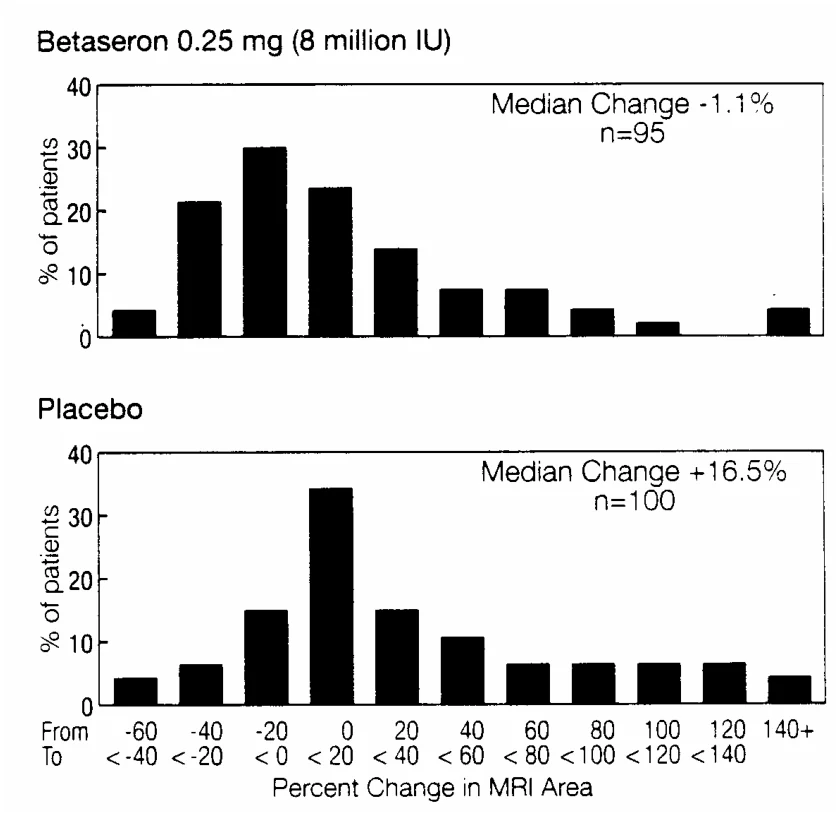
MRI scanning is viewed as a useful means to visualize changes in white matter that are believed to be a reflection of the pathologic changes that, appropriately located within the central nervous system (CNS), account for some of the signs and symptoms that typify relapsing-remitting MS. The exact relationship between MRI findings and the clinical status of patients is unknown. Changes in lesion area often do not correlate with clinical exacerbations probably because many of the lesions affect so-called "silent" regions of the CNS. Moreover, it is not clear what fraction of the lesions seen on MRI become foci of irreversible demyelinization (ie, classic white matter plaques). The prognostic significance of the MRI findings in this study has not been evaluated.
At the end of 2 years on assigned treatment, patients in the study had the option of continuing on treatment under blinded conditions. Approximately 80% of patients in each treatment group accepted. Although there was a trend toward patient benefit in the Betaseron groups during the third year, particularly in the 0.25 mg (8 MIU) group, there was no statistically significant difference between the Betaseron-treated vs placebo-treated patients in exacerbation rate, or in any of the secondary endpoints described in Table 9. As noted above, in the 2-year analysis, there was a 31% reduction in exacerbation rate in the 0.25 mg (8 MIU) group, compared to placebo. The P-value for this difference was 0.0001. In the analysis of the third year alone, the difference between treatment groups was 28%. The P-value was 0.065. The lower number of patients may account for the loss of statistical significance, and lack of direct comparability among the patient groups in this extension study make the interpretation of these results difficult. The third year MRI data did not show a trend toward additional benefit in the Betaseron arm compared with the placebo arm.
Throughout the clinical trial, serum samples from patients were monitored for the development of antibodies to interferon beta-1b. In patients receiving 0.25 mg (8 MIU) Betaseron (n = 124) every other day, 45% were found to have serum neutralizing activity on at least 1 occasion. One-third had neutralizing activity confirmed by at least 2 consecutive positive titers. This development of neutralizing activity may be associated with a reduction in clinical efficacy, although the exact relationship between antibody formation and therapeutic efficacy is not yet known.
Secondary-Progressive MS
The effectiveness of Betaseron administered subcutaneously at a dose of 0.25 mg (8 MIU) every other day for 3 years was studied in a European multicenter (32 sites), randomized, double blind, placebo-controlled trial in patients with secondary-progressive MS.
The study included patients between 18 and 55 years of age who had clinically definite or laboratory supported definite MS for not less than 1 year. Disease had to be in the secondary-progressive phase and deterioration could not be exclusively related to incomplete recovery from relapses. EDSS score at study entry was between 3.0 and 6.5 and patients had to have a history of at least 2 clearly identified relapses, or deterioration of at least 1 EDSS point (or 0.5 points between EDSS scores of 6.0 to 7.0) within the preceding 24 months.
The primary efficacy endpoint was time to confirmed progression in disability, as determined by an increase by 1 point on the EDSS from baseline if the entry score was 3.0 to 5.5 or 0.5 points on the EDSS if the baseline score was 6.0 or 6.5. The increased score had to be maintained for 3 months before progression was confirmed. Secondary efficacy endpoints included time to becoming wheelchair-bound (EDSS 7.0) and annual relapse rate.
Although the study was designed with a treatment duration of 3 years, a prospectively planned interim analysis of efficacy was performed after all patients had completed 2 years in the study. This resulted in a decision by an independent Advisory Board to terminate the study early. Approximately 85% of all EDSS data for the 3-year study duration were available for the interim analysis of the primary endpoint. The primary analysis of efficacy was based on all patients randomized to treatment (intent-to-treat). The primary statistical method for the primary endpoint was a nonparametric analysis of covariance with stratification for centre and adjustment for baseline EDSS. Results presented below are for the dataset at study termination.
During the study, assessment of the EDSS was performed by a physician not otherwise involved in the treatment of the patient. All EDSS physicians were regularly trained to guarantee a maximally standardized assessment of the EDSS. All efforts were undertaken to maintain the blinding, eg, standard clothing to cover injection sites was obligatory.
A total of 718 patients (358 on placebo and 360 on Betaseron) were enrolled. In both treatment groups, the proportion of female patients exceeded that of males (placebo: 64.2% vs 35.8%; Betaseron: 58.1% vs 41.9%), but this difference was not statistically significant. The mean time on treatment was 886 days for placebo and 909 days for Betaseron. Eighty-eight (88) patients were lost to follow-up; the remainder was followed up until the end of study irrespective of continuation of study drug. Over the 3-year study period, treatment was discontinued prematurely by 117 (32.7%) placebo patients and 103 (29.6%) Betaseron patients. Lack of efficacy, adverse events and noncompliance were the most common reasons for ending treatment in 15.6%, 6.4%, and 7.5% of the placebo group and in 7.5%, 14.2%, and 3.3% of the Betaseron group, respectively. The treatment groups were well-balanced for all relevant baseline values, including EDSS at baseline, and time since evidence of secondary-progressive disease.
There was a statistically significant difference in time to confirmed progression in disability in favor of Betaseron (P = 0.0046), as shown in Table 10. The delay in progression in disability became apparent after 9 months of treatment and was statistically significant from month 12 onwards. The proportion of patients with confirmed progression in disability was reduced from 60.9% in the placebo group to 51.9% in the Betaseron group (P = 0.0245).
The treatment effect was consistent across all baseline EDSS levels studied; however, the relative difference in the proportion of patients having confirmed progression in disability between Betaseron and placebo-treated patients was lower for patients with study entry EDSS values of ≥ 6.0, compared to the other EDSS categories, when all patients lost to follow-up were assumed to have progressed (EDSS ≤ 3.5: 27.1%; EDSS 4.0 – 5.5: 17.8%; and EDSS ≥ 6.0: 5.8%). When patients lost to follow-up were assumed not to have progressed, the respective values were 16.6%, 15.5%, and 14.2% (shown in Table 11). Although the proportion of male patients in the Betaseron group with confirmed progression in disability was slightly higher than that of female patients, piecewise logistic regression analysis did not reveal any significant treatment by gender interaction (P = 0.4335).
Kaplan-Meier plots (post-hoc analysis) of the data are shown in Figure 2. The Kaplan-Meier estimate of the percentage of patients progressing by the end of 3 years was 53.9% for placebo and 45.3% for Betaseron-treated patients.
The time to becoming wheelchair-bound (EDSS = 7.0) was also significantly prolonged (P = 0.0047) and the proportion of patients becoming wheelchair-bound was reduced from 28.5% in the placebo group to 18.6% in the Betaseron group (P = 0.0069).
Betaseron reduced the relapse rate by 26.3% over the entire study period (P = 0.0034). The proportion of patients with moderate or severe relapses was reduced from 54.2% in the placebo group to 47.2% in the Betaseron group (P = 0.0508). The mean annual rate of moderate or severe relapses was 0.44 and 0.31 in the placebo and the Betaseron group, respectively (P = 0.0037).
The incidence of hospitalizations due to MS was reduced: 44.4% of placebo patients required hospitalization due to MS vs 36.1% in the Betaseron group (P = 0.0003). The number of patients with steroid courses was 73.2% and 62.5% of patients in the placebo and Betaseron group, respectively (P = 0.0010).
In addition to clinical measures, annual MRI was performed. All patients underwent a T2-weighted MRI scanning at baseline and yearly thereafter, while a subgroup of patients (placebo, n = 61; Betaseron, n = 64) underwent monthly scans in months 1 to 6 and 19 to 24 in addition to the annual scans scheduled for the general study population. Results of secondary and tertiary MRI endpoints showed significant differences between treatment groups in favor of Betaseron (see Table 10). The exact relationship between MRI findings and the clinical status of patients is unknown.
Serum samples were collected throughout the study to test for the development of neutralizing antibodies (NAB) against interferon beta-1b. Analyses were performed to assess the association between NAB status (measured by an MxA neutralization assay) and treatment response as measured by clinical and MRI outcome measures. Confirmed NAB titers of 1:20, 1:100, and 1:400 were observed in 28%, 14%, and 8% of patients, respectively. Despite continued therapy with Betaseron, 50% of the NAB-positive patients were found to have negative titers subsequent to the first development of confirmed quantifiable titers. The relationship between antibody formation and clinical efficacy is not known.
Table 10: Secondary-Progressive MS Study Results - Summary of Key Efficacy Endpoints
| Treatment Groups | P-value | ||
|---|---|---|---|
| Placebo (n=358) | Betaseron 0.25 mg (8 MIU) (n=360) | ||
| Primary Endpoints | |||
| Time to confirmed progression in disabilitya | 0.0046 | ||
| Year 1 | 0.70 | 0.81 | 0.0032 |
| Year 2 | 0.53 | 0.64 | 0.0013 |
| Month 33 | 0.44 | 0.53 | 0.0066 |
| Secondary Clinical Endpoints | |||
| Time to becoming wheelchair-boundb | 0.0047 | ||
| Year 1 | 0.90 | 0.96 | 0.0139 |
| Year 2 | 0.81 | 0.86 | 0.0096 |
| Month 36 | 0.69 | 0.80 | 0.0047 |
| Proportion of patients becoming wheelchair-bound | 28.5% | 18.6% | 0.0069 |
| Mean annual relapse rate | 0.57 | 0.42 | 0.0034 |
MRI: mean percent change in T2 lesion volume (baseline to last scan) | 15.4 | -2.1 | <0.0001 |
| MRI: mean number of newly active lesions (months 1-6) | 10.24 (n = 61) | 3.57 (n = 64) | <0.0001 |
| Tertiary Endpoints | |||
| Proportion of patients with confirmed progression | 60.9% | 51.9% | 0.0245 |
| Mean endpoint EDSS | 5.93 | 5.58 | 0.0065 |
| Median time to first relapse (days) | 385 | 644 | 0.0088 |
MRI: mean number of persistently enhancing lesions (months 1-6) | 3.10 (n = 61) | 1.02 (n = 64) | 0.0009 |
MRI: mean number of persistently enhancing lesions (months 19-24) | 3.04 (n = 53) | 0.36 (n = 56) | 0.0004 |
- a Probability of remaining progression-free during the interval.
b Probability of not becoming wheelchair-bound during the interval.
Table 11: Proportion of Patients With Confirmed Progression Stratified by Baseline EDSS Category
| Baseline EDSS | Treatment Group | ITT-Aa Analysis | ITT-Bb Analysis | |||||||||||||
|---|---|---|---|---|---|---|---|---|---|---|---|---|---|---|---|---|
| % Patients With Confirmed Progression | % Difference vs Placebo | % Patients With Confirmed Progression | % Difference vs Placebo | |||||||||||||
| Relative | Absolute | Relative | Absolute | |||||||||||||
| < 3.5 | Placebo | 55.3 | -27.1 | -15.0 | 44.7 | -16.6 | -7.4 | |||||||||
| < 3.5 | Betaseron | 40.3 | 37.3 | |||||||||||||
| 4.0 – 5.5 | Placebo | 63.4 | -17.8 | -11.3 | 54.9 | -15.5 | -8.5 | |||||||||
| 4.0 – 5.5 | Betaseron | 52.1 | 46.4 | |||||||||||||
| > 6.0 | Placebo | 60.4 | -5.8 | -3.5 | 55.6 | -14.2 | -7.9 | |||||||||
| > 6.0 | Betaseron | 56.9 | 47.7 | ||||
| Overall | Placebo | 60.9 | -14.8 | -9.0 | 53.9 | -16.0 | -8.6 |
| Overall | Betaseron | 51.9 | 45.3 |
- a ITT-A: Patients lost to follow-up were evaluated as having confirmed progression during the 3 month interval which follows the interval of follow-up loss.
b ITT-B: Patients lost to follow-up were evaluated as not having confirmed progression by the end of the study.
Figure 2: Onset of Progression in Disability by Time in Study (Kaplan-Meier Methodology: Post-hoc Analysis)
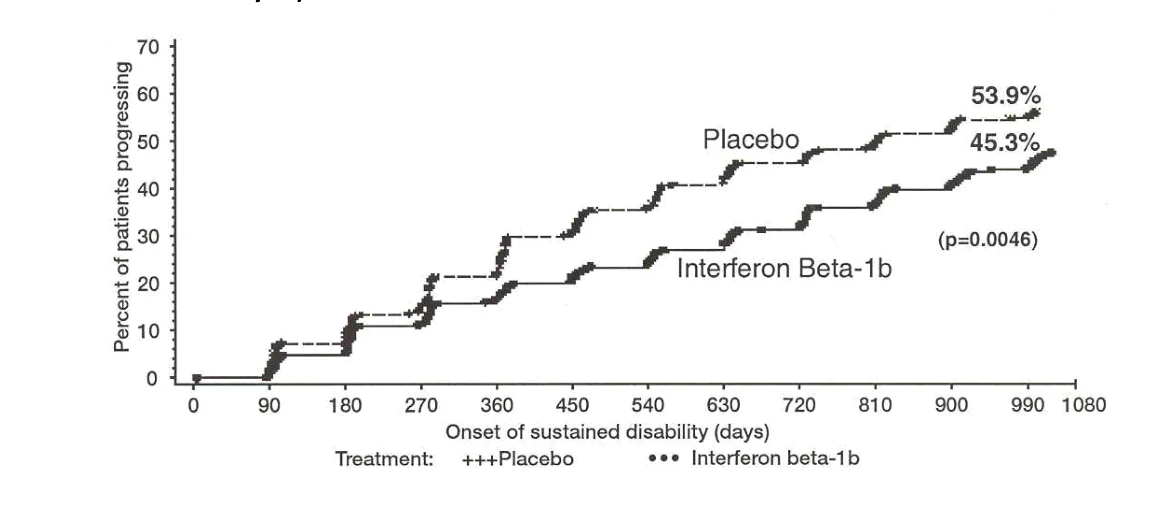
Estimate of the percentage of patients progressing by the end of 3 years
Note: The P-value of 0.0046 refers to the statistical difference between the overall distribution of the two curves, not to the difference in estimates at any given time point.
Single Clinical Event Suggestive of MS
One double-blind, placebo-controlled, randomized, parallel group clinical trial (BENEFIT) was performed in patients with a single clinical demyelinating event suggestive of MS. The study enrolled patients within 60 days after the onset of a single clinical event suggestive of MS (sometimes referred to as “clinically isolated syndrome”), based on the appearance of a new neurological abnormality which had to be present for at least 24 hours. The T2-weighted brain MRI scan had to show at least 2 clinically silent lesions with a size of at least 3 mm, at least 1 of which had to be ovoid or periventricular or infratentorial.
Patients were 18 to 45 years old with an EDSS of ≤ 5.0. Patients with monofocal or multifocal onset of the disease were included (ie, patients with clinical evidence of a single or at least 2 lesions, respectively, of the central nervous system). Any disease other than multiple sclerosis that could better explain the signs and symptoms of the patient had to be excluded. This study consisted of 2 phases, a placebo-controlled phase followed by a pre-planned follow-up phase. The placebo-controlled phase lasted for 2 years or until the patient developed clinically definite multiple sclerosis (CDMS), whichever came first.
Patients selected for the study were randomized to treatment with either 0.25 mg (8 MIU) Betaseron (n = 292) or placebo (n = 176) self administered subcutaneously every other day for a treatment duration of up to 2 years.
Two primary efficacy variables were prespecified in the protocol: time to onset of clinically definite MS (CDMS); and time to onset of MS according to the diagnostic criteria of McDonald et al., 2001. Clinically definite MS was reached if the patient experienced a relapse of the disease and/or a sustained progression of ≥ 1.5 points on the EDSS scale as compared to the lowest EDSS obtained during screening on day 1, with a total EDSS score of ≥ 2.5. Multiple sclerosis according to the McDonald criteria was reached if, in addition to the single clinical demyelinating event, both dissemination in space and dissemination in time had been established.
In the placebo-controlled phase, Betaseron delayed the progression from the first clinical event to clinically definite multiple sclerosis in a highly statistically significant and clinically meaningful manner, corresponding to a risk reduction of 47% (hazard ratio = 0.53; 95% confidence interval [0.39, 0.73], P < 0.0001). A post-hoc analysis adjusting for the standard baseline covariates of steroid use during single event, type of disease onset (multifocal versus monofocal), age, sex, number of T2 lesions, and number of gadolinium-enhancing lesions, revealed a similar risk reduction of 50%. Within 2 years, CDMS occurred in 45% of the placebo group compared to 28% of the Betaseron group (Kaplan-Meier estimates). Betaseron prolonged the time to CDMS by 363 days, from 255 days in the placebo group to 618 days in the Betaseron group (based on the 25th percentiles).
Figure 3: Kaplan-Meier Curve for Time to CDMS (for Placebo-Controlled Phase of BENEFIT)
IFNB-1b ⎯ ⎯ ⎯ ⎯ Placebo ⎯⎯⎯⎯⎯
Ordinate depicts the survival distribution function estimate. Patient numbers at abscissa denote the number of patients at risk.
The robustness of the treatment effect was also shown by the delay of progression to multiple sclerosis according to the McDonald criteria, corresponding to a risk reduction of 43% (hazard ratio = 0.57; 95% confidence interval [0.46, 0.71], P < 0.00001) and 46% based on post-hoc analysis adjusting for standard baseline covariates. In the first 6 months, a diagnosis of MS according to the McDonald criteria was made in 51% of placebo and 28% of Betaseron patients, and after 2 years, the respective incidences were 85% and 69%. Betaseron prolonged the time to development of MS according to the
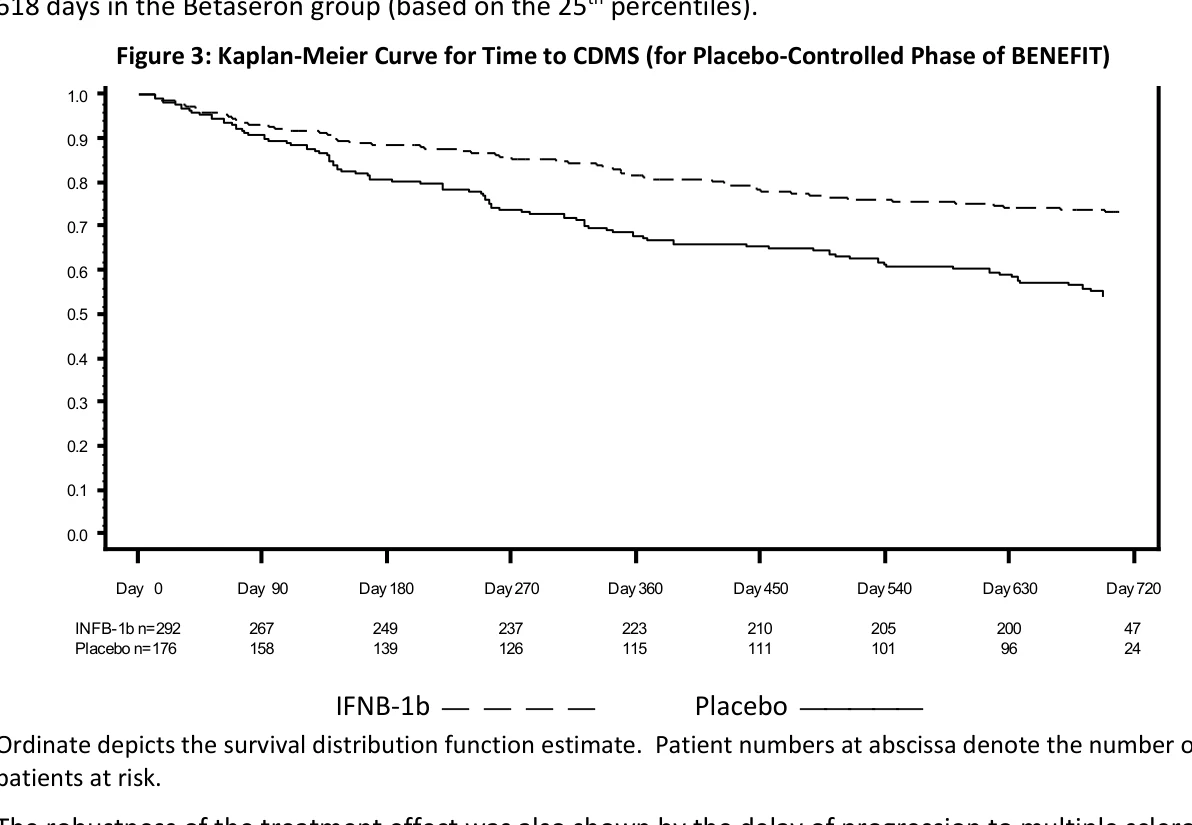
McDonald criteria by 78 days, from 92 days in the placebo group to 170 days in the Betaseron group (based on the 25th percentiles) indicating efficacy of the drug at the earliest time point when disease development shows up on the MRI.
Exploratory post-hoc subgroup analyses according to baseline factors suggested that Betaseron was efficacious in all subgroups evaluated. These subgroup analyses also included patients with less disseminated and less active disease at the time of the first event, who had risk reductions for progression to CDMS ranging from 55% to 60% (monofocal onset: 55%; without gadolinium enhancement: 57%; or less than nine T2 lesions: 60%) and risk reductions for progression to MS according to the McDonald criteria ranging from 37% to 43% (monofocal onset: 43%; without gadolinium enhancement: 39%; or less than nine T2 lesions: 37%). The results of subgroup analyses should be interpreted with caution since the clinical trial was not designed to evaluate efficacy in subgroups.
Two MRI-derived parameters, the cumulative number of newly active lesions and the change in T2 lesion volume, were analyzed as secondary efficacy variables. The cumulative number of newly active lesions up to end of study was statistically significantly lower in the Betaseron group, irrespective of whether annualized (median number of newly active lesions was 1.34 for Betaseron and 3.16 for placebo) or nonannualized (median number of newly active lesions was 2.0 for Betaseron and 4.0 for placebo) values were considered (P < 0.0001 for both analyses). T2-lesion volumes decreased from screening to the end of study in the majority of patients in both treatment groups due to regression of inflammatory changes that had been associated with the first clinical event. For the change in T2 lesion volume, a significant treatment effect of Betaseron was observed for the nonannualized T2 lesion volume change up to the last scan (median change -206.0 mm3 for Betaseron vs -93.0 mm3 for placebo; P = 0.0498), but not for the annualized values (median change -119.70 mm3 for Betaseron vs -57.54 mm3 for placebo; P = 0.1906).
Therapy with Betaseron was well accepted as indicated by a high rate of trial completion (92.8% in the Betaseron group).
The BENEFIT Follow-up Phase
The BENEFIT follow-up phase was a pre-planned, open-label, multicenter extension of the initial double-blind placebo-controlled BENEFIT phase to obtain long-term follow-up data.
All patients who completed the placebo-controlled phase according to the protocol were eligible to enter the follow-up phase and, after renewing their written informed consent, were offered 0.25 mg (8 MIU) Betaseron for up to five years from randomization. Additionally, a medical assessment was required stating that there was no objection to the patient’s participation in the follow-up phase considering the medical experience from the placebo-controlled phase. Throughout the follow-up phase, patients, investigators, and raters were kept blinded to the original treatment allocation from the placebo-controlled trial.
All efficacy variables were assessed based on the combined data from the double-blind phase and the follow-up phase in all patients who received at least 1 dose of the study drug during the placebo-controlled phase (ITT analysis). The patient group initially randomized to Betaseron was compared with the group initially randomized to placebo with the option of starting with Betaseron after diagnosis of clinical definite MS (CDMS) or after 2 years (whichever came first).
Two pre-planned analyses of the integrated data after completion of years 3 and 5 were performed. A nominal 2-sided significance level of 0.0253 was assigned to the analyses of the primary endpoints at both time points, thus allowing for an overall type I error probability of 0.05. Three prespecified primary efficacy measures were tested in a sequential, conditional approach (ie, each could only be tested if the preceding result was statistically significant): 1) time to CDMS; 2) time to confirmed EDSS progression; and 3) FAMS-TOI (Functional Assessment of MS: trial outcome index) score.
For the time-to-event outcomes, differences between the initial Betaseron and the initial placebo group were analyzed by the log-rank test (primary analysis) and by adjusted Cox proportional hazards regression (secondary analysis). Prespecified covariates considered in the Cox regression for time to CDMS were: steroid use during the first clinical event, monofocal vs multifocal disease onset, and number of T2 lesions at screening; and for time to confirmed EDSS progression were: T2 lesion volume at screening. Treatment effects on the FAMS-TOI were analysed by nonparametric and parametric analysis of covariance, with the corresponding baseline assessment as covariate.
Of the 468 patients enrolled in the placebo-controlled phase, 437 patients (93.4%) were eligible for inclusion in the follow-up phase. Out of these, 418 patients (95.7%) gave their informed consent for the follow-up phase, while 19 patients (4.3%) decided not to participate in the follow-up phase of the trial.
More than 90% of all patients entering the open label BENEFIT follow-up phase opted for Betaseron treatment. Of these, 85% of them chose not to take any additional disease-modifying therapies (DMTs) (see Table 12). Less than 10% of patients chose not to take Betaseron; the majority of which also opted not to take any additional DMTs.
Table 12: Choice of Treatments During BENEFIT Follow-up Phase up to Year 3
| Initial Betaseron Total n = 261 (100%) | Initial Placebo Total n = 157 (100%) | Overall Total n = 418 (100%) | ||||
|---|---|---|---|---|---|---|
| IFNB-1b in any combination | 233 | (89.3%) | 145 | (92.4%) | 378 | (90.4%) |
| IFNB-1b only | 225 | (86.2%) | 134 | (85.4%) | 359 | (85.9%) |
| IFNB-1b and other DMT | 8 | (3.1%) | 11 | (7.0%) | 19 | (4.5%) |
| No IFNB-1b at all | 28 | (10.7%) | 12 | (7.6%) | 40 | (9.6%) |
| Any other DMT only | 5 | (1.9%) | 2 | (1.3%) | 7 | (1.7%) |
| No DMT at all | 23 | (8.8%) | 10 | (6.4%) | 33 | (7.9%) |
Eighty-four percent (84%) of the 468 patients initially randomized completed 3 years’ follow-up for reasons of discontinuation see Table 13).
Table 13: Main Reasons for Premature Discontinuation of Study Participation During the BENEFIT Follow-up Phase up to Year 3
| Initial Betaseron n = 261 (100%) | Initial Placebo n = 157 (100%) | Overall n = 418 (100%) | ||||
|---|---|---|---|---|---|---|
| Withdrawal of consent | 8 | (3.1%) | 9 | (5.7%) | 17 | (4.1%) |
| Adverse event | 1 | (0.4%) | 4 | (2.5%) | 5 | (1.2%) |
| Administration of other DMT | 0 | - | 1 | (0.6%) | 1 | (0.2%) |
| Other | 3 | (1.1%) | 0 | - | 3 | (0.7%) |
| Overall | 12 | (4.6%) | 14 | (8.9%) | 26 | (6.2%) |
Among all patients enrolled in the BENEFIT follow-up phase, premature permanent discontinuation of study medication at 3 years was recorded for 7.7% of patients in the initial Betaseron group compared to 19.7% in the initial Placebo group (for reasons of discontinuation, see Table 14).
Table 14: Main Reasons for Premature Discontinuation of Study Medication During the BENEFIT Follow-up Phase up to Year 3
| Initial Betaseron n = 261 (100%) | Initial Placebo n = 157 (100%) | Overall n = 418 (100%) | ||||
|---|---|---|---|---|---|---|
| Adverse event | 6 | (2.3%) | 18 | (11.5%) | 24 | (5.7%) |
| Withdrawal of consent | 7 | (2.7%) | 7 | (4.5%) | 14 | (3.3%) |
| Administration of other DMT | 3 | (1.1%) | 3 | (1.9%) | 6 | (1.4%) |
| Other | 4 | (1.5%) | 3 | (1.9%) | 7 | (1.7%) |
| Overall | 20 | (7.7%) | 31 | (19.7%) | 51 | (12.2%) |
By the third year in the BENEFIT study (placebo-controlled phase plus 1 year in the open label follow-up phase), the majority of patients had been treated with Betaseron for at least a year. By the fifth year, the majority of patients had been treated for at least 3 years. The active treatment duration with IFNB-1b was longer for patients of the initial Betaseron group (median 1793 days; range: 7 – 1963 days) as compared to the initial Placebo group (median 1060 days; range: 0 – 1781 days).
The results of the integrated analysis of the BENEFIT placebo-controlled and follow-up study should be considered in relation to the fact that 4.3% (19) of the patients, although being eligible for the follow-up study, did not give their informed consent and that 9.6% (40) of the patients chose not to receive Betaseron during the follow-up phase up to Year 3.
The results for the efficacy variables time to CDMS and time to EDSS progression for the 3-year analyses are presented in Table 15, and in Figure 4and Figure 5.
Table 15: Primary Efficacy Endpoints: Time to CDMS and Time to Confirmed EDSS Progression from BENEFIT 3-Yeara Analyses
| Time to CDMS (Relapse-based efficacy domain) | Time to Confirmed EDSS Progression (Disability-based efficacy domain) | |||
|---|---|---|---|---|
| Initial Betaseron | Initial Placebo | Initial Betaseron | Initial Placebo | |
| Log-rank test | p = 0.001 | p = 0.022 | ||
| Cox model | HRb: 0.62; 97.47%d CI (0.45-0.86), p = 0.001 | HRc: 0.60; 97.47%d CI (0.36-0.98), p = 0.019 |
- a The BENEFIT 3-year analysis is based on data from the double-blind, placebo-controlled phase with up to 2 years observation and the open-label follow-up phase up to year 3 after randomization, ie, the majority of patients have been on Betaseron for at least 1 or more years.
- b Cox proportional hazard regression model with covariates: steroid use during first event, type of disease onset: monofocal vs multifocal, number of T2 lesions at screening.
- c Cox proportional hazard regression model with covariates: T2 lesion volume at screening. Note: The assumption of proportional hazards over 3 years may not be valid.
- d The 97.47% CI was used according to the Sidak adjustment of the 5% type I error level at 3 and 5 years to 0.0253.
The Kaplan-Meier estimates of the percentages of patients developing CDMS within 36 months were 37% in the initial Betaseron group and 51% in the initial Placebo group; confirmed EDSS progression rates were 16% in the initial Betaseron group and 24% in the initial Placebo group.
Figure 4: Kaplan-Meier Estimates for Time to CDMS (3-Year Data)
Ordinate depicts the estimate for the proportion of subjects without CDMS. Patient numbers at abscissa denote the number of patients at risk.
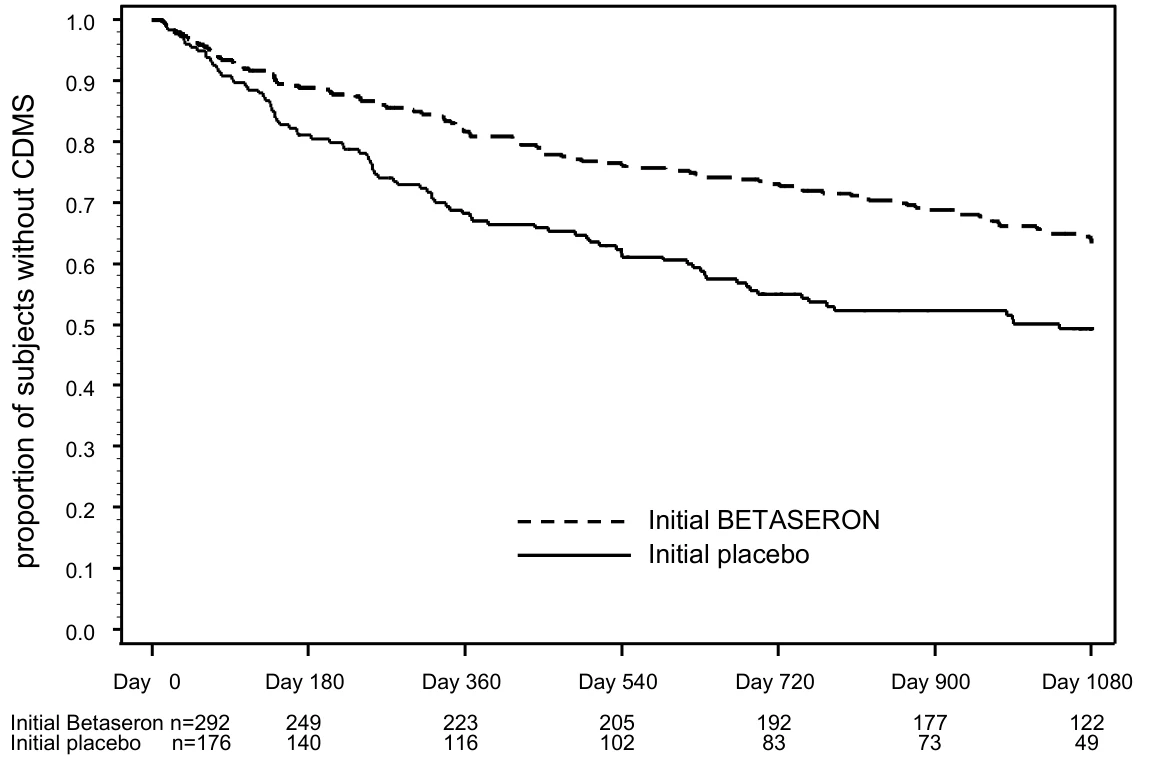
Figure 5: Kaplan-Meier Estimates for Time to confirmed EDSS Progression (3-year Data)
Ordinate depicts the estimate for the proportion of subjects without confirmed EDSS progression. Patient numbers at abscissa denote the number of patients at risk.
15 MICROBIOLOGY
No microbiological information is required for this drug product.
16 NON-CLINICAL TOXICOLOGY
Carcinogenicity: The carcinogenic potential of Betaseron (interferon beta-1b) was evaluated by studying its effect on the morphological transformation of the mammalian cell line BALBc-3T3. No significant increases in transformation frequency were noted. No carcinogenicity data are available in animals or humans.
Mutagenicity: Betaseron was not mutagenic when assayed for genotoxicity in the Ames bacterial test in the presence of metabolic activation.