


Product Monograph - Retisert
SUMMARY PRODUCT INFORMATION
| Route of Administration | Dosage Form / Strength | Clinically Relevant Nonmedicinal Ingredients |
| Intravitreal drug delivery system | 0.59 mg implant | The non-medicinal ingredients are not considered clinically relevant For a complete listing see Dosage Forms, Composition and Packaging section. |
INDICATIONS AND CLINICAL USE
RETISERTTM (fluocinolone acetonide) is indicated for:
- Retisert is indicated for the treatment of chronic non-infectious uveitis affecting the posterior segment of the eye in patients for which conventional therapies are no longer appropriate.
RETISERTTM should not be used in patients with viral disease of the cornea and conjunctiva including epithelial herpes simplex keratitis (dendritic keratitis), vaccinia and varicella.
RETISERTTM should not be used in patients with mycobacterial infections of the eye and fungal diseases of ocular structures.
Geriatrics ( ≥ 65 years of age):
Experience of RETISERTTM use in patients ≥ 65 years of age is limited. The safety and effectiveness has not been established.
Pediatrics ( < 18 years of age):
Experience of RETISERTTM use in children and adolescents below the age of 18 is limited. The safety and effectiveness has not been established.
CONTRAINDICATIONS
- Patients with viral diseases of the cornea and conjunctiva including epithelial herpes simplex keratitis (dendritic keratitis), vaccinia and varicella.
- Patients with mycobacterial infection of the eye.
- Patients with fungal diseases of ocular structures.
- Patients who are hypersensitive to this drug or to any ingredient in the formulation or component of the container. For a complete listing, see the Dosage Forms, Composition and Packaging section of the product monograph.
- Patients sensitive to other corticosteroids including, but not limited to, a history or presence of uncontrolled IOP while on steroid therapy, resulting in loss of vision, or IOP > 25 mm Hg requiring 2 or more types of IOP lowering medications to lower to < 25 mm Hg.
WARNINGS AND PRECAUTIONS
Serious Warnings and Precautions
Refer to the Ophthalmologic subsection for further details. |
General
Care must be exercised in handling RETISERTTM in order to avoid damage to the implant, which could affect the release of fluocinolone acetonide inside the eye. RETISERTTM must be handled only by the suture tab. Care must be taken during implantation and explantation to avoid shear forces on the implant that could separate the silicone cup reservoir (which contains a fluocinolone acetonide tablet) from the suture tab. As with all intraocular surgery, sterility of the surgical field and RETISERTTM should be rigorously maintained. RETISERTTM should not be re-sterilized by any method.
A high level of surgical skill is required for implantation of the RETISERTTM Implant. Implantation should be performed by a qualified professional with
prerequisite training and thorough knowledge of the procedure to be
performed.
As with any surgical procedure there is a risk involved. Potential complications accompanying intraocular surgery to place RETISERTTM into the vitreous cavity may include, but are not limited to, the following: choroidal detachment, endophthalmitis, hypotony, retinal detachment, vitreous haemorrhage, vitreous loss, wound dehiscence, temporary decreased visual acuity, exacerbation of intraocular inflammation and increased intraocular pressure.
If an inadequate response to RETISERTTM therapy is seen during the first six months of treatment, consideration should be given to alternative treatment modalities since the patient’s condition may not be responsive to treatment with intravitreal fluocinolone acetonide.
Retisert has not been evaluated in patients requiring chronic high dose systemic corticosteroid therapy (more than 15 mg prednisone or equivalent daily) to manage non-ocular diseases. When alternate treatment modalities are added to address an inadequate response to RETISERTTM, follow-up care must consider the possibility that the steroid is contributing to the total clinical response and that the additive benefit of RETISERTTM could diminish as the drug is depleted after 30 to 36 months. Follow-up schedules should be similar to those used for RETISERTTM monotherapy.
After surgical implantation of RETISERTTM, patients may experience a temporary decrease in visual acuity or blurred vision for up to one month. Patients should not drive or use machines until their vision has recovered.
Patients should be warned that cataract formation occurs in almost all phakic eyes during the course of RETISERTTM treatment and this may progress to a stage that, without surgical extraction of the cataract, could affect their ability to drive and use machines.
In vitro stability studies show that the strength of the adhesive bond between the silicone cup reservoir and the suture tab is reduced with prolonged hydration, indicating a potential for the separation of these components. Physicians should monitor the integrity of the implant during ophthalmologic examinations.
Removal of RETISERTTM
The safety of the depleted implant is unknown. Removal of RETISERTTM (before or at the end of drug delivery which may be suggested by the recurrence of clinical signs more than 24 months post-implantation) is at the discretion of the physician and must be based on the risk and benefit balance of implant removal against further surgery. It is important to note that implant separation (floating silicone cup) has been reported up to 5 years post-implantation which necessitated immediate surgery. These findings are based on the available data; therefore, the possibility of implant separation after 5 years is unknown.
Removal of the RETISERTTM implant in the presence of vitreous bands should be done carefully. There is a risk of retinal traction during removal of the implant in such patients. To avoid this complication, a vitrectomy might be considered before removal of the implant.
Removal of RETISERTTM from the eye may be performed by cutting the sutures over the insertion incision and carefully grasping the anchoring suture to effect removal. Care should be taken to avoid shear forces that might separate the drug-containing cup from the suture tab. The explantation incision may need to be larger than the implantation incision in order to avoid damage to the implant during the removal operation. An infusion line may be necessary to avoid globe collapse especially in vitrectomised eyes.
Ophthalmologic
Based on clinical trials with RETISERTTM, within an average post-implantation period of approximately 2 years, nearly all phakic eyes are expected to develop cataracts and require cataract surgery. Cataracts were surgically extracted in 95.9% of implanted phakic study eyes versus 19.9% (37/186) in phakic fellow eyes and 19.3% (11/57) in phakic study eyes of patients treated with standard of care systemic therapies. At approximately 2.5 years post-implantation, glaucoma filtering surgeries were required to manage the pressure increase in 30.9% of the patients implanted with RETISERTTM 0.59 mg. IOP lowering surgeries were required for 1.8% (5/275) of fellow eyes and for 2.7% (2/74) of study eyes of patients treated with standard of care systemic therapies.
Following implantation of RETISERTTM, nearly all patients will experience an immediate and temporary decrease in visual acuity in the implanted eye which lasts for approximately one to four weeks post-operatively. This decrease in visual acuity is probably a result of the surgical procedure.
Prolonged use of corticosteroids may result in elevated intraocular pressure with possible development of glaucoma with damage to the optic nerve, defects in visual acuity and visual fields, posterior subcapsular cataract formation, delayed wound healing and perforation of the globe where there is thinning of the sclera.
Steroids should be used with caution in the presence of glaucoma. Patients must be monitored for elevated intraocular pressure (IOP).
Prolonged use of corticosteroids may suppress the host response and thus increase the hazard of secondary ocular infections. Fungal and viral infections of the cornea are particularly prone to develop coincidentally with long-term applications of steroids. The possibility of fungal invasion should be considered in any persistent corneal ulceration where steroid treatment has been used. In purulent conditions of the eye, steroids may mask infection or enhance existing infection. Since resistance to infections is known to be reduced by corticosteroids, simultaneous bilateral implantation is not recommended, in order to limit the potential for bilateral post-operative infection.
After exhausting all other surgical treatment options, if a patient experiences a sustained IOP of 25 mm Hg or more whilst using two or more types of antiglaucoma medication for at least two months or if the IOP is accompanied by progressive visual field deterioration, removal of RETISERTTM should be considered. If RETISERTTM appears damaged or is dislocated, the implant should be removed. If a patient develops late onset endophthalmitis, particularly in the absence of other risk factors, reassessment of the wound integrity or removal of RETISERTTM should be considered.
Carcinogenesis and Mutagenesis
Long term animal studies have not been performed on RETISERTTM to evaluate the carcinogenic potential.
Nonclinical data reveal no special hazard for humans based on conventional studies of genotoxicity.
Dependence/Tolerance
There is no abuse potential with RETISERTTM
Endocrine and Metabolism
Disturbances on the corticosteroids HPA axis in humans were not evaluated. However, effects are not expected due to the negligible systemic exposure to fluocinolone acetonide from RETISERTTM
Neurologic
RETISERTTM is not expected to impair mental ability.
Peri-Operative Considerations
The use of steroids after cataract surgery may delay healing and increase the incidence of bleb formation.
Special Populations
Pregnant Women: Adequate data from the use of fluocinolone acetonide in pregnant women are not available. Studies in animals have shown reproductive toxicity (SEE TOXICOLOGY). The potential risk for humans is unknown. RETISERTTM should not be used during pregnancy unless clearly necessary.
Adequate and well-controlled studies in pregnant women have not been conducted. RETISERTTM should be used during pregnancy only if the potential benefit justifies the potential risk to the foetus.
Nursing Women: It is not known whether intraocular administration of fluocinolone acetonide will result in sufficient systemic absorption to produce detectable quantities in human milk. Systemically administered steroids appear in human milk and could suppress growth, interfere with endogenous corticosteroid production, or cause other untoward effects. A decision on whether to continue breastfeeding should be made taking into account the benefit of breastfeeding to the child and the benefit of RETISERTTM therapy to the mother.
Pediatrics (<18 years of age): Experience of RETISERTTM use in children and adolescents below the age of 18 is limited. The safety and effectiveness have not been established.
Geriatrics ( ≥ 65 years of age): Experience of RETISERTTM use in patients > 65 years of age is limited. The safety and effectiveness has not been established.
Renal/hepatic Impairment: Negligible quantities of fluocinolone acetonide from RETISERTTM are excreted via the systemic circulation. No specific precautions for treatment of patients with renal or hepatic impairment are necessary.
ADVERSE REACTIONS
Adverse Drug Reaction Overview
The majority of the adverse events experienced by subjects implanted with RETISERTTM were related to the underlying disease process, the effect of corticosteroid, and the surgical implantation procedure.
Commonly reported ocular adverse events of the implanted eye included increased intraocular pressure, glaucoma, cataract, worsened cataract, conjunctival haemorrhage, conjunctival hyperaemia, reduced visual acuity, maculopathy, hypotony, post-operative wound complications, eye irritation, blurred vision, vitreous floaters, posterior capsular opacification, unusual sensation in the eye and pruritis.
Clinical Trial Adverse Drug Reactions
Because clinical trials are conducted under very specific conditions the adverse reaction rates observed in the clinical trials may not reflect the rates observed in practice and should not be compared to the rates in the clinical trials of another drug. Adverse drug reaction information from clinical trials is useful for identifying drug-related adverse events and for approximating rates.
Two study designs were utilized in the pivotal clinical trials: 0.59 mg fluocinolone acetonide implant vs. standard of care (SOC) treatment (BLP 415-002); and 0.59 mg vs. 2.1 mg fluocinolone acetonide implant (BLP 415-001). Additional safety and efficacy data was obtained from two additional studies conducted in subjects with a clinical diagnosis of posterior uveitis: BLP 415-001J/JF and BLP 415-004. Two dosage strengths of the fluocinolone acetonide implant were evaluated in the clinical trials, 0.59 mg and 2.1 mg. Only safety data for the 0.59 mg strength is presented here.
The most common ocular adverse event observed in eyes treated with RETISERTTM 0.59 mg was increased intraocular pressure (57.3%).
Ocular adverse events reported at an incidence of ≥ 20% in implanted eyes included eye pain, cataract (worsened or de novo), conjunctival haemorrhage, conjunctival hyperaemia, reduced visual acuity, postoperative wound complications, hypotony, maculopathy, eye irritation, glaucoma, and postoperative complications. Some of these events were transient and associated with the implantation surgery.
The most common ocular adverse events observed in the non-study eye included increased intraocular pressure, eye pain, cataract (de novo and aggravated) and reduced visual acuity.
Based on clinical trials with RETISERTTM, within an average post-implantation period of approximately 2 years, nearly all phakic eyes are expected to develop cataracts and require cataract surgery.
At approximately 2.5 years post-implantation, glaucoma filtering surgeries were required to manage the pressure increase in 30.9% of the patients implanted with RETISERTTM 0.59 mg.
Table #1 shows the occurrence of ocular adverse events for the study eye versus the non-study eye (≥1%).
Table #1: Ocular Adverse Event Occurring in ≥ 1% of Study Eyes
Preferred Term Ocular | Study Eye | Non-Study Eye | ||||||
| 0.59 mg | SOC | 0.59 mg | SOC | |||||
| n = 307 | n = 74 | n = 307 | n = 74 | |||||
| Eyes | % | Eyes | % | Eyes | % | Eyes | % | |
| Intraocular Pressure Increased | 176 | 57.3 | 6 | 8.1 | 47 | 15.3 | 5 | 6.8 |
| Eye Pain | 124 | 40.4 | 5 | 6.8 | 54 | 17.6 | -- | -- |
| Cataract NOS | 104 | 33.9 | 19 | 25.7 | 43 | 14.0 | 15 | 20.3 |
| Cataract NOS Aggravated | 102 | 33.2 | 21 | 28.4 | 48 | 15.6 | 12 | 16.2 |
| Conjunctival Hyperaemia | 91 | 29.6 | 3 | 4.1 | 35 | 11.4 | 2 | 2.7 |
| Visual Acuity Reduced | 83 | 27.0 | 2 | 2.7 | 45 | 14.7 | 2 | 2.7 |
| Conjunctival Haemorrhage | 82 | 26.7 | 2 | 2.7 | 21 | 6.8 | 2 | 2.7 |
| Postoperative Wound Complication NOS | 71 | 23.1 | -- | -- | 3 | 1.0 | -- | -- |
| Maculopathy | 65 | 21.2 | 4 | 5.4 | 26 | 8.5 | 1 | 1.4 |
| Hypotony of Eye | 64 | 20.9 | 1 | 1.4 | 15 | 4.9 | -- | -- |
| Eye Irritation | 63 | 20.5 | 1 | 1.4 | 21 | 6.8 | 1 | 1.4 |
| Glaucoma NOS | 61 | 19.9 | 5 | 6.8 | 8 | 2.6 | 3 | 4.1 |
| Postoperative Complications NOS | 61 | 19.9 | -- | -- | 5 | 1.6 | -- | -- |
| Vision Blurred | 59 | 19.2 | 1 | 1.4 | 38 | 12.4 | 1 | 1.4 |
| Abnormal Sensation in Eye | 58 | 18.9 | -- | -- | 13 | 4.2 | -- | -- |
| Vitreous Floaters | 51 | 16.6 | 1 | 1.4 | 40 | 13.0 | -- | -- |
| Posterior Capsule Opacification | 50 | 16.3 | 2 | 2.7 | 18 | 5.9 | -- | -- |
| Eye Pruritus | 44 | 14.3 | -- | -- | 12 | 3.9 | -- | -- |
| Eyelid Oedema | 40 | 13.0 | 3 | 4.1 | 5 | 1.6 | 1 | 1.4 |
| Vitreous Haemorrhage | 39 | 12.7 | 2 | 2.7 | 2 | 0.7 | 1 | 1.4 |
| Macular Oedema | 33 | 10.8 | 9 | 12.2 | 39 | 12.7 | -- | -- |
| Eyelid Ptosis | 32 | 10.4 | -- | -- | 4 | 1.3 | -- | -- |
| Optic Nerve Cupping | 31 | 10.1 | 1 | 1.4 | 5 | 1.6 | 1 | 1.4 |
| Eye Inflammation NOS | 30 | 9.8 | 6 | 8.1 | 22 | 7.2 | 4 | 5.4 |
| Dry Eye NOS | 29 | 9.5 | 4 | 5.4 | 18 | 5.9 | 2 | 2.7 |
| Lacrimation Increased | 27 | 8.8 | 1 | 1.4 | 7 | 2.3 | -- | -- |
| Visual Disturbance NOS | 24 | 7.8 | -- | -- | 14 | 4.6 | -- | -- |
| Blepharitis | 20 | 6.5 | 3 | 4.1 | 13 | 4.2 | 2 | 2.7 |
| Corneal Oedema | 20 | 6.5 | 1 | 1.4 | 4 | 1.3 | -- | -- |
| Ocular Hypertension | 19 | 6.2 | 6 | 8.1 | 4 | 1.3 | 2 | 2.7 |
| Photophobia | 18 | 5.9 | -- | -- | 12 | 3.9 | 1 | 1.4 |
| Iris Adhesions | 18 | 5.9 | 1 | 1.4 | 10 | 3.3 | 3 | 4.1 |
| Hyphaema | 18 | 5.9 | -- | -- | 2 | 0.7 | -- | -- |
| Retinal Detachment | 16 | 5.2 | 2 | 2.7 | 6 | 2.0 | -- | -- |
| Wound Dehiscence | 16 | 5.2 | -- | -- | -- | -- | -- | -- |
| Eye Discharge | 15 | 4.9 | -- | -- | 5 | 1.6 | -- | -- |
| Choroidal Detachment | 15 | 4.9 | -- | -- | 1 | 0.3 | -- | -- |
| Eye Swelling | 15 | 4.9 | -- | -- | 2 | 0.7 | -- | -- |
| Eye Discharge | 15 | 4.9 | -- | -- | -- | -- | -- | -- |
| Conjunctivitis NOS | 14 | 4.6 | 5 | 6.8 | 4 | 1.3 | 3 | 4.1 |
Preferred Term Ocular | Study Eye | Non-Study Eye | |||||||||||||||
| 0.59 mg | SOC | 0.59 mg | SOC | ||||||||||||||
| n = 307 | n = 74 | n = 307 | n = 74 | ||||||||||||||
| Eyes | % | Eyes | % | Eyes | % | Eyes | % | ||||||||||
| Retinal Haemorrhage | 14 | 4.6 | -- | -- | 8 | 2.6 | -- | -- | |||||||||
| Conjunctivitis NOS | 14 | 4.6 | 5 | 6.8 | -- | -- | -- | -- | |||||||||
| Conjunctival Cyst | 14 | 4.6 | -- | -- | -- | -- | -- | -- | |||||||||
| Cataract Subcapsular | 13 | 4.2 | 1 | 1.4 | 6 | 2.0 | 1 | 1.4 | |||||||||
| Punctate Keratitis | 13 | 4.2 | 2 | 2.7 | 3 | 1.0 | -- | -- | |||||||||
| Diplopia | 12 | 3.9 | 1 | 1.4 | 4 | 1.3 | -- | -- | |||||||||
| Iris Atrophy | 12 | 3.9 | -- | -- | 6 | 2.0 | -- | -- | |||||||||
| Conjunctival Bleb | 12 | 3.9 | -- | -- | 1 | 0.3 | -- | -- | |||||||||
| Intraocular Pressure Decreased | 12 | 3.9 | 2 | 2.7 | 4 | 1.3 | 1 | 1.4 | |||||||||
| Conjunctival Oedema | 11 | 3.6 | 1 | 1.4 | 4 | 1.3 | -- | -- | |||||||||
| Vitreous Opacities | 10 | 3.3 | 4 | 5.4 | 15 | 4.9 | -- | -- | |||||||||
| Photopsia | 10 | 3.3 | -- | -- | 12 | 3.9 | -- | -- | |||||||||
| Ocular Hyperaemia | 10 | 3.3 | 2 | 2.7 | 2 | 0.7 | 1 | 1.4 | |||||||||
| Anterior Chamber Cell | 10 | 3.3 | 2 | 2.7 | 12 | 3.9 | 1 | 1.4 | |||||||||
| Papilloedema | 10 | 3.3 | -- | -- | 7 | 2.3 | -- | -- | |||||||||
| Visual Field Defect | 10 | 3.3 | -- | -- | 6 | 2.0 | -- | -- | |||||||||
| Chemosis | 9 | 2.9 | 1 | 1.4 | 4 | 1.3 | 1 | 1.4 | |||||||||
| Corneal Epithelium Defect | 9 | 2.9 | 1 | 1.4 | 2 | 0.7 | -- | -- | |||||||||
| Ocular Discomfort | 8 | 2.6 | -- | -- | 1 | 0.3 | -- | -- | |||||||||
| Endophthalmitis | 8 | 2.6 | -- | -- | -- | -- | -- | -- | |||||||||
| Retinal Pigmentation | 8 | 2.6 | 1 | 1.4 | 3 | 1.0 | 1 | 1.4 | |||||||||
| Corneal Abrasion | 8 | 2.6 | -- | -- | 3 | 1.0 | -- | -- | |||||||||
| Postoperative Wound Site Erythema | 8 | 2.6 | -- | -- | -- | -- | -- | -- | |||||||||
| Vitreous Detachment | 7 | 2.3 | -- | -- | 10 | 3.3 | 1 | 1.4 | |||||||||
| Asthenopia | 7 | 2.3 | -- | -- | 1 | 0.3 | -- | -- | |||||||||
| Meibomianitis | 7 | 2.3 | 1 | 1.4 | 4 | 1.3 | 1 | 1.4 | |||||||||
| Glare | 7 | 2.3 | -- | -- | 3 | 1.0 | -- | -- | |||||||||
| Iris Disorder NOS | 7 | 2.3 | -- | -- | 3 | 1.0 | -- | -- | |||||||||
| Conjunctival Disorder NOS | 7 | 2.3 | -- | -- | 3 | 1.0 | -- | -- | |||||||||
| Scotoma | 7 | 2.3 | -- | -- | 5 | 1.6 | -- | -- | |||||||||
| Conjunctivitis Papillary | 6 | 2.0 | -- | -- | -- | -- | -- | -- | |||||||||
| Corneal Ulcer | 6 | 2.0 | -- | -- | 1 | 0.3 | -- | -- | |||||||||
| Dellen | 6 | 2.0 | -- | -- | -- | -- | -- | -- | |||||||||
| Optic Atrophy | 6 | 2.0 | 1 | 1.4 | -- | -- | 1 | 1.4 | |||||||||
| Optic Disc Disorder NOS | 6 | 2.0 | -- | -- | 4 | 1.3 | -- | -- | |||||||||
| Anterior Chamber Disorder NOS | 6 | 2.0 | -- | -- | -- | -- | -- | -- | |||||||||
| Device Expulsion | 6 | 2.0 | -- | -- | -- | -- | -- | -- | |||||||||
| Eye Oedema | 5 | 1.6 | 1 | 1.4 | 3 | 1.0 | -- | -- | |||||||||
| Corneal Deposits | 5 | 1.6 | 1 | 1.4 | 8 | 2.6 | 1 | 1.4 | |||||||||
| Anterior Chamber Flare | 5 | 1.6 | -- | -- | 5 | 1.6 | -- | -- | |||||||||
| Pupillary Disorder NOS | 5 | 1.6 | 1 | 1.4 | 2 | 0.7 | -- | -- | |||||||||
| Therapeutic Procedural Complication | 5 | 1.6 | -- | -- | 2 | 0.7 | -- | -- | |||||||||
| Retinal Disorder NOS | 4 | 1.3 | 1 | 1.4 | 2 | 0.7 | -- | -- | |||||||||
| Chorioretinal Disorder NOS | 4 | 1.3 | 1 | 1.4 | 1 | 0.3 | 1 | 1.4 | |||||||||
| Eye Allergy | 4 | 1.3 | -- | -- | 4 | 1.3 | -- | -- | |||||||||
| Conjunctivitis Allergic | 4 | 1.3 | 1 | 1.4 | 2 | 0.7 | 1 | 1.4 | |||||||||
| Meibomian Cyst | 4 | 1.3 | 2 | 2.7 | 5 | 1.6 | -- | -- | |||||||||
| Erythema of Eyelid | 4 | 1.3 | -- | -- | 3 | 1.0 | -- | -- | |||||||||
Preferred Term Ocular | Study Eye | Non-Study Eye | ||||||||||||||
| 0.59 mg | SOC | 0.59 mg | SOC | |||||||||||||
| n = 307 | n = 74 | n = 307 | n = 74 | |||||||||||||
| Eyes | % | Eyes | % | Eyes | % | Eyes | % | |||||||||
| Corneal Disorder NOS | 4 | 1.3 | 1 | 1.4 | 2 | 0.7 | -- | -- | ||||||||
| Conjunctival Granuloma | 4 | 1.3 | -- | -- | -- | -- | -- | -- | ||||||||
| Hypopyon | 4 | 1.3 | -- | -- | 2 | 0.7 | -- | -- | ||||||||
| Flat Anterior Chamber of Eye | 4 | 1.3 | -- | -- | 1 | 0.3 | -- | -- | ||||||||
| Eye Injury NOS | 4 | 1.3 | -- | -- | 2 | 0.7 | -- | -- | ||||||||
| Iridectomy | 4 | 1.3 | -- | -- | -- | -- | -- | -- | ||||||||
| Lenticular Opacities | 3 | 1.0 | 3 | 1.0 | 2 | 0.7 | -- | -- | ||||||||
| Vision Abnormal NOS | 3 | 1.0 | -- | -- | -- | -- | -- | -- | ||||||||
| Conjunctival Irritation | 3 | 1.0 | -- | -- | -- | -- | -- | -- | ||||||||
| Vitreous Fibrin | 3 | 1.0 | -- | -- | 1 | 0.3 | -- | -- | ||||||||
| Stye | 3 | 1.0 | -- | -- | 2 | 0.7 | -- | -- | ||||||||
| Keratitis NOS | 3 | 1.0 | -- | -- | 1 | 0.3 | -- | -- | ||||||||
| Corneal Striae | 3 | 1.0 | -- | -- | -- | -- | -- | -- | ||||||||
| Orbital Oedema | 3 | 1.0 | -- | -- | -- | -- | -- | -- | ||||||||
| Altered Visual Depth Perception | 3 | 1.0 | -- | -- | -- | -- | -- | -- | ||||||||
| Scleritis NOS | 3 | 1.0 | -- | -- | -- | -- | -- | -- | ||||||||
| Migration of Implant | 3 | 1.0 | -- | -- | -- | -- | -- | -- | ||||||||
| Mechanical Complication of Implant | 3 | 1.0 | -- | -- | -- | -- | -- | -- | ||||||||
| Implant Expulsion | 3 | 1.0 | -- | -- | -- | -- | -- | -- | ||||||||
Less Common Clinical Trial Ocular Adverse Events ( < 1%, Study Eye)
Eye Disorders: cataract nuclear, eyelid disorder NOS, lens disorder NOS, scleral disorder NOS, retro-orbital pain, abnormal sensation in eye, painful red eyes, eye infection bacterial, NOS, eye infection NOS, Vogt-Koyanagi-Harada syndrome, staphyloma, herpes ophthalmic NOS, cellulitis orbital, conjunctivitis viral NOS, conjunctivitis bacterial NOS, open angle glaucoma NOS, glaucoma aggravated, chorioretinal atrophy, chorioretinal scar, photophobia aggravated, contact lens intolerance, retinal tear (excl detachment), retinal scar, macular degeneration, retinal oedema, retinal cyst, macular cyst, retinal deposits, dermatitis eyelid, eyelid margin crusting, meibomian gland discharge, optic nerve disorder NOS, halo vision, optic neuropathy NOS, retinal vasculitis, eyelid function disorder NOS, blepharospasm, keratoconjunctivitis sicca, corneal erosion, corneal perforation, sub epithelial opacities, choroidal haemorrhage, punctate keratitis, keratopathy band, corneal haze, corneal calcification, iris convex, Koeppe nodules, conjunctival follicles, conjunctival erosion, anterior chamber inflammation, retinal vascular disorder NOS, retinal neovascularisation, retinal infarction, corneal cyst NOS, iritis, uveitis NOS, iridocyclitis, eye injury NOS, retinal exudates retinopathy proliferative, astigmatism, anisometropia, myopia aggravated, refractive errors NOS, corneal defect, corneal infiltrates, episcleritis NOS, lens dislocation, eye haemorrhage, trichiasis, growth of eyelashes, blepharophimosis, blindness night, blindness NOS, strabismus, eyelid tumour, eye degenerative disorder NOS, retinitis pigmentosa, colour blindness, optic disc haemorrhage, xanthopsia
General Disorders and Administration Site Conditions: adverse drug reaction NOS, injection site oedema
Infections and Infestations: scleritis NOS, nasopharyngitis
Immune System Disorders: drug hypersensitivity, allergy to chemicals NOS, hypersensitivity NOS
Injury, Poisoning and Procedural Complications: procedural site reaction, post procedural pain, cataract fragments in eye postoperative, fibrin deposition on lens postoperative, drug toxicity NOS, abrasion NOS
Investigations: corneal staining, intraocular pressure abnormal
Neoplasms Benign, Malignant and Unspecified (Incl Cysts and Polyps): skin papilloma, Nervous System Disorders: headache NOS, hypoaesthesia, nystagmus NOS
Skin and Subcutaneous Tissue Disorders: rash NOS, pyogenic granuloma, skin ulcer NOS, photosensitivity reaction NOS, dermatitis contact
Surgical and Medical Procedures: eye operation NOS, intraocular lens dislocation, suture removal, conjunctival injection
Vascular Disorders: hypotension NOS, hyperaemia Non-ocular adverse events ( ≥ 1%, implanted patients)
Most common non-ocular events reported included headache, nasopharyngitis, arthralgia, pyrexia, nausea, influenza, and vomiting.
Table #2 shows the occurrence of non-ocular adverse events (≥1%) in implanted patients.
Table #2: Non-ocular Adverse Events occurring in ≥ 1% of Implanted Patients
| Preferred Term | 0.59 mg (n = 307) | SOC (n = 74) | ||
| Subjects | % | Subjects | % | |
| Nervous System Disorders | ||||
| Headache NOS | 68 | 22.2 | 4 | 5.4 |
| Dizziness | 23 | 7.5 | 2 | 2.7 |
| Paraesthesia | 9 | 2.9 | 2 | 2.7 |
| Migraine NOS | 5 | 1.6 | -- | -- |
| Sinus Headache | 4 | 1.3 | -- | -- |
| Hypoaesthesia | 4 | 1.3 | -- | -- |
| Loss of Consciousness | 4 | 1.3 | -- | -- |
| Preferred Term | 0.59 mg (n = 307) | SOC (n = 74) | |||||
| Subjects | % | Subjects | % | ||||
| Infections and Infestations | |||||||
| Nasopharyngitis | 45 | 14.7 | 4 | 5.4 | |||
| Sinusitis NOS | 24 | 7.8 | -- | -- | |||
| Influenza | 25 | 8.1 | 5 | 6.8 | |||
| Bronchitis NOS | 11 | 3.6 | -- | -- | |||
| Pneumonia NOS | 10 | 3.3 | 1 | 1.4 | |||
| Upper Respiratory Tract Infection NOS | 11 | 3.3 | 2 | 2.7 | |||
| Urinary Tract Infection NOS | 8 | 2.6 | -- | -- | |||
| Ear Infection NOS | 5 | 1.6 | 1 | 1.4 | |||
| Pharyngitis NOS | 4 | 1.3 | -- | -- | |||
| Gastroenteritis NOS | 4 | 1.3 | 2 | 2.7 | |||
| Bladder Infection NOS | 4 | 1.3 | -- | -- | |||
| Herpes Zoster | 3 | 1.0 | 1 | 1.4 | |||
| Staphylococcal Infection NOS | 3 | 1.0 | -- | -- | |||
| Infectious Mononucleosis | 3 | 1.0 | -- | -- | |||
| Skin and Subcutaneous Tissue Abscess NOS | 3 | 1.0 | -- | -- | |||
| Musculoskeletal and connective tissue disorders | |||||||
| Arthralgia | 40 | 13.0 | 3 | 4.1 | |||
| Back Pain | 19 | 6.2 | 4 | 5.4 | |||
| Pain in Limb | 19 | 6.2 | -- | -- | |||
| Arthritis NOS | 6 | 2.0 | 1 | 1.4 | |||
| Arthritis NOS Aggravated | 5 | 1.6 | -- | -- | |||
| Bursitis | 5 | 1.6 | -- | -- | |||
| Joint Swelling | 4 | 1.3 | -- | -- | |||
| Myalgia | 4 | 1.3 | 2 | 2.7 | |||
| Neck pain | 3 | 1.0 | -- | -- | |||
| Peripheral Swelling | 3 | 1.0 | -- | -- | |||
| Muscle Cramps | 3 | 1.0 | -- | -- | |||
| Osteoporosis NOS | 3 | 1.0 | -- | -- | |||
| Muscle Weakness NOS | 3 | 1.0 | -- | -- | |||
| Gastrointestinal disorders | |||||||
| Nausea | 27 | 8.8 | 1 | 1.4 | |||
| Vomiting NOS | 24 | 7.8 | 3 | 4.1 | |||
| Mouth Ulceration | 9 | 2.9 | -- | -- | |||
| Dyspepsia | 9 | 2.9 | 1 | 1.4 | |||
| Gastro-Oesophageal Reflux Disease | 6 | 2.0 | 1 | 1.4 | |||
| Toothache | 6 | 2.0 | -- | -- | |||
| Abdominal Pain NOS | 6 | 2.0 | 1 | 1.4 | |||
| Diarrhoea | 7 | 2.3 | 1 | 1.4 | |||
| Gastroenteritis Viral NOS | 4 | 1.3 | -- | -- | |||
| Dental Discomfort | 4 | 1.3 | -- | -- | |||
| Abdominal Pain Upper | 3 | 1.0 | -- | -- | |||
| Gastritis NOS | 3 | 1.0 | 1 | 1.4 | |||
| Tooth Caries NOS | 3 | 1.0 | -- | -- | |||
| Haemorrhoids | 3 | 1.0 | -- | -- | |||
| Constipation | 4 | 1.3 | 1 | 1.4 | |||
| General Disorders and Administration site | |||||||
| Preferred Term | 0.59 mg (n = 307) | SOC (n = 74) | |||||
| Subjects | % | Subjects | % | ||||
| Pyrexia | 25 | 8.1 | 1 | 1.4 | |||
| Fatigue | 13 | 4.2 | 4 | 5.4 | |||
| Pain NOS | 12 | 3.9 | -- | -- | |||
| Weakness | 12 | 3.9 | 2 | 2.7 | |||
| Chest Pain | 10 | 3.3 | 2 | 2.7 | |||
| Oedema Peripheral | 7 | 2.3 | 1 | 1.4 | |||
| Influenza Like Illness | 5 | 1.6 | 1 | 1.4 | |||
| Fall | 3 | 1.0 | -- | -- | |||
| Respiratory, Thoracic and Mediastinal Disorders | |||||||
| Cough | 22 | 7.2 | 1 | 1.4 | |||
| Dyspnoea NOS | 11 | 3.6 | -- | -- | |||
| Upper respiratory tract infection NOS | 11 | 3.6 | 2 | 2.7 | |||
| Sinusitis NOS | 10 | 3.3 | -- | -- | |||
| Asthma NOS | 6 | 2.0 | -- | -- | |||
| Pharyngolaryngeal Pain | 5 | 1.6 | 1 | 1.4 | |||
| Sinus Disorder NOS | 4 | 1.3 | -- | -- | |||
| Lower Respiratory Tract Infection NOS | 3 | 1.0 | 4 | 5.4 | |||
| Pulmonary Congestion | 3 | 1.0 | 2 | 2.7 | |||
| Respiratory Tract Infection NOS | 3 | 1.0 | -- | -- | |||
| Nasopharyngitis | 3 | 1.0 | -- | -- | |||
| Pulmonary congestion | 3 | 1.0 | 2 | 2.7 | |||
| Bronchitis NOS | 3 | 1.0 | -- | -- | |||
| Skin and Subcutaneous Tissue Disorders | |||||||
| Rash NOS | 11 | 3.6 | 1 | 1.4 | |||
| Pruritus NOS | 9 | 2.9 | -- | -- | |||
| Dermatitis Contact | 4 | 1.3 | -- | -- | |||
| Hypotrichosis | 4 | 1.3 | 1 | 1.4 | |||
| Face Oedema | 3 | 1.0 | 2 | 2.7 | |||
| Contusion | 3 | 1.0 | -- | -- | |||
| Abrasion NOS | 3 | 1.0 | -- | -- | |||
| Investigations | |||||||
| Weight Decreased | 9 | 2.9 | 1 | 1.4 | |||
| C-Reactive Protein Increased | 8 | 2.6 | -- | -- | |||
| Blood Glucose Increase | 7 | 2.3 | 2 | 2.7 | |||
| White Blood Cell Count Increased | 6 | 2.0 | -- | -- | |||
| Blood Cholesterol Increased | 5 | 1.6 | 1 | 1.4 | |||
| Blood Pressure Increased | 5 | 1.6 | 1 | 1.4 | |||
| Liver Function Tests NOS Abnormal | 4 | 1.3 | 3 | 4.1 | |||
| Alanine Aminotransferase Increased | 4 | 1.3 | -- | -- | |||
| Hypoglycaemia NOS | 4 | 1.3 | -- | -- | |||
| Appetite Decreased NOS | 4 | 1.3 | -- | -- | |||
| Hyperlipidaemia NOS | 4 | 1.3 | -- | -- | |||
| Blood Bilirubin Increased | 3 | 1.0 | -- | -- | |||
| Weight Increased | 3 | 1.0 | 1 | 1.4 | |||
| Aspartate Aminotransferase Increased | 3 | 1.0 | -- | -- | |||
| Red Blood Cell Sedimentation Rate Increased | 3 | 1.0 | -- | -- | |||
| Preferred Term | 0.59 mg (n = 307) | SOC (n = 74) | ||||||
| Subjects | % | Subjects | % | |||||
| Psychiatric Disorders | ||||||||
| Insomnia | 10 | 3.3 | -- | -- | ||||
| Depression | 7 | 2.3 | 2 | 2.7 | ||||
| Anxiety NEC | 6 | 2.0 | -- | -- | ||||
| Injury Poisoning and Procedural complications | ||||||||
| Laceration | 5 | 1.6 | -- | -- | ||||
| Limb Injury NOS | 5 | 1.6 | -- | -- | ||||
| Immune System Disorders | ||||||||
| Hypersensitivity NOS | 11 | 3.6 | -- | -- | ||||
| Seasonal Allergy | 8 | 2.6 | -- | -- | ||||
| Drug Hypersensitivity | 9 | 2.9 | -- | -- | ||||
| Vascular Disorders | ||||||||
| Hypertension NOS | 11 | 3.6 | 6 | 8.1 | ||||
| Hypotension NOS | 3 | 1.0 | -- | -- | ||||
| Metabolism and Nutrition disorders | ||||||||
| Hyperglycaemia | 4 | 1.3 | - | - | ||||
| Hypercholesterolaemia | 6 | 2.0 | 3 | 4.1 | ||||
| Appetite decreased NOS | 4 | 1.3 | - | - | ||||
| Hyperlipidaemia | 4 | 1.3 | - | - | ||||
| Hypokalaemia | 3 | 1.0 | -- | -- | ||||
| Reproductive System and Breast Disorders | ||||||||
| Genital Ulceration NOS | 3 | 1.0 | -- | -- | ||||
| Renal and Urinary Disorders | ||||||||
| Urinary Tract Infection NOS | 10 | 3.3 | 3 | 4.1 | ||||
| Urinary Incontinence | 3 | 1.0 | -- | -- | ||||
| Blood and Lymphatic System Disorders | ||||||||
| Anaemia NOS | 6 | 2.0 | 1 | 1.4 | ||||
| Cardiac Disorders | ||||||||
| Tachycardia NOS | 4 | 1.3 | -- | -- | ||||
| Ear and Labyrinth Disorders | ||||||||
| Vertigo | 5 | 1.6 | -- | -- | ||||
| Pregnancy , puerpereum and perinatal disorders | ||||||||
| Pregnancy NOS | 4 | 1.3 | -- | -- | ||||
Less Common Clinical Trial Non-Ocular Adverse Events ( < 1%, implanted patients)
Blood and Lymphatic System Disorders: leucopenia NOS, leukocytes, lymphadenopathy, thrombocytopenia, neutropenia,
Cardiac Disorders: arrhythmia NOS, bradycardia NOS, left ventricular hypertrophy, cardiac sarcoidosis, palpitations, cyanosis NOS, coronary artery disease NOS, atrial fibrillation, acute coronary syndrome, endocarditis bacterial NOS
Congenital, Familial and Genetic Disorders: congenital atrial septal defect
Ear and Labyrinth Disorders: tinnitus, ear disorder NOS, deafness NOS, labyrinthitis NOS
Endocrine Disorders: cushingoid, Cushing’s syndrome, thyroid nodule, hypothyroidism, goitre, thyroid disorder NOS, thyrotoxicosis, autoimmune thyroiditis, adrenal insufficiency NOS
Eye Disorders: photopsia, diplopia, glare, eyelid oedema, visual acuity reduced, orbital oedema, posterior capsule opacification
Gastrointestinal Disorders: retching, aphthous stomatitis, abdominal pain lower, tooth disorder NOS, periodontal disorder NOS, gastrointestinal discomfort, stomach discomfort, dysphagia, irritable bowel syndrome, irritable bowel syndrome aggravated, inflammatory bowel disease NOS, Crohn’s disease aggravated, throat irritation, odynophagia, dry mouth, aptyalism, abdominal distension, hiatus hernia, oesophagitis NOS, lip ulceration, rectal haemorrhage, colonic polyp, tongue ulceration, diverticulitis NOS, intestinal obstruction NOS, gastrointestinal infection NOS, inguinal hernia NOS, duodenal ulcer, glossodynia, salivary gland enlargement NOS, gingival oedema, diverticulum intestinal, anal discomfort, rectocele
General Disorders and Administration Site Conditions: malaise, facial pain, axillary pain, general symptom NOS, ill-defined disorder NOS, ulcer NOS, chest tightness, energy increased, drug intolerance NOS, adverse drug reaction NOS, injection site swelling, injection site pain, injection site extravasation, discomfort NOS, feeling hot, chest mass NOS
Hepatobiliary Disorders: cholelithiasis, cholecystitis NOS, hyperbilirubinaemia, jaundice NOS, hepatic cyst NOS, bile duct stone,
Investigations: gastrointestinal obstruction NOS, enlarged prostate, glycosylated haemoglobin increased, protein urine present, blood urine present, urinary occult blood positive, urine oxalate quantitative, specific gravity urine increased, red blood cells urine, glucose urine present, neutrophil count increased, blood potassium decreased, blood potassium increased, blood viscosity increase, enzyme abnormality NOS, blood creatine increased, blood creatinine increased, red blood cell count decreased, mean cell haemoglobin increased, hematocrit decreased, blood in stool, laboratory test abnormal NOS, nuclear magnetic resonance imaging abnormal, heart rate irregular, activated partial thromboplastin time prolonged, csf abnormal NOS, platelet count increase, blood prolactin increased
Immune System Disorders: insect bite allergy, allergy to insect sting, Behcet’s syndrome, sarcoidosis NOS, systemic lupus erythematosus,
Infections and Infestations: laryngitis NOS, peritonsillar abscess NOS, sinusitis chronic NOS, pyelonephritis NOS, herpes simplex, herpes viral infection, fungal infection NOS, vaginosis fungal NOS, respiratory tract infection NOS, infection NOS, abscess limb, parasitic infection NOS, localized infection, cellulitis, rash pustular, tooth abscess, tooth infection, dry socket NOS, pharyngitis streptococcal, streptococcal infection NOS, candidal infection NOS, haemophilus infection NOS, scabies infestation, leprosy NOS, hepatitis C, erythema infectiosum
Injury, Poisoning and Procedural Complications: road traffic accident, injury NOS, arthropod bite, wound NOS, accident NOS, wound haemorrhage, traumatic haematoma, animal bite, back injury NOS, tooth injury, muscle strain, tendon injury, ligament injury NOS, epicondylitis, joint sprain, foot fracture, fibula fracture, femur fracture, clavicle fracture, wrist fracture, postoperative wound site erythema, postoperative wound infection, post procedural pain, thermal burn, concussion
Metabolism and Nutrition Disorders: diabetes mellitus NOS, diabetes mellitus non insulin-dependent, anorexia, dehydration, hypoglycaemia NOS, obesity, gout
Musculoskeletal and Connective Tissue Disorders: polyarthralgia, joint effusion, musculoskeletal discomfort, muscle spasms, neck stiffness, limb discomfort NOS, contractures NOS, arthrosis NOS, joint stiffness, ankylosing spondylitis, fibromyalgia, myofascial pain syndrome, swelling NOS, neck swelling, bunion, bone spur, aseptic necrosis bone, bone lesion NOS, exostosis, myofascial spasm, muscle atrophy, myokymia, localized osteoarthritis, spinal osteoarthritis, tendonitis, ganglion, plantar fasciitis, fibula fracture, ankle fracture, coccydynia, pain in jaw, rotator cuff syndrome, upper limb fracture NOS
Neoplasms Benign, Malignant and Unspecified (Incl Cysts and Polyps): cyst NOS, adenoma benign NOS, skin carcinoma NOS, basal cell carcinoma, squamous cell carcinoma of skin, benign breast neoplasm NOS, fibroadenoma of breast, brain neoplasm NOS, metastases NOS, thyroid adenoma NOS, oesophageal carcinoma NOS, small cell carcinoma, central nervous system lymphoma, uterine fibroids
Nervous System Disorders: frequent headaches, neurological disorder NOS, ageusia, burning sensation NOS, somnolence, depressed level of consciousness, vasovagal attack, syncope, peripheral nerve injury, gait abnormal NOS, balance impaired NOS, peripheral neuropathy NOS, neuropathy NOS, multiple sclerosis aggravated, brain herniation, spinal stenosis NOS, radiculitis brachial, cerebrovascular accident, vasculitis cerebral, memory impairment convulsions NOS, trigeminal neuralgia, mental impairment NOS, aphasia, cerebral oedema, demyelinating polyneropathy NOS, facial palsy, third nerve paralysis, hyperreflexia, facial bones fracture
Psychiatric Disorders: depression aggravated, stress symptoms, nervousness, panic attack, emotional distress
Renal and Urinary Disorders: dysuria, difficulty in micturition, calculus renal NOS, urine abnormal NOS, haematuria, glycosuria, cystitis NOS, calculus urinary, calculus ureteric, renal disorder NOS, kidney infection NOS, polyuria, cystocele
Reproductive System and Breast Disorders: menstruation irregular, uterine fibroids, endometriosis, breast cancer NOS, ovarian cyst, cervical carcinoma stage III, cervical polyp, vaginitis, menorrhagia, vulvovaginal dryness, vaginal pain, prostatitis, benign prostatic hyperplasia
Respiratory, Thoracic and Mediastinal Disorders: tonsillitis NOS, haemoptysis, throat irritation, sneezing, upper respiratory tract congestion, apnoeic attack, sinus congestion, asthma aggravated, chronic obstructive airways disease, rhinorrhoea, epistaxis, nasal turbinate hypertrophy, nasal septum deviation, rhinitis NOS, nasal congestion, rhinitis allergic NOS, respiratory tract infection viral NOS, pulmonary sarcoidosis, pulmonary granuloma NOS, laryngitis viral NOS, pleural effusion, hilar lymphadenopathy, metastases to lung
Social Circumstances: aborted pregnancy
Skin and Subcutaneous Tissue Disorders: skin eruption, exanthema, eczema NOS, dermatitis allergic, eczema seborrhoeic, skin lesion NOS, skin disorder NOS, dry skin, alopecia, acne NOS, urticaria NOS, uticaria NOS, sweating increased, rosacea, skin desquamation NOS, erythema nodosum, psoriasis, lichen planus, increase tendency to bruise, pigmentation disorder NOS, cutaneous sarcoidosis, granuloma annulare, erythema, photosensitivity reaction NOS, paronychia, epidermal cyst, rash papular, skin striae, scrotal ulcer, cellulitis
Surgical and Medical Procedures: tooth disorder NOS, tooth extraction NOS, hysterectomy NOS, nephrectomy, circumcision, nerve block
Vascular Disorders: hypertension aggravated, carotid artery stenosis, carotid artery occlusion, cerebral infarction, cerebellar infarction, vertebral artery occlusion, vertebro basilar insufficiency, haematoma NOS, thrombosis NOS, Raynaud’s phenomenon, cerebrovascular accident, blood pressure inadequately controlled, pulmonary embolism, venous thrombosis deep limb, aortic aneurysm
Post-Market Adverse Drug Reactions
RETISERTTM has been marketed in the US since June of 2005. Since product approval to date (December 2007) in the U.S., twelve (12) spontaneous post-marketing cases have been reported with Restisert: 1 case of retinal detachment, 1 case of IOP decrease/ vitreous floaters/blurred vision/eye swelling/eye inflammation (reported by the patient), 1 case of scleral thinning, 1 case of menstrual disorder/tinnitus/headache/visual acuity reduced, 1 case of hypotony, 1 case of CMV retinitis, 1 case of endophthalmitis and 5 cases of lack of efficacy (one was determined to be for an unapproved indication of ocular lymphoma due to initial misdiagnosis of posterior uveitis). One case of lack of efficacy cataract, retinal tear, hyphaema and photophobia were also reported.
One published paper reported 4 cases of vitreous bands extending from the posterior pole of the eye to the implant. Three of the 4 cases developed vitreous bands more than 3 years after implantation (Lowder et al., 2007).
Implant separation (floating silicone cup) has been observed up to 5 years post implantation which necessitated immediate surgery. These findings are based on the available data; therefore, the possibility of implant separation after 5 years is unknown. Refer to Warnings and Precautions, General section.
Compared to the safety of the clinical trials up to December 2007, no unique emerging safety issues or signals have been detected in the post-marketing data.
DRUG INTERACTIONS
No interaction studies (i.e., drug-drug, drug- herb, drug-food and drug-laboratory tests) have been performed. Because of the negligible systemic levels of fluocinolone acetonide generated by the implant, interactions at the systemic level are not expected.
DOSAGE AND ADMINISTRATION
Dosing Considerations
RETISERTTM is for intravitreal implantation only.
The RETISERTTM is surgically implanted into the posterior segment of the affected eye through a pars plana incision and held in place with an anchoring suture. Clinical study data indicate that the therapeutic effect of RETISERTTM is maintained for approximately 3 years. The effective length of treatment time varies between patients and after 2 years post implantation patients should be closely monitored for clinical signs of uveitis recurrence. Following depletion of fluocinolone acetonide from RETISERTTM, which may be suggested by recurrence of uveitis more than 24 months post-implantation, RETISERTTM may be removed at the physician’s discretion based on the risk and benefit balance of implant removal. The safety and efficacy of re-implantation as well as the safety of the depleted implant have not been established (see Warnings and Precautions).
The average release rate of fluocinolone acetonide from the implant was estimated to be 0.4 µg/ day.
Recommended Dose and Dosage Adjustment
The recommended dosage is one intravitreal implant. The implant is inserted intravitreally and provides continuous release of fluocinolone acetonide for 30-36 months.
Missed Dose Not applicable.
OVERDOSAGE
No information is available on overdosage in humans. Given the nature of the product (i.e., surgical implantation by physician), it is unlikely that overdose could occur. However, if signs and symptoms of overdose with RETISERTTM occur, treatment should be symptomatic.
ACTION AND CLINICAL PHARMACOLOGY
Mechanism of Action
Corticosteroids inhibit the inflammatory response to a variety of inciting agents and probably delay or slow healing. They inhibit the oedema, fibrin deposition, capillary dilation, leukocyte migration, capillary proliferation, fibroblast proliferation, deposition of collagen, and scar formation associated with inflammation. There is no generally accepted explanation for the mechanism of action of ocular corticosteroids. However, corticosteroids are thought to act by the induction of phospholipase A2 inhibitory proteins, collectively called lipocortins. It is postulated that these proteins control the biosynthesis of potent mediators of inflammation such as prostaglandins and leukotrienes by inhibiting the release of their common precursor arachidonic acid. Arachidonic acid is released from membrane phospholipids by phospholipase A2. Corticosteroids are capable of producing a rise in intraocular pressure.
Pharmacodynamics
Directly applied to the inflamed eye, corticosteroids exert an anti-inflammatory effect. In the case of RETISERTTM, subjects in the clinical studies were implanted during a period of relative remission of their ocular inflammatory disease. Thus, it was not possible to observe an immediate anti-inflammatory effect. As well, the implantation surgery, like any ocular surgery, elicits a relatively brief period of inflammation. The intent of the product is not to have a rapid onset, but to have an extended duration of effect.
The sustained release of fluocinolone acetonide from RETISERTTM results in a reduction of uveitic inflammatory recurrences and in the area of cystoid macular oedema over approximately three years. Overall, the sustained anti-inflammatory effect preserves visual acuity, except when affected by cataract development.
Pharmacokinetics
In a subset of patients who received the intravitreal implant, and had blood samples taken at various times (weeks 1, 4 and 34) after implantation, plasma levels of fluocinolone acetonide were below the limit of detection (0.2 ng/mL) at all times. Aqueous and vitreous humour samples were assayed for fluocinolone acetonide in a further subset of patients. Whilst detectable concentrations of fluocinolone acetonide were seen throughout the observation interval (up to 34 months), the concentrations were highly variable, ranging from below the limit of detection (0.2 ng/ml) to 589 ng/ml.
Special Populations and Conditions
Pediatrics: RETISERTTM has only been used in a limited number of paediatric patients. The safety and effectiveness has not been established.
Geriatrics: Experience of RETISERTTM use in patients ≥ 65 years of age is limited. The safety and effectiveness has not been established.
STORAGE AND STABILITY
Store at 15-25°C in the original container. Do not freeze.
SPECIAL HANDLING INSTRUCTIONS
Care must be exercised in handling of the RETISERTTM in order to avoid damage to the implant, which could affect the release of fluocinolone acetonide inside the eye. RETISERTTM must be handled only by the suture tab. Care must be taken during implantation and explantation to avoid sheer forces on the implant that could separate the silicone cup reservoir (which contains a fluocinolone acetonide tablet) from the suture tab. As with all intraocular surgery, sterility of the surgical field and RETISERTTM should be rigorously maintained. RETISERTTM should not be resterilized by any method.
DOSAGE FORMS, COMPOSITION AND PACKAGING
RETISERTTM is an intravitreal implant containing a 0.59 mg fluocinolone acetonide tablet with the following inactive ingredients: microcrystalline cellulose, polyvinyl alcohol and magnesium stearate. The tablet is encased in a silicone elastomer cup containing a release orifice and a polyvinyl alcohol membrane positioned between the tablet and the orifice. The cup assembly is attached to a silicone suture tab with silicone adhesive. RETISERTTM is approximately 3 mm wide, 2 mm thick and 5 mm long.
Each RETISERTTM implant is packed in a clear polycarbonate case with a twist off cap. The case and cap are overwrapped with a foil pouch and placed in a polyethylene peelable overwrap. Each implant is placed in a carton. The pack contains one RETISERTTM implant.
Patented CA 2367092 2007
PART II: SCIENTIFIC INFORMATION
PHARMACEUTICAL INFORMATION
Drug Substance
Proper name: Fluocinolone acetonide
Chemical names: Pregna-1,4-diene-3,20-dione,6,9-difluoro-11,21-dihydroxy-16,17-[(1- methyl-ethylidene)bis(oxy)]-,(6α,11β,16α)-
6α,9α-Difluoro-11β,16α,17,21-tetrahydroxypregna-1,4-diene-3,20- dione cyclic 16,17-acetal with acetone
6α,9α-Difluoro-11β,21-dihydroxy-16α,17α-isopropylidenedioxypregna-1,4-diene-3,20-dione
6α,9α-Difluoro-16α-hydroxyprednisolone 16,17-acetonide
Molecular formula and molecular mass: C24H30F2O6(anhydrous), 452.50
Structural formula:
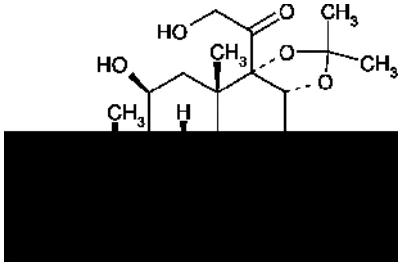
Physicochemical properties:
Appearance/Description: White or almost white, odourless, crystalline powder
Purity: 98.0 – 102.0%, calculated on the dried basis
Melting Point: 265- 266oC (crystals from acetone + hexane)
Optical Rotation: +95o (chloroform)
Hydrate: Anhydrous form is used; also occurs as dihydrate
Solubility: Practically insoluble in water
1 in 10 acetone
1 in 45 alcohol
1 in 26 dehydrated alcohol
1 in 15 to 25 chloroform
1 in 350 ether
Soluble in methyl alcohol
Absorbance: 238 nm (log ∈ 4.21)
Partition Coefficient: 2.5 (octanol/water)
Polymorphs: Multiple polymorphic forms exist
Isomers: None
CLINICAL TRIALS
Given the unique nature of the product and patient population for RETISERTTM, a typical Phase I, Phase II and Phase III development path was not appropriate. In particular, it was considered inappropriate to test this product in healthy volunteers for Phase I safety evaluation.
Evaluation of a wide range of doses from 0.59 mg (the lowest manufacturable dose) to 15 mg showed that the higher doses tended to have greater effects on elevating intraocular pressure. Thus, as the investigations progressed, lower doses were used. Based upon the safety profile on intraocular pressure, and the perception from the Investigators that the treatments were effective, for subsequent studies, the 0.59 mg and 2.1 mg intravitreal implants were used.
Two study designs were utilized in the pivotal clinical trials: 0.59 mg fluocinolone acetonide implant vs. standard of care (SOC) treatment (BLP 415-002); and 0.59 mg vs. 2.1 mg fluocinolone acetonide implant (BLP 415-001). Two dosage strengths of the fluocinolone acetonide implant were evaluated in the clinical trials, 0.59 mg and 2.1 mg.
In both designs, subjects with either unilateral or bilateral non-infectious uveitis affecting the posterior segment of the eye were enrolled. For subjects with bilateral disease, the more severely affected eye was chosen to be the study eye. It was expected that for bilateral subjects, the less severely affected eye had to be controlled with only periocular injections for 1 year. The control for the 415-002 study design was the group of subjects enrolled in the standard of care (SOC) arm, which required administration of systemic corticosteroids and if necessary, administration of systemic non-steroidal immunosuppressive agents for a minimum period of 6 months.
For the study design employed in the BLP 415-001 study, two types of controls were employed: 1) a historical control; and 2) a dose-comparison (0.59 mg vs. 2.1 mg) for both safety and efficacy evaluations.
Study demographics and trial design
Table #3- Summary of patient demographics for clinical trials in specific indication
Study # and design | Dosage, route of administration and duration | S t u d y subjects (n=number) | Age Range (years) | Gender | Race | Duration of Treatment |
BLP 415- 002 Open- label, parallel | 0.59 mg implant Standard of Care | 140 | 12 to 75 | Male – 58 Female – 82 | Caucasians – 124 Black – 1 Hispanics – 8 Other - 7 | 3 years |
BLP 415- 001 Double (dose) masked parallel | 0.59 mg implant 2.1 mg implant | 278 | 7 to 84 | Male – 77 Female – 201 | Caucasians – 184 Blacks – 49 Asians – 21 Hispanics – 17 Other - 7 | 3 years |
Study results
RETISERTTM was shown to be efficacious for the treatment of uveitis affecting the posterior segment of the eye as demonstrated by the results of the clinical trials. In the assessment of efficacy, the primary efficacy variable for the BLP 415-002 study design was the time to first protocol defined recurrence of uveitis in the study eye occurring in the 24 months after randomization for the SOC group and the 24 months after Visit 7 for the implant group. The first 12 weeks to Visit 7 were excluded for the implant group to allow post-operative inflammation therapy to be discontinued to prevent post-operative inflammation from being recorded as a recurrence, and to allow the tapering of previous anti-inflammatory systemic therapy. For the BLP 415-001 uveitis study the primary efficacy analyses involved a comparison of the rates of protocol-defined recurrences of uveitis before and after implantation.
BLP 415-002
The time to recurrence of uveitis for implant vs. SOC study eyes was evaluated by Kaplan Meier methods (freedom from recurrence). A clinically significant impact of RETISERTTM was observed as evidenced by the freedom from uveitis recurrence through two years of study, but the Kaplan Meier analysis did not demonstrate a statistically significant difference between the implant and SOC study eyes when both observed and inferred recurrences were considered (p=0.065). It was noted that many of the failures were not due to clinical signs of inflammation but instead, due to inferred failures because of excess exposure to systemic immunosuppression resulting from incorrect tapering. These observations were recorded as uveitis recurrence.
To better understand the impact of failures inferred for reasons not associated with ocular inflammation, a supplementary analysis considering these cases, censored instead of failed, was conducted. For the supplementary analysis, each subject with an inferred failure was re-assessed to determine if they failed for reasons associated with ocular inflammation. A failure was reported in a total of 67 subjects (in the implant and SOC treatment groups); of those failures, 26 were inferred (18 in the implant group and 8 in the SOC group). Only 3 of the 11 implant failures reported for Time 0 were due to clinical signs, accounting for the biggest difference between the primary and supplemental Kaplan-Meier plots. The slope of the supplemental survival curve for the study eyes clearly demonstrated the benefits of the implant treatment. The time-to-recurrence of uveitis in the implant study eyes was considerably longer than the SOC study eyes (p=0.0008).
When the efficacy of the implant was stratified according to the SOC type at baseline (prior to study initiation), greater efficacy of the implant (prevention of recurrence) was shown for patients that took corticosteroids alone at baseline. Evidence of efficacy of the implant was also shown for patients that took corticosteroids and one immunosuppressant at baseline, but the difference was not statistically significant. Because of the limited number of patients taking corticosteroids and two immunosuppressants at baseline, no conclusions could be reached for that sub-group.
When the number of recurrences in the 52-week pre-treatment period was compared to the 2- year post-treatment period, there was a statistically significant difference in favour of the implant study eye (p=0.0 140) compared to the SOC study eye. Visual acuity was maintained in both the SOC and the implanted eyes during the course of the study. Differences were not statistically significant (p=0.655).
BLP 415-001
The primary efficacy measure for the BLP 415-001 study was a comparison of rates of recurrence between the pre-implantation and the 34 week, 1 year, 2 year, and 3 year postimplantation time points, recurrences were imputed (assumed) for these time points when a subject was not seen within 10 weeks of their scheduled visits.
For both dose groups combined, uveitis recurrence rates in study eyes were reduced from 59.7% (166/278) during the one year pre-implantation period to 32.7% (9 1/278) at 3 years post-implantation, using observed data only (p<0.0001), (40.7% [113/278] using imputed data [p<0.0001]). In the 0.59 mg dose group, 1 year pre- and 3 years post-implantation uveitis recurrence rates for study eyes were 61.8% and 20.0%, respectively, using observed data only (30.0% using imputed data at 3 years). The differences for both observed and imputed data were statistically significant (p< 0.0001). In the 2.1 mg dose group, uveitis recurrence rates for study eyes for the 1 year period prior to implantation and 3 years post-implantation were 58.3% and 41.1%, respectively, using observed data (p = 0.0006), (47.6% using imputed data at 3 years [p = 0.0314]). For both dose groups combined, uveitis recurrence rates in fellow eyes increased from 25.5% (70/275) during the one year pre-implantation period to 57.1% (157/275) at 3 years post-implantation, using observed data only (p<0.0001), (63.3% [174/275] using
imputed data [p<0.0001]). A reduced need for systemic therapy and for periocular injections (in study eyes) to control uveitis was observed by the 3-year post-implantation visit, compared with the enrollment visit (p<0.0001 for each dose group and both dose groups combined). The mean change from baseline in visual acuity of implanted eyes was statistically insignificant in both dose groups. On average, reductions in visual field were small, less than 2dB, but were statistically significant for both implanted and fellow eyes, p<0.005.
For study eyes in both dose groups combined, 56.8% (54/95) of eyes showed a reduction in the area of CME between baseline and 3 years post-implantation, compared with 24.2% (23/95) of fellow eyes (p<0.0001). An analysis of the change in mean area of CME from baseline to each post-implantation visit showed that in the 0.59 mg dose group, mean CME area decreased up to 34 weeks post-implantation and remained relatively constant thereafter.
Conclusion
The two pivotal studies, BLP 415-002 and BLP 415-001 were confirmatory of each other in demonstrating that RETISERTTM is highly efficacious in controlling inflammation secondary to non-infectious uveitis affecting the posterior segment of the eye.
DETAILED PHARMACOLOGY
Animal Pharmacology
Sixteen 0.5 µg/day implants and sixteen 0.1 µg/day implants were implanted into the vitreous of the right eye of NZW rabbits fourteen days after subcutaneous injection of tuberculin antigen. Control animals (n=14) received empty implants. A masked observer graded corneal neovascularization, anterior chamber (AC) flare cell, iris congestion, and vitreous opacity on days 1-7, 9, 16 and 21 after uveitis induction. Animals were sacrificed on days 6 and 9 for aqueous WBC count, and protein measurement. Retinal function was evaluated by ERG. Histological sections of enucleated eyes were studied under light microscopy.
By clinical criteria, treated eyes were significantly less inflamed than untreated eyes. Anterior chamber cell flare and vitreous opacity were significantly reduced (p≤0.02) in both drug implant groups compared with control animals. Overall, inflammation was suppressed to a greater degree with the 0.5-µg/day implant compared to the 0.1-µg/day implant but there was no significant difference between 0.1- and 0.5-ȝg/d implants. As compared to the control eyes, treated eyes had a reduction in aqueous WBC count and protein concentration, and had lower inflammatory grade at histopathologic examination; however, these differences were not statistically significant. It is concluded that the fluocinolone acetonide intravitreal implant suppresses ocular inflammation in a rabbit model of severe uveitis. (Mruthyunjaya, 2006).
Safety Pharmacology
No specific safety pharmacology experiments with the intravitreal implant have been done. Although some local ocular secondary pharmaceutical effects were observed, systemic secondary pharmacological actions are not expected to occur as systemic levels of fluocinolone acetonide resulting from the implant are negligible.
Pharmacokinetics-Distribution
In a one-year study, 24 rabbits received a 0.59 mg intravitreal implant. Based on the amount of fluocinolone acetonide remaining in the intravitreal implants after removal, the in-vivo release rate was indirectly estimated to be 0.76 μg/ day.
TOXICOLOGY
Toxicology studies investigated primarily 0.59, 2.1 and 6 mg fluocinolone acetonide intravitreal implants.
Rabbit and dog studies were conducted using intravitreal implants to assess ocular and systemic uptake, as well as the safety of the fluocinolone acetonide released from the implant. These studies investigated primarily 0.59, 2.1 and 6 mg fluocinolone acetonide intravitreal implants. In summary, fluocinolone acetonide intravitreal implants were well tolerated in rabbits, while in dogs significant abnormal findings were made.
Overall, results of rabbit studies suggested that the implant was well tolerated. However, in a one-year study in NZ black/satin cross rabbits, the electroretinography tests showed low b-wave amplitude without change in latencies. These changes were however not consistent and it is not clear whether or not these changes were related the fluocinolone acetonide implants.
A one-year study was conducted in 54 beagle dogs, 36 received fluocinolone acetonide intravitreal implants (0.59 mg, or 2.1 mg, or 6.0 mg) in one eye and 18 received a sham implant or no implant at all. Findings included the following:
- Eleven dogs had severe ocular lesions associated with ocular inflammation. It is not clear whether the ocular inflammation was a post-surgical complication per se or was due to fluocinolone acetonide implants
- Corneal opacities that were interpreted as species-specific to dogs with no relevance to humans
- Increased incidence of cataracts might have been due to fluocinolone acetonide, or to the mechanical contact between the implant and posterior surface of the lens.
- Findings in the adrenal glands (microvacuolar change and/or cortical atrophy). It is not clear whether these findings were related to fluocinolone acetonide or to corticosteroids received from other routes (eye ointment/drops, or systemic).
Significant, fluocinolone acetonide implant related, systemic toxic effects were not observed in both species. Some, generally minimal to mild, histopathological changes to liver, adrenals and thymus were observed in the dogs. However, the surgical procedures involved in inserting the implants into the dog’s eye necessitated the administration of topical and systemic corticosteroids to control inflammation. The exact cause of the histopathological effects cannot be established, but it appears likely that they were caused by the long-term supplementary use of therapeutic corticosteroids. Similar findings were not observed in rabbits, which did not require additional corticosteroid therapy.
Single Dose Toxicity
After implantation, the implant is intended to stay in the vitreous for a prolonged period of time. Therefore the toxicity studies performed with the implants involved long-term exposure. These studies showed that the implanted fluocinolone acetonide implants did not cause any acute toxic effects.
Acute toxicity of the empty intravitreal implant was assessed from a medical device standpoint after intraperitoneal/intravenous injection of implant extracts in mice and after intravenous injection of implant extracts in rabbits. These studies showed that extracts of the implant do not induce any systemic toxicity.
Reproduction Toxicity
No adequate animal reproduction studies have been conducted with fluocinolone acetonide. Corticosteroids are generally teratogenic in laboratory animals when administered systemically at relatively low dosage levels. When fluocinolone acetonide was administered subcutaneously at a dose of 0.13 mg/kg/day (approximately 10,000 times the daily clinical dose from RETISERTTM), during days 6 to 18 of pregnancy in the rabbit, abortions were induced at the end of the third and at the beginning of the fourth gestational week (Kilhström and Lundberg, 1987). When fluocinolone acetonide was administered subcutaneously to rats and rabbits during gestation at a maternally toxic dose of 50 µg/kg/day (approximately 4,000 times the clinical dose from RETISERTTM), abortions and malformation were seen in a few surviving foetuses (Casilli et al, 1977).
At doses exceeding the intended clinical dose by many orders of magnitude considering the release rate from the implant and the negligible, if any, systemic uptake of fluocinolone acetonide from the implant, fluocinolone acetonide could potentially be teratogenic. This is considered a class effect of glucocorticosteroids. No evidence of toxic effects on the reproductive organs was observed in the 1-year studies in dogs and rabbits
Long-term animal studies have not been performed on RETISERTTM to evaluate the effect of fluocinolone acetonide on fertility.
Genotoxicity
The standard battery of in vitro and in vivo genotoxicity studies were conducted with fluocinolone acetonide in accordance with the ICH guidances.
Fluocinolone acetonide demonstrated no mutagenic potential in in vitro (Ames test and Mouse Lymphoma test) and in vivo (Micronucleus test) tests. Most of the published data report that fluocinolone acetonide is both non-carcinogenic as well as an inhibitor of DNA synthesis and an inhibitor of tumour promotion. Based on the absence of suspicious toxic effects in the long term implant studies, the negative mutagenic potential and the negligible systemic exposure resulting from the intravitreal implant, further investigation into the carcinogenic potential of fluocinolone acetonide did not seem warranted. Non-clinical data reveal no special hazard for humans based on conventional studies of genotoxicity.
The genotoxic potential of the empty RETISERTTM was assessed in specific biocompatibility studies. These studies were part of the biocompatibility testing package. The three studies (in vitro and in vivo) studies showed that the RETISERTTM implant extracts did not present any mutagenicity risk.
Carcinogenicity
Long-term animal studies have not been performed on RETISERTTM to evaluate the carcinogenic potential.
No evidence of preneoplastic or hyperplastic lesions was observed in the 1-year toxicity studies in implanted dogs and rabbits. There was no relevant local ocular reaction or other pathophysiological response to fluocinolone acetonide following long-term implantation either.
The majority of studies dealing with fluocinolone acetonide’s carcinogenic potential show that it is an inhibitor of chemically-induced tumours as well as an inhibitor of tumour promoter-induced formation of adducts when co-administered. Two published studies however found some tumour enhancement effect of fluocinolone (Fukao et al., 1988; Woodworth et al., 1986).
Topical Toxicity
The two long-term intravitreal implant studies have shown good local tolerance of the complete, drug-containing implant.
Corticosteroids in sufficient dosage are known to diminish tissue repair processes (Schimmer and Parker, 2001; Martindale’s Extra Pharmacopoeia, 1996b), but there has been no evidence of harm due to that activity in the toxicity tests.
Immunotoxicity
No immunotoxicity studies have been conducted on RETISERTTM.
It is anticipated that fluocinolone acetonide will exhibit the same effects as other corticosteroids on the immune system (Martindale’s Extra Pharmacopoeia, 1996b; Schimmer and Parker, 2001).
The potential risk for immunotoxic effect (suppression of host response) cannot be excluded, especially in the implanted eye, and should be considered when prescribing RETISERTTM (see Warnings and Precautions).
Biocompatibiity
A comprehensive set of conventional experiments has been done to explore local tolerance, cytotoxicity, sensitizing potential, and genotoxicity of blank RETISERTTM implants not containing fluocinolone acetonide.
The device was tested for haemolytic potential and cytotoxicity of saline, oil or DMSO extracts and of the solid plastics in contact with cell cultures, extensive genotoxicity testing was done in vitro and in vivo, and sensitizing potential, pyrogenicity of extracts, muscle irritancy and effect on tissue repair after in vivo implantation were investigated.
In general the extracts and the device itself showed no harmful action in any of the tests. The blank device and aqueous and sometimes oil extracts did produce slight cytotoxic/cytostatic effects in certain but not all studies, but usually within the limit of acceptability of USP 26/NF 21 (2003). There was no evidence of any potential for an unacceptable level of tissue damage or irritancy, sensitization, pyrogenicity, haemolysis or genotoxicity.
REFERENCES
- 1. Abelson MB, Butrus S. Corticolsteroids in ophthalmic practice. In Albert DM, Jakobiec FA eds. Principles and Practice of Ophthalmology. 2nd ed. Philadelphia: WB Saunders; 2000;25:258-67.
- 2. Casilli L, Sauro M, Birashi LM, et al. Toxicological studies on halopredone acetate. Arzneimittelforschung 1 977;27:2102-8.
- 3. Dollery CT ed. Dexamethasone, pp 47-52; Fluocinolone acetonide (topical), pp 93-96; Fluocinomide (topical), pp 96-99; Triamcinolone, pp 165-168. In Therapeutic Drugs, 2nd ed. Churchill Livingston, Edinburgh, 1999.
- 4. Fukao K, Tanimoto Y, Kayata Y, et al. Effects of fluocinolone acetonide on mouse skin sterol metabolism and two-stage carcinogenesis. Carcinogenesis 1 988;9: 1661-4.
- 5. Kilhström I, Lundberg C. Teratogenicity study of the new glucocorticosteroid budesonide in rabbits. Arzneimittelforschung 1 987;37 :43-6.
- 6. Lowder, CY. Vitreous Band Formation and the Sustained-Release, Intravitreal Fluocinolone (Retisert) Implant. Arch Ophthalmol. 2007; 125:836-838
- 7. Marnett LJ, Ji C. Modulation of oxidant formation in mouse skin in vivo by tumor-promoting phorbol esters. Cancer Res 1 994;54: 1 886s-9s.
- 8. Martindale's Extra Pharmacopoeia 31st ed, Corticosteroids. Ed Reynolds JEF, Pharmaceutical Press, London, 1 996b; 1017-1036.
- 9. Martindale's Extra Pharmacopoeia 31st ed, Dexamethasone. Ed Reynold JEF, Pharmaceutical Press, London, 1 996c; 1042-1045.
- 10. Mruthyunjaya P, Khalatbari D, Yang P. Efficacy of low-release-rate fluocinolone acetonide intravitreal implants to treat experimental uveitis. Archives of Ophthalmology. 2006; 124: 1012-1018
- 11. Physicians Desk Reference, Triamcinolone Acetonide (Azmacort Inhalation Aerosol). Vol. 57, 2003a, Montvale, NJ: Thomson PDR.
- 12.
Schimmer BP, Parker KL. Adrenocorticotrophic hormone; adrenocortical steroids and their synthetic analogs; inhibitors of the synthesis and actions of adrenocortical
hormones. In: Hardman JG, Limbird LE, eds. The pharmacological basis of therapeutics, 10th ed. New York; McGraw Hill;2001 :60.
- 13. Schwarz JA, Viaje A, Slaga TJ. Fluocinolone acetonide: a potent inhibitor of mouse skin tumor promotion and epidermal DNA synthesis. Chem Biol Interact 1977;17:331-47.
- 14. Woodworth BA, Scribner JD, Scribner NK. Enhancement of beta-propiolactone tumorigenesis in mouse skin by pretreatment with the anti-inflammatory steroid fluocinolone acetonide. Cancer Lett 1 986;3 1:293-7.
- 15. Wyatt EL, Sutter SH, Drake LA. Dermatological pharmacology. In Hardman JG, Limbird LE eds. The pharmacological basis of therapeutics, 10th ed. New York: McGraw Hill; 2001;25:1795-1818.