


Product Monograph - Xipere
1 INDICATIONS
XIPERE (triamcinolone acetonide injectable suspension) 40 mg/mL is indicated for the treatment of macular edema associated with uveitis in adults.
XIPERE should only be administered by a qualified health professional trained in suprachoroidal administrations.
Safety and efficacy of more than 2 injections per eye have not been established.
1.1 Pediatrics
Pediatrics (< 18 years of age): XIPERE is not recommended for use in children or adolescents. The efficacy and safety of XIPERE in pediatric patients has not been established.
1.2 Geriatrics
Geriatrics (> 65 years of age): No overall differences in safety and effectiveness have been observed between elderly and other adult patients.
2 CONTRAINDICATIONS
Triamcinolone Acetonide Injectable Suspension is contraindicated in:
- Patients who are hypersensitive to this drug or to any ingredient in the formulation, including any non-medicinal ingredient, or component of the container. For a complete listing, see the 6 DOSAGE FORMS, COMPOSITION AND PACKAGING section of the Product Monograph.
- Patients with active or suspected ocular or periocular infections including most viral diseases of the cornea and conjunctiva, including active epithelial herpes simplex keratitis (dendritic keratitis), vaccinia, varicella, mycobacterial infections, and fungal diseases.
- Patients with systemic fungal infections.
4 DOSAGE AND ADMINISTRATION
4.5 Dosing Considerations
The safety and efficacy of Xipere administered in both eyes concurrently have not been established.
4.6 Recommended Dose and Dosage Adjustment
The recommended dose of XIPERE is two injections of 4 mg (0.1 mL of the 40 mg/mL injectable suspension) per eye separated by 12 weeks. The safety and efficacy of more than 2 suprachoroidal administrations per eye has not been established.
4.7 Reconstitution
Suprachoroidal injection is performed under aseptic conditions. The components for
Unclassified / Non classifié administration include:
- a. One single-dose glass vial of triamcinolone acetonide injectable suspension 40 mg/mL
- b. One SCS Microinjector® syringe with vial adapter attached
- c. One 30-G x 900-μm needle
- d. One 30-G x 1100-μm needle
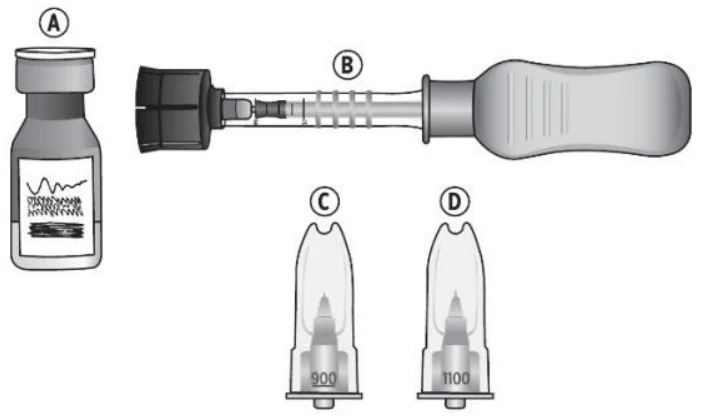
Step 1:
Remove the tray from the carton. The tray consists of two compartments:
- An open non-sterile compartment that holds the vial
- A sealed compartment that contains a sterile tray
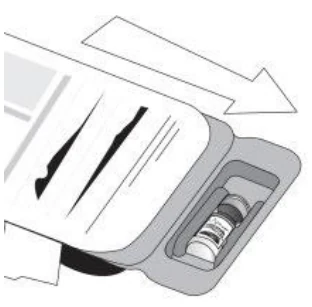
Figure A
Step 2:
Examine the tray for damage. Ensure that the sealed compartment cover is intact and that there is no evidence of damage. If damage is present, do not use.
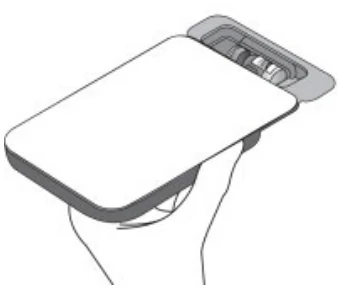
Figure B
Unclassified / Non classifié
Step 3:
Remove the vial from the tray. Examine the vial and ensure there is no evidence of damage. Set aside for use in step 6.
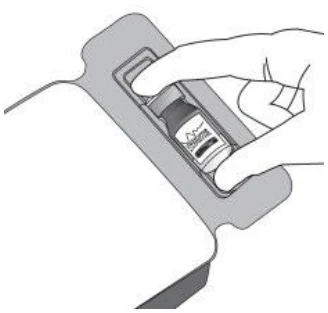
Figure C
Step 4:
Peel off the compartment cover, exposing the sterile tray.
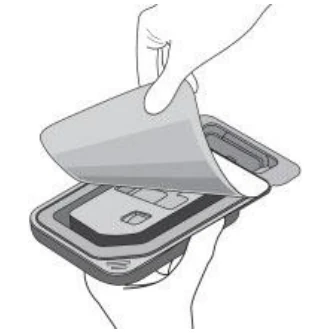
Figure D
Step 5:
Grasp and hold the long sides of the tray and invert the tray. Squeeze gently to release the sterile tray onto the appropriate sterile preparation surface.
Unclassified / Non classifié
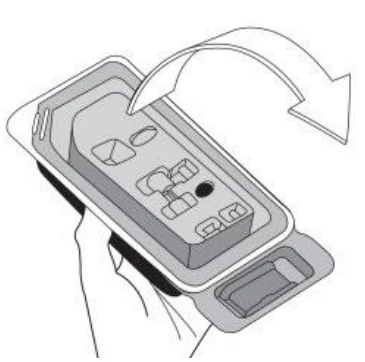
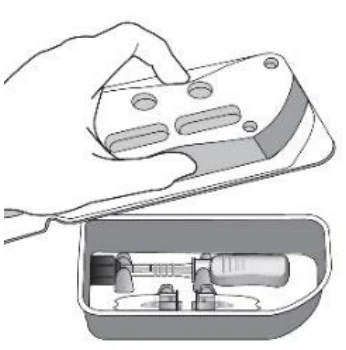
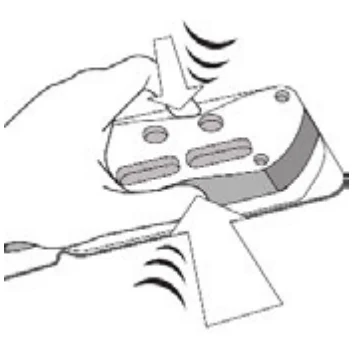
i ii iii
Figure E
Step 6:
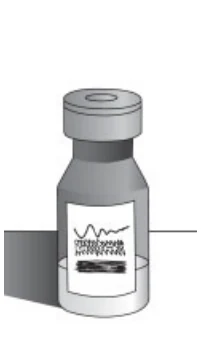
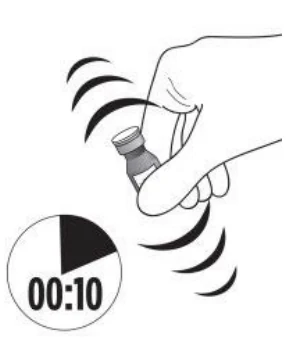
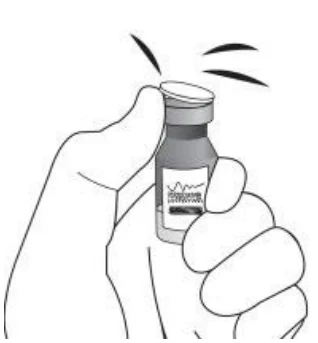
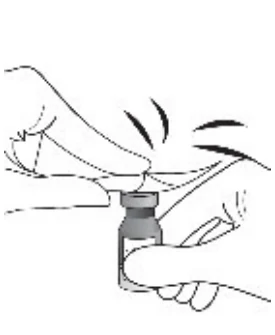
Vigorously shake the vial for 10 seconds. Inspect the vial for clumping or granular appearance of the sterile contents. If clumping or granular appearance is present, do not use. Remove the protective plastic cap from the vial and clean the top of the vial with an alcohol wipe. Place the vial on a flat surface. To avoid settling of the suspension, continue to the next steps without delay.
i ii iii iv
Figure F
Step 7:
Remove the syringe with attached vial adapter from the tray. Ensure the vial adapter is secured to the syringe by tightening the connection.
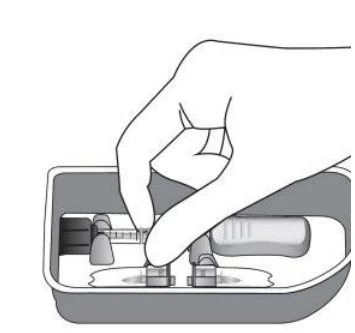
Figure G
Unclassified / Non classifié
Step 8:
Holding the clear barrel of the syringe, connect the vial adapter to the vial by firmly pushing the spike of the vial adapter straight through the center of the vial septum until it snaps securely into place.
NOTE: Do not introduce additional air into the syringe prior to connecting the vial adapter to the vial.
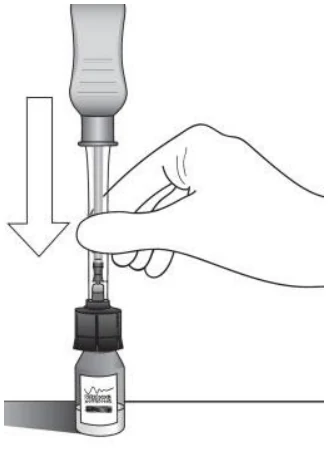
Figure H
Step 9:
Invert the entire assembly so that the vial is directly above the syringe. Slide the white plunger handle all the way back and forth multiple times to fill the entire syringe with drug and remove any remaining air.
NOTE: The syringe should be handled by the clear barrel during filling, connecting and disconnecting procedures. The white plunger handle has a stop to prevent complete removal of the plunger from the syringe.
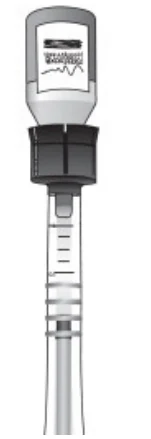
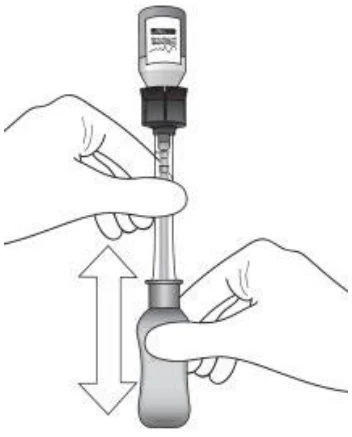
i ii
Figure I
Unclassified / Non classifié
Step 10:
While holding the vial adapter and vial, disconnect the syringe by twisting it off of the adapter. Retain the vial, with the vial adapter connected, in the event re-access is necessary.
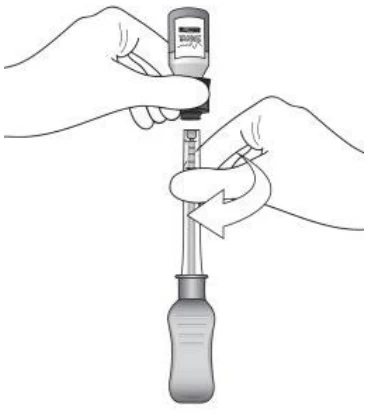
Figure J
Step 11:
Connect the 900-μm needle to the syringe by twisting onto the syringe. At the discretion of the physician, the longer needle may be used. Ensure a secure connection.
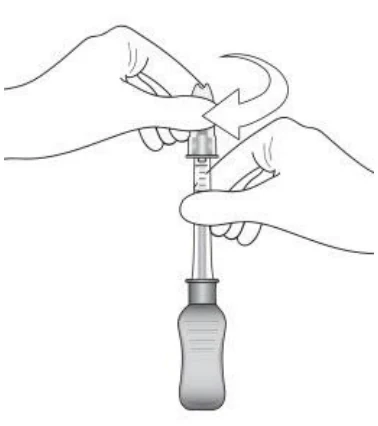
Figure K
Unclassified / Non classifié
Step 12:
Hold the syringe barrel with the needle pointing up. Expel air bubbles and excess drug by slowly sliding the white plunger handle so that the plunger tip aligns with the line that marks 0.1 mL on the syringe.
NOTE: Perform the suprachoroidal injection without delay to prevent settling of the drug.
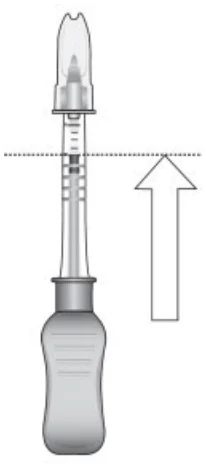
Figure L
4.8 Administration
The suprachoroidal injection procedure should be carried out under controlled aseptic conditions, which include the use of sterile gloves, a sterile drape, a sterile eyelid speculum (or equivalent), and a sterile cotton swab. Adequate anesthesia and a broad-spectrum microbicide applied to the periocular skin, eyelid, and ocular surface are recommended to be given prior to the suprachoroidal injection.
Step 13:
Identify the injection site by measuring 4 – 4.5 mm posterior to the limbus using the tip of the needle cap or ophthalmic calipers.
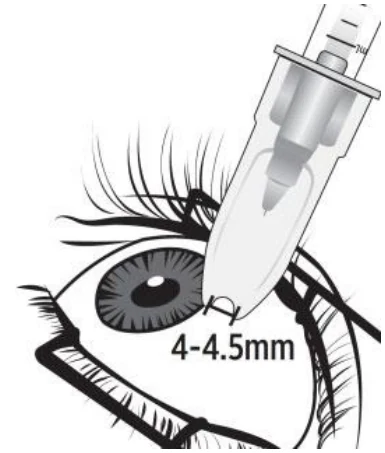
Figure M
Unclassified / Non classifié
Step 14:
Carefully pull off the needle cap to expose the needle. Holding the syringe perpendicular to the ocular surface, insert the needle through the conjunctiva into the sclera.
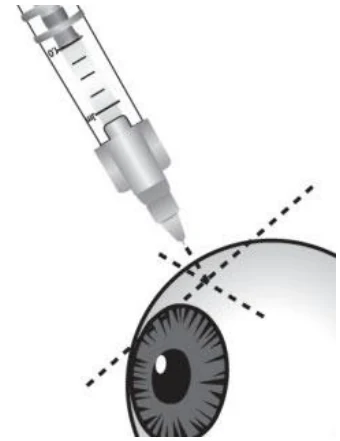
Figure N
Step 15:
Once the needle is inserted into the sclera, ensure that the hub of the needle is in firm contact with the conjunctiva, compressing the sclera and creating a dimple on the ocular surface using a light amount of force against the eye. Maintain the dimple and perpendicular positioning throughout the injection procedure.

Figure O
Unclassified / Non classifié
Step 16:
While maintaining the dimple on the ocular surface, gently press the white plunger handle so that the plunger moves forward and drug is slowly injected over 5 – 10 seconds. Movement of the plunger will be felt as a loss of resistance and indicates that the needle is in the correct anatomical location for suprachoroidal injection.
If resistance is felt and the plunger does not advance, confirm the hub is in firm contact with the conjunctiva creating a dimple and that the syringe is positioned perpendicular to the ocular surface. Small adjustments in positioning may be necessary.
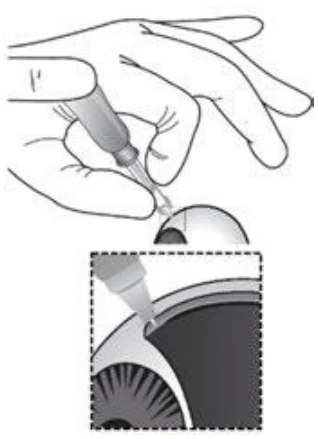
Figure P
Step 17:
Maintain the hub against the eye for 3 – 5 seconds after the drug product has been injected.
Step 18:
Remove the needle slowly from the eye while holding a sterile cotton swab next to the needle as it is withdrawn. Immediately cover the injection site with a sterile cotton swab.
Step 19:
Hold the swab over the injection site with light pressure for a few seconds and then remove.
If continued resistance is experienced during injection attempts:
- Remove the needle from the eye and examine the eye for any issues. If patient safety is not at risk, the physician may use medical judgment to restart the injection procedure at a new site adjacent to the original injection site.
If resistance continues and patient safety is not at risk, the physician may use appropriate medical judgment to change to the additional included needle in the sterile tray. Twist to remove the needle and reconnect the syringe to the vial by twisting the syringe onto the vial adapter. Repeat the preparation and injection process as stated in steps 9 – 18 with the additional needle (allowing for any partial dose given with the first needle when completing preparation Step 12).
Unclassified / Non classifié
Immediately following suprachoroidal injection, patients should be monitored for elevation of intraocular pressure. Appropriate monitoring may consist of a check for perfusion of the optic nerve head or tonometry.
Following suprachoroidal injection, patients should be instructed to report any symptoms suggestive of endophthalmitis or retinal detachment (e.g., eye pain, redness of eye, photophobia, blurring of vision) without delay.
Each XIPERE package (microinjector syringe with vial adapter, 900-μm needle, 1100-μm needle, and vial of triamcinolone acetonide injectable suspension 40 mg/mL) is single-dose and should only be used for the treatment of one eye.
After suprachoroidal injection, all drug product and components (used or unused) must be discarded appropriately.
4.9 Missed Dose
The content of each kit is intended for a single dose to be administered by a healthcare provider. Administration of subsequent doses should be approximately 12 weeks (+/- 5 days) from previous dose.
5 OVERDOSAGE
This product is administered by a physician under controlled conditions and therefore the risk of accidental patient overdose is negligible.
For the most recent information in the management of a suspected drug overdose, contact your regional poison control centre or Health Canada’s toll-free number, 1-844 POISON-X (1-844-764-7669).
Unclassified / Non classifié
6 DOSAGE FORMS, STRENGTHS, COMPOSITION AND PACKAGING
Table 1: Dosage Forms, Strengths, Composition and Packaging
XIPERE is a sterile, preservative-free, injectable suspension of triamcinolone acetonide, a synthetic corticosteroid for use with the SCS Microinjector®. Each mL of the sterile, aqueous suspension contains 40 mg of triamcinolone acetonide. XIPERE is provided as an injectable suspension in a single-dose glass vial with a rubber stopper and an aluminum seal.
The SCS Microinjector® is a piston syringe and a needle which was designed to administer XIPERE in the eye via suprachoroidal injection in the pars plana. XIPERE is supplied with the following sterile components for administration:
- One SCS Microinjector® syringe with vial adapter attached
- One 30-G x 900-μm needle
- One 30-G x 1100-μm needle
- One single-dose vial of triamcinolone acetonide injectable suspension 40 mg/mL
7 WARNINGS AND PRECAUTIONS
General
XIPERE is for suprachoroidal use only. It should not be administered intravenously.
STRICT ASEPTIC TECHNIQUE IS MANDATORY. Please see 4 DOSAGE AND ADMINISTRATION.
Triamcinolone acetonide is a glucocorticosteroid. Use of corticosteroids may enhance the establishment of secondary ocular infections due to bacteria, fungi or viruses (See 2 CONTRAINDICATIONS).
Carcinogenesis and Mutagenesis
Carcinogenicity studies in animals and mutagenicity tests were negative (See NON-CLINICAL TOXICOLOGY).
| Route of Administration | Dosage Form / Strength/Composition | Non-medicinal Ingredients |
Suprachoroidal injection | Injectable suspension / triamcinolone acetonide 40 mg/mL | Calcium Chloride Dihydrate, Carboxymethylcellulose Sodium, Hydrochloric Acid (used to adjust pH), Magnesium Chloride Hexahydrate, Polysorbate 80, Potassium Chloride, Sodium Acetate Trihydrate, Sodium Chloride, Sodium Citrate Dihydrate and Water for Injection |
Unclassified / Non classifié
Hepatic/Biliary/Pancreatic
No studies have been conducted to examine the pharmacokinetics of XIPERE in patients with, hepatic/biliary/pancreatic impairment.
Endocrine
Hypothalamic-pituitary-adrenal (HPA) axis suppression, Cushing’s syndrome, and hyperglycemia can occur following administration of a corticosteroid. Monitor patients for these conditions with chronic use. Corticosteroids can produce reversible hypothalamic-pituitary-adrenal axis suppression with the potential for glucocorticosteroid insufficiency after withdrawal of treatment. This type of relative insufficiency may persist for months after discontinuation of therapy; therefore, in any situation of stress occurring during that period, hormone therapy should be reinstituted. Metabolic clearance of corticosteroids is decreased in hypothyroid patients and increased in hyperthyroid patients. Changes in thyroid status of the patient may necessitate adjustment in dosage.
Immune
Hypersensitivity was reported post-market (See 8.5 Post-market adverse reactions).
Ophthalmologic
Endophthalmitis, eye inflammation, increased intraocular pressure, chorioretinopathy, including crystalline maculopathy and viral retinitis (mainly by cytomegalovirus) and visual disturbances including vision loss have been reported with intraocular administration.
Corticosteroids should be used cautiously in patients with a history of ocular herpes simplex. Corticosteroids should not be used in patients with active ocular herpes simplex.
Use of corticosteroids may produce cataracts, increased intraocular pressure and glaucoma.
Peri-Operative Considerations
Immediately following suprachoroidal injection, patients should be monitored for elevation of intraocular pressure. Appropriate monitoring may consist of a check for perfusion of the optic nerve head or tonometry.
Proper aseptic techniques should always be used when administering triamcinolone acetonide during suprachoroidal injection to prevent the risk of endophthalmitis. Adequate anesthesia and a broad-spectrum microbicide applied to the periocular skin, eyelid, and ocular surface are recommended to be given prior to the suprachoroidal injection.
Patients should be instructed to report any symptoms suggestive of endophthalmitis without delay.
Each vial should only be used for the treatment of a single eye during a single suprachoroidal injection.
Reproductive health: Female and male potential
Studies have not been performed to evaluate the effect of an ocular injection of triamcinolone acetonide on fertility in humans or animals at the clinical dose.
Unclassified / Non classifié
7.1 Special Populations
7.1.1 Pregnant Women
There are no adequate and well-controlled studies with XIPERE in pregnant women to inform drug-associated risks. In animal reproductive studies from the published literature, topical ocular administration of corticosteroids has been shown to produce teratogenicity at clinically relevant doses. Although systemic exposure of triamcinolone would be expected to be very low after suprachoroidal administration, triamcinolone is not recommended for use during pregnancy. Xipere should be used during pregnancy only if the potential benefit justifies the potential risk to the fetus.
7.1.2 Breast-feeding
It is not known whether ocular administration of corticosteroids could result in sufficient systemic absorption to produce detectable quantities in human milk. Systemically administered corticosteroids appear in human milk and could suppress growth, interfere with endogenous corticosteroid production, or cause other untoward effects. The developmental and health benefits of breastfeeding should be considered along with the mother’s clinical need for XIPERE and any potential adverse effects on the breastfed infant from XIPERE. There are no data on the effects of XIPERE on milk production.
7.1.3 Pediatrics
Pediatrics (< 18 years of age)
Safety and effectiveness of XIPERE in pediatric patients have not been established.
7.1.4 Geriatrics
Geriatrics (> 65 years of age)
No overall differences in safety or effectiveness have been observed between elderly and younger patients following XIPERE administration.
8 ADVERSE REACTIONS
8.1 Adverse Reaction Overview
Overall, the majority of subjects (53.8%, 86/160) experienced Study eye treatment-emergent adverse events (TEAE). The percentage of patients with 1 or more ocular adverse events was 51.0% in the XIPERE arm and 57.8% in the control arm. The percentage of patients with ocular adverse events considered by the investigator to be treatment related was 30.2% (29/96) in the XIPERE arm and 12.5% (8/64) in the control arm. The most frequently reported ocular adverse events considered related to study treatment were cystoid macular edema (experienced in 0% vs. 4.7% of subjects in XIPERE and control arms, respectively), eye pain at time of procedure (experienced in 9.4% vs. 0% of subjects, respectively), and elevated intra-ocular pressure (IOP) associated with corticosteroid (experienced in 15.6% vs. 0% of subjects, respectively). One serious adverse event was experienced in the Study eye in the XIPERE arm. Retinal detachment was reported which was not considered related to study treatment. In addition, there were 5 adverse events leading to study drug discontinuation in each treatment group (experienced by 5.2% and 7.8% of subjects in XIPERE and Sham-Control arm, respectively).
Unclassified / Non classifié
In the sham-control arm, the majority of adverse events leading to study drug discontinuation were due to uveitis (experienced by 6.3% of subjects); there was also one event of iridocyclitis (experienced by 1.6% of subjects). and one event of IOP elevation (experienced by 1.6% of subjects). In the XIPERE arm, there were single events leading to study drug discontinuation; ocular hypertension (experienced by 1.0% of subjects), IOP elevation (experienced by 1.0% of subjects), uveitis (experienced by 1.0% of subjects), visual acuity reduced (experienced by 1.0% of subjects) and vitreous hemorrhage (experienced by 1.0% of subjects).
8.2 Clinical Trial Adverse Reactions
Clinical trials are conducted under very specific conditions. The adverse reaction rates observed in the clinical trials; therefore, may not reflect the rates observed in practice and should not be compared to the rates in the clinical trials of another drug. Adverse reaction information from clinical trials may be useful in identifying and approximating rates of adverse drug reactions in real-world use.
The most common ocular (study eye) adverse reactions occurring in ≥ 2% of patients and non-ocular adverse reactions occurring in ≥ 5% of patients are shown in Table 2.
Unclassified / Non classifié
Table 2 : Xipere-Related Ocular and Non-Ocular Treatment Emergent Adverse Events
| Ocular | ||
XIPERE n= 96 n (%) | Sham-control n= 64 n (%) | |
Eye Disorders Cataract cortical Cataract subcapsular Conjunctival disorder Conjunctival haemorrhage Conjunctival hyperaemia Conjunctival oedema Cystoid macular oedema Eye irritation Eye pain Iridocyclitis Macular pseudohole Meibomianitis Ocular hypertension Photophobia Punctate keratitis Uveitis Vision blurred Visual acuity reduced Vitreous detachment General disorders and administration site conditions Injection site discomfort Injection site erythema Injection site pain Investigations Intraocular pressure increased | 1 (1.0%) 4 (4.2%) 1 (1.0%) 2 (2.1%) 2 (2.1%) 1 (1.0%) 0 1 (1.0%) 9 (9.4%) 1 (1.0%) 1 (1.0%) 1 (1.0%) 2 (2.1%) 1 (1.0%) 2 (2.1%) 0 1 (1.0%) 2 (2.1%) 1 (1.0%) 1 (1.0%) 1 (1.0%) 3 (3.1%) 13 (13.5%) 13 (13.5%) | 0 0 0 0 1 (1.6%) 0 3 (4.7%) 0 0 0 0 0 0 0 1 (1.6%) 1 (1.6%) 0 0 0 1 (1.6%) 0 2 (3.1%) 0 0 |
| Non-Ocular | ||
System Organ Class Preferred Term | XIPERE n= 96 n (%) | Sham-control n= 64 n (%) |
Unclassified / Non classifié
Number of Study Drug-Related TEAEs Gastrointestinal disorder Vomiting Nervous system disorders Headache | 1 (1.0) 1 (1.0) 1 (1.0) 1 (1.0) | 1 (0.6) 1 (0.6) 1 (0.6) 1 (0.6) |
a Includes intraocular pressure increased and ocular hypertension
b Defined as eye pain associated with injection procedure regardless whether it was resolved on the same day or not
c Includes cataract, cataract cortical, and cataract subcapsular
d Defined as occurring on the day of the injection procedure and resolving the same day
8.5 Post-market adverse reactions
Class related adverse events with corticosteroids have included increased intraocular pressure, cataract, glaucoma, endophthalmitis and intraocular infection. Adverse events associated with intraocular injections have included ocular haemorrhage and temporary loss of vision in post-marketing.
Hypersensitivity has been reported post-market with triamcinolone acetonide, with symptoms including: pruritus, blister, rash, urticaria.
9 DRUG INTERACTIONS
9.5 Drug Interactions Overview
Given the low systemic drug exposure following intraocular dosing, the potential for drug-drug interactions is considered to be extremely low. Therefore, specific interaction studies have not been conducted with XIPERE
9.6 Drug-Drug Interactions
Interactions with other drugs have not been established.
9.7 Drug-Food Interactions
Interactions with food have not been established.
9.8 Drug-Herb Interactions
Interactions with herbal products have not been established.
9.9 Drug-Laboratory Test Interactions
Interactions with laboratory tests have not been established.
Unclassified / Non classifié
10 CLINICAL PHARMACOLOGY
10.1 Mechanism of Action
XIPERE is a drug delivery system (syringe and needle) classified as a combination product for which the drug and device components are integrated in a singular product to provide the therapeutic effect. The device component (syringe) functions solely as the delivery vehicle for the drug component.
Triamcinolone acetonide is a synthetic glucocorticoid (glucocorticoids are often referred to as corticosteroids) with immunosuppressive and anti-inflammatory activity. The primary mechanism of action for triamcinolone acetonide is as a corticosteroid hormone receptor agonist.
10.3 Pharmacokinetics
Plasma triamcinolone acetonide concentrations were evaluated in 19 patients with dosing of 4 mg XIPERE at Day 0 and Week 12. Plasma triamcinolone acetonide concentrations in all 19 patients were below 100 pg/mL at Week 4, 12, and 24 (concentrations ranged from < 10 pg/mL [LLOQ (lower limit of quantitation) of the assay] to 88.9 pg/mL), with the exception of one patient with a value of 243.4 pg/mL prior to the second dose at Week 12.
In animal studies (new zealand white rabbits), data demonstrate that a suprachoroidal injection results in differential distribution of triamcinolone acetonide in the eye. Larger amounts of triamcinolone acetonide are found in total in the sclera, choroid, retinal pigment epithelial, and retina, compared the amounts found following an injection of 4 mg of triamcinolone acetonide. Lower amounts of triamcinolone acetonide are found in the anterior segment and lens when either comparing to the retinal and choroidal levels from a suprachoroidal injection of triamcinolone acetonide or when comparing to the amounts found in these anterior segment regions following intravitreal injection of triamcinolone acetonide. Plasma levels were comparable (and low) by either route of administration.
11 STORAGE, STABILITY AND DISPOSAL
Store at 15°C to 25°C; do not freeze. Protect from light. Discard unused portion.
Keep out of sight and reach of children.
12 SPECIAL HANDLING INSTRUCTIONS
There are no special handling instructions for this product.
PART II: SCIENTIFIC INFORMATION
13 PHARMACEUTICAL INFORMATION
Drug Substance
Unclassified / Non classifié
Proper name: Triamcinolone Acetonide
Chemical name: 9-fluoro-11β,16α,17,21-tetrahydroxypregna-1,4-diene-3,20-dione cyclic 16,17-acetal with acetone.
Molecular formula and molecular mass: C24H31FO6 434.50 g/mol
Structural formula:
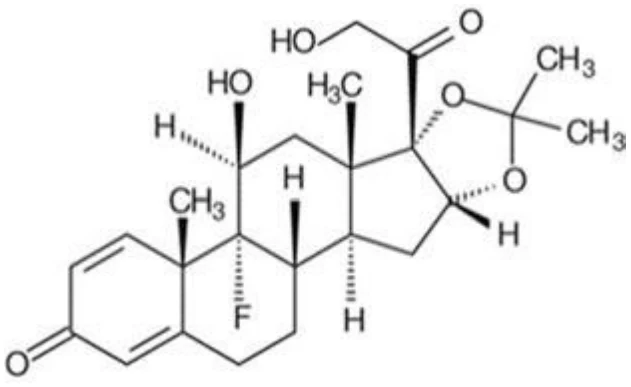
Physicochemical properties:
Description: Triamcinolone acetonide occurs as a white to cream-colored, crystalline powder having not more than a slight odor.
Solubility: Practically insoluble in water and very soluble in alcohol pKa: 6.5.
Unclassified / Non classifié
14 CLINICAL TRIALS
14.1 Clinical Trials by Indication
The Treatment of Macular Edema Associated with Uveitis
Table 6: Summary of Patient Demographics for Clinical Trials in Treatment of Macular Edema Associated with Uveitis
| Study # | Study design | Dosage, route of administration and duration | Study subjects (n) | Mean age (Range) | Sex |
| CLS1001-301 (PEACHTREE) | Phase 3, randomized, masked, sham-controlled, multicenter study evaluating safety and efficacy of 4 mg of the triamcinolone acetonide injectable suspension, 40 mg/mL administered via suprachoroidal injection in subjects with macular edema associated with non-infectious uveitis | 2 treatments (Day 0 and Week 12) Follow-up 24 weeks following Baseline | 160 patients 96 triamcinolon e acetonide injectable suspension, 40 mg/mL 64 sham-control | 50 years (18 to 92 years) | Xipere Male: 42 (43.8%) Female: 54 (56.3%) Sham-Control Male: 30 (46.9%) Female: 34 (53.1%) Overall Male: 72 (45.0%) Female: 88 (55.0%) |
The efficacy of triamcinolone acetonide for suprachoroidal injection was evaluated in a multicenter, randomized, double-masked, sham procedure-controlled trial (PEACHTREE) in subjects ≥18 years of age with macular edema secondary to non-infectious uveitis. Subjects with retinal central subfield thickness (CST) ≥300 µm as measured by Spectral Domain Optical Coherence Tomography (SD-OCT) and Early Treatment Diabetic Retinopathy Study (ETDRS) best corrected visual acuity (BCVA) score of ≥5 to ≤70 Early Treatment Diabetic Retinopathy Study letters read were randomized 3:2 to receive a suprachoroidal injection of triamcinolone acetonide (4 mg) or a sham control injection procedure in the study eye at baseline and at Week 12. Follow-up visits were conducted every 4 weeks up to Week 24, and subjects could receive rescue therapy based on preestablished criteria or clinician discretion. The majority of subjects were South Asian (45%) and female (55%) with a mean age of 50 years. The primary outcome measure was the proportion of subjects with a change from baseline (CFB) of ≥15
Unclassified / Non classifié
Early Treatment Diabetic Retinopathy Study letters in best corrected visual acuity (≥3 lines of vision) at 24 weeks. The secondary efficacy endpoint was the mean change in central subfield thickness (CST) at 24 weeks.
A statistically significantly greater proportion of patients treated with triamcinolone acetonide for suprachoroidal space (SCS) injection achieved an improvement of ≥ 15 letters in BCVA than sham-control patients (p < 0.01) at Week 24.
Table 7: Results of Key Endpoints at 24 Weeks in Subjects with Macular Edema Associated with Uveitis in Study CLS1001-301 (PEACHTREE)
| Study CLS1001-301 (PEACHTREE) | |||
| XIPERE at 40 mg/mL (N=96) | Sham control (N=64) | Adjusteda treatment difference (95% CI) | |
| Primary endpoint | |||
| Proportion of subjects with a change from Baseline to Week 24 of ≥ 15 letters read in BCVA | 45/96 (46.9%) | 10/64 (15.6%) | 31.25% (15.5, 45.9)b |
| Key secondary endpoints | |||
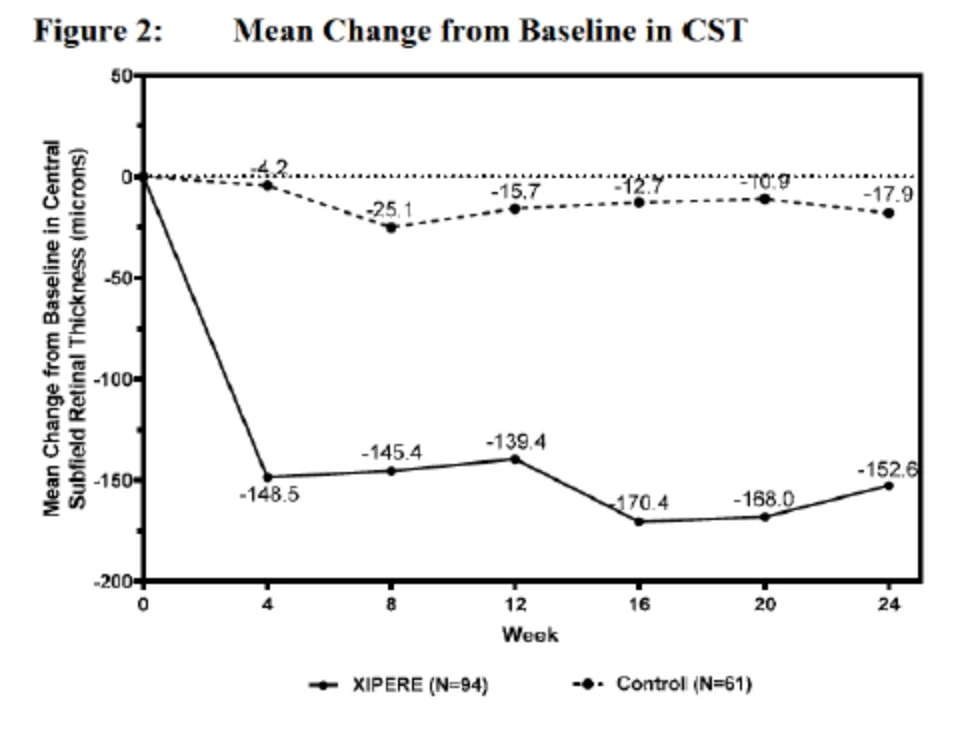
| Mean change from Baseline in the central subfield thickness (CST) as measured at Week 24 | -152.6 μm | -17.9 μm | -157.71 μm (-198.86, -116.57)b |
Unclassified / Non classifié a. Based on Cochran-Mantel-Haenszel (CMH) test for general association between treatment and response adjusted for randomization stratification factors b. Statistically significant after adjusting for country group for XIPERE vs. Sham control comparison (CMH p<0.001)
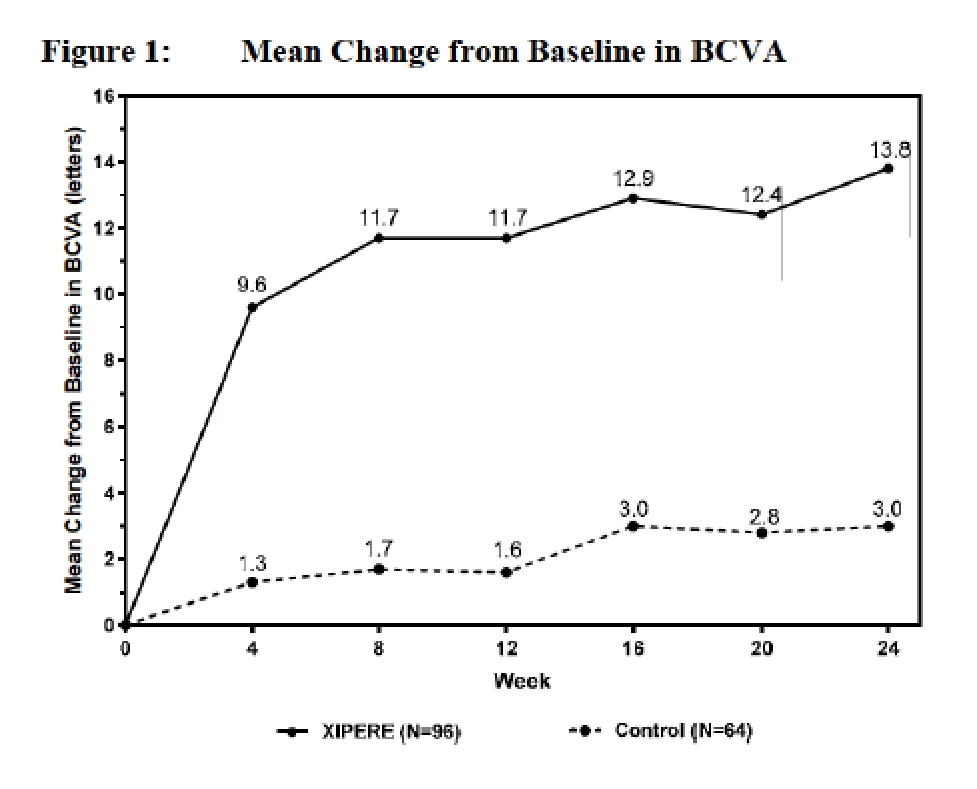
BCVA mean change from baseline at different visits is shown in Figure 1.
CST mean change from baseline at different visits is shown in Figure 2.
Unclassified / Non classifié
Unclassified / Non classifié
15 MICROBIOLOGY
No microbiological information is required for this drug product.
16 NON-CLINICAL TOXICOLOGY
General Toxicology
Increased intraocular pressure (approximately 2-5 mmHg or 10% higher compared to the vehicle control group) was observed when 4 mg/mL of Xipere was administered into the suprachoroidal space of rabbits.
Carcinogenicity
In a 2-year study in rats, triamcinolone acetonide caused no treatment-related carcinogenicity at oral doses up to 0.001 mg/kg and in a 2-year study in mice, triamcinolone acetonide caused no treatment-related carcinogenicity at oral doses up to 0.003 mg/kg. However, a slightly higher incidence of liver tumors (5% vs up to 3% in controls) was observed at the 0.0048 mg/kg dose level in a 2-year rat drinking water study for triamcinolone acetonide.
Genotoxicity
No evidence of mutagenicity was detected from in vitro tests conducted with triamcinolone acetonide, including a reverse mutation test in Salmonella bacteria and a forward mutation test in Chinese hamster ovary cells.
Reproductive and Developmental Toxicology
Like other corticosteroids, triamcinolone acetonide is teratogenic when administered to pregnant animals. Dose-related teratogenic effects in rats and rabbits included cleft palate and/or internal hydrocephaly and axial skeletal defects, whereas the effects observed in monkeys were cranial.
Corticosteroids are secreted in human milk. Reports suggest that steroid concentrations in human milk are 5 to 25% of maternal serum levels, and that total infant daily doses are small, less than 0.2% of the maternal daily dose.
In male and female rats, triamcinolone acetonide had no treatment-related effects on fertility at oral doses up to 0.015 mg/kg but caused increased fetal resorptions and stillbirths and decreases in pup weight and survival at doses of 0.0025 mg/kg. Dystocia and prolonged delivery were observed in rats at the maternally toxic 0.008 mg/kg dose level. The potential for any effects on reproductive and developmental toxicity is low as pharmacokinetic and toxicokinetic data demonstrate that systemic (plasma) exposure to triamcinolone acetonide is minimal following a bilateral suprachoroidal injection of triamcinolone acetonide injectable suspension.