


Product Monograph - Ozurdex
Recent Major Label Changes
| 7 Warnings and Precautions, Ophthalmologic | 2026-04 |
|---|
Table of Contents
Certain sections or subsections that are not applicable at the time of the preparation of the most recent authorized product monograph are not listed.
Recent Major Label Changes ................................................................................................... 2
Table of Contents ................................................................................................................... 2
Part 1: Healthcare Professional Information ........................................................................... 5
- 1.
Indications ....................................................................................................................... 5
1.1. Pediatrics .................................................................................................................. 5
1.2. Geriatrics .................................................................................................................. 5
- 2. Contraindications ............................................................................................................ 5
- 4.
Dosage and Administration ............................................................................................. 5
4.1. Dosing Considerations .............................................................................................. 5
4.2. Recommended Dose and Dosage Adjustment ......................................................... 6
4.3. Administration .......................................................................................................... 6
4.4. Missed Dose ............................................................................................................. 7
- 5. Overdose ......................................................................................................................... 7
- 6. Dosage Forms, Strengths, Composition, and Packaging ................................................... 7
- 7.
Warnings and Precautions ............................................................................................... 8
General ................................................................................................................................. 8
Carcinogenesis and Genotoxicity .......................................................................................... 8
Driving and Operating Machinery ......................................................................................... 8
Endocrine and Metabolism ................................................................................................... 8
Hepatic/Biliary/Pancreatic .................................................................................................... 9
Ophthalmologic .................................................................................................................... 9
Perioperative Considerations ............................................................................................. 10
Renal ................................................................................................................................... 10
Reproductive Health ........................................................................................................... 10
7.1. Special Populations ................................................................................................ 10
7.1.1. Pregnancy ...................................................................................................... 10
7.1.2. Breastfeeding ................................................................................................ 10
7.1.3. Pediatrics ....................................................................................................... 10
7.1.4. Geriatrics ....................................................................................................... 10
- 8.
Adverse Reactions ......................................................................................................... 11
8.1. Adverse Reaction Overview .................................................................................... 11
8.2. Clinical Trial Adverse Reactions .............................................................................. 11
8.3. Less Common Clinical Trial Adverse Reactions ....................................................... 16
8.5. Post-Market Adverse Reactions ............................................................................. 16
- 9.
Drug Interactions ........................................................................................................... 17
9.2. Drug Interactions Overview .................................................................................... 17
9.3. Drug-Behaviour Interactions .................................................................................. 18
9.4. Drug-Drug Interactions ........................................................................................... 18
9.5. Drug-Food Interactions........................................................................................... 18
9.6. Drug-Herb Interactions ........................................................................................... 18
9.7. Drug-Laboratory Test Interactions ......................................................................... 18
- 10.
Clinical Pharmacology ................................................................................................... 18
10.1. Mechanism of Action .............................................................................................. 18
10.2. Pharmacodynamics ................................................................................................ 18
10.3. Pharmacokinetics ................................................................................................... 19
- 11. Storage, Stability, and Disposal ...................................................................................... 19
- 12. Special Handling Instructions ......................................................................................... 19
Part 2: Scientific Information ................................................................................................ 20
- 13. Pharmaceutical Information .......................................................................................... 20
- 14.
Clinical Trials .................................................................................................................. 21
14.1. Clinical Trials by Indication ..................................................................................... 21
Indication of Macular Edema due to CRVO ........................................................................... 21
Indication of Posterior Segment Uveitis ................................................................................ 23
Indication of Diabetic Macular Edema (DME) ....................................................................... 26
- 15. Microbiology ................................................................................................................. 29
- 16. Non-Clinical Toxicology .................................................................................................. 29
Patient Medication Information ........................................................................................... 31
Part 1: Healthcare Professional Information
1. Indications
OZURDEX (Dexamethasone Intravitreal Implant) is indicated for:
- the treatment of macular edema following central retinal vein occlusion (CRVO).
- the treatment of non-infectious uveitis affecting the posterior segment of the eye.
- the treatment of adult patients with diabetic macular edema (DME) who are pseudophakic.
1.1. Pediatrics
Pediatrics (<18 years of age): No data are available to Health Canada; therefore, Health Canada has not authorized an indication for pediatric use.
1.2. Geriatrics
Geriatrics (>65 years of age): No dose adjustment is required for elderly patients.
2. Contraindications
Dexamethasone Intravitreal Implant is contraindicated in patients with:
- known hypersensitivity to this drug or to any ingredient in the formulation, including any non-medicinal ingredient, or components of the container. For a complete listing, see 6 Dosage Forms, Strengths, Composition, and Packaging.
- active or suspected ocular or periocular infections including most viral diseases of the cornea and conjunctiva, including active epithelial herpes simplex keratitis (dendritic keratitis), vaccinia, varicella, mycobacterial infections, and fungal diseases.
- advanced glaucoma.
- known hypersensitivity to other corticosteroids.
- aphakic eyes with ruptured posterior lens capsule.
- eyes with ACIOL (Anterior Chamber Intraocular Lens), iris or transscleral fixated IOLs and ruptured posterior lens capsule.
4. Dosage and Administration
4.1. Dosing Considerations
For ophthalmic intravitreal injection only.
OZURDEX must be administered by a qualified ophthalmologist experienced in intravitreal injections.
Administration to both eyes concurrently is not recommended.
Patients should be monitored following the injection to permit early treatment if an infection or increased intraocular pressure occurs.
Dosing of OZURDEX is recommended when there is evidence of macular edema or vascular leakage in the macula.
Dosing of OZURDEX is also recommended when there is evidence of non-infectious uveitis affecting the posterior segment of the eye.
OZURDEX should not be used in patients with:
- active or suspected ocular or periocular infections (see 2 Contraindications).
- advanced glaucoma.
- aphakic eyes with rupture of the posterior lens capsule
- anterior chamber intraocular lens and rupture of the posterior lens capsule
- known hypersensitivity to any components of this product or to other corticosteroids.
4.2. Recommended Dose and Dosage Adjustment
The recommended dose for the treatment of macular edema following CRVO is one OZURDEX implant (entire contents of one single use OZURDEX 0.7 mg device).
The recommended dose for the treatment of adult patients with non-infectious uveitis of the posterior segment of the eye is 700 mcg per eye (entire contents of single use OZURDEX 0.7 mg device).
The recommended dose for the treatment of diabetic macular edema is 700 mcg per eye (entire contents of single use OZURDEX 0.7 mg device).
Reinjection of OZURDEX for diabetic macular edema is recommended when there is a presence of macular edema (see 14 Clinical Trials).
There is only very limited information on repeat dosing intervals less than 6 months (see 14 Clinical Trials) and there is currently more information on repeat administrations beyond 2 implants for CRVO and uveitis. A 2-year observational study has shown that the use of more than two consecutive administrations is associated with increases in some adverse reactions; therefore, no more than two consecutive OZURDEX injections should be used, and an interval of approximately 6 months should be allowed between the two injections.
Patients who experience and retain improved vision should not be retreated. Patients who experience a deterioration in vision, which is not slowed by OZURDEX, should not be retreated.
Repeat doses should only be considered when a patient experiences a response to treatment followed subsequently by a loss in visual acuity and in the physician’s opinion may benefit from retreatment without being exposed to significant risk.
4.3. Administration
Single-use intravitreal implant in applicator for intravitreal use only. Each applicator can only be used for the treatment of a single eye.
The intravitreal injection procedure should be carried out under controlled aseptic conditions which include the use of sterile gloves, a sterile drape, and a sterile eyelid speculum (or equivalent). Disinfection of the periocular skin, eyelid, and ocular surface (including drops of povidone iodine 5% solution on the conjunctiva) and administration of adequate local anesthesia are recommended prior to the injection.
Remove the foil pouch from the carton and examine for damage. Then, in a sterile field, open the foil pouch and gently place the applicator on a sterile tray. Carefully remove the cap from the applicator.
Hold the applicator in one hand and pull the safety tab straight off the applicator.
Do not twist or flex the tab. The long axis of the applicator should be held parallel to the limbus, and the sclera should be engaged at an oblique angle with the bevel of the needle up (away from the sclera) to create a shelved scleral path. The tip of the needle is advanced within the sclera for about 1 mm (parallel to the limbus), then redirected toward the centre of the eye and advanced until penetration of the sclera is completed and the vitreous cavity is entered. The needle should not be advanced past the point where the sleeve touches the conjunctiva. Slowly depress the actuator button until an audible click is noted. Before withdrawing the applicator from the eye, make sure that the actuator button is fully depressed and has locked flush with the applicator surface. Remove the needle in the same direction as used to enter the vitreous.
Immediately after injecting OZURDEX, use indirect ophthalmoscopy in the quadrant of injection to confirm successful implantation. Visualization is possible in the large majority of cases. In cases in which the implant cannot be visualized, take a sterile cotton applicator and lightly depress over the injection site to bring the implant into view.
Following the intravitreal injection, patients should be monitored for elevation in intraocular pressure and for endophthalmitis. Monitoring may consist of a check for perfusion of the optic nerve head immediately after the injection, tonometry within 30 minutes following the injection, and biomicroscopy between two and seven days following the injection.
Patients should be instructed to report any symptoms suggestive of endophthalmitis without delay.
4.4. Missed Dose
Missed dose with OZURDEX has not been reported in clinical trials and would not be expected due to its method of administration.
5. Overdose
Overdose with OZURDEX has not been reported in clinical trials and would not be expected due to its method of administration.
For the most recent information in the management of a suspected drug overdose, contact your regional poison control centre or Health Canada’s toll-free number, 1-844 POISON-X (1-844-764-7669).
- 6. Dosage Forms, Strengths, Composition, and Packaging
Table 1 – Dosage Forms, Strengths, and Composition
| Route of Administration | Dosage Form/ Strength/Composition | Non-Medicinal Ingredients |
| Intravitreal injection | Intraocular implant/0.7 mg dexamethasone/ solid polymer drug delivery system | PLGA biodegradable polymer matrix (NOVADUR®) consisting of Resomer® RG 502, Poly (D,L-lactide-co-glycolide), 50:50 PLGA ester terminated; and Resomer® RG 502 H, Poly (D,L-lactide-co-glycolide), 50:50 PLGA acid terminated. |
Description
OZURDEX is a biodegradable intravitreal implant containing 700 mcg dexamethasone in a solid polymer drug delivery system. OZURDEX is preloaded into a sterile, single-use, specially designed drug delivery system applicator to facilitate injection of the rod-shaped implant directly into the vitreous.
7. Warnings and Precautions
General
There is only very limited information on repeat dosing intervals less than 6 months and there is currently more information on repeat administrations beyond 2 implants in patients with macular edema due to CRVO. A 2-year observational study has shown that the use of more than two consecutive administrations is associated with increases in some adverse reactions; therefore, for macular edema following CRVO, no more than two consecutive OZURDEX injections should be used, and an interval of approximately 6 months should be allowed between the two injections (see 4 Dosage and Administration).
In patients with posterior segment uveitis, as there is no experience with more than one OZURDEX injection, the use of a second OZURDEX injection is not recommended. Caution should be exercised if a second injection is considered in cases where the possible benefits are believed to outweigh the risk to the patient. An interval of approximately 6 months should be allowed between the two injections.
Patients who experience and retain improved vision should not be retreated. Patients who experience a deterioration in vision, which is not slowed by OZURDEX, should not be retreated.
Repeat doses should only be considered when a patient experiences a response to treatment followed subsequently by a loss in visual acuity and in the physician’s opinion may benefit from retreatment without being exposed to significant risk.
OZURDEX has not been studied in patients with macular edema secondary to RVO with significant retinal ischemia, therefore OZURDEX is not recommended in these patients.
The safety and efficacy of OZURDEX administered to both eyes concurrently have not been studied, therefore administration to both eyes is not recommended.
OZURDEX has not been studied in aphakic patients. Therefore, OZURDEX should be used with caution in these patients.
Carcinogenesis and Genotoxicity
No carcinogenicity studies were performed (see 16 Non-Clinical Toxicology).
Driving and Operating Machinery
Patients may experience temporary visual blurring after receiving OZURDEX by intravitreal injection. They should not drive or use machines until this has resolved.
Endocrine and Metabolism
Disturbances on the corticosteroids Hypothalamic–pituitary–adrenal (HPA) axis in humans were not evaluated for OZURDEX.
Hepatic/Biliary/Pancreatic
No studies have been conducted to examine the pharmacokinetics of OZURDEX in patients with, hepatic/biliary/pancreatic impairment.
Ophthalmologic
Intravitreal Injection-related Effects:
OZURDEX must be administered by a qualified ophthalmologist experienced in intravitreal injections. Intravitreal injections have been associated with endophthalmitis, eye inflammation, increased intraocular pressure, and retinal detachments. Patients who had a tear in the posterior lens capsule (e.g., due to cataract surgery), or who had an iris opening to the vitreous cavity (e.g., due to iridectomy) are at risk of implant migration into the anterior chamber. Implant migration to anterior chamber might lead to corneal edema and/or corneal decompensation. Persistent severe corneal edema could progress to the need of corneal transplantation. Regular monitoring of such patients allows for early diagnosis and management of device migration. Proper aseptic injection techniques must always be used.
There have been reports of implant misplacement requiring surgical intervention.
Serious cases of dislocated implants moving into the anterior chamber have been reported, some of which required eye surgery (see 8.5 Post-Market Adverse Drug Reactions).
Several cases of hypotony of the eye (associated with vitreous leakage due to injection) were also reported, some of which were serious (see 8.5 Post-Market Adverse Drug Reactions).
Patients should be monitored regularly following the injection including monitoring of the perfusion of the optic nerve head immediately after the injection, tonometry within 30 minutes following the injection, and biomicroscopy between two and seven days following the injection. Patients should be instructed to report any symptoms suggestive of endophthalmitis or any of the above-mentioned events without delay (see 4 Dosage and Administration).
The most common haemorrhagic adverse reaction reported in patients receiving anti-platelet therapy was conjunctival haemorrhage (24%). OZURDEX should be used with caution in patients taking anti-coagulant or anti-platelet medicinal products (see 9 Drug Interactions).
Potential Steroid-related Effects:
Prolonged use of corticosteroids, including those with OZURDEX, have been associated with posterior subcapsular cataracts, increased intraocular pressure and glaucoma. Use of corticosteroids may enhance the establishment of secondary ocular infections due to bacteria, fungi, or viruses.
Corticosteroids should be used cautiously in patients with a history of ocular herpes simplex. Corticosteroids should not be used in active ocular herpes simplex.
In clinical studies, cataract was reported more frequently in patients with phakic lens receiving a second injection (see 8 Adverse Reactions). Increase of Intraocular Pressure (IOP) of ≥ 10 mmHg from baseline was also reported with maximum rates at 60 days following the OZURDEX injection. Patients less than 45 years old were more likely to experience IOP increase. Therefore, regular monitoring of IOP is required and any elevation should be managed appropriately post-injection as needed.
OZURDEX is a biodegradable polymer matrix containing 700 mcg micronized dexamethasone. However, implant residuals were reported in 34% of patients treated with OZURDEX but also in 17% of patients treated with the sham. There does not appear to be residuals accumulation following the second implant. The possible impacts of implant residuals after OZURDEX injection are unknown.
Perioperative Considerations
The intravitreal injection procedure should be carried out under controlled aseptic conditions which include the use of sterile gloves, a sterile drape, and a sterile eyelid speculum (or equivalent). Adequate anesthesia and a broad-spectrum microbicide should be given prior to the injection.
Renal
No studies have been conducted to examine the pharmacokinetics of OZURDEX in patients with renal impairment.
Reproductive Health
No reproductive and developmental toxicity data are available for OZURDEX. Dexamethasone has been shown to be teratogenic in mice and rabbits following topical ophthalmic application (Pregnancy Category C). Therefore, OZURDEX is not recommended during pregnancy unless the potential benefit justifies the potential risk to the foetus (see 7.1.1 Pregnancy).
7.1. Special Populations
7.1.1. Pregnancy
Topical dexamethasone has been shown to be teratogenic in mice (fetal resorptions and cleft palate) and rabbits (fetal resorptions and multiple abnormalities involving the head, ears, limbs, palate, etc.). Pregnant rhesus monkeys treated with dexamethasone intramuscularly had fetuses with cranial abnormalities (see 16 Non-Clinical Toxicology).
There are no adequate and well-controlled studies in pregnant women. OZURDEX should be used during pregnancy only if the potential benefit justifies the potential risk to the fetus.
7.1.2. Breastfeeding
It is not known whether ocular administration of corticosteroids could result in sufficient systemic absorption to produce detectable quantities in human milk. Systemically administered corticosteroids appear in human milk and could suppress growth, interfere with endogenous corticosteroid production, or cause other untoward effects. OZURDEX is not recommended during breast feeding unless clearly necessary.
7.1.3. Pediatrics
The safety and effectiveness of OZURDEX has not been studied in pediatric patients.
7.1.4. Geriatrics
No increased risk in the geriatric population was noted in the clinical studies with OZURDEX.
8. Adverse Reactions
8.1. Adverse Reaction Overview
Adverse reactions related to the prolonged use of ophthalmic dexamethasone include increased IOP, glaucoma with possible damage to the optic nerve, defects in visual acuity and visual field, posterior subcapsular cataract formation, secondary ocular infection from pathogens (including herpes simplex), and perforation of the globe where there is thinning of the cornea or sclera.
Indication of Macular Edema due to CRVO
In two Phase 3 studies assessing OZURDEX, the most frequently reported adverse reactions with OZURDEX were increased IOP (25.2%) and conjunctival haemorrhage (20.2%). Cataracts were also observed with OZURDEX. Other events reported infrequently and believed to be due to the procedure included vitreous hemorrhage and conjunctival edema. Overall, a total of 62.9% of patients experienced at least one adverse reaction based on the investigator’s assessment.
Following the second OZURDEX injection, the adverse event profile was similar to that following the first injection, except for the overall incidence of cataracts which increased significantly after one year, with subcapsular cataract reported in 13 % of patients.
No significant differences in the safety profile were noted between patients with CRVO and those with Branch Retinal Vein Occlusion (BRVO), in relation to OZURDEX.
Indication of Posterior Segment Uveitis
In a single 6-month randomized study in adult patients with posterior segment uveitis, 76 patients received OZURDEX (with 73 completing the 6-month follow-up), and 75 patients received a sham. Fifty-seven (57) patients with OZURDEX (75%) experienced ocular adverse events, as compared to 60% of those with the sham. The most frequently reported adverse events were increased IOP (25% with OZURDEX and 7% with the sham) and conjunctival haemorrhage (30% with OZURDEX and 21% with sham). Cataract was reported in 12% of patients with OZURDEX and 5% of those with the sham. Other events included ocular discomfort, eye pain, and ocular hypertension. See Table 3 below for less common adverse events.
Indication of Diabetic Macular Edema
In two Phase 3 studies assessing OZURDEX, the most frequently reported adverse reactions with OZURDEX were cataracts (37.8%), intraocular pressure increased (30.8%), and conjunctival haemorrhage (21.0%). Incidences were generally higher with dexamethasone compared to sham, however there were no notable differences between the OZURDEX and DEX 350-mcg doses. Of note, cumulative study exposure (i.e., patient years) was shorter in the sham group (665.5 patient years) than in the OZURDEX and DEX 350 groups (853.9 and 880.2 patient years, respectively) due to more patient discontinuations after the second treatment in the sham group. Overall incidences of AEs and SAEs were similar across all three groups by exposure-adjusted analysis.
8.2. Clinical Trial Adverse Reactions
Clinical trials are conducted under very specific conditions. Therefore, the frequencies of adverse reactions observed in the clinical trials may not reflect frequencies observed in clinical practice and should not be compared to frequencies reported in clinical trials of another drug.
Table 2 – Adverse Drug Reactions (> 2%) after 6 Months Following One OZURDEX Injection
| System organ class/preferred term | Dexamethasone intravitreal injection n = 421 (%) | Sham n = 423 (%) | |||
| Ocular Reactions in the study eye | |||||
| Intraocular pressure increased | 106 (25.2) | 5 (1.2) | |||
| Conjunctival hemorrhage | 85 (20.2) | 63 (14.9) | |||
| Eye pain | 31 (7.4) | 16 (3.8) | |||
| Conjunctival hyperemia | 28 (6.7) | 20 (4.7) | |||
| Ocular hypertension | 17 (4.0) | 3 (0.7) | |||
| Cataracta | 15 (3.6) | 6 (1.4) | |||
| Vitreous detachment | 12 (2.9) | 8 (1.9) | |||
| Non-ocular Reactions | |||||
| Headache | 14 (3.3) | 7 (1.7) | |||
| a. Following two OZURDEX injections, cataracts were reported in 26% of patients, with subcapsular cataracts reported in 13% of patients. | |||||
Following the first OZURDEX injection, increased IOP with OZURDEX peaked at Day 60 and returned to baseline levels by Day 180. Elevations of IOP either did not require treatment or were managed with topical IOP-lowering medications. During the initial treatment period, 0.7% (3/421) of the patients who received OZURDEX required laser or surgical procedures for management of elevated IOP in the study eye compared with 0.2% (1/423) with sham.
In 341 patients analyzed following a second injection of OZURDEX (6-month open-label phase), the increase in IOP was similar to the increase that was seen following the first injection during the initial 6-month randomized phase, and likewise returned to baseline by the end of the 6-month open-label phase. However, compared to the initial 6 months, the overall incidence of cataracts was higher after 1 year, compared to the initial 6 months with subcapsular cataract reported in 13% of patients.
The adverse event profile for BRVO patients was similar to that observed for CRVO patients. Although, the overall incidence of adverse events was higher for patients with CRVO (79.7%) than BRVO (69.1%), there was no indication that OZURDEX was more frequently associated with the occurrence of AEs in patients with CRVO than in patients with BRVO. That is, the difference in percentage of patients with AEs (overall) between OZURDEX and sham was approximately 19% for patients with CRVO, and 14% for those with BRVO.
Indication of Posterior Segment Uveitis
The following information in Table 3 is based on results from a 6-month randomized, sham-controlled study assessing the effects of a single OZURDEX injection in the treatment of patients with posterior segment uveitis:
Table 3 – Ocular adverse events reported by ≥ 2% of patients with OZURDEX
| System organ class/preferred term | Dexamethasone intravitreal injection n = 76 (%) | Sham n = 75 (%) |
| System organ class/preferred term | Dexamethasone intravitreal injection n = 76 (%) | Sham n = 75 (%) |
| Eye Disorders | ||
| Overall Ocular adverse events | 57 (75.0) | 45 (60.0) |
| IOP increased | 19 (25.0) | 5 (6.7) |
| Conjunctival Haemorrhage | 23 (30.3) | 16 (21.3) |
| Ocular Discomfort | 10 (13.2) | 6 (8.0) |
| Eye Pain | 9 (11.8) | 10 (13.3) |
| Cataract | 11 (14.5) | 8 (10.7) |
| Iridocyclitis | 7 (9.2) | 4 (5.3) |
| Ocular Hypertension | 6 (7.9) | 0 |
| Myodesopsia | 6 (7.9) | 5 (6.7) |
| Uveitis | 6 (7.9) | 7 (9.3) |
| Vision Blurred | 5 (6.6) | 3 (4.0) |
| Conjunctival Hyperaemia | 5 (6.6) | 7 (9.3) |
| Blepharitis | 3 (3.9) | 0 |
| Vitreous Opacities | 3 (3.9) | 1 (1.3) |
| Intermediate Uveitis | 3 (3.9) | 1 (1.3) |
| Conjunctival Oedema | 3 (3.9) | 3 (4.0) |
| Eye Irritation | 3 (3.9) | 3 (4.0) |
| Eye Pruritus | 3 (3.9) | 5 (6.7) |
| Macular Oedema | 3 (3.9) | 6 (8.0) |
| Iritis | 2 (2.6) | 0 |
| Maculopathy | 2 (2.6) | 0 |
| Anterior Chamber Cell | 2 (2.6) | 1 (1.3) |
| Dry Eye | 2 (2.6) | 1 (1.3) |
| Photopsia | 2 (2.6) | 1 (1.3) |
| Scleral Hyperaemia | 2 (2.6) | 1 (1.3) |
| Visual Impairment | 2 (2.6) | 1 (1.3) |
| Abnormal sensation in eye | 2 (2.6) | 0 |
| Eyelids Pruritus | 2 (2.6) | 0 |
| Retinal Detachment | 2 (2.6) | 2 (2.7) |
Rates of adverse events of increased IOP with OZURDEX peaked at Week 8 and IOP returned to baseline by Week 26. During the treatment period, 25 patients treated with OZURDEX experienced IOP increases ≥ 10 mm Hg, most of which were controlled with topical IOP-lowering medications. However, three patients with elevated IOP required laser iridotomies in the study eye (pupillary block, iris bombe, and raised IOP).
Cataract surgery was performed in one patient with OZURDEX.
Indication of Diabetic Macular Edema
The following information in Table 4 is based on the clinical safety of OZURDEX which was assessed in 2 Phase 3 randomized, masked, sham-controlled studies in patients with diabetic macular edema. In both studies, a total of 347 patients were randomized and received OZURDEX and 350 received sham.
Table 4 – Summary of Adverse Reactions in Phase 3 Studies in ≥ 2% of Patients – 3 Year Studies
| System organ class/preferred term | Dexamethasone intravitreal injection n = 347 (%) | Sham n = 350 (%) | |||
|---|---|---|---|---|---|
| Eye Disorders (Study Eye) | |||||
| Cataract | 131 (37.8) | 34 (9.7) | |||
| Cataract subcapsular | 41 (11.8) | 12 (3.4) | |||
| Cataract nuclear | 18 (5.2) | 8 (2.3) | |||
| Lenticular opacities | 16 (4.6) | 4 (1.1) | |||
| Intraocular pressure increased | 107 (30.8) | 12 (3.4) | |||
| Ocular hypertension | 21 (6.1) | 5 (1.4) | |||
| Conjunctival haemorrhagea | 73 (21.0) | 45 (12.9) | |||
| Vitreous haemorrhagea | 24 (6.9) | 25 (7.1) | |||
Cataract and Intraocular Pressure
At baseline, the percentage of patients who had a phakic study eye was 75.5% (262/347) in the OZURDEX group and 71.6% (249/348) in the sham group. Among those, 87% in the OZURDEX group and 83.9% in the sham group had pre-existing lens opacification. The incidence of cataract (i.e., cataract cortical, cataract diabetic, cataract nuclear, cataract subcapsular, lenticular opacities, cataract) in patients who had a phakic study eye was higher in the OZURDEX group (67.9%) compared with sham (20.4%). 59.2% of patients who had a phakic study eye treated with OZURDEX required cataract surgery compared to 7.2% of the sham-treated patients with the majority of cataract surgeries reported in the 2nd and 3rd years.
The mean time to cataract being reported as an adverse event was approximately 16 months in the OZURDEX group and approximately 10 months in the sham group. In OZURDEX treated patients with a phakic study eye at baseline, the visual acuity achieved prior to cataract was re-established upon removal of the cataract.
In the OZURDEX group, the rate of the adverse event of increased IOP did not increase from year to year.
Mean IOP in the study eye at baseline was the same in both treatment groups (15.3 mm Hg). The mean increase from baseline did not exceed 3.2 mm Hg across all visits in the OZURDEX group, with mean IOP peaking observed at the 1.5 month visit post injection and returning to approximately baseline levels by Month 6 following each injection.
The 27.7% (96/347) of patients in the OZURDEX group, and 3.7% (13/350) patients in the sham group had a ≥ 10 mm Hg IOP increase from baseline at one or more visits during the study. At Month 6 after each treatment, ≤ 1% of patients in each group had a ≥ 10 mm Hg IOP increase from baseline.
The 6.6% (23/347) of patients in the OZURDEX group, and 0.9% (3/350) patients in the sham group had IOP ≥ 35 mm Hg in the study eye at 1 or more visits during the study). At Month 6 after each treatment, no more than 1 patient in each group had IOP ≥ 35 mm Hg.
Elevations of IOP were more prevalent in the OZURDEX group than in the sham group. Overall, 3.5% of patients required IOP-lowering medication(s) at baseline. In total, the collective proportion of patients who were prescribed a topical IOP-lowering medication(s) at any given point in time during year 1 was
| System organ class/preferred term | Dexamethasone intravitreal injection n = 347 (%) | Sham n = 350 (%) | |
|---|---|---|---|
| Eye paina | 18 (5.2) | 13 (3.7) | |
| Vitreous detachment | 17 (4.9) | 8 (2.3) | |
| Vitreous floatersa | 17 (4.9) | 7 (2.0) | |
| Conjunctival oedemaa | 15 (4.3) | 4 (1.1) | |
| Vitreous opacitiesa | 11 (3.2) | 3 (0.9) | |
| a. Indicates adverse drug reactions considered to be related to the intravitreal injection procedure. | |||
32.9%, decreasing to 29.5% and 28.7% throughout the study periods of year 2 and 3 respectively. Of the final visit study population, 21.5% had been prescribed IOP-lowering medication(s).
One patient in the OZURDEX group required incisional surgery (trabeculectomy) to manage the steroid-induced IOP elevation.
Three patients in the OZURDEX group and one in the sham group had concurrent procedures in the study eye for the treatment of IOP elevation. One patient had a trabeculectomy owing to anterior chamber fibrin blocking the aqueous outflow leading to increased IOP, 2 patients had an iridectomy (1 OZURDEX and 1 sham), and 1 had an iridotomy. No patient required removal of the implant by vitrectomy to control IOP.
In summary, in the OZURDEX group, the incidence of elevated intraocular pressure adverse events did not increase over time, the magnitude of the IOP elevation following OZURDEX treatment did not increase upon repeated injection, and the proportion of patients using IOP-lowering medications in the study eye remained similar from year to year. These data suggest that there is no cumulative effect of OZURDEX on IOP.
8.3. Less Common Clinical Trial Adverse Reactions
Indication of Macular Edema due to CRVO
Adverse drug reactions observed at an incidence of <2% in the two controlled clinical trials are provided below:
Eye Disorders: Retinal tear1., anterior chamber flare1., visual disturbance, photopsia1., conjunctival edema1., vitreous hemorrhage1., vitreous opacities1. (including vitreous floaters), anterior chamber cell1..
- 1. considered to be related to the intravitreous injection procedure rather than the dexamethasone implant.
Indication of Posterior Segment Uveitis
OZURDEX-related sterile endophthalmitis was reported in one patient. The following events were reported in patients treated with OZURDEX:
Eye Disorders: visual acuity reduced, choroiditis, visual field defect, hypotony of the eye, eye swelling / edema / erythema, eyelid ptosis, conjunctivitis allergic, anterior chamber flare, medical device complication (clot around an end of the study medication implant), and periorbital haematoma.
Indication of Diabetic Macular Edema
Uncommon adverse reactions included anterior chamber inflammation (1.7% - injection procedure related), endophthalmitis (0.6% - injection procedure related), glaucoma (0.9%) and necrotizing retinitis (0.3%).
8.5. Post-Market Adverse Reactions
Reports of pain on injection associated with what was considered to be a blunt needle have been received. Reports of endophthalmitis considered to be injection related have been received (see 7 Warnings and Precautions).
Serious cases of implants dislocation into the anterior chamber (with or without corneal edema and/or corneal decompensation) have been reported.
Failures to insert the implant correctly (misplaced implants) with complications resulting in ocular tissue injury have been reported and may require eye surgery (cataract surgery) and to remove surgically the implant.
Several cases of temporary hypotony of the eye have been reported, some of which were serious.
Reports of serious ocular hypertension requiring surgery (including vitrectomy to remove the implant) have been reported.
One report of serious vitreous adhesions with foveal traction syndrome has been reported.
Several cases of retinal detachment have been reported, some of which were serious.
Several cases of central serous chorioretinopathy have been reported.
Post-Marketing Observational Study (CONSTANCE 206207-025)
The clinical safety of DEX 700 was assessed in a multicentre, 24-month real world observational study in the treatment of macular edema following RVO and non-infectious uveitis affecting the posterior segment of the eye. The most frequent adverse reactions observed in this study were consistent with the most frequent adverse reactions from clinical trials. Stratifications by injection frequency revealed increases in the incidence of adverse reactions among patients who received > 2 injections compared to patients who received ≤ 2 injections. The most frequent adverse reactions for patients who received > 2 injections included cataract [(24.7%, 44/178) for cataract formation and (32.0%, 57/178) for cataract progression] based on eyes with phakic lens status at baseline, vitreous hemorrhage (6.0%, 17/283), and increased IOP (24.0%, 68/283).
9. Drug Interactions
9.2. Drug Interactions Overview
Drug interaction studies have not been conducted with OZURDEX.
Anti-coagulant therapy was used in 1.7% of patients with macular edema due to retinal vein occlusion; there were no reports of hemorrhagic adverse events in these patients. Anti-platelet medicinal products, such as clopidogrel, were used at some stage during the clinical studies in over 40% of patients. In clinical trial patients receiving anti-platelet therapy, haemorrhagic adverse events were reported in a higher proportion of patients injected with OZURDEX (27%) compared with the control group (20%). The most common haemorrhagic adverse reaction reported was conjunctival haemorrhage (24%). Anti-coagulant or anti-platelet therapy should not be used within two weeks before the injection of OZURDEX. OZURDEX should be used with great caution in patients taking anti-coagulant or anti-platelet medicinal products, and only if the expected benefits outweigh the potential risks to the patient.
Systemic drugs which induce cytochrome P450 3A4 (CYP 3A4) enzyme activity (e.g., barbiturates, phenytoin, carbamazepine, rifampin) may enhance the metabolism of corticosteroids and require that the dosage of the corticosteroid be increased. Drugs which inhibit CYP 3A4 (e.g., ketoconazole, macrolide antibiotics such as erythromycin) have the potential to result in increased plasma concentrations of corticosteroids. Dexamethasone is a moderate inducer of CYP 3A4. Co-administration with other drugs that are metabolized by CYP 3A4 (e.g., indinavir, erythromycin) may increase their clearance, resulting in decreased plasma concentration.
Plasma dexamethasone concentration following intravitreal administration of OZURDEX is expected to be significantly lower (at or below the limit of detection) compared to oral and IV administration, and therefore, is not expected to result in significant drug-drug interaction systemically.
9.3. Drug-Behaviour Interactions
Not applicable.
9.4. Drug-Drug Interactions
Interactions with other drugs have not been established.
9.5. Drug-Food Interactions
Interactions with food have not been established.
9.6. Drug-Herb Interactions
Interactions with herbal products have not been established.
9.7. Drug-Laboratory Test Interactions
Interactions with laboratory tests have not been established.
10. Clinical Pharmacology
10.1. Mechanism of Action
Dexamethasone is a glucocorticoid receptor agonist. Although the mechanism of action of dexamethasone in ocular inflammatory disease is most likely due to its potent anti-inflammatory activity, the mechanism of action in the treatment of posterior segment diseases is not completely understood. However, dexamethasone has been reported to inhibit the expression of vascular endothelial growth factor (VEGF), a potent promoter of vascular permeability.
10.2. Pharmacodynamics
OZURDEX is a biodegradable polymer matrix containing 700 mcg micronized dexamethasone placed directly into the posterior segment of the eye with an applicator. The polymer degrades over time, gradually releasing dexamethasone directly to the vitreous, and therefore, OZURDEX may reduce the potential for systemic effects compared with other routes of administration.
Dexamethasone is a potent glucocorticoid which is the pharmacologically-active component of OZURDEX. After releasing from the polymer matrix, it becomes available within the vitreous to diffuse to retinal target cells and bind with high affinity to the glucocorticoid receptor. The end result is the upregulation or down-regulation of multiple proteins, many of which are responsible for the potent anti-inflammatory and immunosuppressant properties of dexamethasone.
Vascular endothelial growth factor (VEGF) is a vasoactive cytokine that has been linked to macular edema and that promotes the breakdown of the blood-retinal and blood-aqueous barriers. Glucocorticoids, such as dexamethasone and triamcinolone acetonide, were shown to suppress the expression of VEGF protein.
10.3. Pharmacokinetics
Absorption
Plasma concentrations were obtained from a subset of 21 patients in the two 6-month RVO efficacy studies prior to dosing and on Day 7, 30, 60, and 90 following the intravitreal implant containing 700 mcg dexamethasone. Eighty-six percent of the plasma dexamethasone concentration values for the 700 mcg dose group were below the lower limit of quantitation (0.05 ng/mL). The highest plasma concentration value of 0.094 ng/mL was observed in one subject from the 700 mcg group. Plasma dexamethasone concentration did not appear to be related to age, body weight, or sex of patients.
In the Phase 3 diabetic macular edema studies, blood samples were obtained from a subgroup of patients at pre-dose, Days 1, 7, and 21, and Months 1.5 and 3 to determine plasma dexamethasone concentrations. In both studies, the majority of concentrations were below the LLOQ of 0.05 ng/mL. Plasma dexamethasone concentrations from 5 of 52 samples in the OZURDEX group and from 0 of 60 samples in the DEX 350 group were above the LLOQ, ranging from 0.0599 ng/mL to 0.102 ng/mL.
Distribution
In a 6-month monkey study following a single intravitreal injection of OZURDEX the dexamethasone vitreous humor Cmax was 100 ng/mL at Day 42 post-injection and 5.57ng/mL at Day 91. The rank order of dexamethasone concentration was retina > iris > ciliary body > vitreous humor > aqueous humor > plasma.
In an in vitro melanin binding study, dexamethasone did not demonstrate any significant binding to synthetic melanin.
Metabolism
In an in vitro metabolism study, following the incubation of [14C]-dexamethasone with human cornea, iris-ciliary body, choroid, retina, vitreous humor, and sclera tissues for 18 hours, no metabolites were observed.
- 11. Storage, Stability, and Disposal
Store at controlled room temperature 15 to 30°C and protect from excessive heat.
12. Special Handling Instructions
None.
Part 2: Scientific Information
13. Pharmaceutical Information
Drug Substance
Non-proprietary name of the drug substance(s): dexamethasone
Chemical name: pregna-1,4-diene-3,20-dione, 9-fluoro-11,17,21-trihydoxy-16-methyl-,(11β,16α)
Molecular formula and molecular mass: C22H29FO5 and 392.47 g/mol
Structure (for biologics)/Structural formula:
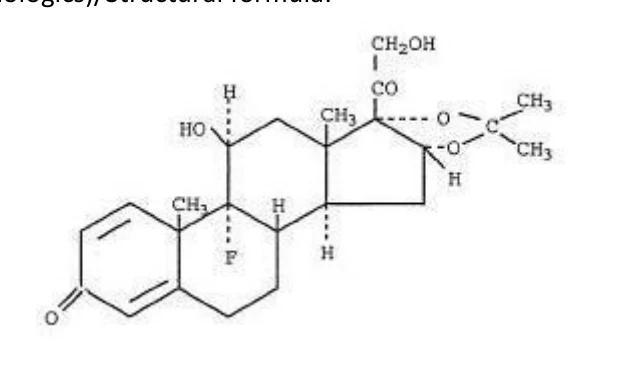
Physicochemical properties: Dexamethasone occurs as a white to cream-colored crystalline powder having not more than a slight odor and is practically insoluble in water and very soluble in alcohol.
Pharmaceutical standard: USP and Ph.Eur.
14. Clinical Trials
14.1. Clinical Trials by Indication
Indication of Macular Edema due to CRVO
Table 5 – Summary of patient demographics for clinical trials in Macular Edema due to CRVO
| Study # | Study design | Dosage, route of administration and duration | Study subjects (n) | Mean age (Range) | Sex |
| 206207-008 | Multicentre, masked, randomized, sham-controlled, parallel groups | OZURDEX 0.7 mg and Dexamethasone 0.35 mg applicator system; and sham needleless applicator system Intravitreal injection 6-month masked initial treatment followed by 6-month open-label extension | n = 599 OZURDEX 0.7 mg = 201 Dexamethasone 0.35 mg = 196 Sham = 202 | 65.5 years (32 to 91) | M 327 (54.6%) F 272 (45.4%) |
| 206207-009 | Multicentre, masked, randomized, sham-controlled, parallel groups | OZURDEX0.7 mg and Dexamethasone 0.35 mg applicator system; and sham needleless applicator system Intravitreal injection 6-month masked initial treatment followed by 6-month open-label extension | n = 668 OZURDEX 0.7 mg = 226 Dexamethasone 0.35 mg = 218 Sham = 224 | 63.6 years (31 to 96) | M 350 (52.4%) F 318 (47.6%) |
Demographic and baseline characteristics were not significantly different among the treatment groups. Approximately 50% of patients were over 65, and 75% were Caucasian. For the majority of patients, the duration of macular edema was between 90 and 179 days, with 17% of patients with durations less than 90 days.
In two identical Phase 3 studies (Study 206207-008 and Study 206207-009), 1267 adult patients with either CRVO (approximately 1 third of the patients) or BRVO (approximately 2 thirds of the patients) were randomized to OZURDEX 0.7 mg (n = 427), or a Sham (n = 426), or to a lower strength dexamethasone implant 0.35 mg (n = 414).
The main selection criteria were: a duration of macular edema prior to baseline of 6 weeks to 9 months for CRVO patients and of 6 weeks to 12 months for BRVO patients, Best Corrected Visual Acuity (BCVA) score was between 34 and 68 letters (EDTRS), and Central retinal thickness ≥ 300 microns by OCT. Note that patients with significant retinal ischemia were not allowed into the study.
After OZURDEX injection, patients were monitored from initial treatment through to Day 180 including scheduled visits on Days 30, 60, 90, and 180.
At the end of the first 6-month period, patients were eligible to receive a second OZURDEX implant in a 6-month open label extension if they had a BCVA < 84 letters, or a central retinal thickness > 250 microns.
Study Results
The efficacy of OZURDEX was assessed based on patients treated with OZURDEX (N = 427) as compared to sham (N = 426), using the study eye and the ITT population (with Last Observation Carried Forward for missing values). Efficacy analyses were performed separately for CRVO patients and BRVO patients. Among 570 patients with macular edema due to BRVO, 291 were randomized to OZURDEX, and 279 to sham, and among 283 patients with macular edema due to CRVO, 136 were randomized to OZURDEX, and 147 to sham.
The treatment benefits of OZURDEX were larger in patients with macular edema due to CRVO, as compared to those with BRVO. Only results in CRVO patients are presented below.
OZURDEX injection showed a statistically significantly greater proportion of patients achieving a ≥ 15-letter improvement from baseline in BCVA at Day 30, and 60.
Table 6 - Results of primary and secondary efficacy endpoints in clinical trial studies 206207-008 and 206207-009 in Macular Edema due to CRVO
| Visit | OZURDEX (n = 136) | Sham (n = 147) | Difference | p-Value |
| Visit | OZURDEX (n = 136) | Sham (n = 147) | Difference | p-Value |
| Primary Endpoint - Proportion of Patients with ≥ 15 Letters Improvement from Baseline Best Corrected Visual Acuity in the Study Eye (Pooled, CRVO Study Population) | ||||
| Day 30 | 21.3% | 6.8% | 14.5% | < 0.001 |
| Day 60 | 28.7% | 8.8% | 19.8% | < 0.001 |
| Day 90 | 17.6% | 10.2% | 7.4% | 0.07 |
| Day 180 | 18.4% | 12.2% | 6.1% | 0.151 |
| Proportion of Patients with ≥15-letter Vision Loss from Baseline BCVA (Pooled, CRVO Study Population) | ||||
| Day 30 | 3.7% | 6.8% | -3.1% | 0.241 |
| Day 60 | 3.7% | 10.9% | -7.2% | 0.021 |
| Day 90 | 8.1% | 13.6% | -5.5% | 0.138 |
| Day 180 | 14.0% | 20.4% | -6.4% | 0.153 |
| Baseline and Mean Change from Baseline in Number of Letters Read Correctly (Pooled, CRVO Study Population) | ||||
| Baseline | 52.4 letters | 53.3 letters | - | |
| Change from Baseline- (letters) | ||||
| Day 30 | 7.2 | 0.4 | 6.9 | ≤ 0.005 |
| Day 60 | 8.7 | -0.5 | 9.3 | ≤ 0.005 |
| Day 90 | 4.2 | -0.4 | 4.6 | ≤ 0.005 |
| Day 180 | 0.1 | -1.8 | 1.9 | - |
The proportion of patients with vision loss from baseline of ≥ 15-letter in BCVA was smaller with OZURDEX as compared to sham (maximum difference of 7.2% at Day 60).
The mean change from baseline BCVA was statistically significantly greater with OZURDEX compared to sham up to Day 90. The improvements peaked at Day 60 with a difference among groups of 9.3 letters (Error! Reference source not found.) in favour of OZURDEX as compared to the sham.
Indication of Posterior Segment Uveitis
Table 7 – Summary of patient demographics for clinical trial in Posterior Segment Uveitis
| Study # | Study design | Dosage, route of administration and duration | Study subjects (n) | Mean age (Range) | Sex |
| 206207-014 | Multicentre, masked, randomized, randomized patient and examiner-masked sham control | OZURDEX and 350 mcg applicator system; and sham needleless applicator system Intravitreal injection 8 weeks with an 18-week masked extension | OZURDEX n = 77 DEX 350 = 76 Sham = 76 | 44.8 years (18 to 82) | M 84 (36.7%) F 145 (63.3%) |
In a single Phase 3, multicentre, masked, randomized study for the treatment of non-infectious uveitis affecting the posterior segment of the eye (Study 206207-014), 229 adult patients were randomized to receive either OZURDEX (N = 77), or Sham (N = 76), or a lower strength dexamethasone implant 0.35 mg (n=76). Most patients had intermediate uveitis (80%), and only 20% had posterior uveitis.
Inclusion criteria included a best-corrected (ETDRS) visual acuity score of 10 to 75 letters inclusive
(Snellen equivalent approximately 20/640 – 20/32) in the study eye.
Main exclusion criteria were IOP > 21 mm Hg, ocular hypertension or glaucoma, use of anti-glaucoma medications ≤ 4 weeks prior to treatment, periocular corticosteroid injections ≤ 8 weeks prior to treatment, intravitreal injections ≤ 26 weeks prior to treatment, previous use of Retisert™, and intraocular surgery ≤ 90 days prior to treatment. Other exclusion criteria included history of pars plana vitrectomy or herpetic infection, and presence of active ocular infection, or scleral thinning (or ectasia), uncontrolled systemic disease or HIV infection. Women who were pregnant, nursing, or planning a pregnancy, or who were of childbearing potential and not using contraception, were also excluded.
The primary efficacy analysis was the proportion of patients with vitreous haze score of 0 at Week 8 (primary time point). Other analyses included the proportion of patients with ≥ 15-letter visual score (BCVA) improvement, and the proportion of patients with ≥ 2-unit improvement from baseline in vitreous haze score.
The mean (range) age was 44.8 (18 to 82) years, and 8.3% were over the age of 65 years. The majority of patients were female (63.3%) and Caucasian (60.7%).
Study Results
The efficacy of a single injection of OZURDEX was assessed in a 6-month single, multicentre, masked, randomized study for the treatment of non-infectious uveitis affecting the posterior segment of the eye (Study 206207-014).
Approximately 80% of patients had intermediate uveitis and 20% posterior uveitis. At baseline, 83% of patients had a vitreal haze score of +1.5 to 2, and 17% a score of +3 or +4. Over 40% of patients in each treatment group had received medications for the treatment of ocular inflammation in the study eye prior to the trial.
The efficacy analysis using the Intention To Treat population (ITT) population (with Last Observation Carried Forward for missing values), showed that after a single injection, the percent of patients reaching a vitreous haze score of 0 (where a score of 0 represents no inflammation) was statistically significantly greater for patients receiving OZURDEX versus sham at Week 8 (primary time point) and persisting through Week 26. Additionally, the proportion of patients showing ≥ 2 unit improvement from baseline in vitreous haze score, and the proportion of patients with ≥ 15 letters improvement from baseline in BCVA were statistically significantly higher with OZURDEX compared to sham throughout the 26-week period (Table 8).
Table 8 – Results of primary and secondary efficacy endpoints for clinical trial in study 206207-014 in Posterior Segment Uveitis
| Study Week | OZURDEX (n = 77) | Sham (n = 76) | p-Valuea |
| Study Week | OZURDEX (n = 77) | Sham (n = 76) | p-Valuea |
| Primary Endpoint - Percent of patients with vitreous haze score of 0 | |||
| Week 3 | 23% | 12% | 0.061 |
| Week 6 | 43% | 9% | < 0.001 |
| Week 8 | 47% | 12% | < 0.001 |
| Week 12 | 46% | 13% | < 0.001 |
| Week 16 | 40% | 21% | 0.01 |
| Week 20 | 39% | 20% | 0.009 |
| Week 26 | 31% | 15% | 0.014 |
| Secondary endpoint - Percent of patients with ≥ 15-letter improvement in BCVA from baseline | |||
| Week 3 | 33% | 4% | < 0.001 |
| Week 6 | 42% | 8% | < 0.001 |
| Week 8 | 43% | 7% | < 0.001 |
| Week 12 | 42% | 13% | < 0.001 |
| Week 16 | 39% | 13% | < 0.001 |
| Week 20 | 40% | 13% | < 0.001 |
| Week 26 | 38% | 13% | < 0.001 |
| Secondary endpoint - Percent of patients with ≥ 2-unit improvement from baseline in vitreous haze score | |||
| Week 3 | 21% | 8% | 0.023 |
| Week 6 | 40% | 12% | < 0.001 |
| Week 8 | 44% | 12% | < 0.001 |
| Week 12 | 42% | 13% | < 0.001 |
| Week 16 | 40% | 17% | 0.002 |
| Week 20 | 42% | 15% | < 0.001 |
| Week 26 | 34% | 12% | 0.001 |
- a. p-values were based on Pearson’s chi-square or Fisher’s exact test.
Indication of Diabetic Macular Edema (DME)
Table 9 – Summary of Patient Demographics for clinical trials in Diabetic Macular Edema (DME)
| Study # | Study design | Dosage, route of administration and duration | Study subjects (n) | Mean age (Range) | Sex |
| 206207-010 | Multicentre, masked, randomized, sham-controlled | OZURDEX 0.7 mg and Dexamethasone 0.35 mg applicator system; and sham needleless applicator system Intravitreal injection Up to 7 treatments during the 3-year study period | OZURDEX 163/107 DEX 350 166/118 Sham 165/70 | 63.0 years (26 to 84) | M 304 (61.5%) F 190 (38.5%) |
| 206207-011 | Multicentre, masked, randomized, sham-controlled | OZURDEX 0.7 mg and Dexamethasone 0.35 mg applicator system; and sham needleless applicator system Intravitreal injection Up to 7 treatments during the 3-year study period | OZURDEX 188/118 DEX 350 181/112 Sham 185/82 | 61.9 years (25 to 88) | M 332 (59.9%) F 222 (40.1%) |
The Phase 3 studies included elements necessary for a valid ascertainment of the effectiveness of treatment. A parallel group design minimized possible confounding effects that are inherent in other study designs (e.g., crossover). The studies were randomized and masked to minimize investigator and patient bias.
Patients were randomized in a 1:1:1 ratio to OZURDEX, DEX 350, or sham on Day 0, and received up to 7 treatments during the 3-year study period. Starting from the Month 6 visit, patients were evaluated for retreatment eligibility every 3 months, but the study treatment procedure was not to be performed more often than approximately every 6 months.
Patients who had confirmed 15 or more letters decrease in BCVA from baseline in the study eye attributable to macular edema (e.g., not due to cataract or media opacity) were exited from the study at the investigator’s discretion and considered to be a treatment failure. Patients who had received escape therapy in the study eye were considered to be study treatment failures, were no longer eligible to receive study medication, and were withdrawn from the study based on when they last received study treatment. A patient may have been withdrawn from the study at either the patient or the investigator’s discretion at any point for any reason. Patients who underwent cataract surgery were to continue in the study.
Patients were masked to the study treatment assignment which was maintained for the duration of the trial. Study treatment procedures and postinsertion safety evaluations were performed by a treating investigator at each site. Follow up investigators, site personnel including the visual acuity examiner, optical coherence tomography (OCT)/fluorescein angiography technicians, and evaluators at the central reading facility were masked, and had no knowledge of study treatment assignment.
Key inclusion criteria for the Phase 3 studies were male or female, at least 18 years of age, diagnosis of diabetes mellitus (type 1 or type 2), blood HbA1c > 10%, clinically observable macular edema involving the centre of the macula (fovea) associated with diabetic retinopathy, BCVA score between 34 and 68 letters in the study eye, and retinal thickness of ≥ 300 microns by OCT.
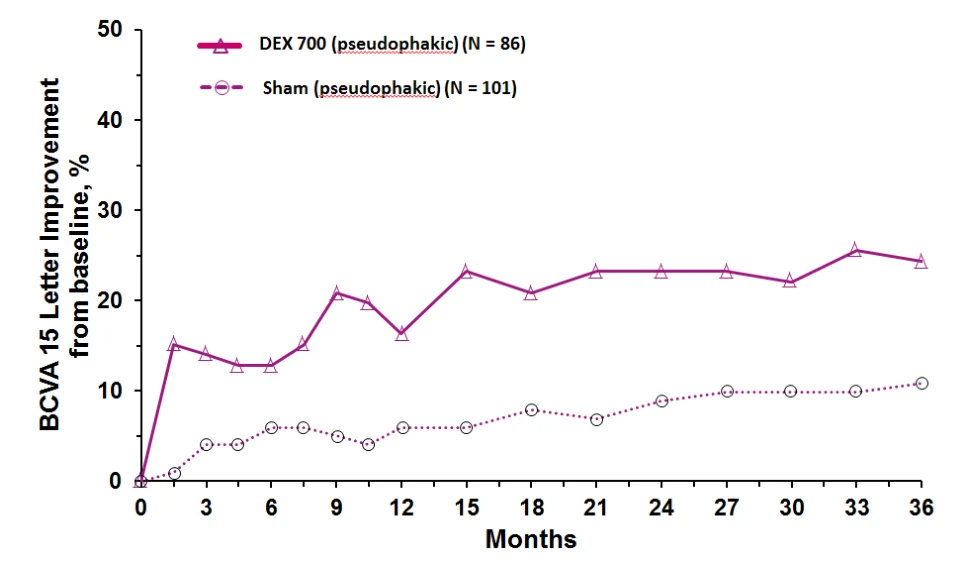
Further analyses were performed on 187 patients in the ITT population with a pseudophakic lens in the study eye at baseline; 86 in the DEX 700 group and 101 in the Sham group. The baseline characteristics of the pseudophakic subpopulation and the ITT population were generally similar, including mean BCVA (55.5 vs. 56.2 letters, respectively) and central retinal thickness (462.7 vs. 463.6 microns, respectively).
Study Results
The clinical efficacy of OZURDEX was assessed in 2 Phase 3 randomized, masked, sham-controlled studies (Studies 206207-010 and 206207-011) in patients with diabetic macular edema. A total of 1,048 patients (351 OZURDEX, 347 DEX 350, and 350 sham) were evaluated as the ITT population and received up to 7 treatments during the 3-year study period.
A clinical benefit was established in these two studies in the ITT population. In patients with a phakic study eye, however, vision improvement was confounded by cataract formation or progression which occurred on average during the 2nd year of the study and was not reestablished until the cataract was removed. The group which benefited from OZURDEX treatment the most were pseudophakic patients at baseline, and therefore, only the results in this patient population are presented below.
In the pooled subgroup of patients with a pseudophakic study eye at baseline, the proportion of patients with 15 or more letters improvement in BCVA from baseline was significantly higher with DEX 700 (23.3%) compared with Sham (10.9%) at the year 3/final visit, p = 0.024.
The mean BCVA average change from baseline during the study (AUC approach) was significantly greater with DEX 700 (6.5 letters) compared to Sham (1.7 letters), p < 0.001.
The mean average decrease from baseline in OCT central subfield retinal thickness during the study (AUC approach) was significantly greater with DEX 700 (131.8 microns) compared to Sham (50.8 microns), p < 0.001.
The efficacy results for the pseudophakic patients subgroup by study and pooled analyses are presented in Table 10 below.
Table 10 – Results of efficacy endpoints for clinical trials studies 206207-010, 206207-011 and Pooled Analysis in Diabetic Macular Edema (DME)
| Study 206207-010 | |||||||||
| Endpoint | OZURDEX (n = 44) | Sham (n = 50) | p-Value | ||||||
| BCVA ≥ 15-letter improvement from baseline at year 3/final visit (%) | 34.1 | 16.0 | 0.042 | ||||||
| Mean BCVA average change over 3 years, AUC approach (letters) | 8.1 | 2.1 | < 0.001 | ||||||
| OCT retinal thickness at centre subfield mean average change over 3 years, AUC approach (microns) | -137.4 | -43.3 | < 0.001 | ||||||
| Study 206207-011 | |||||||||
| Endpoint | OZURDEX (n = 42) | Sham (n = 51) | p-Value | ||||||
| BCVA ≥ 15-letter improvement from baseline at year 3/final visit (%) | 11.9 | 5.9 | 0.461 | ||||||
| Mean BCVA average change over 3 years, AUC approach (letters) | 4.9 | 1.3 | 0.018 | ||||||
| OCT retinal thickness at centre subfield mean average change over 3 years, AUC approach (microns) | -125.9 | -58.3 | 0.007 | ||||||
| Pooled Analysis | |||||||||
| Endpoint | OZURDEX (n = 86) | Sham (n = 101) | p-Value | ||||||
| BCVA ≥ 15-letter improvement from baseline at year 3/final visit (%) | 23.3 | 10.9 | 0.024 | ||||||
| Mean BCVA average change over 3 years, AUC approach (letters) | 6.5 | 1.7 | < 0.001 | ||||||
| OCT retinal thickness at centre subfield mean average change over 3 years, AUC approach (microns) | -131.8 | -50.8 | < 0.001 | ||||||
AUC = area under the curve; BCVA = best-corrected visual acuity; OCT = optical coherence tomography
Figure 1. Proportion of Patients With 15 or More Letters Improvement in BCVA From Baseline by Visit (Pooled Studies 206027-010 and 206207-011, Pseudophakic Patient Subpopulation)
15. Microbiology
No microbiological information is required for this drug product.
16. Non-Clinical Toxicology
General toxicology
No mutagenicity, carcinogenicity, reproductive or developmental toxicity studies are available for dexamethasone intravitreal implant.
Five toxicology studies were performed with for the assessment of the toxicity of dexamethasone intravitreal implant. Three were single-dose toxicity studies in New Zealand White (NZW) rabbits (two studies with duration of 7 weeks (X7I062G and X8I310G) and one with a duration of 9 months (P0701002)). In addition, two 9-month repeat-dose studies were performed (one in NZW rabbits (TX05030), and one in Cynomolgus monkeys (TX05029)).
Lens opacities were noted in the 9-month rabbit study (Study TX05030), but were not observed in any of the other studies. In all the studies, there were no significant or unexpected other drug-related ocular adverse effects.
In one rabbit study (Study P0701002) transient systemic effects were noted: decrease in body weight, lymphoid depletion (thymus, cecal tonsils and spleen), hepatocellular swelling and degeneration, atrophy of the adrenal glands, increases in serum levels of alkaline phosphatase, alanine aminotransferase, and cholesterol. Changes in serum levels of creatinine, total protein, and globulin levels were also noted. No systemic effects were noted in the other toxicity studies. Note that these effects were transient and reversible after Day 60 or 90.
Genotoxicity
No studies of the mutagenic potential of dexamethasone intravitreal implant have been conducted. Studies evaluating the mutagenic potential of dexamethasone in bacteria and mammalian cells in vitro have been negative. An in vivo mouse micronucleus test was also negative. The polymer used in dexamethasone intravitreal implant has been widely used in implantable medical devices.
Carcinogenicity
No carcinogenicity studies on dexamethasone intravitreal implant or dexamethasone have been performed.
Reproductive and developmental toxicology
No studies of the reproductive or developmental toxicity are available for dexamethasone intravitreal implant.
Dexamethasone has been shown to be teratogenic in mice and rabbits following topical ophthalmic application. In the mouse, corticosteroids produce fetal resorptions and a specific abnormality, cleft palate. In the rabbit, corticosteroids have produced fetal resorptions and multiple abnormalities involving the head, ears, limbs, palate, etc. Pregnant rhesus monkeys treated with dexamethasone sodium phosphate intramuscularly at 1.0 mg/kg/day every other day for 28 days or at 10.0 mg/kg/day once or every other day on 3 or 5 days between gestation Days 23 and 49 had fetuses with findings limited to minor cranial abnormalities. A 1.0 mg/kg/day dose in pregnant rhesus monkeys would be approximately 85 times higher than a 700 mcg DEX PS DDS® implant in humans (assuming 60 kg body weight).