


Product Monograph - Fml Forte Sus 0.25%
INDICATIONS AND USE
FML FORTE® (fluorometholone ophthalmic suspension 0.25% w/v) is indicated for the treatment of corticosteroid responsive inflammation of the palpebral and bulbar conjunctiva, cornea and anterior segment of the globe.
CONTRAINDICATIONS
FML FORTE® is contraindicated in:
- Superficial (or epithelial) herpes simplex keratitis (dendritic keratitis) vaccinia, varicella, and other viral diseases of the cornea and conjunctiva
- Fungal diseases of the ocular structures
- Acute untreated infections of the eye
- Mycobacterial infections of the eye (e.g., tuberculosis of the eye)
- Hypersensitivity to any component of the medication (for a listing of ingredients, see PHARMACEUTICAL INFORMATION), or hypersensitivity to other corticosteroids
WARNINGS
Use of topical corticosteroids may cause increased intraocular pressure (IOP) in certain individuals. It is necessary that the IOP be checked frequently in patients with a history of glaucoma.
Use of steroids may prolong the course and may exacerbate the severity of many viral infections on the eye (including herpes simplex).
Use of a corticosteroid medication in patients with a history of herpes simplex requires great caution; frequent slit lamp microscopy is mandatory.
Prolonged use of FML FORTE® (beyond 10 days) may cause increase in IOP and result in glaucoma in susceptible individuals, with damage to the optic nerve, defects in visual acuity and fields of vision.
Posterior subcapsular cataract formation has been reported to occur after protracted use of topical corticosteroids. Therefore, close appropriate ophthalmologic monitoring (including IOP and lens clarity assessment) must be undertaken.
It may also suppress the host immune response, and thus may also aid in the establishment of secondary ocular infections (e.g. fungal or viral infections).
Acute, untreated infection of the eye may be masked or activity enhanced by the presence of corticosteroid medication.
Topical ophthalmic corticosteroids may slow corneal wound healing. In diseases causing thinning of the cornea or sclera, perforations have been known to occur with the use of topical corticosteroids. Concomitant use of topical NSAIDs and topical steroids may increase the potential for healing problems.
As with any ocular medication, if transient blurred vision occurs at instillation, the patient should wait until the vision clears before driving or using machinery.
PRECAUTIONS
General
Patients should be advised to inform their physician of any prior use of corticosteroids. The initial prescription and renewal of FML FORTE® should be made only after appropriate ophthalmologic examination (including but not limited to IOP assessment and slit lamp biomicroscopy). If signs and symptoms fail to improve after two days, the patient should be re-evaluated.
Given the risks of serious adverse outcomes, FML FORTE® should not be used beyond 10 days, unless absolutely necessary, and only under strict ophthalmologic monitoring (See WARNINGS section).
As fungal infections of the cornea are particularly prone to develop coincidentally with long-term local corticosteroid application, fungal invasion must be suspected in any persistent corneal ulceration where a corticosteroid has been used or is in use. Fungal cultures should be taken when appropriate.
As with other corticosteroids, frequent IOP checks are warranted since a significant increase in IOP may occur in a small percentage of patients treated with FML FORTE®.
The preservative in FML FORTE®, benzalkonium chloride, may be absorbed by soft contact lenses and cause their discoloration. Patients wearing soft contact lenses should be instructed to remove contact lenses prior to administration of the suspension and wait at least 15 minutes after instilling FML FORTE® before reinserting soft contact lenses.
Use in Pregnancy
FML FORTE® should not be used during pregnancy, unless the potential benefits to the mother clearly outweigh the risks to the fetus. Safety of the use of topical steroids in pregnant women has not been established. Fluorometholone has been shown to be embryocidal, fetotoxic, and teratogenic in pregnant rabbits when administered by ocular instillation (See TOXICOLOGY section).
Nursing women
It is not known if fluorometholone by the ocular route is excreted into breast milk. Systemically administered corticosteroids appear in human milk and could suppress growth, interfere with endogenous corticosteroid production, or cause other untoward effects. Because of the potential for serious adverse reactions in nursing infants from fluorometholone, FML FORTE® is not recommended in nursing women, unless the benefit to the mother clearly outweighs the risks to the nursing infant.
Pediatric Use
Adrenocorticoids should be used with caution in children 2 years of age or younger because the dose/weight ratio for children increases the risk of adrenal suppression. Risk becomes greater with length of therapy, which should limited to the shortest possible time, preferably less than 5 days.
Carcinogenesis, Mutagenesis, Impairment of Fertility
No studies have been conducted in animals or in humans to evaluate the potential of these effects with fluorometholone.
Patient Monitoring
Ophthalmologic examinations, especially tonometry and slitlamp examination, are required at periodic intervals for patients on FML FORTE® therapy for more than several weeks, since chronic therapy may cause posterior subcapsular cataracts, increased IOP and glaucoma and may enhance the establishement of ocular infections. Other tests may be warranted in some patients depending on condition.
ADVERSE REACTIONS
Adverse reactions include, in decreasing order of frequency, elevation of IOP with possible development of glaucoma and infrequent optic nerve damage; loss of visual acuity or defects in field of vision; posterior subcapsular cataract formation; and delayed wound healing.
The following have also been reported after the use of topical corticosteroids: Secondary ocular infection from pathogens 1iberated from ocular tissues and, rarely, perforation of the globe when used in conditions where there is thinning of the cornea or sclera.
Rarely, filtering blebs have been reported when topical steroids have been used following cataract surgery.
Post-Market Adverse Drug Reactions
The following adverse reactions have been identified during postmarketing use of FML® in clinical practice. Because they are reported voluntarily from a population of unknown size, estimates of frequency cannot be made.
Eye disorders: eye irritation, conjunctival/ocular hyperemia, visual disturbance, foreign body sensation, eyelid edema, blurred vision, eye discharge, eye pruritis, lacrimation increased, eye edema/eye swelling, mydriasis, ulcerative keratitis, ocular infection (including bacterial, fungal, and viral infections), visual field defect, punctate keratitis
Immune system disorders: hypersensitivity and allergic reactions
Nervous system disorders: dysgeusia
Skin and subcutaneous tissue disorders: rash
SYMPTOMS AND TREATMENT OF OVERDOSAGE
If accidentally ingested, drink fluids to dilute. If accidental overdosage occurs in the eye, flush the eye with water or normal saline. Discontinue medication when heavy or protracted use is suspected.
DOSAGE AND ADMINISTRATION
Recommended Dose and Dosage Adjustment
FML FORTE® is for topical ophthalmic use only. Shake fluorometholone ophthalmic suspensions well before use.
Instill one drop into the conjunctival sac two to four times daily. During the initial 24 to 48 hours, the dosage may be safely increased to one drop every 4 hours. Care should be taken not to discontinue therapy prematurely. If signs and symptoms fail to improve after two days, the patient should be re-evaluated.
For management of a suspected drug overdose, including accidental ingestion, contact your regional Poison Control Centre.
Missed Dose
If you forget to apply your eye drops at your normal time, simply apply them as soon as
you remember. Then go back to the original schedule as directed by your doctor. Don’t try to catch up on missed drops by applying more than one dose at a time.
Administration
To prevent eye injury or contamination, care should be taken to avoid touching the bottle to the eye, the eyelids or to any other surface. The use of the bottle by more than one person may spread infection.
STORAGE AND STABILITY
Store in an upright position at 15ºC - 25ºC. Protect from freezing. Keep bottle tightly closed when not in use.
Discard any unused product 1 month after first opening.
The product should be discarded after the expiration date. Any unused product or waste material should be disposed of in accordance with local requirements.
DOSAGE FORMS AND AVAILABILITY
FML FORTE® available as a sterile topical ophthalmic suspension in an opaque low density polyethylene (LDPE) bottles with dropper tips and high impact polystyrene (HIPS) caps in the following sizes: 5mL and 10mL. On prescription only.
PHARMACEUTICAL INFORMATION
I. DRUG SUBSTANCE
Fluorometholone
Chemical Structure
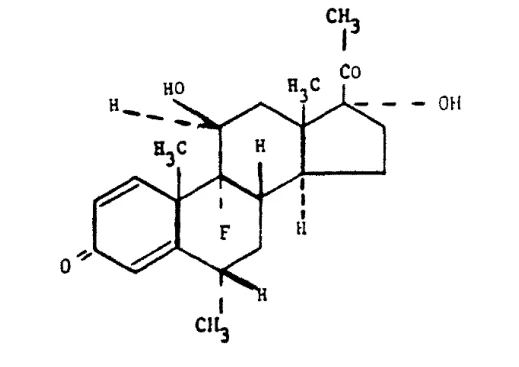
Chemical Name
9-Fluoro-11ß, 17-dihydroxy-6α-methylpregna-1, 4-diene-3,20-dione.
Molecular Formula
C22H29F04
Molecular Weight
376.47
Description
Fluorometholone is an odorless, white to slightly yellow-white powder with a melting point at about 280oC, with some decomposition. It is practically insoluble in water, slightly soluble in alcohol and is very slightly soluble in chloroform and in ether.
II. COMPOSITION
Fluorometholone 0.25% with polyvinyl alcohol 1.4%; benzalkonium chloride 0.005%; edetate disodium; sodium chloride; sodium biphosphate; sodium phosphate; polysorbate 80; and purified water.
PHARMACOLOGY
Clinical Trials
Relatively few clinical trials have been conducted to determine the extent of benefit provided by a topical ophthalmic corticosteroid when used in treating postoperative ocular inflammation. The limited severity and self-limiting course of this condition makes it difficult to demonstrate the benefits of corticosteroid therapy.
One uncontrolled study demonstrated a small benefit provided by topical corticosteroids when used after cataract surgery. Another trial showed a significant difference between the effects of the corticosteroid and those of placebo, but only when those subjects with moderate or severe inflammation were analyzed. In a third study, significant benefits were shown to be provided by topical corticosteroids when compared with placebo; the results were based on the surgeons' overall assessment of the effects of the test medications. A recent study showed a steroid/antibiotic combination to have provided a beneficial effect when compared with placebo; in this trial, treatment began three days before surgery.
Human Pharmacology
Fluorometholone appears to have an advantage over other topical corticosteroids in its decreased propensity to elevate IOP. Several relevant findings are reported by Fairbairn & Thorson (1971), who treated 308 patients suffering from various inflammatory disorders of the eye. Therapy of 14 non--glaucomatous steroid reactors with 0.1% and 0.25% fluorometholone and 0.1 % betamethasone revealed pressure increases of 0 mm, 1.7 mm and 7.5 mm Hg, respectively. Of 23 patients who had been treated previously with other corticosteroids and had shown IOP increases, 22 showed no increase with 0.1% fluorometholone while one patient reacted with a pressure increase to 29 mm Hg. In 11 patients with medically-controlled glaucoma who were treated with 0.1% fluorometholone, no significant IOP changes were seen in 10 of the subjects while one responded with 10 mm Hg increase.
Animal Pharmacokinetics and Metabolism
The ocular bioavailability and metabolism of 0.25% fluorometholone suspension was compared with that of the 0.1% suspension. In each of two treatment groups, 24 female New Zealand albino rabbits received one 50 uL drop of tritium labelled 0.1 or 0.25% fluorometholone in each eye. Both eyes of each rabbit received the same treatment. Three rabbits in each treatment group were sacrificed at 20, 30, 60, 90, 120, 180, 240 and 300 minutes after drug instillation and the cornea and 200 uL of aqueous humor were removed. To determine ocular bioavailability the radioactivity in the aqueous humor was measured at each time period. Radioactivity in the aqueous humor reached a peak 30 minutes after instillation in both treatment groups, at which time the 0.25% fluorometholone group had a mean value that was 2.9 times greater than that in the 0.1% fluorometholone group. The difference between the two groups was statistically significant at every time point. Overall, the amount of radioactivity in the eyes treated with 0.25% fluorometholone was 2.2 times greater than that in eyes treated with 0.1% fluorometholone.
To determine the ocular metabolism of fluorometholone, thin-layer chromotography was performed on samples of aqueous humor and cornea. The results showed that fluorometholone undergoes metabolic changes as it penetrates the cornea and aqueous humor. A high concentration of a metabolite was found in both aqueous and corneal extracts. The nature and activity of this metabolite is unknown.
Corticosteroids influence many aspects of the inflammatory response. They decrease cellular and fibrinous exudation, interfere with cellular and anti-body-related components of the immune response, and inhibit fibroblast proliferation, scarring, and subsequent neovascularization. These actions are likely to be clinically significant because the delicate and transparant ocular structures are particularly susceptible to functional damage by inflammation and scarring.
Fluorometholone has been shown to have greater relative anti-inflammatory activity than hydrocortisone, prednisolone, or dexamethasone in in vitro tests. Fluorometholone (0.1%) effectively reduced the influx of polymorphonuclear leukocytes (PMN) in rabbit corneas with experimentally-induced inflammatory keratitis. The reduction in PMN migration by 0.1% fluorometholone was equivalent to that produced by 1.0% prednisolone or 0.2% dexamethasone.
TOXICOLOGY
Acute Oral Toxicity in Rats and Mice
The acute oral toxicity of 0.25% fluorometholone was evaluated in 10 male and 10 female albino rats and 10 male and 10 female albino mice. In each of the acute oral toxicity studies, the animals were given a single oral dose (20.0 mL 'kg of body weight) of 0.25% fluorometholone ophthalmic suspension. The animals were observed for fourteen days. No immediate or delayed toxic reactions were noted in any rat or mouse during the study period in either study. Necropsy at the end of the study revealed no toxic lesions.
Subacute Toxicity in Rabbits and Guinea Pigs
The subacute eye toxicity was evaluated in 18 female albino rabbits and 18 female Hartley guinea pigs. In both studies the animals received a "high", "mid", or "low" frequency dosing for 28 days. The frequency for the high dose was one drop, eight times a day; mid dose, one drop, four times a day; low dose, one drop, two times a day.
Animals were examined before the start of the study and weekly thereafter. Gross observations were performed at each instillation. None of the doses of fluorometholone 0.25% produced discomfort or irritation in rabbit eyes, and no significant toxic reactions were observed by slit lamp examination. Ten rabbits from the high and mid dose groups died or were euthanized in extremis prior to the end of the study; gross pathology findings were of the nature known to be caused by continuous steroid administration, including fat deposition.
All three doses of 0.25% fluorometholone produced slight discomfort in guinea pig eyes. No irritation was observed, however, and no significant toxic reactions were seen by slit-lamp examination. Results of the histopathology of the high-dose treatment group indicate no change to the eves and extraocular tissues of the guinea pigs treated with FML FORTE®.
Teratology Study
Effect of FML and FML-Neomycin Ophthalmic Suspensions on Pregnancy of the New Zealand White Rabbit
The effect of FML and FML-Neomycin ophthalmic suspensions were evaluated on the pregnancy of rabbits. Daily dosages of 0.075, 0.15, 0.30 and 0.60 mg/rabbit FML and of 0.15 and 0.60 mg/rabbit FML-Neomycin were administered by the ocular route during days 6 to 18 gestation.
For comparative purposes daily dosages of 0.15, 0.30 and 0.60 mg/rabbit dexamethasone sodium phosphate and 1.5 and 3.0 mg/rabbit hydrocortisone acetate ophthalmic preparations were given to an additional group of rabbits.
Among parent animals, in all test groups maternal weight gain during the first 4 days of treatment was superior to that of controls; thereafter weight loss occurred until the end of treatment when some recovery occurred. The lowest weight losses and more rapid rate of recovery occurred with both hydrocortisone treated groups. A similar degree of response occurred with FML at 0.075 mg/rabbit and dexamethasone 0.15 mg/rabbit; at higher dosages of both fluorocorticoids weight loss was precipitous and recovery slow.
With both fluorocorticoids there was a dosage related increase in the incidence of total litter losses (abortion and/or total resorption); losses at 0.3 mg/rabbit and above were so high as to preclude accurate assessment of effects on other litter parameters. There were not total litter losses in either hydrocortisone treated group.
In respect of litter parameters hydrocortisone was associated with a slightly higher fetal loss and slightly lower litter size at both dosages and marginally lower litter and mean pup weights at 3.0 mg/rabbit; the differences from control values were not statistically significant.
With FML, FML-Neomycin and dexamethasone there was a dosage related trend for higher fetal loss, lower litter size and lower litter and mean pup weights; the reduction in mean pup weight was statistically significant at all dosages, the reduction in litter weight significant with FML and FML-Neomycin at 0.15 mg/rabbit, the reduction in litter size (including total litter losses) significant with FML-Neomycin, 0.15 mg/rabbit (including or excluding total litter losses). The high incidence of total litter losses at dosages of 0.3 mg/rabbit and above precluded accurate statistical analysis of litter parameters.
The incidence of major malformations and minor anomalies recorded with hydrocortisone at 1.5 or 3.0 mg/rabbit was essentially comparable with that of controls; however, the types of malformation observed in the one affected litter at 3.0 g/kg (e.g. cranial defects including cleft palate), have been previously associated with corticosteroid treatment.
An increased incidence of major malformations and minor anomalies occurred at all dosages of FML and dexamethasone; the types of abnormality observed (e.g. cranial defects including cleft palate and limb malrotation) were similar for both compounds. Dose-related fetal loss and fetal abnormalities including cleft palate, deformed rib cage, anomalous limbs and neural abnormalities such as encephalocele, craniorachischisis, and spina bifida were observed.
On all parameters affected (i.e. maternal weight gain, incidence of total litter losses, increased fetal loss, reduced mean pup weight and incidence of abnormal young) FML appeared to be approximately twice as active as dexamethasone at equal mg/rabbit dosages; the degree of activity of FML appeared to be increased to some degree by the addition of Neomycin.
REFERENCES
- 1. Buch, H. and Ellis, R. Clinical Studies with a New Steroid, Fluorometholone. Ann. Ophthalmol. 7: 937, 1975.
- 2. Charap, A. Corticosteroids. In: Clinical Ophthalmology. Duane, D. and Jaeger, E.A., eds. Harper & Row, Philadelphia, 1982.
- 3. Castroviejo, R. The Control of Postoperative Inflammation with Fluorometholone. Presented at the 79th Annual Meeting of the American Academy of Ophthalmology and Otolaryngology, Dallas, Texas, October 6-10, 1974.
- 4. Corby, J.M. Corticosteroid Therapy for the Reduction of Postoperative Inflammation After Cataract Extract ion. Amer. J. Ophthalmol. 82(6): 923, 1976.
- 5. Fairbairn, W.D. and Thorson, J.C. Fluorometholone/Anti-Inflammatory and Intraocular Pressure Effects. Arch. Ophthalmol. 83: 138, 1971.
- 6. Flemming, J.C., Redi, F.R. and Wood, T.O._ Prevention of Immune Graft Rejection After Corneal Transplantation. Amer. J. Ophthalmol. 88(1): 97,1979.
- 7. Havener, W.H. Ocular Pharmacology. C.V. Mosby Co., St. Louis, 1978.
- 8. Kupferman, A. and Leibowitz, H.M. Therapeutic Effectiveness of Fluorometholone in Inflammatory Keratitis. Boston Univeristy School of Medicine, 1975.
- 9. Marun, E. Evaluation of a New Topical Steroid, F1uorometholone, in the Postoperative Course of the Cataract Operation. Ann. Ophthalmol. 7: 139, 1975.
- 10. Mindel, J.S., Tavitian, H.O., Smith, H. and Walker, Comparative Intraocular Pressure Elevation by Medrysone, Fluorometholone, and Dexamethasone Phosphate. Arch. Ophthalmol. 98: 1577, 1980.
- 11. Mustakallio, A., Kaufman, H.E., Johnston, G., Wilson, R.S. Roberts, M.D. and Harter, J.C. Corticosteroid Efficacy in Postoperative Uveitis. Ann. Ophthalmol. 5: 719, 1973.
- 12. Palmer, A.K. and Cozens, D.D. Effect of FML and FML-Neomycin Ophthalmic Suspensions on Pregnancy of the New 'ealand White Rabbit. Huntingdon Research Centre Report, 1975.
- 13. Polansky, J., Sandman, R., Zlock, D., Baxter, J. and Weinreb, R.N. FML vs Other Ophthalmic Steroids: Role of Receptor Binding and Metabolism in Determining the IOP Response. Invest. Ophth. and Vis. Sci. 24 (Suppl. to No.3): 136, 1983.
- 14. Ramsell, T.G., Bartholomew, R.S. and Walker, S.R. Clinical Evaluation of Clobetasone Butvrate: A Comparative Study of its Effects in Postoperative Inflammation and on Intraocular Pressure. Brit. J. Ophthalmol. 64: 43, 1980.
- 15. Stewart, R.H., Kimbrough, R.L., Smith, J.P. and de Faller, J .M. Use of Steroid/Antibiotic Prophylaxis in Intraocular Lens Implantation: A Double-Masked Study Placebo. Ann.
- 16. Ophthalmol. 15: 24, 1983.
- 17. Allergan Clinical Study: A Report on 650 Patients Treated with FML Fluorometholone) Liquifilm Ophthalmic Suspension. Allergan Pharmaceuticals Report Series #72, 1972. On file at Allergan Inc.
- 18. Allergan Clinical Study: The Safety and Comfort of, and Overall Therapeutic Response to 0.25% Fluorometholone Ophthalmic Suspension Following Cataract Surgery. FMLS-1016951; December, 1983. Data on file at Allergan Inc.
- 19. Allergan Clinical Study: A Comparison of 0.25% Fluorometholone Ophthalmic Suspension with 1.0% Prednisolone Acetate Ophthalmic Suspension Following Cataract Surgery. FMLS-103-6951; September, 1984. Data on file at Allergan Inc.
- 20. Allergan Research Memo: Ocular Bioavailability of Fluorometholone: Comparision of 0.25% FML Suspension to a 0.1% FML Suspension. Data on File at Allergan Inc.
- 21. Allergan Research Memo: Acute Oral Toxicity in Rats with FML, Study 1050-0269-13. Data on file at Allergan Inc.
- 22. Allergan Research Memo: Acute Oral Toxicity in Mice with FML, Study 1050-0269-12. Data on file at Allergan Inc.
- 23. Allergan Research Memo: Subacute Eye Toxicity in Rabbits with FML, Study 1050-0225-009. Data on file at Allergan Inc.
- 24. Allergan Research Memo: Subacute Eye Toxicity in Guinea Pigs with FML, Study 1050-0225-011. Data on file at Allergan Inc.
- 25. Allergan Research Memo: Subacute Eye Toxicity Study in Guinea Pigs Histopathology Report. Veterinary Pathology Consultants, Inc. (VPC 83-449), 1983. Data on file at Allergan Inc.