


Product Monograph - Maxidex
RECENT MAJOR LABEL CHANGES
Not applicable.
TABLE OF CONTENTS
RECENT MAJOR LABEL CHANGES .......................................................................................... 2
TABLE OF CONTENTS ............................................................................................................ 2
PART I: HEALTH PROFESSIONAL INFORMATION .................................................................... 4
1 INDICATIONS ............................................................................................................. 4
1.1 Pediatrics ...................................................................................................................... 4
1.2 Geriatrics ...................................................................................................................... 4
2 CONTRAINDICATIONS ................................................................................................ 4
4 DOSAGE AND ADMINISTRATION ................................................................................ 4
4.2 Recommended Dose and Dosage Adjustment ............................................................ 4
4.4 Administration ............................................................................................................. 5
4.5 Missed Dose ................................................................................................................. 6
5 OVERDOSAGE ............................................................................................................ 6
6 DOSAGE FORMS, STRENGTHS, COMPOSITION AND PACKAGING ................................ 6
7 WARNINGS AND PRECAUTIONS ................................................................................. 7
7.1 Special Populations ...................................................................................................... 8
7.1.1 Pregnant Women ............................................................................................... 8
7.1.2 Breast-feeding .................................................................................................... 9
7.1.3 Pediatrics ............................................................................................................ 9
7.1.4 Geriatrics ............................................................................................................ 9
8 ADVERSE REACTIONS................................................................................................. 9
8.1 Adverse Reaction Overview ......................................................................................... 9
8.2 Clinical Trial Adverse Reactions ................................................................................... 9
8.5 Post-Market Adverse Reactions ................................................................................. 10
9 DRUG INTERACTIONS .............................................................................................. 10
9.1 Serious Drug Interactions........................................................................................... 10
9.4 Drug-Drug Interactions .......................................................................................... 10
10 CLINICAL PHARMACOLOGY ...................................................................................... 11
10.1 Mechanism of Action ............................................................................................... 11
11 STORAGE, STABILITY AND DISPOSAL ........................................................................ 11
12 SPECIAL HANDLING INSTRUCTIONS .......................................................................... 11
PATIENT MEDICATION INFORMATION ................................................................................ 18
PART I: HEALTH PROFESSIONAL INFORMATION
1 INDICATIONS
MAXIDEX® (dexamethasone ophthalmic ointment, USP and dexamethasone ophthalmic suspension, BP) is indicated for:
- Steroid responsive inflammatory conditions of the palpebral and bulbar conjunctiva, cornea and anterior segment of the globe, such as allergic conjunctivitis, acne rosacea, superficial punctate keratitis, iritis, cyclitis, and selected infective conjunctivitis when the inherit hazard of steroid use is acceptable to obtain an advisable diminution in edema and inflammation.
- Corneal injury from chemical, radiation or thermal burns, or penetration of foreign bodies.
1.1 Pediatrics
Pediatrics (< 18 years of age): The safety and efficacy of MAXIDEX in children have not been established.
1.2 Geriatrics
Geriatrics (> 60 years of age): No overall differences in safety or effectiveness have been observed between elderly and younger patients.
2 CONTRAINDICATIONS
MAXIDEX is contraindicated in patients with:
- Hypersensitivity to this drug or to any ingredient in the formulation or component of the container. For a complete listing, see 6 DOSAGE FORMS, STRENGTHS, COMPOSITION AND PACKAGING .
- Herpes simplex keratitis.
- Vaccinia, varicella and other viral diseases of the cornea and conjunctiva.
- Mycobacterial ocular infections, including tuberculosis of the eye.
- Fungal diseases of ocular structures or untreated parasitic eye infections.
- Acute purulent untreated infections of the eye, which like other diseases caused by microorganisms, may be masked or enhanced by the presence of the steroid.
4 DOSAGE AND ADMINISTRATION
4.2 Recommended Dose and Dosage Adjustment
MAXIDEX Ointment:
Apply a ribbon of ointment into the conjunctival sac(s) 3-4 times daily. When a favourable response is observed, dosage may be reduced gradually to once a day application for several days.
MAXIDEX Suspension:
Apply one or two drops into the conjunctival sac(s). In severe diseases, drops may be used hourly, being tapered to discontinuation as the inflammation subsides. In mild disease, drops may be used 4-6 times daily.
4.4 Administration
For ocular use only.
MAXIDEX Ointment:
- 1. Tilt your head back.
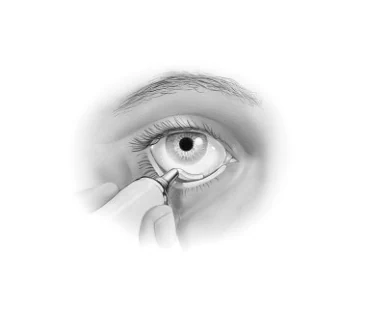
- 2. Place a finger on your cheek just under your eye and gently pull down until a “v” pocket is formed between your eyeball and lower eyelid.
- 3. Place a small amount of MAXIDEX in the “v” pocket (picture 1).
- 4. Look down before closing your eye.
- 5. Replace the cap of the tube.
1
MAXIDEX Suspension:
- 1. Shake well before use.
- 2. After cap is removed, if tamper evident snap collar is loose, remove before using product
- 3. Hold the bottle, pointing down, between your thumb and fingers.
- 4. Tilt your head back.
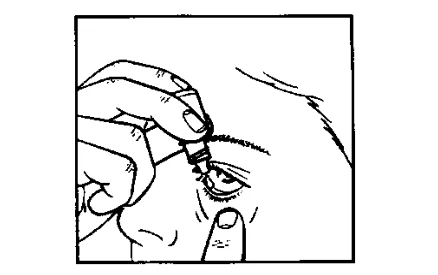
- 5. Pull down your lower eyelid with a clean finger until there is a “v” pocket between your eyelid and your eye. The drop will go in here (picture 2).
- 6. Bring the bottle tip close to the eye.
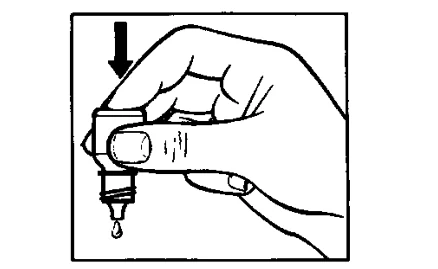
- 7. Gently press on the base of the bottle to release one drop at a time. Do not squeeze the bottle. It is designed so that a gentle press on the bottom is all that it needs (picture 3).
- 8.
Nasolacrimal occlusion or gently closing the eyelid after administration is
- recommended. This may reduce the systemic absorption of medicinal products administered via the ocular route
- 9. Close the bottle immediately after use.
2 3
MAXIDEX Suspension and Ointment:
- Do not let the tip of the tube/dropper touch any surface, as this may contaminate the contents.
- If more than 1 topical ophthalmic medicinal product is being used, the medicines must be administered at least 5 minutes apart. Ointments should be administered last.
4.5 Missed Dose
In the case of a missed dose, a patient should take the missed dose as soon as possible. If it is almost time for the next dose, the patient should be instructed to skip the missed dose and continue with their regular dosing schedule. Patients should not use a double dose to make up for the missed dose.
5 OVERDOSAGE
An ocular overdose of MAXIDEX can be flushed from the eye(s) with lukewarm water. Patients should be instructed not to apply any more MAXIDEX until it is time for their next scheduled dose.
Due to the low quantity of medicinal ingredient in a bottle of MAXIDEX, no additional toxic effects are expected with an acute ocular overdose of this product or in the event of accidental ingestion of the contents of one bottle.
| For management of a suspected drug overdose, contact your regional poison control centre. |
|---|
6 DOSAGE FORMS, STRENGTHS, COMPOSITION AND PACKAGING
Table 1– Dosage Forms, Strengths, Composition and Packaging
| Route of Administration | Dosage Form / Strength/Composition | Non-medicinal Ingredients |
Description
MAXIDEX Ointment: MAXIDEX ointment is a sterile ophthalmic ointment, supplied in 3.5 g tubes with ophthalmic tip.
MAXIDEX Suspension: MAXIDEX suspension is a sterile ophthalmic suspension, supplied in 8 mL plastic bottle. Tamper evidence is provided by a closure with an extended skirt that locks to the bottle finish on application and breaks away from the closure on opening.
7 WARNINGS AND PRECAUTIONS
General
For topical use only.
Delayed Wound Healing:
Topical ophthalmic corticosteroids may slow corneal wound healing. Nonsteroidal anti-inflammatory drugs (NSAIDs) are also known to slow or delay healing. Concomitant use of NSAIDs and topical steroids may increase the potential for healing problems.
Driving and Operating Machinery
Temporary blurred vision or other visual disturbances may affect the ability to drive or use machines. If blurred vision occurs after instillation, the patient must wait until the vision clears before driving or using machinery.
Endocrine and Metabolism
Cushing’s syndrome and/or adrenal suppression associated with systemic absorption of ophthalmic dexamethasone may occur after intensive or long-term continuous therapy in predisposed patients, including children and patients treated with CYP3A4 inhibitors (including ritonavir and cobicistat). (See 9 DRUG INTERACTIONS). In these cases, treatment should not be discontinued abruptly, but progressively tapered.
| Ophthalmic (topical) | Ointment / 0.1% w/w | Anhydrous lanolin oil, methylparaben 0.05% w/w, propylparaben 0.01% w/w and white petrolatum. |
| Ophthalmic (topical) | Suspension / 0.1% w/v | Benzalkonium chloride 0.01% w/v, citric acid, dibasic sodium phosphate, edetate disodium, hydroxypropyl methylcellulose, polysorbate 80, purified water, sodium chloride, and/or sodium hydroxide (to adjust pH). |
Immune
MAXIDEX ointment contains methylparaben and propylparaben which may cause allergic reactions (possibly delayed).
Prolonged use of corticosteroids may suppress the host immune response and aid in the establishment of ocular bacterial, viral, fungal, or parasitic infections. In acute purulent conditions of the eye, corticosteroids may mask infection or enhance existing infection.
The possibility of persistent fungal infections of the cornea should be considered after prolonged corticosteroid dosing. Corticosteroid therapy should be discontinued if fungal infection occurs.
Ophthalmologic
Prolonged use of topical ophthalmic corticosteroids may result in ocular hypertension and/or glaucoma, with damage to the optic nerve, defects in visual acuity and fields of vision, and posterior subcapsular cataract formation. If MAXIDEX is used for 10 days or longer, intraocular pressure (IOP) should be routinely and frequently monitored. This is especially important in pediatric patients as the risk of corticosteroid-induced ocular hypertension may be greater in children and may occur earlier than in adults. MAXIDEX is not approved for use in pediatric patients. The risk of corticosteroid-induced raised IOP and/or cataract formation is also increased in predisposed patients (e.g. diabetes).
Corticosteroids should not be used in the presence of glaucoma, ocular hypertension (IOP ≥ 24 mmHg) or a history of steroid-induced IOP elevation unless absolutely necessary and under close ophthalmologic monitoring. Caution should be exercised and duration of treatment with MAXIDEX should be kept as short as possible.
In diseases causing thinning of the cornea or sclera, perforations have been known to occur with the use of topical corticosteroids.
The wearing of contact lenses is discouraged during treatment of ocular inflammation. The preservative in MAXIDEX suspension, benzalkonium chloride, may cause eye irritation and is known to discolour soft contact lenses. Avoid contact with soft contact lenses. However, if the health professional considers contact lense use to be appropriate, patients must be instructed to remove contact lenses prior to application of MAXIDEX suspension and wait at least 15 minutes before re-insertion.
7.1 Special Populations
7.1.1 Pregnant Women
There are no adequate or well-controlled studies evaluating dexamethasone in pregnant women. MAXIDEX should be used during pregnancy only if the potential benefit to the mother justifies the potential risk to the embryo or fetus. Dexamethasone has been shown to be teratogenic in mice and rabbits following topical ophthalmic application. However, no malformations were observed in over 30 pregnancies during which dexamethasone exposure occurred. Prolonged or repeated corticoid use during pregnancy has been associated with an increased risk of intra-uterine growth retardation. Infants born of mothers who have received prolonged and/or substantial doses of corticosteroids during pregnancy should be observed carefully for signs of hypoadrenalism.
7.1.2 Breast-feeding
It is not known whether dexamethasone is excreted in human breast milk. Systemically administered corticosteroids appear in human milk and could suppress growth, interfere with endogenous corticosteroid production or cause other untoward effects. It is not known if ocular administration of corticosteroids could result in sufficient systemic absorption or produce detectable quantities in human milk.
Caution should be exercised when MAXIDEX is administered to nursing women.
7.1.3 Pediatrics
Pediatric patients may be at a higher risk of corticosteroid-induced ocular hypertension (see 7 WARNINGS AND PRECAUTIONS, Ophthalmologic). MAXIDEX is not approved for use in pediatric patients.
7.1.4 Geriatrics
No overall differences in safety or effectiveness have been observed between elderly and younger patients.
8 ADVERSE REACTIONS
8.1 Adverse Reaction Overview
Ocular adverse reactions generally associated with ophthalmic corticosteroids include glaucoma with optic nerve damage, visual acuity and field defects, cataract formation, secondary ocular infections following suppression of host response, and perforation of the globe.
8.2 Clinical Trial Adverse Reactions
Clinical trials are conducted under very specific conditions. The adverse reaction rates observed in the clinical trials; therefore, may not reflect the rates observed in practice and should not be compared to the rates in the clinical trials of another drug. Adverse reaction information from clinical trials may be useful in identifying and approximating rates of adverse drug reactions in real-world use.
A total of 373 patients have been exposed to MAXIDEX suspension or ointment in 6 clinical studies. Adverse reactions reported during clinical trials with MAXIDEX suspension or ointment are classified according to the following convention: very common (≥1/10), common (≥1/100 to <1/10), uncommon (≥1/1000 to <1/100), rare (≥1/10,000 to <1/1000), or very rare (<1/10,000).
Table 2: Adverse Reactions Reported During Clinical Trials with MAXIDEX Suspension or Ointment
| System Organ Classification | MedDRA Preferred Term |
|---|---|
| Nervous system disorders | Uncommon: dysgeusia |
| Eye disorders | Common: ocular discomfort Uncommon: keratitis, conjuctivitis, dry eye, vital dye staining cornea present, photophobia, vision blurred, eye pruritus, foreign body sensation in eyes, lacrimation increased, abnormal sensation in eye, eyelid margin crusting, eye irritation, ocular hyperaemia |
8.5 Post-Market Adverse Reactions
Additional post-marketing adverse reactions include the following:
Endocrine disorders: Cushing’s syndrome, adrenal insufficiency;
Eye disorders: glaucoma, ulcerative keratitis, intraocular pressure increased, visual acuity reduced, corneal erosion, eyelid ptosis, eye pain, mydriasis;
Immune system disorders: hypersensitivity;
Nervous system disorders: dizziness, headache.
9 DRUG INTERACTIONS
9.1 Serious Drug Interactions
Concomitant use of topical steroids and NSAIDs may increase the potential for corneal healing problems.
9.4 Drug-Drug Interactions
CYP3A4 inhibitors including ritonavir and cobicistat may increase systemic exposure resulting in increased risk of adrenal suppression/Cushing’s syndrome (See 7 WARNING AND PRECAUTIONS, Endocrine and Metabolism). In case this co-administration is required, it should be taken under careful medical supervision.
10 CLINICAL PHARMACOLOGY
10.1 Mechanism of Action
Dexamethasone is a potent synthetic corticosteroid. It has been demonstrated by animal and human studies based on oral application to possess approximately six to seven times the potency of prednisolone and at least 30 times the potency of cortisone. The potency of this compound is accomplished by the addition of a methyl radical and a fluorine atom to the prednisolone radical.
Dexamethasone suppresses the inflammatory response to a variety of agents, and delays healing.
11 STORAGE, STABILITY AND DISPOSAL
Store at room temperature. Discard the container at the end of treatment and for a maximum period of use after first opening of 4 weeks. Keep out of the reach and sight of children.
12 SPECIAL HANDLING INSTRUCTIONS
Not Applicable.