


Product Monograph - Clobivis
1 INDICATIONS
CLOBIVIS (clobetasol propionate ophthalmic suspension) is indicated for:
- the treatment of post-operative inflammation and pain following cataract surgery.
1.1 Pediatrics
Pediatrics: No data are available to Health Canada; therefore, Health Canada has not authorized an indication for pediatric use.
1.2 Geriatrics
Geriatrics (≥65 years of age): Evidence from clinical studies and experience suggests that use in the geriatric population is associated with no overall differences in safety or effectiveness (see 7 WARNINGS AND PRECAUTIONS, 7.1.4 Geriatrics).
2 CONTRAINDICATIONS
CLOBIVIS is contraindicated in:
- Patients who are hypersensitive to this drug or to any ingredient in the formulation or to other corticosteroids, including any non-medicinal ingredient, or component of the container. For a complete listing, see 6 DOSAGE FORMS, STRENGTHS, COMPOSITION AND PACKAGING.
- Patients with most active viral diseases of the cornea and conjunctiva, including epithelial herpes simplex keratitis (dendritic keratitis), vaccinia, and varicella, untreated ocular infection of the eye and also in mycobacterial infection of the eye and fungal diseases of ocular structures.
4 DOSAGE AND ADMINISTRATION
4.1 Dosing Considerations
There are no special dosing considerations which need to be taken into account prior to initiating therapy with CLOBIVIS ophthalmic solution.
4.2 Recommended Dose and Dosage Adjustment
- The recommended dose is one drop of CLOBIVIS administered in the affected eye twice daily beginning the day after surgery and continuing throughout the first 14 days of the post-operative period.
- Health Canada has not authorized an indication for pediatric use.
4.4 Administration
- Patients should be instructed to wash their hands before instilling CLOBIVIS into the eye(s).
- Advise patients not to allow the dropper tip to touch the eye or any other surface, as this may contaminate the solution.
- If using other eye drops in addition to CLOBIVIS, wait at least 5 minutes between instillation of CLOBIVIS and other eye drops.
- Do not use CLOBIVIS if the vial is cracked or damaged in any way.
- CLOBIVIS should not be instilled while wearing contact lenses. Remove contact lenses prior to instillation of CLOBIVIS. The preservative in CLOBIVIS, benzalkonium chloride, may be absorbed by soft contact lenses. Lenses may be reinserted after 15 minutes following administration of CLOBIVIS.
4.5 Missed Dose
If a dose is missed, treatment should be continued on the next instillation as normal. Patients should be advised not to instill more than one drop for each instillation in the affected eye(s).
5 OVERDOSE
Based on the studies carried out, a topical overdose is not likely to occur after ocular administration.
For the most recent information in the management of a suspected drug overdose, contact your regional poison control centre or Health Canada's toll-free number, 1-844 POISON-X (1-844-764-7669).
6 DOSAGE FORMS, STRENGTHS, COMPOSITION AND PACKAGING
Table 1 – Dosage Forms, Strengths, Composition and Packaging
| Route of Administration | Dosage Form / Strength / Composition | Non-medicinal Ingredients |
| Ophthalmic | Ophthalmic Suspension 0.05% | boric acid, citric acid (anhydrous), edetate disodium, glycerin, lecithin, methylcellulose, poloxamer, polyvinyl alcohol, sodium chloride, sodium citrate and water for injection Preservative: Benzalkonium chloride 0.0036%. |
Description
CLOBIVIS ophthalmic suspension is a sterile opalescent liquid. It is supplied in a multi-dose white low-density polyethylene plastic white opaque 5 mL eye-dropper bottle with a low-density polyethylene white opaque nozzle and tightly closed with a high-density polyethylene pink cap.
Each bottle contains 3.5 mL of CLOBIVIS in a 5 mL bottle.
7 WARNINGS AND PRECAUTIONS
General
CLOBIVIS is for topical ophthalmic use only.
Prolonged use of ophthalmic corticosteroids may result in cataract and/or glaucoma formation, thus, intraocular pressure should be monitored closely. The use of steroids after cataract surgery may delay wound healing. Corticosteroids should not be used in case of an ocular infection. See 7 WARNINGS AND PRECAUTIONS, Intraocular pressure increase.
CLOBIVIS has not been studied in pregnant or nursing women, but has been found to be teratogenic in animals. Therefore, CLOBIVIS should not be used in pregnant or nursing women unless the benefits to the mother clearly outweigh the risk to the fetus or the nursing child. See 7 WARNINGS AND PRECAUTIONS – 7.1 Special Populations.
CLOBIVIS contains benzalkonium chloride. See 4 DOSAGE AND ADMINISTRATION.
Carcinogenesis and Mutagenesis
See 16 NON-CLINICAL TOXICOLOGY.
Contamination
To avoid the potential for contamination, the dropper tip should not touch the eye or other surfaces.
Corneal and Sclera Melting
In those diseases causing thinning of the cornea or sclera, perforations have been known to occur with the use of topical corticosteroids. The initial prescription and renewal of the medication order should be made by a physician only after examination of the patient with the aid of magnification, such as slit lamp biomicroscopy, and where appropriate, fluorescein staining.
Cataracts
Prolonged use of corticosteroids may result in posterior subcapsular cataract formation.
Contact Lens Wear
CLOBIVIS should not be instilled while wearing contact lenses. Remove contact lenses prior to instillation of CLOBIVIS. The preservative in CLOBIVIS may be absorbed by soft contact lenses. Lenses may be reinserted after 15 minutes following administration of CLOBIVIS.
Delayed Healing
The use of corticosteroids after cataract surgery may delay healing and increase the incidence of bleb formation.
Dependence/Tolerance
Based on the intended target population of CLOBIVIS and the pharmacology of corticosteroids, there is no evidence to suggest a potential for drug abuse or misuse.
Driving and Operating Machinery
There was a rapid regain of visual acuity starting at post-operative day 4 after dosing with CLOBIVIS post cataract surgery, nevertheless, as a precautionary measure, it is suggested to avoid driving or the use of machines until advised that it is safe to do so by the patient’s doctor.
Bacterial Infections
Prolonged use of corticosteroids may suppress the host response and thus increase the hazard of secondary ocular infections. In acute purulent conditions, steroids may mask infection or enhance existing infection. If signs and symptoms fail to improve after 2 days, the patient should be reevaluated.
Viral Infections
Employment of a corticosteroid medication in the treatment of patients with a history of herpes simplex requires great caution. Use of ocular corticosteroids may prolong the course and may exacerbate the severity of many viral infections of the eye (including herpes simplex).
Fungal Infections
Fungal infections of the cornea are particularly prone to develop coincidentally with long-term local corticosteroid application. Fungus invasion must be considered in any persistent corneal ulceration where a corticosteroid has been used or is in use. Fungal culture should be taken when appropriate.
Ophthalmologic
Intraocular Pressure (IOP) Increase
Prolonged use of corticosteroids may result in glaucoma with damage to the optic nerve, defects in visual acuity and fields of vision. Steroids should be used with caution in the presence of glaucoma. If CLOBIVIS is used for 10 days or longer, IOP should be monitored. The risk of corticosteroid-induced raised IOP and/or cataract formation is increased in predisposed patients (e.g. diabetes).
Neurologic
Disturbances and suppression of the Hypothalamic-Pituitary-Adrenal (HPA) axis can occur with systemic exposure to corticosteroids. However, given the very low systemic exposure to clobetasol propionate when using CLOBIVIS ophthalmic suspension as directed, these effects, although not likely, are possible (see 7 WARNINGS AND PRECAUTIONS, Endocrine and Metabolism).
Endocrine and Metabolism
Glucocorticoids, mostly when systemic exposure occurs, decrease the hypoglycemic activity of insulin and oral hypoglycemics, so that a change in dose of the antidiabetic drugs may be needed. In high doses, glucocorticoids also decrease the response to somatotropin. The usual doses of mineralocorticoids and large doses of some glucocorticoids cause hypokalemia and may exaggerate the hypokalemic effects of thiazides and high-ceiling diuretics. In combination with amphotericin-B, they also may cause hypokalemia. Glucocorticoids appear to enhance the ulcerogenic effects of non-steroidal anti-inflammatory drugs. They decrease the plasma levels of salicylates, and salicylism may occur on discontinuing steroids. Glucocorticoids may increase or decrease the effects of prothrombopenic anticoagulants. Estrogens, phenobarbital, phenytoin and rifampin increase the metabolic clearance of adrenal steroids and hence necessitate dose adjustments. However, given the very low systemic exposure to clobetasol propionate when using CLOBIVIS ophthalmic suspension as directed, these possible effects are not likely. See 10 CLINICAL PHARMACOLOGY, 10.1 Mechanism of Action.
Immune
Cortisol and the synthetic analogs of cortisol have the capacity to prevent or suppress the development of the local heat, redness, swelling, and tenderness by which inflammation is recognized. At the microscopic level, they inhibit not only the early phenomena of the inflammatory process (edema, fibrin deposition, capillary dilation, migration of leukocytes into the inflamed area, and phagocytic activity) but also the later manifestations, such as capillary proliferation, fibroblast proliferation, deposition of collagen, and, still later, cicatrisation.
7.1 Special Populations
7.1.1 Pregnant Women
There are no data available for the use of CLOBIVIS in pregnant women. Plasma concentrations of clobetasol propionate were minimal following topical ophthalmic administration of clobetasol propionate ophthalmic suspension 0.05% [see section 10 Clinical Pharmacology]. However, corticosteroids, including clobetasol propionate have been shown to be teratogenic and fetotoxic in laboratory animals when administered systemically at relatively low dosage levels.
CLOBIVIS Ophthalmic Suspension 0.05% should be used during pregnancy only if the potential benefit justifies the potential risk to the fetus.
In embryofetal development studies in mice, clobetasol propionate was fetotoxic at the highest subcutaneous dose tested (1 mg/kg) and teratogenic at all subcutaneous dose levels tested down to 0.03 mg/kg. Abnormalities observed included cleft palate and skeletal abnormalities. These doses are approximately 98 times and 3 times, respectively, the recommended human ophthalmic dose of clobetasol propionate ophthalmic suspension 0.05%.
In embryofetal development studies in rabbits, clobetasol propionate was teratogenic at subcutaneous doses of 3 and 10 mcg/kg. Abnormalities seen included cleft palate, cranioschisis, and other skeletal abnormalities. These doses are approximately 1.2 times and 3.9 times, respectively, the recommended human ophthalmic dose of clobetasol propionate ophthalmic suspension 0.05%.
7.1.2 Breast-feeding
There is no information regarding the presence of clobetasol propionate in human milk, the effects on the breastfed infant, or the effects on milk production following topical administration.
Systemically administered corticosteroids appear in human milk and could suppress growth, interfere with endogenous corticosteroid production, or cause other untoward effects. However, systemic levels of clobetasol propionate following topical ocular administration are minimal and it is not known whether measurable levels of clobetasol propionate would be present in maternal milk following topical ocular administration.
7.1.3 Pediatrics
No data are available to Health Canada; therefore, Health Canada has not authorized an indication for pediatric use.
7.1.4 Geriatrics
No overall differences in safety and effectiveness of CLOBIVIS have been observed between patients 65 years of age and older and younger adult patients.
8 ADVERSE REACTIONS
8.1 Adverse Reaction Overview
The most common adverse drug reactions following the use of CLOBIVIS (clobetasol propionate) are usually mild or moderate in severity and occur in or around the eye.
8.2 Clinical Trial Adverse Reactions
Clinical trials are conducted under very specific conditions. Therefore, the frequencies of adverse reactions observed in the clinical trials may not reflect the frequencies observed in clinical practice and should not be compared to frequencies reported in the clinical trials of another drug. Adverse reaction information from clinical trials may be useful in identifying and approximating rates of adverse drug reactions in real-world use.
Overall, a total of 431 patients were exposed to CLOBIVIS (clobetasol propionate) across five clinical studies, including two pivotal trials (CPN-301 and CPN-302), one Phase 1 study (CPN-102), and one Phase 2 study (CPN-201). In studies CPN-301 and CPN-302, patients received 0.05% CLOBIVIS ophthalmic solution twice daily for at least 14 days, followed by a recovery period. In CPN-201, patients received either 0.05% CLOBIVIS for 21 days or a regimen of 0.05% or 0.1% for 3 days BID followed by 0.05% or 0.1% QD for 11 days. In CPN-102, patients received a single dose or two drops of 0.05% CLOBIVIS for one day.
Table 2 - Most common (≥ 1%) Treatment Emergent Adverse Events from Clinical Trials
| System organ class/preferred term | CLOBIVIS 0.05% N =431 n (%) | Placebo N=448 n (%) |
| Eye disorders | ||
| Eye inflammation | 10 (2.3%) | 22 (4.9%) |
| Corneal edema | 9 (2.1%) | 15 (3.3%) |
| Intraocular pressure increaseda | 9 (2.1%) | 1 (0.2%) |
| Anterior chamber inflammation | 8 (1.9%) | 5 (1.1%) |
| Cystoid macular edema | 7 (1.6%) | 7 (1.6%) |
| Photophobia | 5 (1.2%) | 5 (1.1%) |
| Vitreous detachment | 5 (1.2%) | 3 (0.7%) |
| Eye pain | 4 (0.9%) | 15 (3.3%) |
| Foreign body sensation in eyes | 1 (0.2%) | 5 (1.1%) |
n=number of study subjects reporting at least 1 TEAE within preferred term.
a The preferred term intraocular pressure increased included 2 preferred terms: intraocular pressure increased and ocular hypertension.
8.3 Less Common Clinical Trial Adverse Reactions
Less common clinical trial adverse reactions reported in less than 1% of patients include: eye pain, foreign sensation in the eye, visual impairment and dysgeusia.
8.4 Abnormal Laboratory Findings: Hematologic, Clinical Chemistry and Other Quantitative Data
None.
8.5 Post-Market Adverse Reactions
Post-marketing data is not available at this time.
9 DRUG INTERACTIONS
9.1 Serious Drug Interactions
No drug interaction studies have been performed. There is no detectable systemic absorption of CLOBIVIS following ocular administration. Therefore, no interaction of topically applied CLOBIVIS with systemic drugs is expected to occur.
9.2 Drug Interactions Overview
Interactions with other drugs have not been established.
CLOBIVIS contains benzalkonium chloride which interacts with soft contact lens. See 4 DOSAGE AND ADMINISTRATION – 4.4 Administration.
9.3 Drug-Behaviour Interactions
Drug-behavioural interactions have not been established.
9.4 Drug-Drug Interactions
Interactions with other drugs have not been established.
9.5 Drug-Food Interactions
Interactions with food have not been established.
9.6 Drug-Herb Interactions
Interactions with herbal products have not been established.
9.7 Drug-Laboratory Test Interactions
Interactions with laboratory tests have not been established.
10 CLINICAL PHARMACOLOGY
10.1 Mechanism of Action
Like other topical corticosteroids, clobetasol propionate has anti-inflammatory, antipruritic, and vasoconstrictive properties. The mechanism of the anti-inflammatory activity of topical steroids, in general, is unclear. However, corticosteroids are thought to act by the induction of phospholipase A2 inhibitory proteins, collectively called lipocortins. It is postulated that these proteins control the biosynthesis of potent mediators of inflammations such as prostaglandins and leukotrienes by inhibiting the release of their common precursor, arachidonic acid. Arachidonic acid is released from membrane phospholipids by phospholipase A2.
10.2 Pharmacodynamics
In patients treated with clobetasol propionate ophthalmic suspension 0.05% twice daily for 21 days, the mean (SD) changes from baseline in cortisol concentrations, -18.1 (126.2) nmol/L and +5.1 (129.8) nmol/L for the clobetasol propionate ophthalmic suspension 0.05% and matching vehicle arms, respectively, were not statistically significant, considering the variability observed in the cortisol concentrations.
10.3 Pharmacokinetics
A human pharmacokinetic study performed with 0.05% CLOBIVIS showed that most (>90%) of the total 352 plasma samples collected over the 24-hour post-dose periods had clobetasol concentrations below the lower limit of quantitation (LLOQ) of 0.040 ng/mL. There were no measurable clobetasol propionate concentrations in all the plasma samples collected prior to the second dose of a twice daily regimen, indicating rapid elimination from the systemic circulation without accumulation. When measurable in a small number of samples of 4 to 5 subjects (out of 12 subjects), the plasma clobetasol propionate concentrations were low, ranging from 0.040 to 0.182 ng/mL and quickly decaying to below the LLOQ at 4 to 5 hours post-dose. Time to peak concentration (Tmax) was observed between 0.5 to 1 hour post-dose.
Absorption
The results of the Phase 1 pharmacokinetic study performed in healthy subjects showed that the absorption of clobetasol propionate via the gastrointestinal tract after nasopharyngeal drainage from an eye drop of clobetasol propionate is not measurable or very low. This indicates that the systemic bioavailability of clobetasol propionate from ocular administration is negligible to minimal.
Distribution:
No human studies are available; however, the ocular tissue distribution study in rabbits showed good penetration of clobetasol propionate in the eye following ocular instillation of 1 drop of clobetasol propionate, with the highest concentrations present in cornea, conjunctiva and iris/ciliary body.
Metabolism:
No metabolism studies have been performed with CLOBIVIS.
Elimination
No elimination studies have been performed with CLOBIVIS.
Special Populations and Conditions
No special studies have been performed.
- Pediatrics: The safety and efficacy of clobetasol propionate has not been established in pediatric patients; therefore, Health Canada has not authorized an indication for pediatric use.
- Geriatrics: No overall differences in safety or effectiveness have been observed between elderly and younger adult patients.
11 STORAGE, STABILITY AND DISPOSAL
Store upright at 15°C to 25°C. Do not freeze. Discard 28 days after opening.
Do not use if tamper-evident ring seal is broken.
Keep the bottle tightly closed with the pink cap when not in use.
12 SPECIAL HANDLING INSTRUCTIONS
None
PART II: SCIENTIFIC INFORMATION
13 PHARMACEUTICAL INFORMATION
Drug Substance
Proper name: Clobetasol Propionate
Chemical name: 21-chloro-9a-fluoro-11b,17a-dihydroxy-16b-methylpregna-1,4-diene-3,20-dione 17-propionate
Molecular formula and molecular mass: C25H32ClFO5, and 466.97 dalton
Structural formula:
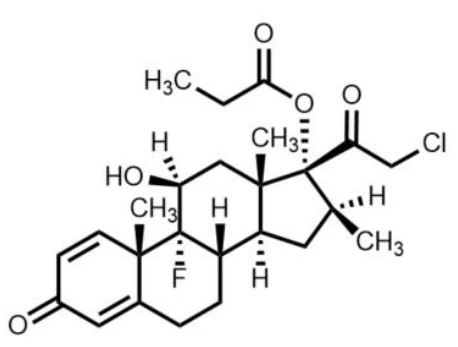
Physicochemical properties: White or almost-white, crystalline powder. Practically insoluble in water; sparingly soluble in ethanol; soluble in acetone and methanol.
14 CLINICAL TRIALS
14.1 Clinical Trials by Indication
Treatment of post-operative inflammation and pain following cataract surgery.
Table 3- Summary of patient demographics for clinical trials using CLOBIVIS for post-operative inflammation and pain following cataract surgery
| Study # | Study design | Dosage, route of administration and duration | Study subjects (n) | Mean Age (Range) | Sex M= Male F=Female |
CPN-301/ Phase 3 | Multicenter, randomized, double-masked, placebo-controlled, parallel-group study | 1 drop CLOBIVIS twice daily (morning and evening) for 14 days instilled to the operated study eye starting the day after cataract surgery 1 drop Placebo twice daily (morning and evening) for 14 days instilled to the operated study eye starting the day after cataract surgery | 378 CLOBIVIS: 181 Placebo: 197 | 30-91 years CLOBIVIS: 68.7 years Placebo: 67.8 years | CLOBIVIS: 75 M/106 F Placebo: 78 M/119 F |
CPN-302/ Phase 3 | Multicenter, randomized, double-masked, placebo-controlled, parallel-group study | 1 drop CLOBIVIS twice daily (morning and evening) for 14 days instilled to the operated study eye starting the day after cataract surgery 1 drop Placebo twice daily (morning and evening) for 14 days instilled to the operated study eye starting the day after cataract surgery | 370 CLOBIVIS: 185 Placebo: 185 | 30-89 years CLOBIVIS: 67.2 years Placebo: 68.0 years | CLOBIVIS: 87 M/98 F Placebo: 88 M/97 F |
Studies CPN-301 and CPN-302
Clinical efficacy was evaluated in 2 multi-center, randomized, double-masked, placebo-controlled, parallel-group trials CPN-301 and CPN-302 in which patients had ≥10 cells in the anterior chamber after cataract surgery were assigned to CLOBIVIS (N=366) or placebo (N=382). Patients had no history of glaucoma, ocular hypertension, steroid-related IOP rise, corneal abrasion/ulceration, and had an IOP between <22 mm Hg and >5 mm Hg on Day 1 after surgery. One drop of CLOBIVIS 0.05% or placebo was self-administered twice a day for 14 days, beginning on the day after surgery. Complete resolution of inflammation (an anterior chamber cell count of 0 maintained through Day 15 without rescue medication) and complete resolution of pain (a patient-reported pain grade of 0 maintained through Day 15 without rescue medication) were assessed at post-operative day (POD) 4, 8, and 15.
The co-primary efficacy endpoints were the proportion of subjects with Anterior Chamber Cell (ACC) count = 0 (ACC grade = 0) at post-operative day (POD) 8 maintained through POD15 and the proportion of subjects with Ocular Pain Grade = 0 at POD4 maintained through POD15. Secondary efficacy objectives based on markers of inflammation and ocular pain were assessed between treatment groups at PODs 4, 8 and 15.
In each clinical trial, both co-primary efficacy endpoints were statistically significant in CLOBIVIS-treated patients compared to placebo-treated patients (p<0.01), see Table 3 below.
Table 4- Analysis of the Proportion (%) of Subjects with ACC count =0 and Ocular Pain Grade = 0 in ITT population in studies CPN-301 and CPN-302
| Primary Endpoint | CPN-301 | CPN-302 | |||||
|---|---|---|---|---|---|---|---|
CLOBIVIS (N=181) | Placebo (N=197) | p-value | CLOBIVIS (N=185) | Placebo (N=185) | p-value | ||
| Proportion with ACC count=0 at POD8, maintained through POD15, n (%) | 48 (26.5) | 10 (5.1) | ˂0.001 | 49 (26.5) | 16 (8.6) | ˂0.001 | |
| Proportion with ocular pain grade=0 at POD4, maintained through POD15, n (%) | 123 (68.0) | 46 (23.4) | ˂0.001 | 139 (75.1) | 60 (32.4) | ˂0.001 | |
ITT= Intent To Treat ACC count= Anterior Cell Chamber count, POD8= Post Operative Day 8, POD15= Post Operative Day 15
The results of secondary endpoints reinforce the results of the primary endpoints, confirming the rapid and sustained clearance of ocular inflammation (ACC count =0) together with durable and complete relief from ocular pain (pain grade = 0) in subjects using CLOBIVIS treatment compared to Placebo.
15 MICROBIOLOGY
No microbiological information is required for this drug product.
16 NON-CLINICAL TOXICOLOGY
General Toxicology:
Safety of CLOBIVIS was established in following repeated dose toxicity study in Rabbits by topical ocular application.
A 7-Day Repeat-Dose Ocular Toxicity Study in Rabbits:
This study was performed to assess the ocular toxicity of repeat ocular surface instillation in the albino rabbit, 3 males per group, received daily ocular surface instillation of 50 mcL of early formulations of 0.025% (0.125 mg/eye/day), 0.05% (0.25 mg/eye/day), or 0.1% (0.5 mg/eye/day) clobetasol propionate ophthalmic solution to the left eye only at a frequency of 10 times daily for 7 days. Control animals received daily ocular surface instillation of 50 mcL of either physiological saline or clobetasol propionate vehicle to the left eye 10 times daily. The interval between dose administrations was 30 minutes, such that each animal received 10 dose administrations within approximately 5 hours for a total of 70 administrations over 7 days.
All animals were examined for clinical signs and body weight; food consumption was not measured. Ocular toxicity endpoints included slit lamp biomicroscopy with Draize scoring and corneal fluorescein staining, and assessment of nictitation frequency. Intraocular pressure (IOP) was assessed prior to the start of dosing, and then twice daily (before the first and after the last administration) during the dosing period.
The result concludes, ocular surface instillation of 0.025%, 0.05%, and 0.1% clobetasol propionate ophthalmic solution as well as the corresponding vehicle, was well tolerated in the Japanese white rabbit when administered 50 mcL 10 times (over 5 hours with 30 minutes intervals between doses) per day for 7 days. No ocular toxicity was observed at dose levels up to 0.1% (0.5 mg/eye/day), and there was no test article-related effect on intra ocular pressure (IOP).
A 2-Week Repeat-Dose Ocular and Systemic Toxicity Study:
This study was performed to evaluate the ocular and systemic toxicity and the systemic toxicokinetics of clobetasol propionate following repeat topical ocular administration for a 2-weeks followed by a 4-week of recovery period in albino rabbits, 7 per sex per group, received daily ocular surface instillation of 50 mcL of 0.1% clobetasol propionate to the left eye only at a frequency of 1, 2, or 4 times daily for 14 days. Two additional groups, 7 per sex per group, received daily ocular surface instillation of 50 mcL of either physiological saline or clobetasol propionate vehicle into the left eye four times daily (QID). The interval between dose administrations was 1 hour, such that the QID groups, for example, received all 4 administrations within a 4-hour period on each dosing day. Dosing initiated on Day 0, and 4 animals per group were sacrificed at the end of the dosing period on Day 13. The remaining 3 animals per group were designated as recovery animals and were sacrificed after a 4-week recovery period on Day 41.
Study includes standard toxicology endpoints of clinical observations, body weight, food consumption, clinical pathology, plasma toxicokinetics, macroscopic observations at necropsy, organ weights, and systemic histopathology. Ophthalmic endpoints included slit lamp biomicroscopy, fluorescein staining, indirect ophthalmoscopy, tonometry, electroretinography, and ocular histopathology.
The result concludes, ocular surface instillation of 0.1% clobetasol propionate given 1, 2, or 4 times daily with a 1-hour dosing interval between doses for 2 weeks demonstrated excellent ocular tolerability, with no test article-related or adverse effects noted in any ophthalmic endpoint including ophthalmic examinations, ocular histopathology, intra ocular pressure (IOP), and electroretinography (ERG). Test article-related systemic findings were limited to effects associated with systemic corticosteroid exposure and suppression of the hypothalamic pituitary adrenal axis and were generally reversible. Systemic exposure was dose frequency-related and peaked at 3.3 ng/mL (males and females combined) in the high dose animals (0.1% given 4 times daily) and no apparent sex differences were noted. The no-observed adverse effect level (NOAEL) for systemic toxicity was not determined in this study as, the systemic findings related to corticosteroid administration were adverse in some cases. The lack of any test article-related findings in ophthalmic endpoints in any group indicates that 0.1% clobetasol propionate does not produce ocular toxicity, and therefore the top dose level of 0.1% clobetasol propionate given 4 times daily for 2 weeks (0.2 mg/eye/day) can be considered as the NOAEL for ophthalmic endpoints in this study.
A 4-Week Repeat-Dose Ocular and Systemic Toxicity Study:
This study was performed to evaluate the ocular and systemic toxicity and toxicokinetics of clobetasol propionate following twice daily topical ocular administration of 0.05% clobetasol propionate ophthalmic solution, 0.1% clobetasol propionate ophthalmic solution or vehicle for 0.1% clobetasol propionate ophthalmic solution in albino rabbits.
New Zealand White rabbits, 7 per sex per group, received twice daily ocular surface instillations of 50 mcL of 0.05% or 0.1% clobetasol propionate in the left eye only. The control group, also 7 per sex per group, received twice daily ocular surface instillations of 50 mcL of saline in the right eye and placebo vehicle for 0.1% clobetasol propionate in the left eye. The interval between twice daily dose administrations was 8 hours. Dosing initiated on Day 1. The main study animals (4/sex/group) were sacrificed at the conclusion of the dosing period on Day 29. The recovery animals (3/sex/group) were sacrificed at the end of the 4-week recovery period on Day 57.
Standard toxicology endpoints included viability, clinical observations, body weight, food consumption, clinical pathology, plasma toxicokinetics, gross pathology, organ weights, and systemic histopathology. Ophthalmic endpoints included slit lamp biomicroscopy with Hackett-McDonald scoring, fluorescein staining, indirect ophthalmoscopy, tonometry, electroretinography, and ocular histopathology including ocular adnexa.
The result concludes, twice daily ocular surface instillation of 0% (Vehicle for 0.1% clobetasol propionate ophthalmic solution), 0.05% clobetasol propionate ophthalmic solution, or 0.1% clobetasol propionate ophthalmic solution (0, 0.05, and 0.1 mg/eye/day, respectively) for 4 weeks was generally well tolerated ocularly and systemically in the New Zealand white rabbit, with findings limited to those expected following corticosteroid administration in the rabbit.
There was no mortality on study, and no test article-related findings in body weights or clinical observations. A mild test article-related increase in food consumption was observed. Ocular administration of clobetasol propionate ophthalmic solution did not induce any ocular toxicity findings as assessed by slit lamp biomicroscopy, indirect ophthalmoscopy, intra ocular pressure (IOP), electroretinography, or histopathology of the eye and ocular adnexa. Test article-related findings observed in clinical pathology, organ weights, macroscopic observations at necropsy, and systemic histopathology were generally mild and reversible, not considered adverse, and indicative of corticosteroid systemic exposure in the rabbit. Minimal to mild protein casts and tubular mineralization observed in the kidneys of low and high dose females, and low dose but not high dose males, were considered adverse as they are indicators of renal injury. These findings are consistent with the very early stages of corticosteroid-induced nephropathy, for which the rabbit is a uniquely sensitive species. Systemic exposure to clobetasol propionate ophthalmic solution was not dose-related, peaked at 3.14 ng/mL (males and females combined) in the high dose animals, and no apparent sex differences were noted. Based on the ocular endpoints, the NOAEL for ocular toxicity was considered to be 0.1% clobetasol propionate ophthalmic solution twice daily (0.1 mg/eye/day). Due to the adverse effects noted in the kidney of low and high dose females, and low dose but not high dose males, the NOAEL for systemic toxicity of clobetasol propionate following ocular administration was considered to be less than 0.05% clobetasol propionate ophthalmic solution twice daily (0.05 mg/eye/day) in rabbits. Considering the body weight differences in rabbits and humans, 0.05 mg/eye/day dose in rabbits is approximately 80-fold higher than the intended human daily dose (0.05% BID) on a per kg body weight basis (using estimates of a 3 kg rabbit and a 60 kg human).
Carcinogenicity:
Long-term animal studies have not been performed with clobetasol propionate ophthalmic suspension 0.05% to evaluate the carcinogenic potential of clobetasol propionate.
Genotoxicity:
Clobetasol propionate (ointment, 0.05%) was not mutagenic in the Ames test, the Saccharomyces cerevisiae gene conversion test, and the E. coli B WP2 fluctuation test.
Reproductive and Developmental Toxicology:
In embryofetal development studies in mice, subcutaneous administration of clobetasol propionate during the period of organogenesis resulted in malformations at all dose levels, ranging from 0.03 to 1 mg/kg. Malformations included cleft palate and skeletal abnormalities.
In an embryofetal development study in rabbits, subcutaneous administration of clobetasol propionate during the period of organogenesis resulted in malformations at doses of 0.003 and 0.01 mg/kg. Malformations included cleft palate, cranioschisis, and other skeletal abnormalities.