


Product Monograph - Zavesca
RECENT MAJOR LABEL CHANGES
| 4 Dosage and Administration, 4.2 Recommended Dose and Dose Adjustment | 01/2022 |
| 7 Warnings and Precautions, Reproductive Health: Female and Male Potential | 01/2022 |
| 7 Warnings and Precautions, 7.1.1 Pregnant Women | 01/2022 |
TABLE OF CONTENTS
Sections or subsections that are not applicable at the time of authorization are not listed .
RECENT MAJOR LABEL CHANGES ..................................................................................... 2
TABLE OF CONTENTS .......................................................................................................... 2
PART I: HEALTH PROFESSIONAL INFORMATION............................................................... 4
1 INDICATIONS.............................................................................................................. 4
1.1 Pediatrics ........................................................................................................... 4
1.2 Geriatrics............................................................................................................ 4
2 CONTRAINDICATIONS ............................................................................................... 4
4 DOSAGE AND ADMINISTRATION .............................................................................. 4
4.1 Dosing Considerations ........................................................................................ 4
4.2 Recommended Dose and Dosage Adjustment .................................................... 5
4.3 Reconstitution..................................................................................................... 6
4.4 Administration..................................................................................................... 6
4.5 Missed Dose....................................................................................................... 6
5 OVERDOSAGE ........................................................................................................... 6
6 DOSAGE FORMS, STRENGTHS, COMPOSITION AND PACKAGING ........................ 7
7 WARNINGS AND PRECAUTIONS .............................................................................. 7
7.1 Special Populations ............................................................................................ 9
7.1.1 Pregnant Women ............................................................................................ 9
7.1.2 Breast-feeding ............................................................................................... 10
7.1.3 Pediatrics ...................................................................................................... 10
7.1.4 Geriatrics (≥ 65 years) ................................................................................... 10
8 ADVERSE REACTIONS ............................................................................................ 10
8.1 Adverse Reaction Overview .............................................................................. 10
8.2 Clinical Trial Adverse Reactions ........................................................................ 11
8.3 Less Common Clinical Trial Adverse Reactions................................................. 16
8.4 Abnormal Laboratory Findings: Hematologic, Clinical Chemistry and Other Quantitative Data ....................................................................................................... 17
8.5 Post-Market Adverse Reactions ........................................................................ 18
9 DRUG INTERACTIONS ............................................................................................. 18
9.2 Drug Interactions Overview ............................................................................... 18
9.4 Drug-Drug Interactions...................................................................................... 18
9.5 Drug-Food Interactions ..................................................................................... 19
9.6 Drug-Herb Interactions...................................................................................... 19
9.7 Drug-Laboratory Test Interactions ..................................................................... 19
10 CLINICAL PHARMACOLOGY ................................................................................... 19
10.1 Mechanism of Action ..................................................................................... 19
10.2 Pharmacodynamics ....................................................................................... 19
10.3 Pharmacokinetics .......................................................................................... 20
11 STORAGE, STABILITY AND DISPOSAL .................................................................. 24
12 SPECIAL HANDLING INSTRUCTIONS ..................................................................... 24
PART II: SCIENTIFIC INFORMATION .................................................................................. 25
13 PHARMACEUTICAL INFORMATION ........................................................................ 25
14 CLINICAL TRIALS .................................................................................................... 25
14.1 Clinical Trials by Indication ............................................................................ 25
Type 1 Gaucher Disease ............................................................................................ 25
Niemann-Pick Type C Disease ................................................................................... 32
15 MICROBIOLOGY....................................................................................................... 35
16 NON-CLINICAL TOXICOLOGY ................................................................................. 35
PATIENT MEDICATION INFORMATION .............................................................................. 43
PART I: HEALTH PROFESSIONAL INFORMATION
1 INDICATIONS
ZAVESCA® (miglustat) is indicated for:
- the treatment of adult patients with mild to moderate Type 1 Gaucher disease for whom enzyme replacement therapy is not a therapeutic option.
- slowing the progression of some of the neurological manifestations in adult and pediatric (4-17 years of age) patients with Niemann-Pick Type C disease.
1.1 Pediatrics
There is no experience with the use of ZAVESCA® in patients with type 1 Gaucher disease under the age of 18; therefore, Health Canada has not authorized this indication for pediatric use.
Based on the data submitted and reviewed by Health Canada, the safety and efficacy of ZAVESCA® in pediatric patients aged 4 to 18 years with Niemann-Pick Type C disease has been established. However, patients below 4 years of age were not enrolled in the prospective study of ZAVESCA® in Niemann-Pick Type C disease. Therefore, Health Canada has authorized this indication for use in pediatric patients aged 4 to 18 only.
1.2 Geriatrics
No data are available to Health Canada; therefore, Health Canada has not authorized an indication for geriatric use.
2 CONTRAINDICATIONS
- ZAVESCA® is contraindicated in patients who are hypersensitive to miglustat or to any ingredient in the formulation, including any non-medicinal ingredient, or component of the container. For a complete listing, see 6 DOSAGE FORMS, STRENGTHS, COMPOSITION AND PACKAGING.
- ZAVESCA® is contraindicated in women who are or may become pregnant. If ZAVESCA® is administered to women of reproductive potential, they should be informed of the potential hazard to the foetus (see 7 WARNINGS AND PRECAUTIONS and 16 NON-CLINICAL TOXICOLOGY).
4 DOSAGE AND ADMINISTRATION
4.1 Dosing Considerations
- Dose selection may need to be adjusted for patients with mild or moderate renal impairment. Use in patients with severe renal impairment is not recommended.
- Due to teratogenic risk, pregnancy should be ruled out prior to administration (see 16 NON-CLINICAL TOXICOLOGY).
- Temporary dose reduction may be necessary in some patients because of diarrhea. The risk of diarrhea may be reduced if ZAVESCA® is taken between meals (see 7 WARNINGS AND PRECAUTIONS)
- The benefit to the patient of treatment with ZAVESCA® should be evaluated on a regular basis.
- Switching from enzyme replacement therapy to ZAVESCA® in Gaucher disease: Switching to ZAVESCA® should be considered only for patients who have had their disease well stabilized on enzyme replacement therapy.
4.2 Recommended Dose and Dosage Adjustment
Dosage in type 1 Gaucher Disease
Adults
The recommended dose for the treatment of patients with Type 1 Gaucher disease is one 100 mg capsule administered orally three times a day at regular intervals.
Temporary dose reduction to 100 mg once or twice a day may be necessary in some patients because of diarrhea or tremor (see 7 WARNINGS AND PRECAUTIONS, Gastrointestinal, Neurological).
Pediatrics (under 18 years of age)
Health Canada has not authorized this indication for pediatric use
Dosage in Niemann-Pick Type C Disease
Adults and juvenile (12-17 years old)
The recommended dose for the treatment of adult and juvenile patients with Niemann-Pick Type C disease is 200 mg three times a day.
Pediatrics (4-12 years of age)
Patients below 4 years of age were not enrolled in the prospective study of ZAVESCA® in Niemann-Pick Type C disease. Dosing in patients between the ages of 4 to 12 should be adjusted on the basis of body surface area (BSA, mg/m2) as illustrated below:
| Body Surface Area (m2) | Recommended dose |
| > 1.25 | 200 mg three times a day |
| > 0.88 - 1.25 | 200 mg twice a day |
| > 0.73 - 0.88 | 100 mg three times a day |
| > 0.47 - 0.73 | 100 mg twice a day |
| ≤ 0.47 | 100 mg once a day |
Special Populations
Geriatrics (≥ 65 years)
No data are available to Health Canada; therefore, Health Canada has not authorized an indication for geriatric use
Renal Impairment
There is a close relationship between renal function and clearance of miglustat. Exposure of miglustat is markedly increased in patients with severe renal impairment.
In patients with mild renal impairment (adjusted creatinine clearance 0.83-1.2 mL/s or 50-70 mL/min /1.73 m2) ZAVESCA® administration should commence at a dose of 100 mg twice per day in patients with Type 1 Gaucher disease and at a maximum dose of 200 mg twice per day with Niemann-Pick Type C disease. Starting dose should be adjusted for body surface area in pediatric patients (4-12 years of age) with Niemann-Pick Type C disease.
In patients with moderate renal impairment (adjusted creatinine clearance of 0.5-0.83 mL/s or 30-50 mL/min/1.73 m2), ZAVESCA® administration should commence at a maximum dose of 100 mg once per day in patients with Type 1 Gaucher disease and at a dose of 100 mg twice per day with Niemann-Pick Type C disease. Starting dose should be adjusted for body surface area in pediatric patients (4-12 years of age) with Niemann-Pick Type C disease.
Use in patients with severe renal impairment (creatinine clearance of < 0.5 mL/sec or 30 mL/min/1.73 m2) is not recommended. In patients with renal impairment continued monitoring and appropriate dosage adjustment is recommended.
Hepatic Impairment
ZAVESCA® has not been evaluated in patients with moderate to severe hepatic impairment. No metabolites of miglustat have been detected in animals or in humans either in vivo or in vitro. Miglustat is known to be substantially excreted by the kidney. There is insufficient clinical experience in patients with hepatic impairment to provide dosing recommendations.
4.3 Reconstitution
No reconstitution required.
4.4 Administration
Capsules should be swallowed whole with water.
ZAVESCA® can be taken with or without food. The risk of diarrhea may be reduced if ZAVESCA® is taken between meals (see 7 WARNINGS AND PRECAUTIONS).
4.5 Missed Dose
If a scheduled dose of ZAVESCA® is missed, a double dose should not be taken to make up for the forgotten individual dose. The patient should take the next dose at the usual scheduled time.
5 OVERDOSAGE
In the clinical development program for ZAVESCA®, no patient experienced an overdose of study drug. However, ZAVESCA® has been administered at doses of up to 3000 mg/day (approximately 10 times the recommended dose administered to Gaucher patients) for up to six months in Human Immunodeficiency Virus (HIV)-positive patients. Adverse events observed in the HIV studies included granulocytopenia, dizziness, and paresthesia. Leukopenia and neutropenia have also been observed in a similar group of patients receiving 800 mg/day or above.
| For management of a suspected drug overdose, contact your regional poison control centre. |
6 DOSAGE FORMS, STRENGTHS, COMPOSITION AND PACKAGING
| Route of Administration | Dosage Form / Strength/Composition | Non-medicinal Ingredients |
| Oral | Capsule, 100 mg | Capsule contents: magnesium stearate, povidone (K30), sodium starch glycolate. Capsule shell: gelatin, titanium dioxide (E171). Printing Ink: black iron oxide (E172), shellac. |
ZAVESCA® capsules are supplied in hard capsules containing 100 mg of miglustat. ZAVESCA® 100 mg capsules are white opaque with "OGT 918" printed in black on the cap and "100" printed in black on the body.
ZAVESCA® capsules are supplied in boxes containing 6 blister cards of 15 capsules each (90 capsules/box).
7 WARNINGS AND PRECAUTIONS
Therapy should be directed by physicians knowledgeable in the management of patients with Gaucher disease or Niemann-Pick Type C disease, as appropriate.
General
Severe Gaucher Disease: The safety and efficacy of ZAVESCA® have not been specifically evaluated in patients with severe Gaucher disease, defined as hemoglobin concentration below 9 g/dl or a platelet count below 50 x 109/L or active bone disease.
Carcinogenesis and Mutagenesis
Evidence of carcinogenicity and mutagenicity with ZAVESCA is limited to non-clinical findings (see 16 NON-CLINICAL TOXICOLOGY).
Dependence/Tolerance
The dependence potential of ZAVESCA® has not been evaluated in human studies.
Driving and Operating Machinery
No studies on the effects on the ability to drive or to use machinery have been performed. Dizziness has been reported as a very common adverse event and patients suffering from dizziness should not drive or operate machinery.
Gastrointestinal
Gastrointestinal events, mainly diarrhea, have been observed in more than 85% of patients, either at the outset of treatment or intermittently during treatment. The mechanism is probably inhibition of intestinal disaccharidases such as sucrose-isomaltase in the gastrointestinal tract leading to reduced absorption of dietary disaccharides in the small intestine. The majority of cases are mild and are expected to resolve spontaneously on therapy. In clinical practice, miglustat-induced gastrointestinal events have been observed to respond to individualized diet modification (reduction of sucrose, lactose and other carbohydrate intake), to taking ZAVESCA® between meals, and/or to anti-diarrheal medication such as loperamide. In some patients, temporary dose reduction may be necessary. Discontinuation may be necessary if symptoms persist or become severe. Patients with chronic diarrhea or other persistent gastrointestinal events that do not respond to these interventions should be investigated according to clinical practice. ZAVESCA® has not been evaluated in patients with a history of significant gastrointestinal disease, including inflammatory bowel disease.
Hematologic
Reductions in hemoglobin and platelet count without association with bleeding wereobserved in patients with Type 1 Gaucher disease who were switched from enzyme replacement therapy to ZAVESCA® (see 8.4 Abnormal Laboratory Findings). In line with standard clinical practice in Type 1 Gaucher disease, monitoring of platelet counts is recommended in all patients.
Reductions in platelet counts without association to bleeding were observed in some patients with Niemann-Pick Type C disease treated with ZAVESCA®. Monitoring of platelet counts is recommended in these patients.
Monitoring and Laboratory Tests
All patients should undergo baseline and repeat neurological evaluation.
Patients with Type 1 Gaucher disease should have their disease status regularly monitored by assessment of spleen and liver volumes and hematologic analysis. Monitoring of platelet counts is recommended in patients with Type 1 Gaucher disease. Monitoring of vitamin B12 level is recommended because of the high prevalence of vitamin B12 deficiency in patients with Type 1 Gaucher disease.
The benefit of treatment with ZAVESCA® for neurological manifestations in patients with Niemann-Pick Type C disease should be evaluated on a regular basis, e.g., every 6 months.
Monitoring of platelet counts and renal function is recommended in patients treated for Niemann-Pick Type C disease with ZAVESCA® (see 7 WARNINGS AND PRECAUTIONS, Hematologic and Renal).
ZAVESCA® has not been evaluated in patients with a history of or in the presence of cataracts. Regular follow-up is recommended in these patients (see 16 NON-CLINICAL TOXICOLOGY).
Neurologic
Cases of peripheral neuropathy and tremor have been reported in patients treated with ZAVESCA® with or without concurrent conditions such as vitamin B12 deficiency and monoclonal gammopathy. Peripheral neuropathy seems to be more common in patients with type 1
Gaucher disease compared to the general population (See 8.2 Clinical Trial Adverse Reactions, Neurological).
All patients should undergo baseline and repeat neurological evaluation. Patients who develop symptoms such as numbness and tingling should have a careful re-assessment of risk-benefit.
Renal
ZAVESCA® should be used with caution in patients with renal impairment.
Miglustat is known to be substantially excreted by the kidney, and the risk of adverse reactions to this drug may be greater in patients with impaired renal function. The clearance of miglustat is decreased by 40 to 60% in patients with mild to moderate renal impairment, and up to 70% in patients with severe renal impairment. As a result of this, dose reductions are recommended for those patients with mild to moderate renal impairment, the reduction being dependent upon the level of their creatinine clearance adjustment (see 4.2 Recommended Dose and Dosage Adjustment). For those patients with severe renal impairment, treatment with miglustat is not recommended. Since elderly patients are more likely to have decreased renal function, care should be taken in dose selection, and it may be useful to monitor renal function.
Reproductive Health: Female and Male Potential
Fertility
Males: Reliable contraceptive methods should be maintained while male patients are taking ZAVESCA® and for 3 months following discontinuation. Male patients should be informed that it may affect the semen. Female partners of male patients treated with ZAVESCA® should also consider reliable contraception.
Studies in rats have shown that miglustat adversely affects spermatogenesis, sperm parameters and reduces fertility. These effects were seen at doses that gave similar exposure as the proposed human therapeutic dose.
Females: No data are available on female fertility in humans following the use of ZAVESCA®. Animal studies demonstrated elevations in post-implantation losses and increases in embryonic death with ZAVESCA® administration.
Teratogenic Risk
Patients should be informed of the potential hazard to the foetus. ZAVESCA® is contraindicated in women who are or may become pregnant. All females should have a pregnancy test before using ZAVESCA®. Women of childbearing potential taking ZAVESCA® should use a reliable method of contraception. See 2 CONTRAINDICATIONS.
7.1 Special Populations
7.1.1 Pregnant Women
There are no adequate and well-controlled studies of ZAVESCA® in pregnant women. Studies in animals have shown maternal and embryo-fetal toxicity, including decreased embryo-fetal survival, and prolonged and difficult parturition . The potential risk for humans is unknown.
Miglustat crosses the placenta and should not be used during pregnancy. Contraceptive measures should be used by women of child-bearing potential. See 2 CONTRAINDICATIONS and 16 NON-CLINICAL TOXICOLOGY.
7.1.2 Breast-feeding
It is not known if miglustat is secreted in breast milk. ZAVESCA® should not be used in nursing mothers.
7.1.3 Pediatrics
There is no experience with the use of ZAVESCA® in patients with Type 1 Gaucher disease under the age of 18. Patients below 4 years of age were not enrolled in the prospective study of ZAVESCA® in Niemann-Pick Type C disease. See 4 DOSAGE AND ADMINISTRATION.
Reduced growth has been reported in some pediatric patients with Niemann-Pick Type C disease in the early phase of treatment with ZAVESCA® where the initial reduced weight gain may be accompanied or followed by reduced height gain. Growth should be monitored in pediatric and juvenile patients during treatment with ZAVESCA®; the benefit/risk balance should be re-assessed on an individual basis for continuation of therapy.
7.1.4 Geriatrics (≥ 65 years)
Clinical studies of ZAVESCA® did not include sufficient numbers of patients aged 65 and over to determine whether they respond differently from younger patients. Other reported clinical experience has not identified differences in responses between the elderly and younger patients.
8 ADVERSE REACTIONS
8.1 Adverse Reaction Overview
Type 1 Gaucher Disease
The safety of ZAVESCA® in patients with Type 1 Gaucher disease has been assessed in the core and extension periods of six open-label monotherapy studies where 132 patients were exposed to ZAVESCA®. Most of the 132 patients with Type 1 Gaucher disease in the combined data set from the clinical studies reported at least one adverse event during their treatment period. These events appeared at the outset of treatment or occurred intermittently during treatment. The most frequent (≥ 10%) adverse reactions were diarrhea (83%), weight decrease (49%), flatulence (52%), abdominal pain (23%), abdominal pain upper (14%), tremor (29%), headache (14%), fatigue (10%) and nausea (10%). The majority of cases were mild or moderate in severity, and resolved spontaneously, after dose reduction, or upon treatment discontinuation. See 7 WARNINGS AND PRECAUTIONS.
Forty-three (32.6%) of the 132 patients exposed to ZAVESCA® for at least 5 years withdrew from the study due to an adverse event. The most frequent adverse events leading to withdrawal were associated with gastrointestinal symptoms (diarrhea; 12.9%, flatulence; 4.5%, abdominal pain; 1.5%) or neurological symptoms (tremor; 4.5%, paraesthesia; 2.3%, hypoaesthesia; 1.5%). With regards to all patients enrolled during the first 6 months of treatment, withdrawals due to adverse events were more common in the 100 mg three times a day ZAVESCA® treatment group (11%) than in the 50 mg three times a day ZAVESCA® (6%) or the Combination treatment groups (3%).
Twenty-three (29%) patients had an adverse event that resulted in a dose reduction. The most common of these adverse events were diarrhea, weight loss, and tremor. During the first 6 months of treatment, dose reductions due to adverse events were more common in the combination treatment group than in the 100 mg three times a day ZAVESCA® (6%) and 50 mg three times a day ZAVESCA® (4%) treatment groups.
Niemann-Pick Type C Disease
The safety information of ZAVESCA® in Niemann-Pick Type C disease has been assessed in a prospective open-label clinical trial and an uncontrolled sub-study where 40 patients were exposed to ZAVESCA®. Of the 40 Niemann-Pick Type C patients, 97.5% experienced at least one adverse event during their treatment period. The most frequently occurring adverse events were diarrhea (82.5%), weight decrease (60.0%), tremor (57.5%), and flatulence (55%).
Nine patients withdrew from the study because of an adverse event including two from the pediatric (4-12 years of age) population.
Serious Adverse Drug Reactions
Three non-fatal serious adverse events reported by two patients in clinical studies were considered to be related to ZAVESCA® (neuritis and neuropathy; neuropathy) and these events occurred after 65 weeks of treatment (one event occurred 2.5 months after ZAVESCA® discontinuation).
In patients with Type 1 Gaucher disease, isolated additional serious adverse drug reactions were reported from ongoing studies and include the following: gastrointestinal polyposis, and cerebellar syndrome.
In patients with Niemann-Pick Type C disease, 11 patients reported a total of 23 serious adverse events. The most frequent serious adverse events were infections and infestations and gastrointestinal disorders. None of the serious adverse events leading to discontinuation was considered related to ZAVESCA® treatment.
8.2 Clinical Trial Adverse Reactions
Clinical trials are conducted under very specific conditions. The adverse reaction rates observed in the clinical trials; therefore, may not reflect the rates observed in practice and should not be compared to the rates in the clinical trials of another drug. Adverse reaction information from clinical trials may be useful in identifying and approximating rates of adverse drug reactions in real-world use.
Type 1 Gaucher Disease
Information presented in this section represents findings of 132 patients ZAVESCA® -treated patients from the core (0-12 months) and extension (12-54 months) periods of six clinical studies OGT 918-001, OGT 918-003, OGT 918-004, OGT 918-005, OGT 918-011 and OGT 918-016. A total of 132 patients were treated with ZAVESCA® and were included in the safety population. This included 28 patients from study OGT 918-001 (100 mg three times a day), 18 patients from study OGT 918-003 (50-100 mg three times a day), 34 patients from study OGT 918-004 (100 mg three times a day), 10 patients from study OGT 918-005 (100 mg three times a day) and 42 patients from study OGT 918-011 (100 mg three times a day).The mean exposure was 2.1 years with 81% of the patients exposed for at least 6 months and 37% exposed for at least 2 years. Study OGT 918-011 was an open-label, non-comparative 2-year study of 42 patients with Type 1 Gaucher disease who received a minimum of 3 years enzyme replacement therapy and who fulfilled criteria of stable disease for at least 2 years. Study OGT 918-016 included patients previously enrolled in studies OGT 918-001, -003, and -004.
Adverse reactions by MedDRA Primary System Organ Class and Preferred Term with an incidence of >1% of patients treated with miglustat are presented below in Table 1.
Table 1 - Adverse Reactions by Primary System Organ Class and Preferred Term Occurring in Type 1 Gaucher Disease patients with an Incidence of >1%.
| ADVERSE REACTIONS | ZAVESCA® (N=132) | ||
|---|---|---|---|
| Primary System Organ Class: Preferred Term | N | % | |
| Blood and Lymphatic System Disorders | |||
| Thrombocytopenia | 6 | 5 | |
| Ear and Labyrinth Disorders | |||
| Vertigo | 2 | 2 | |
| Eye Disorders | |||
| Vision Blurred | 2 | 2 | |
| Gastrointestinal Disorders | |||
| Diarrhea | 110 | 83 | |
| Flatulence | 68 | 52 | |
| Abdominal Pain | 30 | 23 | |
| Abdominal Pain Upper | 19 | 14 | |
| Nausea | 13 | 10 | |
| Abdominal Distension | 10 | 8 | |
| Abdominal Discomfort | 8 | 6 | |
| Constipation | 7 | 5 | |
| Vomiting | 3 | 2 | |
| Dyspepsia | 5 | 4 | |
| Gastrointestinal Pain | 4 | 3 | |
| Dry mouth | 2 | 2 | |
| Gastritis | 2 | 2 | |
| General Disorders and Administration Site Conditions | |||
| Fatigue | 13 | 10 | |
| Asthenia | 7 | 5 | |
| Chills | 2 | 2 | |
| Malaise | 2 | 2 | |
| Chest Pain | 2 | 2 | |
ADVERSE REACTIONS
| ZAVESCA® (N=132) |
|---|
| Primary System Organ Class: Preferred Term | N | % |
|---|---|---|
| Feeling Jittery | 2 | 2 |
| Investigations | ||
| Weight Decreased | 64 | 49 |
| Metabolism and Nutrition Disorders | ||
| Decreased Appetite | 11 | 8 |
| Musculoskeletal and Connective Tissue Disorders | ||
| Muscle Spasms | 12 | 9 |
| Muscular Weakness | 3 | 2 |
| Arthralgia | 2 | 2 |
| Bone Pain | 2 | 2 |
| Nervous Systems Disorders | ||
| Tremor | 38 | 29 |
| Headache | 18 | 14 |
| Dizziness | 11 | 8 |
| Paresthesia | 11 | 8 |
| Hypoesthesia | 7 | 5 |
| Neuropathy Peripheral | 4 | 3 |
| Amnesia | 3 | 2 |
| Coordination Abnormal | 2 | 2 |
| Disturbance in Attention | 2 | 2 |
| Memory Impairment | 2 | 2 |
| Migraine | 2 | 2 |
| Psychiatric Disorders | ||
| Insomnia | 3 | 2 |
Niemann-Pick Type C Disease
The safety information of ZAVESCA® in Niemann-Pick Type C disease presented in this section comes from a prospective open-label clinical trial. The clinical trial included 29 adult and juvenile patients in a 12-month controlled period, followed by extension therapy for an average total duration of 3.9 years and up to 5.6 years. In addition, 12 pediatric patients (4 to 12 years of age) were enrolled in an uncontrolled sub study for an overall average duration of 3.1 years and up to 4.4 years. Among the 40 patients exposed to ZAVESCA® in the trial 14 patients were treated for more than 3 years.
In patients included in the clinical trial, 40%-50% had platelet counts below the lower limit of normal at baseline.
Adverse events by with an incidence of >1 patient treated with miglustat are presented below in Table 2 and Table 3.
Table 2 - Adverse Events Occurring in Niemann-Pick Type C juvenile and adult patients with an incidence of >1 patient treated with miglustat,
| Miglustat (N=20)1 | No Treatment (N=9)1 | |||||
|---|---|---|---|---|---|---|
| N | % | N | % | |||
| Gastrointestinal system | ||||||
| Diarrhea | 17 | 85 | 4 | 44 | ||
| Miglustat (N=20)1 | No Treatment (N=9)1 |
|---|
| N | % | N | % | |
|---|---|---|---|---|
| Flatulence | 14 | 70 | 0 | 0 |
| Abdominal pain | 9 | 45 | 0 | 0 |
| Nausea | 7 | 35 | 1 | 11 |
| Vomiting | 6 | 30 | 0 | 0 |
| Abdominal distension | 4 | 20 | 0 | 0 |
| Abdominal discomfort | 3 | 15 | 0 | 0 |
| Central and peripheral nervous systems | ||||
| Tremor | 11 | 55 | 2 | 22 |
| Headache | 9 | 45 | 3 | 33 |
| Gait spastic | 5 | 25 | 1 | 11 |
| Paresthesia | 4 | 20 | 1 | 11 |
| Dysphagia | 4 | 20 | 4 | 44 |
| Intention tremor | 3 | 15 | 0 | 0 |
| Dystonia | 3 | 15 | 2 | 22 |
| Sensory loss | 2 | 10 | 1 | 1 |
| Gait abnormal | 2 | 10 | 4 | 44 |
| Dysarthria | 2 | 10 | 1 | 11 |
| Clonic convulsion | 2 | 10 | 0 | 0 |
| Ataxia | 2 | 10 | 1 | 11 |
| Investigations | ||||
| Weight decreased | 13 | 65 | 0 | 0 |
| Infections and infestations | ||||
| Nasopharyngitis | 7 | 35 | 3 | 33 |
| Psychiatric disorders | ||||
| Depression | 4 | 20 | 0 | 0 |
| Insomnia | 6 | 30 | 0 | 0 |
| Agitation | 3 | 15 | 0 | 0 |
| Sleep disorder | 2 | 10 | 0 | 0 |
| General disorders and administration site conditions | ||||
| Fatigue | 7 | 35 | 1 | 11 |
| Peripheral coldness | 2 | 10 | 0 | 0 |
| Fall | 2 | 10 | 2 | 22 |
| Influenza like illness | 2 | 10 | 0 | 0 |
| Injury, poisoning and procedural complications | ||||
| Laceration | 3 | 15 | 1 | 11 |
| Contusion | 3 | 15 | 0 | 0 |
| Metabolism and nutrition disorders | ||||
| Appetite decreased | 5 | 25 | 0 | 0 |
| Musculoskeletal disorders | ||||
| Pain in limb | 2 | 10 | 2 | 22 |
| Arthralgia | 3 | 15 | 0 | 0 |
| Muscle cramps | 2 | 10 | 0 | 0 |
- 1. Patients include those from the primary (0-12 months) phase of Study OGT 918-007 in juvenile and adult patients.
Table 3 - Adverse Events Occurring in Niemann-Pick Type C pediatric patients (4 to 12 years of age) with an incidence of >1 patient treated with miglustat.
| Miglustat (N=12) 1 | |||
|---|---|---|---|
| N | % | ||
| Gastrointestinal system | |||
| Diarrhea | 8 | 67 | |
| Vomiting | 4 | 33 | |
| Flatulence | 4 | 33 | |
| Abdominal pain | 2 | 17 | |
| Central and peripheral nervous systems | |||
| Gait abnormal | 4 | 33 | |
| Hyperreflexia | 3 | 25 | |
| Dysphagia | 3 | 25 | |
| Ataxia | 3 | 25 | |
| Tremor aggravated | 2 | 17 | |
| Tremor | 2 | 17 | |
| Supranuclear palsy | 2 | 17 | |
| Gait spastic | 2 | 17 | |
| Dystonia | 2 | 17 | |
| Headache | 2 | 17 | |
| Saccadic eye movement | 2 | 17 | |
| Investigations | |||
| Weight decreased | 3 | 25 | |
| Infections and infestations | |||
| Nasopharyngitis | 4 | 33 | |
| Sinusitis | 3 | 25 | |
| Respiratory tract infection | 2 | 17 | |
| Gastroenteritis viral | 2 | 17 | |
| Ear infection | 2 | 17 | |
| General disorders and administration site conditions | |||
| Fatigue | 5 | 42 | |
| Lethargy | 2 | 17 | |
| Fall | 2 | 17 | |
| Dehydration | 2 | 17 | |
| Respiratory, thoracic and mediastinal disorders | |||
| Cough | 4 | 33 | |
| Epistaxis | 2 | 17 | |
| Injury, poisoning and procedural complications | |||
| Laceration | 2 | 17 | |
- 1. Patients include those from the primary (0-12 months) phase of Study OGT 918-007 in pediatric patients.
Gastrointestinal
Diarrhea: Diarrhea has been reported in approximately 85% of patients treated with ZAVESCA® in clinical trials in Type 1 Gaucher Disease and Niemann-Pick Type C disease. See 7 WARNINGS AND PRECAUTIONS.
Weight Loss: Weight loss has been observed in approximately 52% of Type 1 Gaucher and 60% of Niemann-Pick Type C patients treated with ZAVESCA®. The greatest effect was at 12 months, with a mean weight loss of 6 – 7% of body weight.
Neurological
Approximately 37% of patients in clinical trials in Type 1 Gaucher and 58% of Niemann-Pick Type C disease patients reported tremor on treatment. In Type 1 Gaucher disease, tremors were described as an exaggerated physiological tremor of the hands. Tremor usually began within the first month of treatment with ZAVESCA®, and in many cases resolved after 1 to 3 months of continued treatment. Dose reduction may ameliorate the tremor, usually within days, but discontinuation of treatment may sometimes be required.
Cases of peripheral neuropathy have been reported in patients treated with ZAVESCA® with or without concurrent conditions such as vitamin B12 deficiency and monoclonal gammopathy.
8.3 Less Common Clinical Trial Adverse Reactions
The following adverse drug reactions were reported from clinical trials in patients with Type 1 Gaucher disease with an incidence of ≤1%.
Blood and lymphatic system disorders: leucopenia.
Cardiac disorders: supraventricular extrasystoles.
Congenital, familial and genetic disorders: Gaucher's disease.
Ear and labyrinth disorders: tinnitus.
Eye disorders: blepharospasm.
Gastrointestinal disorders: abnormal feces, epigastric discomfort, eructation, gastric polyps, intestinal polyp, irritable bowel syndrome, paresthesia oral.
General disorders and administration site conditions: influenza like illness, pain, pyrexia.
Infections and infestations: nasopharyngitis, urinary tract infection.
Investigations: aspartate aminotransferase increased, blood folate decreased, cell marker increased, electrophoresis protein abnormal, hepatic enzyme increased, mean cell volume decreased, monoclonal immunoglobulin present, platelet morphology abnormal, vitamin B1 decreased, weight increased.
Metabolism and nutrition disorders: lactose intolerance.
Musculoskeletal and connective tissue disorders: back pain, myalgia, pain in extremity.
Nervous system disorder: axonal neuropathy, cerebellar syndrome, decreased vibratory sense, hyperreflexia, intention tremor, peripheral sensory neuropathy, sensory loss.
Psychiatric disorders: depression, emotional distress, loss of libido, premature ejaculation, sleep disorder.
Reproductive system and breast disorders: erectile dysfunction, hypomenorrhea, menstruation irregular.
Skin and subcutaneous tissue disorders: alopecia, ecchymosis, hyperhidrosis, hypoesthesia facial, increased tendency to bruise, pruritus.
Vascular disorders: flushing.
8.4 Abnormal Laboratory Findings: Hematologic, Clinical Chemistry and Other Quantitative Data
Clinical Trial Findings
Type 1 Gaucher disease
Table 4: Parameters that changed by more than 10% between baseline and months indicated
| Parameter | 6 Months | 12 Months | 18 Months |
| eosinophils | +19.8% | 21.7% | 23.1% |
| basophils | +36.2% | N/A | -31.7% |
| Partial thromboplastin | +36.2% | N/A | N/A |
It would be expected that hemoglobin, hematocrit, red blood count and platelets would increase over time as this is the intended treatment effect of the drug. These expected increases are seen from Month 24 onwards for these parameters:
Table 5: Parameters that changed by more than 10% between baseline and 24 months onwards
| Parameter | 24 Months | 30 Months | 36 Months |
| RBC | N/A | +10.5% | N/A |
| Platelets | +25.7% | +29.1% | +33.1 |
| Hematocrit | +10.8% | +13.0% | +12.4% |
| lymphocytes | +14.2% | +21.1% | N/A |
| Monocytes | +10.8% | +15.7% | N/A |
| Basophils | -27.6% | -51.9% | -39.8% |
Table 6: Clinical trial OGT 918-011, observation between baseline and after completion of 24 months of ZAVESCA® treatment in21 patients
| Mean reduction | 95% CI | |
| hemoglobin | -0.95 g/dL | -1.38, -0.53 |
| Platelet count | -44.1 × 10⁹/L | –57.6, –30.7 |
Analyses of clinical chemistry abnormalities from five clinical trials in patients with Type 1 Gaucher disease (Studies OGT 918-001, OGT 918-003, OGT 918-004, OGT 918-005, and OGT 918-016), revealed marked increases in ALT and AST for 3.4% and 5.0% of patients, respectively. One patient also had a marked increase in alkaline phosphatase. A summary of these clinical chemistry abnormalities is provided in Table 7. Marked laboratory abnormalities were calculated using a combination of the Marked Reference Range and clinically relevant change from baseline (% increase or % decrease or both, depending on the laboratory test).
Table 7 - Incidence of marked clinical chemistry abnormalities up to 28 days after the end-of-study treatment in the miglustat-treated Type-1 Gaucher disease patients.
| Parameter | Standard Reference Range | Marked Reference Range (Relevant change from baseline)1 | Miglustat-treated Type-1 Gaucher disease patients a N=132 | ||||
| n / n’ | (%) | ||||||
| ALT | 0-30 U/L | 0-60 U/L (> +50%) | 3 / 87 | (3.4) | |||
| AST | 0-25 U/L | 0-50 U/L (> +50%) | 4 / 80 | (5.0) | |||
| Alkaline Phosphatase | 0-100 U/L | 0-190 U/L (> +50%) | 1 / 87 | (1.1) | |||
| Sodium | 133-145 mmol/L | 130-150 mmol/L (< -7%) | 1 /87 | (1.1) | |||
n’= number of patients with at least one post-baseline measurement for the related parameter a = in Study OGT 918-011, clinical chemistry evaluation only comprised vitamins B1 and B12, hence the low n’ ALT = alanine aminotransferase, AST = aspartate aminotransferase,
- 1. Sponsor’s marked reference range and relevant % change from baseline
Niemann-Pick Type C disease
The median of platelet counts at treatment start was around 160 × 109/L and slightly decreased below 150 × 109/L during the first year of treatment. After that, the median platelet count remained stable above 130 × 109/L. Of note, 39% of the patients already had platelet counts below the lower limit of normal at screening. Reduced platelet count is a common finding in Niemann-Pick Type C disease.
8.5 Post-Market Adverse Reactions
The reporting rates for the most commonly reported events were 18.5% for diarrhea, 12.3% for weight decrease, 8.6% for tremor, 4.4% for unspecified neurological symptoms, 3.3% for memory impairment, and 2.6% for convulsions.
9 DRUG INTERACTIONS
9.2 Drug Interactions Overview
Miglustat does not inhibit the metabolism of various substrates of cytochrome P450 enzymes and miglustat is not metabolised by these enzymes. Consequently, significant interactions are unlikely with drugs that are substrates/inducers/inhibitors of cytochrome P450 enzymes. No significant drug interactions have been observed with miglustat that would affect the dosing recommendations for ZAVESCA®.
9.4 Drug-Drug Interactions
Imiglucerase (Cerezyme):
Drug interaction between ZAVESCA® (miglustat 100 mg orally three times daily) and Cerezyme (imiglucerase; 7.5 or 15 U/kg/day) was assessed in Cerezyme stabilized Type 1 Gaucher patients after one month of co-administration. There was no significant effect of Cerezyme on the pharmacokinetics of miglustat, with the co-administration of Cerezyme and miglustat resulting in a 22% reduction in Cmax and a 14% reduction in AUC of miglustat. Limited data indicate that ZAVESCA® has no or little effects on the pharmacokinetics of Cerezyme.
Loperamide:
A population pharmacokinetic analysis indicated that concomitant loperamide administration during clinical trials did not alter the pharmacokinetics of miglustat.
There is no change in the dosing recommendations when ZAVESCA® is co-administered with Cerezyme and/or Loperamide.
The potential for metabolism of miglustat was evaluated in an in vitro study in human, rat, and primate liver microsomes. No metabolism of miglustat was evident in any of the in vitro incubation supernatants analysed, indicating that miglustat is not appreciably metabolized by cytochrome P450 in humans, rats, or primates.
Miglustat does not inhibit the metabolism of various substrates of cytochrome P450 enzymes; consequently, significant interactions are unlikely with drugs that are substrates of cytochrome P450 enzymes.
9.5 Drug-Food Interactions
Co-administration of ZAVESCA® with food results in a decrease in the rate of absorption of miglustat but has no statistically significant effect on the extent of absorption of miglustat.
9.6 Drug-Herb Interactions
Interactions with herbal products have not been established.
9.7 Drug-Laboratory Test Interactions
Interactions with laboratory tests have not been established.
10 CLINICAL PHARMACOLOGY
10.1 Mechanism of Action
Miglustat functions as a competitive and reversible inhibitor of the enzyme glucosylceramide synthase, the initial enzyme in a series of reactions which results in the synthesis of most glycosphingolipids. ZAVESCA® helps to reduce the rate of glycosphingolipid biosynthesis so that the amount of glycosphingolipid substrate is reduced to a level which allows the residual activity of the deficient glucocerebrosidase enzyme to be more effective (substrate reduction therapy). Miglustat crosses the blood-brain barrier.
10.2 Pharmacodynamics
Miglustat inhibits glucosylceramide synthase, thus reducing the rate of glycosphingolipid biosynthesis such that the amount of substrate the defective enzyme has to catabolize is reduced to a level which matches the residual glucocerebrosidase activity. This approach termed Substrate Reduction Therapy allows a balance between glycosphingolipid synthesis and degradation, thereby reducing storage and its associated pathology.
10.3 Pharmacokinetics
Miglustat exhibits linear, dose-proportional pharmacokinetics over a wide dose range (approximately 50-1120 mg single doses).
Based on a cross-study population pharmacokinetic analysis using data from Gaucher and Fabry patients, no significant effects were found with any of the demographic covariates tested in this analysis: no effect of age (range 18 to 69 years), body mass index (range of 16.9 to 33.1 kg/m2), or gender was found on the pharmacokinetics of miglustat.
Based on a cross-study population pharmacokinetic analysis using data from Gaucher and Fabry patients, several efficacy measurements (liver response, spleen response, platelet response, and hemoglobin response, measured at six months) were evaluated for correlation with miglustat pharmacokinetics, of which only spleen response showed a significant relationship with steady-state concentrations. Patients with higher miglustat steady-state concentrations are more likely to experience a favourable spleen response (decrease in spleen volume) than those with lower concentrations. Of the adverse events (diarrhea and tremor) examined in this analysis, only diarrhea showed concentration dependence, with patients with higher steady-state concentrations being more likely to experience a greater intensity of diarrhea than patients with low concentrations. See 4 DOSAGE AND ADMINISTRATION.
Table 8 - Summary of ZAVESCA®’s Pharmacokinetic Parameters in Patients with Type 1 Gaucher disease and Niemann-Pick Type C disease
| Cmax | t1/2 | AUC0-6hr | Clearance | Volume of distribution | |
|---|---|---|---|---|---|
Adult patients with Type 1 Gaucher disease Single dose (100 mg) | 862 ng/mL | 7.3 hr | 3746 ng·hr/mL | 11.8-13.8 L/hr | 83-105 L |
Adult patients with Type 1 Gaucher disease Month 1 (100mg, 3 times daily) | 1922 ng/mL | 6.4 hr | 8911 ng·hr/mL | - | - |
Juvenile/adult patients (over 12 years) with Nieman-Pick Type C disease Month 1 (200 mg, 3 times daily) | 2698 ng/mL | 3.0 hr (tmax) | 16412a | - | - |
Pediatric patients (4-12 years) with Niemann-Pick Type C disease Month 1 (200 mg, 3 times daily) Month 1 (200 mg, 2 times daily) Month 1 (200 mg, once daily) | 2075 ng/mL 3289 ng/mL 2223 ng/mL | 4.0 hr (tmax) 3.54 hr (tmax) 4.0 hr (tmax) | 11975a 18792a 15866a | - - - | - - - |
aAUC0-8hr
Absorption:
In healthy subjects miglustat is rapidly absorbed following oral administration, with a tmax of approximately 2 to 2.5 hours. Co-administration of ZAVESCA® with food results in a decrease in the rate of absorption of miglustat (Cmax was decreased by 36% and tmax delayed 2 hours) but has no statistically significant effect on the extent of absorption of miglustat (AUC decreased by 14%). Miglustat’s pharmacokinetics remain stable after repeated dosing three times daily for up to 12 months.
The pharmacokinetics of miglustat is similar in adult Type 1 Gaucher disease patients and Niemann-Pick Type C disease patients when compared to healthy subjects. Pharmacokinetic data were obtained in pediatric patients with Type 3 Gaucher disease aged 3–15 years, and patients with Niemann-Pick Type C disease aged 5–16 years. Dosing in children at 200 mg three times a day adjusted for body surface area resulted in Cmax and AUCτ values which were approximately two-fold those attained after 100 mg three times a day in Type 1 Gaucher disease patients, consistent with the dose-linear pharmacokinetics of miglustat. At steady state, the concentration of miglustat in cerebrospinal fluid of six Type 3 Gaucher disease patients was 31.4–67.2% of that in plasma. No significant relationships or trends were noted between miglustat pharmacokinetic parameters and demographic variables (age, gender, and body mass index).
The pharmacokinetics of miglustat were evaluated in patients with Type 1 Gaucher disease who received 100 mg ZAVESCA® three times daily for a period of 12 months. Five patients had serial blood samples collected at pre-dose and at various times up to 24 hours following dosing on Day 1 and at Month 1 in order to evaluate the pharmacokinetic profile of miglustat after single and multiple dosing. Mean miglustat pharmacokinetic parameters for these five patients are as follows:
Table 9 - Mean Miglustat Pharmacokinetic Parameters
| Sampling Time | Cmax (ng/ml) | tmax (hr) | AUC0-6h (ng·hr/mL) | AUC0-4 (ng·hr/mL) | t½ | Rlin | RΟ |
| Day 1 | 862 (16) | 2.5 (2-4) | 3746 (23) | 9502 (22) | 7.30 (17) | NA | NA |
| Month 1 | 1922 (9) | 2.0 (1-2.5) | 8911 (22) | NA | 6.39 (22) | 0.889 (7) | 2.25 (18) |
Values are mean with coefficient of variation in parentheses: n = 5 patients: NA = Not applicable tmax values are median with range of values in parentheses
The dosing interval, τ, was 6 hours
Rlin = Linearity ratio (comparison of AUC0-4 to AUC0-τ)
RΟ = Observed degree of accumulation of miglustat in plasma at Month 1 (comparison of AUC0-τ at Month 1 to AUC0-τ on Day 1)
Following single and repeated oral doses of ZAVESCA® at 100 mg TID to these five patients, maximum plasma miglustat concentrations were attained, on average, at 2.0 to 2.5 hours post-dose. Thereafter, plasma miglustat concentrations declined with a mean apparent terminal half-life of approximately 6 to 7 hours. Based on this estimate, steady-state concentrations are expected to be achieved by 1.5 to 2 days following start of treatment.
Peak and trough plasma concentrations of miglustat were approximately 1400 to 1600 ng/mL, and 800 to 1000 ng/mL, respectively throughout the 12-month study duration. Steady-state concentrations were thus attained by at least Day 15 and were maintained up to 12 months of repeated oral dosing.
Eighteen patients continued into an extended 12-month treatment period. Patients received once daily doses of 100 mg miglustat or 100 mg miglustat every 16 hours versus three times daily doses in the initial treatment period. Mean peak and trough plasma concentrations after three-times daily dosing were approximately 1.3 and 1.9-fold greater, respectively, than those concentrations after once-daily dosing. Excessive accumulation of miglustat in plasma of patients with Gaucher disease is not expected, as indicated by the previously reported accumulation index and the estimated half-life of miglustat (2.3 and 6-7 hours, respectively).
Distribution:
Mean apparent volume of distribution of miglustat is 83-105 L in Type 1 Gaucher Disease patients, indicating that miglustat distributes into extravascular tissues. Miglustat does not bind to plasma proteins. However, tissue distribution studies in rats have shown no evidence of retention in any tissues. V/F is also affected by renal function, though the effect is not as clear as with CL/F. Results generally suggested an approximate 40% increase in V/F with increasing renal impairment.
The in vitro plasma protein and red blood cell binding of [14C]-miglustat was evaluated in rat, monkey and man. No binding to plasma proteins was observed in any of the three species analysed within the concentration range of 1.0 - 20.0 µg/ml. The mean percentage of association with red blood cells of [14C]-miglustat was moderate (36.0%, 39.2%, and 38.8% in rat, monkey and human blood, respectively. There was no evidence of concentration dependent binding to red blood cells. The mean level of association of miglustat in each species correlated well with the mean packed cell volume (hematocrit) for each species, suggesting that the level of association can be explained by free partitioning of [14C]-miglustat across the cell membrane.
No binding to the cell surface or specific accumulation of miglustat within blood cells was observed. The mean blood: plasma ratios for [14C]-miglustat in rat, monkey and human blood were 0.943, 0.941, and 0.877, respectively.
Metabolism:
No metabolites of miglustat were detected in vitro or in vivo. Miglustat is excreted unchanged in urine.
Elimination:
The major route of excretion of miglustat is renal. Renal impairment has a significant effect on the pharmacokinetics of miglustat, resulting in increased systemic exposure to miglustat in such patients.
The results of a cross-study population pharmacokinetics analysis from Gaucher and Fabry patients have shown that miglustat is a low clearance drug (mean apparent oral clearance (CL/F) of 11.8-13.8 L/hr in Gaucher patients).
A mass balance study was conducted in 6 HIV-1 positive patients, using a perbutyrated prodrug (OGT 924) of miglustat. Total radioactivity in plasma after a 125 mg dose peaked at approximately 3.5 hours (median value) and was no longer detectable by 48-72 hours. The profile of total radioactivity in red blood cells paralleled that of plasma, though concentrations were lower. Miglustat accounted for the majority (mean 75%; range 57-85%) of the radioactivity measured in plasma and no detectable OGT 924 was found. Additionally, the profile and plasma concentrations of miglustat closely matched those of total radioactivity in plasma and red blood cells.
Ninety percent of the dose, on average (range 79-97%) was accounted for in the urine and feces. Of this, an average of 47% (range 42-59%) of the administered dose was excreted in urine, of which approximately 69% was excreted as miglustat. An average of 43% (range 32-52%) of the administered dose was excreted in feces.
Special Populations and Conditions
- Geriatrics: The pharmacokinetics of miglustat have not been evaluated in patients over the age of 65 years.
- Sex: No significant relationship or trend was noted between miglustat pharmacokinetic parameters and sex.
- Ethnic Origin: Ethnic differences in miglustat pharmacokinetics have not been evaluated in Type I Gaucher disease patients. Based on a cross analysis study, the apparent oral clearance of miglustat in patients of Ashkenazi Jewish descent was not statistically different to that in others (1 Asian and 15 Caucasians).
- Hepatic Insufficiency: ZAVESCA® has not been evaluated in patients with moderate to severe hepatic impairment. See 4 DOSAGE AND ADMINISTRATION. Miglustat pharmacokinetics are not affected by hepatic function under conditions of mild hepatic impairment.
Renal Insufficiency: Pharmacokinetic data indicate increased systemic exposure to miglustat in patients with renal impairment. Limited data in patients with Fabry disease and impaired renal function indicate that oral clearance (CL/F) decreases with decreasing renal function. While the numbers of patients with mild to moderate renal impairment were small, the data suggest an approximate decrease in CL/F of 40% and 60%, respectively, in mild and moderate renal impairment, justifying the need to decrease the dose of ZAVESCA® in such patients. Based on a cross-study population pharmacokinetic analysis using data from Gaucher and Fabry patients, CL/F is significantly decreased with renal impairment, and correlates with the level of creatinine clearance (CLcr). At moderate and severe levels of renal impairment (CLcr <50 mL/min/1.73 m2), CL/F is decreased by 60% to 70%. See 7 WARNINGS AND PRECAUTIONS and 4 DOSAGE AND ADMINISTRATION.
Data in severe renal impairment are limited to two patients with creatinine clearance in the range 0.3-0.48 mL/s (18-29 mL/min). These data suggest a decrease in CL/F up to 70% in patients with severe renal impairment. Treatment with miglustat in patients with severe renal impairment is therefore not recommended. See 7 WARNINGS AND PRECAUTIONS and 4 DOSAGE AND ADMINISTRATION.
11 STORAGE, STABILITY AND DISPOSAL
ZAVESCA® should be stored at room temperature between 15 to 30°C. Protect from moisture. Keep out of reach and sight of children.
12 SPECIAL HANDLING INSTRUCTIONS
There are no special handling requirements for ZAVESCA®.
PART II: SCIENTIFIC INFORMATION
13 PHARMACEUTICAL INFORMATION
Drug Substance
Proper name: migLUstat
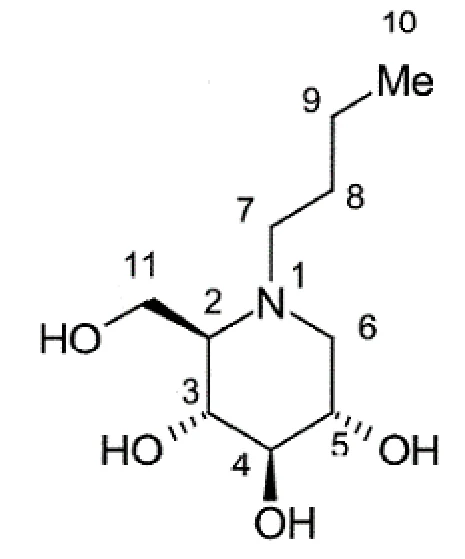
Chemical name: 1,5-(butylimino)-1,5-dideoxy-D-glucitol
Molecular formula and molecular mass: C10H21NO4 and 219.28 Dalton
Structural formula:
Physical form: White to off-white crystalline solid
Solubility: Highly soluble in water (> 1000 mg/mL as a free base)
14 CLINICAL TRIALS
14.1 Clinical Trials by Indication
Type 1 Gaucher Disease
Table 10 - Summary of patient demographics for clinical trials in Type 1 Gaucher Disease
| Study # | Study design | Dosage, route of administration and duration | Study subject s (n) | Mean age (Range) | Sex |
|---|---|---|---|---|---|
| OGT 918-001 | Open-label, non-comparative | Starting dose: 100 mg three times a day oral. Dose adjustment allowed up to 300 mg three times a day based on plasma concentration, tolerability and organ volume response. Duration: 12 months | 28 | 44.0 yrs (22-69) | 14 M 14 F |
OGT 918-001X (Extended phase) | Open-label, non-comparative | Dosing as above. Duration: 24 months (total 36 months). | 18 | 43.2 yrs (22-62) | 7 M 11 F |
| OGT 918-003 | Open-label, non-comparative | Starting dose: 50 mg three times a day oral. Dose adjustment allow ed dow n to 50 mg BID based on plasma concentration and/or tolerability. Duration: 6 months | 18 | 42.4 yrs (22-61) | 5 M 13 F |
OGT 918-003X (Extended phase) | Open-label, non-comparative | As above. Dose could be decreased or increased (up to 300 mg three times a day) based on plasma concentration and/or tolerability. Duration: 6 months (total 12 months). | 16 | 43.9 yrs (22-61) | 4 M 12 F |
| OGT 918-004 | Open-label, comparative | Starting dose for combination therapy or ZAVESCA® monotherapy : 100 mg three times a day oral ZAVESCA®. Could be reduced if patient experienced unacceptable side effects. Cerezyme: patients received their existing dose. Duration: 6 months. | 36 | 37.2 yrs (17-69) | 16 M 20 F |
OGT 918-004X (Extended phases) | Open-label, non-comparative | All patients were to continue taking ZAVESCA® at the dose they completed in the initial period (OGT 918-004) or were to receive 100 mg three times a day ZAVESCA® if commencing therapy for the first time i.e. switching from Cerezyme. Could be reduced if patient experienced unacceptable side effects. Duration: 12 months (total 18 months). 18 months (total 24 months) | 29 28 | 36.3 yrs (17-69) | 14M 15F |
| OGT 918-005 | Open-label, non-comparative | 100 mg three times a day oral. Duration: 24 months | 12 | 46.3 yrs (32-62) | 9M 3F |
The efficacy of ZAVESCA® (miglustat) in Type 1 Gaucher disease has been investigated in two non-comparative studies and one randomized comparative study with enzyme replacement given as Cerezyme (Table 10). Patients who received ZAVESCA® were treated with doses ranging from 100 mg a day to 600 mg a day, although the majority of patients were maintained on doses between 200 to 300 mg a day. The scheduled treatment periods were either six months or one year, and extension protocols were implemented in all three studies for patients to continue or switch to treatment with ZAVESCA®. A total of 80 patients were exposed to ZAVESCA® during the three studies and their extension periods.
The primary efficacy end-points for the studies included liver and spleen organ volume response, biochemical and haematological response, and overall response. The secondary efficacy end-points included pharmacokinetic profiles, QoL questionnaire, and other disease assessments.
The safety and efficacy of ZAVESCA® have not been evaluated in patients with severe Type 1 Gaucher disease, defined as hemoglobin concentration below 9 g/dl or a platelet count below 50 x 109/L or active bone disease.
Open-Label Uncontrolled Monotherapy Studies
In study OGT 918-001, ZAVESCA® was administered at a starting dose of 100 mg three times daily for 12 months (dose range of 100 once-daily -200 mg three times daily) to 28 adult patients with Type 1 Gaucher disease, who were unable or unwilling to take enzyme replacement therapy, and who were treatment-naïve or had not taken enzyme replacement therapy in the preceding 6 months. Twenty-two patients completed the study. After 12 months of treatment, the results showed significant mean percent reductions from baseline in liver volume of 12% and spleen volume of 19% (see Table 11), a non-significant increase from baseline in mean absolute hemoglobin concentration of 0.26 g/dL (+2.6%) and a mean absolute increase from baseline in platelet counts of 8 x 10⁹/L (+16.0%) (see Table 12).
In study OGT 918-003, ZAVESCA® was administered at a dose of 50 mg three times daily for 6 months to18 adult patients with Type 1 Gaucher disease who were unable or unwilling to take enzyme replacement therapy and who were treatment-naïve or had not taken enzyme replacement therapy in the preceding 6 months. Seventeen patients completed the study. After 6 months of treatment, the results showed significant mean percent reductions from baseline in liver volume of 6% and spleen volume of 5% (see Table 11). There was a non-significant mean absolute decrease from baseline in hemoglobin concentration of 0.13 g/dL (-1.3%) and a non-significant mean absolute increase from baseline in platelet counts of 5 x 10⁹/L (+2.0%) (see Table 12).
Extension Period
Eighteen patients were enrolled in a 12-month extension to study OGT 918-001. A subset of patients continuing in the extension had somewhat larger mean baseline liver volumes, and lower mean baseline platelet counts and hemoglobin concentrations than the original study population. After a total of 24 months of treatment, there were significant mean decreases from baseline in liver and spleen organ volume of 15% and 26%, respectively (see Table 11), and significant mean absolute increases from baseline in hemoglobin concentration and platelet counts of 0.9 g/L (+9.1%) and 14 x 109/L (+26.1%), respectively (see Table 12).
Sixteen patients were enrolled in a 6-month extension to study OGT 918-003. After a total of 12 months of treatment, there was a mean decrease from baseline in spleen organ volume of 10%, whereas the mean percent decrease in liver organ volume remained at 6% (see Table 11). There were no significant changes in hemoglobin concentrations or platelet counts (see Table 12).
Liver and spleen volume results from studies OGT 918-001 and OGT 918-003 are summarized in Table 11:
Table 11 - Liver and Spleen Volume Changes in 2 Open-Label Uncontrolled Monotherapy Studies of ZAVESCA® with Extension Phases
| Study | Liver Volume | Spleen Volume |
|---|---|---|
% Mean (N) (2-sided 95% CI) | % Mean (N) (2-sided 95% CI) | |
| OGT 918-001 (dose ZAVESCA® 100 mg three times daily) | ||
| Month 12, % Change from baseline | -12.1% (21) (-16.4, 7.9) | -19.0% (18) (-23.7, -14.3) |
| OGT 918-001 Extension Phase | ||
| Month 24, % Change from baseline | -14.5% (12) (-19.3, 9.7) | -26.4% (10) (-30.4, -22.4) |
| OGT 918-003 (ZAVESCA® 50 mg three times daily) | ||
| Month 6, % Change from baseline | -5.9% (17) (-9.9, -1.9) | -4.5% (11) (-8.2, -0.7) |
| OGT 918-003 Extension Phase | ||
| Month 12, % Change from baseline | -6.2% (13) (-12.0, -0.5) | -10.1% (9) (-20.1, -0.1) |
Hemoglobin concentration and platelet count results from studies OGT 918-001 and OGT 918-003 are summarized in Table 12:
Table 12 - Hemoglobin Concentration and Platelet Count Changes in 2 Open-Label Uncontrolled Monotherapy Studies of ZAVESCA® with Extension Phases
| Study | Hemoglobin Concentration | Platelet Count |
% Mean (N) (2-sided 95% CI) | % Mean (N) (2-sided 95% CI) | |
| OGT 918-001 (dose ZAVESCA® 100 mg three times daily) | ||
| Month 12, % Change from baseline | +2.6% (22) (-0.5, 5.7) | |
+16.0% (22) (-0.8, 32.8) | ||
| OGT 918-001 Extension Phase | ||
| Month 24, % Change from baseline | +9.1% (13) (2.9, 15.2) | |
+26.1% (13) (14.7, 37.5) | ||
| OGT 918-003 (ZAVESCA® 50 mg three times daily) | ||
| Month 6, % Change from baseline | -1.3% (17) (-4.4, 1.8) | |
+2.0% (17) (-6.9, 10.8) | ||
| OGT 918-003 Extension Phase | ||
| Month 12, % Change from baseline | +1.2% (13) (-5.2, 7.7) | |
+14.7% (13) (-1.4, 30.7) | ||
A more pronounced improvement in hemoglobin concentration was seen at 18 and 24 months in patients with baseline (Month 0) hemoglobin concentrations <11.5 g/dL.
Open-Label Active-Controlled Study
Study OGT 918-004 was an open-label, randomized, active-controlled study of 36 adult patients with Type 1 Gaucher disease, who had been receiving enzyme replacement therapy with Cerezyme for a minimum of 2 years prior to study entry. Patients were randomized 1:1:1 to one of three treatment groups, as follows:
- ZAVESCA® 100 mg three times daily alone
- Cerezyme (patient’s usual dose)
- ZAVESCA® 100 mg three times daily + Cerezyme (usual dose)
Patients were treated for 6 months, and 33 patients completed the 6-month study. At month 6, the results showed a significant decrease in mean percent change in liver volume in the combination treatment group compared to the Cerezyme alone group. There were no significant differences between the groups for mean absolute changes in liver volume. There were no significant differences between the groups for mean absolute and percent changes in spleen volume and hemoglobin concentration. However, there was a significant difference between the ZAVESCA® alone and Cerezyme alone groups in platelet counts at Month 6, with the ZAVESCA® alone group having a mean absolute decrease in platelet count of 21.6 x 10⁹/L (-9.6%) and the Cerezyme alone group having a mean absolute increase in platelet count of 15.3 x 10⁹/L (+10.1%) (see Table 4).
Table 4 - Changes of liver and spleen volume, hemoglobin concentration and platelet count in the three treatment arms (initial 6-month comparison phase)
| Cerezyme alone | ZAVESCA® alone | Combination | ||||||||||
| Liver volume (n) | 11 | 10 | 9 | |||||||||
Absolute change from baseline (Liters, mean (SD)) | 0.04 | (0.16) | -0.05 | (0.12) | -0.09 | (0.12) | ||||||
Percent change from baseline (%, mean, (SD)) | 3.5 | (9) | -2.9 | (7.9) | -4.9 | (6.6) | ||||||
| Spleen volume (n) | 8 | 7 | 7 | |||||||||
Absolute change from baseline (Liters, mean (SD)) | -0.02 | (0.06) | -0.27 | (0.07) | -0.08 | (0.13) | ||||||
Percent change from baseline (%, mean, (SD)) | -2.1 | (4.8) | -4.8 | (7.8) | -8.5 | (17.7) | ||||||
| Hemoglobin concentration (n) | 12 | 10 | 11 | |||||||||
Absolute change from baseline (g/dL, mean (SD)) | -0.15 | (0.39) | -0.31 | (0.55) | -0.10 | (0.72) | ||||||
Percent change from baseline (%, mean, (SD)) | -1.2 | (3) | -2.4 | (4.1) | -0.5 | (6.2) | ||||||
| Platelet count (n) | 12 | 10 | 11 | |||||||||
Absolute change from baseline (x 109/L, mean | 15.3 | (26.2) | -21.6 | (37.4) | 2.7 | (34.4) | ||||||
| (SD)) | ||||||
Percent change from baseline (%, mean, (SD)) | 10.1 | (16.7) | -9.6 | (15.1) | 3.2 | (18.6) |
Extension Period
Twenty-nine patients were enrolled in a 6-month extension to study OGT 918-004. Twenty-eight of these 29 patients elected to enter a second extension phase and provide data for up to 24 months. In the extension phases, all patients had withdrawn from Cerezyme and received open-label ZAVESCA® 100 mg three times daily monotherapy.
Analysis of 24-month ZAVESCA® efficacy was conducted in 31 subjects who had received at least one dose of ZAVESCA® who had a baseline value and at least one post-baseline assessment for liver and spleen, hemoglobin or platelets. Baseline was defined as screening for subjects originally randomized to ZAVESCA® alone, and Month 6 for subjects originally randomized to Cerezyme alone or combination treatment who switched to miglustat alone after 6 months. Mean liver and spleen volume did not increase after switching from Cerezyme to ZAVESCA® monotherapy, with no statistically significant difference from baseline (see Table 5). Small decrease (<0.5 g/dL at the majority of time points) of mean hemoglobin concentration were observed after baseline, which were statistically significant at Months 6, 9, and 12 and 21 months’ of ZAVESCA® treatment (see Table 6). No subject had a low hemoglobin that was considered clinically significant at any time. A small statistically significant decrease of mean platelet count from baseline was observed upon switching from Cerezyme to ZAVESCA® monotherapy (see Table 6). Only one subject had low platelets reported as being clinically significant at any time and this subject already had low platelets at baseline.
Table 5 - Long-term organ volume changes up to 24 months of ZAVESCA® treatment after Cerezyme withdrawal
Liver volume (Liters) | Spleen volume (Liters) | ||||||||
| Study OGT 918-004 | N | Mean (SD) | N | Mean (SD) | |||||
| Baseline | 29 | 1.78 (0.46) | 20 | 0.66 (0.38) | |||||
| 6 months | 29 | 1.78 (0.42) | 21 | 0.86 (0.61) | |||||
| % Change from baseline | 27 | -1.69 (10.27) | 19 | 3.32 (16.31) | |||||
| 12 months1 | 8 | 1.58 (0.34) | 6 | 0.52 (0.25) | |||||
| % Change from baseline | 8 | -0.75 (6.44) | 6 | -6.13 (6.33) | |||||
| 18 months2 | 9 | 2.04 (0.43) | 6 | 0.735 (0.41) | |||||
| % Change from baseline | 9 | -3.89 (7.67) | 6 | -0.10 (9.69) | |||||
| 24 months1 | 5 | 1.47 (0.33) | 4 | 0.46 (0.27) | |||||
| % Change from baseline | 5 | -2.68 (9.19) | 4 | -0.79 (15.75) | |||||
- 1. patients initially randomized to miglustat monotherapy
- 2. patients initially randomized to Cerezyme or Combination
Table 6 - Long-term blood count changes up to 24 months of ZAVESCA® treatment after Cerezyme withdrawal
Hemoglobin concentration (g/dL) | Platelet count (x 109 /L) | ||||||
| Study OGT 918-004 | N | Mean (SD) | N | Mean (SD) | |||
| Baseline | 31 | 12.75 (1.46) | 31 | 171.7 (86.5) | |||
| 6 months | 29 | 12.40 (1.15) | 29 | 147.6 (78.6) | |||
| % Change from baseline | 29 | -2.14 (5.51) | 29 | -12.0 (14.2) | |||
| 12 months | 28 | 12.38 (1.24) | 28 | 146.6 (77.5) | |||
| % Change from baseline | 28 | -2.48 (5.59) | 28 | -14.8 (14.9) | |||
| 18 months | 20 | 12.76 (1.43) | 20 | 153.2 (77.9) | |||
| % Change from baseline | 20 | -1.63 (7.69) | 20 | -16.9 (17.6) | |||
| 24 months1 | 6 | 12.97 (1.09) | 6 | 144.2 (37.4) | |||
| % Change from baseline | 6 | 1.49 (5.30) | 6 | -7.8 (19.6) | |||
- 1. patients initially randomized to miglustat monotherapy
In patients who had evidence of stable Type 1 Gaucher disease when they were withdrawn from Cerezyme, maintained disease control was seen in the majority of patients during treatment with ZAVESCA® monotherapy for up to 24 months. In these patients maintenance of stable disease on ZAVESCA® monotherapy was observed in 11/15 patients (73%) for a mean treatment duration of 19 months. Four patients developed signs that could be related to loss of disease control (increase in organ volume and/or reduction in platelet or hemoglobin values). Patients who had not been fully stabilized on Cerezyme had a lower probability of a successful outcome on ZAVESCA®. Irrespective of the degree of disease stability at time of Cerezyme withdrawal, no patient showed rapid deterioration of Type 1 Gaucher disease following the switch to ZAVESCA® monotherapy.
Bone manifestations of Type 1 Gaucher disease were evaluated in 3 open-label clinical studies (Study OGT 918-001; Study OGT 918-004; Study OGT 918-005) in patients treated with ZAVESCA® 100 mg three times daily for up to 2 years (n = 72). In a pooled analysis, mean bone mineral density Z-scores at the lumbar spine and femoral neck increased significantly from baseline (p < 0.001) and this effect was evident as early as 6 months after the initiation of treatment (see Table 7). Bone mineral density increased also in splenectomised patients and in patients with osteoporosis. There were no events of bone crisis, avascular necrosis or fracture during the treatment period.
Table 7 - Pairwise changes over time in bone mineral density Z-scores at the lumbar spine and the femoral neck (hip) in all patients
| Change from baseline | ||||||||||
| Site and time-point | N | Baseline mean (SD) | Mean (SE) | 95% CI | p-value | |||||
| Lumbar spine | ||||||||||
| Month 6 | 29 | −0.83 (1.16) | 0.15 (0.06) | 0.02–0.27 | 0.022 | |||||
| Month 12 | 26 | −0.98 (1.17) | 0.19 (0.07) | 0.05–0.34 | 0.012 | |||||
| Month 24 | 14 | −1.46 (1.11) | 0.21 (0.08) | 0.05–0.38 | 0.015 | |||||
| Last value | 47 | −1.18 (1.16) | 0.21 (0.05) | 0.11–0.32 | < 0.001 | |||||
| Femoral neck | ||||||||||
| Month 6 | 30 | −0.63 (1.43) | 0.23 (0.06) | 0.12–0.34 | < 0.001 | |||||
| Month 12 | 23 | −0.73 (0.96) | 0.21 (0.08) | 0.04–0.38 | 0.017 | |||||
| Month 24 | 13 | −0.82 (0.78) | 0.18 (0.08) | 0.01–0.34 | 0.039 | |||||
| Last value | 43 | −0.76 (1.27) | 0.27 (0.06) | 0.15–0.38 | < 0.001 | |||||
Niemann-Pick Type C Disease
Table 8 - Summary of patient demographics for clinical trials in Niemann Pick Type C disease
| Study # | Study design | Dosage, route of administration and duration | Study subjects (n) | Mean age (Range) | Sex |
|---|---|---|---|---|---|
| OGT 918-007 | Open-label, comparative, controlled study | ZAVESCA® 200 mg three times a day oral Duration: 12 months | ZAVESCA®: 20 No Treatment: 9 | 24.6 ± 9.1 yrs (12-42) | 14 M 15 F |
OGT 918-007 (Optional Extended study) | Open-label, non-controlled | ZAVESCA® 200 mg three times a day oral Duration: 12 months (up to 24 months total) | ZAVESCA®: 25 | 25.0 ± 9.2 yrs (12-42) | 14 M 11 F |
| OGT 918-007 (Optional continued treatment extension period) | Open-label, non-controlled | ZAVESCA® 200 mg three times a day oral Duration: from month 24 to study closure (up to 42 months) | ZAVESCA®: 16 | 22.6 ± 9.4 yrs (12-42) | 9 M 7 F |
| Study # | Study design | Dosage, route of administration and duration | Study subjects (n) | Mean age (Range) | Sex |
|---|---|---|---|---|---|
OGT 918-007 Pediatric sub-study | Open-label, non-controlled | ZAVESCA® 200 mg three times a day oral equivalent according to BSA1 Duration: 12 months | ZAVESCA®: 12 | 7.2 ± 2.5 yrs (4-11) | 5 M 7 F |
OGT 918-007 Pediatric sub-study Optional continued treatment extension period | Open-label, non-controlled | ZAVESCA® 200 mg three times a day oral equivalent according to BSA1 Duration: 12 months (up to 24 months total) | ZAVESCA®: 10 | 7.2 ± 2.4 yrs (4-11) | 4 M 6 F |
OGT 918-007 Pediatric sub-study Optional continued treatment extension period | Open-label, non-controlled | ZAVESCA® 200 mg three times a day oral equivalent according to BSA1 Duration: from month 24 to study closure (up to 36 months) | ZAVESCA®: 10 | 7.2 ± 2.4 yrs (4-11) | 4 M 6 F |
- 1. BSA = body surface area
The efficacy of ZAVESCA® in Niemman-Pick Type C disease comes from Study OGT 918-007, which was a prospective open-label clinical trial (Table 8), followed by an extension therapy for an average total duration of 3.9 years and up to 5.6 years. In addition, 12 pediatric patients were enrolled in an uncontrolled substudy for an overall average duration of 3.1 years and up to 4.4 years. Among the 40 patients exposed to ZAVESCA® in the trial 14 patients were treated for more than 3 years.
The primary endpoint evaluated change from baseline in horizontal saccadic eye movement (HSEM) velocity, expressed as HSEM-α. In ZAVESCA® -treated patients a mean improvement (reduction in HSEM-α) compared to baseline was observed versus a deterioration in the No Treatment group. Pediatric patients treated with ZAVESCA® also showed improvement from baseline (Table 9).
Table 9 - Change from baseline in HSEM-α up to 12 months, study OGT 918-007
| Parameter | Adjusted mean change from baseline (95% CI) Adult/juvenile patients | Estimated treatment difference (95% CI) | Mean change from baseline (95% CI) Pediatric patients | ||||||
No Treatment (N = 8) | ZAVESCA® (N = 18) | ZAVESCA® (N = 10) | |||||||
| HSEM-α (ANCOVA with terms for baseline, age, treatment) | Last value1 | -0.050 (-0.608, 0.509) | -0.376 (-0.746, -0.005) | -0.326 (-1.000, 0.348) p = 0.327 | -0.465 (-0.752, -0.178) | ||||
| HSEM-α (ANCOVA with terms for baseline, center, treatment) | Last value1 | 0.055 (-0.443, 0.553) | -0.463 (-0.796, -0.129) | -0.518 (-1.125, 0.089) p = 0.091 | |||||
- 1. Last value is the last post-baseline value up to Month 12. Increase from baseline indicates worsening
In a post hoc analysis, which excluded patients taking benzodiazepines, known to affect saccadic eye movement velocity, the treatment difference for HSEM-α between ZAVESCA® and No Treatment was -0.718 (95% CI -1.349, -0.088, p = 0.028).
Swallowing function was assessed on a rating scale, evaluating the patient's ability to swallow water and food substances of varying consistencies. Better maintenance of swallowing function was observed with ZAVESCA® treatment versus No treatment (Relative risk for any deterioration up to Month 12: 0.4 (95% CI 0.13, 1.22, p = 0.17)). Overall, about 80% of adult/juvenile and pediatric patients retained at least stable swallowing at 24 months of ZAVESCA® treatment.
Motor disability was assessed with the Hauser Standard Ambulation Index (SAI). Better maintenance of ambulatory function (less deterioration from baseline in mean SAI) was observed with ZAVESCA® treatment versus No treatment during the 12-month controlled study in adult/juvenile patients [ZAVESCA®: 0.087 (95% CI -0.287, 0.461), No Treatment: 0.802 (95% CI 0.220, 1.385), treatment effect (ANCOVA with terms for baseline, center, treatment group): - 0.715 (95% CI -1.438, 0.007, p= 0.052)]. After 2 years of ZAVESCA® treatment, two-thirds of adult/juvenile and pediatric patients maintained at least stable ambulatory ability.
The assessment of cognitive ability, measured through change from baseline in the Folstein Mini-Mental Status Examination (MMSE) score in adult/juvenile patients, also showed a difference in favour of ZAVESCA® during the controlled 12-month phase of study OGT 918-007 [ZAVESCA®: 1.219 (95% CI -0.060, 2.498), No Treatment: -0.352 (95% CI -2.213, 1.510), treatment effect (ANCOVA with terms for baseline, center, treatment group): -1.571 (95% CI - 0.692, 3.834, p= 0.165)].
The data from treatment with ZAVESCA® of pediatric (4-12 years of age) patients with Niemann-Pick Type C disease fully corroborate the findings in the controlled study in juvenile and adult patients.
Additional data to support efficacy of ZAVESCA® come from a retrospective survey comprising a case series of 66 patients with Niemann-Pick Type C disease treated with ZAVESCA® for a mean duration of 1.5 years, following a mean pre-treatment observation of 3.1 years. This data set also included pediatric, juvenile and adult patients with an age range of 1 year to 43 years. Disease progression was assessed within the functional domains swallowing, ambulation, manipulation (dysmetria/dystonia), language function/articulation, and overall disability according to a published NP-C disability scale. Across functional domains and for overall disability, ZAVESCA® was associated with clinically relevant reductions in annualized progression rate, compared with pre-treatment.
15 MICROBIOLOGY
No microbiological information is required for this drug product
16 NON-CLINICAL TOXICOLOGY
General Toxicology
The main effects common to all species tested (mouse, rat, rabbit, dog and monkey) were weight decreases in body weight gain and food consumption, accompanied by diarrhea, and, at higher doses, damage to the gastrointestinal mucosa (erosions and ulceration). Further, effects seen in animals at doses that result in exposure levels moderately higher than the clinical exposure level were: changes in lymphoid organs in all species tested, transaminase changes, vacuolation of thyroid and pancreas, cataracts, nephropathy, and myocardial changes in rats. These findings were considered to be secondary to deterioration of study animals and are not relevant for human risk assessment.
No behaviorally or neuro-toxicologically significant effects of miglustat were observed in rats following oral administration of miglustat at 60, 180 and 420 mg/kg/day for 26 weeks. In particular, specific neuropathological examination showed no treatment-related effects in the brain, spinal cord, peripheral nerves, nerve roots, or dorsal root ganglia.
Table 10 - Single-Dose Toxicity Studies
| Species | Method of Administration | Doses (mg/kg) | Observed Max. Non-Lethal Dose |
| Mouse | Gavage | 2800, 5000 | 5000 mg/kg |
| Mouse | Gavage | 1250, 2500, 5000Error! Reference source not found. | 5000 mg/kg |
| Rat | 24 hour iv infusion | 10.6, 31.8, 53.6, 106 mg/kg/hr | 106 mg/kg/hr |
| Noteworthy Findings: | ||
Mouse Rat | 5000 mg/kg 5000, 2800 mg/kg 106 mg/kg 106, 53.6 mg/kg | No deaths. appeared unkempt. soft stools observed on Day 2. No deaths. signs of swollen limbs during first 4 hours of infusion body weight gain significantly decreased |
- 1. Two doses separated by 24 hours for each dosage level
Table 2011 - Short-Term Multiple-Dose Toxicity Studies
| Species | Method of Administration | Doses (mg/kg/day); Duration | |||||
| Mouse | Gavage | 240, 1200, 2400; 2 weeks | |||||
| Rat | Gavage | 180, 840, 4200; 4 weeks | |||||
| Rabbit | Gavage | 60, 180; 7 days | |||||
| Dog | Capsule | 35, 70, 105, 140; 4 weeks 85, 165, 495, and 825; 2 weeks | |||||
| Monkey | Gastric intubation | 165, 495, 1650; 4 weeks | |||||
| Noteworthy Findings: | |||||||
| Mouse | All doses 2400, 1200 mg/kg/day | weight loss; significantly increased spleen weight. significantly increased liver and thymus weights. | |||||
| Rat | 4200 mg/kg/day 4200, 840 mg/kg/day 840, 180 mg/kg/day 840 mg/kg/day | (all animals died/sacrificed in extremis due to/associated with severe diarrhea); swollen limbs; increased mitotic figures in cecal epithelium; depleted goblet cells throughout intestine; villus atrophy in jejunum and ileum; prostate atrophy; lymphocytic depletion in spleen, thymus and lymph nodes. watery stool; ventral staining; swollen abdomen; decreased body weight, body weight gain, and food consumption (severe in 4200, sporadic in 840); hemorrhage in stomach; atrophy of pituitary pars distalis; bone marrow hypocellularity; decreased spermatogenesis in testis; hypospermia in epididymis; atrophy of seminal vesicles. increased urinary calcium; significantly lower platelet values; hypospermia in epididymis. significantly increased serum AST, ALT activities, glucose and calcium concentration (females); decreased creatinine, total protein, total globulin (males), and albumin (females); decreased thymus, spleen, ovary and uterus weights and ratios. | |||||
| Rabbit | 180, 60 mg/kg/day 180 mg/kg/day 60 mg/kg/day | reduced fecal output; decreased body weight and food consumption. red thymus and subcutaneous tissue; clear cysts in kidney; red pancreatic nodule. red depressed areas of stomach; mottled kidneys. |
| DogError! Reference source not found. | All doses: 140, 105, 70 mg/kg/day 140, 105 mg/kg/day 105, 70 mg/kg/day 105 mg/kg/day ≥495 mg/kg/day ≥85 mg/kg/day | hyperaemia of small and large intestines; melena/bloody contents in bowel (with occasional acute inflammatory infiltrate). decreased hematocrit, hemoglobin and RBC count. decreased body weight and food consumption. increased AST; decreased hematocrit, hemoglobin and RBC count. one death (black watery stool, dilated pupils, noisy breathing, prostrate prior to death); eye discharge; absent corneal reflexes, red mucoid stool; tremors; favouring of a limb; vomitus; soft/watery/mucoid stools. ataxia, diminished/absent pupillary, palpebral, or patellar reflexes. gastrointestinal necrosis, inflammation, and hemorrhage. |
| Monkey | All doses 495, 1650 mg/kg/day 1650 mg/kg/day 495 mg/kg/day | dose-related decrease in appetite and body weight gains. significantly decreased albumin; decreased albumin/globulin ratio; significantly increased LDH fractions (LDH1, LDH2, LDH3) and bicarbonate; enlarged and discoloured liver; red and black discolouration of mucosal surface of jejunum, caecum and colon; absence of rugae and sloughing mucosa in stomach. 5 deaths (4 died/sacrificed moribund, 1 found dead 3 days after end of dosing); soft and bloody stool; diarrhea; emesis; hypoactivity; appetite changes; depression; significantly increased platelet counts; significantly decreased sodium and chloride; increased potassium. 3 deaths (found dead on Days 7, 13 and 18); soft stool; diarrhea; dehydration; depression. |
- 1. Dosing regimen had no effect on vomitus or stool changes. Neither regimen nor escalation provided evidence of tolerance.
Table 2112 - Long-Term Multiple-Dose Toxicity Studies
| Species | Method of Administration | Doses (mg/kg/day); Duration |
| Mice | Gavage | 100, 420, 840; 13 weeks |
| Rat | Gavage | 180, 420, 840, 1680Error! Reference source not found.; 52 weeks 300, 600,1200; 26 weeks |
| Monkey | Gavage | 750, 2000; 52 weeks |
| Noteworthy Findings: | ||
| Mouse | 420 & 840 mg/kg/day | lymphocytolysis in thymus significantly increased. |
| Rat | 180, 420 & 840 mg/kg/day 420, 840 mg/kg/day 840 mg/kg/day 420 mg/kg/day 180 mg/kg/day 1200 mg/kg/day | elevated white cell counts (due to increased neutrophils and lymphocytes); low gamma globulin values; high phosphorus, calcium, and potassium; high urine calcium values; treatment and dose-related increases in spermatogenesis, interstitial oedema, and atrophy of seminiferous tubules (microscopic). decreased platelet counts; inhibited body weight gain and food consumption; high serum AST values; soft and/or small testes. low total protein and albumin; equatorial cataracts. transitory equatorial cataracts. slightly inhibited body weight gain. gastrointestinal necrosis, inflammation, and hemorrhage. |
| Monkey | ≥ 750 mg/kg/day | gastrointestinal necrosis, inflammation, and hemorrhage. |
- 1. Dosing terminated during Week 10 due to high mortality rate - results for this dose group are therefore not show n.
Carcinogenicity
Administration of miglustat to male and female Sprague Dawley rats for 100 weeks at dose levels of 30, 60 and 180 mg/kg/day resulted in an increased incidence of testicular interstitial cell (Leydig cell) hyperplasia and interstitial cell adenomas in male rats at all dose levels. A No Observed Effect Levels (NOEL) was not established and the effect was not dose dependent. Mechanistic studies revealed that decreased prolactin production may contribute to Leydig cell hyperplasia and adenomas in the rat. This is a rat- specific mechanism, which is considered to be of low relevance for humans. There were no significant increases in tumors in female rats or in male rats at other sites. Interstitial cell adenomas in rats with non-genotoxic compounds are generally considered to be of low relevance to humans.
Administration of miglustat to 300 male and female CD1 mice by oral gavage at dose levels of 210, 420 and 840/500 mg/kg/day (dose reduction after half a year) for 2 years resulted in an increased incidence of inflammatory, hyperplastic and, occasionally, neoplastic lesions in the large intestine in both sexes. Neoplasms were found in 0/50, 0/49, 1/50, 2/50 and 3/50 males and 0/50, 0/49, 0/49, 1/50 and 2/49 females treated at 0, 0, 210, 420 and 840/500 mg/kg/day, respectively. Trend tests were significant for males and females (males: p=0.005, females: p=0.017) whereas group-wise comparisons revealed a significant increase in incidence for males at the top dose of 840/500 mg/kg/day, only (p=0.007). Since intestinal effects were observed after oral but not intravenous administration of miglustat, the local exposure (in mg/kg/day) is considered to be relevant rather than the systemic exposure. The doses in this study corresponded to 49, 98 and 196/116 times the recommended human dose at 100 mg three times a day. Carcinomas in the large intestine occurred occasionally at all doses with a statistically significant increase in the high dose group. The relevance of these findings to humans cannot be excluded. There was no drug-related increase in tumor incidence in any other organ.
Genotoxicity
Miglustat was not mutagenic or clastogenic in a battery of in vitro and in vivo assays including the bacterial reverse mutation (Ames), chromosomal aberration (in human lymphocytes), gene mutation in mammalian cells (Chinese Hamster Ovary), and mouse micronucleus assays.
Table 22 - Genotoxicity Studies - In Vitro
| Test | Study Overview | Positive Controls | Doses (μg/plate) |
| Bacterial Reverse Mutation Test | Two independent mutation tests (Ames plate incorporation and preincubation) were performed in the presence and absence of S-9 mix metabolic activation system (derived from β-naphthoflavone and sodium phenobarbitone treated rats). | SALMONELLA TYPHIMURIUM, strains TA1535, TA1537, TA98 and TA100 ESCHERICIA COLI, strain WP2 uvrA | 8, 40, 200, 1000, 5000 |
| Mammalian Cell Cytogenic Test: Human Lymphocyte | Two experiments were performed in which human lymphocytes from 2 donors were treated with miglustat or positive controls in the presence and absence of S-9. In the first experiment, the dosing period was 3 hours and harvesting was approximately 1.5 cell cycles after the start of dosing. In the second experiment, treatment was for 3 hours in the presence of S-9 and 1.5 cell cycles in the absence of S-9. Two harvest times were used: 1.5 cell cycles and 24 hours later. | Mitomycin C, cyclophosphamide | 500, 2500, 5000 μg/ml |
| Results/Conclusion: | |||
| Bacterial Reverse Mutation Test | Statistically significant increases in revertant numbers were detected in the plate incorporation test using strain WP2 uvrA at 8 μg/plate in the presence of S-9 and in the pre-incubation test using TA100 at 40 μg/plate without S-9. No dose response was associated with either of these increases and they are not thought to be of biological significance. No other statistically significant increase in revertant numbers was seen with any strain at any dose in the presence or absence of S-9. Miglustat was not a mutagen in the presence or absence of S-9 under the conditions of this test. | ||
| Mammalian Cell Cytogenic Test | Miglustat was not clastogenic under the conditions of this test. | ||
Table 23- Genotoxicity Studies - In Vivo
| Species | Study Overview | Doses (mg/kg/day); Route; Regimen |
|---|---|---|
| Mouse | Miglustat was investigated for the potential to induce micronuclei in the bone marrow polychromatic erythrocytes of mice. The animals were sacrificed 24 hours after the second dose was administered and bone marrow smears were prepared for micronucleus analysis. | 1250, 2500, 5000; oral (gavage); twice daily, 24 hours apart. Animals were sacrificed 24 hours after second dose. |
Results/Conclusion: No significant increase in the micronucleus induction rate was observed at any dosage level relative to the vehicle control response. These results support a conclusion that miglustat does not induce micronuclei in bone marrow cells of mice under the conditions of this assay. | ||
Similar results to those of the Bacterial Reverse Mutation Test were obtained from a mutagenicity study utilizing the Chinese Hamster Ovary (CHO)/HGPRT Mutation Assay.
Reproductive and Developmental Toxicology:
In pregnant rabbits given miglustat by oral gavage at doses of 15, 30, 45 mg/kg/day during gestation days 6-18 (organogenesis), maternal death and decreased body weight gain were observed at 15 mg/kg/day (systemic exposures less than the human therapeutic systemic exposure, based on body surface area comparisons).
Table 24 - Reproductive Toxicity Studies
| Species | Method of Administration | Doses (mg/kg/day); Duration | |||||
| Rat | Gavage | 20, 60, 180; Males - 2 weeks prior to mating until 5 weeks after; Females: 2 weeks prior to mating until Day 7 post-partum | |||||
| Rat | Gavage | 20, 60, 180; Males: 14 or 70 days prior to mating and during mating | |||||
| Rat | Gavage | 60; Males: 42 days prior to mating, during mating until necropsy 1 week after mating | |||||
| Rat | Gavage | 20, 60, 180; Females: 15 days prior to mating until day 17 of pregnancy | |||||
| Rat | Gavage | 20, 60, 180; Females: from gestation day 6 through lactation (postpartum day 20) | |||||
| Rabbits | Gavage | 15, 30, 45 Females: during gestation days 6-18 (organogenesis) | |||||
| Noteworthy Findings: | |||||||
| Males | 180, 60, 20 mg/kg/day 180, 60 mg/kg/day | reduced sperm motility and concentration; decreased sperm actual path velocity; sperm morphology changes (reduced normal sperm, increased headless and reduced hook sperm); reduced weight of cauda epididymis. increased reduced hook sperm; increased miscellaneous sperm abnormalities. | |||||
Female Rats Female Rabbits | 180 mg/kg/day 60, 20 mg/kg/day 60 mg/kg/day 20 mg/kg/day 180, 60, 20 mg/kg/day 180, 60 mg/kg/day 180 mg/kg/day 60 mg/kg/day: 15 mg/kg/day | possible effect on fertility after 4 and 13 weeks of treatment. reduced sperm concentration and straight line velocity. reduced fertility (caused increase in number of unfertilized and fragmenting eggs; seminiferous tubule and testicular atrophy/degeneration decreased spermatogenesis with altered sperm morphology and motility and decreased fertility. Decreased spermatogenesis was reversible following 6 weeks of drug withdrawal. reduced corpora lutea and implantations; increased pre-implantation loss (following 12 or 13 weeks treatment); decreased live births; decreased pup body weights. increased duration of gestation; delayed parturition; increased early embryo fetal deaths; increased post-implantation loss; increased placental weight. decreased bodyweight gain from Day 12 of gestation; decreased fetal weight and litter size; increased placental weight. decreased number of pups.There was a treatment related increase in mean male and female pup body weight throughout lactation. This was considered to be a result of the small litter sizes and increased duration of gestation noted in the treated groups. The effect of treatment on the mean number of corpora lutea, implantations, pre-implantation loss and sperm morphology at all dose levels did not follow a dose-related pattern but resembled a ‘bell-shaped curve’. At the mating 6 weeks following cessation of treatment, pregnancy parameters had returned to within normal ranges. Thirteen weeks after cessation of treatment, there was no effect of treatment on sperm morphology. maternal death; decreased body weight gain |
Special Toxicology:
Table 13 - Local Tolerance Tests
| Species | Study Overview | Dose; Route; Regimen |
| Mouse | The mouse ear swelling test was conducted to assess the sensitisation potential of miglustat. Mice received an intradermal injection of a 1:1 emulsion of Freund’s Complete Adjuvant and water on each side of the abdominal midline on Study Day 1. | 10%, 30% (w/v); dermal (solution); 10% applied to abdomen on Days 1, 2, 3 and 4 and 30% applied to ears on Day 11. |
| Rabbit | OGT 918 was tested for primary dermal irritation potential in rabbits. Each of three rabbits was simultaneously exposed to duplicates of four different treatments (8 dermal sites/rabbit) on the skin of the back and flanks. | 250 mg/site (miglustat); dermal (solution); applied for approximately 24 hours using Hill Top chamber dermal delivery system. |
Results/ Conclusion: | ||
| Mouse | There were no positive or equivocal responses. Miglustat did not cause sensitisation at the concentration tested in this study. | |
| Rabbit | Miglustat was mildly irritating. | |