


Product Monograph - Cabometyx
Recent Major Label Changes
| 1 Indications, 1.1 Pediatrics | 07/2024 |
|---|---|
| 1 Indications | 09/2024 |
| 7 Warnings and Precautions, 7.1.3 Pediatrics | 07/2024 |
| 7 Warnings and Precautions, Cardiovascular, Cardiac Failure | 12/2025 |
| 4 Dosage and Administration, 4.2 Recommended Dose and Dosage Adjustment | 12/2025 |
Table of Contents
Recent Major Label Changes ..................................................................................................... 2
Table of Contents ........................................................................................................................ 2
Part 1: Healthcare Professional Information ............................................................................ 4
1 Indications ....................................................................................................................... 4
1.1 Pediatrics ............................................................................................................... 4
1.2 Geriatrics ............................................................................................................... 4
2 Contraindications ............................................................................................................ 4
3 Serious Warnings and Precautions Box ....................................................................... 5
4 Dosage and Administration ........................................................................................... 5
4.2 Recommended Dose and Dosage Adjustment ..................................................... 5
4.4 Administration ........................................................................................................ 7
4.5 Missed Dose .......................................................................................................... 8
5 Overdose .......................................................................................................................... 8
6 Dosage Forms, Strengths, Composition, and Packaging ........................................... 8
7 Warnings and Precautions ............................................................................................. 8
7.1 Special Populations ............................................................................................. 15
7.1.1 Pregnant Women ............................................................................................. 15
7.1.2 Breast-feeding ................................................................................................. 15
7.1.3 Pediatrics ......................................................................................................... 16
7.1.4 Geriatrics ......................................................................................................... 16
8 Adverse Reactions ........................................................................................................ 16
8.1 Adverse Reaction Overview ................................................................................ 16
8.2 Clinical Trial Adverse Reactions .......................................................................... 17
8.3 Less Common Clinical Trial Adverse Reactions .................................................. 26
8.4 Abnormal Laboratory Findings: Hematologic, Clinical Chemistry and Other Quantitative Data ................................................................................................. 27
8.5 Post-Market Adverse Drug Reactions ................................................................. 30
9 Drug Interactions .......................................................................................................... 30
9.2 Drug Interactions Overview ................................................................................. 30
9.4 Drug-Drug Interactions ........................................................................................ 30
10 Clinical Pharmacology .................................................................................................. 32
10.1 Mechanism of Action ........................................................................................... 32
10.2 Pharmacodynamics ............................................................................................. 33
10.3 Pharmacokinetics ................................................................................................ 33
11 Storage, Stability, and Disposal .................................................................................. 35
Part 2 : Scientific Information .................................................................................................. 36
13 Pharmaceutical Information ......................................................................................... 36
14 Clinical Trials ................................................................................................................. 37
14.1 Clinical Trials by Indication .................................................................................. 37
16 Non-Clinical Toxicology ............................................................................................... 52
Patient Medication Information ............................................................................................... 53
Part 1: Healthcare Professional Information
1 Indications
Renal Cell Carcinoma (RCC)
CABOMETYX (cabozantinib) is indicated for the treatment of advanced RCC:
- In treatment-naïve adults with intermediate or poor risk.
- In adult patients who have received prior therapy.
CABOMETYX, in combination with nivolumab, is indicated for the first-line treatment of adult patients with advanced (not amenable to curative surgery or radiation therapy) or metastatic RCC.
Hepatocellular Carcinoma (HCC)
CABOMETYX is indicated for the treatment of patients with HCC who have been previously treated with sorafenib.
Differentiated Thyroid Carcinoma (DTC)
CABOMETYX is indicated for the treatment of adult patients with locally advanced or metastatic differentiated thyroid carcinoma (DTC) that has progressed following prior VEGFR-targeted therapy and who are radioactive iodine-refractory or ineligible.
1.1 Pediatrics
Pediatrics (<18 years of age): Health Canada has not authorized an indication for pediatric use. Currently available pediatric data are described in 7.1.3 Pediatrics and10.3 Pharmacokinetics but no recommendation on a posology can be made.
1.2 Geriatrics
Geriatrics: Evidence from clinical studies and experience suggests that use in the geriatric population is associated with no differences in safety or effectiveness.
2 Contraindications
CABOMETYX (cabozantinib) is contraindicated in patients who are hypersensitive to this drug or to any ingredient in the formulation, including any non-medicinal ingredient, or component of the container. For a complete listing, see 6 Dosage Forms, Strengths, Composition, and Packaging.
3 Serious Warnings and Precautions Box
4 Dosage and Administration
4.2 Recommended Dose and Dosage Adjustment
Monotherapy
The recommended dosage of CABOMETYX (cabozantinib) as a single agent is oral 60 mg once daily without food. Continue treatment until patient no longer experiences clinical benefit or experiences unacceptable toxicity.
In Combination
The recommended dosage of CABOMETYX in combination with nivolumab administered via intravenous infusion is provided in the following table:
| Recommended Dosage | Duration of Therapy |
|---|---|
| CABOMETYX 40 mg once daily orally without food | Until disease progression or unacceptable toxicity |
| Intravenous nivolumab 240 mg every 2 weeks (30-minute intravenous infusion) or 480 mg every 4 weeks (30-minute intravenous infusion) | Until disease progression or unacceptable toxicity for up to 2 years in patients without disease progression |
Refer to the nivolumab Product Monograph (PM) for recommended nivolumab dosing and product information.
Serious Warnings and Precautions
Treatment with CABOMETYX (cabozantinib) should be initiated and supervised by a physician experienced in the use of anti-cancer medicinal products.
CABOMETYX has not been studied in patients with cardiac impairment, severe renal impairment or severe hepatic impairment.
The following are clinically significant adverse events:
- Thromboembolism, including deaths (see Cardiovascular)
- Hypertension and hypertensive crisis (see Cardiovascular)
- Gastrointestinal perforations and fistulas, including deaths (see Gastrointestinal)
- Hemorrhage, including deaths (see Hematologic)
- Hepatotoxicity (see Hepatic/Biliary/Pancreatic)
- Posterior Reversible Encephalopathy Syndrome (see Neurologic)
- Wound complications (see Peri-Operative Considerations)
The recommended dosage of CABOMETYX in combination with nivolumab administered via subcutaneous injection is provided in the following table:
| Recommended Dosage | Duration of Therapy |
|---|---|
| CABOMETYX 40 mg once daily orally without food | Until disease progression or unacceptable toxicity |
Subcutaneous nivolumab 600 mg every 2 weeks (subcutaneous injection over 3-5 minutes) Or Subcutaneous nivolumab 1,200 mg every 4 weeks (subcutaneous injection over 3-5 minutes) | Until disease progression, unacceptable toxicity, or up to 2 years in patients without disease progression |
For Patients Undergoing Surgery
Stop treatment with CABOMETYX at least 28 days prior to scheduled surgery, including dental surgery (see Peri-Operative Considerations).
Dosage Modifications For Adverse Reactions
Management of suspected adverse drug reactions may require temporary treatment interruption and/or dose reduction, or permanent discontinuation of CABOMETYX therapy.
Dose interruptions are recommended for management of CTCAE grade 3 or greater toxicities or intolerable grade 2 toxicities. Dose reductions are recommended for events that, if persistent, could become serious or intolerable. Upon resolution/improvement (i.e., return to baseline or resolution to Grade 1) of an adverse drug reaction, reduce the dose as follows:
| Recommended Starting Dose | First Dosage Reduction To | Second Dosage Reduction To |
|---|---|---|
| Monotherapy | ||
| CABOMETYX 60 mg daily | 40 mg daily | 20 mg daily* |
| In Combination | ||
| CABOMETYX 40 mg daily in combination with nivolumab | 20 mg daily | 20 mg every other day* |
*If previously receiving lowest dose, resume at same dose. If lowest dose not tolerated, discontinue CABOMETYX.
Permanently Discontinue CABOMETYX for any of the following:
- development of unmanageable fistula or GI perforation
- severe hemorrhage
- arterial or venous thromboembolic event that require medical intervention (e.g., myocardial infarction, cerebral infarction)
- hypertensive crisis or severe hypertension despite optimal medical management
- severe cardiac failure
- nephrotic syndrome
- posterior reversible encephalopathy syndrome
Dose Modifications for Coadministration with Strong CYP3A4 Inhibitors
Reduce the daily CABOMETYX dose by 20 mg. Resume the dose that was used prior to initiating the strong CYP3A4 inhibitor 2 to 3 days after discontinuation of the strong inhibitor (see 9 Drug Interactions, 9.4 Drug-Drug Interactions).
Dosage Modifications for Coadministration with Strong CYP3A4 Inducers
Increase the daily CABOMETYX dose by 20 mg as tolerated. Resume the dose that was used prior to initiating the strong CYP3A4 inducer 2 to 3 days after discontinuation of the strong inducer. Do not exceed a daily dose of 80 mg (see 9 Drug Interactions, 9.4 Drug-Drug Interactions).
Table 1: Recommended Specific Dosage Modifications for Hepatic Adverse Reactions for Combination
| CABOMETYX in combination with nivolumab | ALT or AST >3 times ULN but ≤10 times ULN with concurrent total bilirubin <2 times ULN | Withholda both CABOMETYX and nivolumab until adverse reactions recoverb to Grades 0 or 1 |
|---|---|---|
| ALT or AST >10 times ULN or >3 times ULN with concurrent total bilirubin ≥2 times ULN | Permanently discontinuea both CABOMETYX and nivolumab |
ALT: alanine aminotransferase, AST: aspartate aminotransferase, ULN: upper limit of normal
aConsider corticosteroid therapy for hepatic adverse reactions if CABOMETYX is withheld or discontinued when administered in combination with nivolumab
bAfter recovery, rechallenge with one or both of CABOMETYX and nivolumab may be considered. If rechallenging with nivolumab with or without CABOMETYX, refer to nivolumab Product Monograph.
In Patients with Hepatic Impairment
Reduce the starting dose of CABOMETYX as monotherapy to 40 mg once daily in patients with moderate hepatic impairment. Patients with mild or moderate hepatic impairment should be closely monitored. CABOMETYX in combination with nivolumab has not been studied in patients with mild or moderate hepatic impairment. No dosing recommendation can be provided.
CABOMETYX as monotherapy or in combination with nivolumab is not recommended for use in patients with severe hepatic impairment (see 10.3 Pharmacokinetics).
In Patients with Renal Impairment
CABOMETYX should be used with caution in patients with mild or moderate renal impairment. CABOMETYX is not recommended for use in patients with severe renal impairment as safety and efficacy have not been established in this population (see 10.3 Pharmacokinetics).
4.4 Administration
Swallow CABOMETYX tablets whole. Do not crush CABOMETYX tablets.
Do not administer CABOMETYX with food. Administer at least 1 hour before or at least 2 hours after eating.
Do not ingest foods (e.g., grapefruit, grapefruit juice) or nutritional supplements that are known to inhibit cytochrome P450 during CABOMETYX treatment.
When CABOMETYX is taken with nivolumab, administer nivolumab first during the day followed by CABOMETYX on an empty stomach, preferably in the evening.
4.5 Missed Dose
Do not take a missed dose within 12 hours of the next dose.
5 Overdose
There is no specific treatment for CABOMETYX (cabozantinib) overdose and possible symptoms of overdose have not been established.
In the event of suspected overdose, CABOMETYX should be withheld and supportive care instituted. Liver function tests, serum electrolytes and metabolic clinical laboratory parameters should be monitored at least weekly or as deemed clinically appropriate to assess any possible changing trends. Blood pressure and ECG monitoring are recommended. Adverse reactions associated with overdose are to be treated symptomatically.
For management of a suspected drug overdose, contact your regional poison control centre.
6 Dosage Forms, Strengths, Composition, and Packaging
Table 2: Dosage Forms, Strengths, Composition and Packaging.
60 mg tablets are yellow film-coated, oval shaped with no score, debossed with “XL” on one side and “60” on the other side of the tablet; available in bottles of 30 tablets.
40 mg tablets are yellow film-coated, triangle shaped with no score, debossed with “XL” on one side and “40” on the other side of the tablet; available in bottles of 30 tablets.
20 mg tablets are yellow film-coated, round shaped with no score, debossed with “XL” on one side and “20” on the other side of the tablet; available in bottles of 30 tablets.
7 Warnings and Precautions
General
When CABOMETYX is administered in combination with nivolumab, refer to the PM for nivolumab prior to initiation of treatment.
As most events can occur early in the course of treatment, the physician should evaluate the patient closely during the first eight weeks of treatment to determine if dose modifications are warranted. Events that generally have early onset include hypocalcemia, hypokalemia,
| Route of Administration | Dosage Form / Strength/Composition | Non-medicinal Ingredients |
| oral | tablet 20 mg, 40 mg, 60 mg cabozantinib as cabozantinib (S)-malate | Colloidal Silicon Dioxide, Croscarmellose Sodium, Hydroxypropyl Cellulose, Hypromellose 2910, Iron Oxide Yellow, Lactose Anhydrous, Magnesium Stearate, Microcrystalline Cellulose, Titanium Dioxide and Triacetin. |
thrombocytopenia, hypertension, palmar-plantar erythrodysesthesia (PPE), proteinuria, and gastrointestinal (GI) events (abdominal pain, mucosal inflammation, constipation, diarrhea, vomiting).
Carcinogenesis and Mutagenesis
There are no human data on carcinogenesis and mutagenesis. Based on non-clinical findings, the long-term carcinogenic potential of CABOMETYX (cabozantinib) is unknown (see Carcinogenicity).
Cardiovascular
Thrombotic Events
CABOMETYX treatment results in an increased incidence of thrombotic events. In RCC studies, venous thromboembolism occurred in 9% (including 5% pulmonary embolism) and arterial thromboembolism occurred in 1% of CABOMETYX-treated patients. In RCC patients treated with CABOMETYX in combination with nivolumab, venous thromboembolism occurred in 11% (including 6% pulmonary embolism) and arterial thromboembolism occurred in 2%. In the pivotal HCC study (XL184-309), portal vein thrombosis was observed in 1% (including one fatal event) of CABOMETYX-treated patients. Patients with a history of portal vein invasion appeared to be at higher risk of developing portal vein thrombosis. Arterial thromboembolism occurred in 3% of CABOMETYX-treated HCC patients; most frequently occurred cerebrovascular accident (1% CABOMETYX vs 0% placebo) including one fatal event. In addition, two other subjects in the CABOMETYX arm had Grade 5 arterial thrombotic AEs and two had Grade 5 venous/mixed thrombotic AEs.
Discontinue CABOMETYX in patients who develop an acute myocardial infarction or any other clinically significant arterial thromboembolic complication (see 4 Dosage and Administration).
Hypertension and Hypertensive Crisis
CABOMETYX treatment results in an increased incidence of treatment-emergent hypertension, including hypertensive crisis. In RCC studies, hypertension was reported in 44% (18% Grade ≥ 3) of CABOMETYX-treated patients. In RCC patients treated with CABOMETYX in combination with nivolumab, hypertension was reported in 36% (14% Grade 3 and <1% Grade 4). In the pivotal HCC study, hypertension events were reported in 30% (16% Grade ≥ 3) of CABOMETYX-treated patients.
Serious cases of artery dissection have been reported in patients using VEGF receptor tyrosine kinase inhibitors (VEGFR-TKIs), including CABOMETYX, with or without hypertension.
Monitor blood pressure prior to initiation and regularly during CABOMETYX treatment. Do not initiate CABOMETYX in patients with uncontrolled hypertension. Withhold CABOMETYX for hypertension that is not adequately controlled with medical management; when controlled, resume CABOMETYX at a reduced dose. Discontinue CABOMETYX for severe hypertension that cannot be controlled with anti-hypertensive therapy or for hypertensive crisis (see 4 Dosage and Administration).
Cardiac Failure
CABOMETYX can cause severe and fatal cardiac failure (see 8 Adverse Reactions). Cardiac failure occurred in 0.5% of patients treated with CABOMETYX as a single agent, including fatal cardiac failure in 0.1% of patients. Median time to onset of cardiac failure was 73 days (range: 44 days to 159 days).
Consider baseline and periodic evaluations of left ventricular ejection fraction. Monitor for signs and symptoms of cardiovascular events (see Monitoring and Laboratory Tests). Withhold and resume at a reduced dose upon recovery or permanently discontinue CABOMETYX depending on the severity (see 4 Dosage and Administration).
Prolongation of QT interval
CABOMETYX causes a prolongation of the QTc interval (see Cardiac Electrophysiology). QTc prolongation may lead to an increased risk of ventricular arrhythmias including torsade de pointes. Torsade de pointes is a polymorphic ventricular tachyarrhythmia. Generally, the risk of torsade de pointes increases with the magnitude of QTc prolongation produced by the drug. Torsade de pointes may be asymptomatic or experienced by the patient as dizziness, palpitations, syncope, or seizures. If sustained, torsade de pointes can progress to ventricular fibrillation and sudden cardiac death. Hypokalemia, hypomagnesemia, and hypocalcemia should be corrected prior to initiating or continuing CABOMETYX administration.
Particular care should be exercised when administering CABOMETYX to patients who are taking other medicinal products known to prolong the QTc interval (see 9 Drug Interactions) or who are suspected to be at an increased risk of experiencing torsade de pointes during treatment with a QTc-prolonging drug.
Risk factors for torsade de pointes in the general population include, but are not limited to, the following: female gender, age ≥ 65 years, baseline prolongation of the QT/QTc interval; presence of genetic variants affecting cardiac ion channels or regulatory proteins, especially congenital long QT syndromes; family history of sudden cardiac death at <50 years of age; cardiac disease (e.g., myocardial ischemia or infarction, congestive heart failure, cardiomyopathy, conduction system disease); history of arrhythmias; electrolyte disturbances (e.g., hypokalemia, hypomagnesemia, hypocalcemia) or conditions leading to electrolyte disturbances (e.g., persistent vomiting, eating disorders); bradycardia; acute neurological events (e.g., intracranial or subarachnoid haemorrhage, stroke, intracranial trauma); diabetes mellitus; and autonomic neuropathy.
Monitor electrocardiogram and electrolytes regularly. Permanently discontinue CABOMETYX in patients who develop torsade de pointes or polymorphic ventricular tachycardia or signs/symptoms of serious arrhythmia.
When drugs that prolong the QTc interval are prescribed, healthcare professionals should counsel their patients concerning the nature and implications of the ECG changes, underlying diseases and disorders that are considered to represent risk factors, demonstrated and predicted drug-drug interactions, symptoms suggestive of arrhythmia, risk management strategies, and other information relevant to the use of the drug. Patients should be advised to contact their healthcare provider immediately to report any new chest pain or discomfort, changes in heartbeat, palpitations, dizziness, light-headedness, fainting, or changes in or new use of other medications.
Heart Rate Decrease and PR Interval Prolongation
CABOMETYX causes a decrease in heart rate and a prolongation of the PR interval (see Cardiac Electrophysiology). Caution should be observed in patients with a low heart rate at baseline (< 60 beats per minute), a history of syncope or arrhythmia, sick sinus syndrome, sinoatrial block, atrioventricular (AV) block, ischemic heart disease, or congestive heart failure. Concomitant medications that result in a decrease in heart rate and/or PR interval prolongation should be avoided to the extent possible during treatment with CABOMETYX (see 9 Drug Interactions).
Driving and Operating Machinery
Adverse events such as fatigue, dizziness and weakness occurred in CABOMETYX-treated patients. Caution should be exercised when driving or operating a vehicle or potentially dangerous machinery.
Endocrine
Adrenal Insufficiency CABOMETYX in combination with nivolumab can cause primary or secondary adrenal insufficiency. For Grade 2 or higher adrenal insufficiency, initiate symptomatic treatment, including hormone replacement as clinically indicated. Withhold CABOMETYX and/or nivolumab depending on severity.
Adrenal insufficiency occurred in 4.7% (15/320) of patients with RCC who received CABOMETYX with nivolumab, including Grade 3 (2.2%), and Grade 2 (1.9%) adverse reactions. Adrenal insufficiency led to permanent discontinuation of CABOMETYX and nivolumab in 0.9% and withholding of CABOMETYX and nivolumab in 2.8% of patients with RCC. Approximately 80% (12/15) of patients with adrenal insufficiency received hormone replacement therapy, including systemic corticosteroids. Adrenal insufficiency resolved in 27% (n=4) of the 15 patients. Of the 9 patients in whom CABOMETYX with nivolumab was withheld for adrenal insufficiency, 6 reinstated treatment after symptom improvement; of these, all (n=6) received hormone replacement therapy and 2 had recurrence of adrenal insufficiency (see 8 Adverse Reactions).
Thyroid dysfunction
Hypothyroidism occurred in 21% of RCC patients and in 2% of DTC patients treated with CABOMETYX, however DTC patients were required to be receiving thyroid replacement therapy. In RCC patients treated with CABOMETYX in combination with nivolumab, hypothyroidism occurred in 34% of patients and hyperthyroidism in 10%.
Monitoring for thyroid function before initiation of, and periodically throughout, treatment with CABOMETYX is recommended. Hypothyroidism should be treated according to standard medical practice to maintain euthyroid state.
Gastrointestinal
Diarrhea
In the pivotal 2L RCC study, diarrhea occurred in 74% of patients treated with CABOMETYX. Grade 3 diarrhea was reported in 11% of CABOMETYX-treated patients. In RCC patients treated with CABOMETYX in combination with nivolumab, diarrhea occurred in 64% of patients (7% Grade 3-4). In the pivotal DTC study, diarrhea was reported in 62% of CABOMETYX-treated patients; grade 3 diarrhea was reported in 8%.
Withhold CABOMETYX in patients that develop intolerable Grade 2 diarrhea or Grade 3-4 diarrhea that cannot be managed with standard antidiarrheal treatments until improvement to Grade 1; resume CABOMETYX at a reduced dose. Dose interruption or reduction, or permanent discontinuation of CABOMETYX should be considered in case of persistent or recurrent significant GI adverse reactions. Dose modification due to diarrhea occurred in 26% of RCC patients previously treated with VEGF-targeted therapy (see 4 Dosage and Administration). Dose reduction and interruption due to diarrhea occurred in 14% and 21% of DTC patients respectively.
GI Perforation and Fistulas
Serious GI perforations and fistulas, including fatal events, have been observed with CABOMETYX. In the pivotal 2L RCC study, fistulas were reported in 1% (including 0.6% anal fistula) of CABOMETYX-treated patients and GI perforations were reported in 1% of patients treated with CABOMETYX. In RCC patients treated with CABOMETYX in combination with nivolumab, fistulas occurred in 1% of patients. GI perforations, including fatal cases, occurred in 1%. In the pivotal HCC study, fistulas occurred in 2% of CABOMETYX- treated patients including a fatal case of esophagobronchial fistula. In the pivotal DTC study, Grade 4 GI perforation occurred in 1% of CABOMETYX-treated patients after 14 weeks of treatment. Patients who have inflammatory bowel disease (e.g. Crohn’s disease, ulcerative colitis, peritonitis, diverticulitis, or appendicitis), have tumour infiltration in the GI tract, or have complications from prior GI surgery (particularly when associated with delayed or incomplete healing) should be carefully evaluated before initiating CABOMETYX therapy. Persistent or recurring diarrhea while on treatment may be a risk factor for the development of anal fistula. Monitor patients for symptoms of fistulas and perforations, including abscess and sepsis. Discontinue CABOMETYX in patients who experience a GI perforation or a fistula that cannot be adequately managed (see 4 Dosage and Administration).
Hematologic
Hemorrhage
Severe hemorrhage, including fatal events, occurred with CABOMETYX. In two pivotal RCC studies (XL184-308 and A031203), the incidence of Grade ≥ 3 hemorrhagic events was 3%. In RCC patients treated with CABOMETYX in combination with nivolumab, Grade 3 to 5 hemorrhage occurred in 2%.
In the pivotal HCC study, fatal hemorrhagic events were reported at a higher incidence with CABOMETYX than with placebo (1% vs 0%). Predisposing risk factors for severe hemorrhage in the advanced HCC population may include tumour invasion of major blood vessels and the presence of underlying liver cirrhosis resulting in oesophageal varices, portal hypertension, and thrombocytopenia. The study excluded patients with concomitant anticoagulation treatment or antiplatelet agents. Subjects with untreated, or incompletely treated, varices with bleeding or high risk for bleeding were also excluded from this study.
In the pivotal DTC study, the incidence of severe hemorrhagic events (Grade ≥ 3) was 2% in CABOMETYX-treated patients. Median time to onset was 81 weeks.
Patients who have a history of severe bleeding prior to treatment initiation should be carefully evaluated before initiating CABOMETYX therapy. Do not administer CABOMETYX to patients who have a recent history of hemorrhage, including hemoptysis, hematemesis, or melena. Discontinue CABOMETYX in patients who experience severe hemorrhage (see 4 Dosage and Administration).
Thrombocytopenia
In the pivotal HCC study, thrombocytopenia (11%) and decreased platelets (10%) were reported with CABOMETYX. Platelet levels should be monitored during CABOMETYX treatment, and the dose modified according to the severity of the thrombocytopenia.
Hepatic/Biliary/Pancreatic
Hepatotoxicity
In RCC patients previously treated with VEGF-targeted therapy (XL184-308), increases in alanine aminotransferase (ALT) and aspartate aminotransferase (AST) were reported in 24% and 26% CABOMETYX-treated RCC patients respectively (see 8 Adverse Reactions). Grade 3 or higher ALT and AST increases were also observed in 3% and 2% of RCC subjects treated with CABOMETYX. Fatal hepatic failure has occurred in the CABOMETYX clinical program. Hepatitis, hepatic failure and hepatic encephalopathy have been reported in the post market setting. When CABOMETYX is given in combination with nivolumab, higher frequencies of Grades 3 and 4 ALT and AST elevations have been reported relative to CABOMETYX monotherapy in patients with advanced RCC. Delayed occurrence of liver enzyme elevations after discontinuation of treatment has also been reported. In patients treated with CABOMETYX and nivolumab, higher frequencies of Grades 3 and 4 increased ALT (9.8%) and increased AST (7.9%) were seen compared to CABOMETYX alone (see 8 Adverse Reactions).
Monitor liver enzymes and bilirubin before initiation of and periodically throughout treatment. Consider more frequent monitoring of liver enzymes and bilirubin when CABOMETYX is given in combination with nivolumab as compared to when CABOMETYX is administered as a single agent. Medical management guidelines for both agents should be followed. If liver enzymes increase, interrupt CABOMETYX and nivolumab and consider administering corticosteroids (see Table 1). Consider dose reduction if CABOMETYX is resumed (see 4 Dosage and Administration and the PM for nivolumab).
Rare instances of vanishing bile duct syndrome have been reported. All cases have occurred in patients who have received immune checkpoint inhibitors, either before or concurrently with CABOMETYX treatment.
Hepatic Encephalopathy
In the pivotal HCC study, hepatic encephalopathy was reported more frequently in the CABOMETYX arm (4%) than in the placebo arm (1%). CABOMETYX has been associated with diarrhea, vomiting, decreased appetite and electrolyte abnormalities. In HCC patients with compromised livers, these non-hepatic effects may be precipitating factors for the development of hepatic encephalopathy. Patients should be monitored for signs and symptoms of hepatic encephalopathy.
Monitoring and Laboratory Tests
Cardiac Safety Monitoring
Patients receiving CABOMETYX should be monitored for heart rate and blood pressure. Consider baseline and periodic evaluations of left ventricular ejection fraction. Monitor for signs and symptoms of cardiovascular events. ECG evaluations should be performed prior to initiating therapy and periodically during treatment to monitor for QTc and PR interval prolongation (see Cardiovascular and Cardiac Electrophysiology).
Electrolyte Monitoring
Electrolyte levels (calcium, potassium, and magnesium) should be assessed at baseline and monitored regularly during treatment with CABOMETYX, particularly in patients at risk for these electrolyte abnormalities (see Cardiovascular and 9 Drug Interactions).
Hypocalcemia, hypokalemia, and hypomagnesemia should be corrected prior to initiating or continuing CABOMETYX administration.
Hypocalcemia
Hypocalcemia has been observed with CABOMETYX at a higher frequency and/or increased severity (including Grade 3 and 4) in patients with thyroid cancer compared to patients with other cancers. Blood calcium level monitoring, treatment with appropriate replacement therapy and/or CABOMETYX dose modification are recommended as clinically indicated, especially in thyroid cancer patients (see 4 Dosage and Administration).
Liver Function
Monitoring of ALT, AST and bilirubin before initiation of, and periodically throughout treatment with CABOMETYX is recommended.
Osteonecrosis
Events of osteonecrosis of the jaw (ONJ) have been observed with CABOMETYX. In patients treated with CABOMETYX in combination with nivolumab, ONJ occurred in 1% of patients.
ONJ can manifest as jaw pain, osteomyelitis, osteitis, bone erosion, tooth or periodontal infection, toothache, gingival ulceration or erosion, persistent jaw pain or slow healing of the mouth or jaw after dental surgery. An oral examination should be performed prior to initiation of CABOMETYX and periodically during therapy. Patients should be advised regarding oral hygiene practice. For invasive dental procedures, CABOMETYX treatment should be held at least 28 days prior to scheduled surgery, if possible. Caution should be used in patients receiving agents associated with ONJ, such as bisphosphonates. Withhold CABOMETYX for development of ONJ until complete resolution.
Thyroid Function
Monitoring for thyroid function before initiation of, and periodically throughout, treatment with CABOMETYX is recommended. Patients who develop thyroid dysfunction should be treated as per standard medical practice.
Neurologic
Posterior Reversible Encephalopathy Syndrome
Posterior Reversible Encephalopathy Syndrome (PRES), also known as Reversible Posterior Leukoencephalopathy Syndrome (RPLS), has been observed with CABOMETYX. No cases of PRES were reported in the RCC or HCC studies, however PRES was reported in one patient in the pivotal DTC study. This syndrome should be considered in any patient presenting with multiple symptoms, including seizures, headache, visual disturbances, confusion or altered mental function. CABOMETYX treatment should be discontinued in patients with PRES (see 4 Dosage and Administration).
Peri-Operative Considerations
Wound Complications
In RCC patients previously treated with VEGF-targeted therapy (XL184-308) wound complications have been observed in 2% of patients treated with CABOMETYX. CABOMETYX treatment should be stopped at least 28 days prior to scheduled surgery, including dental surgery, if possible. The decision to resume CABOMETYX therapy after surgery should be based on clinical judgment of adequate wound healing. CABOMETYX should be discontinued in patients with wound healing complications requiring medical intervention.
Renal
Proteinuria
In RCC patients previously treated with VEGF-targeted therapy (XL184-308), proteinuria had been observed in 12% of patients treated with CABOMETYX. Grade 3 or higher occurred in 2% of CABOMETYX treated patients. In RCC patients treated with CABOMETYX in combination with nivolumab, proteinuria was observed in 10% of patients. In HCC patients treated with CABOMETYX, the rate of proteinuria was 4% (2% Grade ≥3). Monitor urine protein regularly during CABOMETYX treatment. Discontinue CABOMETYX in patients who develop nephrotic syndrome (see 4 Dosage and Administration).
Sexual Health
Reproduction
Women of childbearing potential must be advised to avoid pregnancy while on CABOMETYX. Female partners of male patients taking CABOMETYX must also avoid pregnancy. Effective methods of contraception should be used by male and female patients and their partners during therapy, and for at least 4 months after completing therapy. Because oral contraceptives might possibly not be considered as “effective methods of contraception”, they should be used together with another method, such as a barrier method (see 9 Drug Interactions).
Fertility
There are no data on human fertility. Based on non-clinical safety findings, male and female fertility may be compromised by treatment with CABOMETYX. Both men and women should be advised to seek advice and consider fertility preservation before treatment (see 16Indications Non-Clinical Toxicology).
Skin
Palmar-Plantar Erythrodysesthesia (PPE)
In the pivotal clinical trial in previously treated RCC patients (XL184-308), PPE had been observed in 42% of patients treated with CABOMETYX. Grade 3 PPE occurred in 8% of CABOMETYX-treated patients. Dose modifications due to PPE occurred in 16% of patients. The rate of PPE in HCC CABOMETYX-treated patients was 46% (17% Grade 3); a dose modification rate was 28%. In patients treated with CABOMETYX in combination with nivolumab, PPES occurred in 40% of patients (8% Grade 3). PPE was reported in 43% of patients in the pivotal DTC study of which 10% were grade 3. Dose modification occurred in 26% of patients.
Withhold CABOMETYX in patients who develop intolerable Grade 2 PPE or Grade 3 PPE until improvement to Grade 1; resume CABOMETYX at a reduced dose.
7.1 Special Populations
7.1.1 Pregnant Women
There are no studies in pregnant women using CABOMETYX. Studies in animals have shown embryo-foetal and teratogenic effects at exposures below those occurring clinically at the recommended dose. The potential risk for humans is unknown. CABOMETYX should not be used during pregnancy unless the clinical condition of the woman requires treatment with CABOMETYX.
Embryo-fetal development studies were performed in rats and rabbits. In rats, cabozantinib caused post-implantation loss, fetal edema, cleft palate/lip, dermal aplasia and kinked or rudimentary tail. In rabbits, cabozantinib produced fetal soft tissue changes (reduced spleen size, small or missing intermediate lung lobe) and increased fetal incidence of total malformations. NOAEL for embryo-fetal toxicity and teratogenic findings were below human clinical exposure levels at intended therapeutic dose (see 9 Drug Interactions and 10.1 Mechanism of Action).
7.1.2 Breast-feeding
It is not known whether cabozantinib and/or its metabolites are excreted in human milk. Because of the potential harm to the infant, mothers should discontinue breast-feeding during treatment with CABOMETYX, and for at least 4 months after completing therapy.
7.1.3 Pediatrics
Pediatrics (<18 years of age): Health Canada has not authorized an indication for pediatric use.
Pediatric populations with solid malignant tumors were enrolled in two studies: ADVL1211, a limited dose-escalation study of cabozantinib in pediatric and adolescent patients with recurrent or refractory solid tumors including CNS tumors; and ADVL1622 of cabozantinib in children and young adults with Ewing sarcoma, rhabdomyosarcoma, non-rhabdomyosarcoma soft tissue sarcomas (NRSTS), osteosarcoma, Wilms tumor and other rare solid tumors. The safety and efficacy in pediatric patients has not been established for CABOMETYX (cabozantinib).
Physeal widening has been observed in children with open growth plates when treated with cabozantinib (see 16Indications Non-Clinical Toxicology).
7.1.4 Geriatrics
No specific dose adjustment for the use of CABOMETYX in older people (≥ 65 years) is recommended.
Of the 320 patients who received CABOMETYX in combination with nivolumab in CHECKMATE-9ER, 41% were 65 years of age or older and 9% were 75 years or older. No overall difference in safety was reported between elderly patients and younger patients.
8 Adverse Reactions
8.1 Adverse Reaction Overview
The most common treatment emergent adverse events (TEAEs) (in ≥ 25% of patients treated with CABOMETYX monotherapy or in combination with nivolumab) included: diarrhea, fatigue, hypertension, decreased appetite, palmar-plantar erythrodysesthesia (PPE), nausea, weight decreased, AST increased, ALT increased, dysgeusia, platelet count decreased, stomatitis, anemia, vomiting, hypocalcemia, dyspepsia, constipation, hypothyroidism, rash and musculoskeletal pain.
Within 30 days of the last dose administration with CABOMETYX monotherapy, 4 treatment-naïve RCC patients died (gastrointestinal perforation n=2; acute renal failure n=1 and clinical deterioration n=1). In RCC patients treated with CABOMETYX and nivolumab, fatal adverse reactions occurred in 1 (0.3%) patient (small intestine perforation). Two additional deaths (2 events of small intestine perforation) classified as “other”, not related to disease progression or to study treatment by the investigator were also reported.
Serious adverse events (SAEs), other than renal cell carcinoma reported in ≥ 1% of RCC patients were hypertension, diarrhea, embolism, PPE, dehydration, decreased weight, decreased appetite, hypophosphatemia, hypotension, lung infection, nausea, acute renal failure, skin ulcer, stomatitis, syncope, pulmonary embolism, ALT increased, hyponatremia, vomiting, fatigue and hypomagnesemia. SAEs occurred in 46% of patients receiving CABOMETYX and nivolumab. The most frequent (≥1%) SAEs were diarrhea, pneumonitis, pulmonary embolism, pneumonia, adrenal insufficiency, hyponatremia, urinary tract infection and pyrexia. SAEs reported in ≥ 1% of HCC patients were hepatic encephalopathy, asthenia, abdominal pain, fatigue, PPE, diarrhea, hyponatremia and thrombocytopenia. SAEs reported in ≥1% of DTC patients were diarrhea, pleural effusion, pneumonia, pulmonary embolism, deep vein thrombosis, pain, vomiting, hypertension, anemia, hypocalcemia, osteonecrosis of the jaw, PPE and renal impairment.
Grade 3-4 adverse events (AEs) and laboratory abnormalities reported in ≥ 5% of RCC patients receiving CABOMETYX as a monotherapy were hypertension, diarrhea, PPE, fatigue, hyponatremia, hypophosphatemia, embolism, ALT increased, anemia, decreased appetite, hypotension, pain and stomatitis. In patients treated with CABOMETYX and nivolumab, Grade 3-4 adverse events occurred in 70% of patients receiving CABOMETYX and nivolumab. The most frequent (≥5%) Grade 3-4 adverse events were hypertension, hyponatremia, palmar-plantar erythrodysesthesia syndrome, fatigue, diarrhea, increased lipase, increased ALT, hypophosphatemia and pulmonary embolism. Higher frequencies of Grade 3 and 4 increased ALT and increased AST were seen in patients treated with CABOMETYX and nivolumab as compared to CABOMETYX alone. Grade 3-4 AEs and laboratory abnormalities which occurred in ≥ 5% of HCC patients were PPES, hypertension, AST increased, fatigue, diarrhea, asthenia and decreased appetite. Grade 3-4 AEs and laboratory abnormalities which occurred in ≥ 5% of DTC patients were diarrhea, PPE, hypertension, fatigue and hypocalcemia.
8.2 Clinical Trial Adverse Reactions
Because clinical trials are conducted under very specific conditions, the adverse reaction rates observed in the clinical trials may not reflect the rates observed in practice and should not be compared to the rates in the clinical trials of another drug. Adverse reaction information from clinical trials is useful for identifying drug-related adverse events and for approximating rates.
METEOR (XL184-308): Adult patients with advanced RCC who had received prior vascular endothelial growth factor (VEGF)-targeted therapy.
The safety of CABOMETYX was evaluated in a randomized (1:1), open-label, multicenter, active comparator-controlled phase 3 study (XL184-308) in which 331 patients with advanced renal cell carcinoma received 60 mg CABOMETYX and 322 patients received 10 mg everolimus administered daily until disease progression or unacceptable toxicity. Patients on both arms who had disease progression could continue treatment at the discretion of the investigator. The median duration of treatment was 7.6 months (range 0.3-20.5) for patients receiving CABOMETYX and 4.4 months (range 0.21 – 18.9) for patients receiving everolimus.
Interruption of CABOMETYX treatment was allowed at the discretion of the investigator. If treatment was interrupted due to adverse reactions for more than 6 weeks, CABOMETYX was discontinued.
Adverse reactions led to permanent discontinuation of CABOMETYX treatment in 10% of RCC patients previously treated with VEGF-targeted therapy. The most frequent adverse reactions leading to permanent discontinuation were decreased appetite (2%) and fatigue (1%).
Adverse reactions requiring dose reductions occurred in 60% of RCC patients previously treated with VEGF-targeted therapy. Two dose reductions were required in 19% of patients. Twenty percent CABOMETYX (20%) of patients received 20 mg CABOMETYX as their lowest dose. The median time to first dose reduction was 55 days, and to first dose interruption was 38 days. The most frequent adverse reactions leading to dose reduction were: diarrhea (16%), PPE (11%), fatigue (10%), and hypertension (8%). Adverse reactions led to CABOMETYX treatment interruptions in 70% of patients and the most frequent adverse reactions leading to treatment interruptions were: diarrhea (22%), PPES (14%) and fatigue (12%).
Table 3: Adverse Reactions Occurring in ≥ 10% of RCC Patients Previously Treated with VEGF-Targeted Therapy in METEOR (XL184-308)
CABOMETYX n = 3311 (%) | Everolimus n = 332 (%) | ||||||||
|---|---|---|---|---|---|---|---|---|---|
CABOMETYX n = 3311 (%) | Everolimus n = 332 (%) | ||||||||
All Grades2 | Grade 3-4 | All Grades2 | Grade 3-4 | ||||||
All Grades2 | Grade 3-4 | All Grades2 | Grade 3-4 | ||||||
Blood and Lymphatic Disorders Anemia | 17 | 5 | 38 | 16 | |||||
Endocrine Disorders Hypothyroidism | 21 | 0 | <1 | <1 | |||||
Gastrointestinal Disorders Diarrhea Nausea Vomiting Constipation Abdominal pain3 Stomatitis Dyspepsia | 74 50 32 25 23 22 12 | 11 4 2 <1 4 2 <1 | 28 28 14 19 13 24 5 | 2 <1 <1 <1 2 2 0 | |||||
General Disorders and Administration Site Conditions Fatigue Asthenia Mucosal inflammation | 56 19 19 | 9 4 <1 | 47 16 23 | 7 2 3 | |||||
Investigations Weight decreased | 31 | 2 | 12 | 0 | |||||
Metabolism and Nutrition Disorders Decreased Appetite | 46 | 3 | 34 | <1 | |||||
Musculoskeletal and Connective Tissue Pain in extremity Muscle spasms Arthralgia | 14 13 11 | 1 0 <1 | 8 5 14 | <1 0 1 | |||||
Nervous System Disorders Dysgeusia Headache Dizziness | 24 11 11 | 0 <1 0 | 9 12 7 | 0 <1 0 | |||||
Renal and Urinary Disorders Proteinuria | 12 | 2 | 9 | <1 | |||||
Respiratory, Thoracic, and Mediastinal Dysphonia Dyspnea Cough | 20 19 18 | <1 3 <1 | 4 29 33 | 0 4 <1 | |||||
Skin and Subcutaneous Tissue Disorders Palmar-plantar erythrodysesthesia Rash4 Dry Skin | 42 23 11 | 8 <1 0 | 6 43 10 | <1 <1 0 | |||||
Vascular Disorders Hypertension5 | 39 | 16 | 8 | 3 | |||||
1 One subject randomized to everolimus received cabozantinib. 2 National Cancer Institute Common Terminology Criteria for Adverse Events Version 4.0 3 Includes PT terms abdominal pain, abdominal pain upper, and abdominal pain lower 4 Includes PT terms rash, rash erythematous, rash follicular, rash macular, rash papular, rash pustular, rash vesicular, genital rash, intermittent leg rash, rash on scrotum and penis, rash maculo-papular, rash pruritic, contact dermatitis, dermatitis acneiform 5 Includes PT terms hypertension, blood pressure increased, hypertensive crisis, blood pressure fluctuation | |||||||||
Grade 3 or 4 AEs occurring in CABOMETYX-treated patients at a rate higher than what was seen in patients receiving everolimus (and not included in Table 3 or 8) were: hypokalemia, lipase increased, pleural effusion, pulmonary embolism, hypocalcemia, blood bilirubin increased and syncope.
CABOSUN (A031203): Adult patients with treatment-naïve advanced RCC with intermediate or poor risk.
The safety of CABOMETYX was evaluated in a randomized (1:1), open-label, multicenter, active comparator-controlled phase 2 study (A031203) in which 79 patients with advanced renal cell carcinoma received 60 mg CABOMETYX and 78 patients received 50 mg sunitinib taken once daily (4 weeks on treatment followed by 2 weeks off), until disease progression or unacceptable toxicity. The median duration of treatment was 6.5 months (range 0.2 – 28.7) for patients receiving CABOMETYX and 3.1 months (range 0.2 – 25.5) for patients receiving sunitinib.
Interruption of CABOMETYX treatment was allowed at the discretion of the investigator. If treatment was interrupted due to adverse reactions for more than 6 weeks, CABOMETYX was discontinued.
In the treatment-naïve RCC study (CABOSUN), dose modifications (reduction or interruption) were reported for 81% of subjects in the CABOMETYX arm and 76% of subjects in the sunitinib arm. There was a longer duration of exposure in the CABOMETYX arm compared with the sunitinib arm (median: 6.5 months vs 3.1 months). Dose reductions (46% CABOMETYX vs 35% sunitinib) and dose interruptions (73% vs 71%) were frequent with both agents, indicating that dose modifications were effectively used to manage side effects.
Twenty-one percent (21%) of subjects in the CABOMETYX arm and 22% in the sunitinib arm discontinued study treatment due to an AE.
Table 4: Adverse Reactions Occurring in ≥ 10% of Treatment-Naïve RCC Patients in CABOSUN (A031203)
CABOMETYX n = 78 (%) | Sunitinib n = 72 (%) | |||||||||
|---|---|---|---|---|---|---|---|---|---|---|
CABOMETYX n = 78 (%) | Sunitinib n = 72 (%) | |||||||||
All Grades | Grade 3-4 | All Grades | Grade 3-4 | |||||||
All Grades | Grade 3-4 | All Grades | Grade 3-4 | |||||||
Blood and Lymphatic Disorders Anemia | 33 | 1 | 46 | 3 | ||||||
Endocrine Disorders Hypothyroidism | 23 | 0 | 6 | 0 | ||||||
Gastrointestinal Disorders Diarrhea Stomatitis Nausea Dyspepsia Vomiting Dry Mouth Constipation Abdominal pain Oral pain | 73 37 32 27 23 19 18 13 10 | 10 5 3 0 1 0 1 0 0 | 54 29 39 17 22 13 15 11 8 | 11 6 4 0 3 0 0 4 0 | ||||||
General Disorders and Administration Site Conditions Fatigue Pain | 64 13 | 6 5 | 68 6 | 17 0 | ||||||
Investigations AST increased ALT increased Platelet count decreased Weight decreased Blood creatinine increased Hypophosphatemia Hypomagnesemia Hyperglycemia Hypoalbuminemia Hypocalcemia Hypokalemia Neutrophil count decreased Hyponatremia Blood bilirubin increased Lymphocyte count decreased Blood ALP increased White blood cell count decreased | 60 55 38 32 24 23 22 21 19 18 15 15 14 14 13 13 12 | 3 5 1 4 3 9 3 0 0 3 1 0 9 0 1 0 0 | 31 28 61 17 21 17 11 15 17 15 7 35 22 7 18 13 35 | 3 0 11 0 3 7 0 6 0 0 0 4 8 1 6 1 3 | ||||||
Metabolism and Nutrition Disorders Decreased Appetite Dehydration Edema Peripheral | 47 12 8 | 5 4 0 | 32 10 14 | 1 1 0 | ||||||
Musculoskeletal and Connective Tissue Back pain Pain in extremity Arthralgia Muscular Weakness | 10 10 10 4 | 4 3 1 0 | 6 10 7 17 | 0 0 0 1 | ||||||
Nervous System Disorders Dysgeusia Dizziness Headache Insomnia Peripheral Sensory Neuropathy | 41 22 12 10 10 | 0 1 1 0 1 | 29 22 17 8 6 | 0 0 1 0 0 | ||||||
Renal and Urinary Disorders Proteinuria | 6 | 3 | 14 | 1 | ||||||
Respiratory, Thoracic, and Mediastinal Dysphonia Dyspnea Cough | 22 17 12 | 1 1 0 | 1 19 7 | 0 6 0 | ||||||
Skin and Subcutaneous Tissue Disorders Palmar-plantar erythrodysesthesia Dry Skin Alopecia Rash Maculo-Papular Dermatitis Acneiform | 42 19 18 15 15 | 8 0 0 0 0 | 33 8 3 13 3 | 4 0 0 3 0 | ||||||
Vascular Disorders Hypertension Embolism Hypotension Epistaxis | 67 12 10 10 | 28 8 5 0 | 44 1 4 4 | 21 0 1 0 | ||||||
CHECKMATE-9ER (CA2099ER): Adult patients with treatment-naïve RCC in combination with nivolumab
The safety of CABOMETYX with nivolumab was evaluated in CHECKMATE-9ER, a phase 3, randomized, open-label study in patients with previously untreated advanced or metastatic RCC. Patients received CABOMETYX 40 mg orally once daily with nivolumab 240 mg over 30 minutes every 2 weeks (n=320) or sunitinib 50 mg daily, administered orally for 4 weeks on treatment followed by 2 weeks off (n=320) (see 14 Clinical Trials). To mitigate adverse reactions, CABOMETYX and/or nivolumab was to be interrupted and upon resuming CABOMETYX treatment the dose could be reduced to 20 mg daily or 20 mg every other day. The median duration of treatment was 14.3 months in CABOMETYX and nivolumab-treated patients and 9.23 months in sunitinib-treated patients. In this trial, 82.2% of patients in the CABOMETYX and nivolumab arm were exposed to treatment for >6 months and 60.3% of patients were exposed to treatment for >1 year. In patients treated with CABOMETYX and nivolumab, higher frequencies of Grade 3 and 4 increased ALT (9.8%) and increased AST (7.9%) were seen compared to CABOMETYX alone In patients with Grade ≥2 increased ALT or AST (n=83): median time to onset was 2.3 months (range: 2.0 to 88.3 weeks), 28% received systemic corticosteroids for median duration of 1.7 weeks (range: 0.9 to 52.3 weeks), and resolution to Grades 0-1 occurred in 89% with median time to resolution of 2.1 weeks (range: 0.4 to 83.6+ weeks). Among the 44 patients with Grade ≥2 increased ALT or AST who were re-challenged with either CABOMETYX (n=9) or nivolumab (n=11) administered as a single agent or with both (n=24), recurrence of Grade ≥2 increased ALT or AST was observed in 2 patients receiving CABOMETYX, 2 patients receiving nivolumab, and 7 patients receiving both CABOMETYX and nivolumab.
In RCC patients treated with CABOMETYX and nivolumab, adverse events leading to permanent discontinuation of either CABOMETYX, nivolumab or both occurred in 20% of patients: 8% CABOMETYX only, 7% nivolumab only, and 6% both drugs due to same adverse event at the same time.
Adverse events leading to dose interruption or reduction of either CABOMETYX, nivolumab or both occurred in 83% of patients: 46% CABOMETYX only, 3% nivolumab only, and 21% both drugs due to same adverse event at the same time (only diarrhea occurred at ≥ 5%), and 6% both drugs sequentially. Dose reductions were not permitted with nivolumab treatment. 56% of subjects taking CABOMETYX had dose reductions due to an AE and the median time to first dose reduction due to an AE was 98 days.
Table 5: All causality treatment emergent adverse events reported with frequency ≥10% in CHECKMATE-9ER (CA2099ER)
| CABOMETYX + nivolumab (n=320) | Sunitinib (n=320) | ||||||||||
| CABOMETYX + nivolumab (n=320) | Sunitinib (n=320) | ||||||||||
| System Organ Class Preferred Term | Any Grade | Grades 3-4 | Any Grade | Grades 3-4 | |||||||
| System Organ Class Preferred Term | Any Grade | Grades 3-4 | Any Grade | Grades 3-4 | |||||||
| Percentage (%) of Patients | |||||||||||
| Percentage (%) of Patients | |||||||||||
| Blood and Lymphatic Disorders | |||||||||||
| Anemia | 15 | 2 | 25 | 4 | |||||||
| Endocrine Disorders | |||||||||||
| Hypothyroidisma | 34 | 0 | 30 | 0 | |||||||
| Hyperthyroidism | 10 | 1 | 3 | 0 | |||||||
| Gastrointestinal Disorders | |||||||||||
| Diarrhea | 64 | 7 | 47 | 4 | |||||||
| Stomatitisb | 37 | 3 | 46 | 4 | |||||||
| Nausea | 27 | 1 | 31 | 0 | |||||||
| Abdominal painc | 22 | 2 | 15 | 0 | |||||||
| Vomiting | 17 | 2 | 21 | 0 | |||||||
| Dyspepsiad | 15 | 0 | 22 | 0 | |||||||
| Constipation | 12 | 1 | 13 | 0 | |||||||
| General Disorders and Administration Site Conditions | |||||||||||
| Fatiguee | 51 | 8 | 50 | 8 | |||||||
| Pyrexia | 12 | 1 | 9 | 1 | |||||||
| Edema | 12 | 0 | 10 | 0 | |||||||
| Infections and infestations | |||||||||||
| Upper respiratory tract infection | 20 | 0 | 8 | 0 | |||||||
| Investigations | |||||||||||
| Weight decreased | 11 | 1 | 3 | 0 | |||||||
| Metabolism and Nutrition Disorders | |||||||||||
| Decreased appetite | 28 | 2 | 20 | 1 | |||||||
| Musculoskeletal and Connective Tissue Disorders | |||||||||||
| Musculoskeletal painf | 33 | 4 | 29 | 3 | |||||||
| Arthralgia | 18 | 0 | 9 | 0 | |||||||
| Muscle spasms | 12 | 0 | 2 | 0 | |||||||
| Nervous System Disorders | |||||||||||
| Dysgeusia | 24 | 0 | 22 | 0 | |||||||
| Headache | 16 | 0 | 12 | 1 | |||||||
| Dizziness | 13 | 1 | 6 | 0 | |||||||
| Renal and Urinary Disorders | |||||||||||
| Proteinuria | 10 | 3 | 8 | 2 | |||||||
| Respiratory, Thoracic, and Mediastinal Disorders | |||||||||||
| Cough | 20 | 0 | 17 | 0 | |||||||
| Dysphonia | 17 | 0 | 3 | 0 | |||||||
| Dyspnea | 11 | 0 | 9 | 2 | |||||||
| Skin and Subcutaneous Tissue Disorders | |||||||||||
| Palmar-plantar erythrodysesthesia syndrome | 40 | 8 | 41 | 8 | |||||||
| Rashg | 36 | 3 | 14 | 0 | |||||||
| Pruritus | 19 | 0 | 4 | 0 | |||||||
| Vascular Disorders | |||||||||||
| Hypertensionh | 36 | 13 | 39 | 14 | |||||||
a Hypothyroidism includes primary hypothyroidism
b Stomatitis is a composite term which includes mucosal inflammation, aphthous ulcer, mouth ulceration c Abdominal pain includes abdominal discomfort, abdominal pain lower, abdominal pain upper
d Dyspepsia includes gastroesophageal reflux
e Fatigue includes asthenia
f Musculoskeletal pain is a composite term which includes back pain, bone pain, musculoskeletal chest pain, musculoskeletal discomfort, myalgia, neck pain, pain in extremity, spinal pain
g Rash is a composite term which includes dermatitis, dermatitis anceiform, dermatitis bullous, exfoliative rash, rash erythematous, rash follicular, rash macular, rash maculo-papular, rash papular, rash pruritic
h Hypertension includes blood pressure increased, blood pressure systolic increased
CELESTIAL (XL184-309): Adult patients with HCC who had received prior sorafenib therapy
The safety of CABOMETYX was evaluated in a randomized (2:1), double-blind, controlled study vs. placebo in 704 subjects with hepatocellular carcinoma who had received prior sorafenib therapy. The randomized subjects received CABOMETYX 60 mg once daily (n=467) or matching placebo (n=237). The median duration of treatment was 3.8 months (range 0.1-37.3) for patients receiving CABOMETYX and 2.0 months (range 0.0-27.2) for patients receiving placebo. Dose modification rates due to AEs were 88% vs 39% with CABOMETYX vs placebo. The median average daily dose for CABOMETYX was 36 mg.
There was a higher rate in the CABOMETYX group of treatment discontinuation due to AEs (CABOMETYX 21% vs placebo 5%), including AEs related to study treatment (16% vs 3%).
Overall rate of Grade ≥3 AEs was higher with CABOMETYX (68% vs 36%) as was the rate of SAEs (50% vs 37%). Grade 5 AEs that were considered to be treatment-related occurred in 6 patients receiving CABOMETYX (esophagobronchial fistula, hepatic failure, hepatorenal syndrome, portal-vein thrombosis, upper gastrointestinal hemorrhage, pulmonary embolism) and in 1 patient in the placebo group (hepatic failure).
In the pivotal clinical trial in previously treated HCC patients, dose reductions and dose interruptions occurred in 62% and 84%, respectively, of CABOMETYX-treated patients. Two dose reductions were required in 33% of patients. The median time to first dose reduction was 38 days, and to first dose interruption was 28 days. Closer monitoring is advised in patients with mild or moderate hepatic impairment.
| Table 6: Adverse Reactions Occurring in ≥ 10% of HCC Patients in CELESTIAL (XL184-309) | |||||||||
CABOMETYX n = 467 (%) | Placebo n = 237 (%) | ||||||||
All Grades | Grade 3-4 | All Grades | Grade 3-4 | ||||||
Gastrointestinal Disorders Diarrhea Nausea Vomiting Constipation Abdominal Pain Stomatitis Abdominal Pain Upper Dyspepsia | 54 31 26 19 18 13 13 10 | 10 2 0 0 2 2 1 0 | 19 18 12 19 25 2 13 3 | 2 2 3 0 4 0 0 0 | |||||
General Disorders and Administration Site Conditions Fatigue Asthenia Mucosal inflammation Pyrexia | 45 22 14 14 | 10 7 2 0 | 30 8 2 10 | 4 2 0 0 | |||||
Hepatobiliary Disorders Ascites | 12 | 4 | 13 | 5 | |||||
Investigations AST Increased ALT Increased Weight decreased Hypoalbuminemia Thrombocytopenia | 22 17 17 12 11 | 12 5 1 0 3 | 11 6 6 5 0 | 7 2 0 0 0 | |||||
Metabolism and Nutrition Disorders Decreased Appetite | 48 | 6 | 18 | 0 | |||||
Musculoskeletal and Connective Tissue Back pain | 10 | 1 | 10 | 0 | |||||
Nervous System Disorders Edema Peripheral Dysgeusia Headache Insomnia Dizziness | 13 12 11 10 10 | 1 0 0 0 0 | 14 2 7 7 6 | 1 0 0 0 0 | |||||
Respiratory, Thoracic, and Mediastinal Dysphonia Cough Dyspnea | 19 13 12 | 1 0 3 | 2 11 10 | 0 0 0 | |||||
Skin and Subcutaneous Tissue Disorders Palmar-plantar erythrodysesthesia Rash | 46 12 | 17 0 | 5 6 | 0 0 | |||||
Vascular Disorders Hypertension | 29 | 16 | 6 | 2 | |||||
COSMIC-311 (XL184-311): Adult and adolescent patients with DTC that have progressed following prior therapy and who are radioactive iodine-refractory
The safety of CABOMETYX was evaluated in a randomized, double-blind, placebo-controlled trial in which 258 patients with advanced differentiated thyroid cancer were randomized to receive CABOMETYX 60 mg orally once daily (n=170) or placebo (n=88) until disease progression or unacceptable toxicity. As of the Full ITT analysis, the median duration of treatment was 6.0 months (range 0.2 – 18.8) for patients receiving CABOMETYX and 2.6 months (range 0.2 – 15.2) for patients receiving placebo. A total of 40 subjects who were randomized to placebo crossed over to receive CABOMETYX. The median age was 65 years (range 31 to 85 years), 53% were female, 70% were White, and 64% received prior lenvatinib.
The median average daily dose was 39 mg for CABOMETYX. The dose was reduced in 67% of patients receiving CABOMETYX and 3.4% in patients in the placebo arm; 33% of patients required a reduction to 20 mg daily. Dose interruptions occurred in 71% patients receiving CABOMETYX and 27% in patients in the placebo arm. Adverse reactions leading to permanent discontinuation of CABOMETYX occurred in 9% of patients. The most frequent adverse reactions leading to dose reduction of CABOMETYX were: PPE, diarrhea, fatigue, proteinuria, and decreased appetite.
| Table 7: All Causality Treatment Emergent Adverse Events in ≥10% of DTC Patients in COSMIC-311 (XL184-311) | |||||||||
CABOMETYX n = 170 (%) | Placebo n = 88 (%) | ||||||||
All Grades | Grade 3-4 | All Grades | Grade 3-4 | ||||||
Blood and Lymphatic Disorders Anemia | 12 | 2 | 11 | 1 | |||||
Gastrointestinal Disorders Diarrhea Nausea Stomatitis Vomiting Constipation | 62 28 18 18 12 | 8 2 4 2 0 | 3 2 2 8 7 | 0 0 0 0 0 | |||||
General Disorders and Administration Site Conditions Fatigue Asthenia Mucosal inflammation | 29 17 17 | 9 2 2 | 8 14 0 | 0 0 0 | |||||
Investigations ALT Increased AST Increased Hypocalcemia Weight decreased | 25 25 25 22 | 1 0 8 2 | 2 2 3 2 | 1 0 2 0 | |||||
Metabolism and Nutrition Disorders Decreased Appetite | 31 | 3 | 13 | 0 | |||||
Musculoskeletal and Connective Tissue Arthralgia | 11 | 1 | 8 | 0 | |||||
Nervous System Disorders Dysgeusia Headache | 12 11 | 0 1 | 0 5 | 0 0 | |||||
Renal and Urinary Disorders Proteinuria | 16 | 2 | 2 | 0 | |||||
Respiratory, Thoracic, and Mediastinal Dyspnea Dysphonia Cough | 14 12 9 | 2 0 0 | 18 0 19 | 3 0 0 | |||||
Skin and Subcutaneous Tissue Disorders Palmar-plantar erythrodysesthesia | 47 | 10 | 1 | 0 | |||||
Vascular Disorders Hypertension Hemorrhage* | 32 12 | 12 2 | 3 9 | 2 0 | |||||
Only events within the safety observation period for each treatment arm are summarized (data for placebo subjects who crossed over are not included after the date of crossover).
*Includes all hemorrhagic events, mainly hematuria, epistaxis, hemoptysis and petechiae
8.3 Less Common Clinical Trial Adverse Reactions
Less Common Clinical Trial Adverse Reactions with CABOMETYX (<2%)
Cardiac Disorders: acute myocardial infarction, cardiac failure
Ear and Labyrinth Disorders: tinnitus
Gastrointestinal Disorders: pancreatitis, gastrointestinal perforation, fistula, glossodynia,
Hepatobiliary Disorders: hepatitis cholestatic
Infections and Infestations: abscess
Musculoskeletal Disorders: osteonecrosis of the jaw
Nervous System Disorders: convulsion, cerebrovascular accident, PRES, peripheral neuropathy
Skin and Subcutaneous Tissue Disorders: wound complications
Vascular Disorders: hypertensive crisis, venous thrombosis, arterial thrombosis
Less Common Clinical Trial TEAEs (<10%) with CABOMETYX in Combination with Nivolumaba
Blood and Lymphatic System Disorders: eosinophilia
Cardiac Disorders: atrial fibrillation, tachycardia, myocarditis
Ear and Labyrinth Disorders: tinnitus
Endocrine Disorders: hypophysitis, thyroiditis
Eye Disorders: dry eye, uveitis, blurred vision
Gastrointestinal Disorders: gastritis, glossodynia, hemorrhoids
Hepatobiliary: hepatitis
Immune System Disorders: hypersensitivity (including anaphylactic reaction), infusion related hypersensitivity reaction
Infections and Infestations: pneumonia
Musculoskeletal and Connective Tissue Disorder: arthritis, myopathy
Nervous System Disorders: encephalitis autoimmune, Guillain-Barré syndrome, myasthenic syndrome
Renal and Urinary Disorders: acute kidney injury, nephritis
Skin and Subcutaneous Tissue Disorders: erythema, hair colour change, psoriasis, urticaria
Vascular Disorders: Thrombosisb
aTEAEs reported elsewhere are excluded.
bThrombosis is a composite term which includes portal vein thrombosis, pulmonary vein thrombosis, pulmonary thrombosis, aortic thrombosis, arterial thrombosis, deep vein thrombosis, pelvic vein thrombosis, vena cava thrombosis, venous thrombosis, venous thrombosis limb.
8.4 Abnormal Laboratory Findings: Hematologic, Clinical Chemistry and Other Quantitative Data
| Table 8: Laboratory Abnormalities Occurring in ≥ 25% Patients Who Received CABOMETYX in RCC (METEOR) | ||||||||||
| Laboratory Abnormality | CABOMETYX n = 331 (%) | Everolimus n = 332 (%) | ||||||||
All Grades | Grade 3-4 | All Grades | Grade 3-4 | |||||||
Chemistry AST increased ALT increased Creatinine increased Triglycerides increased Hypophosphatemia Hyperglycemia Hypoalbuminemia ALP increased Hypomagnesemia Hyponatremia GGT increased | 74 68 58 53 48 37 36 35 31 30 27 | 3 3 <1 4 8 2 2 2 7 8 5 | 40 32 71 73 36 59 28 29 4 26 43 | <1 <1 0 13 5 8 <1 1 <1 6 9 | ||||||
Hematology White blood cells decreased Absolute neutrophil count decreased Hemoglobin decreased Lymphocytes decreased Platelets decreased | 35 31 31 25 25 | <1 2 4 7 <1 | 31 17 71 39 27 | <1 <1 17 12 <1 | ||||||
ALP, alkaline phosphatase; ALT, alanine aminotransferase; AST, aspartate aminotransferase; GGT, gamma glutamyl transferase. National Cancer Institute Common Terminology Criteria for Adverse Events, Version 4.0 | ||||||||||
| Table 9: Laboratory Abnormalities Occurring in >15% of Patients Who Received CABOMETYX in Combination with Nivolumab (CHECKMATE-9ER) | ||||||||||
| Percentage of Patients with Worsening Laboratory Test from Baselinea | ||||||||||
| Laboratory Abnormality | CABOMETYX plus nivolumab | Sunitinib | ||||||||
| Grades 1-4 | Grades 3-4 | Grades 1-4 | Grades 3-4 | |||||||
| Chemistry | ||||||||||
| ALT Increased | 79 | 10 | 39 | 4 | ||||||
| AST Increased | 77 | 8 | 57 | 3 | ||||||
| Hypophosphatemia | 68 | 21 | 48 | 7 | ||||||
| Hypocalcemia | 55 | 2 | 24 | 1 | ||||||
| Hypomagnesemia | 50 | 2 | 29 | 0 | ||||||
| Hyponatremia | 44 | 12 | 37 | 12 | ||||||
| Hyperglycemia | 44 | 4 | 44 | 2 | ||||||
| Increased alkaline phosphatase | 41 | 3 | 37 | 2 | ||||||
| Increased lipase | 41 | 14 | 38 | 13 | ||||||
| Increased amylase | 41 | 10 | 28 | 6 | ||||||
| Increased creatinine | 38 | 1 | 43 | 1 | ||||||
| Hyperkalemia | 36 | 5 | 27 | 1 | ||||||
| Hypoglycemia | 26 | 1 | 14 | 0 | ||||||
| Hypokalemia | 19 | 3 | 12 | 2 | ||||||
| Increased Total Bilirubin | 17 | 1 | 22 | 1 | ||||||
| Hematology | ||||||||||
| Lymphopenia | 42 | 7 | 45 | 10 | ||||||
| Thrombocytopenia | 41 | 0 | 70 | 10 | ||||||
| Hemoglobin decreased | 37 | 3 | 61 | 5 | ||||||
| Leukopenia | 37 | 0 | 66 | 5 | ||||||
| Neutropenia | 35 | 3 | 67 | 12 | ||||||
a Each test incidence is based on the number of patients who had both baseline and at least one on-study laboratory measurement available: CABOMETYX plus nivolumab group (range: 170 to 317 patients) and sunitinib group (range: 173 to 311 patients).
In HCC patients, the most frequent (≥ 25%) treatment-emergent laboratory abnormalities (all grades) reported in the CABOMETYX arm were: LDH increased, ALT increased, AST increased, albumin decreased, glucose increased, ALP increased, sodium decreased, total bilirubin increased, GGT increased, phosphate decreased, platelets decreased, white blood cell count decreased, absolute neutrophil count decreased, lymphocytes decreased, hemoglobin decreased and hemoglobin increased.
In DTC patients, there were no additional significant (≥ 25%) treatment-emergent laboratory abnormalities from the primary analysis reported in the CABOMETYX arm that were not reported elsewhere.
8.5 Post-Market Adverse Drug Reactions
Cardiovascular Disorders: Cardiac failure
Gastrointestinal disorders: Dysphagia
Hepatobiliary disorders: Vanishing bile duct syndrome*
Skin and subcutaneous tissue disorders: Cutaneous vasculitis
Vascular disorders: Artery dissection and artery aneurysm (including rupture) have been reported in association with VEGFR-TKIs, including with CABOMETYX.
*With prior or concomitant immune checkpoint inhibitor exposure.
9 Drug Interactions
9.2 Drug Interactions Overview
CABOMETYX (cabozantinib) is a substrate of CYP3A4, and also a moderate inhibitor of the multidrug efflux pump P-glycoprotein (P-gp). Therefore, absorption and subsequent elimination of cabozantinib may be influenced by products that affect CYP3A4 and/or P-gp.
In vitro, cabozantinib is a competitive inhibitor of CYP3A4 and a mixed inhibitor of CYP2D6.
9.4 Drug-Drug Interactions
The drugs listed in this table are based on either drug interaction case reports or studies, or potential interactions due to the expected magnitude and seriousness of the interaction (i.e., those identified as contraindicated).
Table 10: Established or Potential Drug-Drug Interactions
| CABOMETYX | Source of Evidence | Effect | Clinical comment |
|---|---|---|---|
| CABOMETYX | Source of Evidence | Effect | Clinical comment |
| CYP3A4 inhibitors | CT | Administration of the strong CYP3A4 inhibitor ketoconazole (400 mg daily for 27 days) to healthy volunteers decreased cabozantinib clearance (by 29%) and increased single-dose plasma cabozantinib exposure (AUC) by 38%. | Co-administration of strong CYP3A4 inhibitors (e.g., ritonavir, itraconazole, erythromycin, clarithromycin, grapefruit juice) with cabozantinib should be approached with caution. Increased CABOMETYX exposure may increase the risk of exposure-related toxicity and the selection of an alternative agent should be considered. |
| CYP3A4 inducers | CT | Administration of the strong CYP3A4 inducer rifampicin (600 mg daily for 31 days) to healthy volunteers increased cabozantinib clearance (4.3-fold) and decreased single-dose plasma cabozantinib exposure (AUC) by 77%. | Chronic co-administration of strong CYP3A4 inducers (e.g., phenytoin, carbamazepine, rifampicin, phenobarbital or herbal preparations containing St. John’s Wort [Hypericum perforatum]) with cabozantinib should therefore be avoided and alternative agents should be considered as the efficacy of CABOMETYX may be substantially reduced. |
| Gastric pH modifying agents | CT | Co-administration of proton pump inhibitor (PPI) esomeprazole (40 mg daily for 6 days) with a single dose of 100 mg cabozantinib to healthy volunteers resulted in no clinically-significant effect on plasma cabozantinib exposure (AUC). | No dose adjustment is indicated when gastric pH modifying agents (i.e., PPIs, H2 receptor antagonists, and antacids) are co-administered with cabozantinib. |
| MRP2 inhibitors | CT | In vitro data demonstrate that cabozantinib is a substrate of MRP2. | Administration of MRP2 inhibitors may result in increases in cabozantinib plasma concentrations. |
| Bile salt-sequestering agents | T | Bile salt-sequestering agents such as cholestyramine and cholestagel may interact with cabozantinib and may impact absorption (or reabsorption) resulting in potentially decreased exposure | The clinical significance of these potential interactions is unknown. |
| Contraceptive steroids | T | The effect of cabozantinib on the pharmacokinetics of contraceptive steroids has not been investigated. | As unchanged contraceptive effect may not be guaranteed, an additional contraceptive method, such as a barrier method, is recommended. |
| Warfarin | T | Because of high plasma protein binding levels of cabozantinib, a plasma protein displacement interaction with warfarin may be possible. | INR values should be monitored. |
| P-glycoprotein substrates (P-gp) | CT | Cabozantinib was an inhibitor (IC50 = 7.0 μM), but not a substrate, of P-gp transport activities in a bi-directional assay system using MDCK-MDR1 cells. | Cabozantinib may have the potential to increase plasma concentrations of co-administered substrates of P-gp. |
Legend: C = Case Study; CT = Clinical Trial; T = Theoretical
QTc Interval-Prolonging Drugs
The concomitant use of CABOMETYX with QTc interval-prolonging drugs should be avoided to the extent possible (see Cardiovascular; Monitoring and Laboratory Tests and Cardiac Electrophysiology). Drugs that have been associated with QT interval prolongation and/or torsade de pointes include, but are not limited to, the examples in the following list. Chemical/pharmacological classes are listed if some, although not necessarily all, class members have been implicated in QT/QTc interval prolongation and/or torsade de pointes: Class IA antiarrhythmics; Class III antiarrhythmics; Class 1C antiarrhythmics; antipsychotics; antidepressants; opioids; macrolide antibiotics and analogues; quinolone antibiotics; pentamidine; antimalarials; azole antifungals; domperidone; 5-hydroxytryptamine (5-HT)3 receptor antagonists; kinase inhibitors; arsenic trioxide; histone deacetylase inhibitors; beta-2 adrenoceptor agonists.
Drugs that Decrease Heart Rate and/or Prolong the PR Interval
CABOMETYX results in a decrease in heart rate and an increase in the PR interval (see Cardiovascular, Monitoring and Laboratory Tests and Cardiac Electrophysiology). Caution should be observed if CABOMETYX is used concomitantly with other drugs that lower heart rate and/or prolong the PR interval, including, but not limited to, antiarrhythmics, beta adrenoceptor antagonists, non-dihydropyridine calcium channel blockers, digitalis glycosides, cholinesterase inhibitors, sphingosine-1 phosphate receptor modulators, HIV protease inhibitors, alpha2-adrenoceptor agonists, and If blockers.
Drugs that Affect Electrolytes
Caution should be observed if CABOMETYX is administered with drugs that can deplete electrolyte levels. Drugs that can reduce electrolyte levels include, but are not limited to, the following: loop, thiazide, and related diuretics; laxatives and enemas; amphotericin B; high-dose corticosteroids and proton pump inhibitors.
The above lists of potentially interacting drugs are not comprehensive. Current information sources should be consulted for newly approved drugs that prolong the QTc interval, decrease heart rate and/or prolong the PR interval, or decrease electrolytes, as well as for older drugs for which these effects have recently been established.
10 Clinical Pharmacology
10.1 Mechanism of Action
Cabozantinib is a small molecule that inhibits multiple receptor tyrosine kinases (RTKs) implicated in tumour growth and angiogenesis, pathologic bone remodeling, drug resistance, and metastatic progression of cancer. Cabozantinib has a distinct mechanism of action with primary inhibition targets of MET (hepatocyte growth factor receptor protein), VEGF (vascular endothelial growth factor) receptors and GAS6 receptor (AXL). VEGF, MET and AXL receptors are involved in tumour progression and drug resistance in RCC. In addition, cabozantinib inhibits other tyrosine kinases including RET, ROS1, TYRO3, MER, the stem cell factor receptor (KIT), TRKB, Fms-like tyrosine kinase-3 (FLT3), and TIE-2. Cabozantinib demonstrated enhanced anti-tumour activity in combination with immuno-oncology therapies in genetically engineered or syngeneic mouse tumour models where it promoted an immunopermissive tumour microenvironment by decreasing tumour infiltrating macrophages and myeloid-derived suppressor cells (MDSC).
10.2 Pharmacodynamics
Cabozantinib exhibited dose-related tumour growth inhibition, tumour regression, and/or inhibited metastasis in a broad range of preclinical tumour models.
Cardiac Electrophysiology
In a placebo-controlled clinical trial in patients with medullary thyroid cancer receiving the cabozantinib 138 mg once-daily capsule (N=214) or placebo (N=109), serial ECGs were collected on Day 1 and during steady-state treatment on Day 29. During steady-state cabozantinib treatment, prolongation of the QTcF and PR intervals and a reduction in heart rate were observed. An increase from baseline in corrected QT interval by Fridericia (QTcF) of 10 – 15 ms was observed on Day 29 (but not on Day 1). The maximum differences from placebo in the mean change from baseline on Day 29 were 10.9 ms (90% CI 8.0, 13.9) for the QTcF interval, 6.2 ms (90% CI 3.4, 9.0) for the PR interval, and -6.7 bpm (90% CI -8.6, -4.7) for heart rate. No cabozantinib-treated subjects in this study were observed to have QTcF >500 ms, nor did any cabozantinib-treated subjects in the RCC study (at a dose of 60 mg).
The mean Cmax (1510 ng/mL) of cabozantinib achieved on Day 29 in this study in patients with medullary thyroid cancer receiving once daily dosing with the 138 mg capsule was comparable to the mean steady-state Cmax (1230 ng/mL) in patients with renal cell carcinoma receiving once-daily dosing with the 60 mg tablet.
10.3 Pharmacokinetics
In a Phase 1, single dose pharmacokinetics study of cabozantinib tablet formulation, exposure with the three treatment groups (20, 40, and 60 mg) was linear (Table 11). In addition, no difference in cabozantinib PK was reported when cabozantinib 40 mg once daily dose was administered with nivolumab at either 240 mg every 2 weeks or 480 mg every 4 weeks.
Table 11: Summary of Pharmacokinetic Parameters of Cabozantinib at 20, 40 and 60 mg
| Treatment Group | |||||||
|---|---|---|---|---|---|---|---|
| 1 | 2 | 3 | |||||
Pharmacokinetic Parameters | 20 mg tableta | 40 mg tabletb | 60 mg tabletc | ||||
| Mean ± SD (CV%)d | Mean ± SD (CV%)e | Mean ± SD (CV%)f | |||||
| Cmax (ng/mL) | 117 ± 84.6 (72) | 239 ± 134 (56) | 343 ± 141 (41) | ||||
| tmax (h)g | 3.00 (1.00, 120) | 3.00 (2.00, 48.0) | 4.00 (2.00, 8.00) | ||||
| AUC0-t (ng*h/mL) | 9290 ± 4630 (50) | 19800 ± 8270 (42) | 29800 ± 11400 (38) | ||||
| AUC0-inf (ng*h/mL) | 10400 ± 5030 (48) | 21100 ± 8880 (42) | 32100 ± 12400 (39) | ||||
| t½ (h) | 131 ± 33.2 (25) | 122 ± 27.4 (22) | 111 ± 19.6 (18) | ||||
| CL/F (L/r) | 3.39 ± 4.96 (146) | 2.34 ± 1.21 (52) | 2.35 ± 1.56 (67) | ||||
| Vz/F (L) | 626 ± 891 (143) | 405 ± 207 (51) | 363 ± 219 (60) | ||||
AUC, area under the curve;CL/F, oral clearance; CV, coefficient of variation;FBE, freebase equivalent.
atreatment group 1: 20 mg cabozantinib (FBE) tablet (1 x 20 mg tablet).
btreatment group 2: 40 mg cabozantinib (FBE) tablet (1 x 40 mg tablet).
ctreatment group 3: 60 mg cabozantinib (FBE) tablet (1 x 60 mg tablet).
dn = 21except for AUC0-inf, t½, CL/F and Vz/F where n = 19.
en = 21.
fn = 21 except for AUC0-inf, t½, CL/F and Vz/F where n = 20.
gFor tmax median (minimum, maximum) ae presented.
Absorption: Following oral administration of cabozantinib, peak cabozantinib plasma concentrations are reached at 3 to 4 hours post-dose. Plasma-concentration time profiles show a second absorption peak approximately 24 hours after administration, which suggests that cabozantinib may undergo enterohepatic recirculation.
Repeat daily dosing of cabozantinib at 140 mg for 19 days resulted in an approximately a 4- to 5-fold mean cabozantinib accumulation (based on AUC) compared to a single dose administration; steady state is achieved by approximately Day 15.
A high-fat meal increased Cmax and AUC values (by 41% and 57%, respectively) relative to fasted conditions in healthy volunteers administered a single 140 mg oral cabozantinib dose. There is no information on the precise food-effect when taken 1 hour after administration of cabozantinib.
Distribution: Cabozantinib is highly protein bound in vitro in human plasma (≥ 99.7%). Based on the population pharmacokinetic (PK) model, the volume of distribution (Vz) is approximately 319 L (SE: ± 2.7%). Protein binding was not altered in subjects with mild or moderately impaired renal or hepatic function.
Metabolism: Cabozantinib was metabolized in vivo. Four metabolites were present in plasma at exposures (AUC) greater than 10% of parent: XL184-N-oxide, XL184 amide cleavage product, XL184 monohydroxy sulfate, and 6-desmethyl amide cleavage product sulfate. Two non-conjugated metabolites (XL184-N-oxide and XL184 amide cleavage product), which possess <1% of the on-target kinase inhibition potency of parent cabozantinib, each represent <10% of total drug-related plasma exposure.
Cabozantinib is a substrate for CYP3A4 metabolism in vitro, as a neutralizing antibody to CYP3A4 inhibited formation of metabolite XL184 N-oxide by >80% in a NADPH-catalyzed human liver microsomal (HLM) incubation; in contrast, neutralizing antibodies to CYP1A2, CYP2A6, CYP2B6, CYP2C8, CYP2C19, CYP2D6 and CYP2E1 had no effect on cabozantinib metabolite formation. A neutralizing antibody to CYP2C9 showed a minimal effect on cabozantinib metabolite formation (i.e. a <20% reduction).
Elimination: In a population PK analysis of cabozantinib using data collected from 318 patients with RCC and 63 normal healthy volunteers following oral administration of doses of 60 mg, 40 mg, and 20 mg, the plasma terminal half-life of cabozantinib is approximately 99 hours. Mean clearance (CL/F) at steady-state was estimated to be 2.2 L/hr. Within a 48-day collection period after a single dose of 14C-cabozantinib in healthy volunteers, approximately 81% of the total administered radioactivity was recovered with 54% in faeces and 27% in urine.
Special Populations and Conditions
The following patient characteristics did not result in a clinically relevant difference in the pharmacokinetics of cabozantinib: age (32-86 years), sex, race (Whites and non-Whites), or mild to moderate renal impairment (eGFR greater than or equal to 30 mL/min/1.73 m2 as estimated by MDRD (modification of diet in renal disease equation)). The pharmacokinetics of cabozantinib is unknown in patients with worse than moderate renal impairment (eGFR less than 29 mL/min/1.73m2) as estimated by MDRD equation or renal impairment requiring dialysis.
Pediatrics: The pharmacokinetics (PK) of cabozantinib were evaluated in two clinical studies conducted by the Children Oncology Group (COG) in pediatric patients with solid tumours (ADVL1211 and ADVL1622). A population PK analysis was built using PK data collected in both studies.
Ethnic origin: A population PK analysis did not identify clinically relevant differences in PK of cabozantinib based on race.
Hepatic Insufficiency: Cabozantinib exposure (AUC0-inf) increased by 81% and 63% in subjects with mild and moderate hepatic impairment, respectively (90% CI for AUC0-inf: 121.44% to 270.34% for mild and 107.37% to 246.67% for moderate). Patients with severe hepatic impairment have not been studied.
Renal Insufficiency: Ratios of geometric LS mean for plasma cabozantinib, Cmax and AUC0-inf were 19% and 30% higher, for subjects with mild renal impairment (90% CI for Cmax 91.60% to 155.51%; AUC0-inf 98.79% to 171.26%) and 2% and 6-7% higher (90% CI for Cmax 78.64% to 133.52%; AUC0-inf 79.61% to 140.11%), for subjects with moderate renal impairment compared to subjects with normal renal function. Patients with severe renal impairment have not been studied.
11 Storage, Stability, and Disposal
Store CABOMETYX (cabozantinib) at room temperature (15°C to 25°C).
Keep out of sight and reach of children.
Part 2 Scientific Information
13 Pharmaceutical Information
Drug Substance
Proper/Common name: cabozantinib (S)-malate
Chemical name: N-(4-(6,7-dimethoxyquinolin-4-yloxy)phenyl)-N’-(4fluorophenyl)cyclopropane- 1,1-dicarboxamide, (2S)-hydroxybutanedioate.
Molecular formula and molecular mass: C28H24FN3O5·C4H6O5
635.6 Daltons as malate salt
Structural formula:
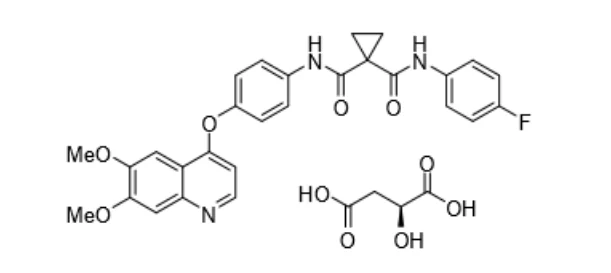
Physicochemical properties: Cabozantinib (S)-malate was found to exist in two neat, closely related solid forms (N-1 and N-2) that have similar properties.
Physical Description: white to off-white solid
Solubility: 0.03 mg/mL in water
0.3 mg/mL in methyl ethyl ketone
pH: ~100mcg/mL at pH 3; practically insoluble above pH 4 pKa: 6.32
Partition coefficient: log D50 = 3.88; log P = 5.15
Melting Point: N-1 ~186.50C; N-2 ~185.40C; Amorphous Tg ~900C>
14 Clinical Trials
14.1 Clinical Trials by Indication
Advanced Renal Cell Carcinoma After Prior VEGFR-TKI
Table 12: Summary of patient demographics for clinical trials in Advanced Renal Cell Carcinoma After Prior VEGFR-TKI
| Study # | Study design | Dosage, route of administration | Study subjects (n) | Mean age (Range) | Sex |
| METEOR (XL184-308) | Open label, active-controlled, randomized 2-arm phase 3 study | CABOMETYX (60 mg) daily, oral everolimus (10 mg) daily, oral | N=330 N=328 | 61.7 (32, 86) 61.1 (31, 84) | 77%M 73%M |
The safety and efficacy of CABOMETYX (cabozantinib) were evaluated in a randomized, open-label, multicenter Phase 3 study (METEOR). Patients (N=658) with advanced Renal Cell Carcinoma (RCC) with a clear cell component who had previously received at least 1 prior VEGF receptor tyrosine kinase inhibitor (VEGFR-TKI) were randomized (1:1) to receive CABOMETYX (N=330) or everolimus (N=328). Patients could have received other prior therapies, including cytokines, and antibodies targeting VEGF, the programmed death 1 (PD-1) receptor, or its ligands. Patients with treated brain metastases were allowed. Progression-free survival (PFS) was assessed by a blinded independent radiology review committee, and the primary analysis was conducted among the first 375 subjects randomized. Secondary efficacy endpoints were objective response rate (ORR) and overall survival (OS). Tumor assessments were conducted every 8 weeks for the first 12 months, then every 12 weeks thereafter.
The baseline demographic and disease characteristics were similar between the CABOMETYX and everolimus arms. The majority of the patients were male (75%), with a median age of 62 years. Seventy-one percent (71%) received only one prior VEGFR-TKI; 41% of patients received sunitinib as their only prior VEGFR-TKI. According to the Memorial Sloan Kettering Cancer Center criteria for prognostic risk category, 46% were favorable (0 risk factors), 42% were intermediate (1 risk factor), and 13% were poor (2 or 3 risk factors). Fifty-four percent (54%) of patients had 3 or more organs with metastatic disease, including lung (63%), lymph nodes (62%), liver (29%), and bone (22%). The median duration of treatment was 7.6 months (range 0.3 – 20.5) for patients receiving CABOMETYX and 4.4 months (range 0.21 – 18.9) for patients receiving everolimus.
The main efficacy outcomes measure was progression-free survival (PFS) assessed by blinded independent radiology review committee among the first 375 subjects randomized. Other efficacy endpoints were objective response rate (ORR) and overall survival (OS) in the Intent-to-Treat (ITT) population. Tumor assessments were conducted every 8 weeks for the first 12 months, then every 12 weeks thereafter. Patients received treatment until disease progression or experiencing unacceptable toxicity.
Statistically significant improvement in PFS was demonstrated for CABOMETYX compared to everolimus (Figure 1 and Table 13). A planned interim analysis of OS was conducted at the time of the PFS analysis and did not reach the interim boundary for statistical significance (HR=0.68 [0.51, 0.90], p=0.006). In a subsequent unplanned interim analysis of OS, a statistically significant improvement was demonstrated for patients randomized to CABOMETYX as compared with everolimus (median of 21.4 months vs. 16.5 months; HR=0.66 [95% CI: 0.53, 0.83], p=0.0003; Figure 2). The follow-up supplemental analysis demonstrated a statistically significant difference in OS for patients randomized to CABOMETYX as compared with everolimus; (median 21.4 months vs. 17.1 months; HR= 0.70 (95% CI: 0.58, 0.85; p-value = 0.0002; Table 14).
Exploratory analyses of PFS and OS in the ITT population have also shown consistent results in favour of CABOMETYX compared to everolimus across different subgroups according to age (<65 vs. ≥65, sex, MSKCC risk group (favourable, intermediate, poor), ECOG status (0 vs. 1), time from diagnosis to randomisation (<1 year vs. ≥1 year), tumour MET status (high vs. low vs. unknown), bone metastases (absence vs. presence), visceral metastases (absence vs. presence), visceral and bone metastases (absence vs. presence), number of prior VEGFR-TKIs (1 vs. ≥2), duration of first VEGFR-TKI (≤6 months vs. >6 months).
Figure 1: Progression-free survival (first 375 randomized)
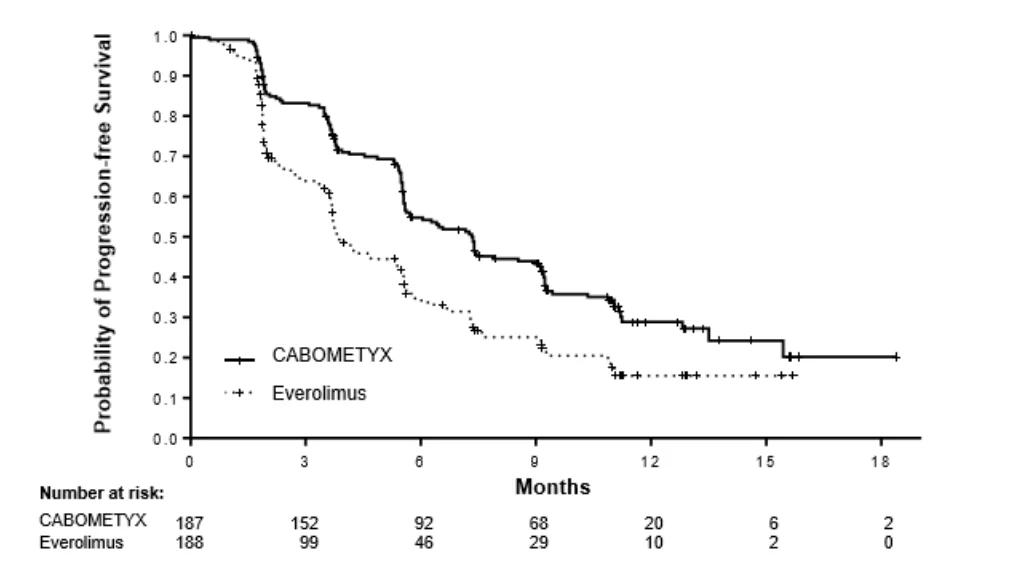
Table 13: Progression-Free Survival (First 375 randomized)
| Primary PFS analysis Population | ||||||
|---|---|---|---|---|---|---|
| Endpoint | CABOMETYX | Everolimus | ||||
| N = 187 | N = 188 | |||||
| Median PFS (95% CI), months | 7.4 (5.6, 9.1) | 3.8 (3.7, 5.4) | ||||
| HR (95% CI), p-value1 | 0.58 (0.45, 0.74), p<0.0001 | |||||
1stratified log-rank test with prior VEGFR-targeting TKI therapy (1 vs 2 or more) and MSKCC prognostic criteria for previously treated patients with RCC (0 vs 1 vs 2 or 3) as stratification factors (per IVRS data)
The PFS analysis was repeated in the ITT population (658 subjects), and results were similar to those obtained for the primary PFS analysis population.
Figure 2: Kaplan-Meier curve of overall survival
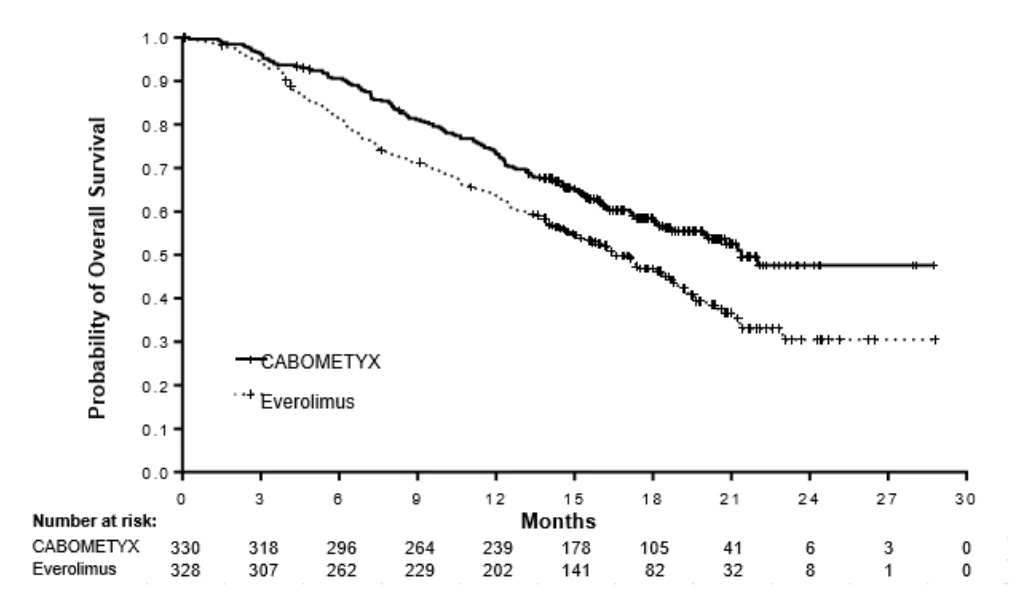
Table 14: Final Overall Survival Rate (ITT)
| Endpoint | CABOMETYX | Everolimus |
| Number (%) of Subjects | 330 | 328 |
| Censored | 132 (40) | 96 (29) |
| Death | 198 (60) | 232 (71) |
| Duration of overall survival (months) | ||
| Median (95% CI) | 21.4 (18.6, 23.5) | 17.1 (14.9, 18.9) |
| 25th percentile, 75th percentile | 11.5, NE | 7.5, 29.5 |
| Range | 0.26, 37.8+ | 0.07+, 35.5+ |
| p-value (stratified log-rank test)a | 0.0002 | |
| Hazard ratio (95% CI; stratified)b | 0.70 (0.58, 0.85) | |
| p-value (unstratified log-rank test) | 0.0006 | |
| Hazard ratio (95% CI; unstratified) | 0.72 (0.59, 0.87) | |
+ indicates a censored observation; CI, confidence interval; ITT, intent-to-treat; IxRS, interactive record system; NE, not estimable; TKI, tyrosine kinase inhibitor; VEGFR, vascular endothelial growth factor receptor. a Stratification factors (based on IxRS) were prior VEGFR-targeting TKI therapy: 1 vs 2 or more, and Memorial Sloan-Kettering Cancer Center prognostic criteria (0 vs 1 vs 2 or 3). b Estimated using the Cox proportional hazard model adjusted for stratification factors. A hazard ratio <1 indicates overall survival in favor of cabozantinib. | ||
Table 15: Summary of ORR Findings per Independent Radiology Committee Review (IRC) and Investigator Review
| Primary Analysis ORR Intent-to Treat Population (IRC) | ORR per Investigator Review Intent-To-Treat Population | |||||||||||||||||
|---|---|---|---|---|---|---|---|---|---|---|---|---|---|---|---|---|---|---|
| Endpoint | CABOMETYX | Everolimus | CABOMETYX | Everolimus | ||||||||||||||
| N = 330 | N = 328 | N = 330 | N = 328 | |||||||||||||||
ORR (partial responses only) (95% CI) | 17% (13%, 22%) | 3% (2%, 6%) | 24% (19%, 29%) | 4% (2%, 7%) | ||||||||||||||
| p-value1 | p<0.0001 | p<0.0001 | ||||||||||||||||
| Partial Response | 17% | 3% | 24% | 4% | ||||||||||||||
| Median time to First Response, months (95% CI) | 1.91 (1.6, 11.0) | 2.14 (1.9, 9.20 | 1.91 (1.3, 9.8) | 3.50 (1.8, 5.6) | ||||||||||||||
| Stable Disease as Best Response | 65% | 62% | 63% | 63% | ||||||||||||||
| Progressive Disease as Best Response | 12% | 27% | 9% | 27% | ||||||||||||||
1 chi-squared test
Treatment-Naïve Advanced or Metastatic Renal Cell Carcinoma
Table 16: Summary of patient demographics for clinical trials in Treatment-Naïve Advanced or Metastatic Renal Cell Carcinoma
| Study # | Study design | Dosage, route of administration | Study subjects (n) | Mean age (Range) | Sex |
| CABOSUN (A031203) | Open label, active-controlled, randomized 2-arm phase 2 study | CABOMETYX (60 mg) daily, oral sunitinib (50 mg) daily, oral | N=79 N=78 | 62.0 (40, 82) 63.6 (31, 87) | 84%M 57%M |
The safety and efficacy of CABOMETYX for the treatment of treatment-naïve renal cell carcinoma were evaluated in a randomized, open-label, multicenter study (CABOSUN). Patients (N=157) with previously untreated, locally advanced or metastatic RCC with a clear cell component were randomized (1:1) to receive CABOMETYX (N=79) or sunitinib (N=78). Patients had to have intermediate or poor risk disease as defined by the International Metastatic RCC Database Consortium (IMDC) risk group categories. Patients were stratified by IMDC risk group and presence of bone metastases (yes/no). Approximately 75% of patients had a nephrectomy prior to onset of treatment.
The baseline demographic and disease characteristics were similar between the CABOMETYX and sunitinib arms. The majority of the patients treated with CABOMETYX were male (84%) with a median age of 62 years. Patient distribution by IMDC risk groups was 81% intermediate (1-2 risk factors) and 19% poor (≥3 risk factors). Most patients (87%) had ECOG performance status of 0 or 1; 13% had an ECOG performance status of 2. Thirty-six percent (36%) of patients had bone metastases.
The primary efficacy endpoint was PFS retrospectively assessed by a blinded Independent Radiology Committee (IRC). Secondary efficacy endpoints were objective response rate (ORR) and overall survival (OS). Tumor assessments were conducted every 12 weeks.
A statistically significant improvement in PFS as retrospectively assessed by an IRC was demonstrated for CABOMETYX compared to sunitinib (Figure 3 and Table 17). The results from the Investigator determined analysis and IRC-determined analysis of PFS were consistent.
Based on exploratory subgroup analyses, patients with a positive MET status showed a favorable effect in PFS (HR: 0.32; 95% CI: 0.16 – 0.63) and OS (HR: 0.31; 95% CI: 0.14 – 0.69) with CABOMETYX when compared with sunitinib. However, when comparing CABOMETYX to sunitinib in patients with MET negative status the numerical benefit seen in the PFS (HR: 0.67; 95% CI: 0.37 - 1.3) did not translate into the prolongation of the OS (HR: 1.34; 95% CI: 0.67 - 2.70), and a negative trend of OS treatment effect was found. The study was not powered for the OS analysis.
Objective response rate (ORR) findings are summarized in Table 17.
Figure 3: Kaplan Meier Curve for Progression-Free Survival by IRC in Treatment-Naïve RCC Subjects
Table 17: Efficacy Results in Treatment-Naïve RCC Subjects (ITT population)
CABOMETYX (N=79) | Sunitinib (N=78) | ||||
|---|---|---|---|---|---|
| Progression-free survival (PFS) by IRC | |||||
| Median PFS in months (95% CI) | 8.6 (6.8, 14.0) | 5.3 (3.0, 8.2) | |||
| HR (95% CI); stratifieda, b | 0.48 (0.31, 0.74) | ||||
| Two-sided log-rank p-value: stratified b | p=0.0008 | ||||
| Objective Response Rate n (%) by IRC | |||||

Probability of Progression -free Survival
Months
Number at risk:
CABOMETYX
Sunitinib
CABOMETYX
Sunitinib
| Complete responses | 0 | 0 |
|---|---|---|
| Partial responses | 16 (20) | 7 (9) |
| ORR (partial responses only) | 16 (20) | 7 (9) |
| Stable disease | 43 (54) | 30 (38) |
| Progressive Disease | 14 (18) | 23 (29) |
aStratification factors per IxRS comprise IMDC risk categories (intermediate risk, poor risk and bone metastasis (yes, no)
bEstimated using the Cox proportional hazard model adjusted for stratification factors per IxRS. Hazard ratio < 1 indicates PFS in favor of cabozantinib
Combination Treatment-Naïve Advanced or Metastatic Renal Cell Carcinoma
Table 18: Summary of patient demographics for clinical trials in Combination Treatment-Naïve Advanced or Metastatic Renal Cell Carcinoma
| Study # | Study design | Dosage, route of administration | Study subjects (n) | Mean age (Range) | Sex |
| CHECKMATE -9ER (CA2099ER) | Open label, randomized, phase 3 study | CABOMETYX (40 mg) daily, oral + nivolumab (240 mg) Q2W, intravenous sunitinib (50 mg) daily, oral | N=323 N=328 | 61.4 (29, 90) 60.4 (28, 86) | 77%M 71%M |
CHECKMATE-9ER was a phase 3 randomized, open-label study of CABOMETYX combined with nivolumab versus sunitinib in adult patients with previously untreated advanced (not amenable to curative surgery or radiation therapy) or metastatic RCC with clear cell component. Patients were stratified by IMDC prognostic score, PD-L1 tumour expression, and geographic region. CHECKMATE-9ER excluded patients with poorly controlled hypertension despite antihypertensive therapy, active brain metastases, uncontrolled adrenal insufficiency, patients with autoimmune disease or other medical conditions requiring systemic immunosuppression, and patients who had prior treatment with an anti-PD-1, anti-PD-L1, anti PD-L2, anti-CD137, or anti-CTLA4 antibody.
Patients were randomized to CABOMETYX 40 mg oral daily and nivolumab 240 mg intravenously every 2 weeks (n=323), or sunitinib 50 mg oral daily for the first 4 weeks of a 6-week cycle (4 weeks on treatment followed by 2 weeks off) (n=328). Treatment was continued until disease progression per RECIST v1.1 or unacceptable toxicity. Nivolumab was administered up to 24 months. CABOMETYX treatment beyond RECIST-defined disease progression was permitted if the patient was clinically stable and considered to be deriving clinical benefit by the investigator. Tumour assessments were performed at baseline, after randomization at Week 12, then every 6 weeks until Week 60, and then every 12 weeks thereafter.
Baseline characteristics were generally balanced between the two groups. From both arms, median age was 61 years (range: 28 to 90) with 38% ≥65 years of age and 10% ≥75 years of age. The majority of patients were male (74%) and White (82%) and 23% and 76% of patients had a baseline KPS of 70% to 80% and 90% to 100%, respectively. Twenty-nine (4.5%) subjects had advanced, non-metastatic RCC. 11.5% of patients had tumors with sarcomatoid features. Patient distribution by IMDC risk categories was 23% favorable, 58% intermediate, and 20% poor. Common sites of metastasis were lung, lymph node, bone, liver, adrenal gland.
primary efficacy outcome measure was PFS (blinded independent central review [BICR] assessed). Secondary efficacy outcome measures included OS and ORR (BICR assessed). The trial demonstrated a statistically significant improvement in PFS, OS, and ORR for patients randomized to CABOMETYX and nivolumab compared with sunitinib. Efficacy results after a minimum follow-up of 10.6 months are shown in Table 19 and Figure 4 and Figure 5.
| Table 19: Efficacy Results in Previously Untreated adult advanced or metastatic RCC Patients (CHECKMATE-9ER) | |||||||||||||
| CABOMETYX and Nivolumab (n=323) | Sunitinib (n=328) | ||||||||||||
| Progression-free Survival | |||||||||||||
| Events (%) | 144 (44.6) | 191 (58.2) | |||||||||||
| Median (months)a | 16.6 (12.5, 24.9) | 8.3 (7.0, 9.7) | |||||||||||
| Hazard ratio (95% CI)b | 0.51 (0.41, 0.64) | ||||||||||||
| p-valuec,d | <0.0001 | ||||||||||||
| Overall Survival | |||||||||||||
| Events (%) | 67 (20.7) | 99 (30.2) | |||||||||||
| Median (months)a | N.E. | N.A. (22.6, N.A.) | |||||||||||
| Hazard ratio (98.89% CI)b | 0.60 (0.40, 0.89) | ||||||||||||
| p-valuec,d,e | 0.0010 | ||||||||||||
| Objective Response Rate (95% CI)f | 55.7% (50.1, 61.2) | 27.1% (22.4, 32.3) | |||||||||||
| p-valueg | <0.0001 | ||||||||||||
| Complete Response (CR) (%) | 26 (8.0) | 15 (4.6) | |||||||||||
| Partial Response (PR) (%) | 154 (47.7) | 74 (22.6) | |||||||||||
a Based on Kaplan-Meier estimates.
b Stratified Cox proportional hazards model. Hazard ratio is nivolumab and CABOMETYX over sunitinib.
c Log-rank test stratified by IMDC prognostic risk score (0, 1-2, 3-6), PD-L1 tumour expression (
- 1% versus <1% or indeterminate) and region (US/Canada/W Europe/N Europe, ROW) as entered in the per protocol Interactive Response Technology (IRT) system.
d 2-sided p-values from stratified regular log-rank test.
e Type-1 error controlled by hierarchical testing. OS interim analysis boundary for statistical significance p-value <0.0111.
f CI based on the Clopper and Pearson method.
g 2-sided p-value from CMH test.
NE = non-estimable
The exploratory analyses in responders suggested the median duration of response of 20.2 months (range from 17.3 to N.E.) for CABOMETYX in combination with nivolumab treated patients and 11.5 months (8.3 to 18.4 months) for sunitinib treated patients. The median time to response of 2.8 months (range from 1.0 to 19.4) for CABOMETYX in combination with nivolumab treated patients and 4.2 months (1.7 to 12.3) for sunitinib treated patients. Additional exploratory analyses indicated a consistent treatment benefit in both OS and PFS across all three pre-specified IMDC risk subgroups.
Figure 4: Kaplan-Meier Curve for Progression-Free Survival (CHECKMATE-9ER)
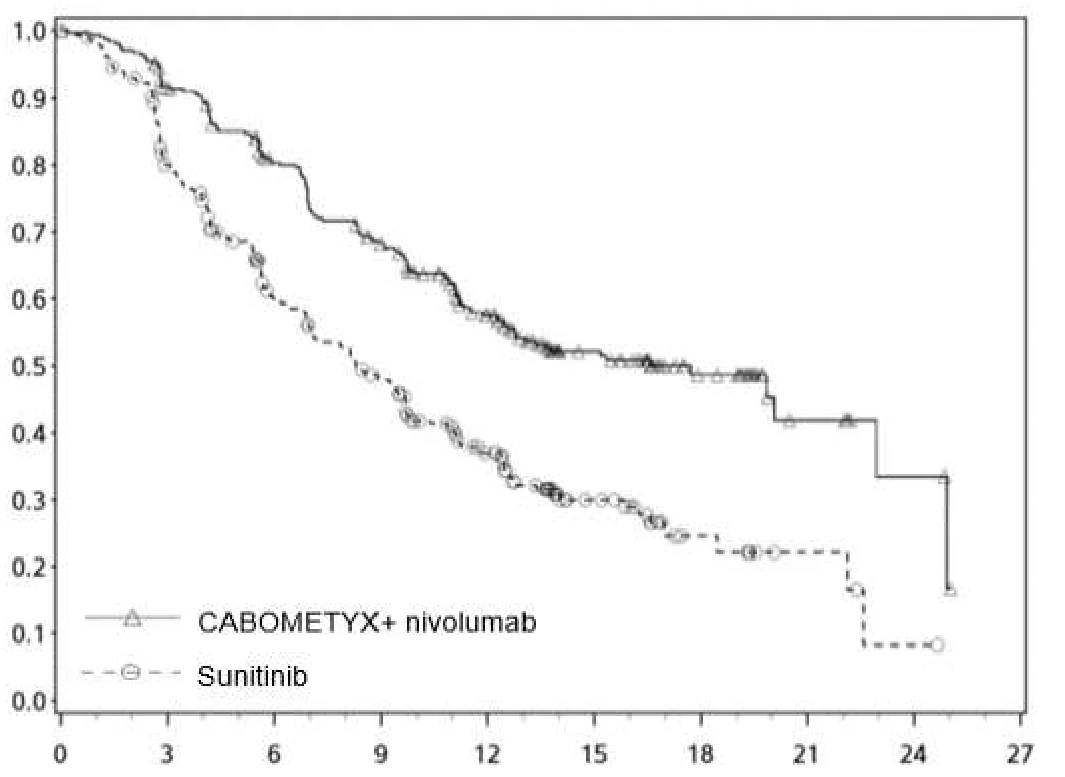
Progression-Free Survival per BICR (months)
Number of subjects at risk
CABOMETYX + nivolumab
323
279
234
196
144
77
35
11
4
0
Sunitinib
328
228
159
122
79
31
10
4
1
0
Proba bi li ty of Prog res si on -Free Surv iv al
Figure 5: Kaplan-Meier Curve of Overall Survival (CHECKMATE-9ER)
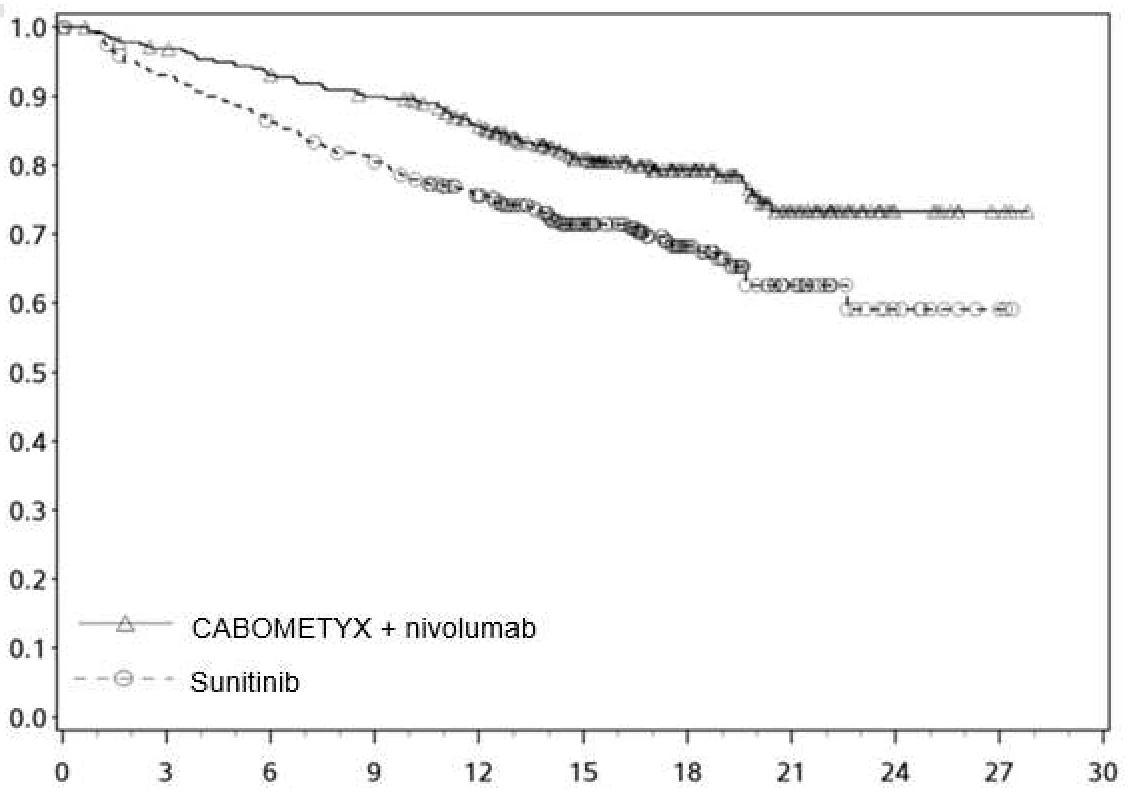
Overall Survival (Months)
Number of subjects at risk
CABOMETYX + nivolumab
323
308
295
283
259
184
106
55
11
3
0
Sunitinib
328
296
273
253
223
154
83
36
10
3
0
Advanced or Metastatic Renal Cell Carcinoma After Prior Therapy (CABOSEQ & ONTADA)
Two RWE studies (CABOSEQ & ONTADA) were conducted in patients with Advanced or Metastatic Renal Cell Carcinoma after prior therapy.
CABOSEQ was a retrospective, observational cohort study of advanced or metastatic RCC patients utilizing the International Metastatic RCC Data Consortium (IMDC). This investigation was designed and analyzed in accordance with the target trial emulation framework whereby a protocol for a hypothetical target trial was specified and then emulated using observational data from the IMDC database.
Patients included in the analyses had a mean age of 60.77, and 75.1% were male. All patients included in the target trial had received 1L ipilimumab in combination with nivolumab. The mean baseline Karnofsky Score was 85.24% and all patients had metastatic disease.
Proba bi li ty of Surv iv al
According to the IMDC criteria for prognostic risk category, 5.3% were favorable (0 risk factors), 58% were intermediate (1-2 risk factors), and 36.7% were poor (3 or more risk factors).
Overall survival (OS) and time to treatment failure (TTF) curves were estimated using the Kaplan-Meier (KM) product-limit method. A proportional hazard ratio (HR) was estimated using Cox regression. Objective response rate (ORR) and cumulative incidence were estimated and compared using therisk difference and risk ratio. Multiple imputation was used for missing values and inverse probability of treatment weighting (IPTW) was used to adjust for confounders. OS was adjusted for by the IMDC risk factors at 2L initiation.
The emulated trial estimated the comparative effectiveness of 2L Cabometyx vs. 2L Sunitinib among those who progressed on 1L Ipi+Nivo.
(ONTADA) was a two-arm, retrospective, observational cohort study, which compared real-world treatment outcomes (rwRR, rwDOR etc.) in patients with a/mRCC treated post CPI with cabozantinib or with other VEGF-targeted TKI therapies (such as sunitinib, pazopanib and axitinib). Patients within the US Oncology Network with a diagnosis of a/mRCC who initiated cabozantinib or any non-cabozantinib TKI treatment subsequent to CPI therapy were included in the study.
This RWE dataset demonstrated that Cabometyx can be a treatment option for mRCC patients after the 1L therapies irrespective of whether the 1L regimen included a VEGF targeted therapy.
Advanced Hepatocellular Carcinoma
Table 20: Summary of patient demographics for clinical trials in Advanced Hepatocellular Carcinoma
| Study # | Study design | Dosage, route of administration | Study subjects (n) | Mean age (Range) | Sex |
| CELESTIAL (XL184-309) | Double-blind, placebo-controlled, randomized 2-arm phase 3 study | CABOMETYX (60 mg) daily, oral Placebo daily, oral | N=467 N=237 | 63.2 (22, 86) 63.4 (24, 86) | 81%M 85%M |
The safety and efficacy of CABOMETYX were evaluated in a randomized, placebo-controlled, double-blind study of CABOMETYX 60 mg once daily in subjects with advanced HCC who had received prior sorafenib. The study randomized a total of 707 patients, 470 to receive CABOMETYX and 237 to receive placebo. The median age was 64 years (range 22 to 86 years), 81% were male, 56% were White and 34% were Asian. Baseline ECOG performance status was 0 (52%) or 1 (48%). Etiology of HCC was HBV in 39% of patients and HCV in 28% of patients, and etiology was attributed to causes other than HBV or HCV in 40% of patients. Macroscopic vascular invasion or extra-hepatic tumor spread was present in 78% of patients. The majority of patients (98% and 99% in the CABOMETIX and placebo arms, respectively) had Child-Pugh A liver disease. All (100%) patients received prior sorafenib and 28% received two prior systemic therapy regimens. Randomization was stratified by etiology of disease (HBV [with or without HCV], HCV [without HBV], or other), geographic region (Asia, other regions) and by presence of extrahepatic spread of disease and/or macrovascular invasions (Yes, No).
The primary endpoint was duration of OS and secondary endpoints were duration of Investigator-determined PFS and ORR per RECIST 1.1. The analysis of the primary endpoint (OS) was based on a second planned interim analysis prespecified to be performed at approximately the 75% information fraction (i.e., at approximately 466 deaths). The median duration of follow up was 22.9 months. The primary analysis demonstrated a statistically significant improvement in duration of OS for subjects in the CABOMETYX arm compared with the placebo arm: the HR, adjusted for stratification factors, was 0.76 (95% CI: 0.63, 0.92; p-value =0.0049).
Table 21: Efficacy Results in HCC (ITT population, CELESTIAL)
CABOMETYX (N=470) | Placebo (N=237) | ||||||||||||
|---|---|---|---|---|---|---|---|---|---|---|---|---|---|
| Overall Survival | |||||||||||||
| Median OS (95% CI), months | 10.2 (9.1, 12.0) | 8.0 (6.8, 9.4) | |||||||||||
| HR (95% CI)1,2 | 0.76 (0.63, 0.92) | ||||||||||||
| p-value1 | p=0.0049 | ||||||||||||
| Progression-free survival (PFS)3 | |||||||||||||
| Median PFS in months (95% CI) | 5.2 (4.0, 5.5) | 1.9 (1.9, 1.9) | |||||||||||
| HR (95% CI)1 | 0.44 (0.36, 0.52) | ||||||||||||
| p-value1 | p<0.0001 | ||||||||||||
| Kaplan-Meier landmark estimates of percent of subjects event-free at 3 months | |||||||||||||
| % (95% CI) | 67.0% (62.2%, 71.3%) | 33.3% (27.1%, 39.7%) | |||||||||||
| Objective Response Rate n (%)3 | |||||||||||||
| Complete responses (CR) | 0 | 0 | |||||||||||
| Partial responses (PR) | 18 (4) | 1 (0.4) | |||||||||||
| ORR (CR+PR) | 18 (4) | 1 (0.4) | |||||||||||
| p-value1,4 | p=0.0086 | ||||||||||||
| Stable disease | 282 (60) | 78 (33) | |||||||||||
| Progressive Disease | 98 (21) | 131 (55) | |||||||||||
1 2-sided stratified log-rank test with etiology of disease (HBV [with or without HCV], HCV [without HBV], or Other), geographic region (Asia, Other Regions), and presence of extrahepatic spread of disease and/or macrovascular invasion (Yes, No) as stratification factors (per IVRS data) 2 Estimated using the Cox proportional-hazard model 3 As assessed by investigator per RECIST 1.1 4 Stratified Cochran-Mantel-Haenszel (CMH) test
Figure 6: Kaplan-Meier Curve of Overall Survival (CELESTIAL)

Months
CABOMETYX
Placebo
Probability of Survival
Number at risk:
CABOMETYX
Placebo
Figure 7: Kaplan Meier Curve for Progression-Free Survival (CELESTIAL)
Differentiated Thyroid Carcinoma
Table 22: Summary of patient demographics for clinical trials in Differentiated Thyroid Carcinoma
| Study # | Study design | Dosage, route of administration | Study subjects (n) | Mean age (Range) | Sex |
| COSMIC-311 (XL184-311) | Double-blind, placebo-controlled, randomized, 2-arm phase 3 study | CABOMETYX (60 mg) daily, oral Placebo daily, oral | N=170 N=88 | 63.3 (31, 85) 63.8 (37, 83) | 49%M 44%M |
The efficacy of CABOMETYX was evaluated in COSMIC-311, a randomized (2:1), double-blind, placebo-controlled, multicenter trial in patients with locally advanced or metastatic differentiated thyroid cancer (papillary thyroid carcinoma or follicular thyroid carcinoma) that had progressed following prior VEGFR-targeted therapy and were radioactive iodine (RAI)-refractory or ineligible. Patients were randomized to receive CABOMETYX 60 mg orally once daily or placebo until disease progression or unacceptable toxicity. Randomization was stratified by prior receipt of lenvatinib and age (≤ 65 years vs > 65 years). Eligible patients randomized to placebo were allowed to cross-over to CABOMETYX upon confirmation of progressive disease by blinded independent radiology review committee (BIRC). The primary efficacy outcome measures were PFS in the intent to treat (ITT) population, and ORR in the first 100 randomized patients, as

Probability of Progression-Free Survival
Months
Number at risk:
CABOMETYX
Placebo
CABOMETYX
Placebo
assessed by BIRC per RECIST 1.1. Tumour assessments were conducted every 8 weeks. OS was an additional endpoint.
The primary analysis of PFS (median follow up 6.2 months) included 187 randomized patients, 125 to CABOMETYX and 62 to placebo. An updated analysis of PFS (median follow up 10.1 months) was performed and included 258 randomized patients, 170 to CABOMETYX and 88 to placebo. The median age was 65 years, 53% were female and 70% were White. 74% of subjects receiving CABOMETYX had received only one prior VEGFR-TKI and 26% had received two or more prior VEGFR-TKI therapies. 63% had received prior lenvatinib, 60% had received prior sorafenib, and 24% had received both (18% 1L sorafenib). Baseline ECOG performance status was 0 (46%) or 1 (54%) and 93% of patients had metastatic disease.
The trial demonstrated a statistically significant improvement in PFS in the ITT population for patients randomized to CABOMETYX compared with placebo but failed to demonstrate a statistically significant improvement in ORR in the first 100 randomized patients to CABOMETYX compared with placebo. Efficacy results are shown in Table 23, Figure 8 and Figure 9.
Table 23: Efficacy Results in DTC (COSMIC-311): PFS
| Primary Analysis | Updated Analysis1 (Full ITT) | |||||||||||||||
|---|---|---|---|---|---|---|---|---|---|---|---|---|---|---|---|---|
| CABOMETYX (n=125) | Placebo (n=62) | CABOMETYX (n=170) | Placebo (n=88) | |||||||||||||
| Progression-Free Survival (PFS) | ||||||||||||||||
| Number of Events, (%) | 31 (25) | 43 (69) | 62 (36) | 69 (78) | ||||||||||||
| Death | 6 (4.8) | 2 (3.2) | 12 (7.1) | 4 (4.5) | ||||||||||||
| Median PFS in Months (96% CI) | NR (5.7, NE) | 1.9 (1.8, 3.6) | 11.0 (7.4, 13.8) | 1.9 (1.9, 3.7) | ||||||||||||
| Hazard Ratio (96% CI)2 | 0.22 (0.13, 0.36) | 0.22 (0.15, 0.32) | ||||||||||||||
| p-value3 | < 0.0001 | |||||||||||||||
CI, confidence interval; NR, not reached; NE, not evaluable; ITT, intent-to-treat
1 No formal statistical testing was conducted at the time of the updated analysis
2 Estimated using the Cox proportional-hazard model 3 Log-rank test stratified by receipt of prior lenvatinib (yes vs no) and age (≤ 65 years vs > 65 years)
Table 24: Efficacy Results in DTC (COSMIC-311): ORR in the First 100 Patients Randomized to CABOMETYX or Placebo
| Primary Analysis | |||||
|---|---|---|---|---|---|
| CABOMETYX (n=67) | Placebo (n=33) | ||||
| Overall Response Rate | |||||
| Overall Response, % (99% CI)1 | 15% (6%, 29%) | 0% (0%, 15%) | |||
| p-value2 | 0.0281 | ||||
CI, confidence interval
1 All responses were partial responses
2 Fisher’s exact test compared to an alpha boundary of 0.01
PFS subgroup analyses showed CABOMETYX was favoured over placebo in all pre-specified subgroups, regardless of the TKI used.
Figure 8: Kaplan-Meier Curve of Progression-Free Survival in COSMIC-311 (Primary Analysis, N=187)
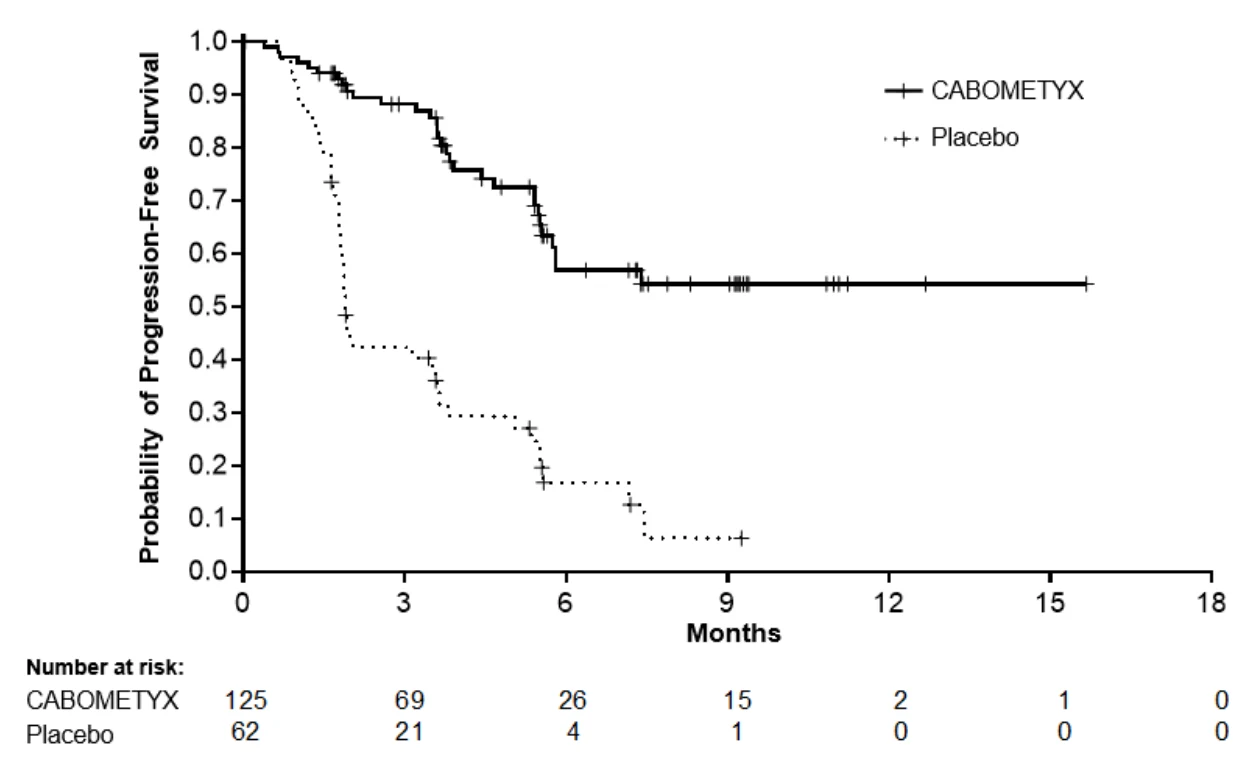
Figure 9: Kaplan-Meier Curve of Progression-Free Survival in COSMIC-311 (Updated Analysis, N=258)
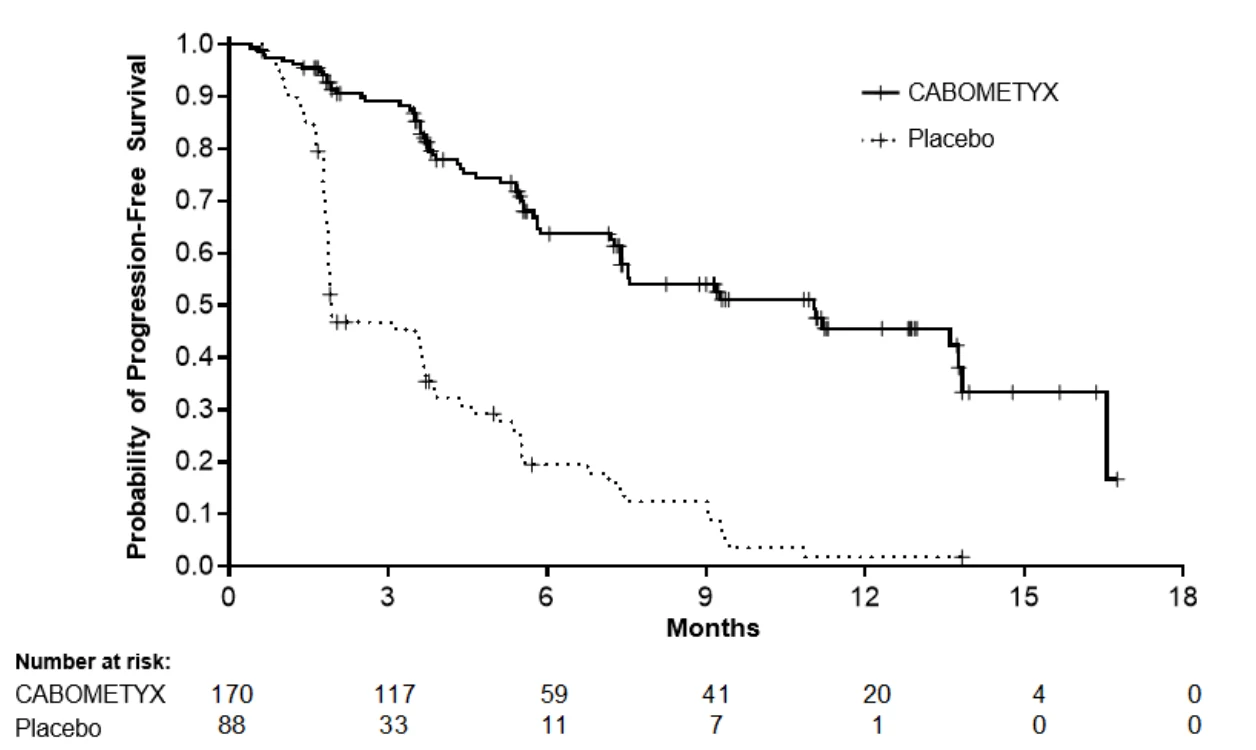
16 Non-Clinical Toxicology
Single dose toxicity
Toxicity associated with single oral doses of cabozantinib in rats (100, 300 and 900 mg/kg) was characterized by dose-dependent clinical signs, clinical chemistry parameter changes reflective of possible hepatotoxicity, and hematologic parameters indicative of possible hematopoietic tissue toxicity. Histopathologic changes in gastrointestinal (GI) tract tissues, bone marrow, lymphoid tissue, and male and female reproductive tissues were considered cabozantinib-related. Minimal evidence of cabozantinib-related toxicity was observed in dogs administered single oral doses up to 2000 mg/kg (dose range: 30-2000 mg/kg/day).
Repeat dose toxicity
Repeat dose toxicity studies were performed in mice (4 weeks at 5,15 and 50 mg/kg/day), rats (2 and 6 months at 0.1-15 mg/kg/day) and dogs (6 months at 0.2-30 mg/kg). Target organs for toxicity were lymphoid tissues, bone marrow, GI tract, kidney, adrenal and reproductive tract tissues. The no observed adverse effect level (NOAEL) yielded plasma exposures estimated to be below human clinical exposure levels at intended therapeutic dose (≥0.4-fold, ≥0.2-fold and <1%, for mice, rats and dogs, respectively).
Genotoxicity
Cabozantinib was not mutagenic in vitro in the bacterial reverse mutation (Ames) assay and was not clastogenic in both the in vitro cytogenetic assay using human lymphocytes or in the in vivo mouse micronucleus assay.
Carcinogenicity
Cabozantinib was not carcinogenic in a 26-week carcinogenicity study in rasH2 transgenic mice (2, 5 and 15 mg/kg/day).
During a 104-week carcinogenic study, Cabozantinib was daily administered at 0.1, 0.3 and 1.0 mg/kg/day in Sprague-Dawley rats. Cabozantinib-related neoplastic findings consisted of an increased incidence of benign pheochromocytoma, alone or in combination with malignant pheochromocytoma/complex malignant pheochromocytoma, of the adrenal medulla in males administered ≥0.1 mg/kg/day and females administered ≥0.3 mg/kg/day. In addition, increased incidence of hyperplasia of the adrenal medulla also occurred in females administered ≥0.1 mg/kg/day.
Reproductive and developmental toxicity
In reproductive and developmental toxicity studies, cabozantinib administration was associated with: reduced fertility in male and female rats (1, 2.5 and 5 mg/kg/day); embryotoxicity in rats (0.01, 0.03 and 0.1 mg/kg/day); fetal soft-tissue malformations (small spleen, missing lung lobe) in rabbits (0.3, 1 and 3.0 mg/kg/day); fetal skeletal malformations (cleft palate and kinked/rudimentary tail) at embryotoxic doses in rats (dose range: 0.03-7.5 mg/kg); and no fetal external or skeletal malformations in rabbits (0.3, 1.0 and 3.0 mg/kg/day). These effects were observed at exposures that were significantly lower than the human exposure at the therapeutic dose.
Target organs for toxicity in rat juvenile studies (dose range: 0.3-3 mg/kg/day) were bone, bone marrow, GI tract, lymphoid and reproductive organs. At the NOAEL (0.3 mg/kg/day) plasma exposures are estimated to be approximately 0.1-fold of the mean clinical exposure.
Phototoxicity in vitro studies
Cabozantinib was negative in an in vitro Balb/c mouse 3T3 fibroblast phototoxicity bioassay.