


Product Monograph - Sandoz Pazopanib
RECENT MAJOR LABEL CHANGES
| 7 WARNINGS AND PRECAUTIONS, Cardiovascular | 06/2022 |
| 7 WARNINGS AND PRECAUTIONS, Combinations with other systemic anti-cancer therapies | 06/2022 |
| 7 WARNINGS AND PRECAUTIONS, 7.1.3 Pediatrics | 06/2022 |
TABLE OF CONTENTS
Sections or subsections that are not applicable at the time of authorization are not listed.
RECENT MAJOR LABEL CHANGES............................................................................................ 2
TABLE OF CONTENTS .............................................................................................................. 2
PART I: HEALTH PROFESSIONAL INFORMATION ..................................................................... 4
1 INDICATIONS .............................................................................................................. 4
1.1 Pediatrics .......................................................................................................... 4
1.2 Geriatrics........................................................................................................... 5
2 CONTRAINDICATIONS ................................................................................................. 5
3 SERIOUS WARNINGS AND PRECAUTIONS BOX ............................................................ 5
4 DOSAGE AND ADMINISTRATION................................................................................. 6
4.1 Dosing Considerations ....................................................................................... 6
4.2 Recommended Dose and Dosage Adjustment..................................................... 6
4.4 Administration................................................................................................... 6
4.5 Missed Dose ...................................................................................................... 6
5 OVERDOSAGE ............................................................................................................. 7
6 DOSAGE FORMS, STRENGTHS, COMPOSITION AND PACKAGING ................................. 7
7 WARNINGS AND PRECAUTIONS .................................................................................. 7
7.1 Special Populations .......................................................................................... 15
7.1.1 Pregnant Women ....................................................................................... 15
7.1.2 Breast-feeding............................................................................................ 16
7.1.3 Pediatrics ................................................................................................... 16
7.1.4 Geriatrics ................................................................................................... 16
8 ADVERSE REACTIONS ................................................................................................ 17
8.1 Adverse Reaction Overview.............................................................................. 17
8.2 Clinical Trial Adverse Reactions ........................................................................ 17
8.3 Less Common Clinical Trial Adverse Reactions .................................................. 20
8.4 Abnormal Laboratory Findings: Hematologic, Clinical Chemistry and Other Quantitative Data ...................................................................................................... 22
8.5 Post-Market Adverse Reactions........................................................................ 23
9 DRUG INTERACTIONS................................................................................................ 24
9.2 Drug Interactions Overview.............................................................................. 24
9.4 Drug-Drug Interactions .................................................................................... 24
9.5 Drug-Food Interactions .................................................................................... 30
9.6 Drug-Herb Interactions .................................................................................... 31
9.7 Drug-Laboratory Test Interactions .................................................................... 31
10 CLINICAL PHARMACOLOGY ....................................................................................... 31
10.1 Mechanism of Action.................................................................................. 31
10.2 Pharmacodynamics .................................................................................... 31
10.3 Pharmacokinetics ....................................................................................... 32
11 STORAGE, STABILITY AND DISPOSAL ......................................................................... 33
12 SPECIAL HANDLING INSTRUCTIONS........................................................................... 33
PART II: SCIENTIFIC INFORMATION ...................................................................................... 34
13 PHARMACEUTICAL INFORMATION............................................................................ 34
14 CLINICAL TRIALS........................................................................................................ 35
14.1 Clinical Trials by Indication.......................................................................... 35
Metastatic Renal Cell Carcinoma................................................................................ 35
Soft Tissue Sarcoma .................................................................................................. 39
15 MICROBIOLOGY ........................................................................................................ 43
16 NON-CLINICAL TOXICOLOGY ..................................................................................... 43
PATIENT MEDICATION INFORMATION ................................................................................. 46
PART I: HEALTH PROFESSIONAL INFORMATION
1 INDICATIONS
Metastatic Renal Cell Carcinoma
Sandoz Pazopanib (pazopanib hydrochloride) is indicated for the treatment of patients with metastatic renal cell (clear cell) carcinoma (mRCC) as first-line systemic therapy or as second-line systemic therapy after treatment with cytokines for metastatic disease.
Approval of pazopanib in mRCC is based on significant progression-free survival benefit in patients with mRCC of good performance status (ECOG 0-1). Prolongation of overall survival was not demonstrated nor were quality-of-life differences shown between patients receiving pazopanib versus placebo in the pivotal phase III trial (see 14 CLINICAL TRIALS).
Soft Tissue Sarcoma
Sandoz Pazopanib (pazopanib hydrochloride) is indicated for the treatment of adult patients with selective subtypes of advanced Soft Tissue Sarcoma (STS) who have received prior chemotherapy for metastatic disease or who have progressed within 12 months after (neo) adjuvant therapy.
Patients were required to have disease progression on or after, or be intolerant to, an anthracycline-based regimen in the pivotal phase III study in STS.
The pivotal phase III study in STS was designed to assess pazopanib in patients with selected tumour types including: fibroblastic, so-called fibrohistiocytic, leiomyosarcoma, malignant glomus tumours, skeletal muscles, vascular, uncertain differentiation (excluding chondrosarcoma, Ewing tumours / primitive neuroectodermal tumours), malignant peripheral nerve sheath tumours, and undifferentiated soft tissue sarcomas not otherwise specified. However not all of the listed tumour types have been assessed in the clinical study (see 14 CLINICAL TRIALS).
The efficacy and safety of pazopanib for the treatment of patients with other STS subtypes, including adipocytic STS (liposarcoma) and gastrointestinal stromal tumours (GIST), have not been demonstrated (see 7 WARNINGS AND PRECAUTIONS and 14 CLINICAL TRIALS).
Clinical effectiveness of pazopanib in STS is based on significant progression-free survival benefit in patients with advanced STS. Prolongation of overall survival was not demonstrated nor were quality-of-life differences shown between patients receiving pazopanib versus placebo in the pivotal phase III trial (see 14 CLINICAL TRIALS).
1.1 Pediatrics
Pediatrics (less than 18 years of age): Based on the data submitted and reviewed by Health Canada, the safety and efficacy of pazopanib in pediatric patients has not been established; therefore, Health Canada has not authorized an indication for pediatric use (see 7.1.3 Pediatrics). Toxicology studies in rodents showed hypertrophy of epiphyseal growth plates and abnormalities in growing incisors and severe effects on body weight gain, organ growth and organ maturation during early post-natal development (see 16 NON-CLINICAL TOXICOLOGY). Sandoz Pazopanib is not recommended for use in children and is contraindicated in children less than 2 years of age (see 2 CONTRAINDICATIONS).
1.2 Geriatrics
Geriatrics (65 years of age and over): In clinical trials with pazopanib for the treatment of mRCC, 196 patients (33%) were aged ≥65 years, and 34 patients (6%) were aged >75 years. In the STS clinical trials, 93 patients (24%) were aged ≥65 years, and 17 subjects (4%) were aged ≥75 years. No overall differences in safety or effectiveness of pazopanib were observed between these patients and younger patients in clinical trials. However, a meta-analysis shows that patients over 60 years of age may be at greater risk for ALT >3 X ULN. Although no other differences in responses between elderly and younger patients have been identified clinically; a greater sensitivity of some older individuals cannot be ruled out.
2 CONTRAINDICATIONS
Sandoz Pazopanib (pazopanib hydrochloride) is contraindicated for:
- Patients who are hypersensitive to this drug or to any ingredient in the formulation, including any non-medicinal ingredient, or component of the container. For a complete listing, see 6 DOSAGE FORMS, STRENGTHS, COMPOSITION, AND PACKAGING section of the product monograph.
- Pediatric patients less than 2 year of age. Pazopanib is an anti-angiogenic agent that severely affects body weight gain, organ growth and organ maturation during early post-natal development in rats (see 7 WARNINGS AND PRECAUTIONS and 16 NON-CLINICAL TOXICOLOGY).
3 SERIOUS WARNINGS AND PRECAUTIONS BOX
Serious Warnings and Precautions
Sandoz Pazopanib tablets should be prescribed by a physician experienced in the administration of anti-cancer agents. Monitor hepatic function (see Monitoring and Laboratory Tests section) and interrupt, reduce or discontinue dosing as recommended (see Hepatic section). Sandoz Pazopanib should not be used in patients who have baseline plasma bilirubin concentrations > 1.5 X ULN (with direct bilirubin >35%) and ALT elevations of >2 X ULN, or who have moderate or severe hepatic impairment (Child Pugh B and C). Patients over 60 years of age may be at greater risk for ALT >3 X ULN. See Hepatic section and 4 DOSAGE AND ADMINISTRATION, Hepatic Impairment. The following are clinically significant adverse events:
|
4 DOSAGE AND ADMINISTRATION
4.1 Dosing Considerations
Dose modification, either an increase or decrease in dose, should be in 200 mg increments in a stepwise fashion based on individual tolerability in order to manage adverse reactions. The dose of Sandoz Pazopanib should not exceed 800 mg.
Hepatic Impairment: Sandoz Pazopanib is not recommended in patients with baseline plasma bilirubin concentrations >1.5 X ULN (with direct bilirubin >35%) and ALT elevations >2 X ULN, or who have moderate or severe hepatic impairment (Child-Pugh B and C). No formal studies have been carried out in patients with mild hepatic impairment and caution is recommended in these patients (see 10 CLINICAL PHARMACOLOGY; Special Populations and Conditions).
Renal Impairment: No dose adjustments are recommended for patients with mild or moderate renal impairment. Patients with > 1 g protein (24 h collection) at baseline were excluded from the pivotal clinical studies. Sandoz Pazopanib is not recommended for patients with severe renal impairment (see 10 CLINICAL PHARMACOLOGY; Special Populations and Conditions).
Coadministration with strong CYP3A4 inhibitor: If coadministration of a strong CYP3A4 inhibitor with Sandoz Pazopanib cannot be avoided, reduce the dose of Sandoz Pazopanib to 400 mg. Further dose reductions may be needed if adverse effects occur during therapy. Doses higher than 400 mg should not be used (see 9.4 Drug-Drug Interactions - CYP3A4 Inhibitors).
Geriatrics: No alteration of dosage, dosing frequency or route of administration is required in patients over 65 years.
4.2 Recommended Dose and Dosage Adjustment
The recommended dose of Sandoz Pazopanib for the treatment of mRCC and STS is 800 mg orally once daily.
Sandoz Pazopanib should be taken without food (at least one hour before or two hours after a meal) (see 10.3 Pharmacokinetics).
4.4 Administration
For oral use.
Sandoz Pazopanib should be taken whole with a glass of water and must not be broken or crushed (see 10.3 Pharmacokinetics).
4.5 Missed Dose
If a dose is missed, Sandoz Pazopanib should not be taken if it is less than 12 hours until the next dose.
5 OVERDOSAGE
Pazopanib doses up to 2000 mg have been evaluated in clinical trials. Grade 3 fatigue (dose limiting toxicity) and Grade 3 hypertension were each observed in 1 of 3 patients dosed at 2000 mg and 1000 mg daily, respectively.
Treatment of overdoses with Sandoz Pazopanib should consist of general supportive measures. There is no specific antidote for overdosage of Sandoz Pazopanib.
Hemodialysis is not expected to enhance the elimination of Sandoz Pazopanib because pazopanib is not significantly renally excreted and is highly bound to plasma proteins.
| For management of a suspected drug overdose, contact your regional poison control centre. |
6 DOSAGE FORMS, STRENGTHS, COMPOSITION AND PACKAGING
Table 1 Dosage Forms, Strengths, Composition and Packaging
The 200 mg tablets of Sandoz Pazopanib (pazopanib as pazopanib hydrochloride) are modified capsule shaped, grey or pink, film coated with GS JT debossed on one side and are available in bottles of 120 tablets.
The tablet core contains the following excipients; magnesium stearate, microcrystalline cellulose, povidone (K30) and sodium starch glycollate. The tablet coating contains the following excipients; hypromellose, iron oxide black (E172) or iron oxide red (E172), macrogol, polysorbate 80 and titanium dioxide (E171).
7 WARNINGS AND PRECAUTIONS
Please see 3 SERIOUS WARNINGS AND PRECAUTIONS BOX.
General
| Route of Administration | Dosage Form / Strength/Composition | Non-medicinal Ingredients |
| Oral | Tablets / 200 mg | hypromellose, iron oxide black (E172) or iron oxide red (E172), macrogol, magnesium stearate, microcrystalline cellulose, polysorbate 80, povidone (K30), sodium starch glycollate and titanium dioxide (E171) |
Drug-Drug Interactions: Co-administration of Sandoz Pazopanib with strong inhibitors of CYP3A4 or P-glycoprotein (PgP) should be avoided as should co-administration with inhibitors that simultaneously target PgP, the Breast Cancer Resistance Protein (BCRP) and/or CYP3A4. These inhibitors may increase pazopanib concentrations (see 4 DOSAGE AND ADMINISTRATION and 9 DRUG INTERACTIONS) and drug toxicity. Co-administration with inducers of CYP3A4 or PgP or drugs that raise gastric pH should be avoided due to the risk of reduced effectiveness of the drug.
Combination with other systemic anti-cancer therapies: Clinical trials of pazopanib in combination with pemetrexed (non-small cell lung cancer (NSCLC)) and lapatinib (cervical cancer) or pembrolizumab (advanced renal cell carcinoma) were terminated early due to concerns over increased toxicity and/or mortality, and a safe and effective combination dose has not been established with these regimens. Sandoz Pazopanib is not indicated for use in combination with other anti-cancer agents.
Soft Tissue Sarcoma Tumour Types: Only patients with selective histological subtypes of STS were allowed to participate in the studies, therefore efficacy and safety of pazopanib can only be considered established for those subgroups of STS and treatment with pazopanib should be restricted to such STS subtypes (see 1 INDICATIONS and 14 CLINICAL TRIALS).
The following tumour types were excluded in the STS Phase III clinical trial:
adipocytic sarcoma (all subtypes), all rhabdomyosarcoma that were not alveolar or pleomorphic, chondrosarcoma, osteosarcoma, Ewing tumours/primitive neuroectodermal tumours, GIST, dermofibromatosis sarcoma protuberans, inflammatory myofibroblastic sarcoma, malignant mesothelioma and mixed mesodermal tumours of the uterus.
Patients with adipocytic sarcoma (liposarcoma) were excluded from the pivotal phase III study, since in a phase II study (VEG20002), activity (PFS at week12) observed with pazopanib in adipocytic tumours was indeterminant (see 14 CLINICAL TRIALS). Patients with the other tumour types listed above were excluded due to the unique pathogenesis and treatment options for these tumour types.
The pivotal phase III study excluded patients who have been previously treated with inhibitors of angiogenesis and/or VEGF or VEGFR-targeting agents.
Carcinogenesis and Mutagenesis
In two year carcinogenicity studies with pazopanib, there were increased incidences of liver adenomas in mice (at doses approximately 1.3 times human therapeutic exposure) and duodenal adenocarcinomas in rats (at doses ≥ 0.3 times human therapeutic exposure). The human relevance of these neoplastic findings in mice and rats is unclear. Genotoxicity studies showed no evidence of clastogenic or mutagenic activity (see 16 NON-CLINICAL TOXICOLOGY; Carcinogenicity; Genotoxicity).
Cardiovascular
Hypertension: Hypertension is a common adverse event in patients treated with Sandoz Pazopanib and blood pressure should be well controlled prior to initiating treatment with Sandoz Pazopanib. Patients were required to have diastolic BP ≤ 90 mm Hg and systolic BP ≤ 140 mm Hg for entry into the controlled phase III trial. During therapy patients should be monitored for hypertension early after starting treatment (no longer than one week after starting Sandoz Pazopanib) and frequently thereafter to ensure blood pressure control, and treated promptly with a combination of standard anti-hypertensive therapy and Sandoz Pazopanib dose reduction or interruption as clinically warranted (see 4 DOSAGE AND ADMINISTRATION).
In controlled clinical studies with pazopanib for the treatment of RCC and STS, approximately 40% of patients who received pazopanib compared with 6% and 10% of patients, respectively, on placebo experienced hypertension. Grade 3 hypertension was reported in 4% and 7% in those receiving pazopanib compared with 0.7% on placebo. Hypertension (systolic blood pressure ≥ 150 or diastolic blood pressure ≥ 100 mm Hg) occurred early in the course of pazopanib treatment (approximately 40% of cases occurred by Day 9 and approximately 90% of cases occurred in the first 18 weeks). The majority of cases of hypertension were manageable with anti-hypertensive agents or dose reduction with (0.7%) permanently discontinuing treatment with pazopanib.
Hypertensive crisis was originally reported with pazopanib in the overall safety population for mRCC (1/586). Additional reports of hypertensive crisis have been received from the overall pazopanib clinical development program. These events have occurred in patients with or without a history of hypertension.
Patients with hypertension that is not controlled by medications should not be treated with Sandoz Pazopanib. Sandoz Pazopanib should be discontinued if there is evidence of hypertensive crisis or if hypertension is severe and persists despite anti-hypertensive therapy and Sandoz Pazopanib dose reduction.
Serious and fatal cases of artery dissection and aneurysm have been reported in patients using VEGFR TKIs, including pazopanib, with or without hypertension. The use of VEGF pathway inhibitors in patients may promote the formation of aneurysm and/or artery dissections. Before initiating pazopanib, this risk should be carefully considered in patients with risk factors such as hypertension or history of aneurysm.
Cardiac Dysfunction: In three clinical trials with pazopanib for mRCC, events of cardiac dysfunction such as congestive heart failure and decreased left ventricular ejection fraction (LVEF) have occurred. In the overall safety population for mRCC (N = 586), cardiac dysfunction was observed in 4/586 patients (<1%). LVEF was not monitored in these clinical studies for mRCC; however the rates of cardiac dysfunction were similar between the placebo and pazopanib arms. In a separate randomised mRCC trial of pazopanib compared with sunitinib, cardiac dysfunction was defined as symptoms of cardiac dysfunction or ≥15% absolute decline in LVEF compared with baseline or a decline in LVEF of ≥10% compared with baseline that is also below the lower limit of normal. In patients who had baseline and follow-up LVEF measurements, cardiac dysfunction occurred in 13% (47/362) of patients on pazopanib compared to 11% (42/369) of patients on sunitinib. Congestive heart failure was observed in 0.5% of patients on each arm. In the phase III STS clinical trial, congestive heart failure was reported in 3 out of 240 patients (1%). In this trial, decreases in LVEF in patients who had post-baseline measurement were detected in 11% (16/142) in the pazopanib arm compared with 5% (2/40) in the placebo arm. Fourteen of the 16 patients in the pazopanib arm had concurrent hypertension. Pazopanib has not been studied in patients with moderate to severe heart failure or a below normal LVEF.
Patients should be carefully monitored for clinical signs or symptoms of congestive heart failure. Baseline and periodic evaluation of LVEF is recommended in patients at risk of cardiac dysfunction including those who have received prior anthracyclines. Blood pressure should be monitored and managed promptly using a combination of anti-hypertensive therapy and dose modification of Sandoz Pazopanib (interruption and re-initiation at a reduced dose based on clinical judgment).
QT Prolongation and Torsade de Pointes: In clinical studies for pazopanib in mRCC and STS patients, QT prolongation (≥500 msec) was identified on routine electrocardiogram monitoring in 1.0% of mRCC patients (3/290) and <1% of STS patients (1/240) compared with no patients on placebo. Torsade de Pointes occurred in 2/586 (0.3%) patients who received pazopanib in the mRCC clinical studies. Sandoz Pazopanib should be used with caution in patients with a history of QT interval prolongation, patients taking antiarrythmics or other medications that may potentially prolong QT interval, or those with relevant pre-existing cardiac disease (including myocardial ischemia and congestive heart failure). Other risk factors for Torsade de Pointes include diabetes mellitus, autonomic neuropathy and electrolyte disturbances (hypokalemia, hypomagnesemia, hypocalcemia). When using Sandoz Pazopanib, baseline and periodic monitoring of electrocardiograms should be performed and electrolytes should be maintained within the normal range.
Decreased Heart Rate: In a placebo controlled cardiac conduction study in patients with solid tumours (N=65), pazopanib treatment resulted in decreased heart rate compared to placebo treatment (see 9 DRUG INTERACTIONS; 10 CLINICAL PHARMACOLOGY, Cardiovascular). Symptomatic bradycardia was reported rarely (<0.1%) based on a review of the pazopanib clinical trial safety database. Sandoz Pazopanib should be used with caution in patients with a low heart rate at baseline (<60 beats per minute), a history of syncope or arrhythmia, sick sinus syndrome, sinoatrial block, atrioventricular (AV block), ischemic heart disease, or congestive heart failure. Medicinal products that result in a decrease in heart rate should be used with caution if administered concomitantly with Sandoz Pazopanib.
Arterial Thrombotic Events: In clinical studies for pazopanib, myocardial infarctions, angina, ischemic stroke and transient ischemic attack were observed, some of which were fatal. In the controlled phase III RCC and STS studies, these events were observed more frequently in patients treated with pazopanib in the RCC trial 9/290 (3%) and in the STS trial 5/240 (2%) while none were observed in patients receiving placebo. The events included myocardial infarction/ischemia 5/290 (1.7%) and 4/240 (2%); cerebral vascular accident 1/290 (0.3%) and 1/240 (0.4%); and transient ischemic attack 4/290 (1.4%) and none, in the RCC and the STS trials, respectively). Fatal arterial thrombotic events occurred in 2/290 (0.7%, ischemic stroke and myocardial ischemia) of patients treated with pazopanib and none receiving placebo in the RCC trial. No fatal arterial thrombotic events occurred in the STS trial. Sandoz Pazopanib should be used with caution in patients who are at increased risk of thrombotic events or who have had a history of thrombotic events. Pazopanib has not been studied in patients who have had an event within the previous 6 months and should not be used in these patients.
Venous Thromboembolic Events: In clinical studies with pazopanib, venous thromboembolic events including venous thrombosis and fatal pulmonary embolus have occurred. The incidence was higher in the STS population (5 %) than in the RCC population (2 %). In the pivotal trial in the STS population, the incidences of venous thromboembolic events were 5% in patients treated with pazopanib compared with 2% with placebo. In the pivotal clinical trial in the mRCC population, the incidences of venous thromboembolic events were 1% in patients treated with pazopanib compared with 1% with placebo. Monitor for signs and symptoms of venous thromboembolic events and pulmonary embolism.
Thrombotic Microangiopathy: Thrombotic microangiopathy (TMA) [including cases identified as thrombotic thrombocytopenic purpura (TTP) and haemolytic uraemic syndrome (HUS)] has been reported in clinical trials and in post-marketing experience of pazopanib as monotherapy in combination with bevacizumab (see 8.2 Clinical Trial Adverse Reactions and 8.5 Post-marketing Adverse Reactions). Permanently discontinue Sandoz Pazopanib in patients developing TMA. Reversal of the effects of TMA has been observed after treatment was discontinued consistent with a role reported for inhibitors of the VEGF pathway in this event. Sandoz Pazopanib is not indicated for use in combination with other agents.
Endocrine and Metabolism
Hypothyroidism: In clinical studies with pazopanib, events of hypothyroidism have occurred. Hypothyroidism was reported as an adverse reaction in 19 patients (7%) treated with pazopanib and no patients (0%) in the placebo arm in the mRCC trial and in 19 patients (8 %) treated with pazopanib and no patients (0%) for placebo in the STS trial.
Proactive monitoring of thyroid function tests is recommended.
Tumour lysis syndrome (TLS): Cases of TLS, including fatal cases, have been reported in patients treated with pazopanib (see, 8.5 Post-marketing Adverse Reactions). Patients generally at risk of TLS are those with rapidly growing tumours, a high tumour burden, renal dysfunction, or dehydration. Preventative measures such as treatment of high uric acid levels and intravenous hydration should be considered prior to initiation of Sandoz Pazopanib. Patients at risk should be closely monitored for signs and symptoms of TLS and treated as clinically indicated.
Gastrointestinal
Gastrointestinal Perforations and Fistula: In clinical studies for pazopanib, events of gastrointestinal (GI) perforation or fistula have occurred, some of which were fatal. In the RCC and STS trials, gastrointestinal perforation or fistula occurred in 0.9% (5/586) of patients and 1% (4/382) of patients receiving pazopanib, respectively. Fatal perforations occurred in 0.3% (2/586) of these patients in the RCC trials and in 0.3% (1/382) of these patients in the STS trials. Sandoz Pazopanib should be used with caution in patients at risk for GI perforation or fistula. Monitor for signs and symptoms of gastrointestinal perforation or fistula.
Hematologic
Hemorrhagic: In clinical studies with pazopanib, hemorrhagic events have been reported, some of which were fatal. In the controlled clinical study with pazopanib for the treatment of mRCC, 37/290 patients (13%) treated with pazopanib and 7/145 patients (5%) on placebo experienced at least 1 hemorrhagic event. The most common hemorrhagic events in the patients treated with pazopanib were hematuria (4%), epistaxis (2%), hemoptysis (2%), and rectal hemorrhage (1%). Nine (9/37) patients treated with pazopanib who had hemorrhagic events experienced serious events including pulmonary, gastrointestinal, and genitourinary hemorrhage. In the overall safety populations for mRCC (N=586), cerebral hemorrhage was observed in <1% of patients treated with pazopanib and fatal hemorrhage occurred in 0.9% patients.
In a clinical trial of pazopanib for the treatment of STS, 53/240 (22%) of patients treated with pazopanib compared to 10/123 (8%) treated with placebo experienced at least 1 hemorrhagic event.
The most common hemorrhagic events were epistaxis (8%), mouth hemorrhage (3%), and anal hemorrhage (2%). Grade 4 hemorrhagic events occurred in 1% (3/240) of patients and included intracranial hemorrhage, subarachnoid hemorrhage and peritoneal hemorrhage.
Pazopanib has not been studied in patients who had a history of hemoptysis, cerebral, or clinically significant gastrointestinal hemorrhage in the past 6 months. Treatment with Sandoz Pazopanib is not recommended if there is a history of hemoptysis, cerebral or clinically significant gastrointestinal bleeding in the past 6 months, and Sandoz Pazopanib should be used with caution in patients with a significant risk of hemorrhage.
Hepatic/Biliary/Pancreatic
Hepatic Effects: Cases of hepatic failure (including fatalities) have been reported during use of pazopanib. In clinical trials with pazopanib that supported initial mRCC approval, increases in serum transaminases [ALT, aspartate aminotransferase (AST)] and bilirubin were observed. In the majority of the cases, isolated increases in ALT and AST have been reported, without concomitant elevations of alkaline phosphatase or bilirubin. Based on a meta-analysis, patients over 60 years of age may be at greater risk for ALT >3 X ULN. Patients who carry the HLA-B*57:01 allele also have an increased risk of pazopanib-associated ALT elevations. Liver function should be monitored in all patients receiving pazopanib, regardless of genotype or age. A careful risk/benefit assessment should be made for patients known to be carrying the HLA-B*57:01 allele (see 10 CLINICAL PHARMACOLOGY, Pharmacogenomics). The vast majority (over 90 %) of all transaminase elevations of any grade occurred in the first 18 weeks. Grades are based on the National Cancer Institute Common Terminology Criteria for Adverse Events, Version 3 (NCI CTCAE).
In the controlled phase III clinical study with pazopanib for the treatment of mRCC, ALT >3x ULN was reported in 18% and 3% of patients who received pazopanib and placebo, respectively. ALT >10x ULN was reported in 4% of patients who received pazopanib and in <1% of placebo patients. Concurrent elevation in ALT >3x ULN and bilirubin >2x ULN in the absence of significant alkaline phosphatase elevation occurred in 1% of patients on pazopanib and <1% on placebo. In patients who discontinued study treatment due to an adverse event, hepatic related effects were the most common reasons for study discontinuation in the phase III controlled clinical trial (4%) and in the phase II single-arm study (4%).
In a controlled clinical trial of pazopanib for the treatment of STS, ALT >3 X ULN was reported in 18% and 5% of the pazopanib and placebo groups, respectively. ALT > 8 X ULN was reported in 7% and 2% of the pazopanib and placebo groups, respectively. Concurrent elevation in ALT >3 X ULN and bilirubin >2 X ULN in the absence of significant alkaline phosphatase >3 X ULN occurred in 4/240 (2%) of patients on pazopanib and 1/123 (<1%) on placebo.
One third of a percent (0.3%) of the patients (2/586) from trials that supported the RCC indication died with disease progression and hepatic failure, and 0.4% of patients (1/240) in the STS trial died of hepatic failure.
Monitor serum liver tests before initiation of treatment with Sandoz Pazopanib, at weeks 2, 4, 6 and 8, at Month 3 and at Month 4, and as clinically indicated. Periodic monitoring should then continue after Month 4. Physicians should inform patients on the possible signs and symptoms of hepatic dysfunction (including jaundice, unusual darkening of the urine, anorexia, nausea, fatigue, right upper abdominal discomfort and vomiting) so appropriate management can be implemented to minimize this impact.
The following guidelines are provided for patients with baseline values of total bilirubin ≤ 1.5 X ULN and AST and ALT ≤ 2 X ULN.
- Patients with isolated ALT elevations between 3 X ULN and ≤8 X ULN may be continued on Sandoz Pazopanib with weekly monitoring of liver function until ALT returns to Grade 1 (NCI CTCAE) or baseline.
- Patients with ALT of >8 X ULN should have Sandoz Pazopanib interrupted until they return to Grade 1 (NCI CTCAE) or baseline. If the potential benefit for reinitiating Sandoz Pazopanib treatment is considered to outweigh the risk for hepatotoxicity, then reintroduce Sandoz Pazopanib at a reduced dose of 400 mg once daily and measure serum liver tests weekly for 8 weeks (see 4 DOSAGE AND ADMINISTRATION). Following reintroduction of Sandoz Pazopanib, if ALT elevations >3 X ULN recur, then Sandoz Pazopanib should be permanently discontinued.
- If ALT elevations >3 X ULN occur concurrently with bilirubin elevations >2 X ULN, Sandoz Pazopanib should be permanently discontinued. Patients should be monitored until return to Grade 1 (NCI CTCAE) or baseline. Sandoz Pazopanib is a UGT1A1 inhibitor. Mild, indirect (unconjugated) hyperbilirubinaemia may occur in patients with Gilbert’s syndrome. Patients with only a mild indirect hyperbilirubinaemia, known or suspected Gilbert’s syndrome, and elevation in ALT > 3 X ULN should be managed as per the recommendations outlined for isolated ALT elevations.
- For isolated hyperbilirubinemia (i.e., in the absence of elevated ALT or other signs/symptoms of liver injury) treatment could continue and dose modification is not required. However, further evaluation for a possible underlying cause should be considered.
Concomitant use of Sandoz Pazopanib and simvastatin increases the risk of ALT elevations (see 9.4 Drug-Drug Interactions) and should be undertaken with caution and close monitoring. In addition, caution and close monitoring should be undertaken with concomitant use of Sandoz Pazopanib and other statins as there are currently insufficient data available to assess their impact on ALT levels.
Hepatic Impairment: In a phase I hepatic impairment study, patients with moderate hepatic impairment at baseline experienced dose limiting toxicity at 400 mg (half the recommended daily dose). Sandoz Pazopanib should not be used in patients with baseline plasma bilirubin concentrations > 1.5 X ULN (with direct bilirubin > 35%) and ALT elevations of > 2 X ULN, or who have moderate or severe hepatic impairment (Child Pugh B and C). Sandoz Pazopanib should be used with caution in patients with mild hepatic impairment as no formal studies have been carried out in this patient population.
Immune
Infections: Cases of serious infections (with or without neutropenia), in some cases with fatal outcome, have been reported. Institute appropriate anti-infective therapy promptly and consider interruption or discontinuation of Sandoz Pazopanib for serious infections.
Monitoring and Laboratory Tests
Prior to treatment and during the course of therapy with Sandoz Pazopanib patients should be monitored for hypertension and standard anti-hypertensive therapy should be initiated as required.
Normal blood pressure (diastolic ≤ 90 mm Hg and systolic ≤ 140 mm Hg), confirmed by two measurements separated by 24 hours, should be recorded for patients prescribed anti-hypertensive medication prior to treatment with Sandoz Pazopanib. Baseline and periodic evaluation of LVEF is recommended in patients at risk of cardiac dysfunction including those who have received prior anthracyclines.
ECG evaluations should be performed at baseline and periodically during treatment with Sandoz Pazopanib to monitor for decreased heart rate and ECG intervals (see 10 CLINICAL PHARMACOLOGY, Cardiovascular).
When using Sandoz Pazopanib, complete blood counts (CBC), clinical chemistries [including blood glucose, lipase/amylase, creatinine and electrolytes (calcium, magnesium, potassium, phosphate and sodium)], urinalyses and electrocardiograms should be measured at baseline and periodically during treatment.
Proactive monitoring of thyroid function tests is recommended.
Signs and symptoms consistent with TLS (e.g., hyperuricemia, hyperkalemia, hypocalcemia, hyperphosphatemia, acute renal failure, elevated LDH, high fevers) should be monitored at baseline and during initial treatment with Sandoz Pazopanib for patients at risk. Patients’ hydration status should be monitored closely. Adequate hydration should be maintained if TLS is considered a substantial risk.
Monitor serum liver tests before initiation of treatment with Sandoz Pazopanib at weeks 2, 4, 6, and 8, at Month 3 and at Month 4, and as clinically indicated. Periodic monitoring should then continue after Month 4 (see 7 WARNINGS AND PRECAUTIONS; Hepatic Effects, and Hepatic Impairment).
Neurologic
Posterior reversible encephalopathy syndrome (PRES) /Reversible Posterior Leukoencephalopathy Syndrome (RPLS): PRES/RPLS has been reported in patients receiving pazopanib and may be fatal. There was a history or new onset of hypertension, often severe, at the time of the event in all reports. PRES/RPLS occurred within 90 days of initiating pazopanib.
PRES/RPLS is a neurological disorder which can present with headache, seizure, lethargy, confusion, blindness and other visual and neurologic disturbances. Mild to severe hypertension may not be present in all cases of PRES/RPLS. The diagnosis of RPLS is optimally confirmed by magnetic resonance imaging. Permanently discontinue Sandoz Pazopanib in patients developing PRES/RPLS.
Ophthalmologic
In the post-marketing setting, cases of non-exudative retinal detachment have been reported in patients treated with pazopanib. Reports indicated that, after treatment, many cases of retinal detachment resolved and therapy with pazopanib was continued or resumed; however, recurrence has been noted.
Peri-Operative Considerations
Wound Healing: No formal studies on the effect of pazopanib on wound healing have been conducted. Since Vascular Endothelial Growth Factor (VEGF) inhibitors may impair wound healing, treatment with Sandoz Pazopanib should be stopped at least 7 days prior to scheduled surgery. The decision to resume Sandoz Pazopanib after surgery should be based on clinical judgement of adequate wound healing. Sandoz Pazopanib should be discontinued in patients with wound dehiscence.
Renal
Proteinuria: In clinical studies with pazopanib proteinuria and nephrotic syndrome have been reported. In the controlled phase III clinical study with pazopanib for the treatment of mRCC, proteinuria was reported as an adverse reaction in 27 patients (9%) treated with pazopanib. In the controlled clinical trial for the treatment of STS, proteinuria was reported in 1% of patients treated with pazopanib and in 3% treated with placebo. One patient (1/240, 0.4%) treated with pazopanib experienced nephrotic syndrome and was withdrawn from treatment. Baseline and periodic urinalyses during treatment are recommended and patients should be monitored for worsening proteinuria with measurement of 24-hour urine protein as clinically indicated. Interrupt Sandoz Pazopanib and dose reduce for 24-hour urine protein ≥3 grams; discontinue Sandoz Pazopanib for repeat episodes despite dose reductions. Sandoz Pazopanib should be discontinued if the patient develops nephrotic syndrome. Patients with > 1 g protein (24 h collection) at baseline were excluded from clinical studies.
Reproductive Health: Female and Male Potential
Fertility
Sandoz Pazopanib may impair fertility in human males and females. In female reproductive toxicity studies in rats, reduced female fertility has been observed (see 16 NON-CLINICAL TOXICOLOGY).
Respiratory
Pneumothorax: In the mRCC and STS pivotal trials, pneumothorax was seen in patients treated with pazopanib and in no patients in the placebo groups. All patients with pneumothorax had lung metastases at baseline.
Interstitial Lung Disease (ILD)/Pneumonitis: Cases of ILD/pneumonitis, including fatalities, have been reported in association with pazopanib. Ground glass opacities were detected in some patients upon CT scan, with some patients presenting with symptoms such as dyspnea, cough or fever. Monitor patients for pulmonary symptoms indicative of ILD/pneumonitis and discontinue Sandoz Pazopanib in patients developing ILD or pneumonitis. Advise patients to promptly report any new or worsening respiratory symptoms.
7.1 Special Populations
Ethnicity: Neutropenia, thrombocytopenia and palmar-plantar erythrodysaethesia syndrome were observed more frequently in patients of East Asian descent.
7.1.1 Pregnant Women
Pre-clinical studies in animals have shown that pazopanib was teratogenic, embryotoxic, fetotoxic and abortifacient (see 16 NON-CLINICAL TOXICOLOGY). Clinical trials have not been conducted in pregnant women.
Sandoz Pazopanib may cause fetal harm when administered to pregnant women. If Sandoz Pazopanib is used during pregnancy, or if the patient becomes pregnant while receiving Sandoz Pazopanib, the potential hazard to the fetus should be explained to the patient. Women of childbearing potential should be advised to avoid becoming pregnant while receiving treatment with Sandoz Pazopanib and for up to 8 weeks after ending treatment.
It is not known whether pazopanib is present in semen. Male patients (including those who have had vasectomies) with sexual partners who are pregnant, possibly pregnant, or who could become pregnant should use condoms during sexual intercourse while taking pazopanib and for at least 2 weeks after the last dose of drug.
7.1.2 Breast-feeding
The safe use of pazopanib during lactation has not been established. It is not known whether pazopanib is excreted in human milk. Breastfeeding should be discontinued during treatment with Sandoz Pazopanib.
7.1.3 Pediatrics
Based on the data submitted and reviewed by Health Canada, the safety and efficacy of pazopanib in pediatric patients has not been established; therefore, Health Canada has not authorized an indication for pediatric use. In a single-agent, non-controlled, open-label phase II study to determine the therapeutic activity of pazopanib in children and adolescents aged 1 to <18 years of age, pazopanib was administered as a tablet at a dose of 450 mg/m2 daily or as an oral suspension at 225 mg/m2 daily to 57 pediatric patients with refractory solid tumours including rhabdomyosarcoma (n=12), non-rhabdomyosarcoma STS (n=11), Ewing sarcoma/peripheral primitive neuroectodermal tumour (pPNET, n=10), osteosarcoma (n=10), neuroblastoma (n=8) and hepatoblastoma (n=6). Results of this study did not show any meaningful anti-tumour activity. No unknown or unexpected safety signals were observed. Proteinuria, abdominal pain, and hypothyroidism were reported more commonly (incidence increase ≥ 10%) in the pediatric patients compared to the adult patients. Upon administration of pazopanib 225 mg/m2 (as oral suspension) in pediatric patients, the pharmacokinetic parameters (Cmax and AUC0-24h) appeared similar to those previously reported in adult patients treated with 800 mg pazopanib.
Toxicology studies in rodents showed hypertrophy of epiphyseal growth plates and abnormalities in growing incisors. In addition, a juvenile toxicity study in rats aged 9 to 14 days post-partum dosed at 10 and 100 mg/kg/day (equal to approximately 0.16x and 0.43x human clinical exposure based on AUC in adults, respectively) showed profound effects on organ growth and maturation, including decreased organ weights and glomerulopathy. A dose level of 10 mg/kg/day resulted in severely decreased body weight gain. A dose level of 100 mg/kg/day resulted in deaths, a lack of body weight gain, and decreased cell proliferation and increased cell apoptosis in various organs (see 16 NON-CLINICAL TOXICOLOGY).
Sandoz Pazopanib is contraindicated in children younger than 2 years of age (see 2 CONTRAINDICATIONS).
7.1.4 Geriatrics
In clinical trials with pazopanib for the treatment of mRCC, 196 patients (33%) were aged ≥65 years, and 34 patients (6%) were aged >75 years. In the STS clinical trials, 93 patients (24%) were aged ≥65 years, and 17 subjects (4%) were aged ≥75 years. No overall differences in safety or effectiveness of pazopanib were observed between these patients and younger patients in clinical trials. However, a meta-analysis shows that patients over 60 years of age may be at greater risk for ALT >3 X ULN. Although no other differences in responses between elderly and younger patients have been identified clinically; a greater sensitivity of some older individuals cannot be ruled out.
8 ADVERSE REACTIONS
8.1 Adverse Reaction Overview
The safety of pazopanib has been evaluated in more than 1600 patients in clinical trials including 977 patients in the monotherapy studies which include 586 mRCC patients. The mRCC data described below reflect exposure to pazopanib in 290 mRCC patients who participated in a randomized, double-blind, placebo-controlled study (VEG105192). The median duration of treatment was 7.4 months for patients who received pazopanib and 3.8 months for the placebo arm. Forty-two percent (42%) of patients on pazopanib required a dose interruption and thirty-six percent (36%) required a dose reduction.
The safety and efficacy of pazopanib in soft tissue sarcoma (STS) were evaluated in a randomized, double-blind, placebo-controlled multi-centre study (VEG110727). Patients (N = 369) with advanced STS who had received prior anthracycline treatment, or were unsuited for such therapy, were randomized to receive pazopanib 800 mg once daily (N = 246) or placebo (N = 123). The median duration of treatment was 4.5 months for the pazopanib arm and 1.9 months for the placebo arm.
8.2 Clinical Trial Adverse Reactions
Clinical trials are conducted under very specific conditions. The adverse reaction rates observed in the clinical trials; therefore, may not reflect the rates observed in practice and should not be compared to the rates in the clinical trials of another drug. Adverse reaction information from clinical trials may be useful in identifying and approximating rates of adverse drug reactions in real-world use.
Potentially serious adverse reactions with pazopanib included hepatic effects, hypertension, QT prolongation and Torsade de Pointes, arterial and venous thrombotic events, cardiac dysfunction, hemorrhagic events and gastrointestinal perforation and fistula (see 7 WARNINGS AND PRECAUTIONS). Other important serious adverse reactions identified in STS trials included venous thromboembolic events and pneumothorax.
Metastatic Renal Cell Carcinoma
Table 2 presents the most common adverse reactions occurring in ≥ 10 % of patients who received pazopanib in the pivotal mRCC study.
Table 2 Adverse Reactions Occurring in ≥10 % of mRCC Patients who Received Pazopanib (Study VEG105192)
Pazopanib (N = 290) | Placebo (N = 145) | ||||||||||||||
| All Grades* | Grade 3 | Grade 4 | All Grades* | Grade 3 | Grade 4 | ||||||||||
| Reactions | % | % | % | % | % | % | |||||||||
| Gastrointestinal disorders | |||||||||||||||
| Diarrhea | 52 | 3 | <1 | 9 | <1 | 0 | |||||||||
| Nausea | 26 | <1 | 0 | 9 | 0 | 0 | |||||||||
| Vomiting | 21 | 2 | <1 | 8 | 2 | 0 | |||||||||
| Abdominal pain | 11 | 2 | 0 | 1 | 0 | 0 | |||||||||
| Vascular disorders | |||||||||||||||
| Hypertension | 40 | 4 | 0 | 10 | <1 | 0 | |||||||||
| General disorders and administrative site conditions | |||||||||||||||
| Fatigue | 19 | 2 | 0 | 8 | 1 | 1 | |||||||||
| Asthenia | 14 | 3 | 0 | 8 | 0 | 0 | |||||||||
| Skin and subcutaneous tissue disorders | |||||||||||||||
| Hair colour changes | 38 | <1 | 0 | 3 | 0 | 0 | |||||||||
| Metabolism and nutrition disorders | |||||||||||||||
| Anorexia | 22 | 2 | 0 | 10 | <1 | 0 | |||||||||
| Nervous system disorder | |||||||||||||||
| Headache | 10 | 0 | 0 | 5 | 0 | 0 | |||||||||
* National Cancer Institute Common Terminology Criteria for Adverse Events, version 3.
Soft Tissue Sarcoma
Error! Reference source not found.3 presents the most common adverse reactions occurring in ≥ 10 % of patients who received pazopanib in the pivotal STS study.
Table 3 Adverse Reactions Occurring in ≥10% of patients with STS who Received Pazopanib (study VEG110727)
| Pazopanib | Placebo | |||||
| (N = 240) | (N = 123) | |||||
| All Gradesa | Grade 3 | Grade 4 | All Gradesa | Grade 3 | Grade 4 |
Adverse Reactions
| % | % | % | % | % | % | |
| Fatigue | 65 | 13 | <1 | 48 | 4 | <1 |
| Diarrhea | 59 | 5 | 0 | 15 | <1 | 0 |
| Nausea | 56 | 3 | 0 | 22 | 2 | 0 |
| Weight decreased | 48 | 4 | 0 | 15 | 0 | 0 |
| Hypertension | 42 | 7 | 0 | 6 | 0 | 0 |
| Appetite decreased | 40 | 6 | 0 | 19 | 0 | 0 |
| Hair color changes | 39 | 0 | 0 | 2 | 0 | 0 |
| Vomiting | 33 | 3 | 0 | 11 | <1 | 0 |
| Tumour pain | 29 | 8 | 0 | 21 | 7 | 2 |
| Dysgeusia | 28 | 0 | 0 | 3 | 0 | 0 |
| Headache | 23 | <1 | 0 | 8 | 0 | 0 |
| Musculoskeletal pain | 23 | 2 | 0 | 20 | 2 | 0 |
| Myalgia | 23 | 2 | 0 | 9 | 0 | 0 |
| Gastrointestinal pain | 23 | 3 | 0 | 9 | 4 | 0 |
| Dyspnea | 20 | 5 | <1 | 17 | 5 | <1 |
| Exfoliative rash | 18 | <1 | 0 | 9 | 0 | 0 |
| Cough | 17 | <1 | 0 | 12 | <1 | 0 |
| Peripheral edema | 14 | 2 | 0 | 9 | 2 | 0 |
| Alopecia | 12 | 0 | 0 | <1 | 0 | 0 |
| Dizziness | 11 | <1 | 0 | 4 | 0 | 0 |
| Skin disorderb | 11 | 2 | 0 | <1 | 0 | 0 |
| Skin hypopigmentation | 11 | 0 | 0 | 0 | 0 | 0 |
| Stomatitis | 11 | <1 | 0 | 3 | 0 | 0 |
| Chest pain | 10 | 2 | 0 | 6 | 0 | 0 |
a National Cancer Institute Common Terminology Criteria for Adverse Events, version 3.
b 27 of the 28 cases of skin disorder were palmar-plantar erythrodysesthesia.
Metastatic Renal Cell Carcinoma and Soft Tissue Sarcoma
Other adverse reactions observed more commonly in mRCC and STS patients treated with pazopanib with incidence more than 2% greater than placebo included:
Bradycardia: Based on heart rate measurement (<60 beats per minute), asymptomatic bradycardia was observed in 12% (33/280) patients treated with pazopanib and in 8% (11/144) of patients on the placebo arm in the randomized RCC trial. In the randomized trial of pazopanib for the treatment of STS, asymptomatic bradycardia was observed in 10% (24/238) of patients treated with pazopanib and in 2% (2/121) patients on the placebo arm. Symptomatic bradycardia has been identified rarely (<0.1%) based on a review of the pazopanib clinical trials safety database.
Diarrhea: Diarrhea occurred frequently and was predominantly mild to moderate in severity in both the RCC and STS clinical trials. Patients should be advised how to manage mild diarrhea and instructed to notify their healthcare provider if moderate to severe diarrhea occurs so appropriate management can be implemented to minimize this impact.
Amylase/Lipase Elevations: In a single-arm mRCC phase II clinical study, increases in amylase values were observed for 42/184 patients (23%) and increases in lipase values were observed for 48/181 patients (27%). Increased blood amylase as an adverse reaction was reported for 6/225 patients (3%), all were Grade 1 or Grade 2 in severity. Elevations in lipase as an adverse reaction were reported for 10 patients (4%) and were Grade 3 for 6 patients and Grade 4 for 1 patient. In clinical mRCC studies of pazopanib, clinical pancreatitis was observed in 4/586 patients (0.7%).
Pneumothorax: Two of 290 patients treated with pazopanib in the mRCC trial developed a pneumothorax. In a clinical trial of pazopanib for the treatment of STS, pneumothorax occurred in 8 of 240 patients (3%) treated with pazopanib and in no patients in the placebo group. All patients with pneumothorax in the pazopanib group had lung metastases at baseline.
8.3 Less Common Clinical Trial Adverse Reactions
Metastatic Renal Cell Carcinoma
Other notable treatment-emergent adverse reactions in mRCC patients with an incidence <10% (all grades) include:
Blood and lymphatic system disorders: thrombocytopenia (8%), neutropenia (5%), leucopenia (3%), lymphopenia (2%)
Cardiac disorders: myocardial ischaemia* (1%), QT Prolongation* (1%), myocardial infarction/ischemia* (1.7%), Torsade de Pointes* (<1%), cardiac dysfunction* (<1%), myocardial infarction* (<1%)
Endocrine disorders: hypothyroidism* (7%)
Gastrointestinal disorders: dyspepsia (5%), stomatitis (4%), flatulence (3%), gastrointestinal perforations* (<1%), gastrointestinal fistula* (<1%)
General disorders and administration site conditions: chest pain (5%)
Hepatobiliary disorders: hyperbilirubinemia* (4%), abnormal hepatic function* (3%), hepatotoxicity (2%)
Infections and infestations: urinary tract infection (4%)
Investigations: weight decreased (9%)
Metabolism and nutrition disorders: hyperkalemia (3%)
Nervous system disorders: dysguesia (altered taste 8%), paraesthesia (3%), transient ischemic attack* (1.4%), cerebral vascular accident (<1%)
Renal and urinary disorders: proteinuria* (9%), dysuria (2%)
Respiratory, thoracic and mediastinal disorders: epistaxis (2%), dysphonia (4%), pneumothorax* (<1%)
Skin and subcutaneous disorders: alopecia (8%), rash (8%), palmar-plantar erythrodysesthesia (hand-foot syndrome 6%), skin depigmentation (3%), hyperhidrosis (3%)
Vascular disorders: hematuria (4%), epistaxis (2%), hemoptysis* (2%), rectal hemorrhage* (1%), venous thromboembolic events (1%), cerebral haemorrhage* (<1%), pulmonary hemorrhage* (<1%), genitourinary hemorrhage* (<1%), anal hemorrhage (<1%), gastric hemorrhage (<1%), hematemesis (<1%), hematochezia (<1%), melena (<1%), esophageal hemorrhage (<1%)
*see 7 WARNINGS AND PRECAUTIONS for additional information
Soft Tissue Sarcoma
Other adverse reactions observed with an incidence <10% in STS patients treated with pazopanib include:
Blood and lymphatic system disorders: Thrombotic microangiopathy (<1%)
Cardiac disorders: cardiac dysfunction* (11%), myocardial dysfunction* (5%), QT Prolongation* (2%), myocardial infarction/ischemia* (2%)
Endocrine disorders: hypothyroidism* (8%).
Gastrointestinal disorders: dyspepsia (7%), abdominal pain upper (8%), dry mouth (7%), gastrointestinal perforations or fistula* (1%)
General disorders and administration site conditions: insomnia (9%), chills (5%)
Nervous system disorders: dysphonia (8%), vision blurred (5%), cerebral vascular accident (<1%)
Renal and urinary disorders: proteinuria* (1%), nephrotic syndrome (<1%)
Respiratory, thoracic and mediastinal disorders: Pneumothorax (3%)
Skin and subcutaneous disorders: dry skin (6%), nail disorder (5%)
Vascular disorders: pulmonary hemorrhage* (1%), epistaxis (8%), mouth hemorrhage* (3%), anal hemorrhage* (2%), venous thromboembolic events* (5%), gastrointestinal hemorrhage* (<1%), peritoneal hemorrhage (<1%), hematuria (<1%), cerebral hemorrhage*, including intracranial hemorrhage, subarachnoid hemorrhage (<1%), rectal hemorrhage (<1%), upper gastrointestinal hemorrhage (<1%)
*see 7 WARNINGS AND PRECAUTIONS for additional information
8.4 Abnormal Laboratory Findings: Hematologic, Clinical Chemistry and Other Quantitative Data
Clinical Trial Findings
Metastatic renal cell carcinoma
Table4 presents the most common laboratory abnormalities occurring in ≥15% of patients who received pazopanib in the pivotal mRCC studies, if they occurred more commonly in the pazopanib arm than in the placebo arm.
Table 4 Selected Laboratory Abnormalities in ≥15 % of mRCC Patients who Received Pazopanib and More Common than in the Placebo Arm
Pazopanib (N=290) | Placebo (N=145) | ||||||||||||||||||
| All Grades* | Grade 3 | Grade 4 | All Grades* | Grade 3 | Grade 4 | ||||||||||||||
| Parameters | % | % | % | % | % | % | |||||||||||||
| Hematologic | |||||||||||||||||||
| Leukopenia | 37 | 0 | 0 | 6 | 0 | 0 | |||||||||||||
| Neutropenia | 34 | 1 | <1 | 6 | 0 | 0 | |||||||||||||
| Thrombocytopenia | 32 | <1 | <1 | 5 | 0 | <1 | |||||||||||||
| Lymphocytopenia | 31 | 4 | <1 | 24 | 1 | 0 | |||||||||||||
| Chemistry | |||||||||||||||||||
| ALT increased | 53 | 10 | 2 | 22 | 1 | 0 | |||||||||||||
| AST increased | 53 | 7 | <1 | 19 | <1 | 0 | |||||||||||||
| Glucose increased | 41 | <1 | 0 | 33 | 1 | 0 | |||||||||||||
| Total bilirubin increased | 36 | 3 | <1 | 10 | 1 | <1 | |||||||||||||
| Phosphorus decreased | 34 | 4 | 0 | 11 | 0 | 0 | |||||||||||||
| Calcium decreased | 33 | 1 | 1 | 26 | 1 | <1 | |||||||||||||
| Sodium decreased | 31 | 4 | 1 | 24 | 4 | 1 | |||||||||||||
| Potassium increased | 27 | 4 | <1 | 23 | 5 | 0 | |||||||||||||
| Creatinine increased | 26 | 0 | <1 | 25 | <1 | 0 | |||||||||||||
| Magnesium decreased | 26 | <1 | 1 | 14 | 0 | 0 | |||||||||||||
| Glucose decreased | 17 | 0 | <1 | 3 | 0 | 0 | |||||||||||||
| TSH increased | 31 | N/A | N/A | 5 | N/A | N/A | |||||||||||||
* National Cancer Institute Common Terminology Criteria for Adverse Events, version 3. Grades 1-4.
Amylase/Lipase Elevations: In a single-arm mRCC phase II clinical study, increases in amylase values were observed for 42/184 patients (23%) and increases in lipase values were observed for 48/181 patients (27%).
Soft tissue sarcoma
Table presents laboratory abnormalities occurring in ≥ 15 % of patients who received pazopanib in the pivotal STS study, if they occurred more commonly in the pazopanib arm than in the placebo arm.
Table 5 Selected Laboratory Abnormalities in ≥ 15 % of STS Patients who Received Pazopanib and More Common than Placebo Arm (study VEG110727)
Pazopanib (N = 240) | Placebo (N = 123) | |||||||||||||||||||
| All Grades | Grade 3 | Grade 4 | All Grades | Grade 3 | Grade 4 | |||||||||||||||
| Parameters | % | % | % | % | % | % | ||||||||||||||
| Haematological | ||||||||||||||||||||
| Leukopenia | 44 | 1 | 0 | 15 | 0 | 0 | ||||||||||||||
| Neutropenia | 33 | 4 | 0 | 7 | 0 | 0 | ||||||||||||||
| Thrombocytopenia | 36 | 3 | <1 | 6 | 0 | 0 | ||||||||||||||
| Lymphocytopenia | 43 | 10 | 0 | 36 | 9 | 2 | ||||||||||||||
| Anaemia | 27 | 5 | 2 | 23 | <1 | <1 | ||||||||||||||
| Chemistry | ||||||||||||||||||||
| ALKP increased | 32 | 3 | 0 | 23 | <1 | 0 | ||||||||||||||
| ALT increased | 46 | 8 | 2 | 18 | 2 | <1 | ||||||||||||||
| AST increased | 51 | 5 | 3 | 22 | 2 | 0 | ||||||||||||||
| Albumin decreased | 34 | <1 | 0 | 21 | 0 | 0 | ||||||||||||||
| Glucose increased | 45 | <1 | 0 | 35 | 2 | 0 | ||||||||||||||
| Total Bilirubin increased | 29 | 1 | 0 | 7 | 2 | 0 | ||||||||||||||
| Sodium decreased | 31 | 4 | 0 | 20 | 3 | 0 | ||||||||||||||
| Potassium increased | 16 | 1 | 0 | 11 | 0 | 0 | ||||||||||||||
| TSH increased | 34 | N/A | N/A | 2 | N/A | N/A | ||||||||||||||
8.5 Post-Market Adverse Reactions
The following adverse reactions have been identified during post-approval use of pazopanib. This includes spontaneous case reports as well as adverse events from ongoing studies, clinical pharmacology studies and exploratory studies in unapproved indications.
Blood and lymphatic system disorders: Thrombotic microangiopathy (including TPP and HUS): (see 7 WARNINGS and PRECAUTIONS) and Polycythemia.
Eye disorders: Retinal detachment/tear.
Hepatobiliary disorders: Gamma-glutamyl transpeptidase increased, hepatic failure
Infections and infestations: Infections (with or without neutropenia; see 7 WARNINGS AND PRECAUTIONS).
Metabolism and nutrition disorders: Tumour lysis syndrome (including fatal cases), (see 7 WARNINGS AND PRECAUTIONS).
Musculoskeletal and connective tissue disorders: Arthralgia, muscle spasms.
Posterior Reversible Encephalopathy Syndrome/Reversible Posterior Leukoencephalopathy Syndrome (PRES/RPLS): (see 7 WARNINGS AND PRECAUTIONS).
Respiratory thoracic and mediastinal disorders: Interstitial lung disease/pneumonitis (see 7 WARNINGS AND PRECAUTIONS).
Skin and subcutaneous tissue disorders: Skin ulcer
Urogenital Fistula: Cases of urogenital fistulae were seen in a clinical trial of patients with a cancer type for which pazopanib is not approved. Most of the patients in this trial had received radiation therapy to the pelvis prior to entering the trial.
Vascular disorders: Artery dissection and artery aneurysm (including rupture) have been reported in association with VEGF TKIs, including pazopanib.
9 DRUG INTERACTIONS
9.2 Drug Interactions Overview
Pazopanib is a substrate of CYP3A4 and the multidrug efflux pump P-glycoprotein (PgP). Therefore, absorption and subsequent elimination of pazopanib may be influenced by products that affect CYP3A4 and/or PgP. In vitro studies suggest that pazopanib is a substrate of breast cancer resistance protein (BCRP). Therefore, absorption and subsequent elimination of pazopanib may be influenced by products that affect BCRP.
Pazopanib is a potent in vitro inhibitor of proteins UDP glucuronsyltransferase 1 family, polypeptide A1 (UGT1A1) and the organic anion transporter polypeptide 1B1 (OATP1B1). Concomitant administration of pazopanib with UGT1A1 substrates (e.g. irinotecan) should be undertaken with caution. It cannot be excluded that pazopanib will affect the pharmacokinetics of substrates of OATP1B1 (eg. rosuvastatin).
Pazopanib is a weak inhibitor of CYP3A4, CYP2D6 and CYP2C8 based on results from clinical pharmacology studies.
9.4 Drug-Drug Interactions
The drugs listed in this table are based on either drug interaction case reports or studies, or potential interactions due to the expected magnitude and seriousness of the interaction (i.e., those identified as contraindicated).
Table 6 Established or Potential Drug-Drug Interactions
| Proper/Common name | Source of Evidence | Effect | Clinical comment |
Strong CYP3A4 inhibitors, e.g.,
| CT, T | Increased concentrations of pazopanib |
|
Strong CYP3A4 inducers, e.g.,
| T | Decreased concentrations of pazopanib |
|
CYP substrates, e.g.,
| CT, T | Increased concentrations of the substrates |
|
Transport inhibitors
| T | Increased pazopanib |
|
| Simvastatin (insufficient data to assess the risk with alternative statins) | CT | Increased incidence of ALT elevations |
|
Drugs that raise gastric pH, e.g.,
| CT | Decreased concentrations of pazopanib |
|
Drugs that affect Heart rate, e.g.,
| T | Decreased heart rate can increase the risk of proarrhythmia |
|
Drugs associated with QTc interval prolongation and/or Torsade de Pointes, e.g.,
| T | Decreased heart rate can increase the risk of proarrhythmia |
|
|
Legend: C= Case Study; CT = Clinical Trials; T = Theoretical
Drugs that Inhibit or Induce Cytochrome P450 3A4 Enzymes
In vitro studies suggested that the oxidative metabolism of pazopanib in human liver microsomes is mediated primarily by CYP3A4, with minor contributions from CYP1A2 and CYP2C8. Therefore, inhibitors and inducers of CYP3A4 may alter the metabolism of pazopanib.
CYP3A4, P-gp, BCRP Inhibitors: Pazopanib is a substrate for CYP3A4, P-gp and BCRP. Coadministration of strong CYP3A4 inhibitors may increase pazopanib concentrations and drug toxicity. In a drug interaction study, concurrent administration of pazopanib (400 mg once daily) with the strong CYP3A4 and P-gp inhibitor, ketoconazole (400 mg once daily) for 5 consecutive days, resulted in a 66% and 45% increase in mean pazopanib AUC(0-24) and Cmax, respectively, relative to administration of pazopanib alone (400 mg once daily for 7 days). In addition, more adverse events were observed when pazopanib was administered in combination with ketoconazole than when pazopanib was administered alone, which included cases of severe hypertension with systolic blood pressure of ~200 mmHg. As pazopanib Cmax and AUC(0-24) increase in a less than dose proportional fashion with increasing dose over the range of 50 mg to 2000 mg, and as the 800 mg once daily dose of pazopanib alone was not included in this study, pharmacokinetic parameter comparisons across studies were made. These comparisons of pazopanib Cmax (range of means 27.5 to 58.1 μg/ml) and AUC(0-24) (range of means 487 to 1040 μg*h/ml) after administration of pazopanib 800 mg alone from three other studies and after administration of pazopanib 400 mg plus ketoconazole 400 mg (mean Cmax 59.2 μg/ml, mean AUC(0-24) 1300 μg*h/ml) in this study indicated that, in the presence of a strong CYP3A4 and P-gp inhibitor, a dose reduction to pazopanib 400 mg once daily may result in systemic exposure higher than that observed after administration of 800 mg pazopanib once daily alone. In addition, it should be noted that in a minority (25%) of patients the dose of 400 mg pazopanib once daily in the presence of ketoconazole resulted in systemic exposure greater than the highest systemic exposure observed in the other studies after administration of 800 mg pazopanib once daily alone.
Coadministration of strong CYP3A4 inhibitors (e.g. ketoconazole, itraconazole, clarithromycin, atazanavir, indinavir, nefazodone, nelfinavir, ritonavir, saquinavir, telithromycin, voriconazole) with Sandoz Pazopanib (pazopanib hydrochloride) should be avoided. If coadministration of a strong CYP3A4 inhibitor with Sandoz Pazopanib cannot be avoided, reduce the dose of Sandoz Pazopanib to 400 mg. In such cases there should be close attention to adverse drug reactions and the monitoring should begin earlier and frequency should be increased, especially for hypertension, as patients may have exposure greater than that of the 800 mg dose. Further dose reductions may be needed if adverse effects occur during therapy. Doses higher than 400 mg should not be used.
Administration of 1500 mg lapatinib, a substrate and weak inhibitor of CYP3A4, PgP and BCRP, with 800 mg pazopanib resulted in an approximately 50% to 60% increase in mean pazopanib AUC(0-24) and Cmax compared to administration of 800 mg pazopanib alone. A Phase II study evaluating 1500 mg of lapatinib + 800 mg pazopanib was terminated early due to concerns over increased toxicity and/or mortality (see 7 WARNINGS AND PRECAUTIONS, General, Combination with other systemic anti-cancer therapies). Coadministration of Sandoz Pazopanib with a CYP3A4, PgP or BCRP inhibitor may result in an increase in plasma pazopanib concentrations.
CYP3A4 Inducers: CYP3A4 inducers such as rifampin may decrease plasma pazopanib concentrations and should be avoided due to the potential for reduced effectiveness of the drug.
Drugs that Inhibit or Induce Transporters
Concomitant treatment with strong inhibitors of P-glycoprotein (P-gp) or inhibitors of both PgP and the breast cancer resistance protein (BCRP) should be avoided due to risk of increased exposure to pazopanib (see CYP3A4 Inhibitors above). Coadministration with inducers of P-gp should be avoided due to the risk of reduced effectiveness of the drug.
Effects of Pazopanib on CYP Substrates
In vitro studies with human liver microsomes showed that pazopanib inhibited CYP enzymes 1A2, 3A4, 2B6, 2C8, 2C9, 2C19, and 2E1. Potential induction of human CYP3A4 was demonstrated in an in vitro human PXR assay. Clinical pharmacology studies, using pazopanib 800 mg once daily, have demonstrated that pazopanib does not have a clinically relevant effect on the pharmacokinetics of caffeine (CYP1A2 probe substrate), warfarin (CYP2C9 probe substrate), or omeprazole (CYP2C19 probe substrate) in cancer patients. Pazopanib resulted in an increase of approximately 30% in the mean AUC and Cmax of midazolam (CYP3A4 probe substrate) and increases of 33% to 64% in the ratio of dextromethorphan to dextrorphan concentrations in the urine after oral administration of dextromethorphan (CYP2D6 probe substrate). Coadministration of pazopanib 800 mg once daily and paclitaxel 80 mg/m2 (CYP3A4 and CYP2C8 substrate) once weekly resulted in a mean increase of 26% and 31% in paclitaxel AUC and Cmax, respectively. Coadministration of Sandoz Pazopanib with agents with a narrow therapeutic window that are substrates for CYP3A4, CYP2C8 and CYP2D6 should be avoided.
Drugs that Raise Gastric pH
Solubility of pazopanib is pH-dependent and drugs that raise gastric pH may decrease pazopanib absorption. In a drug-drug interaction study, administration of esomeprazole in the evening and pazopanib in the morning for 5 days decreased the bioavailability of pazopanib by approximately 40% (AUC and Cmax). Systemic exposures of three pazopanib metabolites were also decreased. The effect of pazopanib on esomeprazole (a substrate of CYP2C19 and CYP3A4) exposure was not investigated. Co-administration of Sandoz Pazopanib with medicines that increase gastric pH including proton-pump inhibitors, H2-receptor antagonists and short-acting antacids should be avoided.
Effects of Pazopanib on Transporters
In vitro studies also showed that pazopanib is a potent inhibitor of UGT1A1 and OATP1B1 with IC50 of 1.2 and 0.79 µM, respectively. Pazopanib may increase concentrations of drugs primarily eliminated through UGT1A1 (e.g. irinotecan) and OATP1B1 (e.g. rosuvastatin).
Effect of concomitant use of Sandoz Pazopanib and Simvastatin
Concomitant use of Sandoz Pazopanib and simvastatin increases the risk of ALT elevations. Across monotherapy studies with pazopanib, ALT > 3xULN was reported in 126 / 895 (14 %) of patients who did not use statins, compared with 11/41 (27 %) of patients who had concomitant use of simvastatin (p = 0.038). If a patient receiving concomitant therapies develops ALT elevations, follow the recommendations for Sandoz Pazopanib dose modifications (see Hepatic in 7 WARNINGS AND PRECAUTIONS) and discontinue simvastatin. Insufficient data are available to assess the risk of concomitant administration of alternative statins and pazopanib.
Drugs that affect the heart rate
Heart rate lowering drugs: Pazopanib results in a decrease in heart rate (see 7 WARNINGS AND PRECAUTIONS, Cardiovascular, 10 CLINICAL PHARMACOLOGY, see Table 6 Established or Potential Drug-Drug Interactions).
QTc Prolonging Drugs: The concomitant use of Sandoz Pazopanib with QTc-prolonging drugs should be undertaken with caution because decreased heart rate can increase the risk of proarrhythmia in patients receiving these drugs. Drugs that have been associated with QTc interval prolongation and/or Torsade de Pointes include, but are not limited to, the examples are listed in the aforementioned Table (Table 6 Established or Potential Drug-Drug Interactions). Chemical/pharmacological classes are listed if some, although not necessarily all class members have been implicated in QT/QTc prolongation and/or Torsade de Pointes.
The above list of potentially interacting drugs is not comprehensive. Current information sources should be consulted for newly-approved drugs that prolong the QT/QTc interval, as well as for older drugs for which these effects have recently been established.
9.5 Drug-Food Interactions
Grapefruit, grapefruit juice and other foods that are known to affect CYP3A4 and PgP activity should be avoided during treatment.
Administration of pazopanib with a high-fat or low-fat meal results in an approximately 2-fold increase in AUC and Cmax. Therefore, Sandoz Pazopanib should be administered at least 1 hour before or 2 hours after a meal.
9.6 Drug-Herb Interactions
Interactions with herbal products have not been established. St. John’s wort (Hypericum perforatum) is an inducer of CYP3A4 that may increase the metabolism of pazopanib and decrease pazopanib blood levels.
9.7 Drug-Laboratory Test Interactions
Interactions between pazopanib and laboratory tests have not been studied.
10 CLINICAL PHARMACOLOGY
10.1 Mechanism of Action
Pazopanib is an orally administered, small molecule, multi-target tyrosine kinase inhibitor (TKI). It is a potent inhibitor of vascular endothelial growth factor (VEGF) receptors (VEGFR)-1, -2, and -3, platelet-derived growth factor (PDGFR)-α and –β, and stem cell factor receptor (c-KIT), with IC50 values of 10, 30, 47, 71, 84 and 74 nM, respectively. In preclinical experiments, pazopanib dose-dependently inhibited ligand-induced auto-phosphorylation of VEGFR-2, c-Kit and PDGFR –β receptors in cells. In vivo, pazopanib inhibited VEGF-induced VEGFR-2 phosphorylation in mouse lungs, angiogenesis in various animal models, and the growth of multiple human tumour xenografts in mice.
Pharmacogenomics
In a pharmacogenetic meta-analysis of data from 31 clinical studies of pazopanib administered as either monotherapy or in combination with other agents, ALT > 3 X ULN occurred in 32% of HLA-B*57:01 allele carriers and in 19% of non-carriers, and ALT > 5 X ULN (NCI CTC Grade 3) occurred in 19% of HLA-B*57:01 allele carriers and in 10% of non-carriers. In this dataset, 133/2235 (6%) of the patients carried the HLA-B*57:01 allele (see 7 Warnings and Precautions).
10.2 Pharmacodynamics
Cardiovascular: A randomised, double-blind, placebo-controlled, parallel group, repeat dose study was performed to evaluate the effect of pazopanib on electrocardiographic parameters in patients with solid tumours. Evaluable patients received placebo (n=32) or pazopanib (n=33) administered as a dose of 800 mg for 7 days, then as a 1600 mg dose with food on the eighth day. This achieved plasma levels that were approximately 1.3 to 1.4 times higher than those associated with the recommended 800 mg once daily dose. Serial ECG data were collected for 8 h post-dosing on day 8. Pazopanib caused a decrease in heart rate at all time points on days 8 that reached mean -14.5 (90% CI -17.8, -11.2) bpm at 8 h (the last time point tested).
The PR interval was significantly increased at 6 and 8 h post-dosing, reaching a mean difference versus placebo of 7.26 (90% CI 2.64, 11.88) ms at 8 h post-dosing.
Pazopanib was associated with statistically significant increases in systolic and diastolic blood pressure on day 8 of treatment. The maximum observed difference versus placebo in systolic blood pressure was mean 16.48 (90% CI 11.04, 21.93) mmHg at 8 h post-dosing, whilst the maximum observed difference versus placebo in diastolic blood pressure was mean 11.83 (90% CI 9.11, 14.54) mmHg, also at 8 h. Antihypertensive medications were used by 41% of patients in this trial.
10.3 Pharmacokinetics
Table 7 Pazopanib Pharmacokinetic Parameters After Administration of 800 mg Pazopanib Once Daily for 17 Days (N=18)
AUC(0-24) (μg*h/mL) Cmax (μg/mL) tmax1 (h) Geometric mean 1,037 58.1 3.13 CVb% 34.3 33.3 1.0-8.0 1 tmax reported as median and range
Results from a population pharmacokinetic analysis suggest that the coefficients of variation for inter-subject variability in pazopanib oral clearance and volume of distribution were 52.3% and 67.1%, respectively.
Absorption:
Pazopanib is absorbed orally with median time to achieve peak concentrations of 2.0 to 4.0 hours after the dose. Daily dosing results in 1.23- to 4-fold increase in AUC. Bioavailability differences accounts for non-linear kinetics between 200 to 800 mg (400 mg is approximately 1.4 X more bioavailable than 800 mg). No consistent increases in AUC and Cmax were observed when the oral dose was increased above 800 mg (plateau was reached). The oral bioavailability of pazopanib reflects absorption that is limited by solubility and reaches saturation at doses above 800 mg once daily.
Systemic exposure to pazopanib is increased when administered with food. Administration of pazopanib with a high-fat or low-fat meal results in an approximately 2-fold increase in AUC and Cmax. Therefore, pazopanib should be administered at least 1 hour before or 2 hours after a meal (see 4 DOSAGE AND ADMINISTRATION).
Administration of a single pazopanib 400 mg crushed tablet increased AUC(0-72) by 46% and Cmax by approximately 2 fold and decreased tmax by approximately 1.5 hours compared to administration of the whole tablet. These results indicate that the bioavailability and the rate of pazopanib oral absorption are increased after administration of the crushed tablet relative to administration of the whole tablet. Therefore, due to this potential for increased exposure, tablets should not be crushed (see 4 DOSAGE AND ADMINISTRATION).
Distribution:
Binding of pazopanib to human plasma protein in vivo was greater than 99% with no concentration dependence over the range of 10-100 μg/ml. In vitro studies suggest that pazopanib is a substrate for P-glycoprotein (PgP) and breast cancer resistant protein (BCRP).
Metabolism:
Results from in vitro studies demonstrated that the metabolism of pazopanib is mediated primarily by CYP3A4, with minor contributions from CYP1A2 and CYP2C8.
Elimination:
Pazopanib is eliminated slowly with mean half-life of 30.9 hours after administration of the recommended dose of 800 mg. Most of the oral dose (60-70%) is not metabolized and excreted unmodified in the feces. Approximately 7-15% of the administered dose is recovered as metabolites in the feces, with renal elimination accounting for <4% of the administered dose.
Special Populations and Conditions
- Hepatic Insufficiency: The safety and pharmacokinetics of pazopanib in patients with pre-existing hepatic impairment have not been fully established (see 7 WARNINGS AND PRECAUTIONS). Pharmacokinetic data from patients with normal hepatic function (n = 12) and moderate (n = 7) hepatic impairment indicate that pazopanib clearance was decreased by approximately 50 % in those with moderate hepatic impairment [total bilirubin > 1.5 to 3 X Upper Limit of Normal (ULN)]. However, patients with moderate hepatic impairment experienced dose-limiting toxicity at the 400 mg dose. There are no data in patients with severe hepatic impairment (total bilirubin > 3 X ULN). There are no data to support dosing recommendation in patients with mild hepatic impairment (see 7 WARNINGS AND PRECAUTIONS).
Renal Insufficiency: Patients with renal cell cancer and mild/moderate renal impairment (creatinine clearance ≥30mL/min) were included in clinical studies for pazopanib.
Renal impairment is not expected to have a clinically relevant effect on pazopanib pharmacokinetics given the low renal excretion of pazopanib and metabolites (see 10.3 Pharmacokinetics – Elimination). In a population pharmacokinetic analysis using 408 patients with various cancers, creatinine clearance (30-150 mL/min) did not influence clearance of pazopanib. Therefore, renal impairment is not expected to influence pazopanib exposure, and dose adjustment is not necessary. There is no experience of pazopanib in patients with severe renal impairment or in patients undergoing peritoneal dialysis or haemodialysis; therefore, use of Sandoz Pazopanib is not recommended in these patients.
11 STORAGE, STABILITY AND DISPOSAL
Store between 15-30°C.
12 SPECIAL HANDLING INSTRUCTIONS
There are no special requirements for use or handling of this product.
PART II: SCIENTIFIC INFORMATION
13 PHARMACEUTICAL INFORMATION
Drug Substance
Proper name: pazopanib hydrochloride
Chemical name: 5-[[4-[(2,3-Dimethyl-2H-indazol-6-yl)(methyl)amino]pyrimidin-2-yl]amino]-2-methylbenzenesulfonamide monohydrochloride
Molecular formula: C21H23N7O2S•HCl
Molecular mass: 473.99 g/mol (437.53 g/mol free base)
Structural formula:
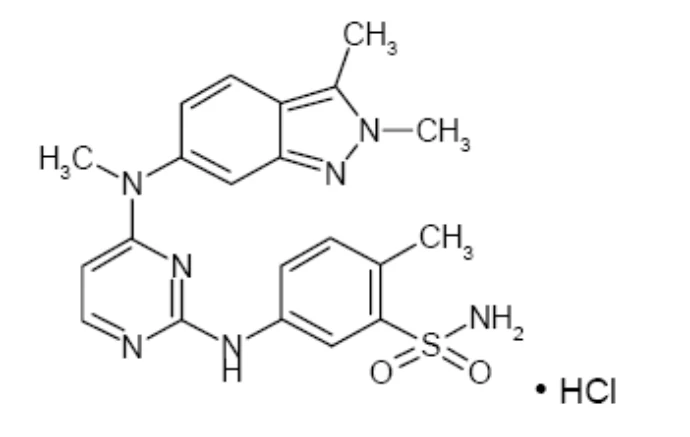
Physicochemical properties: Pazopanib hydrochloride is a white to slightly yellow solid. It is very slightly soluble at pH 1 and practically insoluble above pH 4 in aqueous media.
14 CLINICAL TRIALS
14.1 Clinical Trials by Indication
Metastatic Renal Cell Carcinoma
Table 8 Summary of patient demographics for clinical trials in Metastatic Renal Cell Carcinoma (mRCC)
| Study # | Study design | Dosage, route of administration and duration | Study subjects (n) | Median age (Range) | Sex |
| VEG105192 | Randomized double-blind, placebo-controlled phase III multi-centre study. Patients with metastatic RCC (mRCC) were randomized (2:1) to receive pazopanib 800 mg once daily, or placebo with best supportive care, following stratification by ECOG performance status (0 vs. 1); prior nephrectomy (yes vs. no); and prior therapy (no prior systemic therapy vs. one prior cytokine-based therapy). | Pazopanib 800mg once daily, oral or placebo with best supportive care. Study treatment continued until disease progression, death, unacceptable toxicity or withdrawal for any other reasons. Duration: Median (range) duration of treatment (months) was 3.8 (0 to 22) in placebo arm, and 7.3 (0 to 23) in pazopanib arm. | n=435 233 patients were treatment naïve 202 were second line patients who received one prior IL-2 or INF-based therapy | Total no. of patients in the study 435 (including Pazopanib and Placebo): 59 (25-85) | Gender (%) Female = 29 Male= 71 |
Disease assessments were performed every 6 weeks until Week 24, and every 8 weeks thereafter until disease progression. Tumour lesion selection, classification and tumour response evaluation were performed using RECIST.
All imaging scans were evaluated by an independent review committee (IRC) of radiologists.
After documented radiological progression, patients could be unblinded by the investigator; those randomised to placebo were then able to receive open-label pazopanib 800 mg/day.
From the total of 435 patients in this study, the performance status (ECOG) was similar between the pazopanib and placebo groups (ECOG 0: 42% vs. 41%, ECOG 1: 58% vs. 59%). All patients had metastatic disease at screening with either clear cell histology or predominantly clear cell histology.
Approximately half of all patients had 3 or more organs involved in their disease and most patients had the lung (74%), and/or lymph nodes (54%) as a metastatic location for disease at baseline.
A similar proportion of patients in each arm were treatment-naïve and cytokine-pre-treated (53% and 47% in pazopanib arm, 54% and 46% in placebo arm). In the cytokine-pre-treated subgroup, the majority (75%) had received interferon based treatment.
Similar proportions of patients in each arm had prior nephrectomy (89% and 88% in the pazopanib and placebo arms, respectively) and/or prior radiotherapy (22% and 15% in the pazopanib and placebo arms, respectively.
The primary objective of the study was to evaluate and compare the two treatment arms for progression-free survival (PFS) and the principle secondary endpoint was overall survival (OS). The other objectives were to evaluate the overall response rate, duration of response and quality of life measures.
The primary analysis of the primary endpoint PFS is based on disease assessment by independent radiological review in the entire study population (treatment-naïve and cytokine pre-treated). OS data were not mature at the time of the final PFS analysis.
A clinically and statistically significant improvement in PFS was observed in the pazopanib treated arm compared to the placebo-treated arm with a hazard ratio of 0.46 (95% CI, 0.34, 0.62, p<0.0000001), indicating a 54% reduction in risk of progression or death with more than doubling of the median PFS (9.2 vs. 4.2 months).
Overall efficacy results by independent review committee are presented in Table 9.
Table 9 Results of Study (VEG105192) in mRCC by Independent Review Committee
| Endpoints/ Study population | Pazopanib | Placebo | HR (95% CI) | P value (two-sided) |
| PFS | Median (months) | 0.46 (0.34, 0.62) | <0.0000001 | |
| Overall* (ITT) | N=290 9.2 | N=145 4.2 | ||
| Treatment-naïve | N=155 11.1 | N=78 2.8 | 0.40 (0.27, 0.60)a | <0.0000001 |
| Cytokine pre-treated | N=135 7.4 | N=67 4.2 | 0.54 (0.35, 0.84)a | <0.001 |
| Response rate | % (95% CI) | - | <0.001 | |
| Overall | N=290 30 (25.1 ,35.6) | N=145 3 (0.5, 6.4) | ||
* Treatment naïve and cytokine pre-treated populations; CI: confidence interval; PFS: progression free survival; ITT: intent-to-treat. a. Unadjusted estimate. | ||||
No significant treatment-related difference in interim overall survival was noted.
The Response Rate (RR), defined as the percentage of patients who achieved either a confirmed complete response or partial response according to RECIST criteria, was significantly higher in the pazopanib arm compared with the placebo arm. By independent review, the difference in RR was 26.9% (95% CI: 20.8, 33.0, p<0.001) and by investigator review was 29.3% (95% CI: 22.5, 36.1, p<0.001). The independent- and investigator-evaluated best confirmed responses by RECIST were similar for both treatment arms.
For patients who responded to treatment, the median duration of response was 58.7 weeks as per independent review.
The median overall survival (OS) data at the protocol specified final survival analysis were 22.9 months and 20.5 months [HR = 0.91 (95 % CI: 0.71, 1.16; p = 0.224)] for patients randomized to the pazopanib and placebo arms, respectively. The OS results are subject to potential bias as 54 % of patients in the placebo arm also received pazopanib in the extension part of this study following disease progression. Sixty-six percent of placebo patients received post-study therapy compared to 30 % of pazopanib patients.
Kaplan-Meier curves for progression-free survival by Independent Review Committee assessment for the overall (ITT) population are presented in Figure 1.
Figure 1 Kaplan-Meier Curve for Progression-Free Survival by Independent Assessment for the Overall mRCC Population (Treatment-Naïve and Cytokine Pre-Treated Populations); (VEG105192)
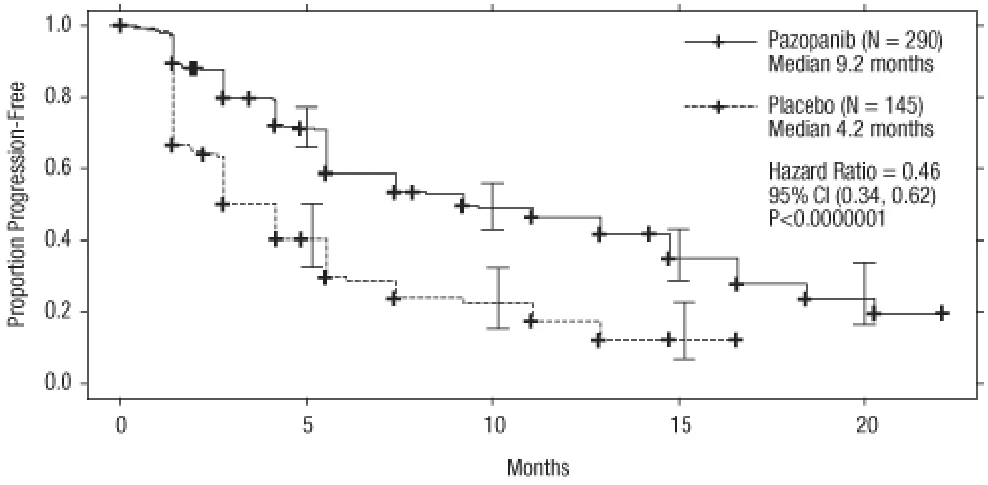
Additional subgroup analysis demonstrated that the treatment effect of pazopanib on PFS in all subgroups analyzed, including analysis by treatment-naïve (Table 9), cytokine pre-treated population (Table 9), gender, age, ECOG PS, and the Memorial Sloan-Kettering Cancer Centre (MSKCC) prognostic risk category, was consistent with the primary analysis.
In the pivotal study, the QoL assessments were based on blinded self-reported global scores from two protocol-specified questionnaires, EORTC QLQ-C30 and EuroQoL EQ-5D. Analysis was based on patients who continued on therapy in both arms, prior to progression. The assessments showed no difference between treatment with pazopanib or placebo (p>0.05).
Soft Tissue Sarcoma
Table 10 Summary of patient demographics for clinical trials in Soft Tissue Sarcoma (STC)
| Study # | Study design | Dosage, route of administration and duration | Study subjects (n) | Median age (Range) | Sex |
| VEG110727 | Randomized, double-blind, placebo-controlled multi-centre study. Adult patients with selective subtypes of advanced Soft Tissue Sarcoma (STS) who had received prior chemotherapy for metastatic disease or who had progressed within 12 months after (neo) adjuvant therapy were randomized (2:1) to receive pazopanib 800 mg once daily, or placebo, following stratification by WHO performance status (WHO PS) (0 or 1) at baseline and the number of lines of prior systemic therapy for advanced disease (0 or 1 vs. 2+). | Pazopanib 800mg once daily, oral or placebo with best supportive care until disease progression death, unacceptable toxicity, or withdrawal due to other reasons The median duration of treatment exposure was 8.14 weeks (1.1-101.9) in the placebo arm and 19.36 weeks (0.3-102.9) in the pazopanib arm | n=369 WHO PS 0: 48% WHO PS1: 52% | Total (N=369): 55 years (18-83) | Gender (%) Female = 59 Male= 41 |
Patients were required to have disease progression on or after, or be intolerant to, an anthracycline-based regimen. Patients who have been previously treated with inhibitors of angiogenesis and/or VEGF or VEGFR-targeting agents were excluded. Prior to study enrollment, all patients had to have confirmed disease progression.
The following tumour types were eligible: Fibroblastic (adult fibrosarcoma, myxofibrosarcoma, sclerosing epithelioid fibrosarcoma, malignant solitary fibrous tumours), so-called fibrohistiocytic [pleomorphic malignant fibrous histiocytoma (MFH), giant cell MFH, inflammatory MFH], leiomyosarcoma, malignant glomus tumours, skeletal muscles (pleomorphic and alveolar rhabdomyosarcoma), vascular (epithelioid hemangioendothelioma, angiosarcoma), uncertain differentiation (synovial, epithelioid, alveolar soft part, clear cell, desmoplastic small round cell, extra-renal rhabdoid, malignant mesenchymoma, PEComa, intimal sarcoma; excluding chondrosarcoma, Ewing tumours / primitive neuroectodermal tumours ), malignant peripheral nerve sheath tumours, undifferentiated soft tissue sarcomas not otherwise specified (NOS) and other types of sarcoma (not listed as ineligible).
The following tumour types were not eligible: Adipocytic sarcoma (all subtypes), all rhabdomyosarcoma that were not alveolar or pleomorphic, chondrosarcoma, osteosarcoma, Ewing tumours/ primitive neuroectodermal tumours, GIST, dermofibromatosis sarcoma protuberans, inflammatory myofibroblastic sarcoma, malignant mesothelioma and mixed mesodermal tumours of the uterus.
Patients with adipocytic sarcoma were excluded because activity (PFS at week12) observed with pazopanib in a phase II study (VEG20002) in these tumours was indeterminant.
The tumor subtypes in the enrolled subjects included leiomyosarcoma (43% of patients), synovial sarcoma (10%) and other STS (47%). “Other STS” included fibroblastic type (N=32), so-called fibrohistiocytic tumours (N=32), tumours of uncertain differentiation (N=33), undifferentiated sarcomas NOS (N=20), MPNST (N=12), vascular tumours (N=7), skeletal muscle/rhabdomyosarcoma (N=2), adipocytic tumours (N=1), pericytic tumours (N=1), chondro-osseous tumours (N=1) and “other” tumour types (N=32) of sarcomas not listed as ineligible.
Allocation of 93% (344/369) of subjects to a histologic type of STS was based upon the determination by central pathologists.
All subjects had received prior chemotherapy. The most common prior systemic therapy was doxorubicin, which was given to 98% of subjects in both treatment arms. The frequency of prior surgery and prior radiotherapy was similar between treatment arms.
The primary objective of the study was to evaluate and compare the two treatment arms for progression-free survival (PFS), based on the ITT population, and the principle secondary endpoint was overall survival (OS).
The initial analysis of the primary endpoint PFS was based on disease assessment by independent radiological review in the entire ITT study population.
The median duration of follow-up of patients (defined as date of randomization to date of last contact or death) was similar for both treatment arms [9.36 months for placebo (range 0.69 to 23.0 months) and 10.04 months for pazopanib (range 0.2 to 24.3 months)].
A clinically and statistically significant improvement in PFS was observed in the pazopanib treated arm compared to placebo-treated arm, with a hazard ratio of 0.35 (95% CI, 0.26, 0.48, p <0.001), indicating a 65% reduction in risk of progression or death, more than doubling the median PFS ( 20.0 vs 7.0 weeks).
Disease assessment occurred at 4 week intervals through week 12 and at 8 week intervals thereafter. Since the pazopanib median PFS was 20 weeks it is possible that if a disease assessment had been done at 16 weeks the median PFS would have been earlier.
Overall efficacy results as independently assessed are presented in Table 11.
Table 11 Overall efficacy results in STS by independent assessment (study VEG110727)
| Pazopanib | Placebo | HR (95% CI) | P value (one-sided) | ||||||||||||||
| Overall ITT Population | N=246 | N=123 | |||||||||||||||
| PFS | |||||||||||||||||
Overall ITT population Median PFS (weeks) | 20.0 | 7.0 | 0.35 (0.26, 0.48) | < 0.001 | |||||||||||||
Leiomyosarcoma Median PFS (weeks) | N = 109 20.1 | N = 49 8.1 | 0.37 (0.23, 0.60) | < 0.001 | |||||||||||||
Synovial sarcoma Median PFS (weeks) | N = 25 17.9 | N = 13 4.1 | 0.43 (0.19, 0.98) | 0.005 | |||||||||||||
‘Other’ STS Median PFS (weeks) | N = 112 20.1 | N = 61 4.3 | 0.39 (0.25, 0.60) | < 0.001 | |||||||||||||
| Overall survival (OS)* | |||||||||||||||||
Overall ITT population Median OS (months) | 12.6 | 10.7 | 0.87 (0.67, 1.12) | p=0.256 | |||||||||||||
Leiomyosarcoma Median OS (months) | N=109 16.7 | N=49 14.1 | 0.84 (0.56, 1.26) | p=0.363 | |||||||||||||
Synovial sarcoma Median OS (months) | N=25 8.7 | N=13 21.6 | 1.62 (0.79, 3.33) | p=0.115 | |||||||||||||
‘Other’ STS Median OS (months) | N=112 10.3 | N=61 9.5 | 0.84 (0.59, 1.21) | p=0.325 | |||||||||||||
Response Rate (CR + PR) % (95 % CI) | 4 (2.3, 7.9) | 0 (0.0, 3.0) | - | - | |||||||||||||
Duration of response Median (weeks) (95 % CI)) | 38.9 (16.7, 40.0) | - | - | - - | |||||||||||||
HR = Hazard ratio; ITT = Intent to treat; PFS = Progression-free survival; CR = Complete Response; PR = Partial Response; NS = not significant.
* Overall survival for the respective STS histological subgroups (leiomyosarcoma, synovial sarcoma and “Other” STS) should be interpreted with caution due to the small number of subjects and wide confidence intervals
Similar to the assessments by independent radiology review, a clinically meaningful and statistically significant improvement in PFS based on investigator assessments was observed in the pazopanib arm compared with the placebo arm (HR: 0.39; 95 % CI, 0.30 to 0.52, p <0.001).
A greater percentage of patients on the placebo arm (69%) than the pazopanib arm (53%) received systemic anti-cancer therapy (chemotherapy and/or targeted therapy) excluding surgery and radiotherapy post discontinuation of study drug.
Figure 2 Kaplan-Meier Curve for Progression-Free Survival in STS by Independent Assessment for the Overall Population (VEG110727)
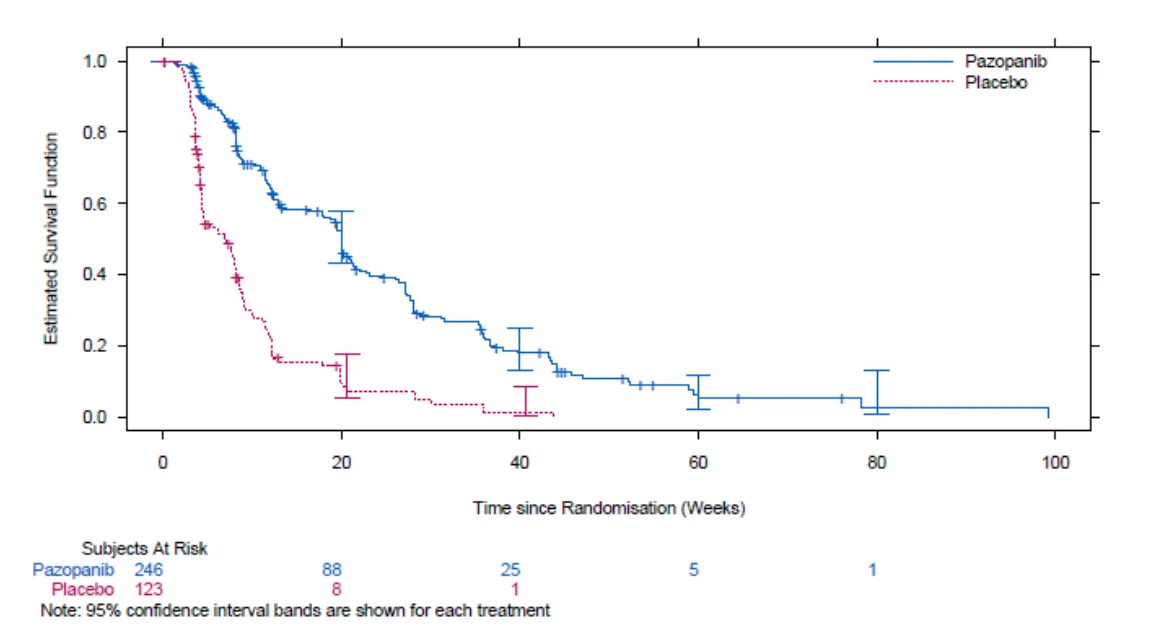
No significant difference in OS was observed between the two treatment arms at the final OS analysis performed after 76% (280/369) of the events had occurred. At the protocol-specified final analysis of OS, the median OS was 12.6 months for patients randomized to pazopanib and 10.7 months for the placebo arm [HR = 0.87 (95% CI:0.67, 1.12)].
15 MICROBIOLOGY
Not applicable
16 NON-CLINICAL TOXICOLOGY
General Toxicology:
In toxicology studies in rats, there were effects in a variety of tissues (bone, teeth, bone marrow, nail beds, reproductive organs, hematological tissues, kidney, adrenal glands, lymph node, pituitary, and pancreas) consistent with VEGFR inhibition and/or disruption of VEGF signalling pathways with some effects occurring at doses of 3 mg/kg/day (approximately 0.1 times the human clinical exposure based on AUC).
In repeat-dose toxicology studies in rats including 4-week, 13-week and 26-week administration, toxicities in bone, teeth and nail beds were observed at doses ≥3 mg/kg/day (approximately 0.1 times the human clinical exposure based on AUC). Doses of 300 mg/kg/day (approximately 0.8 times the human clinical exposure based on AUC) were not tolerated in 13- and 26-week studies with rats. Body weight loss and morbidity were observed at these doses. Hypertrophy of epiphyseal growth plates, nail abnormalities (including broken, overgrown, or absent nails) and tooth abnormalities in growing incisor teeth (including excessively long, brittle, broken and missing teeth, and dentine and enamel degeneration and thinning) were observed in rats at ≥30 mg/kg/day (approximately 0.35 times the human clinical exposure based on AUC) at 26 weeks, with the onset of tooth and nail bed alterations noted clinically after 4 to 6 weeks (see 1 INDICATIONS 1.1 Pediatrics).
Hepatic effects included mild elevations of liver transaminases in rodents and bilirubin elevations in monkeys without associated histopathology at doses that produced systemic exposures approximately 0.1 and 0.6 times the human clinical exposure, respectively. Vascular pathology was observed in intrahepatic branches of the hepatic artery and arterioles near the liver hilus in rats administered 500mg/kg/day for 8 days.
Carcinogenicity:
Mice given 1000 mg/kg/day (approximately 1.5 times the human clinical exposure based on AUC) for 13 weeks had proliferative lesions noted in the liver including eosinophilic foci in 2 females and a single case of adenoma in another female.
In a 2-year, oral gavage carcinogenicity study in mice, pazopanib was administered once daily at doses of 0, 10, 30, and 100 mg/kg/day. Neoplastic changes were limited to an increase in hepatic adenomas in females given 100 mg/kg/day (approximately 1.3 times the human clinical exposure based on AUC).
In a 2-year, oral gavage carcinogenicity study in rats, pazopanib was administered once daily at doses of 0, 3, 10, and 30 mg/kg/day. Neoplastic changes were present in the duodenum. Duodenal adenocarcinoma occurred in females at ≥10 mg/kg/day, and in males at 30 mg/kg/day, and Brunner’s gland hyperplasia was observed in males at 30 mg/kg/day (≥ 0.3, 0.3 and 0.3 times human clinical exposure based on AUC, respectively).
Genotoxicity:
Pazopanib did not cause genetic damage when tested in genotoxicity assays (Ames assay, human peripheral lymphocyte chromosome aberration assay and rat in vivo micronucleus assay).
Reproductive and Developmental Toxicology:
In female rats, reduced fertility was present at 300 mg/kg (approximately 0.8 times the human clinical exposure based on AUC). Increased pre- and post-implantation loss and early resorptions were noted at dosages ≥10mg/kg/day (approximately 0.2 times the human clinical exposure based on AUC). Decreased corpora lutea were observed in monkeys given 500 mg/kg/day for up to 34 weeks, in mice given ≥300 mg/kg/day for 13 weeks and ovarian atrophy was noted in rats given 300 mg/kg/day for 26 weeks (approximately equal to, 0.6, 1.4 and 0.9 times the human clinical exposure based on AUC, respectively).
Pazopanib did not affect mating or fertility in male rats. However, there were reductions in sperm production rates, sperm motility, and epididymal and testicular sperm concentrations observed at ≥100 mg/kg/day (approximately 0.5 times the human clinical exposure based on AUC) following 15 weeks of dosing. Following 26 weeks of dosing, there were decreased testicular and epididymal weights, atrophy and degeneration of the testes with aspermia, hypospermia and cribiform change in the epididymis of male rats given doses ≥30 mg/kg/day (approximately 0.4 times the human clinical exposure based on AUC).
Pazopanib produced foetal teratogenic effects (including cardiovascular malformations and delayed ossification), reduced foetal body weight, and embryo lethality in rats at a dose level of ≥3 mg/kg/day (approximately 0.1 times the human clinical exposure based on AUC). In rabbits, maternal toxicity (body weight loss, reduced food consumption, and abortion) were observed at doses ≥30 mg/kg/day
(approximately 0.007 times the human clinical exposure based on AUC), while foetal weight was reduced at doses ≥3 mg/kg/day (see 7 WARNINGS AND PRECAUTIONS; 7.1 Special Populations).
Juvenile Toxicity:
To determine the tolerability and toxicokinetics of pazopanib in juvenile rats a dose- ranging study was conducted. Pazopanib was administered from Day 9 through Day 35 post-partum (pp) at 0.3, 3, 30, 300 and 1000 mg/kg/day and from Day 21 through Day 35 pp at 30, 300 and 1000 mg/kg/day. Differences in tolerability were noted. Specifically, when dosing began on Day 21 pp (which approximates a human paediatric age of 2 years), dose levels up to 1000 mg/kg (up to 0.84x the clinical exposure based on AUC in adults) were tolerated. The only finding consisted of marked decreases in body weight gain from 300 mg/kg. In contrast, when dosing was initiated on Day 9 pp, dose levels ≥ 30 mg/kg (up to 0.4x the clinical exposure based on AUC in adults) were not tolerated due to deaths starting on Day 13 pp. At 300 and 1000 mg/kg, all animals were euthanized or found dead after the first week of dosing. Dose levels of 0.3 and 3 mg/kg (less than 0.01x and 0.1x the clinical exposure based on AUC in adults) were well tolerated from Day 9 pp until Day 35 pp.
To explore the noted difference in sensitivity, an investigative study was conducted wherein juvenile rats aged 9 to 14 days post-partum were dosed at 10 and 100 mg/kg/day (equal to approximately 0.16x and 0.43x human clinical exposure based on AUC in adults, respectively). A dose level of 10 mg/kg was tolerated but resulted in a 60-70% decrease in body weight gain. At 100 mg/kg, deaths and a lack of body weight gain was observed. At both doses, profound effects on organ growth and maturation were observed and included decreased absolute kidney weight (up to -35% and -48% at 10 and 100 mg/kg, respectively), liver weight (up to -39% and -54% at 10 and 100 mg/kg, respectively), heart weight (up to -43% and -53% at 10 and 100 mg/kg, respectively), brain weight (up to -15% and -21% at 10 and 100 mg/kg, respectively) and lung weight (up to -36% and -49% at 10 and 100 mg/kg, respectively). At 100 mg/kg decreased cell proliferation and increased cell apoptosis was also observed in various organs. Histologically, glomerulopathy was noted at both dose levels with renal endothelial cells being a primary target. Degenerative changes occurred as early as 24 hours after the first dose which progressed to necrosis and loss of endothelium, thinning of glomerular basement membranes, and subsequent effects on mesangial cells and podocytes. These findings suggest that pazopanib interferes with VEGF-dependent glomerular maturation as well as organ growth and development of kidney, heart, liver, and lung in pre-weanling juvenile rats.
A third juvenile toxicity study was conducted to determine the potential effects of pazopanib on viability, growth and development when administered to juvenile rats from Day 21 to 62 pp at 10, 30 and 300 mg/kg/day (less than 1.0x human clinical exposure based on AUC in adults). Two female rats were terminated early due to excessive body weight loss and rats were administered 100 mg/kg for the remainder of the study. In contrast with juvenile animals dosed with pazopanib from Day 9 to Day 21 pp, administration of pazopanib from Day 21 to Day 62 pp was associated with toxicological findings that were similar to those noted in adult rats and include decreased body weight gain (≥10 mg/kg), broken and/or loose incisor teeth (≥30 mg/kg), alterations in the femur and tibia (growth plate hypertrophy, thinning of cortical bone, partial physeal closure and tibial fracture at ≥30 mg/kg). Dose-dependent decreases in femoral length occurred at all dose levels and were proportional with body weight effects, suggesting an effect on overall growth of the juvenile animals. Other affected tissues include the trachea, adrenal, pancreas, stomach, duodenum, lymph node, male mammary gland and reproductive organs.