


Product Monograph - Caprelsa
Recent Major Label Changes
| 7 Warnings and Precautions, Musculoskeletal | 2025-05 |
|---|
Table Of Contents
Certain sections (as indicated in section 2.1 of the PM Guidance) or subsections that are not applicable at the time of the preparation of the most recent authorized product monograph are not listed.
Recent Major Label Changes ................................................................................................. 2
Table Of Contents ................................................................................................................. 2
Part 1: Healthcare Professional Information .......................................................................... 5
1 Indications ................................................................................................................. 5
- 1.1 Pediatrics ................................................................................................................ 5
- 1.2 Geriatrics ................................................................................................................ 5
- 2 Contraindications ...................................................................................................... 5
- 3 Serious Warnings and Precautions Box ....................................................................... 6
4 Dosage and Administration ........................................................................................ 6
- 4.1 Dosing Considerations ............................................................................................ 6
- 4.2 Recommended Dose and Dosage Adjustment ....................................................... 7
- 4.4 Administration ........................................................................................................ 8
- 4.5 Missed Dose ........................................................................................................... 9
- 5 Overdose ................................................................................................................... 9
- 6 Dosage Forms, Strengths, Composition, and Packaging ............................................... 9
7 Warnings and Precautions ........................................................................................ 10
Cardiovascular .................................................................................................................. 10
Driving and Operating Machinery .................................................................................... 11
Endocrine and Metabolism .............................................................................................. 11
Gastrointestinal ................................................................................................................ 12
Hematologic ..................................................................................................................... 12
Hepatic/Biliary/Pancreatic ................................................................................................ 12
Monitoring and Laboratory Tests ..................................................................................... 12
Musculoskeletal ................................................................................................................ 13
Neurologic ........................................................................................................................ 13
Ophthalmologic ................................................................................................................ 13
Perioperative Considerations ........................................................................................... 13
Renal ................................................................................................................................. 14
Reproductive Health ........................................................................................................ 14
Respiratory ....................................................................................................................... 14
Skin ................................................................................................................................... 14
- 7.1 Special Populations ............................................................................................... 15
- 7.1.1 Pregnancy ......................................................................................................... 15
- 7.1.2 Breastfeeding ................................................................................................... 15
- 7.1.3 Pediatrics (< 18 years of age) ........................................................................... 15
- 7.1.4 Geriatrics .......................................................................................................... 16
8 Adverse Reactions ................................................................................................... 16
- 8.1 Adverse Reaction Overview ................................................................................. 16
- 8.2 Clinical Trial Adverse Reactions............................................................................ 16
- 8.3 Less Common Clinical Trial Adverse Reactions .................................................... 19
- 8.4 Abnormal Laboratory Findings: Hematologic, Clinical Chemistry and Other Quantitative Data ............................................................................................................. 20
- 8.5 Post-Market Adverse Reactions ........................................................................... 21
9 Drug Interactions ..................................................................................................... 21
- 9.1 Serious Drug Interactions ..................................................................................... 21
- 9.4 Drug-Drug Interactions ......................................................................................... 21
- 9.5 Drug-Food Interactions ........................................................................................ 25
- 9.6 Drug-Herb Interactions ......................................................................................... 25
- 9.7 Drug-Laboratory Test Interactions ....................................................................... 26
10 Clinical Pharmacology .............................................................................................. 26
- 10.1 Mechanism of Action ........................................................................................... 26
- 10.2 Pharmacodynamics .............................................................................................. 26
- 10.3 Pharmacokinetics ................................................................................................. 27
- 11 Storage, Stability, and Disposal ................................................................................ 28
- 12 Special Handling Instructions ................................................................................... 28
Part 2: Scientific Information ............................................................................................... 29
- 13 Pharmaceutical Information ..................................................................................... 29
14 Clinical Trials ........................................................................................................... 30
- 14.1 Clinical Trials by Indication ................................................................................... 30
- 15 Microbiology ........................................................................................................... 34
- 16 Non-Clinical Toxicology ............................................................................................ 34
Patient Medication Information .......................................................................................... 38
Part 1: Healthcare Professional Information
1 Indications
CAPRELSA (vandetanib) monotherapy is indicated for:
- the treatment of symptomatic or progressive medullary thyroid cancer in adult patients with unresectable locally advanced or metastatic disease
CAPRELSA use should be carefully considered based on a risk:benefit assessment in patients with indolent, asymptomatic or slowly progressive disease because of the significant treatment -related risks.
CAPRELSA should only be prescribed by a qualified physician who has completed the certification with the CAPRELSA Restricted Distribution Program and who is experienced in the use of antineoplastic therapy and in the treatment of medullary thyroid cancer.
Marketing authorization was based on a primary efficacy endpoint of progression-free survival (PFS) at 2 years (RECIST criteria assessed by independent central review) (See 14 Clinical Trials). An overall survival benefit has not been established.
CAPRELSA Restricted Distribution Program
CAPRELSA is only available through a controlled program referred to as the CAPRELSA Restricted Distribution Program. Under this program, only prescribers and pharmacies that have completed the certification and are registered with the program are able to prescribe and dispense, respectively, CAPRELSA. Only patients who are enrolled and meet all of the requirements of the CAPRELSA Restricted Distribution Program can receive CAPRELSA. For further information about the program, please call 1-855-633-8645 or visit www.caprelsa.ca/rdp.
1.1 Pediatrics
Pediatrics (< 18 years of age):
Based on the data submitted and reviewed by Health Canada, the safety and efficacy of CAPRELSA in pediatric patients has not been established; therefore, Health Canada has not authorized an indication for pediatric use.
1.2 Geriatrics
Geriatrics (> 65 years of age):
No adjustment in starting dose is required for elderly patients (over 65 years old). There is limited data for patients over the age of 75.
2 Contraindications
CAPRELSA (vandetanib) is contraindicated in patients with:
Congenital long QT syndrome or with a persistent Fridericia-corrected electrocardiogram interval
(QTcF) of ≥ 500 ms (see 7 Warnings and Precautions, 8 Adverse Reactions).
- Uncorrected hypokalemia, hypomagnesemia or hypocalcemia.
- Uncontrolled hypertension.
Known hypersensitivity to the active substance, vandetanib, or to any of its excipients. For a
Warnings and Precautions
Adverse Reaction
Warnings and Precaution
8 Adverse Reaction
Warnings and Precaution
8 Adverse
Reactions
complete listing, see 6 Dosage Forms, Strengths, Composition, and Packaging.
3 Serious Warnings and Precautions Box
4 Dosage and Administration
4.1 Dosing Considerations
Renal impairment
Clinical data, together with pharmacokinetic data from volunteers suggests that no change in starting dose of CAPRELSA (vandetanib) is required in patients with mild renal impairment. Patients with mild renal impairment have a safety profile similar to that of patients with normal renal function. The starting dose should be reduced to 200 mg in patients with moderate (creatinine clearance ≥ 30 to <50 mL/min) renal impairment.
CAPRELSA is not recommended for use in patients with severe renal impairment (clearance below 30 mL/min). A pharmacokinetic study suggests that in volunteers with severe renal impairment defined as a creatinine clearance of < 30 mL/min, exposure to vandetanib may be increased up to 2-fold. There is limited clinical experience in patients with severe renal impairment.
Hepatic impairment
CAPRELSA is not recommended for use in patients with moderate (Child Pugh B) and severe (Child Pugh C) hepatic impairment, as safety and efficacy have not been established.
Single dose pharmacokinetic data from volunteers with hepatic impairment receiving 800 mg of vandetanib suggests that there were no differences in pharmacokinetics compared to patients with normal hepatic function. There is limited data in patients with liver impairment (serum bilirubin greater than 1.5 times the upper limit of normal).
4.2 Recommended Dose and Dosage Adjustment
The recommended dose of CAPRELSA is 300 mg taken once daily.
CAPRELSA monotherapy may be administered until adult symptomatic or progressive medullary thyroid cancer patients with unresectable locally advanced or metastatic disease are no longer benefiting from treatment. CAPRELSA use should be carefully considered based on a risk:benefit assessment in patients with indolent, asymptomatic or slowly progressive disease because of the significant treatment -related risks.
Table 1 - Summary of CAPRELSA-associated Toxicities and Recommendations for Dosage Adjustment
| Toxicity | Recommendation for Dosage Adjustment |
|---|---|
| QTc value ≥ 500 ms | In the event of a QTcF interval ≥ 500 ms, interrupt dosing until QTcF returns to less than 450 ms, then resume at a reduced dose. The 300 mg daily dose can be reduced to 200 mg (two 100 mg tablets), and then to 100 mg if necessary. |
| Grade 3 or 4 cutaneous toxicity | In the event of CTCAE grade 3 or higher toxicity, dosing with CAPRELSAshould be temporarilystopped and resumed at a reduced dose when toxicity has resolved or improved to CTCAE grade 1. The 300 mg daily dose can be reduced to 200 mg (two 100 mg tablets), and then to 100 mg if necessary. |
| Grade 3 or 4 hypertension | If high blood pressure cannot be controlled with medical management, CAPRELSA should not be restarted until the blood pressure is controlled medically. Reduction in dose may be necessary. |
| Grade 3 or 4 diarrhea | If severe diarrhea (CTCAE grade 3-4) develops, CAPRELSA should be stopped until diarrhea improves. Upon improvement, treatment with CAPRELSA should be resumed at a reduced dose. |
| Other grade 3 or 4 toxicity related to CAPRELSA | In the event of CTCAE grade 3 or higher toxicity, dosing with CAPRELSA should be temporarilystopped and resumed at a reduced dose when toxicity has resolved or improved to CTCAE grade 1. The 300 mg daily dose can be reduced to 200 mg (two 100 mg tablets), and then to 100 mg if necessary. |
QTcF interval prolongation
In the event of a corrected QTcF interval of ≥ 500 ms, dosing with CAPRELSA should be interrupted and/or resumed at a reduced dose when the QTcF has returned to less than 450 ms. The 300 mg daily dose should be reduced to 200 mg (two 100 mg tablets), and then to 100 mg if necessary (as in Table 1 above).
Machine-read QTcF interval measurements may not be accurate. Consultation with a cardiologist should be considered when assessing the QTcF intervals to ensure appropriate treatment decisions. Baseline ECG QTcF intervals should be measured prior to initiating therapy with CAPRELSA and ECGs should be repeated at 2-4 weeks and 8-12 weeks during treatment with CAPRELSA and every three months thereafter, and after dose adjustments. Hypokalemia, hypomagnesemia and hypocalcemia must be corrected prior to CAPRELSA administration. Potassium and magnesium blood levels should be monitored at 2-4 weeks and 8-12 weeks and every three months thereafter, and after dose adjustments particularly in patients at risk for these electrolyte abnormalities (see 7 Warnings and Precautions).
Special Populations Renal Impairment
CAPRELSA is partly eliminated by urinary excretion. The pharmacokinetics of CAPRELSA were evaluated after a single dose of 800 mg in subjects with mild (n = 6), moderate (n = 8), and severe (n = 6) renal impairment and normal (n = 10) renal function. Renal impairment has an effect on the pharmacokinetics of CAPRELSA. Single dose administration of CAPRELSA 800 mg resulted in increases in AUC of 46%, 62% and 79% in subjects with mild, moderate and severe renal impairment, respectively, compared to a control group of subjects with normal renal function. The increased exposure is considered to be a consequence of slower clearance of vandetanib in subjects with mild, moderate and severe renal impairment (10.310 L/hr, 8.440 L/hr and 8.315 L/hr respectively, compared to 11.740 L/hr in subjects with normal renal function). The slower clearance resulted in an increased terminal half-life of 290.6 hr, 298.9 hr and 409.8 hr, respectively, in subjects with mild, moderate and severe renal impairment compared to 261.1 hr for subjects with normal renal impairment. It is expected that for once-daily dosing, the steady-state exposure to CAPRELSA will be increased in patients with renal impairment. There is no information available for patients with end-stage renal disease requiring dialysis.
Hepatic Impairment
Single dose administration of CAPRELSA 800 mg did not affect the AUC of CAPRELSA in patients with hepatic impairment while a 29% decrease in the Cmax for patients with severe hepatic impairment was observed. Hepatic impairment did not affect the clearance of CAPRELSA but there was an increase in the volume of distribution with geometric means of 4498 L, 5059 L and 6025 L in subjects with mild, moderate and severe hepatic impairment, respectively, compared to 3810 L in healthy subjects. The increase in volume of distribution resulted in an increased terminal half-life of CAPRELSA with geometric means of 262.6, 276.6 and 325.7 hours for subjects with mild, moderate or severe hepatic impairment, respectively, compared to 215.7 hours for subjects with normal liver function.
Pediatrics (<18 years of age): Based on the data submitted and reviewed by Health Canada, the safety and efficacy of CAPRELSA in pediatric patients has not been established; therefore, Health Canada has not authorized an indication for pediatric use.
4.4 Administration
CAPRELSA tablets may be taken with or without food.
Do not crush CAPRELSA tablets. If direct contact of crushed tablets with the skin or mucous membranes occurs, wash the area thoroughly. Avoid contact with crushed tablets. In patients who are unable to take CAPRELSA tablets whole, the tablets may be dispersed (will not completely dissolve) in half a glass (50 mL) of non-carbonated drinking water. No other liquids should be used. The tablet is dropped in water (do not crush), stirred until dispersed (approximately 10 minutes) and the resultant dispersion swallowed immediately. Any residues in the glass are mixed with half a glass of water and swallowed. The liquid dispersion can also be administered through nasogastric or gastrostomy tubes.
4.5 Missed Dose
If a patient misses a dose 12 hours or more before the next scheduled dose, the patient should take the missed tablet immediately and then take the next scheduled dose at the normal time.
If a patient misses a dose less than 12 hours before the next scheduled dose, the patient should skip the missed dose and then take the next scheduled dose at the normal time. Patients should be instructed not to take a double dose to make up for a forgotten tablet.
5 Overdose
There is no specific treatment in the event of overdose with CAPRELSA (vandetanib) and possible symptoms of overdose have not been established. An increase in the frequency and severity of some adverse reactions, like rash, diarrhea and hypertension, was observed at multiple doses at and above 300 mg in healthy volunteer studies and in patients. In addition, the possibility of QTcF prolongation and Torsade de Pointes should be considered.
Adverse reactions associated with overdose are to be treated symptomatically; in particular, severe diarrhea must be managed appropriately. In the event of an overdose, further doses of CAPRELSA must be interrupted, and appropriate measures taken to assure that an adverse event has not occurred, i.e., ECG within 24 hours to determine QTcF prolongation.
6 Dosage Forms, Strengths, Composition, and Packaging
Table 2 - Dosage Forms, Strengths, Composition and Packaging
| Route of Administration | Dosage Form / Strength/Composition | Non-Medicinal Ingredients |
|---|---|---|
| Oral | Tablet, 100 mg and 300 mg of vandetanib | calcium hydrogen phosphate dihydrate, crospovidone, hypromellose 2910, macrogol 300, magnesium stearate, microcrystalline cellulose, povidone, and titanium dioxide E171. |
CAPRELSA (vandetanib) 100 mg tablets
Each tablet is presented as a round, biconvex, white, film-coated tablet containing 100 mg of vandetanib. ‘Z100’ is impressed on one side; the other side is plain.
CAPRELSA (vandetanib) 300 mg tablets
Each tablet is presented as an oval-shaped, biconvex, white, film-coated tablet containing 300 mg of vandetanib. ‘Z300’ is impressed on one side; the other side is plain.
Packaging
CAPRELSA is available in blister packages containing 30 tablets (3 x 10 tablets).
7 Warnings and Precautions
Please see 3 Serious Warnings and Precautions Box.
Cardiovascular
Patients with congenital long QT syndrome, significant cardiac events or history of cardiac disease (e.g., ventricular arrhythmia, recent myocardial infarction), or uncontrolled hypertension were excluded from studies with CAPRELSA; therefore, the safety of CAPRELSA in these patients is not known (see 8 Adverse Reactions).
QTcF Interval Prolongation and Torsade de Pointes
Nonclinical data indicate that vandetanib has the potential to prolong cardiac ventricular repolarization (QTcF interval) (see 16
Non-Clinical Toxicology).
In pooled monotherapy trials with CAPRELSA (n=1839 patients), Torsade de Pointes and sudden death have been reported (uncommon frequency ≥ 0.1% to <1%). Ventricular tachycardia and ventricular fibrillation have been reported with an uncommon frequency in patients administered CAPRELSA
300 mg daily.
Prolongation of the electrocardiogram (ECG) QTcF interval has been observed in patients receiving CAPRELSA (see 8 Adverse Reactions). At a daily oral dose of 300 mg in patients with medullary thyroid cancer, adverse events of QTcF interval prolongation were reported in the phase III study, ZETA (Study 58) in 14% of CAPRELSA-treated patients versus 1% in the placebo arm. Based on the exposure-response relationship, the mean (90% CI) QTcF change from baseline (ΔQTcF) was 35 (33-36) ms for the 300-mg dose. The ΔQTcF remained above 30 ms for the duration of the trial (up to 2 years). In addition, 36% of patients experienced greater than 60 ms increase in ΔQTcF and 7% of patients had QTcF greater than 500 ms. QTcF interval prolongation appears to be dose-dependent.
CAPRELSA treatment should not be started in patients whose QTcF interval is confirmed to be ≥
500 ms. CAPRELSA should not be given to patients who have a history of Torsade de Pointes unless all risk factors that contributed to Torsade have been corrected. Due to the 19 day half-life, a QTcF interval prolongation may not resolve quickly.
Machine-read QTcF interval measurements may not be accurate. Consultation with a cardiologist should be considered when assessing the QTcF intervals to ensure appropriate treatment decisions.
Levels of serum potassium, calcium, magnesium and thyroid stimulating hormone (TSH) should be obtained at baseline, at 2-4 weeks and 8-12 weeks after starting treatment with CAPRELSA and every
- 3 months thereafter, and also following dose adjustments. Blood tests should also be obtained as clinically indicated during this period and afterwards. Serum potassium level should be maintained at
- 4 mEq/L or higher (high normal range) and serum magnesium and serum calcium should be kept within normal range to reduce the risk of ECG QTcF interval prolongation.
CAPRELSA may be administered with drugs known to prolong the QTcF interval if there is no appropriate alternative therapy. If such drugs are given to patients already receiving CAPRELSA, ECG monitoring of the QTcF interval as appropriate to the pharmacokinetics of the added drug should be performed.
In the event of a QTcF interval ≥ 500 ms, patients should interrupt dosing until QTcF returns to less than 450 ms, then resume at a reduced dose. The 300 mg daily dose can be reduced to 200 mg (two 100 mg tablets), and then to 100 mg if necessary (see 4 Dosage and Administration).
Heart Failure
Fatal heart failure has been observed in patients who received CAPRELSA. Discontinuation of CAPRELSA may be necessary in patients with heart failure. Heart failure may not be reversible on stopping CAPRELSA (see 8 Adverse Reactions).
Hypertension
Hypertension (Grade 4), including hypertensive crisis, has been observed in patients treated with CAPRELSA; patients should be monitored for hypertension and controlled as appropriate. If high blood pressure cannot be controlled, CAPRELSA should not be restarted until the blood pressure is controlled medically. Reduction in dose may be necessary (see 8 Adverse Reactions and 4 Dosage and Administration).
Artery Aneurysms and Artery Dissections
The use of vascular endothelial growth factor receptor (VEGF) pathway inhibitors in patients with or without hypertension may promote the formation of aneurysms and artery dissections. Before initiating vandetanib, this risk should be carefully considered in patients with risk factors such as hypertension or history of aneurysm (see 8 Adverse Reactions).
Ischemic Cerebrovascular Events
Ischemic cerebrovascular events (some of which have been fatal) have been observed with CAPRELSA. In the randomized study in patients with medullary thyroid cancer, ischemic cerebrovascular events were observed more frequently with CAPRELSA versus placebo (1.3% versus 0%) and no deaths were reported. The safety of resuming CAPRELSA therapy after resolution of an ischemic cerebrovascular event has not been studied. Discontinue CAPRELSA in patients who experience a severe ischemic cerebrovascular event.
Driving and Operating Machinery
No studies to establish the effects of CAPRELSA on ability to drive and use machinery have been conducted. However, during treatment with CAPRELSA, fatigue and blurred vision have been reported and those patients who experience these symptoms should observe caution when driving or using machines (see 8 Adverse Reactions).
Endocrine and Metabolism
Hypothyroidism
In the randomized medullary thyroid cancer study where 90% of patients enrolled had prior thyroidectomy, increases in the dose of the thyroid replacement therapy were required in 49% of the patients randomized to CAPRELSA compared to 17% of patients randomized to placebo. Thyroid stimulating hormone (TSH) levels should be obtained at baseline, at 2-4 weeks and 8-12 weeks and every three months thereafter during treatment with CAPRELSA. If signs or symptoms of hypothyroidism occur, thyroid hormone levels should be monitored, and thyroid replacement therapy should be adjusted accordingly.
Gastrointestinal
Diarrhea
Diarrhea has been observed in patients treated with CAPRELSA (see 8 Adverse Reactions). Routine anti-diarrheal agents are recommended for the treatment of diarrhea. Serum electrolytes should be monitored at baseline, at 2-4 weeks and 8-12 weeks after starting treatment with CAPRELSA and every three months thereafter. If severe diarrhea (CTCAE grade 3-4) develops, CAPRELSA should be stopped until diarrhea improves. Upon improvement, treatment with CAPRELSA should be resumed at a reduced dose (see 4 Dosage and Administration).
Hematologic
Serious hemorrhagic events, some of which were fatal, have been observed with CAPRELSA. There were no fatal bleeding events in the randomized clinical trial in patients with medullary thyroid cancer. Fatal bleeding events have occurred (frequency uncommon) while on CAPRELSA therapy in clinical monotherapy trials. Do not administer CAPRELSA to patients with a recent history of hemoptysis of ≥ ½ teaspoon of red blood. Discontinue CAPRELSA in patients with severe hemorrhage (see 8 Adverse Reactions).
Hepatic/Biliary/Pancreatic
Liver Transaminase Elevation
Asymptomatic increases in alanine aminotransferase (ALT) have been observed in patients receiving CAPRELSA. Therefore, periodic liver function testing (transaminases, bilirubin and alkaline phosphatase) should be considered. Dose reduction or interruption of CAPRELSA therapy should be considered if liver function changes are severe (see 10 Clinical Pharmacology). Cases of hepatic failure including fatalities have been reported with CAPRELSA use in patients with pre-existing hepatic disease.
CAPRELSA is not recommended for use in patients with moderate and severe hepatic impairment, as safety and efficacy have not been established (see 10 Clinical Pharmacology).
Monitoring and Laboratory Tests
Electrocardiograms (ECGs) must be obtained at baseline, 2-4 weeks and 8-12 weeks, and every three months thereafter, and following dose adjustments (see 7 Warnings and Precautions, 4 Dosage and Administration). Machine-read QTcF interval measurements may not be accurate. Consultation with a cardiologist should be considered when assessing the QTcF intervals to ensure appropriate treatment decisions.
Blood tests to measure levels of serum potassium, calcium, magnesium and thyroid stimulating hormone (TSH) should be obtained at baseline, at 2-4 weeks and 8-12 weeks during treatment with CAPRELSA and every three months thereafter, and following dose adjustments. Serum potassium level should be maintained at 4mEq/L or higher (high normal range) and serum magnesium and serum calcium should be kept within normal range to reduce the risk of QTcF interval prolongation (see 4 Dosage and Administration).
Alanine Aminotransferase Elevations
Alanine aminotransferase (ALT) elevations occur commonly in patients treated with CAPRELSA. The majority of elevations resolve while continuing treatment with CAPRELSA, others usually resolve after a 1-2 week interruption in therapy. Periodic monitoring of ALT is recommended in patients receiving CAPRELSA (see 8 Adverse Reactions).
Blood pressure elevation
Blood pressure measurements should be performed at baseline, 2-4 weeks and 8-12 weeks and every three months thereafter during treatment with CAPRELSA, and following dose adjustments.
Musculoskeletal
Osteonecrosis
Events of osteonecrosis of jaw and non-mandibular bones have been observed with CAPRELSA. Patients on CAPRELSA presenting with symptoms such as pain, swelling, infection of gums, loose teeth, bone pain, stiff joints, limited range of motion etc. should be further evaluated for osteonecrosis . An oral examination should be performed prior to initiation of CAPRELSA and periodically during CAPRELSA therapy. Advise patients regarding good oral hygiene practices and to have preventive dentistry performed prior to treatment with CAPRELSA. Patients should be advised to avoid invasive dental procedures, if possible, while on CAPRELSA. For patients requiring invasive dental procedures, CAPRELSA treatment should be withheld for at least 1 month prior to scheduled dental surgery or invasive dental procedures, if possible. Caution should be used in patients receiving agents associated with osteonecrosis, such as bisphosphonates. CAPRELSA should be discontinued in patients who experience osteonecrosis (see section 8.5 Post-Market Adverse Reactions).
Neurologic
Reversible Posterior Leukoencephalopathy Syndrome
Reversible posterior leukoencephalopathy syndrome (RPLS), a syndrome of subcortical vasogenic edema diagnosed by a brain MRI, has been observed in the CAPRELSA program (frequency uncommon). RPLS should be considered in any patient presenting with seizures, headache, visual disturbances, confusion or altered mental function (see 8 Adverse Reactions). Discontinuation of CAPRELSA treatment in patients with RPLS should be considered.
Ophthalmologic
Blurred vision and corneal opacities were reported more often in patients who received CAPRELSA versus patients who received placebo for medullary thyroid cancer (9% vs. 1%, respectively for blurred vision; 5% vs. 0% for corneal opacity). Scheduled slit lamp examinations have revealed corneal opacities (vortex keratopathies) in treated patients, which can lead to halos and decreased visual acuity. It is unknown if this will improve after discontinuation. Ophthalmologic examination, including slit lamp, is recommended in patients who report visual changes (see 8 Adverse Reactions).
Perioperative Considerations
Impaired wound healing can occur in patients who receive drugs that inhibit the VEGF signaling pathway. Withhold CAPRELSA for at least 1 month prior to elective surgery. Do not administer CAPRELSA for at least 2 weeks following major surgery and until adequate wound healing.
Renal
CAPRELSA exposure is increased in patients with impaired renal function (see 10 Clinical Pharmacology). The starting dose should be reduced to 200 mg in patients with moderate (creatinine clearance ≥30 to <50 mL/min) renal impairment; the QTcF interval should be monitored closely.
CAPRELSA is not recommended for use in patients with severe renal impairment (clearance below 30 mL/min) (see 4 Dosage and Administration).
Cases of renal failure have been reported in patients treated with CAPRELSA (see 8 Adverse Reactions). Dose interruptions, adjustments, or discontinuation may be necessary (see 4 Dosage and Administration).
There is no information available for patients with end-stage renal disease requiring dialysis (see 4 Dosage and Administration 4.2 Recommended Dose and Dosage Adjustment and 10 Clinical Pharmacology, 10.2 Pharmacodynamics).
Reproductive Health
Women of childbearing potential must be advised to use effective contraception during treatment with CAPRELSA and for at least 4 months following the last dose of CAPRELSA. Men must be advised to use an acceptable method of contraception (defined as barrier methods in conjunction with spermicides), or be surgically sterile, while receiving CAPRELSA and for 4 months after the last dose.
Fertility
There are no data on the effect of CAPRELSA on human fertility. Results from animal studies indicate that CAPRELSA can impair male and female fertility (see 16 NON-CLINICAL TOXICOLOGY).
Respiratory
Interstitial Lung Disease or Pneumonitis
Interstitial Lung Disease (ILD) (Grade 3-5) or pneumonitis has been observed with CAPRELSA and deaths have been reported. Consider a diagnosis of ILD in patients presenting with non-specific respiratory signs and symptoms such as hypoxia, pleural effusion, cough, or dyspnea, and in whom infectious, neoplastic, and other causes have been excluded by means of appropriate investigations. Advise patients to report promptly any new or worsening respiratory symptoms.
Patients who develop radiological changes suggestive of ILD and have few or no symptoms may continue CAPRELSA therapy while further clinical investigations are being undertaken with close monitoring at the discretion of the treating physician.
If symptoms are moderate, consider interrupting therapy until symptoms improve. The use of corticosteroids and antibiotics may be indicated.
If ILD is confirmed, CAPRELSA should be permanently discontinued.
Skin
Skin Reactions and Stevens-Johnson Syndrome/Toxic Epidermal Necrolysis
Rash and other skin reactions (including exfoliative rash, photosensitivity reactions and palmar-plantar erythrodysaesthesia syndrome) and severe skin reactions such as Stevens -Johnson Syndrome (fatal) and toxic epidermal necrolysis (fatal) have been observed in patients who have received CAPRELSA (see 8 Adverse Reactions).
Mild to moderate skin reactions can usually be managed by symptomatic treatment (e.g., corticosteroids, oral antihistamines and topical antibiotics), or by dose reduction. For more severe skin reactions (such as Stevens-Johnson syndrome and Toxic Epidermal Necrolysis), referral of the patient to seek urgent medical advice is recommended. Systemic therapies e.g. steroids, may be appropriate in such cases and permanent discontinuation of CAPRELSA is recommended (see 4 Dosage and Administration).
Care should be taken with sun exposure by wearing protective clothing and /or sun block and when administering CAPRELSA with drugs that cause skin toxicity. Due to the long half-life of vandetanib, protective clothing and sun block should continue for 4 months after discontinuation of CAPRELSA. In an in vitro assay, there is evidence of phototoxicity (see 16 Non-Clinical Toxicology).
Impaired Wound Healing
The use of VEGF receptor signaling pathway inhibitors, such as CAPRELSA, may impair wound healing. There is nonclinical evidence that vandetanib slows but does not prevent wound healing in animals (see 16 TOXICOLOGY NON-CLINICAL TOXICOLOGY).
The appropriate interval between discontinuation of CAPRELSA (vandetanib) and subsequent elective surgery required to avoid the risks of impaired wound healing has not been determined. In clinical studies of CAPRELSA, a small number of patients had surgery while receiving CAPRELSA and there were no reported wound healing complications.
Withhold CAPRELSA for at least 1 month prior to elective surgery. Do not administer CAPRELSA for at least 2 weeks following major surgery and until adequate wound healing. The safety of resumption of treatment with CAPRELSA after resolution of wound healing complications has not been established.
7.1 Special Populations
7.1.1 Pregnancy
There are no adequate and well-controlled studies in pregnant women using CAPRELSA. In nonclinical studies in rats, vandetanib was embryotoxic, fetotoxic, and teratogenic, at exposures equivalent to or lower than those expected at the recommended human dose of 300 mg/day. As expected from its pharmacological actions, vandetanib has shown significant effects on all stages of female reproduction in rats (see 16 Non-Clinical Toxicology).
If CAPRELSA is used during pregnancy or if the patient becomes pregnant while receiving CAPRELSA, the patient should be apprised of the potential hazard to the fetus. Women of childbearing potential and fertile men should be advised to use effective contraception during treatment with CAPRELSA and for at least 4 months following the last dose.
7.1.2 Breastfeeding
There are no data on the use of CAPRELSA in breast feeding women. Breast feeding mothers are advised to discontinue nursing while receiving CAPRELSA therapy. Vandetanib was excreted into milk in rats and found in plasma of pups following dosing to lactating rats (see 16 Non-Clinical Toxicology).
7.1.3 Pediatrics (< 18 years of age)
No data are available to Health Canada; therefore, Health Canada has not authorized an indication for pediatric use.
7.1.4 Geriatrics
No adjustment in starting dose is required for elderly patients (over 65 years old). There is limited data for patients over the age of 75.
8 Adverse Reactions
8.1 Adverse Reaction Overview
Across all CAPRELSA (vandetanib) clinical studies, approximately 4000 patients have received CAPRELSA. This includes patients receiving CAPRELSA as monotherapy or in combination with chemotherapy, across a range of tumour types.
In ZETA, the randomised, double blind, pivotal phase III clinical study (Study 58) in unresectable locally advanced and metastatic medullary thyroid cancer patients, the safety analysis set included 330 patients (231 patients in the CAPRELSA arm and 99 patients in the placebo arm; 1 patient randomised to receive placebo did not receive treatment).
The most commonly reported adverse events (AEs) in the CAPRELSA arm of the ZETA study were diarrhea, rash, nausea, hypertension, headache, fatigue, acne and abdominal pain, along with decreased calcium, increased ALT and decreased glucose. These events are consistent with the known safety profile of CAPRELSA and the mechanism of action of vascular endothelial growth factor receptor (VEGFR) and epidermal growth factor receptor (EGFR) inhibition.
The most commonly reported AEs that led to CAPRELSA dose reduction were diarrhea, QTcF prolongation, and rash. Patients who dose reduced from 300 mg to 200 mg or 100 mg remained on the lower dose for a median of 23 weeks or 29 weeks, respectively.
8.2 Clinical Trial Adverse Reactions
Clinical trials are conducted under very specific conditions. The adverse reaction rates observed in the clinical trials; therefore, may not reflect the rates observed in practice and should not be compared to the rates in the clinical trials of another drug. Adverse reaction information from clinical trials may be useful in identifying and approximating rates of adverse drug reactions in real-world use.
The following adverse events have been identified in the pivotal ZETA clinical study (Study 58) with patients receiving CAPRELSA monotherapy as treatment for unresectable locally advanced and metastatic medullary thyroid cancer (N=231).
Table 3 presents the adverse events reported at a very common (>10%) frequency in ZETA.
Table 3 - Summary of patients who had at least 1 adverse event at a very common (>10%) frequency in the pivotal Phase III ZETA study (Study 58) for medullary thyroid cancer
| Preferred term (PT) | CAPRELSA 300 mg daily N=231a N (%) | Placebo N=99a N (%) | CTCAE Grade 3 or higher CAPRELSA N (%) | CTCAE Grade 3 or higher Placebo N (%) |
|---|---|---|---|---|
| Cardiac disorders | ||||
| Electrocardiogram QT Prolongedb | 33 (14) | 1 (1) | 18 (8) | 1 (1) |
| Gastrointestinal disorders | ||||
| Diarrhea | 130 (56) | 26 (26) | 25 (11) | 2 (2) |
| Nausea | 77 (33) | 16 (16) | 2 (1) | 0 |
| Vomiting | 34 (15) | 7 (7) | 2 (1) | 0 |
| Abdominal Pain | 33 (14) | 5 (5) | 4 (2) | 0 |
| Dyspepsia | 25 (11) | 4 (4) | 0 | 0 |
| General disorders | ||||
| Fatigue | 55 (24) | 23 (23) | 13 (6) | 1 (1) |
| Asthenia | 34 (15) | 11 (11) | 6 (3) | 1 (1) |
| Investigations | ||||
| Weight Decreased | 24 (10) | 9 (9) | 2 (1) | 0 |
| Metabolism and nutrition disorders | ||||
| Decreased Appetite | 49 (21) | 12 (12) | 9 (4) | 0 |
| Hypocalcemia | 25 (11) | 3 (3) | 4 (2) | 0 |
| Psychiatric disorders | ||||
| Insomnia | 30 (13) | 10 (10) | 0 | 0 |
| Respiratory disorders | ||||
| Nasopharyngitis | 26 (11) | 9 (9) | 0 | 0 |
| Cough | 25 (11) | 10 (10) | 0 | 0 |
| Skin and subcutaneous tissue disorders | ||||
| Rash | 104 (45) | 11 (11) | 8 (3) | 0 |
| Acne | 46 (20) | 5 (5) | 2 (1) | 0 |
| Dry Skin | 35 (15) | 5 (5) | 0 | 0 |
| Dermatitis Acneiform | 35 (15) | 2 (2) | 0 | 0 |
| Pruritus | 25 (11) | 4 (4) | 3 (1) | 0 |
| Photosensitivity Reaction | 31 (13) | 0 | 4 (2) | 0 |
| Preferred term (PT) | CAPRELSA 300 mg daily N=231a N (%) | Placebo N=99a N (%) | CTCAE Grade 3 or higher CAPRELSA N (%) | CTCAE Grade 3 or higher Placebo N (%) |
|---|---|---|---|---|
| Nervous system disorders | ||||
| Headache | 59 (26) | 9 (9) | 2 (1) | 0 |
| Vascular disorders | ||||
| Hypertension | 73 (32) | 5 (5) | 16 (7) | 0 |
a Number (%) of patients with adverse events (AEs), by system organ class (SOC) then in decreasing order of frequency.
Only patients who took at least 1 dose of randomized treatment are included in this table. AEs that occurred while on CAPRELSA or in the 60-day follow-up period after the last dose of CAPRELSA are included.
b Reported as an AE, not via confirmed electrocardiogram.
Table 4 presents a summary of patients who experienced at least 1 serious adverse event with CAPRELSA during randomized treatment with a common (≥ 1% to <10%) or very common (>10%) frequency in ZETA.
Table 4 - Summary of patients who experienced at least 1 serious adverse event with CAPRELSA during randomized treatment with a frequency of >1% in ZETA (Study 58)
| Preferred term (PT) | CAPRELSA 300 mg daily N=231a N (%) | Placebo N=99a N (%) |
|---|---|---|
| Infections and Infestations | ||
| Pneumonia | 5 (2.2) | 0 (0.0) |
| Urinary Tract Infection | 3 (1.3) | 0 (0.0) |
| Gastrointestinal Disorders | ||
| Diarrhea | 5 (2.2) | 0 (0.0) |
| Abdominal Pain | 3 (1.3) | 0 (0.0) |
| Metabolism and Nutrition Disorders | ||
| Decreased Appetite | 4 (1.7) | 0 (0.0) |
| Hypercalcemia | 3 (1.3) | 0 (0.0) |
| Vascular Disorders | ||
| Hypertensive Crisis | 4 (1.7) | 0 (0.0) |
| Hypertension | 3 (1.3) | 0 (0.0) |
| Psychiatric Disorders | ||
| Depression | 3 (1.3) | 0 (0.0) |
a Number (%) of patients with serious adverse events (SAEs), by system organ class (SOC) then in decreasing order of frequency.
Only patients who took at least 1 dose of randomized treatment are included in this table. SAEs that occurred while on CAPRELSA or in the 60-day follow-up period after the last dose of CAPRELSA are included.
Additional common adverse drug reactions include alopecia, nail disorders, tremor and renal failure. Serious Adverse Drug Events in non-pivotal Clinical Trial
The following serious adverse events were reported during the open-label phase of the non-pivotal clinical trial (D4200C00097) with patients receiving CAPRELSA monotherapy for unresectable locally advanced or metastatic medullary thyroid cancer (N=39).
- Renal and Urinary Disorders: Renal failure (1 of 39; 2.6%)
- Neoplasms benign, malignant and unspecified (including cysts and polyps): Adenocarcinoma pancreas (1 of 39; 2.6%)
- Musculoskeletal and connective tissue disorders: Soft tissue necrosis (1 of 39; 2.6%)
8.3 Less Common Clinical Trial Adverse Reactions
Less Common Clinical Trial Serious Adverse Drug Events (<1%)
The following serious adverse events were reported with CAPRELSA during randomized treatment with an uncommon (≥ 0.1% to <1%) or rare frequency (≤0.1%) in ZETA (Study 58):
Cardiac Disorders: Arrhythmia (0.4%), atrial fibrillation (0.4%), bradycardia (0.4%), acute cardiac failure (0.4%), pericarditis (0.4%).
Eye Disorders: Glaucoma (0.4%), blurred vision (0.4%).
Gastrointestinal Disorders: Dysphagia (0.9%), vomiting (0.9%), gastrointestinal hemorrhage (0.4%), colitis (0.4%), gastritis (0.4%), ileus (0.4%), pancreatitis (0.4%), peritonitis (0.4%), pneumatosis intestinalis (0.4%), small intestinal perforation (0.4%).
General Disorders and Administration Site Conditions: Asthenia (0.4%), fatigue (0.4%), general physical health deterioration (0.4%), chest pain (0.4%), mucosal inflammation (0.4%).
Hepatobiliary Disorders: Cholecystitis (0.4%), cholelithiasis (0.4%).
Infections and Infestations: Bronchitis (0.9%), appendicitis (0.9%), diverticulitis (0.9%), sepsis (0.9%), abdominal wall abscess (0.4%), gastroenteritis bacterial (0.4%), gastroenteritis viral (0.4%), infected bites (0.4%), laryngitis (0.4%), pyelonephritis (0.4%), staphylococcal infection (0.4%), staphylococcal sepsis (0.4%), tracheitis (0.4%).
Injury, Poisoning and Procedural Complications: Joint injury (0.4%), stent occlusion (0.4%), venomous bite (0.4%).
Metabolism and Nutrition Disorders: Dehydration (0.9%), hypocalcemia (0.9%), hypokalemia (0.9%), hypoglycaemia (0.4%), hyponatremia (0.4%), malnutrition (0.4%).
Neoplasms Benign, Malignant and Unspecified (Including Cysts and Polyps): Metastasis to bone (0.4%).
Nervous System Disorders: Loss of consciousness (0.9%), transient ischemic attack (0.9%), brain edema (0.4%), cerebral ischemia (0.4%), depressed level of consciousness (0.4%), peripheral sensorimotor neuropathy (0.4%).
Psychiatric Disorders: Bipolar disorder (0.4%).
Renal and Urinary Disorders: Nephrolithiasis (0.9%), anuria (0.4%), calculus ureteric (0.4%), renal colic (0.4%), renal failure (0.4%), tubulointerstitial nephritis (0.4%).
Respiratory, Thoracic and Mediastinal Disorders: Pneumonitis (0.9%), hemoptysis (0.4%), bronchospasm (0.4%), chylothorax (0.4%), dyspnea (0.4%), pneumonia aspiration (0.4%), respiratory arrest (0.4%), respiratory failure (0.4%).
Skin and Subcutaneous Tissue Disorders: Photosensitivity reaction (0.9%), pruritis (0.4%), rash (0.4%), skin ulcer (0.4%).
Vascular Disorders: Accelerated hypertension (0.4%), pelvic venous thrombosis (0.4%), vena cava thrombosis (0.4%).
Additional uncommon (≥0.1% to <1%) adverse drug reactions include Stevens -Johnson syndrome, Erythema multiforme, Toxic epidermal necrolysis, impaired wound healing. The frequency of these adverse drug reactions is based on the cumulative number of patients exposed to CAPRELSA across all clinical trials in a range of tumour types.
8.4 Abnormal Laboratory Findings: Hematologic, Clinical Chemistry and Other Quantitative Data Clinical Trial Findings
Abnormal Hematologic and Clinical Chemistry Findings
Table 5 provides the frequency and severity of laboratory abnormalities reported for patients receiving CAPRELSA for unresectable locally advanced and metastatic medullary thyroid cancer.
Table 5 - Frequency and severity of laboratory abnormalities from the ZETA pivotal phase III study (Study 58) for medullary thyroid cancer
| Laboratory parameter | CAPRELSA 300 mg daily N=231 | Placebo N=99 | ||||
|---|---|---|---|---|---|---|
| All grades N (%) | CTCAE grade 3 N (%) | CTCAE grade 4 N (%) | All grades N (%) | CTCAE grade 3 N (%) | CTCAE grade 4 N (%) | |
| Decreased hemoglobin | 23 (10) | 1 (0.4) | 0 | 19 (19) | 2 (2) | 0 |
| Laboratory parameter | CAPRELSA 300 mg daily N=231 | Placebo N=99 | ||||
|---|---|---|---|---|---|---|
| All grades N (%) | CTCAE grade 3 N (%) | CTCAE grade 4 N (%) | All grades N (%) | CTCAE grade 3 N (%) | CTCAE grade 4 N (%) | |
| Decreased leucocytes | 45 (20) | 0 | 0 | 25 (25) | 0 | 0 |
| Decreased absolute neutrophils | 21 (9) | 1 (0.4) | 0 | 5 (5) | 2 (2) | 0 |
| Decreased platelets | 18 (8) | 1 (0.4) | 0 | 3 (3) | 0 | 0 |
| Increased alanine aminotransferase | 118 (51) | 4 (2) | 0 | 19 (19) | 0 | 0 |
Increased aspartate aminotransferase | 69 (30) | 0 | 0 | 12 (12) | 0 | 0 |
| Increased total bilirubin | 29 (13) | 0 | 0 | 16 (16) | 0 | 0 |
| Increased creatinine | 38 (17) | 0 | 0 | 1 (1) | 0 | 0 |
| Decreased serum calcium | 132 (57) | 10 (4) | 3 (1) | 25 (25) | 3 (3) | 0 |
| Decreased serum magnesium | 17 (8) | 1 (0.4) | 0 | 2 (2) | 0 | 0 |
| Decreased serum potassium | 16 (7) | 1 (0.4) | 0 | 3 (3) | 0 | 0 |
Twenty two (9.5%) and 4 (4.0%) patients in the CAPRELSA and placebo arms, respectively, had laboratory International Normalized Ratio (INR) increases of CTCAE grade 3 or 4.
Abnormal Electrocardiographic (ECG) Findings
A total of 17 patients in the CAPRELSA arm (7%) had a QTcF prolongation greater than 500 ms while on randomised treatment or during the 60-day follow-up period after the last dose of randomised treatment.
8.5 Post-Market Adverse Reactions
The following adverse reaction(s) have been identified during post approval use of CAPRELSA. Because these reactions are reported voluntarily from a population of uncertain size, it is not always possible to reliably estimate their frequency or establish a causal relationship to drug exposure.
- Artery Aneurysms (including rupture) and artery dissections
- Osteonecrosis
9 Drug Interactions
9.1 Serious Drug Interactions
9.4 Drug-Drug Interactions
The drugs listed below in this table are based on either drug interaction case reports or studies, or potential interactions due to the expected magnitude and seriousness of the interaction (i.e., those identified as contraindicated).
Table 6 - Established or Potential Drug-Drug Interactions
| [Proper/Common name] | Source of Evidence | Effect | Clinical comment |
|---|---|---|---|
CYP3A4 Inducers (these may include Phenytoin Rifampin Carbamazepine, Phenobarbital St. John’s Wort) | CT | lower vandetanib serum concentration | The concomitant administration of medications that induce CYP3A4 (these may include phenytoin, rifampin, carbamazepine, phenobarbital, and St. John’s Wort) may reduce exposure to CAPRELSA and should be avoided. In patients for whom CYP3A4 inducers are indicated, concomitant use of alternative therapeutic agents with less potential for CYP3A4 enzyme induction potential should be considered. The metabolism of CAPRELSA is mediated by CYP3A4 to produce the N-desmethyl metabolite and drugs that are CYP3A4 inducers can therefore alter CAPRELSA plasma concentrations. In a phase I study where a single 300 mg dose of CAPRELSA was given in combination with rifampicin (a CYP3A4 inducer) to healthy subjects, the AUC was reduced by 40% while the Cmax was unchanged. The reduction in exposure would appear to be due to a 91.1% increase in metabolic clearance of CAPRELSA, with the systemic clearance being 2-fold faster when given with rifampicin (20.14 L/h vs 10.54 L/h when given alone). The apparent clearance of CAPRELSA was increased by 91.1% from 10.54 L/h to 20 L/h and the terminal half-life was decreased from 217.6 hours to 116.3 hours. |
CYP3A4 Inhibitors (such as Itraconazole) | CT | higher vandetanib serum concentration | In healthy subjects, no clinically significant interaction was shown between CAPRELSA and the potent CYP3A4 inhibitor itraconazole. During a phase I study, a 9% increase in AUC was observed when a single 300 mg CAPRELSA dose was given in combination with itraconazole to healthy volunteers. The terminal half-life was increased by 12.6% when CAPRELSA was co-administered with itraconazole from 209.2 hours to 235.5 hours, whereas the clearance was reduced by 12.0% from 10.77 L/h to 9.467 L/h. Alternative concomitant medications with no or minimal CYP3A4 inhibition should be considered. |
Midazolam (CYP3A4 substrate) | CT | -- | In healthy subjects, CAPRELSA 800 mg single dose did not affect the exposure of midazolam (see 10 Clinical Pharmacology. Steady state concentrations of CAPRELSA were not achieved during this study. |
Drug Interaction
| [Proper/Common name] | Source of Evidence | Effect | Clinical comment |
|---|---|---|---|
OCT2 substrates (such as Metformin) | CT | decreased elimination of drugs excreted by OCT2 | In vitro, CAPRELSA is an inhibitor of the organic cation transporter 2 (OCT2). In healthy subjects (wild type for OCT2), a statistically significant interaction was shown between CAPRELSA and the OCT2 substrate metformin. AUC(0-t) and Cmax for a single 1000 mg metformin dose were increased by 74% and 50%, respectively and CLR of metformin was decreasedby 52% when given together with a single 800 mg CAPRELSA dose. Therefore CAPRELSA may have the potential to decrease the elimination of drugs that are excreted by OCT2 and increase a patient’s exposure to these drugs. It is expected that the magnitude of this drug-drug interaction (DDI) will be greater when co-administration occurs once vandetanib achieves steady state plasma concentration given that it accumulates approximately 8 fold following 2 months of daily dosing at 300 mg od. Appropriate clinical and/or laboratory monitoring is recommended for patients receiving concomitant metformin and CAPRELSA, and such patients may require a lower dose of metformin. (For CAPRELSA monitoring, see 7 Warnings and Precautions and 4 Dosage and Administration). |
P-gp substrates (such as Digoxin) | CT | increased plasma concentrations of drugs excreted by P-gp transporter | In vitro, CAPRELSA inhibits the transporter P-glycoprotein (P-gp). In healthy subjects, a statistically significant interaction was shown between CAPRELSA and the P-gp substrate digoxin. AUC(0-t) and Cmax for digoxin were increased by 23% and 29% respectively, when given together with a single 300 mg CAPRELSA dose. Therefore, the co-administration of CAPRELSA anddrugs excreted by P-gp such as digoxin may result in increased plasma concentrations for these drugs. Appropriate clinical and/or laboratory monitoring is recommended for patients receiving concomitant digoxin (or other drugs excreted by P-gp) and CAPRELSA, and such patients may require a lower dose of digoxin. (For CAPRELSA monitoring, see 7 Warnings and Precautions and 4 Dosage and Administration). |
| [Proper/Common name] | Source of Evidence | Effect | Clinical comment |
|---|---|---|---|
| Omeprazole | CT | In healthy subjects, the Cmax for vandetanib was decreased by 15% while the AUC(0-t) for vandetanib was not affected when given together with omeprazole, a proton pump inhibitor. | No change in dose of CAPRELSA is required when CAPRELSA is given with omeprazole. |
| Ranitidine | CT | Neither the Cmax nor the AUC(0-t) for vandetanib was affected when given together with ranitidine, an H2-antagonist | No change in dose of CAPRELSA is required when CAPRELSA is given with ranitidine. |
Legend: C = Case Study; CT = Clinical Trial; T = Theoretical
Anti-arrhythmic Medicines and Other Drugs That May Prolong QTcF Intervals
Concomitant use of CAPRELSA with anti-arrhythmic medicines and other drugs that may prolong the QTcF interval should be avoided (see WARNINGS AND PRECAUTIONS).
The concomitant use of CAPRELSA with another QT/QTcF-prolonging drug is discouraged. If such drugs are given to patients already receiving CAPRELSA and no alternative therapy exists, ECG monitoring of the QT interval should be performed more frequently. Drugs that have been associated with QT/QTcF interval prolongation and/or Torsade de Pointes include, but are not limited to, the examples in the following list. Chemical/pharmacological classes are listed if some, although not necessarily all, class members have been implicated in QT/QTcF prolongation and/or Torsade de Pointes:
- 1. Class IA antiarrhythmics (e.g., quinidine, procainamide, disopyramide); 2. Class III antiarrhythmics (e.g., amiodarone, sotalol, ibutilide);
- 3. Class IC antiarrhythmics (e.g., flecainide, propafenone);
- 4. antipsychotics (e.g., chlorpromazine, pimozide, haloperidol, droperidol, ziprasidone);
- 5. antidepressants (e.g., fluoxetine, citalopram, venlafaxine, tricyclic/tetracyclic antidepressants [e.g., amitriptyline, imipramine, maprotiline]);
- 6. opioids (e.g., methadone);
- 7. macrolide antibiotics and analogues (e.g., erythromycin, clarithromycin, telithromycin, tacrolimus);
- 8. quinolone antibiotics (e.g., moxifloxacin, levofloxacin, ciprofloxacin);
- 9. pentamidine;
- 10. antimalarials (e.g., quinine, chloroquine);
- 11. azole antifungals (e.g., ketoconazole, fluconazole, voriconazole);
- 12. domperidone;
- 13. 5-hydroxytryptamine (5-HT)3 receptor antagonists (e.g., dolasetron, ondansetron, metoclopramide);
- 14. prochlorperazine;
- 15. tyrosine kinase inhibitors (e.g., sunitinib, lapatinib);
- 16. histone deacetylase inhibitors (e.g., vorinostat);
- 17. beta-2 adrenoceptor agonists (e.g., salmeterol, formoterol).
The above list of potentially interacting drugs is not comprehensive. Current information sources should be consulted for newly approved drugs that prolong the QT/QTcF interval, inhibit Pg-P, or cause electrolyte disturbances, as well as for older drugs for which these effects have recently been established (see 4 DOSAGE AND ADMINISTRATION and 7 WARNINGS AND PRECAUTIONS;
Cardiovascular).
9.5 Drug-Food Interactions
Exposure to CAPRELSA is not affected by a meal.
Products and juices containing grapefruit, star fruit, pomegranate, Seville oranges and other similar fruits that are known to inhibit CYP3A4 should be avoided at any time.
9.6 Drug-Herb Interactions
Interactions with herbal products have not been studied. St. John’s Wort is a potent CYP3A4 inducer.
Co-administration with CAPRELSA may lead to increased CAPRELSA metabolism, therefore decreased CAPRELSA serum concentrations.
Co-administration with CAPRELSA should be avoided.
9.7 Drug-Laboratory Test Interactions
Interactions with laboratory tests have not been established.
10 Clinical Pharmacology
10.1 Mechanism of Action
Vandetanib is a potent and selective inhibitor of vascular endothelial growth factor receptor -2 (VEGFR-2, KDR), epidermal growth factor receptor (EGFR), and Rearranged during Transfection (RET) receptor tyrosine kinases. At sub-micromolar concentrations vandetanib also inhibits VEGFR-3 (Flt-4) and VEGFR-1 (Flt-1) with approximately 3 – 7 fold selectivity, respectively.
Vandetanib inhibits VEGF-stimulated endothelial cell migration, proliferation, survival and new blood vessel formation in in vitro models of angiogenesis. In vivo vandetanib administration reduced tumour cell-induced angiogenesis, tumour vessel permeability and tumour microvessel density, and inhibited tumour growth and metastasis in human xenograft models of lung cancer in athymic mice.
In addition, vandetanib inhibits epidermal growth factor (EGF)-stimulated EGF receptor tyrosine kinase in tumour cells and endothelial cells. Vandetanib inhibits EGFR-dependent cell proliferation and cell survival in vitro.
In cellular assays, vandetanib has been shown to inhibit wild-type RET kinase activity and the kinase activity of the majority of RET kinase mutants that occur in both sporadic and hereditary forms of medullary thyroid cancer.
10.2 Pharmacodynamics
In recombinant enzyme assays in vitro, and in cell culture, vandetanib was a potent inhibitor of VEGFR-2 (IC50 = 0.04µM), EGFR (IC50 = 0.5µM) and RET (IC50 = 0.1µM) receptor tyrosine kinases, and a potent inhibitor of both wild-type and many mutant variants of RET kinase.
In cellular assays, vandetanib treatment reduced intracellular levels of phosphorylated RET in cells expressing two prevalent gain-of-function activating mutations found in papillary thyroid cancer (PTC) and MTC. In addition, vandetanib inhibited the proliferation of two human PTC cell lines (TPC-1 and FB2) carrying RET/PTC1 genetic rearrangements.
The inhibitory activities of the two predominant metabolites of vandetanib, N-desmethyl vandetanib and vandetanib N-oxide, were found to retain potency broadly similar to vandetanib for inhibition of VEGFR-2, EGFR and FGFR-1 (fibroblast growth factor receptor-1) in recombinant enzyme assays. In contrast, while N-desmethyl vandetanib inhibited VEGF-, EGF- and bFGF (basic fibroblast growth factor)-stimulated HUVEC proliferation with similar potency to vandetanib, vandetanib N-oxide had only weak inhibitory activity in these cellular assays.
Vandetanib has broad spectrum antitumour activity in a range of tumour models in vivo. Treatment with vandetanib significantly inhibited established NIH-RET/PTC3 tumour growth, reducing both tumour blood vessel density and levels of phosphorylated RET protein.
Animal data suggests that hemoglobin levels may increase due to increased hepatic erythropoietin production in patients receiving VEGF inhibitors. At various exposure durations, median hemoglobin levels in patients treated with vandetanib were increased by 5–15 g/L compared to baseline.
10.3 Pharmacokinetics
The pharmacokinetics of vandetanib at the 300 mg dose in medullary thyroid cancer patients is characterized in Table 7 below. The half-life of vandetanib is 19 days.
Table 7 - Summary of vandetanib pharmacokinetic parameters in medullary thyroid cancer patients
| Cmax (ng/mL) | t½ (d) | Clearance (L/hr) | Volume of distribution (L) | AUC (ng.h/mL) | |
|---|---|---|---|---|---|
| Single dose mean (300mg) | 810 | 19 | 13.2 | 7450 | 18782 |
Absorption
Following a single oral administration of vandetanib absorption is slow with peak plasma concentrations typically achieved at a median of 6 hours, range 4 - 10 hours, after dosing. Vandetanib accumulates ~8-fold on multiple dosing with steady state achieved from ~2 months.
Distribution:
Vandetanib binds to human serum albumin and α1-acid-glycoprotein with in vitro protein binding being
~90%. In ex vivo plasma samples from colorectal cancer patients at steady state exposure after 300 mg once daily, the mean percentage protein binding was 93.7% (range 92.2 to 95.7 %).
Metabolism:
Following oral dosing of 14C- vandetanib, unchanged vandetanib and metabolites vandetanib N-oxide and N-desmethyl vandetanib were detected in plasma, urine and feces. Glucuronide conjugate was seen as a minor metabolite in excreta only. N-desmethyl vandetanib is primarily produced by CYP3A4 and vandetanib-N-oxide by flavin –containing monooxygenase enzymes FMO1 and FMO3 -desmethyl-vandetanib and vandetanib-N-oxide circulate at concentrations of ~11% and 1.4% of those of vandetanib.
Elimination:
Within a 21 day collection period after a single dose of 14C-vandetanib, ~69% was recovered with 44% in faeces and 25% in urine. Excretion of the dose was slow and further excretion beyond 21 days would be expected based on the plasma half-life.
Across the clinical program the pharmacokinetics of vandetanib have been shown to be linear in both healthy volunteers (up to 1200 mg single dose) and patients receiving once daily dosing (100 mg and 300 mg multiple doses).
Vandetanib was not a substrate of hOCT2 expressed in HEK293 cells. Vandetanib was an inhibitor of OCT2 inhibiting the uptake of the selective OCT2 marker substrate 14C-creatinine by HEKC-OCT2 cells, with a mean IC50 of approximately 2.1 μg/mL. This is higher than vandetanib plasma concentrations (~ 0.81 and 0.32 μg/mL) observed after multiple dosing at 300 and 100 mg, respectively. Inhibition of renal excretion of creatinine by vandetanib offers an explanation for increases in plasma creatinine seen in human subjects receiving CAPRELSA.
Special Populations and Conditions
- Pediatrics: The safety and efficacy of CAPRELSA in children have not been established.
Hepatic Insufficiency: Single dose administration of CAPRELSA 800 mg did not affect the AUC of CAPRELSA in patients with hepatic impairment while a 29% decrease in the Cmax for patients
with severe hepatic impairment was observed. Hepatic impairment did not affect the clearance of CAPRELSA but there was an increase in the volume of distribution with geometric means of 4498 L, 5059 L and 6025 L in subjects with mild, moderate and severe hepatic impairment, respectively, compared to 3810 L in healthy subjects. The increase in volume of distribution resulted in an increased terminal half-life of CAPRELSA with geometric means of 262.6, 276.6 and 325.7 hours for subjects with mild, moderate or severe hepatic impairment, respectively, compared to 215.7 hours for subjects with normal liver function.
Renal Insufficiency: CAPRELSA (vandetanib) is partly eliminated by urinary excretion. The pharmacokinetics of CAPRELSA were evaluated after a single dose of 800 mg in subjects with mild (n = 6), moderate (n = 8), and severe (n = 6) renal impairment and normal (n = 10) renal function. Renal impairment has an effect on the pharmacokinetics of CAPRELSA. Single dose administration of CAPRELSA 800 mg resulted in increases in AUC of 46%, 62% and 79% in subjects with mild, moderate and severe renal impairment, res pectively, compared to a control group of subjects with normal renal function. The increased exposure is considered to be a consequence of slower clearance of vandetanib in subjects with mild, moderate and severe renal impairment (10.310 L/hr, 8.440 L/hr and 8.315 L/hr, respectively, compared to
11.740 L/hr in subjects with normal renal function). The slower clearance resulted in an increased terminal half-life of 290.6 hr, 298.9 hr and 409.8hr, respectively, in subjects with mild, moderate and severe renal impairment compared to 261.1 hr for subjects with normal renal impairment. It is expected that for once-daily dosing, the steady-state exposure to CAPRELSA will be increased in patients with renal impairment. There is no information available for patients with end-stage renal disease requiring dialysis.
11 Storage, Stability, and Disposal
CAPRELSA (vandetanib) should be stored between 15-30°C.
12 Special Handling Instructions
No special requirements.
Part 2: Scientific Information
13 Pharmaceutical Information
Drug Substance
| Non-proprietary name of the drug substance: | Vandetanib |
|---|---|
| Chemical Name: | N-(4-bromo-2-fluorophenyl)-6-methoxy-7-[(1-methylpiperidin-4-yl) methoxy]quinazolin-4-amine |
| Molecular Formula and Molecular Mass: | C22H24BrFN4O2 (475.36) |
| Structural Formula: | F Br H CH3 N O N O N N H3C |
| Physicochemical Properties: | Appearance: Vandetanib is a white to yellow powder. Solubility: Vandetanib exhibits pH dependent solubility. Vandetanib is practically insoluble in water with a value of 0.008 mg/mL at 77°F (25°C). pKa: 5.2 (aminoquinazoline moiety) and 9.4 (piperidine moiety) Partition coefficient: 4.7 at pH 11 Melting point: 235°C |
14 Clinical Trials
14.1 Clinical Trials by Indication
Symptomatic or progressive unresectable locally advanced or metastatic medullary thyroid cancer
Table 8 – Summary of patient demographics for clinical trials in symptomatic or progressive unresectable locally advanced or metastatic medullary thyroid cancer
| Study # | Study design | Dosage, route of administration | Study subjects (n) | Mean age (Range) | Sex |
|---|---|---|---|---|---|
| D4200C00058 ZETA | International, phase III, randomized, double-blinded, placebo controlled, multi-center study to assess the efficacy of vandetanib versus placebo in subjects with unresectable locally advanced or metastatic medullary thyroid cancer. | 300 mg daily oral dose of CAPRELSA (vandetanib) | Total (331) CAPRELSA (231) Placebo (100) | Total: 51.5 years CAPRELSA: 50.7 years Placebo: 53.4 years | Females: 141 (43%) Males: 190 (57%) |
Study Demographics and Trial Design
The pivotal ZETA study (Study 58) was a multicentre, international, randomized, double-blind, parallel group, Phase III efficacy and safety study of a 300 mg daily oral dose of CAPRELSA (vandetanib) compared with placebo in 331 patients with unresectable locally advanced or metastatic medullary thyroid cancer (MTC).
A schematic of the study design is shown in Figure 1 below:
Figure 1 - ZETA (Study 58) Design
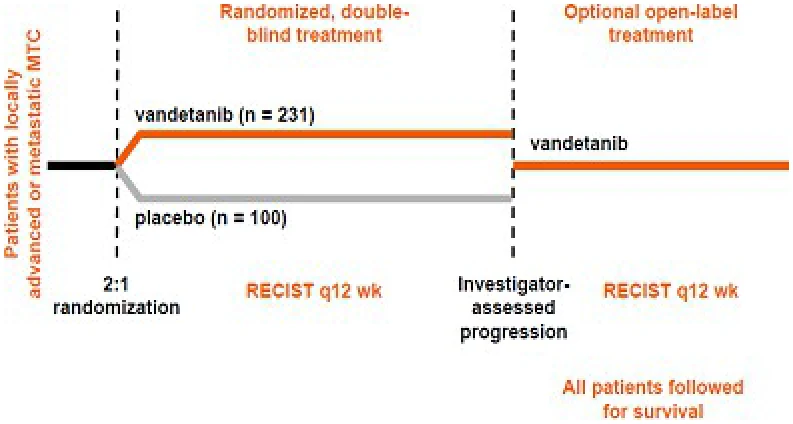
The primary endpoint was progression-free survival (PFS) based on RECIST criteria assessed by independent central blinded review.
Key secondary endpoints were evaluation of overall objective response rate (ORR) and overall survival (OS). ORR was based on centralized, independent blinded review of the imaging data using RECIST criteria.
Patient demographics from the ZETA study are summarized in Table 9. Patients enrolled in the ZETA trial were predominantly Caucasian.
Table 9 - Summary of patient demographics for the pivotal ZETA trial in medullary thyroid cancer (intention to treat population)
| Characteristics | CAPRELSA 300 mg daily, oral (N=231) | Placebo (N=100) | Total (N=331) |
|---|---|---|---|
| Mean Age | 50.7 | 53.4 | 51.5 |
| Sex | |||
| Female (%) | 97 (42%) | 44 (44%) | 141 (43%) |
| Male (%) | 134 (58%) | 56 (56%) | 190 (57%) |
| Race | |||
| Caucasian (%) | 218 (94%) | 97 (97%) | 315 (95%) |
| Other (%) | 13 (6%) | 3 (3%) | 16 (5%) |
| Performance Status | |||
| WHO PSa 0 (%) | 154 (67%) | 58 (58%) | 212 (64%) |
| WHO PSa ≥ 1 (%) | 77 (33%) | 42 (42%) | 119 (36%) |
| Disease Parameters | |||
| Hereditary disease (%) | 28 (12%) | 5 (5%) | 33 (10%) |
| Sporadic or unknown disease (%) | 203 (88%) | 95 (95%) | 298 (90%) |
| Locally advanced disease (%) | 14 (6%) | 3 (3%) | 17 (5%) |
| Metastatic disease (%) | 217 (94%) | 97 (97%) | 314 (95%) |
| 0 or 1 organ involvedb (%) | 29 (13%) | 8 (8%) | 37 (11%) |
| ≥ 2 organs involvedb (%) | 202 (87%) | 92 (92%) | 294 (89%) |
| Prior Treatment | |||
| No prior systemic therapy for MTCc (%) | 141 (61%) | 58 (58%) | 199 (60%) |
| ≥ 1 prior systemic therapy for MTCc (%) | 90 (39%) | 42 (42%) | 132 (40%) |
| RET Mutation Status | |||
| RET mutation positive | 137 (59%) | 50 (50%) | 187 (56%) |
| RET mutation negative | 6 (6%) | 2 (1%) | 8 (2%) |
| RET mutation unknown | 92 (40%) | 44 (44%) | 136 (41%) |
- [a] WHO PS = World Health Organization Performance Status.
- [b] Not including thyroid
- [c] MTC= Medullary thyroid cancer
Study Results
Table 10 – Results of study D4200C00058 in metastatic medullary thyroid cancer
| Primary endpoints | Associated value and statistical significance for CAPRELSA at 300 mg/day | Associated value and statistical significance for Placebo |
|---|---|---|
| Progression free survival (PFS) | Median PFS not reached at data cut-off of 30 months. Hazard Ratio (HR) = 0.46; 95% CI = 0.31-0.69; p=0.0001 | Median PFS was 19.3 months. |
Primary Efficacy Endpoint: Progression-Free Survival (PFS)
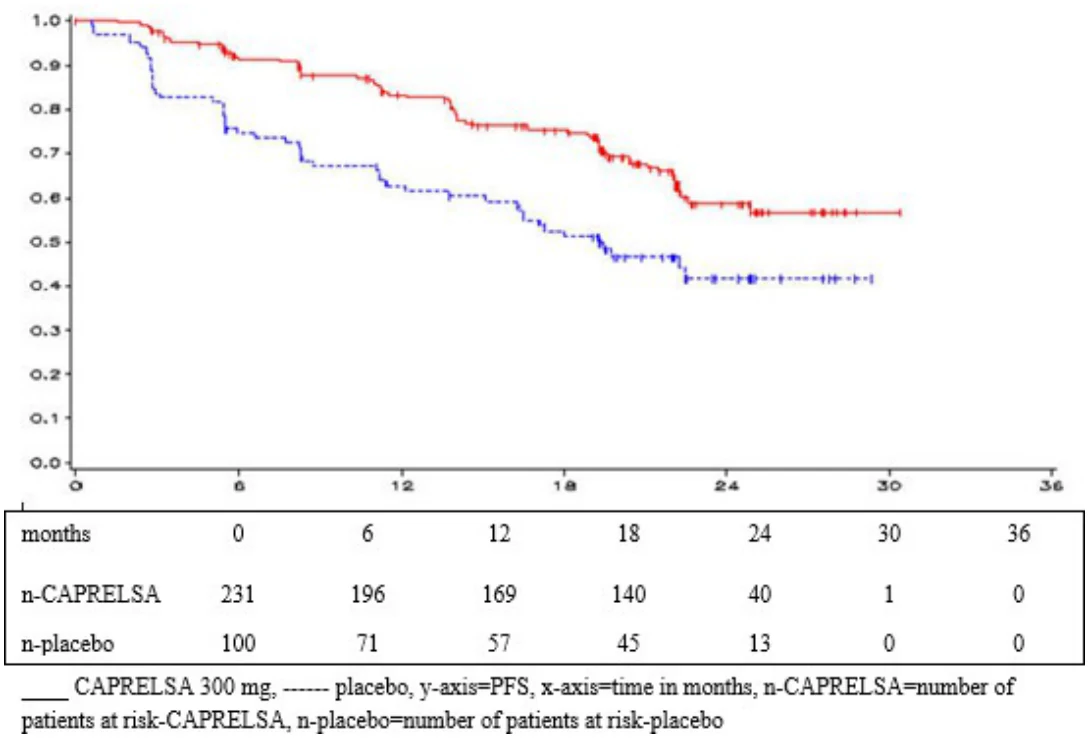
The result of the primary analysis of PFS showed a statistically significant improvement in PFS for patients randomized (2:1) to CAPRELSA compared to placebo (Hazard Ratio (HR) = 0.46; 95%
Confidence Interval (CI) = 0.31-0.69; p=0.0001). The median duration of treatment on the CAPRELSA arm was 90 weeks, compared to 40 weeks on placebo.
The median PFS for patients randomized to placebo was 19.3 months. The median PFS for patients randomized to CAPRELSA has not been reached by data cut-off of 30 months (Figure 2).
Figure 2 - Kaplan Meier plot of Progression-Free Survival in the ZETA Study
Pre-defined subgroup analyses were supportive of the primary analysis.
Secondary Efficacy Endpoints: Objective Response Rate and Overall Survival
The overall objective response rate for patients randomized to CAPRELSA was 45% (N=104/231) compared to 13% (N=13/100) for patients randomized to placebo (Odds Ratio = 5.48; 95% CI = 2.90 10.79; p<0.0001). All objective responses were partial responses. Of the 13 responses for patients randomized to placebo, 12 occurred while patients were receiving open label CAPRELSA.
At the time of the primary analysis of PFS (data cut-off date 31 July 2009), 48 (15%) of the patients had died. There was no statistically significant difference in overall survival between treatment groups.
15 Microbiology
No microbiological information is required for this drug product.
16 Non-Clinical Toxicology
General toxicology:
Single oral dose toxicity
A single oral dose of vandetanib at 2000 mg/kg to mice was not tolerated and all animals died or were killed for humane reasons on Day 1. A single oral dose of 1000 mg/kg resulted in the death of 1 out of 10 mice. There were no salient histopathology findings except for ulceration in the stomach in 1 animal dosed at 2000 mg/kg. In the rat, a single oral dose at 2000 mg/kg was not tolerated and all animals died or were killed for humane reasons by Day 4. Histopathological findings in these rats included hepatocyte vacuolation, fat deposition and necrosis in the liver, ulceration in the stomach, mucosal single cell necrosis and erosion in the duodenum, and macrophage vacuolation in the spleen. There were no adverse effects in rats dosed at 1000 mg/kg. 1000 mg/kg in rats corresponds to a dose of 6000 mg/m2, which is approximately 30 times the recommended daily dose for a 70 kg patient.
Intravenous dose toxicity
For intravenous single dose toxicity studies in mice, vandetanib was formulated in 45% hydroxypropyl-
β-cyclodextrin in pH 7 Sorenson’s phosphate buffer. A single intravenous dose of 50 mg/kg resulted in early death in 1 of 10 mice. However, in the rat, the administration of the vehicle alone was not tolerated at dose volumes that would allow meaningful doses of vandetanib to be administered.
Therefore a single intravenous dose was not administered in rats. After daily intraveneous doses of 25 mg/kg to rats, foamy macrophages were observed in the spleen, consistent with the induction of phospholipidosis.
Repeat dose toxicity
Dose-limiting toxicities in 1, 6 and 9 month studies included (variously across the studies) gastrointestinal effects in dogs (including loose/abnormal feces, emesis and body weight loss), and skin and hepatotoxicity in rats. The morbidity and mortality associated with these key findings at the initial high doses resulted in either dose reduction (high dose reduced from 20 mg/kg/day to 10 mg/kg/day from Week 13 of the 6 month rat, and the 20 mg/kg/day top dose of the 9 month dog study was reduced to 15 mg/kg/day in Week 17) or the early cessation of dosing of the high dose groups of the 1 month rat study (Day 25) and the 1 month dog study (Day 15).
In the 6 month rat study, the unscheduled deaths of several animals in the 20 mg/kg/day group were attributed in part to acute cholangitis and/or pancreatitis. However, these finding were not present following subsequent dose reduction from 20 mg/kg/day to 10 mg/kg/day. Elevated ALT and AST activities were found in some rats receiving 5 or 25 mg/kg/day for 1 month or 20/10 mg/kg/day for 6 months without histopathological correlate. Hepatobiliary changes were not seen in the 1 or 9 month dog studies.
In the four week period after cessation of dosing in the one month rat study, dysplasia of incisor teeth was observed in animals previously given 75 mg/kg/day, and similar changes were seen in several decedents at 20/10 mg/kg/day in the 6 month rat study. Daily oral dosing of vandetanib for 1 month resulted in a dose-related, reversible dysplasia of the epiphyseal growth plates of the femorotibial joint in rats dosed at 25 or 75 mg/kg/day and in the femur of dogs dosed at 40 mg/kg/day.
Renal papillary necrosis was observed in rats dosed orally for 1 month at 25 or 75 mg/kg/day and was still present at the end of the 4 week recovery period. Renal papillary necrosis was not seen in the 6 month rat study or in any dog study.
Histopathological and/or ultrastructural changes consistent with the induction of phospholipidosis, were present in rats in the 1 month oral study (lungs, lymph nodes spleen, trachea, centrilobular hepatocytes, renal tubular epithelium), in the 6 month oral study (lungs) and in the intravenous studies (principally lungs and spleen, though phospholipidosis was also caused by the vehicle used). While no histological evidence of phospholipidosis was observed in dogs dosed orally, phospholipidosis was however present in alveoli and mesenteric lymph node of dogs administered vandetanib by the intravenous route in studies of up to 2 weeks duration.
Small, dose-related haematological changes (increased levels of haemoglobin, haematocrit, red blood cells, reticulocytes and some white blood cells) were seen in oral and intravenous rat studies, generally showing reversal after cessation of dosing.
In the 104-week carcinogenicity study, rats were exposed to oral daily doses of up to 10 mg/kg/day vandetanib. In the kidney, chronic progressive nephropathy was observed in rats dosed at 10 mg/kg/day. In the uterus, dilatation, hemorrhage in the mucosa or the lumen, pigmented macrophages, and necrotic or purulent luminal material was present in female rats dosed at 10 mg/kg/day correlating with the macroscopic abnormal consistency, dark discoloration, enlargement and fluid accumulation. In the heart of females dosed from 3 mg/kg/day, progressive cardiomyopathy was observed. Females rats dosed at 10 mg/kg/day presented some mastocytosis in the mesenteric lymph nodes. In the stomach of females dosed at 10 mg/kg/day, there was an increase in epithelial ulceration of the non-glandular region. Some findings were considered to be test item-related although observed only macroscopically in females at 10 mg/kg/day, consisting of a higher incidence of ovarian cysts and a higher incidence of dark focus in the adrenal gland.
Cardiovascular effects:
In vitro data in hERG-expressing Chinese hamster ovary cells showed that vandetanib decreased the hERG current by 55.5% at 4 x 10 -7 M. Vandetanib caused a concentration dependent increase in action potential duration in canine Purkinje fibres that was significant at 1 x 10⁻⁶ M (1 μM) and greater, with an enhanced effect at low frequency stimulation and low potassium conditions.
Carcinogenicity:
Vandetanib was not carcinogenic in a 6-month carcinogenicity study in rasH2 transgenic mice and in a 2-year bioassay in rats.
Genotoxicity:
Vandetanib has shown no genotoxic, mutagenic or clastogenic potential.
Reproductive and developmental toxicology:
In a fertility study of male rats, vandetanib had no effect on copulation or fertility indices in male rats when undosed females were mated with males administered 1, 5 or 20 mg/kg/day of vandetanib (approximately 0.03, 0.22, or 0.40 times, respectively, the AUC in patients with cancer at the recommended human dose of 300 mg/day). There was a slight decrease in the number of live embryos at 20 mg/kg/day and an increase in preimplantation loss at ≥ 5 mg/kg/day.
In a female fertility study, there was a trend towards increased estrus cycle irregularity, a slight reduction in pregnancy incidence and increase in post-implantation loss. In a repeat-dose toxicity study in rats, there was a decrease in the number of corpora lutea in the ovaries of rats administered
75 mg/kg/day vandetanib (approximately 1.8 times the AUC in patients with cancer at the recommended human dose) for 1 month.
In rats, embryofetal toxicity was evident as embryo-fetal loss, delayed fetal development, heart vessel abnormalities and precocious ossification of some skull bones. In a rat pre- and post-natal development study, at doses producing maternal toxicity during gestation and/or lactation, vandetanib increased pre-birth loss and reduced post-natal pup growth. Vandetanib was excreted into milk in rat and found in plasma of pups following dosing to lactating rats. With regard to embryo-fetal toxicity, vandetanib exposure during gestation caused a number of teratogenic effects including increased post-implantation loss, decreased fetal weight, increased heart vessel abnormalities and increased abnormal ossification effects. These effects were mainly seen at the 10 and 25 mg/kg dose but one fetus from the 1 mg/kg dose had a heart vessel defect, which is likely due to the pharmacological activity of vandetanib. Together the data indicate that vandetanib is teratogenic.
In nonclinical studies in rats, vandetanib was embryotoxic, fetotoxic, and teratogenic, at exposures equivalent to or lower than those expected at the recommended human dose of 300 mg/ day. As expected from its pharmacological actions, vandetanib has shown significant effects on all stages of female reproduction in rats.
In a pre- and post-natal development study by oral route (gavage) in the rat, the findings showed that vandetanib was transferred to the pups by milk secretion (levels ranging from ~12-18% of Cmax levels observed in dams). It is not known whether CAPRELSA is excreted in human milk.
Wound Healing:
In an animal model of wound-healing, mice dosed with vandetanib had reduced skin-breaking strength compared with controls. This suggests that vandetanib slows but does not prevent wound healing.
Phototoxicity:
In an in vitro cytotoxic assay, vandetanib was reported to have a photo–irritation factor (PIF) of 19.9 suggesting a potential for phototoxicity upon sun exposure.