


Product Monograph - Truqap
Recent Major Label Changes
| 2025-01 |
|---|---|
| 4.1. Dosing Considerations | 2025-01 |
| 4.2. Recommended Dose and Dosage Adjustment, Dose modification for Adverse Reactions | 2025-01 |
| 2025-10 |
Table of Contents
Certain sections or subsections that are not applicable at the time of the preparation of the most recent authorized product monograph are not listed.
Recent Major Label Changes ................................................................................................... 2
Table of Contents ...................................................................................................................... 2
Part 1: Healthcare Professional Information ........................................................................... 4
- 1.
Indications .......................................................................................................................... 4
1.1. Pediatrics ................................................................................................................ 4
1.2. Geriatrics ................................................................................................................. 4
- 2. Contraindications .............................................................................................................. 4
- 3. Serious Warnings and Precautions Box .......................................................................... 4
- 4.
Dosage and Administration .............................................................................................. 4
4.1. Dosing Considerations ............................................................................................ 4
4.2. Recommended Dose and Dosage Adjustment ........................................................ 5
4.4. Administration ........................................................................................................10
4.5. Missed Dose ..........................................................................................................10
- 5. Overdose .......................................................................................................................... 10
- 6. Dosage Forms, Strengths, Composition, and Packaging ............................................. 10
- 7.
Warnings and Precautions .............................................................................................. 11
Driving and Operating Machinery .......................................................................................11
Endocrine and Metabolism .................................................................................................11
Gastrointestinal ..................................................................................................................12
Monitoring and Laboratory Tests........................................................................................12
Reproductive Health ..........................................................................................................13
Skin ...................................................................................................................................14
7.1. Special Populations ................................................................................................14
7.1.1. Pregnancy ......................................................................................................14
7.1.2. Breastfeeding .................................................................................................15
7.1.3. Pediatrics .......................................................................................................15
7.1.4. Geriatrics .......................................................................................................15
- 8.
Adverse Reactions .......................................................................................................... 15
8.1. Adverse Reaction Overview ...................................................................................15
8.2. Clinical Trial Adverse Reactions .............................................................................16
8.3. Less Common Clinical Trial Adverse Reactions .....................................................18
8.4. Abnormal Laboratory Findings: Hematologic, Clinical Chemistry and Other Quantitative Data ...............................................................................................................18
- 9.
Drug Interactions ............................................................................................................. 19
9.2. Drug Interactions Overview ....................................................................................19
9.3. Drug-Behaviour Interactions ...................................................................................20
9.4. Drug-Drug Interactions ...........................................................................................20
9.5. Drug-Food Interactions ...........................................................................................24
9.6. Drug-Herb Interactions ...........................................................................................24
9.7. Drug-Laboratory Test Interactions ..........................................................................24
- 10.
Clinical Pharmacology .................................................................................................... 24
10.1. Mechanism of Action ..............................................................................................24
10.2. Pharmacodynamics ................................................................................................24
10.3. Pharmacokinetics ...................................................................................................25
- 11. Storage, Stability and Disposal ...................................................................................... 26
- 12. Special Handling Instructions ......................................................................................... 26
Part 2: Scientific Information ................................................................................................. 27
- 13. Pharmaceutical Information ............................................................................................ 27
- 14.
Clinical Trials ................................................................................................................... 28
14.1. Clinical Trials by Indication .....................................................................................28
HR+, HER2- breast cancer following endocrine-based regimen .............................28
- 15. Microbiology .................................................................................................................... 32
- 16. Non-Clinical Toxicology .................................................................................................. 32
- 17. Supporting Product Monographs ................................................................................... 33
Patient Medication Information .............................................................................................. 34
Part 1: Healthcare Professional Information
1. Indications
TRUQAP® (capivasertib tablets), in combination with fulvestrant, is indicated for the treatment of adult females with hormone receptor (HR) positive, human epidermal growth factor receptor 2 (HER2) negative locally advanced or metastatic breast cancer with one or more PIK3CA/AKT1/PTEN alterations following progression on at least one endocrine-based regimen in the metastatic setting or recurrence on or within 12 months of completing adjuvant therapy.
1.1. Pediatrics
Pediatrics (<18 years of age): No data are available to Health Canada; therefore, Health Canada has not authorized an indication for pediatric use.
1.2. Geriatrics
Geriatrics (≥65 years): Of the 355 patients who received TRUQAP, 115 (32.4%) patients were ≥65 years of age. There were no clinically meaningful differences in efficacy observed between patients ≥65 years of age and those younger than 65 years of age. Safety analyses suggest a higher incidence of severe adverse reactions in those >65 years of age compared to younger patients. See 7.1.4 Geriatrics.
2. Contraindications
TRUQAP (capivasertib) is contraindicated in patients who are hypersensitive to capivasertib or to any ingredient in the formulation, including any non-medicinal ingredient, or component of the container. For a complete listing, see 6 Dosage Forms, Strengths, Composition, and Packaging.
3. Serious Warnings and Precautions Box
The following serious adverse reactions were reported in patients treated with TRUQAP.
- Cutaneous adverse reactions including Drug Reaction with Eosinophilia and Systemic Symptoms (DRESS), Erythema Multiforme (EM) and Palmar-plantar erythrodysesthesia (See 7 Warnings and Precautions, Skin)
- Hyperglycemia, including diabetic ketoacidosis. Some cases have been fatal (See 7 Warnings and Precautions, Endocrine and Metabolism)
- Severe Diarrhea associated with dehydration and acute kidney injury (See 7 Warnings and Precautions, Gastrointestinal)
4. Dosage and Administration
4.1. Dosing Considerations
Patients with hormone receptor (HR) positive, HER2-negative advanced breast cancer
- should be selected for treatment with TRUQAP based on the presence of one or more PIK3CA/AKT1/PTEN genetic alterations using a validated test.
- Correct glucose levels in patients with abnormal glucose levels before initiating TRUQAP. Due to the potential of TRUQAP to cause hyperglycemia, patients should be tested for fasting blood glucose (FG) levels and hemoglobin A1C (HbA1C) prior to treatment and at regular intervals during treatment (see 4.2 Recommended Dose and Dosage Adjustment, Hyperglycemia and 7 Warnings and Precautions, Endocrine and Metabolism).
- In pre/peri-menopausal women, TRUQAP plus fulvestrant should be combined with a luteinizing hormone releasing hormone (LHRH) agonist (see 4.2 Recommended Dose and Dosage Adjustment).
- Concomitant use of strong and moderate CYP3A4 inhibitors increases capivasertib concentration, which may increase the risk of TRUQAP toxicities. TRUQAP dose should be reduced when used concomitantly with strong and moderate CYP3A4 inhibitors (see 4.2 Recommended Dose and Dosage Adjustment and 9 Drug Interactions).
- Concomitant use of TRUQAP with strong CYP3A4 inducers is not recommended (see 9 Drug Interactions).
4.2. Recommended Dose and Dosage Adjustment
The recommended dose of TRUQAP in combination with fulvestrant is 400 mg (two 200 mg tablets) taken orally twice daily, approximately 12 hours apart (total daily dose of 800 mg), for 4 days followed by 3 days off treatment. TRUQAP can be taken with or without food. Treatment with TRUQAP should continue until disease progression or unacceptable toxicity occurs.
The dosing schedule for each week is shown in Table 1.
Table 1: TRUQAP dosing schedule for each week
| Day 1 | Day 2 | Day 3 | Day 4 | Day 5* | Day 6* | Day 7* | |
|---|---|---|---|---|---|---|---|
| Morning | 2 x 200 mg | 2 x 200 mg | 2 x 200 mg | 2 x 200 mg | |||
| Evening | 2 x 200 mg | 2 x 200 mg | 2 x 200 mg | 2 x 200 mg |
* No dosing on day 5, 6 and 7.
TRUQAP should be co-administered with fulvestrant. Refer to the FASLODEX® (fulvestrant) Product Monograph for more information.
Dose modification for Adverse Reactions
Management of severe or intolerable adverse drug reactions may require temporary dosing interruption, reduction and /or discontinuation of TRUQAP. The dosing reduction recommendations are listed in Table 2.
A maximum of 2 dosing reductions are recommended after which the patient should be discontinued from treatment with TRUQAP.
Table 2: Recommended dose modification for Adverse Reactions
| TRUQAP Dose Level | Dose and Schedule | Number and Strength of Tablets per Dose |
| First dose reduction | 320 mg twice daily (equivalent to a total daily dose of 640 mg) for 4 days followed by 3 days off treatment | Two 160 mg tablets per dose |
| Second dose reduction | 200 mg twice daily (equivalent to a total daily dose of 400 mg) for 4 days followed by 3 days off treatment | One 200 mg tablet per dose |
Hyperglycemia, Diarrhea, Cutaneous Adverse Reactions and Other Adverse Reactions:
Table 3: Recommended dose modification of TRUQAP
| Adverse Reaction | |
| Severity* | Recommendations |
| Adverse Reaction | |
| Severity* | Recommendations |
| Adverse Reaction | |
| Severity* | Recommendations |
| Adverse Reaction | |
| Severity* | Recommendations |
Hyperglycemia‡ Dose modifications and management are based on pre-dose fasting glucose (FG) and/or HbA1C levels. (See 7 Warnings and Precautions, Endocrine and Metabolism) | |
Grade 1 >ULN-160 mg/dL or >ULN-8.9 mmol/L or HbA1C >7% | No TRUQAP dose adjustment required. Consider initiation or intensification of oral anti-diabetic treatment. |
Grade 2 >160-250 mg/dL or >8.9-13.9 mmol/L | Initiate or intensify oral anti-diabetic treatment without dose adjustment of TRUQAP. If FG does not decrease to ≤160 mg/dL (or ≤8.9 mmol/L) with treatment, interrupt TRUQAP for up to 28 days until FG level decreases to ≤160 mg/dL (or ≤8.9 mmol/L). If improvement to ≤160 mg/dL (or ≤ 8.9 mmol/L) is reached within 28 days, restart TRUQAP at the same dose level and maintain initiated or intensified anti-diabetic treatment. If improvement to ≤160 mg/dL (or ≤8.9 mmol/L) is reached after 28 days, restart TRUQAP at one lower dose level and maintain initiated or intensified anti-diabetic treatment. |
Grade 3 >250-500 mg/dL or >13.9-27.8 mmol/L | Withhold TRUQAP and consult a healthcare professional experienced in the treatment of hyperglycemia. Initiate or intensify oral anti-diabetic treatment. Consider additional anti-diabetic medicinal products such as insulin, as clinically indicated. If FG decreases to ≤160 mg/dL (or ≤8.9 mmol/L) within 28 days, restart TRUQAP at one lower dose level and maintain initiated or intensified anti-diabetic treatment. If FG does not decrease to ≤160 mg/dL (or ≤8.9 mmol/L) within 28 days following appropriate treatment, permanently discontinue TRUQAP. If symptoms of diabetic ketoacidosis are observed, withhold TRUQAP immediately. If diabetic ketoacidosis is confirmed, permanently discontinue TRUQAP. |
Grade 4 >500 mg/dL or >27.8 mmol/L or Life-threatening sequelae of hyperglycemia | Withhold TRUQAP and consult a healthcare professional experienced in the treatment of hyperglycemia. Initiate or intensity oral anti-diabetic treatment. Consider insulin, intravenous hydration and provide appropriate clinical management as per local guidelines. If FG decreases to ≤500 mg/dL (or ≤27.8 mmol/L) within 24 hours, then follow the guidance in the table for the relevant grade. If FG is confirmed at >500 mg/dl (or >27.8 mmol/l) after 24 hours, permanently discontinue TRUQAP treatment. For life-threatening sequelae of hyperglycemia permanently discontinue TRUQAP. If symptoms of diabetic ketoacidosis are observed, withhold TRUQAP immediately. If diabetic ketoacidosis is confirmed, permanently discontinue TRUQAP. |
| Diarrhea (See 7 Warnings and Precautions, Gastrointestinal) | |
| Grade 1 | No TRUQAP dose adjustment required. Initiate appropriate anti-diarrheal therapy, maximize supportive care, and monitor as clinically indicated. |
| Grade 2 | Initiate or intensify appropriate anti-diarrheal treatment and monitor as clinically indicated. Interrupt TRUQAP dose for up to 28 days until recovery to ≤Grade 1 and resume TRUQAP dosing at same dose or one lower dose level as clinically indicated. If Grade 2 diarrhea is persistent or recurring, maintain appropriate medical therapy and restart TRUQAP at one lower dose level, as clinically indicated. |
| Grade 3 | Interrupt TRUQAP. Initiate or intensify appropriate anti-diarrheal treatment and monitor as clinically indicated. If the symptoms improve to ≤Grade 1 in 28 days, resume TRUQAP at one lower dose level. If the symptoms do not improve to ≤Grade 1 in 28 days, permanently discontinue TRUQAP. |
| Grade 4 | Permanently discontinue TRUQAP. |
Cutaneous Adverse Reactions (See 7 Warnings and Precautions, Skin) | |
| Grade 1 | No TRUQAP dose adjustment required. Initiate emollients and consider adding an oral non-sedating antihistamine treatment as clinically indicated to manage symptoms. |
| Grade 2 | Initiate or intensify topical steroid treatment and consider non-sedating oral antihistamines. If no improvement with treatment, interrupt TRUQAP. Resume at the same dose level once the rash becomes clinically tolerable. |
| Grade 3 | Interrupt TRUQAP. Initiate appropriate dermatological treatment with topical steroid of moderate/higher strength, non-sedating oral antihistamines and/or systemic steroids. If symptoms improve within 28 days to ≤ Grade 1, restart TRUQAP at one lower dose level. If the symptoms do not improve to ≤Grade 1 in 28 days, discontinue TRUQAP. In patients with reoccurrence of ≥Grade 3 rash, permanently discontinue TRUQAP. |
| Grade 4 | Permanently discontinue TRUQAP. |
| Other Adverse Reactions (See 8 Adverse Reactions) | |
| Grade 1 | No TRUQAP dose adjustment required. Initiate appropriate medical therapy and monitor as clinically indicated. |
| Grade 2 | Interrupt TRUQAP until symptoms improve to ≤Grade 1. |
| Grade 3 | Interrupt TRUQAP until symptoms improve to ≤Grade 1. If symptoms improve, restart TRUQAP at same dose or one lower dose level as clinically appropriate. |
| Grade 4 | Permanently discontinue TRUQAP. |
* Severity grading per CTCAE Version 5.0, Severity grading for Hyperglycemia per CTCAE Version 4.03.
‡ See 7 Warnings and Precautions, Endocrine and Metabolism for further recommendations on monitoring of glycemia and other metabolic parameters and the potential risk of diabetic ketoacidosis.
Dose modification for concomitant use with strong or moderate CYP3A4 inhibitors
TRUQAP dose should be reduced to 320 mg twice daily (equivalent to a total daily dose of 640 mg) when used concomitantly with strong or moderate CYP3A4 inhibitors (see 9 Drug Interactions).
Special patient populations
Pediatrics (<18 years of age): The safety and efficacy of TRUQAP have not been established in patients younger than 18 years of age.
Geriatrics (≥65 years): No dose adjustment is required for elderly patients (≥65 years of age) (see 10 Clinical Pharmacology).
Renal Impairment: No dose adjustment is recommended for patients with mild or moderate renal impairment (creatinine clearance 30 to 89 mL/min). TRUQAP is not recommended for patients with severe renal impairment (creatinine clearance 15 to 29 mL/min), as safety and pharmacokinetics have not been studied in these patients (see 10 Clinical Pharmacology, Renal Insufficiency).
Hepatic Impairment: No dose adjustment is recommended for patients with mild hepatic impairment (bilirubin ≤ upper limit of normal (ULN) and aspartate aminotransferase (AST) > ULN, or bilirubin > 1 ULN to ≤ 1.5 ULN and any AST value). Limited data are available for patients with moderate hepatic impairment (bilirubin > 1.5x - 3.0 x ULN and AST of any value). Administer TRUQAP to patients with moderate hepatic impairment only if the benefit outweighs the risk and monitor closely for signs of toxicity. TRUQAP is not recommended for patients with severe hepatic impairment (bilirubin > 3.0 x ULN and any AST), as safety and pharmacokinetics have not been studied in these patients (see 10 Clinical Pharmacology, Hepatic Insufficiency).
4.4. Administration
TRUQAP tablets should be swallowed whole with water and not chewed, crushed, dissolved, or divided. TRUQAP tablets should not be ingested if they are broken, cracked, or otherwise not intact. TRUQAP can be taken with or without food.
4.5. Missed Dose
If a dose of TRUQAP is missed, it can be taken within 4 hours after the time it is usually taken. After more than 4 hours, the dose should be skipped. The next dose of TRUQAP should be taken at the usual time. There should be at least 8 hours between doses. If the patient vomits, a replacement dose should not be taken. The next dose of TRUQAP should be taken at the usual time.
5. Overdose
There is currently no specific treatment in the event of an overdose with TRUQAP. In the event of an overdose, physicians should follow general supportive measures and patients should be treated symptomatically.
In CAPItello-291, a patient with 2 weeks of continuous dosing experienced nausea and vomiting, hyperglycemia and acute kidney injury.
For the most recent information in the management of a suspected drug overdose, contact your regional poison control centre or Health Canada’s toll-free number, 1-844 POISON-X (1-844-764-7669).
- 6. Dosage Forms, Strengths, Composition, and Packaging
Table 4: Dosage Forms, Strengths and Composition
| Route of Administration | Dosage Form/ Strength/Composition | Non-medicinal Ingredients |
| Oral | Tablets 160 mg and 200 mg capivasertib | Calcium hydrogen phosphate, copovidone, croscarmellose sodium, hypromellose, iron oxide black (E172), iron oxide red (E172), iron oxide yellow (E172), macrogols 3350, magnesium stearate, microcrystalline cellulose, polydextrose, purified water, titanium dioxide, triglycerides (medium-chain). |
Description
TRUQAP (capivasertib) 160 mg tablets are round, biconvex, beige, film-coated tablets debossed with ‘CAV’ above ‘160’ on one side and plain on the reverse.
TRUQAP (capivasertib) 200 mg tablets are capsule shaped, biconvex, beige film-coated tablets debossed with ‘CAV 200’ on one side and plain on the reverse.
Packaging
Both strengths of TRUQAP are available in aluminum foil/foil blister in cartons of 64 tablets (4 blister packs of 16 film-coated tablets).
7. Warnings and Precautions
Driving and Operating Machinery
TRUQAP has no influence on the ability to drive and use machines. However, during treatment with capivasertib, fatigue has been reported. Patients who experience this symptom should be advised to use caution when driving or using machines.
Endocrine and Metabolism
Hyperglycemia
Severe hyperglycemia, including diabetic ketoacidosis has been observed in patients treated with TRUQAP. Some cases of diabetic ketoacidosis have been reported with a fatal outcome.
In the setting of additional co-morbidities and treatments (e.g., dehydration, malnourishment, concurrent chemotherapy/steroids, sepsis) the risk of hyperglycemia progressing to diabetic ketoacidosis may be higher. Diabetic ketoacidosis can occur at any time during treatment with TRUQAP. In some reported cases, diabetic ketoacidosis developed in less than 10 days.
Adverse reactions of hyperglycemia of any grade were reported in 51 (14.4%) patients treated with TRUQAP, and grade 3 or 4 hyperglycemia was reported in 2.3% of all patients receiving TRUQAP in the CAPItello-291 trial. Diabetic ketoacidosis was reported in 0.3% of patients (n=1) treated with TRUQAP. In CAPItello-291, dose reduction occurred in 0.6% of patients and discontinuation of TRUQAP occurred in 0.6% of patients due to hyperglycemia or ketoacidosis. Among patients who experienced hyperglycemia, the median time to first occurrence of hyperglycemia was 15 days.
In the 51 patients with adverse reactions of hyperglycemia, 45% were treated with anti-hyperglycemic medication including insulin in 12% and metformin in 33%.
The safety of TRUQAP in patients with Type 1 diabetes, diabetes requiring insulin and/or those with a HbA1C of ≥8% (63.9 mmol/mol) has not been studied as these patients were excluded from the phase 3 clinical study, CAPItello-291.
Patients must be tested for fasting blood glucose (FG) levels and HbA1C prior to treatment with TRUQAP and at regular intervals during treatment (Table 5, Monitoring and Laboratory Tests). Blood glucose should be optimized before initiating treatment with TRUQAP. In addition, patients should be informed about the potential of TRUQAP to cause hyperglycemia, and to contact their healthcare professional immediately if hyperglycemia symptoms (e.g., excessive thirst, urinating more often than usual or greater amount of urine than usual, increased appetite with weight loss) occur.
More frequent fasting glucose and HbA1C monitoring is required in patients with a medical history of diabetes mellitus, pre-diabetes, or those subjects with risk factors for hyperglycemia such as obesity (BMI (Body Mass Index) >30), elevated FG of >ULN 160 mg/dL (>ULN 8.9 mmol/L), HbA1C at or above the upper limit of normal, use of concomitant systemic steroids, intercurrent infections, sepsis or other conditions that may require intensified glycemia management. In addition to FG, monitoring of ketones (preferably in blood) and other metabolic parameters (as indicated) is recommended in these patients, in order to prevent potential complications of hyperglycemia, namely diabetic ketoacidosis. Consider consultation with a healthcare practitioner with expertise in the treatment of hyperglycemia. Counselling on lifestyle changes is recommended for patients with baseline risk factors for hyperglycemia and for those who develop hyperglycemia during treatment with TRUQAP. Based on the severity of hyperglycemia and/or potential development of diabetic ketoacidosis, TRUQAP dosing may be interrupted, reduced, or permanently discontinued (see 4.2 Recommended Dose and Dosage Adjustment, Table 3).
Gastrointestinal
Diarrhea
Severe diarrhea associated with dehydration was observed in patients treated with TRUQAP. Adverse reactions of diarrhea of any grade were reported in 239 (67.3%) patients receiving TRUQAP. Grade 3 or 4 diarrhea were reported in 9.3% of patients.
Among patients who experienced diarrhea, the median time to first occurrence was 8 days.
There was an increased frequency of diarrhea after co-administration of capivasertib and metformin.
In patients who experienced adverse reactions of diarrhea, 58% (139/239) required anti-diarrheal medications to manage symptoms. Dose reductions of TRUQAP were required in 7.9% of patients and 2% of patients permanently discontinued TRUQAP due to diarrhea.
Advise patients to start antidiarrheal treatment at the first sign of diarrhea and to increase oral fluids if diarrhea symptoms occur while taking TRUQAP.
Based on the severity of diarrhea, TRUQAP may be interrupted, reduced, or permanently discontinued (see 4.2 Recommended Dose and Dosage Adjustment, Table 3).
Monitoring and Laboratory Tests
Patients should be monitored for hyperglycemia. Refer to 7 Warnings and Precautions, Endocrine and Metabolism for detailed instructions.
Table 5: Schedule of Fasting Glucose Monitoring and HbA1c Levels
| Stage | Recommended schedule for the monitoring of fasting glucosea and HbA1c levels in all patients treated with TRUQAP |
|---|---|
| At screening, before initiating treatment with TRUQAP | Test for fasting glucose (FG) levels and HbA1c. Optimise the patient’s level of blood glucose. |
| After initiating treatment with TRUQAP | Monitor fasting glucose at weeks 1, 2, 4, 6 and 8 after start of the treatment and at least once a month thereafter. HbA1c should be monitored every 3 months. Additional monitoring/self-monitoring may be required in accordance with the instructions of a healthcare professional, especially within the first 2 weeks of treatment. Patients with diabetes Monitor/self-monitor FG daily for the first 2 weeks of treatment. Then continue to monitor FG as frequently as needed to manage hyperglycemia according to the instructions of a healthcare professional. Additional HbA1c testing is recommended on week 4, and then at least every 3 months, in patients with diabetes, pre-diabetes, or hyperglycemia at baseline. |
| If hyperglycemia develops after initiating treatment with TRUQAP (see Table 3). | Monitor fasting glucose at least twice weekly (on days on and off TRUQAP treatment until FG decreases to baseline levels. |
| During treatment with an anti-diabetic medication, FG should be monitored at least once a week for 2 months, followed by once every 2 weeks or as clinically indicated. |
a It is recommended to test FG pre-dose on Day 3 or 4 of the dosing week.
Reproductive Health
Fertility
There are no data on the effects of TRUQAP on fertility in humans.
In animal studies, repeated administration of capivasertib resulted in degenerative changes in male reproductive tissues in mice, rats and dogs at systemic exposures similar to those in humans at the recommended dose of 400 mg twice daily (based on total AUC). These findings were not reversible after 4 weeks of treatment cessation. Capivasertib had no effects on fertility in male rats after 10 weeks of administration. The effect on female fertility in rats was not studied (see 16 Non-Clinical Toxicology, Reproductive and Developmental Toxicology).
Teratogenic Risk Based on animal studies and the mechanism of action TRUQAP can cause fetal harm when administered to a pregnant woman. In animal reproduction studies, oral administration of capivasertib to pregnant rats during organogenesis caused embryo-fetal mortality, reduced fetal weights at maternal exposure approximately 0.8 times the exposure in humans at the recommended dose of 400 mg twice daily (based on total AUC). (See 16 Non-Clinical Toxicology, Reproductive and Developmental Toxicology).
Contraception and Pregnancy Testing
Women of childbearing potential should be advised to avoid becoming pregnant while receiving TRUQAP. A pregnancy test should be performed on women of childbearing potential prior to initiating treatment to rule out pregnancy. Consider re-testing throughout treatment.
Patients should be advised to use effective contraception during treatment with TRUQAP and for at least 4 weeks after completion of treatment with TRUQAP.
Skin
Cutaneous adverse reactions including erythema multiforme (EM), palmar-plantar erythrodyesthesia and drug reaction with eosinophilia and systemic symptoms (DRESS) were reported in patients treated with TRUQAP. Cutaneous adverse reactions of any grade were reported in 46.5% of patients receiving TRUQAP. Grade 3 or 4 cutaneous adverse reactions were reported in 16.9% of patients receiving TRUQAP. EM and DRESS were reported in 6 (1.7%) and 1 (0.3%) patients receiving TRUQAP, respectively. Among the patients who experienced rash, the median time to first occurrence was 12 days. Dose reduction of TRUQAP was required in 6.5% of patients and 6.5% of patients discontinued TRUQAP due to cutaneous adverse reactions.
Of patients with cutaneous adverse reactions, 61% required treatment with steroids. Of these, 39.3% were treated with topical corticosteroids and 21.8% with systemic steroids.
Patients should be monitored for signs and symptoms of cutaneous reactions and based on severity, TRUQAP dosing may be interrupted, reduced, or permanently discontinued (see 4.2 Recommended Dose and Dosage Adjustment, Table 3). Early consultation with a dermatologist is recommended.
7.1. Special Populations
7.1.1. Pregnancy
There are no clinical studies to evaluate the effect of TRUQAP use in pregnant women. TRUQAP is used in combination with fulvestrant. Refer to the Product Monograph of FASLODEX for Pregnant Women information.
Based on finding in animals and mechanism of action, TRUQAP can cause fetal harm when administered to a pregnant women. In an animal reproduction study, the administration of capivasertib up to 150mg/kg/day to pregnant rats during the period of organogenesis caused maternal toxicities (reduced body weight gain and food consumption, increase blood glucose) and adverse developmental outcomes, including embryo-fetal mortality (post-implantation loss), reduced fetal weights and minor fetal visceral variation, at maternal exposures approximately 0.8 times the exposure in humans at the recommended dose of 400 mg twice daily (based on total AUC) (see 16 Non-Clinical Toxicology, Reproductive and Developmental Toxicology). TRUQAP is not recommended during pregnancy and in women of reproductive potential not using contraception. Female patients of reproductive potential should have a pregnancy test prior to initiation of treatment with TRUQAP. Inform the patient of the potential hazards to the fetus if TRUQAP is used during pregnancy or if the patient becomes pregnant while taking TRUQAP.
7.1.2. Breastfeeding
TRUQAP is used in combination with fulvestrant. Refer to the Product Monograph of FASLODEX for breastfeeding information.
There are no data on the presence of capivasertib or its metabolites in human milk or their effects on milk production, or the breastfed child. Precaution should be exercised because many drugs can be excreted in human milk.
When capivasertib was administered to pregnant rats at 150 mg/kg/day (approximately 0.8 times the exposure in humans at the recommended dose of 400 mg twice daily based on total AUC) throughout gestation and through early lactation, there was a reduction in litter and pup weights. Exposure to capivasertib was confirmed in suckling rat pups which may indicate the excretion of capivasertib in milk. A risk to the nursing child cannot be excluded (see 16 Non-Clinical Toxicology, Reproductive and Developmental Toxicology). Because of the potential for serious adverse reactions in the breastfed child from TRUQAP, it is recommended that women should not breastfeed during treatment with TRUQAP.
7.1.3. Pediatrics
Pediatrics (<18 years of age): No data are available to Health Canada; therefore, Health Canada has not authorized an indication for pediatric use.
7.1.4. Geriatrics
Geriatrics (≥65 years): There were no clinically meaningful differences in efficacy observed between patients ≥65 years and those younger than 65 years.
Exploratory analyses of TRUQAP safety data show a higher incidence of Grade 3-5 adverse reactions in patients ≥ 65 years of age compared to younger patients, (48% versus 23%), as well as in the incidence of adverse events leading to dose interruption (57% versus 30%), dose reduction (30% versus 15%) or discontinuation (23% versus 8%).
- 8. Adverse Reactions
8.1. Adverse Reaction Overview
The safety of TRUQAP was evaluated in a phase III, randomized, double-blind, placebo-controlled trial (CAPItello-291) in 705 patients with HR positive, HER2-negative advanced or metastatic breast cancer.
Patients received either TRUQAP 400mg twice daily for 4 days, followed by 3 days off, administered with fulvestrant (n=355) or placebo with fulvestrant (n=350). Fulvestrant 500 mg was administered intramuscularly on Cycle 1 Day 1 and Day 15 and then at Day 1 of each 28-day Cycle Day during treatment.
The median duration of exposure to TRUQAP was 5.4 months in the capivasertib with fulvestrant arm and 3.6 months in the placebo with fulvestrant arm. A total of 186 (52.4%) patients in the capivasertib + fulvestrant arm and 136 (38.9%) of patients in the placebo + fulvestrant arm had completed ≥ 6 months of treatment, and 96 (27.0%) and 61 (17.4%) of patients, respectively, had completed ≥ 12 months of treatment.
Almost all patients (96.6%) in the TRUQAP with fulvestrant group (vs. 82.3% in the placebo with fulvestrant group) experienced at least one adverse event (AE). Adverse drug reactions (considered by investigator to be related to TRUQAP) were more common in patients receiving TRUQAP with fulvestrant (88.2%) than in those receiving placebo with fulvestrant (38%). The most common adverse drug reactions reported in patients receiving TRUQAP with fulvestrant (reported at a frequency of 2% or greater and for which the frequency for TRUQAP with fulvestrant is ≥2% higher than the frequency for placebo with fulvestrant) were diarrhea (67.3%), cutaneous adverse reactions (46.5%), nausea (27.3%), fatigue (22%), stomatitis (16.3%), vomiting (15.8%), hyperglycemia (14.4%), decreased appetite (10.7%), pyrexia (6.2%), dysgeusia (5.6%), headache (5.4%), dyspepsia (2.5%) and urinary tract infection (2.0%). The most common grade 3 or 4 adverse reactions (reported at frequency ≥2% and for which the frequency for TRUQAP with fulvestrant is higher than the frequency for placebo with fulvestrant) were cutaneous adverse reactions (16.9%), diarrhea (9.3%) and hyperglycemia (2.3%).
Serious adverse reactions occurred in 6.2% of patients receiving TRUQAP plus fulvestrant. Serious adverse reactions reported in ≥1% of patients receiving TRUQAP plus fulvestrant included cutaneous reactions (3.4%) and diarrhea 1.7%.
Dose reductions due to adverse reactions were reported in 18.6% patients. The most common adverse reactions (reported at frequency ≥2%) leading to dose reduction of TRUQAP were diarrhea (7.9%) and cutaneous adverse reactions (6.5%).
Treatment discontinuation due to adverse reactions occurred in 10.4% patients. The most common adverse reactions (reported at frequency ≥2%) leading to treatment discontinuation were cutaneous adverse reactions (6.5%), diarrhea (2.0%), and vomiting (2.0%).
There were 4 deaths, unrelated to underlying disease under investigation, reported in patients receiving TRUQAP plus fulvestrant due to aspiration pneumonia, sepsis, acute myocardial infarction and cerebral hemorrhage. None of these deaths were assessed by investigator to be related to study treatment.
8.2. Clinical Trial Adverse Reactions
Clinical trials are conducted under very specific conditions. Therefore, the frequencies of adverse reactions observed in the clinical trials may not reflect frequencies observed in clinical practice and should not be compared to frequencies reported in clinical trials of another drug.
Adverse drug reactions occurring in ≥2% of patients in the CAPItello-291 study are shown in Table 6.
Table 6: Adverse Drug Reactions* Occurring in ≥2% (All Grades) of Patients in Study CAPItello-291 and with ≥2% Greater Frequency than Placebo plus Fulvestrant**
| System Organ Class / preferred term | TRUQAP plus fulvestrant N=355 | Placebo plus fulvestrant N=350 |
|---|
Adverse Reactions
All Grades (%) | Grade 3-4 (%) | All Grades (%) | Grade 3-4 (%) | ||||||||||
|---|---|---|---|---|---|---|---|---|---|---|---|---|---|
| Blood and lymphatic system disorders | |||||||||||||
| Anemia | 14 (3.9) | 0 | 7 (2.0) | 2 (0.6) | |||||||||
| Gastrointestinal disorders | |||||||||||||
| Diarrheaa | 239 (67.3) | 33 (9.3) | 46 (13.1) | 0 | |||||||||
| Nausea | 97 (27.3) | 2 (0.6) | 37 (10.6) | 2 (0.6) | |||||||||
| Stomatitisb | 58 (16.3) | 6 (1.7) | 11 (3.1) | 0 | |||||||||
| Vomiting | 56 (15.8) | 5 (1.4) | 9 (2.6) | 2 (0.6) | |||||||||
| Dry Mouth | 15 (4.2) | 0 | 5 (1.4) | 0 | |||||||||
| Dyspepsia | 9 (2.5) | 0 | 4 (1.1) | 0 | |||||||||
| General disorders and administration site conditions | |||||||||||||
| Fatiguec | 78 (22.0) | 5 (1.4) | 47 (13.4) | 0 | |||||||||
| Pyrexiad | 22 (6.2) | 2 (0.6) | 1 (0.3) | 0 | |||||||||
| Infections and infestations | |||||||||||||
| Urinary tract infectione | 7 (2.0) | 2 (0.6) | 2 (0.6) | 0 | |||||||||
| Investigations | |||||||||||||
| Blood creatinine increased | 9 (2.5) | 0 | 0 | 0 | |||||||||
| Skin and subcutaneous tissue disorders | |||||||||||||
| Cutaneous adverse reactionsf | 165 (46.5) | 60 (16.9) | 38 (10.9) | 1 (0.3) | |||||||||
| Metabolism and nutrition disorders | |||||||||||||
| Hyperglycemiag | 51 (14.4) | 8 (2.3) | 7 (2.0) | 1 (0.3) | |||||||||
| Decreased appetite | 38 (10.7) | 1 (0.3) | 8 (2.3) | 1 (0.3) | |||||||||
| Hypokalemiah | 8 (2.3) | 5 (1.4) | 0 | 0 | |||||||||
| Nervous system disorders | |||||||||||||
| Dysgeusia | 20 (5.6) | 0 | 3 (0.9) | 0 | |||||||||
| Headache | 19 (5.4) | 0 | 11 (3.1) | 0 | |||||||||
* Adverse drug reaction frequencies are those considered to be causally related to treatment based on assessment by the investigator.
** A ≥2% higher frequency was not observed in the TRUQAP + fulvesterant arm vs. the placebo + fulvestrant arm for anaemia, dyspepsia and urinary tract infection, however these terms are included as they are considered relevant to prescribers and patients.
- a Diarrhea includes Preferred Terms (PTs) of diarrhea and frequent bowel movements.
- b Stomatitis includes PTs of stomatitis, aphthous ulcer, lip ulceration, mouth ulceration and mucosal inflammation.
- c Fatigue includes PTs of fatigue, malaise and asthenia
- d Pyrexia includes PTs of pyrexia and body temperature increased.
- e Urinary tract infection includes PTs of urinary tract infection and cystitis.
- f Cutaneous adverse reaction includes the PTs of dermatitis allergic, acne, butterfly rash, dermatitis, drug reaction with eosinophilia and systemic symptoms, dry skin, eczema, erythema multiforme, papule, pruritus, rash, rash erythematous, rash follicular, rash macular, rash maculo-papular, rash popular, rash pruritic, skin discoloration, skin fissures, skin hyperpigmentation, skin reaction, skin ulcer, urticaria, rash pustular, purpura, erythema, drug eruption, dermatitis exfoliative generalized.
- g Hyperglycemia includes PTs of hyperglycemia, blood glucose increased, type 2 diabetes mellitus and diabetes mellitus.
- h Hypokalemia includes PTs of hypokalemia and blood potassium decreased
MedDRA Version 27.1
8.3. Less Common Clinical Trial Adverse Reactions
Other clinically relevant adverse reactions reported in less than 2% of patients in the TRUQAP-treated group are shown below.
Immune system disorders: hypersensitivity (0.3%)
Investigations: weight decreased (1.7%), glycosylated hemoglobin increased (1.1%)
Metabolism and nutrition disorders: diabetic ketoacidosis (0.3%), diabetic metabolic decompensation (0.3%), glucose tolerance impaired (0.3%)
Renal and urinary disorders: Acute kidney injury (1.1%)
8.4. Abnormal Laboratory Findings: Hematologic, Clinical Chemistry and Other Quantitative Data
Clinical Trial Findings
Laboratory abnormalities that occurred in patients treated with capivasertib are shown in Table 7.
Table 7: Laboratory Abnormalities occurring in ≥10% of Patients in Study CAPItello-291 [with a difference between arms of ≥2% for all grades]
TRUQAP plus fulvestrant N=355 | Placebo plus fulvestrant N=350 | ||||||||||
|---|---|---|---|---|---|---|---|---|---|---|---|
| Laboratory Abnormality | All Grades (%) | Grade 3-4 (%) | All Grades (%) | Grade 3-4 (%) | |||||||
| Increased random glucose | 169 (56.5) | 34 (11.4) | 64 (20.6) | 1 (0.3) | |||||||
| Increased fasting glucose | 129 (36.6) | 11 (3.1) | 96 (27.6) | 3 (0.9) | |||||||
| Decreased corrected calcium | 58 (16.4) | 1 (0.3) | 27 (7.8) | 0 | |||||||
| Triglycerides increase | 81 (22.8) | 2 (0.6) | 60 (17.1) | 2 (0.6) | |||||||
| Decreased Potassium | 62 (17.5) | 12 (3.4) | 17 (4.9) | 1 (0.3) | |||||||
| Decreased Sodium | 70 (19.8) | 9 (2.5) | 59 (17) | 7 (2) | |||||||
| Serum Creatinine increase | 77 (21.8) | 5 (1.4) | 22 (6.3) | 1 (0.3) | |||||||
| Decreased Hemoglobin | 160 (45.2) | 5 (1.4) | 73 (21) | 4 (1.1) | |||||||
| Lymphocyte count decrease | 164 (46.2) | 36 (10.1) | 62 (17.7) | 12 (3.4) | |||||||
| Leukocyte count decrease | 112 (31.5) | 3 (0.8) | 99 (28.3) | 2 (0.6) | |||||||
9. Drug Interactions
9.2. Drug Interactions Overview
Co-administration of TRUQAP with a strong and moderate CYP3A4 inhibitor increases capivasertib concentration, which may increase the risk of TRUQAP toxicities. Reduce the dose of TRUQAP to 320 mg twice daily (equivalent to a total daily dose of 640 mg) when use concomitantly with a strong and moderate CYP3A4 inhibitors (see 9.4 Drug-Drug Interactions and 4.2 Recommended Dose and Dosage Adjustment, Hyperglycemia).
Co-administration of TRUQAP with a strong CYP3A4 inducer decreases capivasertib concentration which may reduce the efficacy of TRUQAP. Co-administration with a strong CYP3A4 inducer is not recommended.
Co-administration of TRUQAP with a moderate CYP3A4 inducer has the potential to decrease capivasertib plasma concentration which may reduce the efficacy of TRUQAP. Moderate CYP3A4 inducers should be used with caution with TRUQAP.
Capivasertib can be taken with acid reducing agents. In healthy subjects, co-administration of a single dose of 400 mg capivasertib with 20 mg of rabeprazole after repeated dosing of rabeprazole 20 mg twice daily for 3 days did not result in clinically relevant changes in capivasertib exposure. The capivasertib AUCT and Cmax decreased by 6% and 27%, respectively, when co-administered with rabeprazole as compared to administration of capivasertib alone. In addition, a population pharmacokinetic analysis showed no significant impact of co-administration of acid reducing agents on the pharmacokinetics of capivasertib in patients.
In Vitro assessments of drug interactions:
In vitro studies showed that capivasertib is primarily metabolized by CYP3A4 and UGT2B7 enzymes. Concomitant administration of probenecid (UGT2B7 inhibitor) is not predicted to have a clinically meaningful effect on capivasertib pharmacokinetics. Capivasertib is a substrate of P-glycoprotein (P-gp) transporter.
Capivasertib inhibits CYP2C9, CYP2D6 CYP3A4 and UGT1A1 metabolizing enzymes.
In vitro, capivasertib inhibited BCRP, OATP1B1, OATP1B3, OAT3, OCT2, MATE1 and MATE2K drug transporters. Based on physiologically based pharmacokinetic models, concomitant use of TRUQAP with warfarin (CYP2C9 substrate) is not predicted to have a clinically meaningful effect on warfarin pharmacokinetics. TRUQAP is predicted to increase desipramine (CYP2D6 substrate) and raltegravir (UGT1A1 substrate) AUCs by 1.1-fold and up to 1.4-fold, respectively, on day 4.
9.3. Drug-Behaviour Interactions
The interaction of capivasertib with individual behavioural risks (e.g. cigarette smoking, cannabis use, and/or alcohol consumption) has not been studied.
9.4. Drug-Drug Interactions
Co-administration of fulvestrant and capivasertib did not result in any clinically relevant effects on capivasertib or fulvestrant exposure.
The drugs listed below are based on either drug interaction case reports or studies, or potential interactions due to the expected magnitude and seriousness of the interaction.
Table 8: Established or Potential Drug-Drug Interactions
| Drug | Source of Evidence | Effect | Clinical Comment |
|---|---|---|---|
| Drug | Source of Evidence | Effect | Clinical Comment |
| Drug | Source of Evidence | Effect | Clinical Comment |
| Effect of other drugs on TRUQAP | |||
| Strong CYP3A4 inhibitorsa | Clinical Trial Theoretical | Concomitant use of TRUQAP with strong CYP3A4 inhibitors increases capivasertib concentration, which may increase the risk of TRUQAP adverse reactions. Based on a clinical study in healthy subjects and physiologically-based modelling, itraconazole is predicted to increase capivasertib AUC by 1.6-fold and Cmax by 1.3-fold at the recommended dosage. | Avoid coadministration of TRUQAP and strong CYP3A4 inhibitors since they increase the concentration of TRUQAP. If coadministration cannot be avoided, decrease the dose dosage of TRUQAP to 320 mg orally twice daily for 4 days followed by 3 days off and monitor patients for signs of toxicity due to increase capivasertib exposure. After discontinuation of a strong CYP3A inhibitor wait for 3 half-lives, then resume the TRUQAP dosage that was taken prior to initiating the strong CYP3A inhibitor (see 4.2 Recommended Dose and Dosage Adjustment, Dose modification for concomitant use with strong or moderate CYP3A4 inhibitors). |
| Moderate CYP3A4 inhibitorsb | Theoretical | Based on physiologically-based modelling, moderate CYP3A4 inhibitors are predicted to increase capivasertib AUC by 1.1 to 1.5-fold and Cmax by 1.1-fold to 1.3-fold. | When concomitantly used with moderate CYP3A inhibitor, reduce the dosage of TRUQAP to 320 mg orally twice daily for 4 days followed by 3 days off and monitor patients for adverse reactions due to potential increased capivasertib exposure. After discontinuation of a moderate CYP3A inhibitor wait for 3 half-lives, then resume the TRUQAP dosage that was taken prior to initiating the moderate CYP3A inhibitor. |
| Strong CYP3A4 inducersd | Clinical Trial Theoretical | Concomitant use of TRUQAP with strong CYP3A4 inducer decreases capivasertib exposure which may reduce TRUQAP efficacy. Enzalutamide decreased capivasertib AUC by approximately 40% to 50% in a clinical study. Based on physiologically-based modelling, rifampicin is predicted to decrease capivasertib AUC by 70% and Cmax by 60%. | Concomitant use of TRUQAP with strong CYP3A4 inducers is not recommended. |
| Moderate CYP3A4 inducerse | Theoretical | There is a potential for decreased capivasertib concentration when TRUQAP is concomitantly used with moderate CYP3A4 inducers. This may reduce the efficacy of TRUQAP. Based on physiologically-based modelling, efavirenz (moderate CYP3A4 inducer) is predicted to decrease capivasertib AUC by 60% and Cmax by 50%. | Concomitant use of TRUQAP with moderate CYP3A4 inducers is not recommended. |
| Effect of TRUQAP on other drugs | |||
| Substrates of CYP3A | Clinical Trial | Capivasertib is a weak inhibitorc of CYP3A4. Capivasertib may increase the exposure of CYP3A4 substrate which may increase the risk of adverse reactions related to these substrates. Concomitant use of TRUQAP increased midazolam (sensitive CYP3A substrate) AUC by 1.8-fold on day 4 and by 1.2-fold on day 7. | Avoid coadministration of TRUQAP and CYP3A4 sensitive substrates, for which minimal concentration changes may lead to therapeutic failures of the substrate. If coadministration cannot be avoided, adjust the CYP3A4 substrate dosage in accordance with approved product labelling. |
| Interactions with hepatic transporters (OATP1B1, OATP1B3) | Theoretical | The concentration of drugs that are sensitive to inhibition of OATP1B1 and/or OATP1B3, if they are metabolized by CYP3A4, may increase by concomitant use with TRUQAP. This may result in increased toxicity. Based on physiologically based modelling, capivasertib was predicted to have no clinically relevant effects on the AUC of atorvastatin (OATP1B1 and CYP3A4 substrate) or rosuvastatin (OATP1B1 and OATP1B3 substrate). | Avoid concomitant use or adjust the dosage as recommended in approved product labeling for OATP1B1 and/or OATP1B3 substrates that are metabolized by CYP3A4 where minimal concentration changes may lead to serious adverse reactions. |
| Interactions with renal transporters (MATE1, MATE2K, OCT2) | Clinical study Theoretical | The concentration of drugs that are sensitive to inhibition of MATE1, MATE2K and/or OCT2 may increase by concomitant use with TRUQAP. This may result in increased toxicity. Based on physiologically based modelling no meaningful interaction was predicted for metformin (2% to 40% AUC increase, depending on the capivasertib dosing day). Transient serum creatinine increases may be observed during treatment with TRUQAP due to inhibition of OCT2, MATE1 and MATE2K by capivasertib. | Adjust the dosage as recommended in approved product labeling for drugs that are substrate of MATE1, MATE2K and/or OCT2 where minimal concentration changes may lead to serious adverse reactions. |
a Strong inhibitors increase the AUC of sensitive substrates for CYP3A4 (e.g., midazolam) ≥5-fold.
b Moderate inhibitors increase the AUC of sensitive substrates for CYP3A4 (e.g., midazolam) ≥ 2 to < 5-fold
c Weak inhibitors increase the AUC of sensitive substrates for CYP3A4 (e.g., midazolam) ≥ 1.25- to < 2-fold
d Strong inducers decrease the AUC of sensitive substrates for CYP3A4 (e.g., midazolam) by ≥80%.
e Moderate inducers decrease the AUC of sensitive substrates for CYP3A4 (e.g., midazolam) by ≥50% to <80%.
9.5. Drug-Food Interactions
TRUQAP tablets may be administered with or without food (see 4 Dosage and Administration and 10.3 PharmacokineticsError! Reference source not found.).
Grapefruit, star fruit, pomegranate and Seville oranges or their juices are known to inhibit CYP3A and may increase capivasertib plasma concentration. Patients should avoid these fruits during TRUQAP treatment.
9.6. Drug-Herb Interactions
St. John’s wort may decrease capivasertib plasma concentrations. Use of St. John’s wort with TRUQAP is not recommended.
9.7. Drug-Laboratory Test Interactions
Interactions with laboratory tests have not been established.
10. Clinical Pharmacology
10.1. Mechanism of Action
Capivasertib is an inhibitor of the kinase activity of all 3 isoforms of serine/threonine kinase AKT (AKT1, AKT2 and AKT3). In tumours, AKT activation as a result of upstream activation by other signalling pathways, and also though genetic alterations in AKT1 Phosphatase and Tensin Homolog (PTEN) and/or the catalytic subunit of phosphatidylinositol 3-kinase (PIK3CA).
In vitro, Capivasertib reduces growth of various cancer cell lines with and without genetic alterations in PIK3CA, AKT1 or PTEN, including breast cancer cell lines. When combined with fulvestrant capivasertib reduces growth for ER+ breast cancer cell lines and tumour models with and without PIK3CA/ AKT1/ PTEN alterations.
In vivo, capivasertib reduces growth of diverse tumour models with and without genetic alterations in PIK3CA, AKT1 and/or PTEN including estrogen receptor positive (ER+) breast cancer tumour models. The combination of capivasertib and fulvestrant reduces the growth of ER+ breast cancer models with and without alterations in PIK3CA, PTEN or AKT.
10.2. Pharmacodynamics
Cardiac Electrophysiology
The potential risk of QT prolongation in association with capivasertib treatment was assessed in 180 patients with advanced solid malignancies at TRUQAP doses ranging from 80 mg to 800 mg. The model projects a linear relationship between capivasertib concentration and increases in QTc interval. At exposures close to the one anticipated in patients at the therapeutic dose, the predicted QTcF prolongation was 3.87 ms (90% CI: 2.77-4.97). No clinically relevant effect of capivasertib on QT prolongation associated with pro-arrhythmic effect (i.e., > 20 msec) is expected at the recommended dosage. However, in Study CAPItello-291, QT prolongation was reported in 11 (3.1%) patients treated with capivasertib with fulvestrant, while no cases were noted in the control arm.
10.3. Pharmacokinetics
Capivasertib pharmacokinetics have been characterized in healthy subjects and patients with solid tumours. Capivasertib, steady-state levels are predicted to be attained on every 3rd and 4th dosing day each week, starting from week 2 when following the recommended dosing regimen (400 mg twice daily, 4 days on, 3 days off). The plasma concentrations of capivasertib are low (approximately 0.5% to 15% of the steady state Cmax) during the off-dosing days. Capivasertib systemic exposure (AUC and Cmax) increased approximately proportionally to the dose over the 80 to 800 mg dose range when given to patients.
Table 9 Summary of Capivasertib Steady-state Pharmacokinetic Parameters
| Cmax (ng/mL) | Tmax (h) | t1/2 (h) | AUC0-∞ (h·ng/mL) | CL/F (L/h) | Vd/F (L) | |
|---|---|---|---|---|---|---|
| Median | 1371 | 1.4 | 8.3 | 8069 | 50 | 322 |
Population pharmacokinetic model parameters at steady state based on sparse PK data from 781 patients with solid tumours.
Absorption
Capivasertib reaches peak concentration (Cmax) observed at approximately 1-2 hours after administration in patients. The mean absolute bioavailability is 29%.
Effect of food
Consumption of a high-fat, high-calorie meal (approximately 1000 kcal) 30 min before TRUQAP administration increased the extent of capivasertib absorption (AUCT) by 33% and the rate of absorption (Cmax) by 23%. Similarly, consumption of a low-fat, low-calorie meal (approximately 400 kcal) 30 min before TRUQAP administration increased capivasertib AUCT and Cmax by approximately 15% and 21%, respectively, compared with administration under fasted conditions. In addition, Tmax was delayed by about 1 hour under fed conditions.
No clinically significant differences in capivasertib exposure were observed after co-administration with food.
Distribution
Following intravenous administration of capivasertib to healthy subjects, the mean volume of distribution (Vss) was 205 L (16% CV). Following oral administration of capivasertib to patients the steady state volume of distribution was 322L (111% CV). Capivasertib plasma protein binding is 78% and the plasma-to-blood ratio is 0.71.
Metabolism
Capivasertib is primarily metabolized by CYP3A4 and UGT2B7 enzymes.
Elimination
The capivasertib effective half-life following multiple dosing in patients was 8.3 hours. The steady-state oral clearance was 50 L/h (37% CV).
Following single dose oral administration of 400 mg, the mean total recovery of radioactive dose was 45% from urine and 50% from feces. Renal clearance was 21% of total clearance.
Special Populations and Conditions
Pediatrics: No pharmacokinetic studies were performed with capivasertib in patients under
- 18 years of age.
- Geriatrics: Based on population pharmacokinetic analysis, age did not have a clinically meaningful effect on the pharmacokinetics of capivasertib.
- Age, Sex, Ethnic Origin: There were no clinically significant differences in pharmacokinetics of capivasertib based on gender (88% female, 12% male), smoking status (43% never, 5% current, 22% former) or between White (66%) and Asian (21%) patients. Limited information is available about other race/ethnicities. Based on PK modelling, a 74-year-old patient is predicted to have an increase of 8% in AUC vs. a 57-year-old patient. This difference was not considered clinically relevant.
- Body Weight: There was a statistically significant correlation of apparent oral clearance of capivasertib to body weight. Compared to a patient with a body weight of 66 kg, a 47 kg patient is predicted to have 12% higher AUC.
Hepatic Insufficiency: Based on population pharmacokinetic analyses, AUC and Cmax were 5% higher in patients with mild hepatic impairment (bilirubin ≤ULN and AST >ULN, or bilirubin >1 ULN to ≤1.5 ULN) compared to patients with normal hepatic function (bilirubin ≤ULN and AST ≤ULN).
There are limited data in patients with moderate hepatic impairment and no data in patients with severe hepatic impairment.
- Renal Insufficiency: Based on population pharmacokinetic analyses, AUC and Cmax were 1% higher in patients with mild renal impairment (creatinine clearance 60 to 89 mL/min) compared to patients with normal renal function (creatinine clearance ≥90 mL/min). AUC and Cmax were 16% higher in patients with moderate renal impairment (creatinine clearance 30 to 59 mL/min) compared to patients with normal renal function. There are no data in patients with severe renal impairment (creatinine clearance <30 mL/min) or end-stage renal disease.
11. Storage, Stability and Disposal
Store at room temperature between 15°C to 30°C in original package.
12. Special Handling Instructions
Any unused product or waste material should be disposed of in accordance with local requirements.
Part 2: Scientific Information
13. Pharmaceutical Information
Drug Substance
Non-proprietary name of the drug substance(s):
Capivasertib
Chemical name:
4-amino-N-[(1S)-1-(4-chlorophenyl)-3-hydroxypropyl]-1-(7H-pyrrolo[2,3-d]pyrimidin-4-yl)-4-piperidinecarboxamide
Molecular formula and molecular mass:
C21H25ClN6O2; 428.92 g/mol
Structural formula:
(S)
Physicochemical properties:
Capivasertib is a crystalline powder with a melting point, defined as the onset temperature (differential scanning calorimetry) of approximately 170°C.
It is an anhydrous and non-hygroscopic substance with a distribution coefficient (logD) of 2.5 (at pH 7.4) and two basic pKas that have been measured as 4.35 (pyrrolo-pyrimidine ring) and 6.15 (primary amine).
Pharmaceutical Standard
Professed
14. Clinical Trials
14.1. Clinical Trials by Indication
HR+, HER2- breast cancer following endocrine-based regimen
Table 10: Summary of patient demographics for clinical trial CAPItello-291
| Study # | Study design | Dosage, route of administrati on and duration | Study subject s (n) | Mean age (Range) | Sex |
CAPItello-291 (D3615C00001) | Phase 3, double-blind, placebo-controlled, parallel-group, randomised (1:1), multicentre study | Arm A: TRUQAP 400 mg orally twice dailya + fulvestrantb | Arm A: n=355 | Arm A: 58.6 years (26-84) | Arm A: Female=352 Male=3 |
Arm B: Placebo + fulvestrant | Arm B: n=353 | Arm B: 57.4 years (26-90) | Arm B: Female=349 Male=4 |
a TRUQAP was administered 400 mg twice daily (2 tablets of 200 mg taken twice a day = total daily dose 800 mg) on an intermittent weekly dosing schedule. Patients dosed on Days 1 to 4 in each week of a 28-day treatment cycle.
b Fulvestrant was administered 500 mg (2 injections) on Day 1 of Weeks 1 and 3 of Cycle 1, and then on Day 1, Week 1 of each cycle thereafter.
Trial Design and Study Demographics (CAPItello-291)
The safety and efficacy of TRUQAP were evaluated in a Phase 3, randomized, double-blind, placebo-controlled study of TRUQAP plus fulvestrant versus placebo plus fulvestrant in adult females (pre-or post-menopausal) and adult males with locally advanced (inoperable) or metastatic HR-positive, HER2-negative breast cancer (defined as IHC 0 or 1+, or IHC 2+/ISH-).
All patients were required to have progression on an aromatase inhibitor (AI) based treatment in the metastatic setting or recurrence on or within 12 months of completing (neo)adjuvant treatment with an AI. Patients could have received up to two prior lines of endocrine and up to 1 line of chemotherapy for locally advanced (inoperable) or metastatic disease.
The study excluded patients that had more than 2 lines of endocrine therapy for locally advanced (inoperable) or metastatic disease, more than 1 line of chemotherapy for locally advanced (inoperable) or metastatic disease, prior treatment with AKT, PI3K, mTOR inhibitors, fulvestrant and/or other SERDs, clinically significant abnormalities of glucose metabolism (defined as patients with diabetes mellitus Type 1 or Type 2 requiring insulin treatment, and/or HbA1c ≥8.0% (63.9 mmol/mol)), history of clinically significant cardiac disease, and symptomatic visceral disease or any disease burden that made the patient ineligible for endocrine therapy.
Randomization was stratified by presence of liver metastases, prior treatment with CDK4/6 inhibitors and geographical region (region 1: US, Canada, Western Europe, Australia, and Israel; region 2: Latin America, Eastern Europe and Russia; region 3: Asia). Treatment was administered until disease progression, death, withdrawal of consent, or unacceptable toxicity. A tumour sample was collected prior to randomization to determine PIK3CA/AKT1/PTEN alteration status retrospectively by central testing.
A total of 708 patients were randomized 1:1 to receive either 400 mg of TRUQAP (N=355) or placebo (N=353) given twice daily for 4 days followed by 3 days off treatment each week of a 28-day treatment cycle. Fulvestrant 500 mg was administered on cycle 1 days 1 and 15 and then at day 1 of a 28-day cycle. Peri/pre-menopausal women were treated with an LHRH agonist. Seven males were randomized in CAPItello-291; three to receive TRUQAP with fulvestrant, four to receive placebo with fulvestrant. Two male patients had tumours with eligible PIK3CA/AKT1/PTEN alterations, both of which were randomized to receive TRUQAP. In total, 289 patients had tumours with eligible PIK3CA/AKT1/PTEN-alterations. Eligible PIK3CA/AKT1 activating mutations or PTEN loss of function mutations were identified in the majority of FFPE tumour specimens using FoundationOne®CDx next-generation sequencing.
The primary efficacy endpoints were investigator assessed progression-free survival (PFS) in the overall population and in the sub-group with PIK3CA/AKT1/PTEN-altered tumours. PFS was evaluated according to Response Evaluation Criteria in Solid Tumours (RECIST), version 1.1. Key secondary efficacy endpoints were overall survival (OS) and objective response rate (ORR).
Table 11: Patient Demographics and Disease Characteristics for patients with PIK3CA/AKT1/PTEN-altered tumours - CAPItello-291
Capivasertib + fulvestrant (N = 155) | Placebo + fulvestrant (N = 134) | Total (N = 289) | |||||||||||
|---|---|---|---|---|---|---|---|---|---|---|---|---|---|
Capivasertib + fulvestrant (N = 155) | Placebo + fulvestrant (N = 134) | Total (N = 289) | |||||||||||
| Median age, years (range) | 58.0 (36, 84) | 60.0 (34, 90) | 59.0 (34, 90) | ||||||||||
| Age group, n (%) | |||||||||||||
| < 50 years | 27 (17.4) | 29 (21.6) | 56 (19.4) | ||||||||||
| ≥ 50 to < 65 years | 83 (53.5) | 60 (44.8) | 143 (49.5) | ||||||||||
| ≥ 65 to < 75 years | 37 (23.9) | 28 (20.9) | 65 (22.5) | ||||||||||
| ≥ 75 years | 8 (5.2) | 17 (12.7) | 25 (8.7) | ||||||||||
| Sex, n (%) | |||||||||||||
| Male | 2 (1.3) | 0 | 2 (0.7) | ||||||||||
| Female | 153 (98.7) | 134 (100) | 287 (99.3) | ||||||||||
| Race, n (%) | |||||||||||||
| Black or African American | 2 (1.3) | 1 (0.7) | 3 (1.0) | ||||||||||
| American Indian or Alaska Native | 1 (0.6) | 1 (0.7) | 2 (0.7) | ||||||||||
| Asian | 48 (31.0) | 35 (26.1) | 83 (28.7) | ||||||||||
| White | 75 (48.4) | 76 (56.7) | 151 (52.2) | ||||||||||
| Other | 29 (18.7) | 21 (15.7) | 50 (17.3) | ||||||||||
| WHO / ECOG PS, n (%) | |||||||||||||
| (0) Normal activity | 93 (60.0) | 97 (72.4) | 190 (65.7) | ||||||||||
| (1) Restricted activity | 62 (40.0) | 36 (26.9) | 98 (33.9) | ||||||||||
| (2) In bed less than or equal to 50% of the time | 0 | 1 (0.7) | 1 (0.3) | ||||||||||
| Menopausal status (females only), n (%) | |||||||||||||
| Pre/peri-menopausal | 23 (14.8) | 29 (21.6) | 52 (18.0) | ||||||||||
| Post-menopausal | 130 (83.9) | 105 (78.4) | 235 (81.3) | ||||||||||
| Prior hormonal therapy, n (%) | |||||||||||||
| Aromatase inhibitor | 155 (100) | 134 (100) | 289 (100) | ||||||||||
| Tamoxifen | 69 (44.5) | 57 (42.5) | 126 (43.6) | ||||||||||
| Prior CDK4/6 inhibitors, n (%) | |||||||||||||
| Yes | 113 (72.9) | 93 (69.4) | 206 (71.3) | ||||||||||
| No | 42 (27.1) | 41 (30.6) | 83 (28.7) | ||||||||||
| Prior chemotherapy, n (%) | |||||||||||||
| (Neo)adjuvant treatment only | 62 (40.0) | 61 (45.5) | 123 (42.6) | ||||||||||
| Locally advanced (inoperable) / metastatic treatment | 30 (19.4) | 23 (17.2) | 53 (18.3) | ||||||||||
| Prior lines of therapy for locally advanced (inoperable) or metastatic disease (includes endocrine or chemotherapy) | |||||||||||||
| 0 | 12 (7.7) | 20 (14.9) | 32 (11.1) | ||||||||||
| 1 | 107 (69.0) | 79 (59.0) | 186 (64.4) | ||||||||||
| 2 | 31 (20.0) | 29 (21.6) | 60 (20.8) | ||||||||||
| 3 | 5 (3.2) | 6 (4.5) | 11 (3.8) | ||||||||||
Study Results (CAPItello-291)
The study demonstrated a statistically significant improvement in the overall population and in patients whose tumours were PIK3CA/AKT1/PTEN-altered. Exploratory analysis of PFS in the 313 (44%) of patients whose tumours did not have PIK3CA/AKT1/PTEN alterations showed a hazard ratio of 0.79 (95% CI: 0.61,1.02) indicating the improvement in the overall population group was primarily attributed to the results of patients whose tumours were known to be PIK3CA/AKT1/PTEN-altered.
At the time of primary analysis, the median duration of follow-up for PFS in patients with PIK3CA/AKT1/PTEN alterations receiving TRUQAP was 16.4 months (range: 0 to 24.9 months) in censored patients. Of the 289 patients whose tumours were PIK3CA/AKT1/PTEN altered, the median age was 59 years (range 34 to 90); female (99%); White (52%), Asian (29%), Black (1%); Eastern Cooperative Oncology Group (ECOG) performance status 0 (65.7%), ECOG status 1 (34.2%); pre/peri menopausal (18%). All patients received prior endocrine-based therapy (100% AI-based treatment and 44.1% tamoxifen). Prior treatment with CDK4/6 inhibitor was reported in 71% of patients. Chemotherapy for locally advanced (inoperable) or metastatic disease was reported in 18.2% of patients. Seventy six percent (76%) of patients had a gene alteration in PIK3CA, 13% in AKT1 and 17% in PTEN.
PFS results by investigator assessment were supported by consistent results from a blinded independent review committee (BIRC) assessment. A preliminary assessment of OS (30% maturity) at the time of the primary PFS analysis did not suggest a detrimental effect on survival of treatment with capivasertib plus fulvestrant compared with placebo plus fulvestrant.
Efficacy results for the PIK3CA/AKT1/PTEN-altered subgroup are presented in Table 12, Figure 1.
Table 12: Efficacy Results in CAPItello-291 for patients with PIK3CA/AKT1/PTEN-altered tumours
PIK3CA/AKT1/PTEN altered subgroup N=289 | ||||||||
|---|---|---|---|---|---|---|---|---|
TRUQAP plus fulvestrant N=155 | Placebo plus fulvestrant N=134 | |||||||
| Progression-free survivala | ||||||||
| Number of PFS events – n (%) | 121 (78.1) | 115 (85.8) | ||||||
| Median PFS months (95% CI) | 7.3 (5.5, 9.0) | 3.1 (2.0, 3.7) | ||||||
| Hazard ratio (95% CI)b | 0.50 (0.38, 0.65) | |||||||
| p-valuec | <0.001 | |||||||
a Analysis was performed by investigator assessment determined by RECIST 1.1
b Stratified Cox proportional hazards model. A hazard ratio <1 favours capivasertib + fulvestrant.
c Stratified log-rank test.
Figure 1: Kaplan-Meier Plot of Progression-Free Survival in CAPItello-291 (Investigator Assessment, PIK3CA/AKT1/PTEN-altered subgroup)
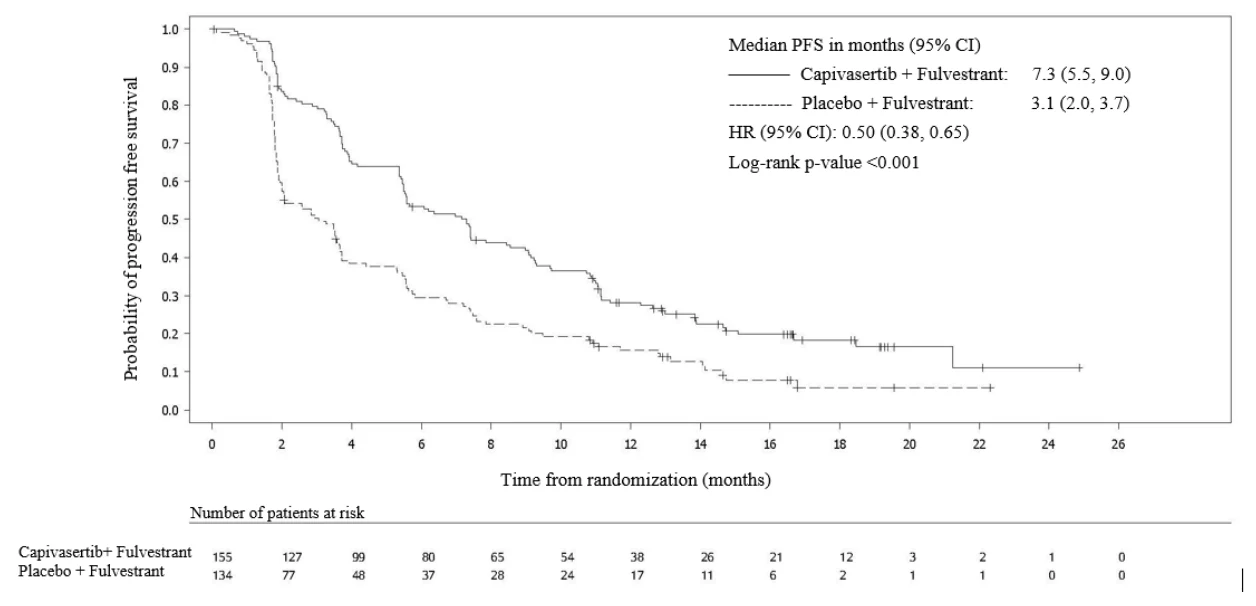
Improvement in PFS for patients treated with TRUQAP plus fulvestrant was observed across all pre-specified subgroups, including presence of visceral metastases, prior exposure to CDK4/6 inhibitors and in the non-altered tumour population which comprised patients with a confirmed non-altered tumour and those with no testing result available.
15. Microbiology
No microbiological information is required for this drug product.
16. Non-Clinical Toxicology
General Toxicology
In repeat-dose toxicity studies up to 6-month duration in rats, and up to 9-month duration in dogs, capivasertib administration was associated with increased levels of glucose and insulin as well as pathological changes in male reproductive organs (tubular degeneration in the testes and cellular debris in the epididymides). Another major target organ/system for toxicity in rats was the renal system. Most findings were reversible, except for the degenerative changes in male reproductive organs. These findings were observed at plasma concentrations lower or similar to those expected in humans at the recommended dose of 400 mg twice daily (approximately 0.14 to 2 times, based on total AUC).
Lens degeneration was observed in male rats in a 2-year rat carcinogenicity study at exposures lower than those in humans (0.1 times) at the recommended dose of 400 mg twice daily (based on total AUC).
Genotoxicity
Capivasertib was genotoxic in vivo in a rat bone marrow micronucleus test, mainly via an aneugenic mode of action. Capivasertib was not mutagenic in vitro in the bacterial mutation assay (Ames test) and was not genotoxic in the mouse lymphoma gene mutation assay.
Carcinogenicity
In a 2-year rat carcinogenicity study there was a dose-related increased incidence and/or severity of islet of Langerhans hypertrophy/hyperplasia (males and females) and neoplastic findings in the testis in males. Findings were observed at exposures lower than those in humans (0.2 – 0.5 times) at the recommended dose of 400 mg twice daily (based on total AUC).
Reproductive and Developmental Toxicology
Embryofetal/Developmental toxicity
In a rat embryofetal development study, administration of capivasertib caused maternal toxicity (reduce body weight gain and food consumption and increase in blood glucose) and adverse developmental toxicity including an increase in early embryo fetal deaths (post-implantation loss), reduced fetal weights and minor fetal visceral variation These effects were seen at a dose level of 150 mg/kg/day (approximately 0.8 times the exposure in human at the recommended dose of 400 mg twice daily based on total AUC). When capivasertib was administered to pregnant rats at 150 mg/kg/day (approximately 0.8 times the exposure in human at the recommended dose of 400 mg twice daily based on total AUC) throughout gestation and through early lactation, there was a reduction in litter and pup weights.
Exposure to capivasertib was confirmed in suckling pups which may indicate the potential for excretion of capivasertib in human milk.
Fertility
Following 10 weeks of treatment, capivasertib had no effect on fertility in male rats at doses up to 100 mg/kg/day (corresponding to exposures around 1.4 times the exposure in humans at the recommended dose of 400 mg twice daily based on total AUC). Effects on female fertility have not been studied in animals.
17. Supporting Product Monographs
- 1) FASLODEX® (fulvestrant injection), Control Number: 231097, Product Monograph, AstraZeneca Canada Inc. (2020-06-18)