


Product Monograph - Gavreto
RECENT MAJOR LABEL CHANGES
| 1 Indications, 1.2 Geriatrics | 05/2024 |
|---|---|
| 4 Dosage and Administration, 4.1 Dosing Considerations | 05/2024 |
| 4 Dosage and Administration , 4.2 Recommended Dose and Dosage Adjustment | 11/2024 |
| 7 Warnings and Precautions, Cardiovascular | 05/2024 |
| 7 Warnings and Precautions, Hepatic | 05/2024 |
| 7 Warnings and Precautions, Reproductive Health: Female and Male Potential | 05/2024 |
| 7 Warnings and Precautions, Respiratory | 05/2024 |
| 7 Warnings and Precautions, 7.1.4 Geriatrics | 05/2024 |
TABLE OF CONTENTS
Sections or subsections that are not applicable at the time of authorization are not listed.
RECENT MAJOR LABEL CHANGES ............................................................................................ 2
TABLE OF CONTENTS .............................................................................................................. 2
PART I: HEALTH PROFESSIONAL INFORMATION ...................................................................... 5
1 INDICATIONS ............................................................................................................... 5
1.1 Pediatrics ................................................................................................................ 5
1.2 Geriatrics ................................................................................................................ 5
2 CONTRAINDICATIONS ................................................................................................. 5
3 SERIOUS WARNINGS AND PRECAUTIONS BOX ............................................................ 5
4 DOSAGE AND ADMINISTRATION ................................................................................. 6
4.1 Dosing Considerations ............................................................................................ 6
4.2 Recommended Dose and Dosage Adjustment ....................................................... 6
4.3 Reconstitution ........................................................................................................ 9
4.4 Administration ........................................................................................................ 9
4.5 Missed Dose ........................................................................................................... 9
5 OVERDOSAGE .............................................................................................................. 9
6 DOSAGE FORMS, STRENGTHS, COMPOSITION AND PACKAGING ................................. 9
7 WARNINGS AND PRECAUTIONS ................................................................................ 10
7.1 Special Populations............................................................................................... 12
7.1.1 Pregnant Women ........................................................................................... 12
7.1.2 Breast-feeding ................................................................................................ 13
7.1.3 Pediatrics ........................................................................................................ 13
7.1.4 Geriatrics ........................................................................................................ 13
8 ADVERSE REACTIONS ................................................................................................ 13
8.1 Adverse Reaction Overview .................................................................................. 13
8.2 Clinical Trial Adverse Reactions ............................................................................ 14
8.3 Less Common Clinical Trial Adverse Reactions ..................................................... 16
8.4 Abnormal Laboratory Findings: Hematologic, Clinical Chemistry and Other Quantitative Data Clinical Trial Findings ......................................................................... 16
8.5 Post-Market Adverse Reactions ........................................................................... 17
9 DRUG INTERACTIONS ................................................................................................ 18
9.1 Serious Drug Interactions ..................................................................................... 18
9.2 Drug Interactions Overview .................................................................................. 18
9.3 Drug-Behavioural Interactions .............................................................................. 19
9.4 Drug-Drug Interactions ......................................................................................... 19
9.5 Drug-Food Interactions ......................................................................................... 21
9.6 Drug-Herb Interactions ......................................................................................... 21
9.7 Drug-Laboratory Test Interactions ........................................................................ 21
10 CLINICAL PHARMACOLOGY ....................................................................................... 21
10.1 Mechanism of Action ...................................................................................... 21
10.2 Pharmacodynamics ........................................................................................ 21
10.3 Pharmacokinetics ........................................................................................... 22
11 STORAGE, STABILITY AND DISPOSAL ......................................................................... 23
12 SPECIAL HANDLING INSTRUCTIONS ........................................................................... 23
PART II: SCIENTIFIC INFORMATION ....................................................................................... 24
13 PHARMACEUTICAL INFORMATION ............................................................................ 24
14 CLINICAL TRIALS ........................................................................................................ 25
14.1 Clinical Trials by Indication ............................................................................. 25
15 MICROBIOLOGY ........................................................................................................ 27
16 NON-CLINICAL TOXICOLOGY ..................................................................................... 27
PATIENT MEDICATION INFORMATION .................................................................................. 29
PART I: HEALTH PROFESSIONAL INFORMATION
1 INDICATIONS
GAVRETO® (pralsetinib) is indicated for the treatment of adult patients with rearranged during transfection (RET) fusion-positive locally advanced unresectable or metastatic non-small cell lung cancer (NSCLC).
A validated test is required prior to treatment to identify RET fusion-positive status (see 7 WARNINGS AND PRECAUTIONS: RET testing).
Efficacy in patients with RET fusion-positive NSCLC was based on objective response rate and duration of response in a single-arm study (see 14 CLINICAL TRIALS).
1.1 Pediatrics
Pediatrics (<18 years of age): No data are available to Health Canada; therefore, Health Canada has not authorized an indication for pediatric use.
1.2 Geriatrics
Geriatrics (≥65 years of age): Of the 540 patients in ARROW who received the recommended dose of GAVRETO at 400 mg once daily, 30.9% were 65 years or older. No overall differences in pharmacokinetics (PK) or efficacy were observed in comparison with younger patients. Patients ≥65 years of age were more likely to experience adverse events, serious adverse events, grade 3/4/5 adverse events, grade 3/4/5 serious adverse events, treatment interruptions, or treatment discontinuations.
2 CONTRAINDICATIONS
GAVRETO is contraindicated in patients who are hypersensitive to this drug or to any ingredient in the formulation, including any non-medicinal ingredient, or component of the container. For a complete listing, see 6 DOSAGE FORMS, STRENGTHS, COMPOSITION AND PACKAGING.
3 SERIOUS WARNINGS AND PRECAUTIONS BOX
Serious Warnings and Precautions
Treatment with GAVRETO (pralsetinib) should be initiated and supervised by a qualified physician experienced in the use of anticancer therapies (see 1 INDICATIONS). |
|---|
NOC/c
NOC/c
4 DOSAGE AND ADMINISTRATION
4.1 Dosing Considerations
- Coadministration of pralsetinib with moderate – strong CYP3A4 and/or P-gp inhibitors may increase pralsetinib plasma concentrations, which may increase the risk of adverse reactions. Avoid coadministration of GAVRETO with moderate – strong CYP3A4 and/or P-gp inhibitors. If coadministration cannot be avoided, reduce the GAVRETO dose (see 4.2 Recommended Dose and Dosage Adjustment and 9 DRUG INTERACTIONS).
- Coadministration of pralsetinib with a strong or moderate CYP3A4 inducer may decrease pralsetinib plasma concentrations and may result in decreased efficacy of pralsetinib. Avoid coadministration of GAVRETO with strong or moderate CYP3A4 inducers. If coadministration cannot be avoided, increase the GAVRETO dose (see 4.2 Recommended Dose and Dosage Adjustment and 9 DRUG INTERACTIONS).
4.2 Recommended Dose and Dosage Adjustment
Recommended Dose
The recommended dose of GAVRETO is 400 mg (four 100 mg capsules) taken orally once daily on an empty stomach (no food intake for at least 2 hours before and at least 1 hour after taking GAVRETO). Continue treatment as long as the patient is deriving clinical benefit from therapy or until unacceptable toxicity.
Dosage Adjustment
If dose modifications are required for adverse reactions, reduce the dose in 100 mg (one capsule) increments; the lowest recommended dose of GAVRETO is 100 mg once daily. GAVRETO dose reductions for adverse reactions are summarized in Table 1.
Table 1: Recommended Dose Reductions for GAVRETO for Adverse Reactions
| Dose Reduction | Recommended Dosage |
|---|---|
| First | 300 mg once daily |
| Second | 200 mg once daily |
| Third | 100 mg once daily |
Discontinue GAVRETO in patients who are unable to tolerate 100 mg taken orally once daily.
Recommended dose modifications of GAVRETO for the management of specific adverse reactions are provided in Table 2.
Table 2: Recommended Dose Modifications for GAVRETO for 8 ADVERSE REACTIONS
| Adverse Reaction | Severitya | Dosage Modification |
|---|---|---|
| ILD/Pneumonitis (see 7 WARNINGS AND PRECAUTIONS) | Grade 1 or 2 | Withhold GAVRETO until resolution. Resume by reducing the dose as shown in Table 1. Permanently discontinue GAVRETO for recurrent ILD/pneumonitis. |
| Grade 3 or 4 | Permanently discontinue GAVRETO for confirmed ILD/pneumonitis.b | |
| Hypertension (see 7 WARNINGS AND PRECAUTIONS) | Grade 3 | Withhold GAVRETO for Grade 3 hypertension that persists despite optimal antihypertensive therapy. Resume at a reduced dose when hypertension is controlled. |
| Grade 4 | Permanently discontinue GAVRETO. | |
| Hepatotoxicity (see 7 WARNINGS AND PRECAUTIONS) | Grade 3 or Grade 4 | Withhold GAVRETO and monitor AST/ALT once weekly until resolution to Grade 1 or baseline. Resume at reduced dose (Table 1). If hepatotoxicity recurs at Grade 3 or higher, permanently discontinue GAVRETO. |
| Hemorrhagic Events (see 7 WARNINGS AND PRECAUTIONS) | Grade 3 | Withhold GAVRETO until recovery to ≤ Grade 1. Resume by reducing the dose as shown in Table 1. If hemorrhagic events recur at Grade 3 or higher, permanently discontinue GAVRETO. |
| Grade 4 | Permanently discontinue GAVRETO. | |
| QT Interval Prolongation (see 7 WARNINGS AND PRECAUTIONS) | Grade 3 | Interrupt treatment with GAVRETO for QTc intervals >500ms until QTc interval returns to <470ms. Resume at the same dose if risk factors that cause QT prolongation are identified and corrected. Resume treatment at a reduced dose if other risk factors that cause QT prolongation are not identified. |
| Grade 4 | Permanently discontinue GAVRETO if the patient has life-threatening arrhythmia. | |
| Other Clinically Relevant Adverse Reactions (see 8 ADVERSE REACTIONS) | Grade 3 or 4 | Withhold GAVRETO until improvement to ≤ Grade 2. Resume at reduced dose (Table 1). Withhold GAVRETO until improvement to ≤ Grade 2 for recurrent Grade 3 events. Resume at reduced dose (Table 1). Permanently discontinue GAVRETO for recurrent Grade 4 events. |
a Adverse reactions graded by the National Cancer Institute Common Terminology Criteria for Adverse Events (NCI-CTCAE) version 4.03. b Not attributable to non-small cell lung cancer (NSCLC) progression, other pulmonary disease, infection, or radiation effect. | ||
Dose Modification for Use with Cytochrome P450 (CYP) 3A4 and/or P-glycoprotein (P-gp) Inhibitors
Avoid concomitant use of GAVRETO with any of the following:
- Strong CYP3A4 inhibitors
- Moderate CYP3A4 inhibitors
- P-gp inhibitors
- Combined P-gp and strong CYP3A4 inhibitors
- Combined P-gp and moderate CYP3A4 inhibitors
If concomitant use with any of the above inhibitors cannot be avoided, reduce the current dose of GAVRETO as recommended in Table 3 below. After the coadministered inhibitor has been discontinued for 3-5 elimination half-lives, resume GAVRETO at the dose taken prior to initiating the inhibitor [see 9 DRUG INTERACTIONS].
Table 3: Recommended Dose Modifications for GAVRETO for Coadministration with CYP3A4 and/or P-gp Inhibitors
| Current GAVRETO Dosage | Recommended GAVRETO Dosage when coadministered with: | ||||
|---|---|---|---|---|---|
|
| ||||
| 400 mg orally once daily | 200 mg orally once daily | 300 mg orally once daily | |||
| 300 mg orally once daily | 200 mg orally once daily | 200 mg orally once daily | |||
| 200 mg orally once daily | 100 mg orally once daily | 100 mg orally once daily | |||
Dose Modification for Use with CYP3A4 Inducers
Avoid concomitant use of GAVRETO with any of the following:
- Strong CYP3A4 inducers
- Moderate CYP3A4 inducers
If concomitant use with any of the above inducers cannot be avoided, increase the dose of GAVRETO as recommended in Table 4 starting on Day 7 of coadministration of GAVRETO with the inducer. After the inducer has been discontinued for at least 14 days, resume GAVRETO at the dose taken prior to initiating the inducer [see 9 DRUG INTERACTIONS].
| Table 4: Recommended Dosage Modifications for GAVRETO for Coadministration with CYP3A4 Inducers | ||
|---|---|---|
| Current GAVRETO Dosage | Recommended GAVRETO Dosage when Coadministered with: | |
| Strong CYP3A4 Inducers | Moderate CYP3A4 Inducers | |
| 400 mg orally once daily | 800 mg orally once daily | 600 mg orally once daily |
| 300 mg orally once daily | 600 mg orally once daily | 500 mg orally once daily |
| 200 mg orally once daily | 400 mg orally once daily | 300 mg orally once daily |
Special Populations
- Pediatrics (<18 years old): Health Canada has not authorized an indication for pediatric use.
- Geriatrics (≥65 years old): No dose adjustment is required in patients of ≥65 years of age [see 10 CLINICAL PHARMACOLOGY].
Renal Impairment: No dose adjustment is recommended for patients with mild or moderate renal impairment (creatinine clearance [CLCR] 30 to 89 mL/min estimated by Cockcroft-Gault).
The recommended dose of GAVRETO has not been established for patients with severe renal impairment (CLCR 15 to 29 mL/min) or end-stage renal disease (CLCR <15 mL/min) [see 10 CLINICAL PHARMACOLOGY].
- Hepatic Impairment: No dose adjustment is recommended for patients with mild (total bilirubin ≤ upper limit of normal [ULN] and aspartate aminotransferase [AST] > ULN or total bilirubin >1 to 1.5 times ULN and any AST), moderate (total bilirubin > 1.5 to 3.0 times ULN and any AST), or severe (total bilirubin > 3.0 times ULN and any AST) hepatic impairment [see 10 CLINICAL PHARMACOLOGY].
4.3 Reconstitution
Not applicable.
4.4 Administration
GAVRETO is to be taken on an empty stomach (no food intake for at least 2 hours before and at least 1 hour after taking GAVRETO) [see 10 CLINICAL PHARMACOLOGY; 9.5 Drug-Food Interactions]. Continue treatment as long as the patient is deriving clinical benefit from therapy or until unacceptable toxicity.
4.5 Missed Dose
If a dose of GAVRETO is missed, it can be taken as soon as possible on the same day. Resume the regular daily dose schedule for GAVRETO the next day.
GAVRETO is to be taken on an empty stomach (no food intake for at least 2 hours before and at least 1 hour after taking GAVRETO) [see 10 CLINICAL PHARMACOLOGY; 9.5 Drug-Food Interactions].
Do not take an additional dose if vomiting occurs after GAVRETO but continue with the next dose as scheduled.
5 OVERDOSAGE
There is limited experience with overdose in clinical trials with GAVRETO. The highest dose of GAVRETO studied in a Phase 1 clinical trial was 600mg QD in 4 patients. No new safety concern was observed. There is no known specific antidote for GAVRETO overdose. In the event of suspected overdose, interrupt GAVRETO, undertake general supportive measures, and observe until clinical stabilization.
| For management of a suspected drug overdose, contact your regional poison control centre. |
|---|
6 DOSAGE FORMS, STRENGTHS, COMPOSITION AND PACKAGING
Table 5: Dosage Forms, Strengths, Composition and Packaging
| Route of Administration | Dosage Form / Strength/Composition | Non-medicinal Ingredients |
| Oral | 100 mg pralsetinib capsule | Citric Acid, FD&C Blue #1 (Brilliant Blue FCF), Hydroxypropyl Methylcellulose (HPMC, Hypromellose), Magnesium Stearate, Microcrystalline Cellulose (MCC), Pharmaceutical grade printing ink, Pregelatinized Starch, Sodium Bicarbonate, |
Description
GAVRETO (pralsetinib) capsules are supplied as 100 mg, light blue opaque immediate release hydroxypropyl methylcellulose (HPMC) hard capsule, printed with “BLU-667” on the body and “100 mg” on the cap, available in bottles of 60 capsules, 90 capsules, and 120 capsules (not all pack sizes may be marketed).
7 WARNINGS AND PRECAUTIONS
Please see 3 SERIOUS WARNINGS AND PRECAUTIONS BOX.
General
RET Testing
Patients treated with GAVRETO must have a RET fusion-positive status based on a validated RET assay. Assessment for RET fusion-positive locally advanced unresectable or metastatic NSCLC should be performed by laboratories with demonstrated proficiency in the specific technology being utilized.
Improper assay performance can lead to unreliable test results.
Carcinogenesis and Mutagenesis
Please see 16 NON-CLINICAL TOXICOLOGY.
Cardiovascular
Hypertension
Of the 540 patients in ARROW who received the recommended dose of GAVRETO at 400 mg once daily, hypertension occurred in 35.0% of patients, including Grade 3-4 hypertension in 17.6% of patients. Overall, 4.8% of patients had their dose reduced for hypertension. Treatment-emergent hypertension was most commonly managed with anti-hypertension medications.
Do not initiate GAVRETO in patients with uncontrolled hypertension. Optimize blood pressure prior to initiating GAVRETO. Monitor blood pressure after 1 week, at least monthly thereafter and as clinically indicated. Initiate or adjust anti-hypertensive therapy as appropriate. Withhold, reduce dose, or permanently discontinue GAVRETO based on the severity [see Table 2, 4 DOSAGE AND ADMINISTRATION].
QT interval prolongation
Prolongation of the QT interval has been observed in patients who received Gavreto in clinical trials. Therefore, before starting Gavreto treatment, patients should have a QTc interval <=470ms and serum electrolytes within normal range. Hypokalaemia, hypomagnesaemia, and hypocalcaemia should be corrected both prior and during Gavreto treatment. Electrocardiograms (ECGs) and serum electrolytes should be monitored before starting and during Gavreto treatment, then periodically, as clinically indicated, depending also on presence of other risk factors (e,g, intercurrent diarrhoea, vomiting, nausea, concomitant medications).
Pralsetinib should be used with caution in patients with medical history of cardiac arrhythmias or QT interval prolongation, as well as in patients on strong CYP 3A4 inhibitors or on medicinal products known to be associated with QT/QTc interval prolongation.
| Titanium Dioxide. |
NOC/c
Gavreto may require interruption, dose modification, or discontinuation [see Table 2, 4 DOSAGE AND ADMINISTRATION].
Driving and Operating Machinery
No studies on the effects of GAVRETO on the ability to drive or use machines have been performed. Caution should be exercised when operating a vehicle or potentially dangerous machinery until the patient is reasonably certain that GAVRETO does not affect them adversely.
Hematologic
Hemorrhage
Serious, including fatal, hemorrhagic events can occur with GAVRETO. Of the 540 patients in ARROW who received the recommended dose of GAVRETO at 400 mg once daily, Grade ≥ 3 hemorrhagic events occurred in 4.1% of patients treated with GAVRETO including one patient with a fatal hemorrhagic event.
Withhold, reduce dose or permanently discontinue GAVRETO based on severity [see Table 2, 4 DOSAGE AND ADMINISTRATION].
Hepatic
Of the 540 patients in ARROW who received the recommended dose of GAVRETO at 400 mg once daily, serious hepatic adverse reactions occurred in 1.5% of patients treated for GAVRETO. Increased AST occurred in 49.1% of patients, including Grade 3-4 adverse reactions in 6.9%, and increased ALT occurred in 37.0% of patients, including Grade 3 or 4 adverse reactions in 4.8%.
Monitor AST and ALT prior to initiating GAVRETO, every 2 weeks during the first 3 months, then monthly thereafter and as clinically indicated. Withhold, reduce dose or permanently discontinue GAVRETO based on severity [see Table 2].
Monitoring and Laboratory Tests
Routine medical follow-up with a certified health care professional, which may include physical exams, laboratory tests, and/or diagnostic imaging, is required while being treated with GAVRETO (see 7 WARNINGS AND PRECAUTIONS: Hepatic; Hypertension, and 8 ADVERSE REACTIONS).
Perform electrocardiograms and measure serum electrolytes before starting and during GAVRETO treatment (see 7 WARNINGS AND PRECAUTIONS, QT interval prolongation)
Reproductive Health: Female and Male Potential
There is no clinical data on the use of GAVRETO during pregnancy. Studies in animals show reproductive toxicity [see 16 NON-CLINICAL TOXICOLOGY and 7.1 Special Populations, 7.1.1 Pregnant Women]
- GAVRETO should not be used during pregnancy, unless clearly necessary and after a careful consideration of the need of the mother and the risk to the fetus.
- Advise females of reproductive potential to inform their healthcare provider of a known or suspected pregnancy [see 7 WARNINGS AND PRECAUTIONS, Special Populations]
- Pregnancy Testing: Verify pregnancy status of females of reproductive potential prior to initiating GAVRETO.
Advise females of reproductive potential to use effective non-hormonal contraception during the treatment with GAVRETO and for 2 weeks after the final dose. GAVRETO may render hormonal
- Advise male patients with female partners of reproductive potential to use effective contraception, including a barrier method, during treatment with GAVRETO and for at least 1 week after the final dose.
Fertility
There is no clinical data on the effects of pralsetinib on fertility. Based on histopathological findings in the reproductive tissues from male and female rats in a 13-week repeated-dose toxicology study and a dedicated fertility study in which animals of both sexes were treated and mated to each other, GAVRETO may reduce fertility [see 16 NON-CLINICAL TOXICOLOGY].
Teratogenic Risk
Based on findings from animal studies and its mechanism of action, GAVRETO can cause fetal harm when administered to a pregnant woman. Oral administration of pralsetinib to pregnant rats during the period of organogenesis resulted in malformations and embryolethality at maternal exposures below the human exposure at the clinical dose of 400 mg once daily. For specific advice see 7 WARNINGS AND PRECAUTIONS, Reproductive Health: Female and Male Potential.
Respiratory
Interstitial Lung Disease (ILD)/ Pneumonitis
Severe, life-threatening, and fatal interstitial lung disease (ILD)/pneumonitis can occur in patients treated with GAVRETO. Of the 540 patients in ARROW who received the recommended dose of GAVRETO at 400 mg once daily, pneumonitis occurred in 12.2% of patients who received GAVRETO, including 3.3% with Grade 3-4, and 0.2% with fatal reactions.
Monitor for pulmonary symptoms indicative of ILD/pneumonitis. Withhold GAVRETO and promptly investigate for ILD in any patient who presents with acute or worsening of respiratory symptoms which may be indicative of ILD (e.g., dyspnea, cough, and fever). Withhold, reduce dose or permanently discontinue GAVRETO based on severity of confirmed ILD [see Table 2, 4 DOSAGE AND ADMINISTRATION].
Risk of Impaired Wound Healing
Impaired wound healing may occur in patients during treatment with drugs that inhibit the vascular endothelial growth factor (VEGF) pathway. GAVRETO has the ability to inhibit the VEGF pathway, and may impair or slow wound healing.
GAVRETO should be discontinued for at least 5 days prior to elective surgery. GAVRETO should not be initiated for at least 14 days following major surgery and until surgical wound is fully healed. The safety of resuming GAVRETO after surgery or after resolution of wound healing complications has not been established.
7.1 Special Populations
7.1.1 Pregnant Women
There is no clinical data on the use of GAVRETO in pregnant women.
Based on findings from animal studies and its mechanism of action, GAVRETO can cause fetal harm when administered to a pregnant woman. Oral administration of pralsetinib during the period of organogenesis was teratogenic and embryotoxic in rats at exposures below the human exposures at the 400 mg once daily dose [see 16 NON-CLINICAL TOXICOLOGY].
GAVRETO should not be used during pregnancy, unless clearly necessary and after a careful consideration of the need of the mother and the risk to the fetus.
7.1.2 Breast-feeding
There are no data regarding the presence of pralsetinib or its metabolites in milk, the effects of pralsetinib on the breastfed infant, or its effects on milk production.
It is unknown if the drug is excreted in human milk. Because many drugs are excreted in human milk precaution should be exercised. Advise lactating women not to breast feed during treatment with GAVRETO and for 1 week following the final dose.
7.1.3 Pediatrics
Pediatrics (<18 years of age): No data are available to Health Canada; therefore, Health Canada has not authorized an indication for pediatric use [see 16 NON-CLINICAL TOXICOLOGY].
7.1.4 Geriatrics
Of the 540 patients in ARROW who received the recommended dose of GAVRETO at 400 mg once daily, 30.9% were 65 years or older. No overall differences in pharmacokinetics (PK), or efficacy were observed in comparison with younger patients.
Safety of GAVRETO was generally consistent between elderly (≥65 years) and younger patients (< 65 years), although a greater percentage of elderly patients compared with younger patients experienced serious adverse events (73.7% for patients ≥65 years vs. 58.4% for patients <65 years of age), Grade ≥3 adverse events (89.8% for patients ≥65 years vs. 78.3% for patients <65 years of age), serious Grade ≥3 adverse events (65.3% for patients ≥65 years vs. 51.7% for patients <65 years of age), adverse events leading to treatment interruption (77.2% for patients ≥65 years vs. 69.7% for patients <65 years of age) or adverse events leading to treatment discontinuation (29.3% for patients ≥65 years vs. 18.8% for patients <65 years of age).
8 ADVERSE REACTIONS
8.1 Adverse Reaction Overview
The pooled safety population in the WARNINGS AND PRECAUTIONS section reflects exposure to GAVRETO as a single agent at 400 mg orally once daily in 540 patients with RET altered solid tumours in ARROW. The safety of pralsetinib at a starting dose of 400 mg once daily was evaluated in 281 patients with locally advanced unresectable or metastatic NSCLC in ARROW.
The most common adverse reactions in patients with locally advanced unresectable or metastatic NSCLC in ARROW (≥25%) in GAVRETO-treated patients were anemia (56.2%), neutropenia (50.2%), aspartate aminotransferase (AST) increased (48.8%), constipation (44.5%), musculoskeletal pain (44.1%), fatigue (42%), hypertension (37.0%), alanine aminotransferase (ALT) increased (36.9%), edema (33.1%), leukopenia (38.1%), cough (30.6%) and pyrexia (28.8%).
Serious adverse reactions occurred in 40.2% of patients who received GAVRETO. The most common serious adverse reactions (≥ 2%) in GAVRETO-treated patients were pneumonia (17.1%), pneumonitis (6.8%), anemia (5.7%), hemorrhage (4.3%), pyrexia (2.8), urinary tract infection (2.5%), musculoskeletal pain (2.1%) and dyspnoea (2.1%). Fatal adverse reactions (Grade 5) occurred in 12 (4.3%) patients; fatal adverse reaction which occurred in >1 patient was pneumonia (n=8) and dyspnoea (n=2).
Dose reductions due to adverse reactions occurred in 46.3% of GAVRETO-treated patients. The most common adverse reactions (≥ 2%) resulting in dose reductions were neutropenia (16.4%), anemia (11.4%), pneumonitis (7.5%), lymphopenia (6.0%), blood creatine phosphokinase increased (5.7%), hypertension (5.0%), leukopenia (5.0%), fatigue (4.6%), pneumonia (3.9%) and thrombocytopenia (2.5%).
Permanent discontinuation of GAVRETO for adverse reactions occurred for 12.1% of patients. The most common adverse reactions (>1 patient) that led to permanent discontinuation of GAVRETO were pneumonitis (3.2%), pneumonia (2.8%), fatigue (1.1%), neutropenia (1.1%), anemia (<1%), dyspnoea (<1%) and thrombocytopenia (<1%).
8.2 Clinical Trial Adverse Reactions
Clinical trials are conducted under very specific conditions. The adverse reaction rates observed in the clinical trials; therefore, may not reflect the rates observed in practice and should not be compared to the rates in the clinical trials of another drug. Adverse reaction information from clinical trials may be useful in identifying and approximating rates of adverse reactions in real-world use.
The safety of GAVRETO in patients with locally advanced unresectable or metastatic NSCLC with a RET fusion was evaluated in ARROW, a multicenter, non-randomized, open-label, multi-cohort clinical trial [See 14 CLINICAL TRIALS]. Patients received GAVRETO at 400 mg orally once daily (n=281) for a median of 14.95 months (range: 0.3 to 44.3 months).
Adverse reactions that were reported in patients with locally advanced unresectable or metastatic NSCLC with a starting dose of 400 mg in the ARROW trial, regardless of investigator-assessed causality, are listed in Table 6.
Table 6: Adverse Reactions Reported in ≥10% of Patients with NSCLC Receiving GAVRETO in ARROW
Adverse Reactions
GAVRETO N=281 | |||||||
All Grades1 n (%) | Grade 3-4 n (%) | ||||||
| Blood and Lymphatic System Disorders | |||||||
| Anemia2 | 158 (56.2) | 67 (23.8) | |||||
| Leukopenia3 | 107 (38.1) | 25 (8.9) | |||||
| Lymphopenia4 | 59 (21.0) | 37 (13.2) | |||||
| Neutropenia5 | 141 (50.2) | 65(23.1) | |||||
| Thrombocytopenia6 | 60 (21.4) | 17 (6.0) | |||||
| Gastrointestinal Disorders | |||||||
| Abdominal pain7 | 38 (13.5) | 1 (<1) | |||||
| Constipation | 125 (44.5) | 2(<1) | |||||
| Diarrhea | 84 (29.9) | 7 ( 2.5) | |||||
| Dry mouth | 49 (17.4) | 0 |
| Nausea | 53 (18.9) | 0 |
| Vomiting | 39 (13.9) | 3 (1.1%) |
| General Disorders and Administration Site Conditions | ||
| Edema8 | 93 ( 33.1) | 0 |
| Fatigue9 | 118 (42.0) | 7 (2.5)20 |
| Pyrexia | 81 (28.8) | 2 (<1) |
| Hepatobiliary Disorders | ||
| Alanine aminotransferase (ALT) increased | 101 (35.9) | 13 (4.6) |
| Aspartate aminotransferase (AST) increased | 137(48.8) | 18 (6.4) |
| Infections and Infestations | ||
| Pneumonia10 | 67 (23.8) | 37 (13.2)21 |
| Urinary Tract Infection | 45 (16.0) | 10 (3.6) |
| Musculoskeletal and Connective Tissue Disorders | ||
| Musculoskeletal pain11 | 124 (44.1) | 7 (2.5) |
| Blood creatine phosphokinase increased | 53 (18.9) | 25 (8.9) |
| Nervous System Disorders | ||
| Dizziness12 | 57 (20.3) | 2 (<1) |
| Headache13 | 43 (15.3) | 3 (1.1) |
| Taste Disorder14 | 47 (16.7) | 0 |
| Renal and Urinary Disorders | ||
| Blood creatinine increased | 70 (24.9) | 2 (<1) |
| Respiratory Disorder | ||
| Cough15 | 86 (30.6) | 1 (<1) |
| Dyspnea | 62 (22.1) | 6 (2.1)22 |
| Pneumonitis16 | 40 (14.2) | 9 (3.2) |
| Skin and subcutaneous tissue disorders | ||
| Rash17 | 49 (17.4) | 0 |
| Vascular Disorders | ||
| Hemorrhage18 | 57(20.3) | 10 (3.6) |
| Hypertension19 | 104 (37.0) | 10 (3.6) |
1 Per National Cancer Institute Common Terminology Criteria for Adverse Events (CTCAE) version 4.03. 2 Includes the preferred terms: Anaemia, Red blood cell count decreased, Aplastic anaemia, Haematocrit decreased, Haemoglobin decreased 3 Includes the preferred terms: Leukopenia, White blood cell count decreased 4 Includes the preferred terms: Lymphopenia, Lymphocyte count decreased 5 Includes the preferred terms: Neutropenia, Neutrophil count decreased 6 Includes the preferred terms: Thrombocytopenia, Platelet count decreased 7 Includes the preferred terms: Abdominal pain, Abdominal pain upper 8 Includes the preferred terms: Oedema, Swelling face, Peripheral swelling, Generalised oedema, Oedema peripheral, Face oedema, Periorbital oedema, Eyelid oedema, Swelling, Localised oedema 9 Includes the preferred terms: Fatigue, Asthenia 10 Includes the preferred terms: Pneumonia, Pneumocystis jirovecii pneumonia, Pneumonia cytomegaloviral, Atypical pneumonia, Lung infection, Pneumonia bacterial, Pneumonia haemophilus, Pneumonia influenzal, Pneumonia streptococcal, Pneumonia Moraxella, Pneumonia staphylococcal, Pneumonia viral, Pneumonia Escherichia, Pneumonia pseudomonal, Atypical mycobacterial pneumonia, Candida pneumonia, Embolic pneumonia, Enterobacter pneumonia, Haemorrhagic pneumonia, Herpes simplex pneumonia, Miliary pneumonia, Paracancerous pneumonia, Parasitic pneumonia, Pneumonia acinetobacter, Pneumonia adenoviral, Pneumonia anthrax, Pneumonia blastomyces, Pneumonia bordetella, Pneumonia chlamydial, Pneumonia cryptococcal, Pneumonia escherichia, | ||
8.3 Less Common Clinical Trial Adverse Reactions
Less Common Clinical Trial Adverse Reactions (occurring in ≥1% and <10% of NSCLC patients receiving GAVRETO in ARROW)
Blood and Lymphatic System Disorders: febrile neutropenia,
Ear and Labyrinth Disorders: vertigo
Eye Disorders: dry eye, vision blurred
Gastrointestinal Disorders: aphthous ulcer, colitis, gastroesophageal reflux disease, stomatitis
General Disorders and Administration Site Conditions: gait disturbance, fall
Infections and Infestations: sepsis
Musculoskeletal and Connective Tissue Disorders: muscle spasms, muscular weakness
Nervous System Disorders: balance disorder, peripheral neuropathy, peripheral sensory neuropathy
8.4 Abnormal Laboratory Findings: Hematologic, Clinical Chemistry and Other Quantitative Data Clinical Trial Findings
Table 7 summarizes the laboratory abnormalities observed in ARROW in patients with NSCLC.
Table 7: Select Laboratory Abnormalities Worsening from Baseline Reported in ≥20% of Patients with NSCLC Receiving GAVRETO in ARROW
Pneumonia fungal, Pneumonia helminthic, Pneumonia herpes viral, Pneumonia klebsiella, Pneumonia legionella, Pneumonia measles, Pneumonia mycoplasmal, Pneumonia necrotising, Pneumonia parainfluenzae viral, Pneumonia pneumococcal, Pneumonia proteus, Pneumonia respiratory syncytial viral, Pneumonia salmonella, Pneumonia serratia, Pneumonia toxoplasmal, Pneumonia tularaemia, Varicella zoster pneumonia 11 Includes the preferred terms: Myalgia, Arthralgia, Pain in extremity, Neck pain, Musculoskeletal pain, Back pain, Musculoskeletal chest pain, Bone pain, Spinal pain, Musculoskeletal stiffness 12 Includes the preferred terms: dizziness, dizziness postural and vertigo 13 Includes the preferred terms: Headache, Tension Headache 14 Includes the preferred terms: Dysgeusia, Ageusia 15 Includes the preferred terms: Cough, Productive Cough 16 Includes the preferred terms: Pneumonitis, Interstitial lung disease 17 Includes the preferred terms: Rash, Rash maculo-papular, Dermatitis acneiform, Erythema, Rash generalised, Rash papular, Rash pustular, Rash macular, Rash erythematous 18 Includes the preferred terms identified using the MedDRA 19.1 SMQ Haemorrhage (excl laboratory terms) narrow, with the exclusion of terms related invasive drug administration, terms related to rupture, disseminated intravascular coagulopathy, terms related to traumatic haemorrhages, and haemorrhagic terms related to pregnancy, birth or neonatal. 19 Includes the preferred terms: Hypertension, Blood pressure increased 20 Additionally, Grade 5 event was reported in 1 patient (0.4%) 21 Additionally, Grade 5 events were reported in 8 patients (2.8%) 22 Additionally, Grade 5 events were reported in two patients (0.7%) |
| Laboratory Abnormality | GAVRETO N=281 | |||||
|---|---|---|---|---|---|---|
All Grades* % | Grade 3 - 4* % | |||||
| Chemistry | ||||||
| Increased Aspartate Aminotransferase (AST) | 80.4 | 3.2 | ||||
| Increased Alanine Aminotransferase (ALT) | 58.7 | 3.9 | ||||
| Increased Alkaline Phosphatase (ALP) | 43.4 | 2.5 | ||||
| Decreased Albumin | 51.6 | <1 | ||||
| Decreased Calcium Corrected | 50.2 | 1.8 | ||||
| Decreased Phosphate | 49.5 | 16.7 | ||||
| Increased Creatinine | 44.5 | 1.4 | ||||
| Decreased Sodium | 42.3 | 10.0 | ||||
| Increased Bilirubin | 19.6 | 1.8 | ||||
| Hematology | ||||||
| Decreased Neutrophils | 69.8 | 21.0 | ||||
| Decreased Hemoglobin | 78.6 | 17.8 | ||||
| Decreased Lymphocytes | 73.3 | 31.7 | ||||
| Decreased Platelets | 32.7 | 5.3 | ||||
| Decreased Leukocytes | 79.0 | 11.4 | ||||
* Per National Cancer Institute Common Terminology Criteria for Adverse Events (CTCAE) version 4.03 except creatinine, which were graded per CTCAE version 5.0.
Clinically relevant laboratory abnormalities < 20% of patients who received GAVRETO included increased phosphate (reported as hyperphosphatemia in 11.7% of patients).
8.5 Post-Market Adverse Reactions
Not applicable.
9 DRUG INTERACTIONS
9.1 Serious Drug Interactions
Serious Drug Interactions GAVRETO should be avoided in patients with concomitant use of any of the following (see 4 DOSAGE AND ADMINISTRATION):
|
|---|
9.2 Drug Interactions Overview
CYP3A4 and/or P-gp Inhibitors
Strong CYP3A4 Inhibitors: Coadministration of multiple doses of voriconazole is predicted to increase the pralsetinib AUC by 122% and Cmax by 20%.
Moderate CYP3A4 Inhibitors: Coadministration of multiple doses of fluconazole is predicted to increase the pralsetinib AUC by 71% and Cmax by 15%.
P-gp Inhibitors: Coadministration of cyclosporine (single 600 mg dose) with a single 200 mg dose of pralsetinib in healthy subjects increased pralsetinib AUC0-inf by 81% and Cmax by 48%, relative to a 200 mg dose of pralsetinib administered alone.
Combined P-gp Inhibitors and Moderate CYP3A4 Inhibitors: Coadministration of multiple doses of diltiazem or verapamil is predicted to increase the pralsetinib AUC by 84-108% and Cmax by 60-68%.
Combined P-gp Inhibitors and Strong CYP3A4 Inhibitors: Coadministration of a single dose of pralsetinib 200 mg on Day 4 with itraconazole (200 mg twice daily on Day 1 followed by 200 mg once daily for 13 days), in healthy subjects, increased pralsetinib AUC0-inf by 251% and Cmax by 84%, compared to a 200 mg dose of pralsetinib administered alone.
CYP3A4 Inducers
Strong CYP3A4 Inducers: Coadministration of pralsetinib 400 mg as a single dose on Day 9 with rifampin 600 mg once daily for 16 days, in healthy subjects, decreased pralsetinib AUC0-inf by 68% and Cmax by 30%, relative to a 400 mg dose of pralsetinib administered alone.
Moderate CYP3A4 Inducers: Coadministration of multiple doses of efavirenz or phenobarbital is predicted to decrease the pralsetinib AUC by 32-45% and Cmax by 14-18%.
Mild CYP3A4 Inducers: Based on a population PK analysis, CYP3A4 mild inducers decreased pralsetinib exposures, but were not clinically significant in patients with NSCLC.
No clinically significant differences in the pharmacokinetics of pralsetinib were identified when co-administered with gastric acid reducing agents, compared to GAVRETO administered alone.
In vitro studies indicate that pralsetinib is a time-dependent inhibitor of Cytochrome P450 enzymes [CYP]3A4/5 and; an inhibitor of CYP2C8, CYP2C9, and CYP3A4/5, but not an inhibitor of CYP1A2, CYP2B6, CYP2C19 or CYP2D6 at clinically relevant concentrations. Pralsetinib is an inducer of CYP2C8, CYP2C9, and CYP3A4/5 but not an inducer of CYP1A2, CYP2B6, or CYP2C19 at clinically relevant concentrations. Pralsetinib is a substrate of P-glycoprotein (P-gp) and breast cancer resistance protein (BCRP), but not a substrate of bile salt efflux pump (BSEP), organic cation transporter [OCT]1, OCT2, organic anion transporting polypeptide [OATP]1B1, OATP1B3, multidrug and toxin extrusion [MATE]1, MATE2-K, organic anion transporter [OAT]1, or OAT3. Pralsetinib is an inhibitor of P-gp, BCRP, OATP1B1, OATP1B3, OAT1, MATE1, MATE2-K, and BSEP, but not an inhibitor of OCT1, OCT2, and OAT1A3 at clinically relevant concentrations.
9.3 Drug-Behavioural Interactions
Behavioural interactions have not been established.
9.4 Drug-Drug Interactions
The drugs listed in Table 8 are based on clinical studies.
Table 8: Established or Potential Drug-Drug Interactions
| Proper / Common name | Source of Evidence | Effect | Clinical comment |
| Strong CYP3A4 Inhibitors (e.g. voriconaxole) | PBPK Modeling | Coadministration of pralsetinib with a strong CYP3A4 inhibitor increased plasma pralsetinib concentrations. This may increase the risk of adverse reactions. |
|
| Moderate CYP3A4 Inhibitors (e.g. fluconazole) | PBPK Modeling | Coadministration of pralsetinib with a moderate CYP3A4 inhibitor increased plasma pralsetinib concentrations. This may increase the risk of adverse reactions. |
|
| Proper / Common name | Source of Evidence | Effect | Clinical comment | ||||
P-gp Inhibitors (e.g. cyclosporine) | Clinical Trial | Coadministration of pralsetinib with a P-gp inhibitor increased plasma pralsetinib concentrations. This may increase the risk of adverse reactions. |
| ||||
| Combined P-gp and Moderate CYP3A4 Inhibitor (e.g., diliazem, verapamil) | PBPK Modeling | Coadministration of pralsetinib with a combined P-gp and moderate CYP3A4 inhibitor increased plasma pralsetinib concentrations. This may increase the risk of adverse reactions. |
| ||||
| Combined P-gp and Strong CYP3A4 Inhibitor (e.g., itraconazole) | Clinical Trial | Coadministration of pralsetinib with a combined P-gp and strong CYP3A4 inhibitor increased plasma pralsetinib concentrations. This may increase the risk of adverse reactions. |
| ||||
| Strong CYP3A4 Inducers (e.g. rifampin) | Clinical Trial | Coadministration of pralsetinib with a strong CYP3A4 inducer decreased plasma pralsetinib concentrations. This may result in decreased efficacy of pralsetinib. |
| ||||
| Moderate CYP3A4 Inducers (e.g. efavirenz, phenobarbital) | PBPK Modeling | Coadministration of pralsetinib with a moderate CYP3A4 inducer decreased plasma pralsetinib concentrations. This may result in decreased efficacy of pralsetinib. |
| ||||
| PBPK= physiological based pharmacokinetic | |||||||
9.5 Drug-Food Interactions
GAVRETO is to be taken on an empty stomach (no food intake for at least 2 hours before and at least 1 hour after taking GAVRETO). Following administration of a single dose of 200 mg GAVRETO with a high-fat meal (approximately 800 to 1000 calories with 50 to 60% of calories from fat), the mean (90% CI) Cmax of pralsetinib was increased by 104% (65% - 153%), the mean (90% CI) AUC0-INF was increased by 122% (96% - 152%), and the median Tmax was delayed from 4 to 8.5 hours, compared to the fasted state [see 4 DOSAGE AND ADMINISTRATION and 10 CLINICAL PHARMACOLOGY].
9.6 Drug-Herb Interactions
Interactions with herbal products have not been established.
9.7 Drug-Laboratory Test Interactions
Interactions with laboratory tests have not been established.
10 CLINICAL PHARMACOLOGY
10.1 Mechanism of Action
GAVRETO is a tyrosine kinase inhibitor that targets oncogenic RET fusions and mutations, including V804 gatekeeper mutations associated with resistance to other therapies. In vitro, GAVRETO inhibited several oncogenic RET fusions and mutations (CCDC6-RET, RET V804L, RET V804M and RET M918T) with half maximal inhibitory concentrations (IC50) less than 0.5 nM. In a broad panel of purified enzyme assays, GAVRETO inhibited DDR1, TRKC, FLT3, JAK1-2, TRKA, VEGFR2, PDGFRB, and FGFR1 at higher concentrations that were still clinically achievable at Cmax, with 81-fold selectivity for RET over VEGFR2.
RET fusion proteins and activating point mutations can drive tumorigenic potential through hyperactivation of downstream signaling pathways leading to uncontrolled cell proliferation. GAVRETO exhibited anti-tumor activity in cultured cells and animal tumor implantation models representing multiple tumor types harboring oncogenic RET fusions or mutations (KIF5B-RET, CCDC6-RET, RET M918T, RET C634W, as well as the V804L and V804M mutants associated with cabozantinib and vandetanib resistance).
GAVRETO was 14-, 40-, and 12-fold more potent on RET in a cellular setting compared with representatives of the VEGFR2, FGFR, or JAK families, respectively.
GAVRETO demonstrated prolonged survival in intracranial mouse models of KIF5B-RET and CCDC-6 RET compared with vehicle controls. Antitumor activity correlated with GAVRETO exposures and pharmacodynamic modulation of tumor biomarkers, including direct inhibition of RET kinase activity.
10.2 Pharmacodynamics
Exposure-Response Relationships
Based on the data from ARROW, exposure-response relationships for any Grade 3 or 4 adverse reaction were observed at higher exposures, with a faster time to onset for adverse reactions with increasing pralsetinib exposure.
NOC/c
10.3 Pharmacokinetics
Pralsetinib Cmax and AUC increased inconsistently over the dose range of 60 mg to 600 mg once daily (0.15 to 1.5 times the recommended dose) in patients. Dose proportionality could not be established for the 200-400 mg QD dose range in patients due to the low number of patients receiving doses outside the 400 mg QD dosing regimen. However, following a single dose in healthy volunteers, pralsetinib was found to be dose proportional across the 200-400 mg dose range.
Table 9: Summary of Pralsetinib Pharmacokinetic Parameters in Patients with NSCLC Receiving GAVRETO in ARROW
| Cmax (ng/mL) | Tmax (h) | t½ (h) | AUC0-∞ (ng•h/mL) | CL/F (L/h) | Vz/F (L) | ||||||
| Single dose (n=87) | 1610 | 4.00 | 14.7 | 33,800 | 11.8 | 228 | |||||
| Repeat dose, Steady state (n=77) | 2830 | 4.00 | 22.2 | 43,900 a | 9.10 | 268 | |||||
a AUC0-24 = area under the plasma concentration-time curve from time 0 to 24 hours post-dose; AUC0-∞ = area under the plasma concentration-time curve from time 0 to infinity; CL/F = apparent oral clearance, unadjusted for bioavailability; Cmax = maximum plasma concentration; Tmax = time of maximum plasma concentration; t1/2 = apparent elimination half-life; Vz/F = apparent volume of distribution during the terminal phase, unadjusted for bioavailability. Note: Pharmacokinetic parameters are described for single-dose (Cycle 1 Day 1) and at steady-state (Cycle 1 Day 15) at the recommended dosage of 400 mg once daily. Values provided are geometric mean except for Tmax (median) and t1/2 (arithmetic mean). | |||||||||||
Absorption
The median time to peak concentration (Tmax) ranged from 2.0 to 4.0 hours following single doses of pralsetinib 60 mg to 600 mg (0.15 to 1.5 times the approved recommended dose). The Cmax of pralsetinib was increased by 104% and the AUC0-∞ was increased by 122% when GAVRETO was taken with a high-calorie, high-fat meal compared to those in the fasted state.
Distribution:
The mean apparent volume of distribution of pralsetinib is 228 L. In vitro protein binding of pralsetinib is 97.1% and is independent of concentration. The blood-to-plasma ratio is 0.6 to 0.7.
Metabolism:
Pralsetinib is primarily metabolized by CYP3A4 and to a lesser extent by CYP2D6 and CYP1A2 in vitro. Following a single oral dose of approximately 310 mg of radiolabeled pralsetinib to healthy subjects, unchanged pralsetinib was the predominant radioactive component in plasma, urine, and feces, while its metabolites from oxidation (M531, M453, M549b) and glucuronidation (M709) were detected in small to trace amounts (~5%).
Elimination
The mean plasma elimination half-life of pralsetinib was 14.7 hours following single doses of pralsetinib 400 mg (the recommended dose), and steady state exposures are estimated to be reached by 3 to 5 days. The steady state mean apparent oral clearance of pralsetinib is 9.1 L/h.
Following a single oral dose of radiolabeled pralsetinib to healthy subjects, 72.5% of the radioactive dose was recovered in feces and 6.1% in urine.
Special Populations and Conditions
- Geriatrics: No clinically significant differences in the pharmacokinetics of pralsetinib were observed based on age (18 to 90 years).
- Sex: No clinically significant differences in the pharmacokinetics of pralsetinib were observed based on sex.
- Ethnic origin: No clinically significant differences in the pharmacokinetics of pralsetinib were observed based on race (White, Black, or Asian).
Hepatic Insufficiency: No clinically significant differences in the pharmacokinetics of pralsetinib were observed based on mild hepatic impairment (total bilirubin ≤ ULN and AST > ULN or total bilirubin >1 to 1.5 times ULN and any AST).
In a dedicated hepatic impairment trial, following a single oral dose of 200 mg pralsetinib, peak pralsetinib exposure was similar in subjects with moderate hepatic impairment (as defined by Child-Pugh criteria) compared to subjects with normal hepatic function, with geometric mean ratios (GMR) (90% CI) of 98.6% (59.7, 163) for Cmax and 112% (65.4, 193) for AUC0-∞. In subjects with severe hepatic impairment (as defined by ChildPugh criteria), AUC0-∞ was also similar compared to subjects with normal hepatic function (85.8% [51.1, 144]). Cmax was slightly lower in subjects with severe hepatic impairment compared to subjects with normal hepatic function, with a Cmax GMR of 67.9% (35.3, 131). Unbound Cmax (Cmax,u) and AUC0-∞ (AUC0-∞,u) were slightly higher in subjects with severe hepatic impairment (as defined by Child-Pugh criteria) compared to subjects with normal hepatic function, with a Cmax,u GMR of 129% (70.4, 236) and AUC0-∞,u GMR of 163% (98.7, 268). Similar PK results were obtained when hepatic impairment subjects were classified by NCI-ODWG criteria.
Therefore, no dose adjustment is needed in patients with hepatic impairment.
- Renal Insufficiency: No clinically significant differences in the pharmacokinetics of pralsetinib were observed based on mild to moderate renal impairment (CLCR 30 to 89 mL/min estimated by Cockcroft-Gault). The effect of severe renal impairment (CLCR 15 to 29 mL/min) or end-stage renal disease (CLCR <15 mL/min) on the pharmacokinetics of pralsetinib is unknown.
- Obesity: No clinically significant differences in the pharmacokinetics of pralsetinib were observed based on body weight (39.5 to 156.3 kg).
11 STORAGE, STABILITY AND DISPOSAL
Store 15-30°C in original bottle. Protect from moisture. Keep out of the sight and reach of children.
Any unused medicinal product or waste material should be disposed of in accordance with local requirements.
12 SPECIAL HANDLING INSTRUCTIONS
Not applicable.
PART II: SCIENTIFIC INFORMATION
13 PHARMACEUTICAL INFORMATION
Drug Substance
| Proper/Common name: | Pralsetinib |
|---|---|
| Chemical name: | (cis)-N-((S)-1-(6-(4-fluoro-1H-pyrazol-1-yl)pyridine-3-yl)ethyl)-1-methoxy-4-(4-methyl-6-(5-methyl-1H-pyrazol-3-ylamino)pyrimidin-2-yl)cyclohexanecarboxamide |
| Molecular formula and molecular mass : | C27H32FN9O2 / and 533.61 g/mol |
| Structural formula: | 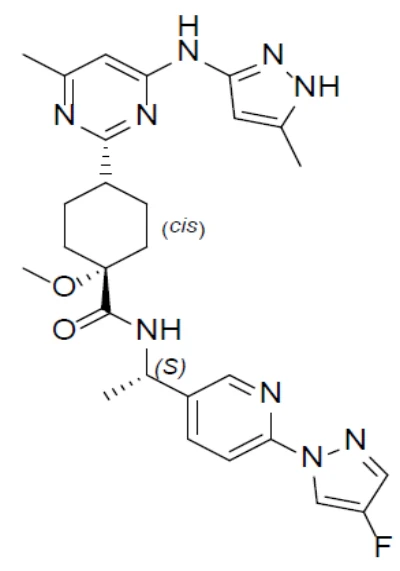 |
| Physicochemical properties: | |
| Description: | White to off white to yellow solid. |
| Solubility: | The solubility of pralsetinib in aqueous media decreases over the range pH 1.99 to pH 7.64 from 0.880 mg/mL to <0.001 mg/mL, indicating a decrease in solubility with increasing pH. |
14 CLINICAL TRIALS
14.1 Clinical Trials by Indication
Locally Advanced Unresectable or Metastatic Non-Small Cell Lung Cancer (NSCLC)
Table 10: Summary of Patient Demographics for the Evaluation of Efficacy in the RET fusion-positive Locally Advanced Unresectable or Metastatic NSCLC*(ARROW)
| Study # | Trial design | Dosage, route of administration and duration | Study subjects (n) | Median age (Range) | Sex |
| BLU-667-1101 (ARROW) | Multicenter, non-randomized, open-label, multi-cohort trial | 400 mg GAVRETO, oral, treatment for at least 1 cycle (28 days) | 130 (patients previously treated with platinum-based chemotherapy) 107 (treatment naïve patients) | 60 years (26 to 85 years) 62 years (30 to 87 years) | 64 male/ 66 female 50 male/ 57 female |
| *with measurable disease at baseline | |||||
The efficacy of GAVRETO was demonstrated in patients with RET fusion-positive locally advanced unresectable or metastatic NSCLC in ARROW, a multicenter, non-randomized, open-label, multi-cohort clinical trial (NCT03037385). All NSCLC patients were required to have locally advanced unresectable or metastatic disease with measurable disease by Response Evaluable Criteria in Solid Tumors (RECIST) version 1.1. (v1.1) and have a RET fusion as determined by local testing (74.4% next generation sequencing [NGS] [48.0% tumor sample, 12.8% plasma, 13.6% unknown], 24.0% fluorescence in situ hybridization [FISH] testing of tumour tissue, 1.6% other). Patients with asymptomatic central nervous system (CNS) metastases, including patients with stable or decreasing steroid use within 2 weeks prior to study entry, were enrolled. The major efficacy outcome measures were overall response rate (ORR) according to RECIST v1.1 and duration of response (DOR) as evaluated by a Blinded Independent Central Review (BICR).
NSCLC Previously Treated with Platinum Chemotherapy
The assessment of efficacy was based on a total of 130 patients with RET fusion-positive locally advanced unresectable or metastatic NSCLC previously treated with platinum-based chemotherapy who received GAVRETO at a starting dose of 400 mg orally once daily.
The demographic characteristics across the 130 patients were: 50.8% female, 40.0% White, 50% Asian, 4.6% Hispanic/Latino, and the median age was 59.0 years (range 26 to 85 years) with 34.6% ≥65 years of age. The majority of patients had an ECOG performance status at baseline of 0-1 (95.4%) or 2 (3.8%).
The patient population was composed of those with metastatic (99.2%) or locally advanced unresectable (<1%) disease. The predominant histology was adenocarcinoma (96.2%).
Forty-point-eight percent of patients had either a history of or current CNS metastases. The most common RET fusion partners were KIF5B (70.0%) and CCD6 (19.2%). The extent of prior systemic therapy is described in Table 11.
NOC/c
Table 11: Prior Systemic Therapy RET fusion-positive Locally Advanced Unresectable or Metastatic NSCLC (ARROW)
| Extent of Prior Systemic Therapy | % of Patients |
|---|---|
| Prior platinum-based chemotherapy | 100% |
| Prior PD-1/PD-L1 inhibitor | 41.5% |
| Prior Multikinase Inhibitors | 26.9% |
| Other systemic therapies | 31.5% |
Treatment-naïve RET fusion-positive NSCLC
Efficacy was evaluated in 107 patients with treatment-naïve RET fusion-positive NSCLC enrolled into ARROW who received GAVRETO at a starting dose of 400 mg orally once daily. Per protocol, based on investigator assessment, all patients were deemed not eligible for platinum-based chemotherapy.
The demographic characteristics across the 107 patients were: 53.3% female, 48.6% White, 44.9% Asian, and the median age was 62.0 years (range 30 to 87 years) with 40.2% ≥65 years of age. The majority of patients had an ECOG performance status at baseline of 0 (30.8%) or 1 (68.2%).
All patients had metastatic disease and adenocarcinoma histology. Twenty-eight percent of patients had a history of or current brain metastases. The most common RET fusion partners were KIF5B (71.0%) and CCD6 (17.8%).
Study results in patients with NSCLC Previously Treated with Platinum Chemotherapy
Efficacy results are summarized in Table 12. The median time to first response was 1.84 months (range: 1.3 to 11.4 months) and the median follow-up time for duration of response was 29.3 months.
Table 12: Efficacy Results for ARROW (RET fusion-positive Locally Advanced Unresectable or Metastatic NSCLC Previously Treated with Platinum Chemotherapy)
| Efficacy Parameter | GAVRETO (N=130) | |
|---|---|---|
| Overall Response Rate (ORR)a (95% CI) | 63.1% (54.2%, 71.4%) | |
| Complete Response (%) | 6.2% | |
| Partial Response (%) | 56.9% | |
| Duration of Response (DOR) | (N=82) | |
| DOR, median (95% CI) in months | 38.8 (14.8, 40.4) | |
| % DOR ≥6 months | 80.5% | |
CI = confidence interval a Confirmed overall response rate assessed by Blinded Independent Central Review (BICR). | ||
Exploratory Results
Prior anti-PD-1 or anti-PD-L1 therapy
For the 54 patients who received an anti-PD-1 or anti-PD-L1 therapy, either sequentially or concurrently with platinum-based chemotherapy, an exploratory subgroup analysis of ORR was 59.3% (95% CI: 45.0, 72.4) and the median DOR (N=32) was 22.3 months (95% CI: 8.0, NR).
Brain metastases
The RECIST CNS ORR assessed by BICR was 7 out of 10 response evaluable patients with brain metastases at baseline, including 2 patients with a CNS complete response. No patients without history of CNS involvement and receiving a starting dose of 400 mg once daily developed new CNS metastases on study.
Study results in patients with treatment-naïve RET fusion-positive NSCLC
Efficacy results are summarized in Table 13. The median time to first response was 1.84 months (range: 0.9 to 6.1 months) and the median follow-up time for duration of response was 20.2 months.
Table 13: Efficacy Results for ARROW (Treatment-Naïve RET fusion-positive Locally Advanced Unresectable or Metastatic NSCLC)
| Efficacy Parameter | GAVRETO (N=107) | |
|---|---|---|
| Overall Response Rate (ORR)a (95% CI) | 77.6% (68.5%, 85.1%) | |
| Complete Response (%) | 6.5% | |
| Partial Response (%) | 71.0% | |
| Duration of Response (DOR) | (N=83) | |
| DOR, median (95% CI) in months | 13.4 (9.4, 23.1) | |
| % DOR ≥6 months | 74.7% | |
CI = confidence interval a Confirmed overall response rate assessed by Blinded Independent Central Review (BICR). | ||
15 MICROBIOLOGY
No microbiological information is required for this drug product.
16 NON-CLINICAL TOXICOLOGY
General Toxicology
In the 4- and 13-week repeat-dose toxicity studies conducted in Sprague Dawley rats and Cynomolgus monkeys administered pralsetinib via once daily oral dosing dose levels tested ranged from 20-75 mg/kg/day and 5-20 mg/kg/day, respectively, in rats; and, 2.5-40 mg/kg/day and 2-10 mg/kg/day, respectively, in Cynomolgus monkeys. In the 13-week repeat-dose toxicity studies, target organs in the rat included the bone marrow, with findings of decreased cellularity histopathologically consistent with decreases in red blood cells (RBCs) and mild decreases in white blood cells (WBCs), kidney (decreased weight and tubular basophilia/mineralization), and lung (macrophage aggregation).
In 28-day rat and monkey toxicology studies, once daily oral administration of pralsetinib resulted in histologic necrosis and hemorrhage in the heart of preterm decedents at exposures ≥2.6 times and ≥1.1 times, respectively, the human exposure based on AUC at the clinical dose of 400 mg. In monkeys, necrosis and hemorrhage were multiorganic (attributed to sepsis with intralesional bacteria in lymph nodes, spleen, heart and kidneys).
Pralsetinib induced hyperphosphatemia (rats) and multi-organ mineralization (rats and monkeys) in 13-week toxicology studies at exposures approximately 2.4-3.5 times and ≥0.11 times, respectively, the human exposure based on AUC at the clinical dose of 400 mg.
Bone (increased physeal thickness in the sternum and femur) and teeth (incisor fractures and histologic dentin matrix alteration, ameloblast/odontoblast degeneration, mixed cell inflammation, odontoblast necrosis) findings were present in rats and may be related to VEGFR/FGFR inhibition. Although similar toxicities were not seen in the 13-week monkey study, treatment with 15/7.5 mg/kg pralsetinib in the 28-day study resulted in physeal dysplasia in the femur of monkeys at doses results in exposures similar to the human exposure (AUC) at the clinical dose of 400 mg. Recovery was not assessed in the 13-week studies, but increased physeal thickness in the femur and incisor degeneration did not show evidence of complete recovery within the 14-day period recovery time in the 28-day rat study.
Additional findings at approximately 2x exposure margins in the rat included degenerative changes in male and female reproductive organs. Increased blood pressure was observed in rats after a single dose of 25 mg/kg (2x margin). Regarding local exposure and toxicity, there was no evidence of gastrointestinal disturbance in either species up to a dose of 10 mg/kg. At higher doses in monkeys, gastrointestinal effects including mucosal ulcerations and hemorrhage with subsequent fatal secondary bacterial sepsis were observed.
Carcinogenicity
Carcinogenicity studies with pralsetinib have not been conducted.
Genotoxicity
Pralsetinib was not mutagenic in vitro in the bacterial reverse mutation (Ames) assay with or without metabolic activation. Pralsetinib was also negative in both in vitro and in vivo micronucleus tests.
Reproductive and Developmental Toxicology
In a dedicated fertility and early embryonic development study conducted in treated male rats mated to treated female rats, although pralsetinib did not have clear effects on male or female mating performance or ability to become pregnant, at the 20 mg/kg dose level (approximately 2.5-3.6 times the human exposure (AUC) at the clinical dose of 400 mg based on toxicokinetic data from the 13-week rat toxicology study) 82% of female rats had totally resorbed litters, with 92% post-implantation loss (early resorptions); post-implantation loss occurred at doses as low at 5 mg/kg (approximately 0.3 times the human exposure (AUC) at the clinical dose of 400 mg based on toxicokinetic data from the 13-week rat toxicology study). In a 13-week repeat-dose toxicology study, male rats exhibited histopathological evidence of tubular degeneration/atrophy in the testis with secondary cellular debris and reduced sperm in the lumen of the epididymis, which correlated with lower mean testis and epididymis weights and gross observations of soft and small testis. Female rats exhibited degeneration of the corpus luteum in the ovary. For both sexes, these effects were observed at pralsetinib doses ≥10 mg/kg/day, approximately 0.9 times the human exposure based on AUC at the clinical dose of 400 mg.