


Product Monograph - Ofev
RECENT MAJOR LABEL CHANGES
| 1 Indication | 05/2020 |
|---|---|
| 4 Dosing and Administration; 4.1 Dosing Considerations | 11/2019 |
| 4 Dosage and Administration; 4.2 Recommended Dose and Dosage Adjustment | 11/2019 |
| 4 Dosage and Administration; 4.4 Administration | 07/2021 |
| 7 Warnings and Precautions | 09/2024 |
| 7 Warnings and Precautions; 7.1.1 Pregnant Women | 11/2019 |
TABLE OF CONTENTS
Sections or subsections that are not applicable at the time of authorization are not listed.
RECENT MAJOR LABEL CHANGES ............................................................................................. 2
TABLE OF CONTENTS ............................................................................................................... 2
1 INDICATIONS ................................................................................................................ 4
1.1 Pediatrics ................................................................................................................. 4
1.2 Geriatrics ................................................................................................................. 4
2 CONTRAINDICATIONS .................................................................................................. 4
4 DOSAGE AND ADMINISTRATION .................................................................................. 4
4.1 Dosing Considerations ............................................................................................. 4
4.2 Recommended Dose and Dosage Adjustment ........................................................ 5
4.4 Administration ......................................................................................................... 6
4.5 Missed Dose ............................................................................................................ 6
5 OVERDOSAGE ............................................................................................................... 6
6 DOSAGE FORMS, STRENGTHS, COMPOSITION AND PACKAGING .................................. 7
6.1 Physical Characteristics ........................................................................................... 7
7 WARNINGS AND PRECAUTIONS ................................................................................... 8
7.1 Special Populations................................................................................................ 14
7.1.1 Pregnant Women ............................................................................................ 14
7.1.2 Breast-feeding ................................................................................................. 14
7.1.3 Pediatrics ......................................................................................................... 15
7.1.4 Geriatrics ......................................................................................................... 15
8 ADVERSE REACTIONS ................................................................................................. 15
8.1 Adverse Reaction Overview ................................................................................... 15
8.2 Clinical Trial Adverse Reactions ............................................................................. 15
8.3 Less Common Clinical Trial Adverse Drug Reactions .............................................. 21
8.5 Post-Market Adverse Reactions ............................................................................ 21
9 DRUG INTERACTIONS ................................................................................................. 22
9.2 Drug Interactions Overview ................................................................................... 22
9.3 Drug-Behavioural Interactions ............................................................................... 22
9.4 Drug-Drug Interactions .......................................................................................... 22
9.5 Drug-Food Interactions .......................................................................................... 24
9.6 Drug-Herb Interactions .......................................................................................... 24
9.7 Drug-Laboratory Test Interactions ......................................................................... 24
10 CLINICAL PHARMACOLOGY ........................................................................................ 24
10.1 Mechanism of Action ....................................................................................... 24
10.2 Pharmacodynamics ......................................................................................... 24
10.3 Pharmacokinetics ............................................................................................ 25
11 STORAGE, STABILITY AND DISPOSAL .......................................................................... 28
12 SPECIAL HANDLING INSTRUCTIONS ............................................................................ 28
PART II: SCIENTIFIC INFORMATION ........................................................................................ 29
13 PHARMACEUTICAL INFORMATION ............................................................................. 29
14 CLINICAL TRIALS ......................................................................................................... 30
14.1 Clinical Trials by Indication .............................................................................. 30
Idiopathic Pulmonary Fibrosis (IPF) ................................................................................ 30
Systemic Sclerosis associated Interstitial Lung Disease (SSc-ILD) .................................. 33
Other Chronic Fibrosing Interstitial Lung Diseases (ILDs) with a Progressive Phenotype (PF-ILD)............................................................................................................................ 37
15 MICROBIOLOGY ......................................................................................................... 42
16 NON-CLINICAL TOXICOLOGY ...................................................................................... 42
PATIENT MEDICATION INFORMATION ............................................................................ 44
PART I: HEALTH PROFESSIONAL INFORMATION
1 INDICATIONS
OFEV (nintedanib) capsules are indicated for:
- The treatment of Idiopathic Pulmonary Fibrosis (IPF)
- To slow the rate of decline in pulmonary function in patients with systemic sclerosis associated interstitial lung disease (SSc-ILD)
- The treatment of other chronic fibrosing interstitial lung diseases (ILDs) with a progressive phenotype (also known as progressive fibrosing ILD) (see 14 CLINICAL TRIALS)
1.1 Pediatrics
- Pediatrics (< 18 years of age): The safety and efficacy of OFEV in pediatric patients have not been studied in clinical trials and therefore, OFEV should not be used in patients under 18 years of age.
1.2 Geriatrics
- Geriatrics (> 65 years of age): No dose adjustment is necessary in patients 65 years and older.
2 CONTRAINDICATIONS
- OFEV is contraindicated in patients who are hypersensitive to this drug or to any ingredient in the formulation, including peanut or soya, or any non-medicinal ingredient, or component of the container. For a complete listing, see 6 DOSAGE FORMS, STRENGTHS, COMPOSITION AND PACKAGING.
- OFEV is contraindicated during pregnancy (see 7.1.1 Pregnant Women).
4 DOSAGE AND ADMINISTRATION
4.1 Dosing Considerations
- Treatment should be initiated by physicians experienced in the diagnosis and treatment of conditions for which OFEV is indicated.
- Hepatic transaminase and bilirubin levels should be investigated just before initiation of treatment with OFEV, then at regular intervals (monthly) during the first three months of treatment and periodically thereafter (e.g., at each patient visit) or as clinically indicated. Conduct liver function tests promptly in patients who reports symptoms that may indicate liver injury, including fatigue, anorexia, right upper abdominal discomfort, dark urine or jaundice.
- Pregnancy testing should be conducted prior to initiating treatment with OFEV and during treatment as appropriate, in females of reproductive potential (see 7.1.1 Pregnant Women).
4.2 Recommended Dose and Dosage Adjustment
- The recommended dose of OFEV is 150 mg twice daily administered approximately 12 hours apart.
Dose adjustments due to adverse reactions
- In addition to symptomatic treatment if applicable, the management of adverse reactions of OFEV could include dose reduction (to 100 mg twice daily) and temporary interruption of OFEV treatment until the specific adverse reaction has resolved to levels that allow continuation of therapy. OFEV treatment may be resumed at the full recommended dose (150 mg twice daily) or a reduced dose (100 mg twice daily). If a patient does not tolerate 100 mg twice daily, treatment with OFEV should be discontinued (see 7 WARNINGS AND PRECAUTIONS and 8 ADVERSE REACTIONS).
Cases of drug-induced liver injury (DILI), have been reported in patients treated with OFEV (nintedanib). In the majority of cases, the DILI was reversible when the dose was reduced or treatment was stopped.
- Treatment interruption or dose reduction to 100 mg twice daily is recommended for patients whose transaminase (AST or ALT) are measured greater than 3 times to less than 5 times the upper limit of normal (ULN) without signs of liver damage. These patients should be monitored closely. Alternative causes of the liver enzyme elevations should be investigated. Once transaminases have returned to baseline values, treatment with OFEV may be reintroduced at a reduced dose (100 mg twice daily) which subsequently may be increased to the full recommended dose (150 mg twice daily) (see 7 WARNINGS AND PRECAUTIONS and 8 ADVERSE REACTIONS).
- Treatment with OFEV should be permanently discontinued 1) if transaminase (AST or ALT) elevations are greater than 5 times ULN, or 2) if transaminase (AST or ALT) elevations are greater than 3 times ULN with clinical signs or symptoms of liver injury which may include fatigue, anorexia, right upper abdominal discomfort, dark urine or jaundice (see 7 WARNINGS AND PRECAUTIONS and 8 ADVERSE REACTIONS).
Hepatic impairment
- Mild hepatic impairment: In patients with mild hepatic impairment (Child Pugh A), the recommended dose of OFEV is 100 mg twice daily approximately 12 hours apart. Treatment interruption or discontinuation for management of adverse reactions should be considered.
- Moderate and severe hepatic impairment: Treatment of patients with moderate (Child Pugh B) or severe (Child Pugh C) hepatic impairment with OFEV is not recommended. The safety and efficacy of nintedanib have not been investigated in patients with hepatic impairment classified as Child Pugh B and C. Exposure to nintedanib increased significantly in patients with moderate hepatic impairment (see 10.3 Pharmacokinetics).
Renal impairment
- Adjustment of the recommended dose (150 mg twice daily) in patients with mild to moderate renal impairment is not required. The safety, efficacy, and pharmacokinetics of nintedanib have not been studied in patients with severe renal impairment (<30 ml/min CrCL).
Geriatrics (>65 years of age)
- No dose adjustment is required on the basis of a patient’s age.
4.4 Administration
OFEV capsules should be taken with food, swallowed whole with water, and should not be chewed.
The capsule should not be opened or crushed. If contact with the content of the capsule occurs, hands should be washed immediately and thoroughly.
4.5 Missed Dose
If a dose of OFEV is missed, administration should resume at the next scheduled time at the recommended dose. If a dose is missed the patient should not be given an additional dose. The recommended maximum daily dose of 300 mg should not be exceeded.
5 OVERDOSAGE
There is no specific antidote or treatment for OFEV overdose. The highest single dose of nintedanib administered in phase 1 studies was 450 mg once daily. In addition, 2 patients had an overdose of maximum 600 mg bid up to eight days. Observed adverse events were consistent with the known safety profile of nintedanib, i.e., increased liver enzymes and gastrointestinal symptoms. Both patients recovered from these adverse reactions.
In the clinical trials in patients with IPF, one patient was inadvertently exposed to a dose of 600 mg daily for a total of 21 days. A non-serious adverse event (nasopharyngitis) occurred and resolved during the period of incorrect dosing, with no onset of other reported events.
In case of overdose, treatment should be interrupted, and general supportive measures initiated as appropriate.
| For management of a suspected drug overdose, contact your regional poison control centre. |
|---|
6 DOSAGE FORMS, STRENGTHS, COMPOSITION AND PACKAGING
Table 1 Dosage Forms, Strengths, Composition and Packaging
6.1 Physical Characteristics
Table 2 Dosage Form Appearance and Packaging
| Dosage Form/Strength | Appearance | Packaging |
|---|---|---|
| Soft capsules 100 mg | peach-coloured, opaque, oblong soft-gelatin capsules imprinted on one side in black with the Boehringer Ingelheim company symbol and “100” | 6 unit dose blister cards x 10 capsules per card in a folding box Blister cards are composed of laminated aluminum bottom and printed aluminum lidding foil |
| Soft capsules 150 mg | brown-coloured, opaque, oblong soft-gelatin capsule imprinted on one side in black with the Boehringer Ingelheim company symbol and “150” | 6 unit dose blister cards x 10 capsules per card in a folding box; 3 unit dose blister cards X 10 capsules per card in a folding box Blister cards are composed of laminated aluminum bottom and printed aluminum lidding foil |
| Route of Administration | Dosage Form / Strength/Composition | Non-medicinal Ingredients |
| Oral | Soft capsules/ 100 mg, 150 mg (as free base)/ corresponding to 120.40 mg and 180.60 mg nintedanib ethanesulfonate (esilate), respectively | black ink (Opacode®), gelatin, glycerol, hard fat, iron oxide black (E172), iron oxide red (E172), iron oxide yellow (E172), medium chain triglycerides, propylene glycol (E1520), shellac glaze, soya lecithin (E322), titanium dioxide (E171) |
7 WARNINGS AND PRECAUTIONS
General
Treatment should be initiated and supervised by physicians experienced in the diagnosis and treatment of conditions for which OFEV is indicated.
OFEV should be taken with food to reduce the incidence of gastrointestinal effects.
Physicians should monitor patients as frequently as clinically indicated for adverse reactions and according to the instructions of 4 DOSAGE AND ADMINISTRATION and 9 DRUG INTERACTIONS. For significant side effects, the treatment of symptoms and dose reduction or interruption of OFEV should be considered. Most adverse events with nintedanib occurred within the first 3 months of initiation and were managed with supportive treatment, dose reduction and/or treatment interruption.
Cardiovascular
Arterial thromboembolic events
Arterial thromboembolic events have been reported in patients taking OFEV.
In clinical trials in patients with IPF, in which patients with a recent history of myocardial infarction or stroke were excluded, arterial thromboembolic events were reported in 2.5% of patients treated with OFEV and 0.7% of placebo-treated patients. While adverse events reflecting ischaemic heart disease were balanced between the OFEV and placebo groups, a higher percentage of patients experienced myocardial infarctions in the OFEV group (1.6%) compared to the placebo group (0.5%) in the clinical trials.
In the clinical trial in patients with SSc-ILD and the clinical trial in patients with other chronic fibrosing ILDs with a progressive phenotype, no increased rates of arterial thromboembolic events or myocardial infarction were observed in patients treated with OFEV relative to patients treated with placebo. However, both of these trials excluded patients with significant pulmonary hypertension, and patients with a recent history of severe/uncontrolled hypertension, myocardial infarction, or unstable cardiac angina. Arterial thromboembolic events and myocardial infarction were reported in <1% of patients in each treatment group in both of these clinical trials.
Use caution when treating patients at higher cardiovascular risk including known coronary artery disease. Treatment interruption should be considered in patients who develop signs or symptoms of acute myocardial ischemia.
Venous thromboembolism
Based on the mechanism of action of nintedanib, patients might have potential for an increased risk of thromboembolic events. In the clinical trials, no increased risk of venous thromboembolism was observed in nintedanib treated patients.
Hypertension
Treatment with OFEV may increase blood pressure. In the clinical trial in patients with SSc-ILD hypertension was more common in the OFEV group (4.9%) than in the placebo group (1.7%). Systemic blood pressure should be measured periodically and as clinically indicated.
The use of VEGFR inhibitors may promote the formation of aneurysm and/or artery dissection. Serious cases of artery dissection have been reported in patients using VEGFR TKIs, including nintedanib. Before initiating OFEV, this risk should be carefully considered in patients with risk factors such as poorly controlled hypertension or a history of aneurysm.
Pulmonary Hypertension
In clinical trials of patients with SSc-ILD, patients with significant pulmonary hypertension were excluded from the study. Use OFEV in patients with clinically significant pulmonary hypertension only if the anticipated benefit outweighs the potential risk.
Endocrine and Metabolism
In clinical trials in patients with IPF, weight loss has been reported in 9.7% versus 3.5% of patients treated with OFEV and placebo, respectively. In the clinical trial in patients with other chronic fibrosing ILDs with a progressive phenotype, weight loss has been reported in 12% versus 3% of patients treated with OFEV and placebo, respectively. Physicians should monitor patients’ weight, and when appropriate, encourage increased caloric intake if weight loss is considered to be of clinical significance.
Gastrointestinal
Diarrhea
In the clinical trials, diarrhea was the most frequent gastrointestinal event reported. In most patients, the event was of mild to moderate intensity and occurred within the first 3 months of treatment. In clinical trials in patients with IPF, diarrhea was reported in 62% versus 18% of patients treated with OFEV and placebo, respectively. Diarrhea led to permanent dose reduction in 11% of patients treated with OFEV compared to 0 placebo-treated patients. Diarrhea led to discontinuation in 5% of the patients treated with OFEV compared to less than 1% of placebo-treated patients (see 8 ADVERSE REACTIONS). In the clinical trial in patients with SSc-ILD, diarrhea was reported in 76% versus 32% of patients treated with OFEV and placebo, respectively. Diarrhea led to permanent dose reduction in 22% of patients treated with OFEV compared to 1% of placebo-treated patients. Diarrhea led to discontinuation in 7% of the patients treated with OFEV compared to 0.3% of placebo-treated patients (see 8 ADVERSE
REACTIONS). In the clinical trial in patients with other chronic fibrosing ILDs with a progressive phenotype, diarrhea was reported in 66.9% versus 23.9% of patients treated with OFEV and placebo, respectively. Diarrhea led to dose reduction in 16.0% of the patients treated with OFEV and 0.9% of patients treated with placebo; and to discontinuation in 5.7% of the patients treated with OFEV and 0.3% of patients treated with placebo (see 8 ADVERSE REACTIONS).
Diarrhea should be treated at first signs with adequate hydration and anti-diarrheal medication (e.g., loperamide) and may require dose reduction or treatment interruption. OFEV treatment may be resumed at a reduced dose (100 mg twice daily) or at the full recommended dose (150 mg twice daily). If severe diarrhea persists despite symptomatic treatment, treatment with OFEV should be discontinued.
Nausea and vomiting
Nausea and vomiting were frequently reported adverse events (see 8 ADVERSE REACTIONS). In most patients with nausea and vomiting, the event was of mild to moderate intensity. In clinical trials, nausea or vomiting infrequently led to discontinuation of treatment with nintedanib.
If symptoms persist despite appropriate supportive care (including anti-emetic therapy), dose reduction or treatment interruption may be required. The treatment may be resumed at a reduced dose (100 mg twice daily) or at the full recommended dose (150 mg twice daily). If severe nausea or vomiting persists despite symptomatic treatment, discontinue treatment with OFEV.
Diarrhea and vomiting may lead to dehydration with or without electrolyte disturbances which may progress to renal function impairment.
Gastrointestinal perforations and ischaemic colitis
Due to the mechanism of action of nintedanib, patients might have an increased risk of gastrointestinal perforation. In clinical trials in patients with IPF, gastrointestinal perforations were reported in 0.3% (2 cases, both serious) of patients treated with OFEV compared to 0 cases in placebo-treated patients. In the clinical trial in patients with SSc-ILD and the clinical trial in patients with other chronic fibrosing ILDs with a progressive phenotype, no gastrointestinal perforation was reported in patients treated with OFEV or in placebo-treated patients. Cases of gastrointestinal perforations and cases of ischaemic colitis, have been reported in the post-marketing period, many of them were serious and some have resulted in fatal outcomes, although a definitive causal relationship to OFEV has not been established.
Particular caution should be exercised when treating patients with previous abdominal surgery, a recent history of hollow organ perforation, previous history of peptic ulceration, diverticular disease, or receiving concomitant corticosteroids or NSAIDs. OFEV should only be initiated at least 4 weeks after abdominal surgery.
Only use OFEV in patients with a known risk of gastrointestinal perforation if the anticipated benefit outweighs the potential risk. Therapy with OFEV should be permanently discontinued in patients who develop gastrointestinal perforation or ischaemic colitis. Exceptionally, OFEV can be reintroduced after complete resolution of ischaemic colitis and careful assessment of patient’s condition and other risk factors.
Hematologic
Based on the mechanism of action of nintedanib, vascular endothelial growth factor receptor (VEGFR) inhibition, OFEV increases the risk of bleeding. Monitor patients on full anticoagulation therapy closely for bleeding and adjust anticoagulation treatment as necessary.
In clinical trials in patients with IPF, bleeding events were reported for 10% of patients treated with OFEV and in 8% of patients treated with placebo. In the clinical trial in patients with SSc-ILD, bleeding was reported in 11% of patients treated with OFEV and 8% of patients treated with placebo. In the clinical trial in patients with other chronic fibrosing ILDs with a progressive phenotype, bleeding events were reported in 11% of patients treated with OFEV and in 13% of patients treated with placebo. In clinical trials, non-serious epistaxis was the most frequent bleeding event reported. Most bleeding events were reported as non-serious. The most frequently reported bleeding AEs involved the respiratory and gastrointestinal systems such as epistaxis, and rectal bleeding. In clinical trials in patients with IPF, serious bleeding events occurred with low and similar frequencies in the 2 treatment groups (placebo: 1.4%; OFEV: 1.3%). In the clinical trial in patients with SSc-ILD, serious bleeding events occurred with low frequencies in both treatment groups (OFEV 1.4%, placebo 0.7%).
Serious and fatal bleeding events have been reported in clinical trials and post-marketing surveillance systems. Use OFEV in patients with known risk of bleeding (e.g., patients with inherited predisposition to bleeding or patients receiving a full dose of anticoagulative treatment) only if the anticipated benefit outweighs the potential risk.
Hepatic/Biliary/Pancreatic
The safety and efficacy of OFEV have not been studied in patients with moderate (Child Pugh B) or severe (Child Pugh C) hepatic impairment. Therefore, treatment with OFEV is not recommended in such patients (see 10.3 Pharmacokinetics).
A pharmacokinetics study showed that both AUC and Cmax were 2.2-fold higher in subjects with mild hepatic impairment (Child-Pugh A) (AUC: 90% CI: 1.2 – 3.8 and Cmax: 90% CI: 1.3 – 3.7). Based on increased exposure, the risk for adverse events may be increased in patients with mild hepatic impairment (Child Pugh A). Patients with mild hepatic impairment (Child Pugh A) should be treated with a reduced dose of OFEV (see 4 DOSAGE AND ADMINISTRATION and 10.3 Pharmacokinetics). However, this PK study showed that AUC was 8.7-fold (90% CI: 5.7 – 13.1) and Cmax was 7.6-fold (90% CI: 4.4 – 13.2) higher in subjects with moderate hepatic impairment (Child-Pugh B) when compared with the respective matched healthy subjects.
Drug-Induced Liver Injury (DILI)
Cases of drug-induced liver injury have been observed with nintedanib treatment in both clinical trials and post-marketing surveillance database. In the post-marketing period, non-serious and serious cases of drug-induced liver injury, including severe liver injury with fatal outcome, have been reported. In clinical trials in patients with IPF, drug-induced liver injury has been reported in 0.3% versus 0% of patients treated with OFEV and placebo, respectively. In the clinical trial in patients with SSc-ILD, drug-induced liver injury has been reported with equal frequency (0.3%) in patients treated with OFEV and placebo. In the clinical trial in patients with other chronic fibrosing ILDs with a progressive phenotype, drug induced liver injury has been reported in 1.8% versus 0% of patients treated with nintedanib and placebo, respectively.
Liver Enzyme Elevations
In clinical trials, administration of nintedanib was associated with elevations of liver enzymes (ALT, AST, ALKP, GGT) and bilirubin. In the SSc-ILD trial, a maximum ALT and/or AST ≥3x upper limit of normal (ULN) was observed for 4.9% of patients in the OFEV group and for 0.7% of patients in the placebo group.
Patients with low body weight (< 65 kg), Asian and female patients have a higher risk of elevations in liver enzymes. Nintedanib exposure increased linearly with patient age, which may also result in a higher risk of developing liver enzyme elevations. Close monitoring is recommended in patients with these risk factors.
Monitoring Liver Function
The majority of hepatic events occur within the first three months of treatment. In the majority of cases, elevations of liver enzymes (ALT, AST, ALKP, gamma-glutamyl-transferase (GGT)) and bilirubin were reversible upon dose reduction or treatment interruption. Therefore, hepatic transaminase and bilirubin levels should be investigated just before initiation of treatment with OFEV, then at regular intervals (monthly) during the first three months of treatment and periodically thereafter (e.g., at each patient visit) or as clinically indicated (see Monitoring and Laboratory Tests). Conduct liver function tests promptly in patients who report symptoms that may indicate liver injury, including fatigue, anorexia, right upper abdominal discomfort, dark urine or jaundice. Dosage modifications or interruption may be necessary (see 4.2 Recommended Dose And Dosage Adjustment).
Monitoring and Laboratory Tests
Hepatic transaminase and bilirubin levels should be investigated just before initiation of treatment with OFEV, then at regular intervals (monthly) during the first three months of treatment, periodically thereafter (e.g., at each patient visit) or as clinically indicated. Conduct liver function tests promptly in patients who report symptoms that may indicate liver injury, including fatigue, anorexia, right upper abdominal discomfort, dark urine or jaundice. Dosage modifications or interruption may be necessary (See 7 WARNINGS AND PRECAUTIONS,
Hepatic/Biliary/Pancreatic section and 4 DOSAGE AND ADMINISTRATION).
Neurologic
Posterior Reversible Encephalopathy Syndrome (PRES) / Reversible Posterior Leukoencephalopathy Syndrome (RPLS)
Cases of PRES/RPLS have been reported post-marketing.
PRES/RPLS is a neurological disorder which can present with headache, visual disturbances, seizure, lethargy, confusion, blindness, altered mental function and other neurologic disturbances. Mild to severe hypertension may be present. Magnetic resonance imaging is necessary to confirm the diagnosis of PRES/RPLS.
If PRES/RPLS is suspected, nintedanib treatment must be discontinued. The safety of reinitiating nintedanib therapy in patients previously experiencing PRES/RPLS is not known.
Peri-Operative Considerations
Based on the mechanism of action, nintedanib may impair wound healing. No increased frequency of impaired wound healing was observed in the clinical trials. No dedicated studies investigating the effect of nintedanib on wound healing were performed. Treatment with OFEV should therefore only be initiated or, in case of perioperative interruption, resumed based on clinical judgement of adequate wound healing.
Renal
Less than 1% of a single dose of nintedanib is excreted via the kidney (see 10.3 Pharmacokinetics). Adjustment of the recommended dose (150 mg twice daily) in patients with mild to moderate renal impairment is not required. The safety, efficacy, and pharmacokinetics of nintedanib have not been studied in patients with severe renal impairment (<30 ml/min CrCL).
Very few cases of nephrotic range proteinuria have been reported post-marketing. Histological findings in individual cases were consistent with glomerular microangiopathy with or without renal thrombi. Reversal of symptoms has been observed after OFEV was discontinued. Treatment interruption should be considered in patients who develop signs or symptoms of nephrotic syndrome.
Reproductive Health: Female and Male Potential
- Fertility
Based on preclinical investigations, there is no evidence for impairment of male fertility in rats (see 16 NON-CLINICAL TOXICOLOGY). In rats, nintedanib reduced female fertility at exposure levels approximately 3 times the maximum recommended human dose (MRHD) of 150 mg twice daily (on an AUC basis at an oral dose of 100 mg/kg/day). Effects included increases in resorption and post-implantation loss, and a decrease in gestation index. Changes in the number and size of corpora lutea in the ovaries were observed in chronic toxicity studies in rats and mice. An increase in the number of females with resorptions was only observed at exposures approximately equal to the MRHD (on an AUC basis at an oral dose of 20 mg/kg/day) (see 16 NON-CLINICAL TOXICOLOGY).
- Teratogenic Risk
Pre-clinical studies have shown that nintedanib is teratogenic and embryo-fetocidal in rats and rabbits (see 16 NON-CLINICAL TOXICOLOGY). There is no information on the use of OFEV in pregnant women.
OFEV may cause fetal harm (see 2 CONTRAINDICATIONS and 16 NON-CLINICAL TOXICOLOGY) therefore, the use of OFEV is contraindicated during pregnancy. Women of childbearing potential should be advised to avoid becoming pregnant while receiving treatment with OFEV and to use highly effective contraceptive methods at initiation of, during OFEV treatment and for at least 3 months after the last dose of OFEV. Nintedanib does not relevantly affect plasma exposure of oral contraceptive containing ethinylestradiol and levonorgestrel in patients with SSc-ILD (see 10.3 Pharmacokinetics). However, the efficacy of oral hormonal contraceptives may be compromised by vomiting and/or diarrhea or other conditions where the absorption may be reduced. Women taking oral contraceptives experiencing these conditions should be advised to use an alternative highly effective contraceptive measure.
7.1 Special Populations
7.1.1 Pregnant Women
Use of OFEV is contraindicated during pregnancy (see 2 CONTRAINDICATIONS). OFEV may cause fetal harm when administered to pregnant women, therefore treatment with OFEV must not be initiated during pregnancy and pregnancy testing must be conducted prior to initiating treatment with OFEV and during treatment as appropriate. If the patient becomes pregnant while receiving OFEV, the treatment must be discontinued and the patient should be apprised of the potential hazard to the fetus.
7.1.2 Breast-feeding
It is not known if nintedanib or its metabolites are excreted in human milk. Pre-clinical studies showed that small amounts of nintedanib and its metabolites (≤ 0.5 % of the administered dose) were secreted into milk of lactating rats.
Risk to the nursing infant cannot be excluded. A decision must be made whether to discontinue breast-feeding or to discontinue treatment with OFEV, taking into account the benefits of breast-feeding for the child and of OFEV treatment for the mother.
7.1.3 Pediatrics
Pediatrics (<18 years of age): The safety and efficacy of OFEV in pediatric patients have not been studied in clinical trials. Toxicology studies in rodents showed hypertrophy of epiphyseal growth plates and abnormalities in growing incisors (see 16 NON-CLINICAL TOXICOLOGY). OFEV is not recommended for use in children and adolescents.
7.1.4 Geriatrics
Geriatrics (>65 years of age): No overall differences in safety and efficacy were observed for elderly patients compared to patients aged 65 years or younger. No adjustment of the recommended dose (150 mg twice daily) is required on the basis of a patient’s age (see 10.3 Pharmacokinetics).
8 ADVERSE REACTIONS
8.1 Adverse Reaction Overview
Physicians should advise patients of the following potential adverse drug reactions:
- Gastrointestinal Disorders: diarrhea (very common >10%), nausea (very common >10%) and vomiting (very common >10%)
- Liver Enzyme and Bilirubin Elevations (very common >10%)
- Risk of Bleeding (common ≥ 1% to < 10%)
Most gastrointestinal adverse events with nintedanib were managed with supportive treatment, dose reduction and/or treatment interruption. For the management of selected adverse reactions, please also refer to 7 WARNINGS AND PRECAUTIONS.
8.2 Clinical Trial Adverse Reactions
Clinical trials are conducted under very specific conditions. The adverse reaction rates observed in the clinical trials; therefore, may not reflect the rates observed in practice and should not be compared to the rates in the clinical trials of another drug. Adverse reaction information from clinical trials may be useful in identifying and approximating rates of adverse drug reactions in real-world use.
Nintedanib has been studied in clinical trials of 1529 patients suffering from IPF, 576 patients suffering from SSc-ILD and 663 patients with other chronic fibrosing ILDs with a progressive phenotype.
Idiopathic Pulmonary Fibrosis (IPF)
The following safety data are based on the two phase 3, randomized, double-blind, placebo-controlled studies in 1061 patients with IPF comparing treatment with nintedanib 150 mg twice daily to placebo for 52 weeks (1199.32 and 1199.34).
The most frequently reported adverse reactions associated with the use of nintedanib included diarrhea, nausea and vomiting, abdominal pain, decreased appetite, weight decreased, and hepatic enzyme increased. Serious adverse events were balanced between the treatment groups. Adverse events leading to discontinuation of study medication and permanent dose reduction were more frequent in the OFEV 150 mg bid group than in the placebo group. Common adverse events in 1199.32 and 1199.34, i.e., those that occurred in >3% of patients treated with nintedanib and more frequently than with placebo by >1.5% are shown in Table 3.
Table 3 Adverse events occurring in >3% of patients treated with nintedanib and more frequently than with placebo by > 1.5%, by SOC and preferred term, sorted by frequency in the nintedanib 150 mg group in trials 1199.32 and 1199.34
| System organ class/ Preferred term | Placebo N (%) | Nintedanib 150 mg bid N (%) | |||||
|---|---|---|---|---|---|---|---|
| Patients | 423 (100.0) | 638 (100.0) | |||||
| Patients with any AE | 379 (89.6) | 609 (95.5) | |||||
| Gastrointestinal disorders | |||||||
| Diarrhea | 78 (18.4) | 398 (62.4) | |||||
| Nausea | 28 (6.6) | 156 (24.5) | |||||
| Vomiting | 11 (2.6) | 74 (11.6) | |||||
| Constipation | 17 (4.0) | 38 (6.0) | |||||
| Abdominal paina | 26 (6.1) | 96 (15.0) | |||||
| Gastroesophageal reflux disease | 10 (2.4) | 31 (4.9) | |||||
| Flatulence | 4 (0.9) | 30 (4.7) | |||||
| Investigations | |||||||
| Weight decreasedd | 15 (3.5) | 62 (9.7) | |||||
| Liver enzyme elevationb | 11 (2.6) | 87 (13.6) | |||||
| Metabolism and nutrition disorders | |||||||
| Decreased appetite | 24 (5.7) | 68 (10.7) | |||||
| Nervous system disorders | |||||||
| Headache | 19 (4.5) | 43 (6.7) | |||||
| Vascular disorders | |||||||
| Hypertensionc | 17 (4.0) | 33 (5.2) | |||||
a Includes abdominal pain, abdominal pain upper, abdominal pain lower, gastrointestinal pain and abdominal tenderness. b Includes gamma-glutamyltransferase increased, hepatic enzyme increased, alanine aminotransferase increased, aspartate aminotransferase increased, hepatic function abnormal, liver function test abnormal, transaminase increased, blood alkaline phosphatase-increased, alanine aminotransferase abnormal, aspartate aminotransferase abnormal, and gamma glutamyltransferase abnormal. c Includes hypertension, blood pressure increased, hypertensive crisis, and hypertensive cardiomyopathy
d Weight decreased is equivalent to weight loss.
Adverse Events Leading to Discontinuation of Study Medication in trials 1199.32 and 1199.34
Adverse events leading to discontinuation of study medication were more frequent in the nintedanib 150 mg bid group (19%) than in the placebo group (13%). Adverse events leading to discontinuation that were more common in the nintedanib than the placebo group by at least
1% were diarrhea (nintedanib 4.4%, placebo 0.2 %), nausea (nintedanib 2.0%, placebo 0%) and decreased appetite (nintedanib 1.4%, placebo 0.2%).
Adverse Events Leading to Permanent Dose Reduction in trials 1199.32 and 1199.34
Adverse events leading to permanent dose reduction were reported for 16% of patients treated with OFEV compared to 2 patients (0.5%) treated with placebo. The most frequent adverse reaction that led to dose reduction was diarrhea (11%) followed by nausea (1.7%), vomiting (1.1%) and abdominal pain (0.9%). Other adverse events leading to dose reduction that occurred in more than 0.5% of patients were hepatic function abnormal (0.6%), weight decreased (0.6%) and decreased appetite (0.6%).
Serious Adverse Events
Serious adverse events were balanced between the treatment groups (nintedanib: 30.4%, placebo: 30.0%). The most frequent serious adverse events that were reported more frequently with OFEV compared to placebo were bronchitis (nintedanib: 1.3%, placebo: 0.5%) and myocardial infarction (nintedanib: 1.6%, placebo: 0.5%). The most common adverse events leading to death in patients treated with OFEV, more than placebo, were pneumonia (0.8% vs. 0.5%), lung neoplasm malignant (0.3% vs. 0%), and myocardial infarction (MI) (0.3% vs. 0.2%). In the predefined category of major adverse cardiovascular events (MACE) including MI, fatal events were reported in 0.6% of OFEV treated patients and 1.4% of placebo-treated patients.
Systemic Sclerosis associated Interstitial Lung Disease (SSc-ILD)
The following safety data are based on a phase 3, randomized, double-blind, placebo-controlled study in 576 patients with SSc-ILD comparing treatment with OFEV 150 mg twice daily to placebo for at least 52 weeks (1199.214). Individual patients were treated for up to 100 weeks.
Adverse Events Leading to Discontinuation of Study Medication in trial 1199.214
Adverse reactions leading to discontinuation were reported in 16% of OFEV-treated patients and 9% of placebo-treated patients. The most frequent adverse reactions that led to discontinuation in OFEV-treated patients were diarrhea (6.9% OFEV vs. 0.3% placebo), nausea (2.1% OFEV vs. 0 placebo), vomiting (1.4% OFEV vs. 0.3% placebo), and abdominal pain (1% OFEV vs. 0.3% placebo).
Adverse Events Leading to Permanent Dose Reduction in trial 1199.214
Adverse reactions leading to permanent dose reductions were reported in 34% of OFEV-treated patients and 4% of placebo-treated patients. The most frequent adverse reaction that led to permanent dose reduction in the patients treated with OFEV was diarrhea (22.2% OFEV vs. 1.0% placebo), nausea (2.1% OFEV vs. 0 placebo), vomiting (2.1% OFEV vs. 0 placebo), and alanine aminotransferase increased (1.4% OFEV vs. 0 placebo). All reactions were reversible after dose reduction or discontinuation.
Serious Adverse Events
The most frequent serious adverse events reported in patients treated with OFEV, were worsening of interstitial lung disease (4.5% in both treatment groups) and pneumonia (2.8% OFEV vs. 0.3% placebo). Within 52 weeks, 5 patients treated with OFEV (1.7%), and 4 patients treated with placebo (1.4%) died. There was no pattern among adverse events leading to death in either treatment arm.
The most common adverse reactions with an incidence of >3% in OFEV-treated patients and more commonly than in placebo are listed in Table 4.
Table 4 Adverse events occurring in >3% of patients treated with OFEV and more frequently than with placebo by > 1.5%, by SOC and preferred term, sorted by frequency in the OFEV 150 mg group in trial 1199.214
| System organ class/ Preferred term | Placebo N (%) | OFEV 150 mg bid N (%) | ||||
|---|---|---|---|---|---|---|
| Patients | 288 (100) | 288 (100) | ||||
| Patient with any AE | 276 (96) | 283 (98) | ||||
| Gastrointestinal disorders | ||||||
| Diarrhea | 91 (31.6) | 218 (75.7) | ||||
| Nausea | 39 (13.5) | 91 (31.6) | ||||
| Vomiting | 30 (10.4) | 71 (24.7) | ||||
| Abdominal paina | 32 (11.1) | 53 (18.4) | ||||
| Infections and Infestations | ||||||
| Pneumonia | 6 (2.1) | 12 (4.2) | ||||
| Investigations | ||||||
| Weight decreased | 12 (4.2) | 34 (11.8) | ||||
| Liver enzyme elevationb | 9 (3.1) | 38 (13.2) | ||||
| Metabolism and nutrition disorders | ||||||
| Decreased appetite | 12 (4.2) | 24 (9.4) | ||||
| Musculoskeletal and connective tissue disorders | ||||||
| Musculoskeletal pain | 4 (1.4) | 11 (3.8) | ||||
| Vascular disorders | ||||||
| Hypertensionc | 5 (1.7) | 14 (4.9) | ||||
| General disorders | ||||||
| Fatigue | 20 (6.9) | 31 (10.8) | ||||
| Nervous system disorders | ||||||
| Dizziness | 12 (4.2) | 17 (5.9) | ||||
a Includes abdominal pain, abdominal pain upper, abdominal pain lower, and esophageal pain.
b Includes alanine aminotransferase increased, gamma-glutamyltransferase increased, aspartate aminotransferase increased, hepatic enzyme increased, blood alkaline phosphatase increased, transaminase increased, and hepatic function abnormal.
c Includes hypertension, blood pressure increased, and hypertensive crisis.
Other Chronic Fibrosing Interstitial Lung Diseases (ILDs) with a Progressive Phenotype (PF-ILD)
The following safety data are based on a phase 3, randomized, double-blind, placebo-controlled study in 663 patients with other chronic fibrosing ILDs with a progressive phenotype comparing treatment with nintedanib 150 mg twice daily to placebo for at least 52 weeks.
Common adverse events in 1199.247, i.e., those that occurred in >3% of patients treated with nintedanib and more frequently than with placebo by >1.5% are shown in Table 5.
Table 5 Adverse events occurring in >3% of patients treated with nintedanib and more frequently than with placebo by > 1.5%, by SOC and preferred term, sorted by frequency in the nintedanib 150 mg group in trial 1199.247
| System organ class/ Preferred term | Placebo N (%) | Nintedanib 150 mg bid N (%) | ||||||
|---|---|---|---|---|---|---|---|---|
| Patients | 331 (100.0) | 332 (100.0) | ||||||
| Patients with any AE | ||||||||
| Gastrointestinal disorders | ||||||||
| Diarrhea | 79 (23.9) | 222 (66.9) | ||||||
| Nausea | 31 (9.4) | 96 (28.9) | ||||||
| Vomiting | 17 (5.1) | 61 (18.4) | ||||||
| Abdominal paina | 16 (4.8) | 60 (18.1) | ||||||
| Gastroesophageal reflux disease | 6 (1.8) | 13 (3.9) | ||||||
| Hepatobiliary disorders | ||||||||
| Liver enzyme elevationsb | 19 (5.7) | 75 (22.6) | ||||||
| Metabolism and nutrition disorders | ||||||||
| Decreased appetite | 17 (5.1) | 48 (14.5) | ||||||
| Investigations | ||||||||
| Weight decreased | 11 (3.3) | 41 (12.3) | ||||||
| Nervous system disorders | ||||||||
| Headache | 23 (6.9) | 35 (10.5) | ||||||
| Infections and Infestations | ||||||||
| Urinary tract infection | 13 (3.9) | 20 (6.0) | ||||||
a Includes abdominal pain, abdominal pain upper, abdominal pain lower.
b Includes alanine aminotransferase increased, aspartate aminotransferase increased, gamma-glutamyltransferase increased, hepatic enzyme increased, blood alkaline phosphatase increased, transaminase increased, hypertransaminasemia and hepatic function abnormal.
In addition, hypertension was reported in 5% of patients in both treatment groups.
Adverse Events leading to Discontinuation of Study Medication in trial 1199.247
Adverse events leading to discontinuation were reported in 20% of OFEV-treated patients and 10% of placebo-treated patients. The most frequent adverse reaction that led to discontinuation in OFEV-treated patients was diarrhea (6%).
Adverse Events Leading to Dose Reduction in trial 1199.247
Adverse events leading to dose reductions were reported in 33% of OFEV-treated patients and 4% of placebo-treated patients. The most frequent adverse reaction that led to dose reduction in the patients treated with OFEV was diarrhea (16%).
Serious Adverse Events
Within 52 weeks, the frequency of patients with serious adverse events was similar between the OFEV and placebo treatment groups. The most frequent serious adverse event reported in patients treated with OFEV, more than placebo, was pneumonia (4% vs. 3%). Adverse events leading to death were reported less frequently in patients treated with OFEV compared with placebo (3% versus 5%, respectively). The difference between treatment groups was driven by death related to the respiratory system. No further pattern was identified in the adverse events leading to death.
8.3 Less Common Clinical Trial Adverse Drug Reactions
Less Common Clinical Trial Adverse Drug Reactions (<3%) in trials 1199.32 and 1199.34
Hepatobiliary Disorders: hyperbilirubinemia
Skin and subcutaneous tissue disorders: alopecia (studies in patients with IPF: 1%)
Less Common Clinical Trial Adverse Drug Reactions (<3%) in trial 1199.214
Skin and subcutaneous tissue disorders: alopecia (studies in patients with SSc-ILD: 1%)
Less Common Clinical Trial Adverse Drug Reactions (<3%) in trial 1199.247
Hepatobiliary Disorders: hyperbilirubinemia
Skin and subcutaneous disorders: alopecia (study in patients with other chronic fibrosing ILDs with a progressive phenotype: 2%)
8.5 Post-Market Adverse Reactions
The following additional adverse reactions have been identified during post-approval use of OFEV. Because these reactions are reported voluntarily from a population of uncertain size, it is not always possible to reliably estimate their frequency or establish a causal relationship to drug exposure.
Blood and lymphatic system disorders: Thrombocytopenia
Gastrointestinal disorders: Pancreatitis
Hepatobiliary disorders: Drug-induced liver injury
Nervous system disorders: Posterior reversible encephalopathy syndrome / Reversible posterior leukoencephalopathy syndrome
Renal and urinary disorders: Proteinuria
Skin and subcutaneous tissue disorders: Rash, pruritus
Vascular disorders: Non-serious and serious bleeding events (involving different organ systems including gastrointestinal, respiratory and central nervous organ systems), some of which were fatal. Aneurysms and artery dissections.
9 DRUG INTERACTIONS
9.2 Drug Interactions Overview
Nintedanib is a substrate of P-gp and to a minor extent CYP3A4 (see 10.3 Pharmacokinetics). Nintedanib and its metabolites, the free acid moiety BIBF 1202 and its glucuronide BIBF 1202 glucuronide, did not inhibit or induce CYP enzymes in preclinical studies.
Co-administration with the potent P-gp and CYP3A4 inhibitor ketoconazole increased exposure to nintedanib by 1.61 fold for AUC and by 1.83 fold for Cmax in a drug-drug interaction study. Concomitant use of P-gp and CYP3A4 inhibitors with OFEV may increase exposure to nintedanib.
Co-administration with the potent P-gp and CYP3A4 inducer rifampicin decreased exposure to nintedanib to 50 % based on AUC and to 60 % based on Cmax.
9.3 Drug-Behavioural Interactions
Effects on ability to drive and use machines
No studies of the effects on the ability to drive and use machines have been performed.
Patients should be advised to be cautious when driving or using machines during treatment with OFEV.
9.4 Drug-Drug Interactions
The drugs listed in this table are based on either drug interaction case reports or studies, or potential interactions due to the expected magnitude and seriousness of the interaction (i.e., those identified as contraindicated).
Table 6 Established or Potential Drug-Drug Interactions
| Nintedanib | Source of Evidence | Effect | Clinical comment |
Inhibitors of P-gp and CYP3A4 ketoconazole or erythromycin | CT | Co-administration with the potent P-gp and CYP 3A4 inhibitor ketoconazole increased exposure to nintedanib. If co-administered with OFEV, potent P-gp and CYP 3A4 inhibitors (e.g., ketoconazole or erythromycin) may increase exposure to nintedanib. | In such cases, patients should be monitored closely for tolerability of nintedanib. Management of side effects may require interruption, dose reduction, or discontinuation of therapy with OFEV (see 4 DOSAGE AND ADMINISTRATION). |
Inducers of P-gp and CYP3A4 rifampicin, carbamazepine, phenytoin, and St. John’s Wort | CT | Co-administration with the potent P-gp and CYP 3A4 inducer rifampicin decreased exposure to nintedanib. Potent P-gp and CYP 3A4 inducers (e.g., rifampicin, carbamazepine, phenytoin, and St. John’s Wort) may decrease exposure to nintedanib. | Co-administration with OFEV should be carefully considered. Selection of an alternate concomitant medication with no or minimal P-gp induction potential should be considered. |
Legend: CT = Clinical Trial
Bosentan
Co-administration of nintedanib with bosentan did not alter the pharmacokinetics of nintedanib (see 10.3 Pharmacokinetics).
Hormonal contraceptives
Co-administration of nintedanib with oral hormonal contraceptives did not alter the pharmacokinetics of oral hormonal contraceptives to a relevant extent (see 10.3 Pharmacokinetics).
Pirfenidone
Concomitant treatment with nintedanib and pirfenidone has been investigated in patients with IPF in an exploratory open-label, randomized trial of nintedanib 150 mg twice daily with add-on pirfenidone (titrated to 801 mg three times a day) compared to nintedanib 150 mg twice daily alone in 105 randomized patients for 12 weeks. The primary endpoint was the percentage of patients with gastrointestinal adverse events from baseline to week 12. The incidence of investigator-defined drug-related adverse events was higher for patients on nintedanib with add-on pirfenidone (79.2%) than on nintedanib alone (58.8%). Gastrointestinal adverse events were frequent and in line with the established safety profile of each component. Diarrhea, nausea and vomiting were the most frequent adverse events reported in 20 (37.7%) versus 16 (31.4%), in 22 (41.5%) versus 6 (11.8%) and in 15 (28.3%) versus 6 (11.8%) patients, treated with pirfenidone added to nintedanib versus nintedanib alone, respectively (see 10.3 Pharmacokinetics).
9.5 Drug-Food Interactions
OFEV is recommended to be taken with food (see 4 DOSAGE AND ADMINISTRATION and 10.3 Pharmacokinetics).
Grapefruit juice contains one or more components that moderately inhibit CYP3A and P-gp and its co-administration may increase plasma concentrations of nintedanib. Food containing grapefruit or Seville oranges should be avoided during treatment with OFEV.
9.6 Drug-Herb Interactions
St. John’s Wort is a potent inducer of CYP 3A4. Co-administration may decrease exposure to nintedanib.
9.7 Drug-Laboratory Test Interactions
Interactions with laboratory tests have not been established.
10 CLINICAL PHARMACOLOGY
10.1 Mechanism of Action
Nintedanib is a small molecule that inhibits multiple receptor tyrosine kinases including: platelet-derived growth factor receptor (PDGFR) α and β, fibroblast growth factor receptor (FGFR) 1-3, vascular endothelial growth factor receptor (VEGFR) 1-3 and colony stimulating factor 1 receptor (CSF1R). In addition, nintedanib inhibits non-receptor tyrosine kinases including: Lck, Lyn, and Src kinases. Nintedanib binds competitively to the ATP binding pocket of these kinases and blocks the intracellular signalling cascades, which have been demonstrated to be involved in the pathogenesis of fibrotic tissue remodelling in interstitial lung diseases. In in vivo studies, nintedanib was shown to have potent anti-fibrotic and anti-inflammatory activity.
10.2 Pharmacodynamics
Nintedanib exerted anti-inflammatory and anti-fibrotic activity in three animal models of bleomycin- or silica-induced pulmonary fibrosis. Anti-inflammatory activity was demonstrated by reduced lymphocytes and neutrophils in the bronchoalveolar lavage, by attenuated interleukin (IL)-1β, IL-6, CXCL1/KC levels in lung tissue and by reduced inflammatory scores in lung histology. Anti-fibrotic activity was shown by reduced procollagen-1 mRNA expression and total collagen and tissue inhibitor of metalloproteinase 1 levels in lung tissue and reduced fibrotic scores in lung histology.
With respect to safety, there seemed to be a weak relationship between nintedanib plasma exposure and ALT and/or AST elevations. Actual administered dose might be the better predictor for the risk of developing diarrhea of any intensity, even if plasma exposure as risk determining factor could not be ruled out (see 7 WARNINGS AND PRECAUTIONS).
QT interval
In a dedicated study in renal cell cancer patients, QT/QTc measurements were recorded and showed that a single oral dose of 200 mg nintedanib as well as multiple oral doses of 200 mg nintedanib administered twice daily for 15 days did not prolong the QTcF interval.
10.3 Pharmacokinetics
The pharmacokinetics (PK) of nintedanib can be considered linear with respect to time (i.e., single-dose data can be extrapolated to multiple-dose data) and dose. Accumulation upon multiple administrations was 1.04-fold for Cmax and 1.38-fold for AUCτ. Nintedanib trough concentrations remained stable for more than one year.
Table 7 Summary of nintedanib Pharmacokinetic Parameters after single oral administration of 150 mg nintedanib to healthy volunteers (n=26)
| Cmax [ng/mL] | Tmax1[h] | AUC0-∞ [ng.h/mL] | |
| g mean | 22.1 | 3.00 | 183 |
| %gCV | 51.8 | 0.500-6.00 | 36.1 |
1 median and range
Absorption
Nintedanib reached maximum plasma concentrations approximately 2-4 hours after oral administration as soft gelatin capsule under fed conditions (range 0.5-8 hours). The absolute bioavailability of a 100 mg dose was 4.7% in healthy volunteers. Absorption and bioavailability are decreased by transporter effects and substantial first-pass metabolism.
Steady state plasma concentrations were achieved within one week of dosing at the latest.
Although the impact of food on the extent of nintedanib absorption is variable, when administered after food intake, nintedanib exposure generally increased by 20-50% compared to administration under fasted conditions and absorption was delayed (median Tmax fasted: 2.00 hours; fed: 3.98 hours).
Distribution
Nintedanib follows at least bi-phasic disposition kinetics. After intravenous infusion, a high volume of distribution (Vss: 1050 L, 45.0% gCV) was observed.
The in vitro protein binding of nintedanib in human plasma was high, with a bound fraction of 97.8%. Serum albumin is considered to be the major binding protein. Nintedanib is preferentially distributed in plasma with a blood to plasma ratio of 0.87.
Metabolism
The prevalent metabolic reaction for nintedanib is hydrolytic cleavage by esterases resulting in the free acid moiety BIBF 1202. BIBF 1202 is subsequently glucuronidated by UGT enzymes, namely UGT 1A1, UGT 1A7, UGT 1A8, and UGT 1A10 to BIBF 1202 glucuronide.
Only a minor extent of the biotransformation of nintedanib consisted of CYP pathways, with CYP 3A4 being the predominant enzyme involved. The major CYP-dependent metabolite could not be detected in plasma in the human ADME study. In vitro, CYP-dependent metabolism accounted for about 5% compared to about 25% ester cleavage.
In preclinical in vivo experiments, BIBF 1202 did not show efficacy despite its activity at target receptors of the drug.
Elimination
Total plasma clearance after intravenous infusion was high (CL: 1390 mL/min). Urinary excretion of unchanged drug within 48 h was about 0.05% of the dose after oral and about 1.4% of the dose after intravenous administration; the renal clearance was 20 mL/min. The major route of elimination of drug related radioactivity after oral administration of [14C] nintedanib was via faecal/biliary excretion (93.4% of dose). The contribution of renal excretion to the total clearance was low (0.65% of dose). The overall recovery was considered complete (above 90%) within 4 days after dosing. The terminal half-life of nintedanib was between 10 and 15 hours.
Transport
Nintedanib is a substrate of P-gp. For the interaction potential of nintedanib with this transporter, see 9 DRUG INTERACTIONS . Nintedanib was shown not to be a substrate or inhibitor of OATP-1B1, OATP-1B3, OATP-2B1, OCT-2 or MRP-2 in vitro. Nintedanib was also not a substrate of BCRP. Only a weak inhibitory potential on OCT-1, BCRP, and P-gp was observed in vitro which is considered to be of low clinical relevance. The same applies for nintedanib being a substrate of OCT-1.
Exposure-response relationship
In exploratory pharmacokinetic (PK)-adverse event analyses based on the phase 2 IPF data, higher exposure to nintedanib tended to be associated with liver enzyme elevations (see 7 WARNINGS AND PRECAUTIONS).
Intrinsic and Extrinsic Factors; Special Populations
The PK properties of nintedanib were similar in healthy volunteers, patients with IPF, patients with SSc-ILD and patients with other chronic fibrosing ILDs with a progressive phenotype. Based on results of a Population PK analysis and descriptive investigations, moderate effects on exposure to nintedanib by age, body weight, smoking status and race were observed. Based on the high inter-individual variability of exposure, the observed moderate effects are not sufficient to warrant a dose adjustment (see 7 WARNINGS AND PRECAUTIONS).
Special Populations and Conditions
- Pediatrics (<18 years of age): Studies in pediatric populations have not been performed.
- Geriatrics (>65 years of age): Exposure to nintedanib increased linearly with age. AUCτ,ss decreased by 16% for a 45-year old patient (5th percentile) and increased by 13% for a 76-year old patient (95th percentile) relative to a patient with the median age of 62 years. The age range covered by the analysis was 29 to 85 years; approximately 5% of the population was older than 75 years.
- Ethnic Origin: The population mean exposure to nintedanib was 33-50% higher in Chinese, Taiwanese, and Indian patients and 16% higher in Japanese patients while it was 16-22% lower in Koreans compared to Caucasians (body weight corrected). Safety data for African American patients is limited.
- Hepatic Insufficiency: A dedicated single-dose phase 1 study compared the pharmacokinetics of OFEV in 8 subjects with mild hepatic impairment (Child Pugh A) and 8 subjects with moderate hepatic impairment (Child Pugh B) to healthy matched control subjects (N=8 per hepatic impairment group). In subjects with mild hepatic impairment, the mean exposure to nintedanib was 2.2-fold higher based on Cmax (90% CI 1.3 – 3.7) and AUC0-∞ (90% CI 1.2 – 3.8) compared to healthy subjects. In subjects with moderate hepatic impairment, exposure was 7.6-fold higher based on Cmax (90% CI 4.4 – 13.2) and 8.7-fold higher (90% CI 5.7 – 13.1) based on AUC0-∞ compared to healthy volunteers. Subjects with severe hepatic impairment (Child Pugh C) have not been studied.
- Renal Insufficiency: Based on a population PK analysis of data from patients with IPF, exposure to nintedanib was not influenced by mild (CrCl: 60 to 90 mL/min) or moderate (CrCl: 30 to 60 mL/min) renal impairment. Data in severe renal impairment (CrCl below 30 mL/min) were limited.
- Obesity: An inverse correlation between body weight and exposure to nintedanib was observed. AUCτ,ss increased by 25% for a 50 kg patient (5th percentile) and decreased by 19% for a 100 kg patient (95th percentile) relative to a patient with the median weight of 71.5 kg.
- Smokers: Smoking was associated with a 21% lower exposure to nintedanib compared to ex- and never-smokers. No dose adjustment is warranted.
- Concomitant Treatment with Bosentan: Co-administration of nintedanib with bosentan did not alter the pharmacokinetics of nintedanib. In a dedicated pharmacokinetic study, concomitant treatment of nintedanib with bosentan was investigated in healthy volunteers. Subjects received a single dose of 150 mg nintedanib before and after multiple dosing of 125 mg bosentan twice daily at steady state. The adjusted geometric mean ratios and its 90% confidence interval (CI) were 103% (86% - 124%) and 99% (91%-107%) for Cmax and AUC0-tz of nintedanib, respectively (n=13).
- Concomitant Treatment with Oral Hormonal Contraceptives: In a dedicated pharmacokinetic study, female patients with SSc-ILD received a single dose of a combination of 30 µg ethinylestradiol and 150 µg levonorgestrel before and after twice daily dosing of 150 mg nintedanib for at least 10 days. The adjusted geometric mean ratios (90% confidence interval (CI)) were 117% (108% - 127%; Cmax) and 101% (93% - 111%; AUC0-tz) for ethinylestradiol and 101% (90% - 113%; Cmax) and 96% (91% - 102%; AUC0-tz) for levonorgestrel, respectively (n=15), indicating that co-administration of nintedanib has no relevant effect on the plasma exposure of ethinylestradiol and levonorgestrel.
- Concomitant Treatment with Pirfenidone: In a dedicated pharmacokinetic study, concomitant treatment of nintedanib with pirfenidone was investigated in patients with IPF. Group 1 received a single dose of 150 mg nintedanib before and after uptitration to 801 mg pirfenidone three times a day at steady state. Group 2 received steady state treatment of 801 mg pirfenidone three times a day and had a PK profiling before and after at least 7 days of co-treatment with 150 mg nintedanib twice daily. In group 1, the adjusted geometric mean ratios (90% CI) were 93% (57% - 151%) and 96% (70% - 131%) for Cmax and AUC0-tz of nintedanib, respectively (n=12). In group 2, the adjusted geometric mean ratios (90% CI) were 97% (86% - 110%) and 95% (86% - 106%) for Cmax,ss and AUCτ,ss of pirfenidone, respectively (n=12).
11 STORAGE, STABILITY AND DISPOSAL
Store at 15 – 25oC.
12 SPECIAL HANDLING INSTRUCTIONS
Store in the original package in order to protect from moisture.
The capsule should not be opened or crushed. If contact with the content of the capsule occurs, hands should be washed immediately and thoroughly.
PART II: SCIENTIFIC INFORMATION
13 PHARMACEUTICAL INFORMATION
Drug Substance
Proper name: nintedanib esilate
Chemical name: CAS Index name: 1H-indole-6-carboxylic acid, 2,3-dihydro-3-[[[4-[methyl[(4-methyl-1- piperazinyl)acetyl]-amino]phenyl]amino]phenylmethylene]-2-oxo-, methyl ester, (3Z)-, ethanesulfonate (1:1)
Molecular formula and molecular mass: C31H33N5O4 · C2H6O3S (C33H39N5O7S) and 649.76 g/mol (ethanesulfonate salt), 539.62 g/mol (free base)
Structural formula:
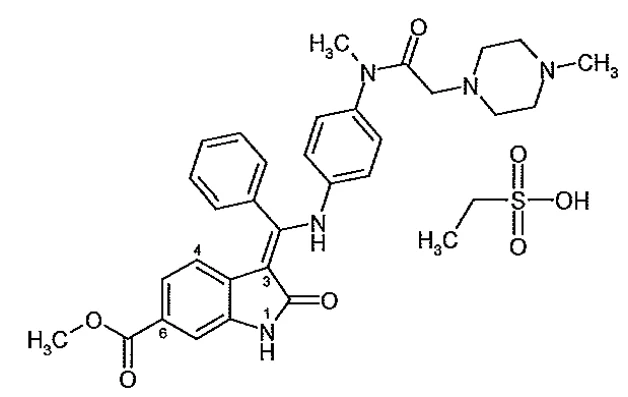
Physicochemical properties: Physical description: bright yellow powder; Melting Point: Tfus = 305 ± 5 °C, ΔHfus = 82 ± 5 J/g; Dissociation Constants: pKa1 = 7.9 ± 0.2 (piperazine moiety), pKa2 = 2.1 ± 0.2 (piperazine moiety); Partition Coefficient: Log D (pH 7.4) = 3.0
pH Solubility Profile: nintedanib shows good solubility behaviour (> 1 mg/ml) in acidic media. Above pH 3 solubility of nintedanib drops by at least three orders of magnitude to the lower solubility of the monocationic form and its free base (< 0.001 mg/ml at pH≥7). The intrinsic dissolution rate is fast in acidic media (> 1000 μg/cm2/min up to pH 2.0). In water a solubility of 2.8 mg/ml was found; the resulting solution shows an intrinsic pH of 5.7.
14 CLINICAL TRIALS
14.1 Clinical Trials by Indication
Idiopathic Pulmonary Fibrosis (IPF)
Table 8 Summary of patient demographics for clinical trials in IPF (Studies 1199.32 and 1199.34)
| Study # | Study design | Dosage, route of administration and duration | Study subjects (n) | Mean age (Standard Deviation (StD)) | Sex |
| 1199.32 | Multicentre, randomized, double-blind | Eligible patients were randomized in 3:2 ratio to receive nintedanib 150 mg bid or placebo for 52 weeks | Nintedanib: n=309 Placebo: n=204 | 66.9 (StD 8.4) years | 81% male and 19% female |
| 1199.34 | Multicentre, randomized, double-blind | Eligible patients were randomized in 3:2 ratio to receive nintedanib 150 mg bid or placebo for 52 weeks | Nintedanib: n=329 Placebo: n=219 | 66.4 (StD 7.9) years | 78% male and 22% female |
The clinical efficacy of nintedanib has been studied in patients with IPF in two phase 3, randomized, double-blind, placebo-controlled studies with identical design (1199.32 and 1199.34). Patients were randomized in a 3:2 ratio to treatment with nintedanib 150 mg or placebo twice daily for 52 weeks. Dose reduction to 100 mg twice daily and dose interruptions were allowed to manage adverse events.
The two phase 3 trials included male and female patients 40 years of age and older, with a diagnosis of IPF (ATS/ERS/JRS/ALAT criteria) for < 5 years. Diagnoses were centrally adjudicated based on radiological and, if available, histopathological confirmation. Patients were required to have an FVC ≥ 50% predicted of normal and a carbon monoxide diffusing capacity (DLCO, corrected for hemoglobin) 30% to 79% predicted of normal. Patients with a known risk or predisposition to bleeding, patients receiving a full dose of anticoagulation treatment, and patients with a recent history of myocardial infarction or stroke were excluded from the studies.
The primary endpoint was the annual rate of decline in Forced Vital Capacity (FVC). The key secondary endpoints were change from baseline in St. George’s Respiratory Questionnaire (SGRQ) total score at 52 weeks and time to first acute IPF exacerbation.
Annual rate of decline in FVC
The annual rate of decline in FVC (in mL) was significantly reduced in patients receiving nintedanib compared to patients receiving placebo. The treatment effect was consistent in both trials. See Table 9 for individual and pooled study results.
Table 9 Annual rate of decline in FVC (mL) in trials 1199.32 and 1199.34 and their pooled data -treated set in IPF
| 1199.32 | 1199.34 | 1199.32 and 1199.34 pooled | |||||
|---|---|---|---|---|---|---|---|
| Placebo | Nintedanib150 mg twice daily | Placebo | Nintedanib 150 mg twice daily | Placebo | Nintedanib 150 mg twice daily | ||
| Number of analysed patients | 204 | 309 | 219 | 329 | 423 | 638 | |
| Rate1 (SE) of decline over 52 weeks | −239.9 (18.71) | −114.7 (15.33) | −207.3 (19.31) | −113.6 (15.73) | −223.5 (13.45) | −113.6 (10.98) | |
| Comparison vs. placebo | |||||||
| Difference1 | 125.3 | 93.7 | 109.9 | ||||
| 95% CI | (77.7, 172.8) | (44.8, 142.7) | (75.9, 144.0) | ||||
| p-value | <0.0001 | 0.0002 | <0.0001 | ||||
| 1 Estimated based on a random coefficient regression model. | |||||||
The robustness of the effect of nintedanib in reducing the annual rate of decline in FVC was confirmed in all pre-specified sensitivity analyses. See Figure 1 for the evolution of change from baseline over time in both treatment groups, based on the pooled analyses of studies 1199.32 and 1199.34.
Figure 1 Mean (SEM) observed FVC change from baseline (mL) over time, studies 1199.32 and 1199.34 pooled
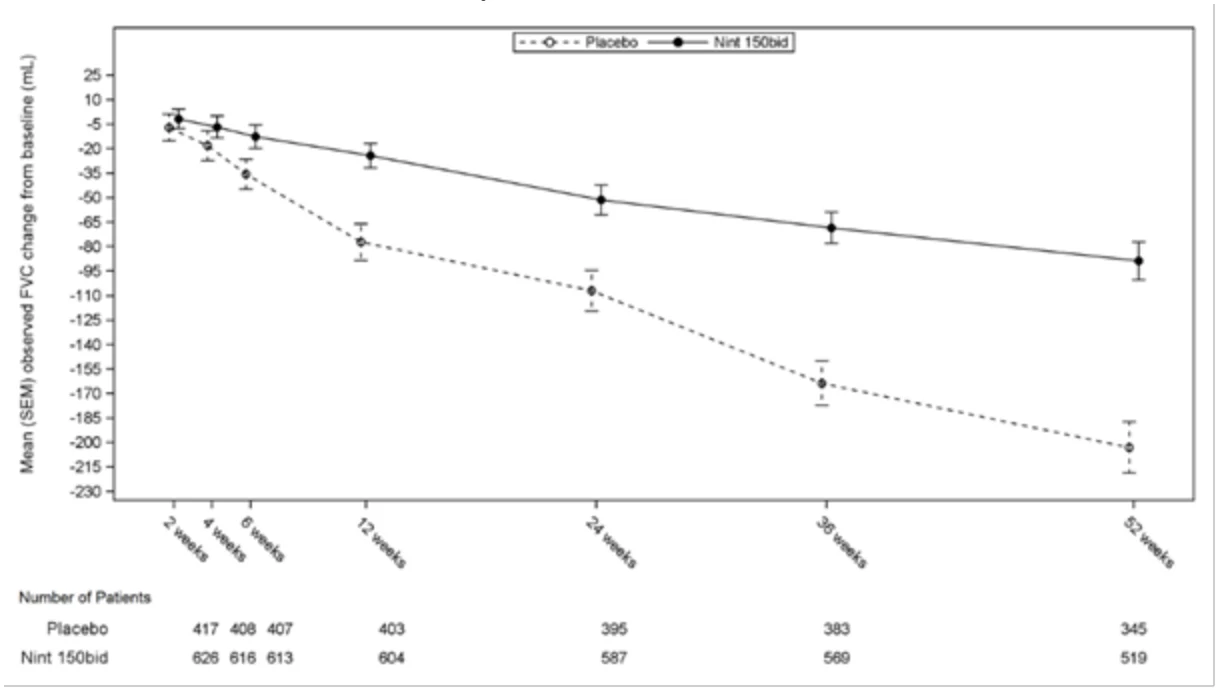
bid = twice daily
Time to first acute IPF exacerbation
The time to first acute IPF exacerbation was a key secondary endpoint in trials 1199.32 and 1199.34. In trial 1199.34, the risk of first acute IPF exacerbation over 52 weeks was significantly reduced in patients receiving nintedanib compared to placebo (Hazard ratio (HR): 0.38; 95% CI 0.19, 0.77), whereas in trial 1199.32 there was no difference between the treatment groups (Hazard ratio: 1.15; 95% CI 0.54, 2.42). In the pooled analysis of the clinical trials, a numerically lower risk of first acute exacerbation was observed in patients receiving nintedanib compared to placebo (Hazard ratio: 0.64; 95% CI 0.39, 1.05).
All adverse events of acute IPF exacerbation reported by the investigator were adjudicated by a blinded adjudication committee. An analysis of the time to first ‘confirmed’ or 'suspected' adjudicated acute IPF exacerbation was performed. The frequency of patients with at least 1 adjudicated exacerbation occurring within 52 weeks was lower in the nintedanib group than in the placebo group for both clinical trials. Time to event analysis of the adjudicated exacerbation events yielded an HR 0.55 (95% CI: 0.20, 1.54) for trial 1199.32 and an HR of 0.20 (95% CI: 0.07, 0.56) for trial 1199.34.
Change from baseline in St. George’s Respiratory Questionnaire total score at week 52
St. George’s Respiratory Questionnaire (SGRQ) total score measuring health related quality of life was analysed at 52 weeks as a key secondary endpoint in the two clinical trials. In trial 1199.32, the increase from baseline in SGRQ total score at week 52 was comparable between nintedanib and placebo (difference between treatment groups: -0.05; 95% CI: -2.50, 2.40; p=0.9657).
In trial 1199.34, patients receiving placebo had a larger increase (i.e., worsening) from baseline in SGRQ total score as compared to patients receiving nintedanib 150 mg bid, and the difference between the treatment groups was statistically significant (-2.69; 95% CI: -4.95, -0.43; p=0.0197).
Survival analysis
Survival was evaluated in trials 1199.32 and 1199.34 as an exploratory analysis to support the primary endpoint (FVC). In the pre-specified pooled analysis of survival data of the clinical trials, all-cause mortality over 52 weeks was numerically lower in the nintedanib group (5.5%) compared with the placebo group (7.8%). The analysis of time to death resulted in a HR of 0.70 (95% CI 0.43, 1.12; p=0.1399). The results of all survival endpoints (such as on-treatment mortality and respiratory mortality) showed a consistent numerical difference in favour of nintedanib.
Supportive evidence from the phase 2 trial (1199.30) Nintedanib 150 mg twice daily results:
Additional evidence of efficacy is provided by the randomized, double-blind, placebo-controlled, dose finding phase 2 trial including a nintedanib 150 mg bid dose group. This was a 52 week study in patients with IPF and included a total of 432 randomized patients with 85 patients treated with nintedanib 150 mg and 85 patients treated with placebo.
The primary endpoint, rate of decline in FVC over 52 weeks, was lower in the 150 mg nintedanib arm (-0.060 L/year, N=84) than the placebo arm (-0.190 L/year, N=83). The estimated difference between the treatment groups was 0.131 L/year (95% CI 0.027, 0.235) reaching nominal statistical significance (p=0.0136).
Systemic Sclerosis associated Interstitial Lung Disease (SSc-ILD)
Table 10 Summary of patient demographics for clinical trial in SSc-ILD (Study 1199.214)
| Study # | Study design | Dosage, route of administration and duration | Study subjects (n) | Mean age (Standard Deviation (StD)) | Sex |
| 1199.214 | Multicentre, randomized, double-blind | Eligible patients were randomized in 1:1 ratio to receive nintedanib 150 mg bid or placebo for at least 52 weeks. | Nintedanib: n=288 Placebo: n=288 | 54 (StD 12.2 years) | 25% male and 75% female |
The clinical efficacy of nintedanib has been studied in patients with SSc-ILD in a randomized, double-blind, placebo-controlled phase 3 trial (1199.214). A total of 580 patients were randomized in a 1:1 ratio to treatment with OFEV (nintedanib) 150 mg bid or placebo twice daily for at least 52 weeks, of which 576 were treated. Randomization was stratified by Antitopoisomerase Antibody status (ATA). Individual patients remained on blinded trial treatment for up to 100 weeks (median nintedanib exposure 15.4 months; mean nintedanib exposure 14.5 months). Dose reduction to 100 mg twice daily and dose interruptions were allowed to manage adverse events. The primary endpoint was the annual rate of decline in Forced Vital Capacity (FVC) over 52 weeks. Key secondary endpoints were change from baseline in modified Rodnan Skin Score (mRSS) at 52 weeks and change from baseline in the St. George’s Respiratory Questionnaire (SGRQ) total score at 52 weeks. Mortality over the whole trial was an additional secondary endpoint.
Patients were diagnosed with SSc-ILD based upon the 2013 American College of Rheumatology/European League Against Rheumatism classification criteria for SSc with onset of disease (first non-Raynaud symptom) of less than 7 years and greater than or equal to 10% fibrosis on a chest high resolution computed tomography (HRCT) scan conducted within the previous 12 months. Patients were required to have an FVC ≥ 40% of predicted and a DLCO 30-89% of predicted. Patients with relevant airways obstruction (i.e., pre-bronchodilator FEV1/FVC less than 0.7) or previous or planned hematopoietic stem cell transplant were excluded from the trial. Patients with greater than 1.5 times ULN of ALT, AST, or bilirubin, patients with a known risk or predisposition to bleeding, patients receiving a full dose of anticoagulation treatment, and patients with a recent history of myocardial infarction or stroke were excluded from the study. Patients were excluded if they had significant pulmonary hypertension, more than three digital fingertip ulcers, a history of severe digital necrosis requiring hospitalization, or a history of scleroderma renal crisis. Patients were also excluded if they received other investigational therapy, previous treatment with nintedanib or pirfenidone, azathioprine within 8 weeks prior to randomization, or cyclophosphamide or cyclosporine A within 6 months prior to randomization.
In the overall population, 75% of the patients were female. The mean (standard deviation [SD, Min-Max]) age was 54 (12.2, 20-79) years. Overall, 52% of patients had diffuse cutaneous Systemic Sclerosis (SSc) and 48% had limited cutaneous SSc. The mean (SD) time since first onset of non-Raynaud symptom was 3.49 (1.7) years. 49% of patients were on stable therapy with mycophenolate at baseline (46.5% mycophenolate mofetil, 1.9% mycophenolate sodium, 0.5% mycophenolic acid).
Annual rate of decline in FVC
The annual rate of decline of FVC (in mL) over 52 weeks was significantly reduced by 41 mL in patients receiving nintedanib compared to patients receiving placebo (Table 11) corresponding to a relative treatment effect of 43.8%.
Table 11 Annual rate of decline in FVC (mL) in trial 1199.214 in SSc-ILD
| Placebo | Nintedanib 150 mg twice daily | |||||||
|---|---|---|---|---|---|---|---|---|
| Number of analysed patients | 288 | 287 | ||||||
| Rate1 (SE) of decline over 52 weeks | -93.3 (13.5) | -52.4 (13.8) | ||||||
| Comparison vs placebo | ||||||||
| Difference1 | 41.0 | |||||||
| 95% CI | (2.9, 79.0) | |||||||
| p-value | <0.05 | |||||||
| 1Based on a random coefficient regression with fixed categorical effects of treatment, ATA status, gender, fixed continuous effects of time, baseline FVC [mL], age, height, and including treatment-by-time and baseline-by-time interactions. Random effect was included for patient specific intercept and time. Within-patient errors were modelled by an unstructured variance-covariance matrix. Inter-individual variability was modelled by a variance-components variance-covariance matrix | ||||||||
The effect of nintedanab in reducing the annual rate of decline in FVC was similar across pre-specified sensitivity analyses and no heterogeneity was detected in pre-specified subgroups (e.g., by age, gender, and mycophenolate use at baseline).
The changes from baseline in FVC (mL) over 52 weeks for both treatment groups are shown in Figure 2.
Figure 2 Mean (SEM) observed FVC change from baseline (mL) over 52 weeks, 1199.214
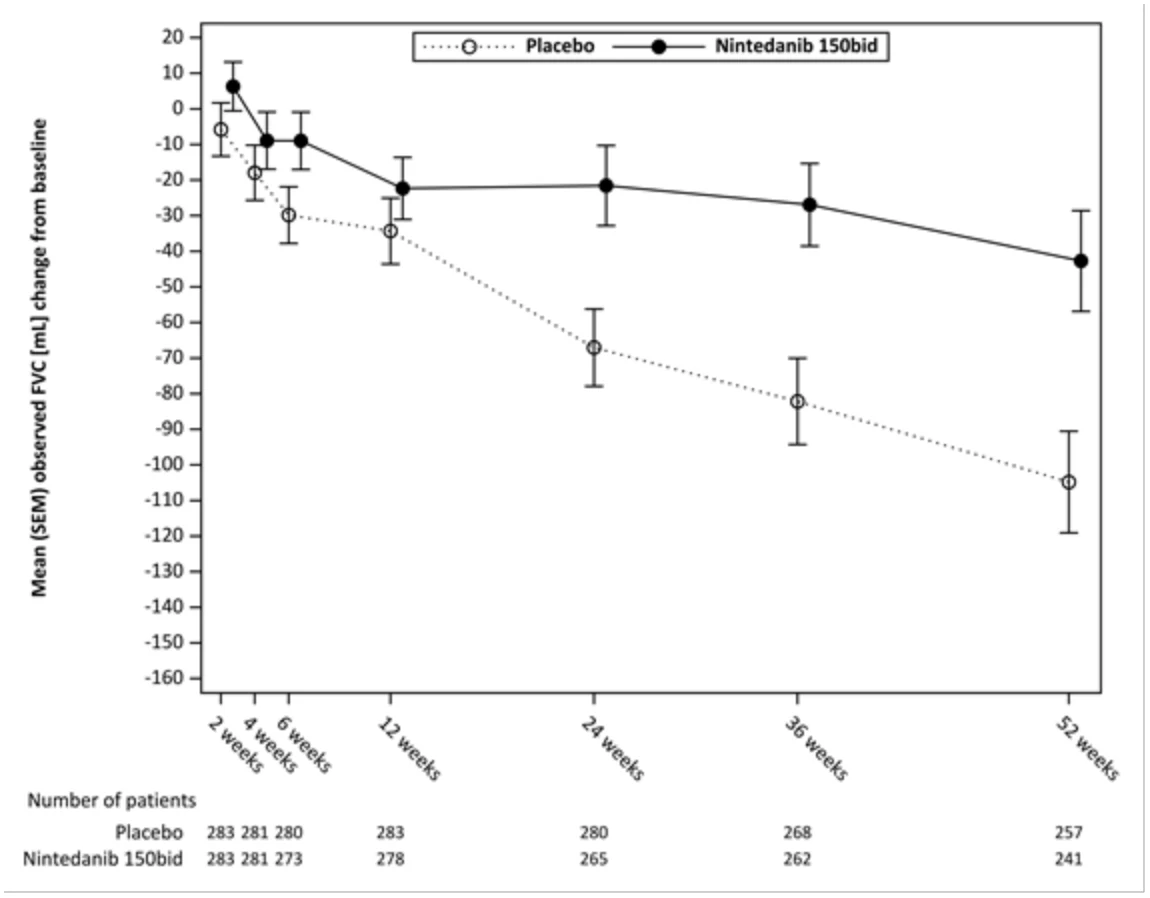
bid = twice daily
The adjusted annual rate of decline in FVC in % predicted over 52 weeks was lower in patients treated with OFEV (nintedanib) (-1.4%) compared with patients treated with placebo (-2.6%). This finding is consistent with that of the primary efficacy endpoint (i.e., the annual rate of decline in FVC in mL over 52 weeks).
Change from baseline in Modified Rodnan Skin Score (mRSS) at week 52
No benefit in mRSS was observed in patients receiving OFEV. The adjusted mean absolute change from baseline in mRSS at week 52 was comparable between the nintedanib group (-2.17 (95% CI -2.69, -1.65)) and the placebo group (-1.96 (95% CI -2.48, -1.45)). The adjusted mean difference between the treatment groups was -0.21 (95% CI -0.94, 0.53; p = 0.5785).
Change from baseline in St. George’s Respiratory Questionnaire (SGRQ) total score at week 52
No benefit in SGRQ total score was observed in patients receiving OFEV. The adjusted mean absolute change from baseline in SGRQ total score at week 52 was comparable between the nintedanib group (0.81 (95% CI -0.92, 2.55)) and the placebo group (-0.88 (95% CI -2.58, 0.82)).
The adjusted mean difference between the treatment groups was 1.69 (95% CI -0.73, 4.12; p = 0.1711).
Survival analysis
No difference in survival was observed in an exploratory analysis of mortality of the whole trial. Mortality over the whole trial was comparable between the nintedanib group (N = 10; 3.5%) and the placebo group (N = 9; 3.1%). The exploratory analysis of time to death over the whole trial resulted in a HR of 1.16 (95% CI 0.47, 2.84; p = 0.7535).
Other Chronic Fibrosing Interstitial Lung Diseases (ILDs) with a Progressive Phenotype (PF-ILD)
Table 12 Summary of patient demographics for clinical trial in PF-ILD (Study 1199.247)
| Study # | Study design | Dosage, route of administration and duration | Study subjects (n) | Mean age (Standard Deviation StD) | Sex |
| 1199.247 | Multicentre, randomized, double-blind | Eligible patients were randomized in 1:1 ratio to receive nintedanib 150 mg bid or placebo for at least 52 weeks | Nintedanib: n=332 Placebo: n=331 | 65.8 (StD 9.8 years) | 54% male and 46% female |
The clinical efficacy of nintedanib has been studied in patients with other chronic fibrosing ILDs with a progressive phenotype in a randomized, double-blind, placebo-controlled phase 3 trial (1199.247). Patients were randomized in a 1:1 ratio to receive either nintedanib 150 mg twice daily or matching placebo for at least 52-weeks (nintedanib exposure over the whole trial: median 17.4 months; mean 15.6 months). Randomization was stratified based on high resolution computed tomography (HRCT) fibrotic pattern as assessed by central readers: 412 patients with UIP-like HRCT pattern and 251 patients with other HRCT fibrotic patterns were randomized. There were 2 co-primary populations defined for the analyses in this trial: all patients (the overall population) and patients with HRCT with UIP-like HRCT fibrotic pattern. Patients with other HRCT fibrotic patterns represented the “complementary” population.
The primary endpoint was the annual rate of decline in FVC (in mL) over 52 weeks. Main secondary endpoints were absolute change from baseline in King's Brief Interstitial Lung Disease Questionnaire (K-BILD) total score at Week 52, time to first acute ILD exacerbation or death over 52 weeks, and time to death over 52 weeks.
Patients with a clinical diagnosis of a chronic fibrosing ILD were selected if they had relevant fibrosis (greater than 10% fibrotic features) on HRCT and presented with clinical signs of progression (defined as FVC decline ≥10%, FVC decline ≥ 5% and <10% with worsening symptoms or increased fibrotic changes on chest imaging, or worsening symptoms and increased fibrotic changes on chest imaging, all in the 24 months prior to screening). Patients were required to have an FVC greater than or equal to 45% of predicted and a DLCO 30-80% of predicted. Patients with IPF, relevant airways obstruction (i.e., pre-bronchodilator FEV1/FVC less than 0.7), or significant pulmonary hypertension were excluded from the trial. Patients with greater than 1.5 times ULN of ALT, AST, or bilirubin, patients with a known risk or predisposition to bleeding, patients receiving a full dose of anticoagulation treatment, and patients with a recent history of myocardial infarction or stroke were excluded. Patients were also excluded if they received other investigational therapy, previous treatment with nintedanib or pirfenidone, azathioprine, cyclosporine, mycophenolate mofetil, tacrolimus, oral corticosteroids greater than 20 mg/day, or the combination of oral corticosteroids + azathioprine + n-acetylcysteine within 4 weeks of randomization, cyclophosphamide within 8 weeks prior to randomization, or rituximab within 6 months.
The majority of patients were Caucasian (74%) or Asian (25%). Patients were mostly male (54%) and had a mean age of 66 years and a mean FVC percent predicted of 69%. The underlying clinical ILD diagnoses in groups represented in the trial were hypersensitivity pneumonitis (26%), autoimmune ILDs (26%), idiopathic nonspecific interstitial pneumonia (19%), unclassifiable idiopathic interstitial pneumonia (17%), and other ILDs (12%).
Annual rate of decline in FVC
The annual rate of decline in FVC (in mL) over 52 weeks was significantly reduced by 107.0 mL in patients receiving nintedanib compared to patients receiving placebo (Table 13) corresponding to a relative treatment effect of 57.0%. Similar results were observed in the co-primary population of patients with HRCT with UIP-like fibrotic pattern with a difference between treatment groups of 128.2 mL/year. Further, the treatment effect was consistent in the complementary population of patients with other HRCT fibrotic patterns.
Table 13 Annual rate of decline in FVC (mL) in trial 1199.247 in PF-ILD
| Overall population | Subpopulation UIP-like | Subpopulation Other HRCT fibrotic patterns | |||||||||||||||||||
|---|---|---|---|---|---|---|---|---|---|---|---|---|---|---|---|---|---|---|---|---|---|
| Placebo | Nintedanib 150 mg twice daily | Placebo | Nintedanib 150 mg twice daily | Placebo | Nintedanib 150 mg twice daily | ||||||||||||||||
| Number of analyzed patients | 331 | 332 | 206 | 206 | 125 | 126 | |||||||||||||||
| Ratea (SE) of decline over 52 weeks | -187.8 | -80.8 | -211.1 | -82.9 | -154.2 | -79.0 | |||||||||||||||
| Comparison vs placebo differencea | 107.0 | 128.2 | 75.2 | ||||||||||||||||||
| 95% CI | (65.4, 148.5) | (70.8, 185.6) | (15.5, 135.0) | ||||||||||||||||||
| p-value | < 0.0001 | < 0.0001 | |||||||||||||||||||
| aBased on a random coefficient regression model with fixed categorical effects of treatment, HRCT pattern, fixed continuous effects of time, baseline FVC (mL), and including treatment by time and baseline by time interactions | |||||||||||||||||||||
The effect of nintedanib in reducing the annual rate of decline in FVC was generally consistent in all pre-specified subgroups (e.g., gender, age group, race, baseline FVC percent predicted, and original underlying clinical ILD diagnosis in groups). An analysis by ILD diagnosis was performed and is shown in Figure 3. A limited number of patients with representative diagnoses related to this indication were evaluated. Study 1199.247 was not designed or powered to provide evidence for a benefit of nintedanib in specific diagnostic subgroups. Consistent effects were demonstrated in subgroups based on the ILD diagnoses. The experience with nintedanib in very rare progressive fibrosing ILDs is limited.
Figure 3 Forest plot of the annual rate of decline in FVC [mL/yr] over 52 weeks by underlying ILD diagnosis in groups.
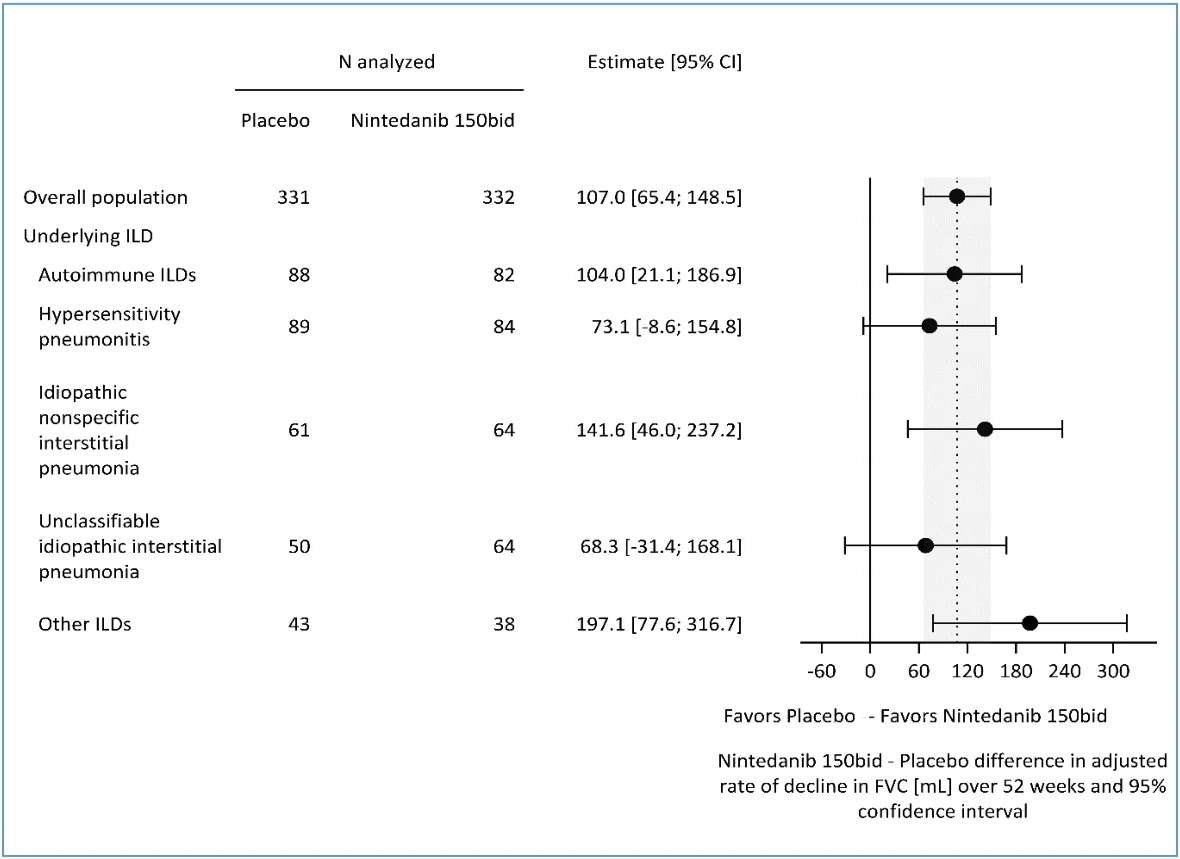
bid = twice daily
Figure 4 shows the evolution of change in FVC from baseline over time in the treatment groups. When the mean observed FVC change from baseline was plotted over time, the curves diverged at all timepoints through Week 52.
Figure 4 Mean (SEM) observed FVC change from baseline (mL) over 52 weeks in trial 1199.247
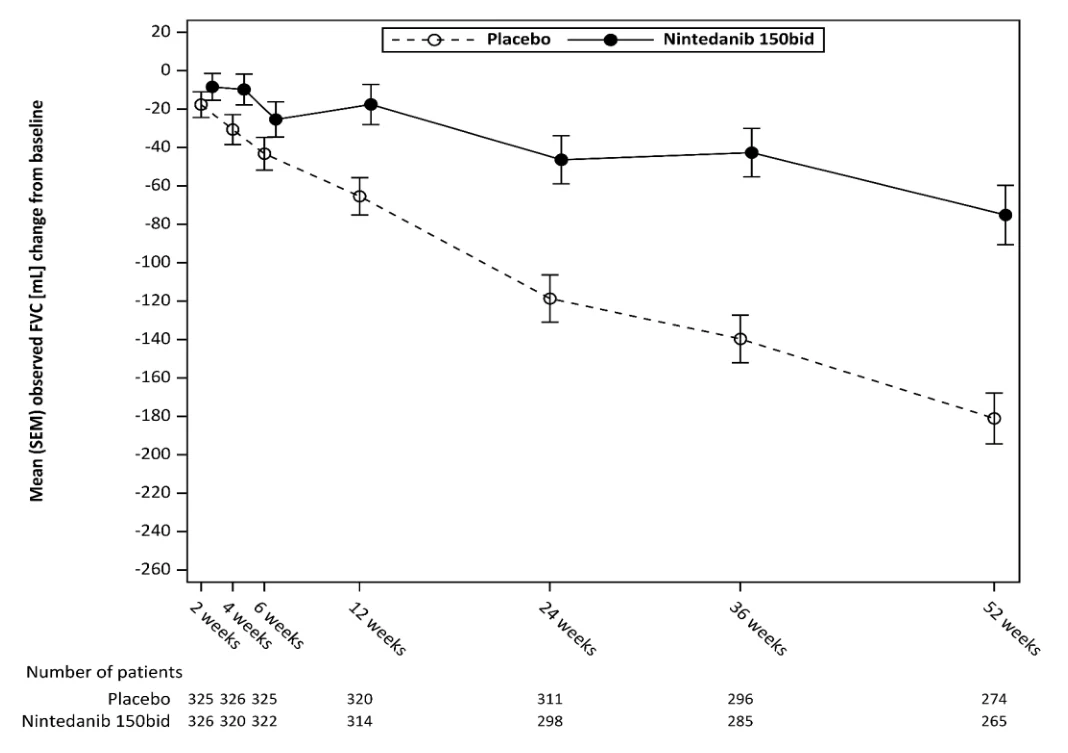
bid = twice daily
In addition, favorable effects of nintedanib were observed on the adjusted mean change from baseline in FVC percent predicted at Week 52. The adjusted mean absolute change from baseline to Week 52 in FVC percent predicted was lower in the nintedanib group (-2.62%) than in the placebo group (-5.86%). The adjusted mean difference between the treatment groups was 3.24% (95% CI: 2.09, 4.40).
Time to first acute ILD exacerbation or death
Acute ILD exacerbations were defined as unexplained worsening or development of dyspnea within a 30-day period, new diffuse pulmonary infiltrates on chest x-ray, and/or new HRCT parenchymal abnormalities with no pneumothorax or pleural effusion, and exclusion of alternative causes. Acute ILD exacerbations were not adjudicated. The proportion of patients with at least one event of this exploratory composite endpoint over 52 weeks was 7.8% in the nintedanib group and 9.7% in the placebo group (HR 0.80 (95% CI: 0.48, 1.34)). When analyzing data over the whole trial, the risk of first acute ILD exacerbation or death decreased in the nintedanib group compared with the placebo group (HR 0.67 (95% CI: 0.46, 0.98)).
Survival
An exploratory analysis of all-cause mortality did not show a statistically significant difference. The proportion of patients who died over 52 weeks was 4.8% in the nintedanib group compared to 5.1% in the placebo group. The HR was 0.94 (95% CI: 0.47, 1.86). Over the whole trial the HR was 0.78 (95% CI: 0.50, 1.21).
Quality of life
The adjusted mean change from baseline in King’s Brief Interstitial Lung Disease Questionnaire total score at week 52, analyzed as an exploratory endpoint, was -0.79 units in the placebo group and 0.55 in the nintedanib group (scored from 0-100, with higher scores indicating a better health status). The difference between the treatment groups was 1.34 (95% CI: -0.31, 2.98).
15 MICROBIOLOGY
No microbiological information is required for this drug product.
16 NON-CLINICAL TOXICOLOGY
General Toxicology: Single dose toxicity studies in rats and mice indicated a low acute toxic potential of nintedanib. In repeat dose toxicology studies in rats, adverse effects (e.g., thickening of epiphyseal plates, lesions of the incisors) were mostly related to the mechanism of action (i.e., VEGFR-2 inhibition) of nintedanib. These changes are known from other VEGFR-2 inhibitors and can be considered class effects.
Diarrhea and vomiting accompanied by reduced food consumption and loss of body weight were observed in toxicity studies in non-rodents.
There was no evidence of liver enzyme increases in rats, dogs, and Cynomolgus monkeys. Mild liver enzyme increases which were not due to serious adverse effects such as diarrhea were only observed in Rhesus monkeys.
Carcinogenicity: From the 2-year carcinogenicity studies in mice and rats, there was no evidence for a carcinogenic potential of nintedanib. Nintedanib was dosed up to 10 mg/kg/day in rats and 30 mg/kg/day in mice. These doses were less than (in rats) and approximately 4 times (in mice) the MRHD based on plasma drug AUC.
Genotoxicity: Nintedanib was negative for genotoxicity in the in vitro bacterial reverse mutation assay, the mouse lymphoma assay, and the in vivo rat micronucleus assay.
Reproductive and Developmental Toxicology: In rats, nintedanib reduced female fertility, including increases in resorption and post-implantation loss, at exposures below the maximum recommended human dose (MRHD) of 150 mg bid based on AUC. A decrease in the number and size of corpora lutea in the ovaries was observed in chronic toxicity studies in rats and mice.
In rats, embryo-fetal lethality and teratogenic effects were observed at an exposure approximately 3.6 to 7.2 times lower than at the MRHD. At an exposure of approximately 12 to 18 times lower than the exposure at the MRHD, slight effects on the development of the axial skeleton and on the development of the great arteries were noted.
In rabbits, embryo-fetal lethality and teratogenic effects were observed at an exposure approximately 3 times higher than at the MRHD but equivocal effects on the embryo-fetal development of the axial skeleton and the heart were noted already at an exposure below that at the MRHD of 150 mg twice daily.
A study of male fertility and early embryonic development up to implantation in rats did not reveal effects on the male reproductive tract and male fertility.
In rats, small amounts of radiolabelled nintedanib and/or its metabolites were excreted into the milk (≤ 0.5 % of the administered dose).