


Product Monograph - Qinlock
Recent Major Label Changes
| 4 DOSAGE AND ADMINISTRATION, 4.2 Recommended Dose and Dosage Adjustment | 2024-08 |
|---|---|
| 4 DOSAGE AND ADMINISTRATION, 4.5 Missed Dose | 2024-08 |
Table of Contents
Certain sections or subsections that are not applicable at the time of preparation of the most recent authorized product monograph are not listed.
Recent Major Label Changes ..................................................................................................... 2
Part 1: Health Professional Information ................................................................................... 4
1 Indications ....................................................................................................................... 4
1.1 Pediatrics ............................................................................................................... 4
1.2 Geriatrics ............................................................................................................... 4
2 Contraindications ............................................................................................................ 4
3 Serious Warnings and Precautions Box ....................................................................... 4
4 Dosage and Administration ........................................................................................... 4
4.1 Dosing Considerations .......................................................................................... 4
4.2 Recommended Dose and Dosage Adjustment ..................................................... 5
4.4 Administration ........................................................................................................ 8
4.5 Missed Dose .......................................................................................................... 8
5 Overdose .......................................................................................................................... 8
6 Dosage Forms, Strengths, Composition and Packaging ............................................ 8
7 Warnings and Precautions ............................................................................................. 8
Carcinogenesis and Genotoxicity ...................................................................................... 9
Cardiovascular .................................................................................................................. 9
Immune ............................................................................................................................. 9
Monitoring and Laboratory Tests ...................................................................................... 9
Perioperative Considerations .......................................................................................... 10
Reproductive Health ........................................................................................................ 10
Skin ................................................................................................................................. 10
7.1 Special Populations ............................................................................................. 11
7.1.1 Pregnancy ....................................................................................................... 11
7.1.2 Breastfeeding .................................................................................................. 11
7.1.3 Pediatrics ......................................................................................................... 11
7.1.4 Geriatrics ......................................................................................................... 12
8 Adverse Reactions ........................................................................................................ 12
8.1 Adverse Reaction Overview ................................................................................ 12
8.2 Clinical Trial Adverse Reactions .......................................................................... 13
8.3 Less Common Clinical Trial Adverse Reactions .................................................. 15
8.4 Abnormal Laboratory Findings: Hematologic, Clinical Chemistry, and Other Quantitative Data ............................................................................................................ 15
9 Drug Interactions .......................................................................................................... 16
9.2 Drug Interactions Overview ................................................................................. 16
9.4 Drug-Drug Interactions ........................................................................................ 17
9.5 Drug-Food Interactions ........................................................................................ 18
9.6 Drug-Herb Interactions ........................................................................................ 18
9.7 Drug-Laboratory Test Interactions ....................................................................... 18
10 Clinical Pharmacology .................................................................................................. 19
10.1 Mechanism of Action ........................................................................................... 19
10.2 Pharmacodynamics ............................................................................................. 19
10.3 Pharmacokinetics ................................................................................................ 19
11 Storage, Stability, and Disposal .................................................................................. 21
Part 2: Scientific Information ................................................................................................... 22
13 Pharmaceutical Information ......................................................................................... 22
14 Clinical Trials ................................................................................................................. 22
14.1 Clinical Trials by Indication .................................................................................. 22
15 Microbiology .................................................................................................................. 24
16 Non-Clinical Toxicology ............................................................................................... 24
Patient Medication Information ............................................................................................... 27
Part 1: Health Professional Information
1 Indications
QINLOCK™ (ripretinib) is indicated for:
- the treatment of adult patients with advanced gastrointestinal stromal tumor (GIST) who have received prior treatment with imatinib, sunitinib, and regorafenib.
1.1 Pediatrics
Pediatrics (<18 years of age): No data are available to Health Canada; therefore, Health Canada has not authorized an indication for pediatric use [see WARNINGS AND PRECAUTIONS, Special Populations].
1.2 Geriatrics
Geriatrics (≥65 years of age): There are limited clinical data in patients aged 65 years and over. Although data are limited, no clinically important differences in safety or efficacy were observed between patients 65 years of age or older and patients under 65 years [see WARNINGS AND PRECAUTIONS, Special Populations].
2 Contraindications
QINLOCK is contraindicated in patients who are hypersensitive to ripretinib or to any ingredient in the formulation, including any non-medicinal ingredient, or component of the container. For a complete listing, see Dosage Forms, Strengths, Composition and Packaging.
3 Serious Warnings and Precautions Box
Serious Warnings and Precautions Box
The following are clinically significant adverse events:
- Cardiac Dysfunction (see WARNINGS AND PRECAUTIONS - Cardiovascular)
- Hypertension (see WARNINGS AND PRECAUTIONS – Cardiovascular)
- New Primary Cutaneous Malignancies – Squamous Cell Carcinoma and Melanoma (see WARNINGS AND PRECAUTIONS – Skin)
4 Dosage and Administration
4.1 Dosing Considerations
- QINLOCK dose modification is recommended based on individual tolerability. Management of some adverse reactions may require dose interruption, dose reduction, or discontinuation [see Recommended Dose and Dosage Adjustment].
- Concomitant use with a strong CYP3A inhibitor increases plasma ripretinib concentrations. Monitor patients more frequently for adverse reactions if QINLOCK is given concurrently with a strong CYP3A inhibitor [see DRUG INTERACTIONS].
- Avoid concomitant strong or moderate CYP3A inducers during QINLOCK treatment. If a strong or moderate CYP3A inducer must be co-administered, increase the QINLOCK dosing frequency from the recommended dose of 150 mg once daily to 150 mg twice daily during the co-administration period. Monitor for clinical response and tolerability. If the concomitant strong or moderate CYP3A inducer is discontinued, resume QINLOCK dosage back to 150 mg once daily 14 days after the discontinuation of the CYP3A inducer [see DRUG INTERACTIONS].
4.2 Recommended Dose and Dosage Adjustment
Recommended Dose
The recommended dose of QINLOCK is 150 mg (three 50 mg tablets) taken orally once daily.
Dosage Adjustment
The recommended dose reduction for adverse reactions is:
- QINLOCK 100 mg orally once daily
Permanently discontinue QINLOCK in patients who are unable to tolerate 100 mg orally once daily.
The recommended dosage modifications of QINLOCK for adverse reactions are provided in Table 1.
Table 1: Recommended Dose Modifications for Adverse Reactions
| Adverse Reaction | Severitya | Dosage Modifications |
|---|---|---|
| Adverse Reaction | Severitya | Dosage Modifications |
| Adverse Reaction | Severitya | Dosage Modifications |
| Palmar-plantar erythrodysesthesia syndrome [PPES]* | Grade 2 |
|
| Grade 3 |
| |
| ||
| Hypertension | Grade 3 |
|
Grade 4 Life-threatening consequences (e.g., malignant hypertension, transient or permanent neurologic deficit, hypertensive crisis) |
| |
| Arthralgia or Myalgia* | Grade 2 |
|
| Grade 3 |
| |
| Left Ventricular Systolic Dysfunction | Grade 3 or 4 |
|
| Isolated Bilirubin Increased | Grade 2 |
|
| Grade 3 or 4 |
| |
| Other adverse reactions | Grade 3 or 4 |
|
a Graded per National Cancer Institute Common Terminology Criteria for Adverse Events version 4.03 (NCI CTCAE v4.03). * Grade 4 events for Palmar-Plantar Erythrodysaesthesia Syndrome (PPES) and Arthralgia or myalgia does not exist in CTCAE | ||
Dose Modifications for CYP3A Inducers
Avoid concomitant strong or moderate CYP3A inducers during QINLOCK treatment.
If a strong or moderate CYP3A inducer must be co-administered, increase the QINLOCK dosing frequency from the recommended dose of 150 mg once daily to 150 mg twice daily during the co-administration period. Monitor for clinical response and tolerability. If the concomitant strong or moderate CYP3A inducer is discontinued, resume QINLOCK dosage back to 150 mg once daily 14 days after the discontinuation of the CYP3A inducer [see DRUG INTERACTIONS].
Special Populations
Pediatrics (<18 years old): Health Canada has not authorized an indication for pediatric use.
Geriatrics (≥65 years old): No dose adjustment is required in patients of ≥65 years of age [see ACTION AND CLINICAL PHARMACOLOGY].
Renal impairment: No dose adjustment is recommended for patients with mild and moderate renal impairment [creatinine clearance (CrCl) 30 to 89 mL/min estimated by Cockcroft-Gault].
The pharmacokinetics and safety of QINLOCK in patients with end-stage renal disease (CrCl <15mL/min estimated by Cockcroft-Gault or requiring dialysis) or severe renal impairment (CrCl 15 to 29 mL/min) have not been studied [see ACTION AND CLINICAL PHARMACOLOGY].
Hepatic impairment: No dose adjustment is recommended in patients with hepatic impairment (Child-Pugh A, B or C) [See ACTION AND CLINICAL PHARMACOLOGY].
4.4 Administration
QINLOCK may be taken with or without food. Patients should be instructed to swallow tablets whole and not to chew, split, or crush tablets. Patients should not ingest if tablets are broken, cracked, or otherwise not intact. QINLOCK should be taken at the same time each day.
4.5 Missed Dose
For patients taking 150 mg once daily: If the patient misses a dose or has not taken the dose at the usual time, the patient should take the dose within 8 hours of the scheduled time that was missed. If more than 8 hours have passed since the time the dose is usually taken, the patient should not take the missed dose and should resume the dosing schedule the next day at the usual time.
For patients taking 150 mg twice daily: if the patient misses a dose within 4 hours of the time it is usually taken, advise the patient to take the missed dose as soon as possible and then take the next dose at the regularly scheduled time. If a patient misses a dose by more than 4 hours of the time it is usually taken, advice the patient to skip the missed dose and simply resume the usual dosing schedule
If the patient vomits after taking a dose, the patient should not take a replacement dose and should resume the dosing schedule the next day at the usual time.
5 Overdose
There is no known specific antidote for QINLOCK overdose. In the event of suspected overdose, interrupt QINLOCK, undertake general supportive measures, and observe until clinical stabilization.
For the most recent information in the management of a suspected drug overdose, contact your regional poison control center or Health Canada’s toll-free number, 1-844 POISON-X (1-844-764-7669).
6 Dosage Forms, Strengths, Composition and Packaging
Table 2: Dosage Forms, Strengths, Composition and Packaging
50 mg tablets of QINLOCK are white to off-white oval tablet debossed with 'DC1' on one side of the tablet; available in bottles of 90 tablets.
7 Warnings and Precautions
Please see the Serious Warnings and Precautions Box at the beginning of Part 1: Health Professional Information.
| Route of Administration | Dosage Form / Strength / Composition | Non-medicinal Ingredients |
| Oral | 50 mg ripretinib tablet | crospovidone, hypromellose acetate succinate, lactose monohydrate, magnesium stearate, microcrystalline cellulose, and silicon dioxide. |
Carcinogenesis and Genotoxicity
New Primary Cutaneous Malignancies
Squamous cell carcinoma (SCC) of the skin was reported in 4.7% of the 85 patients who received QINLOCK in INVICTUS, with a median time to event of 4.6 months (range: 3.8 to 6 months). SCC of the skin was not reported in placebo-treated patients.
Melanoma occurred in 2.4% of patients in the ripretinib treatment arm and none in the placebo treatment arm in INVICTUS. In the pooled safety population, melanoma occurred in 0.9% of 351 patients.
Cardiovascular
Cardiac dysfunction
In the double-blind period of the randomized, placebo-controlled phase 3 pivotal study in patients with GIST (INVICTUS), cardiac failure occurred in 1.2% of the 85 patients who received QINLOCK. Grade 3 decreased ejection fraction occurred in 1.3% of the 77 patients who received QINLOCK and who had a baseline and at least one post-baseline echocardiogram. Cardiac dysfunction led to a dose discontinuation in 1.2% of patients.
In the pooled safety population of 351 patients, cardiac dysfunction occurred in 1.7% of patients including grade 3 adverse reactions in 1.1% of patients. Grade 3 decreased ejection fraction occurred in 1.9% of the 263 patients who received QINLOCK and who had a baseline and at least one-post baseline echocardiogram.
The safety of QINLOCK has not been assessed in patients with a baseline ejection fraction below 50% as they have been excluded from the INVICTUS study.
Permanently discontinue QINLOCK for Grade 3 or 4 left ventricular systolic dysfunction.
Cardiac Ischemic Events
In the pooled safety population, cardiac ischemic events (cardiac arrest, acute coronary syndrome, and myocardial infarction), occurred in 1.1% of patients. Of these, cardiac arrest and myocardial infarction were reported as fatal adverse reactions.
Hypertension
In INVICTUS, there was a higher incidence of hypertension in patients treated with QINLOCK (14.1% in QINLOCK-treated patients vs. 4.7% of placebo-treated patients). Grade 3 hypertension was reported in 7.1% of QINLOCK-treated patients [see ADVERSE REACTIONS].
Immune
Hypersensitivity
In a supportive clinical study, an event of hypersensitivity occurred in a QINLOCK treated patient who also had a similar reaction with another tyrosine kinase inhibitor. Exercise precaution and more frequent monitoring for hypersensitivity symptoms in patients who have experienced a hypersensitivity in association with prior use of other tyrosine kinase inhibitors.
Monitoring and Laboratory Tests
An assessment of the ejection fraction by echocardiogram or MUGA scan is recommended prior to initiation of QINLOCK and during treatment with QINLOCK, as clinically indicated.
Do not initiate QINLOCK in patients with uncontrolled hypertension. Adequately control blood pressure prior to initiating QINLOCK. Monitor blood pressure as clinically indicated during treatment with QINLOCK and initiate or adjust antihypertensive therapy as appropriate.
Dermatological assessment should be performed when initiating QINLOCK and patients should receive dermatological examinations routinely. Patients should be advised to inform their physician if any skin lesions develop, change or worsen. It is recommended to manage suspicious skin lesions with biopsy and/or excision with a dermatopathological evaluation.
Perioperative Considerations
Wound Healing
Impaired wound healing complications can occur in patients who receive drugs that inhibit the vascular endothelial growth factor (VEGF) signaling pathway. Therefore, QINLOCK has the potential to adversely affect wound healing.
No formal trials to evaluate the effect of QINLOCK on wound healing have been conducted. Treatment with QINLOCK is to be withheld for at least 3 days prior to and after minor surgery and at least 5 days prior to and after major surgery. The decision to resume QINLOCK after surgery should be based on clinical judgment of adequate wound healing.
Reproductive Health
Advise females of reproductive potential and males with female partners of reproductive potential to use effective contraception to commence 2 weeks prior to treatment, during treatment and for at least one complete uterine cycle after the final dose of QINLOCK. Effects of QINLOCK on contraceptive steroids have not been studied. A barrier method contraception should be added if systemic contraceptive steroids are used. [see Special Populations, Pregnant Women].
Fertility
Fertility studies have not been conducted with QINLOCK. Based on findings from animal studies, QINLOCK has the potential to impair fertility in males of reproductive potential at exposures similar to human clinical exposures. It is recommended to advise male patients on sperm preservation prior to initiating therapy. [see NON-CLINICAL TOXICOLOGY].
Teratogenic Risk
Female patients of reproductive potential should be tested for pregnancy prior to initiating therapy.
Based on findings from animal studies, QINLOCK can cause fetal harm when administered to pregnant women. Advise women to avoid pregnancy while taking QINLOCK.
There are no clinical data on the use of QINLOCK in pregnant women. Ripretinib was teratogenic in pregnant rats and resulted in malformations primarily associated with the cardiovascular and skeletal systems, anatomic variations, and decreased fetal body weight and post implantation loss at doses of 20 mg/kg/day (approximately one half of the human exposure at 150 mg once daily) [see NON-CLINICAL TOXICOLOGY]. QINLOCK should not be used in pregnant women. If the patient becomes pregnant while receiving QINLOCK, the patient should discontinue treatment.
Skin
Palmar-Plantar Erythrodysesthesia Syndrome
Mild to moderate palmar-plantar erythrodysesthesia syndrome [PPES] occurred in patients treated with QINLOCK. PPES occurred in 21.2% of QINLOCK-treated patients and were Grade 1-2 in severity (Grade 1 was 12.9%). PPES was not observed in placebo-treated patients [see ADVERSE REACTIONS].
PPES led to dose discontinuation in 1.2% of patients, dose interruption in 2.4% of patients, and dose reduction in 1.2% of patients.
Temporarily hold, reduce, or discontinue QINLOCK depending on the type, severity and persistence of the dermatologic toxicity [see DOSAGE AND ADMINISTRATION, Recommended Dose and Dosage Adjustment]. Consider topical treatment based on the severity of the dermatologic toxicity and as a preventative measure.
Actinic Keratosis
Actinic keratosis was reported in 5.9% of patients receiving QINLOCK and 2.3% receiving placebo in INVICTUS. In the pooled safety population, 1.9% of patients receiving QINLOCK reported an adverse event of keratoacanthoma.
No dose reduction or interruption is required for actinic keratosis or new primary cutaneous malignancies.
Photosensitivity
QINLOCK is potentially phototoxic (see NON-CLINICAL, Special Toxicology Studies). Exposure to strong sunlight, sunlamps, and other sources of ultraviolet radiation should be avoided or minimized while taking QINLOCK and for at least one week after discontinuation of treatment.
7.1 Special Populations
7.1.1 Pregnancy
Based on findings from animal studies [see NON-CLINICAL TOXICOLOGY], QINLOCK can cause embryo-fetal harm when administered to a pregnant woman. There are no clinical data on the use of QINLOCK in pregnant women to inform a drug-associated risk of major birth defects and miscarriage. In an animal reproduction study, administration of ripretinib to pregnant rats during organogenesis resulted in malformations primarily associated with the cardiovascular and skeletal systems at a dose of 20 mg/kg/day. Additional indications of developmental toxicity at this dose included anatomic variations, reduced fetal body weight and post implantation loss [see NON-CLINICAL TOXICOLOGY]. QINLOCK should not be administered to pregnant women.
7.1.2 Breastfeeding
There is no information regarding the presence of ripretinib or its metabolites in human milk or their effects on the breastfed infant or on milk production. Because of the potential for adverse reactions in breastfed infants, advise women not to breastfeed during treatment and for at least 2 weeks after the final dose.
7.1.3 Pediatrics
Pediatrics (<18 years of age): The safety and efficacy of QINLOCK in children and adolescents aged less than 18 years have not been established; therefore, Health Canada has not authorized an indication for pediatric use.
Although no dedicated studies in juvenile animals were performed, toxicology studies in rodents showed increased osteoblastic surface and/or decreased trabecular in the femur and degeneration of growing incisors. Alterations of teeth and bones/cartilage may indicate a potential risk for children and adolescents.
7.1.4 Geriatrics
Geriatrics (>65 years of age): Of the 85 patients in INVICTUS Study who received 150 mg QINLOCK orally once daily, 23.5% were between 65 to 74 years of age and 9.4% were 75 years of age or older. Although data are limited, no clinically important differences in safety or efficacy were observed between patients 65 years of age or older and patients under 65 years [see ACTION AND CLINICAL PHARMACOLOGY].
Renal impairment
Patients with CrCl of <50 ml/min or a creatinine above 1.5 x upper limit of normal were excluded from the INVICTUS study.
Hepatic impairment
Patients with a total bilirubin above 1.5 x the ULN and/or an aspartate transaminase (AST) above 3 x ULN (>5 x ULN if the patient has the presence of hepatic metastases) were excluded from the INVICTUS Study.
8 Adverse Reactions
8.1 Adverse Reaction Overview
In the Phase 3 double-blind, randomized (2:1), placebo-controlled trial (INVICTUS), 129 study participants with a diagnosis of advanced GIST received QINLOCK (N=85) or placebo (N=44) [see CLINICAL TRIALS]. One study participant randomized to the placebo arm did not receive treatment. The data described in this section reflect the safety population (N=128) who had received at least one dose of QINLOCK (N=85) or placebo (N=43). Patient characteristics of the safety population include a median age of 59.5 years (29 to 83 years), age 18-64 years (61.7%), male (56.3%), White (75%), and Eastern Cooperative Oncology Group (ECOG) performance status of 0 (42.2%), 1 (49.2%), or 2 (8.6%). The safety results described below are from the double-blind treatment period of INVICTUS. The median duration of exposure to QINLOCK was 23.9 weeks (1.3 to 59.4 weeks) and 45.9% received QINLOCK for ≥6 months.
The most common adverse events (≥20%) observed in patients treated with QINLOCK (all grades) in the Phase 3 double-blind, randomized placebo-controlled trial (INVICTUS) were alopecia, fatigue, nausea, abdominal pain, constipation, myalgia, diarrhea, decreased appetite, palmar-plantar erythrodysesthesia syndrome, and vomiting.
Serious adverse events occurred in 31% of patients who received QINLOCK. Serious adverse reactions that occurred in >2% of patients were abdominal pain (4.7%), anemia (3.5%), nausea (2.4%), vomiting (2.4%). Serious adverse events considered to be drug-related were reported in one (1.2%) patient each: anemia, cardiac failure, death, dyspnea, fecaloma, gastroesophageal reflux disease, hyperkaliemia, hypophosphatemia, nausea, and upper gastrointestinal hemorrhage.
Table 3: Dose Interruptions, Dose Reductions and Treatment Discontinuations due to Adverse Events
| Event | QINLOCK (N=85) % | Placebo (N=43) % |
|---|---|---|
| Dose interruption | 23.5 | 20.9 |
| Dose reduction | 7.1 | 2.3 |
| Treatment discontinuation | 8.2 | 11.6 |
In the double-blind treatment period of the INVICTUS Study:
Dosage interruptions due to an adverse event occurred in 23.5% of patients who received QINLOCK. Adverse events requiring dosage interruption in >2% of patients included nausea (3.5%), increased blood bilirubin (2.4%), and PPES (2.4%).
Dose reductions due to an adverse event occurred in 7.1% of patients who received QINLOCK. Adverse events resulting in a dose reduction in ≥1.2% of patients were abdominal pain, agitation, alopecia, arthritis, dermatosis, gastrointestinal disorder, hyperesthesia, myalgia, PPES, and decreased weight.
Permanent discontinuation due to an adverse event occurred in 8.2% of patients who received QINLOCK. Adverse events resulting in permanent discontinuation in ≥1% of patients included general physical health deterioration (2.4%), anemia (1.2%), cardiac failure (1.2%), PPES (1.2%), and vomiting (1.2%).
8.2 Clinical Trial Adverse Reactions
Because clinical trials are conducted under very specific conditions, the adverse reaction rates observed in the clinical trials may not reflect the rates observed in practice and should not be compared to the rates in the clinical trials of another drug. Adverse reaction information from clinical trials is useful for identifying drug-related adverse events and for approximating rates.
The data described in this section reflect the safety population (N=128) who had received at least one dose of QINLOCK (N=85) or placebo (N=43). The safety results from the double-blind period of INVICTUS are described below.
Table 4 summarizes the most frequently reported treatment-emergent adverse events in ≥10% of patients with advanced GIST who received QINLOCK in the double-blind treatment period of INVICTUS.
Table 4: Treatment-Emergent Adverse Events Reported in ≥10% of Patients Who Received QINLOCK in the Double-Blind Treatment Period of INVICTUSa
| QINLOCK (N=85) | Placebo (N=43) | ||||||||||
| QINLOCK (N=85) | Placebo (N=43) | ||||||||||
| Adverse Events | All Grades (%) | Grade 3-5 (%) | All Grades (%) | Grade 3-5 (%) | |||||||
| Any Adverse Event | 99 | 53 | 98 | 51 | |||||||
| Blood and lymphatic system disorders | |||||||||||
| Anemia | 14 | 9 | 19 | 14 | |||||||
| Gastrointestinal disorders | |||||||||||
| Nausea | 39 | 3.5 | 12 | 0 | |||||||
Adverse Events
| All Grades (%) | Grade 3-5 (%) | All Grades (%) | Grade 3-5 (%) | ||||||||
| Abdominal pain | 37 | 7 | 30 | 7 | |||||||
| Constipation | 34 | 1.2 | 19 | 0 | |||||||
| Diarrhea | 28 | 1.2 | 14 | 2.3 | |||||||
| Vomiting | 21 | 3.5 | 7 | 0 | |||||||
| Stomatitis | 11 | 0 | 0 | 0 | |||||||
| General disorders and administration site conditions | |||||||||||
| Fatigue | 42 | 3.5 | 23 | 2.3 | |||||||
| Peripheral edema | 17 | 1.2 | 7 | 0 | |||||||
| Asthenia | 13 | 1.2 | 14 | 4.7 | |||||||
| Investigations | |||||||||||
| Weight decreased | 19 | 0 | 12 | 0 | |||||||
| Blood bilirubin increased | 17 | 1.2 | 0 | 0 | |||||||
| Lipase increased | 11 | 4.7 | 0 | 0 | |||||||
| Metabolism and nutrition disorders | |||||||||||
| Decreased appetite | 27 | 1.2 | 21 | 2.3 | |||||||
| Hypophosphatemia | 11 | 4.7 | 0 | 0 | |||||||
| Musculoskeletal and connective tissue disorders | |||||||||||
| Myalgia | 32 | 1.2 | 12 | 0 | |||||||
| Arthralgia | 18 | 0 | 4.7 | 0 | |||||||
| Muscle spasms | 15 | 0 | 4.7 | 0 | |||||||
| Nervous system disorders | |||||||||||
| Headache | 19 | 0 | 4.7 | 0 | |||||||
| Respiratory, thoracic and mediastinal disorders | |||||||||||
| Dyspnea | 13 | 0 | 0 | 0 | |||||||
| Skin and subcutaneous tissue disorders | |||||||||||
| Alopecia | 52 | 0 | 4.7 | 0 | |||||||
| Palmar-plantar erythrodysesthesia syndrome | 21 | 0 | 0 | 0 | |||||||
| Dry skin | 13 | 0 | 7 | 0 | |||||||
| Pruritus | 11 | 0 | 4.7 | 0 | |||||||
| Vascular disorders | |||||||||||
| Hypertension | 14 | 7 | 4.7 | 0 | |||||||
| |||||||||||
8.3 Less Common Clinical Trial Adverse Reactions
The following adverse drug reactions have been reported in <10% of QINLOCK-treated patients in the pooled safety population which included 351 patients:
Cardiac disorders: Cardiac failure, cardiac ischemic event
Eye disorders: Vision blurred
Gastrointestinal disorders: Dyspepsia, gingival bleeding, flatulence, abdominal distention
General disorders and administration site conditions: Pyrexia, death
Immune system disorders: Hypersensitivity
Infections and infestations: Upper respiratory tract infection, urinary tract infection
Investigations: Aspartate aminotransferase increased, blood alkaline phosphatase increased
Metabolism and nutrition disorders: Hyponatremia, dehydration, hypomagnesemia, hyperglycemia
Musculoskeletal and connective tissue disorders: musculoskeletal pain
Neoplasms benign, malignant and unspecified (incl cysts and polyps): Benign neoplasms of skin, squamous cell carcinoma of skin, melanoma, keratoacanthoma
Nervous system disorders: Dysgeusia, peripheral sensory neuropathy
Psychiatric disorders: Insomnia, anxiety, depression
Skin and subcutaneous tissue disorders: Dermatitis acneiform, actinic keratosis, hyperkeratosis, seborrheic keratosis, skin papilloma, melanocytic naevus, rash, rash maculopapular, photosensitivity reaction
8.4 Abnormal Laboratory Findings: Hematologic, Clinical Chemistry, and Other Quantitative Data
Table 5 summarizes the most frequently reported treatment-emergent laboratory abnormalities in ≥10% of patients with advanced GIST who received QINLOCK in the double-blind treatment period of INVICTUS.
Table 5: Laboratory Abnormalities (≥10%) Worsening from Baseline in Patients with Gastrointestinal Stromal Tumor Who Received QINLOCK with a Difference Between Arms of >5% Compared to Placebo in INVICTUS
| Laboratory Abnormality | QINLOCKa (N=85) | Placeboa (N=43) | |||||||||||
| Grades 1-4 | Grades 3/4b | Grades 1-4 | Grades 3/4 | ||||||||||
| Hematology/Coagulation | |||||||||||||
| Activated partial thromboplastin time increased | 35 | 0 | 9 | 0 | |||||||||
| INR increased | 21 | 3.8 | 15 | 0 | |||||||||
| Neutrophil count decreased | 10 | 0 | 2.5 | 0 | |||||||||
| Chemistry | |||||||||||||
| ALT increased | 12 | 1.2 | 5 | 0 | |||||||||
| Blood bilirubin increased | 22 | 0 | 5 | 2.5 | |||||||||
| Calcium decreased | 23 | 0 | 8 | 0 | |||||||||
| CPK increased | 21 | 1.2 | 10 | 0 | |||||||||
| Creatinine increased | 16 | 0 | 18 | 0 | |||||||||
| Lipase increased | 32 | 7 | 13 | 8 | |||||||||
| Phosphate decreased | 26 | 4.9 | 2.5 | 0 | |||||||||
| Serum amylase increased | 13 | 1.2 | 5 | 0 | |||||||||
| Sodium decreased | 17 | 2.4 | 10 | 2.5 | |||||||||
| Triglycerides increased | 26 | 2.4 | 23 | 0 | |||||||||
CPK=creatine phosphokinase; INR=international normalized ratio; AST=aspartate aminotransferase; ALT=alanine aminotransferase
| |||||||||||||
9 Drug Interactions
9.2 Drug Interactions Overview
In vitro data suggested that CYP3A4/5 is the major metabolizer of ripretinib. Potential interactions may occur with drugs/foods/herbs that are inhibitors or inducers of this enzyme system.
Coadministration of QINLOCK with strong cytochrome P450 (CYP)3A inhibitors increases exposure to ripretinib and its active metabolite (DP-5439), which may increase the risk of adverse reactions. Monitor patients more frequently for adverse reactions if QINLOCK is given concurrently with a strong CYP3A inhibitor [see DOSAGE AND ADMINISTRATION and ACTION AND CLINICAL PHARMACOLOGY].
Coadministration of QINLOCK with a strong CYP3A inducer decreased the exposure of ripretinib and its active metabolite (DP-5439). Coadministration of QINLOCK with moderate
CYP3A inducers was predicted to decrease the exposure of ripretinib and its active metabolite, which may decrease QINLOCK anti-tumor activity.
9.4 Drug-Drug Interactions
The drugs listed in this table are based on either drug interaction case reports or studies, model-informed approaches, or potential interactions due to the expected magnitude and seriousness of the interaction (i.e., those identified as contraindicated).
Table 6: Established or Potential Drug-Drug Interactions
| Proper/Common name | Source of Evidence | Effect | Clinical comment |
| Strong CYP3A Inhibitor (e.g., ketoconazole, itraconazole) |
|
|
|
| Strong and Moderate CYP3A Inducers |
|
|
|
|
| ||
| CT=Clinical Trial; T=Theoretical | |||
Studies of other CYP inhibition and induction:
Ripretinib is a weak inhibitor of CYP2C8. Co-administration of QINLOCK with repaglinide (a sensitive index substrate for CYP2C8) increased repaglinide AUC0-INF by 26%. Repaglinide Cmax was unchanged; therefore, dosage adjustment is not required.
In vitro studies suggest that ripretinib is not an inducer of CYP1A2, CYP2B6, and CYP3A4 enzyme activity.
Studies of UGT1A substrates:
In vitro studies suggest that ripretinib is an inhibitor of UGT1A1, UGT1A3, UGT1A4, UGT1A7, and UGT1A8. QINLOCK should be used with caution in combination with clinical substrates of UGT1A enzymes. Clinical studies with UGT1A substrates have not been conducted.
Studies with gastric pH altering medicines:
No clinically significant differences in the plasma exposure (AUC0-INF and Cmax) to ripretinib and its active metabolite (DP-5439) were observed when a single dose of 50 mg ripretinib was co-administered with pantoprazole (a proton pump inhibitor) in healthy subjects.
Studies with drug transporters:
In vitro studies suggest ripretinib is an inhibitor of P-gp (P-glycoprotein) and BCRP (Breast Cancer Resistance Protein), and its active metabolite DP-5439 is an inhibitor of BCRP and MATE1 (Multidrug And Toxin Extrusion Protein 1). In addition, DP-5439 is a substrate for P-gp and BCRP.
9.5 Drug-Food Interactions
A high-fat, high-calorie meal administered to patients before a 150 mg dose of ripretinib increased the exposure of ripretinib and its active metabolite (DP-5439) when compared to dose administration under modified fasting conditions. The increase in exposure was not considered clinically relevant. QINLOCK may be taken with or without food [see ACTION AND CLINICAL PHARMACOLOGY].
Grapefruit juice has CYP3A inhibitory activity. Therefore, ingestion of grapefruit juice while on QINLOCK therapy may lead to decreased ripretinib metabolism and increased ripretinib plasma concentrations. Patients who ingest grapefruit juice while taking QINLOCK should be monitored more frequently for adverse reactions (see Drug-Drug Interactions).
9.6 Drug-Herb Interactions
Interactions with herbal products have not been established.
St. John’s Wort is a potent CYP3A inducer. Co-administration with QINLOCK may lead to increased ripretinib metabolism and decreased ripretinib plasma concentrations; therefore, concomitant use should be avoided (see Drug-Drug Interactions).
9.7 Drug-Laboratory Test Interactions
Interactions with laboratory tests have not been established.
10 Clinical Pharmacology
10.1 Mechanism of Action
Ripretinib is a tyrosine kinase inhibitor that inhibits KIT proto-oncogene receptor tyrosine kinase (KIT) and Platelet-Derived Growth Factor Receptor A (PDGFRA) kinase signaling. Ripretinib inhibits KIT and PDGFRA kinase activity, including wild type and multiple primary and secondary mutations. Ripretinib also inhibits other kinases in vitro, such as PDGFRB, TIE2, VEGFR2, and BRAF.
10.2 Pharmacodynamics
Cardiac Electrophysiology
In a multicenter, phase 1, open-label, uncontrolled study of QINLOCK administered to patients with advanced malignancies, no large mean increase from baseline in QTc interval (i.e., >20 ms) was detected following treatment with QINLOCK at the recommended dose of 150 mg once daily after a single dose on Cycle 1, Day 1 (N=18) or during steady-state treatment on Cycle 1, Day 15 (N=13).
10.3 Pharmacokinetics
The pharmacokinetics of QINLOCK and its active metabolite (DP-5439) were evaluated following single doses in healthy subjects and following multiple doses in patients with advanced malignancies.
Table 7: Summary of Ripretinib and DP-5439 Pharmacokinetic Parameters
| Cmaxa | Tmaxa | t½ (h) b | AUC0-12ha | CL/Fb | Vss/Fb | ||||||||
| Ripretinib | 761 (31.8%) ng/mL | 2 (1-8) hours | 14.8 (30.3%) hours | 5678 (32.1%) ng•h/mL | 15.3 (45.2%) L/hr | 307 (38.6%) L | |||||||
| DP-5439 | 804 (45.5%) ng/mL | 6 (1-8) hours | 17.8 (23.3%) | 7138 (44.4%) ng•h/mL | 17.5 (62.7%) L/hr | 507 (50.5%) L | |||||||
AUC0-12h = area under the concentration versus time curve 12 hours after dosing at steady state; Cmax = maximum plasma concentration; CL/F = apparent systemic clearance; t1/2 = half-life; Tmax = time of observed maximum plasma concentration after a single dose; Vss/F = Steady-state apparent volume of distribution
| |||||||||||||
Absorption: Ripretinib exposure (Cmax and AUC0-24) was dose proportional within the dose range of 20-150 mg but less than dose proportional at doses of 200 mg and 250 mg. The active metabolite DP-5439 exposure (Cmax and AUC0-24) was less than dose proportional within the dose range studied. Steady state was achieved by Day 15 after once daily doses of 150 mg, and ripretinib and DP-5439 accumulated with a geometric mean ratio of 1.66 (55.3% CV) and 5.29 (48.7% CV) respectively, based on AUC.
A high-fat, high-calorie meal (consisting of approximately 150, 250, and 500-600 calories from protein, carbohydrate, and fat, respectively) administered to patients (N=12) 30 minutes before a 150 mg dose of ripretinib increased AUC0-24h and Cmax by approximately 30% and 22%, respectively, when compared to dose administration under modified fasting conditions (no food consumption for at least 2 hours before and 1 hour after drug intake). The AUC0-24h and Cmax of the active metabolite of ripretinib, DP-5439, were also increased following drug administration with a high-fat meal. These changes were not considered clinically relevant.
Distribution: Ripretinib and DP-5439 were highly bound to plasma protein in humans (mean bound fraction was ≥ 99%). Ripretinib and DP-5439 bind to both human serum albumin and α-1 acid glycoprotein (98.6%). The geometric mean systemic volume of distribution is approximately 307 L (38.6% CV) for ripretinib and approximately 507 L (50.5% CV) for DP-5439.
Metabolism: The primary metabolic pathways for ripretinib appeared to be N-dealkylation and oxidation, although a definitive mass balance study has not been performed in humans. In vitro data suggested that CYP3A4/5 is the major metabolizer of ripretinib while CYP2C8 and CYP2D6 were implicated as only minor metabolizers. DP-5439 is the major phase I metabolite, exhibiting similar pharmacological activity, extent of protein binding, and steady-state concentrations compared to ripretinib. DP-5439 was metabolized primarily by CYP3A4 and to a lesser extent by CYP2D6, CYP2C8, CYP2C9 and CYP2C19.
Elimination: Geometric mean half-life (t½) after a single dose of ripretinib 150 mg in healthy subjects was 14.8 hours (30.3% CV) for ripretinib and 17.8 hours (23.3% CV) for DP-5439. The geometric mean apparent clearance was15.3 L/hr (45.2% CV) for ripretinib and 17.5 L/hr (62.7% CV) for DP-5439. After a single oral dose of ripretinib 150 mg in healthy subjects, approximately 34% of the drug was eliminated in the feces as the parent compound and 6% as the metabolite DP-5439, and 0.02% of the drug was eliminated in urine as the parent compound and 0.1% as the metabolite DP-5439. A definitive mass balance study has not been performed in humans, but in preclinical species, C-labeled ripretinib dosed to Sprague-Dawley rats (oral) and beagle dogs (intravenous [iv]), resulted in greater than 89% of the radioactive dose being excreted in feces and 1.8% or less in the urine.
Special Populations and Conditions
Geriatrics: Based on a population pharmacokinetics analysis which included patients 19 to 87 years old (median age is 60 years), age does not have a clinically meaningful effect on the pharmacokinetics of ripretinib.
Sex: In a population pharmacokinetics analysis, female patients were estimated to have 29% lower apparent clearance (CL/F) for ripretinib resulting in a predicted 40% increase in steady state exposure (AUC) than male patients. This effect on exposure is not considered to be clinically relevant.
Ethnic origin: Based a population pharmacokinetics analysis which included 78% White, 7.71% Black, and 5.71% Asian patients, ethnic origin does not have a clinically meaningful effect on the pharmacokinetics of ripretinib.
Hepatic Insufficiency: The effect of varying degrees of hepatic impairment as defined by Child-Pugh classification on the pharmacokinetics of ripretinib and DP-5439 was studied in a clinical trial (Study DCC-2618-01-004).
In participants with mild hepatic impairment, there were no clinically significant changes in ripretinib and DP-5439 AUC0-last and Cmax when compared to matched healthy subjects.
In participants with moderate hepatic impairment, ripretinib AUC0-tlast was 2-fold higher while Cmax was unchanged compared to matched healthy participants. The combined AUC0-tlast of ripretinib and DP-5439 was approximately 1.5-fold higher.
In participants with severe hepatic impairment, ripretinib AUC0-tlast was 2.6-fold higher, Cmax was 0.8-fold lower, and the combined AUC0-tlast of ripretinib and DP-5439 was 1.4-fold higher, compared to matched healthy participants.
The observed magnitude of increase in ripretinib and combined ripretinib and DP-5439 exposures in subjects with hepatic impairment (Child-Pugh A, B and C) is unlikely to be clinically relevant based on the known safety profile of ripretinib.No dose adjustment is recommended in patients with mild (Child-Pugh A), moderate (Child-Pugh B), or severe hepatic impairment (Child-Pugh C) [see DOSAGE AND ADMINISTRATION].
Renal Insufficiency: Mild and moderate renal impairment do not have a clinically meaningful effect on the pharmacokinetics of ripretinib based on a population pharmacokinetics analysis which included patients with mild (CrCl 60 to 89 mL/min estimated by Cockcroft-Gault, N=93) and moderate (CrCl 30 to 59 mL/min, N=45) renal impairment. The pharmacokinetics and safety of ripretinib in patients with severe renal impairment (CrCl 15 to 29 mL/min) have not been studied [see DOSAGE AND ADMINISTRATION].
Obesity: Based on a population pharmacokinetic analysis which included patients with body weight 39 to 138 kg (median weight is 74.4 kg), body weight does not have a clinically meaningful effect on the pharmacokinetics of ripretinib.
11 Storage, Stability, and Disposal
Store in the original container at room temperature (15°C to 25°C).
Keep out of the sight and reach of children.
Any unused medicinal product or waste material should be disposed of in accordance with local requirements.
Part 2: Scientific Information
13 Pharmaceutical Information
Drug Substance
Proper/Common name: Ripretinib
Chemical name: 1-(4-bromo-5-[1-ethyl-7-(methylamino)-2-oxo-1,2-dihydro-1,6-naphthyridin-3-yl]-2-fluorophenyl)-3-phenylurea
Molecular formula and molecular mass: C24H21BrFN5O2 / 510.36 g/mol
Structural formula:
Physicochemical properties: Ripretinib is a white to off-white crystalline solid. Ripretinib is a lipophilic, weak base compound, practically insoluble in aqueous media.
14 Clinical Trials
14.1 Clinical Trials by Indication
Locally advanced or metastatic gastrointestinal stromal tumor (GIST) who had been previously treated with prior anticancer therapies
Table 8: Summary of study design and patient demographics for the pivotal study in patients with gastrointestinal stromal tumor (GIST)
| Study # | Trial design | Dosage, route of administration and duration | Study subjects (n) | Mean age (Range) | Sex |
| DCC-2618-03-001 (INVICTUS) | Randomized (2:1), double-blind, placebo-controlled trial | 150 mg QINLOCK, oral, until disease progression or unacceptable toxicity | 129 | 60.1 years (29 to 83 years) | Male / female |
The efficacy and safety of QINLOCK were evaluated in an international, multi-center, randomized (2:1), double-blind, placebo-controlled trial (INVICTUS) in patients with unresectable, locally advanced or metastatic gastrointestinal stromal tumor (GIST) who had been previously treated with prior anticancer therapies including treatment with imatinib mesylate, sunitinib malate, and regorafenib. Randomization was stratified by number of prior anticancer treatments (3 versus ≥4) and Eastern Cooperative Oncology Group (ECOG) performance status (0 versus 1 or 2).
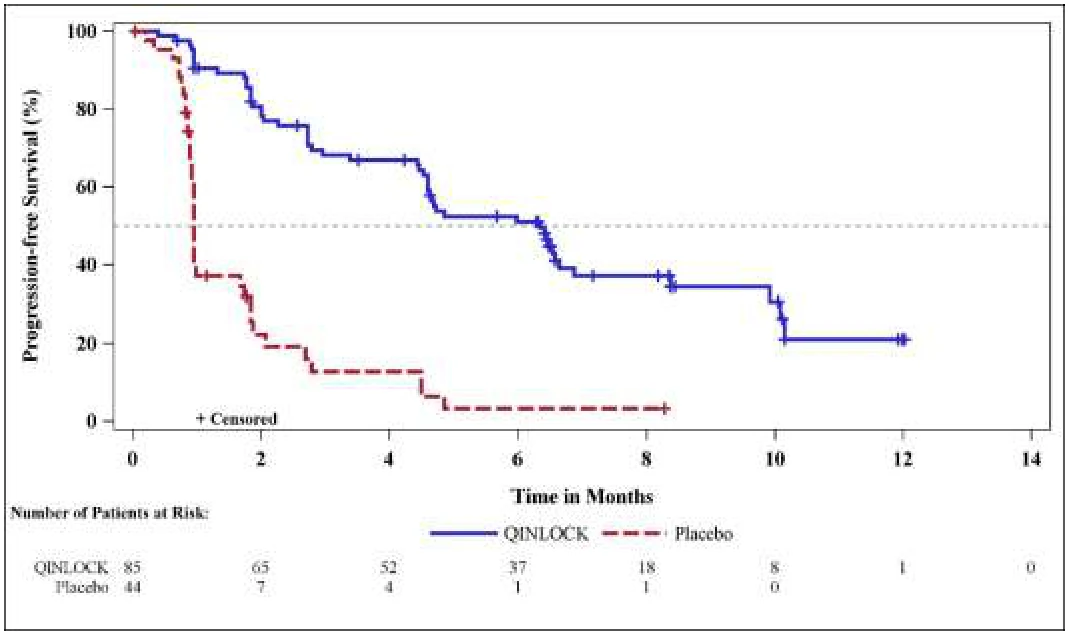
The primary efficacy outcome measure was progression-free survival (PFS) based on disease assessment by blinded independent central review (BICR) using modified RECIST 1.1 criteria, in which lymph nodes and bone lesions were not target lesions and a progressively growing new tumor nodule within a pre-existing tumor mass must meet specific criteria to be considered unequivocal evidence of progression. The secondary efficacy outcome measures included objective response rate (ORR) by BICR and overall survival (OS).
Participants were randomized to receive 150 mg QINLOCK (N=85) or placebo (N=44) orally once daily administered in continuous 28-day cycles. Treatment continued until disease progression or unacceptable toxicity. Individual participant blinding was broken at the time of disease progression as assessed by BICR review and all patients on placebo arm were offered to cross-over to QINLOCK.
The demographic characteristics were median age of 60 years (29 to 83 years) with 61.2% aged 18-64 years; male (56.6 %); White (75.2%); and ECOG performance status of 0 (41.9%), 1 (49.6%), or 2 (8.5%). The median number of prior therapies was 3 and 62% had received 3 prior therapies. Of the 129 patients, 25.6% had received 4 prior therapies, 7.8% has received 5 prior therapies, 0.8% had received 6 prior therapies, and 3.9% had received 7 prior therapies.
A statistically significant improvement in PFS was demonstrated among patients treated with QINLOCK compared to placebo (see Table 9 and Figure 1).
The hierarchical statistical testing order was PFS followed by ORR and then OS. No formal testing of OS was conducted since the formal comparison of ORR was not statistically significant (see Table 9). The OS results for the placebo arm include the survival time of patients taking placebo who, following BICR progression, crossed over to QINLOCK treatment. At the time of final analysis, 29 (65.9%) patients had crossed over from the placebo arm and received at least one dose of QINLOCK.
Study Results
Efficacy results from INVICTUS are summarized in Table 9.
Table 9: Efficacy Results of INVICTUS
| QINLOCK (N=85) | Placebo (N=44) | ||||||
|---|---|---|---|---|---|---|---|
| QINLOCK (N=85) | Placebo (N=44) | ||||||
| Progression-Free Survival (PFS)a | |||||||
| Number of patients with PFS event, N (%) | 51 (60.0) | 37 (84.1) | |||||
| Median PFS (months) (95% CI) | 6.3 (4.6, 6.9) | 1.0 (0.9, 1.7) | |||||
| p-valueb | <0.0001 | ||||||
| HR (95% CI)c | 0.15 (0.09, 0.25) | ||||||
| Objective Response Rate (ORR)a | |||||||
| Objective Response Rate (%) (95% CI) | 9.4 (4.2, 17.7) | 0 (0, 8.0) | |||||
| p-valued | 0.0504 | ||||||
| Overall Survival (OS) | |||||||
| Number of Deaths, N (%) | 26 (30.6) | 26 (59.1) | |||||
| Median OS (months) (95% CI) | 15.1 (12.3, 15.1) | 6.6 (4.1, 11.6) | |||||
| HR (95% CI)c | 0.36 (0.21, 0.62) | ||||||
BICR=Blinded Independent Central Review; HR=Hazard Ratio; CI=Confidence Interval
| |||||||
Figure 1: Kaplan-Meier Curve of Progression-Free Survival (Months)
15 Microbiology
No microbiological information is required for this drug product.
16 Non-Clinical Toxicology
General toxicology
Ripretinib was tested by oral gavage in repeat-dose studies of up to 13 weeks in rats (30, 100, or 300 mg/kg/day) and dogs (2.5, 5, or 10 mg/kg/day). Toxicities observed included missing/discoloration of the growing incisor teeth in rats, and discolored skin, skin lesions, alopecia/thinning hair coat in rats and dogs. During the recovery phase, reversal was noted for the scaly skin, thinning hair coat, and sores and scabs. Other ripretinib-related clinical observations included decreased body weight and body weight gain, and decreased food consumption. At 300 mg/kg/day dose marked degeneration of Brunner’s glands of the proximal duodenum was observed in female rats. Ripretinib related increased osteoblastic surface and/or decreased trabeculae of the femur occurred in rats administered ≥30 mg/kg/day. Minimal to moderate hypertrophy/hyperplasia of blood vessels occurred in the liver, lungs, and/or mesenteric lymph node of rats administered ≥100 mg/kg/day. Minimally to moderately increased lymphoid follicles occurred in the white pulp of the spleen in rats administered ≥30 mg/kg/day. Clinical pathology changes observed in the dosing phase in rats and dogs were generally dose-dependent in magnitude, did not progress over time, and were suggestive of red blood cell loss, an inflammatory and/or a stress response, and liver alteration. Most findings exhibited evidence of reversibility at the end of the recovery phase although there was evidence of persistence of the inflammatory response into the recovery phase. The no observed adverse effect level (NOAEL) for ripretinib after 13 weeks of dosing was 100 mg/kg/day in rats and 5 mg/kg/day in dogs, corresponding to AUC0-24 values of 20,800 ng•hr/mL and 1910 ng•hr/mL in rats and dogs, respectively.
Genotoxicity
Ripretinib was not mutagenic in an in vitro bacterial reverse mutation (Ames) assay and in an in vivo rat bone marrow micronucleus assay.
Carcinogenicity
Carcinogenicity studies have not been conducted with ripretinib.
Reproductive and developmental toxicology
Ripretinib is teratogenic in rats. In an embryo-fetal development study in which female Sprague-Dawley pregnant rats were administered daily doses of ripretinib during organogenesis, ripretinib was given to pregnant rats once daily from gestational days 6 through 18 at doses 1, 5, or 20 mg/kg/day. Dose-related malformations primarily associated with the cardiovascular and skeletal systems were observed at a dose of 20 mg/kg/day (approximately one half of the human exposure at 150 mg once daily). Visceral malformations were confined to the great vessels and included interrupted or retroesophageal aortic arch and retroesophageal subclavian artery. Skeletal malformations occurred in the skull bones, ribs, vertebrae, and paws including fusion of the exoccipital bone to the first cervical vertebra, branched and fused ribs; anomalies of the cervical, thoracic, caudal, and sacral vertebrae; absent forepaw phalanges, and absent metacarpals.
An increased incidence of anatomic variations, indicative of developmental toxicity, also occurred at 20 mg/kg/day. Visceral variations involved the great vessels and included malpositioned carotid and subclavian artery origins, malpositioned subclavian artery, and absent or elongated innominate artery. Skeletal variations involved the ribs, vertebrae, and sternebrae and included misshapen and nodulated ribs; bipartite, incompletely ossified, or unossified vertebral centra; and small or misshapen vertebral arches. Reductions in ossified forelimb and hindlimb phalanges, hindlimb metatarsals, and caudal vertebrae were also observed at 20 mg/kg/day. Additional indications of developmental toxicity at this dose included anatomic variations and reduced fetal body weight.
Ripretinib was given orally to pregnant Crl: KBL(NZW) rabbits once daily from gestational days 7 through 19 at doses of 0, 2, 10, 40, and 150 mg/kg/day. Ripretinib-related abortions and maternal body weight loss were noted at 150 mg/kg/day. Administration of ripretinib resulted in increased post-implantation loss and reduced fetal body weights at 40 mg/kg/day.
Dedicated fertility studies in male animals were not conducted with ripretinib. In repeat dose toxicity studies ripretinib related bilateral degeneration/atrophy of the testis and increased cellular debris of the epididymis with corresponding decreased testis and epididymis weights were observed in male rats at the 30 and 300 mg/kg/day doses. Decreased testis and epididymis weights were not reversed by the end of the recovery period.
Special toxicology
In vitro phototoxicity assessment in 3T3 mouse fibroblast cells suggest that ripretinib exhibits a potential for phototoxicity at clinically relevant concentrations following exposure to UVA and UVB radiation.