


Product Monograph - Vitrakvi
Recent Major Label Changes
| 1 Indication, 1.1 Pediatrics | 2026-08 |
|---|---|
| 4 Dosage and Administration, 4.2 Recommended Dose and Dosage Adjustment | 2026-08 |
| 7 Warnings and Precautions, Hepatic/Biliary/Pancreatic | 2026-08 |
| 7 Warnings and Precautions, Neurologic | 2026-08 |
| 7 Warnings and Precautions, Psychiatric | 2026-08 |
| 7 Warnings and Precautions, Reproductive Health | 2026-08 |
| 7 Warnings and Precautions, 7.1.3 Pediatrics | 2026-08 |
| 7 Warnings and Precautions, 7.1.4 Geriatrics | 2026-08 |
Table of Contents
Certain sections or subsections that are not applicable at the time of the preparation of the most recent authorized product monograph are not listed.
Recent Major Label Changes ................................................................................................................ 2
Table of Contents ................................................................................................................................. 2
Part 1: Healthcare Professional Information ......................................................................................... 4
1 Indications ........................................................................................................................................ 4
1.1 Pediatrics ............................................................................................................................................. 4
1.2 Geriatrics ............................................................................................................................................. 4
2 Contraindications .............................................................................................................................. 4
4 Dosage and Administration ............................................................................................................... 4
4.1 Dosing Considerations ........................................................................................................................ 4
4.2 Recommended Dose and Dosage Adjustment ................................................................................... 5
4.4 Administration .................................................................................................................................... 7
4.5 Missed Dose ........................................................................................................................................ 8
5 Overdosage ....................................................................................................................................... 8
6 Dosage Forms, Strengths, Composition, and Packaging ..................................................................... 8
7 Warnings and Precautions ................................................................................................................. 9
General ................................................................................................................................................. 9
Hepatic/Biliary/Pancreatic ........................................................................................................................ 9
Neurologic ............................................................................................................................................... 10
Psychiatric ............................................................................................................................................... 10
Reproductive Health ............................................................................................................................... 11
7.1 Special Populations ........................................................................................................................... 11
7.1.1 Pregnancy ................................................................................................................................... 11
7.1.2 Breastfeeding ............................................................................................................................. 11
7.1.3 Pediatrics .................................................................................................................................... 11
7.1.4 Geriatrics .................................................................................................................................... 12
8 Adverse Reactions ........................................................................................................................... 12
8.1 Adverse Reaction Overview .............................................................................................................. 12
8.2 Clinical Trial Adverse Reactions ........................................................................................................ 12
8.2.1 Clinical Trial Adverse Reactions – Pediatrics .............................................................................. 15
8.3. Less Common Clinical Trial Adverse Reactions ................................................................................ 15
8.4 Abnormal Laboratory Findings: Hematologic, Clinical Chemistry and Other Quantitative Data ...... 16
8.5 Post-Market Adverse Reactions ........................................................................................................ 16
9 Drug Interactions ............................................................................................................................ 16
9.2 Drug Interactions Overview .............................................................................................................. 16
9.4 Drug-Drug Interactions ..................................................................................................................... 17
9.5 Drug-Food Interactions ..................................................................................................................... 18
9.6 Drug-Herb Interactions ..................................................................................................................... 18
10 Clinical Pharmacology ................................................................................................................... 19
10.1 Mechanism of Action ...................................................................................................................... 19
10.2 Pharmacodynamics ......................................................................................................................... 19
10.3 Pharmacokinetics ............................................................................................................................ 19
11 Storage, Stability and Disposal ...................................................................................................... 21
Part 2: Scientific Information ............................................................................................................. 22
13 Pharmaceutical Information .......................................................................................................... 22
14 Clinical Trials ................................................................................................................................. 22
14.1 Clinical Trials by Indication .............................................................................................................. 22
16 Non-Clinical Toxicology ................................................................................................................. 34
Patient Medication Information ......................................................................................................... 36
Part 1: Healthcare Professional Information
1 Indications
VITRAKVI (larotrectinib) is indicated for the treatment of adult and pediatric patients with solid tumours that:
- have a Neurotrophic Tyrosine Receptor Kinase (NTRK) gene fusion without a known acquired resistance mutation,
- are metastatic or where surgical resection is likely to result in severe morbidity, and
- have no satisfactory treatment options.
This indication is approved based on overall response rate (ORR) and duration of response (DOR) in a pooled patient population in which most patients had rare tumours (see 14 Clinical Trials).
Treatment with VITRAKVI should be initiated following confirmation of an NTRK gene fusion in a tumour specimen using a validated test (see 10.1 Mechanism of Action).
VITRAKVI should only be administered under the supervision of a health professional experienced in the use of antineoplastic agents.
1.1 Pediatrics
Pediatrics (< 18 years of age): The safety and efficacy of VITRAKVI in pediatric patients 18 days and older were established based upon data from three multicenter, open-label, single-arm clinical studies (see 7.1.3 Pediatrics).
1.2 Geriatrics
Geriatrics (≥ 65 years of age): The safety and efficacy of VITRAKVI in geriatric patients were established based upon data from three multicenter, open-label, single-arm clinical studies. Insufficient numbers of patients aged 65 and over were included to determine whether they respond differently from younger subjects (see 7.1.4 Geriatrics).
2 Contraindications
VITRAKVI is contraindicated in patients who are hypersensitive to this drug or to any ingredient in the formulation, including any non-medicinal ingredient, or component of the container. For a complete listing, see 6 Dosage Forms, Strengths, Composition, and Packaging.
4 Dosage and Administration
4.1 Dosing Considerations
- Confirm the presence of an NTRK gene fusion in a tumour specimen using a validated test prior to initiation of treatment with VITRAKVI (see 10.1 Mechanism of Action).
4.2 Recommended Dose and Dosage Adjustment
Adults
The recommended dose of VITRAKVI in adults is 100 mg taken orally, twice daily (total dose of 200 mg) until the patient is no longer clinically benefiting from therapy or until unacceptable toxicity occurs.
Pediatrics
Dosing in pediatric patients is based on body surface area (BSA). The recommended dose of VITRAKVI in pediatric patients is 100 mg/m2 taken orally, twice daily with a maximum of 100 mg per dose (maximum total dose of 200 mg) until the patient is no longer clinically benefiting from therapy or until unacceptable toxicity occurs. For those subjects following the BSA-based dosing algorithm (mg/m2), oral solution dose volumes under 1.0 mL can be rounded to the nearest 0.1 mL. Oral solution dose volumes above 1.0 mL can be rounded to the nearest 0.5 mL.
Geriatrics
Clinical data indicate that age has no effect on the systemic exposure of larotrectinib (see 10.3 Pharmacokinetics - Geriatrics:). No dose adjustment is necessary in elderly patients.
Coadministration with Strong CYP3A4 Inhibitors
Avoid coadministration of strong CYP3A4 inhibitors with VITRAKVI, including grapefruit or grapefruit juice. If coadministration of a strong CYP3A4 inhibitor cannot be avoided, reduce the VITRAKVI dose by 50%. After the inhibitor has been discontinued for 3 to 5 elimination half-lives, resume the VITRAKVI dose that was used prior to initiating the CYP3A4 inhibitor (see 9.4 Drug-Drug Interactions).
Coadministration with Strong or Moderate CYP3A4 Inducers
Avoid coadministration of strong CYP3A4 inducers with VITRAKVI. If coadministration of a strong CYP3A4 inducer cannot be avoided, double the VITRAKVI dose. Additionally, for coadministration with a moderate CYP3A4 inducer, double the VITRAKVI dose. After the inducer has been discontinued for 3 to 5 elimination half-lives, resume the VITRAKVI dose that was used prior to initiating the CYP3A4 inducer (see 9.4 Drug-Drug Interactions).
Patients with Hepatic Impairment
Clinical data from a pharmacokinetic study indicate that larotrectinib exposure was increased in patients with hepatic impairment up to 3.2-fold (see 10.3 Pharmacokinetics - Hepatic Insufficiency:). Reduce the starting dose of VITRAKVI by 50% in patients with moderate (Child-Pugh B) to severe (Child-Pugh C) hepatic impairment. No dose adjustment is recommended for patients with mild (Child-Pugh A) hepatic impairment.
Patients with Renal Impairment
Clinical data from a pharmacokinetic study indicate that larotrectinib exposure was increased 1.46-fold in patients with end-stage renal disease (see 10.3 Pharmacokinetics - Renal Insufficiency:). No dose adjustment is required for patients with renal impairment.
Dose Modifications
For an adverse reaction ≥ Grade 3 not related to liver function test abnormalities, consider interrupting dosing of VITRAKVI and reevaluating regularly at least weekly. VITRAKVI can be withheld for up to 4 weeks to allow recovery to Grade 1 or back to baseline and resumed at the next dosage modification. Permanently discontinue VITRAKVI if an adverse reaction does not resolve within 4 weeks of the start of withholding the dose.
Recommended dose modifications for VITRAKVI for adverse reactions not related to liver function test abnormalities are provided in Table 1.
Table 1: Recommended Dose Modification for Adverse Reactions
| Dose Modification | Adult and Pediatric Patients with Body Surface Area of at Least 1.0 m2 | Pediatric Patients with Body Surface Area Less Than 1.0 m2 |
|---|---|---|
| 1st Dose Modification | 75 mg orally twice daily | 75 mg/m2 orally twice daily |
| 2nd Dose Modification | 50 mg orally twice daily | 50 mg/m2 orally twice daily |
| 3rd Dose Modification | 100 mg orally once daily | 25 mg/m2 orally twice dailya |
- a Pediatric patients on 25 mg/m2 orally twice daily should remain on this dosage even if body surface area becomes greater than 1.0 m2 during the treatment. Maximum dose should be 25 mg orally twice daily at the third dosage modification.
Permanently discontinue VITRAKVI in patients who are unable to tolerate VITRAKVI after three dose modifications.
For all Grade 2 adverse reactions, continued dosing may be appropriate, though close monitoring to ensure no worsening of the toxicity is advised.
Recommended dose modifications and management for liver function test abnormalities while receiving VITRAKVI are provided in Table 2.
Table 2: Recommended Dosage Modifications and Management for VITRAKVI for Hepatotoxicity
| Laboratory Parameter | Recommended Measures |
|---|---|
| Grade 2 ALT and/or AST (> 3 x ULN and ≤ 5 x ULN) |
|
Grade 3 ALT and/or AST (> 5 x ULN and ≤ 20 x ULN), with bilirubin < 2 x ULN OR Grade 4 ALT and/or AST (> 20 x ULN), with bilirubin < 2 x ULN |
|
| ALT and/or AST ≥ 3 x ULN with bilirubin ≥ 2 x ULN |
|
ALT = alanine aminotransferase; AST = aspartate aminotransferase; ULN = upper limit of normal
4.4 Administration
VITRAKVI is for oral use and may be administered with or without food. VITRAKVI is available as a capsule or oral solution formulation with equivalent oral bioavailability, and may be used interchangeably.
Capsule
The patient should be advised to swallow the capsule whole with water. The capsule should not be opened, chewed, or crushed.
Oral solution
Administer the oral solution by mouth or enterally by naso- or gastric- feeding tube with a dosing syringe.
4.5 Missed Dose
If a dose is missed, the patient should not take two doses at the same time to make up for a missed dose. Patients should take the next dose at the next scheduled time.
If the patient vomits after taking a dose, the patient should not take an additional dose to make up for vomiting.
5 Overdosage
There is no known antidote for VITRAKVI. The treatment of overdose with VITRAKVI should consist of general supportive measures.
In clinical trials, the highest single dose of VITRAKVI was 900 mg, which is equivalent to 9-times a single recommended dose when taken twice daily. Among 12 healthy adult subjects who received a single dose of either 700 or 900 mg VITRAKVI, adverse events reported in ≥ 2 subjects consisted of nausea, vomiting, dizziness, and headache.
| For the most recent information in the management of a suspected drug overdose, contact your regional poison control centre or Health Canada’s toll-free number, 1-844 POISON-X (1-844-764-7669). |
6 Dosage Forms, Strengths, Composition, and Packaging
VITRAKVI (larotrectinib) is supplied as white opaque hard gelatin capsules containing 25 mg and 100 mg of larotrectinib and as oral solution containing 20 mg/mL of larotrectinib.
Capsules
The 25 mg capsules are white opaque hard gelatin capsules (size 2) with blue printing of “BAYER” cross and “25 mg” on the body of capsule. They are supplied in 75 mL bottles of 56 capsules.
The 100 mg capsules are white opaque hard gelatin capsules (size 0) with blue printing of “BAYER” cross and “100 mg” on the body of capsule. They are supplied in 120 mL bottles of 56 capsules.
Oral Solution
The 20 mg/mL oral solution is a colourless to yellow or orange or red or brownish liquid solution of strawberry flavour supplied in brown glass bottles of 50 mLs. Each carton contains two bottles.
Table 3: Dosage Forms, Strengths, and Composition
| Route of Administration | Dosage Form / Strength / Composition | Non-medicinal Ingredients |
|---|---|---|
| Oral | capsule 25 mg, 100 mg | Gelatin, printing ink (shellac, FD&C Blue # 2 aluminum lake, titanium dioxide, propylene glycol, ammonia solution, dimethicone), titanium dioxide |
| Oral | solution 20 mg/mL | Citric acid (anhydrous), hydroxypropyl betadex, purified water, sodium benzoate, sodium citrate, strawberry flavour, sucralose |
7 Warnings and Precautions
General
Excipients with known effects (oral solution only)
Each ml of VITRAKVI oral solution contains 2 mg of sodium benzoate. Sodium benzoate may increase jaundice (yellowing of the skin and eyes) in newborn babies (up to 4 weeks old).
Driving and Operating Machinery
Neurologic adverse events and fatigue have very commonly been reported in patients receiving VITRAKVI and may influence the patient’s ability to drive and use machines. Caution patients and caretakers about driving and operating potentially hazardous machinery, until they are reasonably certain VITRAKVI therapy does not affect them adversely (see 7 Warnings and Precautions - Neurologic and 7 Warnings and Precautions - Psychiatric).
Hepatic/Biliary/Pancreatic
Hepatotoxicity including drug-induced liver injury (DILI) has been reported in patients taking VITRAKVI. Abnormalities of liver function tests may include increased ALT, AST, ALP and bilirubin.
Among the 444 patients who received VITRAKVI, treatment-emergent adverse events (TEAEs) of alanine transaminase (ALT) increased and aspartate transaminase (AST) increased of any grade were reported in 33% and 31% of patients, respectively. The maximum grades elevations were Grade 4 ALT increased in 4 patients (<1%), Grade 4 AST increased in 3 patients (<1%), Grade 3 ALT increased in 19 patients (4%) and Grade 3 AST increased in 16 patients (3%). The median time to onset of ALT increased was 1.7 months (range: 0 days to 21.5 months). The median time to onset of AST increased was 1.4 months (range: 0 days to 32.7 months).
ALT and AST increases leading to study drug interruption or dose modifications occurred in 29 (7%) patients and 26 (6%) patients, respectively. Transaminases increased, increased ALT, and increased AST led to permanent discontinuation of VITRAKVI in 0%, <1% and <1% of patients, respectively.
Cases of hepatotoxicity with increases in ALT and/or AST of Grade 2, 3 or Grade 4 severity and increases in bilirubin ≥ 2 x ULN have been reported. The incidence of transaminase elevations was higher in pediatric compared with adult patients (see 8.2.1 Clinical Trial Adverse Reactions (Pediatrics)).
In patients with hepatic transaminase elevations, withhold, modify dose or permanently discontinue VITRAKVI based on the severity (see 4 Dosage and Administration, Dose Modifications).
Monitor for liver function including ALT, AST, ALP, and bilirubin assessments. Perform a baseline assessment of liver function, including transaminase levels, before the first dose, then every 2 weeks during the first month of treatment, then monthly for the next 6 months of treatment, then periodically during treatment. In patients who develop transaminase elevations, more frequent testing is needed (see 4 Dosage and Administration, Dose Modifications).
Neurologic
Neurologic adverse reactions occurred in patients receiving VITRAKVI.
Among the 444 patients who received VITRAKVI, neurologic TEAEs of any grade occurred in 56% of patients, including Grade 3, Grade 4 and Grade 5 adverse events in 7%, 1%, and <1% of patients, respectively. Grade 5 depressed level of consciousness, brain edema, and cerebellar hemorrhage were reported in one patient each. Grade 4 encephalopathy, brain edema, seizure, hypersomnia, cerebrovascular accident, hydrocephalus and neurological decompensation were reported in one patient each. The following events were reported in more than one patient at a maximum severity of Grade 3: dizziness (<1%), paresthesia (<1%), syncope (<1%), headache (1%), balance disorder (<1%), hemiparesis (<1%), cognitive disorder (<1%), dysarthria (<1%), hydrocephalus (<1%), and spinal cord compression (<1%). The majority (70.4%) of initial neurologic adverse events occurred within the first three months of treatment (range: 0 days to 75.6 months). Dose modification (reduction) or interruptions based on neurologic toxicity of all grades occurred in 8% of patients, most commonly for dizziness (2%) (see 8.2 Clinical Trial Adverse Reactions – Neurologic/Psychiatric events).
Gait disturbance was reported in 6% of patients with a maximum of Grade 3 in 1% of patients. Fifty percent of initial gait disturbance adverse events occurred within the first three months of treatment (range: 0 days to 35.9 months) and <1% of patients had their dose modified or interrupted due to gait disturbance.
Withholding, reducing, or permanently discontinuing VITRAKVI dosing should be considered, depending on the severity and persistence of these symptoms.
Psychiatric
Psychiatric adverse reactions occurred in patients receiving VITRAKVI.
Among the 444 patients who received VITRAKVI, psychiatric TEAEs of any grade occurred in 26% of patients, including Grade 3 and Grade 4 adverse events in 3%, and <1% of patients, respectively. Grade 4 depression, confusional state and suicidal attempt were reported in one patient each. The following events were reported in more than one patient at a maximum severity of Grade 3: delirium (<1%), mental status change (<1%), anxiety (<1%). The majority (65.5%) of initial psychiatric adverse events occurred within the first three months of treatment (range: 0 days to 57.3 months). Dose modification (reduction) or interruptions based on psychiatric toxicity of all grades occurred in 2% of patients, most commonly for delirium (<1%) (see 8.2 Clinical Trial Adverse Reactions – Neurologic/Psychiatric events).
Withholding, reducing, or permanently discontinuing VITRAKVI dosing should be considered, depending on the severity and persistence of these symptoms.
Reproductive Health
Fertility
There are no clinical data on the effect of VITRAKVI on fertility. Non-clinical fertility studies with larotrectinib have not been conducted; however, changes to the female reproductive organs in rats were observed in a repeated-dose toxicity study. Lower fertility was noted in juvenile rats at high dose (see 16 Non-Clinical Toxicology).
Contraception
Advise female patients of reproductive potential to use highly effective contraception during treatment with VITRAKVI and for at least one month after the final dose.
For males of reproductive potential with a non-pregnant female partner of child-bearing potential, advise use of highly effective contraception during treatment with VITRAKVI and for at least one month after the final dose.
7.1 Special Populations
7.1.1 Pregnancy
There are no clinical data on the use of VITRAKVI in pregnant women. In embryo-fetal development studies where pregnant rats and rabbits were dosed with larotrectinib during the period of organogenesis, malformations were observed at maternal exposures that were approximately 9- and 0.6- times, respectively, those observed at the clinical dose of 100 mg twice daily (see 16 Non-Clinical Toxicology). Larotrectinib crosses the placenta in animals.
Based on its mechanism of action and non-clinical data, there may be risk of fetal harm when larotrectinib is administered to a pregnant woman (see 10.1 Mechanism of Action). Advise pregnant women of the potential risk to a fetus. Females of childbearing potential should have a pregnancy test prior to starting treatment with VITRAKVI.
7.1.2 Breastfeeding
There are no data on the presence of larotrectinib in human milk, the effects of larotrectinib on the breastfed child, or the effects of larotrectinib on milk production. Because of the unknown risk of larotrectinib in nursing infants, advise a nursing woman to discontinue breastfeeding during treatment with VITRAKVI and for 1 week following the final dose.
7.1.3 Pediatrics
Among the 444 patients who received VITRAKVI, 154 (35%) were pediatric. Of these 154 patients, 31% were <1 month to < 2 years (n=47), 49% were 2 years to < 12 years (n=75), and 21% were 12 years to < 18 years (n=32). The median duration of exposure was 18.9 months (range: 0 to 99.4 months). Grade 3 or 4 neutropenia occurred more frequently in pediatric patients compared to adult patients (19% versus 2%). Three pediatric patients discontinued VITRAKVI due to an adverse reaction including Grade 3 ALT increased, nausea, and neutrophil count decreased (see 8.2.1 Clinical Trial Adverse Reactions (Pediatrics)).
Based on a population pharmacokinetic analysis, in pediatric patients from 1 to 3 months of age, the drug exposure was 3-fold higher than in adults when using recommended doses. The clinical relevance is unknown (see 10.3 Pharmacokinetics).
7.1.4 Geriatrics
Among the 444 patients who received VITRAKVI, 88 (20%) patients were ≥ 65 years of age and 25 (6%) patients were ≥ 75 years of age. Clinical studies of VITRAKVI did not include sufficient numbers of subjects aged 65 and over to determine whether they respond differently from younger subjects. The safety profile in elderly patients (≥ 65 years) was generally consistent with that seen in adult patients < 65 years of age. The TEAEs that were more frequent in patients ≥ 65 years of age (where frequency in ≥ 65 years of age is more than 5% higher than frequency in <65 years of age) included fatigue, anemia, dizziness, gait disturbance, hyponatremia, dyspnea, decreased appetite, muscular weakness, asthenia, weight decreased, peripheral neuropathy and dysphagia.
8 Adverse Reactions
8.1 Adverse Reaction Overview
The safety of VITRAKVI was evaluated in 444 patients. Overall, 98% of patients experienced at least one TEAE. The most commonly reported TEAEs (≥ 20%), in order of decreasing frequency, were ALT increased, AST increased, vomiting, anemia, cough, constipation, diarrhea, pyrexia, fatigue, nausea, and dizziness.
Grade 3 or 4 TEAEs occurred in 53% of patients. Grade 4 events (n>2) included neutrophil count decreased (n=7), sepsis (n=5), ALT increased (n=4), lymphocyte count decreased (n=3), and AST increased (n=3). Other Grade 4 adverse reactions included blood alkaline phosphatase increased (n=2), leukocyte count decreased (n=2), platelet count decreased (n=1) and muscular weakness (n=1). Grade 3 events (≥ 2%) included anemia (8%), neutrophil count decreased (7%), weight increased (6%), ALT increased (4%), AST increased (4%), diarrhea (3%), pneumonia (3%), lymphocyte count decreased (3%), dyspnea (3%), hypokalemia (2%), hypophosphatemia (2%), pyrexia (2%), hypertension (2%), hyponatremia (2%), fatigue (2%), hypotension (2%), and hypoxia (2%). Other Grade 3 adverse reactions included gait disturbance (1%), vomiting (<1%), dizziness (<1%), myalgia (<1%), paresthesia (<1%), nausea (<1%), and constipation (<1%).
The most common serious adverse events (≥ 2%) regardless of attribution included pneumonia, pyrexia, dyspnea, diarrhea, and vomiting.
Dose modification (interruption or reduction) of VITRAKVI dosage due to a TEAE occurred in 48% of patients. The most common TEAEs (≥ 3%) leading to dose modification were ALT increased (7%), AST increased (6%), neutrophil count decreased (5%), pyrexia (5%), vomiting (4%), and pneumonia (3%). The majority of adverse events leading to dose modification occurred in the first three months of treatment.
Permanent discontinuation of VITRAKVI for treatment emergent adverse events occurred in 12% of patients. The TEAEs that led to discontinuation of VITRAKVI and occurred in more than one patient were increased ALT, increased AST, malignant neoplasm progression, dehydration, muscular weakness, neutrophil count decreased, pericardial effusion, and pneumonia.
8.2 Clinical Trial Adverse Reactions
Clinical trials are conducted under very specific conditions. Therefore, the frequencies of adverse reactions observed in the clinical trials may not reflect frequencies observed in clinical practice and should not be compared to frequencies reported in clinical trials of another drug.The safety of VITRAKVI was evaluated in 444 patients (overall safety population) who received at least one dose of VITRAKVI in one adult dose-finding trial [Study 1 (LOXO-TRK-14001) (n= 75)], one single arm trial [Study 2 (NAVIGATE) (n=215)], and one pediatric trial [Study 3 (SCOUT) (n=154)]. The median time on treatment was 11.15 months (range: 0.0 month to 99.4 months). Two-hundred and eighty-two (64%) patients were exposed to VITRAKVI for ≥ 6 months and 214 (48%) patients were exposed for ≥ 1 year. The majority of patients had an unresectable or metastatic solid tumour, including metastatic (66%) and locally advanced (19%) disease extent at enrollment.
Overall, patients had a median age of 44 years (range: 0.1 year to 90 years) with 35% of patients being pediatric patients. Forty-seven percent of patients were males and 59% were white.
The majority (91%) of adult patients (18 years and older) received 100 mg VITRAKVI taken twice daily as their starting dose. Three pediatric dose levels were evaluated with 91% of pediatric patients having received a starting dose of 100 mg/m2 (with a maximum of 100 mg) taken twice daily. The dose ranged from 50 mg daily to 200 mg twice daily in adults and 9.6 mg/m2 twice daily to 120 mg/m2 twice daily in pediatric patients.
Table 4: Treatment-Emergent Adverse Events Occurring in ≥10% of Patients Treated with VITRAKVI (Pooled Analysis)
| VITRAKVI n=444 | |||||||
|---|---|---|---|---|---|---|---|
| VITRAKVI n=444 | |||||||
| System Organ Classa | All Grades n (%) | Grade 3-4 n (%) | |||||
| System Organ Classa | All Grades n (%) | Grade 3-4 n (%) | |||||
| General Disorders and Administrative Site Conditions | |||||||
| Pyrexia | 121 (27) | 10 (2) | |||||
| Fatigue | 116 (26) | 8 (2) | |||||
| Edema peripheral | 63 (14) | 2 (<1) | |||||
| Nervous System Disorders | |||||||
| Dizziness | 96 (22) | 4 (<1) | |||||
| Headache | 81 (18) | 5 (1) | |||||
| Gastrointestinal Disorders | |||||||
| Vomiting | 134 (30) | 5 (1) | |||||
| Constipation | 121 (27) | 2 (<1) | |||||
| Diarrhea | 118 (27) | 14 (3) | |||||
| Nausea | 112 (25) | 2 (<1) | |||||
| Abdominal pain | 64 (14) | 5 (1) | |||||
| Musculoskeletal and Connective Tissue Disorders | |||||||
| Arthralgia | 79 (18) | 5 (1) | |||||
| Myalgia | 82 (18) | 3 (<1) | |||||
| Pain in extremity | 63 (14) | 4 (<1) | |||||
| Back pain | 58 (13) | 4 (<1) | |||||
| Blood and Lymphatic Disorders | |||||||
| Anemia | 128 (29) | 35 (8) | |||||
| Neutrophil count decreased | 76 (17) | 36 (8) | |||||
| Leukocyte count decreased | 64 (14) | 7 (2) | |||||
| Lymphocyte count decreased | 54 (12) | 16 (4) | |||||
| Investigations | |||||||
| Alanine aminotransferase increased | 145 (33) | 23 (5) | |||||
| Aspartate aminotransferase increased | 137 (31) | 19 (4) | |||||
| Weight increased | 80 (18) | 26 (6) | |||||
| Blood creatinine increased | 52 (12) | 2 (<1) | |||||
| Blood alkaline phosphate increased | 45 (10) | 6 (1) | |||||
| Metabolism and nutrition disorders | |||||||
| Decreased appetite | 64 (14) | 5 (1) | |||||
| Hypoalbuminemia | 51 (11) | 2 (<1) | |||||
| Respiratory, thoracic and mediastinal disorders | |||||||
| Cough | 129 (29) | 2 (<1) | |||||
| Dyspnea | 69 (16) | 12 (3) | |||||
| Nasal congestion | 47 (11) | 0 (0) | |||||
| Infections and infestations | |||||||
| Upper respiratory tract infection | 86 (19) | 3 (<1) | |||||
| Urinary tract infection | 58 (13) | 5 (1) | |||||
| Nasopharyngitis | 54 (12) | 0 (0) | |||||
| Skin and subcutaneous tissue disorders | |||||||
| Rash | 45 (10) | 0 (0) | |||||
- a Adverse events are identified using MedDRA version 25.0 and graded according to CTCAE version 4.03.
Additional Information in Selected Adverse Reactions
Neurologic/Psychiatric events
In the overall safety database (n=444), neurologic/psychiatric TEAEs of any grade were reported in 64% of patients. Neurologic/psychiatric adverse events occurring in > 5% of patients included dizziness (22%), headache (18%), mood disorders (15%), cognitive impairment (11%), sleep disorders (12%), gait disturbance (6%), and paresthesia (6%). Mood disorders is collectively made up of the neurologic/psychiatric adverse events anxiety (5%), depression (3%), agitation (3%), irritability (2%), restlessness (1%), depressed mood (<1%), euphoric mood (<1%), fear (<1%), panic attack (<1%) and psychomotor hyperactivity (<1%), as well as the general disorder adverse event feeling jittery (<1%). Cognitive impairment is collectively made up of the adverse events memory impairment (4%), confusional state (2%), disturbance in attention (4%), delirium (1%), cognitive disorder (2%), aphasia (<1%), hallucination (1%), hallucination, visual (<1%), mental status changes (<1%), amnesia (<1%), and mental impairment (<1%). Sleep disorders is collectively made up of the adverse events insomnia (9%), somnolence (3%), and sleep disorder (<1%). Neurologic/psychiatric events were reported at a maximum severity of Grade 3 in 10% of patients and a maximum severity of Grade 4 in 2% of patients. Events led to dose modification (reduction) or interruption in 46 10%) patients.
8.2.1 Clinical Trial Adverse Reactions – Pediatrics
Of 444 patients treated with VITRAKVI, 154 (35%) patients were pediatrics, including 47 infants and toddlers aged up to 23 months, 75 children aged 2 to 11 years, and 32 adolescents aged 12 to < 18 years. The safety profile in the pediatric population was generally consistent in the types of reported adverse events to those observed in the adult population. The majority of adverse events were Grade 1 or 2 in severity and were resolved without VITRAKVI dose modification or discontinuation.
The TEAEs that were more frequent in pediatric patients compared with adult patients regardless of attribution (≥ 10% difference) included vomiting (53% versus 18% in adults); transaminase elevations (ALT 42% versus 28%, AST 40% versus 26%); neutrophil count decreased (31% versus 10%); diarrhea (36% versus 22%); pyrexia (49% versus 16%); upper respiratory tract infection (36% versus 11%); leukocyte count decreased (22% versus 10%); nasopharyngitis (23% versus 7%); rhinitis (12% versus 1%), cough (40% versus 23%), headache (27% versus 13%), nasal congestion (18% versus 7%), COVID-19 (18% versus 6%), gastroenteritis (14% versus 2%), and viral infection (11% versus 1%).
Treatment-emergent adverse events reported in the infant and toddler subgroup (n=47) ≥20% and at a higher incidence than in the other pediatric subgroups included vomiting (n=29), cough (n=22), diarrhea (n=25), pyrexia (n=37), ALT increased (n=24), AST increased (n=22), upper respiratory tract infection (n=24), constipation (n=17), nasopharyngitis (n=12), platelet count decreased (n=10), dermatitis diaper (n=12), rash (n=11), neutrophil count decreased (n=23); anemia (n=20), nasal congestion (n=10), blood alkaline phosphatase increased (n=10), and urinary tract infection (n=11).
Because of the single arm design of VITRAKVI clinical studies and confounding factors, differences in the incidence of adverse reactions in children versus adults should be given special attention but interpreted cautiously.
8.3. Less Common Clinical Trial Adverse Reactions
From the overall safety database (n=444), selected TEAEs reported as less common yet clinically significant in patients receiving VITRAKVI include:
Gastrointestinal disorders: dysgeusia (5%)
Nervous system disorders: peripheral neuropathy (5%).
8.4 Abnormal Laboratory Findings: Hematologic, Clinical Chemistry and Other Quantitative Data
Clinically relevant laboratory abnormalities are shown in Table 5.
Table 5: Clinically Relevant Laboratory Abnormalities
Laboratory Parameter* (SOC/PT) | Overall Safety Analysis Set n=444, n (%) | ||
|---|---|---|---|
| All Grades** | Grade 3 | Grade 4 | |
| Chemistry | |||
| Aspartate aminotransferase (AST) increased | 317 (71) | 26 (6) | 4 (<1) |
| Alanine aminotransferase (ALT) increased | 307 (69) | 28 (6) | 7 (2) |
| Hypoalbuminemia | 257 (58) | 12 (3) | 0 |
| Blood alkaline phosphatase increased | 246 (55) | 14 (3) | 2 (<1) |
| Hematologic | |||
| Hemoglobin decreased | 332 (75) | 40 (9) | 0 |
| Neutrophil count decreased | 157 (35) | 39 (9) | 11 (2) |
| Leukocyte count decreased | 202 (45) | 11 (2) | 5 (1) |
| Platelet count decreased | 95 (21) | 6 (1) | 3 (<1) |
- Includes laboratory abnormalities that were reported as treatment-related adverse events for at least 5% of patients. Data are based on the maximum toxicity grade reported during the study, including patients who had no change from baseline grade.
- NCI CTCAE version 4.03
8.5 Post-Market Adverse Reactions
The following adverse reaction has been identified during post-approval use of VITRAKVI. Because these reactions are reported voluntarily from a population of uncertain size, it is not always possible to reliably estimate their frequency or establish a causal relationship to drug exposure.
Hepatobiliary Disorders: Liver Injury
9 Drug Interactions
9.2 Drug Interactions Overview
Larotrectinib is a substrate of cytochrome P450 (CYP) 3A, P-glycoprotein (P-gp) and breast cancer resistance protein (BCRP). Coadministration of VITRAKVI with strong or moderate CYP3A inhibitors, P-gp and BCRP inhibitors may increase larotrectinib plasma concentrations.
Coadministration of VITRAKVI with strong or moderate CYP3A inducers and strong P-gp inducers may decrease larotrectinib plasma concentrations.
In vitro, larotrectinib is not a substrate for the transporters OAT1, OAT3, OCT1, OCT2, OATP1B1, or OATP1B3.
In vitro studies indicate that larotrectinib does not inhibit CYP1A2, CYP2B6, CYP2C8, CYP2C9, CYP2C19, or CYP2D6 at clinically relevant concentrations. In vitro, larotrectinib is a metabolism-dependent irreversible inhibitor of CYP3A4/5 (contributing to weak inhibition clinically (see 9.4 Drug-Drug Interactions).
In vitro studies indicate that larotrectinib induces CYP2B6, but does not induce CYP1A2.
In vitro studies indicate that larotrectinib does not inhibit the transporters BCRP, P-gp, OAT1, OAT3, OCT1, OCT2, OATP1B1, OATP1B3, BSEP, MATE1 and MATE2-K at clinically relevant concentrations.
9.4 Drug-Drug Interactions
Table 6: Established or Potential Drug-Drug Interactions
| Co-administered drug | Source of Evidence | Effect | Clinical comment |
|---|---|---|---|
| Co-administered drug | Source of Evidence | Effect | Clinical comment |
| Effects of CYP3A, P-gp and BCRP Inhibitors on Larotrectinib | |||
Itraconazole (strong CYP3A inhibitor, and P-gp and BCRP inhibitor) | CT | Coadministration of a single 100 mg VITRAKVI dose with itraconazole increased larotrectinib Cmax and AUC by 2.8-fold and 4.3-fold, respectively. | Avoid coadministration of strong CYP3A4 inhibitors with VITRAKVI (e.g. atazanavir, clarithromycin, itraconazole, ketoconazole, nelfinavir, ritonavir, saquinavir, voriconazole, grapefruit or grapefruit juice). If coadministration of a strong CYP3A4 inhibitor cannot be avoided, reduce the VITRAKVI dose by 50% (see 4.2 Recommended Dose and Dosage Adjustment). |
| Fluconazole or diltiazem (moderate CYP3A4 inhibitors) | T | Coadministration of VITRAKVI with fluconazole or diltiazem is predicted to increase larotrectinib Cmax and AUC by 1.9-fold and 2.7-fold, respectively. | Monitor for adverse reactions more frequently and reduce the dosage based on the severity of emergent adverse reactions (see 4.2 Recommended Dose and Dosage Adjustment - Dose Modifications). |
| Effects of CYP3A and P-gp Inducer on Larotrectinib | |||
Rifampin (strong CYP3A and P-gp inducer) | CT | Coadministration of a single 100 mg VITRAKVI dose with multiple doses of rifampin decreased larotrectinib Cmax and AUC by 71% and 81%, respectively. | Avoid coadministration of strong CYP3A4 inducers with VITRAKVI (e.g. carbamazepine, phenobarbital, phenytoin, rifabutin, or rifampin). If coadministration of a strong CYP3A4 inducer cannot be avoided, double the VITRAKVI dose (see 4.2 Recommended Dose and Dosage Adjustment). |
| Efavirenz (moderate CYP34A inducer) | T | Coadministration of VITRAKVI with efavirenz is predicted to decrease Cmax and AUC by 60% and 72%, respectively. | For coadministration with a moderate CYP34A inducer, double the VITRAKVI dose (see 4.2 Recommended Dose and Dosage Adjustment). |
| Effects of Larotrectinib on CYP3A Substrates | |||
Midazolam (sensitive CYP3A substrate) | CT | Coadministration of VITRAKVI (100 mg twice daily for 10 days) increased the Cmax and AUC of midazolam 1.7-fold compared to midazolam alone. | Exercise caution with concomitant use of CYP3A substrates with narrow therapeutic range (e.g. fentanyl, cyclosporine, dihydroergotamine, pimozide, quinidine, sirolimus, or tacrolimus) in patients taking VITRAKVI. If concomitant use of these CYP3A substrates with narrow therapeutic range is required in patients taking VITRAKVI, monitor patients for increased adverse reactions; dose modification of the CYP3A substrates may be considered. |
Legend: CT = Clinical Trial, T = Theoretical
Effects of Other Agents on Larotrectinib
P-gp and BCRP Inhibitors
Clinical data in healthy adult subjects indicate that coadministration of a single 100 mg VITRAKVI dose with a single dose of rifampin (a P-gp and BCRP inhibitor) increased larotrectinib Cmax and AUC by 1.8-fold and 1.7-fold, respectively.
Gastric pH-elevating Agents
Larotrectinib has pH-dependent solubility. In vitro studies show that in liquid volumes relevant to the gastrointestinal tract (GI) larotrectinib at the recommended dose is fully soluble over entire pH range of the GI tract. Therefore, larotrectinib is unlikely to be affected by pH-modifying agents.
9.5 Drug-Food Interactions
Larotrectinib may be administered with or without food (see 10.3 Pharmacokinetics - Absorption). Avoid grapefruit or grapefruit juice as these may also increase plasma concentrations of larotrectinib.
9.6 Drug-Herb Interactions
Avoid hypericum perforatum (a CYP3A4 inducer), also known as St. John’s wort, as it may decrease plasma concentrations of larotrectinib.
10 Clinical Pharmacology
10.1 Mechanism of Action
Larotrectinib is an orally bioavailable, adenosine triphosphate (ATP)-competitive, and highly selective (only other kinase activity occurred at concentrations 100-fold higher) Tropomyosin Receptor Kinase (TRK) inhibitor. Larotrectinib targets the TRK family of proteins inclusive of TRKA, TRKB, and TRKC that are encoded by NTRK1, NTRK2, and NTRK3 genes, respectively.
In-frame gene fusion events resulting from chromosomal rearrangements of the human genes NTRK1, NTRK2, and NTRK3 lead to the formation of oncogenic TRK fusion proteins. These resultant novel chimeric oncogenic proteins are aberrantly expressed driving constitutive kinase activity subsequently activating downstream cell signalling pathways involved in cell proliferation and survival leading to TRK fusion cancer.
Larotrectinib demonstrated inhibition of TRK proteins and inhibition of proliferation of cell lines containing NTRK gene fusions in a concentration-dependent manner. In TRK fusion-driven mouse xenograft models larotrectinib treatment induced significant tumour growth inhibition.
Larotrectinib had minimal activity in cell lines with point mutations in the TRKA kinase domain, including the clinically identified acquired resistance mutation, G595R. Point mutations in the TRKC kinase domain with clinically identified acquired resistance to larotrectinib include G623R, G696A, and F617L.
10.2 Pharmacodynamics
Cardiac electrophysiology
Potential effects of larotrectinib on the QT interval were examined with the use of concentration- response modeling of the QTc data. The model was built on a single data set containing 36 healthy adult subjects receiving single doses ranging from 100 mg to 900 mg (n=6 per treatment arm receiving larotrectinib). Based on the model, larotrectinib at Cmax did not prolong the QT interval to any clinically relevant extent.
10.3 Pharmacokinetics
Table 7 - Summary of Larotrectinib Pharmacokinetic Parameters in Adult Cancer Patients at Steady Statea
| Cmax | Tmax (h) | T½ (h) | AUC0-24 | CL | Vd | |
|---|---|---|---|---|---|---|
| 100 mg BID Meanb | 914 ± 445 ng/mL | 1.14 ± 1.46 | 2.99 ± 1.52 | 5410 ± 3813 ng*h/mL | 57.33 ± 39,87 L/h | 241.7 ± 217.92 L |
Abbreviations: AUC = area under the curve; Cmax = maximum drug concentration in plasma after dose; CL = Clearance; T½ = Terminal half life; Tmax = Time to reach Cmax; Vd = Volume distribution
- a steady-state is reached within 8 days
- b steady-state arithmetic mean
Absorption
VITRAKVI is available as a capsule and oral solution formulation. In healthy adult subjects, the AUC of larotrectinib in the oral solution formulation was similar to the capsule; Cmax was 36% higher with the oral solution formulation.
The mean absolute bioavailability of larotrectinib was 34% (range: 32% to 37%) following a single 100 mg oral dose.
Cmax and AUC in the capsule formulation were dose proportional in healthy adult subjects up to 400 mg and slightly greater than proportional at doses of 600 to 900 mg. Systemic accumulation is 1.6 fold at steady state.
Effect of Food
Larotrectinib Cmax was reduced by approximately 35% and there was no effect on AUC in healthy subjects administered VITRAKVI after a high-fat and high-calorie meal compared to the Cmax and AUC after overnight fasting.
Distribution
Binding of larotrectinib to human plasma proteins in vitro was approximately 70% and was independent of drug concentration. The blood-to-plasma concentration ratio was approximately 0.9.
Metabolism
Larotrectinib is metabolized predominantly by CYP3A4/5 (see 9 Drug Interactions). Following oral administration of a single 100 mg dose of radiolabeled larotrectinib to healthy adult subjects, unchanged larotrectinib (19%) and O-glucuronide larotrectinib that is formed following loss of the hydroxypyrrolidine-urea moiety (26%) were the major circulating radioactive drug components in plasma.
Elimination
Following oral administration of 100 mg radiolabeled larotrectinib as an oral solution to healthy adult subjects, 58% (5% unchanged) of the administered radioactivity was recovered in feces and 39% (20% unchanged) was recovered in urine.
Special populations and conditions
Pediatrics:
Based on population pharmacokinetic analyses exposure (Cmax and AUC) in pediatric patients (1 month to <3 months of age) at the recommended dose of 100 mg/m2 with a maximum of 100 mg BID was 3-fold higher than in adults (≥18 years of age) given the dose of 100 mg BID. At the recommended dose, the Cmax in pediatric patients (≥3 months to <12 years of age) was higher than in adults, but the AUC was similar to that in adults. For pediatric patients older than 12 years of age, the recommended dose is likely to give similar Cmax and AUC as observed in adults.
Geriatrics:
Based on population pharmacokinetic analyses, Cmax and AUC in patients >65 years were similar to those in younger patients (<65 years).
Sex:
Gender had no significant effect on the systemic exposure of larotrectinib based on population pharmacokinetic analyses.
Ethnic Origin:
Race had no significant effect on the systemic exposure of larotrectinib based on population pharmacokinetic analyses. Caucasians accounted for 72% of the analysis population.
Hepatic Insufficiency:
A pharmacokinetic study was conducted in subjects with mild (Child Pugh A), moderate (Child Pugh B) and severe (Child Pugh C) hepatic impairment, and in healthy adult control subjects with normal hepatic function matched for age, body mass index and sex. All subjects received a single 100 mg dose of larotrectinib. An increase in larotrectinib AUC0-inf was observed in subjects with mild, moderate and severe hepatic impairment of 1.3, 2 and 3.2-fold respectively versus those with normal hepatic function. Cmax was observed to increase slightly by 1.1, 1.1 and 1.5-fold respectively. Reduce the starting dose of VITRAKVI by 50% in patients with moderate (Child-Pugh B) to severe (Child-Pugh C) hepatic impairment. No dose adjustment is recommended for patients with mild (Child-Pugh A) hepatic impairment.
Renal Insufficiency:
A pharmacokinetic study was conducted in subjects with end stage renal disease requiring dialysis, and in healthy adult control subjects with normal renal function matched for age, body mass index and sex. All subjects received a single 100 mg dose of larotrectinib. An increase in larotrectinib Cmax and AUC0-inf, of 1.25 and 1.46-fold respectively was observed in renally impaired subjects versus those with normal renal function. No dose adjustment is recommended for patients with renal impairment of any severity.
Body Weight:
Body weight from 5.0 kg to 179.4 kg had no significant effect on the AUC of larotrectinib based on population pharmacokinetic analyses. The mean AUC of larotrectinib may be increased in children weighing <5.0 kg (see 10.3 Pharmacokinetics - Pediatrics:).
11 Storage, Stability and Disposal
Capsules
Store capsules at room temperature 15°C to 30°C.
Oral solution
Store solution refrigerated at 2°C to 8°C. Do not freeze.
Discard 30 days after first opening.
Part 2: Scientific Information
13 Pharmaceutical Information
Drug Substance
Non-proprietary name of the drug substance:
larotrectinib sulfate
Chemical name:
(3S)-N-{5-[(2R)-2-(2,5-Difluorophenyl)-1-pyrrolidinyl]pyrazolo[1,5-a]pyrimidin-3-yl}-3-hydroxy-1-pyrrolidinecarboxamide sulfate
Molecular formula and molecular mass:
C21H24F2N6O6S
526.51 g/mol
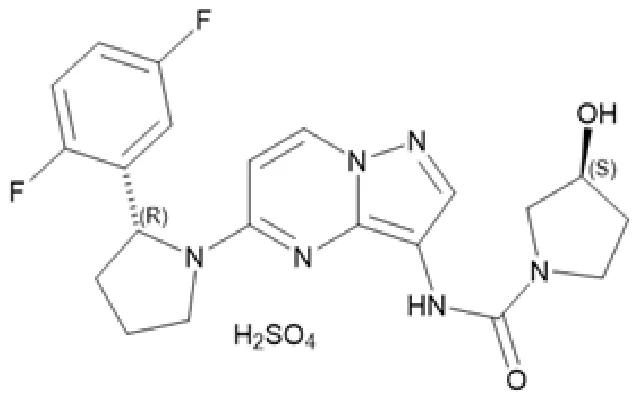
Structural formula:
Physicochemical properties:
Larotrectinib is a crystalline sulfate salt, appearing as an off-white to yellow to pinkish yellow solid. The solubility of larotrectinib sulfate is pH dependent, having > 10 mg/mL solubility below pH 1.5, ~ 2 ‒ 3 mg/mL solubility at pH 2.5, and dropping to ~1 mg/mL above pH 3.5. Larotrectinib sulfate has only been observed as a single polymorph.
14 Clinical Trials
14.1 Clinical Trials by Indication
NTRK gene fusion positive solid tumours
Three multicenter, open-label, single-arm clinical studies in patients with advanced cancer contributed patients to a pooled efficacy analysis evaluating VITRAKVI for the treatment of adult and pediatric patients with unresectable or metastatic solid tumours with a Neurotrophic Tyrosine Receptor Kinase (NTRK) gene fusion, as follows (see Table 8):
- 1) Phase 1 adult dose-finding study (Study 1 [LOXO-TRK-14001] [n=13);
- 2) Phase 2 adult and pediatric “basket” study (Study 2 [NAVIGATE] [n=191]); and
- 3) Phase 1/2 pediatric dose-finding/efficacy and safety study (Study 3 [SCOUT] [n=100]).
Enrollment to Study 1 and the Phase 1 portion of Study 3 was not restricted to patients with a documented NTRK gene fusion but patients with prospectively identified NTRK gene fusions were included in the pooled efficacy analysis. Patients enrolled to Study 2 were required to have tropomyosin receptor kinase (TRK) fusion cancer. All patients were required to have progressed following systemic therapy for their disease, if available, or would have required surgery with significant morbidity. Protocol amendments excluded patients with prior progression on approved or investigational kinase inhibitors with anti-TRK activity from Studies 2 and 3.
The assessment of efficacy is based on an analysis of 304 patients comprising an extended primary analysis set (ePAS) with cut-off date July 20, 2024. The ePAS includes the first 55 patients with solid tumours with an NTRK gene fusion who were enrolled across the three clinical studies (the primary analysis set [PAS]) plus additional patients who subsequently started treatment by January 19, 2024. Patients in the ePAS were required to have a documented NTRK gene fusion as determined by local testing; a non-Central Nervous System (non-CNS) primary tumour with ≥ 1 measurable lesion at baseline, per investigator assessment based on Response Evaluation Criteria in Solid Tumours (RECIST), version 1.1 (v1.1); and to have received ≥ 1 dose of VITRAKVI.
Identification of NTRK gene fusions was prospectively determined in local certified laboratories primarily using next generation sequencing (NGS), in some cases, by fluorescence in situ hybridization (FISH) and by reverse transcription-polymerase chain reaction (RT-PCR) in one case.
The majority of adult patients received a starting dose of VITRAKVI of 100 mg orally twice daily and the majority of pediatric patients received VITRAKVI 100 mg/m2 up to a maximum dose of 100 mg orally twice daily until unacceptable toxicity or disease progression.
Table 8: Summary of Clinical Studies Contributing Patients to the Pooled Efficacy Analysis Set (ePAS)
| Study | Study Design and Patient Population | Dosing regimen | No. of Patients in the ePAS n=304 (n) | Median Age of Patients in the ePAS, year (range) | Sex of Patient s in the ePAS (female / male) | Tumour Types of Patients in the ePAS |
|---|---|---|---|---|---|---|
Study 1 (LOXO-TRK-14001) |
| Doses up to 200 mg once or twice daily | 13 | 55.0 (28.0 – 80.0) | 6/7 | Salivary gland (n=3) GISTa (n=2) Lung, NSCLC (n=1) b Soft tissue sarcoma (n=2) Thyroid (n=4) Unknown primary cancer (n=1) |
Study 2 (NAVIGATE) |
| 100 mg twice daily | 191 | 57.0 (6.0-90.0) | 112/79 | Salivary gland (n=24) Sarcoma (n=28) Colorectal (n=26) Thyroid (n=26)b Melanoma (n=10) b Lung, NSCLC (n=29) b Lung, SCLC (n=1) b Lung, atypical carcinoid (n=1) GISTa (n=3) Cholangio-carcinoma (n=4) Pancreas (n=7) Breast, non-secretory (n=10)b Breast, secretory (n=5) Other (n=17)c |
Study 3 (SCOUT) |
| Dosing based on adult equivalent of 100 or 150 mg BID, then 100 mg/m2 twice daily (with a maximum of 100 mg twice daily) | 100 | 2.54 (0.05-19.92) | 42/58 | Infantile fibrosarcoma (n=49) Soft tissue sarcoma (n=42) Bone sarcoma (n=2) Congenital mesoblastic nephroma (n=2) Melanoma (n=1) Breast, secretory (n=1) Thyroid (n=1) Lipofibromato sis (n=1) Cervix (n=1) |
- a GIST= gastrointestinal stromal tumour
- b Brain metastases were observed in some patients with the following tumour types: lung (non-small cell lung cancer [NSCLC], small cell lung cancer [SCLC]), thyroid, melanoma, breast (non-secretory), external auditory canal, soft tissue sarcoma and testes.
- c Other tumour types included Appendix (n=1), Bone Sarcoma (n=1), Hepatic (Hepatocellular Carcinoma] (n=1), Prostate (n=2), cervix adenocarcinoma (n=1), unknown primary cancer (n=1), duodenal (n=1), esophageal (n=1); external auditory canal (n=1), gastric (n=3), thymus (n=1), urothelial (n=1), uterus (n=1) and testes (n=1).
For the pooled efficacy analysis, the primary endpoint was overall response rate (ORR), while the duration of response (DOR) was a secondary endpoint, both determined by a blinded Independent Review Committee (IRC) according to RECIST, v1.1. Additional secondary efficacy outcomes assessed included time to first response. A lower boundary of 30% for ORR, considered to be clinically meaningful, was predefined as statistically significant for response. The ORR was defined as the proportion of patients with the best overall response of confirmed complete response (CR) or confirmed partial response (PR).
Baseline characteristics for the pooled 304 patients with solid tumours harbouring an NTRK gene fusion were as follows: median age 44.5 years (range 0-90 years); 33% < 18 years of age, 67% ≥ 18 years, and 21% ≥ 65 years; 55% white and 49% male; and Eastern Cooperative Oncology Group (ECOG) Performance Status (ECOG PS) 0 - 1 (88%), 2 (10%) or 3 (2%). Seventy-three percent of patients had metastatic disease and 27% of patients had locally advanced, unresectable disease. Median time from diagnosis was 1.2 years (range: 0.02-45.88 years, n=303). Ninety-one percent of patients had received prior treatment for their cancer, defined as surgery, radiotherapy, or systemic therapy. Of these, 72% had received prior systemic therapy with a median of 1 prior regimens received (range: 0-10).. Twenty-five percent of all patients had received no prior systemic therapy. Twenty-eight percent of all patients had received 1 prior systemic therapy and 47% of all patients had received 2 or more prior systemic therapies.
The most common tumour types represented were soft tissue sarcoma (24%), infantile fibrosarcoma (16%), lung cancer (11%), thyroid cancer (10%), salivary gland tumour (9%) and colorectal cancer (9%). NTRK gene fusions were identified by NGS, FISH, RT-PCR and other methods in 89.8%, 4.9%, 3.8% and 1.4% of patients, respectively. The TRK fusions involved NTRK1 (in 45% of patients), NTRK2 (in 4%), NTRK3 (in 48%) and 67 unique upstream fusion partners. In ten patients (4%) with infantile fibrosarcoma who had a documented ETV6 translocation identified by FISH, NTRK3 gene fusions were inferred.
In the ePAS (n=304), with a median duration of follow-up of 45.1 months, the overall response rate (ORR) was 65% (95% confidence interval [CI]: 59, 70). The ORR included a CR in 66 patients (22%), a pathological CR (pCR) in 20 (7%), and a PR in 112 (37%). Fifty eight percent of responders (115 of 198 patients) were censored for duration of response, the majority of whom (94 of 115) were still in response. The duration of response exceeded 12 months in 80% of patients and the median duration of response (DOR) was 43.3 months (range: 0+ to 84.7+). The pooled efficacy results for overall response rate and best overall response are presented in Table 9.
Table 9: Efficacy Results for Pooled Efficacy Analysis Set (ePAS) (Best Overall Response, IRC Assessment)
| Efficacy Parameter | Pooled Analysis Set n=304 |
|---|---|
Overall Response Rate (ORR)a % (n) [95% CI] | 65% (198) [59, 70] |
| Complete Response (CR) | 22% (66) |
| Pathological Complete Responseb | 7% (20) |
| Partial Response (PR) | 37% (112) |
IRC: Independent Review Committee
- a ORR according to RECIST 1.1
- b A pathological CR was a CR achieved by patients who were treated with larotrectinib and subsequently underwent surgical resection with no viable tumour cells and negative margins on postsurgical pathology evaluation. The pre-surgical best response for these patients was reclassified pathological CR after surgery following RECIST v1.1.
The median time to first response was 1.84 months (range: 0.89 to 22.90 months) and 74% of responses occurred within the first 2 months of treatment which coincides with the timing of the first assessment protocol. ORR in the adult sub-population (n=205) was 55% and 86% in the pediatric sub-population (n=99).
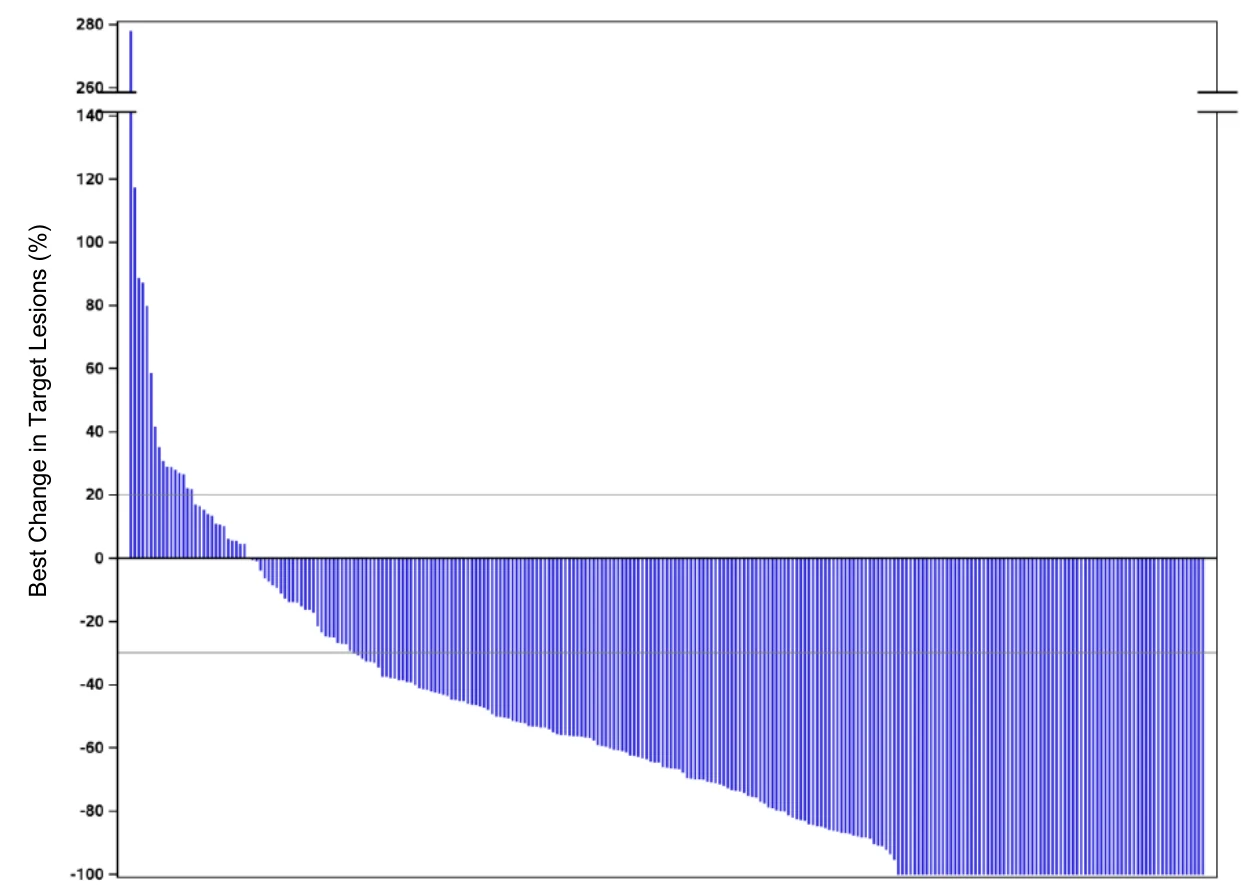
Changes in target lesion size for individual patients are illustrated in the Waterfall plot in Figure 1.
Figure 1: Best percentage change from baseline in sum of diameters of target tumour lesion, in patients with NTRK fusion - IRC assessment
IRC: Independent Review Committee
Patients of the pooled analysis set with measurable disease in IRC and at least 1 post-baseline assessment (n = 265). Additional efficacy results by tumour type and by NTRK gene fusion partner are presented in Table 10 and Table 11, respectively.
Best Change i n Target Lesi o ns (%)
Table 10: Efficacy Results by Tumour Type (IRC Assessment) for Pooled Analysis Set (ePAS)
| Tumour Type | n | ORRa % (95% CI) | DOR Range (months) | Rate (%) DOR at 12, 24, 48 monthsb |
|---|---|---|---|---|
| Overall | 304 | 65 (59, 70) | 0.03+ to 84.67+ | 80, 66, 48 |
| Soft tissue sarcoma | 72 | 68 (56, 79) | 0.03+ to 84.67+ | 80, 72, 53 |
| Infantile fibrosarcoma | 49 | 94 (83, 99) | 1.58+ to 73.66+ | 83, 66, 57 |
| Thyroid | 31 | 65 (45, 81) | 3.71+ to 83.94+ | 85, 63, 28 |
| Salivary gland | 27 | 85 (66, 96) | 2.73+ to 81.12 | 91, 86, 64 |
| Lung | 32 | 69 (50, 84) | 1.87+ to 67.22+ | 75, 52, 33 |
| Colon | 25 | 48 (28, 69) | 3.88+ to 56.31+ | 83, 62, 31 |
| Melanoma | 11 | 45 (17, 77) | 1.87+ to 23.20+ | 50, NR, NR |
| Breast | 16 | 50 (25, 75) | 7.43+ to 69.19+ | 73, 58, 58 |
| GIST | 5 | 80 (28, 99) | 9.46 to 50.43+ | 75, 38, 38 |
| Bone sarcoma | 3 | 33 (1, 91) | 9.49c | 0, 0, 0 |
| Cholangiocarcinoma | 4 | 0 (NC) | NA | NA |
| Pancreas | 7 | 14 (0, 58) | 5.78c | 0, 0, 0 |
| Appendix | 1 | 0 (NC) | NA | NA |
| Cancer of unknown primary | 2 | 100 (16, 100) | 5.59, 7.39c | 0, 0, 0 |
| Congenital mesoblastic nephroma | 2 | 100 (16, 100) | 32.89+ to 44.45c | 100, 100, 0 |
| Hepatic | 1 | 0 (NC) | NA | NA |
| Prostate | 2 | 0 (NC) | NA | NA |
| Cervix | 2 | 50 (1, 99) | 18.66+ | 100, NR, NR |
| Colorectal (Rectal) | 1 | 0 (NC) | NA | NA |
| Duodenal | 1 | 0 (NC) | NA | NA |
| Esophageal | 1 | 0 (NC) | NA | NA |
| External auditory canal | 1 | 100 (3%, 100%)) | 45.08+c | 100, 100, NR |
| Gastric | 3 | 0 (NC) | NA | NA |
| Thymus | 1 | 0 (NC) | NA | NA |
| Urothelial | 1 | 0 (NC) | NA | NA |
| Uterus | 1 | 0 (NC) | NA | NA |
| Lipofibromatosis | 1 | 100 (3%, 100%) | 17.68+c | 100, NR, NR |
| Testes | 1 | 0 (NC) | NA | NA |
CI: confidence interval; GIST: gastrointestinal stromal tumour; IRC: Independent Review Committee; NA: not available; NC: not calculated; NR: not reached; ORR: overall response rate; + denotes ongoing
- a ORR according to RECIST 1.1
- b Estimated using Kaplan-Meier method
c Based on a single subject
Table 11: Efficacy Results by NTRK Gene Fusion Partner for Pooled Efficacy Analysis Set (ePAS)
| NTRK Gene Fusion Partner | n | ORRa % (95% CI) | DOR Range (months) |
|---|---|---|---|
| NTRK Gene Fusion Partner | n | ORRa % (95% CI) | DOR Range (months) |
| NTRK Gene Fusion Partner | n | ORRa % (95% CI) | DOR Range (months) |
| Overall | 304 | 65 (59, 70) | 0.03+ to 84.7+ |
| ETV6-NTRK3 including inferred | 119 | 82 (73, 88) | 0.03+ to 81.1+ |
| TPM3-NTRK1 | 63 | 68 (55, 79) | 0.8+ to 84.7+ |
| LMNA-NTRK1 | 29 | 69 (49, 85) | 3.4+ to 81.7+ |
| TPR-NTRK1 | 12 | 58 (28, 85) | 3.0+ to 55.5+ |
| EML4-NTRK3 | 7 | 57 (18, 90) | 7.9 to 46.5+ |
| IRF2BP2-NTRK1 | 4 | 100 (40, 100) | 3.7 to 47.8+ |
| RBPMS-NTRK3 | 3 | 67 (9, 99) | 3.3+ to 23.0 |
| SQSTM1-NTRK1 | 3 | 67 (9, 99) | 9.9 to 12.9+ |
| EPS15-NTRK1 | 2 | 100 (16,100) | 9.5 to 67.2 |
| KANK1-NTRK3 | 2 | 0 [NC] | NA |
| MYO5A-NTRK3 | 2 | 100 (16, 100) | 3.7+ to 12.5+ |
| RBPMS-NTRK2 | 2 | 50 (1, 99) | 27.1b |
| SPECC1L-NTRK3 | 2 | 50 (1, 99) | 19.1+b |
| SQSTM1-NTRK3 | 2 | 50 (1, 99) | 17.4+ |
| ADAM10-NTRK3 | 1 | 0 [NC] | NA |
| AKAP13-NTRK3 | 1 | 0 [NC] | NA |
| AP3S2-NTRK3 | 1 | 0 [NC] | NA |
| ARHGEF11-NTRK1 | 1 | 0 [NC] | NA |
| ARID1A-NTRK1 | 1 | 0 [NC] | NA |
| ARNT2-NTRK3 | 1 | 0 [NC] | NA |
| ATP1A4-NTRK1 | 1 | 0 [NC] | NA |
| BCAN-NTRK1 | 1 | 100 [3, 100] | 10.8b |
| CAMSAP2-NTRK3 | 1 | 0 [NC] | NA |
| CD74-NTRK1 | 1 | 100 [3, 100] | 3.7b |
| CDC42BPB-NTRK3 | 1 | 0 [NC] | NA |
| CHTOP-NTRK1 | 1 | 100 [3, 100] | 17.7+ |
| CLIP1-NTRK1 | 1 | 100 [3, 100] | 1.9+ |
| CTNNA3-NTRK2 1 | 1 | 0 [NC] | NA |
| CTRC-NTRK1 | 1 | 0 [NC] | NA |
| DDR2-NTRK1 | 1 | 0 [NC] | NA |
| DIAPH1-NTRK1 | 1 | 0 [NC] | NA |
| DLG2-NTRK2 | 1 | 0 [NC] | NA |
| DMXL2-NTRK3 | 1 | 0 [NC] | NA |
| FAM131B-NTRK3 | 1 | 0 [NC] | NA |
| FGFR1-NTRK3 | 1 | 0 [NC] | NA |
| GCOM1-NTRK3 | 1 | 0 [NC] | NA |
| GNAQ-NTRK2 | 1 | 0 [NC] | NA |
| GON4L-NTRK1 | 1 | 0 [NC] | NA |
| INTERGENIC REGION (UPSTREAM OF LIN28B)-NTRK3 | 1 | 0 [NC] | NA |
| IQGAP1-NTRK3 | 1 | 0 [NC] | NA |
| MTMR6-NTRK1 | 1 | 0 [NC] | NA |
| NFASC-NTRK1 | 1 | 0 [NC] | NA |
| NOS1AP-NTRK1 | 1 | 0 [NC] | NA |
| PDE4DIP-NTRK1 | 1 | 100 [3, 100] | 3.6+b |
| PHACTR1-NTRK3 | 1 | 0 [NC] | NA |
| PLEKHA6-NTRK1 | 1 | 0 [NC] | NA |
| PPL-NTRK1 | 1 | 100 [3, 100] | 83.9+b |
| PRDX1-NTRK1 | 1 | 100 [3, 100] | 33.9b |
| SCAMP1-NTRK3 | 1 | 0 [NC] | NA |
| SHC4-NTRK3 | 1 | 0 [NC] | NA |
| SLC28A3-NTRK2 | 1 | 0 [NC] | NA |
| STRN-NTRK2 | 1 | 100 [3, 100] | 5.6b |
| TCF4-NTRK1, UNC13B-NTRK3 | 1 | 0 [NC] | NA |
| TFG-NTRK3 | 1 | 100 [3, 100] | 63.7+b |
| TMEM245-NTRK2, ALAD-NTRK2 | 1 | 0 [NC] | NA |
| TMTC2-NTRK3 | 1 | 0 [NC] | NA |
| TNFSF15-NTRK1 | 1 | 0 [NC] | NA |
| TNS1-NTRK1 | 1 | 0 [NC] | NA |
| TP53-NTRK1 | 1 | 0 [NC] | NA |
| TPM3-NTRK1, DCST1-NTRK1, ZBTB7B-NTRK1, DCST2-NTRK1 | 1 | 100 [3, 100] | 30.5+b |
| TPM4-NTRK3 | 1 | 100 [3, 100] | 25.6b |
| TRAF2-NTRK2 | 1 | 0 [NC] | NA |
| TRIM63-NTRK1 | 1 | 100 [3, 100] | 1.9+b |
| TRPM3-NTRK2 | 1 | 0 [NC] | NA |
| TRPM3-NTRK3 | 1 | 0 [NC] | NA |
| VTI1A-NTRK2, CHD2-NTRK2 | 1 | 0 [NC] | NA |
NA: not available; NC: not calculated; + denotes ongoing
- a ORR according to RECIST 1.1
- b Based on a single subject
Patients with CNS Tumours
Sixty patients with primary CNS tumours and NTRK gene fusions were enrolled in study 2 (“NAVIGATE”) and in study 3 (“SCOUT”). Baseline characteristics for the 60 patients with primary CNS tumours with an NTRK gene fusion assessed by investigator were as follows: median age 9 years (range 0-79 years); 43 patients < 18 years of age and 17 patients ≥ 18 years, and 39 patients white and 28 patients male; and ECOG PS 0-1 (52 patients), or 2 (5 patients). Fifty seven (95%) CNS tumour patients had received prior cancer treatment (surgery, radiotherapy and/or previous systemic therapy). There was a median of 1 prior systemic treatment regimen received. Tumour responses for primary CNS tumours were assessed by the investigator using Response Assessment in Neuro Oncology (RANO) Criteria or Response Evaluation Criteria in Solid Tumours (RECIST v1.1).
Of the 60 patients with primary CNS tumours, confirmed response was observed in 21 patients (35%) with 5 of the 60 patients (8%) being complete responders and 16 (27%) being partial responders. At a median follow-up time of 15.7 months, the median duration of response was 17.2 months (2.8+ months, 70.9+ months). Further, 24 patients (40%) had stable disease. Thirteen patients (22%) had a progressive disease.
Disease control (including confirmed CR, pCR, PR, and SD of at least 16 weeks) was demonstrated in 41 of 60 patients, with a DCR of 68% (95% CI: [55, 80]).
16 Non-Clinical Toxicology
General toxicology
Repeated-dose toxicity was assessed in studies with daily oral administration up to 13-weeks in rats and monkey. Dose limiting skin lesions were only seen in rats and were primarily responsible for mortality and morbidity. In rats, severe toxicity was observed at doses corresponding to human AUC at the recommended clinical dose. Clinical signs of gastrointestinal toxicity including emesis, were dose limiting in monkeys. No relevant systemic toxicity were observed in monkeys at exposures which correspond to >10-times the human AUC at the recommended clinical dose.
Increased body weight, increased food consumption, and elevated serum liver enzymes (ALT and/or AST) are additional relevant findings that were observed in both species.
Genotoxicity
Larotrectinib was not mutagenic in bacterial reverse mutation (Ames) assays and in in vitro mammalian mutagenesis assays. Larotrectinib was negative in the in vivo mouse micronucleus test.
Carcinogenicity
Carcinogenicity studies have not been performed with larotrectinib.
Reproductive and developmental toxicology
Fertility
Fertility studies with larotrectinib have not been conducted. In 13-week repeated-dose studies, larotrectinib had no effects on spermatogenesis in rats and on the histopathology of male reproductive organs in rats and monkeys at doses corresponding to approximately 7-times (rats) and 10-times (monkeys) the human AUC at the recommended clinical dose.
In a 1-month study in female rats, fewer corpora lutea, increased incidence of anestrus and decreased uterine weight with uterine atrophy were observed at doses corresponding to approximately 8-times the human AUC at the recommended clinical dose; these effects were reversible. No effects on reproductive organs were seen in the 13-week study in rats and monkeys at doses corresponding to approximately 3 times (rats) and approximately 17-times (monkeys) the human AUC at the recommended clinical dose.
Embryo-fetal development
In embryo-fetal development studies where pregnant rats and rabbits were dosed with larotrectinib during the period of organogenesis, malformations were observed at maternal exposures that were approximately 9- and 0.6- times, respectively, those observed at the clinical dose of 100 mg twice daily. Larotrectinib was not embroytoxic up to maternally toxic doses. Larotrectinib crosses the placenta in both species and can be detected in blood samples obtained from fetuses at termination.
Juvenile toxicology
Larotrectinib was administered in a juvenile toxicity study in rats at twice daily doses of 0.2, 2 and 7.5 mg/kg from postnatal day (PND) 7 to 27 and at twice daily doses of 0.6, 6 and 22.5 mg/kg between PND 28 and 70. The dosing period was equivalent to human pediatric populations from newborn to adulthood. The lowest dose (0.2/0.6 mg/kg BID), equivalent to 0.02-fold the recommended clinical exposure, was considered the NOAEL. At doses ≥2/6 mg/kg BID (0.5-fold the recommended clinical exposure), increased mortality, neuronal effects (increased incidence of partially closed eyelids, lower hindlimb grip strength and foot splay), decreased growth (shorter tibial length and lower body weight gain with lower food intake) and delay in sexual development were noted. At doses 7.5/22.5 mg/kg BID (3-fold the recommended clinical exposure), central nervous system-related signs including head flick and circling, increased escape time and number of errors in a maze swim test when the original path is reversed, skin lesions, and swollen abdomen (females) were noted. Lower fertility was noted in animals at 3-times the recommended clinical exposure.