


Product Monograph - Xospata
RECENT MAJOR LABEL CHANGES
TABLE OF CONTENTS
RECENT MAJOR LABEL CHANGES......................................................................................... 2
TABLE OF CONTENTS ........................................................................................................... 2
PART I: HEALTH PROFESSIONAL INFORMATION .................................................................. 4
1 INDICATIONS ........................................................................................................... 4
1.1 Pediatrics ....................................................................................................... 4
1.2 Geriatrics........................................................................................................ 4
2 CONTRAINDICATIONS .............................................................................................. 4
3 SERIOUS WARNINGS AND PRECAUTIONS BOX ......................................................... 4
4 DOSAGE AND ADMINISTRATION.............................................................................. 4
4.1 Dosing Considerations .................................................................................... 4
4.2 Recommended Dose and Dosage Adjustment.................................................. 5
4.3 Reconstitution ................................................................................................ 6
4.4 Administration................................................................................................ 6
4.5 Missed Dose ................................................................................................... 7
5 OVERDOSAGE .......................................................................................................... 7
6 DOSAGE FORMS, STRENGTHS, COMPOSITION AND PACKAGING .............................. 7
7 WARNINGS AND PRECAUTIONS ............................................................................... 7
7.1 Special Populations ......................................................................................... 9
7.1.1 Pregnant Women ...................................................................................... 9
7.1.2 Breast-feeding........................................................................................... 9
7.1.3 Pediatrics .................................................................................................. 9
7.1.4 Geriatrics .................................................................................................. 9
8 ADVERSE REACTIONS ............................................................................................. 10
8.1 Adverse Reaction Overview........................................................................... 10
8.2 Clinical Trial Adverse Reactions ..................................................................... 10
8.3 Less Common Clinical Trial Adverse Reactions ............................................... 12
8.3.1 Less Common Clinical Trial Adverse Reactions - Pediatrics ........................ 12
8.4 Abnormal Laboratory Findings: Hematologic, Clinical Chemistry and Other Quantitative Data ................................................................................................... 12
8.5 Post-Market Adverse Reactions..................................................................... 12
9 DRUG INTERACTIONS............................................................................................. 12
9.2 Drug Interactions Overview........................................................................... 12
9.3 Drug-Behavioural Interactions....................................................................... 13
9.4 Drug-Drug Interactions ................................................................................. 13
9.5 Drug-Food Interactions ................................................................................. 14
9.6 Drug-Herb Interactions ................................................................................. 14
9.7 Drug-Laboratory Test Interactions ................................................................. 14
10 CLINICAL PHARMACOLOGY .................................................................................... 14
10.1 Mechanism of Action .................................................................................... 14
10.2 Pharmacodynamics....................................................................................... 15
10.3 Pharmacokinetics ......................................................................................... 15
11 STORAGE, STABILITY AND DISPOSAL ...................................................................... 16
12 SPECIAL HANDLING INSTRUCTIONS........................................................................ 16
PART II: SCIENTIFIC INFORMATION ................................................................................... 17
13 PHARMACEUTICAL INFORMATION......................................................................... 17
14 CLINICAL TRIALS..................................................................................................... 17
14.1 Trial Design and Study Demographics ............................................................ 17
14.2 Study Results ................................................................................................ 20
14.3 Comparative Bioavailability Studies ............................................................... 21
15 MICROBIOLOGY ..................................................................................................... 22
16 NON-CLINICAL TOXICOLOGY .................................................................................. 22
17 SUPPORTING PRODUCT MONOGRAPHS................................................................. 24
PATIENT MEDICATION INFORMATION .............................................................................. 25
PART I: HEALTH PROFESSIONAL INFORMATION
1 INDICATIONS
Xospata® (gilteritinib tablets) is indicated for:
- the treatment of adult patients who have relapsed or refractory acute myeloid leukemia (AML) with a FMS-like tyrosine kinase 3 (FLT3) mutation.
A validated test is required to confirm the FLT3 mutation status of AML.
1.1 Pediatrics
Pediatrics (< 18 years of age): No clinical efficacy and safety data are available to Health Canada; therefore, Health Canada has not authorized an indication for pediatric use (see WARNINGS AND PRECAUTIONS, Special Populations).
1.2 Geriatrics
Geriatrics (≥ 65 years of age): No overall differences in efficacy or safety were observed in patients 65 years or older compared to younger patients in clinical trials (see WARNINGS AND PRECAUTIONS, Special populations).
2 CONTRAINDICATIONS
Xospata is contraindicated in patients who are hypersensitive to this drug or to any ingredient in the formulation, including any non-medicinal ingredient, or component of the container. For a complete listing, see DOSAGE FORMS, STRENGTHS, COMPOSITION AND PACKAGING.
3 SERIOUS WARNINGS AND PRECAUTIONS BOX
Serious Warnings and Precautions
| Differentiation syndrome was reported in patients treated with Xospata. Symptoms and clinical findings may include fever, dyspnea, pleural effusion, pericardial effusion, pulmonary infiltrate, hypotension, rapid weight gain, peripheral edema, rash, and renal dysfunction. Some cases had concomitant acute febrile neutrophilic dermatosis. Differentiation syndrome can be fatal if not treated. If differentiation syndrome is suspected, initiate corticosteroid therapy and hemodynamic monitoring until symptom resolution (see WARNINGS AND PRECAUTIONS; ADVERSE REACTIONS). |
4 DOSAGE AND ADMINISTRATION
4.1 Dosing Considerations
- Treatment with Xospata should be initiated and supervised by a physician experienced in the use of anticancer therapies.
- Prior to initiation of treatment with Xospata, patients must have confirmation of FLT3 mutation (internal tandem duplication [ITD] or tyrosine kinase domain [TKD]) using a validated test.
- Assess blood counts and chemistries, including creatine phosphokinase, prior to the initiation of treatment with Xospata, once weekly for the first month, once every other week for the second month, and monthly for the duration of therapy.
- Perform electrocardiogram (ECG) prior to initiation of treatment with Xospata, on days 8 and 15 of the first month, prior to the start of the next two months of treatment, and then as clinically indicated.
4.2 Recommended Dose and Dosage Adjustment
The recommended dose of Xospata is 120 mg (three 40 mg tablets) orally once daily with or without food (see DRUG INTERACTIONS, Drug-Food Interactions). Treatment should continue as long as clinical benefit is observed or until unacceptable toxicity occurs.
Clinical response can be delayed (see CLINICAL TRIALS). In the absence of disease progression or unacceptable toxicity, treatment for a minimum of 6 months is recommended to allow time for a clinical response.
Health Canada has not authorized an indication for pediatric use (see WARNINGS AND PRECAUTIONS, Special Populations).
No dose adjustment is required in geriatric patients (≥ 65 years of age) (see ACTION AND CLINICAL PHARMACOLOGY, Pharmacokinetics).
No dose adjustment is required in patients with mild or moderate renal impairment (creatinine clearance [CLCr] ≥30 mL/min). Clinical experience in patients with severe renal impairment (CLCr < 30 mL/min) is limited (see ACTION AND CLINICAL PHARMACOLOGY, Pharmacokinetics).
No dose adjustment is required in patients with mild (Child-Pugh Class A) or moderate (Child-Pugh Class B) hepatic impairment. No data are available in patients with severe hepatic impairment (Child-Pugh Class C) (see ACTION AND CLINICAL PHARMACOLOGY, Pharmacokinetics).
Table 1 – Xospata Dose Modification Recommendations in Patients with Relapsed or Refractory AML
| Criteria | Xospata Dosing |
| Symptoms of Differentiation Syndrome |
|
| Symptoms of Posterior Reversible Encephalopathy Syndrome (PRES) |
|
| QTc interval 500 msec |
|
| QTc interval increased by >30 msec on ECG on day 8 of cycle 1 |
|
| Pancreatitis |
|
| Other Gradea 3 or greater toxicity considered related to Xospata |
|
| Planned HSCT |
|
HSCT: hematopoietic stem cell transplantation; ECG: electrocardiogram
a. Grade 1 is mild, Grade 2 is moderate, Grade 3 is serious, Grade 4 is life threatening.
b. Composite complete remission (CRc) is defined as the remission rate of all CR, CRp (achieved CR except for incomplete platelet recovery [<100 x 109/L]) and CRi (achieved all criteria for CR except for incomplete haematological recovery with residual neutropenia <1 x 10⁹/L with or without complete platelet recovery).
4.3 Reconstitution
Not applicable.
4.4 Administration
Administer Xospata tablets orally about the same time each day. Do not break or crush tablets.
4.5 Missed Dose
Xospata should be administered at about the same time each day. If a dose is missed or not taken at the usual time, the dose should be administered as soon as possible on the same day, and patients should return to the normal schedule the following day. Do not administer 2 doses within 12 hours. If vomiting occurs after dosing, patients should not take another dose but should return to the normal schedule the following day.
5 OVERDOSAGE
There is no known antidote for gilteritinib. It is not known if gilteritinib is removed by dialysis.
In the event of an overdose, closely monitor patients for signs or symptoms of adverse reactions and initiate appropriate symptomatic and supportive treatment (see WARNINGS AND PRECAUTIONS; ADVERSE REACTIONS, ACTION AND CLINICAL PHARMACOLOGY, Pharmacodynamics; NON-CLINICAL TOXICOLOGY).
| For management of a suspected drug overdose, contact your regional poison control centre. |
6 DOSAGE FORMS, STRENGTHS, COMPOSITION AND PACKAGING
Table 2 – Dosage Forms, Strengths, Composition and Packaging.
Xospata 40 mg tablets are light yellow, round-shaped, film-coated tablets debossed with the Astellas logo and ‘235’ on the same side. Xospata tablets are supplied in bottles of 90 tablets.
7 WARNINGS AND PRECAUTIONS
Please see the SERIOUS WARNINGS AND PRECAUTIONS Box at the beginning of the PART 1: HEALTH PROFESSIONAL INFORMATION.
Cardiovascular
QTc Interval Prolongation
Xospata has been associated with prolonged cardiac ventricular repolarization (QT interval). Of 317 patients treated with Xospata at 120 mg with a post-baseline corrected QT interval (QTc) measurement in clinical trials, 1.3% were found to have a Fridericia-corrected QT interval (QTcF) greater than 500 msec and 6.6% of patients had an increase from baseline QTcF greater than 60 msec.
Perform ECG prior to initiation of treatment with Xospata, on days 8 and 15 of the first month, prior to
| Route of Administration | Dosage Form / Strength/Composition | Non-medicinal Ingredients |
| Oral | Each tablet contains 40 mg gilteritinib active ingredient as free base (corresponding to 44.2 mg gilteritinib fumarate). | hydroxypropyl cellulose, hypromellose, low-substituted hydroxypropyl cellulose, magnesium stearate, mannitol, polyethylene glycol, talc, titanium dioxide, ferric oxide |
the start of the next two months of treatment, and then as clinically indicated. Interrupt and/or reduce Xospata dosage in patients who have a QTcF >500 msec (see DOSAGE AND ADMINISTRATION; ADVERSE REACTIONS; ACTION AND CLINICAL PHARMACOLOGY, Pharmacodynamics). Hypokalemia or hypomagnesemia may increase the QT prolongation risk. Monitor and correct hypokalemia or hypomagnesemia prior to and during Xospata administration.
Driving and Operating Machinery
Xospata has the potential to influence the ability to drive and use machines. Dizziness and syncope have been reported in patients taking Xospata and should be considered when assessing a patient’s ability to drive or use machines.
Hepatic/Biliary/Pancreatic
Pancreatitis
Adverse events of pancreatitis were reported in 0.9% of 319 patients treated with Xospata monotherapy in clinical trials. Evaluate and monitor patients who develop signs and symptoms suggestive of pancreatitis. Xospata should be interrupted and can be resumed at a reduced dose when the signs and symptoms of pancreatitis have resolved (see DOSAGE AND ADMINISTRATION; ADVERSE REACTIONS).
Neurologic
Posterior Reversible Encephalopathy Syndrome
Uncommon events of posterior reversible encephalopathy syndrome (PRES) have been reported with symptoms including seizure and altered mental status. Symptoms have resolved after discontinuation of Xospata. A diagnosis of PRES requires confirmation by brain imaging, preferably magnetic resonance imaging (MRI). Discontinue Xospata in patients who develop PRES (see DOSAGE AND ADMINISTRATION; ADVERSE REACTIONS).
Reproductive Health: Female and Male Potential
- Reproduction
Pregnancy testing: Pregnancy testing is recommended for female patients of reproductive potential within seven days prior to initiating treatment with Xospata.
Contraception: Female patients of reproductive potential should be advised of the potential risk to the fetus. Advise female patients of reproductive potential to use effective contraception during treatment and for at least 6 months after the last dose of Xospata (see NON-CLINICAL TOXICOLOGY).
Male Patients: Advise male patients with female partners of reproductive potential to use effective contraception during treatment and for at least 4 months after the last dose of Xospata (see NON-CLINICAL TOXICOLOGY).
- Fertility
No human data on the effect of Xospata on fertility are available. Based on findings in animal studies, Xospata may impair fertility in male patients of reproductive potential (see NON-CLINICAL
TOXICOLOGY).
Respiratory
Differentiation Syndrome
Of 319 patients treated with Xospata in clinical trials, 11 (3.4%) experienced differentiation syndrome. Differentiation syndrome is associated with rapid proliferation and differentiation of myeloid cells and may be life-threatening or fatal if not treated. Symptoms and clinical findings of differentiation syndrome in patients treated with Xospata included fever, dyspnea, pleural effusion, pericardial effusion, pulmonary edema, hypotension, rapid weight gain, peripheral edema, rash, and renal dysfunction. Some cases had concomitant acute febrile neutrophilic dermatosis. Differentiation syndrome occurred as early as 1 day and up to 82 days after Xospata initiation and has been observed with or without concomitant leukocytosis (see ADVERSE REACTIONS).
If differentiation syndrome is suspected, initiate corticosteroids and hemodynamic monitoring until symptom resolution. Taper corticosteroids after resolution of symptoms. Symptoms of differentiation syndrome may recur with premature discontinuation of corticosteroid treatment. If severe signs and/or symptoms persist for more than 48 hours after initiation of corticosteroids, interrupt Xospata until signs and symptoms are no longer severe (see DOSAGE AND ADMINISTRATION).
7.1 Special Populations
7.1.1 Pregnant Women
There are no available data on Xospata use in pregnant women to inform a drug-associated risk of adverse developmental outcomes. In animal studies, administration of gilteritinib to pregnant rats caused embryo-fetal deaths, suppressed fetal growth, and teratogenicity at maternal exposures below the exposure in patients receiving the recommended dose (see NON-CLINICAL TOXICOLOGY). Based on findings from animal studies, Xospata can cause fetal harm when administered to a pregnant woman. Xospata should not be used in women who are pregnant or contemplating pregnancy. If Xospata is used in pregnancy, or if the patient becomes pregnant while taking Xospata, the patient should be apprised of potential hazard to the fetus.
7.1.2 Breast-feeding
There is no information regarding the presence of Xospata in human milk, the effects on the breastfed infant, or the effects on milk production. In animal studies, Xospata and/or its metabolite(s) were distributed to the tissues in infant rats via the milk. Because of the potential for gilteritinib exposure and serious adverse reactions in a breastfed infant, a nursing woman should be advised to discontinue breast-feeding during treatment with Xospata and for at least 2 months after stopping treatment.
7.1.3 Pediatrics
The safety and efficacy of Xospata in children has not been established. Animal studies have demonstrated toxicity in juvenile rats (see NON-CLINICAL TOXICOLOGY).
7.1.4 Geriatrics
No overall differences in efficacy or safety were observed between patients 65 years or older and younger patients.
8 ADVERSE REACTIONS
8.1 Adverse Reaction Overview
The safety of Xospata was evaluated in 319 adult patients with relapsed or refractory AML having a FLT3 mutation, who received at least one dose of 120 mg Xospata in clinical trials including pivotal ADMIRAL study (see CLINICAL TRIALS). At the time of final analysis, the median duration of exposure to Xospata was 3.6 months (range 0.1 to 43.4 months).
The most frequent adverse reactions (≥10%) with Xospata were aspartate aminotransferase (AST) increased (37.6%), alanine aminotransferase (ALT) increased (37.6%), diarrhea (35.1%), fatigue (30.4%), nausea (29.8%), cough (28.2%), constipation (28.2%), peripheral edema (24.1%), dyspnea (24.1%), headache (23.5%), vomiting (21.0%), blood alkaline phosphatase increased (20.7%), dizziness (20.4%), hypotension (17.2%), decreased appetite (17.2%), rash (15.0%), stomatitis (13.5%), abdominal pain (13.2%), dysgeusia (11.0%).
Ninety-one patients (28.5%) required a dose interruption due to an adverse reaction; the most common adverse reactions leading to dose interruption were ALT increased (6.3%) and AST increased (6.0%). Twenty patients (6.3%) required a dose reduction due to an adverse reaction. Twenty-two (6.9%) discontinued Xospata treatment permanently due to an adverse reaction. The most common (>1%) adverse reactions leading to discontinuation were AST increased (1.9%) and ALT increased (1.6%).
The most frequent serious adverse reactions were acute kidney injury (6.6%), diarrhea (4.7%), ALT increased (4.1%), dyspnea (3.4%), AST increased (3.1%), hypotension (2.8%), syncope (2.5%) and differentiation syndrome (2.2%). Fatal adverse reactions included two cases with clinical symptoms consistent with differentiation syndrome and one case of cardiac failure congestive.
8.2 Clinical Trial Adverse Reactions
Clinical trials are conducted under very specific conditions. The adverse reaction rates observed in the clinical trials may not reflect the rates observed in practice and should not be compared to the rates in the clinical trials of another drug. Adverse reaction information from clinical trials may be useful for identifying and approximating rates of adverse drug reactions in real-world use.
The ADMIRAL study is a Phase 3, open-label, multicentre, randomized clinical trial of adult patients with relapsed or refractory AML having a FLT3 mutation. The trial compared safety and efficacy of Xospata to protocol-defined salvage chemotherapies (see CLINICAL TRIALS).
Adverse reactions are reported for the duration of exposure (Table 3). At the time of analysis, the median duration of exposure was 4.1 months (range 0.1 to 29.1 months) for Xospata and 0.9 months (range 0.2 to 7.1 months) for chemotherapy.
Table 3 – Adverse Reactions Reported in ≥ 10% Any Grade or ≥ 5% Grade 3-5 in the ADMIRAL Study
System Organ Classa Adverse Reactionb | Xospatad 120mg daily N = 246 (%) | Chemotherapyd N = 109 (%) | ||||
| Any Gradec | Grade ≥ 3c | Any Gradec | Grade ≥ 3c | |||
| Gastrointestinal Disorders | |||||||
| Diarrhea | 81 (32.9) | 9 (3.7) | 32 (29.4) | 3 (2.8) | |||
| Nausea | 79 (32.1) | 5 (2.0) | 36 (33.0) | 0 | |||
| Constipation | 76 (30.9) | 2 (0.8) | 16 (14.7) | 0 | |||
| Vomiting | 53 (21.5) | 1 (0.4) | 15 (13.8) | 0 | |||
| Abdominal pain | 37 (15.0) | 5 (2.0) | 16 (14.7)` | 0 | |||
| Stomatitis | 34 (13.8) | 6 (2.4) | 16 (14.7) | 4 (3.7) | |||
| General Disorders and Administration Site Conditions | |||||||
| Fatigue | 70 (28.5) | 6 (2.4) | 14 (12.8) | 2 (1.8) | |||
| Peripheral edema | 59 (24.0) | 1 (0.4) | 13 (11.9) | 0 | |||
| Asthenia | 38 (15.4) | 6 (2.4) | 10 (9.2) | 2 (1.8) | |||
| Metabolism and Nutrition Disorders | |||||||
| Decreased appetite | 44 (17.9) | 5 (2.0) | 20 (18.3) | 5 (4.6) | |||
| Musculoskeletal and Connective Tissue Disorders | |||||||
| Pain in extremity | 36 (14.6) | 2 (0.8) | 8 (7.3) | 1 (0.9) | |||
| Myalgia | 35 (14.2) | 1 (0.4) | 4 (3.7) | 0 | |||
| Arthralgia | 28 (11.4) | 4 (1.6) | 6 (5.5) | 1 (0.9) | |||
| Nervous System Disorders | |||||||
| Dizziness | 48 (19.5) | 1 (0.4) | 2 (1.8) | 0 | |||
| Dysgeusia | 25 (10.2) | 0 | 5 (4.6) | 0 | |||
| Headache | 64 (26.0) | 3 (1.2) | 16 (14.7) | 0 | |||
| Respiratory, Thoracic and Mediastinal Disorders | |||||||
| Cough | 72 (29.3) | 1 (0.4) | 11 (10.1) | 0 | |||
| Dyspnea | 58 (23.6) | 10 (4.1) | 7 (6.4) | 3 (2.8) | |||
| Skin and Lymphatic System Disorder | |||||||
| Rash | 36 (14.6) | 1 (0.4) | 10 (9.2) | 1 (0.9) | |||
| Vascular disorders | |||||||
| Hypotension | 43 (17.5) | 19 (7.7) | 8 (7.3) | 3 (2.8) | |||
a. Medical Dictionary for Regulatory Activities (MedDRA) Version 19.1
b. Adverse reactions are based on MedDRA preferred terms (PTs).
c. Based on Common Terminology Criteria for Adverse Events (CTCAE).
d. The median duration of exposure was 4.1 months (range 0.1 to 29.1 months) for Xospata and 0.9 months (range 0.2 to 7.1 months) for chemotherapy.
8.3 Less Common Clinical Trial Adverse Reactions
The following less common (< 10%) adverse reactions based on 319 patients, were reported for patients treated with Xospata:
Cardiac Disorders: pericardial effusion (4.1%), pericarditis (1.6%), cardiac failure (1.3%), myocarditis (0.6%)
General Disorders and Administration Site Conditions: malaise (4.4%)
Immune System Disorders: anaphylactic reaction (1.3%)
Investigations: electrocardiogram QT prolonged (8.8%)
Musculoskeletal and Connective Tissue Disorders: muscular weakness (8.8%), musculoskeletal pain (4.1%), myositis (1.9%)
Nervous System Disorders: syncope (5.0%), neuropathy peripheral (4.7%), posterior reversible encephalopathy syndrome (0.6%)
Renal and Urinary Disorders: acute kidney injury (6.6%)
Respiratory, Thoracic and Mediastinal Disorders: differentiation syndrome (3.4%)
8.3.1 Less Common Clinical Trial Adverse Reactions - Pediatrics
Not applicable.
8.4 Abnormal Laboratory Findings: Hematologic, Clinical Chemistry and Other Quantitative Data
Table 4 – New or Worsening Laboratory Abnormalities (> 20% in Xospata Arm) in the ADMIRAL Study
Xospata 120mg N=246 % | Salvage Chemotherapy N=109 % | |||||||||
| Any Grade | Grade 3/4 | Any Grade | Grade 3/4 | |||||||
| Alanine aminotransferase increased | 83.3 | 12.6 | 47.7 | 2.8 | ||||||
| Aspartate aminotransferase increased | 81.3 | 10.2 | 38.5 | 1.8 | ||||||
| Creatine kinase increased | 51.2 | 6.5 | 0.9 | 0 | ||||||
| Alkaline phosphatase increased | 68.3 | 1.6 | 42.2 | 0 | ||||||
8.5 Post-Market Adverse Reactions
Not applicable.
9 DRUG INTERACTIONS
9.2 Drug Interactions Overview
Gilteritinib is primarily metabolised by CYP3A enzymes, which can be induced or inhibited by a number of concomitant medications. Gilteritinib is also a substrate of P-glycoprotein (P-gp). Concomitant use of gilteritinib with strong inhibitors of CYP3A and/or P-gp can increase gilteritinib exposure. Concomitant use of gilteritinib with strong inducers of CYP3A and/or P-gp can decrease gilteritinib exposure.
Co-administration of gilteritinib with fluconazole, a moderate CYP3A inhibitor, did not result in a clinically significant drug interaction. Gilteritinib Cmax increased approximately 16% and AUC increased approximately 40% when co-administered with fluconazole.
Based on in vitro data, gilteritinib may reduce the effects of drugs that target 5HT2B receptor or sigma nonspecific receptor.
Based on in vitro data, gilteritinib may inhibit P-gp, breast cancer resistant protein (BCRP) and organic cation transporter (OCT1) at a therapeutic dose. In vitro experiments demonstrated that gilteritinib is a substrate of BCRP.
Gilteritinib is not an inducer of CYP3A or an inhibitor of multidrug and toxin extrusion 1 (MATE1) transporter in vivo. The Cmax and AUC of midazolam (a CYP3A substrate) were increased by approximately 10% when co-administered with gilteritinib in patients. The Cmax and AUC of cephalexin (a MATE1 substrate) were decreased by less than 10% when co-administered with gilteritinib in patients.
9.3 Drug-Behavioural Interactions
Not applicable
9.4 Drug-Drug Interactions
The drug interactions listed in Table 5 are based on clinical drug interaction studies or in vitro studies.
Table 5 - Established or Potential Drug-Drug Interactions
| Common name | Source of Evidence | Effect | Clinical comment |
| Drugs that may alter gilteritinib plasma concentrations | |||
| Strong inducer of CYP3A and/or P-gp (e.g., rifampin, phenytoin) | CT | Concomitant use of Xospata with rifampin (a combined P-gp and strong CYP3A inducer) reduced gilteritinib Cmax by 30% and AUC by 70%. | Avoid concomitant use of Xospata with strong inducers of CYP3A and/or P-gp. |
| Strong inhibitor of CYP3A4 and/or P-gp (e.g., voriconazole, posaconazole, clarithromycin, captopril, azithromycin, carvedilol, ritonavir) | CT | Concomitant use of Xospata with itraconazole (a combined P-gp and strong CYP3A inhibitor) increased gilteritinib Cmax by 20% and AUC by 120%. | Consider alternative therapies that do not strongly inhibit CYP3A and/or P-gp activity. In situations where satisfactory therapeutic alternatives do not exist, patients should be closely monitored for gilteritinib-related toxicity. |
| Drugs that may have their pharmacodynamic effects altered by Xospata | |||
| Drugs that target 5HT2B receptor or sigma nonspecific receptor (e.g., escitalopram, fluoxetine, sertraline) | T | Gilteritinib inhibited ligand binding to the serotonin 5HT2B receptor and sigma receptor in vitro with half maximal inhibitory concentration (IC50) values of 0.190 and 0.615 μmol/L, respectively. In a cell function | Avoid concomitant use of these drugs with Xospata unless use is considered essential for the care of the patient. |
assay, gilteritinib inhibited 5HT2B receptor function with an IC50 value of 5.82 μmol/L without showing agonistic activity. Based on these in vitro data, Xospata may reduce the effects of drugs that target 5HT2B receptor or sigma nonspecific receptor. | |||
| Drugs that may have their plasma concentrations altered by Xospata | |||
| Substrates of P-gp (e.g., digoxin, dabigatran etexilate), BCRP (e.g. mitoxantrone, rosuvastatin), and OCT1 (e.g., metformin) | T | Gilteritinib inhibited P-gp, BCRP and OCT1 in vitro at therapeutic concentrations. Based on these in vitro data, Xospata may alter the plasma concentrations of drugs that are substrates of these transporters. | Caution is advised during coadministration of Xospata with substrates of P-gp, BCRP and OCT1. |
Legend: CT = Clinical Trial; T = Theoretical
9.5 Drug-Food Interactions
No clinical evaluation to assess the effect of grapefruit, grapefruit juice or products containing grapefruit extract has been conducted. Grapefruit, grapefruit juice, and products containing grapefruit extract may inhibit CYP3A and result in increased gilteritinib plasma concentrations and should be avoided.
Xospata can be administered with or without food. Concomitant food intake delays the absorption of gilteritinib but overall gilteritinib absorption was comparable with and without food (see ACTION AND CLINICAL PHARMACOLOGY, Pharmacokinetics).
9.6 Drug-Herb Interactions
No formal drug-herb interaction studies have been conducted. St. John’s wort (Hypericum perforatum is an inducer of CYP3A4 that may decrease gilteritinib plasma concentrations and should be avoided.
9.7 Drug-Laboratory Test Interactions
Interactions with laboratory tests have not been established.
10 CLINICAL PHARMACOLOGY
10.1 Mechanism of Action
Gilteritinib is a small molecule that inhibits multiple receptor tyrosine kinases, including FMS-like tyrosine kinase 3 (FLT3). Gilteritinib demonstrated the ability to inhibit FLT3 receptor signaling and proliferation in cells exogenously expressing FLT3 including FLT3-internal tandem duplication (ITD), tyrosine kinase domain mutations (TKD) FLT3-D835Y and FLT3-ITD-D835Y, and it induced apoptosis in leukemic cells expressing FLT3-ITD.
10.2 Pharmacodynamics
Primary Pharmacodynamics
In patients with relapsed or refractory AML administered Xospata 120 mg, substantial (>90%) inhibition of FLT3 phosphorylation was rapid (within 24 hours after first dose) and sustained, as characterized by an ex vivo plasma inhibitory activity (PIA) assay.
Cardiac Electrophysiology
A concentration-related increase in change from baseline of QTcF was observed across gilteritinib doses ranging from 20 to 450 mg in patients. The predicted mean change from baseline of QTcF at the median steady-state Cmax (282.0 ng/mL) at the 120 mg daily dose was 4.96 msec with an upper 1-sided 95% CI=6.20 msec.
10.3 Pharmacokinetics
In general, gilteritinib exhibits linear, dose-proportional pharmacokinetics in patients with relapsed or refractory AML at doses ranging from 20 to 450 mg administered once daily.
Following once-daily dosing of 120 mg in patients, gilteritinib mean (±SD) steady-state maximum concentration (Cmax) is 374 ng/mL (±190), and area under the plasma concentration curve during 24-hour dosing interval (AUC24) is 6943 ng·h/mL (±3221). Steady-state plasma levels are reached within 15 days of dosing with an approximate 10-fold accumulation.
Absorption
The time to maximum gilteritinib concentration (tmax) observed is approximately between 4 and 6 hours post dose in the fasted state.
Effect of food
In healthy adults, co-administration of a single gilteritinib 40 mg dose with a high calorie, high-fat meal resulted in similar exposure (AUC) and a modest decrease in the maximum concentration (Cmax decreased by 26%) compared to dosing in the fasted state. Food also delayed the time to maximum concentration (Tmax) by approximately 2 hours.
Distribution
The population mean (%CV) estimates of central and peripheral volume of distribution were 1092 L (9.22%) and 1100 L (4.99%), respectively, which may indicate extensive tissue distribution. In vivo plasma protein binding in humans is approximately 90% and gilteritinib is primarily bound to albumin.
Metabolism
Based on in vitro data, gilteritinib is primarily metabolised via CYP3A4. At steady state, the primary metabolites in humans include M17 (formed via N-dealkylation and oxidation), M16 and M10 (both formed via N dealkylation). None of these three metabolites exceeded 10% of overall parent exposure.
Elimination
The estimated half-life of gilteritinib is 113 hours, and the estimated apparent clearance is 14.85 L/h.
After a single dose, gilteritinib is primarily excreted in feces with 64.5% of the total administered dose recovered in feces. Approximately 16.4% of the total dose was excreted in urine as unchanged drug and metabolites.
Special Populations and Conditions
Based on population pharmacokinetic analyses, race and gender have no significant effect on the pharmacokinetics of gilteritinib. In population pharmacokinetic analyses, gilteritinib clearance decreased with increasing age (20 years to 90 years) and increased with increasing body weight (36 kg to 157 kg); however, the predicted change in gilteritinib exposure, relative to a typical AML patient (62 years old, 72 kg), was less than 2-fold.
- Hepatic Insufficiency
The effect of hepatic impairment on gilteritinib pharmacokinetics was studied in non-AML patients with mild (Child-Pugh Class A) or moderate (Child-Pugh Class B) hepatic impairment. Results indicate that unbound gilteritinib exposure in subjects with mild or moderate hepatic impairment is comparable to that observed in healthy subjects with normal hepatic function. The effect of mild hepatic impairment (total bilirubin ≤ ULN and AST >ULN or total bilirubin between 1.0 to 1.5 × ULN and any AST) on gilteritinib exposure was also assessed using the population pharmacokinetic model, and the results demonstrate little difference in predicted steady-state gilteritinib exposure relative to a typical patient with relapsed or refractory AML and normal liver function.
The effect of severe hepatic impairment (Child-Pugh Class C) on the pharmacokinetics of gilteritinib has not been studied.
- Renal Insufficiency
No dedicated renal impairment study has been conducted for Xospata. Based on population pharmacokinetic analyses, mild (CLCr 50-80 mL/min) or moderate (CLCr 30-50 mL/min) renal impairment do not have clinically meaningful effects on the pharmacokinetics of gilteritinib. There was insufficient data (N=1) for patients with severe renal impairment (CLCr < 30 mL/min) in population pharmacokinetic analyses. The effect of severe renal impairment (CLCr < 30 mL/min) on gilteritinib pharmacokinetics is unknown.
11 STORAGE, STABILITY AND DISPOSAL
Store at room temperature 15⁰C to 30⁰C. Keep container tightly closed, and protect from light, moisture and humidity.
12 SPECIAL HANDLING INSTRUCTIONS
Not applicable
PART II: SCIENTIFIC INFORMATION
13 PHARMACEUTICAL INFORMATION
Drug Substance
Common name: Gilteritinib fumarate
Chemical name: 2-Pyrazinecarboxamide, 6-ethyl-3-[[3-methoxy-4-[4-(4-methyl-1-piperazinyl)-1-piperidinyl] phenyl] amino]-5-[(tetrahydro-2H-pyran-4-yl) amino]-, (2E)-2-butenedioate (2:1)
Molecular formula:
(gilteritinib fumarate): (C29H44N8O3)2 • C4H4O4
(gilteritinib as free base): C29H44N8O3
Molecular mass:
(gilteritinib fumarate): 1221.50
(gilteritinib as free base): 552.71
Structural formula:
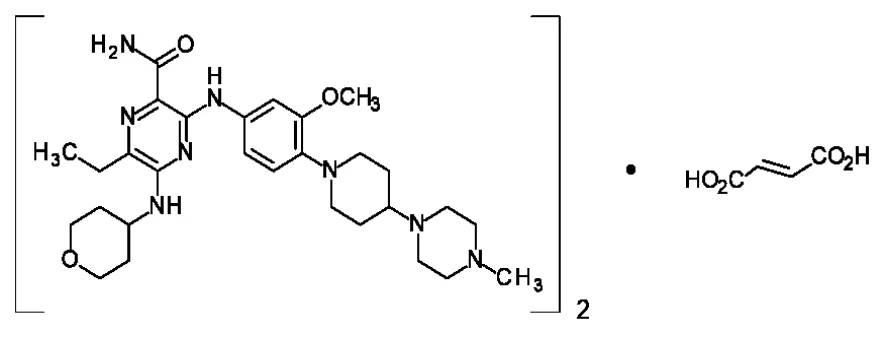
Physicochemical properties: Gilteritinib fumarate are non-hygroscopic, yellow crystals that are sparingly soluble in water and very slightly soluble in anhydrous ethanol. Higher solubility is observed in acidic solutions with pH <5. Only one crystalline form has been observed.
14 CLINICAL TRIALS
14.1 Trial Design and Study Demographics
The efficacy of Xospata was assessed in the pivotal ADMIRAL study.
ADMIRAL (2215-CL-0301)
The ADMIRAL study is a Phase 3, open-label, multicentre, randomized clinical trial of adult patients with relapsed or refractory AML with a FLT3 mutation (an ITD, TKD-D835 or TKD-I836 mutation determined by LeukoStrat CDx FLT3 Mutation Assay at a central laboratory).
In this study, 371 patients were randomized in a 2:1 ratio to receive Xospata or one of the following salvage chemotherapies:
- cytarabine 20 mg twice daily by subcutaneous (SC) or intravenous (IV) for 10 days (days 1 through 10) (LoDAC)
- azacitidine 75 mg/m2 once daily by SC or IV for 7 days (days 1 through 7)
- mitoxantrone 8 mg/m2, etoposide 100 mg/m2 and cytarabine 1000 mg/m2 once daily by IV for 5 days (days 1 through 5) (MEC)
- granulocyte colony-stimulating factor 300 mcg/m2 once daily by SC for 5 days (days 1 to 5), fludarabine 30 mg/m2 once daily by IV for 5 days (days 2 through 6), cytarabine 2000 mg/m2 once daily by IV for 5 days (days 2 through 6), idarubicin 10 mg/m2 once daily by IV for 3 days (days 2 through 4) (FLAG-Ida).
Randomization was stratified by response to prior first-line AML treatment and pre-selected chemotherapy, i.e., high or low intensity.
Eligible patients should have adequate organ functions (e.g., QTcF ≤ 450 msec; serum AST and ALT ≤ 2.5 x ULN; serum total bilirubin ≤ 1.5 x ULN; serum creatinine > 50 mL/min). Prior treatment with other FLT3 inhibitors in first-line therapy was permitted. Patients with acute promyelocytic leukemia (APL) or AML related to previous chemotherapy or radiation were excluded.
Xospata was given orally at a starting dose of 120 mg daily until unacceptable toxicity or lack of clinical benefit. Dose reductions were allowed to manage adverse reactions. Some patients had their dose increased to 200 mg daily in the absence of a response. Patients in the Xospata arm who had achieved a response could undergo hematopoietic stem cell transplantation (HSCT) without leaving the study. However, Xospata should be stopped prior to starting the conditioning regimen for HSCT. Xospata could be resumed after HSCT if the patient was in a composite complete remission (CRc, including complete remission [CR], CR with incomplete hematologic recovery [CRi] and CR with incomplete platelet recovery [CRp]), had successful engraftment and did not have severe graft-versus-host-disease (GVHD).
Of the patients who were pre-selected to receive salvage chemotherapy, 60.5% were randomized to high intensity and 39.5% to low intensity. MEC and FLAG-Ida were given for up to two cycles depending on response to first cycle. LoDAC and azacitidine were given in continuous 4-week cycles until unacceptable toxicity or lack of clinical benefit.
The baseline demographic and disease characteristics are shown in Table 6.
Table 6 - Baseline Demographic and Disease Characteristics in Patients with Relapsed or Refractory AML (ADMIRAL)
| Demographic and Disease Characteristics | Xospata N=247 (%) | Chemotherapy N=124 (%) | |||
| Demographics | |||||
| Median Age (Years) (Range) | 62.0 (20, 84) | 61.5 (19, 85) | |||
| Age Categories, n (%) | |||||
| <65 years | 141 (57.1) | 75 (60.5) | |||
| ≥65 years | 106 (42.9) | 49 (39.5) | |||
| Sex, n (%) | |||||
| Male | 116 (47.0) | 54 (43.5) | |||
| Female | 131 (53.0) | 70 (56.5) | |||
| Race, n (%) | ||||||
| White | 145 (58.7) | 75 (60.5) | ||||
| Asian | 69 (27.9) | 33 (26.6) | ||||
| Black or African American | 14 (5.7) | 7 (5.6) | ||||
| Native Hawaiian or other Pacific Islander | 1 (0.4) | 0 | ||||
| Other | 5 (2.0) | 1 (0.8) | ||||
| Unknown/Missing | 13 (5.3) | 8 (6.5) | ||||
| Baseline ECOG, n (%) | ||||||
| 0-1 | 206 (83.4) | 105 (84.7) | ||||
| ≥2 | 41 (16.6) | 19 (15.3) | ||||
| Disease Characteristics | ||||||
| Untreated relapse AML, n (%) | 151 (61.1) | 74 (59.7) | ||||
| Primary refractory AML, n (%) | 96 (38.9) | 49 (39.5) | ||||
| Refractory Relapse AML, n (%) | 0 | 1 (0.8) | ||||
| Median number of relapses (Range) | 1 (0, 2) | 1 (0, 2) | ||||
| Number of relapses, n (%) | ||||||
| 0 | 96 (38.9) | 49 (39.5) | ||||
| 1 | 149 (60.3) | 74 (59.7) | ||||
| 2 or more | 2 (0.8) | 1 (0.8) | ||||
| Response to Prior Therapy, n (%) | ||||||
| Relapse within 6 months after allogeneic HSCT | 31 (12.6) | 17 (13.7) | ||||
| Relapse after 6 months after allogeneic HSCT | 17 (6.9) | 8 (6.5) | ||||
| Primary refractory without HSCT | 98 (39.7) | 48 (38.7) | ||||
| Relapse within 6 months after CRc and no HSCT | 67 (27.1) | 34 (27.4) | ||||
| Relapse after 6 months after CRc and no HSCT | 34 (13.8) | 17 (13.7) | ||||
| Transfusion dependent at Baseline, n (%)a | 197 (80.1) | 97 (89.0) | ||||
| Prior Use of FLT3 Inhibitor, n (%) | ||||||
| No | 215 (87.0) | 110 (88.7) | ||||
| Yesb | 32 (13.0) | 14 (11.3) | ||||
| FLT3 Mutation Status, n (%) | ||||||
| ITD alone | 215 (87.0) | 113 (91.1) | ||||
| TKD alone | 21 (8.5) | 10 (8.1) | ||||
| ITD and TKD | 7 (2.8) | 0 | ||||
| Cytogenetic Risk Status, n(%) | ||||||
| Favorable | 4 (1.6) | 1 (0.8) | ||||
| Intermediate | 182 (73.7) | 89 (71.8) | ||||
| Unfavorable | 26 (10.5) | 11 (8.9) | ||||
| Otherc | 35 (14.2) | 23 (18.5) | ||||
AML: acute myeloid leukemia; FLT3: FMS-related tyrosine kinase 3; ITD: internal tandem duplication; TKD: D835/I836 tyrosine kinase domain point mutation; ECOG PS: Eastern Cooperative Oncology Group performance status; CRc: Composite complete remission (complete remission [CR] + complete remission with incomplete hematologic recovery [CRi] + complete remission with incomplete platelet recovery [CRp]); HSCT: Hematopoietic stem cell transplantation
a. Patients treated with Xospata were defined as transfusion dependent at baseline if they received any red blood cell or platelet transfusions within the 56-day baseline period.
b. Prior FLT3 inhibitors were mainly sorafenib and midostaurin.
c. The category “Other” includes those with cytogenetic risk status that cannot be categorized as favorable, intermediate or unfavorable.
14.2 Study Results
ADMIRAL (2215-CL-0301)
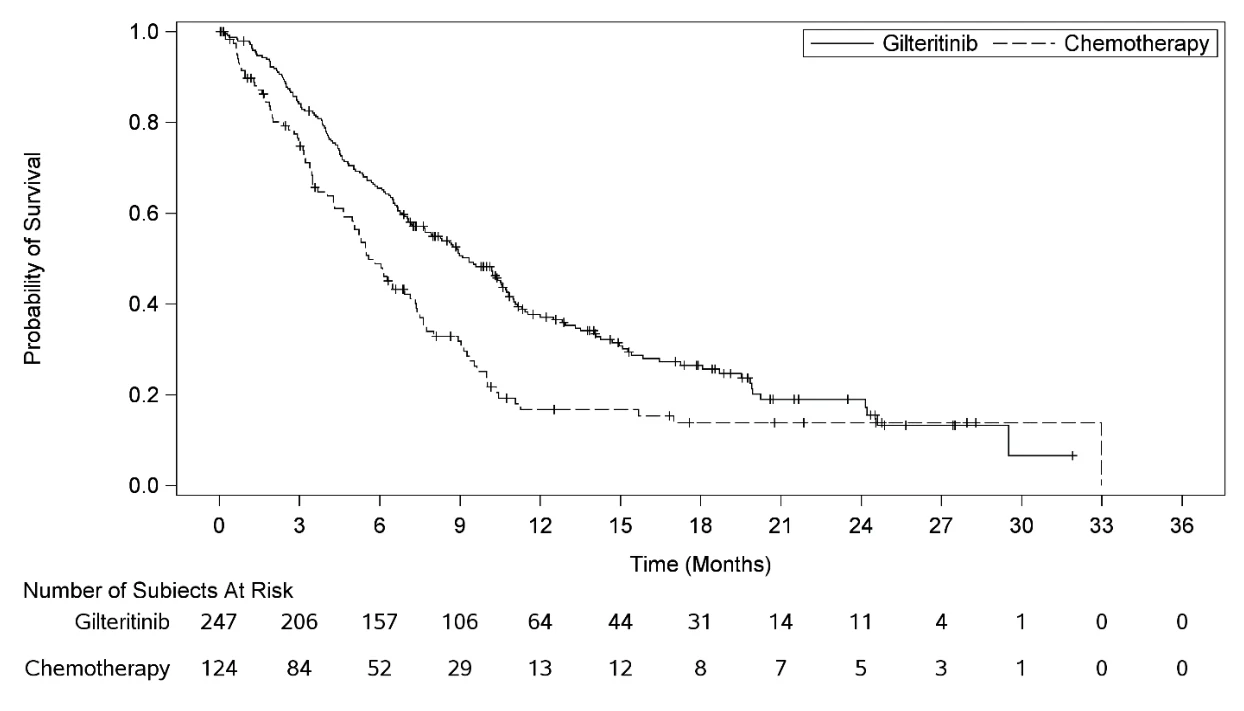
The primary efficacy endpoint for the final analysis was overall survival (OS), measured from the date of randomization until death by any cause. At the time of analysis, median follow-up was 17.8 months (range 14.9 to 19.1). Patients randomized to the Xospata arm had significantly longer survival compared to the chemotherapy arm (HR 0.637; 95% CI 0.490 – 0.830; 1-sided p-value: 0.0004). The median OS was 9.3 months for patients receiving Xospata and 5.6 months for those receiving chemotherapy (Table 7, Figure 1). CR and CRh rates were secondary efficacy endpoints for the final analysis (Table 7).
Table 7 - Overall Survival and Complete Remission in Patients with Relapsed or Refractory AML (ADMIRAL)
Xospata (N=247) | Chemotherapy (N=124) | ||||||||||
| Overall Survival | |||||||||||
| Deaths, n (%) | 171 (69.2%) | 90 (72.6%) | |||||||||
| Median in months (95% CI) | 9.3 (7.7, 10.7) | 5.6 (4.7, 7.3) | |||||||||
| Hazard Ratio (95% CI) | 0.637 (0.490, 0.830) | ||||||||||
| p-value (1-sided) | 0.0004 | ||||||||||
| Complete Remission | |||||||||||
| CRa n/N (%) | 52/247 (21.1) | 13/124 (10.5) | |||||||||
| 95% CIb | 16.1, 26.7 | 5.7, 17.3 | |||||||||
| CRhc n/N (%) | 32/247 (13) | 6/124 (4.8) | |||||||||
| 95% CIb | 9, 17.8 | 1.8, 10.2 | |||||||||
| CR/CRh n/N (%) | 84/247 (34) | 19/124 (15.3) | |||||||||
| 95% CIb | 28.1, 40.3 | 9.5, 22.9 | |||||||||
CI: confidence interval; NE: not estimable; NR: not reached
Stratified log rank test was used for the primary OS analysis. The final analysis statistical significance cut-off for OS was 0.02383.
- a. CR was defined as an absolute neutrophil count ≥1.0 x 10⁹/L, platelets ≥100 x 109/L, normal marrow differential with <5% blasts, must have been red blood cells, platelet transfusion independent and no evidence of extramedullary leukemia.
- b. The 95% CI rate was calculated using the exact method based on binomial distribution.
- c. CRh was defined as marrow blasts <5%, partial hematologic recovery: absolute neutrophil count ≥0.5 x 10 9/L and platelets ≥50 x 109/L, no evidence of extramedullary leukemia and could not have been classified as CR.
Figure 1 - Kaplan-Meir Plot of Overall Survival in the ADMIRAL Study (ITT population)
For patients who achieved a CR/CRh, the median time to first response was 3.7 months (range, 0.9 to 10.6 months) in the Xospata arm and 1.2 months (range: 1 to 2.6 months) in the salvage chemotherapy arm. The median time to best response of CR/CRh was 3.8 months (range, 0.9 to 16 months) in the Xospata arm and 1.2 months (range: 1 to 2.6 months) in the salvage chemotherapy arm. Median (months) duration of remission (DOR) in the Xospata arm was not reached (NR, 95% CI: 11, NR) in patients who achieved a best response of CR, 4 (95% CI: 2.1, 5.3) in patients whose best response was a CRh, and 11 (95% CI: 4.6, NR) in patients whose best response was a CR or a CRh (CR/CRh). DOR was defined as the time from the date of either first CR or CRh until the date of a documented relapse or death, whichever occurred the first.
The treatment effect was generally consistent across the analyzed subgroups, with the exception of patients who had unfavorable cytogenetic risk status at baseline. Of 26 patients with unfavorable cytogenetic risk status treated with Xospata, 1 (3.8%) patient achieved a CR. This result should be interpreted with caution due to the small patient numbers.
Among the 197 patients who were dependent on red blood cell (RBC) and/or platelet transfusions at baseline, 68 (34.5%) became independent of RBC and platelet transfusion during any 56-day post-baseline period. For the 49 patients who were independent of both RBC and platelet transfusion at baseline, 29 (59.2%) remained transfusion independent during any 56-day post-baseline period.
14.3 Comparative Bioavailability Studies
Not applicable
15 MICROBIOLOGY
Not applicable
16 NON-CLINICAL TOXICOLOGY
General Toxicology
Repeat Dose Toxicity
Gilteritinib was administered by daily oral gavage to rats at doses of 2.5, 5, 10, and 20 mg/kg/day and to dogs at doses of 1, 2.5, and 5 mg/kg for 13 weeks. Mortality occurred at 20 mg/kg/day in rats and 5 mg/kg/day in dogs (approximately 0.3 times and 0.5 times the clinical exposure (AUC24) at the recommended dose of 120 mg, respectively).
Target organs of toxicity in rats were the gastrointestinal tract (microvacuolation of the mucosal epithelium), lymphohaematopoietic system (microgranuloma in the spleen and lymph node, atrophy of the thymus, white pulp in the spleen and the lymph follicle of the lymph node, lymphocyte necrosis, and bone marrow hypocellularity with changes in haematological parameters), eye (inflammation, lens opacity, retinal vacuolation), lung (foam cell accumulation), kidney (vacuolation of the renal medulla, increased mesangial matrix, tubular basophilia, hyaline droplets in the renal tubule, hyaline casts, and edematous change in the papilla) and liver (increased ALT and AST). Electron microscopy also revealed gilteritinib-related phospholipidosis in the lung and kidney of rats.
Target organs of toxicity in dogs included the gastrointestinal tract (a positive fecal occult blood reaction and inflammation of the alveolus/gingiva of the teeth), lymphohaematopoietic system (thymus atrophy, lymphocyte necrosis, decreased lymphocytes in the lymph node, white pulp in the spleen, and Peyer’s patch, and bone marrow hypocellularity with changes in haematological parameters), eye (abnormal fundus color (dark), changes in optical coherence tomography, retinal vacuolation), lung (edema, focal alveolar hemorrhage, focal interstitial fibrosis, inflammatory cell infiltration, fibrin-like material deposits in alveoli, alveolar epithelial hypertrophy/hyperplasia), kidney (tubular vacuolation/dilatation/regeneration, inflammatory cell infiltration, focal congestion in the renal medulla), liver (vacuolation and atrophy, perivascular mononuclear cell infiltration, brown pigment deposition in the Kupffer cell, focal haemorrhage of the serosa and mucosal hypertrophy/mucus hypersecretion in the gall bladder), urinary bladder (epithelial vacuolation), and epithelial tissue (ulcer, inflammation, acanthosis, crust). Electron microscopy also revealed gilteritinib-related liver injury, dilated endoplasmic reticulum of the kidney, and effects on rod and/or cone layers of the retina in dogs.
In both rats and dogs, toxicities occurred at exposures below the clinical exposure at the recommended dose of 120 mg, based on AUC24 comparisons. Reversibility of most of the test article-related changes was observed by the end of the 4-week recovery period.
Carcinogenicity
Carcinogenicity studies have not been conducted with gilteritinib.
Genotoxicity
Gilteritinib was not mutagenic in an in vitro bacterial reverse mutation (AMES) assay or clastogenic in an in vitro chromosomal aberration test in Chinese hamster lung cells. Gilteritinib was positive for induction of micronuclei in the in vivo bone marrow micronucleus test in mice. The plasma exposure (AUC24) of gilteritinib in mice at the maximum dose level (20 mg/kg) with no micronucleus induction was approximately 0.3 times the AUC24 in patients at the recommended clinical dose of 120 mg/day.
Reproductive and Developmental Toxicology
Fertility
In a 4-week repeat dose toxicity study, administration of 10 mg/kg/day gilteritinib to dogs (12 days of dosing) resulted in degeneration and necrosis of germ cells and spermatid giant cell formation in the testis as well as single cell necrosis of the epididymal duct epithelia of the epididymal head. The AUC24 at 10 mg/kg/day in dogs was approximately 0.6 times the AUC24 in patients at the recommended dose of 120 mg.
Developmental toxicity
After a single oral administration of radiolabeled gilteritinib at 1 mg/kg to pregnant rats on day 14 of gestation, the radioactivity was detected in the placenta and fetus, indicating that gilteritinib and/or its metabolites passed through the blood-placental barrier and transferred to the fetus. The radioactivity in fetus was similar to that observed in maternal blood following maternal dosing on day 14 of gestation. In addition, a single oral dose of 1 mg/kg radiolabeled gilteritinib was administered to female rats on day 18 of gestation (perinatal period). The results showed that distribution profiles of radioactivity in most maternal tissues and the fetus on day 18 of gestation were similar to that on day 14 of gestation.
In an embryo-fetal development study in rats, pregnant animals received oral doses of gilteritinib at 0.3, 3, 10, and 30 mg/kg/day during the period of organogenesis. Maternal toxicity was observed at 30 mg/kg/day as evidenced by decreased body weight and food consumption. Administration of gilteritinib at the dose of 30 mg/kg/day also resulted in embryo-fetal death (postimplantation loss), decreased fetal body and placental weight, and decreased numbers of ossified sternebrae and sacral and caudal vertebrae, and increased incidence of fetal external (anasarca, local edema, exencephaly, cleft lip, cleft palate, short tail, umbilical hernia), visceral (microphthalmia, enlarged atrial and ventricular chamber, membranous ventricular septum defect, hypoplastic right ventricle, absent/malformed kidneys, malpositioned kidney, adrenal and ovary), and skeletal (sternoschisis, absent/fused rib, fused cervical arch, misaligned cervical vertebra, absent thoracic vertebra) abnormalities. The AUC24 at 30 mg/kg/day in rats was approximately 0.4 times the AUC24 in patients at the recommended dose of 120 mg.
After a single oral administration of radiolabeled gilteritinib at 1 mg/kg to lactating rats on day 14 postpartum, milk concentrations of radioactivity were higher than radioactivity in maternal plasma at 4 and 24 hours post-dose. The radioactivity was detected in the infant tissues examined, except for the brain, at 4, 24, 48, and 72 hours post-dose, indicating that gilteritinib and/or its metabolites are distributed to the infant tissues through breast milk.
Juvenile Toxicity
Gilteritinib was administered orally to juvenile rats from postnatal days (PNDs) 4 to 42 at doses of 1, 2.5, and 5 mg/kg/day. No treatment-related mortality was noted at 5 mg/kg/day, but one male at 2.5 mg/kg/day was euthanized on PND 12 due to moribundity. An unexpectedly high exposure in this animal was considered to be the cause of moribundity. In the surviving animals, decreased body weight, weight gain, and food consumption were observed at doses of ≥2.5 mg/kg/day. The gastrointestinal tract may be one of the target organs in juvenile rats. The minimum lethal dose level of 2.5 mg/kg/day in juvenile rats was lower than that of 20 mg/kg/day in adult rats in the 13-week repeated dose toxicity study.
Phototoxicity
Gilteritinib showed no potential to induce phototoxicity to cultured mammalian cells.
17 SUPPORTING PRODUCT MONOGRAPHS
Not applicable