


Product Monograph - Augtyro
RECENT MAJOR LABEL CHANGES
| None at time of the most recent authorization |
|---|
Table of Contents
Certain sections or subsections that are not applicable at the time of the preparation of the most recent authorized product monograph are not listed.
RECENT MAJOR LABEL CHANGES .......................................................................................... 2
Table of Contents ................................................................................................................. 2
Part 1: Healthcare Professional Information.......................................................................... 4
- 1.
Indications..................................................................................................................... 4
1.1. Pediatrics .................................................................................................................... 4
1.2. Geriatrics .................................................................................................................... 4
- 2. Contraindications .......................................................................................................... 4
- 4.
Dosage and Administration ............................................................................................ 4
4.1. Dosing Considerations ............................................................................................... 4
4.2. Recommended Dose and Dosage Adjustment .......................................................... 4
4.4. Administration ........................................................................................................... 7
4.5. Missed Dose ............................................................................................................... 7
- 5. Overdose ....................................................................................................................... 7
- 6. Dosage Forms, Strengths, Composition, and Packaging .................................................. 7
- 7.
Warnings and Precautions ............................................................................................. 8
Carcinogenesis and Genotoxicity ........................................................................................... 8
Hepatic/Biliary/Pancreatic ..................................................................................................... 8
Monitoring and Laboratory Tests ........................................................................................... 8
Musculoskeletal ...................................................................................................................... 8
Neurologic .............................................................................................................................. 9
Ophthalmologic .................................................................................................................... 10
Reproductive Health ............................................................................................................. 10
Respiratory ........................................................................................................................... 11
7.1. Special Populations .................................................................................................. 11
7.1.1. Pregnancy ......................................................................................................... 11
7.1.2. Breastfeeding ................................................................................................... 12
7.1.3. Pediatrics .......................................................................................................... 12
7.1.4. Geriatrics .......................................................................................................... 12
- 8.
Adverse Reactions ....................................................................................................... 12
8.1. Adverse Reaction Overview ..................................................................................... 12
8.2. Clinical Trial Adverse Reactions ............................................................................... 13
8.3. Less Common Clinical Trial Adverse Reactions ........................................................ 14
8.4. Abnormal Laboratory Findings: Hematologic, Clinical Chemistry, and Other Quantitative Data ................................................................................................................. 14
- 9.
Drug Interactions ......................................................................................................... 15
9.2. Drug Interactions Overview ..................................................................................... 15
9.4. Drug-Drug Interactions ............................................................................................ 16
9.5. Drug-Food Interactions ............................................................................................ 18
9.6. Drug-Herb Interactions ............................................................................................ 18
9.7. Drug-Laboratory Test Interactions........................................................................... 18
- 10.
Clinical Pharmacology .................................................................................................. 18
10.1. Mechanism of Action ............................................................................................... 18
10.2. Pharmacodynamics .................................................................................................. 18
10.3. Pharmacokinetics ..................................................................................................... 19
- 11. Storage, Stability, and Disposal .................................................................................... 20
Part 2: Scientific Information .............................................................................................. 21
- 13. Pharmaceutical Information ........................................................................................ 21
- 14.
Clinical Trials ............................................................................................................... 21
14.1. Clinical Trials by Indication ...................................................................................... 21
- 16. Non-Clinical Toxicology ................................................................................................ 23
Patient Medication Information ......................................................................................... 24
Part 1: Healthcare Professional Information
1. Indications
AUGTYRO (repotrectinib capsules) is indicated for:
- Treatment of adult patients with locally advanced or metastatic ROS1-positive non-small cell lung cancer (NSCLC).
1.1. Pediatrics
Pediatrics (< 18 years of age): No data are available to Health Canada; therefore, Health Canada has not authorized an indication for pediatric use.
1.2. Geriatrics
Geriatrics (> 65 years of age): No overall differences in safety and efficacy were reported between elderly patients (≥ 65 years) and younger patients (< 65 years).
2. Contraindications
AUGTYRO is contraindicated in patients who are hypersensitive to this drug or to any ingredient in the formulation, including any non-medicinal ingredient, or component of the container. For a complete listing, see 6 Dosage Forms, Strengths, Composition, and Packaging.
4. Dosage and Administration
4.1. Dosing Considerations
Select patients with locally advanced or metastatic NSCLC for treatment with AUGTYRO based on the presence of ROS1 rearrangement(s) in tumour specimens (see 14 Clinical Trials).
Prior to initiating AUGTYRO, discontinue strong and moderate CYP3A inhibitors for 3 to 5 elimination half-lives of the CYP3A inhibitor (see 9 Drug Interactions and 10 Clinical Pharmacology).
4.2. Recommended Dose and Dosage Adjustment
The recommended dosage of AUGTYRO is 160 mg orally once daily for 14 days, then increase to 160 mg twice daily until disease progression or unacceptable toxicity.
AUGTYRO may be taken with or without food.
Dosage Modifications for Adverse Reactions
The recommended dosage reductions of AUGTYRO for the management of adverse reactions are provided in Table 1:
Table 1 - Recommended Dose Reductions for AUGTYRO Adverse Reactions
| Dose | Dose Reduction | ||||
|---|---|---|---|---|---|
| First | Second | ||||
| 160 mg Once Daily | 120 mg Once Daily | 80 mg Once Daily | |||
| 160 mg Twice Daily | 120 mg Twice Daily | 80 mg Twice Daily | |||
Recommended dosage modifications of AUGTYRO for the management of adverse reactions are provided in Table 2.
Table 2 - Recommended Dosage Modifications for AUGTYRO Adverse Reactions
| Adverse Reaction | Severity* | Dosage Modification | |
|---|---|---|---|
| Central Nervous System Effects (see 7 Warnings and Precautions, Neurologic) | Intolerable Grade 2 |
| |
| Grade 3 |
| ||
| Grade 4 |
| ||
| Interstitial Lung Disease (ILD)/Pneumonitis (see 7 Warnings and Precautions, Respiratory) | Any Grade |
| |
| Hepatotoxicity (see 7 Warnings and Precautions, Hepatic/Biliary/Pancreatic) | Grade 3 |
| |
| Grade 4 |
| ||
| ALT or AST greater than 3 times ULN with concurrent total bilirubin greater than 1.5 times ULN (in the absence of cholestasis or hemolysis) |
| |
| Creatine Phosphokinase (CPK) Elevation (see 7 Warnings and Precautions, Musculoskeletal) | CPK elevation greater than 5 times ULN |
|
|---|---|---|
| CPK elevation greater than 10 times ULN or second occurrence of CPK elevation of greater than 5 times ULN |
| |
| Hyperuricemia (see 7 Warnings and Precautions, Monitoring and Laboratory Tests) | Grade 3 or Grade 4 |
|
| Other Clinically Relevant Adverse Reactions (see 7 Warnings and Precautions) | Intolerable Grade 2 or Grade 3 or Grade 4 |
|
*Graded per Common Terminology Criteria for Adverse Events V4.03
Special Populations
Pediatrics
Health Canada has not authorized an indication for pediatric use (see 1.1 Pediatrics).
Geriatrics
No dose adjustment is recommended for patients aged 65 years or older (see 10.3 Pharmacokinetics).
Renal Impairment
No dose adjustment is recommended for patients with mild or moderate renal impairment (eGFR 30 to
90 mL/min). The recommended dosage of repotrectinib has not been established in patients with severe renal impairment or kidney failure (eGFR < 30 mL/min), or patients on dialysis.
Hepatic Impairment
No dose adjustment is recommended for patients with mild hepatic impairment (total bilirubin > upper limit of normal [ULN] to 1.5 × ULN or AST > ULN). The recommended dosage of repotrectinib has not been established in patients with moderate (total bilirubin >1.5 to 3 x ULN with any AST) or severe (total bilirubin > 3 x ULN with any AST) hepatic impairment (see 10.3 Pharmacokinetics, Special Populations and Conditions).
4.4. Administration
Instruct patients to swallow capsules whole at the same time every day as prescribed. Do not open, crush, chew, or dissolve the contents of the capsule.
4.5. Missed Dose
If a dose is missed or if a patient vomits at any time after taking a dose, instruct patients to resume subsequent doses as prescribed. Two doses should not be taken at the same time.
5. Overdose
| For the most recent information in the management of a suspected drug overdose, contact your regional poison control centre or Health Canada’s toll-free number, 1-844 POISON-X (1-844-764-7669). |
|---|
- 6. Dosage Forms, Strengths, Composition, and Packaging
Table 3 – Dosage Forms, Strengths, and Composition
Description
40 mg: White opaque cap, and body, hard shell capsules, filled with a white to off-white powder which may appear as a plug. “REP 40” is imprinted in blue text on the cap. Supplied in bottles of 60 and 120 capsules.
160 mg: Blue opaque cap and body, hard shell capsules, filled with a white to off-white powder which may appear as a plug. “REP 160” is imprinted in white text on the cap. Supplied in bottles of 14 and 60 capsules.
| Route of Administration | Dosage Form/ Strength/Composition | Non-Medicinal Ingredients |
| oral | capsules 40 mg, 160 mg | colloidal silicon dioxide, croscarmellose sodium, FD&C Blue #1 (160 mg only), FD&C Blue #2 Aluminum lake (40 mg only), gelatin, magnesium stearate (160 mg only), microcrystalline cellulose, shellac, sodium lauryl sulfate and titanium dioxide. |
7. Warnings and Precautions
Carcinogenesis and Genotoxicity
See 16 Non-Clinical Toxicology.
Hepatic/Biliary/Pancreatic
Hepatotoxicity
AUGTYRO can cause hepatotoxicity.
Among the 426 patients treated with AUGTYRO, increased alanine transaminase (ALT) occurred in 38%, increased aspartate aminotransferase (AST) occurred in 41%, including Grade 3 or 4 increased ALT in 3.3% and increased AST in 2.9%. The median time to onset of increased ALT or AST was 15 days (1 day to 2 years). Increased ALT or AST leading to dose interruptions or reductions occurred in 2.8% and 1.2% of patients, respectively. Hyperbilirubinemia leading to dose interruptions occurred in 0.5%.
Monitor liver function tests, including ALT, AST and bilirubin as clinically indicated. Withhold and then resume at the same or reduced dose upon improvement, or permanently discontinue AUGTYRO based on the severity (see 4.2 Recommended Dose and Dosage Adjustment).
Monitoring and Laboratory Tests
Hyperuricemia
AUGTYRO can cause hyperuricemia.
Among the 426 patients treated with AUGTYRO, 21 patients (5%) experienced hyperuricemia reported as an adverse reaction and 0.7% of patients experienced Grade 3 or 4 hyperuricemia.
Monitor serum uric acid levels prior to initiating AUGTYRO and periodically during treatment. Initiate treatment with urate-lowering medications as clinically indicated. Withhold and then resume at the same or reduced dose upon improvement, or permanently discontinue AUGTYRO based on severity (see 4.2 Recommended Dose and Dosage Adjustment).
Musculoskeletal
Skeletal Fractures
AUGTYRO can cause skeletal fractures.
Among 426 adult patients who received AUGTYRO, fractures occurred in 2.3%. Fractures involved the ribs (0.5%), feet (0.5%), spine (0.2%), acetabulum (0.2%), sternum (0.2%), and ankles (0.2%). Some fractures occurred at sites of disease and prior radiation therapy. The median time to fracture was 129 days (31 days to 2.1 years). AUGTYRO was interrupted in 0.3% of patients.
Of 26 evaluable patients in an ongoing open-label study in pediatric patients, fractures occurred in one 12-year-old patient (ankle/foot) and one 10-year-old patient (stress fracture). AUGTYRO was interrupted in both patients. AUGTYRO is not approved for use in pediatric patients (see 1.1 Pediatrics).
Promptly evaluate patients with signs or symptoms (e.g., pain, changes in mobility, deformity) of fractures. There are no data on the effects of AUGTYRO on healing of known fractures and risk of future fractures.
Myalgia
AUGTYRO can cause myalgia with or without creatine phosphokinase (CPK) elevation.
Among the 426 patients treated with AUGTYRO, myalgia occurred in 13% of patients, with Grade 3 in 0.7%. Median time to onset of myalgia was 26 days (1 day to 2 years). Concurrent increased CPK within a 7-day window was observed in 3.5% of patients. AUGTYRO was interrupted in one patient with myalgia and concurrent CPK elevation.
Advise patients to report any unexplained muscle pain, tenderness, or weakness.
Monitor serum CPK levels during AUGTYRO treatment and monitor CPK levels as needed in patients reporting unexplained muscle pain, tenderness, or weakness. Initiate supportive care as clinically indicated. Based on severity, withhold and then resume AUGTYRO at the same or reduced dose upon improvement (see 4.2 Recommended Dose and Dosage Adjustment).
Neurologic
Central Nervous System Effects
AUGTYRO can cause central nervous system (CNS) adverse reactions.
Among the 426 patients who received AUGTYRO in Study TRIDENT-1, a broad spectrum of CNS adverse reactions including dizziness, ataxia, and cognitive disorders occurred in 77% of patients, with Grade 3 or 4 events occurring in 4.5% of patients.
Dizziness, including vertigo, occurred in 65% of patients; Grade 3 dizziness occurred in 2.8% of patients. The median time to onset was 7 days (1 day to 1.4 years). Dose interruption was required in 9% of patients, and 12% required dose reduction of AUGTYRO due to dizziness.
Ataxia, including gait disturbance and balance disorder, occurred in 28% of patients; Grade 3 ataxia occurred in 0.5% of patients. The median time to onset was 15 days (1 day to 1.6 years). Dose interruption was required in 5% of patients, 8% required dose reduction, and one patient (0.2%) permanently discontinued AUGTYRO due to ataxia.
Cognitive impairment, including memory impairment and disturbance in attention, occurred in 25% of patients. Cognitive impairment included memory impairment (15%), disturbance in attention (12%), and confusional state (2%); Grade 3 cognitive impairment occurred in 0.9% of patients. The median time to onset of cognitive disorders was 37 days (1 day to 1.4 years). Dose interruption was required in 2% of patients, 2.1% required dose reduction, and 0.5% patients permanently discontinued AUGTYRO due to cognitive adverse reactions.
Mood disorders occurred in 6% of patients. Mood disorders occurring in > 1% of patients included anxiety (2.6%); Grade 4 mood disorders (mania) occurred in 0.2% of patients. Dose interruption was required in 0.2% of patients and 0.2% of patients required a dose reduction due to mood disorders.
Sleep disorders including insomnia and hypersomnia occurred in 18% of patients. Sleep disorders observed in > 1% of patients were somnolence (9%), insomnia (6%) and hypersomnia (1.6%). Dose interruption was required in 0.7% of patients, and 0.2% of patients required a dose reduction due to sleep disorders.
The incidences of CNS adverse reactions observed were similar in patients with and without CNS metastases.
Advise patients and caregivers of the risk of CNS adverse reactions with AUGTYRO. Advise patients not to drive or use machines if they are experiencing CNS adverse reactions. Withhold and then resume at same or reduced dose upon improvement, or permanently discontinue AUGTYRO based on severity (see 4.2 Recommended Dose and Dosage Adjustment).
Peripheral Neuropathy
Among the 426 patients who received AUGTYRO, peripheral neuropathy occurred in 49% of patients, including Grade 3 peripheral neuropathy in 1%. Peripheral neuropathy included paresthesia (34%), neuralgia (12%), neuropathy peripheral (4%), and peripheral sensory neuropathy 4%). The median time to onset was 13 days (1 day to 2.3 years). Dose interruption was required in 2.8% of patients, 3.3% of patients required dose reduction, and 0.2% of patients permanently discontinued AUGTYRO due to peripheral neuropathy.
Advise patients and caregivers of the risk of peripheral neuropathy with AUGTYRO. Advise patients not to drive or use machines if they are experiencing peripheral neuropathy. Withhold and then resume at same or reduced dose upon improvement, or permanently discontinue AUGTYRO based on severity (see 4.2 Recommended Dose and Dosage Adjustment).
Ophthalmologic
Vision Disorders
Among the 426 patients who received AUGTYRO, vision disorders occurred in 12% of patients, including Grade 3 vision disorder in 1%. Vision disorders included blurred vision (4%), visual impairment (2%), dry eye (1%). The median time to onset was 39 days (2 days to 1.8 years). Dose interruption was required in 0.9% of patients, 0.2% of patients required dose reduction, and 0.2% of patients permanently discontinued AUGTYRO due to vision disorders.
Advise patients and caregivers of the risk of vision disorders with AUGTYRO. Advise patients not to drive or use machines if they are experiencing vision impairment. Withhold and then resume at same or reduced dose upon improvement, or permanently discontinue AUGTYRO based on severity (see 4.2 Recommended Dose and Dosage Adjustment).
Reproductive Health
- Fertility
Dedicated fertility studies were not conducted with repotrectinib. There were no effects on male and female reproductive organs observed in general repeat-dose toxicology studies of up to 3 months conducted in rats and monkeys, at any dose level tested, equivalent to approximately 3 times the human exposure at the 160 mg twice daily dose, based on AUC.
- Teratogenic Risk
Based on literature reports in humans with congenital mutations leading to changes in tropomyosin receptor kinase (TRK) signaling, findings from animal studies, and its mechanism of action, AUGTYRO can cause fetal harm when administered to a pregnant woman.
There are no available data on AUGTYRO use in pregnant women. Administration of repotrectinib to pregnant rats resulted in fetal malformations at predicted maternal exposures approximately 0.3 times the human exposure at the 160 mg twice daily dose based on body surface area (BSA) (see 16 Non-Clinical Toxicology).
Pregnancy Testing
Verify the pregnancy status of females of childbearing potential prior to initiating AUGTYRO.
Contraception
Males
Advise male patients with female partners of childbearing potential to use effective contraception during treatment with AUGTYRO and for 4 months following the last dose.
Females
Advise pregnant women of the potential risk to a fetus. Advise female patients of childbearing potential to use highly effective non-hormonal contraception during treatment with AUGTYRO and for 2 months following the final dose. AUGTYRO can decrease the efficacy of hormonal contraceptives (see 9.4 Drug-Drug Interactions).
Respiratory
Interstitial Lung Disease (ILD)/Pneumonitis
AUGTYRO can cause ILD/pneumonitis.
Among the 426 patients treated with AUGTYRO, ILD/pneumonitis (pneumonitis [2.8%] and ILD [0.2%]) occurred in 3.1% of patients; Grade 3 ILD/pneumonitis occurred in 1.2% of patients. The median time to onset was 48 days (19 days to 1 year). Dose interruption was required in 1.4% of patients, 0.5% of patients required dose reduction, and 0.9% of patients permanently discontinued AUGTYRO due to ILD/pneumonitis.
Advise patients to report symptoms of ILD/pneumonitis, which may include shortness of breath, cough, wheezing, chest pain or tightness, and hemoptysis. Monitor patients for new or worsening pulmonary symptoms indicative of ILD/pneumonitis. Immediately withhold AUGTYRO in patients with suspected ILD/pneumonitis and permanently discontinue AUGTYRO if ILD/pneumonitis is confirmed, (see 4.2 Recommended Dose and Dosage Adjustment).
7.1. Special Populations
7.1.1. Pregnancy
There are no available data on AUGTYRO use in pregnant women. Advise women of childbearing potential and pregnant women of the potential risk to a fetus.
Data
Human Data
Published reports of individuals with congenital mutations in TRK pathway proteins suggest that decreases in TRK-mediated signaling are correlated with obesity, developmental delays, cognitive impairment, insensitivity to pain, and anhidrosis.
Animal Data
In an embryo-fetal development study, once daily oral administration of repotrectinib to pregnant rats during the period of organogenesis from gestation day 6 to 17 resulted in maternal effects of increased body weight and skin abrasions/ulcerations at doses ≥ 6 mg/kg, fetal malformations of malrotated hindlimbs, and lower fetal body weights at doses ≥ 12 mg/kg (approximately 0.3 times the recommended dose of 160 mg twice daily based on BSA). No embryolethality was observed.
7.1.2. Breastfeeding
There are no data on the presence of AUGTYRO in human milk or its effects on either the breastfed child or on milk production. Because of the potential for serious adverse reactions in breastfed children from AUGTYRO, advise a lactating woman to discontinue breastfeeding during treatment with AUGTYRO and for 10 days after the final dose.
7.1.3. Pediatrics
The safety and effectiveness of AUGTYRO in pediatric patients with ROS1-positive NSCLC has not been established.
7.1.4. Geriatrics
Of the 426 patients who received AUGTYRO, 19% were 65 to 74 years old, and 6% were 75 years of age or older. A higher proportion of subjects ≥ 75 years of age reported higher events of ataxia (65%) than subjects in the younger age subgroups; 40% in subjects ≥ 65 to < 75 and 23% in subjects 18 to <65 years. There were no clinically meaningful differences in safety and efficacy between patients less than 65 years of age and patients 65 years of age or older.
8. Adverse Reactions
8.1. Adverse Reaction Overview
The pooled safety population described in 7 Warnings and Precautions and summarized in this overview reflects exposure to AUGTYRO in 426 patients with ROS1-positive NSCLC and other solid tumours in the TRIDENT-1 study. Patients received AUGTYRO at a dose of 160 mg orally once daily for the first 14 days, then increased to 160 mg orally twice daily until disease progression or unacceptable toxicity. Of these patients, 48% were exposed for at least 6 months and 28% were exposed for greater than 1 year.
Most patients had a least one treatment-emergent adverse reaction. The most frequently reported adverse reactions (≥ 20%) were dizziness (65%), dysgeusia (54%), peripheral neuropathy (49%) constipation (38%), anemia (38%), dyspnea (30%), fatigue (30%), ataxia (28%), cognitive disorders (25%) ALT increased (23%), AST increased (21%), muscular weakness (20%), and nausea (20%).
Serious adverse reactions occurred in 35% of patients who received AUGTYRO. Serious adverse reactions in ≥ 2% of patients included pneumonia (6.3%), dyspnea (3.1%), pleural effusion (2.8%), and hypoxia (2.6%). Fatal adverse reactions occurred in 3.5% of patients who received AUGTYRO including pneumonia, pneumonia aspiration, cardiac arrest, sudden cardiac death, cardiac failure, hypoxia, dyspnea, respiratory failure, tremor, and disseminated intravascular coagulation.
Permanent discontinuation of AUGTYRO due to an adverse reaction occurred in 7% of patients. There were no specific adverse reactions that accounted for ≥ 1% of permanent discontinuations.
Dosage interruptions of AUGTYRO due to an adverse reaction occurred in 50% of patients. Adverse reactions that required dosage interruption in ≥ 2% of patients were dizziness, dyspnea, muscular weakness, ataxia, pneumonia, peripheral neuropathy, anemia, and vomiting.
Dose reductions of AUGTYRO due to an adverse reaction occurred in 38% of patients. Adverse reactions that required dosage reductions in ≥ 2% of patients included dizziness, ataxia, muscular weakness, peripheral neuropathy, and cognitive impairment.
8.2. Clinical Trial Adverse Reactions
Clinical trials are conducted under very specific conditions. Therefore, the frequencies of adverse reactions observed in the clinical trials may not reflect frequencies observed in clinical practice and should not be compared to frequencies reported in clinical trials of another drug.
TRIDENT-1
This section describes the safety of AUGTYRO, evaluated in 320 patients with ROS1-positive NSCLC in the TRIDENT-1 study. Patients received AUGTYRO at a dose of 160 mg orally once daily for the first 14 days, then increased to 160 mg orally twice daily until disease progression or unacceptable toxicity. Patients with a history of ILD, drug-related pneumonitis, significant, uncontrolled, active cardiovascular disease, or prolonged QTc interval were excluded from enrollment in this trial. Among patients who received AUGTYRO, 48% were exposed for at least 6 months, and 28% were exposed for greater than 1 year (see 14 Clinical Trials).
The median age of patients who received AUGTYRO was 55 years (range: 27-93 years); 79% of patients were ≥ 18 years to < 65 years. Of the 320 patients, 62% were female, 49% Asian, 43% white, 2.8% Black, 0.3 % American Indian or Alaskan Native, 0.6% Native Hawaiian or Other Pacific Islander, and 4.3% not reported or unknown. Table 4 summarizes the adverse reactions reported in patients with ROS1-positive NSCLC from the TRIDENT-1 study.
Table 4 – Adverse Reactions (≥ 10%) in Patients with ROS1-positive NSCLC Who Received AUGTYRO in TRIDENT-1
| Adverse Reaction1 | AUGTYRO N=320 | |||||
| All Grades (%) | Grades ≥ 3 (%) | |||||
| Nervous System Disorders | ||||||
| Dizzinessa | 64 | 1.9 | ||||
| Dysgeusiab | 52 | 0 | ||||
| Peripheral neuropathyc | 50 | 1.6 | ||||
| Ataxiad | 28 | 0.6 | ||||
| Cognitive disordere | 24 | 0.9 | ||||
| Headachef | 19 | 0 | ||||
| Gastrointestinal Disorders | ||||||
| Constipation | 37 | 0 | ||||
| Nausea | 18 | 0.6 | ||||
| Diarrhea | 13 | 0.3 | ||||
| Respiratory, Thoracic, and Mediastinal Disorders | ||||||
| Dyspneag | 30 | 6.6 | ||||
| Coughh | 17 | 0 | ||||
| Pneumoniai | 10 | 5.3 | ||||
| General Disorders | ||
| Fatiguej | 26 | 0.9 |
| Edemak | 15 | 0.6 |
| Musculoskeletal and Connective Tissue Disorders | ||
| Muscular weakness | 22 | 2.2 |
| Myalgial | 12 | 0.6 |
| Metabolism and Nutritional | ||
| Increased weight | 16 | 3.1 |
| Eye Disorders | ||
| Vision disordersm | 11 | 0.3 |
1 Based on NCI CTCAE v4.03
- a. Includes terms dizziness, vertigo, dizziness postural, dizziness exertional
- b. Includes terms dysgeusia, ageusia, anosmia, hypogeusia
- c. Includes terms neuralgia, neuropathy peripheral, peripheral sensory neuropathy, dysesthesia, peripheral motor neuropathy, polyneuropathy, paresthesia, hypoesthesia, hyperesthesia
- d. Includes terms ataxia, gait disturbance, balance disorder, cerebellar ataxia and nystagmus
- e. Includes terms memory impairment, disturbance in attention, cognitive disorder, confusional state, amnesia, attention deficit hyperactivity disorder, delirium, altered state of consciousness, aphasia, delusion, depressed level of consciousness, hallucination, mental status changes, bradyphrenia, and dysgraphia
- f. Includes terms headache, migraine, tension headache
- g. Includes terms dyspnea and dyspnea exertional
- h. Includes terms productive cough, cough, and upper-airway cough syndrome
- i. Includes terms pneumonia, pneumonia aspiration, lower respiratory tract infection, pneumonia viral, pneumonia bacterial, lower respiratory tract infection bacterial, pneumonia klebsiella
- j. Includes terms fatigue and asthenia
- k. Includes terms generalized edema, periorbital edema, localized edema, face edema, edema peripheral, edema, eye edema, scrotal edema, and orbital edema
- l. Includes terms myalgia, myositis, musculoskeletal discomfort, musculoskeletal pain
- m. Includes terms vision blurred, dry eye, visual impairment, visual field defect, cataract, conjunctivitis, eye pain, photophobia, photosensitivity reaction, visual acuity reduced, vitreous floaters, blepharospasm, color blindness, diplopia, eye hematoma, eye swelling, eyelid disorder, eyelids pruritus, glaucoma, asthenopia
8.3. Less Common Clinical Trial Adverse Reactions
Clinically relevant adverse reactions occurring in < 10% of patients receiving AUGTYRO were pyrexia (7.8%), fall (2.8%), vomiting (9.7%), skeletal fractures (2.5%), and decreased appetite (8.4%).
8.4. Abnormal Laboratory Findings: Hematologic, Clinical Chemistry, and Other Quantitative Data
Clinical Trial Findings
Table 5 summarizes the laboratory abnormalities.
Table 5 – Laboratory Abnormalities (≥ 20%) Worsening from Baseline in Patients with ROS1-positive NSCLC Who Received AUGTYRO in TRIDENT-1
| AUGTYRO (N=320) NCI CTCAE Gradea | |
|---|---|
|
|
|
|
|---|---|---|
| ||
- a. The denominator used to calculate the rate varied from 178 to 319 based on the number of patients with a baseline value and at least one post-treatment value.
- b. Based on NCI CTCAE v4.03
9. Drug Interactions
9.2. Drug Interactions Overview
Effects of other agents on repotrectinib
P-gp and CYP3A inhibitors: Avoid concomitant use of AUGTYRO with P-gp inhibitors or strong or moderate CYP3A inhibitors, which increases repotrectinib exposure and may increase the risk of adverse reactions with AUGTYRO (see 9.4 Drug-Drug Interactions).
CYP3A inducers: Avoid concomitant use of AUGTYRO with strong or moderate CYP3A inducers, which decreases repotrectinib exposure and may reduce the efficacy of AUGTYRO (see 9.4 Drug-Drug Interactions).
Effects of repotrectinib on other agents
Certain CYP3A Substrates: Repotrectinib is a CYP3A4 inducer. Avoid concomitant use of AUGTYRO with CYP3A substrates, which can reduce the efficacy of these substrates. If concomitant use is unavoidable, increase the CYP3A4 substrate in accordance with its approved labelling (see 9.4 Drug-Drug Interactions).
Hormonal contraceptives: Repotrectinib is a CYP3A4 inducer. Avoid concomitant use of AUGTYRO with hormonal contraceptives, which may reduce their efficacy (see 7 Warnings and Precautions, Reproductive Health and 9.4 Drug-Drug Interactions).
9.4. Drug-Drug Interactions
The drugs listed in this table are based on either drug interaction case reports or studies, or potential interactions due to the expected magnitude and seriousness of the interaction.
Table 6 – Established or Potential Drug-Drug Interactions
| Proper/Common name | Source of Evidence | Effect | Clinical comment |
Strong and Moderate CYP3A4 Inhibitors (e.g. itraconazole) | CT | Co-administration of itraconazole (a strong CYP3A4 inhibitor and P-gp inhibitor) with a single 80 mg dose repotrectinib increased repotrectinib AUC0-inf by 5.9-fold and Cmax by 1.7-fold. | Avoid concomitant use with strong or moderate CYP3A inhibitors. Concomitant use of AUGTYRO with a strong or a moderate CYP3A inhibitor may increase repotrectinib exposure, which may increase the incidence and severity of adverse reactions of AUGTYRO. Discontinue CYP3A inhibitors for 3 to 5 elimination half-lives of the CYP3A inhibitor prior to initiating AUGTYRO. |
P-gp Inhibitors (e.g. itraconazole) | Avoid concomitant use with P-gp inhibitors. Concomitant use of AUGTYRO with a P-gp inhibitor may increase repotrectinib exposure, which may increase the incidence and severity of adverse reactions of AUGTYRO. | ||
Strong CYP3A4 Inducers (e.g. rifampin) | CT | Co-administration of rifampin (a strong CYP3A4 inducer) with a single 160 mg repotrectinib dose reduced repotrectinib AUC0-inf by 92% and Cmax by 79%. | Avoid concomitant use with strong or moderate CYP3A inducers. Concomitant use of AUGTYRO with a strong or moderate CYP3A inducer may decrease repotrectinib exposure, which may decrease efficacy of AUGTYRO. |
Certain CYP3A4 Substrates (e.g. midazolam) | CT | Co-administration of repotrectinib 160 mg once daily for 14 days followed by 160 mg twice daily for 7 days decreased the AUCinf by 69% and Cmax by 48% of a single dose of midazolam (CYP3A4 substrate). | Avoid concomitant use unless otherwise recommended in the Product Monograph for CYP3A substrates where minimal concentration changes can cause reduced efficacy. If concomitant use is unavoidable, increase the CYP3A4 substrate dosage in accordance with approved product labeling. |
| Contraceptives | T | Repotrectinib is a CYP3A4 inducer, which can decrease progestin or estrogen exposure to an extent that could reduce the effectiveness of hormonal contraceptives. | Avoid concomitant use of AUGTYRO with hormonal contraceptives. Advise females to use an effective nonhormonal contraceptive. |
Legend: CT = Clinical Trial; T= Theoretical.
Effects of repotrectinib on Other Drugs
CYP substrates
Based on the in vitro studies, repotrectinib induces, CYP2B6, CYP2C8, CYP2C9 and CYP2C19 and inhibits CYP2C8 and CYP2C9. The in vivo net effect of induction and inhibition, or its clinical relevance, is not known. Co-administration of AUGTYRO with CYP2B6, CYP2C8 or CYP2C9 or CYP2C19 substrates may alter their exposure.
Other Metabolic Pathways substrates
Based on in vitro studies, repotrectinib exhibits inhibitory potential toward UGT1A1. The in vivo net effect of this inhibition, or its clinical relevance, is not known.
Transporter substrates
In vitro data indicate that repotrectinib inhibits P-gp, breast cancer resistant protein (BCRP), organic anion-transporting polypeptide (OATP1B1), multidrug and toxin extrusion protein 2 (MAT2-K). Co-administration of AUGTYRO with sensitive substrates of P-gp, BCRP, OATP1B1 or MATE2-K may increase their exposure. The clinical relevance is unknown.
Repotrectinib is a substrate for P-gp and a potential substrate for MATE2-K and BCRP.
9.5. Drug-Food Interactions
AUGTYRO can be administered with or without food (see 10.3 Pharmacokinetics, Absorption). Grapefruit or grapefruit juice is a CYP3A inhibitor. Co-administration of Grapefruit or grapefruit juice with AUGTYRO should be avoided (see 9.4 Drug-Drug Interactions).
9.6. Drug-Herb Interactions
St. John’s Wort (hypericum perforatum) is a strong CYP3A inducer. Co-administration of St. John’s Wort with AUGTYRO should be avoided (see 9.4 Drug-Drug Interactions).
9.7. Drug-Laboratory Test Interactions
Interactions with laboratory tests have not been established.
10. Clinical Pharmacology
10.1. Mechanism of Action
Repotrectinib is an inhibitor of proto-oncogene tyrosine-protein kinase ROS1 (ROS1), anaplastic lymphoma kinase (ALK) and the tropomyosin receptor tyrosine kinases (TRKs) TRKA, TRKB, and TRKC.
Fusion proteins that include ROS1 kinase domains can drive tumourigenic potential through hyperactivation of downstream signaling pathways leading to unconstrained cell proliferation. Repotrectinib has demonstrated anti-tumour activity in cell lines expressing the targeted fusion oncogenes ROS1 and corresponding solvent-front mutations (ROS1G2032R, ROS1D2033N and ROS1L2026M). Repotrectinib binds inside the boundary of the ATP-binding pocket and avoids steric interference from both solvent front and gatekeeper mutations.
10.2. Pharmacodynamics
Repotrectinib exposure-response relationships and the time course of pharmacodynamic responses are unknown.
Cardiac Electrophysiology
AUGTYRO does not cause a mean increase in the QTc interval > 20 milliseconds (ms) at 160 mg QD followed by 160 mg BID, the approved recommended dosage.
10.3. Pharmacokinetics
Table 7 – Summary of Repotrectinib Pharmacokinetic Parameters in Adult Patients with Solid Tumours
| Cmax (ng/mL) | Tmax (h) | AUC0-24 (ng∙h/mL) | |
|---|---|---|---|
| 160 mg Twice Daily (steady state, fed) | 713 (32.5) | 4.0 (2.0, 12.0) | 7210 (40.1) |
Abbreviations: AUC0-24 = Area under the plasma concentration-time curve from time 0 to 24 hours post-dose; Cmax = maximum observed plasma drug concentration; Tmax = time to reach Cmax.
Note: Geometric mean (geometric CV%) statistics are presented except for Tmax median (range).
Fed indicates the administration of repotrectinib with a high-fat meal (approximately 800-1000 calories, 50% fat).
The pharmacokinetic (PK) parameters for repotrectinib have been characterized in patients with NTRK gene fusion-positive solid tumours, ROS1-positive NSCLC, and in healthy subjects. Repotrectinib Cmax and AUC0-inf increases approximately dose proportional (but less than linear with estimated slopes of 0.78 and 0.70, respectively) over the single dose range of 40 mg to 240 mg (0.25 to 1.5 times the approved recommended dosage). Steady state PK was time-dependent with an autoinduction of CYP3A4. Steady state is achieved within 14 days of daily administration of 160 mg of repotrectinib.
Absorption
The geometric mean (CV%) absolute bioavailability of repotrectinib is 45.7% (19.6%). Peak repotrectinib concentration occurred at approximately 2-3 hours post a single oral dose of 40 mg to 240 mg (0.25 to 1.5 times the approved recommended dosage) under fasted conditions.
Food Effect
Following high-fat and low-fat meals in healthy subjects, the total AUC of repotrectinib was approximately 42% and 36% higher and Cmax was 110% and 124% higher, respectively, as compared with those under fasted conditions. Tmax was delayed by about 2.0 h to 3.0 h. These changes in exposure are not considered to be clinically meaningful.
Distribution
The geometric mean (CV%) apparent volume of distribution (Vz/F) was 432 L (55.9%) in patients with cancer following a single 160 mg oral dose of repotrectinib. Repotrectinib binding to plasma protein was 95.4% in vitro. The blood-to-plasma ratio was 0.56 in vitro.
Metabolism
Repotrectinib is primarily metabolized by CYP3A4 followed by secondary glucuronidation.
Elimination
Repotrectinib elimination is time-dependent due to autoinduction of CYP3A4. The repotrectinib mean terminal half-life is approximately 60.7 hours for patients with cancer following a single dose. The steady state repotrectinib terminal half-life is approximately 40.3 hours for patients with cancer. The geometric mean (CV%) apparent oral clearance (CL/F) was 15.9 L/h (45.5%) in patients with cancer following a single 160 mg oral dose of repotrectinib.
Excretion
Following a single oral 160 mg dose of radiolabeled repotrectinib, 4.84% (0.56% as unchanged) was recovered in urine and 88.8% (50.6% unchanged) in feces.
Special populations and conditions
- Pediatrics
A population-PK model for repotrectinib was developed using data collected from adult and pediatric patients (16 children <12 years, 8 adolescents ≥12 to <18 years, and 502 adults). Based on population PK simulations, pediatric patients 12 years and older are predicted to have comparable systemic exposure as that of adults when administered the adult dose of 160 mg once daily for 14 days, followed by 160 mg twice daily.
Health Canada has not authorized an indication for pediatric use (see 1.1 Pediatrics).
- Geriatrics
No clinically significant differences in the pharmacokinetics of repotrectinib were identified based on age (18 years to 93 years).
- Sex
No clinically significant differences in the pharmacokinetics of repotrectinib were identified based on gender.
- Race
No clinically significant differences in the pharmacokinetics of repotrectinib were identified based on race (White 50%, Asian 38%, Black 7%).
- Hepatic Insufficiency
The effect of hepatic impairment on the pharmacokinetics of repotrectinib was evaluated by population PK analysis in patients. No clinically significant differences in the pharmacokinetics of repotrectinib were found between patients with mild hepatic impairment (total bilirubin > 1.0 to 1.5 times ULN or AST > ULN) and patients with normal hepatic function. Pharmacokinetics of repotrectinib has not been established in patients with moderate (total bilirubin > 1.5 to 3 x ULN with any AST) or severe (total bilirubin > 3 x ULN with any AST) hepatic impairment.
- Renal Insufficiency
The effect of renal impairment on the pharmacokinetics of repotrectinib was evaluated by a population PK analysis in patients. No clinically significant differences in the pharmacokinetics of repotrectinib were found between patients with mild or moderate (eGFR 30 to 90 mL/min) renal impairment and patients with normal renal function. Repotrectinib has not been studied in patients with severe renal impairment (eGFR < 30 mL/min).
- 11. Storage, Stability, and Disposal
Store at room temperature (15°C to 30°C).
Part 2: Scientific Information
13. Pharmaceutical Information
Drug Substance
Proper/Common name: repotrectinib
Chemical name: (3R,11S)-6-Fluoro-3,11-dimethyl-10-oxa-2,13,17,18,21-pentaazatetracyclo[13.5.2.04,9.018,22]docosa-1(21),4,6,8,15(22),16,19-heptaen-14-one.
Molecular formula and molecular mass: C18H18FN5O2 and 355.37 g/mol
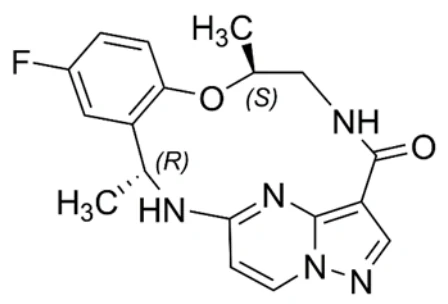
Figure 1 : Structural formula
Physicochemical properties: Repotrectinib is a white to off-white powder. Repotrectinib is practically insoluble in water and aqueous buffer, sparingly soluble in methanol and ethanol and freely soluble in N, N dimethylformamide (DMF)
Polymorphic Form: N-1 (previously designated as Form A)
14. Clinical Trials
14.1. Clinical Trials by Indication
ROS1-Positive Locally Advanced or Metastatic Non-Small Cell Lung Cancer (NSCLC)
The efficacy of AUGTYRO was evaluated in TRIDENT-1, a Phase 1/2, multicenter, single-arm, open-label, multi-cohort, clinical trial. Eligible patients were required to have ROS1-positive locally advanced or metastatic NSCLC, ECOG performance status ≤1, measurable disease per RECIST v 1.1, ≥14 months follow-up from first dose. All patients were assessed for CNS lesions at baseline and patients with symptomatic brain metastases were excluded from the trial. Identification of ROS1 gene fusions in tumour specimens was prospectively determined in local laboratories using next-generation sequencing (NGS), polymerase chain reaction (PCR) or fluorescence in situ hybridization (FISH) tests. All ROS1-positive patients by local FISH testing required central laboratory confirmation of ROS1 fusion using an analytically validated NGS test. ROS1 fusions were identified by NGS in 51%, FISH in 26%, and PCR in 23%. The major efficacy outcome measures were overall response rate (ORR) and duration of response (DOR) according to RECIST v1.1 as assessed by blinded independent central review (BICR). Intracranial response according to modified RECIST v1.1 was assessed by BICR. Tumour assessments with imaging were performed every 8 weeks.
The efficacy populations from pooled Phase 1 and Phase 2, included 71 ROS1 TKI-naïve patients (8 from phase 1 and 63 from phase 2) who received up to 1 prior line of platinum-based chemotherapy and/or immunotherapy and 56 patients (3 from phase 1 and 53 from phase 2) who received 1 prior ROS1 TKI with no prior platinum-based chemotherapy or immunotherapy. Patients from phase 1 received AUGTYRO at various doses (range 40 mg orally once daily to 200 mg twice daily), while patients from phase 2 received AUGTYRO 160 mg orally once daily for 14 days, then increased to 160 mg twice daily until disease progression or unacceptable toxicity.
Among the 71 ROS1 TKI-naïve patients, the median age was 57 years (range: 28 to 80); female (60.6%); Asian (67.6%), White (25.4%), Hispanic or Latino ethnicity (4.2%), Black or African American (1.4%), never smoked (63.4%); and ECOG performance status of 1 at baseline (66.2%). At baseline, 94.4% patients had metastatic disease, 25.4% patients had CNS metastases by BICR; 97.2% had adenocarcinoma; 28.2% patients had prior chemotherapy consisting of platinum-based chemotherapy for locally advanced or metastatic disease.
Among the 56 patients who had received 1 prior ROS1 TKI (crizotinib 82.1%, entrectinib 16.1%, and ceritinib 1.8%) with no prior platinum-based chemotherapy, the median age was 57 years (range: 33 – 78); female (67.9%); Asian (48.2%), White (44.6%), Black or African American and Hispanic or Latino ethnicity (1.8% each); never smoked (64.3%); and ECOG performance status of 1 at baseline (67.9%). At baseline, 98.2% patients had metastatic disease, 46.4% with CNS metastases by BICR, and 94.6% had adenocarcinoma.
Efficacy results are summarized in Table 8.
Table 8 – Efficacy Results in Patients with ROS1-Positive NSCLC per BICR Assessment
| Efficacy Parameters | ROS1 Inhibitor Naïve Patients (N=71) | ROS1 Inhibitor Pretreated Patientsb (N=56) | |||||||||
|---|---|---|---|---|---|---|---|---|---|---|---|
| Confirmed Overall Response Rate, % (95% CI) | 78.9% (67.6, 87.7) | 37.5% (24.9, 51.5) | |||||||||
| Complete Response | 9.9% | 5.4% | |||||||||
| Partial Response | 69.0% | 32.1% | |||||||||
| Duration of Response (DOR) | |||||||||||
| Median in Months (95% CI)a | 34.1 (25.6, NE) | 14.8 (7.6, NE) | |||||||||
| Range (months) | 1.4+, 42.4+ | 3.6, 22.9+ | |||||||||
| % of patients with DOR ≥12 months | 83.1 (95% CI: 73.1, 93.2) | 55.7 (95% CI: 33.9, 77.4) | |||||||||
| % of patients with DOR ≥18 months | 78.9% (95% CI: 67.7, 90.0) | 33.0 (95% CI: 2.6, 63.3) | |||||||||
- a. Median DOR (95% CI) and landmark analysis are based on Kaplan-Meier estimates.
- b. with one (1) prior TKI and no chemotherapy
Abbreviations: CI = confidence interval; NE = not evaluable; “+” indicates ongoing response
Sixty-three TKI-naïve patients and 53 TKI pretreated patients received the recommended dose. The median duration of treatment was 17.3 weeks for TKI-Naive and 8.3 weeks for TKI-pretreated patients. The median Time to Response was 1.8 months for TKI-naïve patients and TKI pre-treated patients (ranges 0.9, 5.5; 1.6, 3.6, respectively).
Among the 9 ROS1 inhibitor naïve patients with measurable brain metastases at baseline as assessed by BICR (2 patients had CNS intervention within 60 days of first dose of study treatment), responses in intracranial lesions were observed in 8 of these 9 patients, with 1 patient achieving a complete response and 7 patients achieving a partial response. Among the 13 patients who had received 1 prior ROS1 inhibitor with no prior platinum-based chemotherapy with measurable brain metastases at baseline as assessed by BICR (7 patients had CNS intervention within 60 days of first dose of study treatment), responses in intracranial lesions were observed in 5 of these 13 patients, with all patients achieving a partial response.
16. Non-Clinical Toxicology
General toxicology
Repeat dose toxicity studies
Following repeat-dose oral administration of repotrectinib daily for up to 3 months in rats and monkeys, the main toxicities observed were CNS effects (i.e., ataxia, tremors) in rats at approximately 2.1 times the human exposure based on AUC at the recommended clinical dose; skin scabs/ulceration in rats, bone marrow hypocellularity in rats and monkeys, and gastrointestinal tract effects (i.e., emesis, watery feces, and minimal subacute/chronic inflammation and/or minimal to mild mucosal gland hyperplasia in the large intestines) in monkeys at exposure margins that were below the human exposure based on AUC at the recommended clinical dose.
Genotoxicity
Repotrectinib was genotoxic in an in vitro assay in human lymphoblastoid TK6 cells and in vivo in the rat bone marrow micronucleus assay, via an aneugenic mechanism of action. Repotrectinib was not mutagenic in vitro in the bacterial reverse mutation (Ames) assay.
Carcinogenicity
Carcinogenicity studies with repotrectinib were not conducted.
Reproductive and developmental toxicology
In an embryo-fetal development study in rats, teratogenic effects (fetal external malformation of malrotated hindlimbs), decreased fetal body weights, and maternal effects (skin scabbing/abrasions in cervical and thoracic regions, and increased body weight) were observed in pregnant rats at approximately 0.3 times the recommended clinical dose based on BSA (see 7 Warnings and Precautions, Reproductive Health).
Juvenile toxicity
The effects of repotrectinib in juvenile rats were investigated in a definitive (PND 12 to PND 70) repeat-dose juvenile toxicity study. Decreased body weight gain and decreased femur length were observed at approximately 0.04 and 0.1 times the human exposure based on AUC at the recommended clinical dose, respectively.