


Product Monograph - Rydapt
RECENT MAJOR LABEL CHANGES
| 4 Dosage and Administration, Hepatic Impairment | 06/2022 |
|---|---|
| 7 Warnings and Precautions, Reproductive Health: Female and Male Potential | 06/2022 |
TABLE OF CONTENTS
Sections or subsections that are not applicable at the time of authorization are not listed.
RECENT MAJOR LABEL CHANGES ............................................................................................. 2
TABLE OF CONTENTS ............................................................................................................... 2
PART I: HEALTH PROFESSIONAL INFORMATION ....................................................................... 4
1 INDICATIONS ................................................................................................................ 4
1.1 Pediatrics ................................................................................................................. 4
1.2 Geriatrics ................................................................................................................. 4
2 CONTRAINDICATIONS .................................................................................................. 4
4 DOSAGE AND ADMINISTRATION .................................................................................. 4
4.1 Dosing considerations ............................................................................................. 4
4.2 Recommended dose and dosage adjustment .......................................................... 5
4.4 Administration ......................................................................................................... 7
4.5 Missed Dose ............................................................................................................ 7
5 OVERDOSAGE ............................................................................................................... 8
6 DOSAGE FORMS, STRENGTHS, COMPOSITION AND PACKAGING .................................. 8
7 WARNINGS AND PRECAUTIONS ................................................................................... 8
7.1 Special Populations................................................................................................ 11
7.1.1 Pregnant Women ............................................................................................ 11
7.1.2 Breast-feeding ................................................................................................. 11
7.1.3 Pediatrics ......................................................................................................... 11
7.1.4 Geriatrics ......................................................................................................... 11
8 ADVERSE REACTIONS ................................................................................................. 12
8.1 Adverse Reaction Overview ................................................................................... 12
8.2 Clinical Trial Adverse Reactions ............................................................................. 13
8.3 Less common clinical trial adverse reactions ......................................................... 17
8.4 Abnormal Laboratory Findings: Hematologic, Clinical Chemistry and Other Quantitative Data ............................................................................................................ 19
8.5 Post-Market Adverse Reactions ............................................................................ 20
9 DRUG INTERACTIONS ................................................................................................. 21
9.2 Drug interactions overview ................................................................................... 21
9.3 Drug-behavioural interactions ............................................................................... 21
9.4 Drug-drug interactions .......................................................................................... 21
9.5 Drug-Food Interactions .......................................................................................... 25
9.6 Drug-herb interactions .......................................................................................... 26
9.7 Drug-laboratory test interactions .......................................................................... 26
10 CLINICAL PHARMACOLOGY ........................................................................................ 26
10.1 Mechanism of action ....................................................................................... 26
10.2 Pharmacodynamics ......................................................................................... 26
10.3 Pharmacokinetics ............................................................................................ 26
11 STORAGE, STABILITY AND DISPOSAL .......................................................................... 29
12 SPECIAL HANDLING INSTRUCTIONS ............................................................................ 29
PART II: SCIENTIFIC INFORMATION ........................................................................................ 30
13 PHARMACEUTICAL INFORMATION ............................................................................. 30
14 CLINICAL TRIALS ......................................................................................................... 31
14.1 Efficacy and safety studies ............................................................................... 31
Trial Design and Study Demographics ............................................................................. 31
14.2 Study Results ................................................................................................... 34
15 MICROBIOLOGY ......................................................................................................... 38
16 NON-CLINICAL TOXICOLOGY ...................................................................................... 38
PATIENT MEDICATION INFORMATION ................................................................................... 40
PART I: HEALTH PROFESSIONAL INFORMATION
1 INDICATIONS
RYDAPT is indicated in combination with standard cytarabine and daunorubicin induction and cytarabine consolidation chemotherapy for the treatment of adult patients with newly diagnosed FLT3-mutated acute myeloid leukemia (AML).
A validated test is required to confirm the FLT3 mutation status of AML.
RYDAPT is indicated for the treatment of adult patients with aggressive systemic mastocytosis (ASM), systemic mastocytosis with associated hematological neoplasm (SM-AHN), or mast cell leukemia (MCL).
1.1 Pediatrics
Pediatrics (<18 years): Based on the data submitted and reviewed by Health Canada, the safety and efficacy of RYDAPT in pediatric patients has not been established; therefore, Health Canada has not authorized an indication for pediatric use (see 4.2 Recommended dose and dosage adjustment, Special Populations, Pediatrics; 7.1.3 Pediatrics; and 10.3 Pharmacokinetics, Special Populations and Conditions).
1.2 Geriatrics
Geriatrics: Clinical studies in AML with RYDAPT did not include sufficient numbers of patients aged 60 years and over to determine whether they respond differently from younger patients (see 7.1.4 Geriatrics).
No overall differences in effectiveness were observed between the patients aged 65 and over compared with younger patients in ASM, SM-AHN and MCL studies (see 7.1.4 Geriatrics).
2 CONTRAINDICATIONS
RYDAPT is contraindicated in patients with hypersensitivity to this drug or to any ingredient in the formulation, including any non-medicinal ingredient, or component of the container. For a complete listing, see 6 DOSAGE FORMS, STRENGTHS, COMPOSITION AND PACKAGING.
4 DOSAGE AND ADMINISTRATION
4.1 Dosing considerations
AML
Prior to initiation of treatment with RYDAPT in combination with standard cytarabine and daunorubicin induction and cytarabine consolidation chemotherapy, patients must have confirmation of FLT3 mutation (internal tandem duplication [ITD] or tyrosine kinase domain [TKD]) using a validated test.
In patients receiving a hematopoietic stem cell transplant (SCT), RYDAPT should be discontinued prior to the conditioning regimen for SCT.
4.2 Recommended dose and dosage adjustment
Recommended Dose in AML
The recommended dose of RYDAPT is 50 mg twice daily on Days 8 to 21 of each cycle of induction with cytarabine and daunorubicin and on Days 8 to 21 of each cycle of consolidation with cytarabine.
Patients may be given up to 2 cycles of induction therapy with cytarabine and daunorubicin if complete remission is not observed at the end of the first induction cycle. Each induction cycle is a minimum of 24 days in duration. Patients who have residual AML after a second induction cycle should be discontinued from RYDAPT treatment.
Patients in complete remission after induction therapy should be given up to 4 cycles of consolidation therapy with cytarabine. Each consolidation cycle is a minimum of 28 days in duration and should begin within two weeks following hematologic recovery (ANC ≥ 1000/μL and platelet count ≥ 100,000/μL) but not sooner than 28 days from the beginning of the previous cycle.
Recommended Dose in ASM, SM-AHN, and MCL
The recommended starting dose of RYDAPT is 100 mg twice daily.
Treatment should be continued as long as clinical benefit is observed or until unacceptable toxicity occurs.
Dosage Adjustment
Dosage Adjustment in AML
Recommended dosage adjustments for RYDAPT in patients with AML are provided in Table 1.
Table 1 - Recommended dose adjustments for RYDAPT (AML indication)
| Criteria | RYDAPT dosing |
| Grade 3/4 pulmonary infiltrates | Interrupt RYDAPT for the remainder of the cycle. Resume RYDAPT at the same dose when infiltrate resolves to Grade ≤1. |
| Other Grade 3/4 non-hematological toxicities | Interrupt RYDAPT until toxicities considered at least possibly related to RYDAPT have resolved to Grade ≤2, then resume RYDAPT. |
Dosage Adjustment in ASM, SM-AHN, and MCL
Recommended dosage adjustments for RYDAPT in patients with ASM, SM-AHN, and MCL are provided in Table 2.
Table 2 - Recommended dose adjustments for RYDAPT (ASM, SM-AHN, MCL indication)
| Criteria | RYDAPT dosing |
| ANC less than 1 x 10⁹/L attributed to RYDAPT in patients without MCL, or ANC less than 0.5 x 10⁹/L attributed to RYDAPT in patients with baseline ANC value of 0.5-1.5 x 10⁹/L | Interrupt RYDAPT until ANC greater than or equal to 1.5x 10⁹/L, then resume RYDAPT at 50 mg twice daily, and if tolerated, gradually increase to 100 mg twice daily. Discontinue RYDAPT if low ANC persists for > 21 days and is suspected to be related to RYDAPT. |
| Platelet count less than 50 x 109/L attributed to RYDAPT in patients without MCL, or platelet count less than 25 x 109/L attributed to RYDAPT in patients with baseline platelet count of 25-75 x 109/L | Interrupt RYDAPT until platelet count greater than or equal to 50 x 109/L, then resume RYDAPT at 50 mg twice daily, and if tolerated, increase to 100 mg twice daily. Discontinue if low platelet count persists for > 21 days and is suspected to be related to RYDAPT. |
| Hemoglobin less than 8 g/dL attributed to RYDAPT in patients without MCL, or life-threatening anemia attributed to RYDAPT in patients with baseline hemoglobin value of 8 -10 g/dL | Interrupt RYDAPT until hemoglobin greater than or equal to 8 g/dL, then resume RYDAPT at 50 mg twice daily, and if tolerated, increase to 100 mg twice daily. Discontinue if low hemoglobin persists for > 21 days and is suspected to be related to RYDAPT. |
| Grade 3/4 nausea and/or vomiting despite optimal anti-emetic therapy | Interrupt RYDAPT for 3 days (6 doses), then resume RYDAPT at 50 mg twice daily, and if tolerated, gradually increase to 100 mg twice daily. |
| Other Grade 3/4 non-hematological toxicities | Interrupt RYDAPT until event has resolved to ≤ Grade 2, then resume RYDAPT at 50 mg twice daily, and if tolerated, increase to 100 mg twice daily. |
ANC: Absolute Neutrophil Count
CTCAE severity: Grade 1 = mild symptoms; 2 = moderate symptoms; 3 = severe symptoms; 4 = life-threatening symptoms.
Special Populations
Renal impairment
No dosage adjustment is required for patients with mild or moderate renal impairment (creatinine clearance [CrCl] ≥30 mL/min). Clinical experience in patients with severe renal impairment (CrCl 15 to 29 mL/min) is limited. No data are available in patients with end-stage renal disease.
Hepatic impairment
No dosage adjustment is required in patients with mild or moderate (Child-Pugh A or B) hepatic impairment. Limited data obtained from severe (Child-Pugh C) hepatic impairment subjects are insufficient to recommend dose adjustment. Patients with total bilirubin ≥ 2.5 × upper limit of normal were excluded from studies with RYDAPT in combination with chemotherapy. The ASM, SM-AHN, and MCL study excluded patients with serum creatinine > 2.0 mg/dL, hepatic transaminases > 2.5 x upper limit of normal (ULN) or > 5 x ULN if disease-related, total bilirubin > 1.5 x ULN or > 3 x ULN if disease-related.
Pediatric patients (>18 years)
Health Canada has not authorized an indication for the use of RYDAPT in the pediatric population. RYDAPT should not be used in combination with intensive pediatric AML combination chemotherapy regimens including anthracyclines, fludarabine and cytarabine (see 7.1.3 Pediatrics; 10.3 Pharmacokinetics, Special Populations and Conditions)
Geriatric patients
No dosage adjustments are required in geriatric patients. There is limited experience with the indicated used of RYDAPT in AML patients aged 60-70 years and no experience in AML patients above 70 years. In patients aged ≥60 years, RYDAPT should be used only in patients eligible to receive intensive induction chemotherapy with adequate performance status and without significant comorbidities (see 7.1.4 Geriatrics; 10.3 Pharmacokinetics, Special Populations and Conditions).
Appropriate caution should be used when prescribing to the elderly patients with ASM, SM-AHN, and MCL, as increased vulnerability to drug effect is possible in this patient population (see 7.1.4 Geriatrics).
4.4 Administration
RYDAPT capsules should be swallowed whole with a glass of water. RYDAPT capsules should not be opened, crushed or chewed.
RYDAPT should be taken orally, twice daily at approximately 12 hour intervals. RYDAPT should be taken with food to help prevent nausea (see 10.3 Pharmacokinetics).
Prophylactic anti-emetics should be administered in accordance with local medical practice as per patient tolerance.
4.5 Missed Dose
If a dose of RYDAPT is missed, it should not be made up and the patient should only take the next scheduled dose at the scheduled time.
If vomiting occurs, the patient should not take an additional dose, but should take the next scheduled dose.
5 OVERDOSAGE
Reported experience with overdose in humans is very limited.
There is no known specific antidote for midostaurin. In the event of an overdose, patients must be closely monitored for signs or symptoms of adverse reactions, and appropriate symptomatic and supportive treatment initiated. ECG monitoring is recommended.
| For management of a suspected drug overdose, contact your regional poison control centre. |
|---|
6 DOSAGE FORMS, STRENGTHS, COMPOSITION AND PACKAGING
Table 3 – Dosage Forms, Strengths, Composition and Packaging
RYDAPT 25 mg capsules for oral administration are pale orange, oblong capsule with red imprint ‘PKC NVR’. Available in blisters, in multipacks of 56 and 112 capsules.
7 WARNINGS AND PRECAUTIONS
General
Drug-Drug Interactions
Concomitant use of RYDAPT with drugs that strongly inhibit CYP3A4 can increase midostaurin exposure. Alternative medicinal products that do not strongly inhibit CYP3A4 activity should be considered. In situations where satisfactory therapeutic alternatives do not exist, patients should be closely monitored for toxicity, especially during the first week of RYDAPT administration in each cycle of chemotherapy (see 9.4 Drug-drug Interactions).
Concomitant use of RYDAPT with drugs that strongly induce CYP3A4 can decrease midostaurin exposure. Concomitant treatment with strong CYP3A4 inducers (e.g., carbamazepine, rifampin, St. John's Wort) should be avoided (see 9.4 Drug-drug Interactions).
Cardiovascular
QTc Interval Prolongation
An increased frequency of QT prolongation was noted in patients treated with RYDAPT in clinical trials
| Route of Administration | Dosage Form / Strength/Composition | Non-medicinal Ingredients |
| Oral | Capsule 25 mg | All-rac-α-tocopherol (vitamin E), corn oil mono-di-triglycerides, ethanol anhydrous, gelatin, glycerol, iron oxide red, iron oxide yellow, macrogol 400, macrogolglycerol hydroxystearate, purified water, red pharmaceutical ink, titanium dioxide. |
(see 8.2 Clinical Trial Adverse Reactions; 8.4 Abnormal laboratory findings, ECG Findings) and in the post-market setting. Particular care should be exercised when administering RYDAPT with a QTc-prolonging drug to patients who are suspected to be at an increased risk of experiencing torsade de pointes (see 7 WARNINGS AND PRECAUTIONS, Monitoring and Laboratory Tests). Caution should be observed if RYDAPT is administered concomitantly with other QTc interval-prolonging drugs (see 9.4 Drug-drug Interactions).
Cardiac dysfunction
Patients with symptomatic congestive heart failure were excluded from clinical studies. In clinical studies with RYDAPT 100 mg twice daily (BID), events of cardiac failure, some of which were fatal, and decreases in left ventricular ejection fraction (LVEF) occurred. Patients should be assessed for signs and symptoms of heart failure at baseline and periodically during treatment with RYDAPT. In patients at risk, RYDAPT should be used with caution and patients should be closely monitored by assessing LVEF when clinically indicated (at baseline and during treatment).
Hematologic
Neutropenia / Infections
Neutropenia has occurred in patients receiving RYDAPT (see 8.1 Adverse Reactions Overview; 8.4 Abnormal laboratory findings). Severe neutropenia (ANC less than 0.5 x 10⁹/L) was generally reversible by withholding RYDAPT until recovery or discontinuation in the ASM, SM-AHN and MCL studies. White blood cells (WBCs) should be monitored regularly, especially at treatment initiation.
In ASM, SM-AHN, and MCL studies, on-treatment deaths unrelated to the underlying malignancy occurred in 15 patients (11%), most commonly from infection (sepsis or pneumonia).
In patients who develop unexplained severe neutropenia, treatment with RYDAPT should be interrupted until ANC is greater than or equal to 1.0 x 10⁹/L in patients with AML or 1.5 x 10⁹/L in patients with ASM, SM-AHN and MCL, as recommended in Tables 5 and 6. RYDAPT should be discontinued in patients who develop recurrent or prolonged severe neutropenia that is suspected to be related to RYDAPT (see 4.2 Recommended dose and dosage adjustment, Dosage Adjustment).
Any active serious infections should be under control prior to starting treatment with RYDAPT monotherapy. Patients should be monitored for signs and symptoms of infection, including any device-related infections, and if a diagnosis of infection is made, appropriate treatment should be instituted promptly, including as needed, the discontinuation of RYDAPT (see 4.2 Recommended Dose and Dosage Adjustment, Dosage Adjustment).
Monitoring and Laboratory Tests
WBCs should be monitored regularly, especially at treatment initiation (see 7 WARNINGS AND PRECAUTIONS, Hematologic).
Patients should be monitored for signs and symptoms of infection, including any device-related infections, at baseline and periodically during treatment with RYDAPT (see 7 WARNINGS AND PRECAUTIONS, Hematologic).
Patients should be assessed for signs and symptoms of heart failure at baseline and periodically during treatment with RYDAPT. In patients at risk, RYDAPT should be used with caution and patients should be closely monitored (at baseline and during treatment). Electrocardiogram recordings should be performed at baseline and periodically during treatment (see 7 WARNINGS AND PRECAUTIONS, Cardiovascular; 8.4 Abnormal laboratory findings, ECG Findings).
Patients should be monitored for pulmonary symptoms indicative of ILD/pneumonitis at baseline and periodically during treatment with RYDAPT (see 4.2 Recommended dose and dosage adjustment, Dosage Adjustment; 7 WARNINGS AND PRECAUTIONS, Respiratory).
Interval assessments of QT by ECG should be considered if RYDAPT is taken concurrently with medicinal products that can prolong the QT interval (see 7 WARNINGS AN PRECAUTIONS, Cardiovascular).
Reproductive Health: Female and Male Potential
Fertility
There are no data on the effect of RYDAPT on human fertility. Based on findings in animals, RYDAPT may impair fertility in females and males of reproductive potential. It is not known whether these effects on fertility are reversible (see 16 NONCLINICAL TOXICOLOGY, Reproductive and Developmental Toxicology).
Teratogenic Risk
Based on studies in animals, RYDAPT may cause fetal harm when administered to pregnant women and should not be used during pregnancy.
Pregnancy testing: Sexually-active females of reproductive potential should be advised to have a pregnancy test within 7 days prior to starting treatment with RYDAPT.
Contraception: Females of reproductive potential should be advised of the potential risk to the fetus. Sexually-active females of reproductive potential should use effective contraception (methods that result in less than 1% pregnancy rates) when using RYDAPT and for at least 4 months after stopping treatment with RYDAPT.
Male Patients: Sexually-active males taking RYDAPT should be advised to use a condom during intercourse with females of reproductive potential or pregnant women and for at least 4 months after stopping treatment with RYDAPT to avoid conception or embryo-fetal harm.
Respiratory
Pulmonary toxicity
Events of Interstitial lung disease (ILD) and pneumonitis, some of which have been fatal, have occurred in patients treated with RYDAPT. Patients should be monitored for pulmonary symptoms indicative of ILD/pneumonitis, and RYDAPT should be interrupted in patients who experience pulmonary symptoms indicative of ILD/pneumonitis without an infectious etiology which are ≥Grade 3 (NCI CTCAE) and resumed at the same dose when infiltrate resolves to Grade ≤1 (NCI CTCAE) (see 4.2 Recommended dose and dosage adjustment, Dosage Adjustment).
7.1 Special Populations
7.1.1 Pregnant Women
RYDAPT can cause fetal harm when administered to a pregnant woman.
There are no adequate and well-controlled studies in pregnant women. Reproductive studies in rats and rabbits demonstrated that midostaurin caused embryo-fetal toxicity. An increase in late embryo-fetal deaths, a reduction in fetal weight and reduced skeletal ossification were observed in rats and rabbits following prenatal exposure to midostaurin at concentrations over 50–fold below the exposure in humans at the recommended dose of 50 mg twice daily based on AUC. RYDAPT should not be used in women who are pregnant or contemplating pregnancy.
7.1.2 Breast-feeding
It is unknown if RYDAPT (midostaurin) or its active metabolites are excreted in human milk. There are no data on the effects of RYDAPT on the breastfed child or the effects of RYDAPT on milk production. Studies show that orally administered midostaurin and its active metabolites pass into the milk of lactating rats. Because many drugs are excreted in human milk and because of the potential for serious adverse reactions in nursing infants from RYDAPT, a nursing woman should be advised to discontinue breast-feeding during treatment with RYDAPT and for at least 4 months after stopping treatment.
7.1.3 Pediatrics
In a phase 2 study, RYDAPT was investigated in combination with chemotherapy in newly diagnosed pediatric patients with FLT3-mutated AML. Four AML patients were treated with midostaurin; 3 patients with confirmed FLT-3 mutation. Among the three FLT3-mutated AML patients enrolled in the study, two patients (10 and 14 years old) experienced Dose Limiting Toxicities (DLTs) following the second induction cycle with midostaurin in combination with chemotherapy (containing cytarabine, fludarabine and idarubicin). Both patients showed markedly delayed hematological recoveries (i.e., prolonged grade 4 thrombocytopenia lasting for 44 days in the first patient and 51 days in the second patient, and grade 4 neutropenia lasting for 46 days in the second patient). In the first induction cycle both patients received midostaurin in combination with cytarabine, etoposide and idarubicin.
Based on the data submitted and reviewed by Health Canada, the safety and efficacy of RYDAPT in pediatric patients has not been established; therefore, Health Canada has not authorized an indication for pediatric use (see 4.2 Recommended dose and dosage adjustment, Special Populations, Pediatric Patients; 10.3 Pharmacokinetics, Special Populations and Conditions, Pediatrics).
7.1.4 Geriatrics
Clinical studies in AML with RYDAPT did not include sufficient numbers of patients aged 60 years and over to determine whether they respond differently from younger patients. There is limited experience with the indicated use of RYDAPT in AML patients aged 60-70 years and no experience in AML patients above 70 years. In patients aged ≥60 years, RYDAPT should be used only in patients eligible to receive intensive induction chemotherapy with adequate performance status and without significant comorbidities.
Of the 142 patients with ASM, SM-AHN, or MCL clinical studies of RYDAPT, 64 (45%) were aged 65 and over, and 16 (11%) were aged 75 years and over. No overall differences in safety were observed between the patients aged 65 and over compared with younger patients, but greater sensitivity of older individuals cannot be ruled out.
8 ADVERSE REACTIONS
8.1 Adverse Reaction Overview
AML
In the phase III, randomized, double-blind, placebo controlled study of RYDAPT in patients with newly diagnosed FLT3-mutated AML, the most frequent (incidence ≥20%) adverse drug reactions (ADRs) in the RYDAPT plus standard chemotherapy arm were febrile neutropenia, nausea, exfoliative dermatitis, vomiting, stomatitis, headache, petechiae, pyrexia, epistaxis, hyperglycemia, back pain and device related infections. The most frequent Grade 3/4 ADRs (incidence ≥10%) were febrile neutropenia, lymphopenia, device-related infection, and exfoliative dermatitis.
Serious ADRs occurred in 32.3% of patients in the RYDAPT plus standard chemotherapy arm versus 30.1% in the placebo plus standard chemotherapy arm. The most frequent serious ADR in patients in the RYDAPT plus standard chemotherapy arm was febrile neutropenia (16.2%) and this occurred at a similar rate in the placebo arm (15.9%). Less frequent serious ADRs (over 2%) included pyrexia (3.1% vs 4.0%), device-related infection (7.4% vs 4.4%), exfoliative dermatitis (2.6% vs 1.8%), and hypotension (2.6% vs 1.3%).
Discontinuation due to any adverse event occurred in 9.2% of patients in the RYDAPT arm versus 6.2% in the placebo arm. The most frequent Grade 3/4 adverse event leading to discontinuation in the RYDAPT arm was exfoliative dermatitis (1.2%).
ASM, SM-AHN, and MC
In two single-arm, open-label, multicenter studies in patients with ASM, SM-AHN, or MCL, the most frequent ADRs (incidence ≥20%) were nausea, vomiting, diarrhea, peripheral edema, fatigue, constipation, pyrexia and headache. The most frequent Grade 3/4 ADRs (incidence ≥5%) were fatigue, sepsis, pneumonia, febrile neutropenia, diarrhea, dyspnea, nausea and vomiting.
Serious adverse events occurred in 68.3% of patients. The most frequent serious adverse events were pneumonia (7%), sepsis (7%) and diarrhea (5.6%).
Adverse events leading to dose modifications (interruption or adjustment) occurred in 56.3% of patients. The most frequent adverse events that led to dose modification (incidence ≥5%) were nausea, vomiting, electrocardiogram QT prolonged and neutropenia.
Adverse events that led to treatment discontinuation occurred in 23.9% of patients. The most common adverse events leading to discontinuation (incidence ≥1%) were electrocardiogram QT prolonged, ascites, nausea, vomiting, febrile neutropenia, thrombocytopenia, amylase increased, pleural effusion, and acute myeloid leukaemia.
On-treatment deaths unrelated to the underlying malignancy occurred in 15 patients (11%), most commonly from infection (sepsis or pneumonia), followed by cardiac events.
8.2 Clinical Trial Adverse Reactions
Clinical trials are conducted under very specific conditions. The adverse reaction rates observed in the clinical trials; therefore, may not reflect the rates observed in practice and should not be compared to the rates in the clinical trials of another drug. Adverse reaction information from clinical trials may be useful in identifying and approximating rates of adverse drug reactions in real-world use.
AML
The safety evaluation of RYDAPT (50 mg twice daily) in patients with newly diagnosed FLT3-mutated AML is based on a phase III, randomized, double-blind, placebo-controlled study. A total of 717 patients were randomized (1:1) to receive RYDAPT or placebo sequentially (on Days 8 to 21) in combination with standard daunorubicin (60 mg/m2 on Days 1 to 3) / cytarabine (200 mg/m2 on Days 1 to 7) induction and high dose cytarabine (3 g/m2 on Days 1, 3, 5) consolidation, followed by maintenance with continuous RYDAPT or placebo treatment according to initial assignment for up to 12 cycles (28 days/cycle). The median age was 47 years (range: 18 to 60); 88.3% had an ECOG performance status of 0 or 1; and 55.5% of the study population were females.
The overall median duration of exposure was 42 days (range 2 to 576 days) for patients in the RYDAPT plus standard chemotherapy arm versus 34 days (range 1 to 465 days) for patients in the placebo plus standard chemotherapy arm. For the 205 patients (120 in RYDAPT arm and 85 in placebo arm) who entered the maintenance phase, the median duration of exposure was 11 months (16 to 520 days for patients in the RYDAPT arm, and 22 to 381 days in the placebo arm).
Table 4 presents the common ADRs reported in the phase III study in patients with newly diagnosed FLT3-mutated AML. ADRs are listed according to MedDRA system organ class. Within each system organ class, the ADRs are ranked by frequency, with the most frequent reactions first. The severity of ADRs was graded based on the Common Terminology Criteria for Adverse Event (CTCAE). Table 6 presents the laboratory abnormalities from the same phase III study in patients with newly diagnosed FLT3-mutated AML.
Table 4 - Common Adverse Drug Reactions1 (≥ 10% Incidence) reported in the pivotal AML clinical study
| Adverse drug reactions | All grades | Grades 3/4 | |||||||||
|---|---|---|---|---|---|---|---|---|---|---|---|
RYDAPT + chemo4 n=2292 % | Placebo + chemo4 n=2262 % | RYDAPT + chemo4 n=3452 % | Placebo + chemo4 n=3352 % | ||||||||
| Blood and lymphatic system disorders | |||||||||||
| Febrile neutropenia | 83 | 81 | 84 | 83 | |||||||
| Petechiae | 36 | 27 | 1 | <1 | |||||||
| Lymphopenia3 | 17 | 19 | 20 | 23 | |||||||
| Cardiac disorders | |||||||||||
| Adverse drug reactions | All grades | Grades 3/4 | |||||||||
|---|---|---|---|---|---|---|---|---|---|---|---|
RYDAPT + chemo4 n=2292 % | Placebo + chemo4 n=2262 % | RYDAPT + chemo4 n=3452 % | Placebo + chemo4 n=3352 % | ||||||||
| Hypotension | 14 | 15 | 6 | 3 | |||||||
| Sinus tachycardia | 10 | 8 | 1 | 0 | |||||||
| Gastrointestinal disorders | |||||||||||
| Nausea3 | 83 | 70 | 6 | 10 | |||||||
| Vomiting3 | 61 | 53 | 3 | 5 | |||||||
| Stomatitis | 22 | 14 | 4 | 3 | |||||||
| Abdominal pain upper | 17 | 15 | 0 | <1 | |||||||
| Hemorrhoids | 15 | 11 | 1 | 0 | |||||||
| General disorders and administration site conditions | |||||||||||
| Pyrexia | 35 | 35 | 3 | 3 | |||||||
| Immune system disorders | |||||||||||
| Hypersensitivity | 16 | 14 | <1 | 1 | |||||||
| Infections and infestations | |||||||||||
| Device related infection | 24 | 17 | 16 | 10 | |||||||
| Investigations | |||||||||||
| Hyperglycemia3 | 20 | 17 | 7 | 5 | |||||||
| Electrocardiogram QT prolonged5 | 20 | 17 | 6 | 5 | |||||||
| Activated partial thromboplastin time prolonged | 13 | 8 | 3 | 2 | |||||||
| Musculoskeletal and connective tissue disorders | |||||||||||
| Back pain | 22 | 16 | 1 | <1 | |||||||
| Arthralgia | 14 | 8 | <1 | <1 | |||||||
| Bone pain | 10 | 10 | 1 | <1 | |||||||
| Pain in extremity | 10 | 9 | 1 | <1 | |||||||
| Nervous system disorders | |||||||||||
| Headache | 46 | 38 | 3 | 3 | |||||||
| Psychiatric disorders | |||||||||||
| Adverse drug reactions | All grades | Grades 3/4 | |||||||||
|---|---|---|---|---|---|---|---|---|---|---|---|
RYDAPT + chemo4 n=2292 % | Placebo + chemo4 n=2262 % | RYDAPT + chemo4 n=3452 % | Placebo + chemo4 n=3352 % | ||||||||
| Insomnia | 12 | 8 | 0 | <1 | |||||||
| Respiratory, thoracic and mediastinal disorders | |||||||||||
| Epistaxis | 28 | 24 | 3 | <1 | |||||||
| Laryngeal pain | 12 | 10 | <1 | <1 | |||||||
| Pneumonitis5 | 11 | 13 | 5 | 7 | |||||||
| Dyspnea | 11 | 12 | 6 | 4 | |||||||
| Skin and subcutaneous tissue disorders | |||||||||||
| Dermatitis exfoliative | 62 | 61 | 14 | 8 | |||||||
| Hyperhidrosis | 14 | 8 | 0 | 0 | |||||||
1Adverse drug reactions are those events for which at least possible causal relationship with midostaurin was established, consequent to thorough medical evaluation.
2 For the All Grades ADRs in this table, the incidences are those reported from clinical trial sites outside of North America, and incidences reported in the North American sites are not captured here. For trial sites in North America, all grades were collected for 13 pre-specified adverse events. For all other adverse events, only grades 3 and 4 were collected.
3 Higher frequency with RYDAPT observed during maintenance phase, please see paragraph below.
4 Chemotherapeutic agents: daunorubicin and cytarabine for induction; high dose cytarabine for consolidation
5 These ADRs were included after identification in the post-marketing setting. However, these were quantified on the basis of AML pivotal study (not considered as ADRs at the time of initial marketing authorization application).
A total of 205 patients (120 in RYDAPT arm and 85 in placebo arm) who remained in remission following completion of consolidation continued to receive either single agent RYDAPT or placebo for a median of 11 months (range 0.5 to 17 months) with 69 in the RYDAPT arm and 51 in the placebo arm completing 12 treatment cycles. Adverse drug reactions during the maintenance phase with at least ≥5% difference between the RYDAPT and placebo arms were: nausea (46.4% vs 17.9%), hyperglycemia (20.2% vs 12.5%), vomiting (19% vs 5.4%) and lymphopenia (16.7% vs 8.9%). The most frequent grade 3/4 hematological abnormalities reported in patients during the maintenance phase with RYDAPT were ANC decrease (20.8% vs 18.8 %) and leukopenia (7.5% vs 5.9%). The most frequent grade 3/4 non-hematological abnormalities were ALT increased (9.2% vs 3.5%), AST increased (2.5% vs 0).
Adverse events in elderly AML patients
An interim analysis was conducted on 145 patients (99 patients were ≤ 60 years of age; 46 were > 60 to 70 years of age) enrolled into the first cohort of a phase II study. The most frequent adverse events observed across all grades and based on System Organ Class were Blood and lymphatic system disorders (e.g., anemia, febrile neutropenia) and Gastrointestinal disorders (e.g., nausea, vomiting). The incidence of adverse events when compared between the younger and older age groups (≤ 60, >60 to 70 years of age) appear to be similar in general. The frequency of treatment-related severe adverse events (≥ grade 3) and the frequency of serious adverse events were slightly higher in the older age group (85% vs. 80% and 72% vs. 62%, respectively). Although this is an interim analysis, the overall incidence of all treatment related adverse events as well as Grade 3/4 adverse events appear to be consistent with that observed in Study A2301 (see Table 4). The rates of early death were higher in older compared to younger patients (17% and 2%, respectively).
ASM, SM-AHN, and MCL
The safety of RYDAPT (100 mg twice daily with food) as a single agent in patients with ASM, SM-AHN, or MCL was evaluated in 142 patients in two single-arm, open-label, multicentre studies. The median age was 63 years (range: 24 to 82), 63% had an ECOG performance status of 0 or 1, and 75% had no hepatic impairment (bilirubin and AST ≤ ULN) at baseline. Patients with QTcF > 450 ms at baseline were excluded from studies. The median duration of exposure to RYDAPT was 11.4 months (range: 0 to 81 months), with 34% treated for ≥ 24 months.
Table 5 presents the frequency category of ADRs based on pooled data from two studies in patients with ASM, SM-AHN, and MCL. ADRs are listed according to MedDRA system organ class. Within each system organ class, the ADRs are ranked by frequency, with the most frequent reactions first. Table 7 presents the key laboratory abnormalities based on pooled data from two studies in patients with ASM, SM-AHN, and MCL.
Table 5 - Common Adverse Drug Reactions1 (≥ 10% Incidence) reported in ASM, SM-AHN, and MCL pooled single-arm studies
| Adverse drug reaction | RYDAPT (100 mg twice daily) N=142 | |||
|---|---|---|---|---|
| All grades % | Grade 3/4 % | |||
| Gastrointestinal disorders | ||||
| Nausea | 82 | 6 | ||
| Vomiting | 68 | 6 | ||
| Diarrhea | 51 | 6 | ||
| Constipation | 29 | <1 | ||
| General disorders and administration site conditions | ||||
| Edema peripheral | 35 | 4 |
|---|---|---|
| Fatigue | 31 | 8 |
| Pyrexia | 27 | 4 |
| Infections and infestations | ||
| Urinary tract infection | 13 | 3 |
| Upper respiratory tract infection | 11 | 1 |
| Investigations | ||
| Electrocardiogram QT prolonged2 | 11 | <1 |
| Nervous system disorders | ||
| Headache | 26 | 1 |
| Dizziness | 13 | 0 |
| Respiratory, thoracic and mediastinal disorders | ||
| Dyspnea | 18 | 6 |
| Cough | 16 | <1 |
| Pleural effusion | 13 | 4 |
| Epistaxis | 12 | 4 |
1 Adverse drug reactions are those events for which at least possible causal relationship with midostaurin was established, consequent to thorough medical evaluation.
2 This ADR was included after identification in the post-marketing setting. However, this was quantified on the basis of the Advanced SM pooled studies (not considered as ADRs at the time of initial marketing authorization application).
Description of selected adverse drug reactions
Gastrointestinal disorders
In the ASM, SM-AHN, and MCL patient population 17 (12%) patients had a dose adjustment or interruption for nausea, 13 (9.2%) for vomiting, and 7 (4.9%) for diarrhea. The treatment discontinuation rate was low with 3 (2.1%) patients discontinued for nausea, 2 (1.4%) patients for vomiting, and 1 (0.7%) patient for diarrhea. Most of the events occurred within the first 6 months of treatment and were well managed with supportive prophylactic medication.
8.3 Less common clinical trial adverse reactions
Clinical Trial Adverse Drug Reactions occurring in < 10 % of patients with AML
The adverse drug reactions occurring in < 10 % (all grades) of RYDAPT treated patients (with a higher incidence compared to placebo) in the phase III, double-blind, placebo-controlled study are presented below. The events are categorized by System Organ Class.
Cardiac disorders: Hypertension (8%), Pericardial effusion (4%)
Eye disorders: Eyelid edema (3%), Keratitis (7%)
Gastrointestinal disorders: Anorectal discomfort (7%), Abdominal discomfort (4%)
General disorders and administration site conditions: Catheter-related thrombosis (4%)
Infections and infestations: Upper respiratory tract infection (5%), Neutropenic sepsis (<1%)
Investigations: Weight increased (7%)
Metabolism and nutrition disorders: Hyperuricemia (8%)
Musculoskeletal and connective tissue disorders: Neck pain (8%)
Nervous system disorders: Syncope (5%), Tremor (4%)
Respiratory, thoracic and mediastinal disorders: Pleural effusion (6%), Nasopharyngitis (9%), Acute respiratory distress syndrome (2%)
Skin and subcutaneous tissue disorders: Dry skin (7%)
Clinical Trial Adverse Drug Reactions occurring in < 10 % of patients with ASM, SM-AHN, and MCL
The adverse drug reactionsoccurring in < 10 % (all grades) of RYDAPT treated patients with ASM, SM-AHN, and MCL in the two single-arm, open-label, multicentre studies are presented below. The events are categorized by System Organ Class.
Blood and lymphatic system disorders: Febrile neutropenia (8%)
Ear and labyrinth disorders: Vertigo (5%)
Gastrointestinal disorders: Dyspepsia (6%), Gastrointestinal hemorrhage (4%)
General disorders and administration site conditions: Asthenia (5%), Chills (5%), Edema (4%)
Infections and infestations: Pneumonia (9%), Sepsis (8%), Bronchitis (6%), Oral herpes (5%), Cystitis (4%), Sinusitis (4%), Erysipelas (4%), Herpes zoster (4%)
Injury, poisoning and procedural complications: Contusion (6%), Fall (4%)
Immune system disorders: Hypersensitivity (2%), Anaphylactic shock (<1%)
Investigations: Weight increased (6%)
Nervous system disorders: Disturbance in attention (7%), Tremor (6%)
Respiratory, thoracic and mediastinal disorders: Oropharyngeal pain (4%), Interstitial lung disease* (1%), Pneumonitis* (<1%)
Vascular disorders: Hypotension (9%), Hematoma (6%)
*These ADRs were detected during the Advanced SM studies and were included after identification in the post-marketing setting.
8.4 Abnormal Laboratory Findings: Hematologic, Clinical Chemistry and Other Quantitative Data
Table 6 - Laboratory abnormalities occurring in patients receiving RYDAPT (AML indication)
| RYDAPT 50 mg twice daily + chemo (n=345) | Placebo + chemo (n=335) | |||||||
|---|---|---|---|---|---|---|---|---|
| All grade % | Grade 3/4 % | All grade % | Grade 3/4 % | |||||
| Hematologic findings | ||||||||
| Absolute neutrophils decreased | 87 | 86 | 88 | 87 | ||||
| Hemoglobin decreased | 97 | 79 | 99 | 78 | ||||
| Platelets decreased | 96 | 96 | 95 | 94 | ||||
| WBC decreased | 95 | 95 | 94 | 93 | ||||
| Chemistry findings | ||||||||
| Aspartate aminotransferase (AST) increased | 74 | 6 | 65 | 6 | ||||
| Alanine aminotransferase (ALT) increased | 84 | 19 | 82 | 15 | ||||
| Calcium increased | 7 | <1 | 4 | <1 | ||||
| Calcium decreased | 91 | 7 | 91 | 8 | ||||
| Potassium increased | 12 | <1 | 12 | 1 | ||||
| Potassium decreased | 62 | 14 | 61 | 14 | ||||
| Serum Creatinine increased | 9 | 0 | 10 | 0 | ||||
| Total Bilirubin increased | 53 | 11 | 58 | 14 | ||||
| Sodium increased | 20 | 1 | 15 | 2 | ||||
| Sodium decreased | 66 | 10 | 73 | 9 | ||||
ECG Findings: In the pivotal randomized placebo-controlled trial in patients with AML, the proportion of patients with QTc prolongation was higher in patients randomized to the RYDAPT arm (N=345) compared to the placebo arm (N=335).
QTcF >480 ms: 10.1% vs 5.7%
QTcF >500 ms: 6.2% vs 2.6%
QTcF increase from baseline >60 ms: 18.4% vs 10.7%
Table 7 - Laboratory abnormalities occurring in patients receiving RYDAPT (ASM, SM-AHN, MCL indication)
| Key laboratory abnormality | RYDAPT (100 mg twice daily) N=142 | ||||
|---|---|---|---|---|---|
| All grade % | Grade 3/4 % | ||||
| Hematologic findings | |||||
| Glucose increased* | 94 | 19 | |||
| Absolute neutrophils decreased | 59 | 27 | |||
| Absolute lymphocyte decreased | 73 | 46 | |||
| Chemistry findings | |||||
| Aspartate aminotransferase (AST) increased | 34 | 3 | |||
| Alanine aminotransferase (ALT) increased | 33 | 4 | |||
| Total bilirubin increased | 40 | 5 | |||
| Amylase increased | 20 | 7 | |||
| Lipase increased | 39 | 18 | |||
*non fasting
ECG Findings: Evaluation of the notable QTcF from the pooled dataset demonstrated that 6 patients had a post-baseline QTc interval of > 480 ms and 8 patients had an increase of > 60 ms in QTc interval compared to baseline. No patient experienced a QTcF value of > 500 ms.
8.5 Post-Market Adverse Reactions
The following adverse drug reactions have been derived from post-marketing experience with RYDAPT via spontaneous case reports and literature cases. Because these reactions are reported voluntarily from a population of uncertain size, it is not possible to reliably estimate their frequency which is therefore categorized as not known. Adverse drug reactions are listed according to system organ classes in MedDRA. Within each System Organ Class, ADRs are presented in order of decreasing seriousness.
Respiratory, thoracic and mediastinal disorders: Interstitial lung disease (Applicable only for AML indication)
Skin and subcutaneous tissue disorders: Acute febrile neutrophilic dermatosis (Sweet syndrome) (Applicable only for AML indication)
9 DRUG INTERACTIONS
9.2 Drug interactions overview
Midostaurin undergoes extensive hepatic metabolism through CYP3A4 enzymes. Drug interactions were observed when RYDAPT was co-administered with a strong CYP3A4 inhibitor and a strong CYP3A4 inducer. Based on in vitro data, RYDAPT may potentially increase the exposure of co-administered medicinal products primarily cleared by CYP2E1, breast cancer resistance protein (BCRP) or organic anion transporting polypeptide (OATP1B1), and decrease the exposure of co-administered medicinal products primarily cleared by CYP2B6. The effect of RYDAPT on the exposure of co-administered medicinal products that are substrates of CYP1A2 is uncertain.
9.3 Drug-behavioural interactions
Drug-lifestyle interactions have not been studied.
9.4 Drug-drug interactions
The drugs listed in this table are based on either drug interaction case reports or studies, or potential interactions due to the expected magnitude and seriousness of the interaction (i.e., those identified as contraindicated).
Table 8 - Established or Potential Drug-Drug Interactions
| Drug class | Source of Evidence | Effect | Clinical comment |
| Agents that may increase midostaurin plasma concentrations | |||
| Drugs that that are strong inhibitors of CYP3A4, such as, but not limited to, antifungals (e.g., ketoconazole, itraconazole, voriconazole, posaconazole), certain antivirals (e.g., ritonavir), and macrolide antibiotics (e.g., clarithromycin) | CT | In a study with 36 healthy volunteers, co-administration of the strong CYP3A4 inhibitor ketoconazole (400 mg daily on Days 1 to 10) to steady-state with a single dose of RYDAPT (50 mg) on Day 6 led to a significant increase in exposure to midostaurin (Cmax and AUCinf increased by 1.8- and 10.4-fold, respectively) and the metabolite CGP62221 (AUCinf increased by 3.5-fold). In a study in patients with AML (n=7), co-administration of the strong CYP3A4 inhibitor itraconazole (100 mg bid on Days 22 to 28) to steady-state with multiple doses of RYDAPT (100 mg bid on Days 1 to 2 and 50 mg bid on Days 3 to 28) increased steady-state midostaurin Cmin by 2.09-fold. | Caution is required when concomitantly prescribing RYDAPT with medicinal products that are strong inhibitors of CYP3A4. Alternative medicinal products that do not strongly inhibit CYP3A4 activity should be considered. In situations where satisfactory therapeutic alternatives do not exist, patients should be closely monitored for toxicity, especially during the first week of RYDAPT administration in each cycle of chemotherapy. |
| Agents that may decrease midostaurin plasma concentrations | |||
| Drugs that that are strong inducers of CYP3A4 (e.g., carbamazepine, rifampin, St. John's Wort) | CT | In a study in healthy subjects, co-administration of the strong CYP3A4 inducer rifampicin (600 mg daily on Days 1 to 14) to steady state with a single dose of RYDAPT (50 mg) on Day 9 decreased midostaurin Cmax by 73% and AUCinf by 96%, respectively. Both active metabolites CGP62221 and CGP52421 exhibited a similar pattern. | Concomitant treatment with strong CYP3A4 inducers should be avoided. |
| Drugs that may have their plasma concentrations altered by midostaurin | |||
| CYP2B6 substrate | CT | In healthy subjects, co-administration of a single dose of bupropion (CYP2B6 substrate) with multiple doses of RYDAPT (50 mg twice daily) at steady-state decreased bupropion AUCinf and AUClast by 48% and 49% respectively and Cmax by 55% compared to administration of bupropion alone. This indicates that RYDAPT is a mild inducer of CYP2B6. | Medicinal products with a narrow therapeutic range that are substrates of CYP2B6 should be used with caution when administered concomitantly with RYDAPT, and may need dose adjustment to maintain optimal exposure. |
| BCRP and OATP1B1 substrate | CT | In healthy subjects, co-administration of a single dose of rosuvastatin (BCRP and OATP1B1 substrate) with a single dose of RYDAPT (100 mg) increased rosuvastatin AUCinf and AUClast by 37% and 48% respectively and Cmax was approximately doubled (2.01 times) compared to administration of rosuvastatin alone. This indicates that RYDAPT has a mild inhibitory effect on BCRP and/or OATP1B1 substrates. | Medicinal products with a narrow therapeutic range that are substrates of the transporters BCRP and OATP1B1 should be used with caution when administered concomitantly with RYDAPT, and may need dose adjustment to maintain optimal exposure |
| CYP1A2 or CYP2E1 substrates | In-vitro data | Based on in vitro data, midostaurin and its active metabolites are considered to be inhibitors of CYP2E1 or BSEP, and may potentially increase the exposure of co-administered medicinal products primarily cleared by CYP2E1. In vitro, midostaurin and its active metabolites are both inhibitors and inducers of CYP1A2. The clinical effect of RYDAPT on the exposure of co-administered medicinal products that are substrates of this CYP is unknown. | Medicinal products with a narrow therapeutic range that are substrates of CYP1A2 or CYP2E1 should be used with caution when co-administered with RYDAPT. |
| QTc Interval-Prolonging Drugs | |||
| Class IA antiarrhythmics (e.g., quinidine, procainamide, disopyramide), Class III antiarrhythmics (e.g., amiodarone, sotalol, ibutilide, dronedarone), Class 1C antiarrhythmics (e.g., flecainide, propafenone), antipsychotics (e.g., chlorpromazine, pimozide, haloperidol, droperidol, ziprasidone, risperidone), antidepressants (e.g., fluoxetine, citalopram, venlafaxine, tricyclic/tetracyclic antidepressants [e.g., amitriptyline, imipramine, maprotiline]), opioids (e.g., methadone), macrolide antibiotics and analogues (e.g., erythromycin, clarithromycin, azithromycin, tacrolimus), quinolone antibiotics (e.g., moxifloxacin, levofloxacin, ciprofloxacin), pentamidine, antimalarials (e.g., quinine, chloroquine), azole antifungals (e.g., ketoconazole, fluconazole, voriconazole), domperidone, 5-hydroxytryptamine (5-HT)3 receptor antagonists (e.g., ondansetron), tyrosine kinase inhibitors (e.g., sunitinib, nilotinib, ceritinib, vandetanib), arsenic trioxide, histone deacetylase inhibitors (e.g., vorinostat), beta-2 adrenoceptor agonists (e.g., salmeterol, formoterol). | T | Pharmacodynamic interaction | Caution should be observed if RYDAPT is used concomitantly with other QTc interval-prolonging drugs (See 7 WARNINGS AND PRECAUTIONS, Cardiovascular; 8.4 Abnormal laboratory findings, ECG Findings). Drugs that have been associated with QT interval prolongation and/or torsade de pointes include, but are not limited to, the examples in the aforementioned list. Chemical/pharmacological classes are listed if some, although not necessarily all, class members have been implicated in QTc interval prolongation and/or torsade de pointes: |
| Drugs that Affect Electrolytes | |||
| Loop, thiazide, and related diuretics; laxatives and enemas; amphotericin B; high-dose corticosteroids; proton pump inhibitors | T | Pharmacodynamic interaction | Caution should be observed if RYDAPT is used with drugs that can disrupt electrolyte levels. The aforementioned lists of potentially interacting drugs are not comprehensive. Current information sources should be consulted for newly approved drugs that prolong the QTc interval or decrease electrolytes, as well as for older drugs for which these effects have recently been established. |
| Hormonal Contraceptives | |||
| Oral contraceptives containing ethinyl estradiol and levonorgestrel | CT | In healthy subjects, coadministration of multiple doses of RYDAPT (50 mg twice daily) at steady-state with a single dose of oral contraceptive containing ethinyl estradiol and levonorgestrel increased AUClast and Cmax of ethinyl estradiol by 10% and 26%, respectively and AUClast and Cmax of levonorgestrel by 42% and 19%, respectively. | It is not anticipated that the contraceptive reliability of this combination will be compromised by co-administration of RYDAPT. |
Legend: C = Case Study; CT = Clinical Trial; T = Theoretical
9.5 Drug-Food Interactions
Grapefruit, grapefruit juice, and products containing grapefruit extract may increase midostaurin plasma concentrations and should be avoided.
In healthy subjects, the extent of midostaurin absorption (AUC) was increased by an average of 22% when RYDAPT was co-administered with a standard meal containing 450 calories, about 25% of which came from fat (e.g., turkey breast with sauce, mashed potatoes, and salad). The AUC increased by an average of 59% when co-administered with a high-fat meal containing 1000 calories, about half of which came from fat (e.g., toast with butter, bacon, fried eggs, fried potatoes, and whole milk). The peak midostaurin concentration (Cmax) was reduced by 20% with a standard meal and by 27% with a high-fat meal versus on an empty stomach (see 10.3 Pharmacokinetics).
9.6 Drug-herb interactions
Drug-herb interactions have not been studied. St. John’s wort (Hypericum perforatum) is an inducer of CYP3A4/5 that may decrease midostaurin plasma concentrations and should be avoided.
9.7 Drug-laboratory test interactions
Interactions with laboratory tests have not been established.
10 CLINICAL PHARMACOLOGY
10.1 Mechanism of action
Midostaurin inhibits multiple receptor tyrosine kinases, including FLT3 and KIT kinase. Midostaurin inhibits FLT3 receptor signaling and induces cell cycle arrest and apoptosis in leukemic cells expressing internal tandem duplication (ITD) and tyrosine kinase domain (TKD) mutant receptors or overexpressing wild type receptors. Midostaurin inhibits both the wild type and D816V mutant KIT, leading to interference with the aberrant signaling of KIT and inhibits mast cell proliferation and survival, and histamine release.
In addition, it inhibits several other receptor tyrosine kinases such as PDGF-R or VEGFR2, as well as members of the serine/threonine kinase family PKC (protein kinase C). Midostaurin binds to the catalytic domain of these kinases and inhibits the mitogenic signaling of the respective growth factors in cells, resulting in growth arrest.
10.2 Pharmacodynamics
Midostaurin is a high affinity inhibitor for the receptor tyrosine kinase of FLT3 (Kd of 11 nM) and is equally active against ITD- and TKD-mutated FLT3.
The affinity constant of midostaurin to the wild type receptor tyrosine kinase KIT has been determined as 220 nM and that of the D816V mutant as 7.7 nM.
Two major metabolites have been identified in murine models and humans, i.e., CGP62221 and CGP52421. In proliferation assays with FLT3-ITD expressing cells, CGP62221 showed similar potency compared to the parent compound, whereas CGP52421 was approximately 10 fold less potent.
10.3 Pharmacokinetics
In the population pharmacokinetics of midostaurin in acute myeloid leukemia the final model was a two-compartment model with first-order absorption for midostaurin. The table shows summary statistics for simulated exposure parameters assuming constant dosing of 50 mg b.i.d. For Cmin and Cmax the respective values after the pm dosing was used.
Table 9 - Summary of Midostaurin Pharmacokinetic Parameters in patients with AML
| Day | Dosing | AUC0-24h (ng*h/mL) | Cmin_pm (ng/mL) | Cmax_pm (ng/mL) |
| 1 | Single dose | 37893 | 1493 | 2535 |
| 7 | repeated dose | 86241 | 2839 | 4448 |
| 14 | repeated dose | 62087 | 1883 | 3457 |
| 28 | repeated dose | 43110 | 1167 | 2684 |
| Notes: arithmetic mean simulated values are given for the exposure parameters assuming constant dosing of midostaurin 50 mg b.i.d. For Cmin and Cmax the respective values after the pm (evening) dosing are given. | ||||
Absorption
In humans, the absorption of midostaurin is rapid after oral administration, with Tmax of total radioactivity observed at 1 to 3 hours post dose under fasting conditions.
In healthy subjects, the extent of midostaurin absorption (AUC) was increased by an average of 22% when RYDAPT was co-administered with a standard meal containing 450 calories, about 25% of which came from fat and the AUC increased by an average of 59% when co-administered with a high-fat meal containing 1000 calories, about half of which came from fat. The peak midostaurin concentration (Cmax) was reduced by 20% with a standard meal and by 27% with a high-fat meal versus on an empty stomach. The time to reach the peak concentration was also delayed in the presence of a standard meal or a high-fat meal (median Tmax = 2.5 or 3.0 h, respectively) as compared to fasted dosing (median Tmax 1.0 h). In clinical studies, midostaurin was administered with a meal, in order to decrease potential nausea and vomiting events. It is recommended that midostaurin is administered to patients with food.
Distribution:
Midostaurin has a geometric mean volume of distribution (Vz/F) of 95.2 L. Midostaurin and its metabolites are distributed mainly in plasma rather than red blood cells. In vitro data showed midostaurin is greater than 98% bound to plasma protein mainly to alpha-1-acid glycoprotein (AGP). It is unknown whether midostaurin can cross the blood brain barrier in human. However, the tissue distribution was investigated using quantitative whole body autoradiography (QWBA) in rats after an intravenous or oral administration of [14C]midostaurin. Radioactivity from [14C]midostaurin in rats was taken up by the pituitary gland and crossed the blood brain barrier, and the highest [14C] concentrations were seen in the frontal cortex.
Metabolism:
Midostaurin is primarily metabolized by CYP3A4. The two major active metabolites, CGP62221 (via O-demethylation) and CGP52421 (via hydroxylation), account for 28± 2.7% and 38± 6.6% respectively, of the total plasma exposure (AUC0-168h) after a single 50 mg dose of midostaurin.
Elimination
The median terminal half-lives of midostaurin, CGP62221 and CGP52421 in plasma are approximately 21, 32 and 471 hours. Fecal excretion is the major route of excretion (78% of the dose), and mostly as metabolites (73% of the dose) while unchanged midostaurin accounts for 3% of the dose. Only 4% of the dose is recovered in urine.
Linearity/non-linearity
In general, midostaurin and its metabolites showed no major deviation from dose-proportionality after a single dose in the range of 25 mg to 100 mg. However, there was a less than dose-proportional increase in exposure after multiple doses within the dose range of 50 mg to 225 mg daily. The highest Cmin and steady-state of midostaurin, CGP62221, and CGP52421 were similar when RYDAPT was administered with food at a dose of 50 mg twice daily or 100 mg twice daily.
Following multiple oral doses, midostaurin displayed time-dependent pharmacokinetics with an initial increase in plasma concentrations during the first week (peak Cmin) followed by a decline with time to a steady-state after approximately 28 days. The pharmacokinetics of the CGP62221 metabolite showed a similar trend. However, CGP52421 concentrations increased up to 9-fold compared to midostaurin after one month of treatment in AML patients.
Special Populations and Conditions
- Pediatrics: The safety and efficacy of RYDAPT in pediatric patients have not been established. The pharmacokinetics of midostaurin in pediatric patients were explored in a phase 1 dose escalation monotherapy study with 22 patients (12 aged 0 to 2 years and 10 aged 10 to 17 years) with AML or MLL-gene rearranged acute lymphoblastic leukemia (MLL-rearranged ALL) using a population pharmacokinetic approach. The exposure of midostaurin, CGP62221, or CGP52421 decreased with increasing weight and age at a given mg/m2 dose.
- Geriatrics: Based on a population pharmacokinetic analysis of data from patients with AML, age (20 to 94 years) did not have clinically meaningful effects on the clearance of midostaurin and its active metabolites.
- Sex: In population pharmacokinetic analyses, gender did not have clinical meaningful effects on the clearance of midostaurin and its active metabolites. No midostaurin dose adjustment is required based on gender.
- Ethnic Origin: There are no differences in the pharmacokinetic profile between Caucasian and Black subjects. Based on the phase I study in healthy Japanese volunteers, pharmacokinetic profiles of midostaurin and its metabolites (CGP62221 and CGP52421) are similar compared to those observed in other pharmacokinetic studies conducted in Caucasians and Blacks. No midostaurin dose adjustment is required based on ethnicity.
Hepatic Insufficiency: A dedicated hepatic impairment study assessed the systemic exposure of midostaurin in subjects with baseline mild or moderate hepatic impairment (Child-Pugh Class A or B, respectively) and control subjects with normal hepatic function. RYDAPT (50 mg bid) was administered for 6 days followed by 50 mg single dose on Day 7. There was no clinically relevant increase in exposure (AUC) to plasma midostaurin in subjects with mild or moderate hepatic impairment compared to subjects with normal hepatic function. Based on population pharmacokinetic analyses, mild and/or moderate hepatic impairment did not show a significant effect on the pharmacokinetics of midostaurin or its metabolites in patients treated with
- RYDAPT and the anticipated changes were not deemed to be clinically relevant. No dosage adjustment is necessary for patients with baseline mild or moderate hepatic impairment. Following administration of a single dose of RYDAPT (50 mg) in subjects with severe hepatic impairment (Child-Pugh Class C), geometric mean Cmax and AUCinf were decreased on average by 78% and 59% respectively, compared to the control group. However, the pharmacokinetics of RYDAPT following multiple doses or at steady-state in severe hepatic impairment subjects is unknown.
- Renal Insufficiency: No dedicated renal impairment study was conducted for midostaurin. Population pharmacokinetic analyses were conducted using data from clinical trials in patients treated with RYDAPT. Out of the 321 patients included, 177 patients showed pre-existing mild (n=113), moderate (n=60) or severe (n=4) renal impairment (15 mL/min ≤creatinine clearance [CrCl] <90 mL/min). 144 patients showed normal renal function (CrCl>90 mL/min) at baseline. Based on the population pharmacokinetic analyses, midostaurin clearance was not significantly impacted by mild or moderate renal impairment. There was insufficient data (n=4) for patients with severe renal impairment (CrCl 15 to 29 mL/min). No dosage adjustment is necessary for patients with mild or moderate renal impairment (CrCl ≥30 mL/min).
11 STORAGE, STABILITY AND DISPOSAL
Store at room temperature (15° to 30°C). Store in the original package to protect from moisture.
RYDAPT must be kept out of the reach and sight of children.
12 SPECIAL HANDLING INSTRUCTIONS
Not Applicable.
PART II: SCIENTIFIC INFORMATION
13 PHARMACEUTICAL INFORMATION
Drug Substance
Proper name: midostaurin
Chemical name:
Preferred IUPAC name:
N-[(2S,3R,4R,6R)-3-Methoxy-2-methyl-16-oxo-29-oxa-1,7,17-triazaoctacyclo
[12.12.2.12,6.07,28.08,13.015,19.020,27.021,26]nonacosa-8,10,12,14,19,21,23,25,27-nonaen-4-yl]-Nmethylbenzamide
CAS:
N-[(9S,10R,11R,13R)-2,3,10,11,12,13-Hexahydro-10-methoxy-9-methyl-1-oxo-9,13-epoxy-
1H,9H-diindolo[1,2,3-gh:3′,2′,1′-lm]pyrrolo[3,4-j][1,7]benzodiazonin-11-yl]-Nmethylbenzamide
Molecular formula and molecular mass: C35H30N4O4 (on solvate-free basis), 570.65 (on solvate-free basis)
Structural formula:
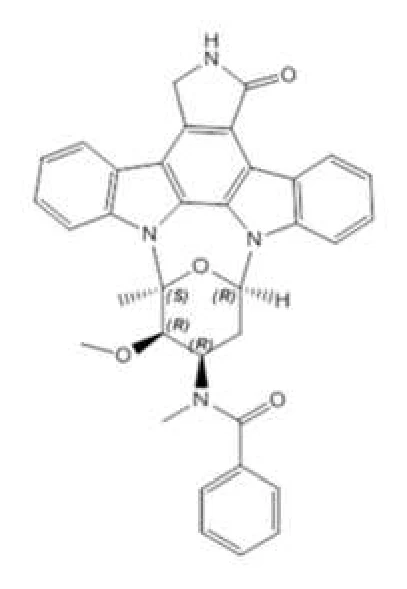
Midostaurin is isolated as a crystalline benzyl alcohol and ethanol solvate.
Physicochemical properties: The drug substance is a white to light yellow or light green powder. The drug substance is poorly soluble in water (< 0.001 mg/mL). The compound is slightly hygroscopic.
14 CLINICAL TRIALS
14.1 Efficacy and safety studies
Trial Design and Study Demographics
Acute Myeloid Leukemia (AML)
Pivotal phase III study (RATIFY)
The efficacy and safety of RYDAPT in combination with standard chemotherapy versus placebo plus standard chemotherapy and as single agent maintenance therapy was investigated in 717 patients (18 to 60 years of age) in a randomized, double-blind, phase III study. Patients with newly diagnosed FLT3-mutated AML as determined by a clinical trial assay were randomized (1:1) to receive RYDAPT 50 mg orally twice daily (n=360) or placebo (n=357) sequentially (Days 8 to 21) in combination with standard daunorubicin (60 mg/m2 daily on Days 1 to 3) / cytarabine (200 mg/m2 daily on Days 1 to 7) for up to two cycles of induction and high dose cytarabine (3 g/m2 every 12 hours on Days 1, 3, 5) for up to four cycles of consolidation, followed by continuous RYDAPT or placebo treatment according to initial assignment for up to 12 additional 28-day cycles as maintenance (see Figure 1). There was no re-randomization at the start of maintenance therapy. Patients who proceeded to hematopoietic stem cell transplant (SCT) stopped receiving study treatment before SCT conditioning regimen.
Figure 1 - Design of pivotal phase III Study
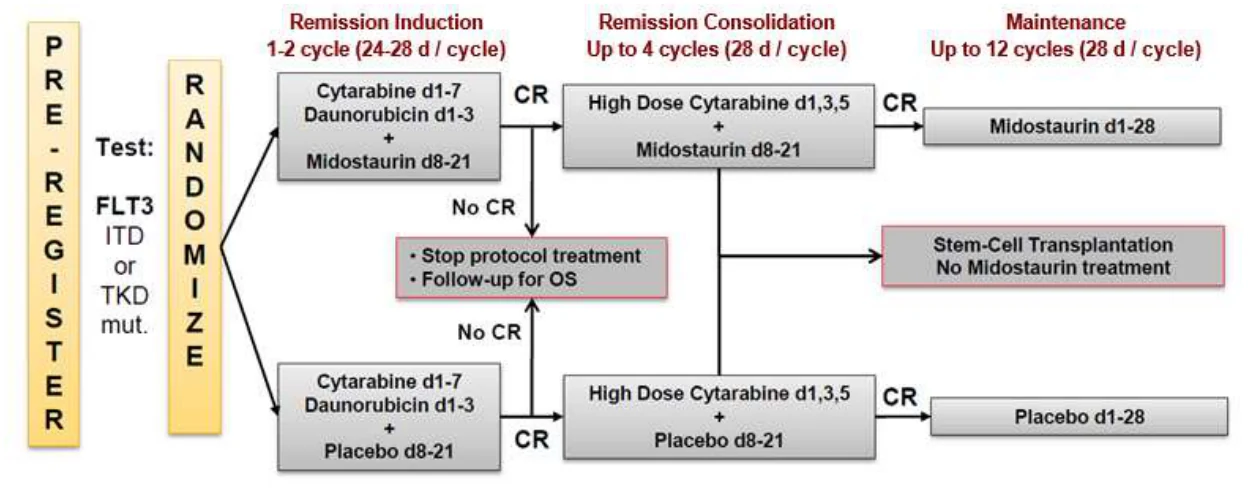
Patients with acute promyelocytic leukemia (M3) or therapy-related AML were excluded. Patients were stratified by FLT3 mutation status: TKD, ITD with allelic ratio <0.7, and ITD with allelic ratio ≥0.7.
The two treatment groups were generally balanced with respect to the baseline demographics of disease characteristics, except that the placebo plus standard chemotherapy arm had a higher percentage of females than in the RYDAPT plus standard chemotherapy arm, and details are shown in Table 10.
Table 10 - RATIFY study demographics and baseline characteristics in patients with AML
| MIDOSTAURIN | PLACEBO | ||||||
| Baseline characteristics | N=360 | N=357 | |||||
| Age (Years) | |||||||
| Median/Maximum | 47.0 / 59 | 48.0 / 60 | |||||
| Gender - n (%) | |||||||
| Female | 186 (51.7) | 212 (59.4) | |||||
| Male | 174 (48.3) | 145 (40.6) | |||||
| ECOG performance status – n (%) | |||||||
| 0 to 2 | 352 (97.8) | 346 (96.9) | |||||
| 3 to 4 | 8 (2.2) | 11 (3.1) | |||||
| Race - n (%) | |||||||
| Unknown / Not Reported | 195 (54.2) | 213 (59.7) | |||||
| White | 147 (40.8) | 128 (35.9) | |||||
| Black or African American | 8 (2.2) | 9 (2.5) | |||||
| Other | 10 (2.8) | 7 (2) | |||||
| FLT3 mutation status - n (%) | |||||||
| ITD <0.7 | 171 (47.5) | 170 (47.6) | |||||
| ITD ≥0.7 | 108 (30.0) | 106 (29.7) | |||||
| TKD | 81 (22.5) | 81 (22.7) | |||||
ITD: Internal Tandem Duplication. TKD: Tyrosine Kinase Domain. Note: ITD <0.7, ITD ≥0.7 and TKD are the randomization strata. ECOG: The Eastern Cooperative Oncology Group Patients were randomized to receive either midostaurin or placebo in combination with standard induction chemotherapy (daunorubicin/cytarabine) and consolidation chemotherapy (high dose cytarabine) followed by midostaurin or placebo monotherapy according to initial assignment. | |||||||
Aggressive systemic mastocytosis (ASM), systemic mastocytosis with associated hematological neoplasm (SM-AHN), and mast cell leukemia (MCL)
The efficacy of RYDAPT in patients with ASM, SM-AHN and MCL, collectively referred to as advanced systemic mastocytosis (SM), was evaluated in two open-label, single-arm, multicenter studies (142 patients in total).
The pivotal study was a multicentre, single-arm phase II study in 116 patients with advanced SM (Study CPKC412D2201). The study excluded patients with acute-stage or life-threatening AHN. RYDAPT was administered orally at 100 mg twice daily until disease progression or intolerable toxicity. Of the 116 patients enrolled, 89 were considered eligible for response assessment and constituted the primary efficacy population (PEP). Of these, 73 patients had ASM (57 with an AHN), and 16 patients had MCL (6 with an AHN). Demographics are presented in table 11.
Table 11 – D2201 study demographics and baseline characteristics in patients with ASM, SM-AHN and MCL in the primary efficacy population (PEP)
| MIDOSTAURIN | ||||
| Baseline characteristics | N=89 | |||
| Age (Years) | ||||
| Median/Maximum | 64.0 / 82 | |||
| Gender - n (%) | ||||
| Male | 57 (64.0) | |||
| Female | 32 (36.0) | |||
| ECOG performance status – n (%) | ||||
| 0 to 2 | 82 (92.1) | |||
| 3 to 4 | 7 (7.9) | |||
| Race - n (%) | ||||
| Caucasian | 86 (96.6) | |||
| 1 (1.1) | ||||
| Other | 1 (1.1) | |||
| Missing | 1 (1.1) | |||
| Prior antineoplastic therapy – n (%) | ||||
| 1 | 19 (21.3) | |||
| 2 | 11 (12.4) | |||
| ≥ 3 | 2 (2.2) | |||
| Number of C-finding per patient – n (%) | ||||
| 1 | 31 (34.8) | |||
| 2 | 20 (22.5) | |||
| ≥ 3 | 38 (42.7) | |||
| Mutation type – n (%) | ||||
| D816V | 73 (82.0) | |||
| D816Y | 3 (3.4) | |||
| D816L | 1 (1.1) | |||
| ECOG: The Eastern Cooperative Oncology Group | ||||
14.2 Study Results
Acute Myeloid Leukemia (AML)
Of the 717 patients, 25% had a second course of induction, 62% initiated at least one cycle of consolidation, 29% initiated maintenance, and 17% completed all 12 planned cycles of maintenance. The overall rate of SCT was 59.4% (214/360) of patients in the RYDAPT plus standard chemotherapy arm versus 55.2% (197/357) in the placebo plus standard chemotherapy arm. Twenty-one percent of all the patients in the study underwent SCT in the first complete remission. All patients were followed for survival.
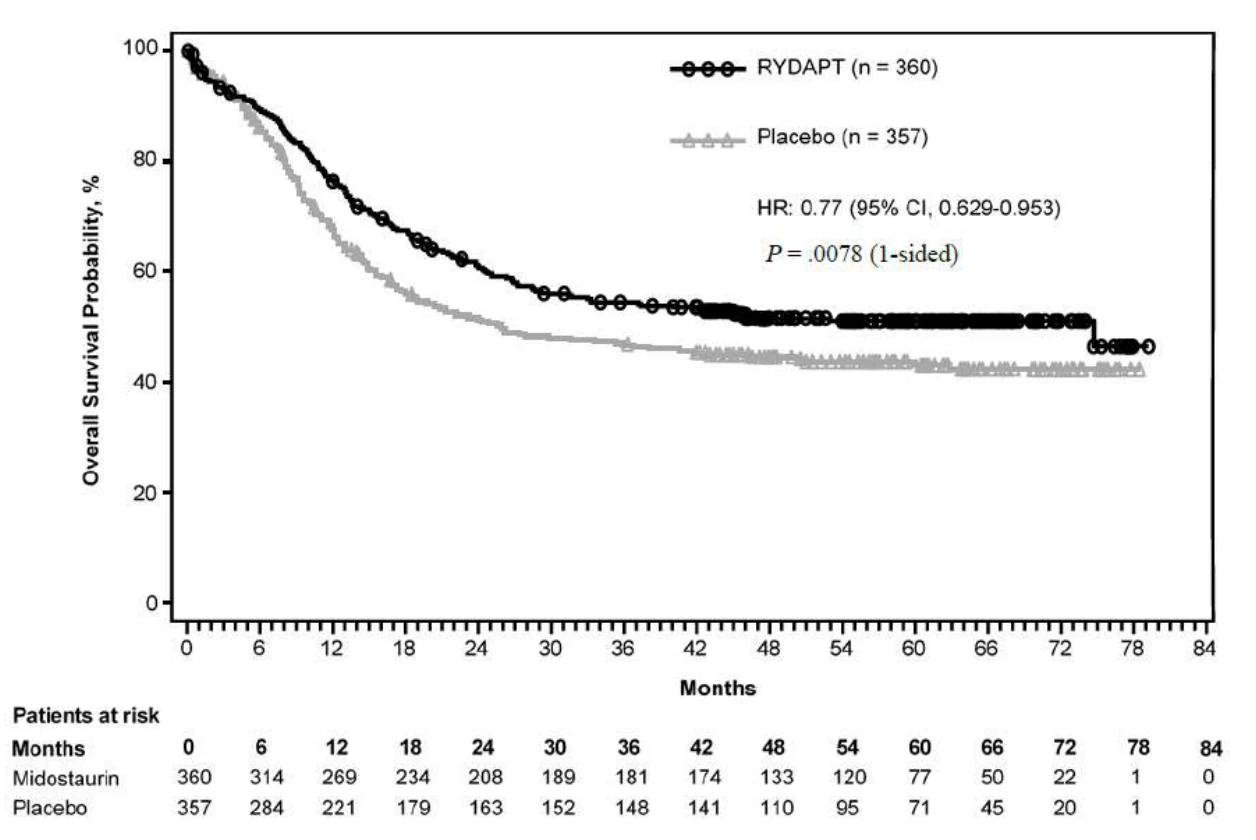
The primary endpoint of the study was overall survival (OS), measured from the date of randomization until death by any cause. The primary analysis was conducted after a minimum follow-up of approximately 3.5 years after the randomization of the last patient. The study demonstrated a statistically significant improvement in OS with a 23% risk reduction of death for RYDAPT plus standard chemotherapy over placebo plus standard chemotherapy (see Figure 2). Because survival curves plateaued before reaching the median, median survival could not be reliably estimated.
Figure 2 Kaplan-Meier curve for overall survival, non-censored at the time of stem cell transplantation
The key secondary endpoint was event free survival (EFS; an event is defined as a failure to obtain a complete remission (CR) within 60 days of initiation of protocol therapy, or relapse, or death from any cause). The analysis of EFS showed a statistically significant improvement with a median of 8.2 months (95% CI: 5.4-10.7) for RYDAPT plus standard chemotherapy versus 3.0 months (95% CI: (1.9-5.9) for placebo plus standard chemotherapy with HR 0.78 (95% CI: 0.66, 0.93) and one-sided p-value of 0.0024.
Figure 3 - Kaplan-Meier curve for event-free survival, non-censored for SCT
Secondary endpoint analyses for both OS [HR = 0.75 (95% CI: 0.54, 1.03); one-sided p=0.037] and EFS [HR = 0.81 (95% CI: 0.68, 0.98); one-sided p=0.012] when censored at the time of SCT also supported the clinical benefit with RYDAPT plus standard chemotherapy over placebo. There was a trend favouring RYDAPT for CR rate by day 60 for the midostaurin arm (58.9% versus 53.5%; one-sided p = 0.073). Disease-free survival (DFS) was measured from the date of first CR to the date of relapse or death from any cause, whichever occurred first. Median DFS in patients with CR within 60 days of treatment start was 26.7 months (19.35, NE) in the midostaurin arm and 15.5 months (11.33, 23.46) in the placebo arm (HR=0.71; 95% CI: 0.55, 0.92; one-sided p=0.0051).
(one-sided)
A subgroup analysis of OS by gender showed no apparent OS advantage in female (n = 398) treated with RYDAPT where the hazard ratio was 1.01 (95% CI: 0.76, 1.34); the hazard ratio for male (n=319) was 0.53 (95% CI: 0.39, 0.72). This gender effect was not observed on the secondary efficacy endpoints (EFS, DFS and CR rate).
Aggressive systemic mastocytosis (ASM), systemic mastocytosis with associated hematological neoplasm (SM-AHN), and mast cell leukemia (MCL)
The primary endpoint was overall response rate (ORR). Response rates were assessed based on the modified Valent and Cheson criteria and responses were adjudicated by a study steering committee. A secondary endpoint was duration of response. Responses to RYDAPT are shown in Table 8. Activity was observed regardless of number of prior therapies, and presence or absence of an AHN. Confirmed major or partial responses occurred in 46 of 73 patients with a documented KIT D816V mutation, 7 of 16 with wild-type or unknown status with respect to KIT D816V mutation, and 21 of 32 having prior therapy for SM. Forty-six percent of patients had a decrease in bone marrow infiltration that exceeded 50%, and 58% had a decrease in serum tryptase levels that exceeded 50%. Spleen volume decreased by ≥10% in 68.9% of patients with at least 1 post-baseline assessment (26.7% of patients had a reduction of ≥35%, which correlates with a 50% decrease by palpation).
The median time to response was 0.3 months (range: 0.1 to 3.7 months). The median duration of follow-up was 43 months.
Table 12 - Efficacy of RYDAPT in ASM, SM-AHN and MCL: Primary efficacy population
All N=89 | ASM patients N=16 | SM-AHN patients N=57 | MCL patients N=16 | |||||||||||
|---|---|---|---|---|---|---|---|---|---|---|---|---|---|---|
| Primary Endpoint | ||||||||||||||
| Overall Response, n (%) | 53 (59.6) | 12 (75.0) | 33 (57.9) | 8 (50.0) | ||||||||||
| (95% CI) | (48.6, 69.8) | (47.6, 92.7) | (44.1, 70.9) | (24.7, 75.3) | ||||||||||
| Major Response, n (%) | 40 (44.9) | 10 (62.5) | 23 (40.4) | 7 (43.8) | ||||||||||
| Partial Response, n (%) | 13 (14.6) | 2 (12.5) | 10 (17.5) | 1 (6.3) | ||||||||||
| Stable Disease, n (%) | 11 (12.4) | 1 (6.3) | 7 (12.3) | 3 (18.8) | ||||||||||
| Progressive Disease, n (%) | 10 (11.2) | 1 (6.3) | 6 (10.5) | 3 (18.8) | ||||||||||
| Secondary Endpoint | ||||||||||||||
| Median Duration of Response, months (95% CI) | 31.4 (10.8; NE) | NR (24.1, NE) | 12.7 (7.4, 31.4) | NR (3.6, NE) | ||||||||||
ASM: Aggressive systemic mastocytosis
SM-AHN: Systemic mastocytosis with associated hematological neoplasm
MCL: Mast cell leukemia
NE: Not Estimated; NR: Not Reached
As a post-hoc exploratory analysis, efficacy was also assessed per the 2013 International Working Group - Myeloproliferative Neoplasms Research and Treatment - European Competence Network on Mastocytosis (IWG-MRT-ECNM) consensus criteria. Response of RYDAPT was determined using a computational algorithm. There were 115 patients evaluable for response assessment, of whom 47 (41%) had prior therapy for SM, and 93 (81%) had a documented D816V mutation at baseline. All responses were considered and required a 12-week confirmation. Table 9 provides the results of this analysis.
Table 13 - Efficacy of RYDAPT in ASM, SM-AHN and MCL per IWG MRT ECNM consensus criteria using an algorithmic approach
| All patients evaluated | ASM | SM-AHN | MCL | Subtype unknown | ||||||||||||||||
| N=115 | N=16 | N=72 | N=21 | N=6 | ||||||||||||||||
| Overall response* rate, n (%) | 43 (37.4) | 10 (62.5) | 23 (31.9) | 7 (33.3) | 3 (50.0) | |||||||||||||||
| (95% CI) | (28.5, 46.9) | (35.4, 84.8) | (21.4, 44.0) | (14.6, 57.0) | (11.8, 88.2) | |||||||||||||||
| Best overall response, n (%) | ||||||||||||||||||||
| Complete remission | 2 (1.7) | 1 (6.3) | 0 | 1 ( 4.8) | 0 | |||||||||||||||
| Partial remission | 19 (16.5) | 5 (31.3) | 9 (12.5) | 3 (14.3) | 2 (33.3) | |||||||||||||||
| Clinical improvement | 22 (19.1) | 4 (25.0) | 14 (19.4) | 3 (14.3) | 1 (16.7) | |||||||||||||||
| Duration of response | ||||||||||||||||||||
| n/N (%) | 6/43 (14.0) | 1/10 (10.0) | 5/23 (21.7) | 0/7 (0.0) | 0/3 (0.0) | |||||||||||||||
| median (95% CI) | NE | NE (10.3, NE) | NE (17.3, NE) | NE | NE | |||||||||||||||
| range | 2.8+ - 60.5+ | 10.2+ - 36.4+ | 2.8+ - 51.8+ | 3.3+ - 55.9+ | 20.5+ - 60.5+ | |||||||||||||||
ASM: Aggressive systemic mastocytosis
SM-AHN: Systemic mastocytosis with associated hematological neoplasm
MCL: Mast cell leukemia
IWG-MRT-ECNM: International Working Group - Myeloproliferative Neoplasms Research and Treatment - European Competence Network on Mastocytosis
NE: Not Estimated
*Confirmation period for responses: 12 weeks. Analysis including ascites C-finding. Patients who received high-dose corticosteroids were considered evaluable for response.+ indicates a censored value
The supportive study was a single arm, multicentre, open-label phase II study of 26 patients with advanced SM (CPKC412A2213). RYDAPT was administered orally at 100 mg twice daily. Lack of a major response (MR) or partial response (PR) by the end of the second cycle required discontinuation from the study treatment. Twenty (76.9%) patients had ASM (17 [85%] with AHN) and 6 patients (23.1%) had MCL (2 [33.3%] with AHN). The median age was 64.5 years with half of the patients ≥65 years. At baseline, 88.5% had >1 C-finding and 69.2% had received at least one prior anti-neoplastic regimen.
The primary endpoint was ORR evaluated by the Valent criteria during the first two cycles of treatment. Nineteen patients (73.1%; 95% CI = [52.2, 88.4]) achieved a response during the first two cycles of treatment (13 MR; 6 PR) per investigator assessment. Patients who received concomitant corticosteroids were included. The median duration of follow-up was 73 months, and the median duration of response has not been reached.
15 MICROBIOLOGY
No microbiological information is required for this drug product.
16 NON-CLINICAL TOXICOLOGY
General Toxicology
Repeat dose toxicity studies by the oral route have been performed in rats and dogs up to:
- 52 weeks in rats at doses of 3, 10 and 30 mg/kg in 18% solid dispersion in Gelucire 44/14 and purified water. The NOEL (no observed effect level) was 3 mg/kg. The concentration in rats at 10 mg/kg/day was 100-fold below the human therapeutic exposures at the recommended dose of 50 mg twice daily based on AUC.
- 52 weeks in dogs at doses of 1, 3 and 10 mg/kg in 18% solid dispersion in gelatin capsules. The NOEL was 1 mg/kg. The concentrations in dogs at 3 mg/kg/day was 100-fold below the human therapeutic exposures at the recommended dose of 50 mg twice daily based on AUC.
The key target organs identified were the gastrointestinal tract (emesis, diarrhea and mucosal alteration), testes (decreased spermatogenesis), bone marrow (hypocellularity), heart (prolongation of the P-Q interval) and lymphoid organs (depletion/atrophy). The effect on the bone marrow and lymphoid organs was accompanied by hematological changes of decreased WBCs, lymphocytes and erythrocytic parameters. An increase in liver enzymes (ALT and AST) was seen consistently in rats and in dogs and monkeys in long-term studies of more than 3 months duration. There were no corresponding pathological changes in the liver. Inhibition of spermatogenesis was seen in dogs at doses >3 mg/kg.
Carcinogenicity: No carcinogenicity studies have been performed with midostaurin.
Genotoxicity: In vitro and in vivo genotoxicity studies covering relevant genotoxicity endpoints have been performed:
- An Ames test in Salmonella typhimurium TA 98, TA 100, TA 1535, TA 1537 and Escherichia coli WP2 uvrA at concentrations of 312.5 to 5000 µg/plate;
- A gene mutation study in vitro using Chinese hamster cell line (V78) at concentrations of 0.0023 to 0.15 µg/mL (minus S9) and at concentrations of 7.4 to 200 µg/mL (plus S9);
- A chromosome aberration study in vitro in Chinese hamster ovary K1 cells at concentrations of
- 0.025 to 25 µg/mL (minus and plus S9);
- A MNT oral study in vivo at 50, 100 and 200 mg/kg using rat bone marrow cells.
These studies demonstrated no evidence of mutagenic or clastogenic activity of midostaurin.
Reproductive and Developmental Toxicology: In an oral fertility and early embryonic development study conducted in rats, daily administration of midostaurin at 10, 30 and 60 mg/kg/day (70 days prior mating and 11-15 days after mating in males, and for 14 days prior to the initiation of mating, throughout the mating period, and until gestation day 6 in females) was associated with reproductive toxicity in male and female rats at doses ≥10 mg/kg/day. In males, testicular degeneration and atrophy was observed at doses ≥10 mg/kg/day and alterations in sperm motility, a decrease in sperm counts, and a decrease in reproductive organ weights were observed at 60 mg/kg/day. In females, increased resorptions, decreased pregnancy rate, number of implants, and live embryos were observed at 60 mg/kg/day. The NOEL for fertility and general reproductive performance was 30 mg/kg/day. The concentrations in rats at 10 mg/kg/day was 100-fold below the human therapeutic exposures at the recommended dose of 50 mg twice daily based on AUC.
In embryo-fetal development studies in rats and rabbits, pregnant animals received oral doses of midostaurin at 3, 10, and 30 mg/kg/day and at 2, 10 and 20 mg/kg/day, respectively, during the period of organogenesis. An increase in number of late resorptions was observed at all dose levels and a reduction in fetal weight and skeletal ossification was observed in rats at the high dose of 30 mg/kg/day; no maternal toxicity was observed. In rabbits, maternal toxicity was observed at all dose levels. Mortality in dams, reduced fetal weight and delayed ossification was observed at 10 and 20 mg/kg/day. The concentrations at which maternal and fetal toxicity occurred in both species are over 50-fold below the human therapeutic exposures at the recommended dose of 50 mg twice daily based on AUC comparisons across species.
In a pre- and post-natal developmental study, rats were given oral doses of 5, 15, and 30 mg/kg/day during gestation through lactation up to weaning. Maternal toxicity including signs of dystocia and reduced litter size were observed at 30 mg/kg/day. Lower body weights, a decrease in the mean day of development for eye opening and an increase in the mean day of development for auricular startle were noted in the rat pups (F1 generation) exposed to midostaurin at 30 mg/kg/day. Maternal systemic exposure at 30 mg/kg (based on AUC) was approximately 17-fold below the human therapeutic exposures at the recommended dose of 50 mg twice daily.
Juvenile Toxicity: In a toxicity study in juvenile rats, midostaurin was administered at 2, 5 and 15 mg/kg/day from days 7 to 70 postpartum. A reduction in body weight, hemorrhage, mixed cell infiltration in the lungs and erythrocytosis/erythrophagocytosis in the mesenteric lymph nodes were seen at 15 mg/kg/day. There were no effects on physical development, sensory function, behavioral or reproductive function. The no-observed-adverse-effect level was 5 mg/kg/day.