


Product Monograph - Vanflyta
Recent Major Label Changes
None at time of the most recent authorization.
Table of Contents
Certain sections or subsections that are not applicable at the time of the preparation of the most recent authorized product monograph are not listed.
Recent Major Label Changes ................................................................................................... 2
Table of Contents ................................................................................................................... 2
Part 1: Healthcare Professional Information ........................................................................... 4
- 1.
Indications ....................................................................................................................... 4
1.1. Pediatrics .................................................................................................................. 4
1.2. Geriatrics .................................................................................................................. 4
- 2. Contraindications ............................................................................................................ 4
- 3. Serious Warnings and Precautions Box ............................................................................ 4
- 4.
Dosage and Administration ............................................................................................. 5
4.1. Dosing Considerations .............................................................................................. 5
4.2. Recommended Dose and Dosage Adjustment ......................................................... 5
4.4. Administration .......................................................................................................... 8
4.5. Missed Dose ............................................................................................................. 9
- 5. Overdose ......................................................................................................................... 9
- 6. Dosage Forms, Strengths, Composition, and Packaging ................................................... 9
- 7.
Warnings and Precautions ............................................................................................. 10
Carcinogenesis and Genotoxicity ........................................................................................ 10
Cardiovascular .................................................................................................................... 10
Reproductive Health ........................................................................................................... 11
7.1. Special Populations ................................................................................................ 11
7.1.1. Pregnancy ...................................................................................................... 11
7.1.2. Breastfeeding ................................................................................................ 11
7.1.3. Pediatrics ....................................................................................................... 12
7.1.4. Geriatrics ....................................................................................................... 12
- 8.
Adverse Reactions ......................................................................................................... 12
8.1. Adverse Reaction Overview .................................................................................... 12
8.2. Clinical Trial Adverse Reactions .............................................................................. 13
8.3. Less Common Clinical Trial Adverse Reactions ....................................................... 15
8.4. Abnormal Laboratory Findings: Hematologic, Clinical Chemistry, and Other Quantitative Data ............................................................................................................... 16
- 9.
Drug Interactions ........................................................................................................... 17
9.2. Drug Interactions Overview .................................................................................... 17
9.3. Drug-Behaviour Interactions .................................................................................. 17
9.4. Drug-Drug Interactions ........................................................................................... 17
9.5. Drug-Food Interactions........................................................................................... 19
9.6. Drug-Herb Interactions ........................................................................................... 20
9.7. Drug-Laboratory Test Interactions ......................................................................... 20
- 10.
Clinical Pharmacology ................................................................................................... 20
10.1. Mechanism of Action .............................................................................................. 20
10.2. Pharmacodynamics ................................................................................................ 20
10.3. Pharmacokinetics ................................................................................................... 20
- 11. Storage, Stability, and Disposal ...................................................................................... 23
Part 2: Scientific Information ................................................................................................ 24
- 13. Pharmaceutical Information .......................................................................................... 24
- 14.
Clinical Trials .................................................................................................................. 25
14.1. Clinical Trials by Indication ..................................................................................... 25
- 15. Microbiology ................................................................................................................. 28
- 16. Non-Clinical Toxicology .................................................................................................. 29
Patient Medication Information ........................................................................................... 31
Part 1: Healthcare Professional Information
1. Indications
VANFLYTA (quizartinib) is indicated:
in combination with standard cytarabine and anthracycline induction and standard cytarabine consolidation chemotherapy, followed by VANFLYTA maintenance monotherapy, for the treatment of adult patients with newly diagnosed acute myeloid leukemia (AML) that is FMS-like tyrosine kinase 3 internal tandem duplication (FLT3-ITD) positive.
Improvement in overall survival has not been demonstrated for maintenance monotherapy following allogeneic hematopoietic stem cell transplantation (see 14.1 Clinical Trials by Indication).
A validated test is required to confirm the FLT3-ITD status of AML.
1.1. Pediatrics
Pediatrics (< 18 years): No data are available to Health Canada; therefore, Health Canada has not authorized an indication for pediatric use.
1.2. Geriatrics
Geriatrics (>65 years): Evidence from clinical studies suggests that differences in safety were observed in the geriatric population (see 7.1.4 Geriatrics).
2. Contraindications
VANFLYTA is contraindicated in patients:
- with congenital long QT syndrome or with a history of ventricular arrhythmias or torsades de pointes (see 7 Warnings and Precautions, Cardiovascular).
- With severe uncorrected hypokalemia or hypomagnesemia (see 7 Warnings and Precautions, Cardiovascular).
- who are hypersensitive to this drug or to any ingredient in the formulation, including any non-medicinal ingredient, or component of the container. For a complete listing, see 6 Dosage Forms, Strengths, Composition and Packaging.
3. Serious Warnings and Precautions Box
VANFLYTA can prolong the QT interval (see 10.2 Pharmacodynamics). Torsades de pointes, cardiac arrest, and sudden death have been reported in patients receiving VANFLYTA (see 7 Warnings and Precautions, Cardiovascular, and 8 Adverse Reactions). Electrocardiograms (ECGs) should be performed, and electrolyte abnormalities should be corrected before initiating VANFLYTA treatment. Do not initiate VANFLYTA therapy if the QT interval corrected by Fridericia’s formula (QTcF) is greater than 450 ms or in patients with severe hypokalemia, hypomagnesemia, or
- long QT syndrome. Monitor ECGs and electrolyte levels during treatment. VANFLYTA dosage adjustment may be required in the event of QT prolongation. Reduce the VANFLYTA dose when used concomitantly with strong CYP3A inhibitors (see 2 Contraindications, 4.2 Recommended Dose and Dosage Adjustment and 7 Warnings and Precautions, Cardiovascular).
4. Dosage and Administration
4.1. Dosing Considerations
Select patients for the treatment of AML with VANFLYTA based on the presence of FLT3-ITD mutation (see 14.1 Clinical Trials by Indication).
VANFLYTA should be initiated only if QTcF is less than or equal to 450 ms (see 7 Warnings and Precautions, Cardiovascular).
During induction and consolidation, electrocardiograms (ECGs) should be performed prior to initiation and then once weekly during VANFLYTA treatment or more frequently as clinically indicated (see 7 Warnings and Precautions, Cardiovascular).
During maintenance, ECGs should be performed prior to initiation and then once weekly for the first month following dose initiation and escalation and thereafter as clinically indicated. The dose should be escalated only if QTcF is less than or equal to 450 ms (see Table 1 and 7 Warnings and Precautions, Cardiovascular).
Electrolyte abnormalities (hypokalemia and hypomagnesemia) should be corrected, and if possible, concomitant administration of drugs that prolong the QT interval should be avoided (see 7 Warnings and Precautions, Cardiovascular).
4.2. Recommended Dose and Dosage Adjustment
Treatment with VANFLYTA should be initiated by a physician experienced in the use of anticancer therapies.
Recommended Dose
VANFLYTA should be administered in combination with standard chemotherapy at a dose of 35.4 mg (2 x 17.7 mg) once daily for two weeks in each cycle of induction. For patients who achieved complete remission (CR) or complete remission with incomplete hematologic recovery (CRi), VANFLYTA should be administered at 35.4 mg once daily for two weeks in each cycle of consolidation chemotherapy followed by VANFLYTA maintenance monotherapy initiated at 26.5 mg once daily. After two weeks the maintenance dose should be increased to 53 mg (2 x 26.5 mg) once daily if the QT interval corrected by Fridericia’s formula (QTcF) is less than or equal to 450 ms (see Table 2 and 7 Warnings and Precautions, Cardiovascular).
For additional dosing information, see Table 1, Table 2 and Table 3.
Table 1: VANFLYTA Dose Regimen
| VANFLYTA Initiation | Inductiona | Consolidationb | Maintenance |
|---|---|---|---|
| Starting on Day 8 (for 7 + 3 regimen)c | Starting on Day 6 | First Day of Maintenance Therapy | |
| Dose | 35.4 mg (2 x 17.7 mg) once daily | 35.4 mg (2 x 17.7 mg) once daily |
|
Duration (28-day cycles) | Two weeks (Day 8 to 21) in each cycle | Two weeks (Day 6 to 19) in each cycle | Once daily with no break between cycles for up to 36 cycles |
a Patients can receive up to 2 cycles of induction.
b Patients can receive up to 4 cycles of consolidation.
c For 5 + 2 regimen as the second induction cycle, VANFLYTA will be started on Day 6.
See 14 Clinical Trials for Chemotherapy dosing during the QuANTUM-First study.
For patients who proceed to hematopoietic stem cell transplantation (HSCT), VANFLYTA should be stopped 7 days before the start of a conditioning regimen. VANFLYTA may be resumed after completion of the transplant based on white blood cell count (WBC) and at the discretion of the treating physician for patients with sufficient hematologic recovery and with less than or equal to Grade 2 graft-versus-host disease (GVHD), not requiring the initiation of new systemic GVHD therapy within 21 days, following the dosing recommendations described above.
Dose Modifications
The recommended dose modifications guidelines for adverse reactions are listed in Table 2.
Table 2: Recommended Dose Modifications for Adverse Reactions
| Adverse Reaction | Recommended Action |
|---|---|
| Adverse Reaction | Recommended Action |
QTcF between 450 and 480 ms (Grade 1) |
|
QTcF greater than 480 ms and less than or equal to 500 ms (Grade 2) |
|
QTcF greater than 500 ms (Grade 3) |
|
Recurrent QTcF greater than 500 ms (Grade 3) |
|
Torsades de pointes, polymorphic ventricular tachycardia, signs/symptoms of life-threatening arrhythmia (Grade 4) |
|
| Grade 3 or 4 non-hematologic adverse reactions |
|
| Persistent Grade 4 neutropenia or thrombocytopenia without active bone marrow disease |
|
Grades are in accordance with National Cancer Institute Common Terminology Criteria for Adverse Events version 4.03 (NCI CTCAE v4.03).
Table 3: Dose Adjustments for Adverse Reactions by Phase during Treatment with VANFLYTA
| Phase of Treatment | Full Dose | Dose Reduction |
|---|---|---|
| Induction or Consolidation | 35.4 mg | 26.5 mg |
| Maintenance (First two weeks) | 26.5 mg | Interrupt |
| Maintenance (After two weeks) | 53 mg | 35.4 mg |
Concomitant use with strong cytochrome P450 enzyme (CYP3A) inhibitors may increase quizartinib exposure. If concomitant use of a strong CYP3A inhibitor is unavoidable, reduce the dose of VANFLYTA as shown in Table 4. After discontinuation of the strong CYP3A inhibitor, resume VANFLYTA at the original dose (see 9.4 Drug-Drug Interactions).
The recommended dose reductions when VANFLYTA is used concomitantly with strong CYP3A inhibitors are listed in Table 4.
Table 4: Dosage Adjustments for Concomitant Use with Strong CYP3A Inhibitors
| Full Dose | Dose Reductions for Concomitant Use with Strong CYP3A Inhibitors | ||
|---|---|---|---|
| 26.5 mg | 17.7 mg | ||
| 35.4 mg | |||
| 53 mg | 26.5 mg | ||
Treatment with VANFLYTA should be interrupted in patients receiving the 17.7 mg dose and requiring treatment with a strong CYP3A inhibitor.
Special Populations
Pediatrics (≤ 18 years)
No data are available to Health Canada; therefore, Health Canada has not authorized an indication for pediatric use.
Geriatrics (≥ 65 years)
No dose adjustment of VANFLYTA is required in patients aged 65 years or older (see 7.1.4 Geriatrics and 10.3 Pharmacokinetics, Special Populations and Conditions).
Renal Impairment
No dose adjustment is recommended for patients with mild or moderate renal impairment.
VANFLYTA is not recommended for use in patients with severe renal impairment (creatinine clearance [CLcr] <30 mL/min, estimated by Cockcroft-Gault) as safety and efficacy have not been evaluated in this population (see 10.3 Pharmacokinetics, Special Populations and Conditions, Renal Insufficiency).
Hepatic Impairment
No dose adjustment is recommended for patients with mild or moderate hepatic impairment.
VANFLYTA is not recommended for use in patients with severe hepatic impairment (Child-Pugh Class C or total bilirubin >3 times ULN and any value for AST) as safety and efficacy have not been evaluated in this population (see 10.3 Pharmacokinetics, Special Populations and Conditions, Hepatic Insufficiency).
4.4. Administration
VANFLYTA should be taken orally at approximately the same time each day and may be taken with or without food. Swallow tablets whole. Do not cut, crush, or chew the tablets.
4.5. Missed Dose
Missed Dose or Vomiting
If a dose of VANFLYTA is missed or not taken at the usual time, the patient should take the dose as soon as possible on the same day and return to the usual schedule the following day. The patient should not take two doses on the same day.
If the patient vomits after taking VANFLYTA, the patient should not take an additional dose that day. The patient should take the next dose the following day at the usual time.
5. Overdose
There is no known antidote for overdoses of VANFLYTA. In the event of an overdose, interrupt treatment, perform an ECG to monitor for QT interval prolongation (see 4.2 Recommended Dose and Dosage Adjustment and 7 Warnings and Precautions, Cardiovascular), and give appropriate supportive measures.
For the most recent information in the management of a suspected drug overdose, contact your regional poison control centre or Health Canada’s toll-free number, 1-844 POISON-X (1-844-764-7669).
- 6. Dosage Forms, Strengths, Composition, and Packaging
Table 5: Dosage Forms, Strengths, Composition and Packaging
Description
VANFLYTA 17.7 mg tablets
A white, round, tablet, debossed with “DSC511.” Each tablet contains 17.7 mg quizartinib (as quizartinib hydrochloride).
VANFLYTA 26.5 mg tablets
A yellow, round, tablet, debossed with “DSC512.” Each tablet contains 26.5 mg quizartinib (as quizartinib hydrochloride).
Packaging:
Aluminium blisters with 14 tablets per blister card in a carton containing 1, 2 or 4 blister cards.
| Route of Administration | Dosage Form/ Strength/Composition | Non-Medicinal Ingredients |
| Oral use | Tablets, 17.7 mg and 26.5 mg quizartinib (as quizartinib hydrochloride) | Ferric oxide yellow (26.5 mg only), hypromellose, hydroxypropyl betadex, magnesium stearate, microcrystalline cellulose, talc, titanium dioxide, triacetin |
7. Warnings and Precautions
Carcinogenesis and Genotoxicity
See 16 Non-Clinical Toxicology.
Cardiovascular
QT Interval Prolongation, Torsades de Pointes, and Cardiac Arrest
VANFLYTA prolongs the QT interval in a dose- and concentration-dependent manner (see 10.2 Pharmacodynamics). Torsades de pointes, cardiac arrest, and sudden death have been reported in patients receiving VANFLYTA (see 8 Adverse Reactions). The quizartinib development program excluded patients with a QTcF ≥450 ms or other factors that increased the risk of QT prolongation or arrhythmic events (e.g., New York Heart Association Class III or IV congestive heart failure, hypokalemia, family history of long QT interval syndrome, history of second- or third-degree heart block, myocardial infarction within 6 months, uncontrolled angina pectoris, uncontrolled hypertension).
VANFLYTA is contraindicated in patients with congenital long QT syndrome, with a history of ventricular arrhythmias or torsades de pointes, or with severe uncorrected hypokalemia or hypomagnesemia (see 2 Contraindications). VANFLYTA should be used with caution in patients who are at risk of developing QT interval prolongation, including patients with uncontrolled or significant cardiovascular disease, and patients receiving concomitant drugs known to prolong the QT interval.
ECGs should be performed, and electrolyte abnormalities should be corrected prior to initiation of treatment. Do not start treatment with VANFLYTA if the QTcF interval is greater than 450 ms. Electrolytes should be maintained in the normal range (see 4.1 Dosing Considerations).
During induction and consolidation, ECGs should be performed prior to initiation and then once weekly during VANFLYTA treatment or more frequently as clinically indicated.
During maintenance, ECGs should be performed prior to initiation and then once weekly for the first month following dose initiation and escalation and thereafter as clinically indicated. The maintenance starting dose should not be escalated if the QTcF interval is greater than 450 ms (see Table 1).
Permanently discontinue VANFLYTA in patients who develop QT interval prolongation with signs or symptoms of life-threatening arrhythmia (see 4.2 Recommended Dose and Dosage Adjustment).
ECG monitoring of the QT interval should be performed more frequently in patients who are at significant risk of developing QT interval prolongation and torsades de pointes.
Monitoring and correction of hypokalemia and hypomagnesemia should be performed prior to and during treatment with VANFLYTA. More frequent monitoring of electrolytes and ECGs should be performed in patients who experience diarrhea or vomiting.
ECG Monitoring with QT Interval Prolonging Medicinal Products
Patients should be monitored more frequently with ECGs if coadministration of VANFLYTA with medicinal products known to prolong the QT interval is required. Examples of QT prolonging drugs include but are not limited to antifungal azoles, ondansetron, granisetron, azithromycin, pentamidine, doxycycline, moxifloxacin, atovaquone, prochlorperazine, and tacrolimus.
Concomitant Use with Strong CYP3A Inhibitors
Concomitant use with strong CYP3A inhibitors may increase quizartinib exposure, and therefore, the dose of VANFLYTA should be reduced (see 4.2 Recommended Dose and Dosage Adjustment and 9.4 Drug-Drug Interactions).
Reproductive Health
- Fertility
There are no human data on the effect of VANFLYTA on fertility. Based on findings in animals, female and male fertility may be impaired with treatment with VANFLYTA (see 16 Non-Clinical Toxicology).
7.1. Special Populations
7.1.1. Pregnancy
There are no data on the use of quizartinib in pregnant women. Based on findings in animals, VANFLYTA may cause embryo-fetal toxicity when administered to pregnant women (see 16 Non-Clinical Toxicology).
VANFLYTA should not be used during pregnancy. Pregnant women should be advised of the potential risk to the fetus.
Women of childbearing potential should undergo pregnancy testing before starting treatment with VANFLYTA.
Based on findings in animals, VANFLYTA may cause embryo-fetal harm when administered to a pregnant woman (see 16 Non-clinical Toxicology). Advise pregnant women of the potential risk to the fetus. Advise women of reproductive potential to use effective contraception during treatment with VANFLYTA and for at least 7 months after the last dose. Advise male patients with female partners of reproductive potential to use effective contraception during treatment with VANFLYTA and for at least 4 months after the last dose.
7.1.2. Breastfeeding
It is unknown whether quizartinib or its active metabolites are excreted in human milk. Because of the potential for serious adverse reactions in breastfed infants, advise women not to breastfeed during treatment with VANFLYTA and for at least 5 weeks after the last dose.
7.1.3. Pediatrics
Pediatrics (< 18 years): No data are available to Health Canada; therefore, Health Canada has not authorized an indication for pediatric use.
7.1.4. Geriatrics
Of the 533 patients with newly diagnosed AML in the QuANTUM-First study 134 (25.1%) were 65 years of age and older, while 2 (0.4%) were 75 years of age. A higher incidence of fatal infections was reported in patients 65 years of age and older, compared to younger patients (13% vs. 5.7%), especially in the early treatment period. Discontinuations were reported in 29% of patients 65 years of age and older, and in 16.4% of younger patients.
Clinical studies of VANFLYTA did not include sufficient numbers of patients 75 years of age and older to determine whether they respond differently from younger adult patients.
8. Adverse Reactions
8.1. Adverse Reaction Overview
In QuANTUM-First, the phase III, randomized, placebo-controlled trial of VANFLYTA in patients with newly diagnosed FLT3-ITD positive AML, the most common adverse reactions (incidence ≥20%) in the VANFLYTA arm were febrile neutropenia, diarrhea, nausea, sepsis, abdominal pain, neutropenia, headache and vomiting. The most common Grade 3 or 4 adverse reactions (incidence ≥5%) were febrile neutropenia, sepsis, neutropenia, thrombocytopenia, fungal infections, and anemia.
The most common serious adverse reactions (incidence ≥2%) in the VANFLYTA arm were febrile neutropenia (11%), neutropenia (3.0%), fungal infections (2.3%) and herpes infections (2.3%). Adverse reactions with a fatal outcome were sepsis (5.0%), fungal infections (0.8%) and cardiac arrest (0.4%).
The most common adverse reactions (incidence ≥2%) associated with dose interruption of VANFLYTA were neutropenia (10.6%), thrombocytopenia (4.5%) and electrocardiogram QT prolonged (2.6%). The most common adverse reactions (incidence ≥2%) associated with dose reduction of VANFLYTA were neutropenia (9.1%), thrombocytopenia (4.5%) and electrocardiogram QT prolonged (3.8%).
The most common adverse reactions (incidence ≥1%) associated with permanent discontinuation of VANFLYTA were sepsis (5%) and thrombocytopenia (1.1%).
Safety Profile During Maintenance Monotherapy
During the maintenance monotherapy phase of QuANTUM-First, the most common adverse reactions in the VANFLYTA arm were neutrophil count decreased (87.9%), platelet count decreased (72.4%), hemoglobin decreased (55.2%), alanine aminotransferase increased (49.1%), upper respiratory tract infections (27.6%), nausea (23.3%) and diarrhea (20.7%). The most frequent Grade 3 or 4 adverse reactions with VANFLYTA were neutrophil count decreased (71.6%), platelet count decreased (24.1%) and hemoglobin decreased (18.1%).
The most common serious adverse reactions in the VANFLYTA arm were herpes infections (3.4%), neutropenia (2.6%), upper respiratory tract infections (1.7%) and vomiting (1.7%). No fatal adverse reactions occurred during maintenance.
The most common adverse reactions associated with dose interruption of VANFLYTA were neutropenia (24.1%), thrombocytopenia (10.3%) and electrocardiogram QT prolonged (4.3%). The most common adverse reactions associated with dose reduction of VANFLYTA were neutropenia (20.7%), thrombocytopenia (10.3%) and electrocardiogram QT prolonged (5.2%). The most common adverse reactions associated with permanent discontinuation of VANFLYTA were thrombocytopenia (2.6%), nausea, neutropenia and decreased appetite (1.7% each).
8.2. Clinical Trial Adverse Reactions
Clinical trials are conducted under very specific conditions. Therefore, the frequencies of adverse reactions observed in the clinical trials may not reflect frequencies observed in clinical practice and should not be compared to frequencies reported in clinical trials of another drug.
The safety of VANFLYTA was investigated in QuANTUM-First, a randomized, double-blind, placebo-controlled trial in adult patients with newly diagnosed FLT3-ITD positive AML. Patients were treated with VANFLYTA (N=265) or placebo (N=268) in combination with standard chemotherapy, followed by VANFLYTA maintenance monotherapy (see 14 Clinical Trials). The overall median duration of therapy was 10.7 weeks (range: 0.1 to 184.1) for patients in the VANFLYTA arm versus 9.5 weeks (range: 0.4 to 181.9) for patients in the placebo arm. In QuANTUM-First, 116 (43.8%) of patients in the VANFLYTA arm and 92 (34.3%) patients in the placebo arm entered the maintenance monotherapy treatment phase. The median duration of therapy for maintenance was 67.4 weeks (range: 0.4 to 167.0) for patients in the VANFLYTA arm versus 67.7 weeks (range: 0.3 to 167.4) for patients in the placebo arm.
Table 6 presents adverse reactions reported in ≥10% of VANFLYTA-treated patients in the QuANTUM-First Clinical Study.
Table 6: Adverse Reactions Reported in ≥10% of VANFLYTA-Treated Patients in Quantum-First Study (Safety Analysis Set)
| System Organ Class / preferred term | VANFLYTA + Standard Chemotherapy N=265 | Placebo + Standard Chemotherapy N=268 | ||
| System Organ Class / preferred term | VANFLYTA + Standard Chemotherapy N=265 | Placebo + Standard Chemotherapy N=268 | ||
All Grades (%) | Grade 3 or 4 (%) | All Grades (%) | Grade 3 or 4 (%) | |
All Grades (%) | Grade 3 or 4 (%) | All Grades (%) | Grade 3 or 4 (%) | |
| Blood and Lymphatic System Disorders | ||||
| Febrile neutropeniaa | 44.2 | 43.4 | 42.2 | 41.0 |
| Neutropeniab | 29.1 | 26.0 | 14.2 | 11.9 |
| Thrombocytopeniac | 17.7 | 12.8 | 13.4 | 11.6 |
| Anemia | 10.9 | 5.7 | 7.1 | 5.2 |
| Gastrointestinal Disorders | ||||
| Diarrhead | 37.0 | 3.8 | 35.1 | 3.7 |
| Nausea | 34.0 | 1.5 | 31.3 | 1.9 |
| Abdominal paine | 29.4 | 2.3 | 22.0 | 1.1 |
| Vomiting | 24.5 | 0 | 19.8 | 1.5 |
| Dyspepsia | 11.3 | 0.4 | 8.6 | 0.7 |
| General Disorders and Administrative Site Conditions | ||||
| Edemaf | 18.9 | 0.4 | 19.0 | 1.5 |
| Infections and infestations | ||||
| Sepsisg | 30.2 | 18.5 | 25.7 | 20.1 |
| Upper respiratory tract infectionsh | 18.1 | 1.9 | 10.1 | 2.2 |
| Fungal infectionsi | 15.1 | 5.7 | 9.7 | 3.0 |
| Herpes infectionsj | 14.0 | 3.0 | 8.2 | 1.5 |
| Metabolism and Nutrition Disorders | ||||
| Decreased appetite | 17.4 | 4.9 | 13.4 | 1.9 |
| Nervous System Disorders | ||||
| Headachek | 27.5 | 0 | 19.8 | 0.7 |
| Respiratory, Thoracic and Mediastinal Disorders | ||||
| Epistaxis | 15.1 | 1.1 | 10.8 | 0.4 |
| Investigations | ||||
| Electrocardiogram QT prolongedl | 14.0 | 3.0 | 4.1 | 1.1 |
Standard Chemotherapy = cytarabine (cytosine arabinoside) and anthracycline (daunorubicin or idarubicin)
a Including fatalities
b Includes neutropenia and neutrophil count decreased.
c Includes thrombocytopenia and platelet count decreased.
d Diarrhea includes diarrhea and diarrhea hemorrhagic.
e Abdominal pain includes abdominal pain, abdominal pain upper, abdominal discomfort, abdominal pain lower and gastrointestinal pain.
f Edema includes edema peripheral, face edema, edema, fluid overload, generalized edema, peripheral swelling, localized edema and face swelling.
g Sepsis includes acinetobacter infection, bacteremia, bacterial sepsis, corynebacterium bacteremia, device related bacteremia, device related sepsis, enterobacter sepsis, enterococcal bacteremia, enterococcal sepsis, escherichia bacteremia, escherichia sepsis, klebsiella bacteremia, klebsiella sepsis, neutropenic sepsis, pseudomonal bacteremia, pulmonary sepsis, sepsis, septic shock, staphylococcal bacteremia, staphylococcal infection, staphylococcal sepsis, stenotrophomonas sepsis, streptococcal sepsis, and streptococcal bacteremia.
h Upper respiratory tract infections include upper respiratory tract infection, nasopharyngitis, sinusitis, rhinitis, tonsillitis, laryngopharyngitis, pharyngitis bacterial, pharyngotonsillitis, viral pharyngitis and acute sinusitis.
i Fungal infections include oral candidiasis, bronchopulmonary aspergillosis, fungal infection, vulvovaginal candidiasis, aspergillus infection, lower respiratory tract infection fungal, oral fungal infection, candida infection, fungal skin infection, mucormycosis, oropharyngeal candidiasis, aspergillosis oral, hepatic infection fungal, hepatosplenic candidiasis, onychomycosis, fungemia, systemic candida and systemic mycosis.
j Herpes infections include oral herpes, herpes zoster, herpes virus infections, herpes simplex, human herpesvirus 6 infection, genital herpes and herpes dermatitis.
k Headache includes headache, tension headache and migraine.
I Electrocardiogram QT prolonged includes electrocardiogram QT prolonged and electrocardiogram QT interval abnormal.
Cardiac Disorders
VANFLYTA prolongs the QT interval on ECG. Any grade QT interval prolongation treatment emergent adverse events were reported in 14.0% of VANFLYTA-treated patients. Three percent of patients experienced events of Grade 3 or higher severity. QT prolongation was associated with dose reduction in 10 (3.8%) patients, dose interruption in 7 (2.6%) patients, and discontinuation in 2 (0.8%) patients. QTcF >500 ms occurred in 2.3% of patients based on central review of ECG data. Two (0.8%) patients treated with VANFLYTA experienced cardiac arrest with recorded ventricular fibrillation, one with a fatal outcome, both in the setting of severe hypokalemia.
8.3. Less Common Clinical Trial Adverse Reactions
Less common adverse reactions reported in <10% of patients treated with VANFLYTA in QuANTUM-First are shown below.
Blood and lymphatic system disorders: pancytopenia
Cardiac disorders: cardiac arrest; ventricular fibrillation
8.4. Abnormal Laboratory Findings: Hematologic, Clinical Chemistry, and Other Quantitative Data
Table 7: New or Worsening Laboratory Abnormalities (in ≥10% of Subjects with ≥2% Difference for Quizartinib Compared to Placebo) in QuANTUM-First Study (Safety Analysis Set)
| Laboratory Abnormalitya | VANFLYTA + Standard Chemotherapy N=265 | Placebo + Standard Chemotherapy N=268 | ||
All Grades (%) | Grade 3 or 4 (%) | All Grades (%) | Grade 3 or 4 (%) | |
| Lymphocyte count decreased | 60.3 | 57.0 | 54.5 | 51.4 |
| Hypokalemia | 58.5 | 21.9 | 55.6 | 18.0 |
| Hypoalbuminemia | 53.0 | 1.6 | 44.9 | 4.3 |
| Aspartate aminotransferase increased | 52.9 | 5.9 | 49.2 | 3.8 |
| Hypophosphatemia | 52.2 | 21.9 | 48.4 | 19.0 |
| Alkaline phosphatase increased | 51.2 | 1.6 | 47.0 | 1.9 |
| Hypomagnesemia | 44.4 | 2.0 | 41.6 | 1.2 |
| Hypocalcemia | 32.5 | 2.4 | 27.2 | 1.6 |
| Creatine phosphokinase increased | 25.6 | 2.5 | 7.0 | 0.5 |
| Cholesterol high | 25.3 | 1.2 | 23.1 | 0 |
a Terms based on laboratory data.
The denominator used to calculate the rate varied from 199 to 260 in VANFLYTA + Chemotherapy and from 187 to 267 in PLACEBO + Chemotherapy based on the number of patients with a baseline value and at least one post-treatment value except for Cholesterol high (CHOL) which is only collected at Screening and end of treatment with 83 as the denominator in VANFLYTA + Chemotherapy and 91 as the denominator in PLACEBO + Chemotherapy.
Table 8: New or Worsened QTcF Prolongation in QuANTUM-First Study (Safety Analysis Set)
| QTcF Interval, ms | VANFLYTA + Standard Chemotherapy N=265 % | Placebo + Standard Chemotherapy N=268 % |
| New >480 | 7.5 | 2.2 |
| New >500 | 2.3 | 0.7 |
| Increase >60 ms from baseline | 10.2 | 4.9 |
Note: Based on central assessment of ECG. “New” implies a newly occurring ECG abnormality, which is defined as an abnormal postbaseline ECG finding that is not present at baseline.
ms = millisecond
9. Drug Interactions
9.2. Drug Interactions Overview
Quizartinib and its active metabolite AC886 are primarily metabolized by CYP3A in vitro.
Concomitant administration of a strong CYP3A inhibitor with VANFLYTA requires a dose reduction (see 4.2 Recommended Dose and Dosage Adjustment, Table 4). Strong and moderate CYP3A inducers should be avoided (see 9.4 Drug-Drug Interactions, Table 9).
Co-administration of VANFLYTA with other medicinal products that prolong the QT interval may further increase the incidence of QT prolongation (see 9.4 Drug-Drug Interactions, Table 9).
Quizartinib is an inhibitor of Breast Cancer Resistance Protein (BCRP) and may increase the exposure of drugs that are sensitive BCRP substrates (see 9.4 Drug-Drug Interactions, Table 9).
9.3. Drug-Behaviour Interactions
The interaction of VANFLYTA with individual behavioural risks (e.g. cigarette smoking, cannabis use, and/or alcohol consumption) has not been studied.
9.4. Drug-Drug Interactions
The drugs listed in Table 9 are based on either drug interaction case reports or studies, or potential interactions due to the expected magnitude and seriousness of the interaction (i.e., those identified as contraindicated).
Table 9: Established or Potential Drug-Drug Interactions
| Non-proprietary names of the drug products | Source of evidence | Effect | Clinical comment |
| Non-proprietary names of the drug products | Source of evidence | Effect | Clinical comment |
| Non-proprietary names of the drug products | Source of evidence | Effect | Clinical comment |
Strong CYP3A Inhibitors (e.g., ketoconazole, itraconazole, posaconazole, voriconazole, clarithromycin, nefazodone, telithromycin and antiretroviral medications) | CT | Co-administration of ketoconazole (200 mg twice daily for 28 days) with single dose administration of VANFLYTA increased Cmax and AUCinf to 1.17-fold and 1.94-fold, respectively. At steady state, exposure (Cmax and AUC0-24h) was estimated to be increased to 1.86-fold and 1.96-fold, respectively. | When strong CYP3A inhibitors cannot be avoided, the dose of VANFLYTA should be reduced as shown in 4.2 Recommended Dose and Dosage Adjustment, Table 4. |
Moderate CYP3A Inhibitors (e.g., fuconazole) | CT | Co-administration of 200 mg fluconazole twice daily for 28-days did not have a clinically meaningful impact on quizartinib exposure. | No dose modification recommended. |
| Strong CYP3A inducers (e.g., apalutamide, carbamazepine, enzalutamide, mitotane, phenytoin, and rifampicin) or moderate CYP3A inducers (e.g., efavirenz, bosentan, etravirine, phenobarbital and primidone) | CT, T | Concomitant use of VANFLYTA with a moderate CYP3A inducer reduced the exposure of quizartinib and its active metabolite AC886 compared to the use of VANFLYTA alone in healthy subjects. Quizartinib Cmax and AUCinf decreased by 45% and 90%, respectively, when co-administered with efavirenz. The Cmax and AUCinf of AC886 decreased by 68% and 96%, respectively (see 4.2 Recommended Dose and Dosage Adjustment). | Avoid coadministration of VANFLYTA with strong or moderate CYP3A inducers. Decreased quizartinib exposure may lead to reduced efficacy. |
| Weak CYP3A inducers | CT | Co-administration of rufinamide (400 mg twice daily for 32 days) with single-dose administration of VANFLYTA in healthy subjects decreased quizartinib Cmax and AUCinf by 19% and 34%, respectively, and decreased the active metabolite AC886 Cmax and AUCinf by 47% and 52%, respectively. | No dose modification recommended. |
QT Interval Prolonging Medications (e.g., antifungal azoles, ondansetron, granisetron, azithromycin, pentamidine, doxycycline, moxifloxacin, atovaquone, prochlorperazine and tacrolimus) | T | The exposure-response analyses predicted a concentration-dependent QTcF interval median prolongation of 18 and 24 ms [upper bound of 2-side 90% confidence interval (CI): 21 and 27 ms] at the median steady-state Cmax of quizartinib at the 26.5 mg and 53 mg dose level during maintenance therapy. | Use caution when co-administering drugs that prolong the QT interval with VANFLYTA. See 7 Warnings and Precautions, Cardiovascular. |
Gastric Acid Reducing Agents (e.g. lansoprazole) | CT | There were no clinically meaningful changes to quizartinib exposure with coadministration of gastric acid reducing agent (60 mg lansoprazole for 5 days). | No dose modification recommended. |
| P-glycoprotein (P-gp) Substrates | CT | Co-administration of quizartinib and dabigatran etexilate (a P-gp substrate) increased total and free dabigatran Cmax to 1.12-fold and 1.13-fold, respectively, and increased total and free dabigatran AUCinf to 1.13-fold and 1.11-fold, respectively. | No dose modification is recommended when P-gp substrates are co-administered with VANFLYTA. |
| Breast-Cancer Resistant Protein (BCRP) Substrates (e.g., rosuvastatin, and sulfasalazine) | T | Quizartinib inhibits BCRP with an estimated in vitro IC50 of 0.813 μM. Based on a physiologically based pharmacokinetic (PBPK) analysis, 53 mg quizartinib was predicted to increase the AUC0-48h of rosuvastatin by at least 2.44-fold and sulfasalazine by at least 2.66-fold. | When quizartinib is co-administered with a BCRP substrate, patients should be closely monitored for adverse reactions related to the BCRP substrate, and a dose reduction of the BCRP substrate should be considered. |
| Uridine Diphosphate Glucuronosyltransferases (UGT) 1A1 Substrates | T | Quizartinib inhibits UGT1A1 with an estimated in vitro Ki of 0.78 μM. Based on a PBPK analysis, quizartinib was predicted to increase the Cmax and AUCinf of raltegravir (a UGT1A1 substrate) to 1.03-fold. | No dose modification is recommended when UGT1A1 substrates are co-administered with VANFLYTA. |
Legend: C = Case Study; CT = Clinical Trial; T = Theoretical.
In vitro Studies:
Quizartinib is a substrate of P-gp, but not a substrate of BCRP, OATP1B1, OATP1B3, OCT1, OAT2, MATE1, or MRP2. AC886 is a substrate of BCRP but not a substrate of OATP1B1, OATP1B3, MATE1, or MRP2.
Quizartinib is not an inducer of CYP3A4, CYP1A2, or CYP2B6. Quizartinib is not an inhibitor of CYP1A2, CYP2B6, CYP2C8, CYP2C9, CYP2C19, CYP2D6, or CYP3A4. AC886 is not an inducer of CYP3A4, CYP1A2, or CYP2B6. AC886 is not an inhibitor of CYP1A2, CYP2B6, CYP2C8, CYP2C9, CYP2D6, CYP2C19, or CYP3A4.
9.5. Drug-Food Interactions
VANFLYTA can be administered with or without food (see 10.3 Pharmacokinetics).
Grapefruit, grapefruit juice and other foods that are known to affect CYP3A activity should be avoided during treatment with VANFLYTA.
9.6. Drug-Herb Interactions
Drug-herb interactions have not been studied. St. John’s wort (Hypericum perforatum) is an inducer of CYP3A that may decrease quizartinib plasma concentrations and should be avoided.
9.7. Drug-Laboratory Test Interactions
Interactions with laboratory tests have not been established.
10. Clinical Pharmacology
10.1. Mechanism of Action
Quizartinib is a small molecule inhibitor of the FMS-related receptor tyrosine kinase (FLT3). Quizartinib and its major circulating active metabolite AC886 bind to the adenosine triphosphate (ATP) binding pocket of FLT3 with comparable affinity. Quizartinib and AC886 inhibit FLT3 kinase activity, preventing autophosphorylation of the receptor, thereby inhibiting further downstream FLT3 receptor signaling and blocking FLT3-ITD-dependent cell proliferation.
10.2. Pharmacodynamics
Cardiac Electrophysiology
The exposure-response analysis of QuANTUM-First predicted a concentration-dependent QTcF interval prolongation of 24.1 ms (upper bound of two-sided 90% CI: 26.6 ms) at the steady-state Cmax of quizartinib (53 mg) during maintenance therapy.
10.3. Pharmacokinetics
The pharmacokinetics of quizartinib and its active metabolite AC886 were evaluated in healthy adult volunteers (single dose) and in patients with newly diagnosed AML (steady state).
Steady state quizartinib concentrations were achieved at day 15 following once daily dosage in patients with AML. Quizartinib exhibited dose proportional pharmacokinetics (AUC and Cmax) in the dose range of 26.5 mg to 79.5 mg in healthy subjects and 17.7 mg to 53 mg in AML patients.
Table 10: Treatment Phase Dependent Quizartinib and Major Metabolite AC886 Pharmacokinetic Parameters in Patients with AML (QuANTUM-First)
| Phase/Dose | N | Parameter, Geometric Mean (%CV)a | |||
|---|---|---|---|---|---|
| AUCss (ng•h /mL)b | Cmax,ss (ng/mL)b | Tmax,ss (h)c | |||
| Quizartinib steady state mean | |||||
| Induction/35.4 mg | 259 | 2,680 (84.9) | 140 (71.2) | 2.68 (1.52, 7.30) | |
| Consolidation/35.4 mg | 164 | 3,930 (77.6) | 204 (63.5) | 2.70 (1.74, 5.95) | |
| Maintenance/26.5 mg | 115 | 5,080 (74.7) | 265 (59.7) | 2.73 (1.74, 5.95) | |
| Maintenance/53 mg | 115 | 10,200 (74.7) | 529 (59.7) | 2.73 (1.74, 5.95) | |
| AC886 steady state mean | |||||
| Induction/35.4 mg | 259 | 3,590 (51.1) | 163 (51.9) | 4.59 (1.59, 9.64) | |
| Consolidation/35.4 mg | 164 | 3,800 (45.8) | 172 (47.1) | 4.62 (2.66, 9.64) | |
| Maintenance/26.5 mg | 115 | 2,890 (46.1) | 131 (47.9) | 4.77 (2.27, 9.64) | |
| Maintenance/53 mg | 115 | 5,790 (46.1) | 262 (47.9) | 4.77 (2.27, 9.64) |
a Generated by Population Pharmacokinetic Model
b Reported as geometric mean (%CV)
c Reported as median (min, max).
Absorption
The absolute bioavailability of quizartinib from the tablet formulation was 71% (±7%). After oral administration under fasted conditions, time to peak concentration (median Tmax) of quizartinib and AC886 measured post dose was approximately 4 hours (range 2 to 8 hours) and 5 to 6 hours (range 4 to 120 hours), respectively, in healthy subjects.
Food effect
The extent (AUCT) and rate (Cmax) of quizartinib absorption were not significantly affected when VANFLYTA was co-administered with food. The Tmax was delayed by 2 hours. VANFLYTA can be administered with or without food.
Distribution
The geometric mean (%CV) volume of distribution at steady state (Vss) of quizartinib in healthy subjects was estimated to be 275 L (17%).
In vitro binding of quizartinib and AC886 to human plasma proteins is greater than or equal to 99%.
Quizartinib and AC886 partition into red blood cells with blood-to-plasma ratios ranging from 0.79-1.30 and 1.36-3.19, respectively, in the concentration range of 10 to 1,000 ng/mL studied in vitro.
Metabolism
Quizartinib is primarily metabolized by CYP3A in vitro via oxidative pathways which produces the active metabolite AC886, which is then further metabolized by CYP3A.
Elimination
The geometric mean (%CV) total body clearance (CL) of quizartinib in healthy subjects was estimated to be 2.23 (29%) L/hour.
The mean standard deviation (SD) effective half-lives (t1/2) for quizartinib and AC886 are 81 hours (±73) and 136 hours (±113), respectively, in patients with newly diagnosed AML.
Following a single radiolabeled dose of quizartinib 53 mg to healthy subjects, 76.3% of the total radioactivity was recovered in feces (4% unchanged) and 1.64% in urine.
Special populations and conditions
- Pediatrics
No data are available to Health Canada; therefore, Health Canada has not authorized an indication for pediatric use. No results are currently available from ongoing studies to investigate the pharmacokinetics of quizartinib in pediatric patients.
- Geriatrics
No clinically significant differences in quizartinib pharmacokinetics were noted between patients 65 years of age and older and those under 65 years based on a population pharmacokinetic analysis.
- Sex
No clinically significant differences in quizartinib pharmacokinetics were noted between male and female patients based on a population pharmacokinetic analysis.
- Ethnic origin
No clinically significant differences in quizartinib pharmacokinetics were noted based on the covariate of race (White, Asian, Black or African American) according to population pharmacokinetic analysis.
- Hepatic Insufficiency
In two single dose (26.5 mg) phase 1 studies, the pharmacokinetics of quizartinib and AC886 were assessed in subjects with mild hepatic impairment (Child Pugh Class A) or moderate hepatic impairment (Child Pugh Class B or total bilirubin at >1.5 to 3 times ULN and any value for AST) and compared to subjects with normal hepatic function. The exposures (Cmax and AUCinf) of quizartinib, aggregate quizartinib and AC886 were relatively similar (≤30% difference) across all groups. Population pharmacokinetic analysis including mostly subjects with normal and mild hepatic impairment (total bilirubin ≤ ULN and AST >ULN or total bilirubin >1 to 1.5 times ULN and any value for AST) showed that hepatic function did not affect quizartinib and AC886 clearance. Therefore, mild and moderate hepatic impairment did not have a clinically meaningful effect on quizartinib and AC886 exposure. No dose adjustment is recommended in patients with mild or moderate hepatic impairment.
Patients with severe hepatic impairment (Child Pugh Class C or total bilirubin >3 times ULN and any value for AST) were not included in the clinical studies, and therefore, VANFLYTA is not recommended for use in these patients.
- Renal Insufficiency
A population pharmacokinetic analysis in AML patients with mild to moderate renal impairment (CLcr 30 to 89 mL/min estimated by Cockcroft-Gault) showed that renal function did not affect quizartinib and AC886 clearance. Therefore, mild and moderate renal impairment did not have a clinically meaningful effect on quizartinib and AC886 exposure. No dose adjustment is recommended in patients with mild or moderate renal impairment.
Patients with severe renal impairment (CLcr <30 mL/min) were not included in the clinical trials, and therefore, VANFLYTA is not recommended for use in these patients.
- Obesity
No clinically significant differences in quizartinib pharmacokinetics were noted based on body weight (range 37 to 153 kg) according to population pharmacokinetic analysis.
- 11. Storage, Stability, and Disposal
Store VANFLYTA at room temperature (15°C to 30°C). Keep out of the reach and sight of children.
Part 2: Scientific Information
13. Pharmaceutical Information
Drug Substance
Non-proprietary name of the drug substance: Quizartinib hydrochloride
Chemical name: 1-(5-tert-butyl-1,2-oxazol-3-yl)-3-(4-{7-[2-(morpholin-4-yl)ethoxy]imidazo[2,1-b][1,3]benzothiazol-2-yl}phenyl)urea dihydrochloride
Molecular formula and molecular mass: C29H32N6O4S•2 HCl
633.59 (as quizartinib dihydrochloride)
560.67 (as quizartinib free base)
Structural formula:
Physicochemical properties: Quizartinib dihydrochloride is a white to off-white solid with a molecular weight of 633.6 for the salt and 560.7 for the free base. The aqueous solubility of quizartinib dihydrochloride (pKa 4.75 and 3.16) decreases with increasing pH. It is very slightly soluble at pH 1, and practically insoluble or insoluble at pH 2 and higher. Quizartinib dihydrochloride is very slightly soluble in ethanol.
14. Clinical Trials
14.1. Clinical Trials by Indication
Newly diagnosed FLT3-ITD positive acute myeloid leukemia (AML)
Table 11: Summary of Patient Demographics in QuANTUM-First in Patients with Newly Diagnosed FLT3-ITD positive AML
| Study # | Study design | Dosage, route of administration and duration | Study subjects (n) | Mean age (range) | Sex |
QuANTUM-First (AC220-A-U302) | Phase 3, randomized, double-blind, placebo-controlled | Dosing and duration: refer to text below Route of administration: oral | n = 539 VANFLYTA arm: n = 268 Placebo arm: n = 271 | 54.0 (20—75) years VANFLYTA arm: 53.6 (23—75) years Placebo arm: 54.3 (20—75) years | VANFLYTA arm: Male: 124 (46.3%) Female: 144 (53.7%) Placebo arm: Male: 121 (44.6%) Female: 150 (55.4%) |
The efficacy and safety of VANFLYTA versus placebo was investigated in a randomized, double-blind, placebo controlled, phase 3 study (QuANTUM-First). The study enrolled 539 adult patients between 20 and 75 years of age who were newly diagnosed with FLT3-ITD positive AML. The FLT3-ITD status was determined prospectively by a clinical study assay and verified retrospectively using the companion diagnostic LeukoStrat® CDx FLT3 Mutation Assay. Patients were stratified by age (<60 versus ≥60 years), white blood cell count at diagnosis (<40x109/L versus ≥40x109/L), and region (North America, Europe versus Asia, other regions). They were randomized 1:1 to receive VANFLYTA 35.4 mg once daily (n=268) or placebo (n=271) for two weeks in each cycle in combination with standard chemotherapy (induction followed by consolidation for responding patients) followed by maintenance monotherapy with VANFLYTA (26.5 mg once daily for two weeks and 53 mg once daily thereafter) or placebo for up to 36 cycles (28 days/cycle).
Patients received up to 2 cycles of induction chemotherapy (either daunorubicin [60 mg/m2/day IV on days 1, 2 and 3] or idarubicin [12 mg/m2/day IV on days 1, 2 and 3] with cytarabine [100 mg/m2/day or 200 mg/m2/day allowed if institutional or local standard, IV infusion for 7 days]), followed by post remission therapy which consisted of up to 4 cycles of consolidation chemotherapy and/or HSCT. Consolidation chemotherapy consisted of cytarabine 3.0 g/m2 for patients less than 60 years old and 1.5 g/m2 for patients greater than or equal to 60 years old, administered every 12 hours by IV infusion on days 1, 3 and 5. Patients who proceeded to HSCT stopped receiving study treatment 7 days before the start of a conditioning regimen and initiated maintenance therapy after recovery from the HSCT.
The two randomized treatment groups were generally balanced with respect to baseline demographics, disease characteristics and stratification factors (see Table 12).
Table 12: Demographics and Baseline Characteristics in QuANTUM-First Study (Intent-to-Treat Population)
Quizartinib (N = 268) | Placebo (N = 271) | Total (N = 539) | |||||||||
|---|---|---|---|---|---|---|---|---|---|---|---|
Quizartinib (N = 268) | Placebo (N = 271) | Total (N = 539) | |||||||||
| Age (years)a | |||||||||||
| Median | 56.0 | 56.0 | 56.0 | ||||||||
| Age, n (%) | |||||||||||
| <60 years | 161 (60.1) | 162 (59.8) | 323 (59.9) | ||||||||
| ≥60 to <65 years | 37 (13.8) | 44 (16.2) | 81 (15.0) | ||||||||
| ≥65 to 75 years | 70 (26.1) | 65 (24.0) | 135 (25.0) | ||||||||
| Race, n (%) | |||||||||||
| Asian | 80 (29.9) | 78 (28.8) | 158 (29.3) | ||||||||
| 2 (0.7) | 5 (1.8) | 7 (1.3) | |||||||||
| White | 159 (59.3) | 163 (60.1) | 322 (59.7) | ||||||||
| Other races | 27 (10.1) | 25 (9.2%) | 52 (9.6%) | ||||||||
| ECOG, n (%) | |||||||||||
| 0 | 87 (32.5) | 98 (36.2) | 185 (34.3) | ||||||||
| 1 | 134 (50.0) | 136 (50.2) | 270 (50.1) | ||||||||
| 2 | 47 (17.5) | 36 (13.3) | 83 (15.4) | ||||||||
| WHO classification, n (%) | |||||||||||
| Nucleophosmin (NPM1) mutation | 142 (53.0) | 140 (51.7) | 282 (52.3) | ||||||||
| Cytogenetic Risk Classification, n (%) | |||||||||||
| Favorable | 14 (5.2) | 19 (7.0) | 33 (6.1) | ||||||||
| Intermediate | 197 (73.5) | 193 (71.2) | 390 (72.4) | ||||||||
| Unfavorable | 19 (7.1) | 27 (10.0) | 46 (8.5) | ||||||||
| Unknown | 38 (14.2) | 31 (11.4) | 69 (12.8) | ||||||||
| FLT3 ITD VAF (FLT3 ITD/total FLT3) by central laboratory testing, n (%) | |||||||||||
| ≥3 to ≤25% | 94 (35.1) | 98 (36.2) | 192 (35.6) | ||||||||
| >25% to ≤50% | 143 (53.4) | 138 (50.9) | 281 (52.1) | ||||||||
| >50% | 30 (11.2) | 35 (12.9) | 65 (12.1) | ||||||||
| WBC count at diagnosis of AML, n (%) | |||||||||||
| <40 × 109/L | 135 (50.4) | 137 (50.6) | 272 (50.5) | ||||||||
| ≥40 × 109/L | 133 (49.6) | 134 (49.4) | 267 (49.5) | ||||||||
AML = acute myeloid leukemia; ECOG = Eastern Cooperative Oncology Group; FLT3 = FMS like tyrosine kinase 3; ITD = internal tandem duplications; NPM1 = nucleophosmin 1; VAF = variant allelic frequency; WBC = white blood cells; WHO = World Health Organization.
The baseline value is defined as the last non missing value before initial administration of study drug.
a Age in years is calculated using the birth date and informed consent date.
Study Results
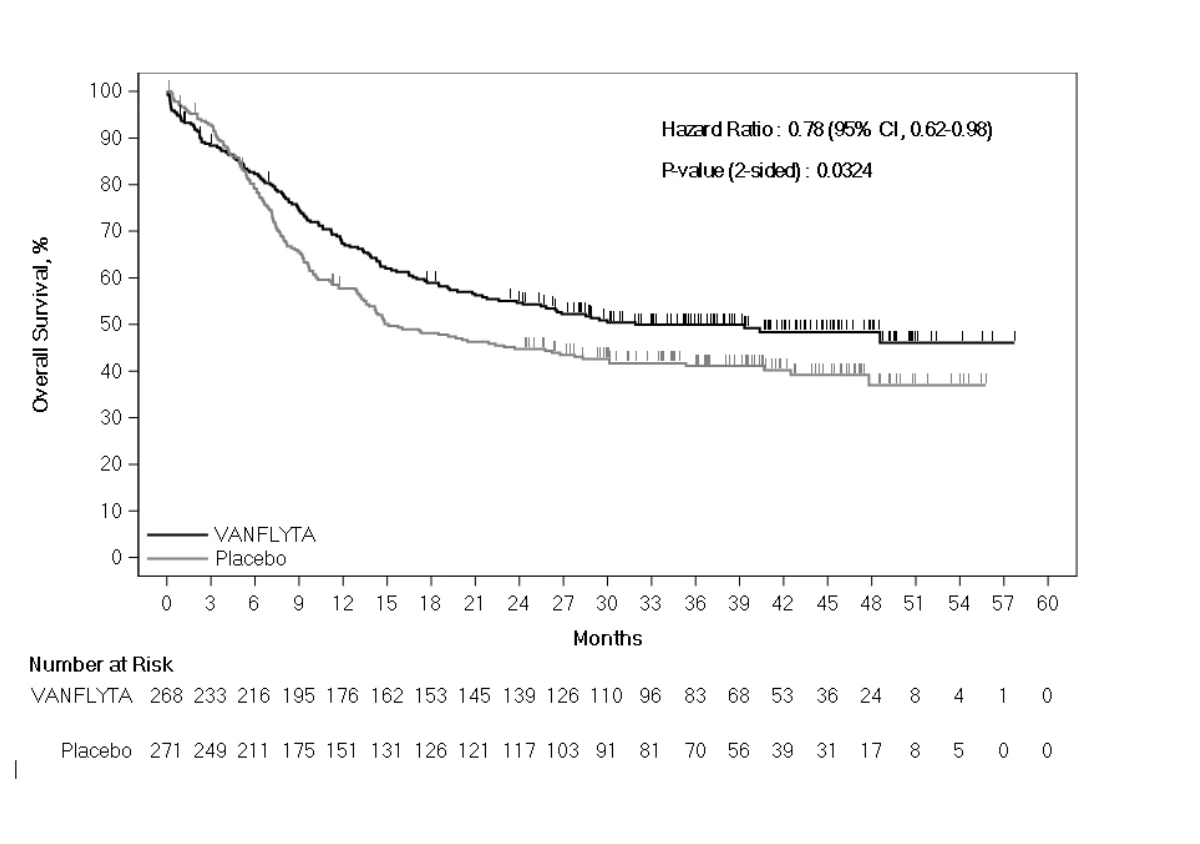
The primary efficacy measure was overall survival (OS) defined as the time from randomization until death from any cause. The median follow-up time of the study was 39.2 months.
The study demonstrated a statistically significant improvement in overall survival with a 22.4% risk reduction of death for VANFLYTA versus placebo (Figure 1).
Figure 1: Kaplan-Meier Curve for Overall Survival in QuANTUM-First
Complete remission (CR) was measured from the date of first CR to the date of relapse or death from any cause. The CR rate in the VANFLYTA arm was 54.9% (95% CI: 48.7, 60.9) with a median duration of CR of 38.6 months (95% CI: 21.9, NE) and the CR rate in the placebo arm was 55.4% (95% CI: 49.2, 61.4) with a median duration of CR of 12.4 months (95% CI: 8.8, 22.7).
In an exploratory subgroup analysis of the 89 (43%) patients who received maintenance therapy with VANFLYTA or placebo following consolidation chemotherapy without HSCT, the OS HR was 0.40 (95% CI: 0.19-0.84). Of 119 (57%) patients who received maintenance therapy with VANFLYTA or placebo following HSCT, the OS HR was 1.62 (95% CI: 0.62, 4.22).
15. Microbiology
No microbiological information is required for this drug product.
16. Non-Clinical Toxicology
General toxicology
In repeat dose toxicity studies conducted in rats, dogs and monkeys, principal organs of toxicity were hematopoietic and lymphoid organs. Additional toxicities were observed in the liver, kidneys and reproductive organs.
In 13-week repeat-dose studies, quizartinib was administered orally at doses of 1, 3 and 10 mg/kg/day in the rat, 1, 5 and 15 mg/kg/day in the dog and 3, 6 and 12 mg/kg/day in the monkey, followed by a 4-week recovery period.
Hematopoietic organ toxicities were observed in all species and manifested in decreased red blood cells (RBC) and RBC parameters, decreased reticulocytes and white blood cells (WBC), correlating with hematopoietic hypocellularity in the bone marrow and lymphoid atrophy/necrosis in the thymus; in the spleen, extramedullary hematopoiesis and pigment deposition (rats, dogs) and lymphoid atrophy (monkeys) were also observed. These changes were mostly reversed at the end of the recovery period. Liver toxicity included increased aminotransferases (mostly reversed after recovery) in all species, hepatocellular vacuolation and necrosis (dogs, monkeys), birefringent crystal deposition, fibrosis, inflammation, reactive sinusoidal lining cells and bile duct hyperplasia in dogs; these changes were partially reversed after the recovery period. Kidney toxicity included tubular vacuolation and birefringent crystal deposition (rats) and tubular basophilia (rats, dogs) that were partially reversed following recovery. Clinical signs including reduced appetite/body weight, hunched posture, dehydration and uncoordination were observed in monkeys at the high dose. In dogs and monkeys, these changes were observed at exposures lower than the recommended human dose (RHD) based on AUC, while in the rat they were observed at exposures higher than the RHD. The no observed adverse effect levels (NOAEL) were considered to be 3 mg/kg/day in the rat, 5 mg/kg/day in the dog and 3 mg/kg/day in the monkey, corresponding to 1.19, 0.39 and 0.07 times the RHD based on AUC for rats, dogs and monkeys, respectively.
In vitro and Animal Safety Pharmacology Studies
In cardiovascular studies conducted in cynomolgus monkeys, quizartinib resulted in QT prolongation at doses approximately 2 times the RHD of 53 mg/day based on Cmax. In in vitro studies, quizartinib primarily inhibited the slowly activating component of delayed rectifier potassium currents (IKs).
Genotoxicity
In genotoxicity studies, quizartinib was mutagenic in a bacterial reverse mutation assay, but not in a mammalian cell mutation assay (mouse lymphoma thymidine kinase) or in an in vivo transgenic rodent mutation assay. Quizartinib was not clastogenic in an in vitro chromosome aberration assay in peripheral blood lymphocytes and was not clastogenic or aneugenic in the rat bone marrow micronucleus assay after a single dose, but produced equivocal results following 28 days administration.
Carcinogenicity
No carcinogenicity studies were conducted with quizartinib.
Reproductive and developmental toxicology
In embryo-fetal reproductive toxicity studies, pregnant rats were administered oral doses of quizartinib during the period of organogenesis. Fetotoxicity (lower fetal weights, effects on skeletal ossification) and teratogenicity (fetal abnormalities including edema) were observed at 6 mg/kg/day (approximately 3 times the RHD of 53 mg/day based on AUC). At doses >10 mg/kg/day, embryo-fetal lethality and increased post-implantation loss were observed. Maternal toxicity was evident at >10 mg/kg/day by decreased body weight gains and lower food consumption and at 20 mg/kg/day by adverse clinical signs. Based on maternal toxicity and fetal effects, the NOAEL was considered to be 6 and 2 mg/kg/day, corresponding to approximately 2.75 and 0.43 times the RHD of 53 mg/day based on AUC, respectively.
Fertility studies in animals have not been conducted with quizartinib. However, adverse findings in male and female reproductive systems were observed in repeat dose toxicity studies in rats and monkeys. In female rats, ovarian cysts and vaginal mucosal modifications were observed at 10 mg/kg/day (approximately 8.41 times the RHD of 53 mg/day based on AUC). Findings in female monkeys included atrophy of the uterus, ovary, and vagina observed at ≥6 mg/kg/day (approximately 0.24 times the RHD). In male rats, decreased testis weight, testicular seminiferous tubular degeneration and failure of sperm release were observed at 10 mg/kg/day (approximately 6.41 times the RHD). Findings in male monkeys included germ cell depletion in the testes observed at ≥6 mg/kg/day (approximately 0.40 times the RHD). After a four-week recovery period, all these findings except the vaginal mucosal modifications in the female rats were reversed.
Special Toxicology
In local tolerance studies in rabbits, quizartinib was considered a mild irritant of the ocular tissue and a slight irritant of the skin. In in vitro studies on 3T3 cells, quizartinib was found to have low potential for phototoxicity.