


Product Monograph - Fabrazyme
1 INDICATIONS
FABRAZYME (agalsidase beta) is indicated for:
- long-term enzyme replacement therapy in patients with a confirmed diagnosis of Fabry disease.
1.1 Pediatrics
Pediatrics (≥8 years of age): The safety and efficacy of Fabrazyme® has been demonstrated in Fabry patients at least 8 years of age. (see 7 WARNINGS AND PRECAUTIONS - Pediatrics and 14 CLINICAL TRIALS)
Pediatrics (<8 years of age): The safety and efficacy of Fabrazyme® have not been studied in children below the age of 8 years.
1.2 Geriatrics (≥ 65 years of age)
Clinical studies of Fabrazyme did not include sufficient number of subjects aged 65 and over to determine whether they respond differently from younger subjects.
2 CONTRAINDICATIONS
- Fabrazyme is contraindicated in patients who are hypersensitive to this drug or to any ingredient in the formulation, including any non-medicinal ingredient, or component of the container. For a complete listing, see 6 DOSAGE FORMS, STRENGTHS, COMPOSITION AND PACKAGING.
3 SERIOUS WARNINGS AND PRECAUTIONS BOX
Serious Warnings and Precautions
|
|---|
4 DOSAGE AND ADMINISTRATION
4.1 Dosing Considerations
Pre-treatment considerations: As a preventive measure, it is recommended that patients are treated with antipyretics prior to an infusion. If an infusion-associated reaction occurs, regardless of pretreatment, the adverse events have been successfully managed by decreasing the infusion
- -steroidal anti-inflammatory drugs, antipyretics, antihistamines and/or corticosteroids to ameliorate the symptoms. In clinical trials, pretreatment with an antipyretic and/or an antihistamine was used to manage a single or recurrent mild-moderate infusion-associated reaction(s). Pretreatment with an antihistamine, antipyretic and/or corticosteroid was used to manage a single or recurrent mild-moderate infusion-associated reaction(s). The selection of pretreatment medication and dose should be based on the patient age, weight and severity of the reaction. The time of administration should be based on the onset of action of the medication selected. A decrease in infusion rate should also be considered. If the infusion proceeds without incident, consideration may be given to increasing infusion rates in a stepwise manner and to reducing premedication.
- Rechallenge considerations: Patients who have had a positive skin test to Fabrazyme or who have tested positive for anti-Fabrazyme IgE may be successfully rechallenged with Fabrazyme. The initial re-challenge administration should be a low dose at a lower infusion rate, e.g., 1/2 the therapeutic dose (0.5 mg/kg) at 1/25 the initial standard recommended rate (0.01 mg/min). Once a patient tolerates the infusion, the dose may be increased to reach the approved dose of 1.0 mg/kg and the infusion rate may be increased by slowly titrating upwards (doubled every 30 minutes up to a maximum rate of 0.25 mg/min), as tolerated.
- Renal Disease: No changes in dose are necessary for patients with renal insufficiency.
- Liver Disease: Studies in patients with hepatic insufficiency were not performed
4.2 Recommended Dose and Dosage Adjustment
- The recommended dosage of Fabrazyme (agalsidase beta) is 1.0 mg/kg body weight infused every 2 weeks as an IV infusion.
- The initial IV infusion rate should be no more than 0.25 mg/min (15 mg/hr). The infusion rate may be slowed in the event of infusion-associated reactions. After patient tolerance to the infusion is well established, the infusion rate may be increased gradually in increments of 0.05 to 0.08 mg/min (increments of 3 to 5 mg/hr) with each subsequent infusion.
- For patients weighing < 30 kg, the maximum infusion rate should remain at 0.25 mg/min (15 mg/hr).
- For patients weighing ≥ 30 kg, the administration duration should not be less than 1.5 hours (based on individual patient tolerability).
4.3 Reconstitution
Parenteral Products:
Materials Inventory
The following items are suggested for the reconstitution and administration of Fabrazyme:
- Fabrazyme (Vials)
- Sterile Water for Injection, USP
- 0.9% Sodium Chloride Injection, USP (Normal Saline)
- Tape
- Two syringes for reconstitution and dilution
- Two needles
- In-line low protein-binding particulate filter (0.2 μm)
- Administration set with flow-regulating device or intravenous infusion pump and tubing
- IV kit
- Anaphylaxis kit
- Angiocatheter
- Gloves
- Alcohol wipes
- Arm board
- Medication label
Reconstitution and Dilution (using Aseptic Technique)
- 1. Fabrazyme vials and diluent should be allowed to reach room temperature prior to reconstitution (approximately 30 minutes). The number of vials needed is based on the patient’s body weight (kg) and the recommended dose of 1.0 mg/kg. Select the appropriate number of vials so that the total number of mg is equal to or greater than the patient’s number of kg of body weight.
Table 1 - Reconstitution
| Vial Size | Volume of Diluent to be Added to Vial | Approximate Available Volume | Concentration per mL |
|---|---|---|---|
| 5 mg | 1.1 mL Sterile Water for Injection, USP | 1.0 mL | 5.0 mg/mL |
| 35 mg | 7.2 mL Sterile Water for Injection, USP | 7.0 mL | 5.0 mg/mL |
- 2. Reconstitute each vial of Fabrazyme by slowly injecting the appropriate volume of Sterile Water for Injection, USP as indicated in Table 1 down the inside wall of each vial and not directly onto the lyophilized cake. Roll and tilt each vial gently. Do not invert, swirl, or shake the vial. Each vial will yield a 5.0 mg/mL clear, colourless solution. Total extractable dose per vial is listed in the Approximate Available Volume column in Table 1.
- 3. Visually inspect the reconstituted vials for particulate matter and discolouration. Do not use vials exhibiting particulate matter or discolouration. Report lot number to hospital pharmacist for vials exhibiting particulate matter or discolouration.
- 4. After reconstitution, it is recommended to promptly dilute the vials. Failure to promptly dilute the vials could result in particle formation.
- 5.
Slowly withdraw the reconstituted solution from each vial and further dilute with 0.9 % Sodium Chloride Injection, USP to a total volume based on patient weight specified in Table below. To minimize the air/liquid interface, remove the airspace within the infusion bag prior to adding the reconstituted Fabrazyme. Be sure to inject the reconstituted Fabrazyme solution directly into the sodium chloride solution. Total infusion volumes as low as 50 mL have been used in a clinical trial. Discard any vial with unused reconstituted solution. ).
Table 2
| Patient Weight (kg) | Minimum Total Volume |
|---|---|
| ≤ 35 | 50 |
| 35.1 – 70 | 100 |
| 70.1 – 100 | 250 |
| > 100 | 500 |
- 6. Gently invert infusion bag to mix the solution, avoiding vigorous shaking and agitation. Use immediately.
- 7. Fabrazyme should not be infused in the same intravenous line with other products.
- 8. The diluted solution should be filtered through an in-line low protein binding 0.2 μm filter during administration
4.4 Administration
Vials are for single use only. Any unused product should be discarded.
Pneumatic tube systems should not be used for transport of this product.
Excessive agitation of this product should be avoided.
Do not use filter needles during the preparation of the infusion.
Prolonged exposure of Fabrazyme to the air/liquid interface, either through time or by agitation, may cause the formation of protein particles. Stress handling and forced particle formation studies have been performed to assess the impact of an in-line filter on drug product and dose in the presence of these particles. Following the admixture of Fabrazyme into 0.9% sodium chloride infusion bags, and induction of particles, the use of an in-line low protein binding 0.2µm filter led to the removal of the visible particles with no detectable loss of protein or activity.
4.5 Missed Dose
If a patient misses an infusion, continue regular administration at the next scheduled visit. Do not double the dose administered after a missed dose.
5 OVERDOSAGE
There have been no reports of overdose with Fabrazyme (agalsidase beta). In clinical trials, patients received doses up to 3.0 mg/kg body weight.
| For management of a suspected drug overdose, contact your regional poison control centre. |
|---|
6 DOSAGE FORMS, STRENGTHS, COMPOSITION AND PACKAGING
To help ensure the traceability of biologic products, including biosimilars, health professionals should recognise the importance of recording both the brand name and the non-proprietary (active ingredient) name as well as other product-specific identifiers such as the Drug Identification Number (DIN) and the batch/lot number of the product supplied.
Table 3 – Dosage Forms, Strengths, Composition and Packaging
Description
Fabrazyme (agalsidase beta), lyophilized powder for intravenous infusion, is supplied as a sterile, nonpyrogenic, white to off-white lyophilized cake or powder.
Fabrazyme contains no preservatives.
Fabrazyme vials are supplied in single-use, clear Type I glass vials. The closure consists of a siliconized butyl stopper and an aluminum seal with a plastic purple flip-off cap.
Package sizes: 1, 5 and 10 vials per carton. Not all package sizes may be marketed.
| Route of Administration | Dosage Form / Strength/Composition | Non-medicinal Ingredients |
| Intravenous infusion | Lyophilized powder for reconstitution and intravenous infusion 5 mg 35 mg | Mannitol, Sodium Phosphate Dibasic Heptahydrate, Sodium Phosphate Monobasic Monohydrate |
7 WARNINGS AND PRECAUTIONS
Please see 3 SERIOUS WARNINGS AND PRECAUTIONS BOX.
General
Anaphylaxis and Allergic Reactions
Life-threatening anaphylactic and severe allergic reactions have been observed in patients during Fabrazyme infusions. Reactions have included localized angioedema (including swelling of the face, mouth, and throat), bronchospasm, hypotension, generalized urticaria, dysphagia, rash, dyspnea, flushing, chest discomfort, pruritus, and nasal congestion. Interventions have included cardiopulmonary resuscitation, oxygen supplementation, IV fluids, hospitalization, and treatment with inhaled beta-adrenergic agonists, epinephrine, and IV corticosteroids.
If anaphylactic or severe allergic reactions occur, immediately discontinue the administration of Fabrazyme and initiate necessary emergency treatment. Because of the potential for severe allergic reactions, appropriate medical support measures should be readily available when Fabrazyme® is administered.
The risks and benefits of re-administering Fabrazyme following an anaphylactic or severe allergic reaction should be considered. Extreme care should be exercised, with appropriate medical support measures readily available, if the decision is made to re-administer the product. (see 7 WARNINGS AND PRECAUTIONS - Immune and 14 CLINICAL TRIALS).
Infusion Reactions
Patients with advanced Fabry disease may have compromised cardiac function, which may predispose them to a higher risk of severe complications from infusion reactions, and these patients should be monitored closely during Fabrazyme® administration.
Most Fabry patients have no detectable α-GAL protein levels or activity; therefore, it is expected that the majority of patients will develop IgG antibodies (seroconvert) upon treatment. Patients with antibodies to Fabrazyme have a higher risk of infusion-associated reactions (IARs). The mean time to seroconversion was within 3 months of the first infusion with Fabrazyme. The percentage of patients with IARs peaked early in the treatment period and coincided with IgG seroconversion. (see 7 WARNINGS AND PRECAUTIONS - Immune and 8 ADVERSE REACTIONS)
In clinical trials, infusion-associated reactions were the most frequently reported related adverse events occurring in patients treated with Fabrazyme. (see 8.2 Clinical Trial Adverse Reactions)
Infusion site reactions and catheter complications (including pain, infiltration at the IV site, bleeding and infection) would not be unexpected given the route of drug administration.
See section 4.1 Dosing Considerations for recommended preventative measures for IARs. IARs have occurred in some patients after receiving pretreatment with antipyretics, antihistamines, and/or oral steroids. IARs declined in frequency with continued use of Fabrazyme. However, IARs may still occur despite extended duration of Fabrazyme treatment.
Cardiovascular
In clinical trials with Fabrazyme, more patients treated with Fabrazyme than with placebo experienced QT/QTc prolongations (defined as any OTc interval >450 msec) at any point during the study (see 8.2 Clinical Trial Adverse Reactions).
Driving and Operating Machinery
No studies on the ability to drive or use heavy machinery have been conducted with Fabrazyme.
Immune
Most patients develop IgG antibodies to Fabrazyme (see 8 ADVERSE REACTIONS and 10.2 CLINICAL PHARMACOLOGY - Pharmacokinetics). IgG seroconversion in pediatric patients was associated with prolonged half-life of Fabrazyme [see 10 CLINICAL PHARMACOLOGY - Pharmacokinetics]. Among patients treated with Fabrazyme in clinical trials, approximately 4% of patients developed IgE or skin test reactivity specific to Fabrazyme. Physicians should consider testing for IgE (see 7 WARNINGS AND PRECAUTIONS - Monitoring and Laboratory Tests) in patients who experienced suspected allergic reactions and consider the risks and benefits of continued treatment in patients with anti-Fabrazyme IgE. Skin testing can be considered based on the patient’s clinical presentation of symptoms.
Patients who have had a positive skin test to Fabrazyme or who have tested positive for Fabrazyme-specific IgE antibody have been rechallenged with Fabrazyme using a rechallenge protocol (see 14 CLINICAL TRIALS). Rechallenge should only occur under the direct supervision of qualified personnel, with appropriate medical support measures readily available. (see 4.1 Dosing Considerations)
During the rechallenge with Fabrazyme, particular attention must be taken for a patient with severe congestive heart failure or severe ischemic heart disease requiring beta-adrenergic blocking agents as these patients did not participate in the trial.
Monitoring and Laboratory Tests
IgG antibody testing:
It is suggested that patients be monitored periodically for IgG antibody formation.
Fabry Registry:
The Fabry Registry is an ongoing, observational database that tracks natural history and outcomes of patients with Fabry disease. Participation is open to all physicians managing patients with Fabry disease. Physicians are encouraged to collaborate, share observations, and generate hypotheses for evaluation, as well as assist in the collection of clinical data in an effort to guide and assess future therapeutic interventions.
The primary objectives of the Registry are:
- To enhance the understanding of the variability, progression and natural history of Fabry disease, including heterozygous females with the disease;
- To assist the Fabry medical community with the development of recommendations for monitoring patients and reports on patient outcomes to help optimize patient care;
- To characterize and describe the Fabry population as a whole; and
- To evaluate the long-term safety and effectiveness of Fabrazyme7.
For a more detailed description of the Fabry Registry, please refer to the Fabry Registry Protocol, or contact The Fabry Registry team at 1-800-745-4447 or refer to the website, www.LSDregistry.net.
Reproductive Health
There are no data for the potential impact of Fabrazyme treatment on male or female fertility or reproductive function. Caution should be exercised when Fabrazyme is used in patients of reproductive potential.
7.1 Special Populations
7.1.1 Pregnant Women
There are no data for the use of Fabrazyme during human pregnancy. Caution should be exercised when Fabrazyme is used in patients of reproductive potential.
See section 7 WARNINGS AND PRECAUTIONS – Monitoring and Laboratory Tests for information regarding the Fabry Registry, which is open to patients who become pregnant while taking Fabrazyme.
7.1.2 Breast-feeding
It is not known whether Fabrazyme is secreted in human milk. Precaution should be exercised because many drugs can be excreted in human milk.
7.1.3 Pediatrics
Pediatrics (<8 years of age): The safety and efficacy of Fabrazyme in patients less than 8 years old have not been studied.
Pediatrics (≥8 years of age): The safety and efficacy of Fabrazymewere assessed in an open-label study (AGAL-016-01) of 16 pediatric patients with Fabry disease who were ages 8 to 16 years at first treatment. The safety profile was found to be consistent with that seen in adults (see 8 ADVERSE REACTIONS).
7.1.4 Geriatrics
Clinical studies of Fabrazyme did not include sufficient number of subjects aged 65 and over to determine whether they respond differently from younger subjects.
8 ADVERSE REACTIONS
8.1 Adverse Reaction Overview
The most frequently reported drug-related adverse events in clinical trials with Fabrazyme were infusion-associated reactions (IARs), which occurred in 93.75% of pediatric (8-16 years) and 67% of adolescent (≥16 years) and adult patients treated with Fabrazyme.
The most common serious adverse drug reactions requiring intervention [interruption or discontinuation of Fabrazyme (agalsidase beta)], hospitalization or medical treatment were also IARs, including urticaria, fever, chills, tachycardia, tightness in chest/throat, or hypertension/hypotension (see 7 WARNINGS AND PRECAUTIONS - Infusion Reactions).
The adverse events associated with Fabrazyme infusion have been successfully managed using standard medical practices, such as reduction in infusion rate and/or premedication with, or additional administration of non-steroidal anti-inflammatory drugs, antipyretics, antihistamines and/or corticosteroids. (see 4.1 Dosing Considerations)
8.2 Clinical Trial Adverse Reactions
Clinical trials are conducted under very specific conditions. The adverse reaction rates observed in the clinical trials; therefore, may not reflect the rates observed in practice and should not be compared to the rates in the clinical trials of another drug. Adverse reaction information from clinical trials may be useful in identifying and approximating rates of adverse drug reactions in real-world use.
The data described below reflect exposure of 80 patients, ages 16 to 61 years, to 1.0 mg/kg Fabrazyme every two weeks in two separate randomized, double-blind, placebo-controlled clinical trials (AGAL-1-002-98 and AGAL-008-00) for periods ranging from 1 to 35 months (mean 15.5 months). Table enumerates treatment-emergent adverse events (regardless of relationship) that occurred during the double-blind treatment periods of the two placebo-controlled trials. Reported adverse events have been classified by Medical Dictionary for Regulatory Activities (MedDRA) terminology System Organ Class and Preferred Term.
Table 4: Summary of Adverse Events Occurring in at least 5% of Patients aged 16 years and older treated with Fabrazyme in Randomized, Double-Blind, Placebo Controlled Studies AGAL-1-002-98 and AGAL-008-00
MedDRA System Organ Class/ Preferred Term | Fabrazyme n=80 (%) | Placebo n=60 (%) | |||||
|---|---|---|---|---|---|---|---|
| Blood and Lymphatic System Disorders | |||||||
| Anaemia | 11 (14) | 8 (13) | |||||
| Cardiac Disorders | |||||||
| Tachycardia | 4 (5) | 2 (3) | |||||
| Ventricular Wall Thickening | 4 (5) | 1 (2) | |||||
| Ear and Labyrinth Disorders | |||||||
| Hypoacusis | 4 (5) | 0 | |||||
| Tinnitus | 6 (8) | 2 (3) | |||||
| Gastrointestinal Disorders | |||||||
| Stomach discomfort | 5 (6) | 1 (2) | |||||
| Toothache | 5 (6) | 2 (3) | |||||
| Vomiting | 19 (24) | 14 (23) | |||||
| General Disorders and Administration Site Conditions | |||||||
| Chest discomfort | 4 (5) | 1 (2) | |||||
| Adverse event | 8 (10) | 3 (5) | |||||
| Feeling cold | 8 (10) | 1 (2) | |||||
| Pain | 13 (16) | 8 (13) | |||||
| Oedema peripheral | 17 (21) | 4 (7) | |||||
| Fatigue | 20 (25) | 10 (17) | |||||
| Pyrexia | 29 (36) | 12 (20) | |||||
| Chills | 34 (43) | 8 (13) | |||||
| Infections and Infestations | |||||||
| Fungal infection | 4 (5) | 0 | |||||
| Fungal infection | 4 (5) | 0 | |||||
| Viral infection | 4 (5) | 0 | |||||
| Viral upper respiratory infection | 5 (6) | 1 (2) | |||||
| Pharyngitis | 5 (6) | 1 (2) | |||||
| Bronchitis | 6 (8) | 3 (5) | |||||
| Sinusitis | 7 (9) | 2 (3) | |||||
| Lower respiratory tract infection | 9 (11) | 1 (2) | |||||
| Upper respiratory tract infection | 15 (19) | 6 (10) | |||||
| Nasopharyngitis | 22 (28) | 9 (15) | |||||
| Injury, Poisoning and Procedural Complications | |||||||
| Post-procedural hemorrhage | 4 (5) | 1 (2) | |||||
| Fall | 5 (6) | 2 (3) |
|---|---|---|
| Excoriation | 7 (9) | 1 (2) |
| Procedural pain | 20 (25) | 12 (20) |
| Investigations | ||
| Body temperature increased | 5 (6) | 1 (2) |
| Blood bicarbonate decreased | 7 (9) | 4 (7) |
| Blood creatinine increased | 7 (9) | 3 (5) |
| Blood pressure increased | 8 (10) | 2 (3) |
| Musculoskeletal and Connective Tissue Disorders | ||
| Muscle spasms | 4 (5) | 1 (2) |
| Neck pain | 4 (5) | 1 (2) |
| Myalgia | 6 (8) | 2 (3) |
| Back pain | 13 (16) | 6 (10) |
| Pain in extremity | 15 (19) | 5 (8) |
| Nervous System Disorders | ||
| Burning sensation | 5 (6) | 0 |
| Hypoaesthesia | 7 (9) | 5 (8) |
| Dizziness | 17 (21) | 6 (10) |
| Paraesthesia | 25 (31) | 11 (18) |
| Headache | 31 (39) | 17 (28) |
| Psychiatric Disorders | ||
| Depression | 5 (6) | 1 (2) |
| Anxiety | 6 (8) | 3 (5) |
| Insomnia | 7 (9) | 4 (7) |
| Renal and Urinary Disorders | ||
| Proteinuria | 4 (5) | 2 (3) |
| Respiratory, Thoracic and Mediastinal Disorders | ||
| Wheezing | 5 (6) | 0 |
| Dyspnoea | 6 (8) | 1 (2) |
| Respiratory tract congestion | 6 (8) | 1 (2) |
| Pharyngolaryngeal pain | 13 (16) | 9 (15) |
| Nasal congestion | 15 (19) | 9 (15) |
| Cough | 26 (33) | 15 (25) |
| Skin and Subcutaneous Tissue Disorders | ||
| Dermatitis contact | 4 (5) | 1 (2) |
| Pruritus | 6 (8) | 3 (5) |
| Rash | 8 (10) | 5 (8) |
| Vascular Disorders | ||
| Hypertension | 4 (5) | 2 (3) |
Overall, during the double-blind, placebo-controlled period of the study, 23 of 48 (47.9 %) patients in the Fabrazyme-treated group compared to 8 of 29 (27.6 %) in the placebo-treated group had centrally-read QT/QTc prolongations (defined as any QTc interval >450 msec) at any time point during the study, including prior to treatment. Of these patients with QT/QTc intervals > 450 msec, 7 of 23 (30%) patients in the Fabrazyme-treated group compared to 1 of 8 (13%) patients in the placebo-treated group had a QTc interval increase from baseline ≥ 60 msec.
Infusion associated reactions were the most frequently reported related adverse events in the double-blind, placebo-controlled (AGAL-1-002-98), open-label extension (AGAL-005-99), double-blind placebo-controlled (AGAL-008-00), and open-label Japan (AGAL-007-99) studies, occurring at an incidence of 67% in Fabrazyme-treated patients. These IARs included events of chills, fever (pyrexia/body temperature increased/hyperthermia), temperature change sensation (feeling cold/feeling hot), hypertension (blood pressure increased), nausea, vomiting, flushing (hot flush), paraesthesia (burning sensation), fatigue (lethargy/malaise/asthenia), pain (pain in extremity), headache, chest pain (chest discomfort), and pruritus (pruritus generalized).
The majority of these IARs are thought to be due to the formation of IgG antibodies and/or complement activation. Ninety-five of 121 (79%) adult patients and 11 of 16 (69%) pediatric patients (106 of 137, 77% of all patients) treated with Fabrazyme in clinical studies have developed IgG antibodies to Fabrazyme. Most patients who develop IgG antibodies do so within the first 3 months of exposure. Among the 14 female patients exposed to Fabrazyme in clinical studies [2 in the double-blind, placebo-controlled (AGAL-1-002-98)/open-label extension (AGAL-005-99) studies, 10 in the double-blind placebo-controlled study (AGAL-008-00), 2 in the pediatric (AGAL-016-01)], six adult patients developed IgG antibodies to Fabrazyme.
No patients experienced anaphylaxis during the clinical trials.
Out of 165 patients treated with Fabrazyme in clinical trials, 60 were tested for IgE because they experienced reactions suggestive of Type 1 hypersensitivity. Fabrazyme®-specific IgE antibodies or a positive skin test to Fabrazyme were found in 4% of all treated patients and 12% of tested patients. (see 14 CLINICAL TRIALS, 7 WARNINGS AND PRECAUTIONS - Immune and 4 DOSAGE AND ADMINISTRATION sections).
In study AGAL-1-002-98, the placebo-controlled study that included 58 patients aged 16 and older, the adverse reactions were generally similar between the Fabrazyme treatment group compared to the placebo treatment group with three exceptions including rigors (52% vs. 14%), fever (48% vs. 17%), and skeletal pain (21% vs. 0%), respectively. All reports of skeletal pain were reported as mild to moderate, none were related to treatment and did not occur during an infusion. No serious adverse events were reported related to treatment.
The most common adverse events in open-label extension (AGAL-005-99) patients treated with Fabrazyme® for up to 60 months were infusion-associated reactions. The number of patients experiencing these types of reactions decreased over time. Serious adverse events considered related to Fabrazyme® also primarily consist of infusion-associated reactions.
8.2.1 Clinical Trial Adverse Reactions – Pediatrics (ages 8 to 16 years)
The safety profile of Fabrazyme® was assessed in an open-label study (AGAL-016-01) of 16 pediatric patients with Fabry disease who were ages 8 to 16 years at first treatment. Fifteen of the 16 patients (94%) experienced a treatment-emergent adverse event, 6.25% experienced serious adverse events, and 6.25% experienced adverse events leading to treatment interruption and/or discontinuation. The most common AEs were headache (56%), abdominal pain (56%), pharyngitis (56%), fever (50%), nausea (50%), vomiting (44%), pain (38%), rhinitis (38%), and diarrhea (31%). Six of the 16 patients (38%) experienced infusion-associated reactions (IARs) and the most common IARs were rigors/chills (19%), headache (19%), nausea (19%), fever (13%), and temperature changed sensation/feeling hot and/or feeling cold (13%). The majority of IARs were managed by infusion rate adjustments and/or medications. The majority of these IARs are thought to be due to the formation of IgG antibodies and/or complement activation. Eleven of 16 (69%) pediatric patients treated with Fabrazyme in clinical studies developed IgG antibodies to Fabrazyme. The overall safety profile of Fabrazyme treatment in pediatric patients was found to be consistent with that seen in adults.
8.3 Less Common Clinical Trial Adverse Reactions
During clinical studies with Fabrazyme® (AGAL-1-002-98, AGAL-005-99, AGAL-007-99, and AGAL-008-00), the following adverse events were considered to be related by the reporting investigator and occurred with the frequency of < 5%:, , hypocalcaemia, arthralgia,
| Cardiovascular | aortic valve incompetence, arrhythmia, bradycardia/sinus bradycardia, bundle branch block right, cardiac arrest, cardiac valve disease, dilatation atrial, dilatation ventricular, heart valve insufficiency, mitral valve incompetence, mitral valve sclerosis, palpitations, pulmonary valve incompetence, supraventricular extrasystoles, ventricular extrasystoles, electrocardiogram PR shortened, electrocardiogram ST segment abnormal, electrocardiogram T wave abnormal, cardiac imaging procedure abnormal, cardiac output decreased, heart rate increased, right ventricular systolic pressure increased, |
|---|---|
| Gastrointestinal | abdominal discomfort, abdominal pain, abdominal pain upper, diarrhoea, dyspepsia, dysphagia, gingivitis, hypoaesthesia oral, stomach discomfort |
| Respiratory | bronchospasm, cough, dyspnoea exacerbated, pharyngolaryngeal pain, productive cough, pulmonary oedema, respiratory distress, |
| rhinorrhoea, rhonchi, tachypnoea, throat tightness, upper respiratory tract congestion, wheezing, | |
| Renal | haematuria, proteinuria, renal failure, renal impairment, benign prostatic hyperplasia, dysmenorrhea, alanine aminotransferase increased, albumin urine present, blood alkaline phosphatase increased, creatinine renal clearance decreased, crystatin C increased, ejection fraction decreased, protein urine present, |
|---|---|
| Reproductive | erectile dysfunction, |
| Skin and subcutaneous tissue disorders | acne, angioneurotic oedema, eczema, erythema, livedo reticularis, pruritus generalized, rash, rash erythematous, rash maculo-papular, rash pruritic, skin discolouration, skin discomfort, skin test positive, |
| Musculoskeletal and connective tissue | back pain, chest wall pain, flank pain, groin pain, joint stiffness, muscle spasms, muscle tightness, musculoskeletal chest pain, musculoskeletal pain, musculoskeletal stiffness, myalgia, pain in jaw, shoulder pain, balance disorder, |
| General disorders and administration site conditions | Infusion site pain, infusion site reaction, injection site thrombosis, asthenia, axillary pain, catheter-related complication, discomfort, chest pain, face oedema/face swelling, feeling hot and cold, gait disturbance, hyperthermia, influenza-like illness, hepatic enzymes increased malaise, oedema, pain, thirst, seasonal allergy, gastroenteritis, gingival infection, infection, nasopharyngitis, rhinitis, tooth infection, excoriation, fall, laceration, post-procedural nausea,athralgia,hypocalcaemia |
| Blood and Lymphatic System disorders | anemia, eosinophilia, leukopenia, haematocrit decreased, hemoglobin decreased, |
| Ear and labyrinth disorders | auricular swelling, ear discomfort, ear pain, tinnitus, vertigo, diplopia, |
| Eye disorders | eye pruritus, lacrimation increased, night blindness, ocular hyperaemia, vision blurred, vision acuity reduced, visual disturbance, , intraocular pressure increased, |
|---|---|
| Vascular Disorders | hot flush, hypotension, orthostatic hypotension, pallor, peripheral coldness, poor venous access, and vasospasm. |
| Nervous System disorders | burning sensation, cerebrovascular accident, dyskinesia, hyperaesthesia, hypoaesthesia, ischaemic stroke, lethargy, migraine, sinus headache, syncope, syncope vasovagal, tremor, agitation, anxiety, confusional state, depression, visual hallucination, blood pressure decreased, |
8.4 Post-Market Adverse Reactions
In addition to the adverse reactions reported in 8.2 Clinical Trial Adverse Reactions, the following adverse reactions have been reported during postmarketing use of Fabrazyme: anaphylaxis (see below), arthralgia, asthenia, erythema, hyperhidrosis, infusion site reaction, lacrimation increased, leukocytoclastic vasculitis, lymphadenopathy, membranous glomerulonephritis, oral hypoesthesa, palpitations, feeling hot and cold, malaise, musculoskeletal pain, oedema, rhinitis, rhinorrhea and oxygen saturation decreased/hypoxia. .
A small number of patients have experienced severe infusion-related reactions which in some cases were considered life-threatening, including anaphylaxis. Reactions have included events of localized angioedema (including auricular swelling, eye swelling, dysphagia, lip swelling, edema, pharyngeal edema, face swelling, and swollen tongue), generalized urticaria, bronchospasm and hypotension (see 7 WARNINGS AND PRECAUTIONS - Infusion Reactions and Anaphylaxis, Allergic Reactions).
9 DRUG INTERACTIONS
9.4 Drug-Drug Interactions
Interactions with other drugs have not been established.
No in vitro metabolism studies have been carried out.
Fabrazyme should not be administered with chloroquine, amiodarone, benoquin or gentamycin due to a theoretical risk of inhibition of intra-cellular a-galactosidase activity
9.5 Drug-Food Interactions
Interactions with food have not been established.
9.6 Drug-Herb Interactions
Interactions with herbal products have not been established.
9.7 Drug-Laboratory Test Interactions
Interactions with laboratory tests have not been established.
10 CLINICAL PHARMACOLOGY
10.1 Mechanism of Action
Fabrazyme (algalsidase beta) is intended as an enzyme replacement therapy to provide an exogenous source of α-GAL in Fabry disease patients. Algalsidase beta is a recombinant human α-GAL (r-hαGAL) that catalyzes the hydrolysis of glycosphingolipids, including GL-3, in the lysosomes of multiple cell types and tissues.
Fabrazyme reduces globotriaosylceramide (GL 3) levels in the vascular endothelium and slows the rate of clinical progression in Fabry disease as manifested by renal, cardiac and cerebrovascular outcomes (see 14 CLINICAL TRIALS)
The rationale for enzyme replacement therapy is to restore a level of enzymatic activity sufficient to clear the accumulating substrate in the organ tissues; thereby, preventing, stabilizing or reversing the progressive decline in function of these organs before irreversible damage has occurred.
10.2 Pharmacodynamics
In a placebo-controlled study (AGAL-1-002-98) conducted in patients with Fabry disease after intravenous administration of 1 mg/kg of Fabrazyme every two weeks for 20 weeks, a reduction of GL-3 was observed in the capillary endothelium (vasculature) of kidney, heart and skin as determined by histological assessment, and in plasma as determined by ELISA. (see 14 CLINICAL TRIALS)
10.3 Pharmacokinetics
Plasma pharmacokinetic profiles of Fabrazyme were characterized at 0.3, 1.0 and 3.0 mg/kg in adult patients with Fabry disease (open-label, dose-finding study FB9702-01). The area under the plasma concentration-time curve (AUC∞) and the clearance did not increase proportionately with increasing doses, demonstrating that the enzyme follows non-linear pharmacokinetics (Table 3). Plasma pharmacokinetics of Fabrazyme was evaluated in adult Fabry patients in Europe participating in a double-blind clinical trial (AGAL-1-002-98). Patients were given Fabrazyme® every 14 days for a total of 11 infusions. Refer to Table 3 below for more details.
Special Populations and Conditions
Results from the open-label study (AGAL-016-01) of 15 pediatric Fabry patients (ranging in age from 8 to 16 years old and weighing between 27.1 to 64.9 kg) who were dosed with 1.0 mg/kg every 14 days showed that Fabrazyme exposure was about 5-times higher after IgG seroconversion (Table 1), without any detectable impact on GL-3 clearance in plasma and skin. IgG seroconversion in pediatric patients was associated with prolonged half-life and plasma concentrations of Fabrazyme; this was not commonly observed in adult patients. The Fabrazyme® pharmacokinetics in pediatric patients were not weight-dependent.
Pharmacokinetics of Fabrazyme was also evaluated in 13 Fabry patients in Japan participating in an open-label clinical trial (AGAL-007-99). The results of these evaluations show that Fabrazyme pharmacokinetics are comparable in Caucasian and Japanese Fabry patients.
Table 1 - Summary of Fabrazyme Pharmacokinetic Parameters
| Dose | Regimen | Mean Infusion Length (min) | Serum Antibody Titre | Infusion Number | N | AUC(0-∞) μg min/mL | Cmax μg/mL | Half-life min | CL mL/min/kg | Vss* mL/kg | |||||||||||
|---|---|---|---|---|---|---|---|---|---|---|---|---|---|---|---|---|---|---|---|---|---|
| Study FB9702-01: Open-Label Study in Adult Patients with Fabry Disease – same cohort, weight range: 56-88 kg | |||||||||||||||||||||
| 0.3 mg/kg | q14 days ×5 | 132 | NA | 1 | 3 | 79 ± 24 | 0.6 ± 0.2 | 92 ± 27 | 4.1 ± 1.2 | 225 ± 62 | |||||||||||
| 128 | NA | 5 | 3 | 74 ± 30 | 0.6 ± 0.2 | 78 ± 67 | 4.6 ± 2.2 | 330 ± 231 | |||||||||||||
| 1.0 mg/kg | q14 days × 5 | 115 | NA | 1 | 3 | 496 ± 137 | 5.0 ± 1.1 | 67 ± 12 | 2.1 ± 0.7 | 112 ± 13 | |||||||||||
| 120 | NA | 5 | 2 | 466 ± 382 | 4.74 ± 4. 3 | 45 ± 3 | 3.2 ± 2.6 | 243 ± 236 | |||||||||||||
| 3.0 mg/kg | q14 days × 5 | 129 | NA | 1 | 2 | 4168 ± 14 01 | 29.7 ± 14 .6 | 102 ± 4 | 0.8 ± 0.3 | 81 ± 45 | |||||||||||
| 300 | NA | 5 | 2 | 4327 ± 20 74 | 19.8 ± 5. 8 | 87 ± 21 | 0.8 ± 0.4 | 165 ± 80 | |||||||||||||
| Study AGAL-1-002-98: Double-Blind, Placebo-Controlled Study in Adult Patients with Fabry Disease - same cohort, weight range: 50-81 kg | |||||||||||||||||||||
| 1.0 mg/kg | q14 days x 11 | 280 | 0-6400 | 1-3 | 1 1 | 649 ± 226 | 3.5 ± 1.6 | 89 ± 20 | 1.8 ± 0.8 | 120 ± 80 | |||||||||||
| 280 | 0-51200 | 7 | 1 1 | 372 ± 223 | 2.1 ± 1.1 4 | 82 ± 25 | 4.9 ± 5.6 | 570 ± 710 | |||||||||||||
| 300 | 0-25600 | 11 | 1 1 | 784 ± 521 | 3.5 ± 2.2 | 119 ± 49 | 2.3 ± 2.2 | 280 ± 230 | |||||||||||||
| Study AGAL-016-01: Open-Label Study in Pediatric Patients with Fabry Disease - same cohort, weight range: 28-66 kg | |||||||||||||||||||||
| 1.0 mg/kg | q14 days × 24 | 208 | 0 | 1 | 8-9 | 344 ± 307 | 2.2 ± 1.9 | 86 ± 27 | 5.8 ± 4.6 | 1097 ± 912 | |||||||||||
| 111 | 0-3200 | 12 | 1 5 | 1007 ± 68 8 | 4.9 ± 2.4 | 130 ± 41 | 1.6 ± 1.2 | 292 ± 185 | |||||||||||||
| 108 | 0-6400 | 24 | 9-1 0 | 1238 ± 54 7 | 7.1 ± 4.3 | 151 ± 59 | 1.1 ± 0.8 | 247 ± 145 | |||||||||||||
All data reported as the mean ± standard deviation, unless a range is indicated. *Vss = volume of distribution at steady state N = number of patients NA = No serum antibody titre level data available | |||||||||||||||||||||
11 STORAGE, STABILITY AND DISPOSAL
Store Fabrazyme (agalsidase beta) under refrigeration between 2° - 8°C (36° - 46°F). DO NOT USE Fabrazyme after the expiration date on the vial.
Reconstituted and diluted solutions of Fabrazyme should be used immediately. This product contains no preservatives. If immediate use is not possible, the reconstituted and diluted solution may be stored for up to 24 hours at 2° - 8°C (36° - 46°F).
Any unused product or waste material should be disposed of in accordance with local requirements.
PART II: SCIENTIFIC INFORMATION
13 PHARMACEUTICAL INFORMATION
Drug Substance
Proper name: agalsidase beta
Chemical name: recombinant human α-galactosidase A (r-hαGAL)
Molecular formula and molecular mass: C2029H3080N544O587S27
Structural formula:
Amino acid sequence of r-hαGAL
1 11 21 31
LDNGL ARTPT MGWLH WERFM CNLDC QEEPD SCISE KLFME
41 51 61 71
MAELM VSEGW KDAGY EYLCI DDCWM APQRD SEGRL QADPQ
81 91 101 111
RFPHG IRQLA NYVHS KGLKL GIYAD VGNKT CAGFP GSFGY
121 131 141 151
YDIDA QTFAD WGVDL LKFDG CYCDS LENLA DGYKH MSLAL
161 171 181 191
NRTGR SIVYS CEWPL YMWPF QKPNY TEIRQ YCNHW RNFAD
201 211 221 231
IDDSW KSIKS ILDWT SFNQE RIVDV AGPGG WNDPD MLVIG
241 251 261 271
NFGLS WNQQV TQMAL WAIMA APLFM SNDLR HISPQ AKALL
281 291 301 311
QDKDV IAINQ DPLGK QGYQL RQGDN FEVWE RPLSG LAWAV
321 331 341 351
AMINR QEIGG PRSYT IAVAS LGKGV ACNPA CFITQ LLPVK
361 371 381 391
RKLGF YEWTS RLRSH INPTG TVLLQ LENTM QMSLK DLL
Physicochemical properties:
r-hαGAL is a non-covalently linked homodimer with an approximate molecular weight of 100 kD, comprised of two subunits of approximately 51 kD each. The full-length cDNA for each subunit encodes a polypeptide of 429 amino acids and the mature subunit is a polypeptide of 398 amino acids. Each monomer has three N-linked glycosylation sites at asparagines 108, 161 and 184. The theoretical mass of the peptide is 45,349 daltons (excluding the mass of the carbohydrate chains).
Solubility: Soluble in Water
Product Characteristics:
Viral Inactivation
The viral safety of Fabrazyme is confirmed by a combination of selection and qualification of vendors, raw material testing, cell bank characterization studies, validation of the viral removal and inactivation capacity of the purification process, and routine in-process testing.
14 CLINICAL TRIALS
14.1 Trial Design and Study Demographics
| Study # | Study design | Dosage, route of administration and duration | Study subjects (n=number) | Mean age (Range) | Sex |
|---|---|---|---|---|---|
| FB9702-01 Phase 1/2 Study | Open-label, non-randomized, dose-finding | Fabrazyme® (r-hαGAL) at: 0.3, 1.0 or 3.0 mg/kg every two weeks; or 1.0 or 3.0 mg/kg every two days | Adult Fabry patients (n = 15) | 34.4 years (18-45) | 15 M/ 0 F |
| AGAL-1-002-98 Phase 3 Study | Randomized, double-blind, placebo-controlled, parallel-group | FzIV 1.0 mg/kg EOW OR placebo IV 1.0 mg/kg EOW 20 weeks | Adolescent (≥16 years) and adult Fabry patients (n = 58) Fz Treatment group: n = 29 Placebo treatment group: n = 29 | 30.2 years (16-48) | 56 Male/ 2 Female |
| AGAL-005-99 Phase 3 Extension | Open-label extension study (patients rolled over from Study AGAL-1-002-98) | Fz IV 1.0 mg/kg EOW 54 months | Adolescent (≥17 years) and adult Fabry patients (n = 58) | Fz/Fz Treatment Group: 33.0 years (17-49) Placebo/ Fz Treatment Group: 29.3 years (18-62) | 56 Male 2 Female |
| AGAL-007-99 Phase 2 Japan Bridging Study | Open-label | Fabrazyme® (r-hαGAL) at 1 mg/kg every two weeks for 20 weeks | Adolescent (≥16 years) and adult Japanese Fabry patients (n = 13) | 26.0 years (16-34) | 13 M 0 F |
| Study # | Study design | Dosage, route of administration and duration | Study subjects (n=number) | Mean age (Range) | Sex |
|---|---|---|---|---|---|
| AGAL-008-00 Double Blind Study | Randomized, double-blind, placebo-controlled study of safety and efficacy | Fz IV 1.0 mg/kg EOW OR placebo IV 1.0 mg/kg EOW 35 months | Adult Fabry patients (n = 82) Fz treatment arm: n = 51 Placebo treatment arm: n = 31 | 45.9 years (20-72) | 72 Male 10 Female |
| AGAL-016-01 | Multi-centre, open-label study | Fabrazyme (r-hαGAL) at 1 mg/kg every two weeks for up to 48 weeks | Pediatric (8-16 years) Fabry patients (n = 16) | 12.1 years (8-16) | 14 Male 2 Female |
| AGAL-019-01 | Open-label, multi-centre, safety study (rechallenge study) | Fz IV 0.5 mg/kg to 1.0 mg/kg EOW 52 weeks | Adult Fabry patients (n = 6) | 44.0 years (27-67) | 6 Male |
| EOW: every other week; Fz: Fabrazyme; IV: intravenous; n: number of subjects | |||||
14.2 Study Results
The safety and efficacy of Fabrazyme (agalsidase beta) have been assessed in seven clinical studies involving a total of 184 male and female patients.
FB9702-01: Dose-finding study
The safety and efficacy of Fabrazymewere assessed in an open-label dose finding study (FB9702-01) of 15 patients evaluated at five dosing regimens: 0.3, 1.0 or 3.0 mg/kg every two weeks or 1.0 or 3.0 mg/kg every two days. Fabrazyme® administration achieved rapid and marked reductions in plasma and tissue GL-3 observed biochemically and histologically by light and electron microscopy at doses of 0.3, 1.0 and 3.0 mg/kg. Patients reported decreased pain, increased ability to perspire and improved quality of life. The 1.0 mg/kg dose every two weeks demonstrated the most favorable safety and efficacy profile at the end of this dose-finding study.
AGAL-1-002-98: Phase 3 study in Fabry patients ≥16 years of age
The safety and efficacy of Fabrazyme were further assessed in a randomized, double-blind, placebo-controlled, multinational, multicenter study (AGAL-1-002-98) of 58 Fabry patients (56 males and 2 females), ages 16 to 61 years, all naïve to enzyme replacement therapy. Patients received either 1.0 mg/kg of Fabrazyme® or placebo every two weeks for five months (20 weeks) for a total of 11 infusions.
The primary efficacy endpoint, GL-3 clearance from renal vascular endothelium, was assessed by light microscopy and was graded on an inclusion severity score ranging from 0 (normal-near normal) to 3
(severe inclusions). Pathology evaluations were performed by a blinded panel of three expert pathologists examining an average of approximately 195 capillaries per biopsy specimen. The primary endpoint (score of 0) was reached when greater than 50% of the renal interstitial capillaries in each specimen had a score of 0, less than 5% had a score of 1, 2 or 3, and the remainder had zero or trace (single small granule) evidence of deposits of GL-3.
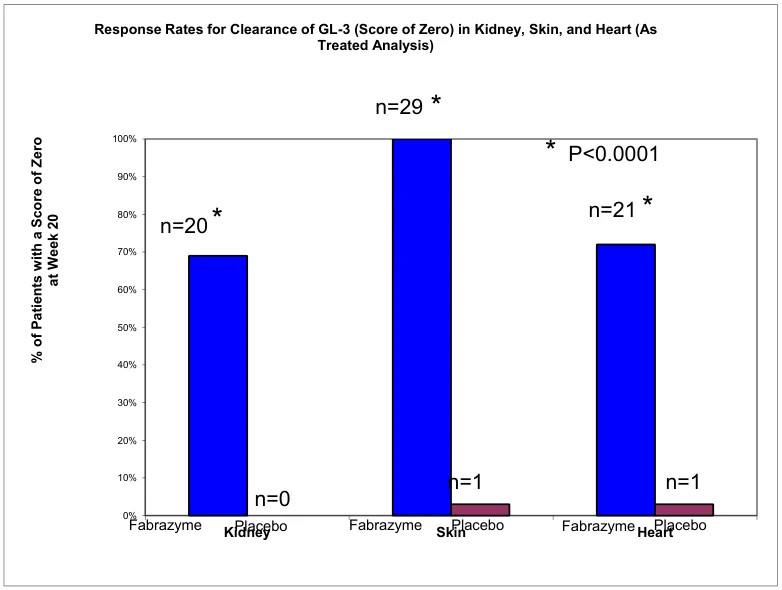
The prospectively defined renal efficacy endpoint (score of 0) was achieved in 20 of 29 (69%) patients treated with Fabrazyme (p<0.0001). In contrast, no patients receiving placebo attained this efficacy endpoint. Similar results were achieved in the capillary endothelium of the heart and skin (Figure ).
Figure 4: Response Rates for Clearance of GL-3 in Kidney, Skin and Heart
AGAL-005-99: Phase 3 extension to AGAL-1-002-98
The safety and efficacy of Fabrazyme were further investigated in an open-label, multicenter extension of the placebo-controlled clinical trial (AGAL-005-99), in which Fabrazyme therapy was administered to all 58 original participants. Fabrazyme® was administered at 1.0 mg/kg every two weeks and continued for an additional 54 months.
After six months of treatment with Fabrazyme, all former placebo patients (n=29) achieved clearance of GL-3 (score of 0) in the vascular endothelium of the kidney (p<0.001). At the end of six months of the open label extension study, a score of 0 was achieved or maintained in the vascular endothelium of the kidney, heart and skin in 96%, 80% and 96% of patients with available biopsies, respectively. Additionally, a retrospective histological review of other renal cell types (> 3000 individual cell type assessments) confirmed that GL-3 is cleared from mesangial cells, glomerular capillary endothelium, interstitial cells and non-capillary endothelium, and reduced in cell types with the highest substrate burden (vascular smooth muscle cells, tubular epithelium and podocytes). Forty-four of the 58 patients (75.9%) completed 54 months of the open-label extension study (AGAL-005-99). Thirty-six of
these 44 patients underwent follow-up skin biopsy, and 31 of these patients showed sustained GL-3 clearance in the capillary endothelium of the skin. Follow-up heart and kidney biopsies were assessed in only 8 of the 44 patients, which showed sustained GL-3 clearance in the capillary endothelium of the kidney in 8 patients, and sustained GL-3 clearance in the capillary endothelium of the heart in 6 patients. Plasma GL-3 levels were reduced to normal levels (≤ 7.03 μg/mL) and remained at normal levels after up to 60 months of treatment.
Improvement was also observed in other efficacy measurements. Improvement in pain as assessed by the Short Form McGill questionnaire was seen in the first five months of the double-blind placebo-controlled study (AGAL-1-002-98), both in the placebo and Fabrazyme groups, and was maintained with treatment for up to 60 months in the open-label extension study (AGAL-005-99). Improvement in other efficacy measurements was also observed for the SF- 36 Health Survey (Quality of Life). Renal function as measured by glomerular filtration rate and serum creatinine remained stable and normal in the majority of the patients up to 60 months. However, the effect of Fabrazyme treatment on kidney function was limited in some patients with advanced renal disease. Mean plasma GL-3 levels normalized within 3 months with treatment and remained normal for up to 60 months.
AGAL-007-99: Bridging study to Japanese patients
Safety and efficacy of Fabrazyme were also assessed in an open-label study (AGAL-007-99) of 13 Japanese patients who were treated with 1 mg/kg of Fabrazyme every two weeks for 20 weeks. The open-label Japan study results were similar to the results of the double-blind placebo-controlled study (AGAL-1-002-98).
AGAL-008-00: Double-blind study in adults with Fabry disease
The safety and clinical efficacy of Fabrazyme were also assessed in a randomized (2:1), double-blind, placebo-controlled study (AGAL-008-00) of 82 Fabry patients (72 males and 10 females). Patients received either 1.0 mg/kg of Fabrazyme® or placebo every two weeks for up to a maximum of 35 months. The primary efficacy endpoint was the time to clinically significant progression of the composite outcomes of renal, cardiac and cerebrovascular disease and/or death and was assessed by a log-rank test comparing the Fabrazyme® and placebo treatment groups. Among the 82 patients enrolled, 13 patients (42%) in the placebo group and 14 patients (27%) in the Fabrazyme group met the predefined clinical endpoint (progression of clinical symptoms).
There was a trend favoring Fabrazyme in the intent-to-treat (ITT) population with a reduction of 43% (Hazard Ratio=0.57; 95% confidence interval [CI]=0.27, 1.22; p=0.1449) of the occurrence of the primary endpoint (progression of renal, cardiac or cerebrovascular disease or death). The favorable and consistent trend was noted across the renal, cardiac and cerebrovascular components of the primary endpoint. There was a 46% risk reduction in the per protocol (PP) population (Hazard Ratio 0.54; 95% CI 0.25, 1.19; p=0.1229).
To correct for an imbalance in baseline proteinuria between the Fabrazyme® and placebo groups, a Cox proportional hazards model was performed with treatment group and baseline proteinuria as covariates in the model. This analysis demonstrated a risk reduction of 53% for the intent-to-treat (ITT) population (Risk Ratio 0.47; 95% CI 0.21, 1.03; p = 0.0577). In the per protocol (PP) population (n=74), Fabrazyme demonstrated a 61% risk reduction (Risk Ratio 0.39; 95% CI 0.16, 0.93; p = 0.0341) (refer to Figure ).
Figure 5: Proteinuria Ratio-Adjusted Predicted Probability of a Primary Endpoint: Per-Protocol Population
The first quartile (25%) time to first clinical event (clinically significant progression of the composite outcomes of renal, cardiac and cerebrovascular disease and/or death) for the Fabrazyme® treatment group was 18.59 months and 14.74 months for the placebo group.
While benefit was demonstrated in patients with varying severity of disease, the most pronounced benefit was observed among patients who have less severe renal disease at baseline.
Proteinuria is an independent risk factor for progression of renal, cardiovascular and cerebrovascular events among Fabry patients.
AGAL-016-01: Pediatric Fabry disease patients (aged 8-16 years)
The safety and efficacy of Fabrazyme were assessed in a multinational, multicenter, uncontrolled, open-label study (AGAL-016-01) to evaluate safety, pharmacokinetics, and pharmacodynamics in 16 pediatric patients with Fabry disease (14 males, 2 females) who were ages 8 to 16 years at first treatment. All patients received Fabrazyme® 1 mg/kg every 2 weeks for up to 48 weeks. At Baseline, all 14 males had elevated plasma GL-3 levels (i.e., > 7.03 µg/mL), whereas the two female patients had normal plasma GL-3 levels. Twelve of the 14 male patients, and no female patients, had GL-3 inclusions observed in the capillary endothelium on skin biopsies at Baseline.
At Weeks 24 and 48 of treatment, all 14 males had plasma GL-3 within the normal range. The 12 male patients with GL-3 inclusions in capillary endothelium at Baseline achieved GL-3 inclusion scores of 0 at Week 24 of treatment. The two female patients’ plasma GL-3 levels remained normal through study Week 48. The overall safety profile of Fabrazyme treatment in pediatric patients was found to be consistent with that seen in adults.
AGAL-019-01: Rechallenge study
The safety of Fabrazyme was evaluated in an open-label, rechallenge study (AGAL-019-01) in patients who had a positive skin test to Fabrazyme or who had tested positive for Fabrazyme-specific IgE antibodies. In this study, 6 adult male patients, who had experienced multiple or recurrent infusion reactions during previous clinical trials with Fabrazyme, were rechallenged with Fabrazyme® administered as a graded infusion, for up to 52 weeks of treatment (see WARNINGS AND PRECAUTIONS, Immune). The initial two rechallenge doses of Fabrazyme were administered as a 0.5 mg/kg dose per week at an initial infusion rate of 0.01 mg/min for the first 30 minutes (1/25th the usually recommended maximum infusion rate). The infusion rate was doubled every 30 minutes thereafter, as tolerated, for the remainder of the infusion up to a maximum rate of 0.25 mg/min. If the patient tolerated the infusion, the dose was increased to 1.0 mg/kg every two weeks (usually recommended dose), and the infusion rate was increased by slow titration upwards (see 4 DOSAGE AND ADMINISTRATION).
Four of the six patients treated in this open-label rechallenge study (AGAL-019-01) received at least 26 weeks of study medication, and two patients discontinued prematurely due to recurrent infusion reactions (see 7 WARNINGS AND PRECAUTIONS - Immune). Following voluntary withdrawal from the study, one of these patients transitioned to treatment with commercially available Fabrazyme.
Patients with severe congestive heart failure or severe ischemic heart disease requiring beta-adrenergic blocking agents did not participate in the trial.
Experience in Female Fabry Patients
A total of twelve women were enrolled in the clinical studies, 10 of whom received Fabrazyme (2 in the double-blind placebo-controlled (AGAL-1-002-98)/open-label extension (AGAL-005-99) and 8 in the double blind placebo-controlled (AGAL-008-00) studies). Two female pediatric patients with Fabry disease, ages 11 years, were also evaluated in an open-label, pediatric study (AGAL-016-01) (see 7 WARNINGS AND PRECAUTIONS - Pediatrics). In the double-blind, randomized, placebo-controlled clinical study (AGAL-008-00), female and male patients appeared to have a similar risk of a primary endpoint event based on their baseline proteinuria value. Although the safety and efficacy data available in female patients in these clinical studies are limited, there is no indication that the clinical response of Fabrazyme is different between males and females (see 7 WARNINGS AND PRECAUTIONS- Infusion Reactions and 8 ADVERSE REACTIONS - Clinical Trial Adverse Drug Reactions).
15 MICROBIOLOGY
No microbiological information is required for this drug product.
16 NON-CLINICAL TOXICOLOGY
General Toxicology:
Single Dose Toxicity StudiesA study was conducted to evaluate the effects of a single bolus IV administration of agalsidase betaon cardiac function in Beagle dogs. Doses administered in this study were 0, 3, 9 and 27 mg/kg. Administration of escalating doses of agalsidase beta to Beagle dogs showed no cardiac effects at doses of 3 and 9 mg/kg. A transient hypotension was observed in 5 of 6 dogs administered agalsidase beta at a dose of 27 mg/kg. Heart rate, respiration rate and central venous pressure were not significantly affected.
Repeat Dose Toxicity Studies
A 27-week repeat-dose toxicity study was conducted in rats. In this study, animals were administered agalsidase beta at doses of 0 (vehicle control), 3, 10, and 30 mg/kg once weekly by IV bolus administration for up to 27 weeks. Severe hypoactivity, with associated cyanosis, laboured breathing, and swelling of extremities, consistent with an anaphylactic response, were observed after the third dose in some animals administered 3 and 10 mg/kg of agalsidase beta. No other test article-related adverse effects were observed. A 25-week repeat-dose toxicity study was conducted in cynomolgus monkeys. In this study, animals were administered agalsidase beta at doses of 0 (vehicle control), 3, 12, and 48 mg/kg once every two weeks by IV infusion for 25 weeks. Test article-related pruritis of the face, ears, lips, medial aspect of the arms, and/or hands, consistent with a hypersensitivity response, were observed in some animals during dosing with 12 and 48 mg/kg of agalsidase beta. No other test article-related adverse effects were observed.
Carcinogenicity: No studies have been performed to evaluate the potential carcinogenicity of algalsidase beta.
Genotoxicity: No studies have been performed to evaluate the potential genotoxicity of algalsidase beta.
Reproductive and Developmental Toxicology:
A fertility and early embryonic development study was conducted in mice rats at doses of 0 (vehicle control), 1, 3, or 10 mg/kg/day by IV injection for 28 days to males and 15 days to females prior to cohabitation, through mating and implantation. There was no test-article related effect on mating and fertility or on early embryonic development. Thus, the NOAEL for effects on fertility and early embryonic development was 10 mg/kg/day.
An embryo-fetal development study was conducted in rats in which pregnant rats were administered agalsidase beta at oral doses of 0 (vehicle control), 3, 10, and 30 mg/kg/day by IV infusion from gestation day 7 to 17. In maternal animals, hepatocellular necrosis associated with mixed inflammatory cell infiltrates was observed at doses of 10 and 30 mg/kg/day. No test article-related developmental toxicity was observed in fetuses. Thus, the NOAEL for maternal toxicity was 3 mg/kg/day and the NOAEL for developmental toxicity was 30 mg/kg/day.
Juvenile Toxicity: No studies have been performed to evaluate the potential toxicity of algalsidase beta in juvenile animals.