


Product Monograph - Jetrea (Thrombogenics, 1.25 mg)
SUMMARY PRODUCT INFORMATION
| Route of Administration | Dosage Form / Strength | Clinically Relevant Non-medicinal Ingredients |
| Intravitreal | Sterile solution for intravitreal injection ready-to-use One vial contains 0.375 mg ocriplasmin in 0.3 mL solution (1.25mg/mL) | Not applicable For a complete listing see Dosage Forms, Composition and Packaging section. |
DESCRIPTION
Ocriplasmin is a recombinant truncated form of human plasmin obtained from microplasminogen produced in a Pichia pastoris expression system by recombinant DNA technology with a molecular weight of 27.2 kD.
INDICATIONS AND CLINICAL USE
JETREA® (ocriplasmin) solution for intravitreal injection is indicated for:
- the treatment of symptomatic vitreomacular adhesion (VMA).
Geriatrics (≥ 65 years of age):
The elderly population has been studied in clinical studies. No dose adjustment is required.
Pediatrics (< 18 years of age):
The safety and efficacy of JETREA in the pediatric population with symptomatic VMA have not been established. No data are available.
CONTRAINDICATIONS
Hypersensitivity to ocriplasmin or to any of the excipients in JETREA (see DOSAGE
- FORMS, COMPOSITION AND PACKAGING)
- Active or suspected ocular or periocular infections
WARNINGS AND PRECAUTIONS
General
JETREA (ocriplasmin) is administered by intravitreal injection only.
Ophthalmologic
Intravitreal injections have been associated with intraocular inflammation/infection, intraocular hemorrhage and increased intraocular pressure (IOP). Proper aseptic injection techniques must always be used. Immediately following the intravitreal injection, patients should be monitored for elevation in intraocular pressure. Appropriate monitoring may consist of a check for perfusion of the optic nerve head or tonometry. If required, a sterile paracentesis needle should be available (see DOSAGE AND ADMINISTRATION).
Following intravitreal injection, patients should be instructed to report symptoms suggestive of endophthalmitis or retinal detachment (e.g. eye pain, redness of the eye, photophobia, blurred or decreased vision) without delay (see CONSUMER INFORMATION).
The safety and efficacy of JETREA administered to both eyes concurrently has not been studied and administration to both eyes concurrently is therefore not recommended.
Repeated administration of JETREA in the same eye has not been adequately studied and is therefore not recommended.
JETREA has not been studied in patients with large diameter macular holes (> 400 μm), high myopia (> 8 dioptre spherical correction or axial length > 28 mm), aphakia, history of retinal detachment, lens zonule instability, recent ocular surgery or intraocular injection (including laser therapy), proliferative diabetic retinopathy, ischaemic retinopathies, retinal vein occlusions, exudative age-related macular degeneration (AMD) and vitreous hemorrhage. Treatment is not recommended in such patients.
There is limited experience in patients with non proliferative diabetic retinopathy or history of uveitis or significant eye trauma. Caution should be exercised when treating such patients.
There is currently no clinical data on concomitant use of JETREA with VEGF-inhibitors.
The potential for lens subluxation cannot be ruled out, but the risk in adults is considered to be low (see ADVERSE REACTIONS and TOXICOLOGY).
Due to a potential increase in tractional forces, the occurrence of new or enlarged macular holes cannot be ruled out (see ADVERSE REACTIONS).
There is a risk for a significant, but transient loss of visual acuity during the first week after the injection due to the release of vitreomacular traction (see ADVERSE REACTIONS). Patients should be monitored appropriately.
The effect of JETREA (particularly in inducing resolution of vitreomacular adhesion (VMA) or causing total posterior vitreous detachment (PVD)) is reduced in subjects with an epiretinal membrane or a diameter of VMA > 1500 µm (see CLINICAL TRIALS).
Dyschromatopsia was reported following intravitreal injection of JETREA (see ADVERSE REACTIONS).
Ophthalmological examinations may be abnormal following the administration of JETREA. These include optical coherence tomography (OCT), ophthalmoscopy (foveal reflex), colour vision test (Roth 28-hue) and full-field ERG (see ADVERSE REACTIONS).
Immunogenicity
As with all therapeutic proteins, there is potential for immunogenicity. Immunogenicity for this product has not been evaluated.
Special Populations
Pregnant Women: Animal reproduction studies have not been conducted with ocriplasmin. There are no adequate and well-controlled studies of ocriplasmin in pregnant women. It is not known whether ocriplasmin can cause fetal harm when administered to a pregnant woman or can affect reproduction capacity. The systemic exposure to ocriplasmin is expected to be very low after intravitreal injection of a single 0.125 mg dose. Assuming 100% systemic absorption (and a plasma volume of 2 700 mL), the estimated plasma concentration is 46 ng/mL. JETREA should be given to a pregnant woman only if clearly needed.
Nursing Women: It is not known whether ocriplasmin is excreted in human milk. Because many drugs are excreted in human milk, and because the potential for absorption and harm to infant growth and development exists, caution should be exercised when JETREA is administered to a nursing woman.
Pediatrics (< 18 years of age): The safety and efficacy of JETREA in pediatric patients has not been established.
Geriatrics (≥ 65 years of age): The elderly population has been studied in clinical studies. No dose adjustment is required.
ADVERSE REACTIONS
Adverse Drug Reaction Overview
Over 800 patients have been treated with an intravitreal injection of ocriplasmin with over 570 patients treated with the recommended dose of 0.125 mg (JETREA).
Most adverse drug reactions (ADRs) were ocular, which is consistent with the intravitreal route of administration, rapid inactivation and limited systemic bioavailability; and most occurred within 0-7 days post injection. The most common ADRs were consistent with pharmacologic vitreolysis such as vitreous floaters, photopsia, or were due to inflammation/irritation resulting from either the injection procedure and/or the drug. These visual symptoms were also perceived in the contralateral eye or bilaterally. The majority of ADRs were non-serious, mild to moderate in intensity and resolved.
The most notable safety findings were those related to visual function changes (i.e. visual impairment, dyschromatopsia and/or electroretinogram changes). Most of these findings were non-serious, of mild intensity and resolved.
Clinical Trial Adverse Drug Reactions
Because clinical trials are conducted under very specific conditions the adverse reaction rates observed in the clinical trials may not reflect the rates observed in practice and should not be compared to the rates in the clinical trials of another drug. Adverse drug reaction information from clinical trials is useful for identifying drug-related adverse events and for approximating rates.
Approximately 800 patients have been treated with an intravitreal injection of ocriplasmin. Of these, 465 patients received an intravitreal injection of ocriplasmin at the recommended dose of 0.125 mg (187 patients received placebo) in the 2 placebo-controlled studies (TG-MV-006 and TG-MV-007).
The pivotal studies, TG-MV-006 and TG-MV-007, were both multicentre, randomized, placebo-controlled, double-masked, 6-month studies that investigated the safety and efficacy of a single intravitreal injection of JETREA 0.125 mg in patients with symptomatic vitreomacular adhesion. The 2 trials were identical in design (except for allocation ratio of 2:1 in TG-MV-006 and 3:1 in TG-MV-007) and conduct (except for geography: TG-MV-006 conducted in the USA and TG-MV-007 conducted in the EU and USA). A total of 652 patients were randomized (188, placebo; 464, JETREA); of these, 93.1% patients completed the studies. A total of 16 (8.5%) patients in the placebo group and 29 (6.3%) patients in the ocriplasmin group were discontinued from the studies. The mean age was 71.7 years (median 72 years; range 18 to 97 years).
Table 1 lists the adverse drug reactions (i.e. adverse events where there was a reasonable possibility that they were treatment related) which occurred at ≥ 1% in the two pivotal studies. Vitreous floaters, eye pain and photopsia were the most common adverse reactions. Most adverse reactions were of mild or moderate intensity, had an onset 0-7 days post-injection and resolved within 2-3 weeks.
Serious adverse events (SAEs) were reported for 62 (13.3%) and 24 (12.8%) patients in the JETREA and placebo groups, respectively in the two pivotal trials. The incidence of drug- related SAEs was 3.2% in each treatment group. For SAEs regardless of causality, the majority were ocular events and these occurred in the study eye. The SAEs reported most frequently for JETREA were macular hole (including progression of macular hole [5.2%]), vitreous adhesions (i.e. vitreomacular traction progression [1.1%]) and for placebo, macular hole (8.6%) and retinal detachment (1.6%).
Adverse events that led to withdrawal were 4 (0.9%) in the ocriplasmin group and 2 (1.1%) in the placebo group for the pivotal trials.
Visual acuity reduced
In the pivotal studies (TG-MV-006 and TG-MV-007), 7.7% of JETREA patients and 1.6% of placebo patients had acute ≥ 2-line (≥ 10 ETDRS letters) loss in best corrected visual acuity (BCVA) during the first week after injection with no alternative explanation for the change. The visual acuity decrease had resolved by the end of the studies for the majority of JETREA patients (80.6%) but there were some patients who had not recovered despite vitrectomy. The median time to resolution was 22 days. At the end of the studies (Month 6), 36/464 (7.8%) patients in the JETREA group and 11/188 (5.9%) patients in the placebo group experienced a ≥ 2-line loss in BCVA. See DOSAGE AND ADMINISTRATION for monitoring recommendations.
In study TG-MV-014, 2.8% of JETREA patients and 1.4% of sham patients had acute ≥ 2-line loss in BCVA during the first week after injection, non/pre-vitrectomy. These events were not resolved by End of Study (EOS).
Intraocular inflammation, intraocular hemorrhage, increased intraocular pressure
Intravitreal injections are associated with intraocular inflammation / infection, intraocular hemorrhage and increased intraocular pressure (IOP). In the pivotal trials, the overall incidence of AEs in the intraocular inflammation category was higher in the JETREA group compared to placebo (7.1% vs 3.7%). None of the events considered drug-related were serious and most were mild in severity. Intraocular hemorrhage occurred in 2.4% vs 3.7% of patients injected with JETREA vs placebo, respectively. Increased intraocular pressure occurred in 4.1% vs 5.3% of patients injected with JETREA vs placebo, respectively. These rates are regardless of causality.
Retinal breaks (tears and detachment)
In the pivotal trials (TG-MV-006 and TG-MV-007), the incidence of retinal breaks (tears and detachment) were reported in 1.9% of patients injected with JETREA vs 4.3% injected with placebo. Most of these events occurred during or after vitrectomy in both groups. The incidence of retinal tears and retinal detachment that occurred previtrectomy was 0.2% and 0.4%, respectively in the JETREA group, similar to what was observed in the placebo group (0.5% and 0%, respectively). These rates are regardless of causality.
Chromatopsia (including dyschromatopsia and colour vision test abnormal)
Colour vision alterations (including yellowish vision and abnormal Roth 28-hue colour vision test) were very commonly reported adverse events in study TG-MV-014; chromatopsia was reported by 59/146 (40.4%) subjects with 111 events in the ocriplasmin group and by 15/74 (20.3%) subjects with 21 events in the sham group. The median time to resolution of the first episode of chromatopsia was 78 days in the ocriplasmin group and 85 days in the sham group.
Retinogram abnormal
Electroretinographic (ERG) changes (a- and b-wave amplitude decrease) were reported in 11/976 (1.1%) patients injected with JETREA; in 9 of the 11 cases visual impairment and chromatopsia were also reported. In 6 of the 11 cases, the ERG changes had resolved at the time of the last follow-up. The median time to resolution was 6 months. ERG changes were not predictive of negative outcomes in terms of visual acuity. ERG changes were reported in 5/247 (2.0%) placebo/control patients.
Macular Hole
In the pivotal studies (TG-MV-006 and TG-MV-007), events of macular hole (including both progression and new onset) were reported for 6.7% of all patients injected with JETREA vs 9.6% injected with placebo at Month 6.
In study TG-MV-014, events of macular hole (including both progression and new onset) were reported in 15.8% JETREA vs. 13.5% sham recipients at Month 24.
Early progression rates of full-thickness macular hole (until Day 7 post-injection) at RPE (retinal pigment epithelium) level were higher in the JETREA treated patients compared to sham or placebo. Progression rates after Month 6, however, were higher in sham or placebo than in those treated with JETREA. Any persistence or progression of macular hole should be treated according to usual practice.
Lens subluxation
One case of lens subluxation was reported in a patient who received an intravitreal injection of 0.175 mg (1.4 times higher than the recommended dose). Also refer to the Toxicology section for related animal data. Based on the proteolytic activity of JETREA and preclinical and clinical findings, the potential for lens subluxation cannot be ruled out.
Optical coherence tomography abnormal
In study TG-MV-014, incomplete Inner Segment/Outer Segment (IS/OS) band, also referred to as Ellipsoid Zone, in the central area was very common at baseline (65.8% in the JETREA group and 62.2% in the sham group). However, after treatment, a higher proportion of patients in the JETREA group had a change from an intact IS/OS band at baseline to an incomplete IS/OS band in the central area at a later time point compared with the sham group (7.7% and 2.8%, respectively at Day 28).
Table 1 Adverse Drug Reactions ≥ 1% for JETREA Pivotal Trials (TG-MV-006 and -007)
System Organ Class Preferred Term Category | Placebo, n=187 N (%) | JETREA 125 µg, n=465 N (%) | |||
|---|---|---|---|---|---|
| Eye Disorders | |||||
| Vitreous floaters | 14 (7.5%) | 78 (16.8%) | |||
| Eye pain | 11 (5.9%) | 61 (13.1%) | |||
| Photopsia | 5 (2.7%) | 55 (11.8%) | |||
| Vision blurred | 6 (3.2%) | 39 (8.4%) | |||
| Visual acuity reduced | 8 (4.3%) | 29 (6.2%) | |||
| Visual impairment | 2 (1.1%) | 25 (5.4%) | |||
| Retinal oedema | 2 (1.1%) | 25 (5.4%) | |||
| Macular oedema† | 3 (1.6%) | 19 (4.1%) | |||
| Anterior chamber cell | 5 (2.7%) | 17 (3.7%) | |||
| Photophobia | 0 (0.0%) | 17 (3.7%) | |||
| Ocular discomfort | 2 (1.1%) | 13 (2.8%) | |||
| Vitreous detachment | 2 (1.1%) | 12 (2.6%) | |||
| Iritis | 0 (0.0%) | 12 (2.6%) | |||
| Dry eye | 2 (1.1%) | 11 (2.4%) | |||
| Metamorphopsia | 1 (0.5%) | 10 (2.2%) | |||
| Retinal degeneration | 1 (0.5%) | 8 (1.7%) | |||
| Eyelid oedema | 1 (0.5%) | 7 (1.5%) | |||
| Retinal pigment epitheliopathy | 0 (0.0%) | 7 (1.5%) | |||
| Macular degeneration | 1 (0.5%) | 6 (1.3%) | |||
| Miosis | 0 (0.0%) | 5 (1.1%) | |||
| Scotoma | 0 (0.0%) | 5 (1.1%) | |||
| Corneal abrasion | 0 (0.0%) | 5 (1.1%) | |||
†including cystoid macular oedema
Less Common Clinical Trial Adverse Drug Reactions (<1%) for Pivotal Trials
TG-MV-006 and -007
Eye disorders: Ocular hyperaemia (0.9%), Conjunctival irritation (0.9%), Diplopia (0.9%), Visual field defect (0.6%), Pupils unequal (0.6%)
Post-Market Adverse Drug Reactions
Ocular adverse drug reaction identified during post-marketing experience include the following: Pupillary reflex impaired with an incidence rate of ≥ 0.1% (uncommon).
Night blindness with an incidence rate of ≥ 0.1% (uncommon).
In a randomized, double-masked, sham-controlled, 24-month study in 220 patients with vitreomacular traction/vitreomacular adhesion (JETREA 146, sham 74), the following additional notable adverse event was observed: lacrimation increase with an incidence rate of ≥ 1% and < 10% (common).
DRUG INTERACTIONS
Overview
No formal interaction studies have been performed for JETREA (ocriplasmin).
Ocriplasmin is a proteolytic enzyme with serine protease activity which could be present in the eye for several days after intravitreal injection (see Clinical Pharmacology). Administration in close temporal association with other medicinal products in the same eye may affect the activity of both medicinal products and is therefore not recommended. No systemic interactions are anticipated.
DOSAGE AND ADMINISTRATION
Dosing Considerations
JETREA (ocriplasmin) 0.375 mg/0.3 mL solution for injection is a ‘ready-to-use’ formulation, no further dilution is required. For single-use ophthalmic intravitreal injection only. JETREA (ocriplasmin) must only be administered by a qualified health professional.
Recommended Dose and Dosage Adjustment
The recommended dose is 0.125 mg (0.1 mL of the total 0.3 mL solution) administered by intravitreal injection to the affected eye once as a single dose. Any excess volume should be expelled prior to injection in order to deliver a single dose of 0.1 mL containing 0.125 mg ocriplasmin.
No special dosage modification is required for any of the populations that have been studied (e.g. gender, elderly).
Administration
Preparation for Administration:
To prepare JETREA for intravitreal injection, adhere to the following instructions:
- 1. Remove the vial from the freezer and allow to thaw at room temperature (takes about 2 minutes).
- 2. Once completely thawed, remove the protective blue polypropylene flip-off cap from the vial (see Figure 1).
- 3. Disinfect the top of the vial with an alcohol wipe (see Figure 2).
| Figure 1 | Figure 2 |
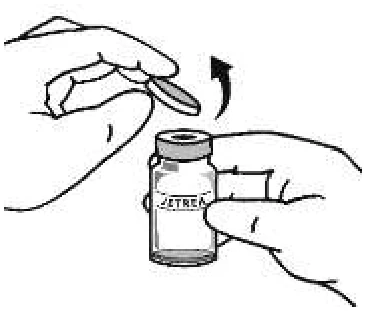
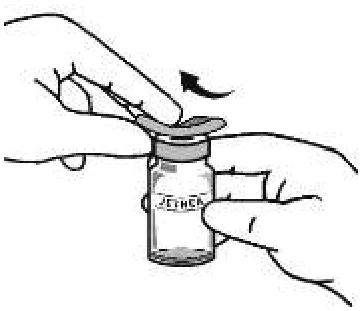
- 4. Visually inspect the vial for particulate matter. Only a clear, colourless solution without visible particles should be used.
- 5. Using aseptic technique, withdraw all of the solution using an appropriate sterile needle (slightly tilt the vial to ease withdrawal) and discard the needle after withdrawal of the vial contents (see Figure 3). Do not use this needle for the intravitreal injection.
Figure 3
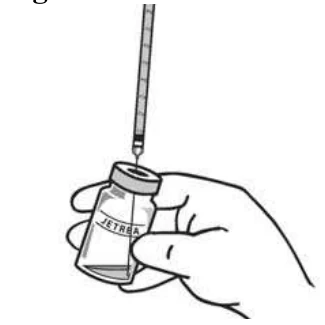
- 6. Replace the needle with an appropriate sterile needle, carefully expel the excess volume from the syringe by slowly depressing the plunger so that the plunger tip aligns with the 0.1 mL line on the syringe (corresponding to 0.125 mg ocriplasmin) (see Figure 4)..
Figure 4
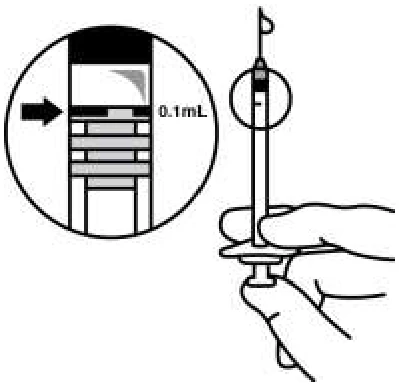
- 7. Inject 0.1 mL of the solution immediately into the mid-vitreous. THE SOLUTION SHOULD BE USED IMMEDIATELY AS IT CONTAINS NO PRESERVATIVES.
- 8. Discard the vial and any unused portion of the solution after single use.
Administration:
The intravitreal injection procedure should be carried out under controlled aseptic conditions, which include the use of sterile gloves, a sterile drape and a sterile eyelid speculum (or equivalent). Adequate anesthesia and a broad spectrum microbiocide should be administered according to standard medical practice.
The injection needle should be inserted 3.5-4.0 mm posterior to the limbus aiming towards the center of the vitreous cavity, avoiding the horizontal meridian. The injection volume of 0.1 mL is then delivered into the midvitreous.
Immediately following the intravitreal injection, patients should be monitored for elevation in intraocular pressure. Appropriate monitoring may consist of a check for perfusion of the optic nerve head or tonometry. If required, a sterile paracentesis needle should be available.
Following intravitreal injection, patients should be instructed to report symptoms suggestive of endophthalmitis or retinal detachment (e.g. eye pain, redness of the eye, photophobia, blurred or decreased vision) without delay (see CONSUMER INFORMATION).
Each vial should only be used to provide a single injection for the treatment of a single eye. If the contralateral eye requires treatment, a new vial should be used and the sterile field, syringe, gloves, drapes, eyelid speculum, and injection needles should be changed before JETREA is administered to the other eye. However, treatment with JETREA in the other eye is not recommended within 7 days of the initial injection in order to monitor the post-injection course including the potential for decreased vision in the injected eye.
Repeated administration of JETREA in the same eye is not recommended.
After injection, any unused product must be discarded.
OVERDOSAGE
The clinical data on the effects of JETREA (ocriplasmin) overdose are limited. One case of accidental overdose of 0.250 mg ocriplasmin (twice the recommended dose) has been reported to be associated with inflammation and a decrease in visual acuity.
If an overdose occurs, close monitoring is recommended. If an adverse reaction occurs, it should be treated according to standard medical practice.
EFFECTS ON ABILITY TO DRIVE VEHICLES AND OPERATE MACHINERY
The intravitreal injection of ocriplasmin may be followed by temporary visual disturbances. In these cases, patients should not drive or use machines until the visual disturbances have resolved.
ACTION AND CLINICAL PHARMACOLOGY
Mechanism of Action
Ocriplasmin has proteolytic activity against protein components of the vitreous body and the vitreoretinal interface (VRI) (e.g. laminin, fibronectin and collagen), thereby dissolving the protein matrix responsible for the abnormal vitreomacular adhesion (VMA).
Pharmacodynamics
Ex vivo pharmacodynamics in human donor eyes was performed. Eyes were injected with 62.5, 125 or 188 μg ocriplasmin (n=4, 7 and 2 eyes respectively) to demonstrate the efficacy of ocriplasmin in inducing posterior vitreous detachment (PVD) and evaluate the human retina after treatment. Intravitreal injection of 125 and 188 μg ocriplasmin resulted in complete PVD in all 9 eyes. Complete vitreoretinal separation was induced in a dose- and time dependent fashion without morphologic damage to the retina. An intravitreal injection of 125 μg ocriplasmin was sufficient to induce complete PVD with bare internal limiting membrane within 30 minutes (Gandorfer et al., 2004).
Pharmacokinetics
The intravitreal pharmacokinetics of ocriplasmin were determined in a clinical study in patients scheduled for vitrectomy where 0.125 mg ocriplasmin (corresponding to an average concentration of 29 μg ocriplasmin per mL vitreous volume [approximately 4.3 mL/eye]) was administered as a single intravitreal dose at different time points prior to vitrectomy. The mean ocriplasmin activity levels decreased with time from injection to time of sampling as illustrated in Table 2, according to a second-order kinetic process. At 24 hours post injection the levels in the vitreous were below 3% of the theoretical concentration reached immediately after injection.
Because of the small dose administered (0.125 mg), detectable levels of ocriplasmin in systemic circulation are not expected after intravitreal injection.
Table 2: Mean Ocriplasmin Activity Levels in Vitreous Samples After Injection of 0.125 mg JETREA
| Time Post-Injection (subjects) | 5-30 min (n=8) | 31-60 min (n=8) | 2-4 hours (n=8) | 24 hours (n=4) | 7 days (n=4) |
Mean ± SD Ocriplasmin levels (µg/mL) | 12 ± 7.6 | 8.1 ± 5.2 | 2.6 ± 1.6 | 0.5 ± 0.3a | <0.27b |
a 2 subjects below lower limit of detection, other 2 subjects at 0.88 and 0.57 μg/mL
b Lower limit of detection
Ocriplasmin enters the endogenous protein catabolism pathway through which it is rapidly inactivated via its interactions with protease inhibitor α2-antiplasmin or α2-macroglobulin.
The inactive ocriplasmin/α2 antiplasmin complex is cleared from the circulation with a half-life (t1/2) of several hours.
No human metabolism or excretion studies have been conducted with ocriplasmin.
Special Populations and Conditions
Pediatrics: The pharmacokinetics of ocriplasmin in the pediatric population has not been established. No data are available.
Hepatic Insufficiency: No formal studies have been conducted with JETREA in patients with hepatic impairment. No dose adjustment or special considerations are anticipated for patients with hepatic impairment.
Renal Insufficiency: No formal studies have been conducted with JETREA in patients with renal impairment. No dose adjustment or special considerations are anticipated for patients with renal impairment.
STORAGE AND STABILITY
Store in a freezer at -20˚C±5˚C. Protect the vials from light by storing in the original carton until time of use.
SPECIAL HANDLING INSTRUCTIONS
JETREA (ocriplasmin) is preservative-free and for single use only. The vial and any unused portion of the solution should be discarded after single use.
After thawing
The unopened vial in the original carton protected from light may be stored in a refrigerator (2°C to 8°C) for up to 1 week. The new in-use expiry date should be calculated and noted on the carton before it is placed in the refrigerator.
Once removed from the freezer or refrigerator, the medicinal product may be kept below 25°C for up to 8 hours. At the end of this period the product must be used or discarded.
Do not refreeze a vial once it has been thawed.
After opening
From a microbiological point of view, the medicinal product must be used immediately after opening. The vial and any unused portion of the solution must be discarded after single use.
DOSAGE FORMS, COMPOSITION AND PACKAGING
JETREA (ocriplasmin) is a ready-to-use sterile, clear, colourless solution with no preservatives in a single-use 2 mL glass vial with a latex-free rubber stopper capped with an aluminium crimp seal equipped with a polypropylene flip-off cap. The pH of the solution is 3.1.
Medicinal ingredient: each vial contains 0.375 mg ocriplasmin in 0.3 mL solution (1.25 mg/mL) for intravitreal injection. No further dilution is required. This provides a usable amount to deliver a single dose of 0.1 mL containing 0.125 mg ocriplasmin
Nonmedicinal ingredients: citric acid, mannitol, sodium chloride, sodium hydroxide or hydrochloric acid (for pH adjustment) and water for injection.
PART II: SCIENTIFIC INFORMATION
PHARMACEUTICAL INFORMATION
Drug Substance
Proper name: ocriplasmin
Chemical name: microplasmin or recombinant truncated human plasmin
Molecular formula and molecular mass: 27237 Daltons
Structural formula:
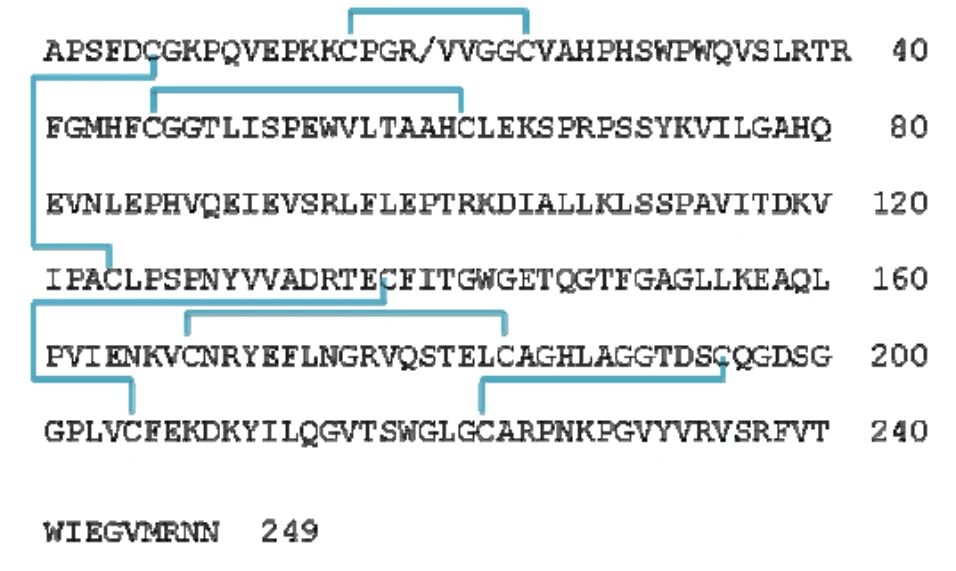
Ocriplasmin is a protein of 249 amino acid residues. The protein consists of 2 peptide chains. The first peptide is 19 amino acid residues long. The second is 230 amino acid residues long. The peptides are linked together by 2 disulfide bonds between C6:C124 and C16:C24 residues according to the residue numbering presented in Figure 1. Four other disulfide bonds link the cysteine residues in the second peptide as C46:C62,
C138:C205, C168:C184 and C195:C223. Ocriplasmin does not contain O- or N-linked glycosylation. The ocriplasmin amino acid sequence is presented in Figure 5.
Figure 5: Schematic Amino Acid Sequence of Ocriplasmin Written From N-Terminus to the C-Terminus. All 6 Disulfide Bridges are Shown (Full Lines).
The 2 Peptides are Separated by (/)
Product Characteristics
Recombinant human ocriplasmin is produced in the transformed yeast Pichia pastoris by standard fermentation technology and purified using standard biotechnology purification procedures. Fermentation of P. pastoris results in the secretion of microplasminogen which is purified and converted to ocriplasmin using an activation chromatography step. The active ocriplasmin is then further purified and formulated.
CLINICAL TRIALS
Study demographics and trial design
The efficacy of JETREA (ocriplasmin) was demonstrated in two multicenter, randomized, double masked, placebo controlled, 6 month studies in patients with symptomatic vitreomacular adhesion (VMA). A total of 652 patients (JETREA 464, placebo 188) were randomized in these 2 studies (TG-MV-006 and TG-MV-007). Randomization was 2:1 (JETREA:placebo) in study TG-MV-006 and 3:1 in study TG-MV-007 (Stalmans et al., 2012).
In both studies the majority of the patients were female (63.5% in TG-MV-006 and 68.1% in TG-MV-007). Mean age was 71.3 years (overall range: 18 to 96 years) in TG-MV-006 and 72.0 years (overall range: 23 to 97 years) in TG-MV-007. The majority of the patients were white (89.6% in TG-MV-006 and 95.1% in TG-MV-007). Mean BCVA at baseline was 64.8 letters in TG-MV-006 and 63.8 letters in TG-MV-007. The proportion of patients with full thickness macular hole (FTMH) at baseline was 27.3% in study TG-MV-006 and 19.6% in TG-MV-007. In study TG-MV-006, the proportion of pseudophakic patients was 41.6% in the ocriplasmin group and 27.1% in the placebo group); in TG-MV-007, the proportion was 33.1% in the ocriplasmin group and 29.6% in the placebo group.
Table 3 Summary of Patient Demographics for the Full Analysis Set (Studies
TG-MV-006 and TG-MV-007)
| Study # | Trial design | Dosage, route of administration and duration | Study subjects (n=number) | Mean age (Range) | Gender |
| TG-MV-006 | Multi-centre, randomized, placebo-controlled, double-masked | 125 µg single intravitreal injection | 219 ocriplasmin 107 placebo | 71.3 (18-96) years | Male: 119 (36.5%) Female: 207 (63.5%) |
| TG-MV-007 | Same as above | Same as above | 245 ocriplasmin 81 placebo | 72 (23-97) years | Male: 104 (31.9%) Female: 222 (68.1%) |
Study results
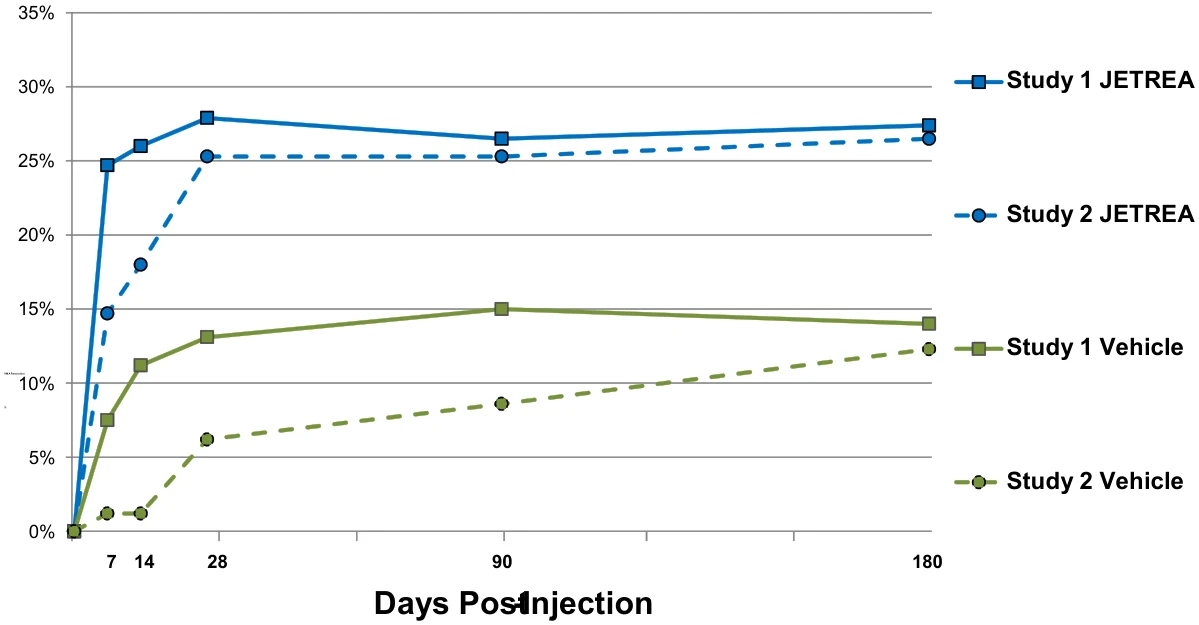
In both of the pivotal studies, the proportion of patients who achieved vitreomacular adhesion (VMA) resolution at Day 28 (i.e. achieved success on the primary endpoint) was significantly higher in the ocriplasmin group compared with the placebo group (Table 4 and Figure 6).
Table 4: Proportion of Patients with VMA Resolution in the Study Eye (TG-MV-006 and TG-MV-007: Full Analysis Set)
| Treatment Group | TG-MV-006 | TG-MV-007 | ||||
| Placebo | Ocriplasmin | Placebo | Ocriplasmin | |||
| Number of subjects | 107 | 219 | 81 | 245 | ||
| Proportion of subjects with nonsurgical resolution of focal VMA at Day 28 | 13.1% | 27.9% | 6.2% | 25.3% | ||
Difference (95% CI) p-value | - | 14.8 (6.0, 23.5) p= 0.003 | - | 19.1 (11.6, 26.7) p < 0.001 | ||
| *Subjects who discontinued the trial prior to visit ‘Day 28’ or had missing data at visit ‘Day 28’ were considered based on the last value carried forward method. | ||||||
Figure 6: Proportion of Patients with VMA Resolution in the Study Eye (TG-MV-006 (Study 1) and TG-MV-007 (Study 2))
*Study 1: TG-MV-006; Study 2: TG-MV-007
Total posterior vitreous detachment (PVD) induction in symptomatic vitreomacular adhesion patients was evaluated by B-scan ultrasound. A statistically significantly higher percentage of JETREA treated patients achieved total PVD at Day 28 compared to vehicle treated patients in TG-MV-006 (16% vs. 6%) and in TG-MV-007 (11% vs. 0%).
JETREA treated patients were less likely to require vitrectomy, at the discretion of treating physician, by the end of the study (Month 6) compared with placebo treated patients (TG-MV-006: 20.5% vs 29.0%, respectively; TG-MV-007: 23.5% vs. 15.1%, respectively).
The number of patients with ≥2 lines and ≥3 lines increase in visual acuity was numerically higher in the ocriplasmin group compared to vehicle in both trials, however, the number of patients with ≥2 lines and ≥3 lines decrease in visual acuity was also higher in the ocriplasmin group in one of the studies (Table 5).
Table 5: The Proportion of Subjects with Categorical Change from Baseline in BCVA at Month 6, Irrespective of Vitrectomy (TG-MV-006 and TG-MV-007)
| TG-MV-006 | TG-MV-007 | |||||||
JETREA N=219 | Placebo N=107 | JETREA N=245 | Placebo N=81 | |||||
| ≥2 lines Improvement | 66 (30.1%) | 18 (16.8%) | 64 (26.1%) | 14 (17.5%) | ||||
| ≥3 lines Improvement | 28 (12.8%) | 9 (8.4%) | 29 (11.8%) | 3 (3.8%) | ||||
| ≥2 lines Worsening | 22 (10.0%) | 5 (4.7%) | 14 (5.7%) | 6 (7.5%) | ||||
| ≥3 lines Worsening | 16 (7.3%) | 2 (1.9%) | 10 (4.1%) | 4 (5.0%) | ||||
DETAILED PHARMACOLOGY
Pharmacodynamics
(see ACTION AND CLINICAL PHARMACOLOGY)
Pharmacokinetics
(see ACTION AND CLINICAL PHARMACOLOGY)
TOXICOLOGY
No carcinogenicity, mutagenicity or reproductive and developmental toxicity data are available.
The intravitreal toxicity of ocriplasmin has been evaluated in rabbits, monkeys and minipigs. Ocriplasmin induced an inflammatory response and transient ERG changes in rabbits and monkeys, while no inflammation or ERG changes were observed in minipigs. In rabbits and monkeys, the incidence of vitreous cell infiltrates tended to resolve over time. In monkeys, after administration of 125 μg/eye (68 μg/mLvitreous) the ERG was fully recovered by Day 55.
Lens subluxation was observed in the 3 animal species (monkey, rabbit, and minipig) following a single intravitreal injection at high ocriplasmin concentrations at or above 41 μg/mL vitreous, a concentration above the intended clinical concentration of 29 μg/mL. This effect appeared to be related to the relative size of the species’ eye, being more prevalent in smaller eyes, but was observed in all animals that received more than one administration of intravitreal ocriplasmin. Administration of a second intravitreal dose in monkeys, 28 days apart, produced lens subluxation in 100% of the treated eyes.
Pathological changes related to intraocular hemorrhage were observed in rabbits and monkeys. It remains unclear if this hemorrhage is related to the injection procedure itself or administration of ocriplasmin.
No systemic toxicity was observed after intravitreal administration of ocriplasmin.
The systemic toxicity of ocriplasmin has been evaluated in both rat and dog. Intravenous administration of 10 mg/kg was generally well tolerated in both rat and dog whether administered as a single dose or as repeated doses.
REFERENCES
- 1. Gandorfer A, Rohleder M, Sethi C, Eckle D, Welge-Lussen U, Kampik A, Luthert P and Charteris D. Posterior Vitreous Detachment Induced by Microplasmin. Invest Ophthalmol Vis Sci;. 2004;45(2):641-47.
- 2. Stalmans P, Benz MS, Gandorfer A, et al. Enzymatic Vitreolysis with Ocriplasmin for Vitreomacular Traction and Macular Holes. N Engl J Med. 2012;367:606-615.