


Product Monograph - Luxturna
Recent Major Label Changes
None at the time of the most recent authorization.
Table of Contents
Certain sections or subsections that are not applicable at the time of preparation of the most recent authorized product monograph are not listed.
Recent Major Label Changes ................................................................................................................ 2
Table of Contents ................................................................................................................................. 2
Part 1: Healthcare Professional Information ......................................................................................... 4
1 Indications ............................................................................................................................... 4
1.1 Pediatrics ............................................................................................................................... 4
1.2 Geriatrics ............................................................................................................................... 4
2 Contraindications .................................................................................................................... 4
4 Dosage and Administration ..................................................................................................... 4
4.1 Dosing Considerations ........................................................................................................... 4
4.2 Recommended Dose and Dosage Adjustment ...................................................................... 5
4.3 Reconstitution ....................................................................................................................... 6
4.4 Administration ....................................................................................................................... 6
4.5 Missed Dose ........................................................................................................................ 10
5 Overdose ............................................................................................................................... 11
6 Dosage Forms, Strengths, Composition, and Packaging .......................................................... 11
7 Warnings and Precautions ..................................................................................................... 11
General ........................................................................................................................................... 11
Ophthalmologic .............................................................................................................................. 11
Reproductive Health ...................................................................................................................... 12
Vector shedding ............................................................................................................................. 12
7.1 Special Populations .............................................................................................................. 13
7.1.1 Pregnancy ........................................................................................................................ 13
7.1.2 Breastfeeding .................................................................................................................. 13
7.1.3 Pediatrics ......................................................................................................................... 13
7.1.4 Geriatrics ......................................................................................................................... 13
7.1.5 Renal and hepatic impairment ........................................................................................ 13
8 Adverse Reactions ................................................................................................................. 13
8.1 Adverse Reaction Overview ................................................................................................ 13
8.2 Clinical Trial Adverse Reactions ........................................................................................... 14
8.2.1 Clinical Trial Adverse Reactions – Pediatrics ................................................................... 16
8.4 Abnormal Laboratory Findings: Hematologic, Clinical Chemistry, and Other Quantitative Data ..................................................................................................................................... 16
8.5 Post-Market Adverse Reactions .......................................................................................... 16
9 Drug Interactions ................................................................................................................... 16
9.2 Drug Interactions Overview ................................................................................................. 16
9.4 Drug-Drug Interactions ........................................................................................................ 16
9.5 Drug-Food Interactions ....................................................................................................... 17
9.6 Drug-Herb Interactions ........................................................................................................ 17
9.7 Drug-Laboratory Test Interactions ...................................................................................... 17
10 Clinical Pharmacology ............................................................................................................ 17
10.1 Mechanism of Action ........................................................................................................... 17
10.2 Pharmacodynamics ............................................................................................................. 17
10.3 Pharmacokinetics ................................................................................................................ 17
10.4 Immunogenicity ................................................................................................................... 18
11 Storage, Stability, and Disposal .............................................................................................. 18
12 Special Handling Instructions ................................................................................................. 18
13 Pharmaceutical Information .................................................................................................. 20
14 Clinical Trials ......................................................................................................................... 20
14.1 Clinical Trials by Indication .................................................................................................. 20
15 Microbiology ......................................................................................................................... 24
16 Non-Clinical Toxicology .......................................................................................................... 24
Part 1: Healthcare Professional Information
1 Indications
LUXTURNA® (voretigene neparvovec) is indicated for the treatment of adult and pediatric patients with vision loss due to inherited retinal dystrophy caused by confirmed biallelic RPE65 mutations and who have sufficient viable retinal cells.
Disease-causing biallelic RPE65 mutations should be confirmed by an accredited laboratory using validated assay methods.
LUXTURNA is only distributed through treatment centers who have participated in the mandatory training on use of product.
1.1 Pediatrics
Pediatrics (below 4 years): Based on the data submitted and reviewed by Health Canada, the safety and efficacy of LUXTURNA in pediatric patients below 4 years of age has not been established; therefore, Health Canada has not authorized an indication for pediatric patients below 4 years of age (see 14 Clinical Trials).
1.2 Geriatrics
Geriatric patients (65 years or above): No data are available to Health Canada; therefore, Health Canada has not authorized an indication for geriatric use.
2 Contraindications
LUXTURNA is contraindicated in patients who are hypersensitive to voretigene neparvovec or to any ingredient in the formulation, including any non-medicinal ingredient, or component of the container. For a complete listing, see 6 Dosage forms, Strengths, Composition, and Packaging.
LUXTURNA is also contraindicated in patients with:
- Ocular or periocular infection
- Active intraocular inflammation
4 Dosage and Administration
4.1 Dosing Considerations
- Before treatment with LUXTURNA, the presence of a disease-causing biallelic RPE65 mutation must be confirmed by an accredited laboratory using validated assay methods.
- Patients should have sufficient viable retinal cells as determined by the specialist ophthalmologist (see also 14 Clinical Trials).
- Treatment should be initiated and administered by a retinal surgeon experienced in performing subretinal surgery.
4.2 Recommended Dose and Dosage Adjustment
Dosage regimen
Patients will receive a single dose of 1.5 x 10¹¹ vg of LUXTURNA in each eye. Each dose will be delivered into the subretinal space in a total volume of 0.3 mL. The individual administration procedure to each eye is performed on separate days within a close interval, but no fewer than 6 days apart (see 14 Clinical Trials).
Immunomodulatory regimen
Prior to initiation of the immunomodulatory regimen and prior to administration of LUXTURNA, the patient must be checked for symptoms of active infectious disease of any nature, and in case of such infection the start of treatment must be postponed until after the patient has recovered.
Starting 3 days prior to the administration of LUXTURNA to the first eye, it is recommended that an immunomodulatory regimen is initiated following the schedule outlined in Table 1. Initiation of the immunomodulatory regimen for the second eye should follow the same schedule and supersede completion of the immunomodulatory regimen of the first eye.
Table 1 - Pre- and post-operative immunomodulatory regimen
| Pre-operative | 3 days prior to administration | Prednisone (or equivalent) 1 mg/kg/day (maximum of 40 mg/day) |
|---|---|---|
| Post-operative | 4 days (including the day of administration) | Prednisone (or equivalent) 1 mg/kg/day (maximum of 40 mg/day) |
| Followed by 5 days | Prednisone (or equivalent) 0.5 mg/kg/day (maximum of 20 mg/day) | |
| Followed by 5 days of one dose every other day | Prednisone (or equivalent) 0.5 mg/kg every other day (maximum of 20 mg/day) |
Special populations
Pediatric patients (below 4 years)
The safety and efficacy of LUXTURNA in children below 4 years of age have not been established. Health Canada has not authorized an indication for pediatric patients below 4 years of age (see 1 Indications).
No dose adjustment is necessary for pediatric patients aged 4 years and above.
Geriatric patients (65 years or above)
The safety and efficacy of LUXTURNA in patients 65 years or above have not been established.
Health Canada has not authorized an indication for geriatric use (see 1 Indications).
Hepatic or renal impairment
The safety and efficacy of LUXTURNA have not been established in patients with hepatic or renal impairment. No dosage adjustment is required in hepatic or renal impairment.
4.3 Reconstitution
Concentrate for subretinal injection is supplied in a 0.5 mL extractable volume in a 2-mL single-dose vial; the supplied concentration [5 x 10¹² vector genomes (vg) per mL] requires a 1:10 dilution prior to administration.
After dilution, each dose contains 1.5 x 10¹¹ vg in a deliverable volume of 0.3 mL.
The diluent is supplied in 1.7 mL extractable volumes in two single-use 2 mL vials.
LUXTURNA should be used immediately following thaw of the vials. If necessary, it may be stored at room temperature (15 to 25˚C) for up to 4 hours prior to administration (see 11 Storage, Stability, and Disposal).
4.4 Administration
LUXTURNA is for subretinal use only.
Preparation for administration
Administration of LUXTURNA must take place within 4 hours of preparation. LUXTURNA must be prepared using sterile technique under aseptic conditions in a Class II vertical laminar flow biological safety cabinet (BSC). Below is the list of items required for dilution of the concentrate and preparation of the administration syringe:
- One single-dose vial of LUXTURNA
- Two vials of Diluent
- One 3-mL sterile syringe
- One 20G 1-inch sterile needle
- Three 1-mL sterile syringes
- Three 27G ½-inch sterile needles
- Two sterile syringe caps
- One 10-mL sterile empty glass vial
- One sterile utility drape
- One sterile plastic bag
- Two sterile labels for administration syringes
- One sterile plain label
- Two sterile skin markers
Dilution of LUXTURNA
- 1. Thaw one single-dose vial of LUXTURNA and two vials of Diluent at room temperature.
- 2. Mix the contents of the thawed Diluent vials by gently inverting them approximately 5 times.
- 3. Inspect the Diluent vials. If particulates, cloudiness, or discoloration are visible, do not use the vial(s); new vial(s) of Diluent should be used.
- 4. Obtain a 3-mL sterile syringe, a 20G 1-inch sterile needle, and a 10-mL sterile empty glass vial.
- 5. Using the 3-mL syringe with 20G 1-inch needle, transfer 2.7 mL of Diluent to the 10-mL glass vial. Dispose of the needle and syringe in an appropriate container.
- 6. Mix the contents of the thawed LUXTURNA single-dose vial by gently inverting approximately 5 times. Do not shake.
- 7. Inspect the LUXTURNA single-dose vial. If particulates, cloudiness, or discoloration are visible, do not use the vial; a new single-dose vial of LUXTURNA should be used.
- 8.
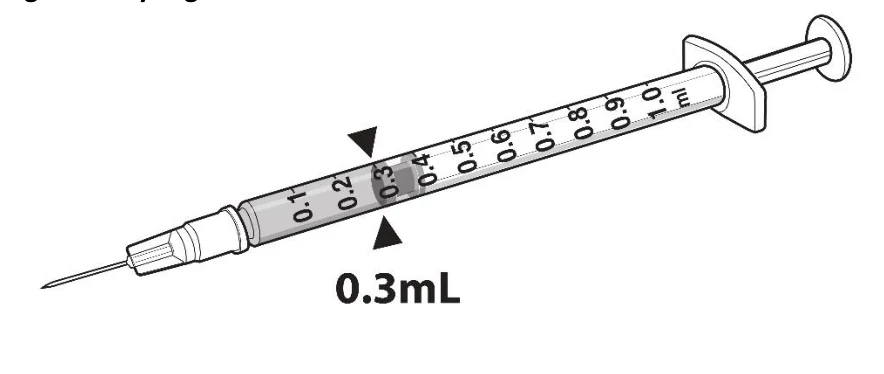
Obtain a 1-mL sterile syringe and 27 G ½-inch sterile needle. Draw 0.3 mL of LUXTURNA into a 1-mL sterile syringe with a 27G ½-inch sterile needle (Figure 1).
Figure 1 - Syringe with 0.3 mL LUXTURNA
- 9. Transfer 0.3 mL of LUXTURNA to the 10-mL glass vial containing 2.7 mL of Diluent from Step 5. Gently invert the glass vial approximately 5 times to mix the contents. Do not shake.
- 10. Using the sterile plain label and sterile skin marker, label the 10-mL glass vial containing the diluted LUXTURNA as follows: ‘Diluted LUXTURNA’.
- 11. Remove all items from the BSC except the glass vial labeled ‘Diluted LUXTURNA’.
- 12. Re-sanitize the BSC prior to the next steps and place the glass vial to the left side in the BSC.
Preparation of LUXTURNA for Injection
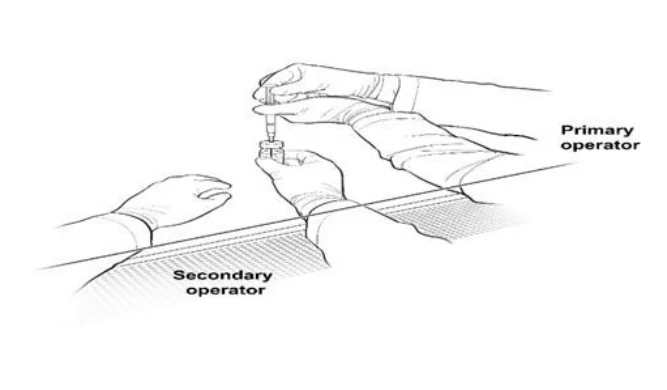
To keep the syringes sterile, two operators are required to transfer the contents of the 10 mL glass vial labeled ‘Diluted LUXTURNA’ into each of two sterile 1-mL syringes.
- 13. Place a sterile utility drape, a sterile plastic bag, and two sterile labels into the BSC.
- 14. Place the sterile drape near the Primary Operator on the right side of the sanitized BSC surface, away from the diluted LUXTURNA.
- 15. The Secondary Operator unwraps two 1-mL syringes, two 27G ½-inch needles, one sterile skin marker, and two syringe caps in the BSC, ensuring that the Primary Operator touches only sterile surfaces while transferring the items onto the sterile drape.
- 16. The Secondary Operator changes to a new pair of sterile gloves and stands or sits to the left of the Primary Operator. The Secondary Operator holds the 10-mL glass vial containing the diluted LUXTURNA (Figure 2).
Figure 2 - First position of the operators during preparation of LUXTURNA syringes
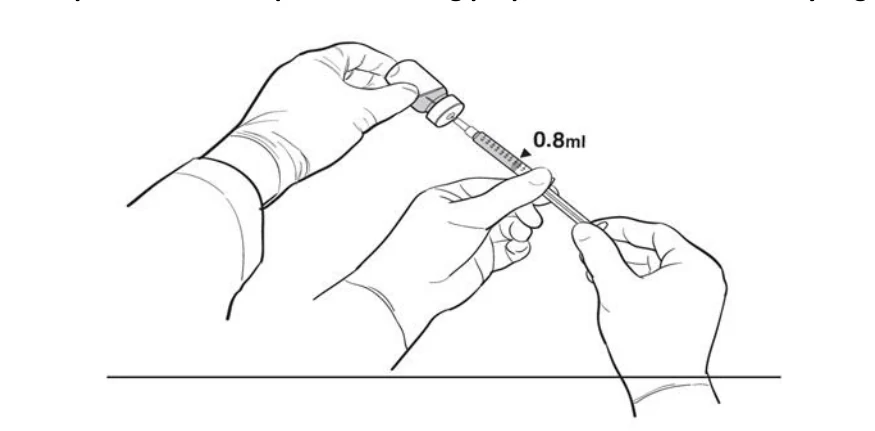
- 17. The Primary Operator withdraws 0.8 mL of the diluted LUXTURNA into a sterile 1-mL syringe using a 27G ½-inch sterile needle while the secondary operator holds the 10-mL glass vial. After the insertion of the needle, the Secondary Operator inverts the 10-mL glass vial enabling the Primary Operator to withdraw 0.8 mL without touching the 10-mL glass vial (Figure 3).
Figure 3 - Second position of the operators during preparation of LUXTURNA syringes
- 18. The Primary Operator removes the needle and affixes a sterile cap to the sterile syringe, disposes of the needle in an appropriate container, and attaches a sterile label to the administration syringe.
- 19. The Primary Operator repeats Steps 17 and 18 to prepare a total of two administration syringes. Label the first syringe “Diluted LUXTURNA” and label the second syringe “Back-up Diluted LUXTURNA” using the sterile skin marker. The second syringe will serve as a back-up for the surgeon performing the subretinal administration procedure. Discard the back-up syringe after surgery if not used.
- 20. Inspect both syringes. If particulates, cloudiness, or discoloration are visible, do not use the syringe.
- 21. Place the syringes into the sterile plastic bag after visual inspection and seal the bag.
- 22. Place the sterile plastic bag with syringes containing diluted LUXTURNA into an appropriate secondary container (e.g., hard plastic cooler) for delivery to the surgical suite at room temperature.
Administration
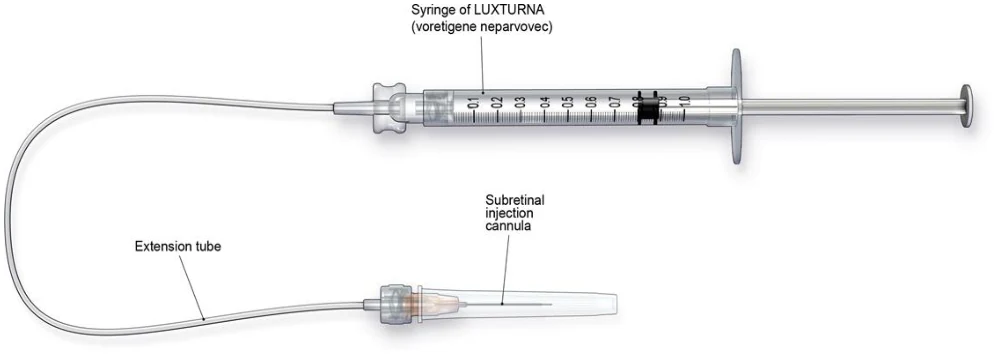
LUXTURNA should be administered in the surgical suite under controlled aseptic conditions by a surgeon experienced in performing intraocular surgery. In addition to the syringe containing the diluted LUXTURNA, the following items are required for administration (Figure 4):
- Subretinal injection cannula with a polyamide micro tip with an inner diameter of 41 gauge.
- Extension tube made of polyvinyl chloride no longer than 6” (15.2 cm) in length and with an inner diameter no greater than 1.4 mm.
Figure 4 - Injection apparatus assembly
Follow the steps below for subretinal injection:
- 1. After confirming the availability of LUXTURNA, dilate the eye and give adequate anesthesia to the patient.
- 2. Administer a topical broad spectrum microbiocide to the conjunctiva, cornea and eyelids prior to surgery.
- 3. Inspect LUXTURNA prior to administration. If particulates, cloudiness, or discoloration are visible, do not use the product.
- 4. Connect the syringe containing the diluted LUXTURNA to the extension tube and subretinal injection cannula. To avoid excess priming volume, the extension tube should not exceed 15.2 cm in length and 1.4 mm in inner diameter. Inject the product slowly through the extension tube and the subretinal injection cannula to eliminate any air bubbles.
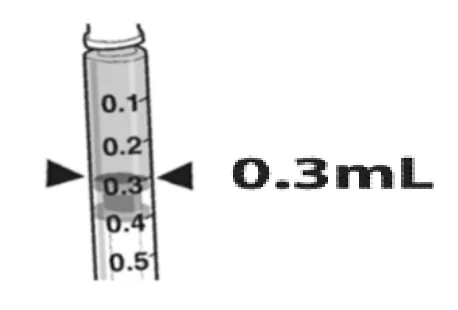
- 5. Confirm the volume of product available in the syringe for injection, by aligning the plunger tip with the line that marks 0.3 mL (Figure 5).
Figure 5 - Volume of LUXTURNA for injection
- 6. After completing a vitrectomy, identify the intended site of administration. The subretinal injection cannula can be introduced via pars plana (Figure 6).
- 7.
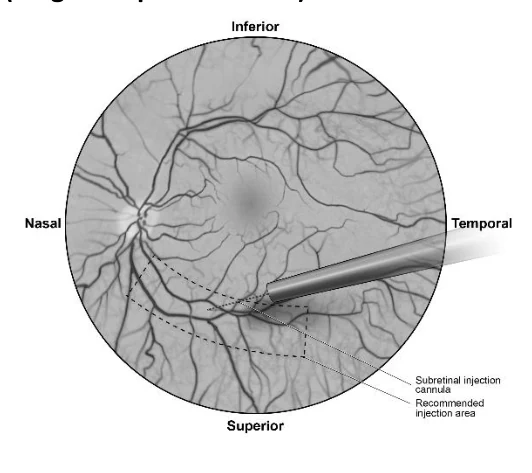
Under direct visualization, place the tip of the subretinal injection cannula in contact with the retinal surface. The recommended site of injection is located along the superior vascular arcade, at least 2 mm distal to the center of the fovea (Figure 7), avoiding direct contact with the retinal vasculature or with areas of pathologic features, such as dense atrophy or intraretinal pigment
- migration. Inject a small amount of the product slowly until an initial subretinal bleb is observed. Then inject the remaining volume slowly until the total 0.3 mL is delivered.
Figure 6 - Subretinal injection cannula introduced via pars plana
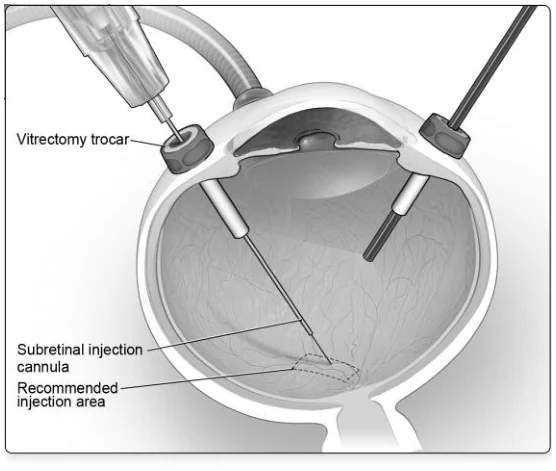
Figure 7 - Tip of the subretinal injection cannula placed with the recommended site of injection (surgeon’s point of view)
- 8. After completing the injection, remove the subretinal injection cannula from the eye.
- 9. Following injection, discard all unused product. Dispose of the back-up syringe according to local biosafety guidelines applicable for handling and disposal of the product.
- 10. Perform a fluid-air exchange, carefully avoiding fluid drainage near the retinotomy created for the subretinal injection.
- 11. Initiate supine head positioning immediately in the post-operative period.
- 12. Upon discharge, advise patients to rest in a supine position as much as possible for 24 hours.
4.5 Missed Dose
Not applicable
5 Overdose
Symptomatic and supportive treatment is advised in case of overdose.
For the most recent information in the management of a suspected drug overdose, contact your regional poison control centre or Health Canada’s toll-free number, 1-844 POISON-X (1-844-764-7669).
6 Dosage Forms, Strengths, Composition, and Packaging
To help ensure the traceability of biologic products, healthcare professionals should record both the brand name and the non-proprietary (active ingredient) name as well as other product-specific identifiers such as the Drug Identification Number (DIN) and the batch/lot number of the product supplied.
Table 2 - Dosage Forms, Strengths, and Composition
LUXTURNA contains no preservatives.
Both the concentrate and the diluent are clear, colorless liquids.
LUXTURNA is supplied as follows:
Each foil pouch includes a carton containing:
- 1 vial of concentrate (0.5 mL extractable volume in 2 mL vial) and
- 2 vials of diluent (1.7 mL extractable volume in a 2 mL vial)
7 Warnings and Precautions
General
LUXTURNA should be administered by a retinal surgeon experienced in performing subretinal surgery.
Ophthalmologic
Endophthalmitis
Endophthalmitis may occur following any intraocular surgical procedure or injection. Use proper aseptic injection technique when administering LUXTURNA. Following the injection, monitor patients to permit early treatment of any infection. Advise patients to report any signs or symptoms of infection or
| Route of Administration | Dosage Form / Strength/Composition | Non-medicinal Ingredients |
| Subretinal injection | Concentrate of 5 x 10¹² vector genomes (vg) per mL of voretigene neparvovec | Disodium hydrogen phosphate dihydrate (for pH adjustment), poloxamer 188, sodium chloride, sodium dihydrogen phosphate monohydrate (for pH adjustment), water for injections. |
| Diluent | ||
inflammation without delay.
Patients should avoid swimming because of an increased risk of infection in the eye. Patients may resume swimming after a minimum of one to two weeks, on the advice of their healthcare professional.
Permanent decline in visual acuity
Permanent decline in visual acuity may occur following subretinal injection of LUXTURNA. Monitor patients for visual disturbances.
Retinal abnormalities
Retinal abnormalities may occur during or following the subretinal injection of LUXTURNA, including macular holes, foveal thinning, loss of foveal function, foveal dehiscence, chorioretinal atrophy and retinal hemorrhage (see 8.2 Clinical Trial Adverse Reactions). Monitor and manage these retinal abnormalities appropriately. Do not administer LUXTURNA in the immediate vicinity of the fovea (see 4 Dosage and Administration).
Retinal abnormalities may occur during or following vitrectomy including retinal tears, epiretinal membrane, or retinal detachment. Monitor patients during and following the injection to permit early treatment of these retinal abnormalities. Advise patients to report any signs or symptoms of retinal tears and/or detachment without delay.
Increased intraocular pressure
Increased intraocular pressure may occur after subretinal injection of LUXTURNA. Monitor and manage intraocular pressure appropriately.
Expansion of intraocular air bubbles
Instruct patients to avoid air travel or travel to high elevations until the air bubble formed following administration of LUXTURNA has completely dissipated from the eye. A time period of up to one week or more following injection may be required before dissipation of the air bubble. Verify the dissipation of the air bubble through ophthalmic examination. A rapid increase in altitude while the air bubble is still present can cause a rise in eye pressure and irreversible vision loss.
Cataract
Subretinal injection of LUXTURNA, especially vitrectomy surgery, is associated with an increased incidence of cataract development and/or progression.
Reproductive Health
- Fertility
There are no data on the effect of LUXTURNA on fertility available. Effects on male and female fertility have not been evaluated in animal studies (see 16 Non-Clinical Toxicology).
Vector shedding
Transient and low level vector shedding may occur in patient tears (see 10 Clinical Pharmacology). As a precautionary measure, patients/caregivers should be advised to handle waste material generated from dressings, tears and nasal secretion appropriately, which may include storage of waste material in sealed bags prior to disposal. These handling precautions should be followed for 14 days after administration of LUXTURNA. It is recommended that patients/caregivers wear gloves for dressing changes and waste disposal, especially in case of underlying pregnancy, breast feeding and immunodeficiency of caregivers.
Patients treated with LUXTURNA should not donate blood, organs, tissues and cells for transplantation.
7.1 Special Populations
7.1.1 Pregnancy
Considering the subretinal route of administration of LUXTURNA, and based on non-clinical and clinical data from trials of AAV2 vectors, there is a very low or negligible risk of inadvertent germ line transmission with AAV vectors.
There are no studies in pregnant women to inform a product-associated risk. Animal reproductive studies have not been conducted with voretigene neparvovec.
As a precautionary measure, it is preferable to avoid the use of LUXTURNA during pregnancy.
7.1.2 Breastfeeding
It is not known if LUXTURNA is present in human milk. Precaution should be exercised because many drugs can be excreted in human milk. There are no data on the effects of LUXTURNA on the breastfed infant or on milk production. A decision must be made whether to discontinue breastfeeding or to abstain from LUXTURNA therapy taking into account the benefit of breastfeeding for the child and the benefit of therapy for the mother.
7.1.3 Pediatrics
Pediatrics (below 4 years of age): The safety and efficacy of LUXTURNA in children below 4 years of age have not been established; therefore, Health Canada has not authorized an indication for pediatric patients below 4 years of age (see 1 Indications).
7.1.4 Geriatrics
Geriatrics (65 years of age or above): The safety and efficacy of LUXTURNA in patients 65 years or above have not been established.
7.1.5 Renal and hepatic impairment
The safety and efficacy of LUXTURNA have not been established in patients with hepatic or renal impairment.
8 Adverse Reactions
8.1 Adverse Reaction Overview
There were three non-serious adverse reactions of retinal deposits in three of 41 (7%) subjects that were considered to be related to voretigene neparvovec. All three of these events were a transient appearance of asymptomatic subretinal precipitates inferior to the retinal injection site, 1 to 6 days after injection and resolved without sequelae.
Serious adverse reactions related to the administration procedure were reported in three subjects during the clinical program. Increased intraocular pressure, which resulted in optic atrophy, was reported in one subject (1/41; 2%) secondary to administration of depo-steroid given to treat endophthalmitis related to the administration procedure. Retinal disorder (loss of foveal function) and retinal detachment were each reported in one subject each (1/41; 2%).
The most common ocular adverse reactions (incidence ≥5%) related to the administration procedure were conjunctival hyperaemia, cataract, increased intraocular pressure, retinal tear, dellen (thinning of the corneal stroma), macular hole, subretinal deposits, eye inflammation, eye irritation, eye pain, and maculopathy (wrinkling on the surface of the macula).
8.2 Clinical Trial Adverse Reactions
Clinical trials are conducted under very specific conditions. Therefore, the frequencies of adverse reactions observed in the clinical trials may not reflect frequencies observed in clinical practice and should not be compared to frequencies reported in clinical trials of another drug.
The safety data described in this section reflect exposure to voretigene neparvovec in three clinical trials consisting of 41 subjects (81 eyes) with vision loss due to inherited retinal dystrophy caused by confirmed biallelic RPE65 mutation. Study 101 (n=12) was a Phase 1 safety and dose escalation study in which 12 subjects received unilateral subretinal injections of voretigene neparvovec. Eleven of the twelve subjects who participated in the dose escalation study went on to receive voretigene neparvovec in the second eye (Study 102). Study 301 (n=29) was an open-label, randomized, controlled study for both efficacy and safety. In total, 40 of the 41 subjects received sequential subretinal injections of voretigene neparvovec to each eye. One subject received voretigene neparvovec in only one eye. Seventy-two of the 81 eyes were exposed to the recommended dose of LUXTURNA at 1.5 x 10¹¹ vg. In Study 101, 9 eyes were exposed to lower doses of LUXTURNA. The average age of the 41 subjects was 17 years ranging from 4 to 44 years. Of the 41 subjects, 25 (61%) were pediatric subjects under 18 years of age, and 23 (56%) were females.
Adverse drug reactions from clinical trials (Table 3) are listed by MedDRA system organ class. Within each system organ class, the adverse drug reactions are ranked by frequency, with the most frequent reactions first. Within each frequency grouping, adverse drug reactions are presented in order of decreasing seriousness.
All 20 subjects in the voretigene neparvovec treatment group had completed the Year 4 study visit after the second eye injection and eight (89%) subjects in the control group had completed the Year 3 study visit after crossing over to receive voretigene neparvovec. For subjects from Study 102, up to seven years of follow-up from second eye injections were available.
Adverse reactions may have been related to voretigene neparvovec, the subretinal injection procedure, the concomitant use of corticosteroids, or a combination of these procedures and products.
Table 3 - Adverse Reactions reported in studies 101, 102 and 301
System Organ Class Preferred Term | Voretigene neparvovec | ||||||||||
|---|---|---|---|---|---|---|---|---|---|---|---|
Studies 101 + 102 (N = 12 subjects) | Study 301 (N = 29 subjects) | Studies 101 + 102 + 301 | |||||||||
| n (%) | n (%) | (N = 41 subjects)* n (%) | |||||||||
| Eye disorders | |||||||||||
| Conjunctival hyperaemiaa | 8 (67) | 1 (3) | 9 (22) | ||||||||
| Cataract | 3 (25) | 5 (17) | 8 (20) | ||||||||
| Retinal tear | 1 (8) | 3 (10) | 4 (10) | ||||||||
| Macular hole | 1 (8) | 2 (7) | 3 (7) | ||||||||
| Retinal depositsb | 0 | 3 (10) | 3 (7) | ||||||||
| Dellen | 3 (25) | 0 | 3 (7) | ||||||||
| Eye inflammation | 0 | 2 (7) | 2 (5) | ||||||||
| Maculopathyc | 1 (8) | 1 (3) | 2 (5) | ||||||||
| Eye irritation | 1 (8) | 1 (3) | 2 (5) | ||||||||
| Eye pain | 1 (8) | 1 (3) | 2 (5) | ||||||||
| Retinal detachment | 0 | 1 (3) | 1 (2) | ||||||||
| Retinal hemorrhage | 0 | 1 (3) | 1 (2) | ||||||||
| Choroidal hemorrhage | 0 | 1 (3) | 1 (2) | ||||||||
| Endophthalmitis | 1 (8) | 0 | 1 (2) | ||||||||
| Macular degenerationd | 0 | 1 (3) | 1 (2) | ||||||||
| Conjunctival cyst | 0 | 1 (3) | 1 (2) | ||||||||
| Eye disordere | 1 (8) | 0 | 1 (2) | ||||||||
| Eye swelling | 0 | 1 (3) | 1 (2) | ||||||||
| Foreign body sensation in the eyes | 0 | 1 (3) | 1 (2) | ||||||||
| Retinal disorderf | 0 | 1 (3) | 1 (2) | ||||||||
| Investigations | |||||||||||
| Intraocular pressure increased | 2 (17) | 4 (14) | 6 (15) | ||||||||
a Includes verbatim terms suture irritation and suture reaction
b Includes verbatim term subretinal precipitate
c Includes verbatim terms epiretinal membrane and macular pucker
d Includes verbatim term macular thinning
e Includes verbatim term foveal dehiscence
f Includes verbatim terms foveal thinning and loss of foveal function
*ADR frequency is determined by pool of studies 101, 102, and 301
Chorioretinal atrophy
Following reports of chorioretinal atrophy in the post-marketing setting, a retrospective review of fundus photographs available from 39 out of 41 patients enrolled in the clinical studies was performed. In the phase 3 study, chorioretinal atrophy of the macula of treated eyes was found in 15.4% prior to treatment, in 42.6% at year 1 and in 55.6% after year 1. In the phase 1 study, chorioretinal atrophy of the macula was present in 35% prior to treatment, in 66.7% at year 1 and in 73.9% after year 1. Untreated control eyes showed the following rates of chorioretinal atrophy: 5.9% at baseline and 11.1% at year 1 in the phase 3 study; 40% at baseline, 42.9% at year 1 and 41.7% after year 1 in the phase 1 study.
Some of these atrophies involved the fovea. In the phase 3 study, there was involvement of the fovea in 1.9% of treated eyes prior to treatment, as well as at year 1, and in 5.6% after year 1. In the phase 1 study, the fovea was involved in 30% of treated eyes prior to treatment, in 38.9% at year 1 and in 47.8% after year 1. In the phase 3 study, atrophies in untreated control eyes did not involve the fovea. In the phase 1 study, 40% of atrophies in untreated control eyes involved the fovea at baseline, 42.9% at year 1 and 33.3% after year 1.
8.2.1 Clinical Trial Adverse Reactions – Pediatrics
The safety data described in this section reflect exposure to voretigene neparvovec of 41 subjects, which included 25 (61%) pediatric subjects under 18 years of age. There were no significant differences in safety between the different age subgroups.
8.4 Abnormal Laboratory Findings: Hematologic, Clinical Chemistry, and Other Quantitative Data
Overall, clinical laboratory data did not indicate any systemic toxicity of the subretinal injections or vector in any of the subjects. There is no indication that long-term monitoring of clinical laboratory investigations is necessary for patients exposed to voretigene neparvovec.
8.5 Post-Market Adverse Reactions
Adverse drug reactions from non-interventional studies, spontaneous reports and literature cases (frequency not known)
The following adverse drug reactions have been identified during post-approval use of LUXTURNA. Because these reactions are reported voluntarily from a population of uncertain size, it is generally not possible to reliably estimate their frequency which is therefore categorized as not known.
Eye disorders: Chorioretinal atrophy
(includes retinal degeneration, retinal depigmentation and injection site atrophy).
Chorioretinal atrophy has been reported as an adverse reaction during post-marketing experience and reported as progressive in some patients. Events were temporally related to treatment and occurred in the estimated treated area of the bleb site and outside of the bleb area. Retinal atrophy may involve the fovea with possible negative effects on central vision.
9 Drug Interactions
9.2 Drug Interactions Overview
No interaction studies have been performed with voretigene neparvovec.
9.4 Drug-Drug Interactions
No interaction studies between voretigene neparvovec and other drugs or therapies have been performed. Interactions with other drugs have not been established.
9.5 Drug-Food Interactions
Interactions with food have not been established.
9.6 Drug-Herb Interactions
Interactions with herbal products have not been established.
9.7 Drug-Laboratory Test Interactions
Interactions with laboratory tests have not been established.
10 Clinical Pharmacology
10.1 Mechanism of Action
Voretigene neparvovec is designed to deliver a normal copy of the gene encoding the human retinal pigment epithelial 65 kDa protein (RPE65) to cells of the retina in persons with reduced or absent levels of biologically active RPE65. The RPE65 is produced in the retinal pigment epithelial (RPE) cells and converts all-trans-retinol to 11-cis-retinol, which subsequently forms the chromophore, 11 cis-retinal, during the visual (retinoid) cycle. The visual cycle is critical in phototransduction, which refers to the biological conversion of a photon of light into an electrical signal in the retina. Mutations in the RPE65 gene lead to reduced or absent levels of RPE65 isomerohydrolase activity, blocking the visual cycle, resulting in impairment of vision and ultimately complete blindness.
10.2 Pharmacodynamics
Injection of voretigene neparvovec into the subretinal space results in transduction of some retinal pigment epithelial cells with a cDNA encoding normal human RPE65 protein, thus providing the potential to restore the visual cycle.
10.3 Pharmacokinetics
Given that voretigene neparvovec is administered via subretinal injection and that systemic exposure is considered to be minimal, formal pharmacokinetic studies were not conducted.
Biodistribution (within the body) and Vector Shedding (excretion/secretion)
Voretigene neparvovec vector DNA levels in various tissues and secretions were determined using a quantitative polymerase chain reaction (qPCR) assay.
Voretigene neparvovec vector shedding and biodistribution were investigated in a study measuring voretigene neparvovec DNA in tears from both eyes, and from serum, and whole blood of subjects in Study 301. In summary, voretigene neparvovec vector was shed transiently and at low levels in tears from the injected eye in 45% of the subjects in Study 301, and occasionally (7%) from the uninjected eye until Day 3 post-injection.
In 29 subjects who received bilateral administrations, voretigene neparvovec vector DNA was present in tear samples of 13 subjects (45%). Peak levels of vector DNA were detected in the tear samples on Day 1 post-injection, after which no vector DNA was detected in a majority of the subjects (8 of 13). Three subjects (10%) had vector DNA in tear samples until Day 3 post-injection, and one subject (3%) had vector DNA in tear samples until Day 14 post-injection. In another two subjects (7%), vector DNA was detected in tear samples from the uninjected (or previously injected) eye until Day 3 post-injection. Vector DNA was detected in serum in 3/29 (10%) subjects, including two with vector DNA in tear samples up to Day 3 following each injection. Overall, transient and low levels of vector DNA were detected in tear and occasional serum samples from 14/29 (48%) of subjects in the Phase 3 study.
Special populations and conditions
- Pharmacokinetics in special populations: No pharmacokinetic studies with voretigene neparvovec have been conducted in special populations.
10.4 Immunogenicity
At all doses of LUXTURNA evaluated in Studies 101 and 301, immune reactions were mild in severity and extra-ocular exposure was limited. In Study 101, the interval between the subretinal injections into the two eyes ranged from 1.7 to 4.6 years. In Study 301, the interval between the subretinal injections into the two eyes ranged from 7 to 14 days. No subject had a clinically significant cytotoxic T-cell response to either adeno-associated virus serotype 2 [AAV2] vector or retinal pigment epithelial 65 kDa protein [RPE65].
Subjects received systemic corticosteroids before and after subretinal injection of LUXTURNA to each eye. The corticosteroids may have decreased the potential immune reaction to either vector capsid [AAV2] or transgene product [RPE65].
11 Storage, Stability, and Disposal
Incompatibilities
In the absence of compatibility studies, this product must not be mixed with other medicinal products.
Special precautions for storage
Concentrate and diluent must be stored frozen at ≤-65˚C.
LUXTURNA should be used immediately following thaw of the vials. If necessary, it may be stored at room temperature (15 to 25˚C) for up to 4 hours prior to administration.
Vials should not be re-frozen.
Special precautions for disposal
This medicine contains genetically modified organisms. Unused medicine must be disposed of in compliance with the institutional guidelines for genetically modified organisms or biohazardous waste, as appropriate (see 12 Special Handling Instructions).
12 Special Handling Instructions
As a precautionary measure, patients/caregivers should be advised to handle waste material generated from dressings, tears and nasal secretion appropriately, which may include storage of waste material in sealed bags prior to disposal. These handling precautions should be followed for 14 days after administration of LUXTURNA. It is recommended that patients/caregivers wear gloves for dressing changes and waste disposal, especially in case of underlying pregnancy, breast feeding and immunodeficiency of caregivers (see 7 Warnings and Precautions).
Part 2: Scientific Information
13 Pharmaceutical Information
Drug Substance
Non-proprietary name of the drug substance: voretigene neparvovec
Chemical name: Not established
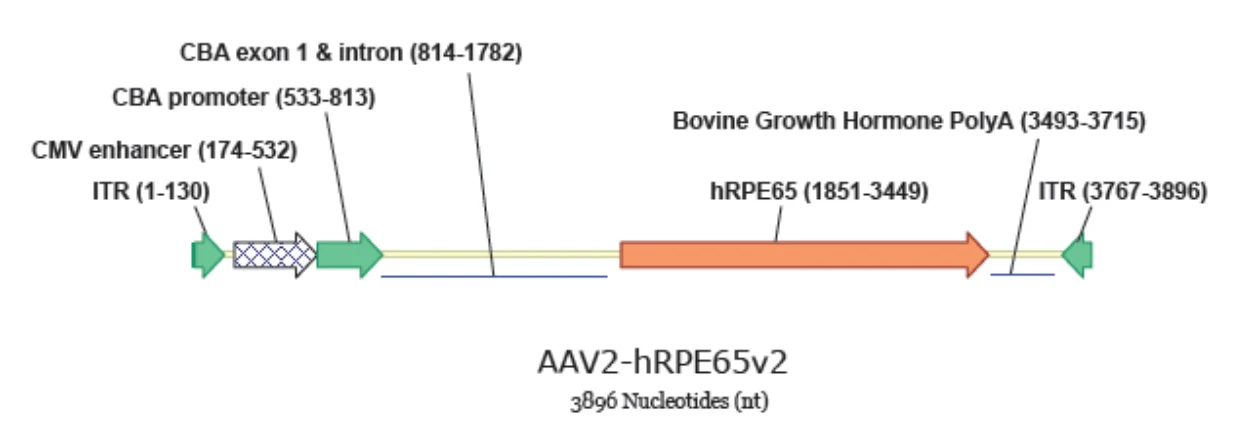
Structural formula:
Voretigene Neparvovec Vector Genome Diagram
Physicochemical properties: Both the concentrate and the diluent are clear, colorless liquids.
Product Characteristics
Voretigene neparvovec is a gene transfer vector that employs an adeno-associated viral vector serotype 2 (AAV2) capsid as a delivery vehicle for the human retinal pigment epithelium 65 kDa protein (hRPE65) cDNA to the retina. Voretigene neparvovec is derived from naturally occurring AAV using recombinant DNA techniques.
14 Clinical Trials
14.1 Clinical Trials by Indication
Vision loss due to inherited retinal dystrophy caused by confirmed biallelic RPE65 mutations
The efficacy of LUXTURNA (voretigene neparvovec) in pediatric and adult patients was evaluated in an open-label, two-center, randomized trial (Study 301).
Individuals with a confirmed genetic diagnosis of biallelic RPE65 gene mutations were eligible for enrolment if:
- Both eyes had visual acuity of 20/60 (equivalent to 0.48 logMAR) or worse, and/or visual field less than 20 degrees in any meridian as measured by III4e isopter or equivalent;
They had sufficient viable retinal cells as determined by either:
- Retinal thickness on spectral domain optical coherence tomography (>100 microns within the posterior pole),
- At least 3 disc areas of the retina without atrophy or pigmentary degeneration within the posterior pole on ophthalmoscopy, or
- Remaining visual field within 30 degrees of fixation as measured by III4e isopter or equivalent.
- They were able to perform a standardised multi-luminance mobility test (MLMT) within the luminance range evaluated, but unable to pass the MLMT at 1 lux, the lowest luminance level tested.
Table 4 - Summary of trial design and patient demographics for the Phase 3 clinical trial (301)
| Study # | Study design | Dosage, route of administration and duration | Study subjects (n) | Mean age (Range) | Sex [n (%)] |
| 301 | Phase 3, open-label, two-center, randomized controlled trial | 1.5x10¹¹ vg to each eye; sequential subretinal injections | 31 subjects randomized: 21 in treatment group; 10 in Control group | 15 years (4 to 44 years) | Male: 13 (42) Female: 18 (58) |
Of the 31 enrolled subjects, 21 subjects were randomized to receive subretinal injection of LUXTURNA. One subject discontinued from the study prior to treatment. Ten subjects were randomized to the control (non-intervention) group. One subject in the control group withdrew consent and was discontinued from the study. The nine subjects who were randomized to the control group were crossed over to receive subretinal injection of LUXTURNA after one year of observation. The average age of the 31 randomized subjects was 15 years (range 4 to 44 years), including 64% pediatric subjects (n=20, age from 4 to 17 years) and 36% adults (n=11). Bilateral subretinal injections of LUXTURNA were administered sequentially in two separate surgical procedures with an interval of 6 to 18 days.
The efficacy of LUXTURNA was established on the basis of multi-luminance mobility testing (MLMT) score change from Baseline to Year 1.
The MLMT was designed to measure changes in functional vision, as assessed by the ability of a subject to navigate a course accurately and at a reasonable pace at different levels of environmental illumination.
The MLMT was assessed using both eyes (binocular vision) and each eye separately at one or more of seven levels of illumination, ranging from 400 lux (corresponding to a brightly lit office) to 1 lux (corresponding to a moonless summer night). Each light level was assigned a score code ranging from 0 to 6. A higher score indicated that a subject was able to pass the MLMT at a lower light level. The MLMT of each subject was videotaped and assessed by independent graders using a defined combination of speed and accuracy scores. The MLMT score was determined by the lowest light level at which the subject was able to pass the MLMT. A score of -1 was assigned to subjects who could not pass MLMT at a light level of 400 lux. The MLMT score change was defined as the difference between the score at Baseline and the score at Year 1. A positive MLMT score change from Baseline to Year 1 visit indicated that the subject was able to complete the MLMT at a lower light level.
Three secondary endpoints were also tested: full-field light sensitivity threshold (FST) testing using white light; the change in MLMT score for the first assigned eye; and visual acuity (VA) testing.
Table 5 summarizes the median MLMT score change from Baseline to Year 1 in the LUXTURNA treatment group compared to the control group. A median MLMT score change of 2 was observed in the LUXTURNA treatment group, while a median MLMT score change of 0 was observed in the control group, when using both eyes or the first-treated eye. An MLMT score change of 2 or greater is considered a clinically meaningful benefit in functional vision.
Table 5 - Changes in MLMT score: Year 1, compared to baseline (ITT population: n=21 Intervention, n=10 Control)
| Efficacy Outcomes | LUXTURNA N=21 | Control N=10 | Difference (LUXTURNA minus Control) | Wilcoxon rank-sum test p-value |
|---|---|---|---|---|
| MLMT score change for bilateral eyes, median (min, max) | 2 (0, 4) | 0 (-1, 2) | 2 | 0.001 |
| MLMT score change for first-treated eye, median (min, max) | 2 (0, 4) | 0 (-1, 1) | 2 | < 0.001 |
Column header counts are subjects in the ITT population.
The two-sided p-value from a Wilcoxon rank-sum test used an exact method for the test.
Type 1 error is controlled by a hierarchical testing procedure with MLMT score change for bilateral eyes tested first.
Table 6 shows the number and percentage of subjects with different magnitudes of MLMT score change using both eyes at Year 1. Eleven of the 21 (52%) subjects in the LUXTURNA treatment group had an MLMT score change of two or greater, while one of the ten (10%) subjects in the control group had an MLMT score change of two.
Table 6 - Magnitude of MLMT score change using both eyes at Year 1
| Score change | LUXTURNA (n=21) | Control (n=10) |
|---|---|---|
| -1 | 0 | 3 (30%) |
| 0 | 2 (10%)* | 3 (30%)** |
| 1 | 8 (38%) | 3 (30%) |
| 2 | 5 (24%) | 1 (10%) |
| 3 | 5 (24%) | 0 |
| 4 | 1 (4%) | 0 |
*including one subject who enrolled but did not receive the treatment; **includes one subject who enrolled but withdrew earlier. A MLMT score change of 0 was assigned to these subjects (also see Figure 8 below).
Figure 8 shows MLMT performance of individual subjects using both eyes at Baseline and at Year 1.
Figure 8 - MLMT score using both eyes at baseline and one year for individual subjects
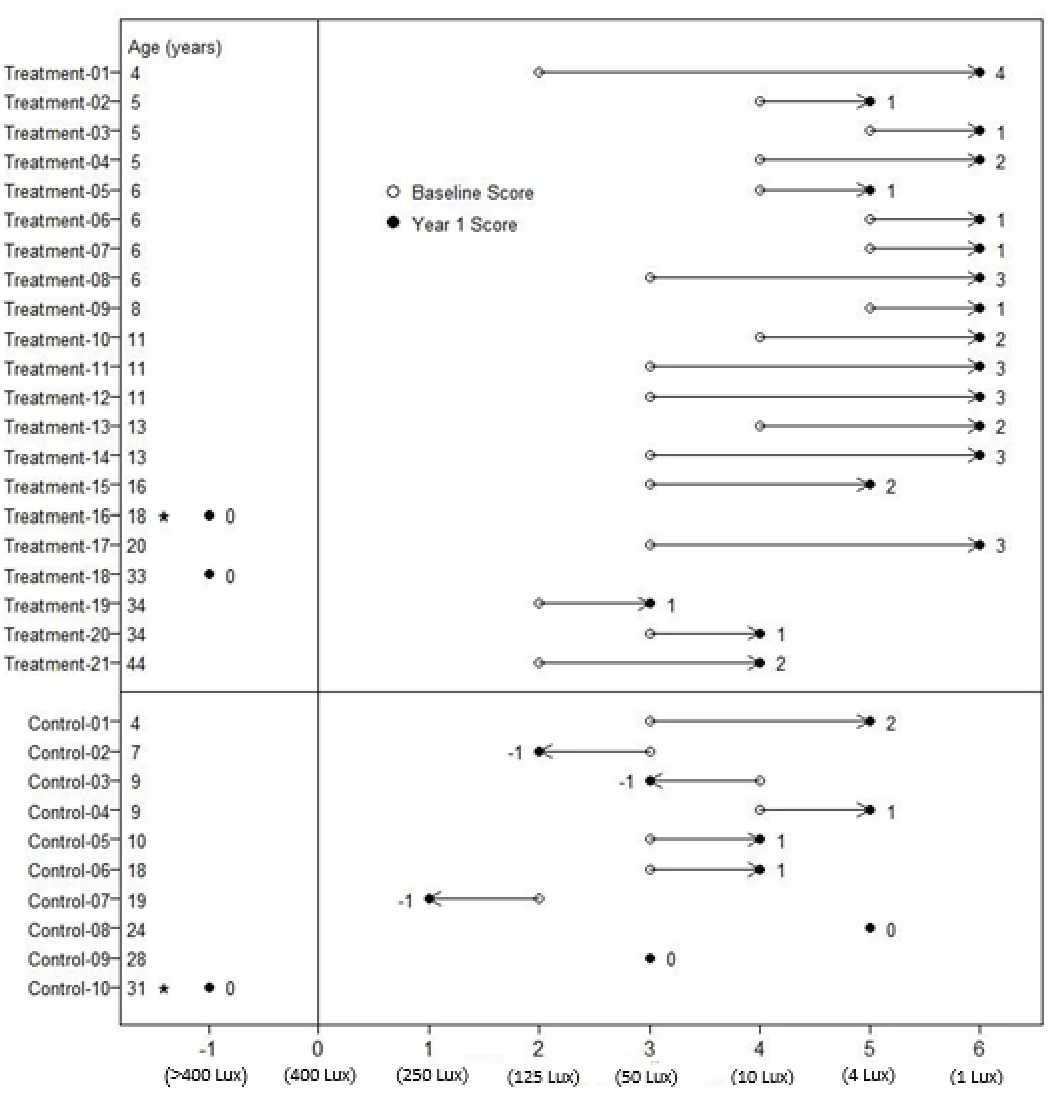
Note for Figure 8: *subjects who were withdrawn or discontinued and a score change of 0 is assigned to these subjects. The open circles are the baseline scores. The closed circles are the Year 1 scores. The numbers next to the solid circle represent score change at Year 1. The horizontal lines with arrows represent the magnitude of the score change and its direction. Arrows pointing towards the right represent improvement. The top section shows the results of the 21 subjects in the treatment group. The bottom section shows the results of the 10 subjects in the control group. Subjects in each group are chronologically organized by age, with the youngest subject at the top and the oldest subject at the bottom.
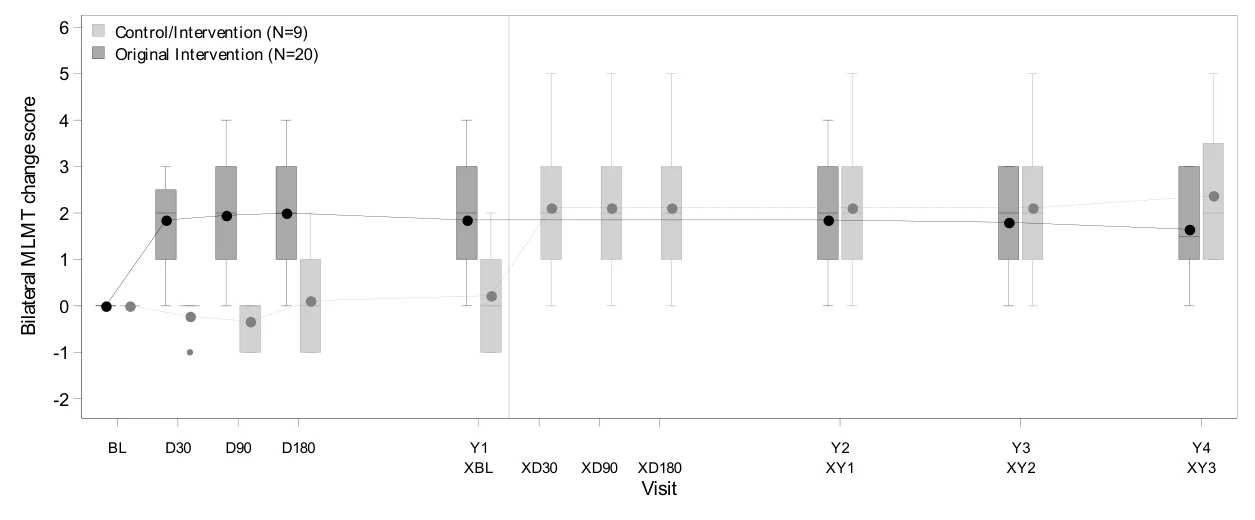
Figure 9 shows the effect of the medicinal product over the four-year period in the LUXTURNA treatment group, as well as the effect in the control group after crossing over to receive subretinal injection of LUXTURNA. A median binocular MLMT score change of 2 was observed for the LUXTURNA treatment group at Day 30, and this effect was observed over the remaining follow-up visits throughout the 4-year period. For the control group, a median binocular MLMT score change of 0 was observed at all four follow-up visits during the first year. However, after crossing-over to receive subretinal injection of LUXTURNA, the subjects in the control group showed a similar response to LUXTURNA as compared to the subjects in the LUXTURNA treatment group.
Figure 9 - MLMT Time-Course over Four Years: Using Both Eyes
Note for Figure 9: Each box represents the middle 50% of distribution of MLMT score change. Vertical solid lines represent additional 25% above and below the box. The horizontal bar within each box represents the median. The dot within each box represents the mean. The solid line connects the mean MLMT score changes over visits for the treatment group. The dotted line connects the mean MLMT score change over visits for the Control group, including five visits during the first year without receiving voretigene neparvovec. The control group was administered voretigene neparvovec after 1 year of observation.
BL: baseline;
D30, D90, D180: 30, 90 and 180 days after start of study;
Y1, Y2, Y3, Y4: one, two, three and four years after start of study;
XBL, XD30, XD90, XD180: baseline, 30, 90 and 180 days after start of study for Control crossover group;
XY1, XY2, XY3: one, two, and 3 years after start of study for Control crossover group.
One subject is missing from the control crossover group at XY3.
For full-field light sensitivity threshold testing (FST), which reflects underlying physiological function by measuring light sensitivity of the entire visual field, the mean (SE) change across both eyes from Baseline to Year 1 was -2.08 (0.29) log10(cd.s/m2) for the Intervention group and 0.04 (0.44) log10(cd.s/m2) for the Control group, for a statistically significant (p < 0.001) between-group mean (95% CI) treatment difference of -2.11 (-3.19, -1.04) log10(cd.s/m2).
The change in visual acuity from Baseline to Year 1 was not significantly different between the LUXTURNA and control groups.
15 Microbiology
No microbiological information is required for this drug product.
16 Non-Clinical Toxicology
Biodistribution
Biodistribution of voretigene neparvovec was evaluated at three months following subretinal administration in normal non-human primates (cynomolgus monkeys). The vector was administered at a dose of 3.0x10¹¹ vg in both eyes or at 7.5x10¹¹ vg/eye in one or both eyes (same day, simultaneous administration). The highest levels of vector DNA sequences were detected in intraocular fluids (anterior
chamber fluid and vitreous) of vector-injected eyes. Low levels of vector DNA sequences were detected in the optic nerve of the vector-injected eye, optic chiasm, spleen, liver, and in the lymph nodes. Vector DNA sequences were not detected in the ovary. In one animal administered the vector at 7.5x10¹¹ vg in one eye, low levels of vector DNA sequences were also detected in the untreated contralateral eye, trachea, stomach, duodenum and colon in addition to the tissues listed above.
General Toxicology
Toxicology studies were conducted in dogs with a naturally occurring RPE65 mutation or in normal-sighted non-human primates (cynomolgus or rhesus monkeys), using various dosing regimens. In both animal models, bilateral, simultaneous subretinal administration of voretigene neparvovec was well tolerated at a dose of 8.25 x 10¹⁰ vg/eye in RPE65-deficient dogs and at doses up to 7.5 x 10¹¹ vg/eye (5 times higher than the recommended human dose) in cynomolgus monkeys. Also in both animal models, bilateral, sequential subretinal administrations, where the contralateral eye was injected following the first eye (13 to 15 days later in dogs and 51 days later in cynomolgus and rhesus monkeys), were well tolerated at the recommended human dose of 1.5 x 10¹¹ vg/eye.
Ocular histopathology of dog and monkey eyes exposed to voretigene neparvovec showed only mild changes, which were mostly related to the surgical trauma. In an earlier toxicology study, a similar AAV2 vector administered subretinally in dogs at a dose of 10 times the recommended dose resulted in focal retinal toxicity and inflammatory cell infiltrates histologically in regions exposed to the vector. Other findings observed following subretinal injection of voretigene neparvovec in dogs and monkeys included mild inflammatory responses in both eyes following the bilateral, sequential administrations and occasional and isolated inflammatory cells in the retina, with no apparent retinal degeneration. Following a single vector administration, dogs developed antibodies to the AAV2 vector capsid following subretinal administration.
Carcinogenicity
Studies have not been conducted to evaluate the carcinogenic potential of voretigene neparvovec.
Genotoxicity
Studies have not been conducted to evaluate the genotoxic potential of voretigene neparvovec.
Studies evaluating the potential for voretigene neparvovec to integrate into the host genome have also not been conducted.
Reproductive and Developmental Toxicology
Studies have not been conducted to evaluate the reproductive and developmental toxicity of voretigene neparvovec.
Studies evaluating the potential for voretigene neparvovec to integrate into the germline have also not been conducted. However, as mentioned, vector DNA sequences were not detected in the ovary of cynomolgus monkeys 3 months following subretinal injection of voretigene neparvovec at doses up to 7.5x10¹¹ vg/eye in one or both eyes.